
There is a hill on the southern edge of Barcelona that most travelers know exists but few actually explore properly. They ride the cable car up, take a photo from the castle walls, and ride back down. Maybe they catch the Magic Fountain show on the way out. Then they leave and tell their friends they “did Montjuic.”
They missed about ninety percent of it.

Montjuic is a 173-metre hill that holds more history per square metre than most European neighbourhoods. An old Jewish cemetery gave it its name (Mount of the Jews, probably — historians still argue about this). A fortress on top spent centuries pointing its cannons at the city it was supposed to protect. The 1929 World Exposition built grand palaces on its slopes. The 1992 Olympics added stadiums, pools, and a communications tower that looks like it belongs on another planet. And scattered between all of that: botanical gardens, sculpture parks, hidden trails, and viewpoints that make you understand why people keep moving to this city.
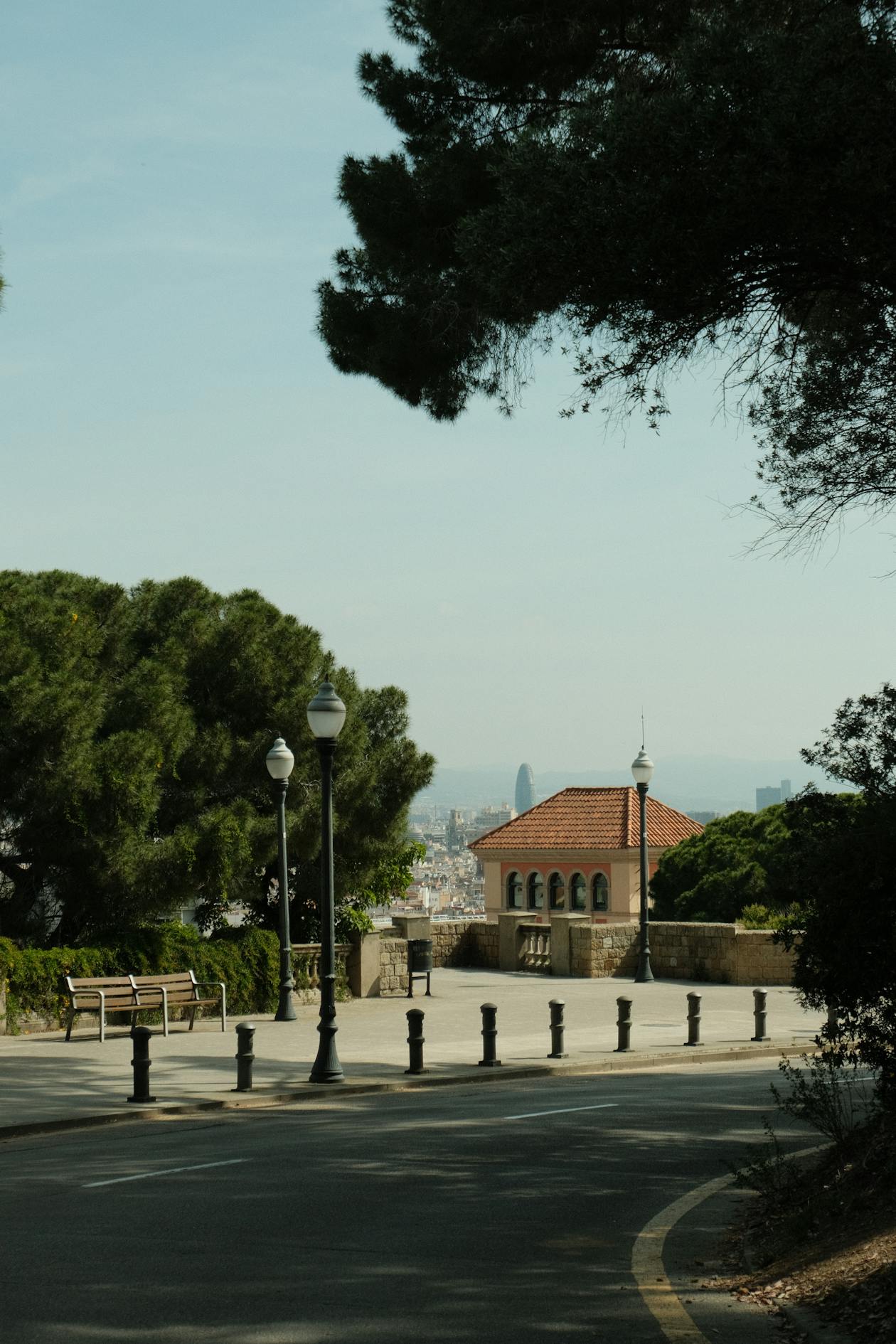
I have spent multiple days exploring Montjuic across different visits to Barcelona, and every time I find something new. A winding garden path I had not noticed before. A viewpoint that opens up between the trees. A quiet corner of the castle where you can hear nothing but birdsong and the distant hum of the port below.
Here is everything you need to plan your visit — how to get up, the best tours, what to see, and the details that make the difference between a quick stop and a full day you will actually remember.
If You’re in a Hurry: My Top 3 Picks
- Best for views: Montjuic Cable Car Roundtrip Ticket — $22 per person. Five minutes of floating above Barcelona with panoramic views in every direction. The simplest, most satisfying way to get up and down the hill. Book this ticket
- Best guided experience: Walking Tour with Montjuic Castle and Cable Car — $64 per person. A guide walks you through the hill’s history while you hit the castle, the cable car, and the key viewpoints. Covers everything without you having to plan a thing. Book this tour
- Best active option: Montjuic Hill E-Bike Tour — $48 per person. An e-bike handles the uphill sections while you coast through the gardens, the Olympic ring, and the hidden corners most visitors never reach. Book this tour
- If You’re in a Hurry: My Top 3 Picks
- How to Get Up Montjuic
- 3 Best Montjuic Tours Worth Booking
- 1. Montjuic Cable Car Roundtrip Ticket —
- 2. Walking Tour with Montjuic Castle and Cable Car —
- 3. Montjuic Hill E-Bike Tour —
- When to Visit Montjuic
- What to See on Montjuic
- Tips for Visiting Montjuic
- More Barcelona Guides
How to Get Up Montjuic
Getting to Montjuic is easy. Getting around Montjuic takes a bit more thought — the hill is bigger than it looks on a map, and the attractions are spread across its slopes.
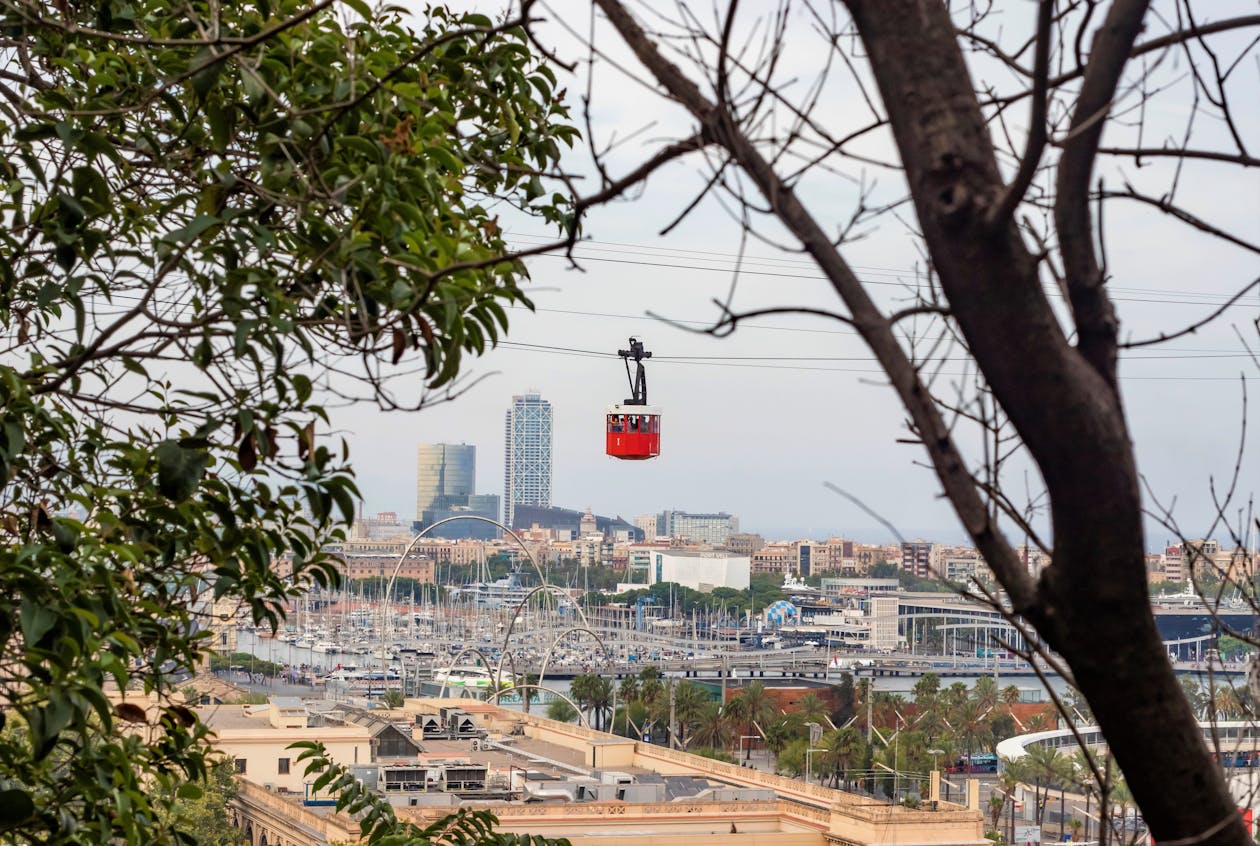
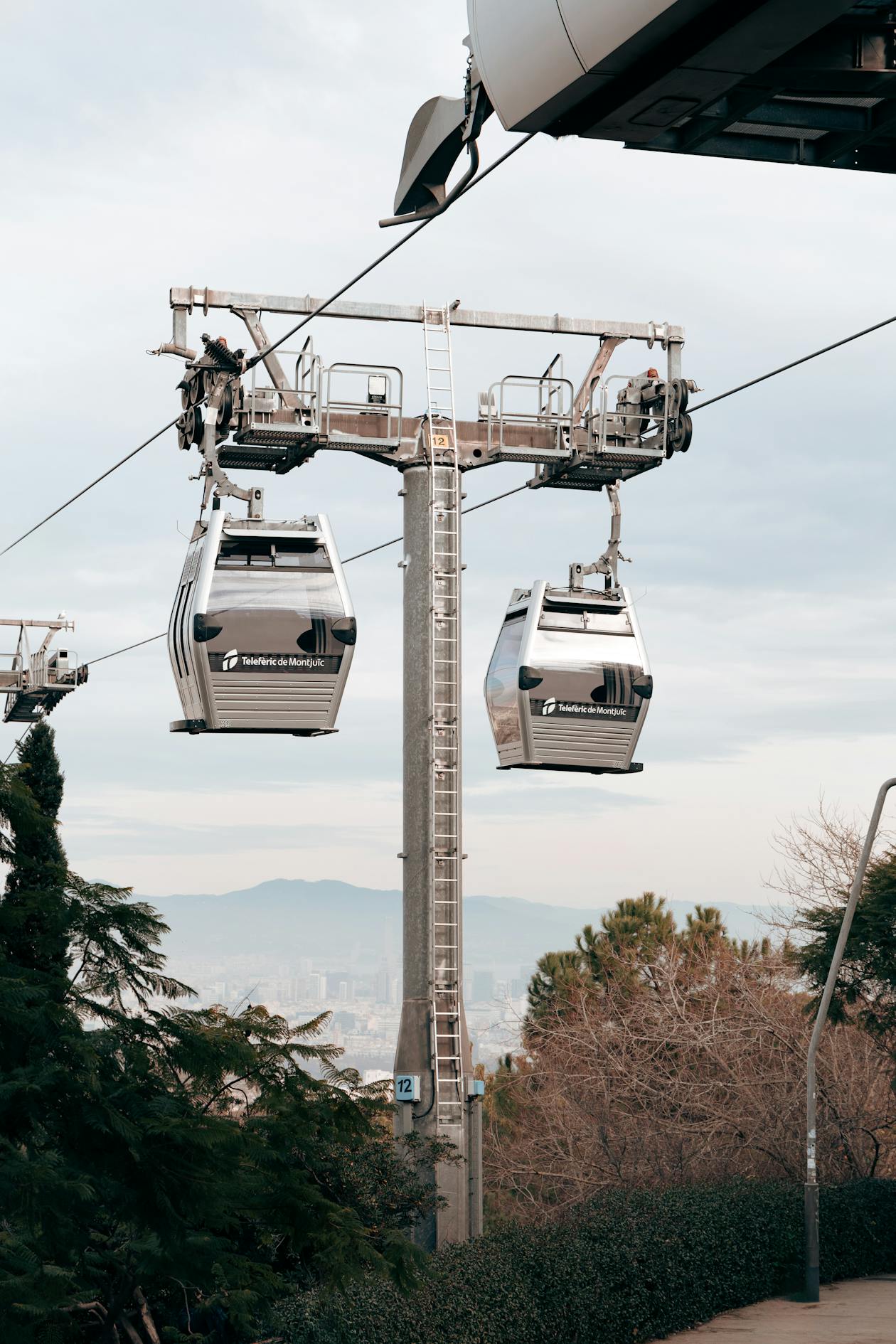
Teleferic de Montjuic (cable car): This is the one most visitors use and for good reason. It runs from Parc de Montjuic station (reached by funicular from Paral-lel metro) to the castle at the top in about five minutes. The views on the way up are spectacular — you can see the port, Barceloneta beach, the Sagrada Familia, and the Pyrenees foothills on clear days. A roundtrip ticket is around 22 dollars and you can hop off at a midway station near the gardens.
Funicular de Montjuic: A short underground funicular connects Paral-lel metro station (L2 and L3) to the base of the cable car station. It is included with your metro ticket or T-Casual card, so there is no extra cost. The ride takes about two minutes.
Port Cable Car (Teleferic del Port): This is the old red cable car that crosses the harbour from Barceloneta to Montjuic. It is dramatic and photogenic but expensive for what it is — around 15 dollars one-way. It drops you at the Jardins de Miramar, which is a nice entry point but far from the castle.
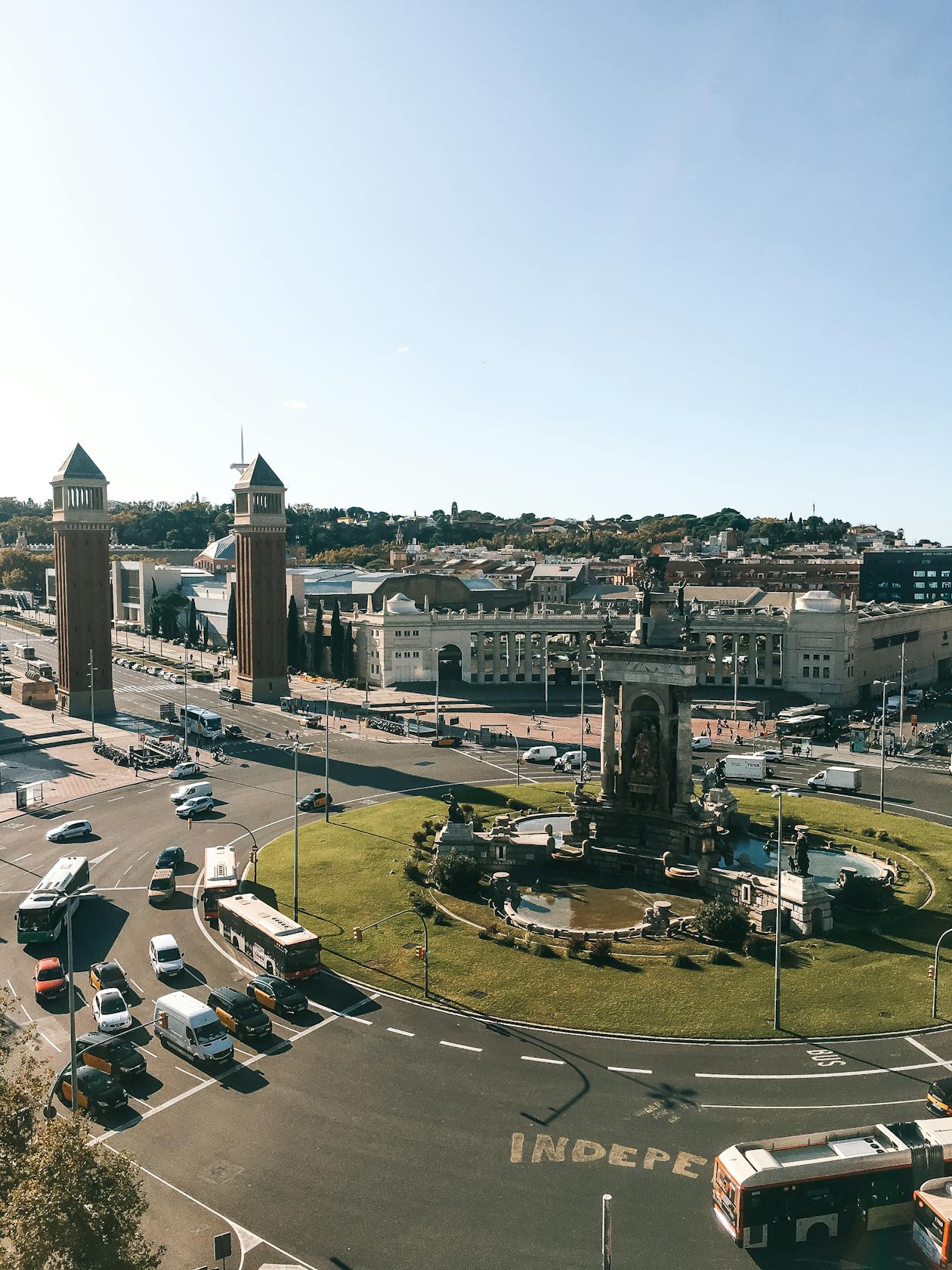
Bus 150: Runs from Placa Espanya up through Montjuic, stopping at the major attractions. Useful if you have a T-Casual card and want to save money or if the cable car lines are long.
Walking up: Completely doable from Placa Espanya. The route through the Expo grounds past the Magic Fountain and up to the Palau Nacional takes about twenty minutes and is one of the most photogenic walks in Barcelona. From there to the castle is another thirty to forty minutes through gardens and woodland. Wear decent shoes — some paths are uneven.
3 Best Montjuic Tours Worth Booking
1. Montjuic Cable Car Roundtrip Ticket — $22
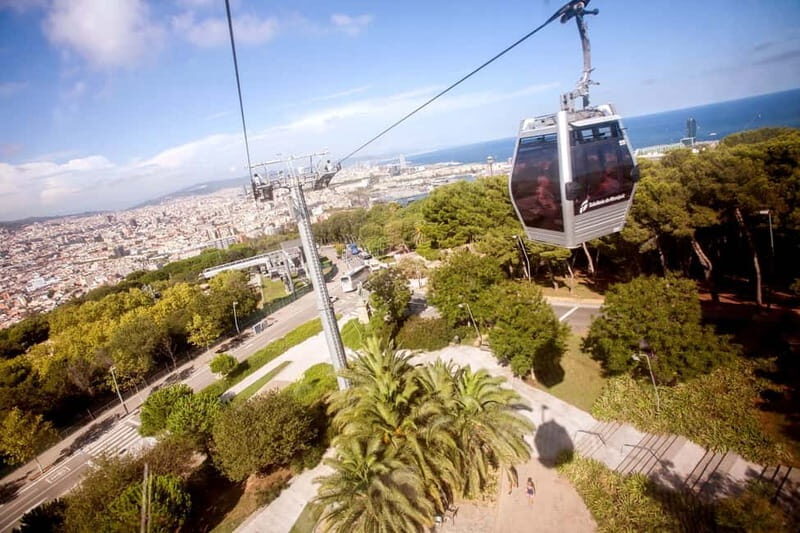
Duration: 1 day (use at your pace) | Price: $22 per person | Type: Cable car ticket
This is the simplest option and the one I recommend for anyone who just wants to get up the hill with good views and figure out the rest on their own. The Teleferic de Montjuic runs from the Parc de Montjuic station (you take the funicular from Paral-lel metro to get there) up to the castle, with one intermediate stop at the Jardins de Miramar area.
The ride itself is half the experience. The cabins have glass walls on all sides and as you climb, the city opens up behind you. You can see the harbour, the W Hotel, Barceloneta beach, the grid of the Eixample district, and the Sagrada Familia poking up in the distance. On clear winter mornings you can make out snow on the Pyrenees.
A roundtrip ticket means you can ride up, explore the castle and surrounding gardens at your own pace, and ride back down when you are done. The midway station is useful if you want to visit the Jardins de Joan Brossa or the Fundacio Joan Miro — both are a short walk from there.
Lines can get long on summer weekends. Booking the ticket in advance guarantees you a spot and saves the twenty to thirty minutes you might otherwise spend queuing.

2. Walking Tour with Montjuic Castle and Cable Car — $64

Duration: 3.5 hours | Price: $64 per person | Type: Guided walking tour
This tour covers the highlights of Montjuic in a single morning and connects them with the kind of historical context you would never get on your own. A licensed guide walks you through the hill’s layered past — from the medieval fortress that oppressed the very city it overlooked, to the 1992 Olympics that transformed the hillside into a public park.
The cable car ride is included, which is a nice touch since you get to experience the views while your guide points out landmarks. At the castle, the guide explains the fortress’s complicated relationship with Barcelona — it was used to bombard the city during the 18th century, served as a military prison well into the Franco era, and only became a public space in the 2000s. That kind of context makes the crumbling walls and rusting cannons hit differently.
The tour also passes through the Olympic ring area, the Jardins de Laribal, and several viewpoints that casual visitors walk right past. It finishes mid-morning, leaving you the rest of the day to revisit anything that grabbed your attention or head to other parts of Barcelona.
At $64, it is well-priced for a 3.5-hour guided experience that includes a cable car ticket. The guides tend to be local and passionate about the hill’s history, which makes a real difference compared to reading a placard on a wall.
3. Montjuic Hill E-Bike Tour — $48
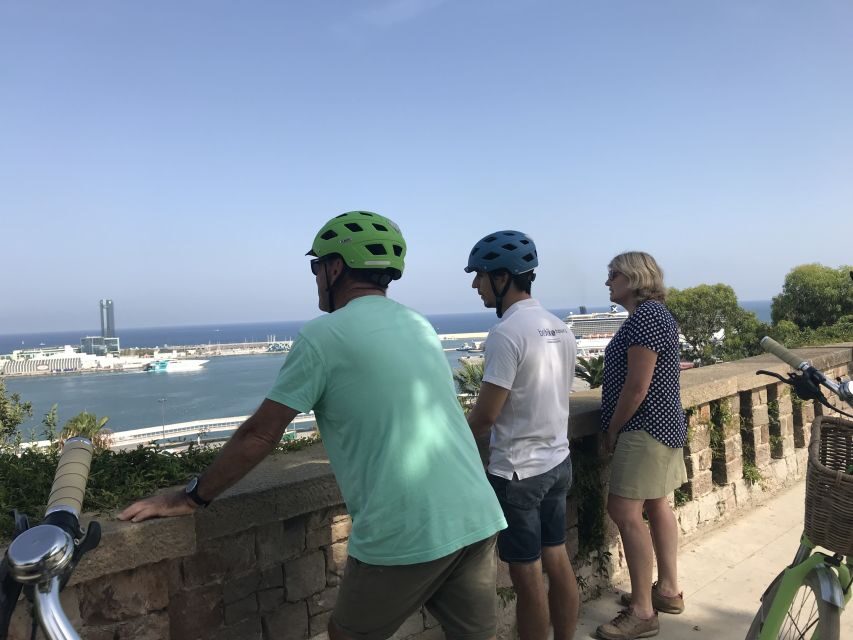
Duration: 2.5 hours | Price: $48 per person | Type: E-bike guided tour
This is my pick for anyone who wants to cover a lot of ground without arriving at each stop out of breath. Montjuic is a big hill with steep sections, and walking between all the main sites in one visit can wear you out fast. An e-bike solves that completely. The electric assist handles the climbs while you coast through gardens, Olympic venues, and viewpoints that walkers rarely reach.
The tour takes you through the Jardins de Joan Brossa, past the Fundacio Joan Miro, around the Olympic ring, and up to viewpoints overlooking both the city and the sea. The guide fills in the history and culture as you ride, and the pace is relaxed enough that you can stop for photos whenever you want.
What makes this option stand out is the range. In 2.5 hours, you cover corners of Montjuic that would take a full day on foot. The e-bike lets you dip into quieter areas — the cactus garden, the old quarry paths, the southern slopes where locals jog and walk their dogs — that most tour groups skip entirely.
At $48, it sits between the cable car ticket and the walking tour in price but offers the most ground covered. If you are reasonably comfortable on a bicycle and want to see Montjuic properly, this is hard to beat.
When to Visit Montjuic
Montjuic works in any season, but the experience changes depending on when you go.
Morning (before 11am): The best time for the cable car — shorter queues and the light hits the city from the east, which makes for better photos from the castle. The gardens are quiet and the air is cool. This is when locals come to jog and walk.
Late afternoon (4pm-7pm): The golden hour light from the western slopes is outstanding. Head to the Jardins del Mirador or the castle terrace for sunset views. The Jardins de Laribal are particularly beautiful in low light — the water channels and ceramic tiles glow.
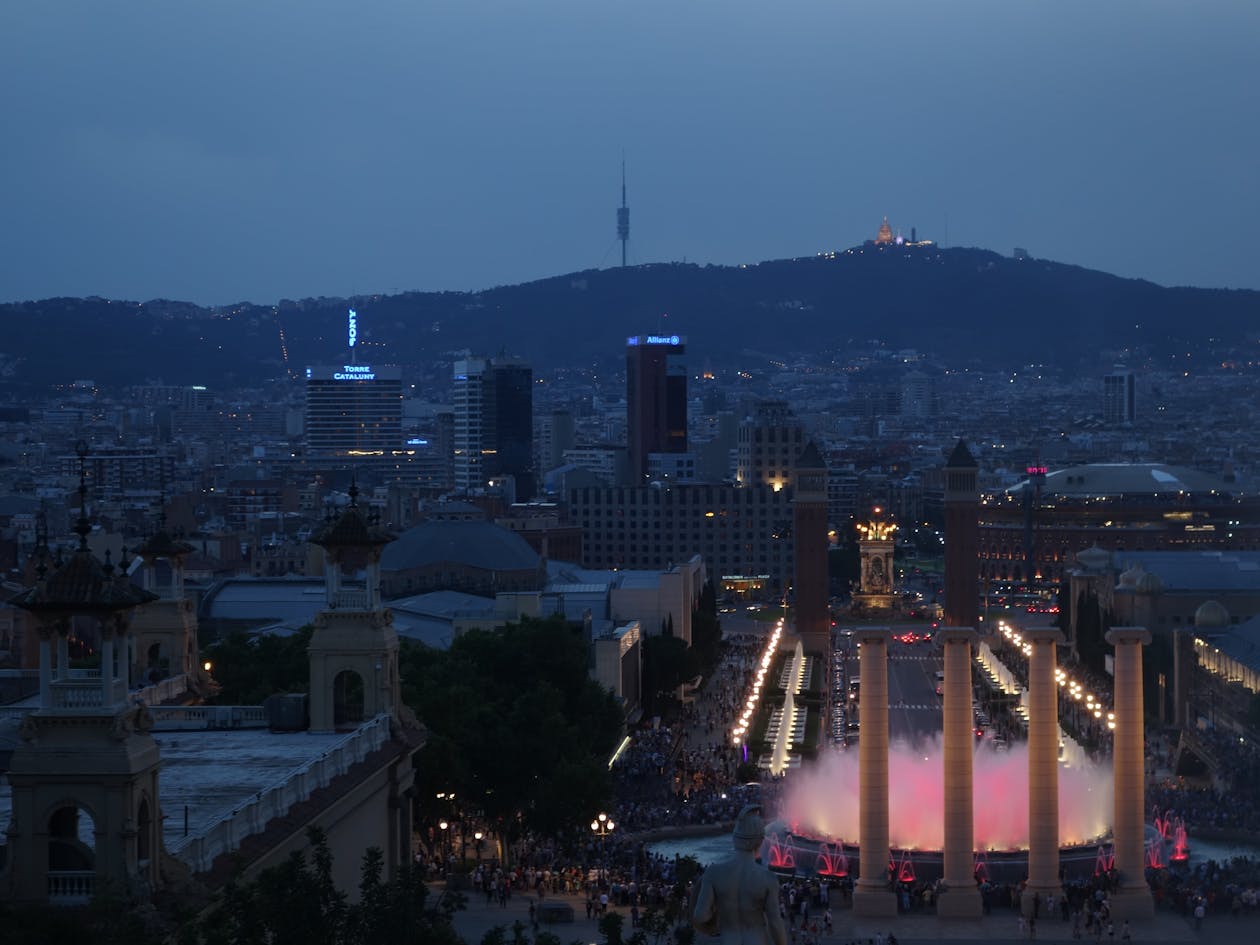
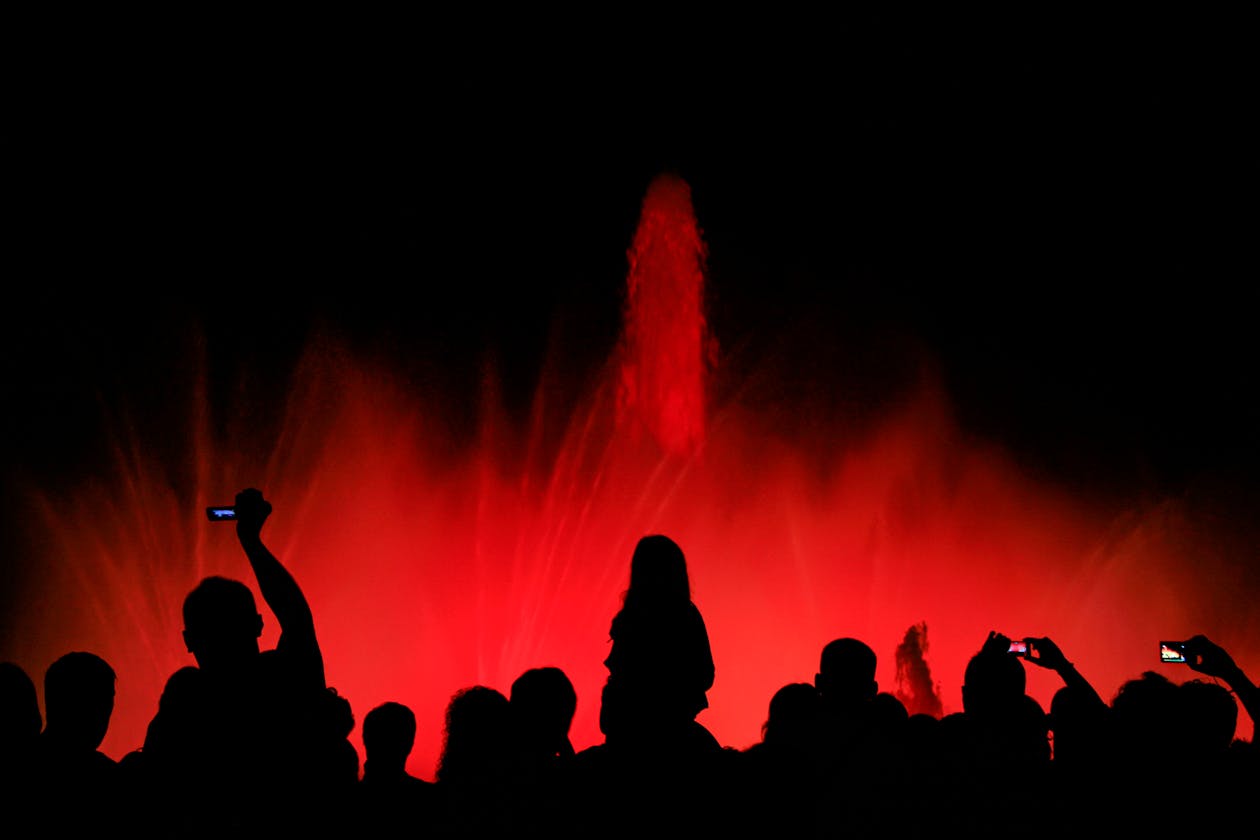
Evening (May-September): The Magic Fountain light show runs on Thursday through Saturday evenings (and Wednesdays in summer). Times vary by season — typically starting around 9:30pm in summer and 8pm in spring and autumn. It is free, it is spectacular, and it draws a big crowd. Arrive at least thirty minutes early if you want a spot near the front.
Spring and autumn: The best seasons overall. Temperatures are comfortable for walking, the gardens are green (or turning gold in autumn), and the crowds thin out compared to July and August. March through May is particularly good — the bougainvillea and wisteria are blooming across the hill.
Summer: Hot. The hill is exposed and shade is limited between attractions. If you visit in July or August, start early and carry water. The upside is that the days are long, so you can catch both sunset and the fountain show in one evening.
Winter: Fewer visitors, clear skies, and some of the best long-range views of the year. The cable car rarely has a queue. The downside: gardens are less lush, some outdoor cafes close, and the fountain show schedule is reduced (weekends only, earlier times).
What to See on Montjuic
Montjuic has enough to fill a full day and then some. Here are the highlights, roughly in order from the base of the hill to the top.
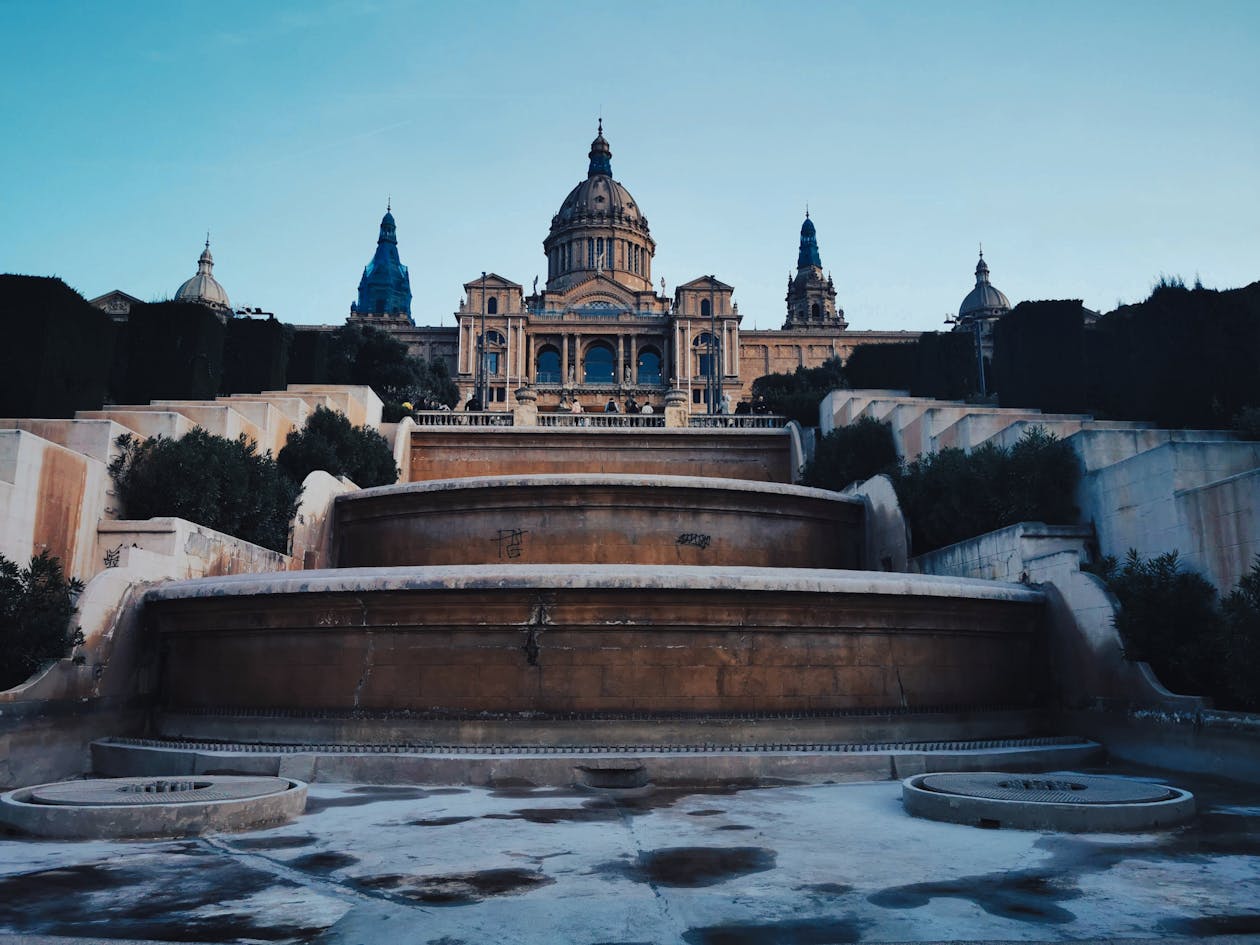
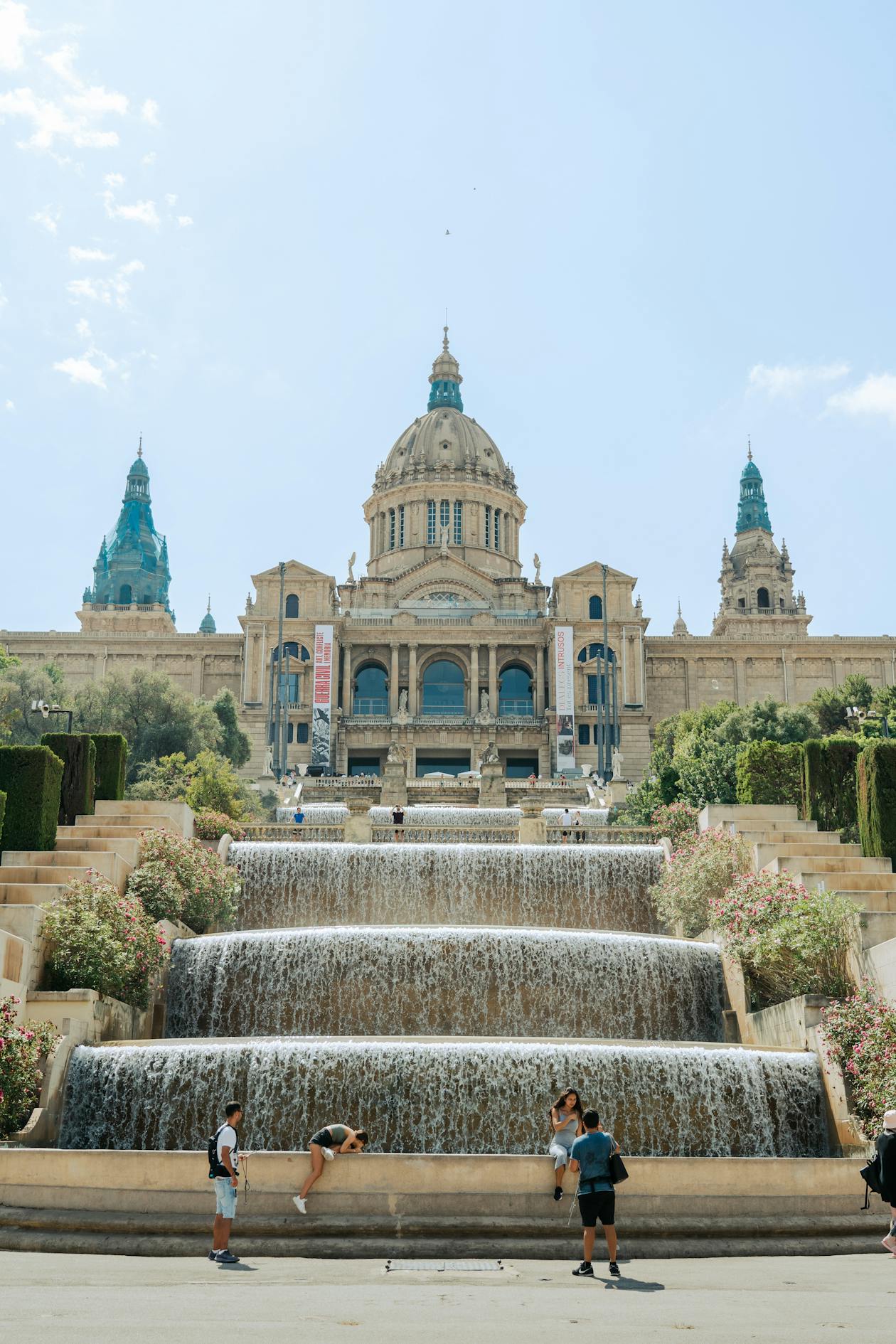
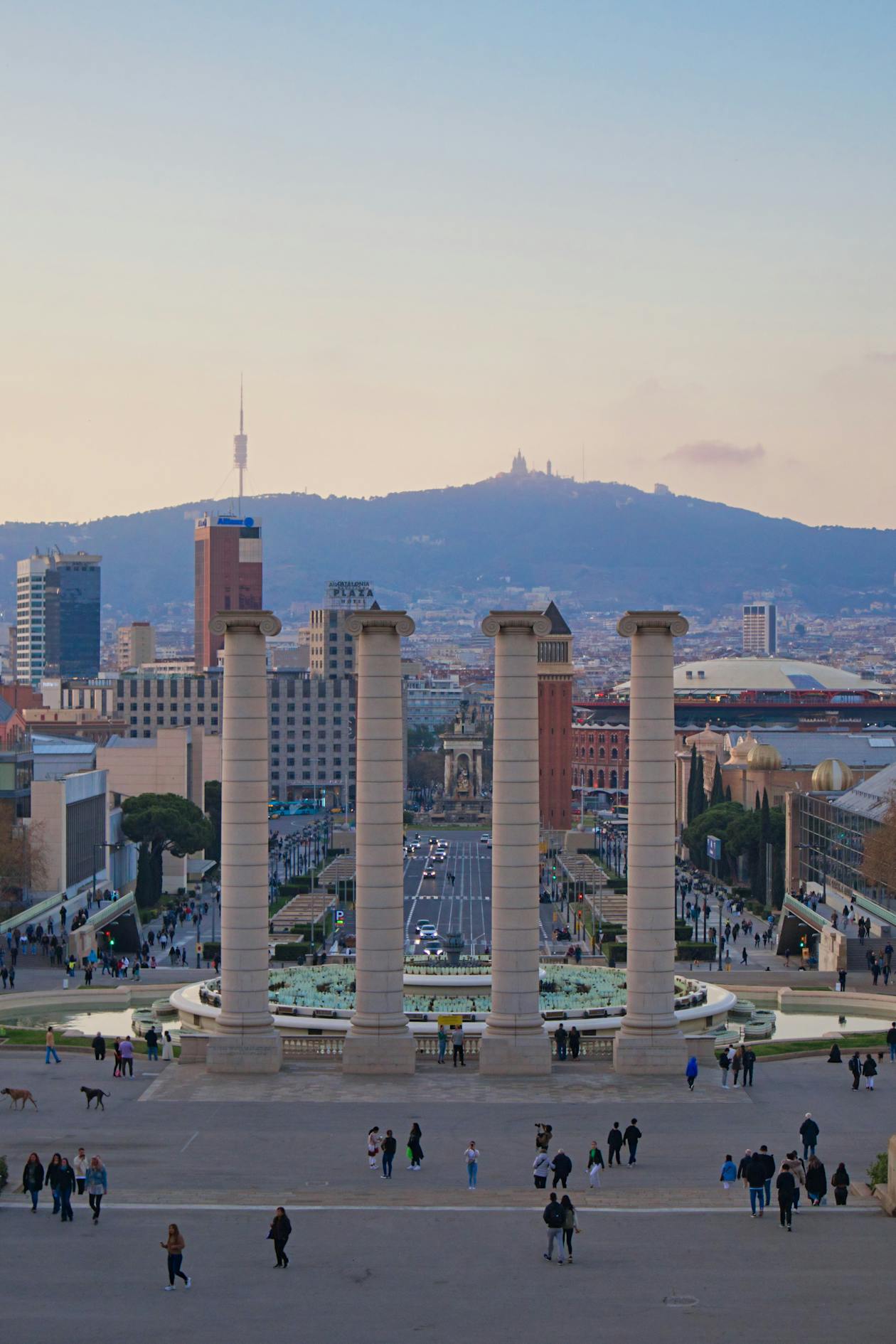
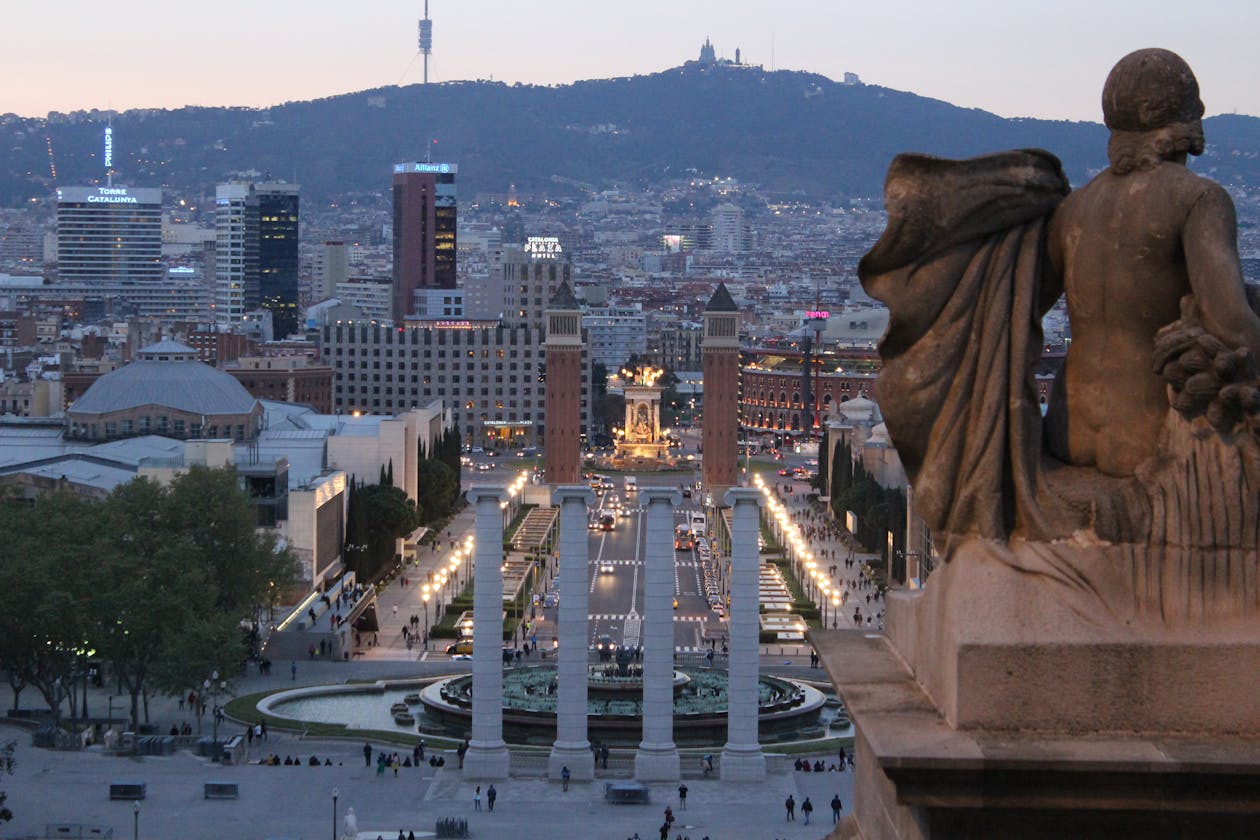
Placa Espanya and the Venetian Towers: The gateway to Montjuic. Two tall brick towers flank the Avinguda de la Reina Maria Cristina, which runs straight from the plaza to the Palau Nacional. The avenue is lined with fountains and the walk up the cascading staircases is one of the most dramatic approaches to any museum in Europe.
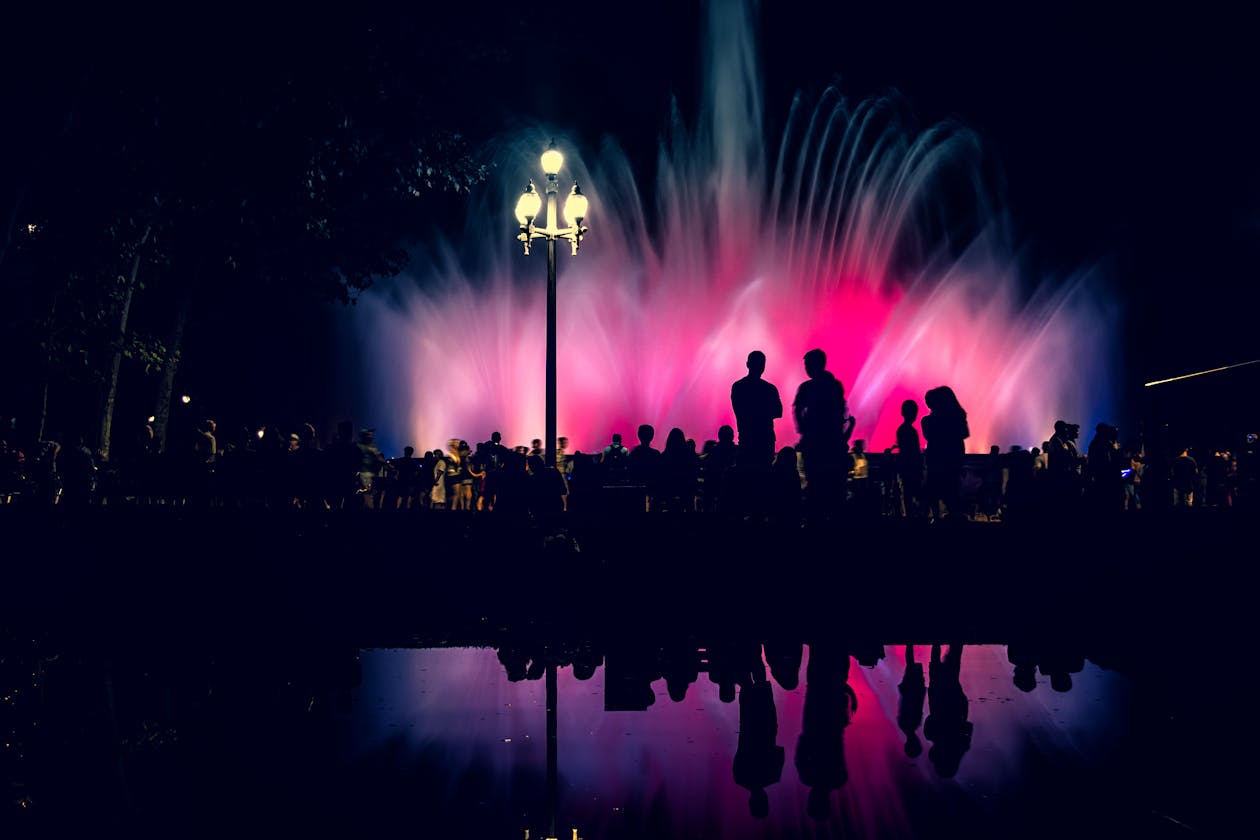
The Magic Fountain (Font Magica): Built for the 1929 Exposition and still running almost a century later. During the daytime, it is a big empty fountain basin that does not look like much. At night, with the lights and music, it transforms. The show lasts about thirty minutes and cycles through different water patterns and colour combinations synchronised to music.
MNAC (Museu Nacional d’Art de Catalunya): Housed in the Palau Nacional, this is one of the great art museums of Europe. The Romanesque collection alone — frescoes peeled from crumbling Pyrenean churches and reassembled here — is worth the trip. The rooftop terrace offers one of the best free views in Barcelona: straight down the avenue to the city skyline beyond.
Fundacio Joan Miro: A white, light-filled building designed by Josep Lluis Sert that holds the largest collection of Joan Miro’s work in the world. Even if modern art is not your thing, the building itself and the terrace sculpture garden are beautiful. There is a rooftop with views across the harbour.

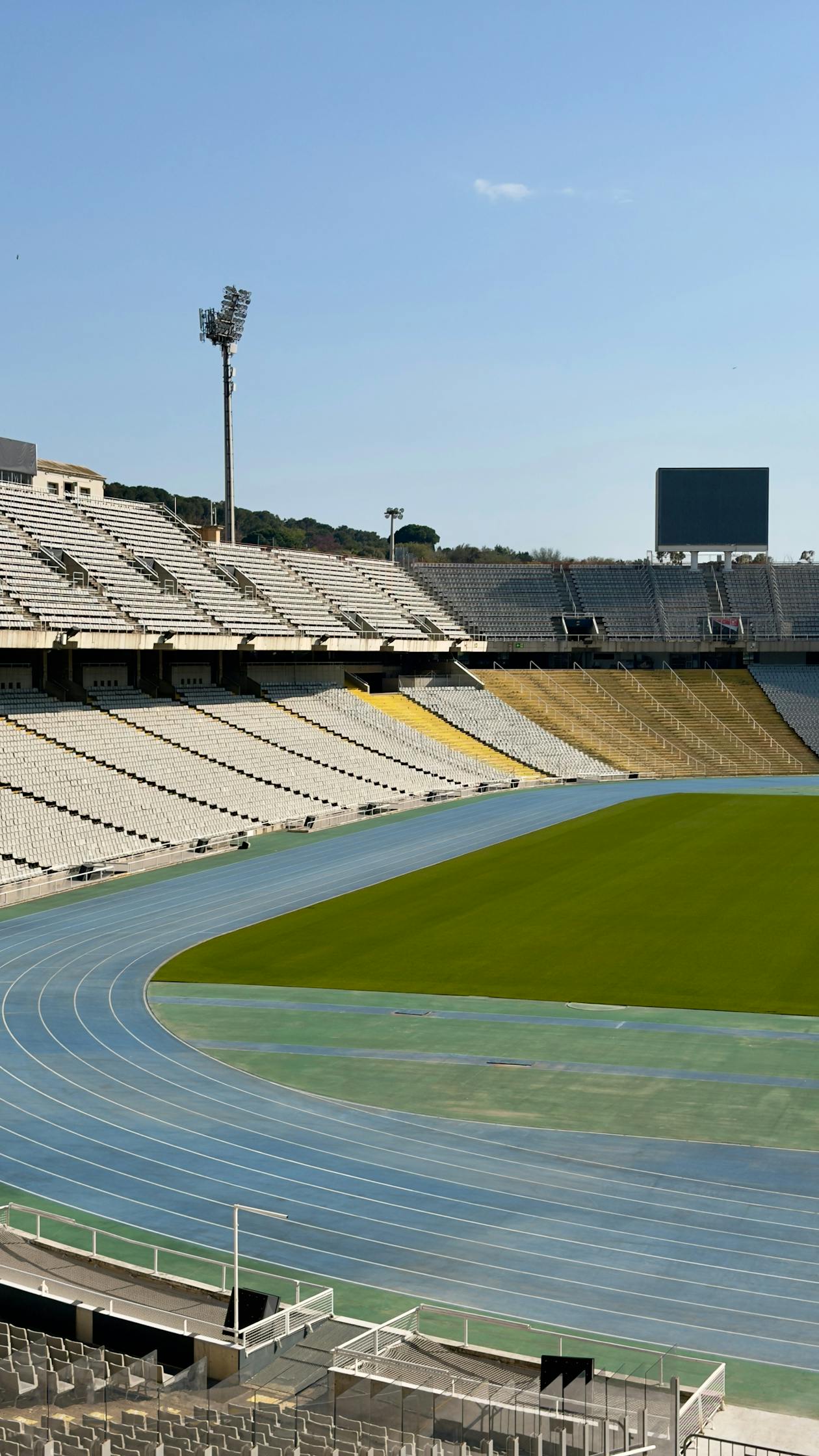
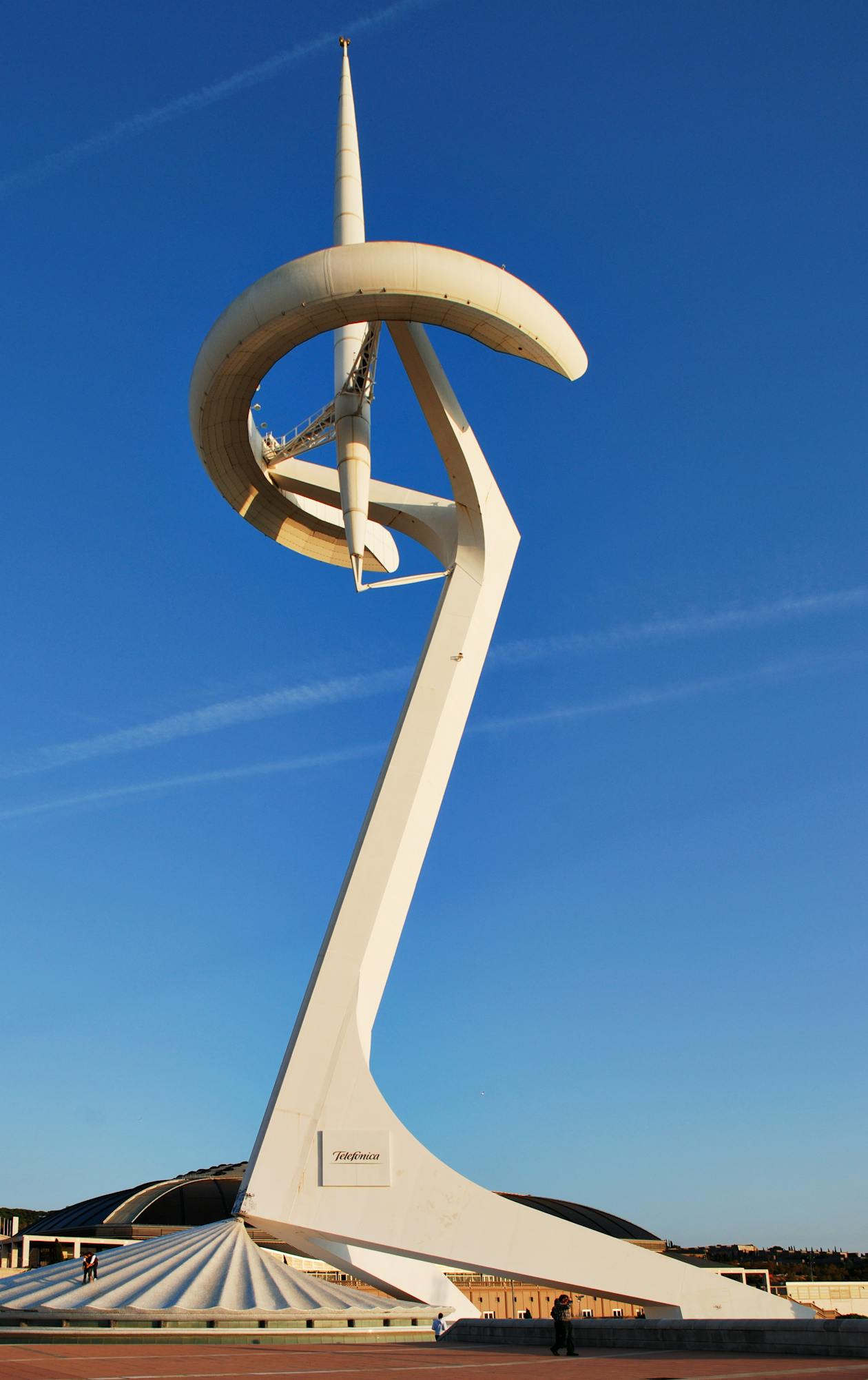
The Olympic Ring (Anella Olimpica): The cluster of facilities built for the 1992 Summer Olympics. The main stadium (Estadi Olimpic Lluis Companys) is free to enter when there are no events — you can walk onto the track and sit in the stands where athletes competed. Next to it: the Palau Sant Jordi arena (designed by Arata Isozaki), the swimming pools, and Santiago Calatrava’s communications tower, which looks like a white steel flame leaning into the sky.
Castell de Montjuic: The fortress at the summit with a complicated history. It has been a watchtower, a military base, a prison, and an execution site. Today it is a cultural space with rotating exhibitions and — the real draw — panoramic views from its walls. You can see the harbour, the city, the sea, and on clear days the mountains to the north. Entry is around 5 euros and free on Sundays after 3pm.
Jardins de Laribal: A series of terraced gardens with water channels, ceramic tiles, and pergolas draped in wisteria. Modelled on the gardens of the Alhambra in Granada, they are one of the quietest spots on Montjuic and rarely crowded. Bring a book.
Jardi Botanic de Barcelona: The botanical garden on the western slope of the hill, focused on Mediterranean and subtropical plants. The layout follows the terrain of an old quarry, which gives it an unusual, almost alien landscape quality. Good for a quiet hour away from the main attractions.
Tips for Visiting Montjuic
Wear proper shoes. Some of the garden paths and trails between attractions are uneven stone or packed earth. Flip-flops will not cut it if you plan to explore beyond the paved routes.
Bring water and snacks. There are cafes at the castle and near the Olympic ring, but prices are high and options are limited. The Jardins de Laribal and Jardi Botanic have no food service. A water bottle and something to eat will save you from paying 5 dollars for a mediocre sandwich.
The cable car sells out. On weekends and in summer, queues for the Teleferic de Montjuic can stretch past thirty minutes. Booking online in advance guarantees your spot and lets you skip the ticket line. If you are going up only to reach the castle, consider walking up through the gardens instead — the route from the funicular station through the Jardins de Joan Brossa takes about twenty-five minutes.
Castle entry is free on Sundays. After 3pm on Sundays, the Castell de Montjuic waives its entrance fee. The museum inside is small but the views from the walls are the main event anyway.
Combine with Poble Espanyol. The Spanish Village (Poble Espanyol) is a recreated village on the western side of Montjuic that was also built for the 1929 Exposition. It features architecture from every region of Spain, craft workshops, and several good restaurants. If you have a full day for Montjuic, it fits in well, though it charges a separate entry fee.
Check the Magic Fountain schedule. The show does not run every night and the times change with the seasons. It is typically Thursday through Saturday from May to September, and weekends only the rest of the year. Check the Barcelona city website the day of your visit to confirm times.
Do not try to see everything in one visit. Montjuic is large enough that rushing through all the attractions in a single day leaves you exhausted and underwhelmed. Pick two or three things that interest you most, do those well, and come back for the rest on another trip. The hill will still be there.