
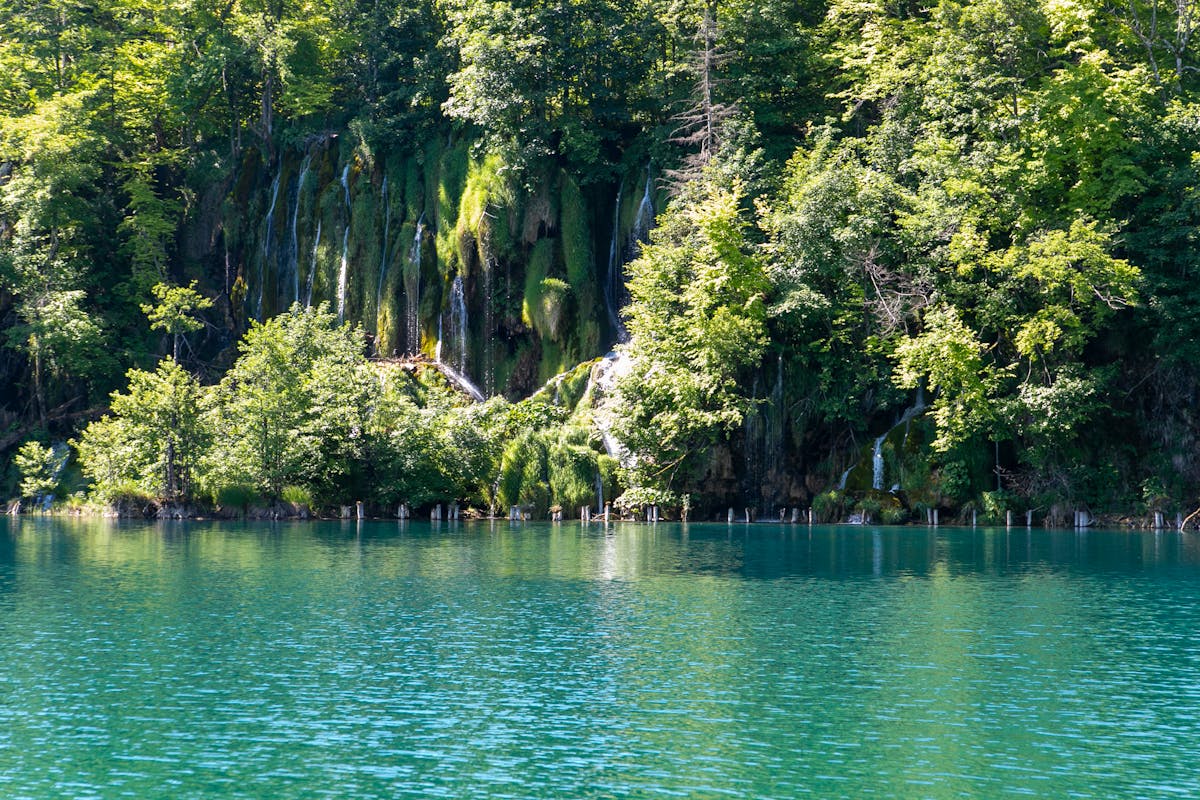
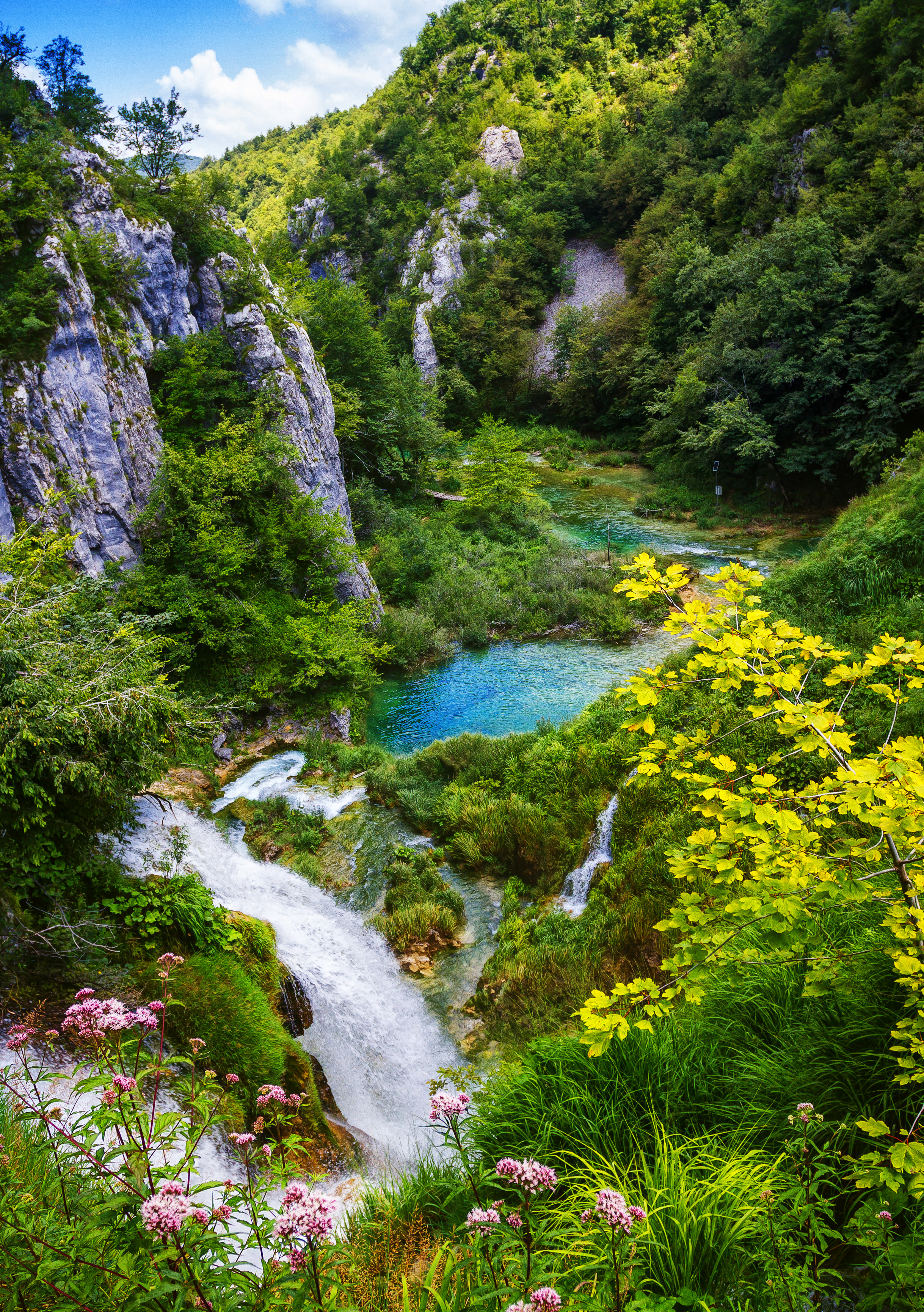
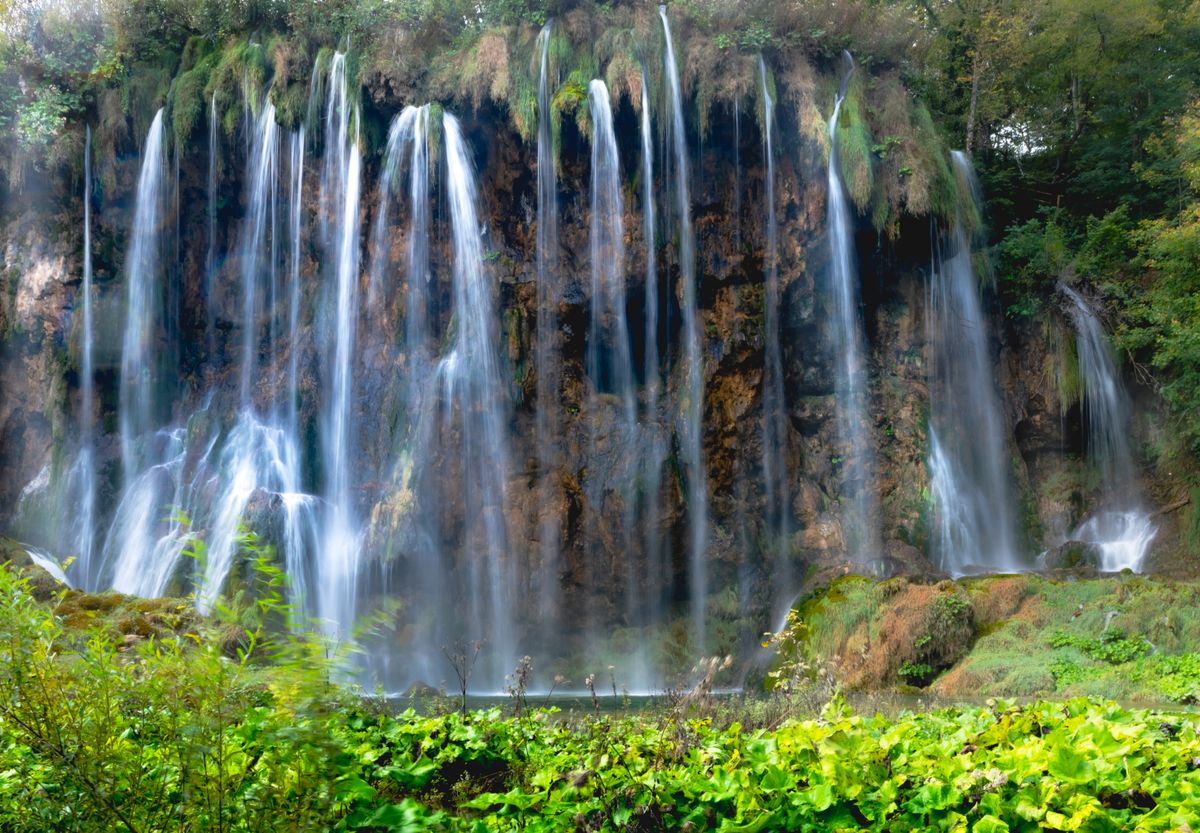
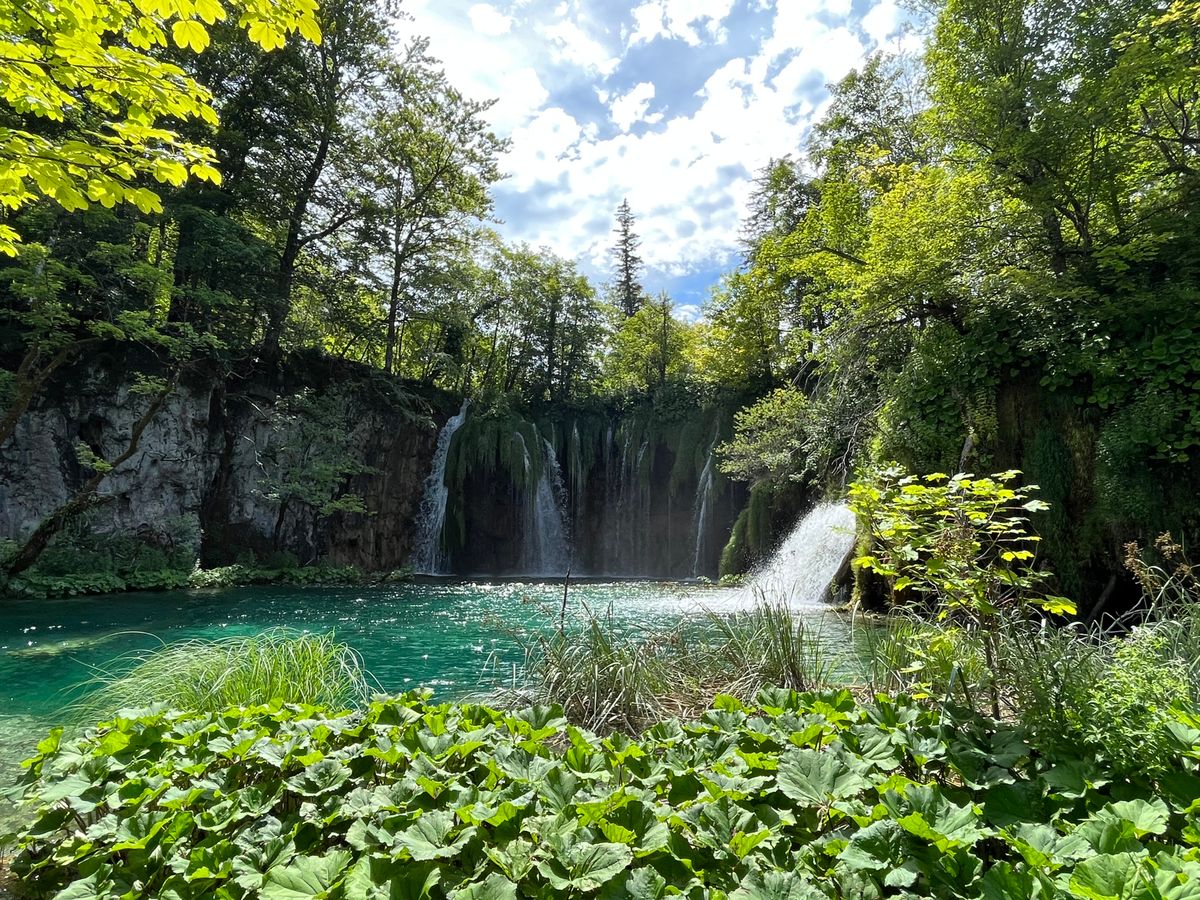
Plitvice Lakes is Croatia’s most famous national park and one of the oldest in southeastern Europe — a chain of sixteen terraced lakes connected by waterfalls, set in a deep forest that feels like it belongs in a fairy tale. The lakes cascade from an elevation of 636 metres to 503 metres over a distance of about eight kilometres, each one a different shade of turquoise, emerald, or sapphire depending on the minerals, organisms, and sunlight hitting the water at any given moment.
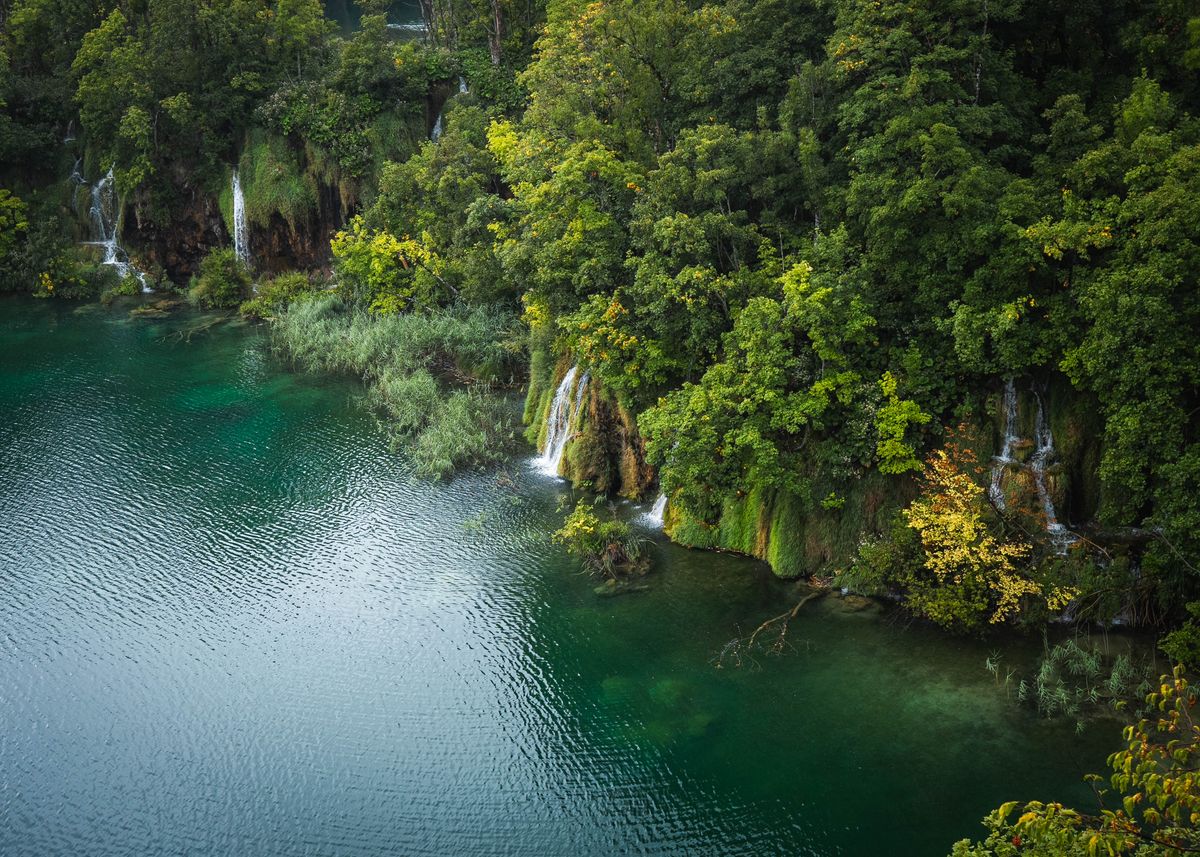
The park sits about 2.5 hours north of Split in the Lika region, Croatia’s mountainous interior. It’s a longer drive than the coastal day trips — Krka, Hvar, the islands — but Plitvice exists on a different scale entirely. Where Krka has one main waterfall, Plitvice has dozens, linking lakes that range from tiny forest pools to broad expanses stretching hundreds of metres across. UNESCO inscribed it as a World Heritage Site in 1979, making it one of the first natural sites on the list.

I’ve compared the best ways to visit Plitvice from Split, including full-day guided tours and the option of combining the park with stops in Zadar or the village of Rastoke. Here are the top picks, plus the remarkable natural science behind those colours, and tips for getting the most out of your visit.
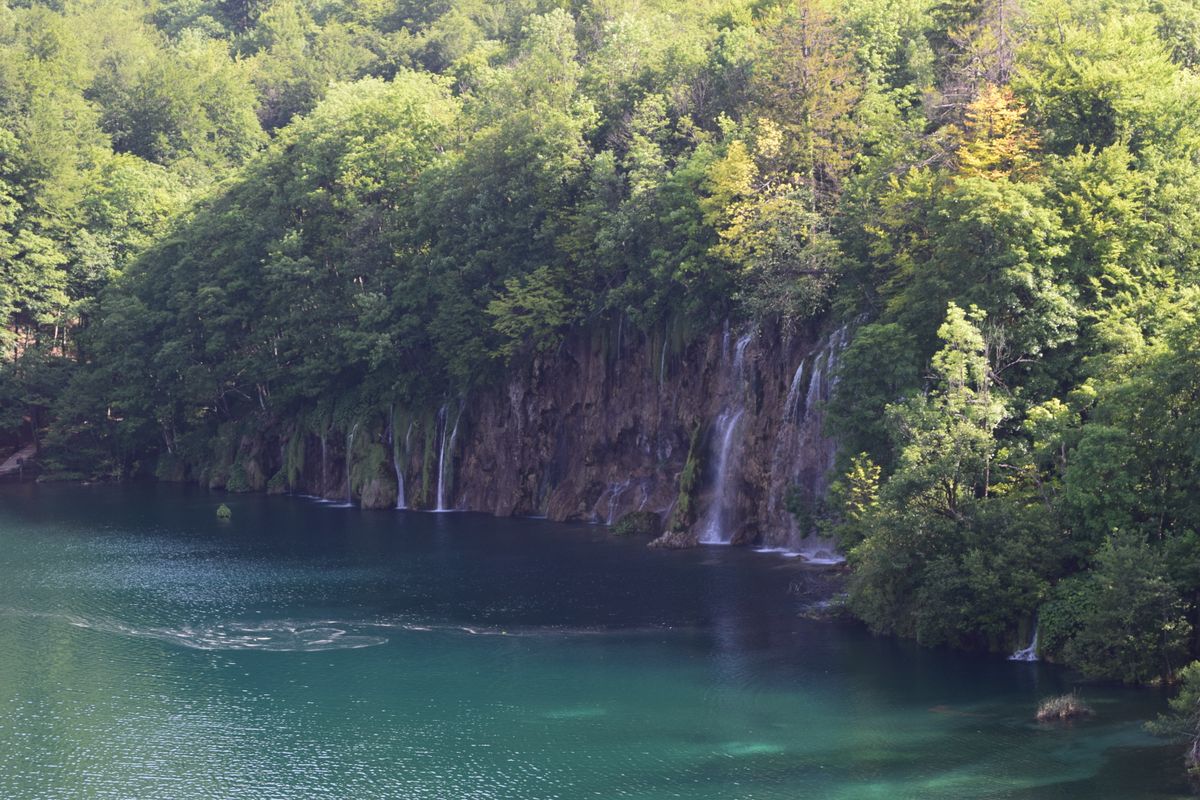
Short on time? Here’s what to book:
Best from Split: Plitvice Lakes National Park Guided Tour from Split — €79. Full-day guided tour with park entrance, electric boat ride across the largest lake, and panoramic train ride. The most reviewed option from Split.
Best budget (at park): Plitvice Lakes Guided Walking Tour with Boat & Bus — €40. If you’re driving yourself, this guided walking tour inside the park is outstanding value. Expert guide, boat ride, and park bus included.
Best from Zadar: Plitvice Lakes with Boat Ride & Zadar Old Town Tour — €54. Closer departure point, shorter drive, and a Zadar walking tour included. Smart choice if you’re on the northern coast.
- What to Know Before Visiting Plitvice
- It’s a long day trip from Split
- Upper Lakes vs Lower Lakes — you’ll likely see both
- No swimming allowed — anywhere
- Wear proper shoes
- The Best Plitvice Lakes Tours
- 1. Plitvice Lakes National Park Guided Tour from Split — €79
- 2. Plitvice Lakes National Park Tour from Split/Trogir — €79
- 3. Plitvice Lakes Guided Walking Tour with Boat & Bus — €40
- 4. Plitvice Lakes with Boat Ride & Zadar Old Town Tour — €54
- The Science Behind Those Impossible Colours
- Winnetou: The Film Connection You Didn’t Expect
- Can You Visit Plitvice Independently from Split?
- Tips for Getting the Most Out of Plitvice
- When to Go
- Frequently Asked Questions
- How long do you need at Plitvice?
- Is Plitvice suitable for children?
- Do I need to book entrance tickets in advance?
- Can you swim at Plitvice?
- Plitvice vs Krka — which is better?
What to Know Before Visiting Plitvice

It’s a long day trip from Split
Plitvice is about 2.5 hours by road from Split. Full-day tours run 11-12 hours, leaving Split around 7 AM and returning by 7-8 PM. It’s a commitment, but the drive through Croatia’s interior is scenic — you pass through the Dalmatian hinterland and into the forested mountains of Lika, a landscape most coastal travelers never see.
Upper Lakes vs Lower Lakes — you’ll likely see both
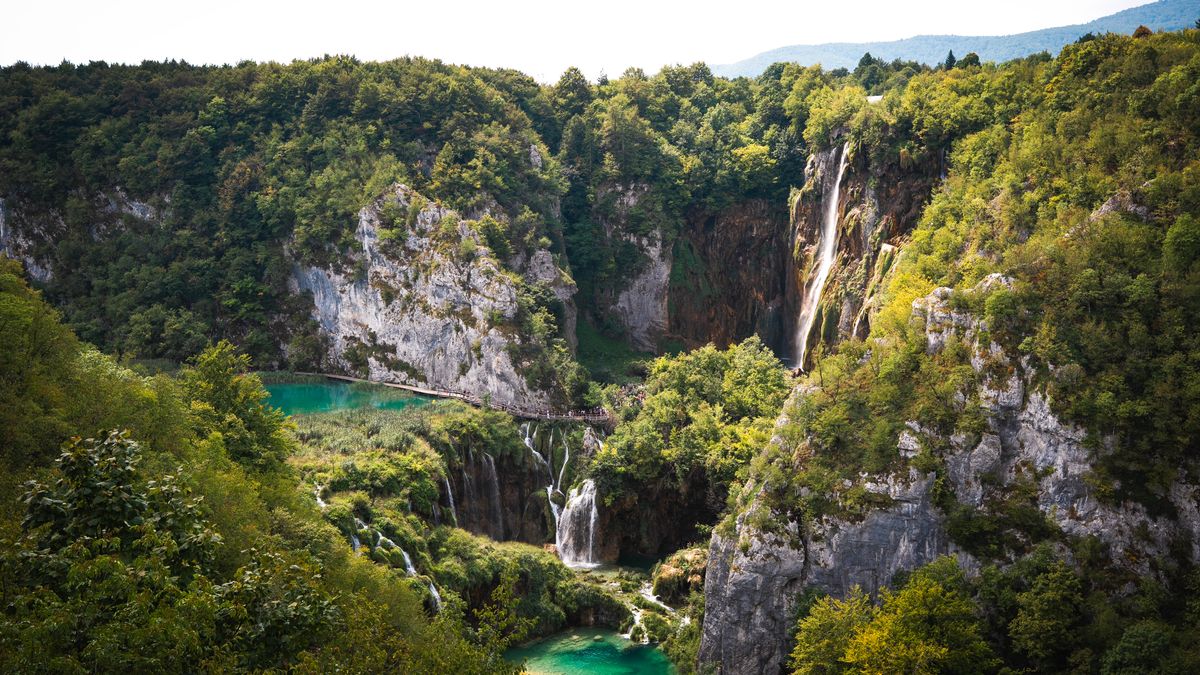
The park is divided into Upper Lakes (twelve smaller lakes in a forested valley) and Lower Lakes (four larger lakes in a dramatic canyon). Most tours include both, connected by an electric boat ride across Kozjak, the park’s largest lake. The Lower Lakes have the most dramatic waterfalls; the Upper Lakes are more serene and forested.
No swimming allowed — anywhere
Unlike Krka (which once allowed swimming), Plitvice has never permitted swimming in the lakes. The travertine formations and the lake ecosystems are too fragile. You walk on boardwalks above and alongside the water, but you cannot touch it. This sounds restrictive but actually makes the park more magical — the water remains undisturbed and impossibly clear.
Wear proper shoes
The boardwalks are wooden and can be slippery when wet. Some sections involve gravel paths and gentle inclines. Trainers with good grip are the minimum; hiking shoes are better. Flip-flops are a recipe for a twisted ankle and a very wet phone.
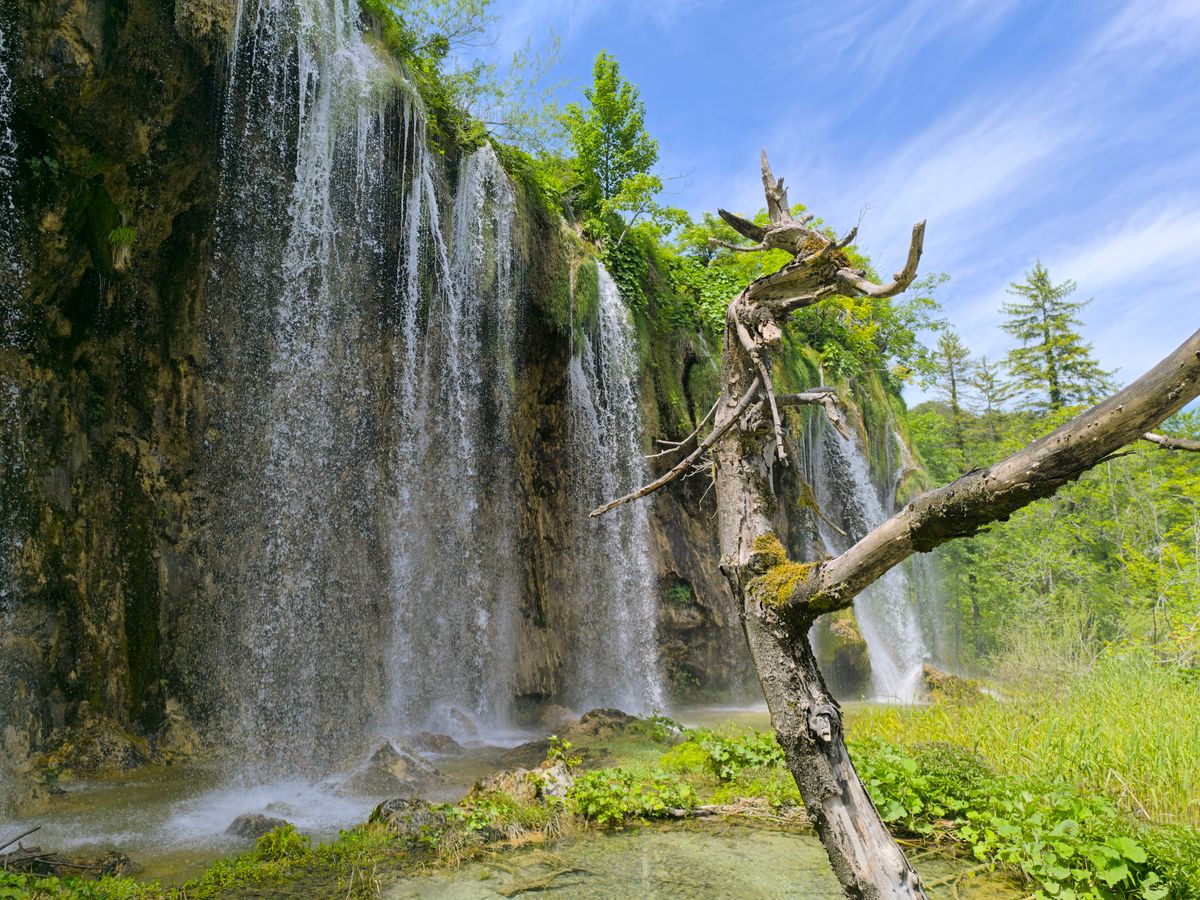
The Best Plitvice Lakes Tours
1. Plitvice Lakes National Park Guided Tour from Split — €79
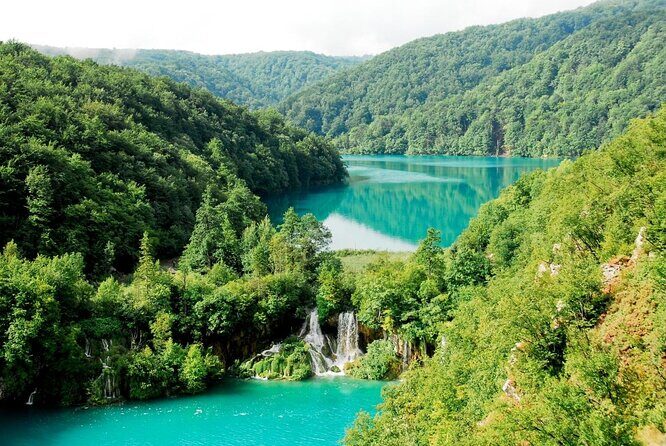
The benchmark Plitvice tour from Split. You leave early morning, drive through Croatia’s mountainous interior, and arrive at the park in time for a full exploration of both the Upper and Lower Lakes. The guide is essential here — Plitvice is large and complex, and without someone who knows the optimal route, you’ll waste time backtracking and miss key viewpoints.
The itinerary includes an electric boat ride across Lake Kozjak (the largest lake, sitting between the upper and lower sections) and a panoramic park train ride through the forested hillside. Total walking distance is about 6-8 kilometres on flat boardwalks and gravel paths. The guide explains the geology behind the travertine formations, points out the different lake colours, and ensures you hit the most photogenic waterfalls at the right angle for the light.
Duration: 11 hours | Departure: Split, early morning | Includes: Transport, guide, park entrance, boat & train rides
2. Plitvice Lakes National Park Tour from Split/Trogir — €79
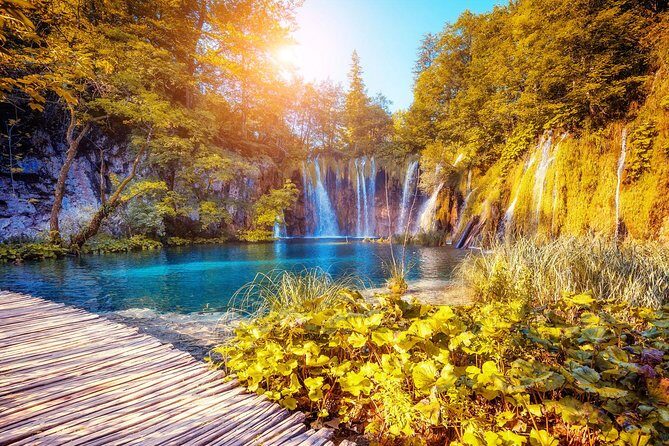
A comparable alternative to the top pick, operated by a different company with pickup from both Split and Trogir. The itinerary covers the same ground — both lake sections, the electric boat, the panoramic train — but the route to the park may differ slightly, and some days include an additional photo stop along the way.
The dual-pickup option is particularly useful if you’re based in Trogir, Kastela, or anywhere between Split and Trogir. The guides are well-reviewed and the park time is generous — typically 4-5 hours inside the park, which is enough for the full circuit without rushing. At the same price as the top pick, it’s really a question of availability and pickup convenience.
Duration: 12 hours | Departure: Split or Trogir, early morning | Includes: Transport, guide, park entrance, boat & train rides
3. Plitvice Lakes Guided Walking Tour with Boat & Bus — €40
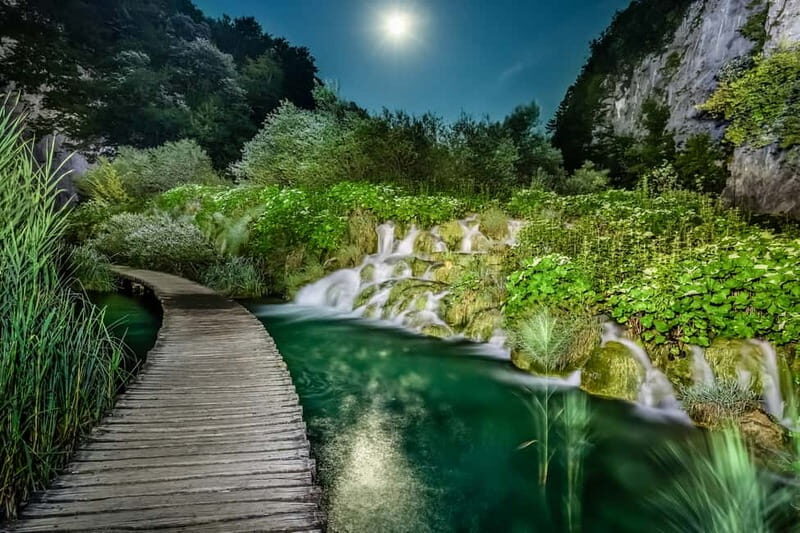
A different proposition from the Split-departure tours. This is a guided walking tour inside the park — not a full-day trip with transport. It’s designed for visitors who are driving themselves to Plitvice or staying nearby, and want a knowledgeable guide to lead them through the lakes.
At €40, this is outstanding value. You get a local expert guide for 3-6 hours (depending on the route chosen), the electric boat ride across Lake Kozjak, and the panoramic bus ride — all included. The guide explains the geology, ecology, and history of the park in detail that self-guided visitors miss entirely. Park entrance is separate, but that’s true for all Plitvice visits regardless.
Duration: 3-6 hours | Meeting point: Park entrance | Includes: Expert guide, boat ride, panoramic bus
4. Plitvice Lakes with Boat Ride & Zadar Old Town Tour — €54
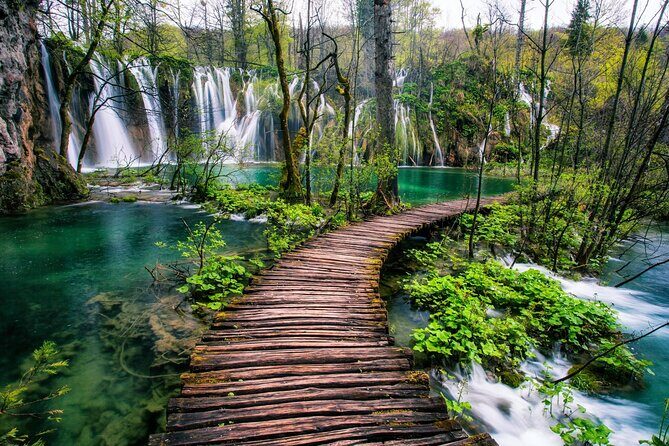
If you’re on the northern Dalmatian coast, Zadar is a closer departure point for Plitvice — about 1.5 hours compared to Split’s 2.5. This tour adds a guided walking tour of Zadar’s old town, which includes the famous Sea Organ (a wave-powered musical instrument built into the seafront) and the Sun Salutation (a solar-powered light installation).
The Zadar old town walk adds genuine cultural value. Zadar has 3,000 years of history, Roman ruins mixed with Venetian churches, and a pedestrianised old town that feels like a smaller, quieter version of Dubrovnik. Combined with Plitvice, you get nature and culture in a single day at an excellent price.
Duration: 10 hours | Departure: Zadar, morning | Includes: Transport, guide, park entrance, boat ride, Zadar walking tour
The Science Behind Those Impossible Colours

Plitvice’s lakes change colour constantly — the same lake can appear turquoise in the morning, emerald at noon, and steel grey under cloud cover. This isn’t a trick of the light (though light plays a role). The colours are created by a combination of factors that scientists are still studying:
Dissolved minerals: The water flows over limestone and dolomite, dissolving calcium carbonate and other minerals. The concentration of dissolved minerals affects how the water absorbs and reflects light.
Microscopic organisms: Algae, bacteria, and moss living in the water and on the travertine barriers add biological pigments that shift the colour spectrum. Different organisms dominate in different seasons, which is why the colours change throughout the year.
Depth and angle: Shallow lakes over white travertine reflect a brilliant turquoise. Deeper lakes over darker sediment appear emerald or sapphire. The angle of sunlight changes the intensity and hue throughout the day.

The travertine itself — the stepped rock formations that create the waterfall barriers — is biologically constructed. Moss, algae, and bacteria extract calcium carbonate from the water and deposit it in layers, slowly building the barriers higher and creating new cascades. This process has been ongoing for about 10,000 years, since the last ice age. Every waterfall you see at Plitvice was built, millimetre by millimetre, by microscopic organisms. The park’s entire landscape is essentially alive and still growing.
Winnetou: The Film Connection You Didn’t Expect

Before UNESCO, before tourism, Plitvice was famous across Europe for an entirely unexpected reason: cowboy films. In the 1960s, a series of West German movies based on Karl May’s adventure novels were filmed at Plitvice. The Winnetou films — featuring an Apache chief and his German blood brother — used the park’s dramatic canyons, waterfalls, and forests as stand-ins for the American frontier.
These films were massively popular in Germany, Austria, and the Netherlands, drawing millions of viewers and turning Plitvice into a household name across central Europe. German travelers still visit the park specifically because of the Winnetou connection, and there’s a certain surreal pleasure in standing at a Croatian waterfall and realising that for millions of Europeans, this was the Wild West of their childhood imaginations.

Can You Visit Plitvice Independently from Split?
Yes, but plan carefully. The drive from Split is about 2.5 hours via the A1 motorway and the D1 road through the mountains. Parking is available at both park entrances (Entrance 1 for the Lower Lakes, Entrance 2 for the Upper Lakes).
Entrance tickets: Must be booked online in advance during peak season (June-September). Prices vary by season — roughly €30-40 in summer, €10-20 in winter. The ticket includes the electric boat and panoramic train.
Recommended strategy: Enter at Entrance 1 (Lower Lakes), walk the boardwalks through the canyon, take the boat across Kozjak, explore the Upper Lakes, then ride the panoramic train back to the start. This covers the best of both sections in about 4-5 hours.
Arrive early. The park opens at 7 AM in summer. Arriving by 8 AM gives you a head start on the tour buses, which typically arrive between 10 and 11 AM. The early morning light on the lakes is also the most photogenic.
A guided tour makes more sense from Split because the drive is long, guides optimise the route, and the entrance ticket logistics are handled for you. Driving independently makes sense if you’re staying near the park, have your own vehicle, or want to spend a full day at your own pace.
Tips for Getting the Most Out of Plitvice
Start at the Lower Lakes for drama. The Lower Lakes canyon has the tallest waterfall (Veliki Slap at 78 metres) and the most dramatic rock formations. Starting here means your first impression of Plitvice is the most spectacular section.
Bring a power bank. You’ll take hundreds of photos. Five hours in the park with the camera running constantly drains even a full battery. A pocket power bank weighing 200 grams saves the day.
Pack lunch and water. There are a few kiosks inside the park, but they’re overpriced and limited. A sandwich, some fruit, and a litre of water in your backpack means you can eat at a scenic viewpoint instead of queueing at a crowded snack bar.
Don’t skip the panoramic train. It sounds like a tourist gimmick, but the open-sided train that runs through the forest between sections gives you viewpoints you can’t reach on foot. It’s also a welcome rest for tired legs after 6 kilometres of boardwalks.

When to Go

Best months: May, June, and September. Warm weather, manageable crowds, and the lakes at their most colourful. Spring (April-May) has the most powerful waterfalls from snowmelt; autumn (September-October) brings stunning foliage.
Peak season: July and August. Hot, crowded, and ticket slots sell out days ahead. The park limits daily visitor numbers, so booking in advance is essential. Arrive as early as possible to beat the midday crush.
Off-season: November through March. The park is open but some boardwalks may be closed due to ice or snow. Winter Plitvice is extraordinarily beautiful — frozen waterfalls, snow-dusted forests, and almost no travelers. Dress warmly and bring ice-grip footwear.
Spring vs autumn: Spring has bigger waterfalls and greener forests. Autumn has golden foliage reflected in turquoise lakes. Both are magnificent. If forced to choose, autumn edges it for photography.

Frequently Asked Questions
How long do you need at Plitvice?
A minimum of 4 hours to see both the Upper and Lower Lakes at a comfortable pace. Most guided tours from Split allocate 4-5 hours inside the park. Independent visitors with a full day can spend 6-8 hours exploring every corner.
Is Plitvice suitable for children?
Yes, but the boardwalks are long — 6-8 kilometres in total. Children under 5 may need to be carried for parts. There are no barriers on some boardwalk sections, so keep small children close to the centre of the path. The electric boat and train rides are exciting for kids of all ages.
Do I need to book entrance tickets in advance?
Yes, during summer (June-September). The park limits daily visitors, and popular dates sell out. In the off-season, you can usually buy tickets on arrival. For guided tours from Split, the entrance ticket is included in the tour price.
Can you swim at Plitvice?
No. Swimming, paddling, and touching the water are strictly prohibited throughout the park. The travertine formations and lake ecosystems are extremely fragile. This rule is enforced and carries fines.
Plitvice vs Krka — which is better?
Both are exceptional but different. Plitvice is larger, more varied, and more dramatic — sixteen lakes, dozens of waterfalls, and a forested canyon. Krka is closer to Split, has one spectacular main cascade, and includes a boat cruise. If you have time for both, do both. If you must choose one, Plitvice is the more impressive natural spectacle; Krka is the easier, more relaxed day trip.
Plitvice is Croatia’s nature at its most spectacular, but the Dalmatian coast offers an entirely different kind of beauty. Back near Split, Krka Waterfalls give you a more accessible waterfall experience with river boat cruises and wine tasting. For island life, Hvar Island combines Venetian history, lavender fields, and the best swimming coves in central Dalmatia. And down in Dubrovnik, the Elaphiti Islands offer a day of island-hopping with fish lunches grilled on deck.