
The Astronomical Clock show lasts about 45 seconds. Most people wait 20 minutes in a packed square to watch it, film it, say “huh,” and walk away. The real reason to come to the Old Town Hall is the tower — not the show.
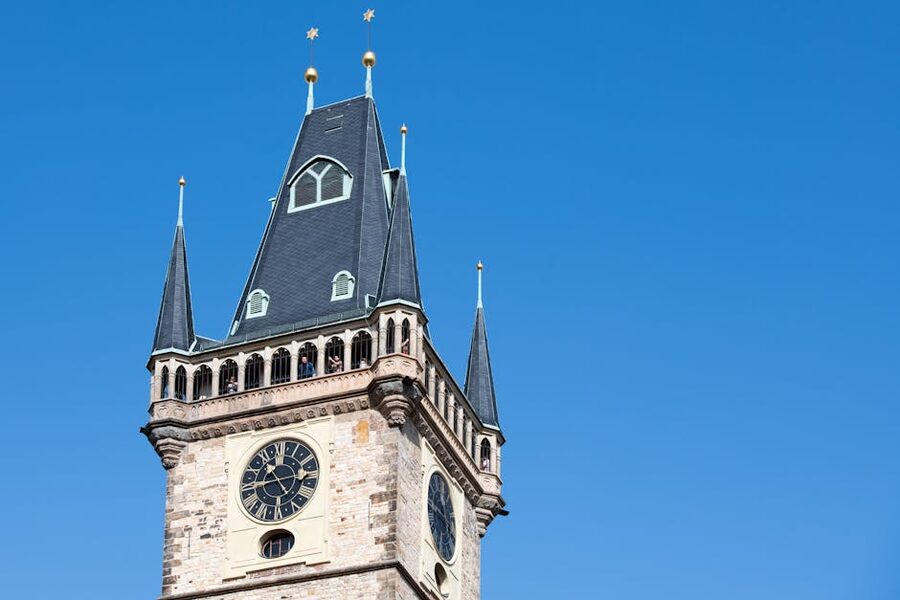
This guide covers how to book the Old Town Hall Tower with the Astronomical Clock: the $21 entry ticket, the combined small-group tours, and the practical details — timing, queue behaviour, what’s actually up there — that most of the booking pages don’t bother explaining. I’ll also cover the hourly clock show, because yes, you should see it, even if it’s shorter than you expect.
_and_Astronomical_Clock_(Orloj)_(4501597341).jpg)
In a Hurry? The Three Ways to Do This
- Cheapest and most flexible: Old Town Hall Tower Entry Ticket — around $21, timed entry, takes about an hour end to end.
- Best for context: Old Town + Astronomical Clock + Underground Tour — around $32, 2-3 hours, small group, covers the medieval basements most visitors never see.
- Quick audio-guided option: Astronomical Clock Tower Ticket with Audio Guide — around $34, 20 minutes, skip-the-line plus headphones.
- In a Hurry? The Three Ways to Do This
- What the Astronomical Clock Actually Is
- The Hourly Show — What to Expect
- The Three Best Tours for Visiting the Clock and Tower
- 1. Old Town Hall Tower Entry Ticket —
- 2. Old Town, Astronomical Clock and Underground Tour —
- 3. Astronomical Clock Tower Ticket with Audio Guide —
- Climbing the Tower — What It’s Actually Like
- What’s Inside the Tower Besides the View
- How to Book — The Practical Steps
- Best Time of Day to Go Up
- Seasonal Notes
- Getting There
- Combining the Tower with Other Prague Sights
- Practical Details Worth Knowing
- One Thing Most Guides Don’t Tell You
- A Few More Prague Guides You Might Want
What the Astronomical Clock Actually Is
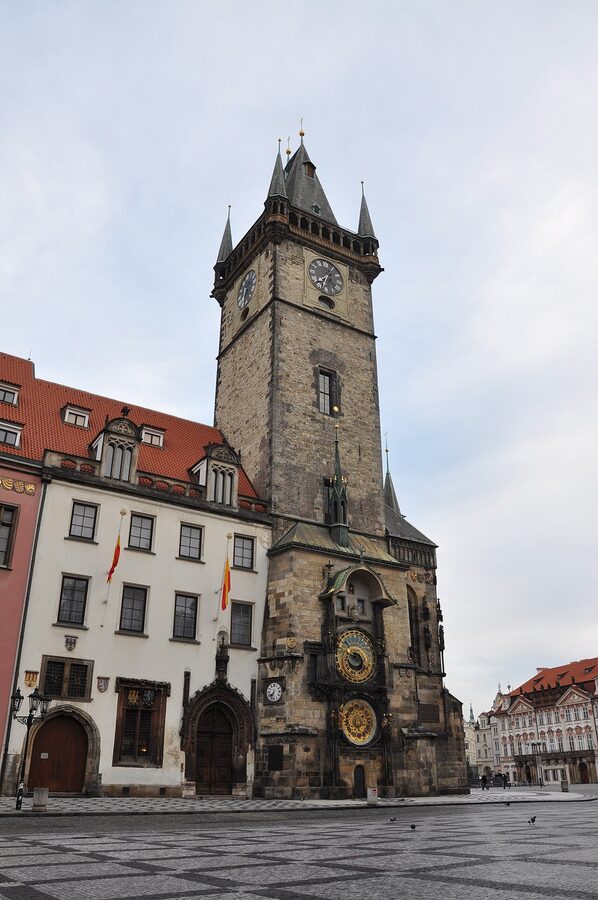
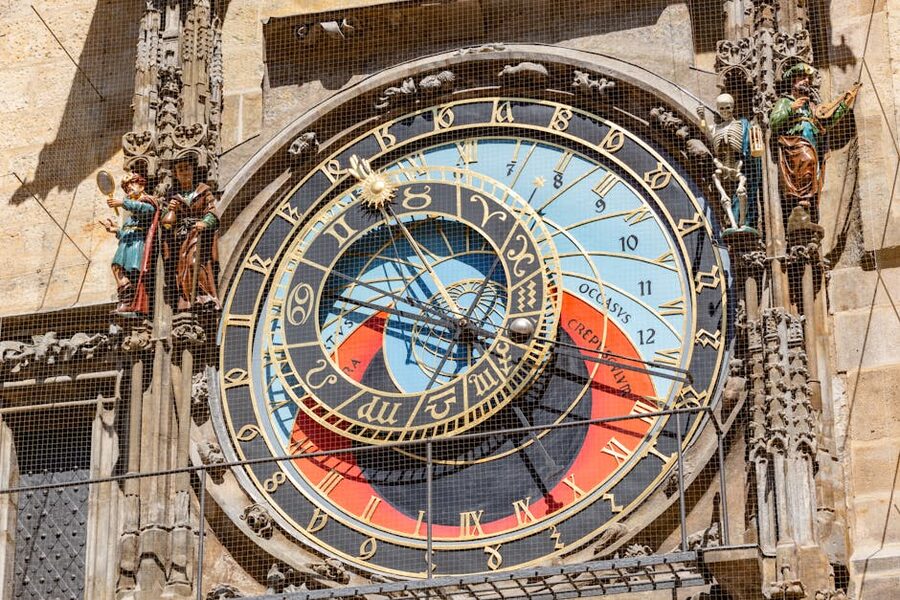
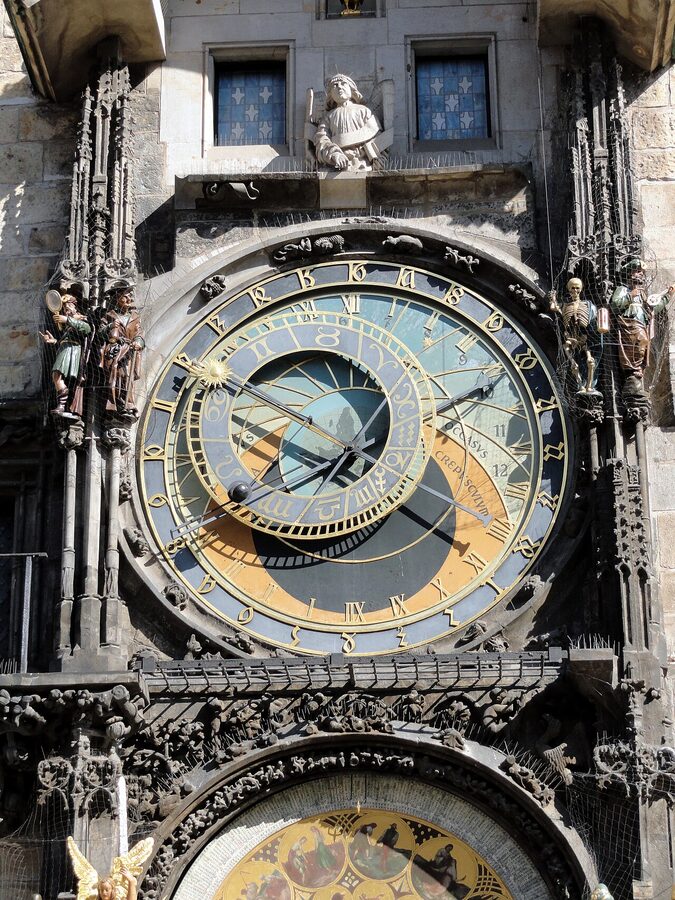
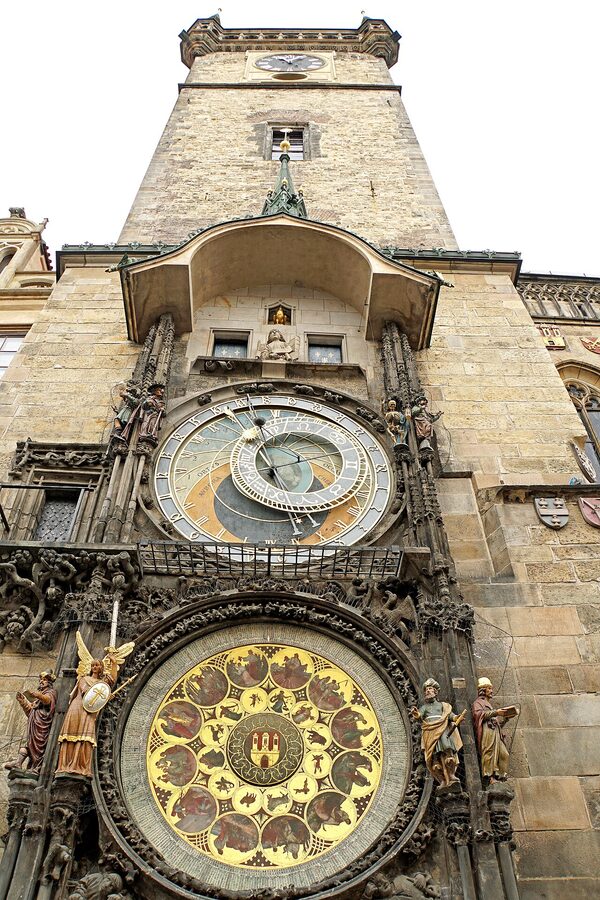
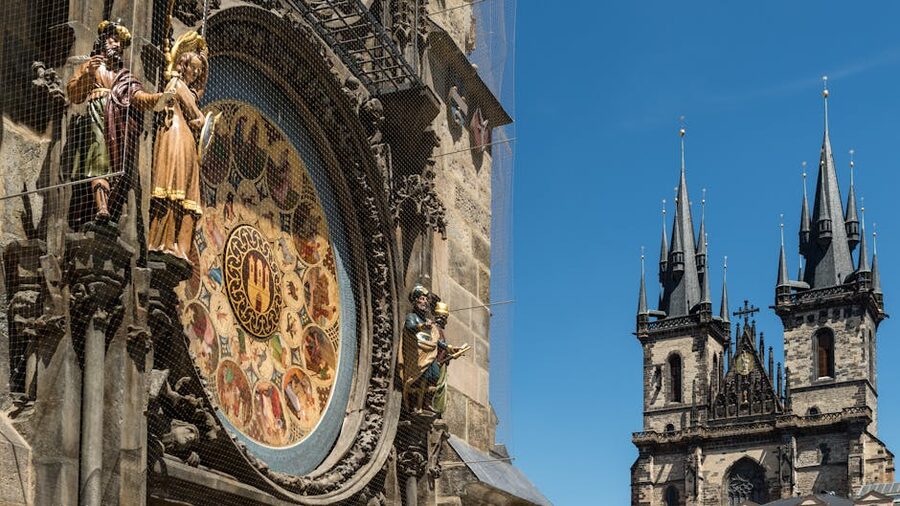
The Prague Orloj is mounted on the south wall of the Old Town Hall tower. It is a medieval astronomical clock — not a standard clock. The main dial doesn’t tell you the time in the way you’re used to. It tracks the position of the sun and moon in the sky, the phases of the moon, the date, the zodiac, and — because the Czechs felt one time system wasn’t enough — three separate time systems at once. Central European. Old Bohemian, where the day starts at sunset. And Sidereal, used for astronomy.
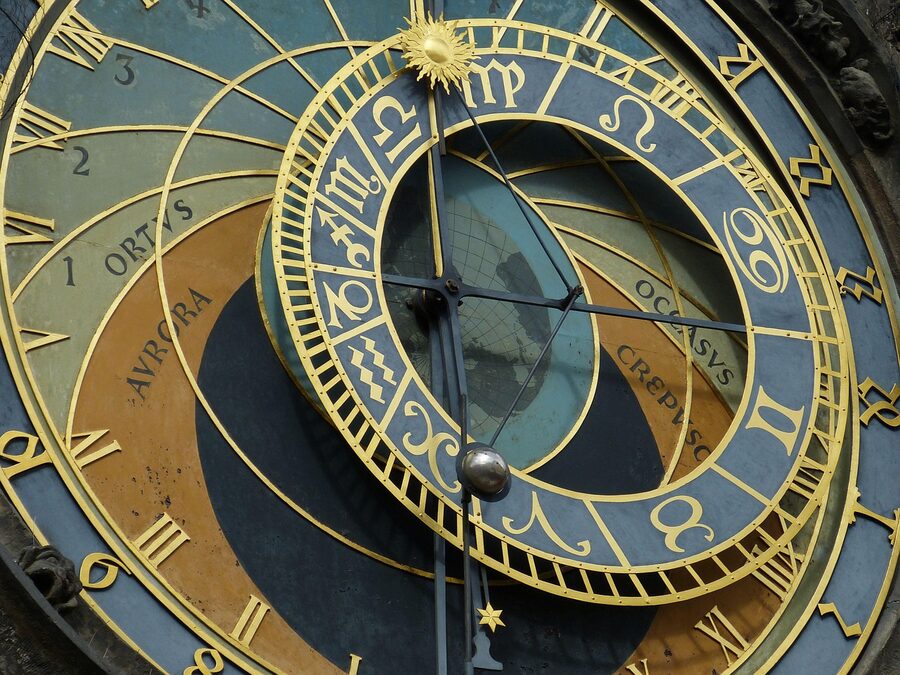
Below the main dial is a second, smaller dial — the calendar. That one was added much later, in 1866, and shows the month, the day, and the name day. Name days are a Czech tradition: every date on the calendar has a first name attached to it, and people celebrate their name day as a minor version of their birthday. If you visit on 14 April, it’s Vincent’s day. On 16 June it’s Zbyněk’s. The florists love it.
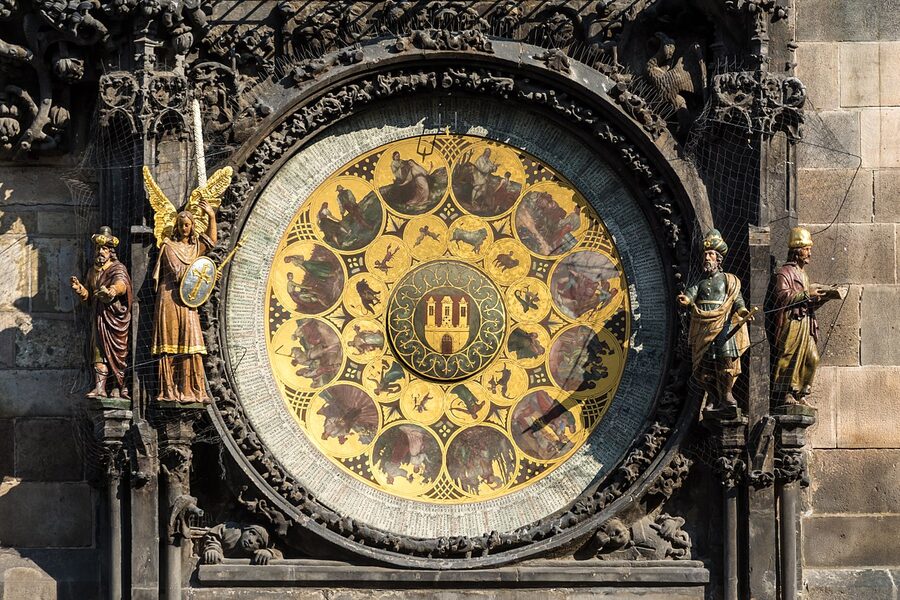

The clock has been running since 1410, which makes it one of the oldest astronomical clocks in the world and the oldest still operating. There is a legend that the city councillors had the clockmaker blinded so he couldn’t build another one for a rival city, and that in revenge he jumped into the mechanism and broke it — leaving it silent for generations. Almost none of that is true. The original clockmaker was a man called Mikuláš of Kadaň, and he kept working for years. But the story stuck because it makes a better tour anecdote.
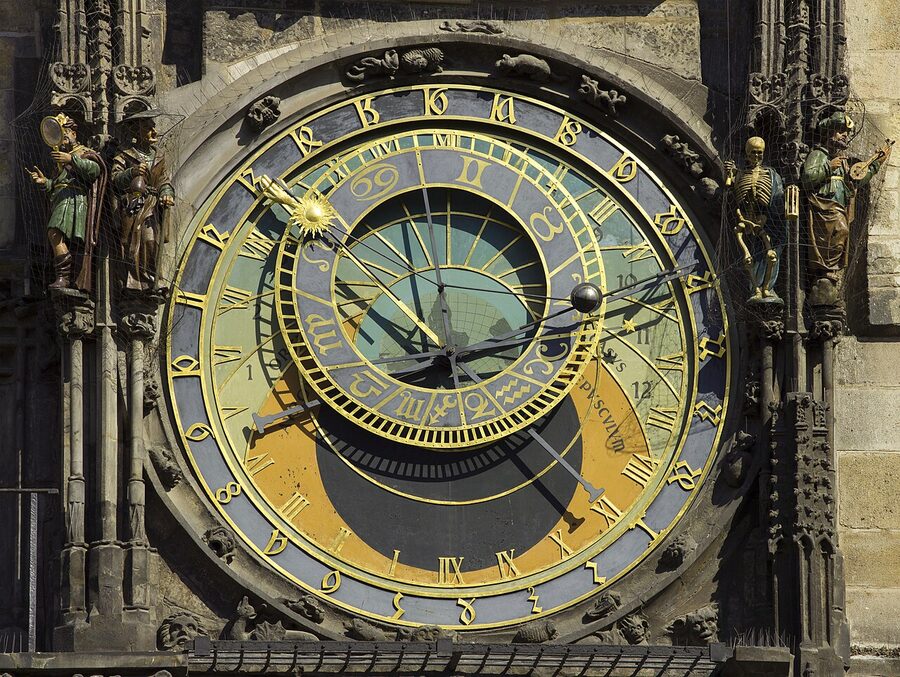

What most visitors don’t realise is that the man who refined the clock into its masterpiece form — adding the astronomical dial the way we see it now — was a different person entirely. Jan Šindel, a professor of mathematics and astronomy at the Charles University. He designed the calculations. Mikuláš built them into metal. The Orloj is the result of a 15th-century collaboration between theoretical science and precision mechanical engineering. That pairing, for 1410, is genuinely remarkable.
The Hourly Show — What to Expect
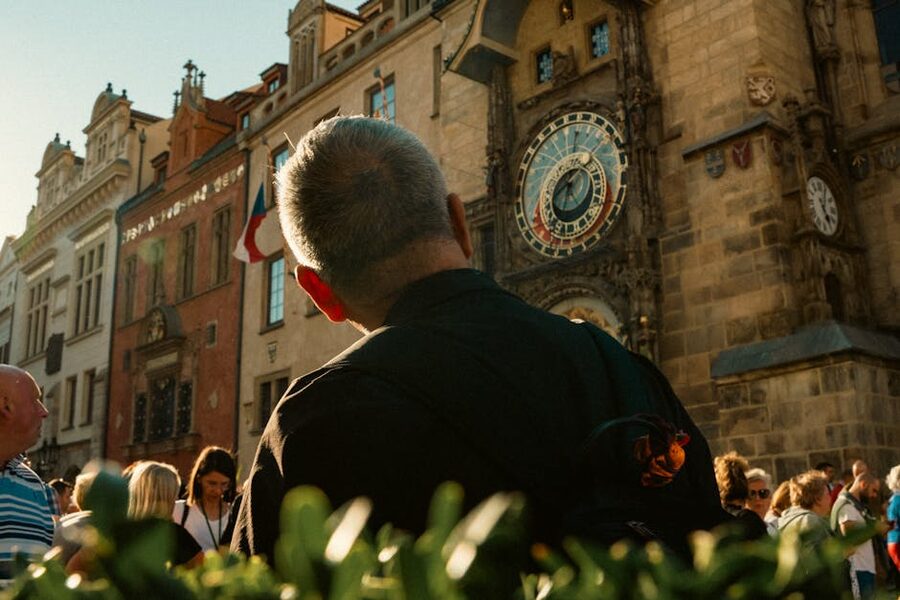
Every hour on the hour, from 9am to 11pm, the clock runs a short mechanical performance. Two small doors open at the top of the clock, and the twelve Apostles shuffle past — you see each of them for about a second and a half before they disappear back behind the doors. At the same time, four figures beside the dial move: a skeleton pulling a bell rope (Death), a miser shaking a bag of coins (Vanity), a Turk (Lust), and a figure looking into a mirror (also Vanity, the medieval version). When the Apostle procession ends, a live golden rooster at the top crows, and a bell rings the hour.
That’s it. The whole thing runs for about 45 seconds. If you’ve read breathless descriptions online calling it “the spectacle you have to see” — the show is not that. It’s a charming medieval moment. Knowing what it is before you watch helps. Standing in the square thinking “any minute now the big part starts” doesn’t.
My honest recommendation: go see it once. Position yourself somewhere with a clear view of the upper doors (the Apostles are the main event) and take a breath. It is quite sweet — a 600-year-old mechanical device still doing the same thing every hour. Just don’t expect fireworks.
.jpg)
Best times to catch it: the first show of the day (9am) has almost nobody watching. The midday and sunset shows have the biggest crowds. After 9pm the numbers thin out again and the lighting on the clock face is dramatic. The crowd itself is part of the experience — but it does block the view if you arrive with less than ten minutes to spare.
The Three Best Tours for Visiting the Clock and Tower
These are the three I’d actually recommend, ranked by how many visitors have reviewed them and how much value they add over just walking up and watching. The $21 entry ticket is the baseline. The combined tours add context, history, and in one case access to medieval cellars you can’t otherwise see.
1. Old Town Hall Tower Entry Ticket — $21
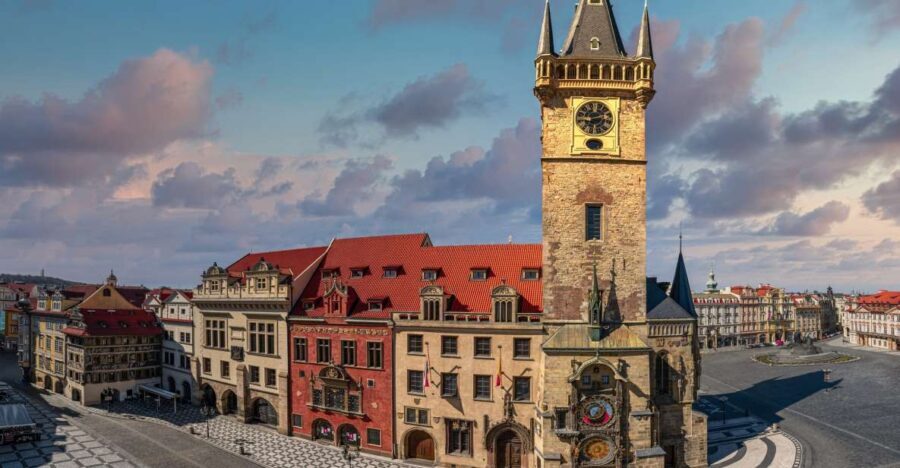
This is the straightforward skip-the-line ticket and the one most visitors should book. It gets you into the tower, up to the observation gallery at the top, and into the small historical rooms on the upper floors — including the old Council Chamber with its wooden ceiling. Our full review breaks down what the timed entry actually means in practice (you’re not locked to the exact minute, but show up within your window). The lift is available if stairs are an issue.
2. Old Town, Astronomical Clock and Underground Tour — $32
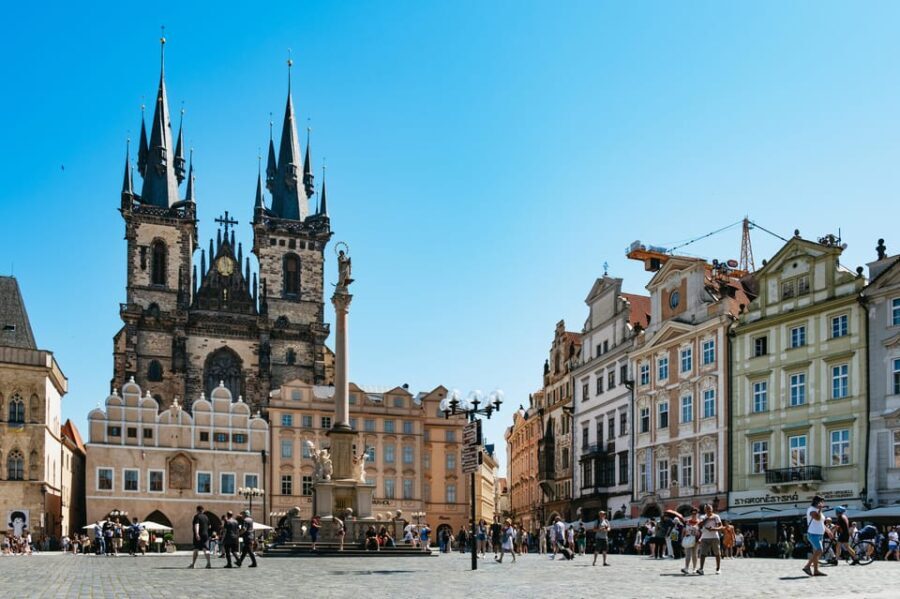
This is the pick if you want more than just the view. The guide walks you through the Old Town, explains the clock mechanism and its legends in front of the dial, and then takes you down into the medieval underground — the original ground level of Prague, now about 10 metres below street level. Reviewer feedback consistently calls out the guides’ depth on this one, which matches the pattern in our own experience of the tour. Two to three hours, small groups, good for a first day in Prague.
3. Astronomical Clock Tower Ticket with Audio Guide — $34
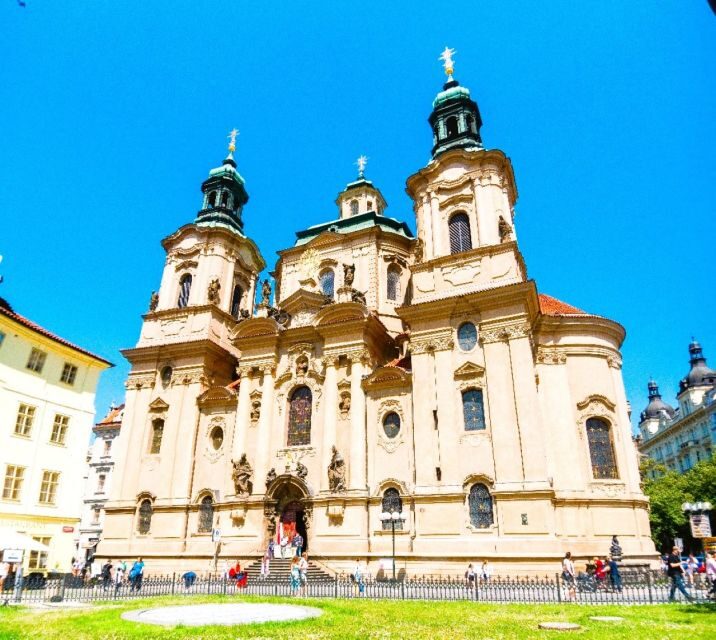
Essentially the same entry ticket as option 1, but bundled with an audio guide you listen to on your phone as you go up. The content covers the tower’s history, how the clock works, and what you’re looking at from the observation deck. Worth the extra $13 if you prefer to learn at your own pace — if you’re the type who normally skips audio guides, get the basic ticket instead. Our review covers whether the audio content justifies the price premium.
Climbing the Tower — What It’s Actually Like
The Old Town Hall Tower is 69 metres tall. The observation deck sits near the top and wraps around four sides, so you get a 360-degree view of Prague. You can take the stairs (about 120 of them) or the lift — it’s a modern glass lift tucked into an old stone shaft, and it’s one of the more interesting lift rides in Europe because you can see the medieval walls sliding past as you rise.
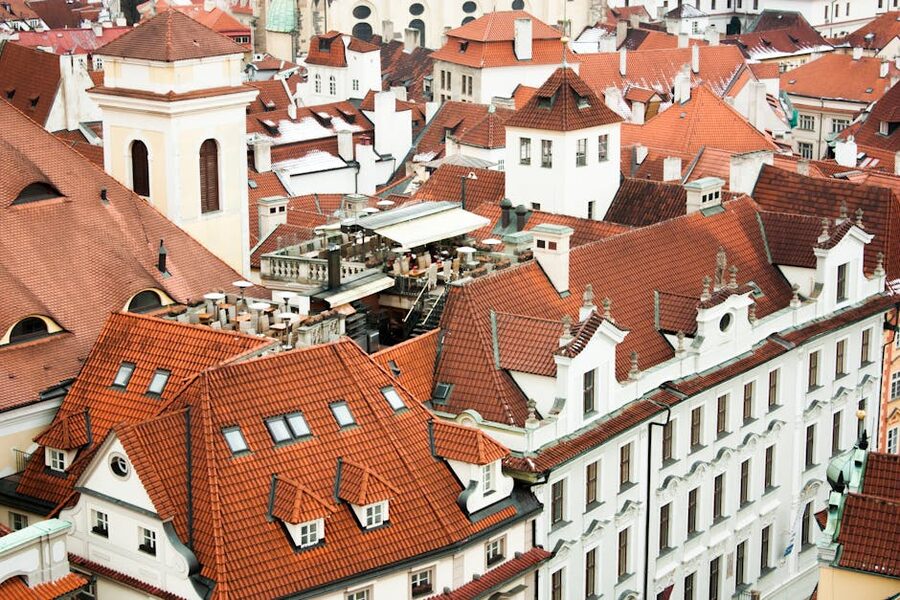
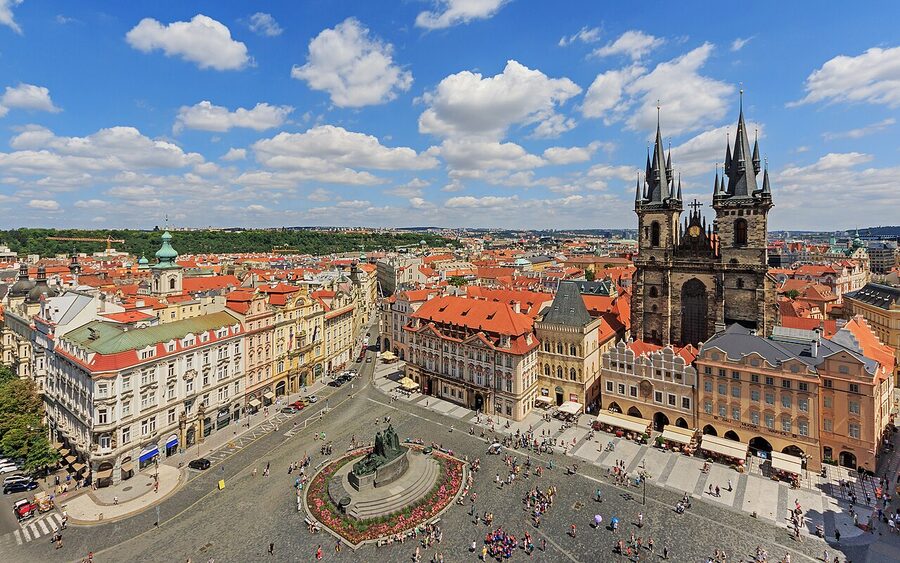
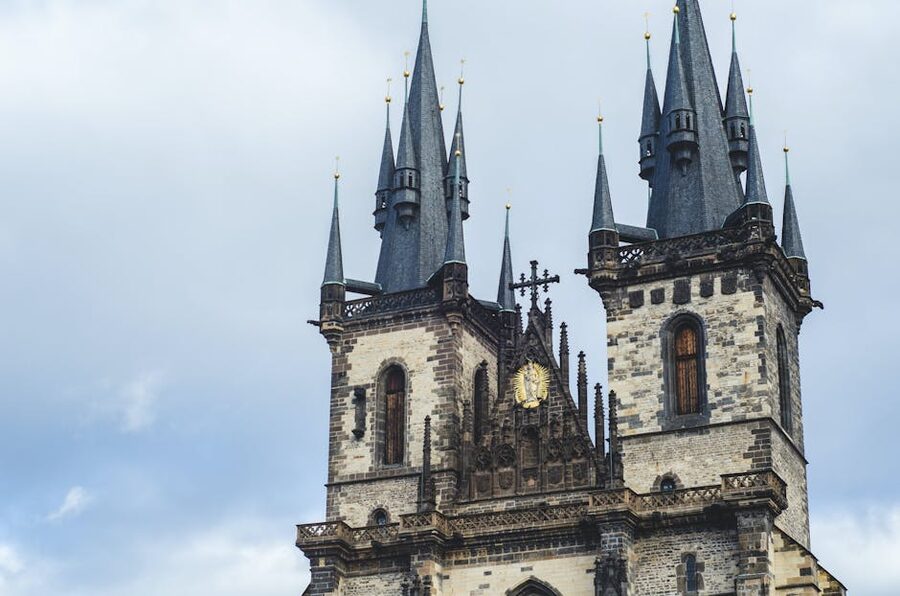
From the top, looking south, you see the Old Town Square directly below you, the Týn Church with its twin Gothic spires, and the river beyond. To the west is Prague Castle up on the hill, with St Vitus Cathedral piercing the skyline. To the north are the rooftops of the Jewish Quarter. To the east, the Powder Tower.

The deck itself is narrow — maybe 80cm wide in places — and there’s a mesh railing you can shoot photos through. Bring a lens that can handle the wire if you’re photographing. Phones are fine; most of the gaps in the mesh are large enough to fit a phone through cleanly.
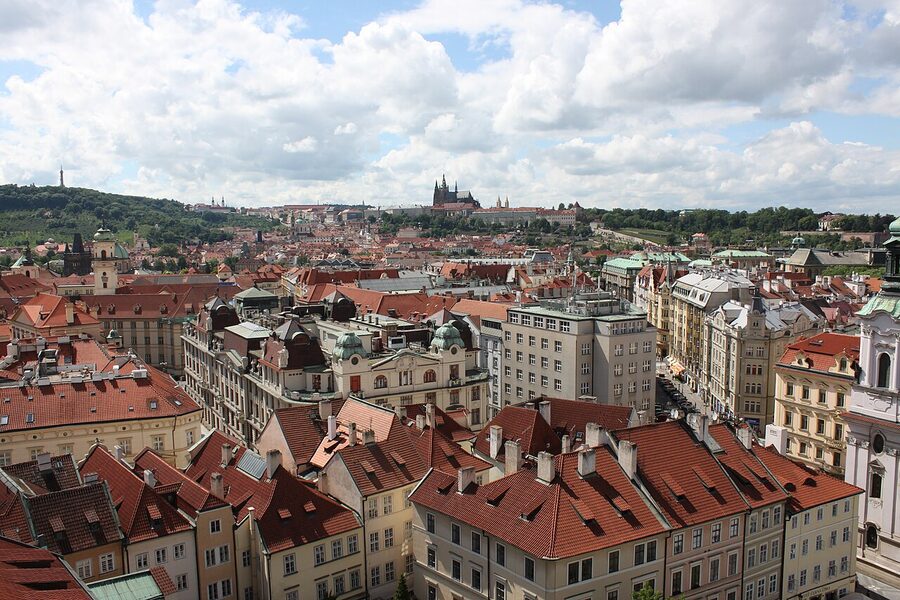

I went up once in July around 6pm and once in late November around 3:30pm. The July trip was hot — the tower traps heat and there’s almost no breeze up top — but the light was spectacular. The November trip was freezing (wear gloves, the stone railing is cold) but the low winter sun painted the rooftops in a way summer never does. If you only have one visit and you’re flexible on season, winter afternoons win.
What’s Inside the Tower Besides the View
People come for the view. What you may not realise is that there are several rooms on the way up that are worth slowing down for. The Council Chamber is on the second floor — a 15th-century room with original wooden panelling, preserved murals, and the old bench where the Prague city councillors sat to pass laws on their own city. It still functions as the ceremonial council room today.

The Chapel of the Virgin Mary is smaller and often empty. It’s worth two minutes. The ceiling is late Gothic and the stained glass is original. If you see a tour group pass through it without stopping, peel off and have the room to yourself.
There’s also the back of the clock — yes, you can walk up to the mechanism from the inside and see it working. The astronomical computation in front of you is the original 1410 design, with most of the original wheels and gears still in place. This is the part that my seven-year-old cousin stared at for twenty minutes on her last visit. It’s also the part most visitors walk past on their way to the observation deck.
How to Book — The Practical Steps
You can buy tickets three ways.
At the door. The ticket office is inside the Old Town Hall, to the right of the main entrance as you face it from the square. In summer, queues here can be 30-45 minutes. In winter, there’s often no queue at all.
Online, day-of. You can book a timed slot on GetYourGuide or Viator for the same day. This is what most visitors end up doing — you’re already in Prague, you decide you want to go up, you book a slot in 30 minutes, and you skip the counter queue. This is the main reason the online tickets cost a couple of dollars more than the door price.
Online, in advance. If you’re visiting in June, July, or the first half of August, book the night before at the latest. Slots for early-morning and golden-hour times fill up and the best light of the day goes to whoever booked first.
Best Time of Day to Go Up
Golden hour — the hour before sunset — is when Prague looks the way Prague is meant to look. Red rooftops glow, the castle catches the last light on the hill, the spires turn into silhouettes. That hour sells out first.
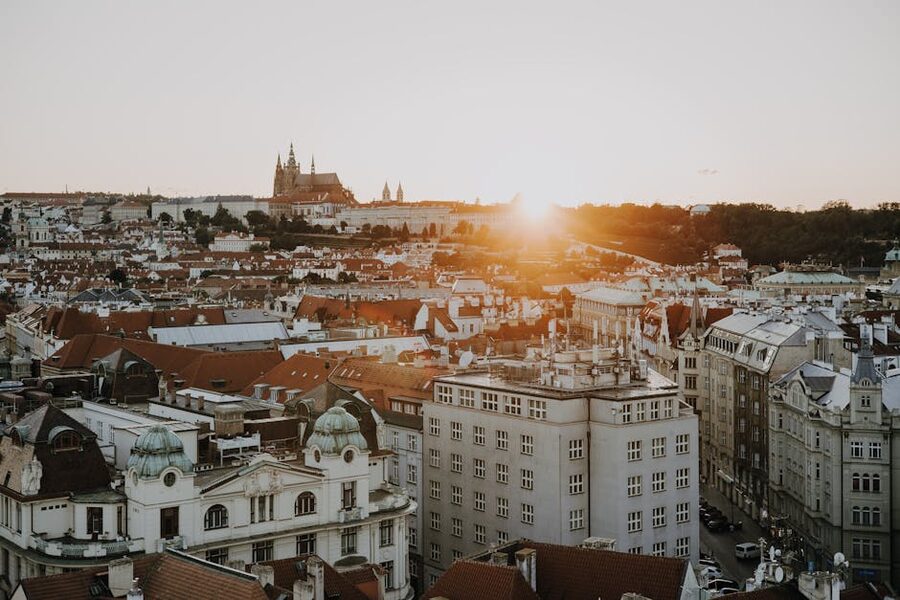
Morning light (before 10am) is the next best. Softer, cleaner, fewer crowds below you in the square. The Týn Church is backlit from this angle which makes for strong photographs.
Midday is the flattest light — avoid it for photos, go up only if that’s the slot you have. The compensation is that the clock show at midday is the fullest spectacle of the day: all twelve Apostles plus the four figures plus the rooster, timed to solar noon.
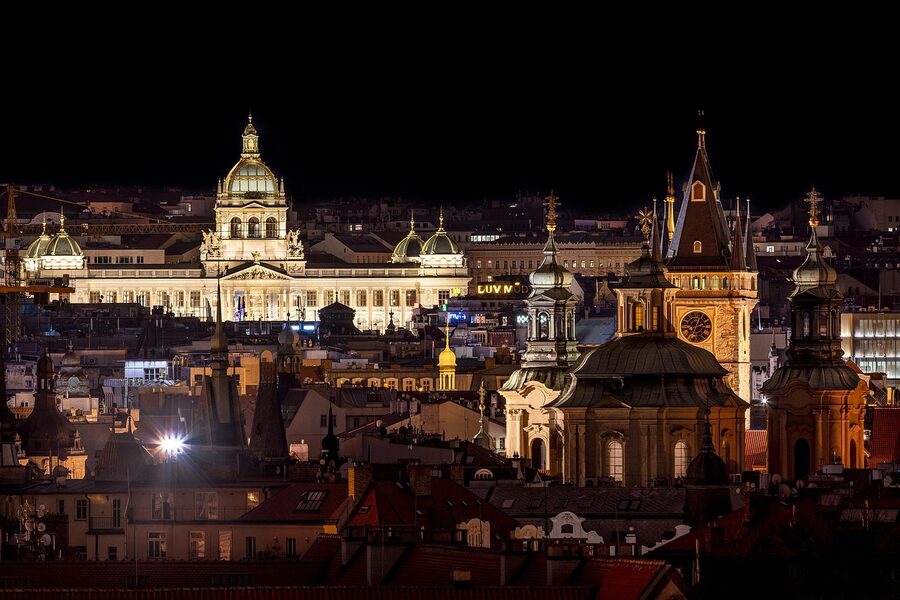
Night. The tower stays open until 10pm most of the year, 11pm in peak summer. The city lights up and the Old Town Square glows amber from the street lamps. Worth doing on one of your Prague nights if you’ve already done a daytime visit — it’s a completely different atmosphere.
Seasonal Notes
Prague has four seasons and the tower experience changes sharply with each. July and August are busy, bright, and hot. The stone inside the tower traps heat and the observation deck can feel 5-8 degrees hotter than the square below.
Autumn (October to mid-November) is my favourite for the tower. Lower sun, fewer crowds, the leaves in the castle gardens across the river go bright yellow, and the temperatures inside the tower are comfortable. Book a golden-hour slot and bring a wide-angle lens.
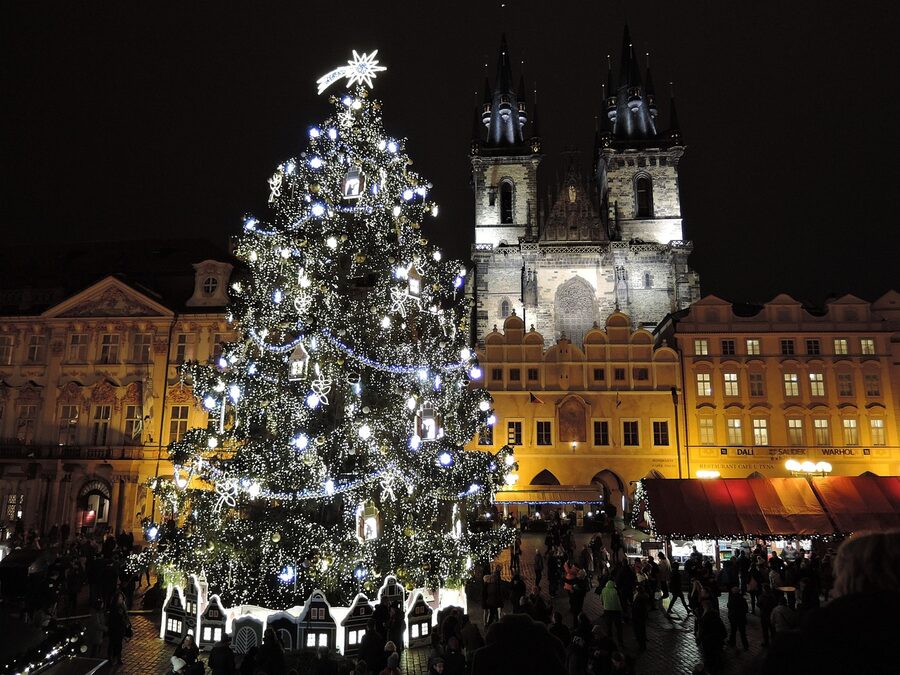
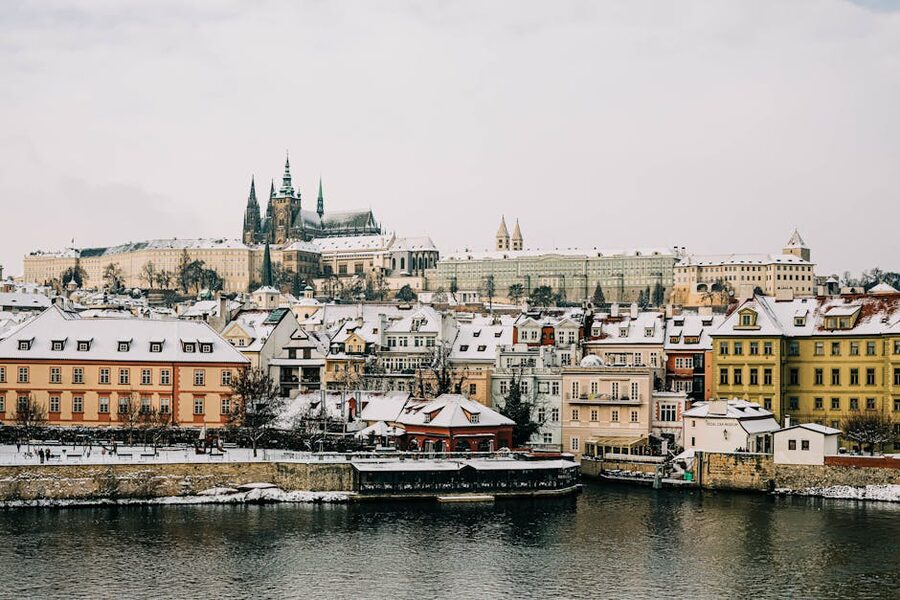
Winter in Prague is cold, often 0 to -5°C, but the tower is still worth it. The Christmas market below is at its peak from late November to early January. Go up mid-afternoon, come down into the market, buy a cup of svařák (mulled wine) to warm your hands. If it snows, the tower becomes the best viewpoint in the city for photos — but you’ll need to be lucky; Prague snow usually melts within half a day.
Getting There
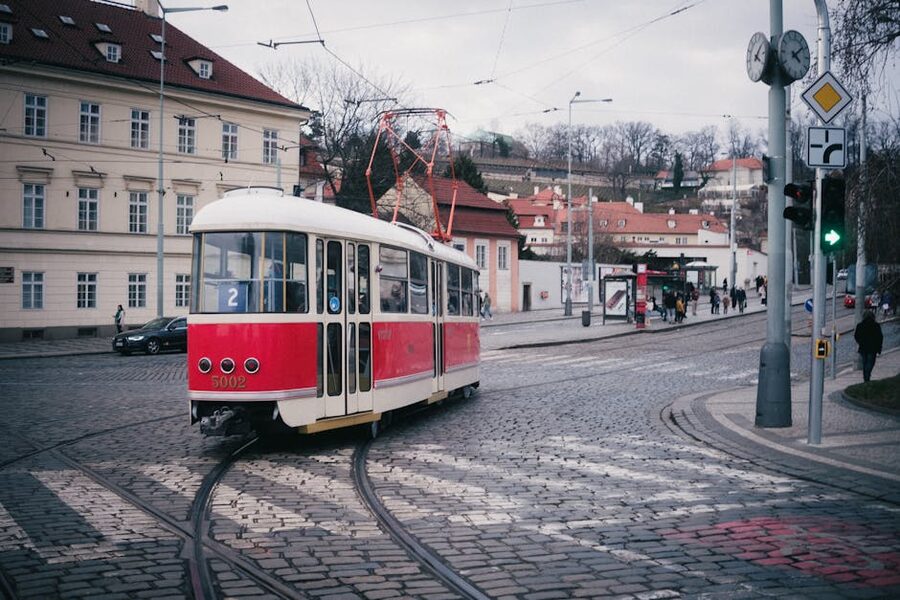
The Old Town Hall sits on the south-west corner of Old Town Square (Staroměstské náměstí). From any of Prague’s metro stations the closest stop is Staroměstská on the green line (Line A) — from there it’s a five-minute walk east through the streets of the Old Town. Trams 17 and 18 stop at Staroměstská too.
If you’re walking from Wenceslas Square (the other main square), follow Železná or Havelská street — both lead directly into Old Town Square in about 8 minutes. From Charles Bridge, walk east and you’ll hit the square in 4-5 minutes.
Don’t drive. The entire Old Town is a pedestrian zone and there’s no sensible parking. If you’re staying outside the centre, take the tram or walk.
Combining the Tower with Other Prague Sights
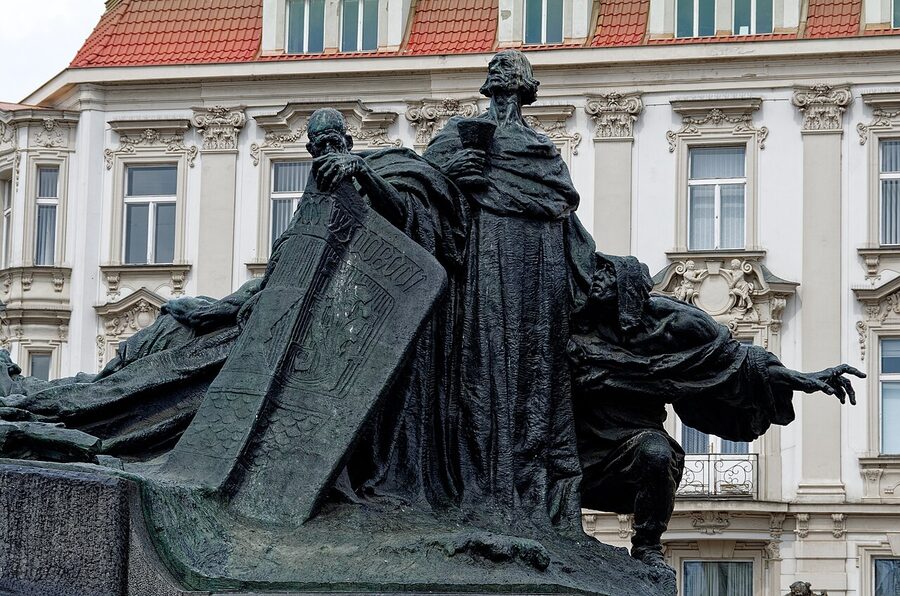
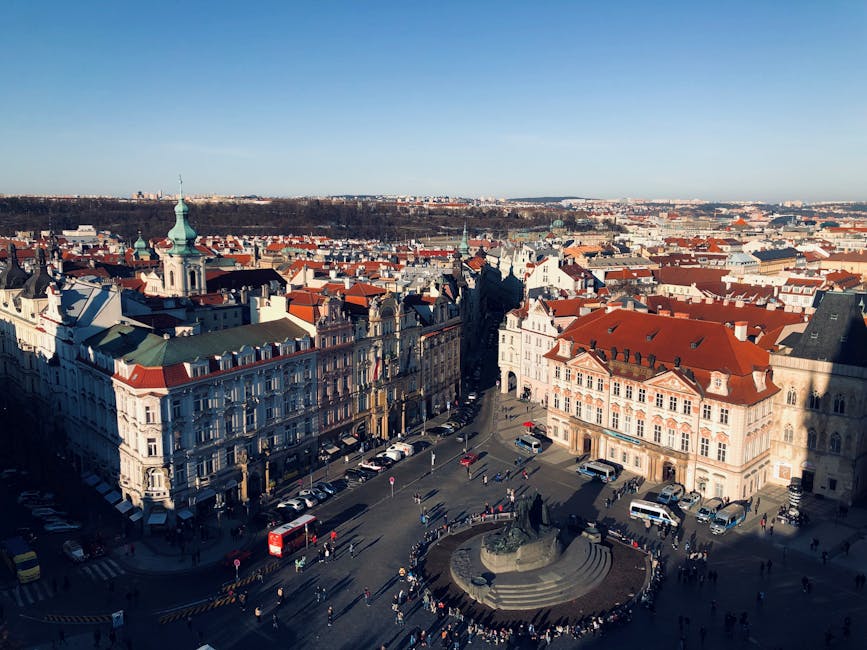
Most people pair the Old Town Hall Tower with the rest of Old Town Square — the Týn Church, the Jan Hus monument, the Christmas markets if you’re there in December. All of those are free and in the same 200-metre radius.
For a half-day plan: a morning Old Town walking tour that includes the clock show, a quick climb up the tower for midday light, lunch in a café off the square, then the Astronomical Clock audio guide if you booked that option. Three hours total.
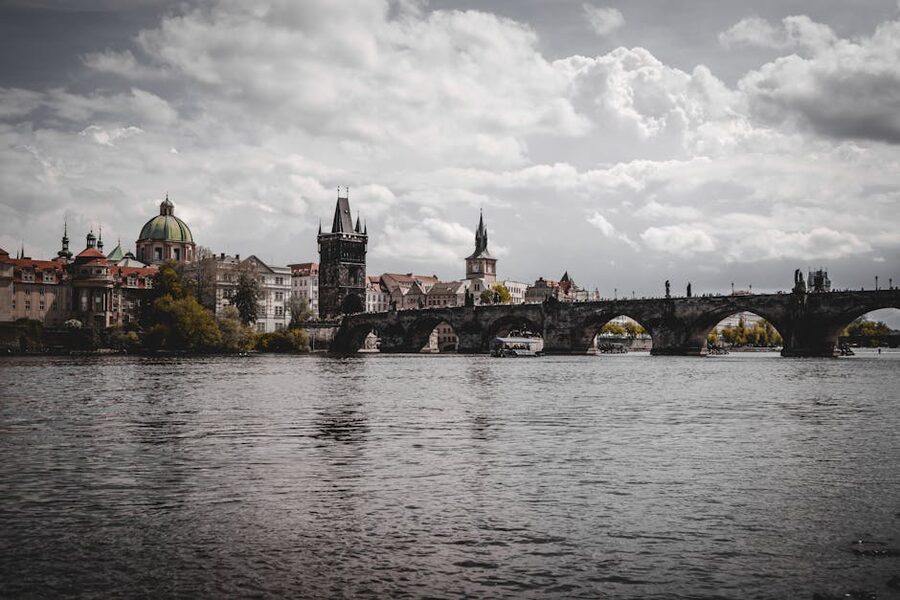
For a full day: morning at Prague Castle (go at opening to beat the queue at St Vitus), cross the Charles Bridge back into the Old Town, clock show at 1pm, tower at 1:30pm, then walk the Jewish Quarter in the afternoon. The whole loop is under 3km.
Practical Details Worth Knowing
Opening hours. The tower opens at 9am most days (11am on Mondays, when the Old Town Hall’s regular operations start later) and closes at 10pm or 11pm depending on the season. The clock face itself is always on and always running — you can see the hourly show from the square 24 hours a day, though the figurines only move between 9am and 11pm.
Admission. Adult entry $21, child/student reduced, under-6 free. The Prague CoolPass and Official City Pass both include it. If you’re planning to hit three or more ticketed Prague sights in three days, the pass pays for itself — if not, the individual ticket is cheaper.
Accessibility. Lift to the observation deck. The observation deck itself has a narrow walkway (70-80cm) which a standard wheelchair can navigate but a powered chair may find tight. The Chapel of the Virgin Mary and Council Chamber are both step-free via the lift.
Photography. Allowed everywhere, no flash inside the Chapel or Council Chamber. The observation deck has wire-mesh safety railings which you can shoot through.
How long to plan for. Minimum 45 minutes if you go up, look, and come down. An hour and a half if you read the plaques in the Council Chamber and wait for the next hourly show on the deck before descending.
One Thing Most Guides Don’t Tell You
The Apostles are not original. The figurines you watch march past at each hour are 20th-century replicas — the original Gothic wooden Apostles were destroyed in 1945 when the Nazis set fire to the Old Town Hall during the Prague Uprising in the last days of World War II. The clock face itself survived because it’s mounted on the exterior stone wall, but the interior rooms and most of the original Apostle figures burned. What you see now was reconstructed and reinstalled in 1948.
The one part of the 1945 damage still visible is on the north side of the tower, where a section of the building was never rebuilt — there’s a grass lawn now where the corner used to stand. Look for it after you descend, on the left as you exit the main square-facing door. It’s a small thing, but it shifts how you think about what you’ve just seen.
A Few More Prague Guides You Might Want
If you’re building out a Prague itinerary, the Castle ticket guide covers the other big climb in the city — with a cathedral and far more territory to cover. The Vltava cruises are the easiest way to see the Charles Bridge and the castle from the water, especially at sunset. For evenings, our guide to Prague’s medieval dinners covers the theatrical supper halls in the basements a few streets from Old Town Square, and the pub crawl guide walks through the standard circuit most visitors do on their first night. If you want a break from tourist crowds, a morning in the Jewish Quarter is five minutes from the Astronomical Clock and feels like a different city.
And if you’ve got an extra day and want to leave Prague for something big: the Terezín guided trips are the most moving day trip most visitors take from the city.
Disclosure: This site earns a commission on bookings made through the links above, at no extra cost to you. We only recommend tours we’ve researched and would book ourselves.