
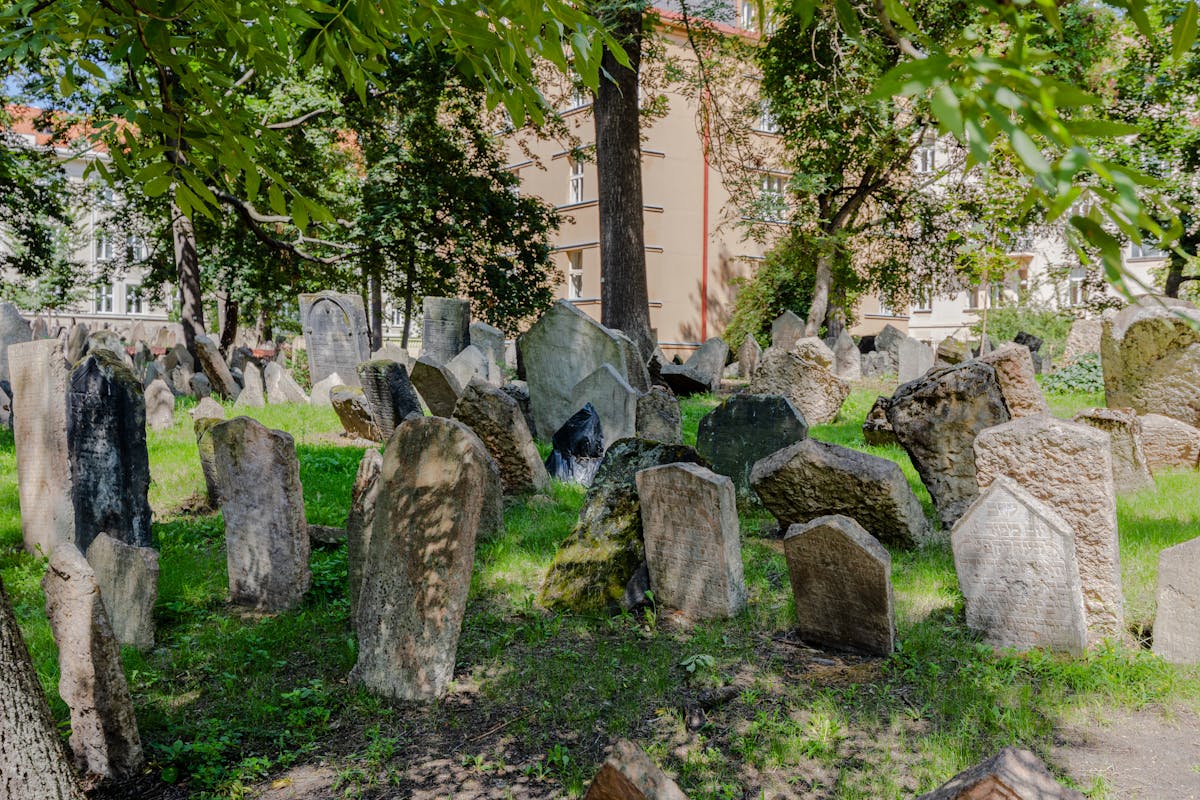
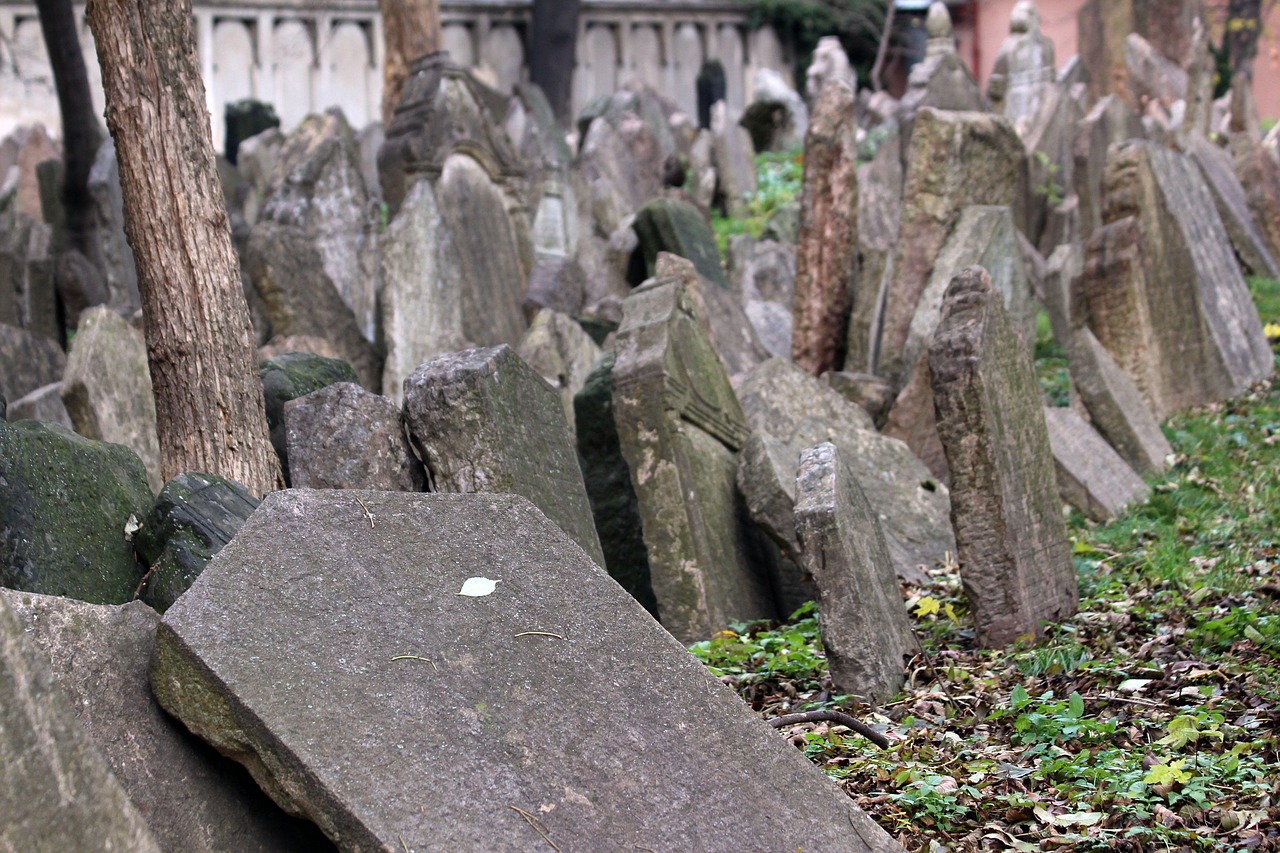
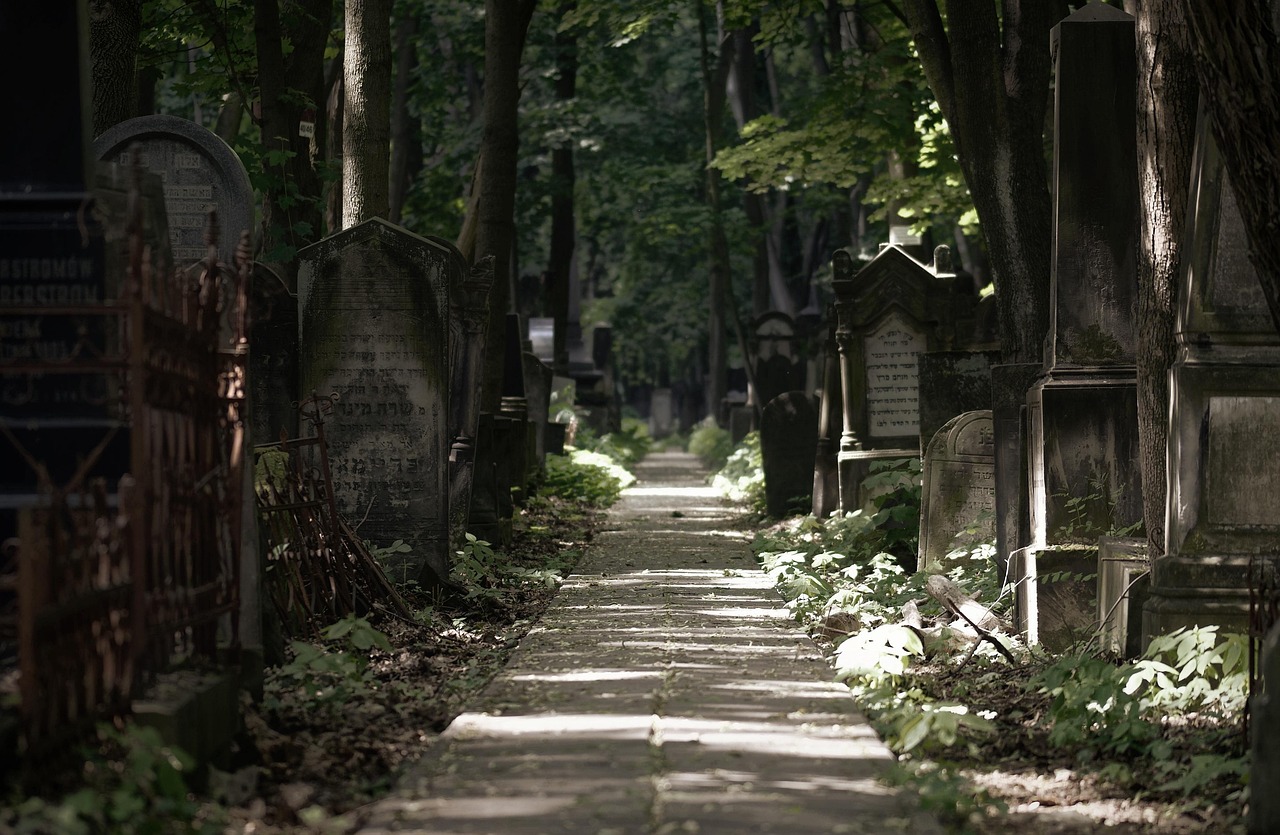
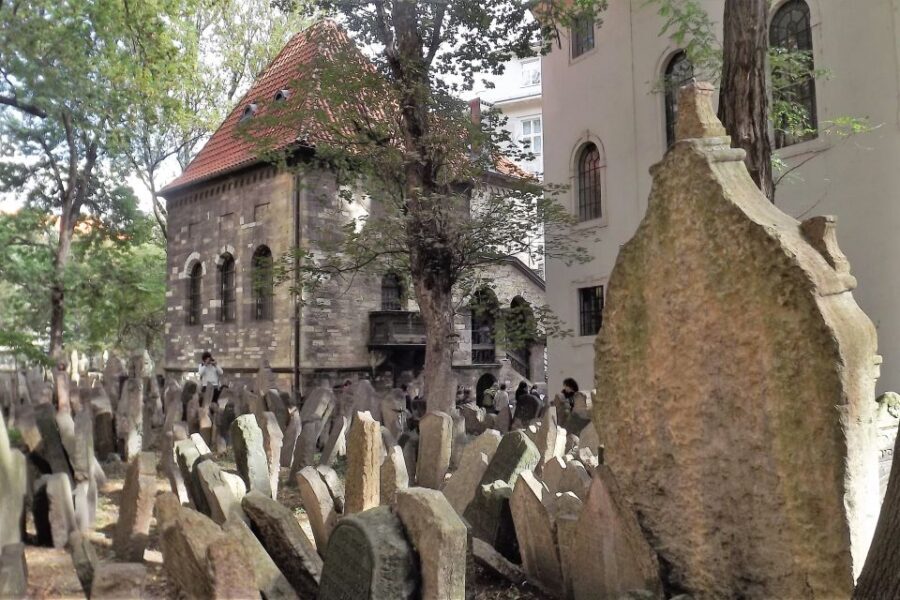
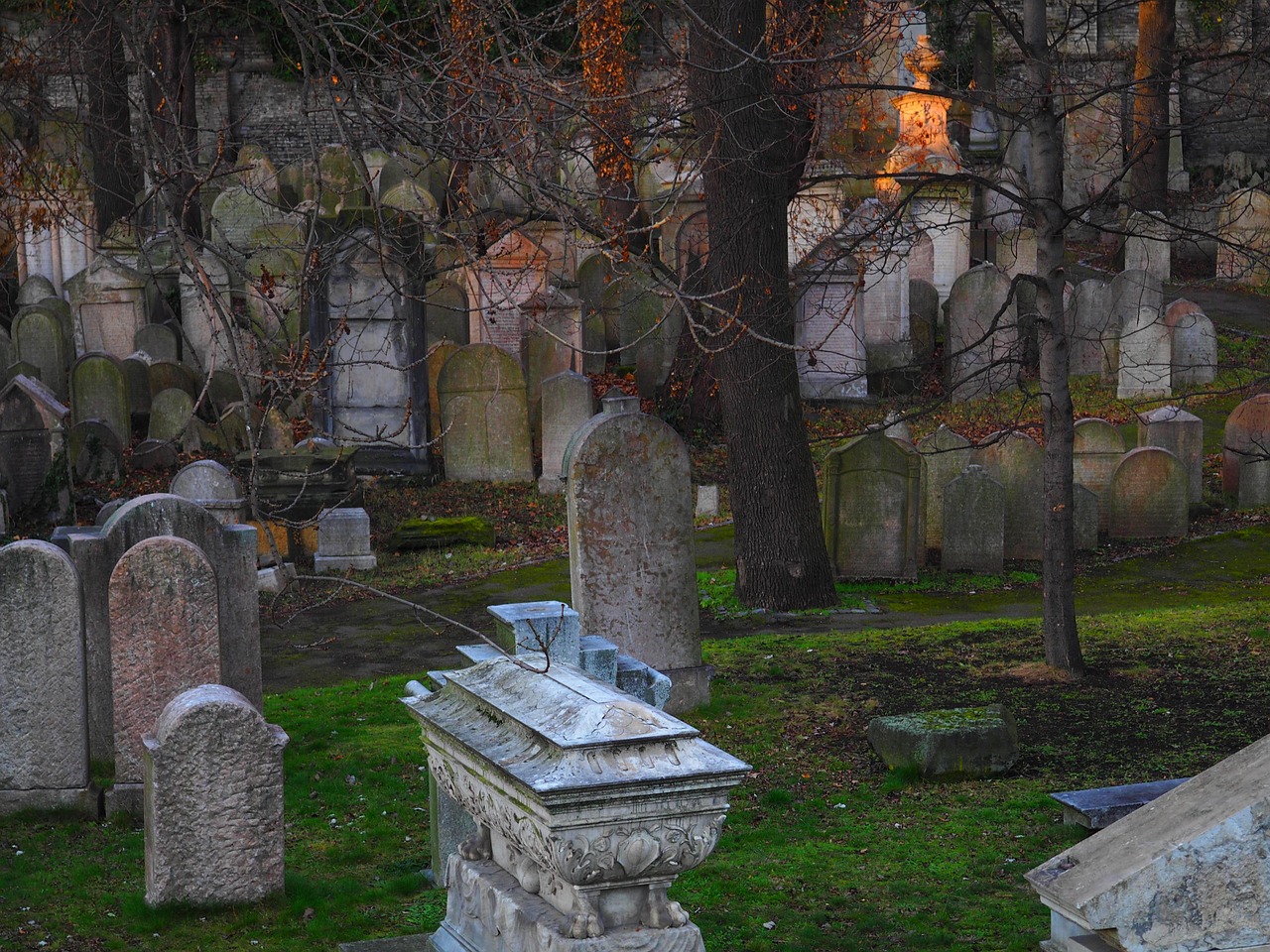
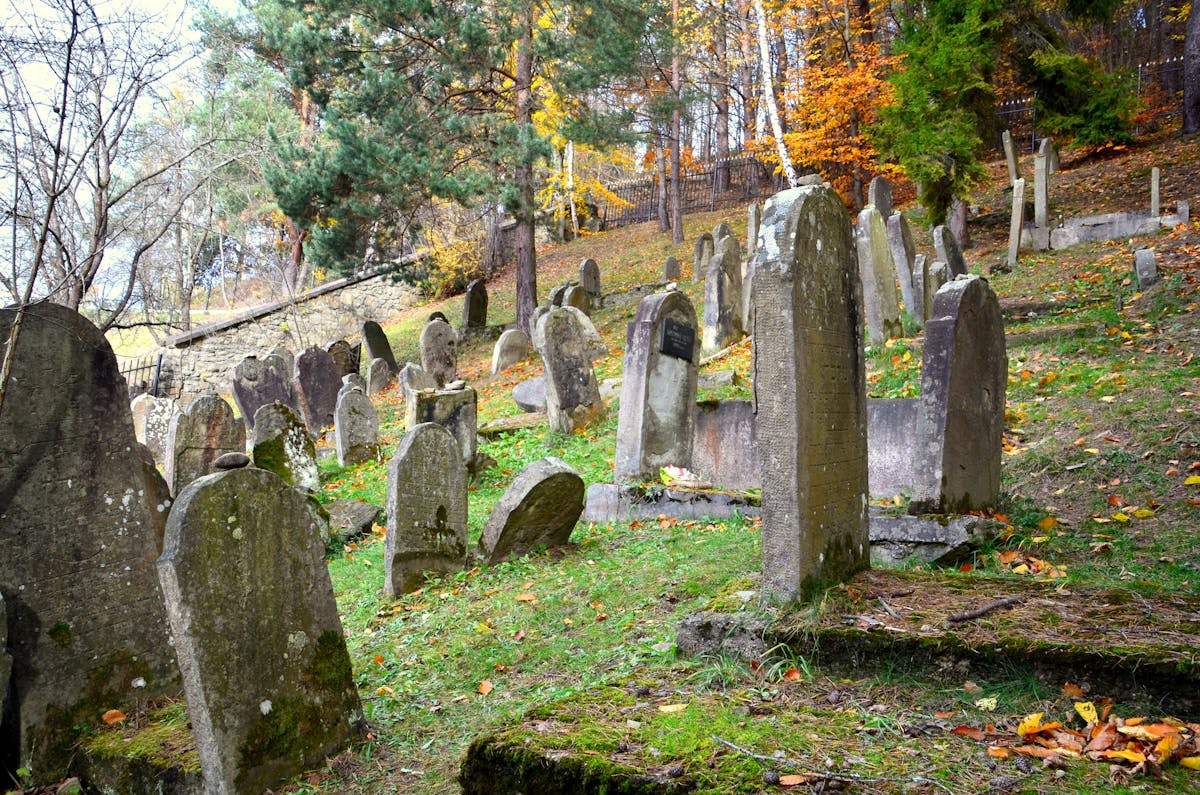
There are roughly 12,000 headstones in Prague’s Old Jewish Cemetery, layered on top of each other as many as twelve deep. The ground itself has risen by several meters over the centuries because there was nowhere else to bury anyone — the Jewish community was confined to a few city blocks and the dead had to stay within those same blocks. Walking through it today, with the crooked stones pressed together at odd angles and tree roots pushing up through graves that date back to the 1400s, you feel the weight of a place that refused to be erased.
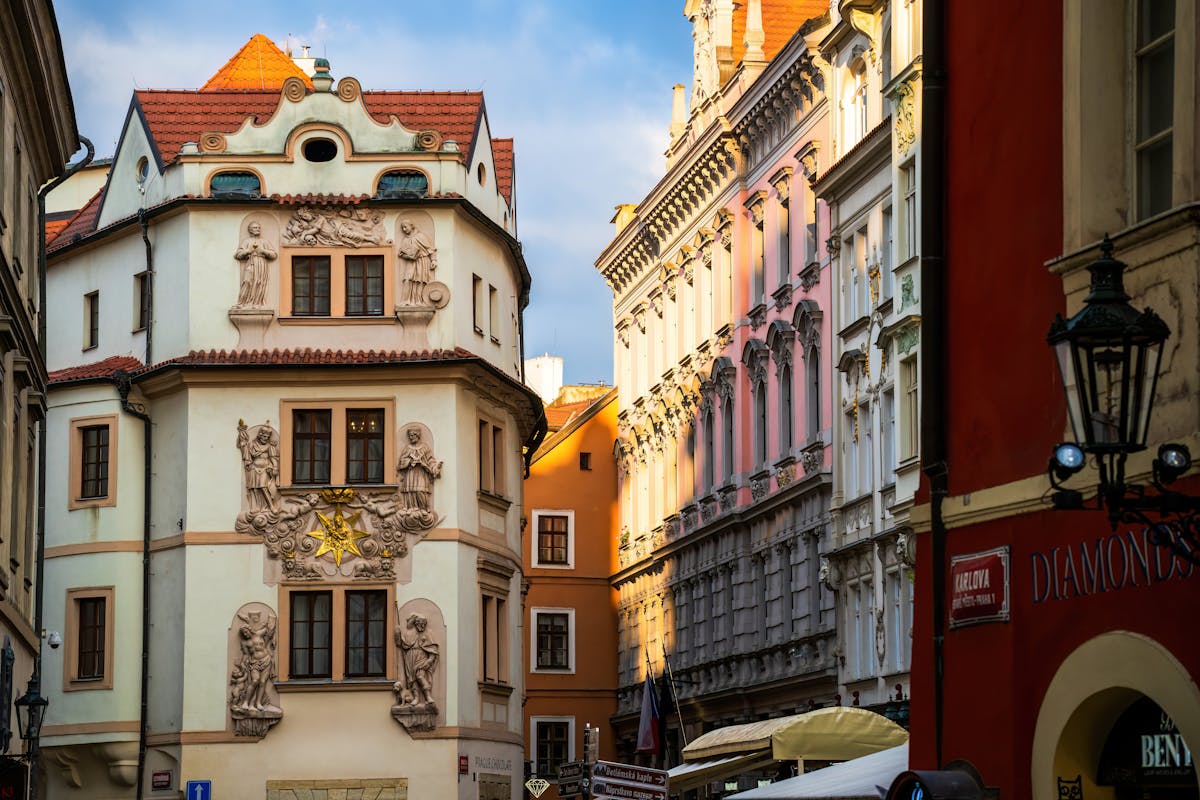
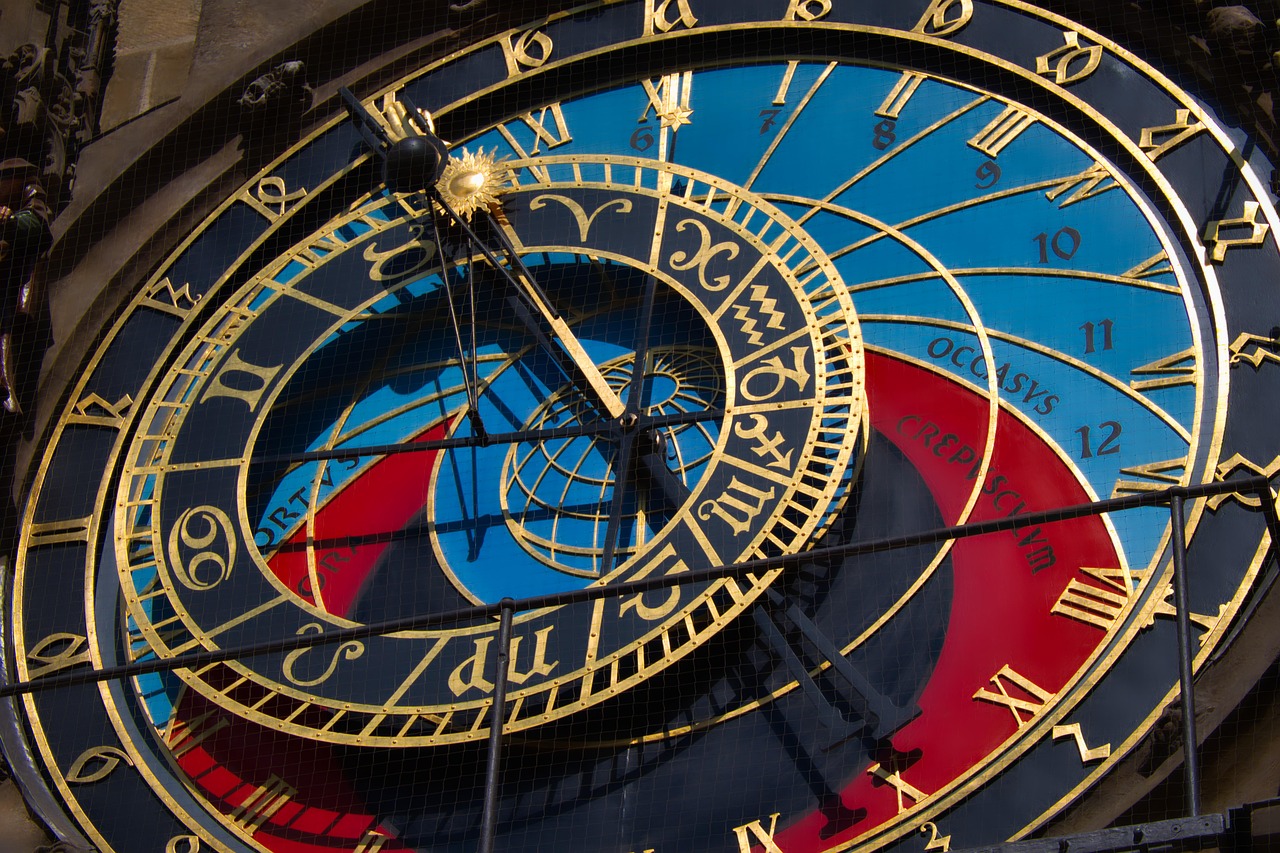
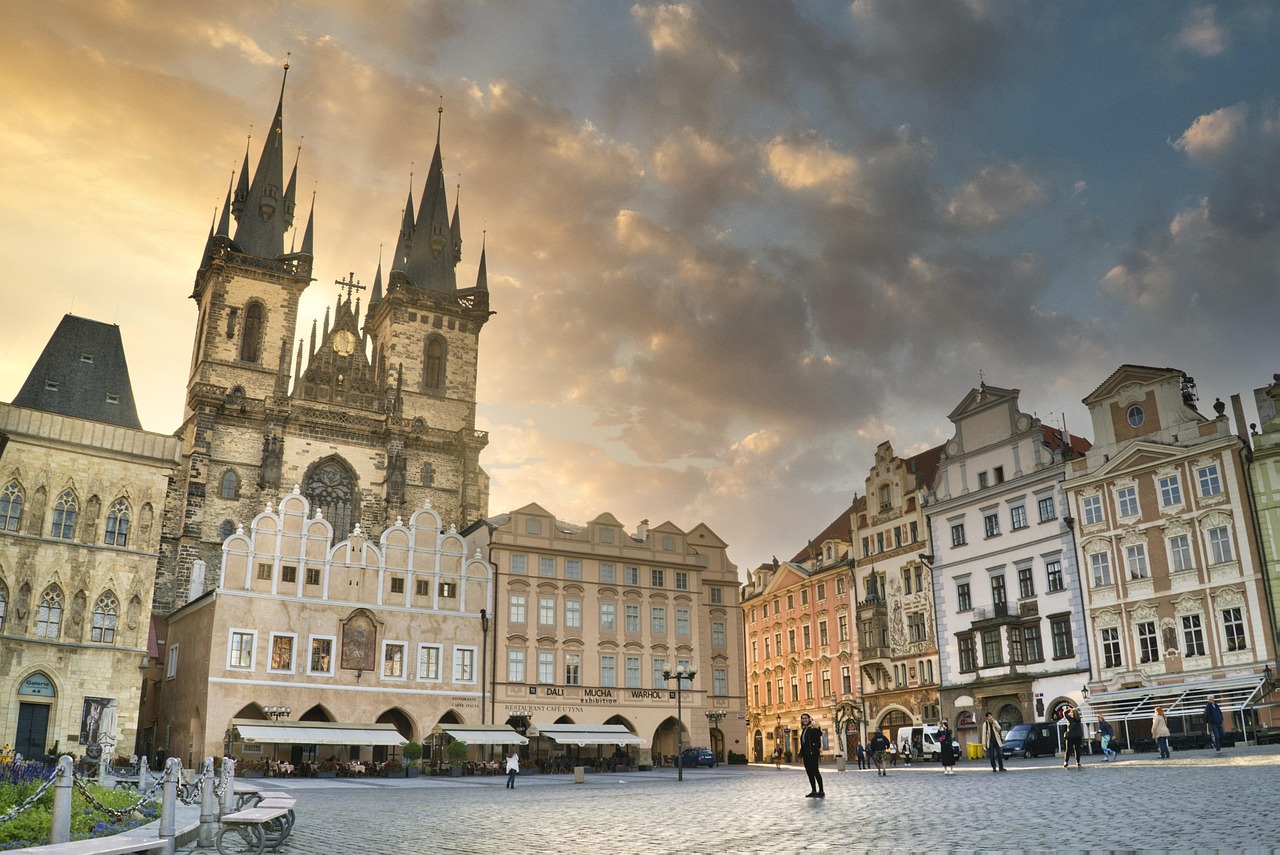
Prague’s Jewish Quarter — called Josefov — sits right in the middle of the Old Town, sandwiched between the Astronomical Clock and the Vltava River. It is one of the best-preserved Jewish historical sites in all of Europe, which is both remarkable and deeply unsettling when you understand why: the Nazis deliberately preserved it as a planned “museum of an extinct race.” They failed at the extinction part. The museum survived anyway.
Six synagogues, the cemetery, and the ceremonial hall make up the core sites. You need a ticket to enter any of them (the exteriors are visible from the street, but that does not get you far). And the one building that draws perhaps the most curiosity — the Old-New Synagogue, which has held continuous services since the 1270s — is on a separate ticket from the rest.
Here is how the tickets work, what each synagogue is actually worth your time for, and the best way to visit without wasting half the day in queues.
Best overall: Jewish Quarter Walking Tour with Admission Tickets — $76. Covers all the major synagogues and the cemetery with a guide who can actually explain what you are looking at. Tickets included.
Best budget: Old Town and Jewish Quarter Guided Walking Tour — $22. Combines the Old Town sights with a walk through Josefov in 90 minutes. No interior access, but surprisingly informative.
Best for independence: Jewish Quarter Ticket with optional Audio Guide — $55. Self-guided access to the synagogues and cemetery. Take all day if you want.
- The Ticket System (It Is More Confusing Than It Should Be)
- What to See (and What You Can Skip)
- The Golem Legend
- The Best Jewish Quarter Tours to Book
- 1. Prague: Jewish Quarter Walking Tour with Admission Tickets —
- 2. Prague: Old Town and Jewish Quarter Guided Walking Tour —
- 3. Prague: Jewish Quarter Ticket with Optional Audio Guide —
- Practical Tips for Visiting Josefov
- A Bit of History You Should Know Before You Go
The Ticket System (It Is More Confusing Than It Should Be)
The Jewish Museum in Prague manages most of the sites in Josefov, but not all of them. This is where people get tripped up.
The Jewish Museum combined ticket covers six sites: the Maisel Synagogue, the Pinkas Synagogue (including the cemetery entrance), the Klausen Synagogue, the Ceremonial Hall, the Spanish Synagogue, and the Robert Guttmann Gallery. Adult tickets cost around 500 CZK (roughly $22). Students, seniors, and children under 15 get reduced rates. Children under 6 enter free.
The Old-New Synagogue requires a separate ticket — about 200 CZK ($9). You can also buy a combined ticket for all seven sites (the six museum sites plus the Old-New Synagogue) for about 600 CZK ($26).
Tickets can be purchased at any of the synagogue entrances or online through the Jewish Museum website. In summer the queues at the Pinkas Synagogue entrance (which leads directly to the cemetery) can stretch past 20 minutes. Buying online does not help much — you still enter through the same door.
Important: The Jewish Museum sites are closed on Saturdays and Jewish holidays. The Old-New Synagogue closes on Saturdays too, but is sometimes open for religious services only. Do not plan your Josefov visit for a Saturday — I have seen disappointed travelers standing in front of locked doors more than once.
What to See (and What You Can Skip)
Not all six synagogues are equally compelling. If you are short on time or simply want to focus on the sites that make the strongest impression, here is an honest breakdown.
Must-see:
The Old Jewish Cemetery is the single most powerful site in Josefov. The oldest grave belongs to Rabbi Avigdor Kara, dated 1439. The most visited belongs to Rabbi Judah Loew ben Bezalel — the famous Rabbi Loew, the man legend says created the Golem of Prague from clay to protect the Jewish community from anti-Semitic violence. Whether you believe the golem story or not (and the legend has been retold so many times it has taken on a life of its own), standing at his grave while surrounded by hundreds of years of layered stone is something that stays with you.
The Pinkas Synagogue serves as a Holocaust memorial. The names of 77,297 Czech and Moravian Jews who perished are hand-painted on the interior walls. The upstairs gallery displays drawings by children from the Terezin concentration camp. It is devastating and essential.
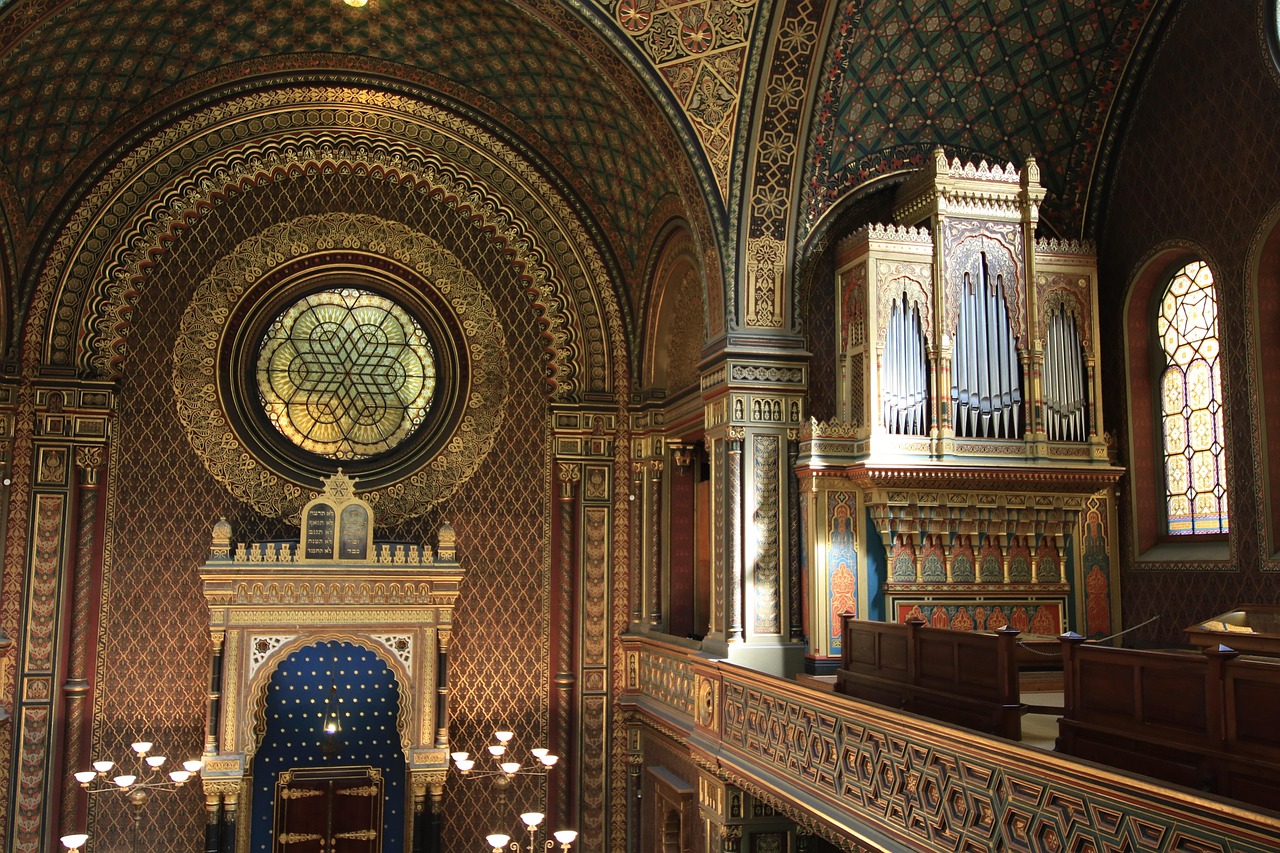
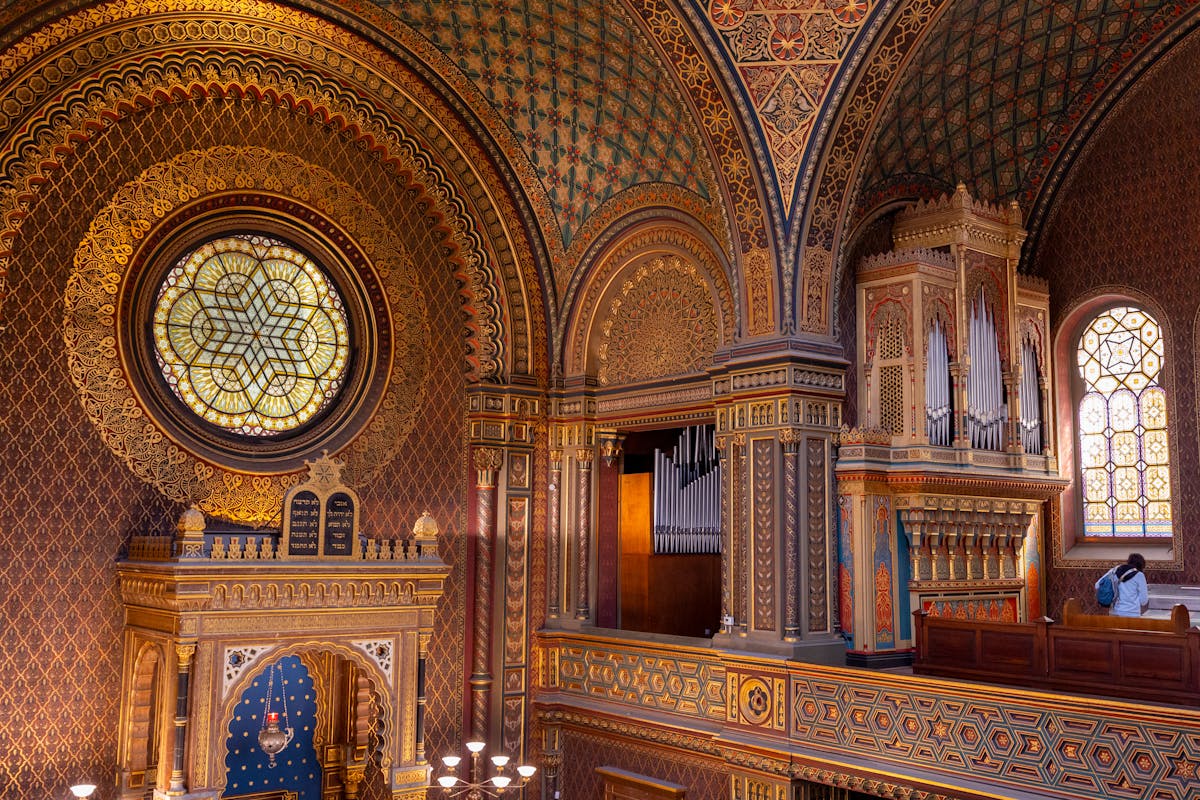
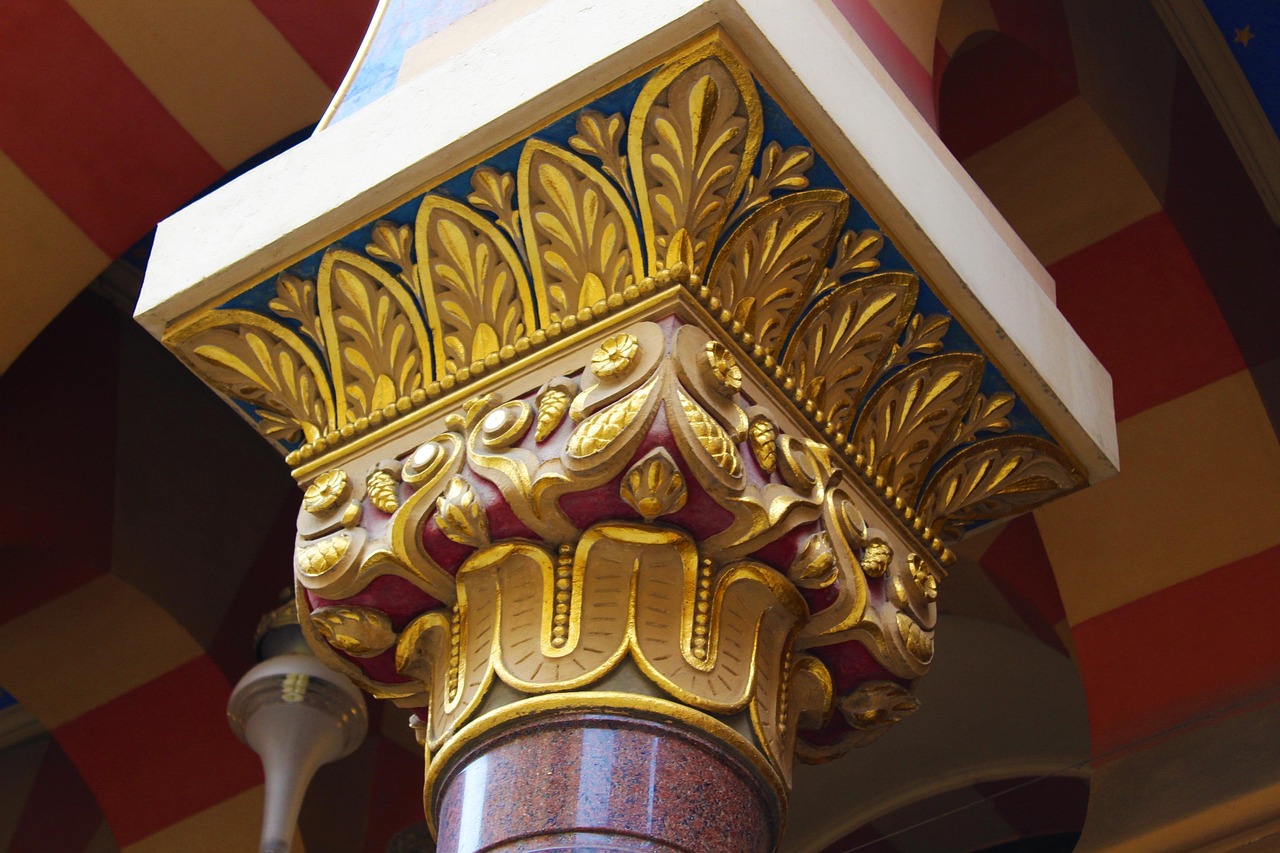
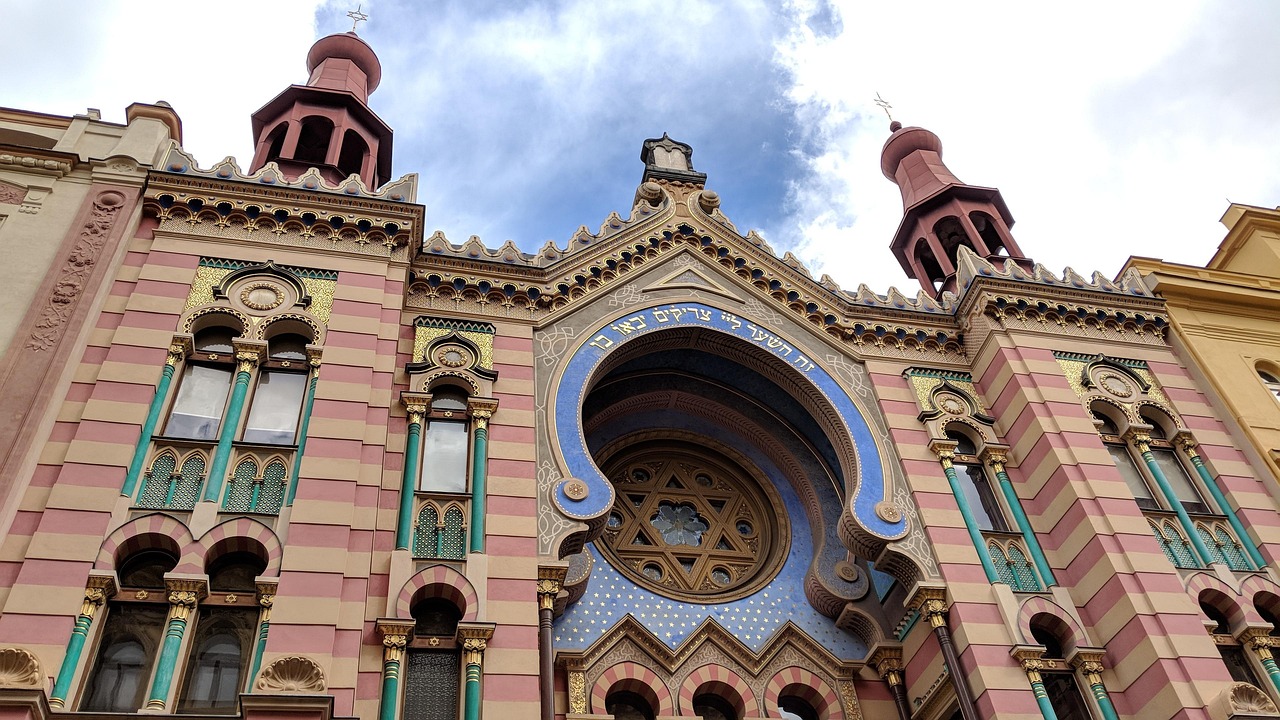
The Spanish Synagogue is the architectural standout. The Moorish revival interior is covered in gilded geometric patterns that feel more like the Alhambra than Central Europe. It also houses an excellent permanent exhibition on Jewish life in Bohemia and Moravia from the 18th century to the present.
Worth your time:
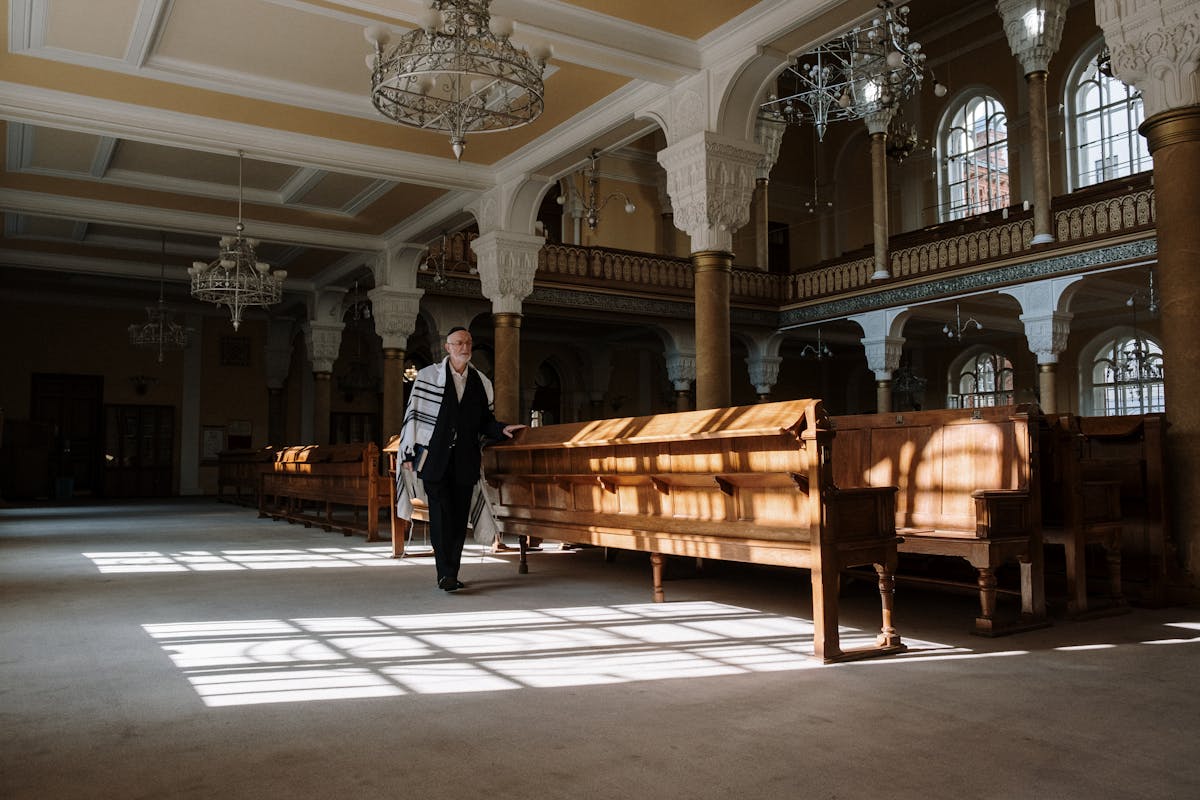
The Old-New Synagogue is the oldest active synagogue in Europe (built around 1270). The Gothic interior is austere — plain stone walls, iron grillwork, no gilding. What makes it remarkable is that people have been praying here continuously for 750 years. According to legend, the remains of the Golem are stored in the attic, which is closed to the public. The separate ticket is annoying but the building earns it.
The Klausen Synagogue has a good exhibition on Jewish customs and traditions — birth, marriage, death, daily life. The Maisel Synagogue covers the history of Jews in Bohemia and Moravia with a focus on the medieval and early modern periods.
Can skip if pressed for time:
The Ceremonial Hall is small and covers Jewish burial customs. Interesting if you have been to the cemetery and want context, but not essential. The Robert Guttmann Gallery rotates temporary exhibitions that vary in quality.
The Golem Legend
You will hear about the Golem everywhere in Josefov — from tour guides, in souvenir shops, even in restaurant names. The short version: Rabbi Loew, the chief rabbi of Prague in the late 1500s, supposedly fashioned a creature from clay and brought it to life using a sacred inscription to protect the Jewish community from anti-Semitic violence. The Golem grew uncontrollable, and Rabbi Loew had to deactivate it by removing the inscription from its mouth. Its body was reportedly stored in the attic of the Old-New Synagogue, where (the story goes) it remains today.
Is it true? Almost certainly not. The legend did not appear in writing until the 1800s, roughly 200 years after Rabbi Loew’s death. But it says something real about the fear that drove it — a community so threatened it imagined protection from supernatural clay.
The Best Jewish Quarter Tours to Book
I looked through the top-rated historical tours in Prague and pulled the ones focused specifically on the Jewish Quarter. Three stand out.
1. Prague: Jewish Quarter Walking Tour with Admission Tickets — $76
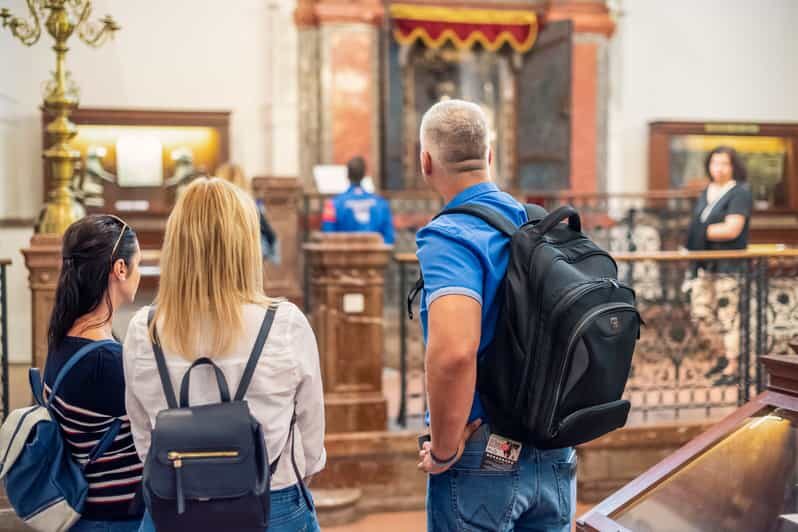
This is the most reviewed Jewish Quarter tour available and the one I would recommend for a first visit. The price includes admission to the Jewish Museum sites, which means you skip the ticket queue entirely. Your guide walks you through the Pinkas Synagogue, the Old Jewish Cemetery, the Maisel Synagogue, the Spanish Synagogue, and the Klausen Synagogue over two and a half hours.
At $76 it is not cheap, but consider what you are getting: a knowledgeable guide for 150 minutes, skip-the-line entry, and someone who can put the Holocaust memorial walls, the cemetery, and the Golem legend into proper context. Self-guided visitors often spend the same amount of time and leave with half the understanding.
The main limitation: this does NOT include the Old-New Synagogue (separate ticket, remember). You can visit it on your own afterward for an additional 200 CZK.
2. Prague: Old Town and Jewish Quarter Guided Walking Tour — $22
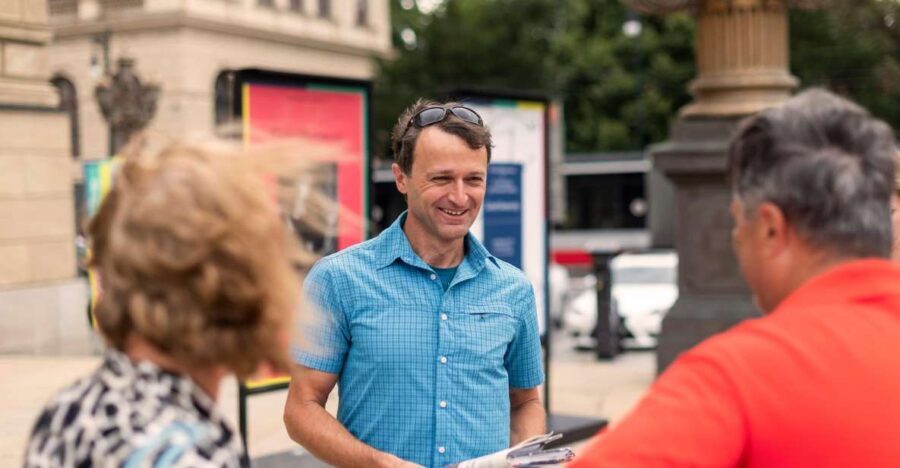
The budget pick, and an excellent one. This 90-minute walking tour covers the Jewish Quarter as part of a broader Old Town route. You will not go inside any synagogues — it is an outdoor walking tour only — but the guide covers the history of Josefov, the cemetery (from the street), the Golem legend, and how the quarter connects to the rest of Prague.
At $22 per person this is the easiest way to get oriented before deciding whether you want to buy tickets and go inside. I have seen people do this tour first, then go back to the Pinkas Synagogue and cemetery on their own with a much better understanding of what they are seeing. Smart approach.
3. Prague: Jewish Quarter Ticket with Optional Audio Guide — $55
For visitors who prefer to explore on their own terms. This ticket covers all six Jewish Museum sites and includes an optional audio guide that fills in the gaps a written plaque cannot. You can start at any synagogue, visit them in any order, and take as long as you want.
At $55 it sits between the budget walking tour and the full guided experience. The audio guide is genuinely useful — the Pinkas Synagogue memorial in particular hits differently when you have someone explaining the selection process behind the names on the walls. But you lose the interactive element of being able to ask a live guide questions.
Best for: repeat visitors, history buffs who like to read every plaque, anyone who finds group tours stifling.
Practical Tips for Visiting Josefov
Opening hours: The Jewish Museum sites are open daily except Saturdays and Jewish holidays. Summer hours (April to October) are 9:00 AM to 6:00 PM. Winter hours (November to March) are 9:00 AM to 4:30 PM. The Old-New Synagogue keeps slightly different hours — check the Jewish Museum website for current times.
How long to allow: Budget two to three hours for all six museum sites plus the cemetery. If you add the Old-New Synagogue and want to read every exhibition panel, make it four hours. The cemetery alone can easily absorb 30 to 45 minutes if you are not being pushed along by a tour group.
Photography: Photographs are allowed in most sites, but NOT in the Pinkas Synagogue. This is a Holocaust memorial — respect the rule. The Old Jewish Cemetery allows photos. The Spanish Synagogue interior is the most photographed site in the quarter.
Dress code: There is no strict dress code for the museum sites, but men are asked to cover their heads in the Old-New Synagogue. Paper kippot are provided at the entrance for free.
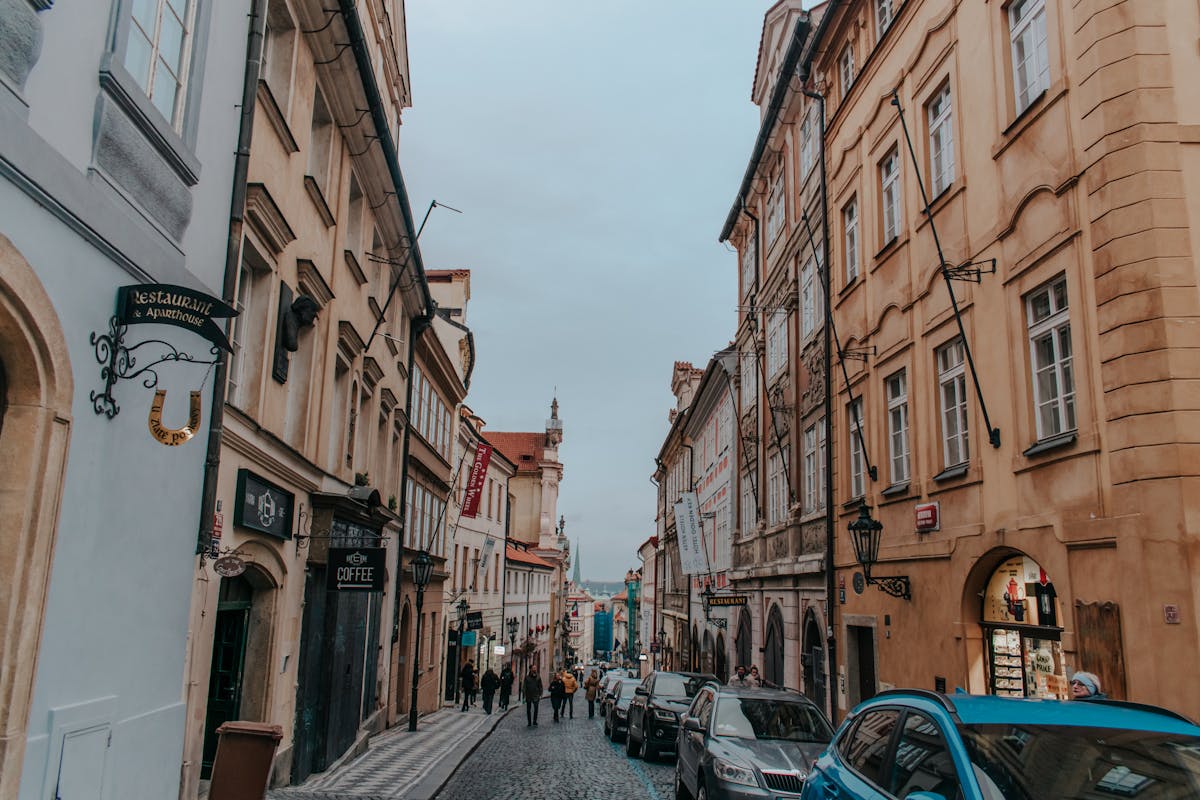
Getting there: Josefov sits between Old Town Square and the Vltava River. From Old Town Square, walk north along Parizska Street (the luxury shopping boulevard) for about five minutes. The nearest metro station is Staromestska on the green A line, which puts you about a three-minute walk from the first synagogue.
A Bit of History You Should Know Before You Go
Jews have lived in Prague since at least the 10th century. For most of that time, they were confined to the ghetto that became Josefov — a handful of streets where the entire community lived, worked, worshipped, and died. The restrictions were not gentle. Periodic pogroms, expulsions, forced conversions, and property seizures marked the centuries. The community survived all of it.
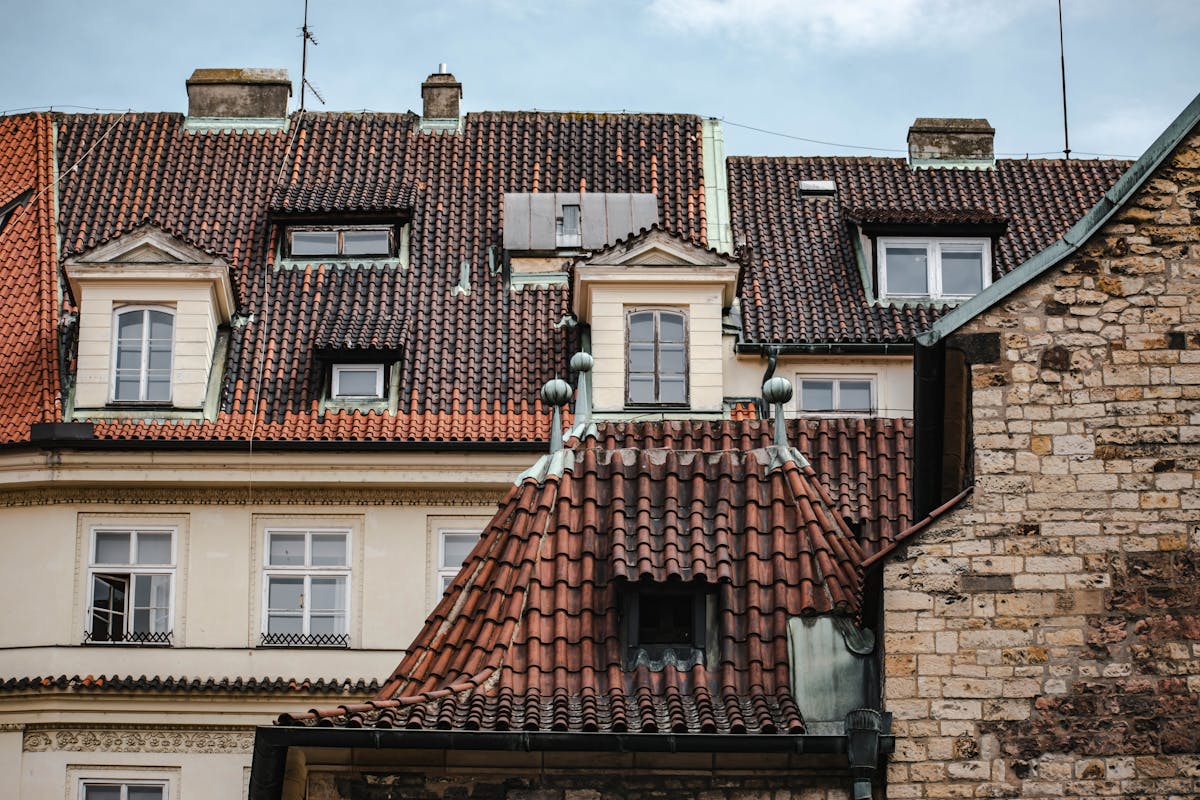
The quarter got its name from Emperor Joseph II, who issued edicts of tolerance in the 1780s that gave Jews more rights. In the late 1800s, most of the medieval ghetto was demolished as part of Prague’s modernization — the narrow alleys and cramped buildings were replaced with the Art Nouveau apartment blocks and the wide Parizska Street you see today. But the synagogues and the cemetery were preserved.
Then came the Nazi occupation. The Germans killed approximately 77,000 Czech and Moravian Jews during the Holocaust. They also collected Jewish artifacts from destroyed communities across Bohemia and Moravia, shipping them to Prague to create what they called the “Central Jewish Museum.” The plan was to display these objects after the war as relics of a people they expected to annihilate entirely. The museum survived. So did the community, though reduced to a fraction of its former size.
Today Josefov is both a functioning Jewish community and one of Prague’s most visited tourist sites. The tension between those two identities is real — you will see travelers taking selfies next to Holocaust memorials, and the luxury shops on Parizska sometimes feel dissonant with what lies one block over. But the preservation is genuine, the exhibitions are thoughtfully done, and the cemetery is unlike anything else in Europe.
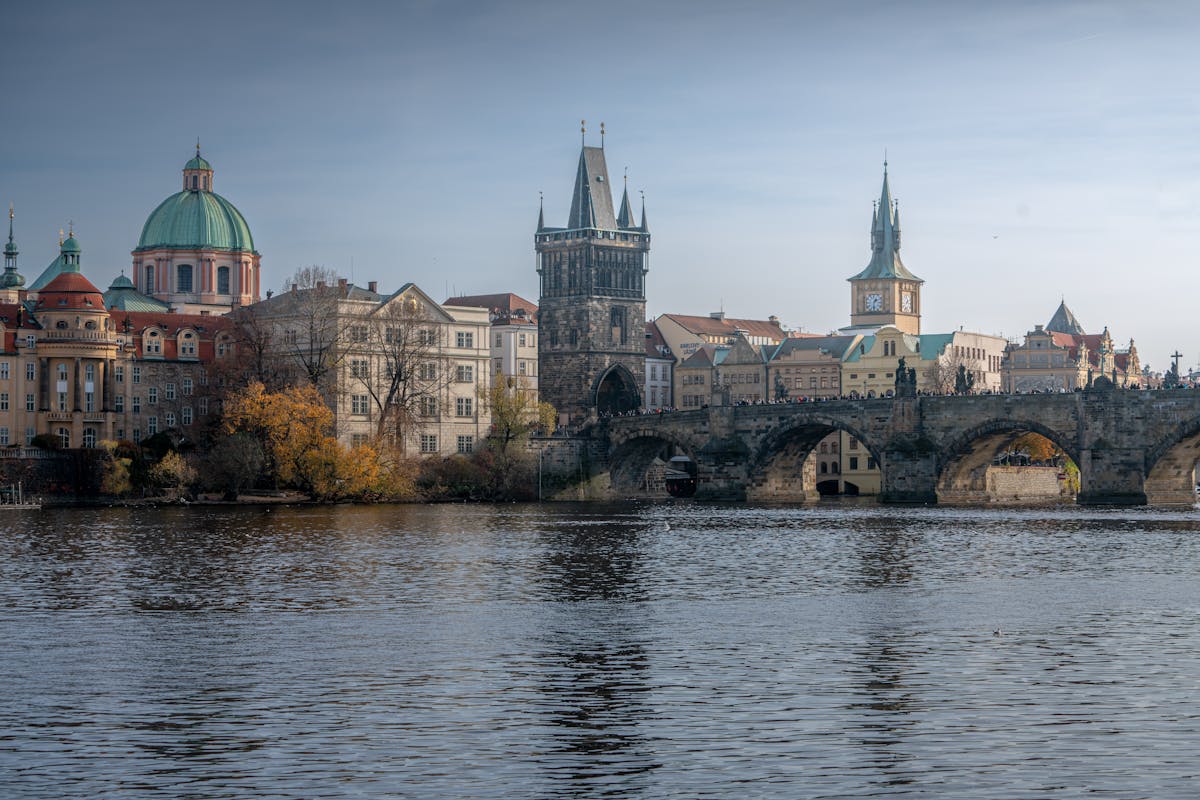
If you are spending a few days in Prague, the Jewish Quarter pairs naturally with a morning at Prague Castle — they sit on opposite sides of the Vltava and together cover the two most historically significant parts of the city. For something completely different afterward, a Vltava River cruise lets you see both the castle and the Old Town from the water, which is a welcome change of pace after hours on your feet. And if you want to experience Prague’s lighter side after a heavy morning in the memorial sites, the city’s legendary pub crawl scene is exactly the kind of contrast that makes this city so hard to leave.
The natural extension of a Jewish Quarter visit is the day trip to Terezin, where many of Prague’s Jewish residents were sent during the war. The half-day tours handle the subject with care, and seeing Josefov first gives you context that makes the memorial far more powerful. A Prague walking tour covers the broader Old Town that surrounds the quarter, and most good ones loop through Josefov as part of the route.
For evenings, the classical concerts at the Spanish Synagogue are one of the most memorable things you can do in Prague, and sitting inside that building while a string quartet plays feels like a continuation of the Jewish Quarter story told through music. If you want something completely different, the medieval dinner experience takes you into the stone cellars beneath Old Town for a theatrical feast that has nothing to do with history and everything to do with having a good time.