
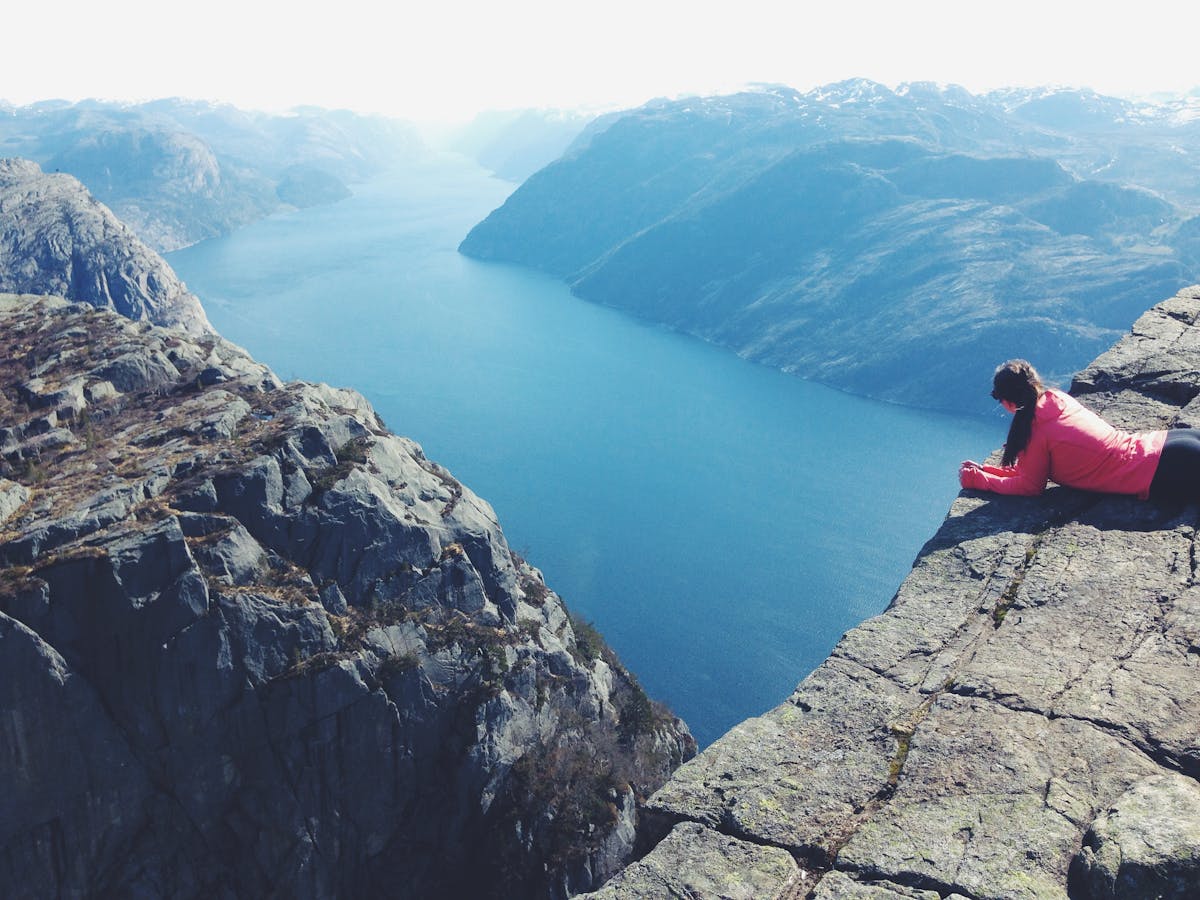
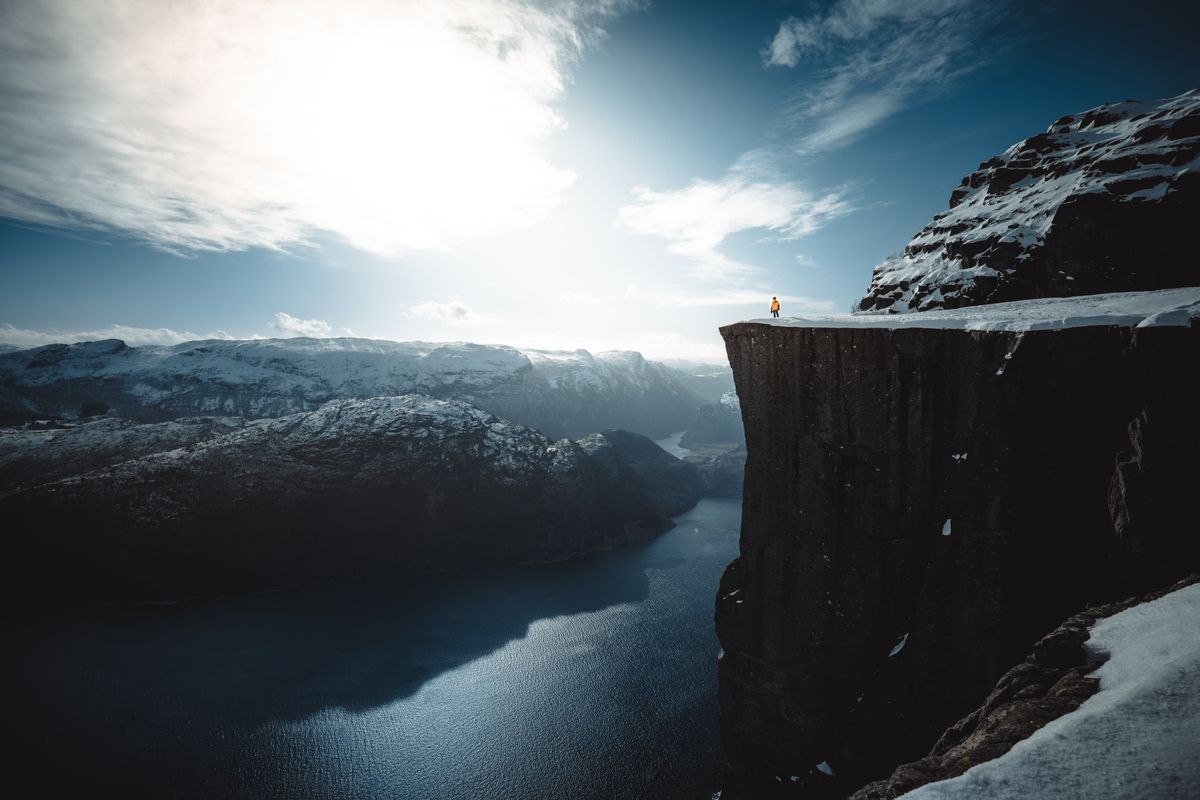
Preikestolen — the Pulpit Rock — is a flat-topped granite cliff that juts out from a mountainside 604 metres above the Lysefjord. The top is roughly 25 metres by 25 metres, perfectly flat, and unfenced. You walk to the edge, look down over 600 metres of vertical rock face to the emerald fjord below, and feel the kind of primal vertigo that no photograph can convey. It is, without exaggeration, one of the most spectacular viewpoints in Europe.
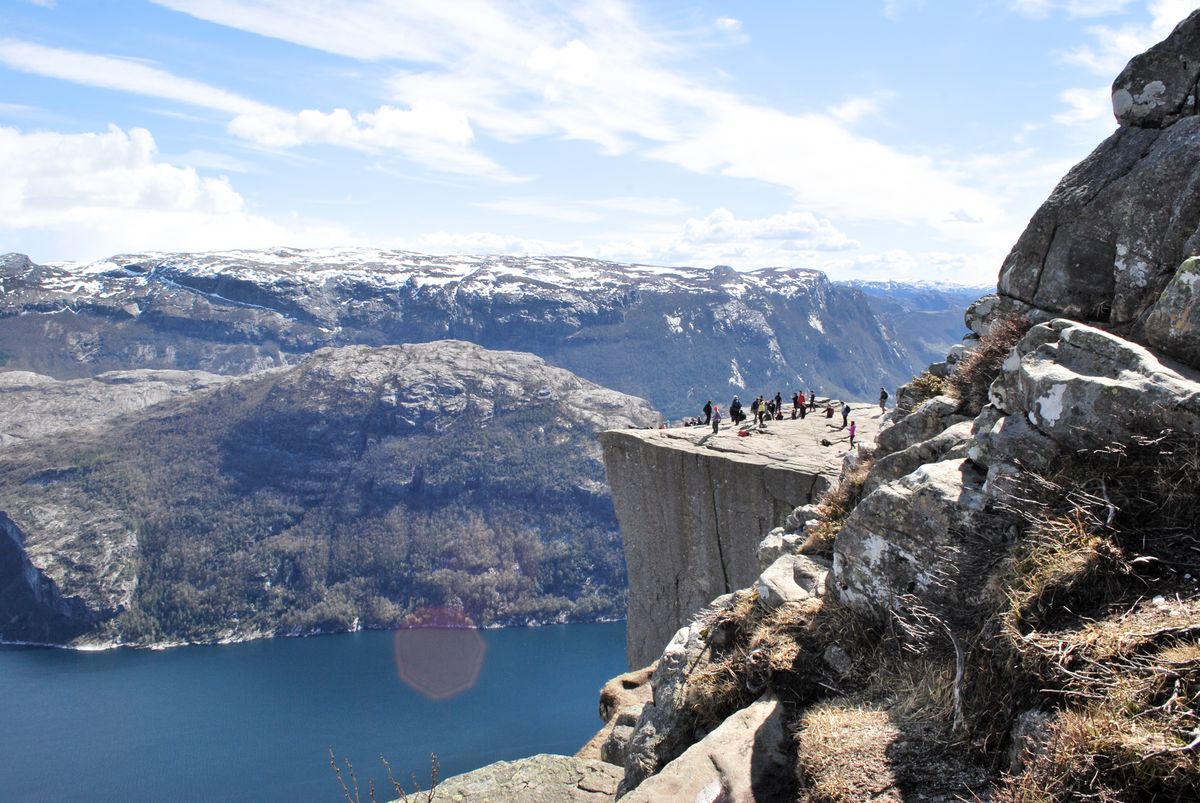
But Preikestolen isn’t just a viewpoint — it’s a genuine hike. The trail from the car park to the top is 3.8 kilometres each way with 334 metres of elevation gain, over terrain that ranges from smooth boardwalk to scrambling over bare granite. Round trip takes 4-6 hours depending on fitness and crowds. It’s not technical mountaineering, but it’s not a casual stroll either.

For those who want the Lysefjord scenery without the hike, fjord cruises from Stavanger take you to the base of the cliff by boat — looking up at Preikestolen from 604 metres below is its own kind of breathtaking. I’ve compared both options: the cruise-from-below experience and the hike-to-the-top, including RIB (rigid inflatable boat) safaris that reach the cliff in half the time of standard cruises.
Short on time? Here’s what to book:
Best cruise: Scenic Fjord Cruise to Lysefjord & Preikestolen — €82. The most reviewed Lysefjord cruise. See Pulpit Rock from 604 metres below, pass waterfalls and abandoned farms, and cruise the full length of the fjord.
Best adventure: RIB Tour to Lysefjord — €131. Rigid inflatable boat — faster, closer to the cliffs, more exhilarating. The adrenaline option for those who want speed and spray alongside the scenery.
Best value cruise: Fjord Cruise to Lysefjord & Pulpit Rock — €89. Similar route to the flagship cruise with slight itinerary differences. Strong alternative when the top option is sold out.
- What to Know Before Visiting
- Cruise vs hike — two completely different experiences
- The hike is moderate but not easy
- There are no safety barriers
- Summer is crowded — very crowded
- The Best Lysefjord & Pulpit Rock Tours from Stavanger
- 1. Scenic Fjord Cruise to Lysefjord & Preikestolen — €82
- 2. Fjord Cruise to Lysefjord & Pulpit Rock — €89
- 3. RIB Tour to Lysefjord — €131
- 4. Lysefjord Sightseeing RIB Boat Tour — €136
- 5. Lysefjord RIB Safari — €135
- The Geology of Preikestolen: How a Cliff Gets This Flat
- The Hike: What to Expect
- When to Go
- Frequently Asked Questions
- Can I visit Preikestolen without hiking?
- Is the hike dangerous?
- Do I need hiking boots?
- How do I get to the trailhead from Stavanger?
- Can children do the hike?
What to Know Before Visiting

Cruise vs hike — two completely different experiences
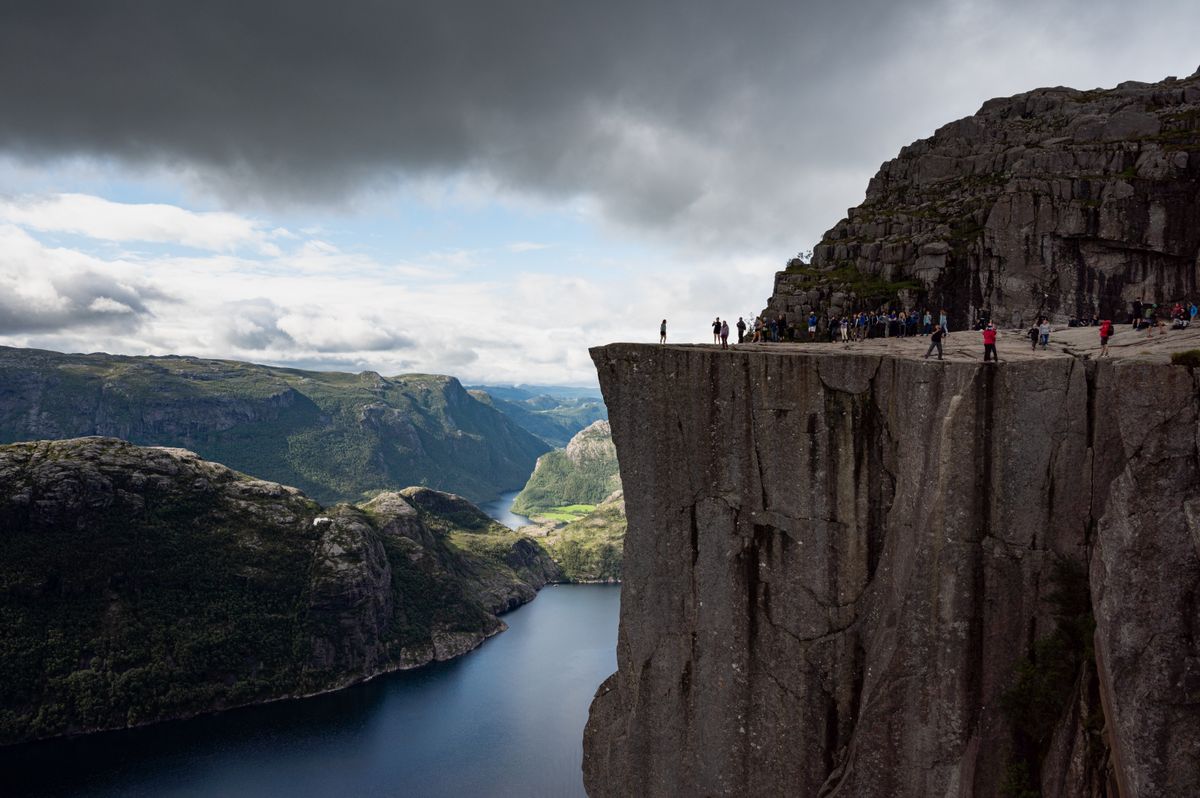
The fjord cruises show you Preikestolen from below — the cliff seen from the water is a dramatic granite wall rising over half a kilometre into the sky. The hike takes you to the top — standing on the edge and looking down is an entirely different experience from looking up. If you can manage the hike, do both on separate days. If hiking isn’t an option, the cruise is spectacular in its own right.
The hike is moderate but not easy
The trail is 3.8 kilometres each way (7.6 km round trip) with 334 metres of elevation gain. Most of the path is well-maintained with stone steps and boardwalks, but sections involve scrambling over bare granite, crossing small streams, and navigating uneven terrain. Allow 4-6 hours round trip including time at the summit. It’s suitable for reasonably fit adults and children over about 10 who are comfortable with hiking.
There are no safety barriers
This shocks visitors from countries where every cliff has a fence. Norway’s philosophy on outdoor access — rooted in the allemannsretten (right to roam) — treats adults as responsible for their own safety in nature. The cliff edge is unfenced, and the drop is vertical. Stay back from the edge, especially when it’s wet, and keep children close. Accidents are rare but the consequences are absolute.
Summer is crowded — very crowded
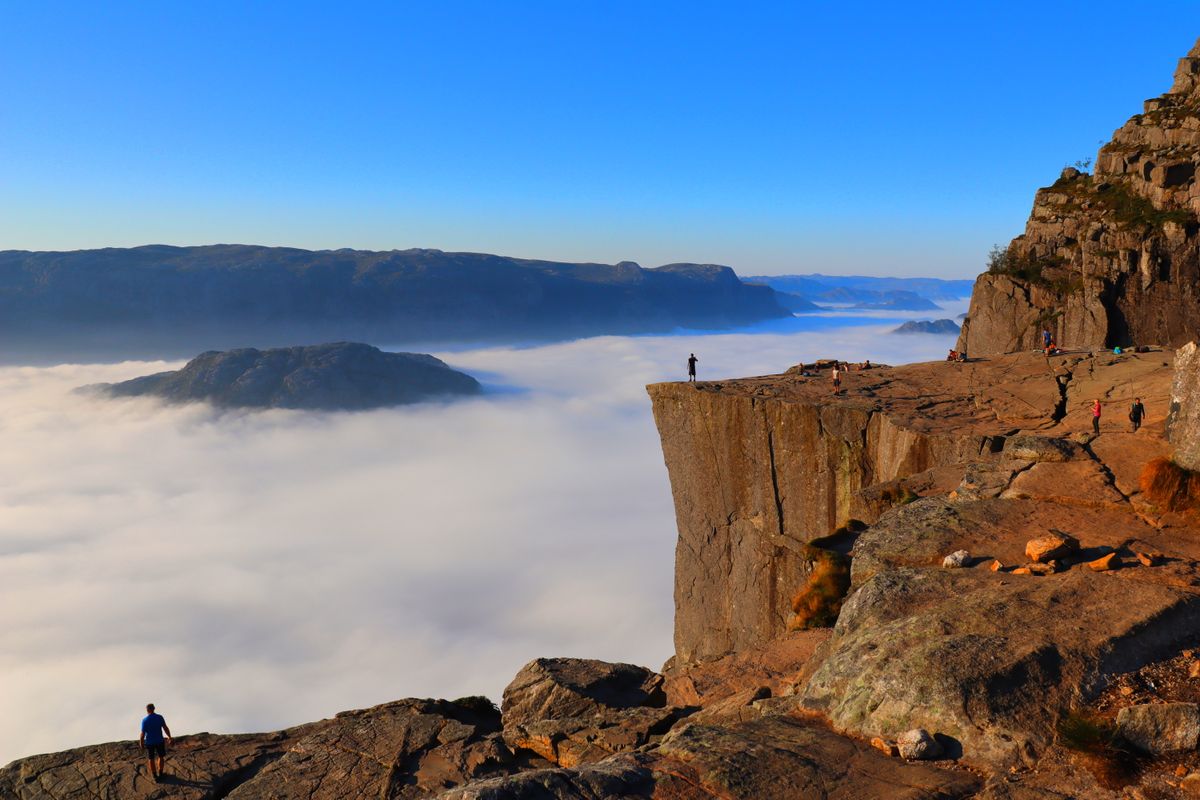
Preikestolen receives over 300,000 visitors per year, and in July and August the trail can feel like a queue. The summit plateau gets packed, with visitors waiting for their turn to take the obligatory edge photo. Early morning starts (before 8 AM) are strongly recommended. Some hikers start at sunrise (4 AM in midsummer) to have the summit nearly to themselves.
The Best Lysefjord & Pulpit Rock Tours from Stavanger
1. Scenic Fjord Cruise to Lysefjord & Preikestolen — €82
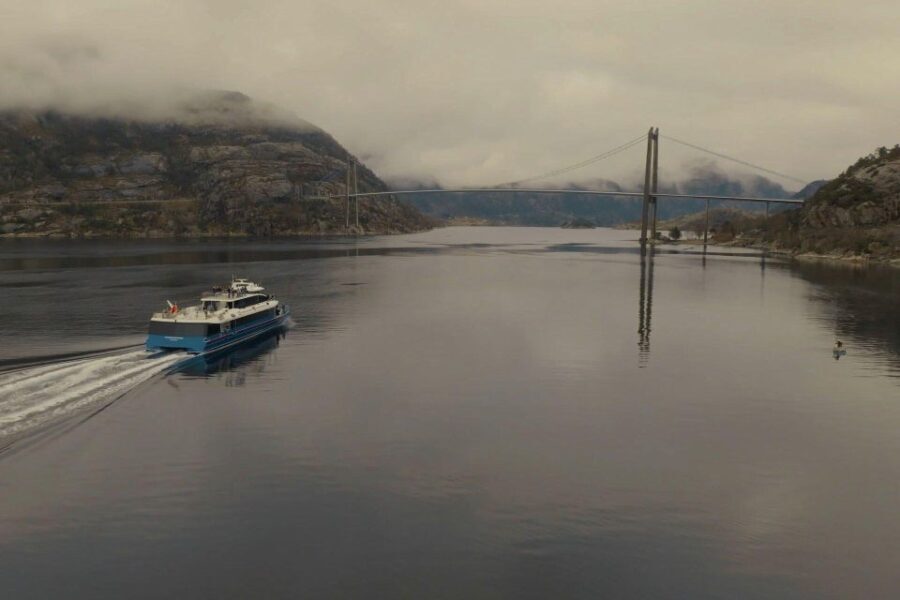
The most popular Lysefjord cruise from Stavanger, and the perspective is extraordinary. The boat sails the full length of the Lysefjord — 42 kilometres of deep-water channel between sheer granite walls — stopping beneath Preikestolen so passengers can look straight up the 604-metre cliff face. The tiny figures visible on the summit (if hikers are up there) give a visceral sense of the scale.
Along the way, the cruise passes Hengjane waterfall (one of Norway’s tallest, dropping 400 metres in multiple stages), abandoned farms clinging to impossible ledges, and Floras Garden — a farmstead accessible only by boat ladder. The captain navigates close to the cliff walls, and the commentary explains the geological forces that carved this fjord. At €82 for a full fjord experience without the physical demands of a hike, this is the accessible way to experience Preikestolen’s dramatic setting.
Duration: 2.5-3 hours | Departure: Stavanger harbour
2. Fjord Cruise to Lysefjord & Pulpit Rock — €89
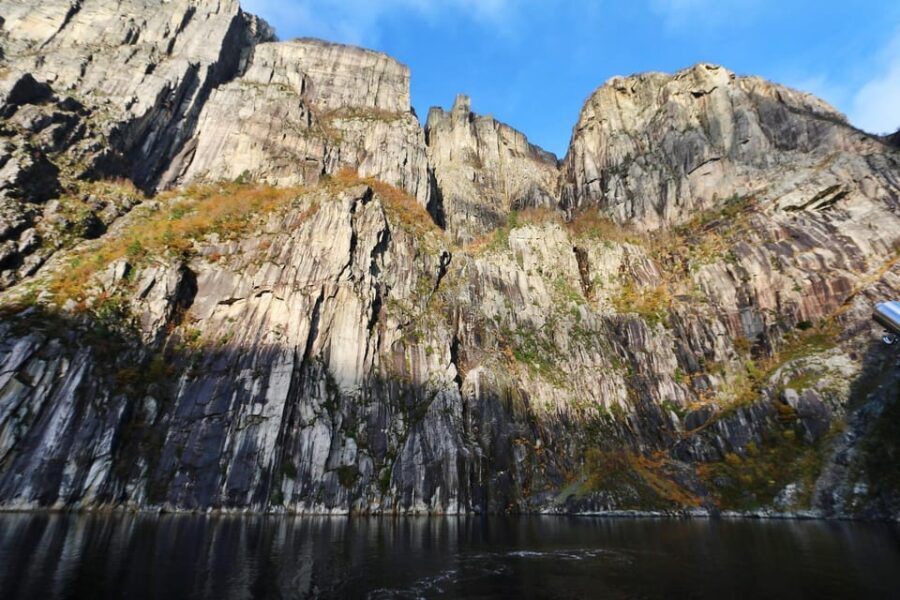
A similar cruise with a slightly different routing or timing. The core experience is identical — sailing the Lysefjord, passing beneath Preikestolen, admiring waterfalls and abandoned farmsteads. The choice between this and the top pick often comes down to departure time and availability, as both cover the same fjord.
The 2.5-hour duration is slightly shorter than some competitors, which suits travellers who want the highlight without the full-length cruise. The Preikestolen viewing point is still included, and the commentary covers the same geological and historical content. At €89, it’s marginally more expensive than the flagship but offers additional flexibility on scheduling.
Duration: 2.5 hours | Departure: Stavanger harbour
3. RIB Tour to Lysefjord — €131
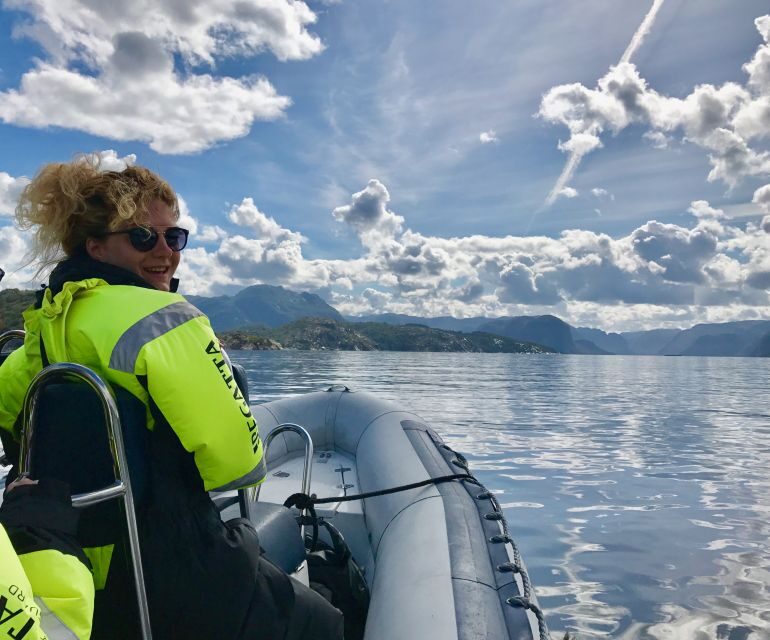
The adventure option. A RIB (rigid inflatable boat) is smaller, faster, and gets far closer to the cliff faces than a standard cruise vessel. The ride to the Lysefjord is itself an experience — bouncing across open water at speed, with spray flying and the coastline racing past. Inside the fjord, the RIB can navigate into narrow side channels and approach waterfalls that large boats must keep their distance from.
The viewing angle on Preikestolen from a RIB is more intimate — you can get closer to the base of the cliff and feel the scale more acutely than from a larger vessel further out. The trade-off is less comfort (you’re sitting on an inflatable pontoon, not a heated cabin) and a shorter overall duration. Waterproof gear is provided, which you’ll need — the spray is real. At €131, the premium buys speed, proximity, and adrenaline.
Duration: 2 hours | Departure: Stavanger harbour
4. Lysefjord Sightseeing RIB Boat Tour — €136
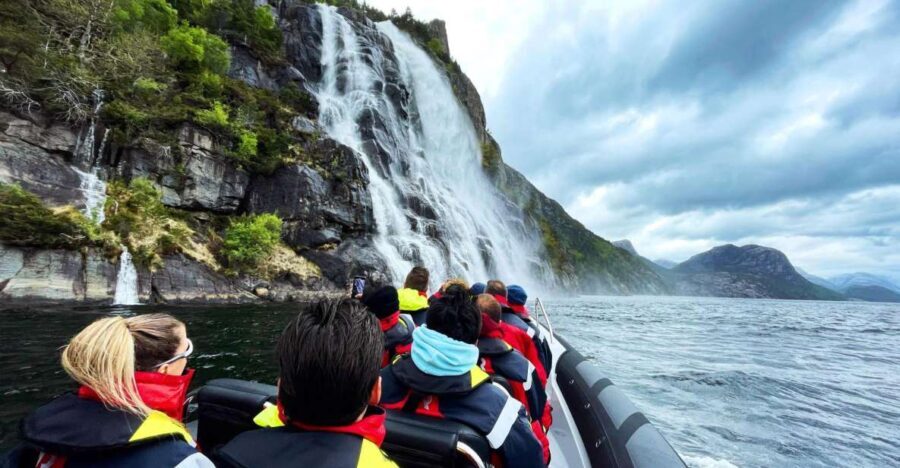
A second RIB option from a different operator, covering the same Lysefjord route with slightly different stopping points. The experience is comparable — high-speed approach, close-up cliff viewing, waterfall proximity, and the Preikestolen viewing point from below. Some departures include a visit to a sea cave accessible only by small boat, which the standard cruises can’t enter.
At €136, it’s priced almost identically to the first RIB option. Choose based on departure times, group size, and availability. Both deliver the same core experience: speed, spray, and the raw power of the Lysefjord seen from water level at close range.
Duration: 2 hours | Departure: Stavanger harbour
5. Lysefjord RIB Safari — €135
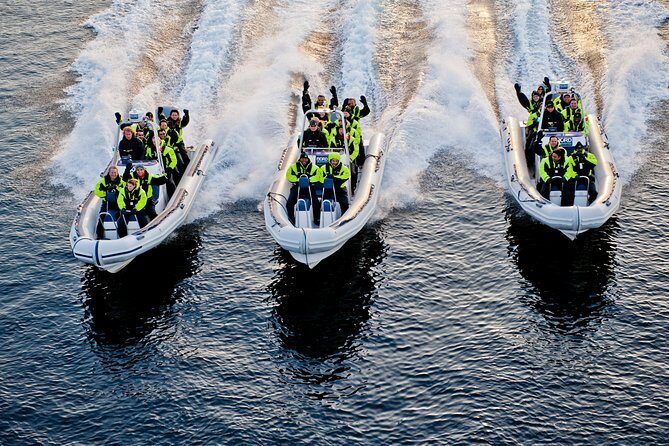
The most established RIB operator on the Lysefjord, with a focus on wildlife alongside the scenery. The “safari” format means the skipper actively looks for seals hauled out on rocks, eagles circling above the cliffs, and marine life in the water. The Lysefjord’s steep walls create thermals that attract raptors, and white-tailed eagles are regular sightings.
The route covers the Preikestolen viewing point, waterfalls, sea caves, and the abandoned farms that dot the fjord’s ledges. The skipper provides commentary on the geology, wildlife, and the remarkable people who once lived on these vertical ledges — farming, fishing, and raising children on mountainsides accessible only by boat. At €135 including all safety gear and waterproofs, the safari format adds a natural-history dimension to the RIB experience.
Duration: 2 hours | Departure: Stavanger harbour

The Geology of Preikestolen: How a Cliff Gets This Flat

Preikestolen’s remarkable shape — a flat-topped platform with a vertical drop on three sides — wasn’t carved by rain, wind, or waves. It was created by ice. During the last ice age, a glacier filled the Lysefjord valley to a depth of at least 1,000 metres. The ice pressed against the granite mountainside with enormous force, and as it melted and refroze in cycles, water seeped into natural fracture lines in the rock and expanded as it froze — a process called frost-wedging.
The fracture that defines Preikestolen’s cliff face is a geological fault line running through the mountain. The ice exploited this weakness, gradually widening the crack until an enormous block of granite separated from the cliff and fell into the fjord. What remains is the surface of the fracture — which, because the fault plane was nearly vertical, created the sheer cliff face you see today.

The flat top of the cliff is the upper surface of the granite block that remained after the separation. It’s flat because the rock fractured along a horizontal bedding plane — the internal layering of the granite naturally creates surfaces that are close to horizontal when exposed. The slight tilt you notice (the cliff slopes very gently away from the edge) is the natural inclination of that bedding plane.
There’s a visible crack running across the back of the cliff plateau that separates Preikestolen from the main mountain behind it. Geologists have monitored this crack for decades, and it is slowly widening — by fractions of a millimetre per year. The question of whether Preikestolen will eventually calve off the mountain entirely is genuine, but geologists estimate this is thousands of years away under current conditions. For now, the 604-metre cliff is stable enough for hundreds of thousands of visitors to stand on every year.


The Hike: What to Expect

The first section: A steep climb through birch forest on well-built stone steps. This is the hardest physical section — about 200 metres of elevation gain in the first kilometre. Your thighs will complain. This is normal.
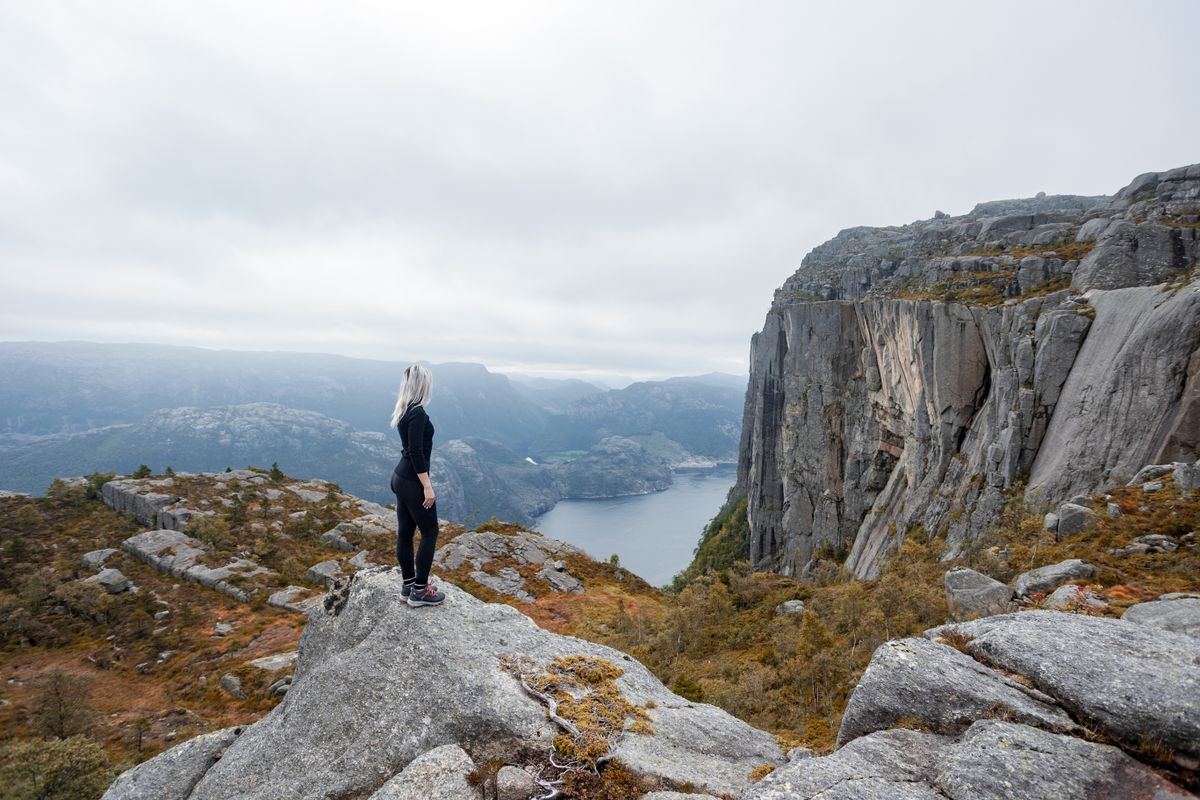
The middle section: Rolling terrain across mountain moorland. The trail crosses bare granite slabs, small streams, and boggy patches (boardwalks keep your feet dry). The views open up and the Lysefjord appears below for the first time.
The final approach: A gradual traverse along the mountainside before the trail rounds a corner and Preikestolen suddenly appears. The reveal is dramatic — you’ve been hiking for 90+ minutes and suddenly the cliff is just there, dropping away into space. The final 200 metres to the edge are flat and easy.
At the summit: The flat plateau has room for dozens of people at once, but in summer it’s packed. Wait for your moment at the edge — it’s worth the patience. The view down the 604-metre cliff face to the turquoise fjord below is genuinely terrifying and genuinely beautiful in the same breath.

When to Go

Best months for hiking: May through October. The trail is officially open when snow cover permits (typically late April to early November). June through August have the warmest weather and longest days, but also the biggest crowds.
Best months for cruises: Year-round, though summer (May-September) has the most departures and best weather. Winter cruises run but are weather-dependent.
Crowd avoidance: Start hiking before 8 AM for the best experience. The summit is quietest before 10 AM and after 4 PM. Weekdays are less crowded than weekends. September is the sweet spot — warm enough for comfortable hiking, dramatically fewer people than July.
Winter hiking: Possible but demanding. The trail is icy, the cliff is snow-covered, and conditions can change rapidly. Winter hiking requires proper equipment (crampons, hiking poles, headlamp) and experience. The reward is a nearly empty summit and a frozen fjord that catches whatever winter light Norway offers.
Frequently Asked Questions
Can I visit Preikestolen without hiking?
Yes — the Lysefjord cruise takes you to the base of the cliff for views looking up. You won’t stand on top, but seeing the 604-metre cliff face from below is spectacular in its own right. The cruise is the right choice for anyone unable or unwilling to do the 4-6 hour hike.
Is the hike dangerous?
The trail itself is well-maintained and not technically difficult. The danger is at the summit — the unfenced cliff edge with a 604-metre drop. Stay back from the edge, don’t jump on the cliff for photos, and keep children close. Accidents are extremely rare but the consequences of a slip are fatal.
Do I need hiking boots?
Strongly recommended. The trail crosses wet granite slabs that are slippery in rain or dew. Trainers with good grip are the minimum. Proper hiking boots with ankle support are better, especially on the descent when knees and ankles take the most strain.
How do I get to the trailhead from Stavanger?
By car: about 1 hour via ferry across the Lysefjord plus a mountain road to the car park. By bus: seasonal public buses run from Stavanger to the Preikestolen trailhead (about 1.5 hours). Guided hiking tours include transport from Stavanger.
Can children do the hike?
Children over about 8-10 who are used to walking can manage the trail with encouragement. The summit requires very close supervision — there are no barriers. Baby carriers work for the trail but not for the summit viewing area. Many families hike to Preikestolen successfully, but it’s not a casual family walk.
Preikestolen is Norway’s most dramatic cliff, but the country’s fjord experiences extend far beyond it. From Bergen, the Flam Railway and Naeroyfjord cruise take you through the UNESCO-listed western fjords. The Bergen Mostraumen cruise offers a shorter half-day fjord experience. In Oslo, a gentler Oslofjord cruise shows you the capital’s island-dotted harbour. And for Norway’s ultimate winter experience, the Northern Lights in Tromso deliver Arctic magic on the opposite end of the country and calendar.