
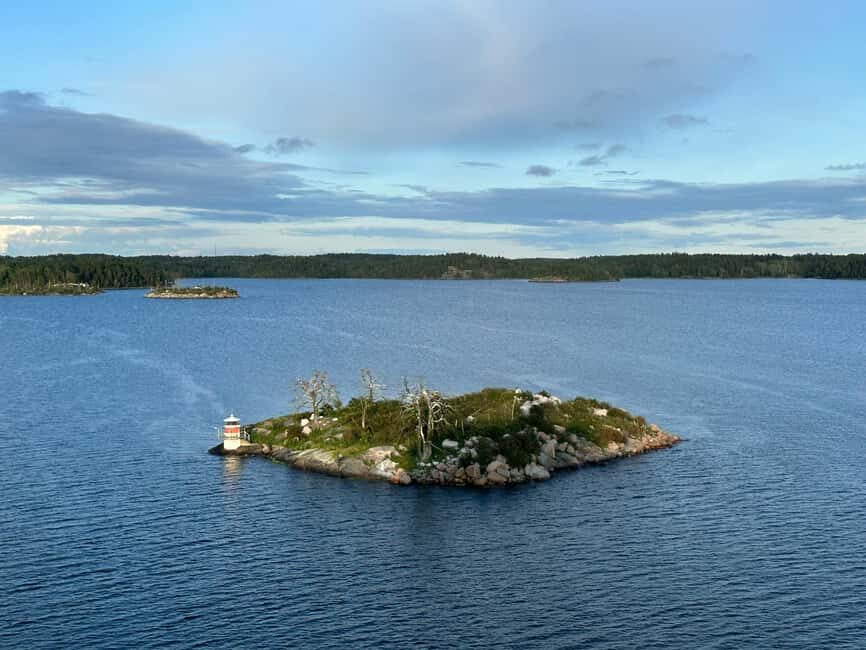
I was standing on the upper deck of a ferry headed to Grinda, watching Stockholm shrink behind me, when I realized I’d been holding my breath. Not from anxiety — from the sheer scale of what was opening up ahead. Islands, hundreds of them, scattered across the water like someone had taken a handful of rocks and just thrown them.
The Stockholm Archipelago has around 30,000 islands. That number sounds made up, but it’s not. They range from big enough to hold a town (Vaxholm, with restaurants and a 16th-century fortress) down to bare granite outcrops that only seagulls bother with.
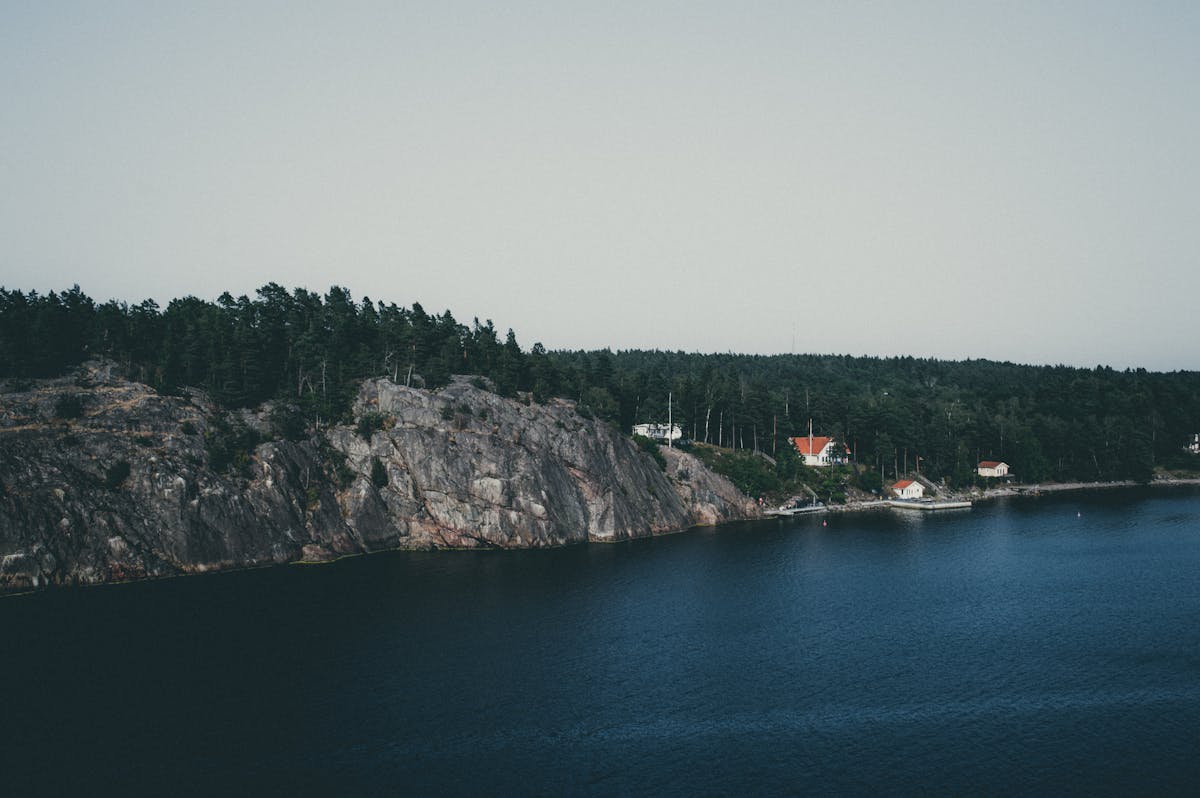
Most visitors to Stockholm never make it out here. They stick to Gamla Stan, do the museums, maybe take a photo of the Royal Palace. And that’s fine — Stockholm is a great city. But the archipelago is where the Swedes actually go when they want to unwind, and it starts just twenty minutes from the city center by boat.
Short on time? Here are my top picks:
Best overall: Stockholm: City Archipelago Sightseeing Cruise with Guide — $41. The most popular option for good reason — live guide, flexible duration, and it covers the highlights without eating your whole day.
Best for a quieter experience: Stockholm: Archipelago Boat Tour — $39. Two hours, smaller boat, and the self-guided audio means you can tune in and out as you like.
Best deep dive: Stockholm Archipelago Cruise with Guide — $47. Longer route at 2.5 hours that gets further into the archipelago than the shorter trips.
- How the Archipelago Ferry System Works
- Public Ferries vs Guided Tours — Which Makes Sense
- The Best Stockholm Archipelago Tours to Book
- 1. Stockholm: City Archipelago Sightseeing Cruise with Guide —
- 2. Stockholm: Archipelago Boat Tour —
- 3. Stockholm Archipelago Cruise with Guide —
- 4. Stockholm: Guided Archipelago Islands Tour —
- When to Visit the Archipelago
- Getting to the Departure Points
- What You’ll Actually See Out There
- Tips That Will Actually Save You Time and Money
- Island Hopping Itineraries
- More Stockholm Guides
How the Archipelago Ferry System Works
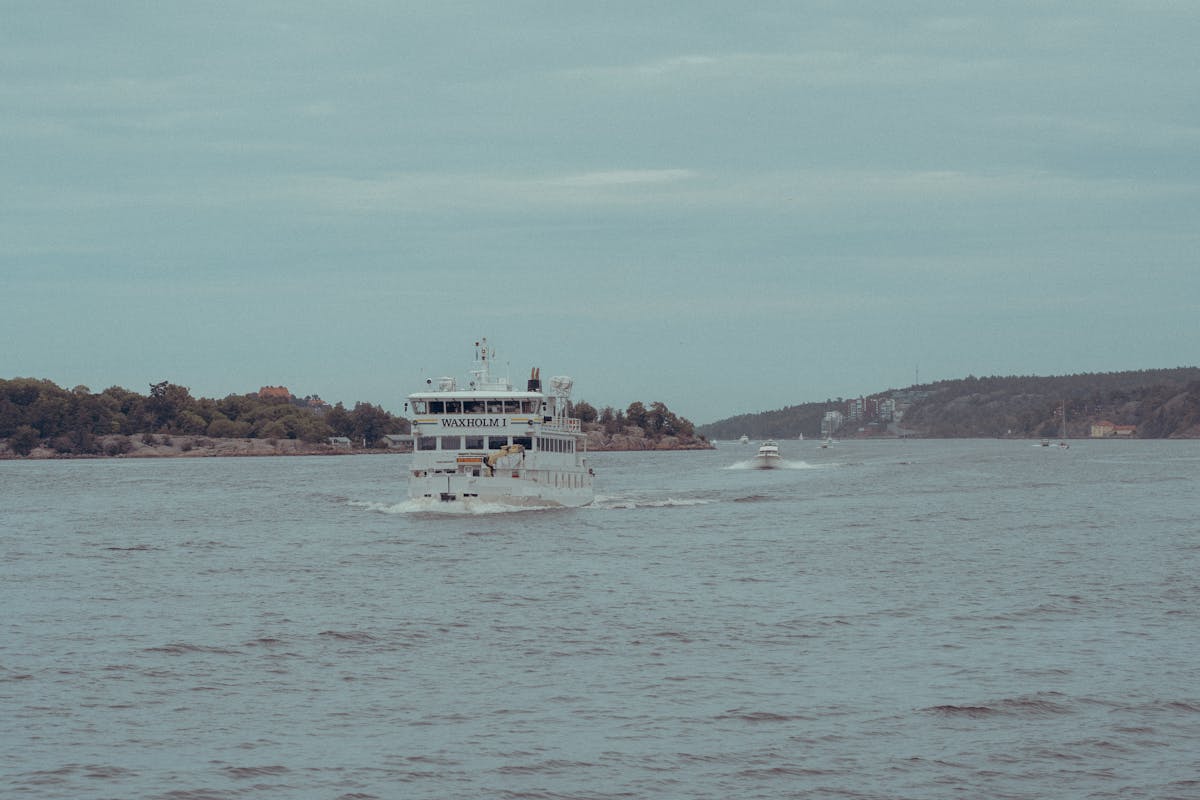
The public ferry system is run by Waxholmsbolaget, and it’s surprisingly good. They operate year-round, though schedules get thinner in winter. The main departure points are Strandvagen (the most central), Stavsnasbrygga (for the outer islands, reachable by bus from Slussen), and various smaller piers depending on the route.
Single tickets cost around 100-160 SEK ($10-16) depending on the distance. If you’re planning multiple trips, the Waxholmsbolaget 5-day pass at 499 SEK is much better value — unlimited rides on all their routes. You can buy tickets at the pier, on board, or through the Waxholmsbolaget app. Cash works but cards are easier.
The timetable is the tricky part. Some islands get multiple ferries per day in summer, others get one morning boat out and one evening boat back. Always check the return schedule before you go. Getting stranded on a small island with no hotel and no evening ferry is the kind of adventure that stops being fun quickly.
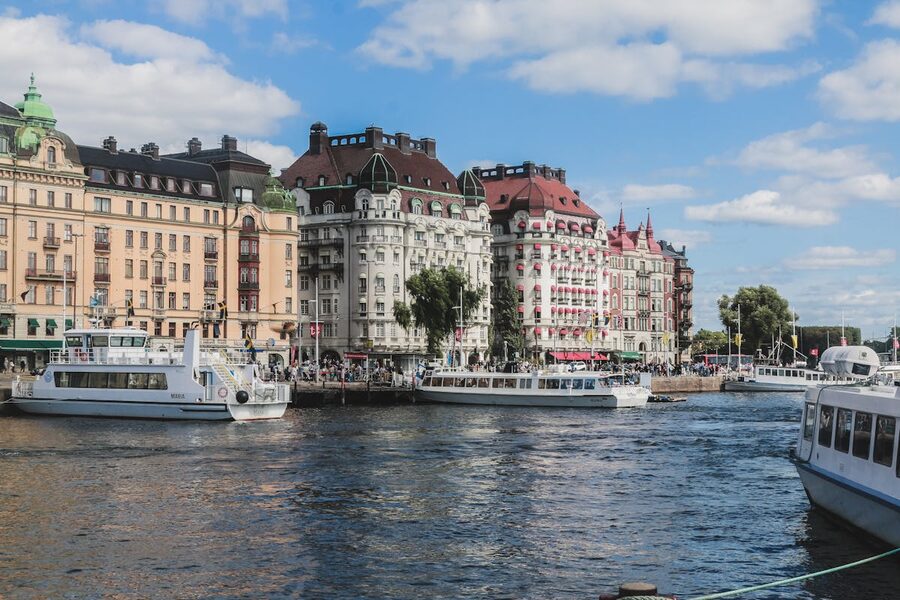
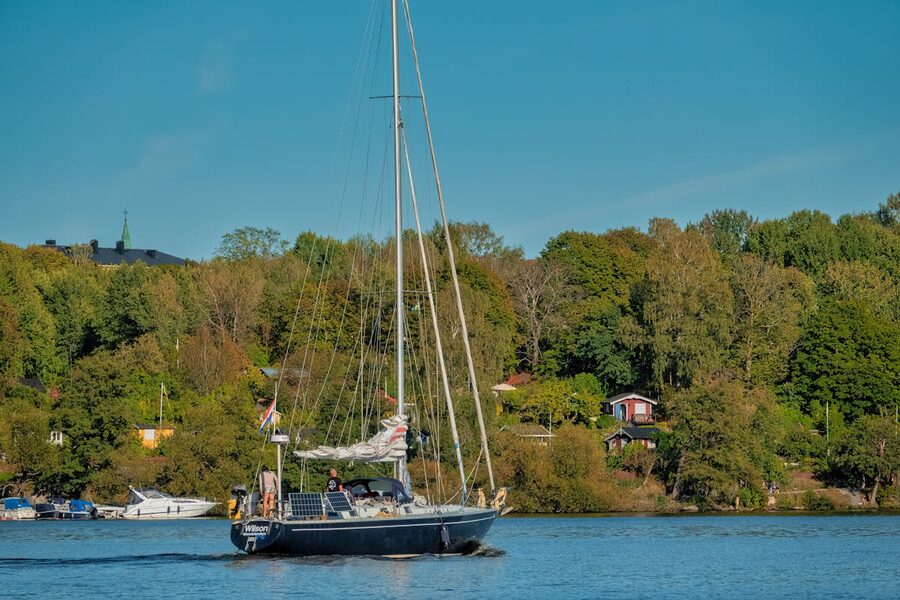
For the outer islands like Uto or Sandhamn, the journey takes 2-4 hours each way. Inner islands like Vaxholm or Grinda are 45 minutes to an hour. That’s a big difference when planning a day trip versus an overnight stay.
Public Ferries vs Guided Tours — Which Makes Sense
This is the first decision you need to make, and it depends entirely on what you’re after.
Public ferries are cheap (100-160 SEK per trip) and let you explore at your own pace. You pick an island, ride out, spend as long as you want, and catch a ferry back. The downside: no commentary, no planned route, and if you pick the wrong island for your interests, you’ve burned a half-day. Some islands are basically just trees and rocks with no facilities — wonderful if that’s what you want, disappointing if you were expecting a cafe.
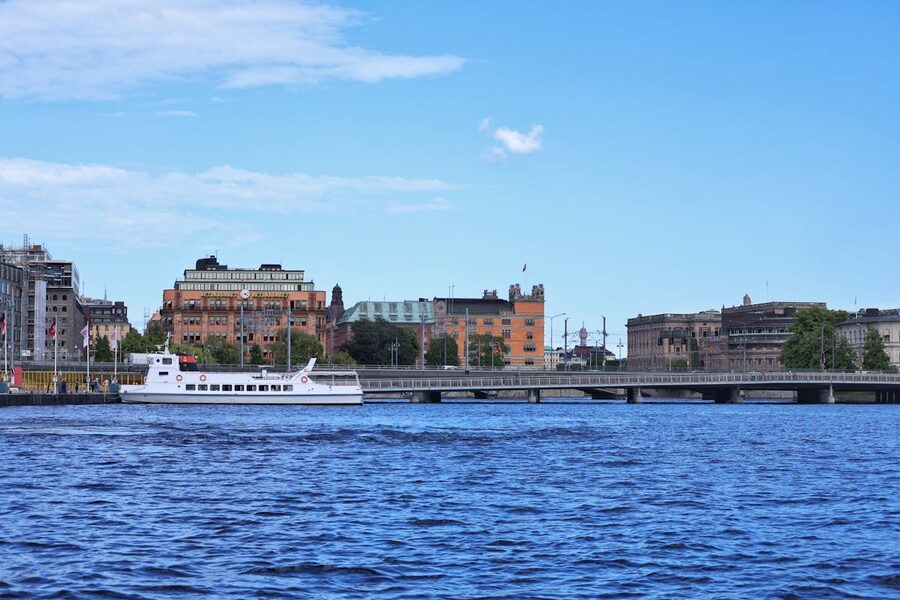
Guided tour cruises (like the ones below) cost $39-47 and give you 1.5-2.5 hours of narrated sailing through the best parts of the archipelago. You leave from the city center, see the main sights, hear the history, and get back without worrying about schedules. The trade-off: you don’t actually stop on any islands. It’s a floating overview, not an exploration.
My suggestion: do both if you have time. Take a guided cruise on your first day to get oriented and hear the stories behind what you’re seeing. Then take a public ferry on day two to an island that caught your eye — Vaxholm if you liked the fortress, Grinda if the nature looked good, Sandhamn if you want a sailing village.
The Best Stockholm Archipelago Tours to Book
I’ve gone through every Stockholm archipelago tour option available and narrowed it down to four that are actually worth your money. They’re ordered by how many people have booked and come back to rate them, which is the most honest quality signal there is.
1. Stockholm: City Archipelago Sightseeing Cruise with Guide — $41

This is the one most people end up on, and for good reason. The City Archipelago Sightseeing Cruise runs between 1.5 and 3 hours depending on which option you choose, with a live English-speaking guide the whole way. At $41, it sits right in the sweet spot — not the cheapest, but the guide quality and route make it worth the few extra dollars over the budget options.
What sets this apart from the others: the flexibility. You can choose a shorter loop or the extended version depending on how much time you have. The boat passes through the inner and middle archipelago, and during winter they sometimes break through ice channels — which sounds dramatic but is genuinely one of the most unusual boat experiences you can have in a European capital.
2. Stockholm: Archipelago Boat Tour — $39

The Archipelago Boat Tour is the budget-friendly alternative at $39 for a two-hour cruise. It uses a self-guided audio system rather than a live guide, which is honestly a mixed bag. You get to control the pace of information and tune in when something interesting comes up, but you lose the spontaneous commentary that makes a live guide fun.
The boat itself tends to be smaller and quieter than the big sightseeing vessels, which some people prefer. You are closer to the water, the experience feels a bit more intimate, and there’s less of a “tourist bus on water” atmosphere. If you’re the type who wants to sit on deck with a coffee and just watch the islands drift by, this is the better choice.
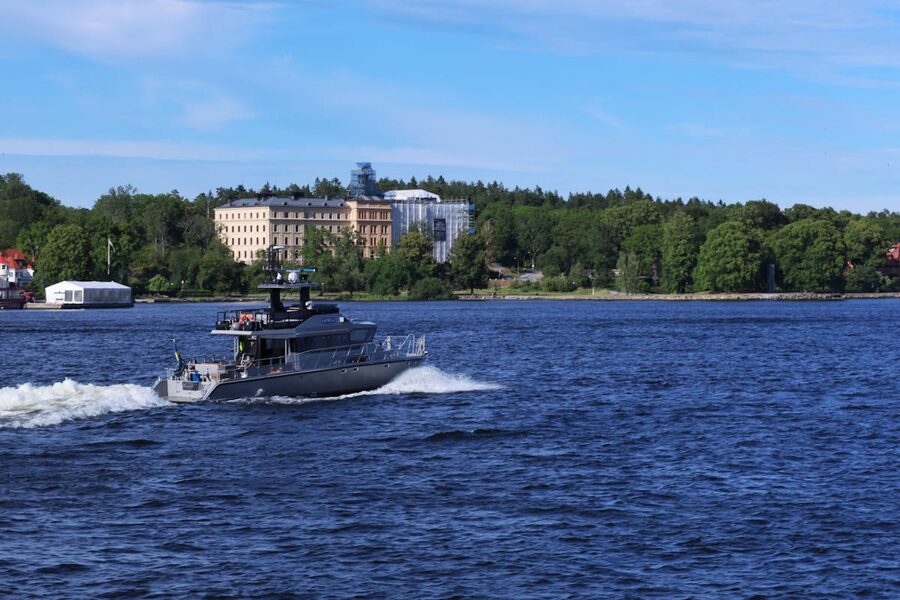
3. Stockholm Archipelago Cruise with Guide — $47
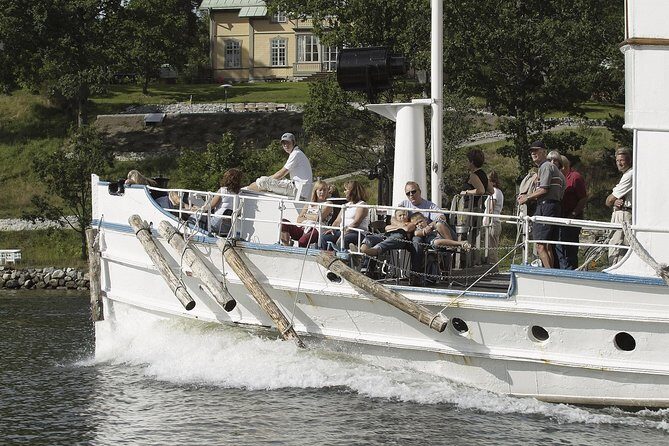
At $47 and 2.5 hours, the Archipelago Cruise with Guide is the longest and priciest of the standard options. But the extra time and money buy you something real: a route that extends further into the archipelago than the shorter cruises, reaching parts of the middle archipelago that the 1.5-hour trips can’t get to.
The live guide is a strong point here — multilingual (English and Swedish at minimum) and genuinely knowledgeable about the maritime history and island culture. You’ll hear about the old postal routes that ran by boat between the islands, the fishing villages that became summer retreats for Stockholm’s wealthy, and why the archipelago was so important for defense (short version: it’s really hard to navigate if you don’t know the channels).
4. Stockholm: Guided Archipelago Islands Tour — $41
The Guided Archipelago Islands Tour is a solid two-hour option at $41 that lands somewhere between the budget and premium options. The boat is comfortable — warm cabin, bar on board — and the guide does the tour in multiple languages, which is useful if you’re traveling with a group that doesn’t all speak the same language.
What I like about this one: the guides seem to put real effort into pointing out specific photo opportunities, which sounds minor but makes a difference when you’re trying to capture the scenery from a moving boat. The route covers the main highlights of the inner archipelago and you get solid coverage of Djurgarden, Fjaderholmarna, and the surrounding islands.
When to Visit the Archipelago
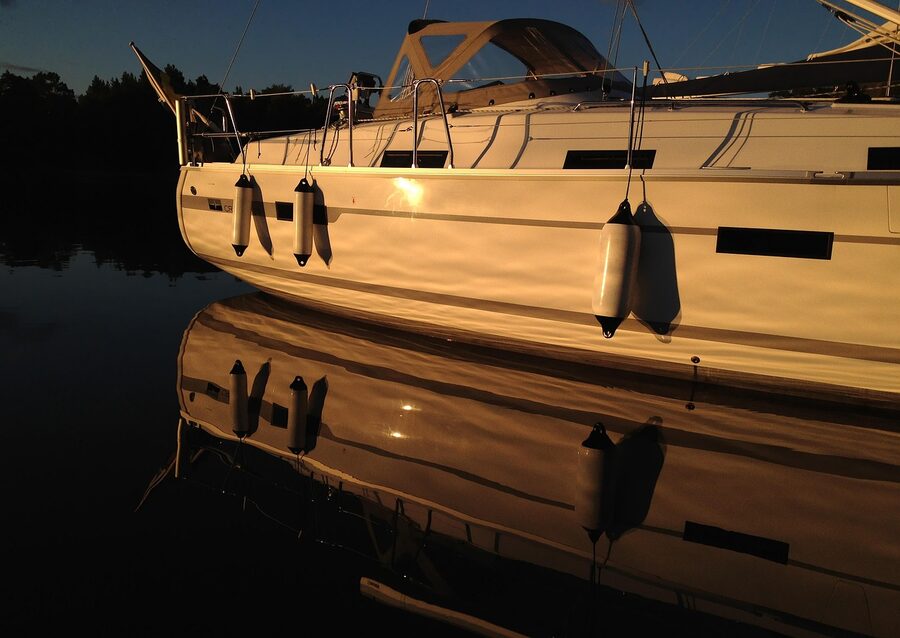
June through August is peak season, and everything that’s open is open. Ferry schedules run at full frequency, island restaurants and cafes are all operational, and the water is warm enough for swimming (around 18-22°C if you’re not picky). The downside: everyone else had the same idea. The popular islands like Sandhamn and Vaxholm get properly crowded on summer weekends.
May and September are the sweet spot if you can swing it. Fewer crowds, the weather is still workable (expect 12-18°C), and most ferry routes are running. Some island facilities close after August, but the bigger islands stay operational. The light in September is particularly good for photography — lower angle, warmer tones.
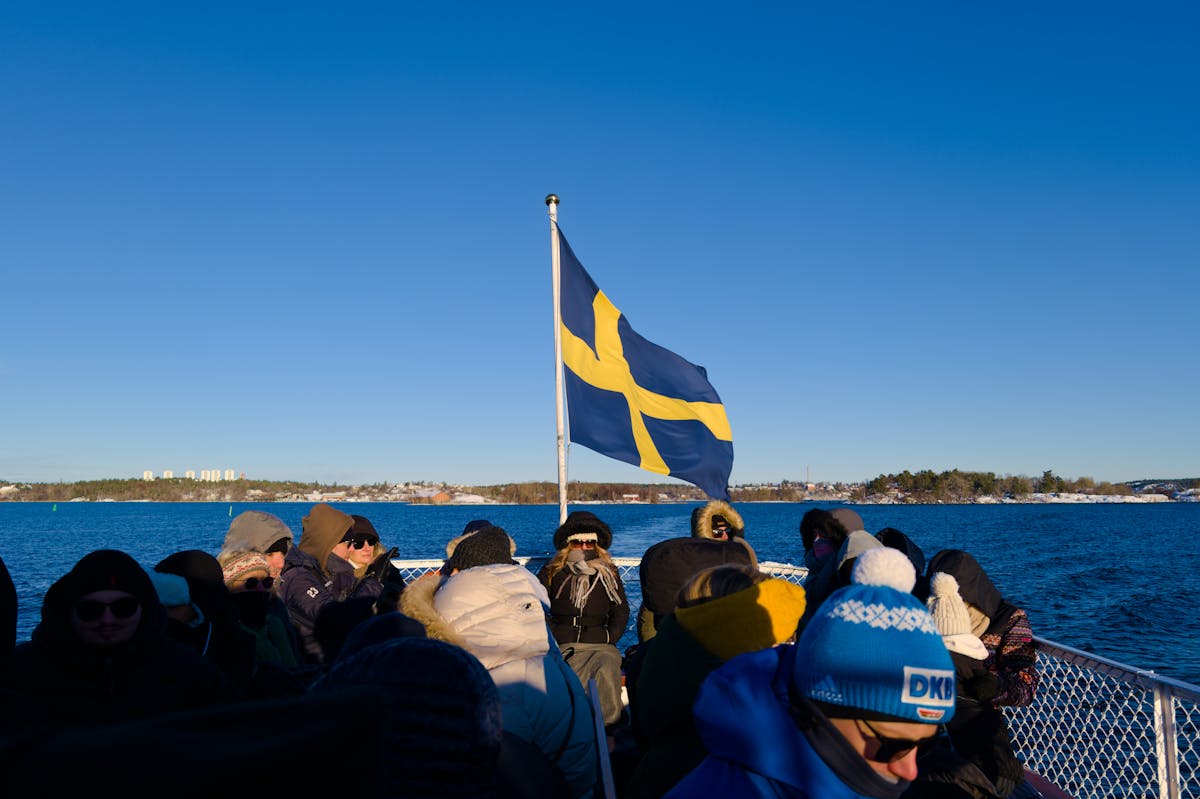
Winter (November-March) is when the archipelago turns into something completely different. Frozen channels, snow-covered islands, and barely anyone else out there. The guided cruises still run — in fact, the winter versions sometimes include icebreaking sections, which is a genuinely unique experience. But the public ferries run on reduced schedules and many islands have no services at all.
Best time of day: Morning departures get you the calmest water and the best chance of clear visibility. Late afternoon trips have better light for photos but can be choppy if the wind picks up. If you’re doing a guided cruise, the sunset departures (available in summer) are the most atmospheric but sell out fastest.
Getting to the Departure Points
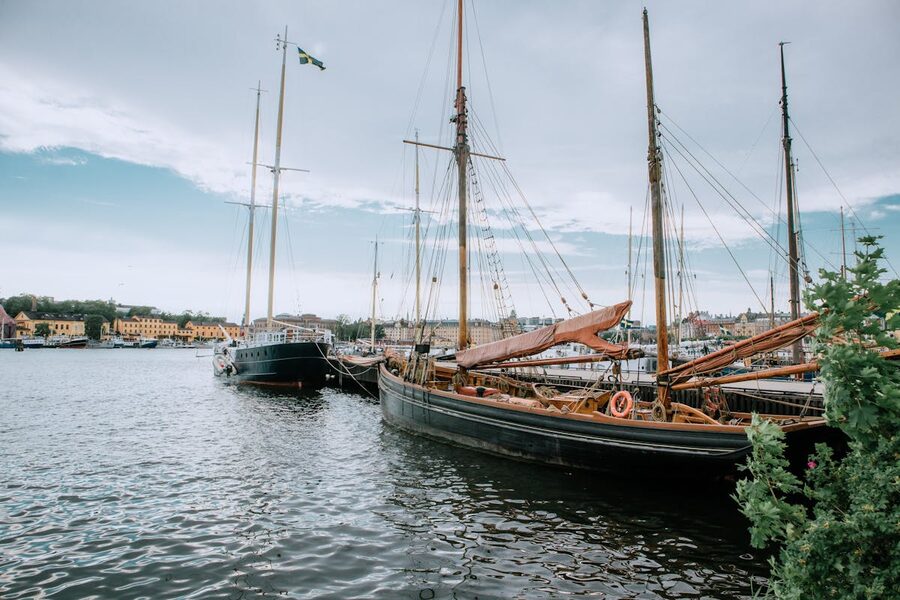
Most guided tours and many public ferries leave from Strandvagen/Nybrokajen — right in central Stockholm, walkable from Gamla Stan in about 15 minutes. Take the T-bana to Kungstradgarden (blue line) and it’s a 5-minute walk east along the water. You can’t really miss the boats.
For the outer archipelago islands, some routes depart from Stavsnasbrygga, which is about an hour east of the city by bus (bus 433 from Slussen). This isn’t where the guided cruises go — it’s the gateway for deeper exploration if you’re heading to places like Sandhamn or Uto. Plan for a full day if you’re going this route.
A few tips that’ll save you stress: arrive 15-20 minutes before departure. The ferries leave on time, and they won’t wait for you. In summer, the popular morning boats can fill up — standing room is always available, but if you want a seat on the upper deck, early arrival matters.
What You’ll Actually See Out There
The archipelago is split into three zones, and each has a completely different character.
The inner archipelago (closest to Stockholm) is the most developed. These islands have houses, restaurants, guest harbors, and in many cases year-round residents. Fjaderholmarna is technically the closest island to the city — about 25 minutes by ferry — and has a brewery, a fish smokehouse, and a small craft village. It’s almost too easy to reach, which means it gets busy, but the smoked fish is genuinely excellent.
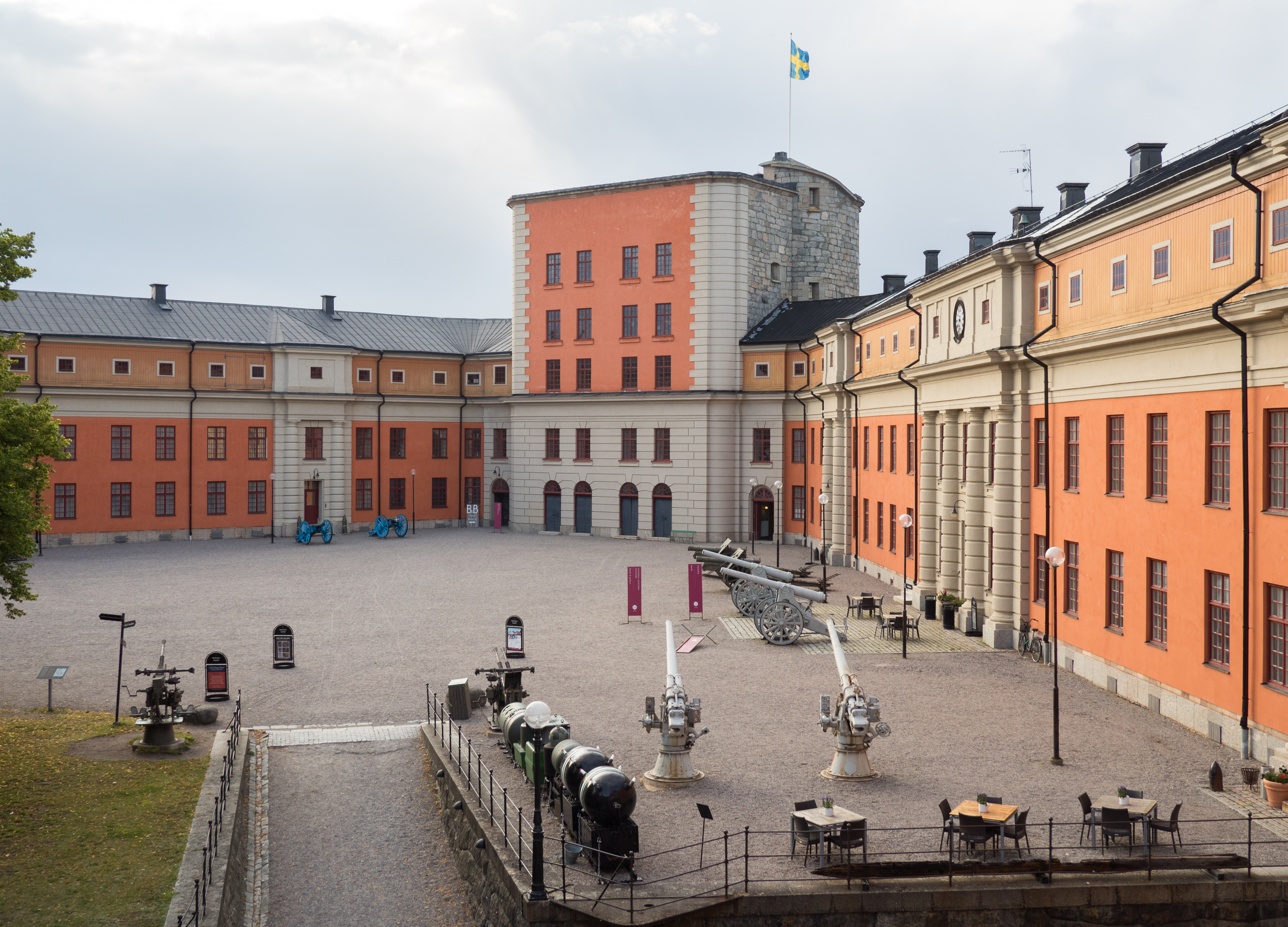
Vaxholm is the “capital” of the archipelago — a proper small town with cobblestone streets, a harbor, restaurants, and the 16th-century Vaxholm Fortress sitting on its own islet right in the channel. Gustav Vasa built the first fortification here in 1544 to defend Stockholm from Danish naval attacks. The fortress has been reinforced, expanded, bombed, and rebuilt multiple times since then — it saw action as recently as the 1800s. Today it’s a museum, and the ferry ride out there takes about an hour from central Stockholm.

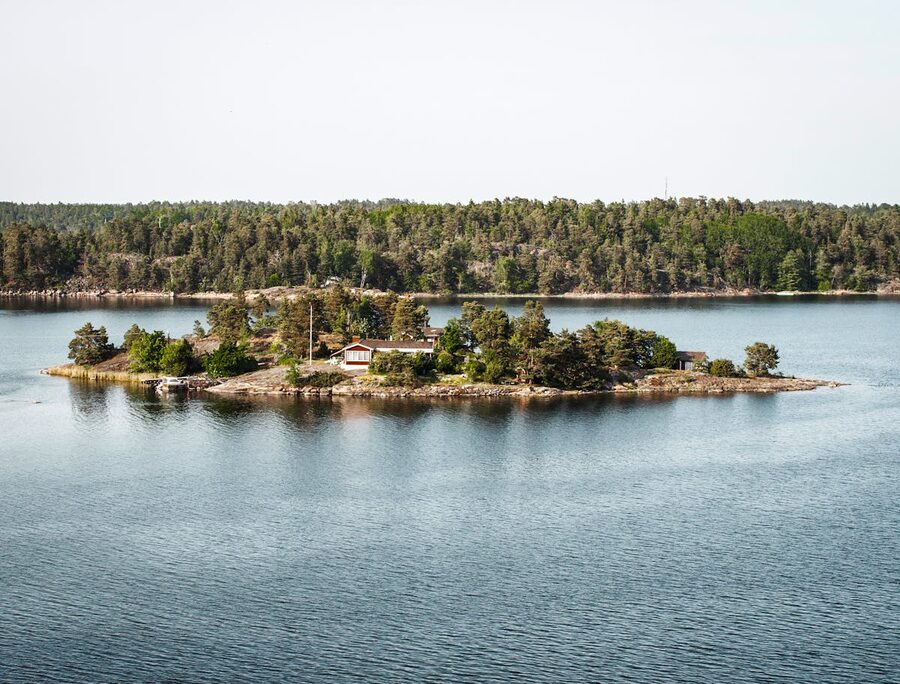
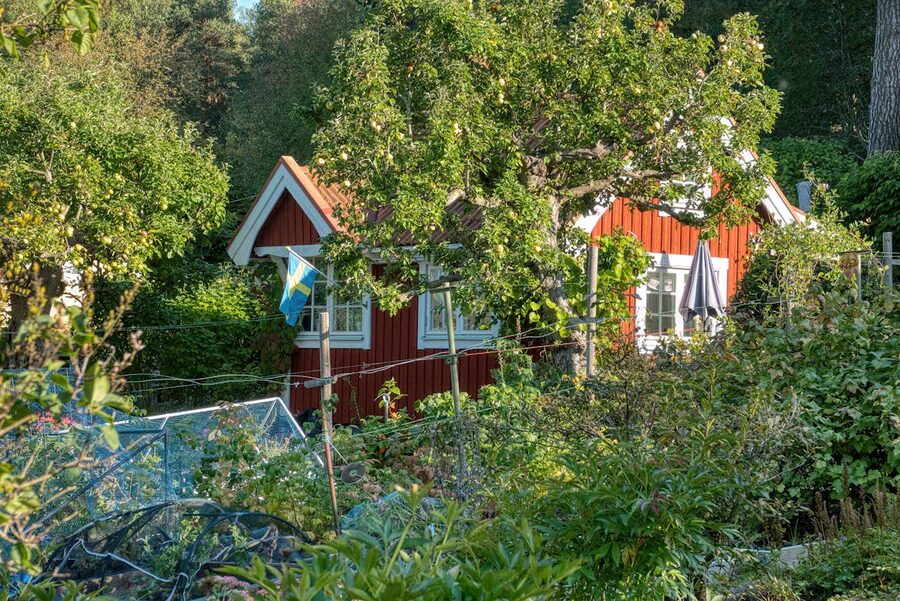
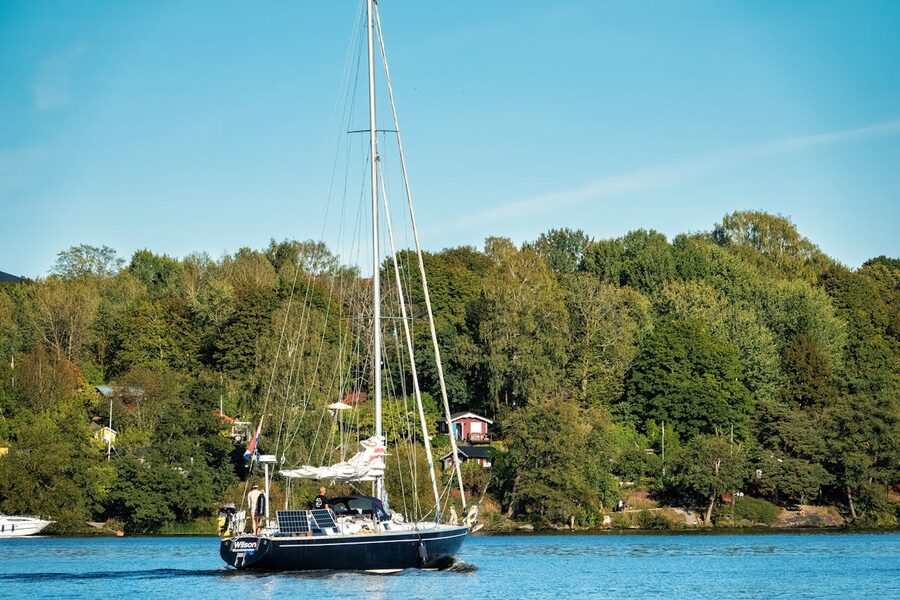
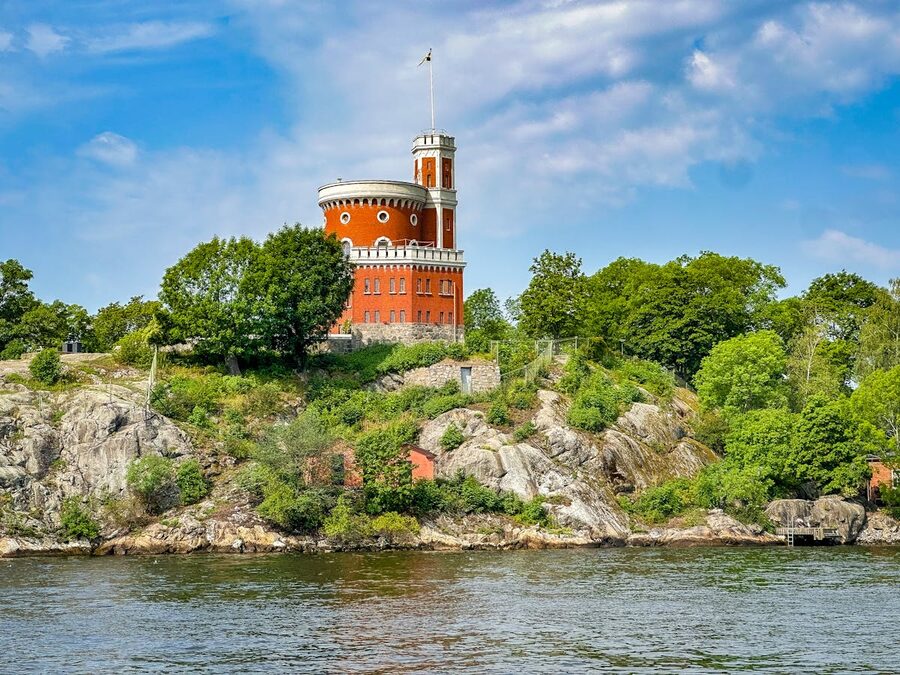
The middle archipelago is where the summer cottage culture really takes over. Islands like Grinda and Moja are covered in forest with small clusters of red-painted summer houses (sommarstugor) tucked along the shorelines. Many families have owned their cottages for generations — passing them down is a big deal in Swedish culture. The swimming here is better than the inner archipelago (cleaner water, more rocks to jump off), and the hiking trails on Grinda wind through pine forest with views from rocky outcrops.
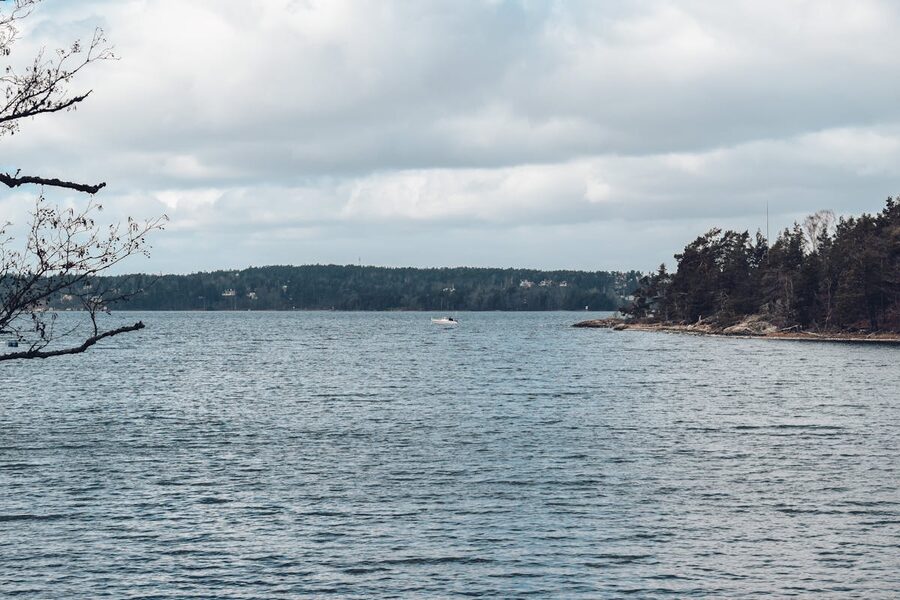
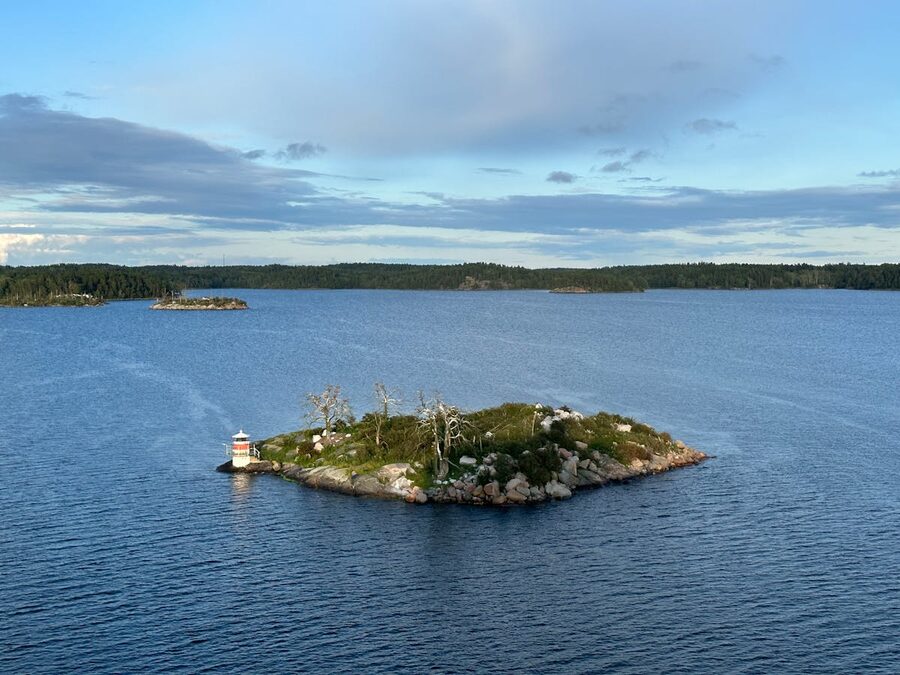
The outer archipelago is where the trees thin out and the bare granite takes over. Islands like Sandhamn and Uto are exposed to the open Baltic, windswept, and wild in a way the inner islands aren’t. Sandhamn is the yachting center of the archipelago and gets lively during sailing season, while Uto is one of the oldest mining communities in Sweden — iron ore was extracted here from the 1100s until the 1870s. The outer islands take longer to reach (2-4 hours by ferry) but reward the effort with dramatic landscapes and far fewer people.
The Viking-era trade routes that once threaded through these channels shaped where the modern ferry lines run today. And the old archipelago boat mail service — skargardsbaten — that delivered post to island residents is one of the reasons the ferry network exists at all. The postal routes became passenger routes, and the passenger routes became the tourism infrastructure you’re using now.
Tips That Will Actually Save You Time and Money
Buy the SL + Waxholmsbolaget combo card if you’re doing multiple trips. Stockholm’s public transport card (SL Access) and the archipelago ferry pass are separate systems, but you can top up both on the same card. The 5-day ferry pass at 499 SEK pays for itself after about 4 one-way trips.
Pack food for outer island trips. The inner islands (Vaxholm, Fjaderholmarna) have restaurants, but once you get further out, food options disappear fast. Grinda has a seasonal restaurant that’s good but expensive. Many smaller islands have nothing at all. Bring sandwiches, water, and snacks — there are no convenience stores on tiny islands.
Download the Waxholmsbolaget app before you go. It has real-time ferry tracking, timetables, and you can buy tickets directly. The app works offline for timetables once you’ve loaded the routes, which matters because mobile signal gets spotty on the outer islands.
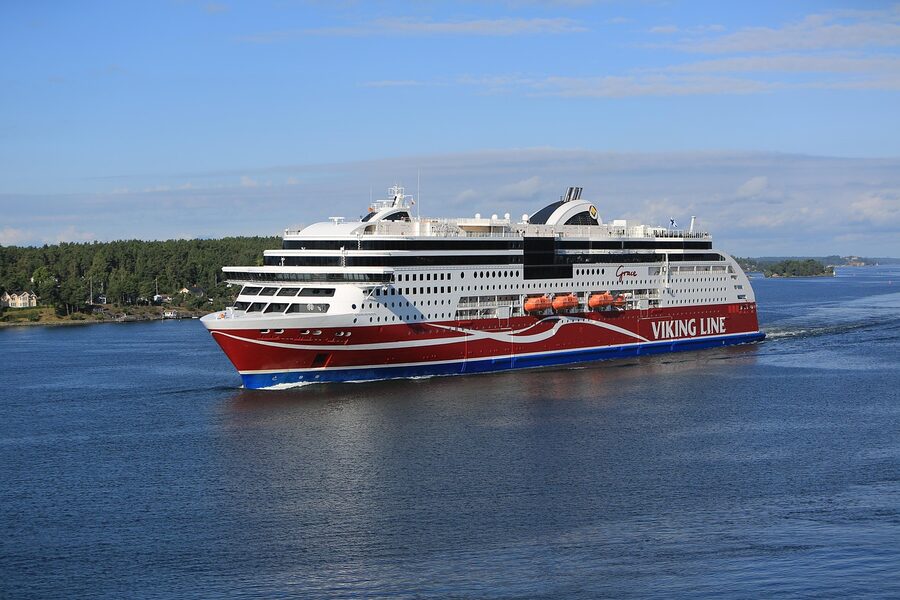
Consider an overnight stay. Day trips work fine for the inner islands, but the archipelago completely changes character after the day-trippers leave. The evening calm on Grinda or Sandhamn, when the last ferry has departed and the island belongs to whoever stayed, is the real experience. Grinda has a hostel and campsite. Sandhamn has a proper hotel. Book ahead in July — availability goes fast.
Check the weather forecast, but don’t let overcast skies deter you. The archipelago in moody weather — grey skies, choppy water, mist between the islands — has its own beauty that you don’t get on the postcard-perfect sunny days. What you should watch for is strong wind warnings — rough seas can cancel outer island ferries and make the open-deck cruise experience miserable.
The Cinderella boats are worth knowing about. These faster catamarans run by Stromma connect Stockholm to Sandhamn, Vaxholm, and a few other islands much faster than the standard Waxholmsbolaget ferries. They cost more, but if you’re short on time and want to reach Sandhamn without a 3-hour ferry ride, they cut the trip roughly in half.
Island Hopping Itineraries
If you’ve got limited time, here’s how I’d structure it:
Half day (3-4 hours): Take a guided archipelago cruise from Strandvagen. You’ll see the inner and middle archipelago, hear the history, and be back in time for a late lunch. Any of the four tours above work for this — the 1.5-hour option if you’re really tight on time, the 2.5-hour version if you can stretch.
Full day — culture and history: Public ferry to Vaxholm (1 hour), explore the town and fortress (2-3 hours), lunch at one of the harbor restaurants, ferry back. Total cost around 300 SEK for transport plus food. If you’re interested in the historical side of Stockholm, Vaxholm gives you the military and maritime angle that the city museums miss.
Full day — nature and swimming: Ferry to Grinda (about 2 hours from the city center, or 1 hour from Vaxholm). Hike the island trail (2-3 hours for the full loop), swim off the rocks on the south side, eat at the restaurant if it’s open. Last ferry back is usually around 5-6pm in summer — check before you go.
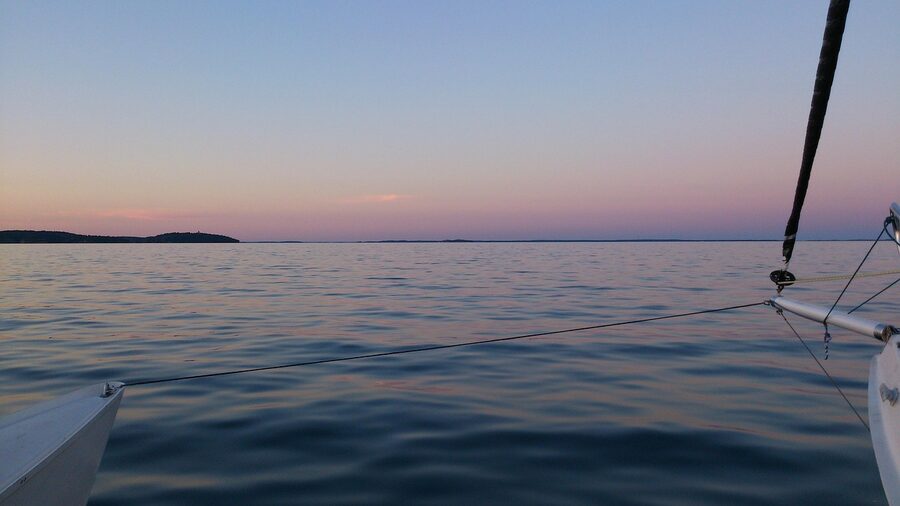
Two days with overnight: Day one — guided cruise for orientation, then ferry to Sandhamn in the afternoon. Overnight at the Sandhamn Seglarhotell (rooms from about 1,800 SEK). Day two — explore Sandhamn in the morning, then catch the Cinderella boat back to Stockholm. This is the best way to actually experience the archipelago rather than just see it from a boat window.
More Stockholm Guides
If you’re spending a few days in Stockholm, the archipelago pairs well with the city’s other water-based experiences. Our sailing experiences guide covers everything from afternoon rentals to multi-day charters, and the walking tours guide is the best way to fill the days when you’re back on dry land. For a broader overview of what’s worth doing in Stockholm, we’ve ranked every major tour option. And if you want to see the city from the water without leaving the urban area, the Stockholm Highlights Boat Tour covers the canals and bridges closer to the center — a good complement to the archipelago trips that head out to the islands.

This article contains affiliate links. If you book a tour through our links, we earn a small commission at no extra cost to you. This helps us keep producing free travel guides.