
The guide told us to look up. And there, on the ceiling of a chamber carved out of solid rock beneath a Naples hillside, was a 5th-century mosaic of San Gennaro — painted while Christianity was still dangerous, while public worship could get you killed. It had been sitting there, in the dark, for sixteen hundred years.
That moment changed how I thought about Naples. This is not a city that puts its best stuff in museums behind velvet ropes. The really extraordinary things are underground, in places most visitors never bother to find.
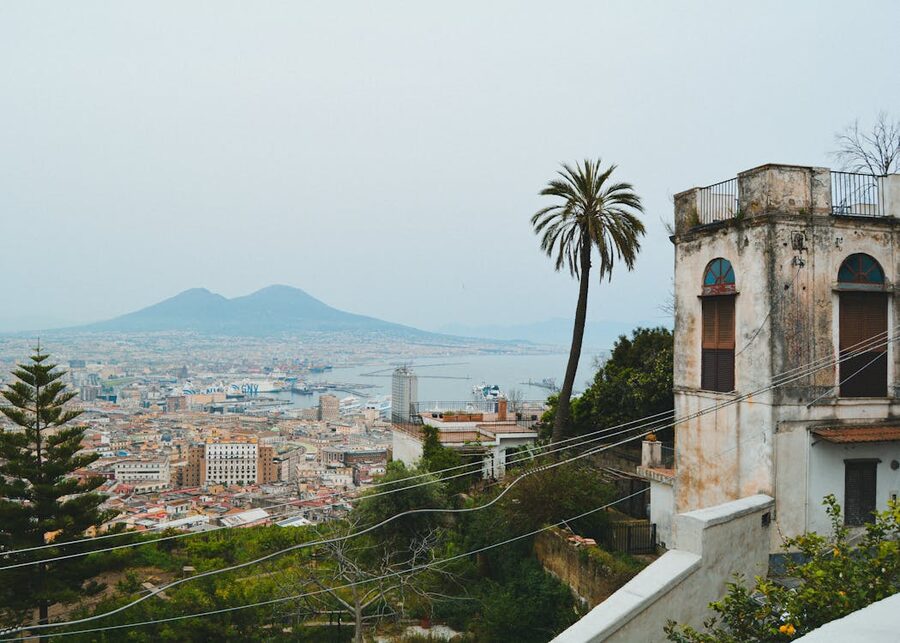
The Catacombs of San Gennaro are 2nd-century underground burial chambers carved into the tuff rock beneath the Capodimonte hill. They hold some of the oldest Christian frescoes and mosaics in all of southern Italy. And the story of how they went from abandoned ruin to the most talked-about cultural site in the neighbourhood is almost as good as the catacombs themselves.
Here is everything you need to know to visit them — how to get tickets, what to expect inside, and which tours are actually worth booking.
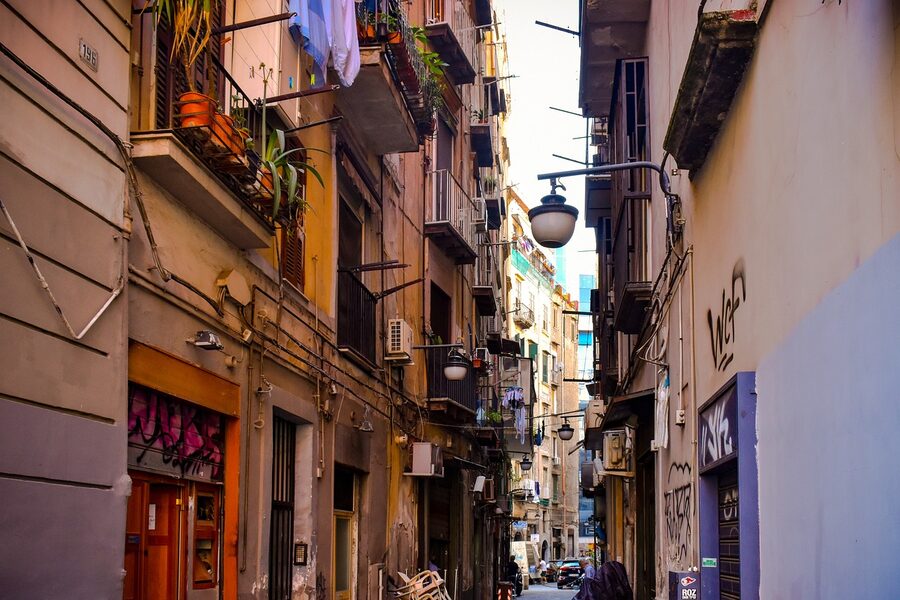
Best overall: Catacombs of San Gennaro Entry Ticket & Guided Tour — $15. The standard guided tour run by the local cooperative. 45 minutes, English-speaking guides, and the best value you will find for any historical site in Naples.
Best combo deal: San Gennaro & Caravaggio Combined Ticket — $20. Adds the Pio Monte della Misericordia where Caravaggio’s Seven Acts of Mercy hangs. Two hours, two centuries of art history.
Best deep dive: San Gennaro Experience With Filangieri Museum — $20. The full package — catacombs, chapel, and museum. Half a day if you take your time.
- How the Ticket System Works
- Official Tickets vs Third-Party Guided Tours
- The Best Catacombs of San Gennaro Tours to Book
- 1. Catacombs of San Gennaro Entry Ticket & Guided Tour —
- 2. San Gennaro & Caravaggio Combined Ticket —
- 3. San Gennaro Experience With Filangieri Museum —
- When to Visit
- How to Get There
- Tips That Will Save You Time
- What You Will Actually See Inside
- The Story Behind the Cooperative
- While You Are in Naples
How the Ticket System Works
You cannot just show up and walk in. The Catacombs of San Gennaro are only accessible by guided tour, and those tours run on a fixed schedule. There is no self-guided option, no audio guide alternative, and no way to wander through on your own. This is partly for preservation and partly because you genuinely need someone to explain what you are looking at — the significance of the frescoes and burial chambers is not obvious without context.
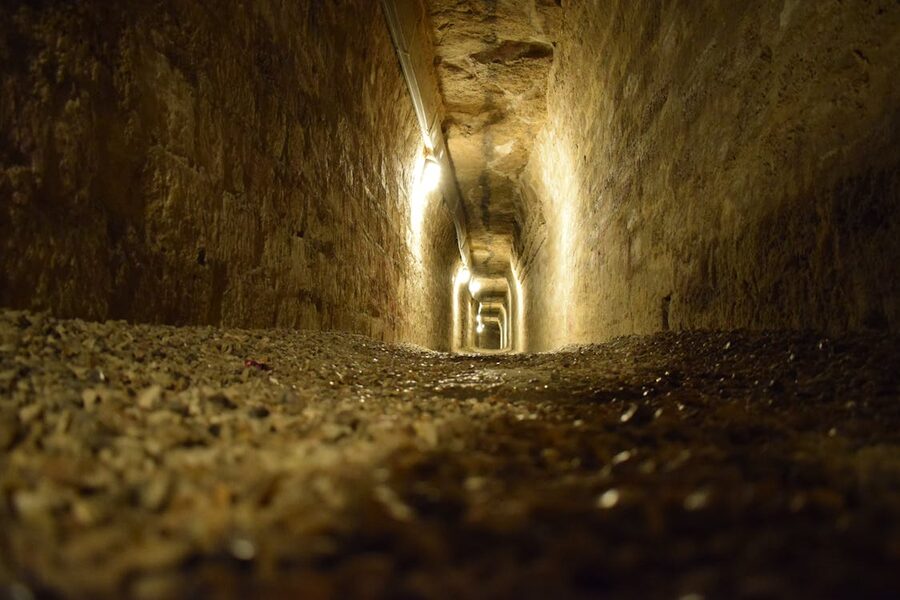
The tours are run by La Paranza, a cooperative of young people from the Rione Sanita neighbourhood. This matters because they are not some faceless tourism company — they grew up in one of Naples’ toughest areas and built this operation from scratch, turning an abandoned archaeological site into something that now employs dozens of locals and draws visitors from all over the world.
You can book directly through their website or through third-party platforms like GetYourGuide. Booking in advance is strongly recommended, especially in summer and around Easter. The tours have limited capacity — about 25 people per group — and the popular time slots fill up days ahead.
Ticket prices:
- Adults: around EUR 13 (roughly $15)
- Children under 6: free
- Reduced rates for students and seniors — bring ID
The standard tour lasts about 45 minutes. That sounds short, but the guides pack a lot in, and the chambers are not massive — you see everything without feeling rushed.
Official Tickets vs Third-Party Guided Tours
There is an important distinction here. The official catacomb tour — the one run by La Paranza — is already guided. You do not need a separate “guided tour” from a third-party operator to get a guide inside the catacombs. Every visitor gets the same guided experience.
So why book through GetYourGuide or similar platforms? A few reasons:
The case for booking direct: Cheapest price. You pay the face value, no platform markup. Book through the La Paranza website or at the door if slots remain.
The case for booking through a platform: Free cancellation up to 24 hours in advance (most direct bookings are non-refundable). Instant confirmation. Customer support if something goes wrong. And some third-party options bundle the catacombs with other nearby attractions — the Caravaggio painting at Pio Monte, the San Gennaro chapel, or the Filangieri Museum — which saves you the hassle of buying separate tickets.
If your plans are firm, book direct. If you want flexibility, book through a platform. The experience inside the catacombs is identical either way.
The Best Catacombs of San Gennaro Tours to Book
I have gone through what is available and picked the three best options depending on what you are after. Each one includes the catacomb tour itself — the difference is what else comes with it.
1. Catacombs of San Gennaro Entry Ticket & Guided Tour — $15
This is the one to book if you want the catacombs and nothing else. At $15 per person for a 45-minute guided tour of one of the most important early Christian sites in Italy, the value is hard to argue with. That is less than a pizza and a beer at a tourist-trap restaurant on Via Toledo.
The guides from La Paranza are knowledgeable without being lecture-heavy. They make the history feel personal because it is personal — this is their neighbourhood, their project, their livelihood. One visitor summed it up well: the guide was friendly, funny, and clearly passionate about the history of the area. You also get access to the nearby Catacombs of San Gaudioso with this ticket, which most people do not realise. Two catacomb sites for the price of one.
The only catch: no photos allowed inside. Understandable given the fragile frescoes, but bring your expectations in line. You will need to just be there and experience it without your phone, which honestly makes it better.
2. San Gennaro & Caravaggio Combined Ticket — $20

If you have any interest in art history, this is the one I would pick. $20 gets you the full catacomb tour plus entry to the Pio Monte della Misericordia, a small church that contains Caravaggio’s Seven Acts of Mercy — one of the most important Baroque paintings in Italy, crammed into a tiny chapel where you can stand close enough to see the brushstrokes.
The contrast is what makes it work. You go from 2nd-century underground burial chambers with ancient frescoes to a 17th-century Caravaggio masterpiece, all within two hours and all within the same neighbourhood. It is a timeline of Neapolitan art history compressed into a single morning. And the two locations are about a 15-minute walk apart, so you get to see the neighbourhood streets between them.
For an extra $5 over the basic catacomb ticket, the value is absurd. The Pio Monte alone charges EUR 8 if you buy separately.
3. San Gennaro Experience With Filangieri Museum — $20
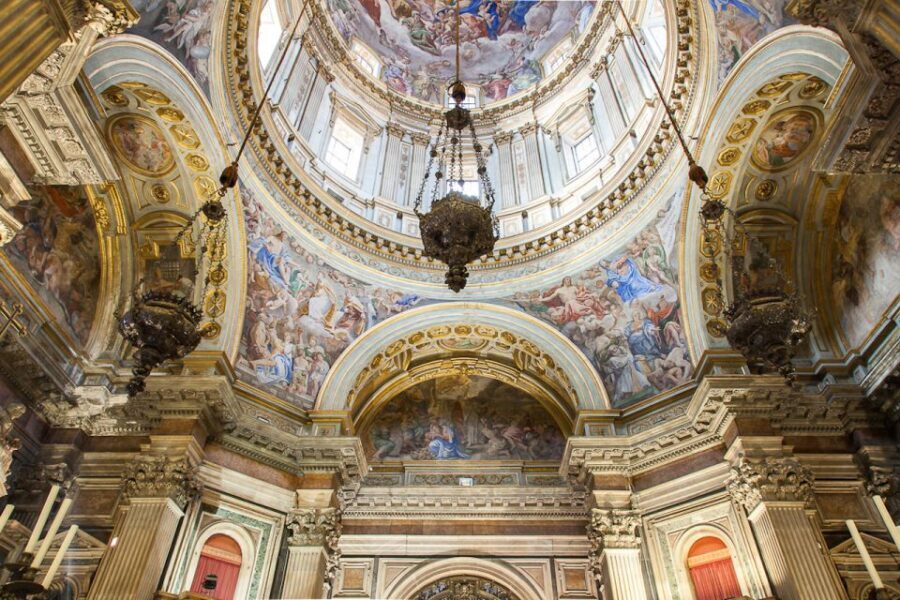
This is the deep dive for anyone who wants to understand the San Gennaro story from top to bottom. At $20, it bundles the catacomb tour with the Chapel of San Gennaro’s Treasure (where the famous blood relic is kept) and the Filangieri Museum, a small but absorbing collection of decorative arts and historical objects.
The Chapel of San Gennaro’s Treasure is worth the price on its own. This is where the famous blood miracle takes place three times a year. When the blood of San Gennaro fails to liquefy, Neapolitans believe disaster will follow — and the historical record has some unnerving coincidences. It did not liquefy in 1527, and a plague killed 40,000 people. It failed again in 1980, and the Irpinia earthquake hit.
Fair warning: one reviewer noted they were turned away from the Filangieri Museum due to a private event, so availability of all three sites on the same day is not always guaranteed. But when it works, this is the most complete San Gennaro experience you can get.

When to Visit
The catacombs are open Monday to Saturday, typically from 10:00 AM to 5:00 PM, with guided tours departing every hour. Sunday hours are more limited — check the La Paranza website for current schedules as they change seasonally.
Best time to go: The first tour of the day (10:00 AM) or the last one tend to have smaller groups. Mid-morning tours in summer are packed.
Worst time: Weekend afternoons in July and August. Italian school holidays (mid-June to mid-September) also bring larger crowds. Easter week is extremely busy.
The temperature underground stays cool year-round — around 15-17°C — so the catacombs are actually a welcome escape from the Naples summer heat. But that means you should bring a light layer even if it is 35°C outside. The contrast when you step back out can be jarring.
How to Get There
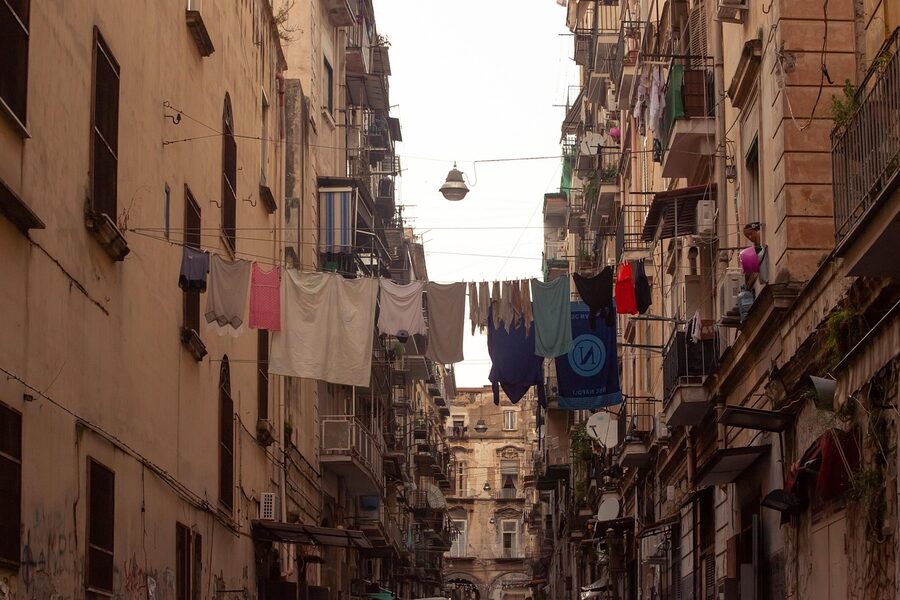
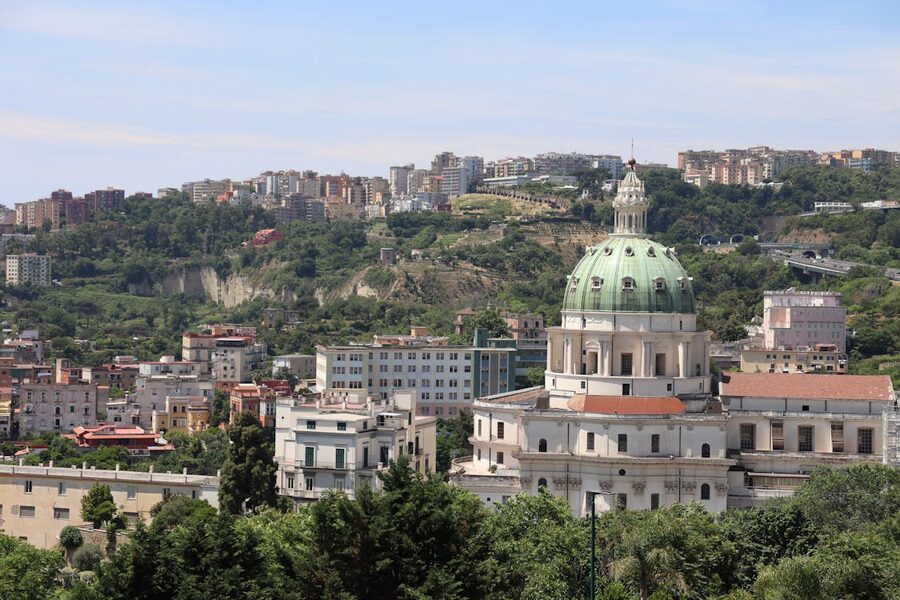
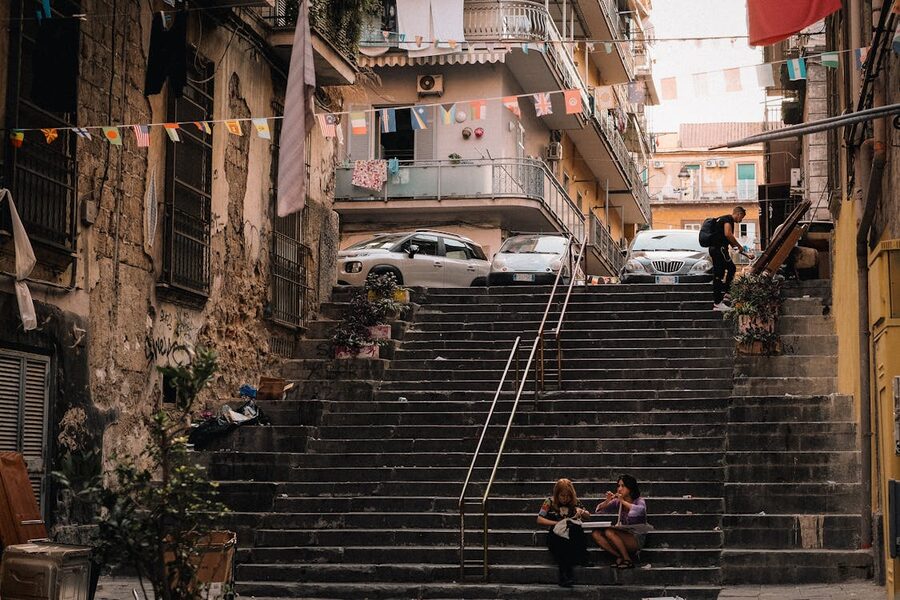
The entrance to the Catacombs of San Gennaro is at the Basilica del Buon Consiglio, on Via Capodimonte, right next to the Capodimonte Museum. This is in the Rione Sanita neighbourhood, north of the historic centre.
By bus: The C63 bus runs from Piazza Dante directly to Via Capodimonte. It takes about 15 minutes. Get off at the Catacombe di San Gennaro stop — you will see the Basilica on your left. Bus R4 from Piazza Garibaldi (the main train station) also stops nearby.
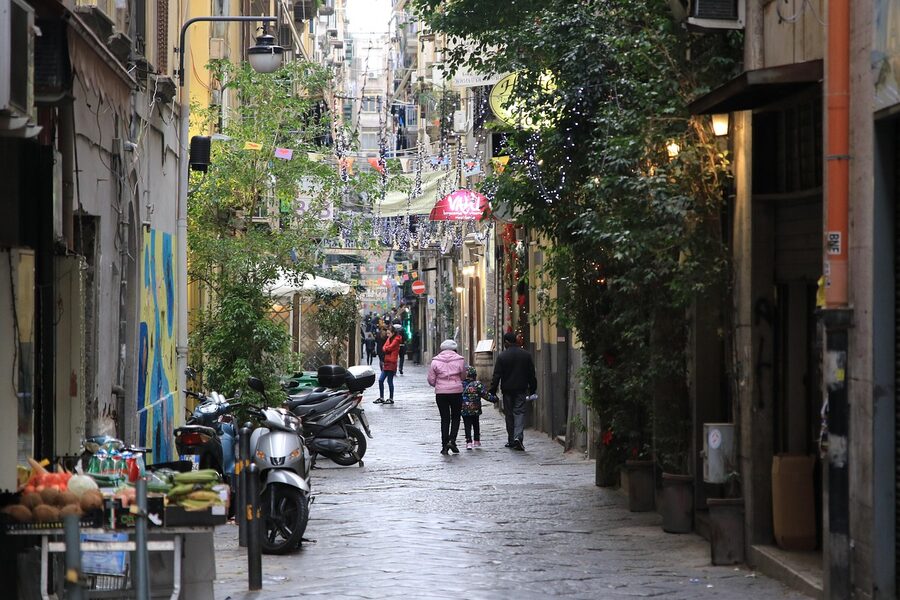
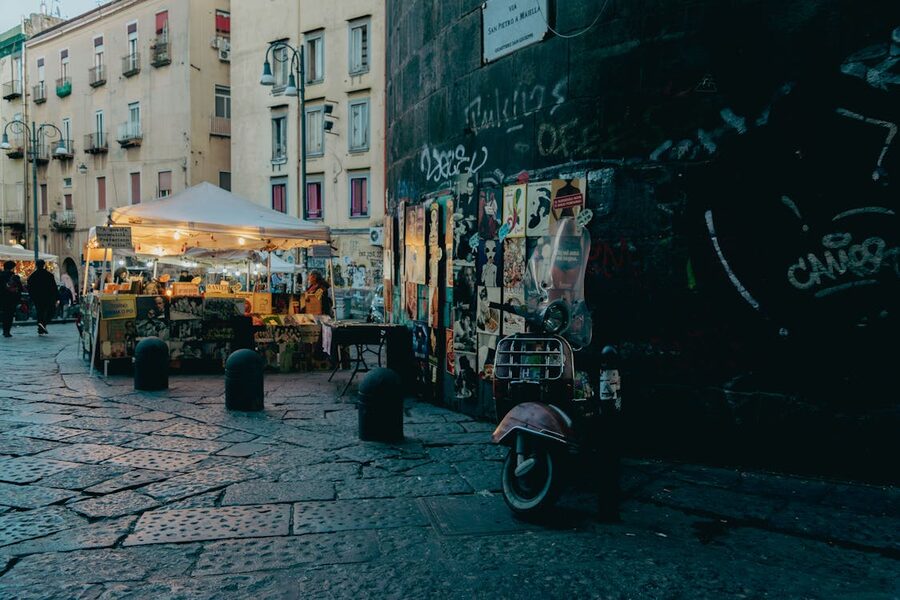
On foot from the centro storico: About 25 minutes uphill from Via dei Tribunali. Walk north through the Sanita neighbourhood — the streets are steep but interesting. Follow Via Sanita and then head uphill on Via Capodimonte. It is a workout, but you will pass through streets that most travelers never see.
By taxi: A taxi from Piazza del Plebiscito or the central station should cost EUR 8-12. Ask the driver for the Catacombe di San Gennaro at Capodimonte — not just “the catacombs,” because Naples has several.
By metro: The Museo metro stop (Line 1) is the closest, about a 15-minute walk uphill from there. Or take the Sanita elevator (ascensore della Sanita) which connects the lower neighbourhood to the bridge level, saving you the steepest part of the climb.
Tips That Will Save You Time
Book your time slot in advance. This is not optional advice — it is practically a requirement in peak season. Tours have a capacity of about 25 people and popular morning slots sell out days ahead.
Arrive 10-15 minutes early. The tours leave on time and they will not wait. There is a small courtyard area at the Basilica where you can wait comfortably.
No photos inside the catacombs. This surprises some people, but the frescoes are fragile and flash photography accelerates deterioration. Phone cameras are not allowed either. Put it in your pocket and just look.

Wear proper shoes. The floors are uneven stone and some passages are narrow. Flip-flops and heels are a bad idea.
Combine with the Capodimonte Museum. Since you are already up on the hill, the Museo di Capodimonte is literally next door. One of Italy’s best art museums and rarely crowded compared to the Uffizi or Vatican. You could spend a full morning doing both.
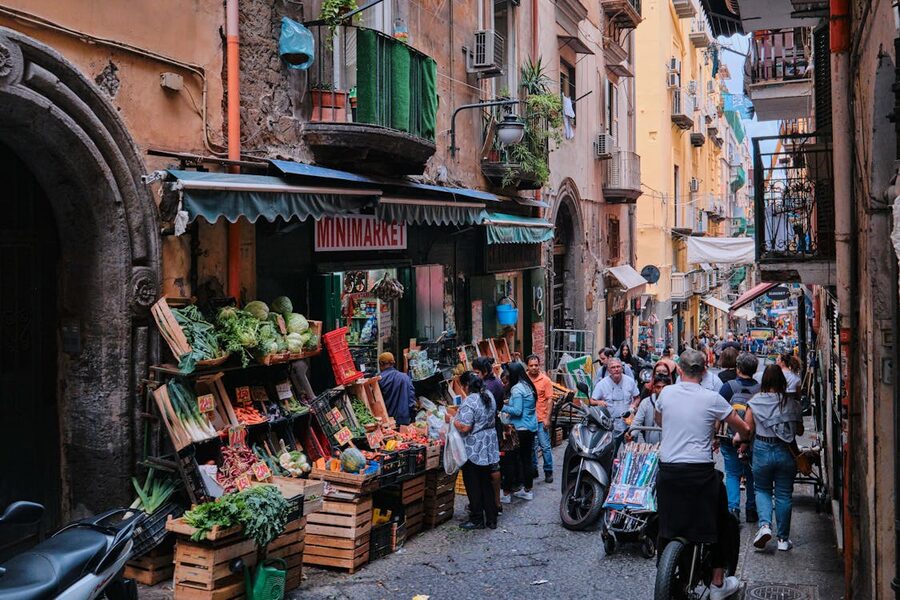
Eat in Rione Sanita before or after. The neighbourhood has some of the best (and cheapest) food in Naples. Pizza in this area is made for locals, not travelers, and you will notice the difference immediately.
Consider the combined ticket. If you are interested in the Chapel of San Gennaro’s Treasure or the Caravaggio at Pio Monte, the combo tickets are excellent value. Buying everything separately costs significantly more.
What You Will Actually See Inside
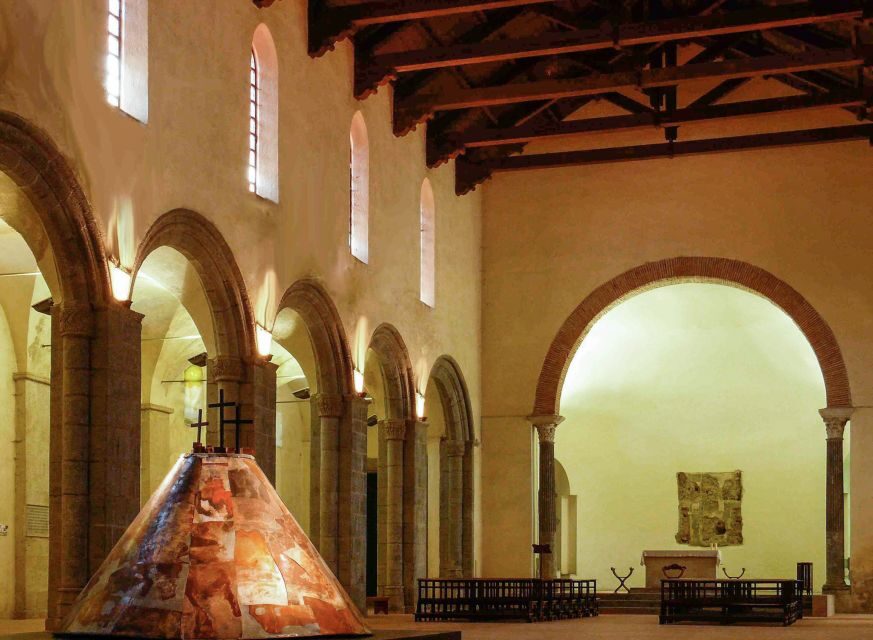
The Catacombs of San Gennaro are not like the Paris Catacombs — there are no piles of skulls or macabre arrangements. These are early Christian burial chambers, and they feel more like an underground church than a cemetery.
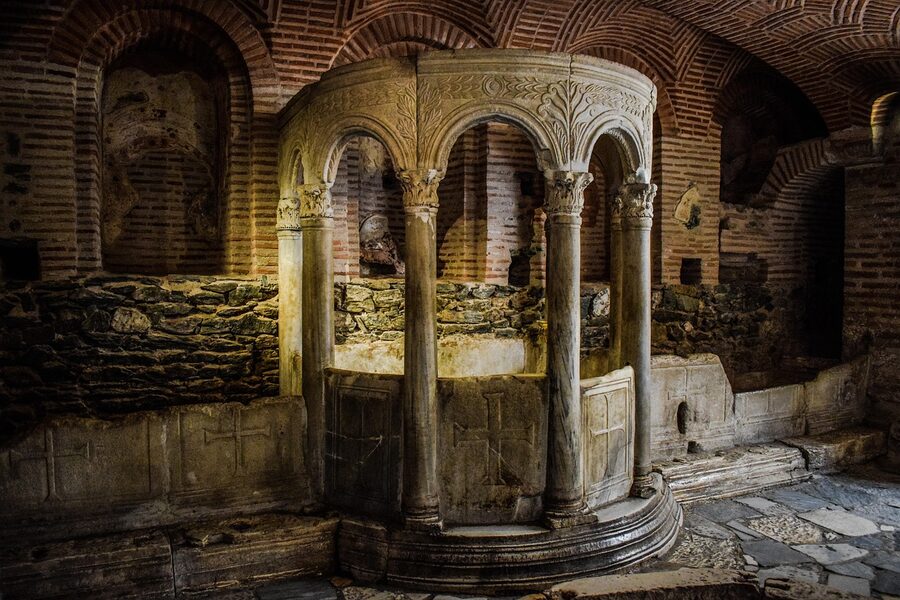
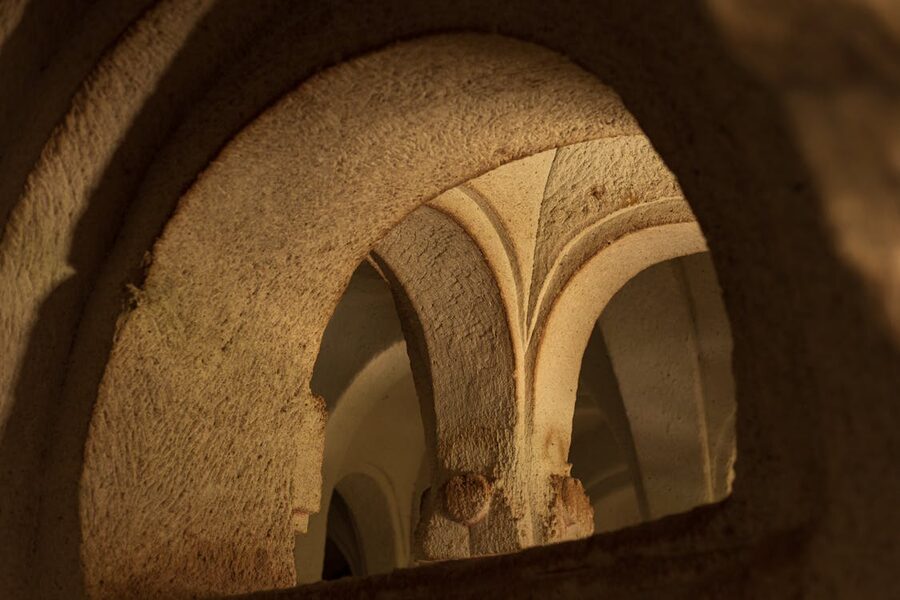
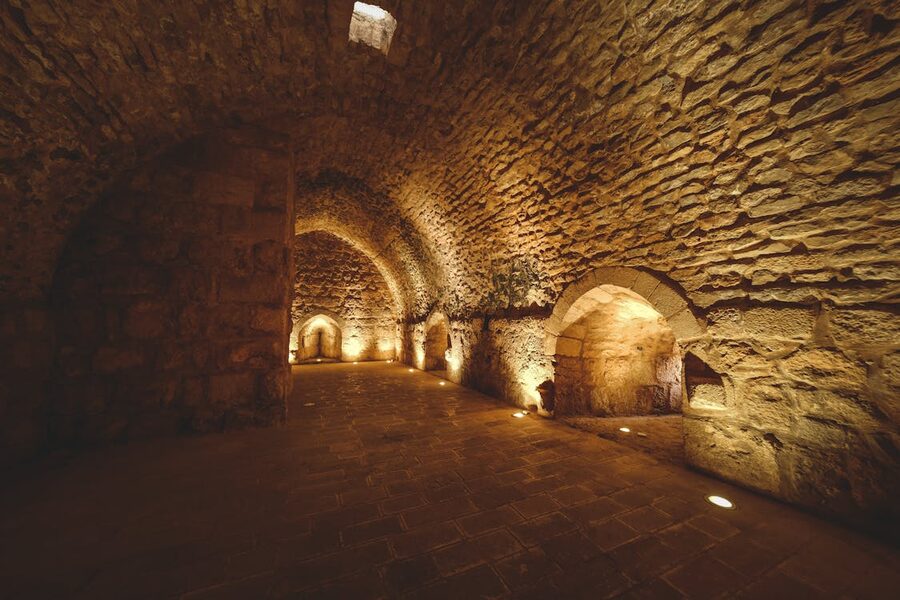
The complex has two levels, both carved out of the volcanic tuff rock that makes up the Capodimonte hill. The upper level dates from the 2nd century AD — centuries before Christianity became the official religion of the Roman Empire. This was a time when Christians buried their dead in secret, away from public eyes.
What makes these catacombs extraordinary is the art. The 5th-century mosaics include one of the earliest known portraits of San Gennaro — painted while the saint’s memory was still relatively fresh and while Christianity was still fighting for legitimacy in southern Italy. The colours are muted now, but you can see enough to understand how important this place was.
San Gennaro himself was a Bishop of Benevento who was martyred during the Diocletian persecutions in 305 AD. His remains were eventually moved to these catacombs, which made them a major pilgrimage site. The Neapolitan devotion to San Gennaro is hard to overstate — he is the city’s patron saint, and his blood, kept in a vial at the Naples Cathedral, is believed to miraculously liquefy three times a year. When it does not liquefy, the city braces for trouble.
The lower level is even older, with wide vestibules that could have been gathering spaces for early Christian worship. Some of the niches are elaborately decorated, while others are plain — the decoration reflecting the wealth and status of the family buried there, even in death.
The whole thing was lost for centuries. The catacombs were rediscovered in the 19th century, but it took until the 2000s for them to be properly opened to the public. And that only happened because a group of young Neapolitans from the surrounding neighbourhood — Rione Sanita, historically one of the city’s most deprived and Camorra-controlled areas — decided to take matters into their own hands. Their cooperative, La Paranza, has since become a model for community-led cultural tourism across Italy.
The Story Behind the Cooperative
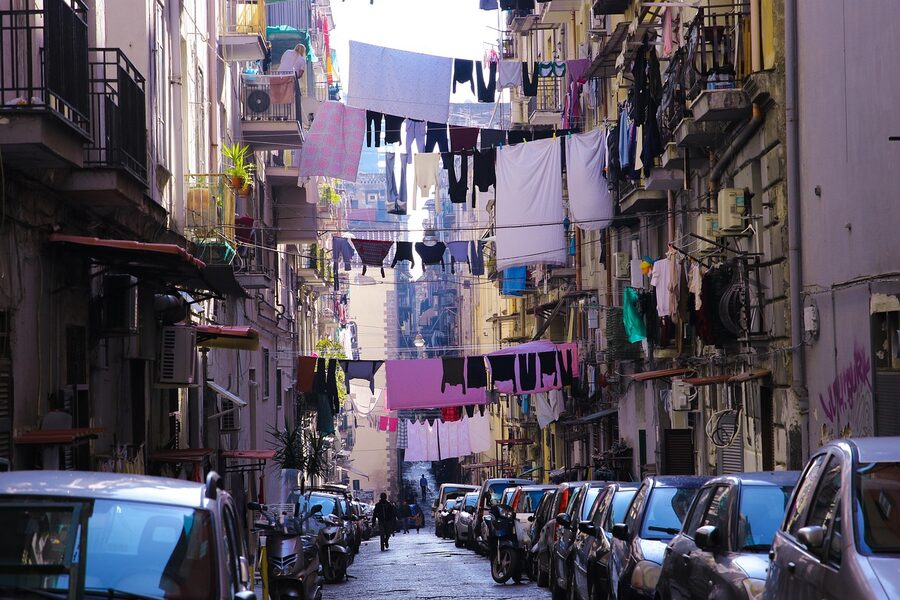
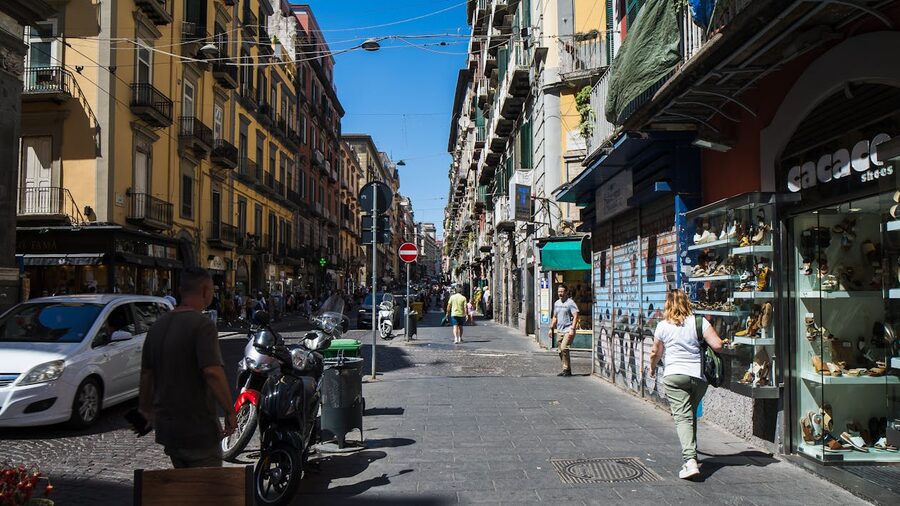
This part is worth knowing because it changes how the visit feels. Rione Sanita was, for decades, one of the hardest neighbourhoods in Naples. High unemployment, Camorra presence, and the kind of systemic neglect that becomes self-reinforcing. The catacombs were there the whole time — an extraordinary archaeological site just sitting abandoned beneath a neighbourhood that desperately needed something to rally around.
In the early 2000s, a local priest named Father Antonio Loffredo began pushing for the catacombs to be opened to the public, run by people from the neighbourhood. La Paranza was formed — young men and women from Rione Sanita who trained as guides and restored the site. The cooperative now employs dozens of people, has expanded to manage other cultural sites in the area, and has become one of the most cited examples of community-driven regeneration in Italy.

When your guide tells you about the neighbourhood’s history, they are not reciting from a script. They grew up there. They saw the transformation. And that personal connection makes the tour something much more than a walk through old tunnels.

While You Are in Naples
The catacombs pair well with a full day of exploring the less touristy side of Naples. The Naples Underground (Napoli Sotterranea) is a completely different underground experience — Greek and Roman tunnels beneath the centro storico — and together they give you a sense of how much of this city exists below ground. A walking tour through the centro storico covers the street-level highlights, and a pizza-making class is the best souvenir you will bring home from Naples.
If you have more days, Pompeii is a straightforward day trip — about 30 minutes by Circumvesuviana train — and Herculaneum is even closer. For something completely different, the ferry to Capri takes under an hour, and the Amalfi Coast is doable as a long but rewarding day trip from Naples. You can also reach Sorrento and Positano by public transport if you prefer to go at your own pace.

This article contains affiliate links. If you book a tour through one of our links, we earn a small commission at no extra cost to you. This helps us keep producing free travel guides.