Red-hot steel, a heavy hammer, and a blade you shape with your own hands: this three-hour workshop turns blacksmithing into a practical Okinawa souvenir. You work through the process yourself, with an instructor guiding each step from heating the steel to polishing the finished knife.
I like two things in particular: you make the knife from raw steel, rather than decorating a ready-made one, and the workshop is billed as weatherproof, a useful choice for a rainy or hot day. The main consideration is getting there: the studio is outside the main resort areas, and transport is not included.
- What to Know Before You Book
- Turning a Piece of Steel Into Your Own Knife
- A Three-Hour Workshop, Step by Step
- Meet your instructor and gear up
- Heat and hammer the steel
- Cool, shape, and sharpen
- Polish and finish the handle
- Is the Price Worth It?
- Getting to Studio NIN in Nakagami
- Who Will Enjoy This Forging Class?
- Should You Book the Okinawa Knife Workshop?
- FAQ
- How long does the knife-forging experience take?
- Where is studio NIN Okinawa?
- Is transport included?
- What is the difference between the two knife plans?
- What days is the studio open?
- Can children take part?
- The Best Of Okinawa!
- More Tours in Okinawa
- More Tour Reviews in Okinawa
What to Know Before You Book
 1 / 7
 2 / 7
 3 / 7
 4 / 7
 5 / 7
 6 / 7
 7 / 7
- You forge the blade yourself: Heat, hammer, shape, sharpen, and polish the steel with guidance.
- The workshop takes three hours: Choose a 10:00 or 14:30 start, Wednesday through Sunday.
- Two handle options are offered: The standard plan has a leather cord wrap; the premium plan has a wooden handle.
- The studio is in Kitanakagusuku: It is about 15 minutes by car from American Village and 45 minutes from Naha Airport.
- English and Japanese guidance is included: Instructors named Daiki and Taka have led sessions, but your instructor may differ.
- You can photograph the process: Photos and videos are welcome throughout the activity.

👉 See our pick of the Our Picks For The 4 Best Drinking Tours In Okinawa
Turning a Piece of Steel Into Your Own Knife
At studio NIN, the work starts with raw steel and ends with a finished outdoor knife. This is not a short demonstration where you stand back and watch a craftsperson do the interesting part. You learn to handle basic blacksmithing tools, then take part in the key stages of shaping and finishing the blade.
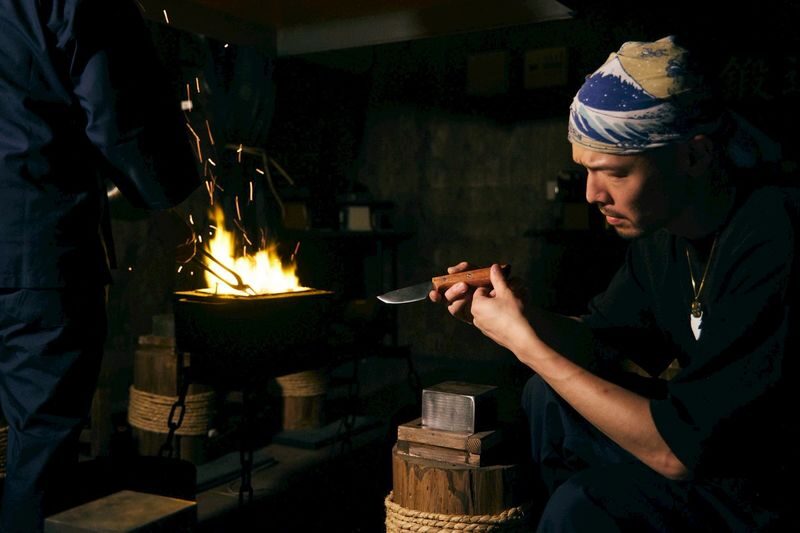
The sequence matters. You heat the steel until it glows red, then hammer it to form the blade. After that, you cool and refine the metal, sharpen it with stones and grinders, polish the surface, and finish the handle. Each step changes the piece in a way you can see, which makes the process satisfying even if you have never held a blacksmith’s hammer.
The work is guided, not entirely independent. Instructors explain the stages and help correct your technique as you go. That balance is important: you get to do the hands-on work, but you are not left guessing how to turn hot metal into a usable shape. One participant described the instructor making careful adjustments during forging; that kind of close guidance can help a first-timer get a better result than trial and error alone.
Expect a small finished knife rather than a large wilderness blade. A participant with the wooden-handle plan described the result as a small quenched and acid-etched dagger. The exact appearance of your finished piece will depend on the work and plan, but the appeal is clear: you leave with an object you helped make, not a mass-produced souvenir.
You can also read our reviews of more tours and experiences in Okinawa.



A Three-Hour Workshop, Step by Step
Meet your instructor and gear up
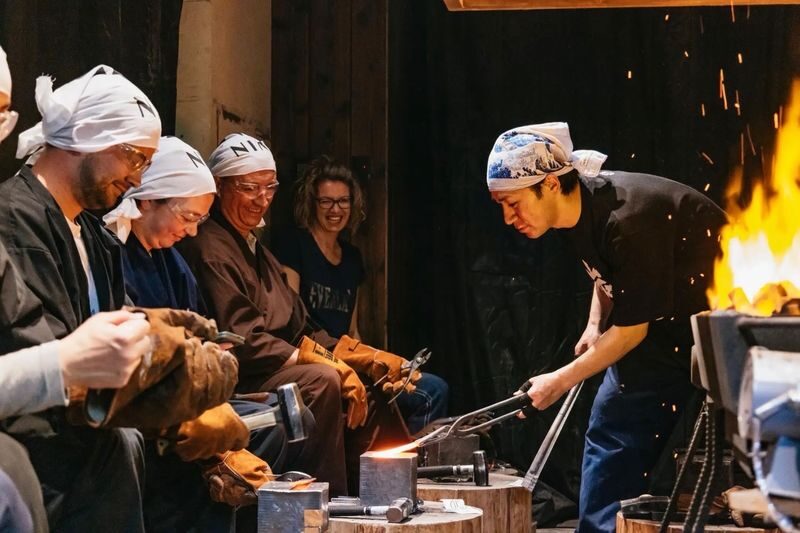
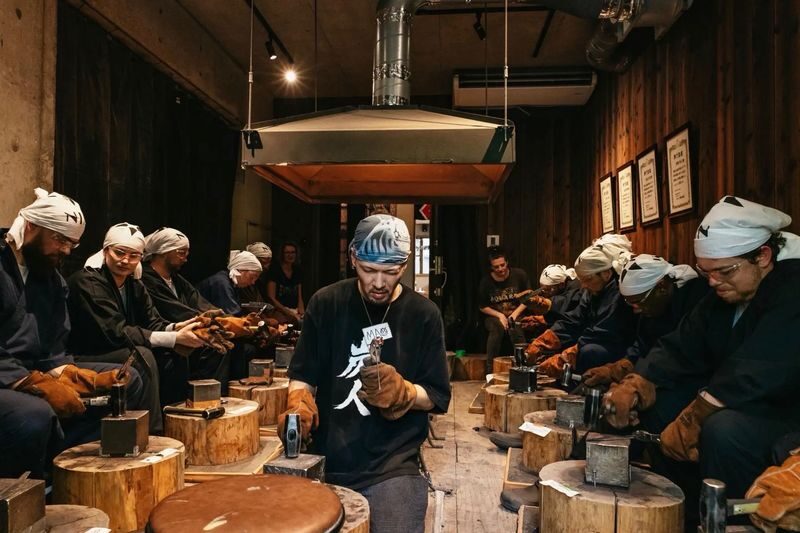
You begin at the studio, where you meet your instructor and change into a traditional blacksmith craftsman’s uniform. It sets the tone for the session and keeps the experience focused on the work ahead.
Your guide introduces the essential tools, including hammers, tongs, and grinders, and explains how they are used. You do not need previous blacksmithing experience. The activity is designed to take you through the stages, with the instructor explaining what is happening before you try it.
Heat and hammer the steel
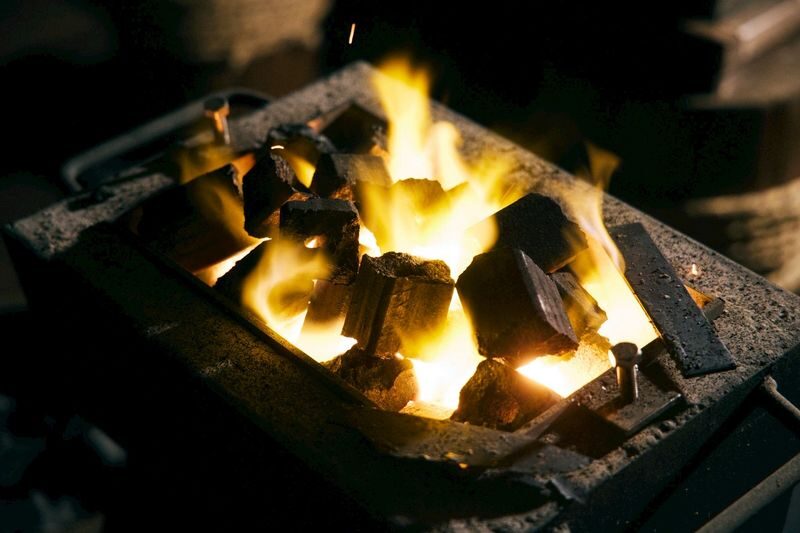
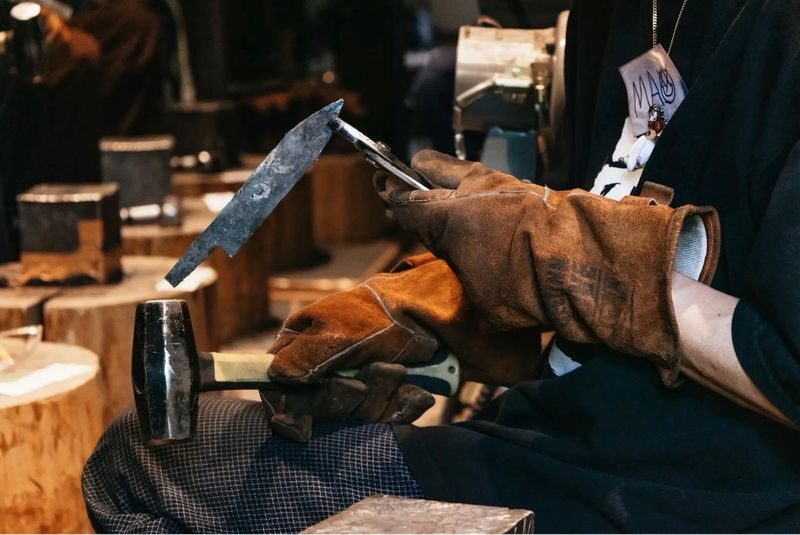
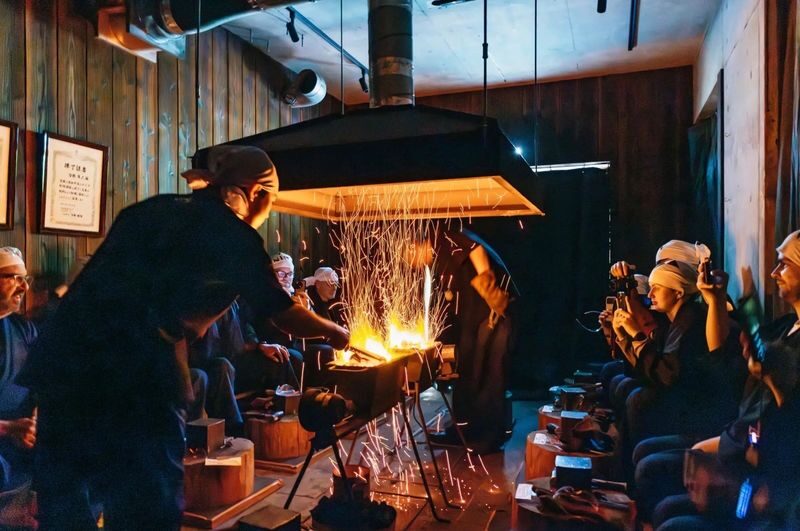
Heating the steel until it turns red is the visual turning point. Then comes the most physical part: hammering the hot metal to form the blade. This is the moment when the piece begins to look less like raw material and more like a knife.
The session is hands-on, but you should expect instruction and adjustments rather than complete freedom to improvise. That is a sensible trade-off for a first-time maker. You get the pleasure of swinging the hammer while an experienced guide helps you work toward the intended shape.
The hammering is also the part most likely to appeal to anyone who wants an activity with real participation. You are not just pressing a button or choosing a color. You are applying force and watching the material respond. If you prefer a quiet, low-effort craft, this may feel demanding; if you enjoy learning by doing, it is the heart of the experience.
Cool, shape, and sharpen
Once the blade has been forged, the work shifts to refinement. You cool the metal and adjust its shape, then sharpen it with sharpening stones and grinders. These stages take the rough form of the blade toward a more finished tool.
This is where patience pays off. Forging gives the knife its shape, but sharpening and polishing affect how finished it looks and feels. The instructor’s guidance is useful here, particularly if you have no experience judging an edge or smoothing a metal surface.
The process includes multiple tools and techniques, so you will have several chances to try different parts of the work. You are not simply watching the instructor complete the final steps. Still, the workshop is guided, and the finished knife is the result of both your effort and the instructor’s direction.



Polish and finish the handle
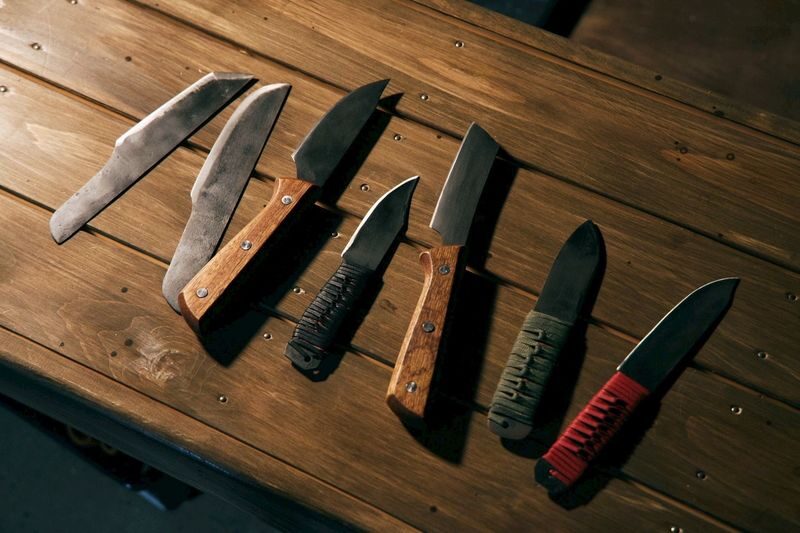
After sharpening, you polish the blade to a smooth finish. The standard plan wraps the handle with leather cord. The premium plan uses a wooden handle, for an additional $18.90 over the listed standard price.
Both options give you a finished item to take home, but the choice affects the look and feel of the knife. If you prefer a straightforward, hands-on souvenir, the standard plan is the lower-cost option. If a wooden handle is part of what you want to bring home, the premium upgrade is modest compared with the base price.
You can take photos and videos throughout the process, which is useful because the workshop has a clear visual story: steel heating, hammering, shaping, and the final polished blade. Save some attention for the work itself, though. The point is not only to document the knife, but to make it.
Is the Price Worth It?
The standard plan starts at $145.05, and the wooden-handle version starts at $163.95. The price includes the guide, tax, tools, and materials, so there is no need to buy supplies for the project. Transport and personal expenses are not included.
For three hours of guided work and a handmade knife to take away, the price is easier to justify if you value the process as much as the finished object. You are paying for access to the tools and materials, instruction, and the chance to do each main stage yourself. It is a very different kind of souvenir from a shop purchase, but also a more specialized activity than a casual craft class.
The wooden-handle upgrade costs $18.90 more. If you are already set on that finish, it is worth comparing the plans before booking rather than assuming the standard option includes wood. The standard plan uses a leather cord wrap.
This is not the cheapest way to spend three hours in Okinawa. It makes the most sense if you want a focused, hands-on activity and are interested in leaving with something useful and personal. If you would rather spend the same money on several shorter attractions, this workshop may not be the best fit.
Getting to Studio NIN in Nakagami
The meeting point is studio NIN Okinawa at 549-32 Shimabuku, Kitanakagusuku, Nakagami District. The suggested ways to get there are by car or taxi. Driving estimates are about 15 minutes from American Village, 35 minutes from Onna Village, and 45 minutes from Naha Airport.
Transport is not included, so plan that part separately. One participant noted that parking is available at the studio, which may make arriving by car simpler. If you are staying in Naha or at a resort farther north, allow enough time for the drive and check your route before setting out.
Sessions begin at 10:00 or 14:30 and last three hours, so the expected finish is 13:00 or 17:30. The studio is open Wednesday through Sunday from 10:00 to 18:00, with last admission at 14:30. It is closed on Mondays and Tuesdays. The activity takes place indoors and is promoted as weatherproof, but the operator can cancel in extreme weather.
You need to arrive for the time selected at booking. The stated cancellation terms allow a full refund if you cancel at least 24 hours before the activity, based on local time. Arrivals 30 minutes late or more are not eligible for a refund, so give yourself a buffer for the drive.
Who Will Enjoy This Forging Class?
This is a strong choice if you like learning a physical skill, want a keepsake with a story behind it, or need an activity that is not centered on beaches and outdoor scenery. It also suits solo visitors: the workshop can be booked as an individual experience, and the setting gives you a clear activity to focus on.
It may be a good fit for adults who enjoy making things and are comfortable working through several stages with tools. Children aged 0 to 15 can attend free if they do not occupy a separate seat, but they must be accompanied by a paying adult. Participants must be under 95 years old. The activity is not recommended for people with disabilities, so check directly with the operator if you need to understand whether the setup will work for you.
The workshop is not a good match if you want a passive demonstration or a quick souvenir stop. Three hours is a substantial block of time, and the forging and sharpening require active participation. You should also consider the transport time, since the studio is not at the airport or in the main resort centers.
Should You Book the Okinawa Knife Workshop?
Book this if you want to spend a half-day making something with your hands and are interested in the craft behind a finished blade. The red-hot steel, hammering, and guided shaping make it more engaging than a simple souvenir activity, while the instructor’s help makes the process approachable for a beginner.
Choose the standard plan for the leather-wrapped handle, or pay the extra $18.90 for wood. Before confirming, make sure the studio’s location and session time suit your plans, and arrange your own ride. If those details work, this is a distinctive way to bring home a practical reminder of Okinawa that you had a hand in making.
Okinawa: Authentic Knife Forging Experience
“First time forging a knife, a very fun experience swinging the heavy hammer. The owner was very enthusiastic and meticulously helped point out issu…”
FAQ
How long does the knife-forging experience take?
The guided workshop lasts three hours. The available start times are 10:00 and 14:30.
Where is studio NIN Okinawa?
The studio is at 549-32 Shimabuku, Kitanakagusuku, Nakagami District, Okinawa 901-2301, Japan.
Is transport included?
No. Transport is not included, and the suggested ways to reach the studio are by car or taxi.
What is the difference between the two knife plans?
The standard plan includes a knife with a leather cord-wrapped handle. The premium plan includes a wooden handle and costs more.
What days is the studio open?
It is open Wednesday through Sunday, from 10:00 to 18:00. Last admission is 14:30, and the studio is closed Monday and Tuesday.
Can children take part?
Children aged 0 to 15 can attend free if they do not occupy a separate seat. They must be accompanied by a paying adult.