
This article contains affiliate links. If you book through these links, I earn a small commission at no extra cost to you.
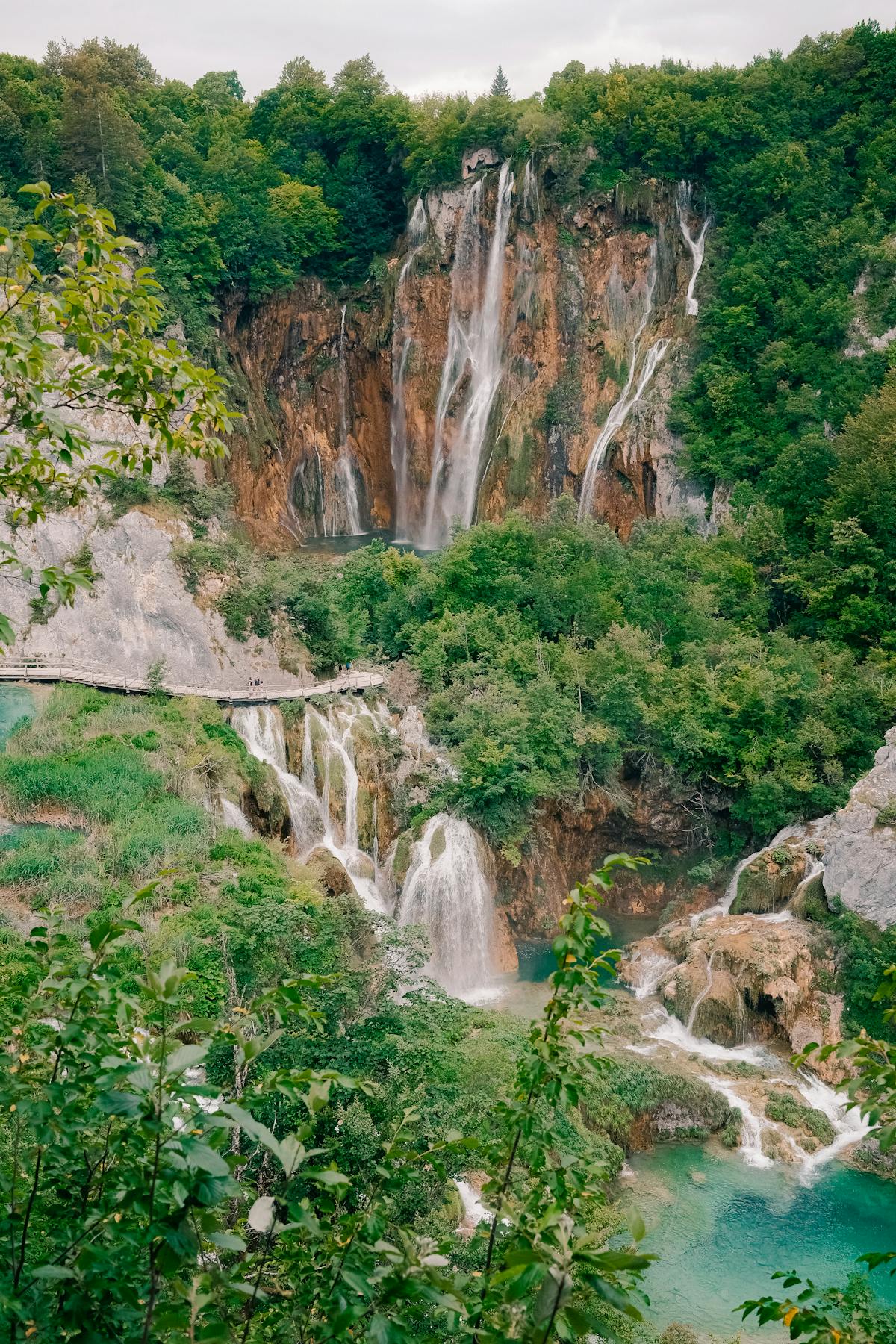
Plitvice Lakes is one of those places that looks too perfect to be real. Sixteen lakes arranged in cascading terraces, connected by waterfalls, surrounded by dense forest, and filled with water that ranges from emerald green to deep turquoise. The photos are not enhanced. It actually looks like that. The park has been a UNESCO World Heritage Site since 1979 and is Croatia’s most visited natural attraction, drawing over a million visitors per year.
The flip side of that popularity is that Plitvice can feel crowded, especially in July and August when the boardwalks become conveyor belts of people shuffling along at the pace of the slowest group. But with the right timing and a bit of planning, you can experience the park at something close to its best. This guide covers everything you need to know.
Understanding the Park Layout
Plitvice is divided into two main sections:
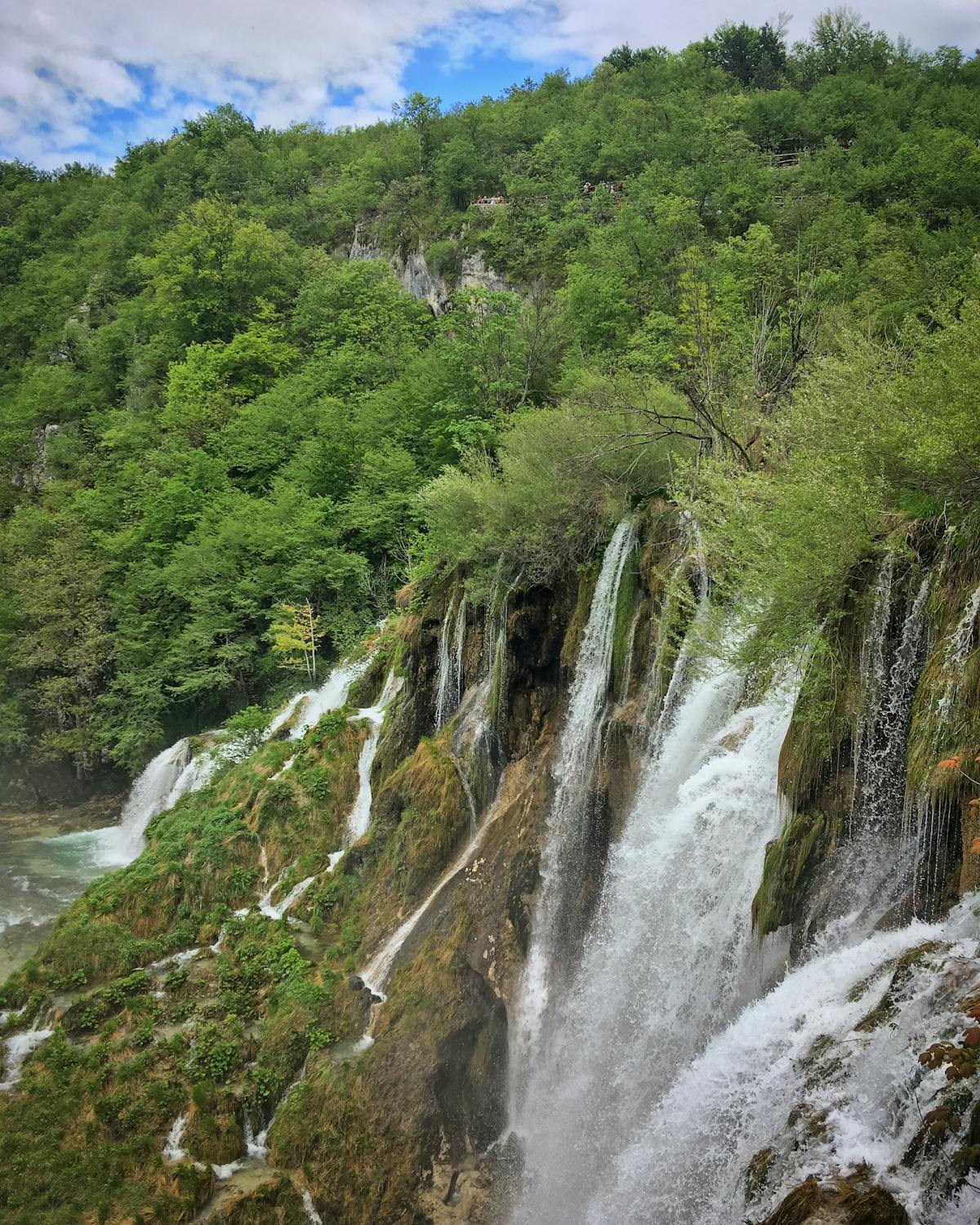
The Upper Lakes (Gornja Jezera): Twelve lakes surrounded by thick forest and connected by smaller waterfalls and cascades. The Upper Lakes are larger and more spread out. The scenery is more tranquil — lakes reflecting trees, wooden boardwalks threading through reeds and forest. Less dramatic than the Lower Lakes but quieter and more atmospheric.
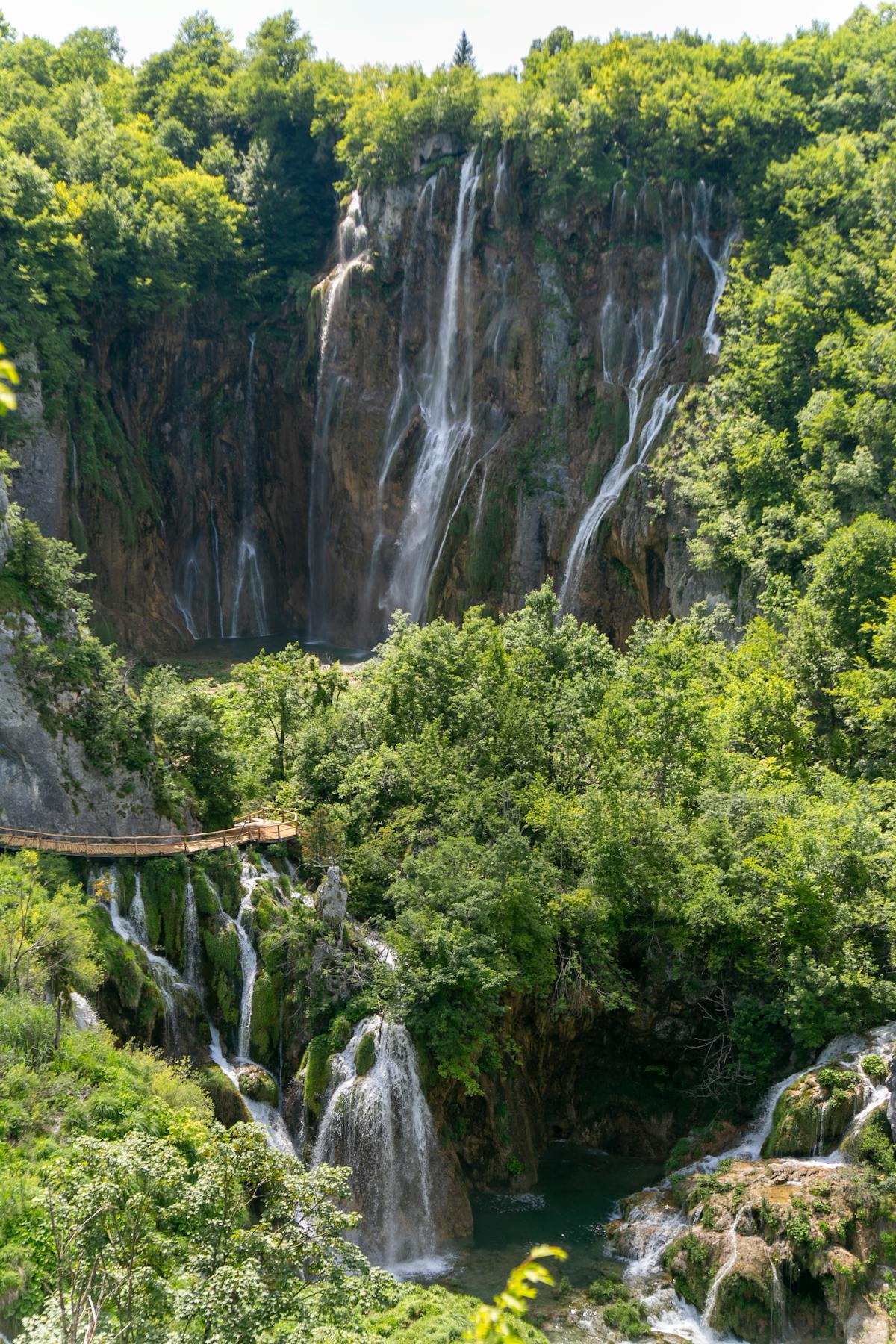
The Lower Lakes (Donja Jezera): Four lakes in a steep canyon with the park’s most dramatic waterfalls, including Veliki Slap (the Great Waterfall), which drops 78 metres and is the tallest waterfall in Croatia. The boardwalks here wind along cliff faces and directly beside thundering falls. This is the most photogenic section and where most visitors concentrate.
A shuttle bus and an electric boat connect the two sections, both included in your ticket. The boat crosses Kozjak Lake (the largest in the park) and saves about 40 minutes of walking.
Which Route to Take
The park has several marked routes (A through K) ranging from 2 to 6+ hours. The most popular:
- Route H (4-5 hours): The most popular full-park route. Covers both Upper and Lower Lakes, uses the boat and shuttle bus. This is the best option for most visitors — you see everything important without exhaustion.
- Route C (3-4 hours): Lower Lakes only, plus the boat crossing. Good if you have limited time and want the most dramatic waterfalls.
- Route A (2-3 hours): Lower Lakes only, no boat. The shortest meaningful circuit. Covers the Great Waterfall and the main canyon.
- Route K (6-8 hours): Everything. Both sections with extended trails through the Upper Lakes. For dedicated hikers who want the full experience.
My recommendation: take Route H. It gives you the best balance of waterfalls, lakes, forest, and practical time management. Start at Entrance 1 (near the Lower Lakes) to see the most dramatic section first when your energy is highest.
Tickets and Booking
Ticket prices vary by season:
- Peak season (July-August): €40 adults, €15 children (7-17)
- Shoulder season (April-June, September-October): €25-30 adults
- Winter (November-March): €10-15 adults
- Children under 7: Free
Critical: book tickets online in advance for summer visits. The park limits daily visitor numbers, and summer dates sell out days or weeks ahead. Walk-up tickets are sometimes available but you risk being turned away, especially after 10am. The official website (np-plitvicka-jezera.hr) is the only place to buy tickets.
Your ticket includes access to all trails, the shuttle bus, and the electric boat. You can enter at either Entrance 1 (south, near the Lower Lakes) or Entrance 2 (central, near the shuttle bus). Entrance 1 is recommended for first-time visitors.
When to Visit
Timing matters enormously at Plitvice:
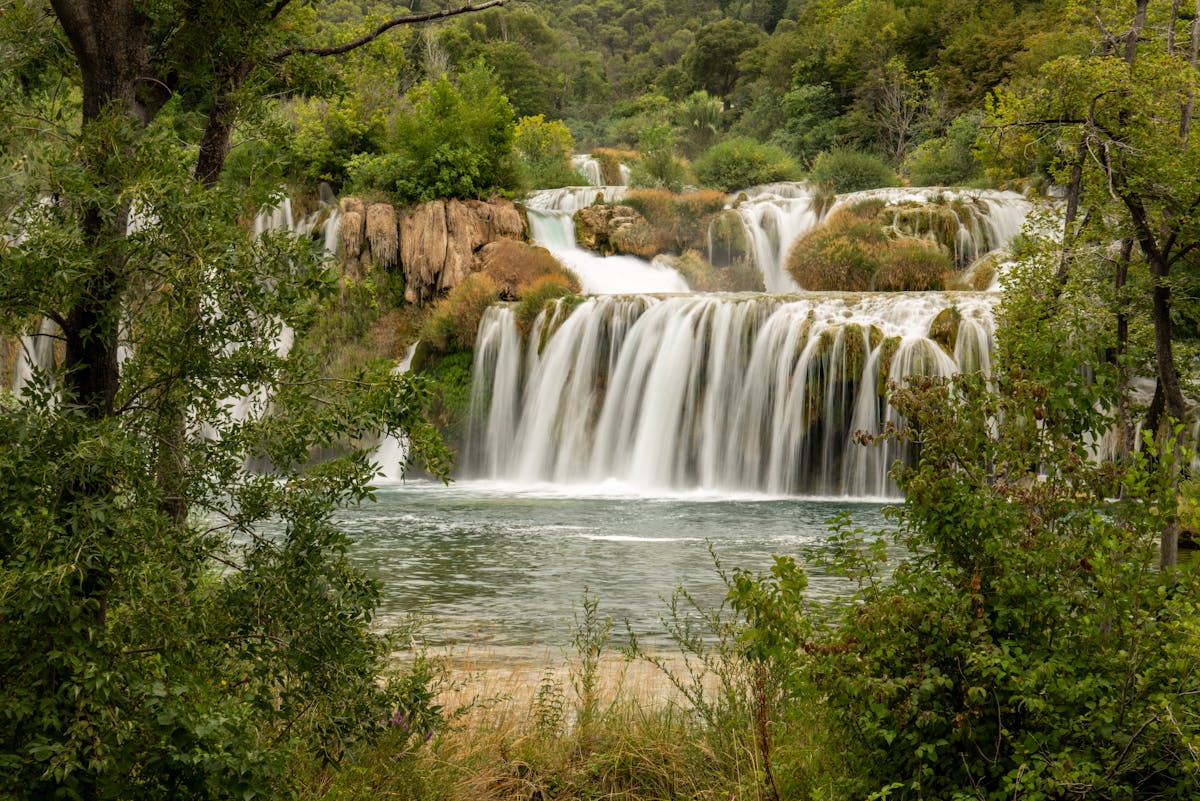
May and early June: The best time. Snowmelt from the mountains fills the waterfalls to their most dramatic. Everything is green and alive. The crowds are building but manageable. Water levels are high, which means more waterfalls are flowing.
September and October: The second-best window. Crowds thin dramatically after the first week of September. October brings autumn colours — the forest turns golden and red around the turquoise lakes, creating stunning contrasts. Water levels are lower but still impressive.
July and August: Peak crowds. The park feels like a theme park queue. The boardwalks are packed, the shuttle buses have long waits, and the experience is diminished. If this is your only option, arrive at opening time (7am) and head straight for the Lower Lakes before the tour buses arrive around 10am.
Winter (December-February): A completely different experience. Snow covers the forest and ice forms on the waterfalls. The park is almost empty. Ticket prices drop to €10-15. Not all boardwalks are open (some are closed for safety), but what you can see is magical. Dress warmly — temperatures regularly drop below freezing.
Getting There
From Zagreb: About 2 hours by car via the A1 motorway toward Split, exit at Karlovac, then follow the road south. Buses run from Zagreb bus station (2-2.5 hours, €15-20, several daily).
From Split: About 2.5-3 hours by car via the A1 motorway north. Buses available but less frequent than from Zagreb. Consider renting a car.
From Zadar: About 1.5 hours by car. The closest major city to Plitvice. Makes a good base if you want to visit the park early morning.
Parking: Two main parking areas at each entrance. €1/hour for cars. Arrive early in summer — parking fills by mid-morning.
Practical Tips
- Arrive at opening time. The park opens at 7am in summer, 8am in spring/autumn. The first two hours are the quietest and most magical.
- Wear proper shoes. The wooden boardwalks are wet and slippery, especially near waterfalls. Hiking shoes or good trainers with grip are essential. Flip-flops are a bad idea.
- Bring water and snacks. There are a few cafes and a restaurant inside the park, but they are overpriced and have queues in summer. Bring your own water and a packed lunch.
- No swimming. Swimming has been prohibited in all park lakes since 2006. This is strictly enforced.
- Bring a waterproof jacket. Even on sunny days, spray from the waterfalls will soak you at close range, especially in spring when water levels are high.
- Allow enough time. Most people underestimate how long they need. The full circuit (Route H) takes 4-5 hours with stops. Rushing through in 2 hours misses the point.
- Consider staying nearby. Hotels and guesthouses in the villages around the park (Plitvička Jezera, Rakovica, Jezerce) are affordable and allow you to enter the park first thing in the morning before day-trippers from Zagreb or Split arrive.
What About Krka Instead
People frequently ask whether they should visit Plitvice or Krka National Park. They are different experiences:
- Plitvice: Larger, more dramatic, more waterfalls, more varied scenery. Further from the coast (2+ hours from Split or Zagreb). Needs more time (4-6 hours). More crowded in peak season.
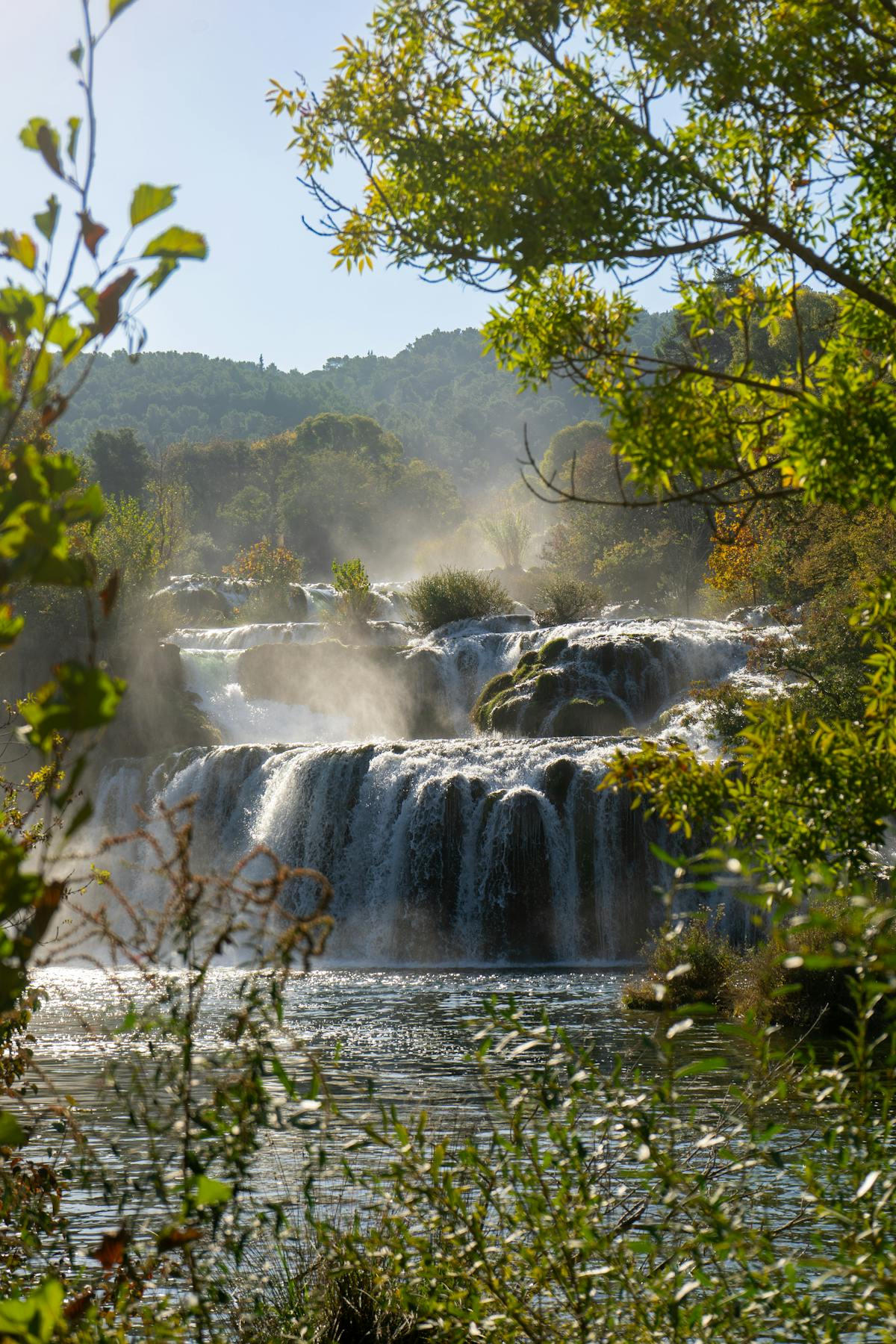
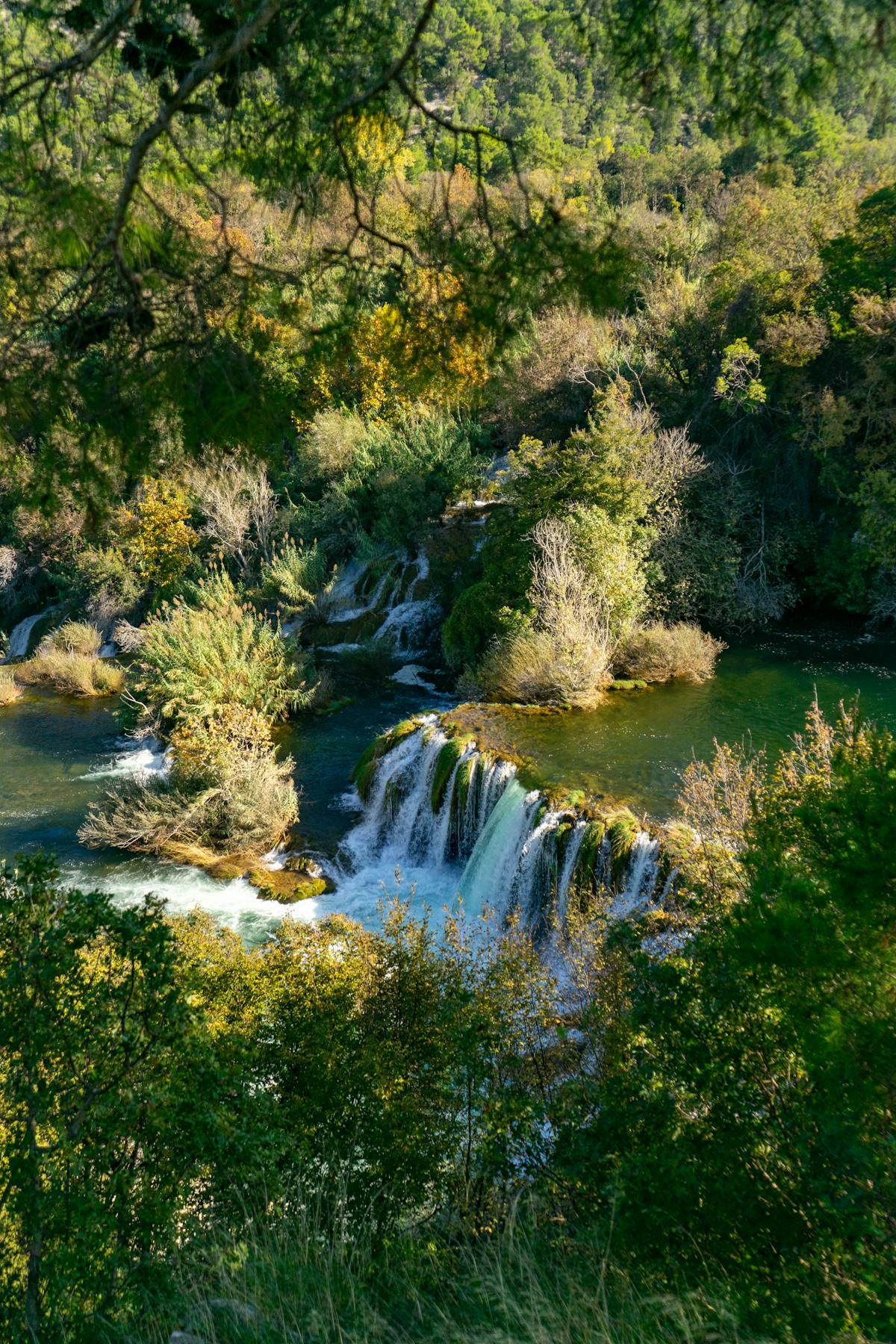
- Krka: Smaller, more accessible (1 hour from Split). Easier to visit as a half-day trip. The main waterfall (Skradinski Buk) is impressive but there is less variety. Combines well with Šibenik.
If you have time for both, visit both — they are different enough to justify it. If you can only choose one and are willing to make the longer journey, Plitvice is the more spectacular experience. If time is short and you are based in Split, Krka is the practical choice.
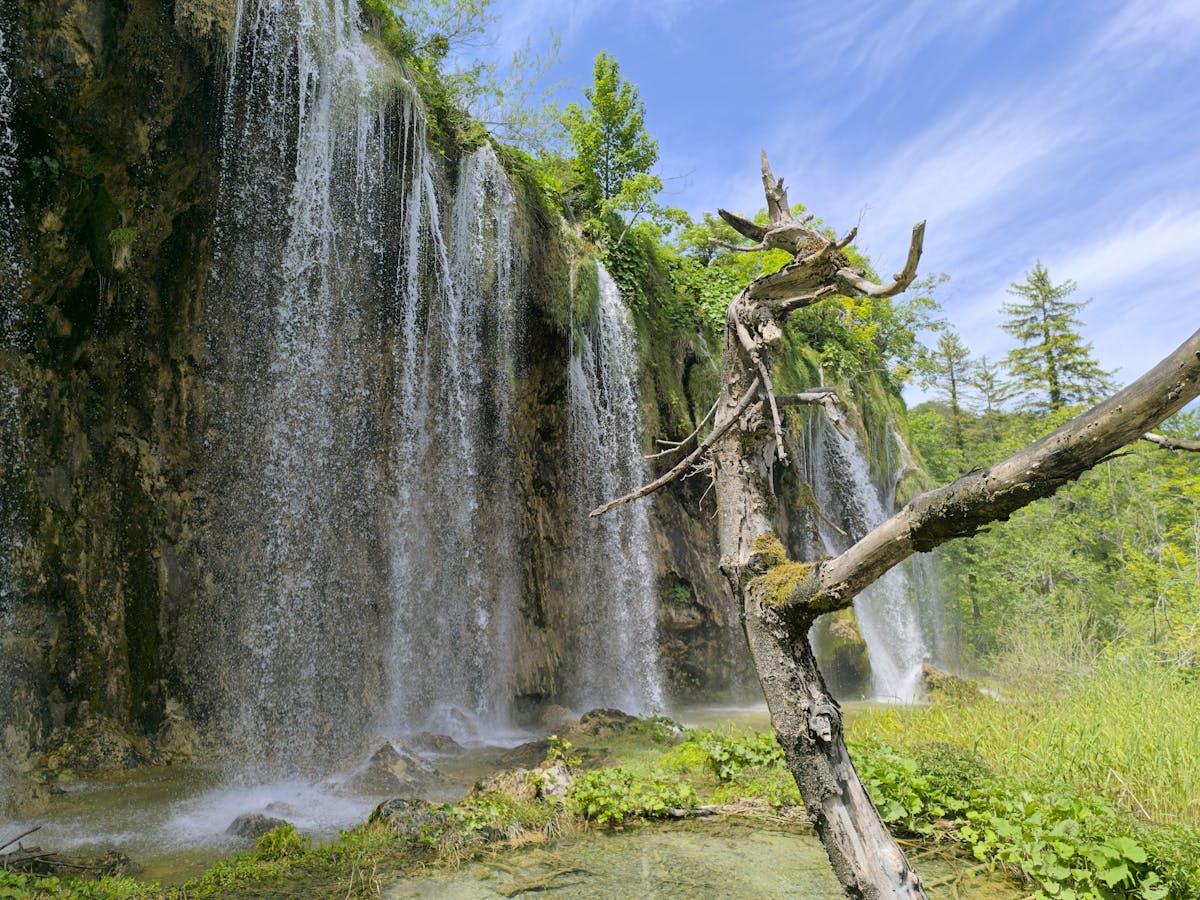
Plitvice Lakes is one of those places that fully justifies its reputation. The weather, the timing, and the crowds can all be managed with planning. Visit in May or September, arrive early, take Route H, and you will see one of the most beautiful natural landscapes in Europe. It is two hours from the coast and a world away from everything else in Croatia. Do not skip it.