
Osaka doesn’t try to impress you. It doesn’t need to. While Tokyo polishes every surface and Kyoto holds still for photographs, Osaka shoves a plate of okonomiyaki across the counter and makes fun of your pronunciation. This is Japan’s loudest, hungriest, funniest city — the one where strangers talk to you on the train, where comedians are treated like rock stars, and where “kuidaore” (eating yourself into ruin) isn’t a cautionary tale but the entire point of being here.
I’ve spent more time in Osaka than any other Japanese city outside Tokyo, and every trip I end up doing less sightseeing and more eating. That’s the correct approach. The temples and castles are fine — some are genuinely great — but Osaka’s real identity lives in its food stalls, its bizarre shrines, its retro neighborhoods that feel like stepping into a different decade. You could fill a week here easily, or you could hit the highlights in three days and still feel like you got the full experience.
Here’s everything actually worth your time. The title says 10 things. There are more. Osaka’s like that.
- The Food — Start Here, Possibly Never Leave
- 1. Takoyaki in Dotonbori
- 2. Okonomiyaki — Pick a Side
- 3. Kuromon Market Before the Crowds
- 4. Take a Cooking Class
- Classic Osaka Sightseeing
- 5. Walk the Dotonbori Canal at Night
- 6. Osaka Castle — But Skip the Interior
- 7. Shitennoji Temple — Japan’s Oldest, Without Anyone There
- 8. Sumiyoshi Taisha Shrine
- 9. Namba Yasaka Shrine — The Giant Lion Head
- Neighborhoods Worth a Full Afternoon
- 10. Shinsekai and Tsutenkaku Tower
- 11. Amerikamura — Youth Culture Without Tokyo Prices
- 12. Den Den Town — Better Than Akihabara
- 13. Tenjinbashisuji Shopping Street
- 14. Nakanoshima — When You Need to Decompress
- Big-Ticket Attractions
- 15. Universal Studios Japan and Super Nintendo World
- 16. Abeno Harukas Observation Deck
- 17. Spa World
- Day Trips That Are Almost Too Easy
- 18. Nara — Deer and the Biggest Buddha
- 19. Kobe — Twenty Minutes for World-Class Beef
- Nightlife and After Dark
- 20. Shinsaibashi Bar Hopping and Misono Building
- Practical Stuff You Actually Need
The Food — Start Here, Possibly Never Leave
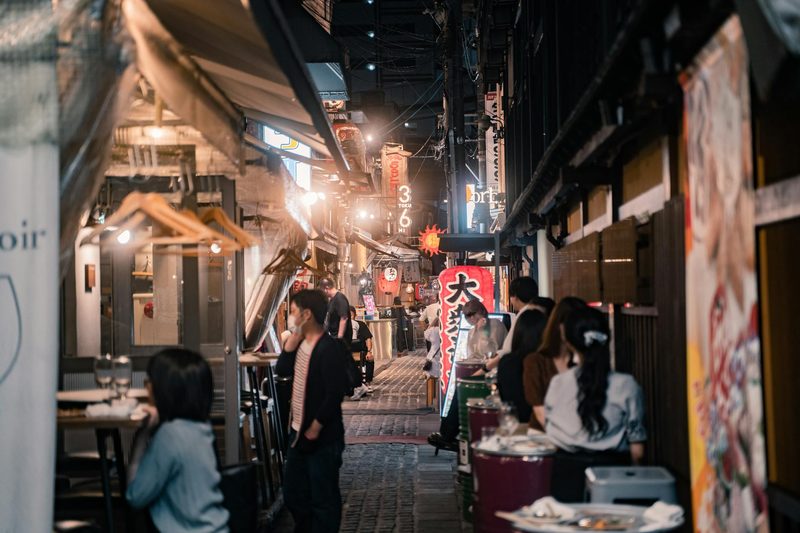
Osaka is the food capital of Japan. Not Tokyo, despite what Tokyo will tell you. The Osakan philosophy is simple: food should be cheap, filling, and so good it makes you slightly angry that you can’t eat more. The city practically invented street food culture in Japan, and the competition between stalls and restaurants is so fierce that mediocre places don’t survive long. Osaka has a saying — “Kyoto wa kidaore, Osaka wa kuidaore” — Kyoto spends all its money on clothes, Osaka spends all its money on food. That tells you everything about the city’s priorities.
A few ground rules before you start eating. Cash is still king at most street stalls and smaller restaurants. Convenience store ATMs (7-Eleven is most reliable for foreign cards) charge no fees on most international cards and they’re on every other block. Don’t tip anywhere — it’ll confuse people and occasionally cause mild offence. And pace yourself. The temptation to eat everything in the first 48 hours is real, but your stomach has limits that Osaka will test.
1. Takoyaki in Dotonbori
Takoyaki — battered octopus balls cooked in a molded griddle — are Osaka’s soul food. Crispy on the outside, molten and almost liquid on the inside. A tray of six to eight runs ¥500-600 from the better stalls. Aizuya near the Dotonbori canal has been making them since 1945, and the technique hasn’t changed much. The batter’s thinner than most places, which gives the shell a better crunch.
Skip Kukuru. It’s not bad, but the 45-minute line exists because of tourist blog recommendations recycling each other, not because the takoyaki is twice as good as everywhere else. Walk two minutes in any direction and you’ll find stalls with five-minute waits making equally good (sometimes better) takoyaki.
One critical warning that nobody tells you in advance: do not bite into a fresh takoyaki. The inside is genuinely dangerous — 200-degree batter that will blister the roof of your mouth. Let them cool for two or three minutes. Every single tourist learns this the hard way. I watched a guy from Manchester spit his onto the pavement and he wasn’t even embarrassed about it. He’d been warned. He didn’t listen.
2. Okonomiyaki — Pick a Side
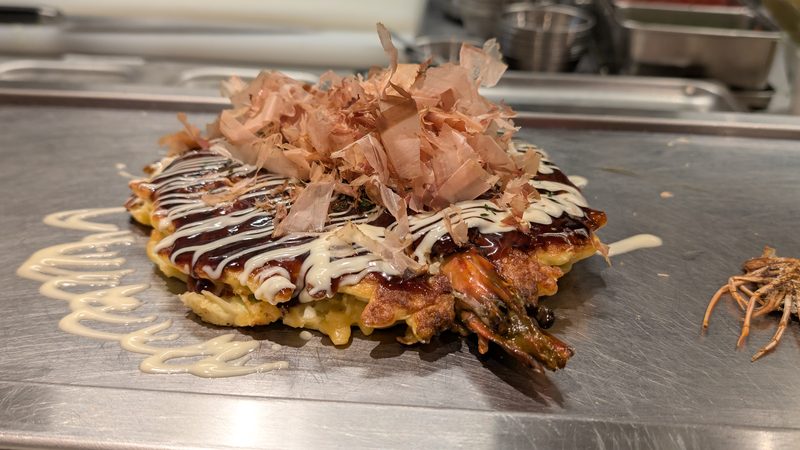
Osaka and Hiroshima have been arguing about okonomiyaki for decades, and the argument isn’t going to get settled anytime soon. Osaka-style mixes everything into the batter — cabbage, pork, seafood, whatever you want — and cooks it as a thick pancake on a flat griddle. Hiroshima-style layers everything separately with yakisoba noodles. Both are brilliant. Both cities think the other one is doing it wrong.
Mizuno in Namba has been doing Osaka-style since 1945. Their yamaimono batter uses grated mountain yam, which makes it impossibly fluffy — lighter than it looks, richer than you’d expect. ¥1,200-1,800 depending on toppings. The restaurant seats you at a griddle and in many cases you’ll cook it yourself, which sounds intimidating but isn’t. The staff watch you like hawks and step in before you ruin it. Don’t flip it more than once. Resist the urge.
If you want Hiroshima-style for comparison, there are a few places in Dotonbori that do a decent version, but honestly save that for when you’re actually in Hiroshima. Osaka-style on Osaka’s turf. That’s the move.
3. Kuromon Market Before the Crowds
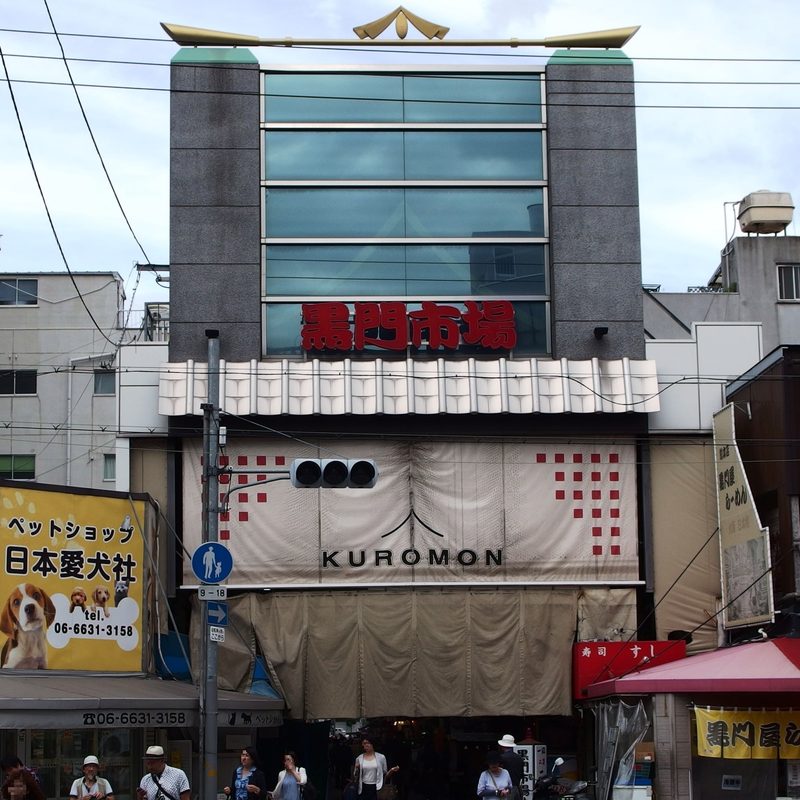
Called “Osaka’s Kitchen” for over a century, Kuromon is a 600-meter covered market with around 170 stalls. Fresh uni (sea urchin) for ¥1,500-2,000, wagyu skewers for ¥1,000-1,500, massive king crab legs, tamagoyaki, and pretty much everything else Japan does well with seafood.
Let me be honest with you: Kuromon has gotten more expensive and more tourist-oriented over the past few years. Prices are higher than what you’d pay in a neighbourhood restaurant for the same thing. But the quality of the seafood is genuine, the experience of eating fresh uni out of a shell while standing in a market at 9am is something you don’t get elsewhere, and it’s still cheaper than any equivalent experience you’d have in Tokyo.
Go before 10am. By noon the main aisles are packed shoulder to shoulder and the whole vibe changes from “working market” to “tourist attraction.” Take the metro to Nippombashi Station — it’s a two-minute walk. Budget about ¥3,000-5,000 if you want to graze properly.
4. Take a Cooking Class
This sounds like a tourist trap thing to suggest, but an Osaka cooking class is genuinely one of the better things you can do here. You’re learning to make takoyaki and okonomiyaki from scratch — the two dishes that define the city — with someone who’s been making them their entire life. ¥5,000-8,000 per person, ingredients included. Classes run about two to three hours.
Cooking Sun near Shinsaibashi is well-reviewed and the instructors speak decent English. Book at least a few days ahead, especially in spring and autumn when tourist numbers spike. The real payoff isn’t even the class itself — it’s that you’ll actually use the recipes at home. Takoyaki pans are cheap and available at any Don Quijote in Osaka. Bring one back.
Classic Osaka Sightseeing
5. Walk the Dotonbori Canal at Night
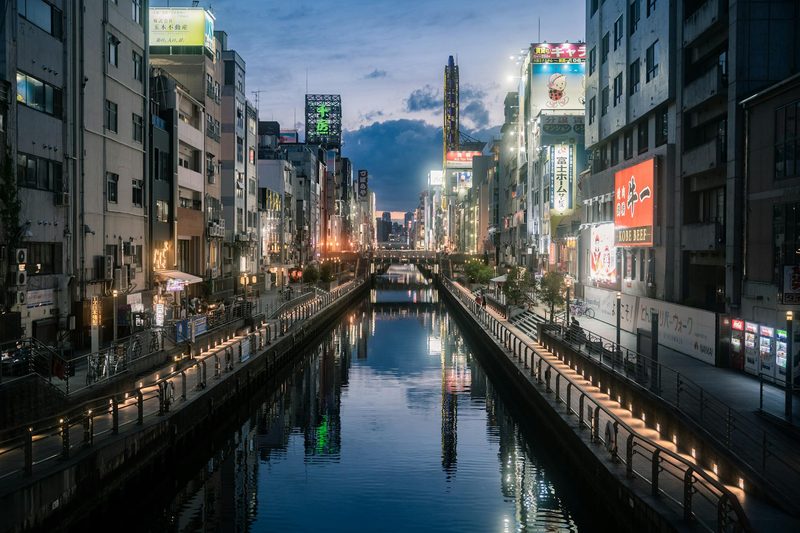
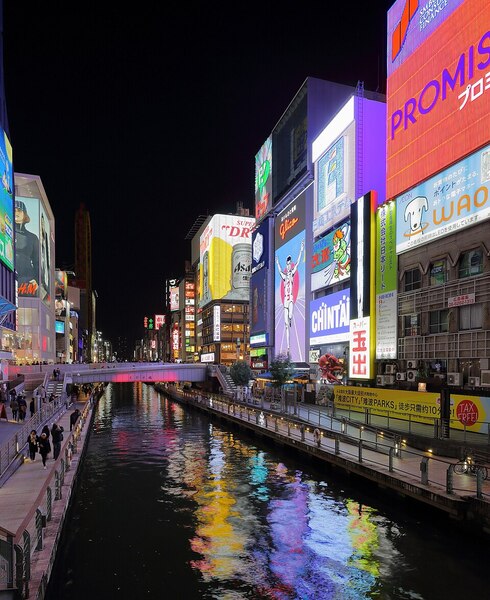
During the day, Dotonbori is a crowded shopping street that’s hard to enjoy. At night, it transforms into something else entirely. Neon signs tower six stories above the canal, every colour bouncing off the water. The Glico Running Man sign — the sprinting figure with arms raised — has been on that bridge since 1935, and it’s still the most photographed thing in Osaka. The giant 3D restaurant signs are absurd in the best way: a mechanized crab with moving legs, an inflatable pufferfish the size of a car, a dragon coiling out of a wall. It looks like Tokyo’s Shinjuku and Las Vegas had a baby, and that baby really loved seafood.
Walk the south side path along the water, below street level. The reflections are better from down there, and it’s considerably less crowded than the main road above. The Tombori Riverwalk runs about 400 meters and there are benches where you can sit with a beer from one of the nearby convenience stores and just take it all in. Go after 7pm for the full effect. Stay as late as you want — the signs don’t turn off until well after midnight.
One thing worth mentioning: the touts around Dotonbori can be aggressive, especially near the bridge. They’re harmless but persistent. A firm “no” works. Don’t make eye contact if you don’t want the pitch.
6. Osaka Castle — But Skip the Interior
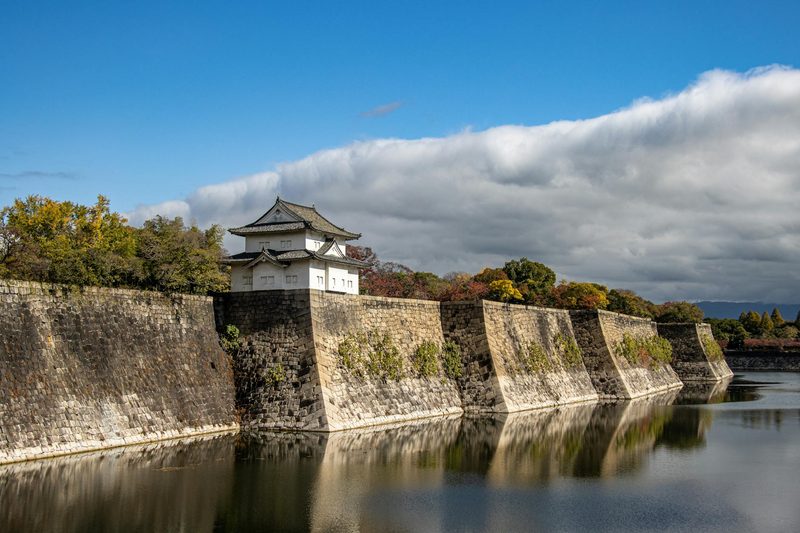
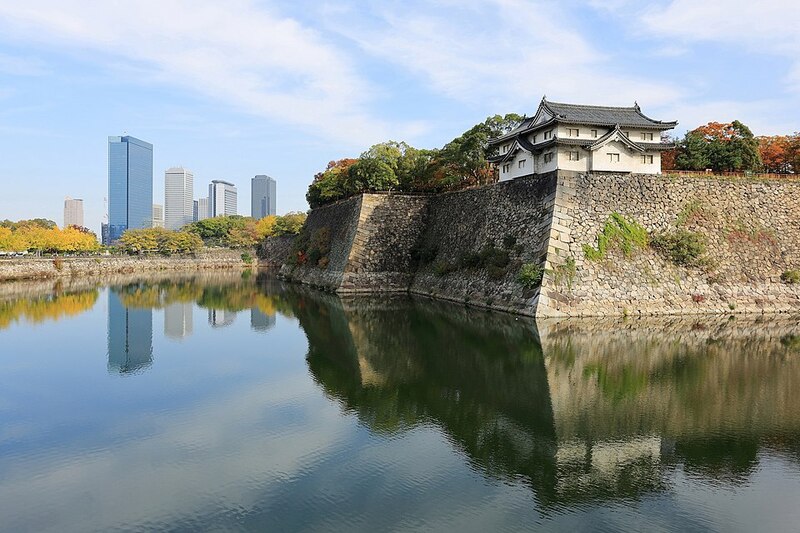
This is probably the most popular attraction in Osaka, and I’m going to tell you to half-skip it. Here’s an opinion that might be controversial: Osaka Castle’s interior isn’t worth ¥600. The current structure is a concrete reconstruction from 1931 with an elevator inside. It functions as a museum now, with exhibits about Toyotomi Hideyoshi and the castle’s history, and the exhibits are… fine. Informative. A bit dry. If you’ve seen any original Japanese castle — Himeji, Matsumoto, Hikone — this one feels hollow by comparison. You’re inside a concrete building looking at display cases.
But the park and grounds are stunning, and completely free. The stone walls are original, some of the individual stones weighing over 100 tons. During cherry blossom season (late March to early April) the park fills with picnicking Osakans and the whole scene is gorgeous. Even outside sakura season, the moat and walls are impressive. Walk around the full perimeter, admire it from outside, save your ¥600 for takoyaki. If you absolutely must go inside, at least go early — lines start building after 10am and by noon the top floor observation area is elbow-to-elbow. JR Osakajokoen Station or Tanimachi 4-chome on the metro.
7. Shitennoji Temple — Japan’s Oldest, Without Anyone There
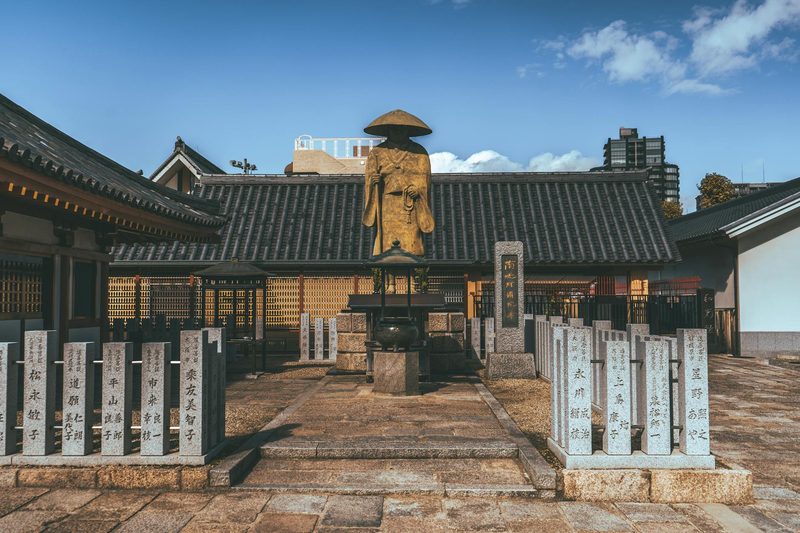
Founded in 593 AD by Prince Shotoku, Shitennoji predates the famous Kyoto temples by centuries. It’s one of the oldest Buddhist temples in Japan, and somehow almost nobody visits it. I’ve been twice and both times I practically had the place to myself. The inner precinct costs ¥300. The garden — modeled after the Buddhist concept of paradise, with a pond and arched bridges — is one of the most peaceful spots in central Osaka.
The real draw for locals is the flea market that fills the temple grounds on the 21st and 22nd of every month. Hundreds of stalls selling antiques, pottery, old kimono, vintage tools, random household items. It’s chaotic and wonderful and you’ll find things you didn’t know you wanted. Even if you’re not buying, the atmosphere is worth the trip. Arrive by 8am for the best selection — the good stuff gets picked over fast. Shitennoji-mae Yuhigaoka Station, five-minute walk.
8. Sumiyoshi Taisha Shrine
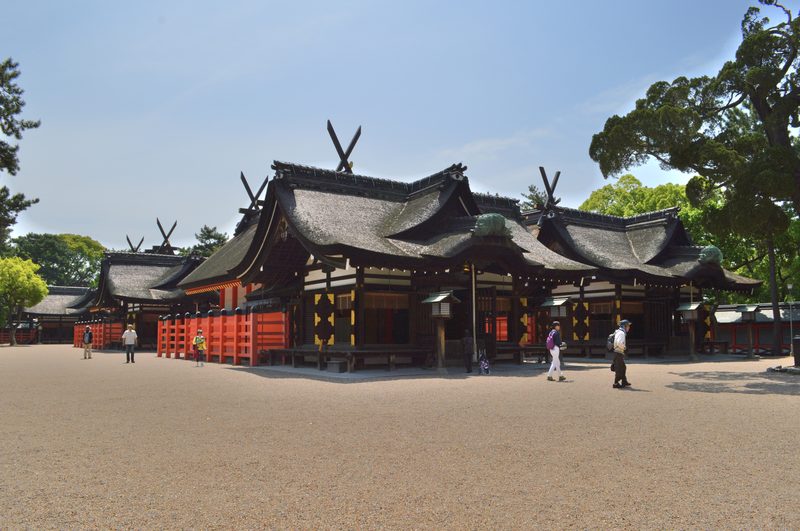
One of Japan’s oldest Shinto shrines, and it looks it. The architecture here predates Chinese Buddhist influence — straight thatched roofs, unpainted wood, no ornamentation. Everything about it feels ancient in a way that even Kyoto’s shrines sometimes don’t. The arched Sorihashi bridge over the pond looks photoshopped in every picture. It’s that steep. It’s real. Getting across it in socks is an experience.
Free to enter. Genuinely off the tourist track — this is where Osaka families come for New Year’s prayers and wedding photos, not where tour buses stop. Take the Hankai Tramway from Tennoji to get here. The old streetcar itself is worth the trip — it’s one of the last remaining tram lines in Japan, rattling through residential streets at 30km/h. The kind of transit experience that makes you wonder why every city got rid of their trams.
9. Namba Yasaka Shrine — The Giant Lion Head
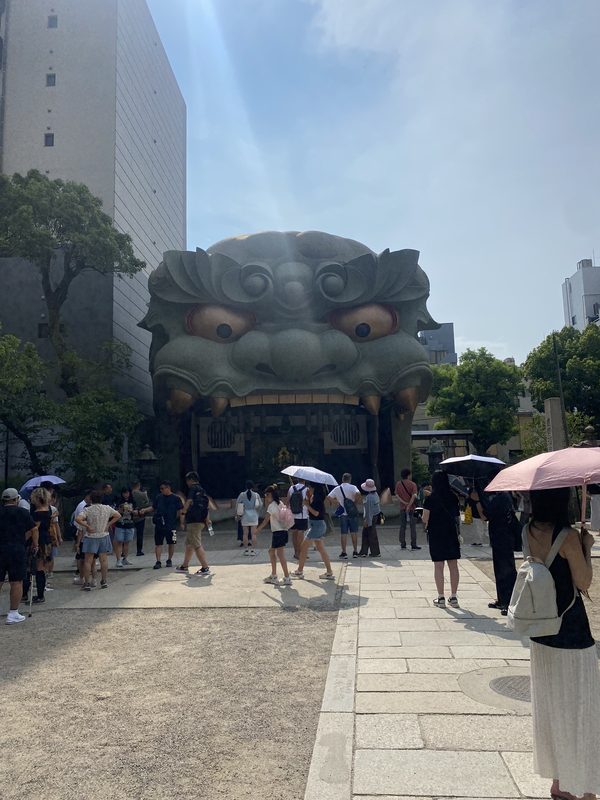
A twelve-meter-tall lion head building with its mouth agape. That’s it. That’s the shrine. The lion head is actually a stage — performances happen inside the open mouth — but the main reason everyone comes here is the photograph. It’s bizarre, it’s photogenic, and it’s free.
Ten-minute walk from Namba Station. You can see the whole thing in fifteen minutes, which makes it a perfect quick stop between meals. The shrine itself has some history (it’s associated with defeating evil spirits, and students come here before exams) but let’s be honest — you’re here for the giant lion. That’s fine. It knows.
Neighborhoods Worth a Full Afternoon
One of the best things about Osaka is that its neighbourhoods have wildly different personalities. Tokyo does this too, but Osaka’s districts are closer together and the contrasts are sharper. You can walk from a 1960s retro food district to a youth fashion neighbourhood to an electronics paradise in under 30 minutes. Give each of these at least a couple of hours. Rushing through defeats the purpose.
10. Shinsekai and Tsutenkaku Tower
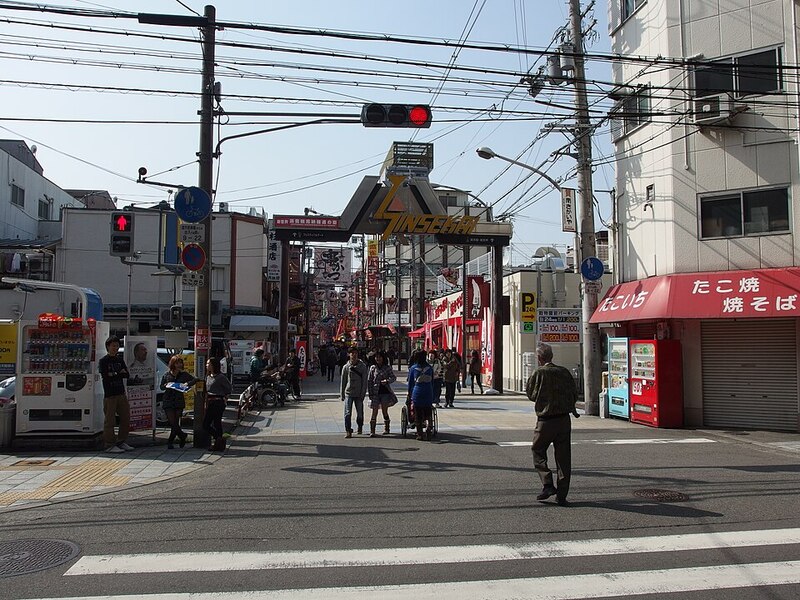
Shinsekai feels frozen somewhere around 1965. Neon-lit streets crammed with kushikatsu restaurants, retro game arcades with machines from the ’80s, tiny bars where the owner is also the bartender, the cook, and the dishwasher. The name means “New World,” which was ironic even when the neighborhood was built in 1912 — it was modeled after Coney Island and the Eiffel Tower. The tower (Tsutenkaku) is still there, smaller and kitschier than the real thing. ¥900 to go up. The views aren’t spectacular — Abeno Harukas is better for that — but the tower itself is part of the experience.
The real reason to come to Shinsekai is kushikatsu: deep-fried skewers of meat, seafood, and vegetables. ¥100-200 per skewer. One rule you’ll hear everywhere: never double-dip in the communal sauce. It’s printed on every wall. Daruma is the famous one, but honestly every restaurant on the main drag is solid. Order ten different skewers, a beer, and sit at the counter watching the cook work. That’s a ¥2,000 meal you’ll remember longer than most ¥20,000 ones. Fair warning: Shinsekai gets a bit rough around the edges late at night, especially on the southern side. It’s not dangerous by any international standard, but it’s noticeably grittier than central Osaka. Part of the charm, honestly. Ebisucho Station drops you right in the middle.
11. Amerikamura — Youth Culture Without Tokyo Prices
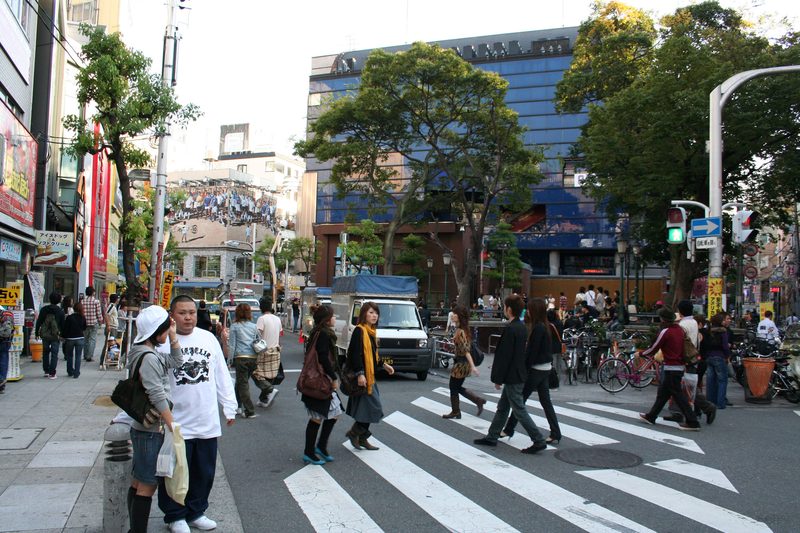
Osaka’s answer to Harajuku, except with lower rents, weirder shops, and more genuine attitude. Amerikamura (or “Ame-mura” if you want to sound like you’ve been before) centres around Triangle Park — a small concrete triangle that functions as the neighbourhood’s living room. Vintage clothing stores, independent record shops, small live music venues, tattoo parlours, and the kind of sneaker boutiques where people queue at 6am for limited releases.
The vintage shopping is genuinely cheaper than Tokyo’s Shimokitazawa or Koenji. Levi’s denim jackets, ’90s band tees, old Nikes — the inventory rotates constantly and pricing isn’t inflated by Tokyo rent. Grab a melon pan ice cream sandwich near Triangle Park (¥500, warm bread, cold ice cream, unreasonably good) and just walk around. The street art changes constantly. On weekends the park fills with teenagers, street performers, and the occasional breakdancer who’s actually very good.
12. Den Den Town — Better Than Akihabara
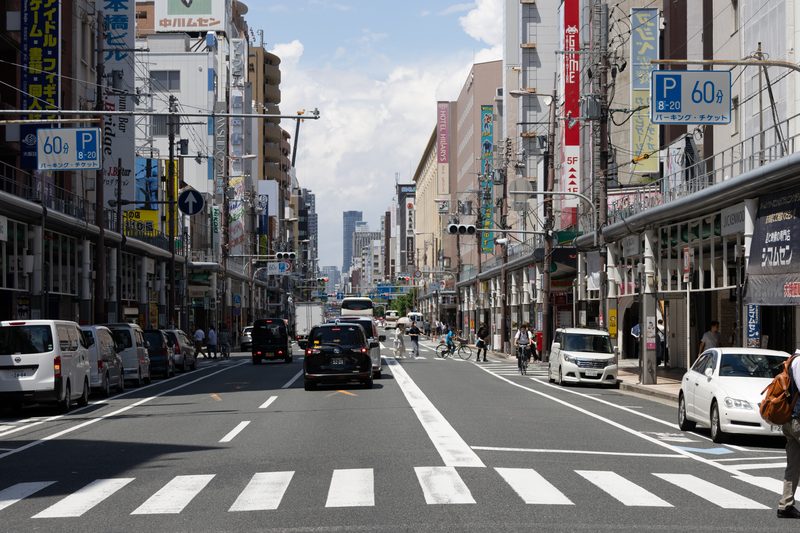
Osaka’s electronics and otaku district. Less crowded than Tokyo’s Akihabara, cheaper, and with more independent shops rather than chain stores. Super Potato has a branch here — the retro game shop with playable consoles from every era of gaming. Mandarake spans multiple floors with manga, vintage toys, rare figurines, and collector items that would cost twice as much in Akihabara.
Even if you’re not into anime or retro gaming, Den Den Town is worth walking through just for the atmosphere. It’s a district that takes its obsessions seriously without taking itself seriously. There are shops dedicated entirely to model trains, to gashapon capsule machines, to military figurines from a single era of Japanese history. Walkable from both Namba (10 minutes north) and Shinsekai (10 minutes south), so you can connect it to either neighbourhood easily. Budget an hour minimum, more if you’re the type who picks up every retro Game Boy cartridge and examines it. You know if you’re that type.
13. Tenjinbashisuji Shopping Street
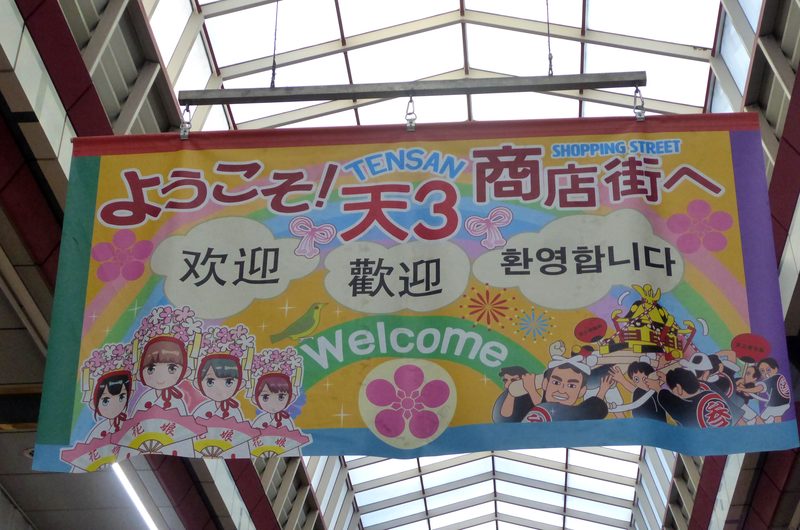
The longest covered shopping street in Japan, stretching 2.6 kilometers from Tenjinbashi to Tenjimbashi 6-chome. This isn’t a tourist street. No souvenir shops, no overpriced matcha stands, no international chains. This is where Osakans actually shop — clothing stores with prices that make sense, fish markets, old-school specialty shops that sell one thing (combs, knives, pickled vegetables), tiny restaurants where ¥800 gets you a proper lunch set.
Walk the whole thing. It takes about 40 minutes at a browsing pace. The street is flat and covered, so rain doesn’t matter. Halfway through you’ll pass the Osaka Museum of Housing and Living (¥600), which recreates a full Edo-period Osaka streetscape inside the building. You can rent a kimono (¥500 extra) and walk through it. Sounds touristy but the recreation is genuinely impressive — complete with sounds, changing “weather,” and actual wooden buildings. The museum alone justifies the trip up here.
14. Nakanoshima — When You Need to Decompress
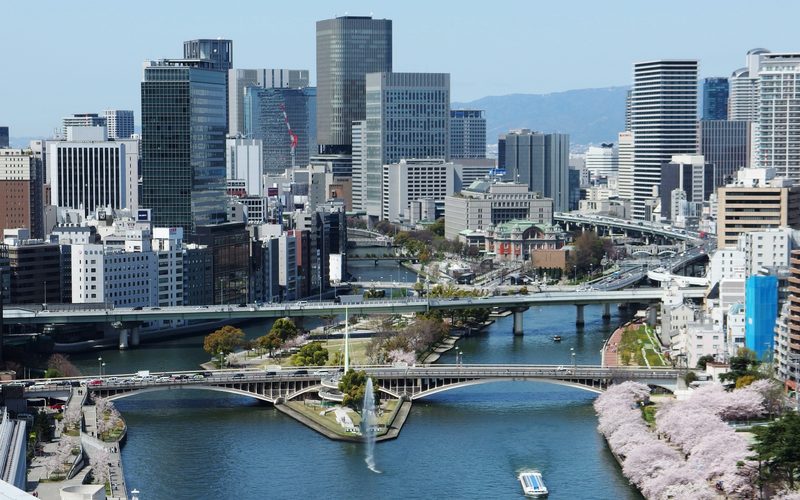
After three days of neon and noise and deep-fried everything, Nakanoshima exists as a palate cleanser. A narrow island in the river running through central Osaka, lined with trees, stone bridges, and art museums. The National Museum of Art is built underground, which is a strange architectural choice that somehow works — the entrance is a dramatic lattice of bent steel tubes. Modern and contemporary Japanese art inside. ¥430-1,500 depending on the exhibition.
The rose garden at the eastern end of the island blooms in May and October. Over 300 varieties. Free to walk through. On a warm evening the riverside paths here feel like a completely different city from the Dotonbori chaos 20 minutes south. If you’re travelling with someone who needs occasional breaks from sensory overload (or if that someone is you), Nakanoshima is the valve. The Central Public Hall — a red brick Neoclassical building from 1918 — is worth a look from outside even if you don’t go in. At night they sometimes project light installations onto the facade. Yodoyabashi or Naniwabashi Station.
Big-Ticket Attractions
15. Universal Studios Japan and Super Nintendo World
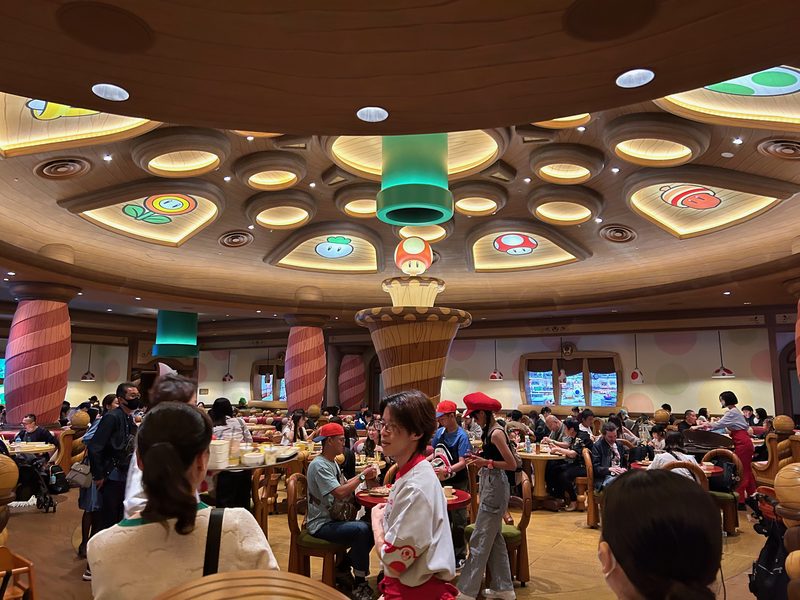
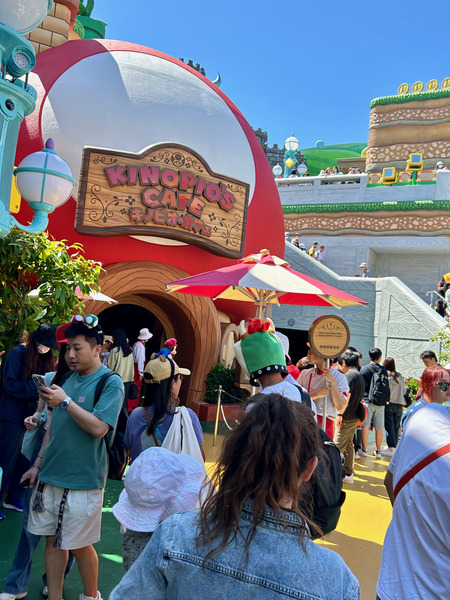
Let’s be blunt: if you’re going to USJ, you’re going for Super Nintendo World. Everything else at Universal is fine — the Harry Potter area is well-done, the rides are competent — but Nintendo World is the reason this park jumped from “optional” to “must-do” for a lot of people. Walking into that area feels like stepping inside a Mario game. The detail is staggering. The interactive Power-Up Bands (¥4,800) let you punch question blocks and collect coins, which sounds gimmicky until you’re doing it and realise you’ve been at it for an hour and a half.
The catch: Nintendo World requires a timed entry ticket, and slots disappear fast. Arrive at park opening (usually 8:30am but check the date) and get your slot immediately through the app. Or buy an Express Pass (¥4,500-15,000+ depending on the day) which guarantees entry. Base park admission is ¥8,600+. So you’re looking at ¥13,000-25,000 all in, which is a significant chunk of a day’s budget.
If you’re not a Nintendo or theme park person, skip USJ entirely and spend that money on food. That’s not a throwaway line. ¥15,000 in Osaka restaurants is an almost absurd amount of incredible meals. JR Yumesaki Line to Universal City Station, about 15 minutes from Nishi-Kujo.
16. Abeno Harukas Observation Deck
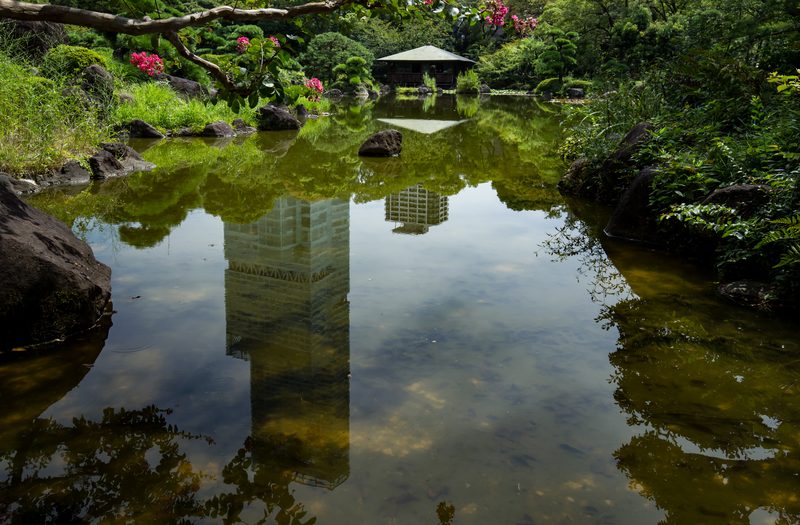
Tallest building in Osaka at 300 meters. The observation deck on floors 58-60 costs ¥1,500 and gives you panoramic views in every direction. On a clear day you can see all the way to Awaji Island and the Akashi Kaikyo Bridge. The open-air rooftop section on the 60th floor is where you want to be — actual wind on your face, no glass between you and the view.
Go for sunset. Arrive about 45 minutes before, grab a spot on the west-facing side, and watch the city shift from daylight to neon. The building is directly connected to Tennoji Station, which makes logistics painless. There’s a Marriott on the upper floors and an art museum in the base, but the observation deck is the main draw. Pair it with Shinsekai, which is a five-minute walk south — kushikatsu and sunset views in a single evening.
17. Spa World
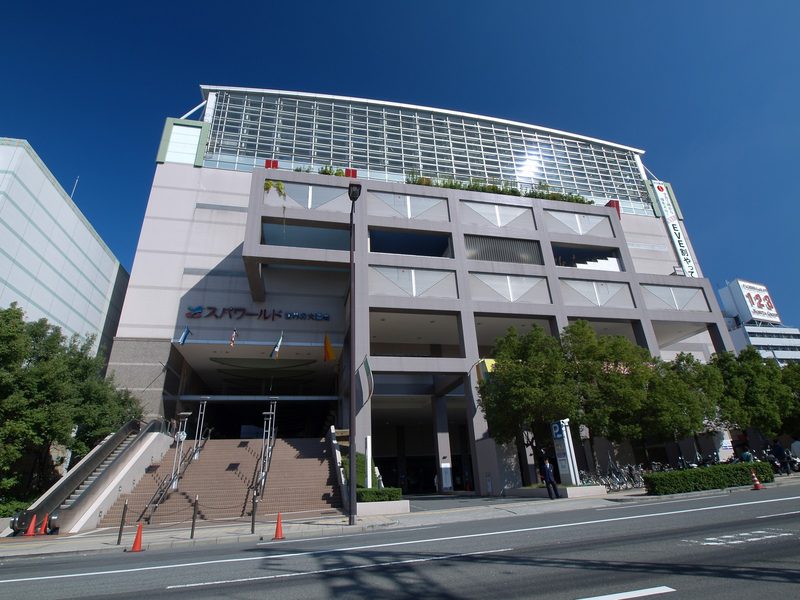
A massive onsen complex sitting right in Shinsekai. Two themed bath floors: one European-themed (Roman baths, Finnish saunas, a Spanish-style pool) and one Asian-themed (Balinese, Japanese, Islamic geometric patterns). The floors swap monthly between men and women. ¥1,500 entry.
Traditional onsen purists will hate Spa World. It’s campy, it’s themed, it’s designed for entertainment rather than spiritual cleansing. But it’s also genuinely fun in a way that only Osaka can deliver — they’ve committed fully to the absurdity and the result is better than it has any right to be. Budget three to four hours. The pool area (swimsuits required) has waterslides. Go on a weekday afternoon when it’s half-empty. Right next to Tsutenkaku Tower, so you can combine it with Shinsekai.
Day Trips That Are Almost Too Easy
Osaka’s position in the Kansai region means several excellent day trips are less than an hour away by train. Kyoto gets all the attention (and deserves it), but two other day trips are shorter, cheaper, and arguably more fun. Both work as half-day trips, which means you still get an evening back in Osaka for more eating.
18. Nara — Deer and the Biggest Buddha
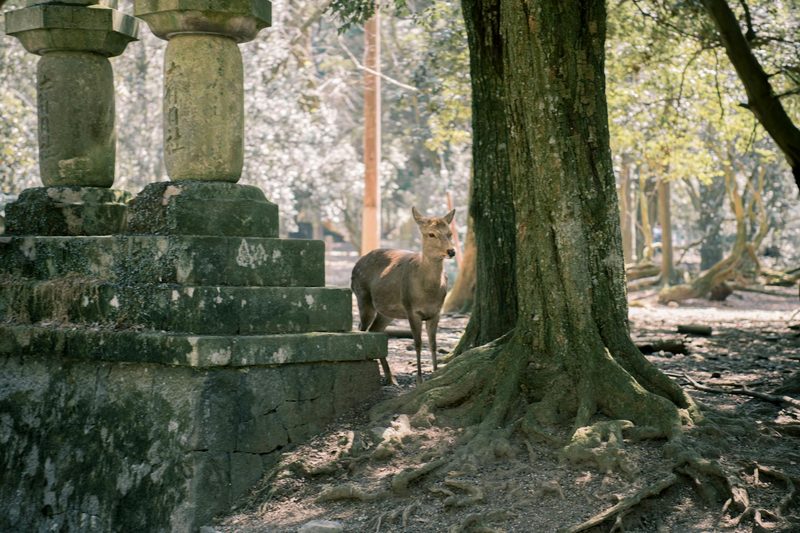
Thirty to forty-five minutes by Kintetsu Railway from Namba Station. ¥560 each way. That’s it. You’re in Nara.
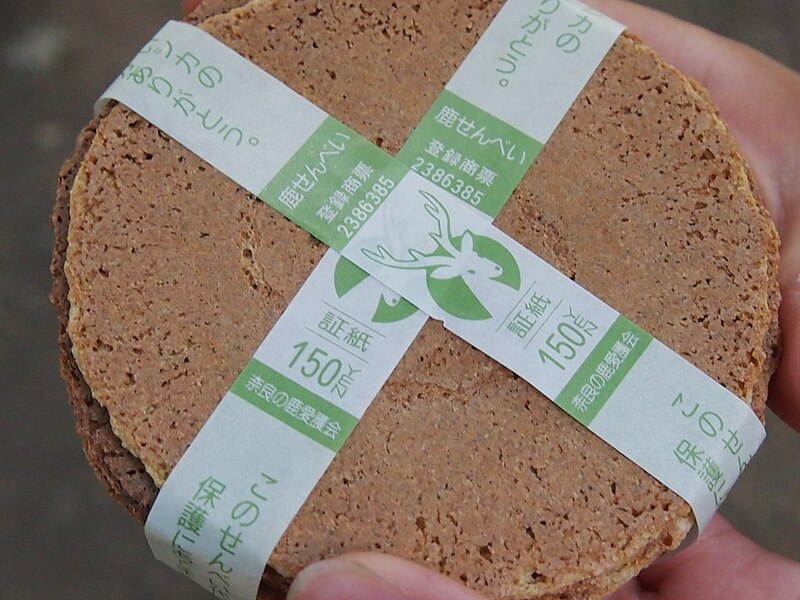
Over 1,200 semi-wild deer roam Nara Park and the surrounding temple grounds. They bow — they’ve learned that bowing gets them deer crackers (¥200 per bundle). They’ll also headbutt you, eat your train ticket if you’re holding it, and follow you in increasingly assertive packs if they suspect you’re holding food. It’s hilarious and slightly alarming and children adore it.
Todai-ji temple houses a 15-metre bronze Buddha that’s been sitting there since the 8th century. ¥600 entry. The building that contains it is the largest wooden structure in the world, and even that feels too small for the statue inside. There’s a pillar with a hole at the base — if you can crawl through it, you’re guaranteed enlightenment. The hole is about the size of the Buddha’s nostril, which is both a strange fact and a practical warning about how small it is.
You can see everything in Nara in half a day. Leave Osaka by 9am, take the Kintetsu, spend the morning with the deer and Todai-ji, have lunch (kakinoha-zushi — sushi wrapped in persimmon leaves — is the local speciality), and be back in Osaka by 3pm with your entire evening free.
19. Kobe — Twenty Minutes for World-Class Beef
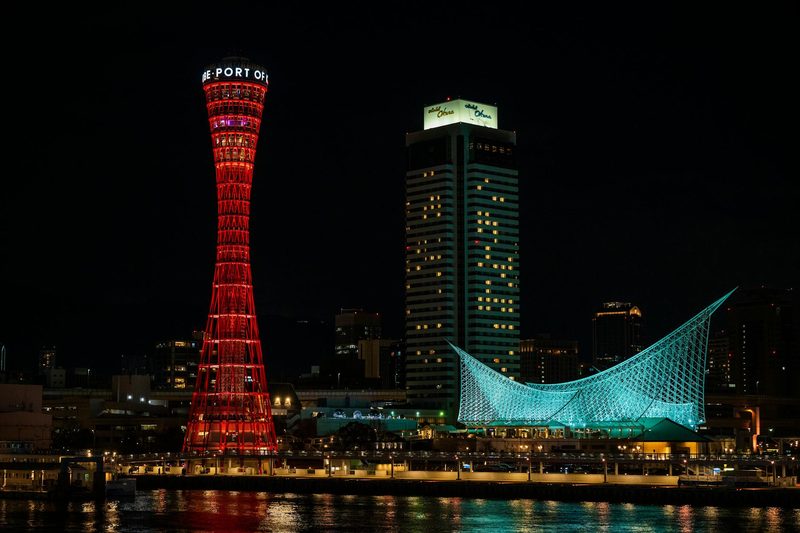
Twenty minutes by JR from Osaka Station. ¥410. You’re going for the beef. You know this. I know this. Let’s not pretend otherwise.
Real certified Kobe beef — from Tajima cattle raised in Hyogo Prefecture, with a marbling score of 6 or above — costs ¥5,000-15,000 for a proper lunch. That range is enormous because it depends on the cut and the grade. A cheaper lunch set at a reputable place like Mouriya near Sannomiya Station will get you a steak that’s still better than anything you’ve had at home. The expensive end is for A5 wagyu that genuinely dissolves on contact with your tongue, which sounds like marketing nonsense until it happens to you.
After lunch, walk through Kitano-cho — the hillside neighbourhood of Western-style Meiji-era houses built by foreign traders in the late 1800s. It’s a strange pocket of Victorian architecture in Japan, well-preserved and genuinely interesting from a historical perspective. The earthquake memorial down at the port is worth seeing too. A section of the waterfront was left exactly as it collapsed in the 1995 earthquake — tilted lampposts, buckled pavement, a visceral reminder of what a 7.3 magnitude earthquake does to a city. If you have time, take the ropeway up to the Nunobiki Herb Garden above the city — ¥1,800 round trip, decent views of Kobe harbour and the mountains behind. The whole Kobe day trip is manageable in five or six hours including transit.
Nightlife and After Dark
20. Shinsaibashi Bar Hopping and Misono Building
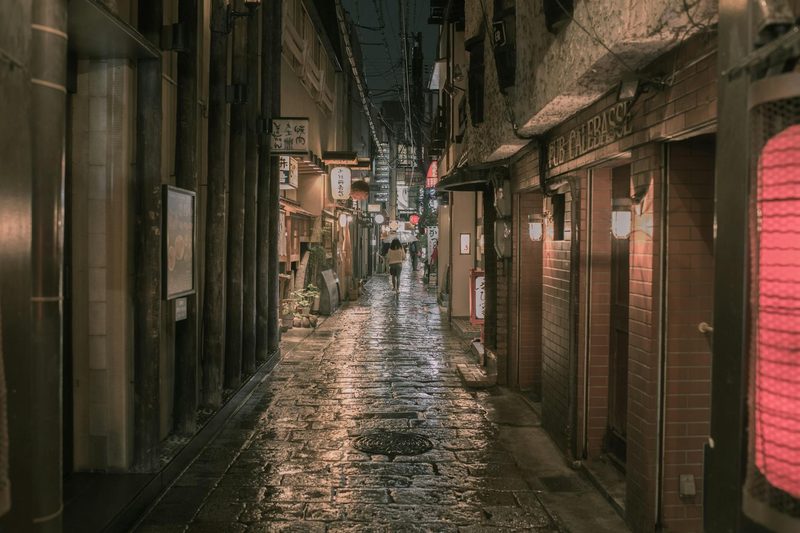
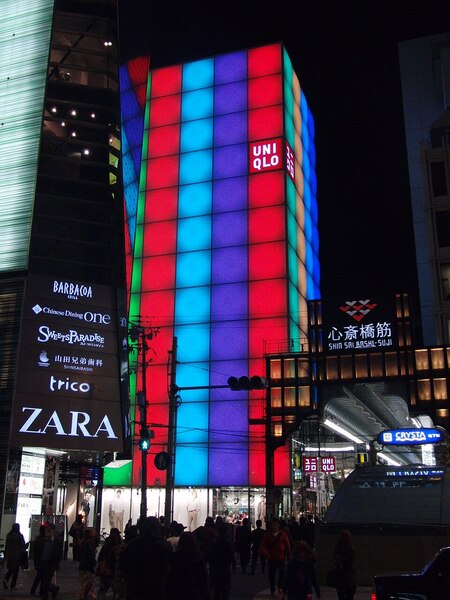
Osaka nightlife is better than Tokyo’s. I’ll say it outright. It’s more accessible — bars are cheaper, there’s almost never a cover charge, staff are friendlier, and the whole scene is less posturing and more genuine fun. The narrow streets east of Shinsaibashi shopping arcade hide dozens of small bars, most with seating for six to ten people. ¥500-800 drinks. You don’t need a plan. Just walk, look through doors, and go where the atmosphere grabs you.
The Misono Building near Namba is the most Osaka thing in Osaka. A crumbling 1956 office building that somehow still operates, with tiny bars on the upper floors — some seating four people max — and rooftop bars with skyline views and plastic chairs. Nothing about it is fancy. Everything about it is perfect. The elevator looks like it might be original to the building. The rooftop bars serve cheap highballs and the conversation starts whether you want it to or not. Go after 9pm. Some bars close by midnight, others keep going until the trains start running again at 5am.
If you prefer something more structured, the Hozen-ji Temple area in Namba has atmospheric alleyways with upscale izakayas and cocktail bars. Stone lanterns, moss-covered statues, candlelight. It feels like old Osaka. The prices are higher (¥800-1,500 per drink) but the setting is worth it for at least one evening.
One more thing about Osaka at night: last trains run around midnight to 12:30am depending on the line. Miss it and you’re looking at a taxi (¥2,000-4,000 depending on distance) or finding a bar that stays open until the 5am first train. The second option is surprisingly easy in Osaka. Plenty of people do it on purpose.
Practical Stuff You Actually Need
Metro one-day pass: ¥820 on weekdays, ¥620 on weekends and holidays. The weekend price is a legitimate bargain — three rides pays for the pass. Get an ICOCA card (Osaka’s transit card, works across all of Kansai) at any station for ¥2,000 including ¥500 deposit. You can load it at any convenience store or station machine. It works on trains, metros, buses, and for purchases at convenience stores, vending machines, and most chain restaurants. Just tap and go.
Osaka has two airports. Kansai International (KIX) handles most international flights and connects to Namba in about 45 minutes via the Nankai Rapi:t express (¥1,450). Itami (also called Osaka International) handles domestic flights and connects to central Osaka by bus in about 30 minutes (¥650). If you’re flying in from another Japanese city, you’ll likely land at Itami. From overseas, it’s KIX.
For accommodation, Namba or Shinsaibashi puts you in the centre of everything. Most of the things on this list are walkable from there, or one metro stop away. Our guide to where to stay in Osaka goes into detail on the neighbourhoods.
If you’re spending more than two or three days focused on food (and you should be), our Osaka food guide covers restaurants, street food, and neighbourhood-specific recommendations beyond what’s here.
Heading to Tokyo before or after? The Shinkansen from Shin-Osaka takes about 2 hours 20 minutes. Our Tokyo travel guide covers the other end of that bullet train ride. For broader trip planning — visas, rail passes, seasonal advice — the Japan National Tourism Organization keeps updated practical information.
Three or four days is enough for Osaka proper. Add a day each for Nara and Kobe if you want the day trips. A full week lets you slow down and eat your way through different neighbourhoods without rushing, which is really the right way to do this city. Osaka rewards the aimless. Wander into a side street, point at whatever the person next to you is eating, and trust the city to take care of the rest.