
This article contains affiliate links. If you book through these links, I earn a small commission at no extra cost to you.
Zagreb gets overlooked. Most visitors to Croatia fly straight to Split or Dubrovnik and never give the capital a second thought. This is a mistake. Zagreb is a proper European city with a distinct personality that is nothing like the Dalmatian coast — Austro-Hungarian architecture, excellent cafe culture, craft beer bars, unusual museums, and a pace of life that feels genuinely relaxed rather than tourist-resort relaxed.
It also costs about half what Dubrovnik charges for everything. A good meal in Zagreb is €12-15. An apartment in the centre runs €50-80. A coffee on a terrace costs €2. After the sticker shock of the coast, Zagreb feels like a relief.
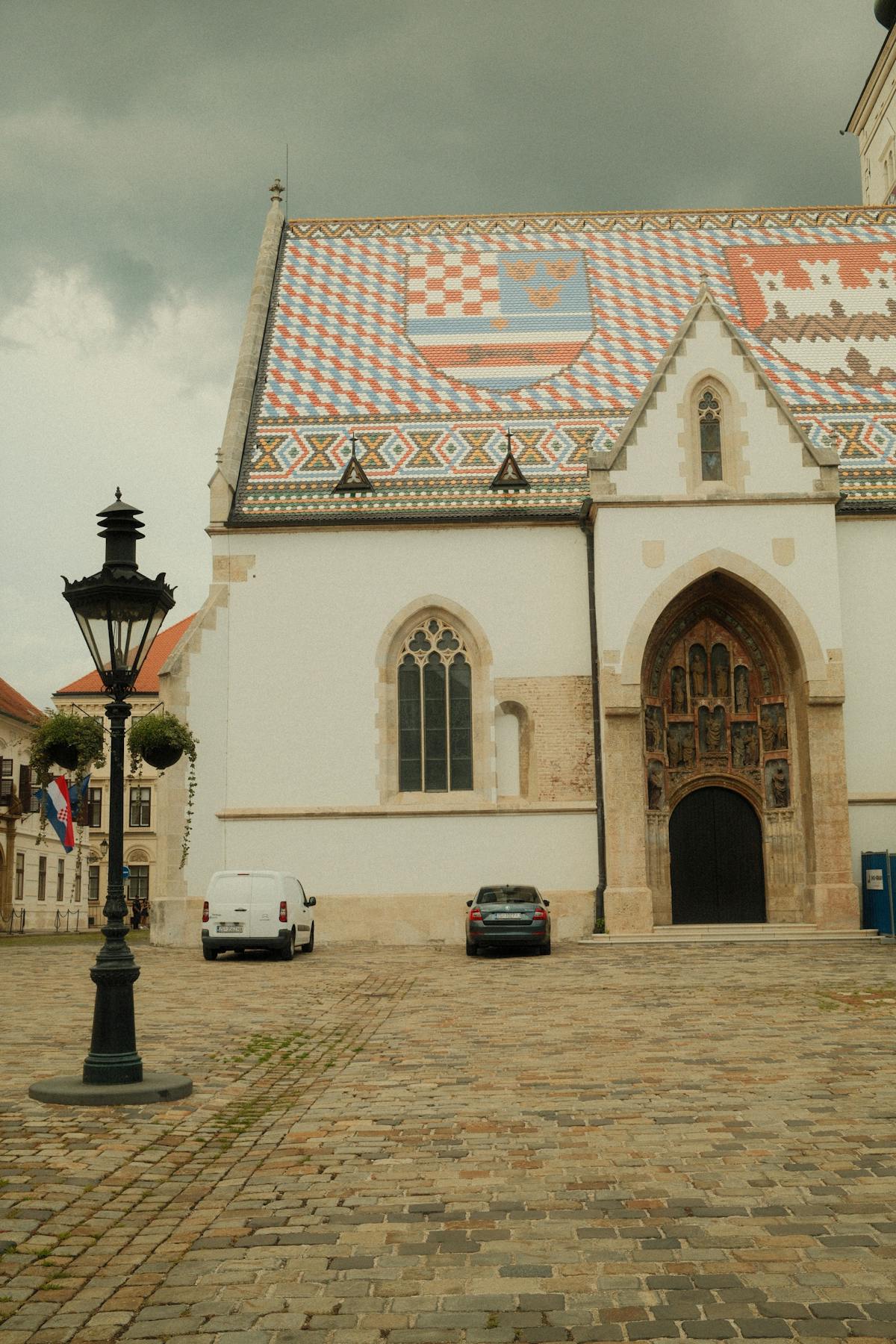
Explore the Upper Town (Gornji Grad)
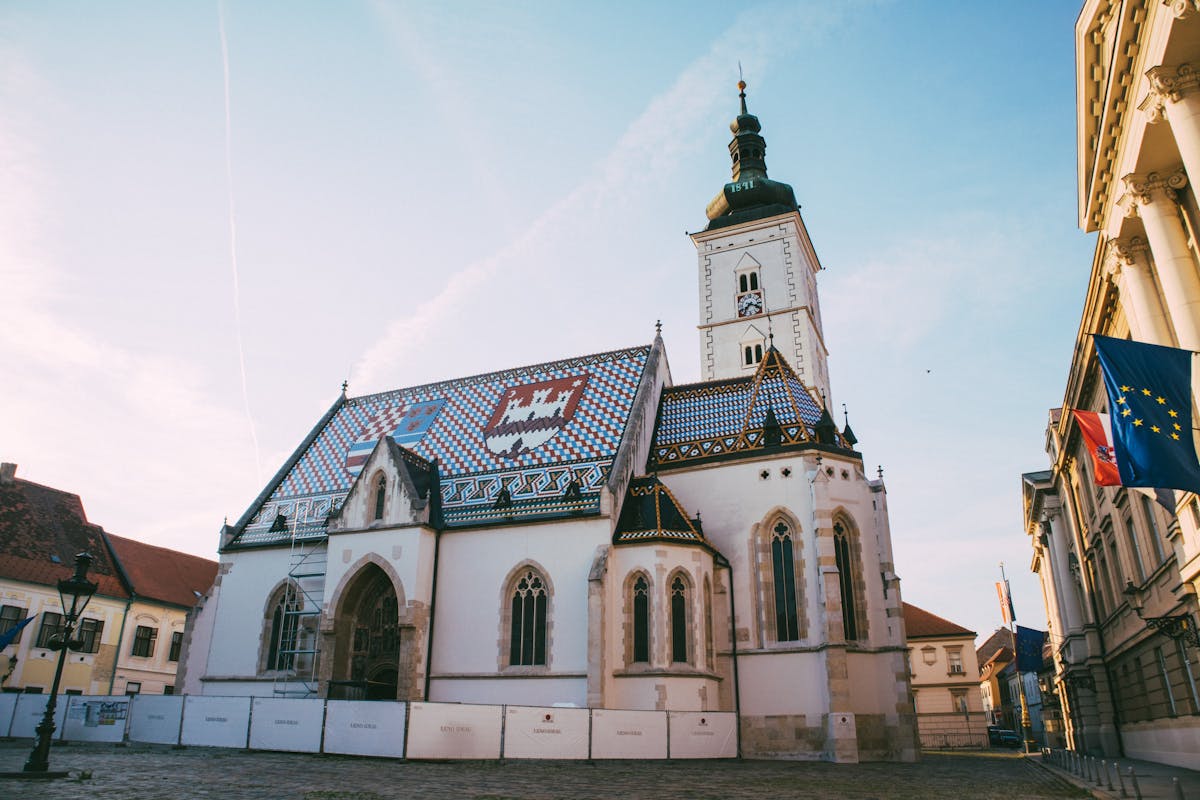
The Upper Town is Zagreb’s historic core, perched on a hill above the modern lower city. It is a compact neighbourhood of cobbled streets, churches, and government buildings connected to the lower town by the world’s shortest funicular (66 metres, 55 seconds, endlessly charming).
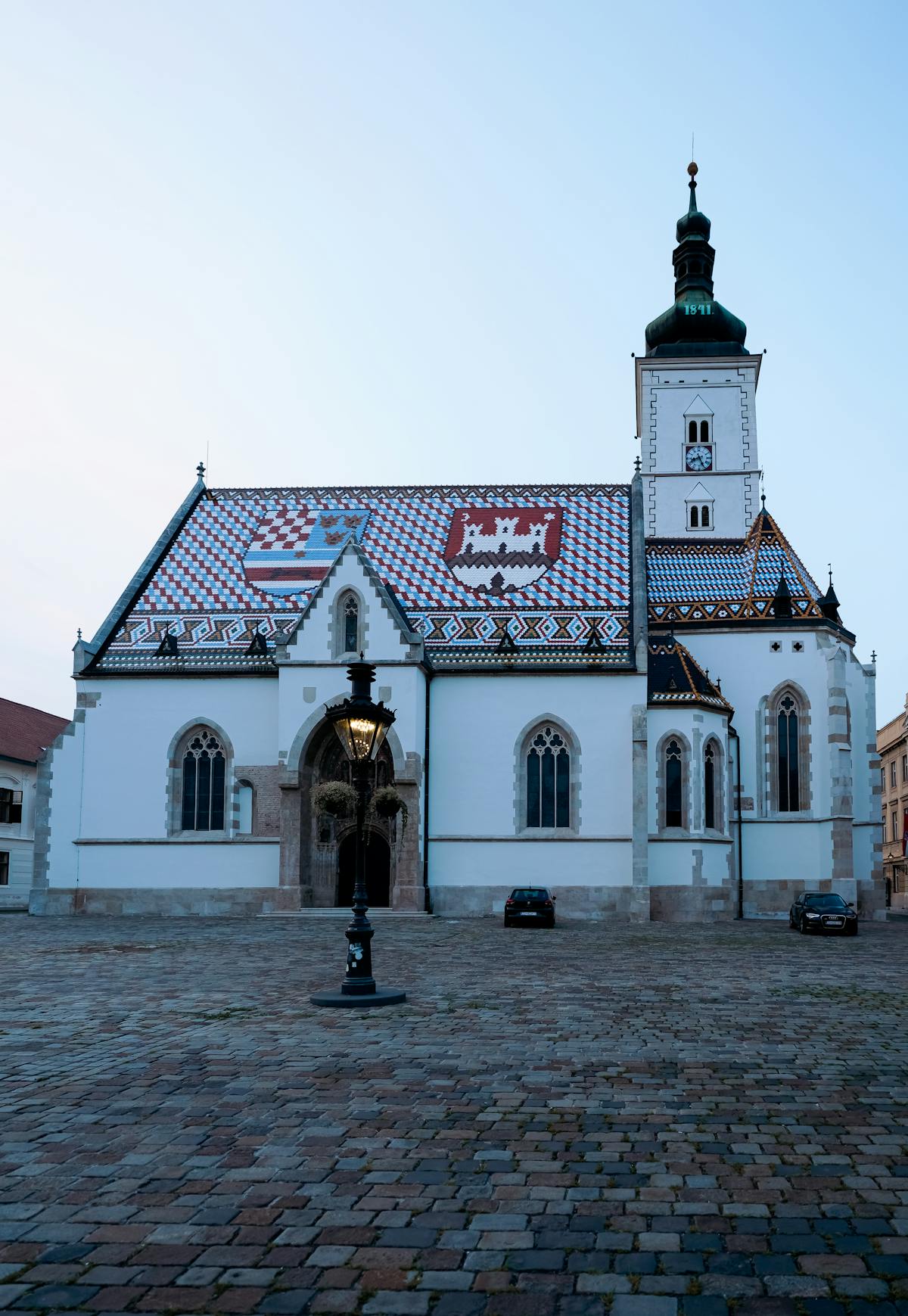
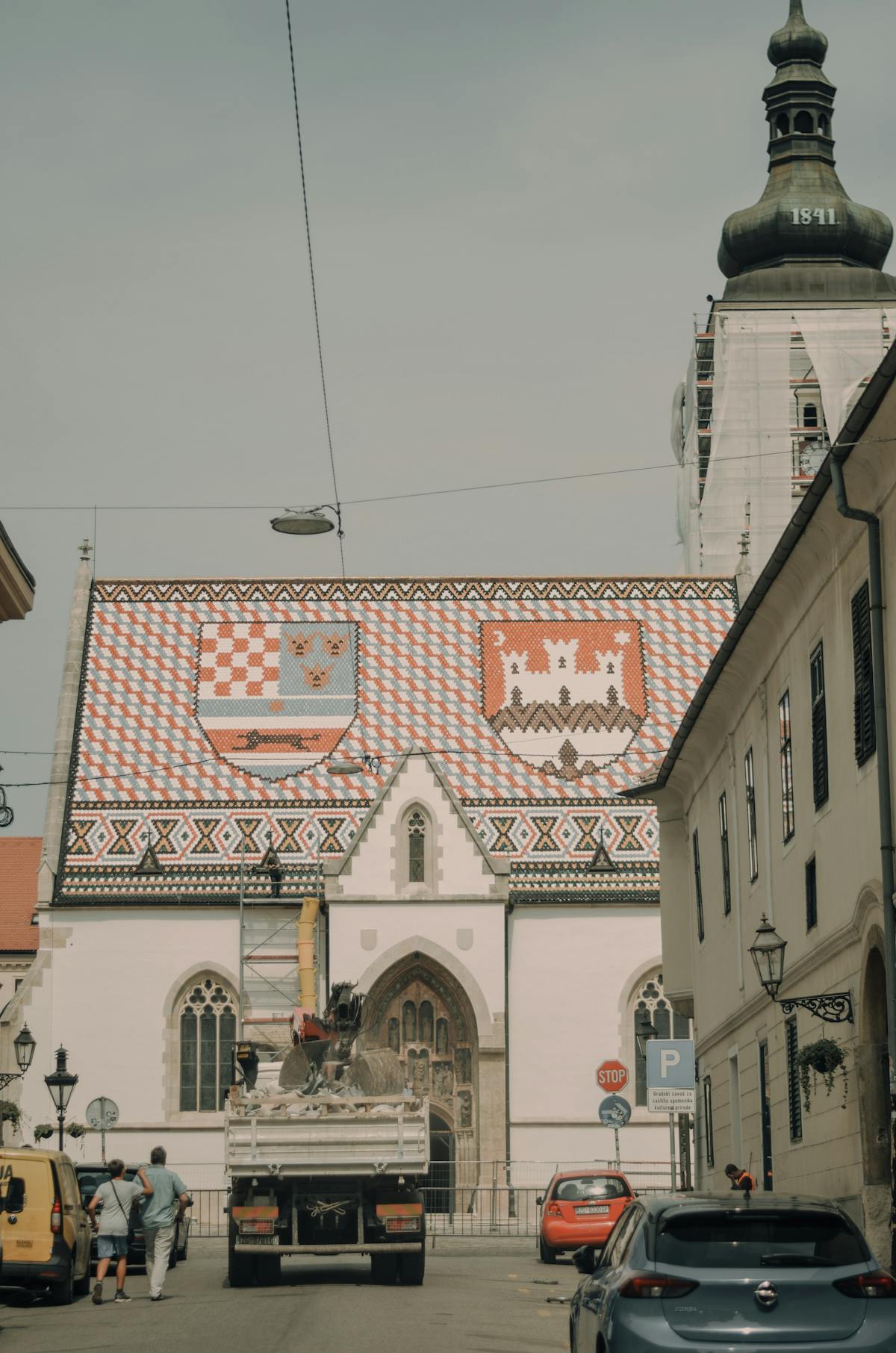
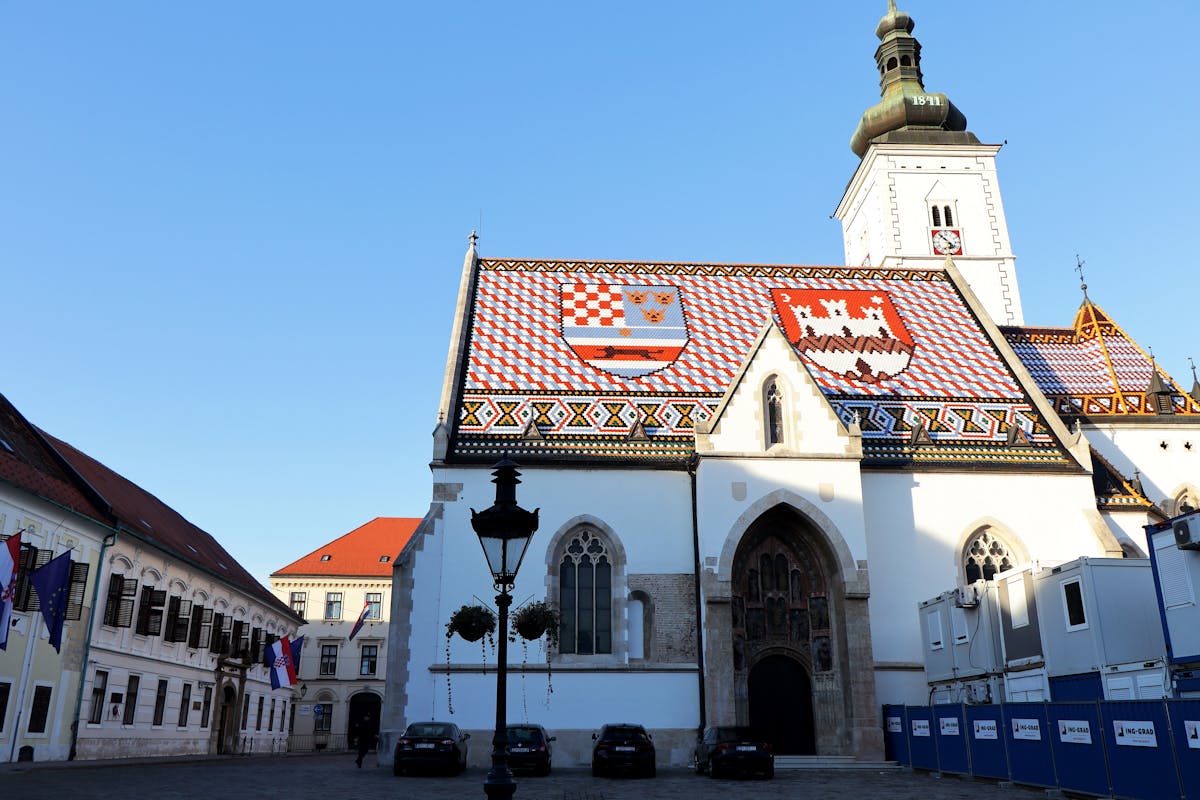
The centrepiece is St. Mark’s Square (Trg Svetog Marka), flanked by the Croatian Parliament and the Government Palace. St. Mark’s Church, with its multicoloured tiled roof showing the coats of arms of Croatia and Zagreb, is one of the most photographed buildings in the country.
Also in the Upper Town: the Stone Gate (Kamenita Vrata), a medieval city gate that now contains a small shrine that locals visit daily; the Lotrščak Tower, which fires a cannon every day at noon (a tradition since the 19th century — it is loud, so be prepared); and several lookout points with views over the city rooftops.
The Upper Town is small — you can walk it in an hour — but it rewards slow exploration. The side streets are quiet, there are small galleries and cafes tucked into courtyards, and the whole area feels removed from the busy city below.
Take a Free Walking Tour
Zagreb has one of the better free walking tours in Europe. The “Free Spirit” tour meets daily at 11am and 5pm at the horse statue in Ban Jelačić Square and takes about two hours. The guides are local, knowledgeable, and entertaining — they cover the main sights but also the modern history, including the Croatian War of Independence and the 2020 earthquake.
If you do the 11am tour, you get the bonus of hearing the noon cannon fire from Lotrščak Tower, which is startlingly loud and never fails to make someone jump. Tip your guide — this is a free tour but the guides work on tips alone.
Visit the Museum of Broken Relationships
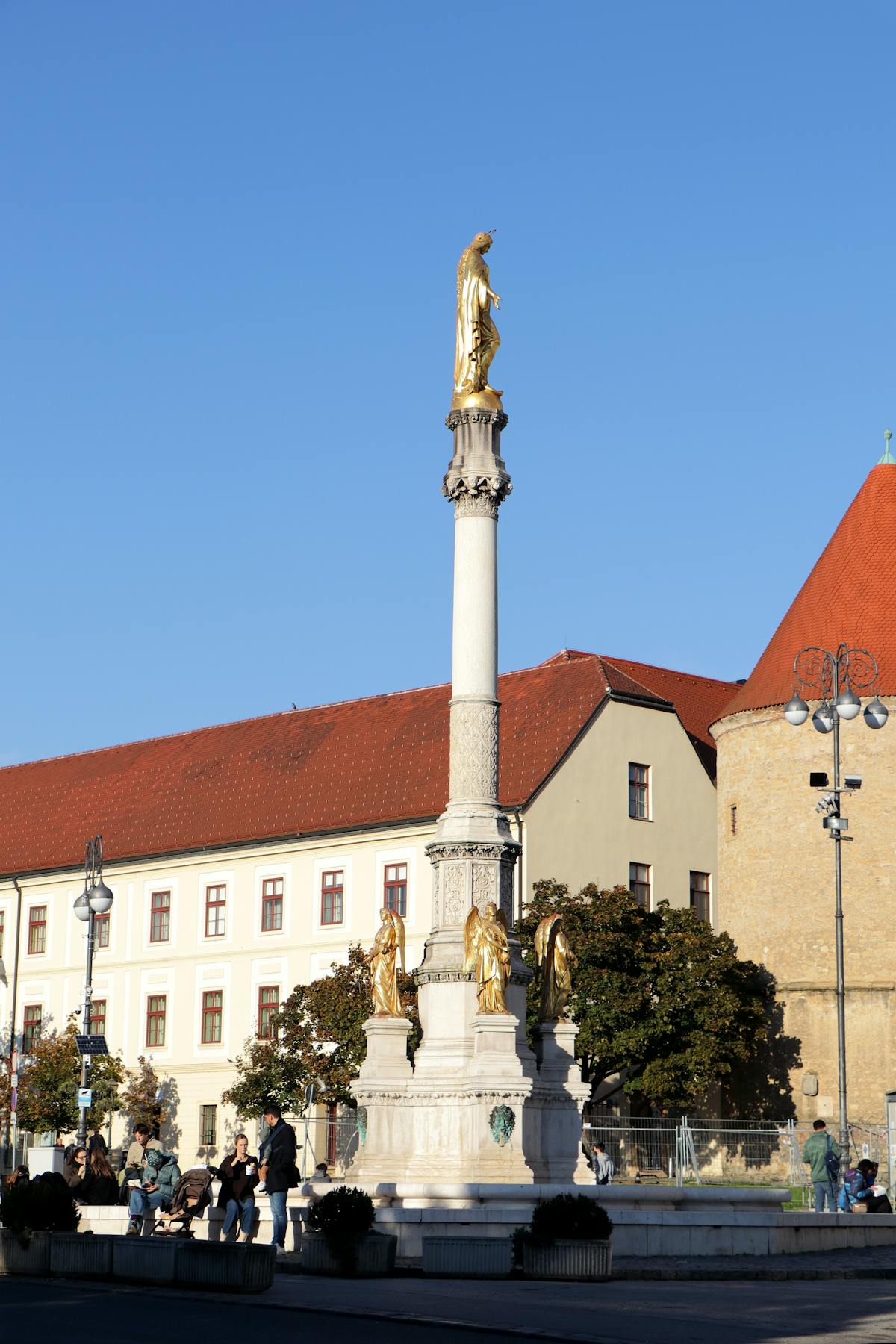
This is Zagreb’s most famous museum and one of the most original in Europe. The concept is simple: people from around the world donate objects from failed relationships, each accompanied by a short text explaining the story. The objects range from mundane (a hairpin, a concert ticket) to dramatic (an axe used to destroy an ex’s furniture) and the stories are by turns funny, heartbreaking, and uncomfortably relatable.
It started as a travelling exhibition in 2006 and found a permanent home in Zagreb’s Upper Town. Entry is about €7. Allow 1-2 hours. It is surprisingly moving and one of the few museums that genuinely makes you feel something.
Other unusual museums worth visiting: the Museum of Illusions (interactive optical illusions, good for kids), the Mushroom Museum (tiny and weird, in a good way), and the Technical Museum Nikola Tesla (hands-on science exhibits in a large building).
Drink Coffee Like a Local
Zagreb’s cafe culture is serious. The ritual of sitting in a cafe for an extended period — ideally outdoors, ideally with friends, ideally with no particular agenda — is central to daily life. It even has a name: “špica” (the Saturday morning cafe crawl, where the entire city seems to be on the streets between 10am and 1pm).
The main cafe strip is along Tkalčićeva Street, a pedestrian street in the lower town lined with outdoor terraces. On a sunny Saturday morning, it is wall-to-wall people. Other good cafe zones include Bogovićeva Street (more upscale), the Green Horseshoe parks (quieter), and the courtyards behind the main squares.
Coffee in Zagreb is cheap and good. Espresso runs €1.50-2.50. The local default is a small, strong espresso, not the milky variations — though those are available. Order a “kava” and you get an espresso. Order a “bijela kava” for a latte-style drink.
Explore the Green Horseshoe
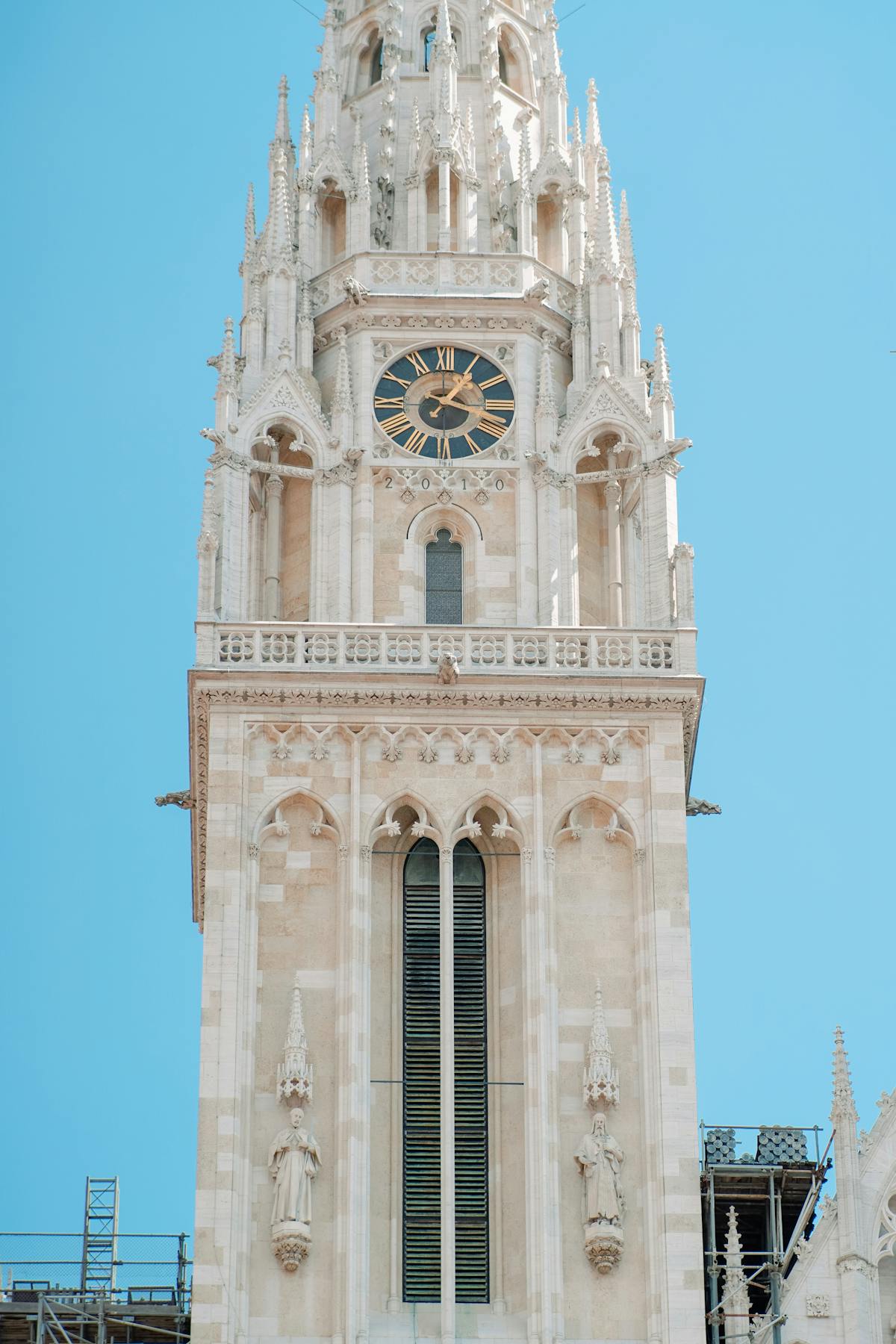
The Green Horseshoe (Zelena Potkova) is a U-shaped chain of parks and squares in the lower town, designed by the city planner Milan Lenuci in the late 19th century. Walking the full horseshoe takes you past the National Theatre, the Art Pavilion, the Botanical Garden, and several impressive Austro-Hungarian buildings.
The Botanical Garden is a highlight — free to enter, beautifully maintained, and a peaceful escape from the city. The Art Pavilion hosts temporary exhibitions in a stunning yellow building. The National Theatre (HNK) is worth seeing from the outside even if you do not catch a performance — the building is beautiful, especially lit up at night.
Eat and Drink Well
Zagreb’s food scene is different from the coast — more Central European, heavier on meat and pastry, influenced by Austrian, Hungarian, and Ottoman cooking traditions:
- Štrukli: Zagreb’s signature dish. Pastry rolls filled with cottage cheese, baked or boiled. Available everywhere but best at La Štruk, a restaurant dedicated entirely to this dish.
- Ćevapi: Grilled minced meat sausages. Available at every casual restaurant. The Zagreb version often comes with kajmak (creamy cheese spread).
- Meat under the bell (peka): Available in Zagreb too, not just on the coast. The inland version often uses veal or lamb.
- Craft beer: Zagreb has an excellent craft beer scene. Garden Brewery is the standout — a gorgeous taproom in an industrial area with outstanding sours and IPAs. Also try Zmajska Pivovara and Mali Medo brewpub.
For Croatian food in a traditional setting, try Vinodol (reliable, central, good value) or Stari Fijaker (classic Zagreb cuisine in a historic building). For something modern, Heritage by Mundoaka does creative Croatian cooking with international influences.
Day Trips from Zagreb
Plitvice Lakes: About 2 hours by car or bus. The most popular day trip from Zagreb and worth every minute. See our national parks guide for details.
Hrvatsko Zagorje: The hilly region north of Zagreb is dotted with castles, thermal spas, and vineyards. Trakošćan Castle is the most photogenic. Krapina has a Neanderthal museum built on the site of one of Europe’s most important fossil finds. The thermal spa town of Stubičke Toplice is an hour from Zagreb.
Samobor: A small town 25 minutes west of Zagreb, famous for its kremšnita (custard cream cake) and annual carnival. Good for a half-day trip — eat cake, walk along the stream, visit the ruined castle above the town.
Practical Tips
How many days: Two full days minimum. Three is better. Most visitors give Zagreb one night on their way to the coast, which is not enough.
Getting around: The centre is compact and walkable. Zagreb has an extensive tram network that is cheap (€2 per ride) and covers the wider city. The airport is 20km south — bus or taxi (€15-25) into town.
When to visit: Spring (April-June) and autumn (September-October) are ideal. Summer is warm but not as intense as the coast. December is magical — Zagreb’s Christmas markets have won the European Best Christmas Market award multiple times.
Money: Euro everywhere. Cards widely accepted. Zagreb is significantly cheaper than the coast — budget 30-40% less than Dubrovnik or Hvar.
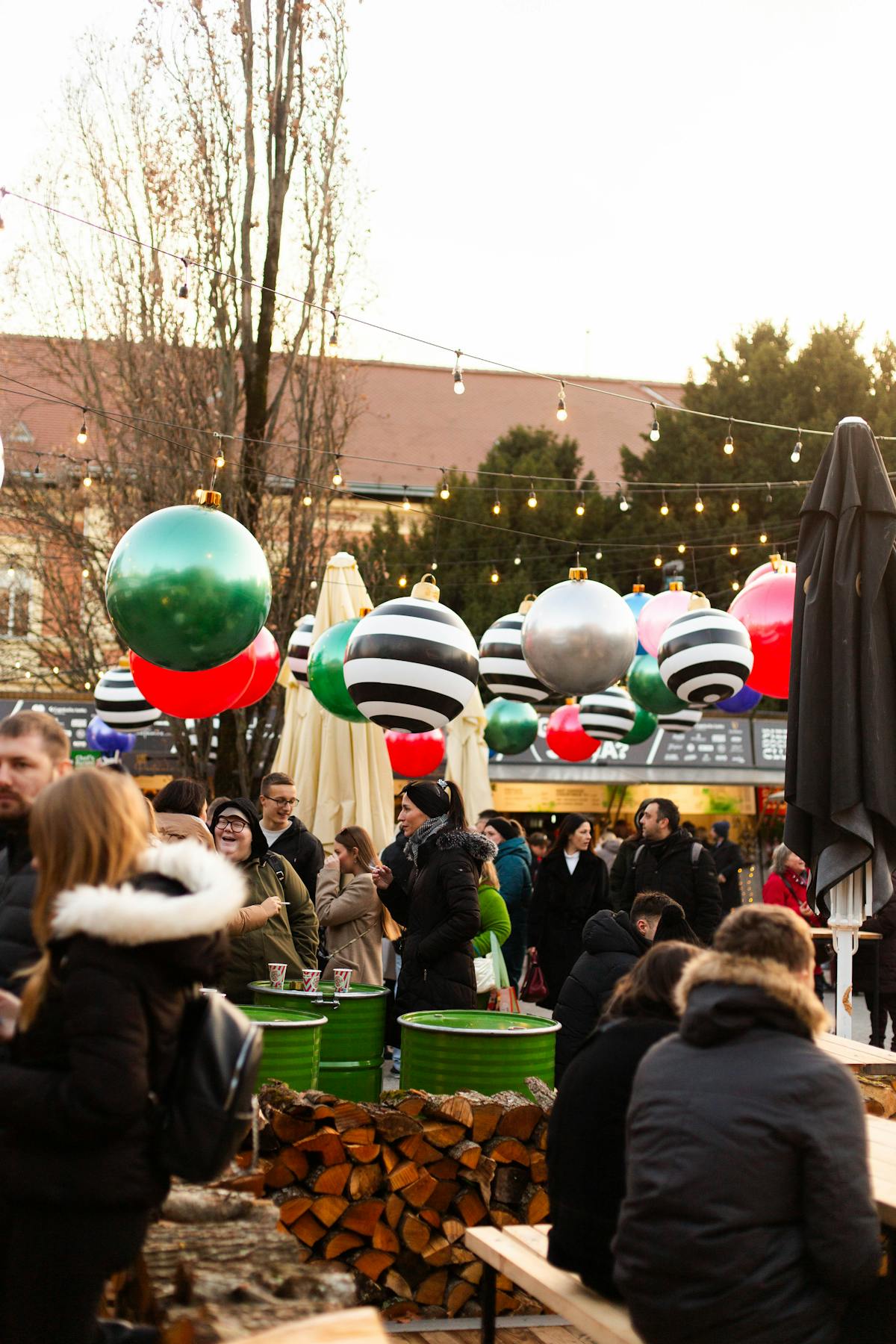
Zagreb is not the Croatia that appears on Instagram. There are no beaches, no crystal-clear water, no medieval walls overlooking the Adriatic. What there is instead is a genuine Central European capital with character, excellent food and drink, fascinating museums, and an atmosphere that feels like it belongs to the people who live there rather than the travelers passing through. Give it time. It rewards patience.