
At Eihoji, a 700-year-old ginkgo can turn the temple courtyard gold; at Obara, delicate cherry blossoms may bloom among the autumn maples. The day ends at Korankei, where the Tomoe River and thousands of maples make for a memorable late-afternoon and evening walk.
I like this tour for two practical reasons: it links three very different autumn sights in one day, and it takes care of the long drives from Nagoya. The main caveat is timing: foliage and blossoms can be early or late, and weekend traffic can cut into your time at Korankei.
At a glance
- Eihoji’s ancient ginkgo: Visit a Zen temple founded in 1313, set among wooded hills near Tajimi.
- Obara’s autumn cherry blossoms: Look for pink and white Shikizakura among the red and gold foliage. Peak bloom varies.
- Korankei after dark: The final stop is planned around autumn scenery and an illumination event, but lighting and foliage conditions can change.
- Three stops, one long day: Expect about 10 hours, with the return to Nagoya estimated for 8 to 9 p.m.
- Independent visits: Your guide handles transport and gives advice, while you explore each site at your own pace within the allotted time.
- A useful option without a car: Round-trip transfers spare you the effort of connecting these rural sights by public transport.
- At a glance
- Three autumn sights, one day from Nagoya
- Eihoji’s golden ginkgo and quiet temple grounds
- Obara’s rare cherry blossoms in autumn
- Korankei’s maples, bridges and evening lights
- What the transport and schedule mean in practice
- Is the price worth a full autumn day?
- Who should book this autumn day trip?
- FAQ
- Where does the tour depart from?
- How long is the tour?
- How much time is scheduled at each stop?
- Is the Korankei illumination guaranteed?
- Are meals included?
- What languages are available?
- Can young children join?
- What happens if the foliage or blossoms are not at their peak?
- More Tours in Tajimi
- More Tour Reviews in Tajimi
Three autumn sights, one day from Nagoya
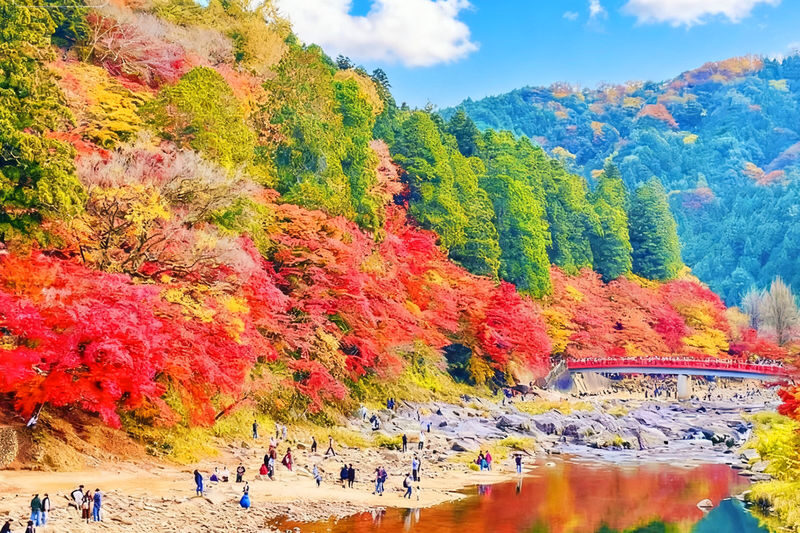
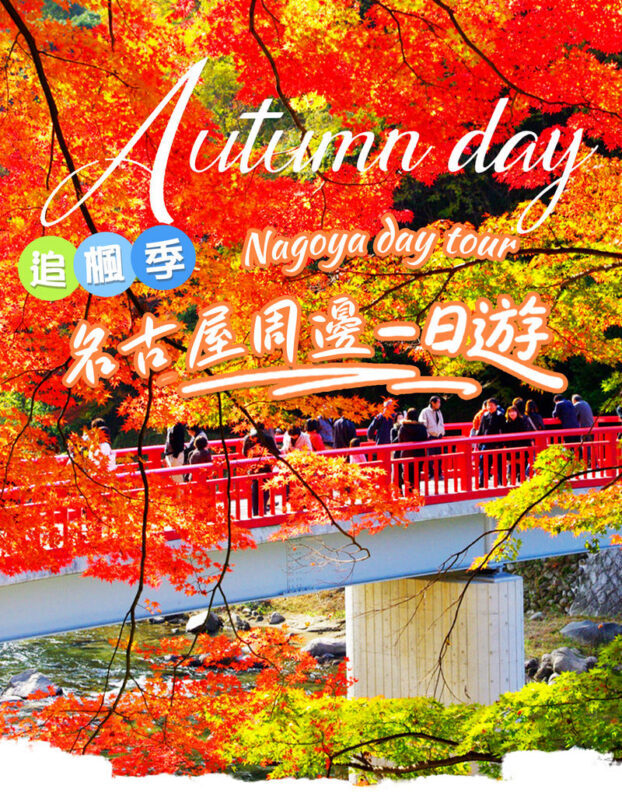
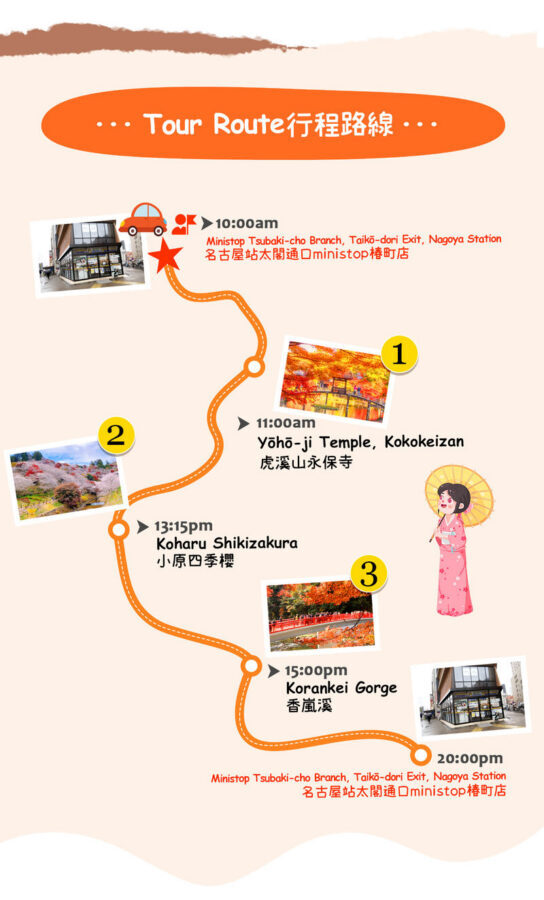

This is a seasonal sightseeing circuit, not a slow temple retreat. You travel from Nagoya to Gifu and Aichi prefectures, with stops at Kokeizan Eihoji Temple, Shikizakura Park in Obara and Korankei Gorge. The appeal is variety: an old Zen temple, an uncommon autumn cherry bloom, then a riverside maple walk that may continue into the evening.
The tour costs from $56.85 and lasts about 10 hours. That can be good value if you want to see all three places without arranging a car or working out rural connections. The trade-off is a full day on the road and a fixed schedule, with little room to linger if traffic or crowded access roads slow things down.
Visits are self-guided. Your guide coordinates the group and can offer suggestions, but you should not expect a long, detailed talk at every site. Some guides have been praised for helpful tips and careful timekeeping, including Ms Mei and guides identified as Xiao Lu, Jia Jia and Guo Huajuan. Those names are examples from past trips, not a promise about who will lead yours.
You can also read our reviews of more tours and experiences in Tajimi.

Eihoji’s golden ginkgo and quiet temple grounds
The first stop is Kokeizan Eihoji, in Tajimi, Gifu Prefecture. Founded in 1313 by Zen master Muso Kokushi, the temple sits on Mount Torakei. Its name refers to a resemblance between the local scenery and Tiger Creek on China’s Mount Lu, according to the story associated with its founding.
The main autumn draw is a ginkgo tree said to be about 700 years old. At the right point in the season, its yellow leaves contrast with the maples turning red around the temple. That combination gives the stop a different mood from Korankei’s larger riverside display: quieter, more intimate, and tied closely to the temple buildings and garden.
You have about an hour here, exploring on your own. The Chisen-kaiyu-style garden and Kannon-do Hall add interest beyond the famous tree, though the precise show of color depends on the date and weather. In some seasons, the ginkgo has already shed much of its foliage by the time the group arrives. Treat the old tree and temple setting as the reason to visit, with peak color as a welcome bonus rather than a guarantee.
Obara’s rare cherry blossoms in autumn
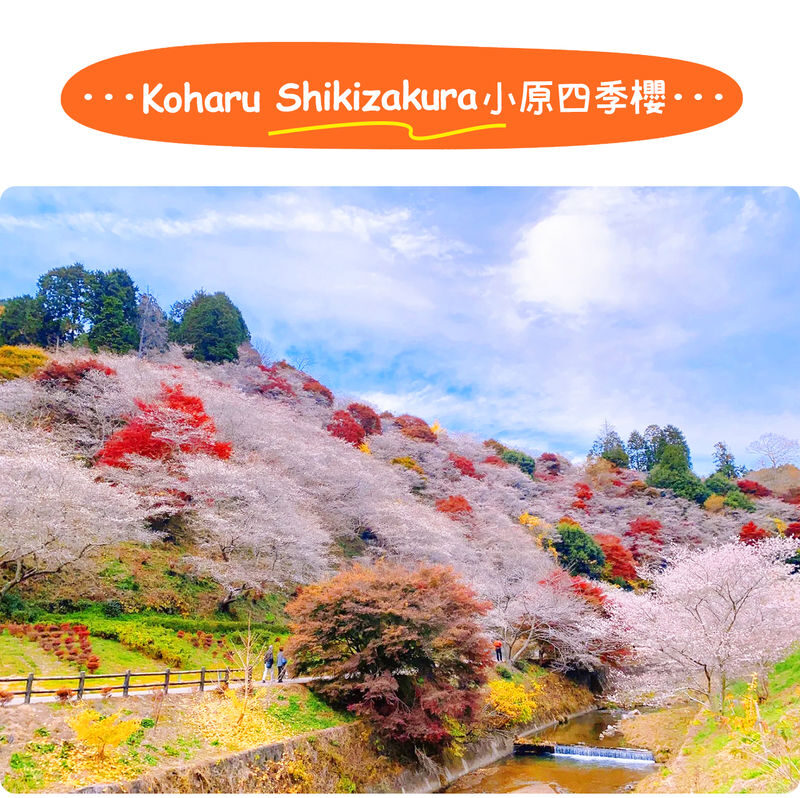
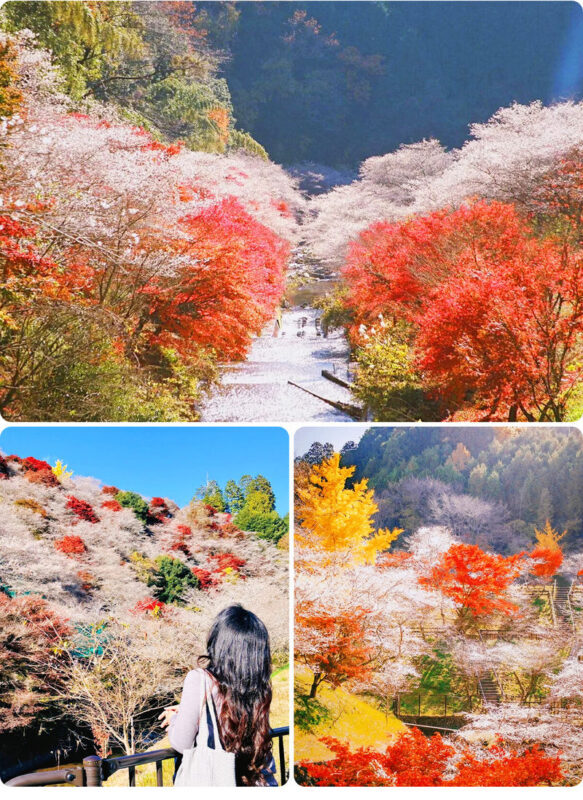
At Shikizakura Park, in Toyota City, Aichi Prefecture, you get a chance to see cherry blossoms and fall leaves in the same season. Shikizakura is a hybrid involving Mamezakura and Edo Higan varieties. Unlike the familiar Somei Yoshino, it flowers in spring and again in autumn, with its main autumn bloom drawing attention to Obara.
The striking image is pink or white blossoms scattered among red maples. More than 10,000 Shikizakura trees are associated with the area, but bloom strength is weather-dependent. A warm autumn can delay or weaken the show, and the trees may only just be starting to flower when you visit. The area’s festival is given as November 16 to December 1, but those dates are an estimate, not a firm promise of peak bloom.
The scheduled stop is only 30 minutes, so think of this as a brief scenic visit rather than a long countryside walk. Local markets may be operating, adding a glimpse of everyday community life, but they are not guaranteed. If the blossoms are sparse, the visit can feel short; if the timing works, the unusual pairing makes this stop the tour’s most distinctive sight.
Korankei’s maples, bridges and evening lights
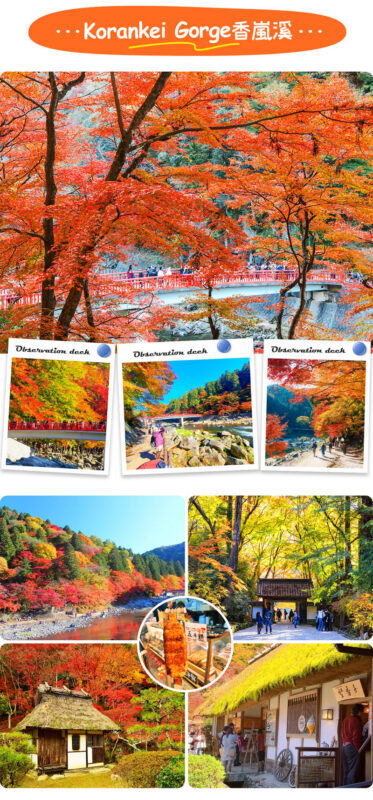
Korankei is the day’s longest stop, with about two hours in the standard schedule. It is widely known as a major autumn foliage destination in the Tokai region. The Tomoe River runs below thousands of maple trees, and paths connect viewpoints around Tsuki-bashi and Koran-bashi bridges. The color reflected in the water is the main event, with the bridges offering useful vantage points for photographs.
The advertised plan includes an evening illumination. This can make the final stop especially appealing: daylight shows the range of leaf colors, while lights can give the river and trees a different look after dusk. But do not treat illumination as certain. Operating details can change, and at least one tour participant found no lighting in place despite the advertised event. Check current official information close to your date if the light-up is a deciding factor.
Korankei is also where the schedule is most exposed to traffic. On busy weekends, vehicles can be held far from the main walking area, and the group may need to cover a substantial distance on foot. Some trips have involved a walk of roughly two kilometers from the drop-off point, with less time left at the gorge. On quieter weekdays, the journey can run more smoothly. If you are booking for a peak weekend, be ready for crowds, extra walking and a less predictable return.
The two-hour estimate is enough for a focused walk and a few scenic pauses if access is straightforward. Korankei is large, so use the map and meeting instructions your guide provides, and keep track of the return point and time. Asuke Yashiki, a traditional village house and handicraft site, may be an option if time allows, but do not count on a visit within the scheduled stop.
What the transport and schedule mean in practice
The bus leaves from Nagoya Station near the west exit, by the MINI STOP at the back entrance of BIC CAMERA. Be there at least 10 minutes before the stated 10 a.m. departure. The vehicle type depends on the group size, which can range from 4 to 48 people; seating requests may be considered, but seats are generally assigned on a first-come basis.
The day’s schedule lists Eihoji at 11 a.m., Shikizakura Park at 1:15 p.m. and Korankei at 3 p.m. These are estimates, not guarantees. Japanese rules limit vehicle use to 10 hours, so the guide may adjust timings according to road conditions. The return is expected between 8 and 9 p.m., but traffic and weather can push it later. Keep your evening free rather than booking dinner, a show or a train connection you cannot miss.
Meals and drinks are not included, and the listed itinerary does not set out a dedicated meal stop. Bring water and snacks, and use any food stalls or local markets available during the visits. Korankei has had street-food stalls in the area, but availability can depend on the day and season.
The tour offers Mandarin- and English-speaking options. The language distinction matters: some past English-language departures have been criticized for limited English explanations or communication that leaned heavily on Chinese. If clear spoken English is essential for you, confirm the language arrangement with the operator before booking. Helpful guides have also been singled out for maps, recommendations and support, but the level of commentary can vary.
Is the price worth a full autumn day?
At a starting price of $56.85, the strongest value is the transport. These three destinations are spread across rural areas, and reaching them all in one day without driving would take planning and could be difficult to coordinate. Here, you pay for round-trip transfers and a guide, then use each stop independently.
The price is less compelling if you expect a small-group excursion with extensive guided interpretation, a meal or guaranteed peak foliage. None of those is included. Group size can reach 48, and the guide’s role is mainly to manage the day and offer practical direction. The seasonal sights themselves are also variable: late color, weak blossoms or a cloudy day can change the experience without changing the departure plan.
You can cancel for a full refund at least 24 hours before the activity, subject to the stated policy. The tour requires at least four participants; if that minimum is not met, the activity may be cancelled with a rescheduled time or refund. Children aged 0 to 2 can join free if they do not need their own seat. Children aged 3 and up pay the adult rate. Child seats are not available.
Who should book this autumn day trip?
I would choose this tour if you are staying in Nagoya, do not want to drive, and would rather see three seasonal spots in one organized day than make one place the focus. It suits flexible visitors who are happy to walk at their own pace, accept a busy shared vehicle and understand that autumn color is never exact to the calendar.
It is less suitable if you need a tightly timed return, want a quiet visit, or expect the guide to provide detailed English commentary throughout. For the best chance of seeing the intended mix, check recent foliage and bloom conditions before booking, avoid the busiest dates if your schedule allows, and bring warm layers for Korankei after dark. Book it for the combination and convenience, not a promise that every tree will be at its peak.
Tiger Creek Mountain Eihoji Temple & Obara Shikizakura & Korankei Autumn Leaves Day Trip
“The itinerary was good, the weather just happened to be cloudy. If there was a little sunshine, the scenery would be better. The itinerary was rich.”
FAQ
Where does the tour depart from?
It meets near Nagoya Station’s west exit, by the MINI STOP at the back entrance of BIC CAMERA. The address is CORE Meieki, 5-10 Tsubaki-cho, Nakamura Ward, Nagoya.
How long is the tour?
The tour is scheduled for about 10 hours, departing around 10 a.m. and returning between 8 and 9 p.m. Traffic and weather can affect the actual return time.
How much time is scheduled at each stop?
The planned visits are about one hour at Eihoji Temple, 30 minutes at Shikizakura Park and two hours at Korankei. The guide may adjust the schedule to account for conditions.
Is the Korankei illumination guaranteed?
No. An evening illumination is part of the advertised seasonal plan, but operating conditions can change. Check current information before booking if the light-up is important to you.
Are meals included?
No. Meals and beverages are not included. The itinerary does not specify a dedicated meal stop, so bringing snacks and water is sensible.
What languages are available?
The package options are Mandarin-speaking and English-speaking tours. If you need English commentary, confirm the arrangements with the operator, as the level of English communication may vary.
Can young children join?
Children aged 0 to 2 can join free if they do not occupy a separate seat. Children aged 3 and older pay the adult rate. Child seats are not available.
What happens if the foliage or blossoms are not at their peak?
The tour is scheduled to operate even if the flowers or autumn leaves have not reached their best viewing point. Seasonal conditions depend on weather, and refunds are not issued solely because the blooms or foliage are less impressive than expected.