
Tokyo has more restaurants than any other city on earth. Somewhere around 160,000, depending on who’s counting and whether you include the vending-machine ramen spots that seat four people in a basement. That number sounds like it should make choosing easy — more options, more chance of finding something good. In practice, it makes things harder. You’ll walk past fifty restaurants in ten minutes and have no idea which one is worth stopping at. The Michelin guide hands out more stars in Tokyo than in Paris, but some of the best meals I’ve had here cost ¥900 and came from a guy working alone behind a counter with no signage.
The food culture here operates on a different set of rules. Restaurants tend to do one thing. A ramen shop makes ramen. A tonkatsu place makes tonkatsu. A sushi counter makes sushi. The idea of a menu with pasta, burgers, salads, and curry would strike most Japanese chefs as absurd. This specialization is why the quality floor is so high — when you’ve been making the same dish for thirty years, you get very good at it or you go out of business.
I’ve organized this by food type rather than neighborhood because that’s how eating in Tokyo actually works. You don’t decide “I want to eat in Shinjuku” and then figure out what’s there. You decide you want ramen, or sushi, or yakitori, and then you go to where the best version of that thing is. Some of this is from my own trips, some from people who know the city inside out. All prices are in yen because that’s what you’ll be paying, and I’ve kept the recommendations to places I’d actually send a friend to.
If you’re still planning the rest of your trip, the Tokyo travel guide covers logistics, neighborhoods, and transport. And if you’re building a full itinerary, the things to do in Tokyo page has the non-food stuff sorted.
- Ramen — The Dish You’ll Eat More Than Once
- Sushi — From ¥100 Conveyor Belts to ¥30,000 Omakase
- Izakayas — Japan’s Answer to the Pub
- Street Food — Where to Go and When to Show Up
- Depachika — Basement Food Halls That’ll Ruin You
- Convenience Stores — Seriously, Don’t Skip These
- Tonkatsu, Tempura, and Udon — The Holy Trinity of Fried and Boiled
- Wagyu and Yakiniku — Worth the Splurge, With Caveats
- Coffee and Kissaten — Old-School Calm and New-Wave Beans
- Fine Dining — If You’re Going to Splurge
- Cooking Classes and Food Tours — Go Deeper
- How to Order Food in Tokyo (Without Panicking)
- Common Mistakes — What to Avoid and What to Rethink
Ramen — The Dish You’ll Eat More Than Once
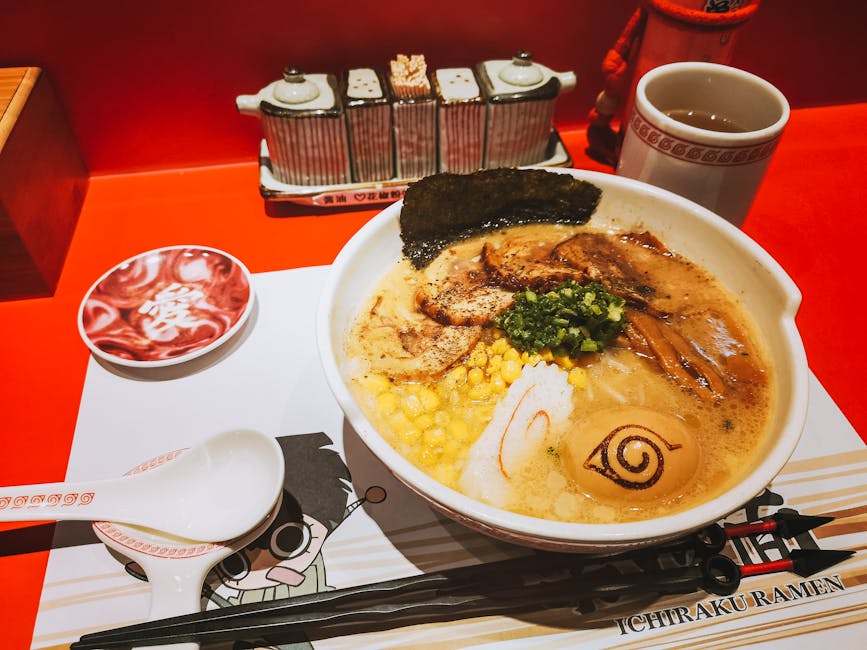
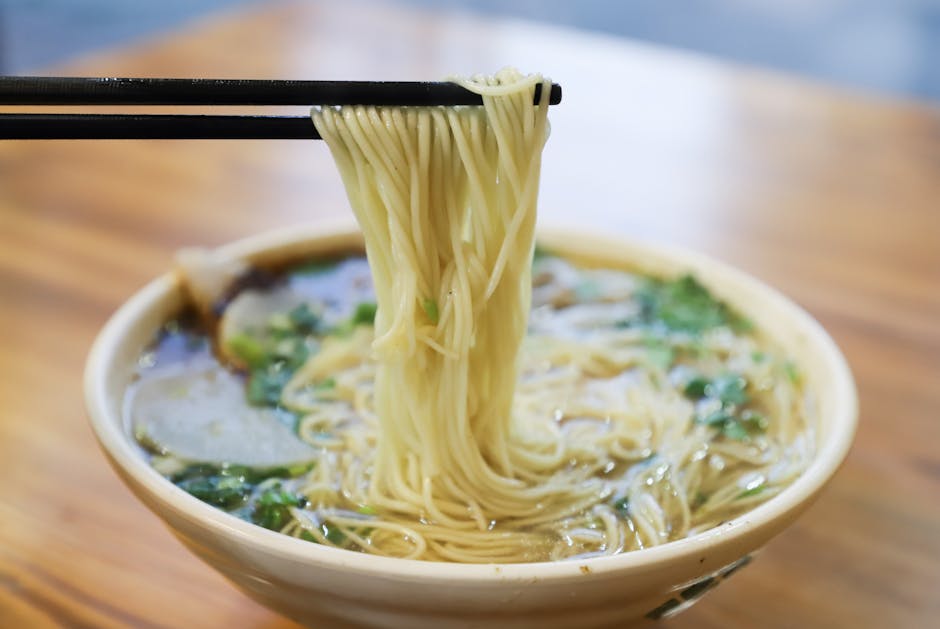
You will eat ramen in Tokyo multiple times even if you didn’t plan to. It’s everywhere, it’s cheap, it’s fast, and the variety is wide enough that you could eat a different bowl every day for a month and never repeat a style. The base broths break down into four main categories: tonkotsu (pork bone, thick and creamy), shoyu (soy sauce-based, lighter), miso (fermented soybean paste, hearty), and shio (salt-based, the most delicate). Then there’s tsukemen, which gives you cold noodles on a separate plate that you dip into a concentrated broth. Each style has its loyalists who’ll argue until closing time about which one’s best.
Most ramen shops in Tokyo use a ticket machine system. You’ll see a vending machine near the entrance with buttons showing different bowls, sometimes with pictures, sometimes just kanji. Put your money in, press the button for what you want, hand the ticket to the cook, and sit down. No waiter, no menu deliberation, no bill at the end. The whole transaction takes about forty seconds. If the machine is Japanese-only, look for the button with the highest price in the ¥900-1,200 range — that’s usually the house specialty with all the toppings.
Ichiran is the ramen chain that gets talked about constantly, and for good reason — not because the ramen is the best in Tokyo (it isn’t), but because the experience is unlike anything else. You order from a vending machine, then sit in a single-occupancy booth separated from other diners by wooden partitions. Your bowl arrives through a small window, served by hands you never see a face attached to. No conversation, no human interaction, just you and your tonkotsu ramen. It sounds antisocial and it is, beautifully so. After a long day of navigating crowds and noise, eating in total solitude behind a curtain feels like a small act of self-care. Multiple locations across Tokyo, and they’re all open late. Budget around ¥980 for a standard bowl.
Fuunji in Shibuya is where tsukemen fanatics go. The dipping broth is thick, almost gravy-like, and packed with a fish-forward intensity that hits you before the bowl even reaches the counter. There’s usually a line, but it moves fast because people eat and leave — this isn’t a lingering kind of place. The noodles are served cold and firm, and you dip them into the hot broth a few strands at a time. It rewires your understanding of what noodle soup can be. Around ¥1,000.
Rokurinsha at Tokyo Station’s Ramen Street (in the basement of the Yaesu side) is another tsukemen heavyweight, and the queues prove it. An hour wait is normal during peak times, and I’ve seen it stretch longer on weekends. The broth is rich, the noodles are thick, and the whole thing justifies the wait if you’re patient. But here’s something worth knowing: the same restaurant operates a location at Haneda Airport, past immigration in the international terminal. Same quality, same menu, and the line is usually nonexistent because most travelers don’t think to eat serious ramen in an airport. If you’re flying out of Haneda, skip Rokurinsha at Tokyo Station and have it as your farewell meal instead.
Afuri does something completely different from the heavy tonkotsu norm. Their signature bowl uses a light, clear broth finished with yuzu citrus — it’s bright, clean, and almost refreshing in a way that ramen usually isn’t. If you’ve been eating rich food for days and your stomach is staging a quiet protest, Afuri is the reset button. Several locations around the city. About ¥1,100.
Kisurin is worth tracking down if you like heat. Their tantanmen — the Japanese take on Sichuan dan dan noodles — uses a sesame paste broth that’s creamy, nutty, and builds a slow burn that doesn’t let up. It’s a different animal from the Chinese original, more refined and less aggressively spicy, but it scratches the same itch. Not a place you’ll stumble across accidentally, so mark it on your map.
A standard bowl of ramen in Tokyo runs ¥800 to ¥1,200 depending on toppings and the shop’s reputation. Sides like gyoza (fried dumplings) or rice add ¥200-400. It’s one of the best value meals in the city, and the quality at even a random neighborhood shop is typically better than dedicated ramen restaurants in most other countries.
Sushi — From ¥100 Conveyor Belts to ¥30,000 Omakase
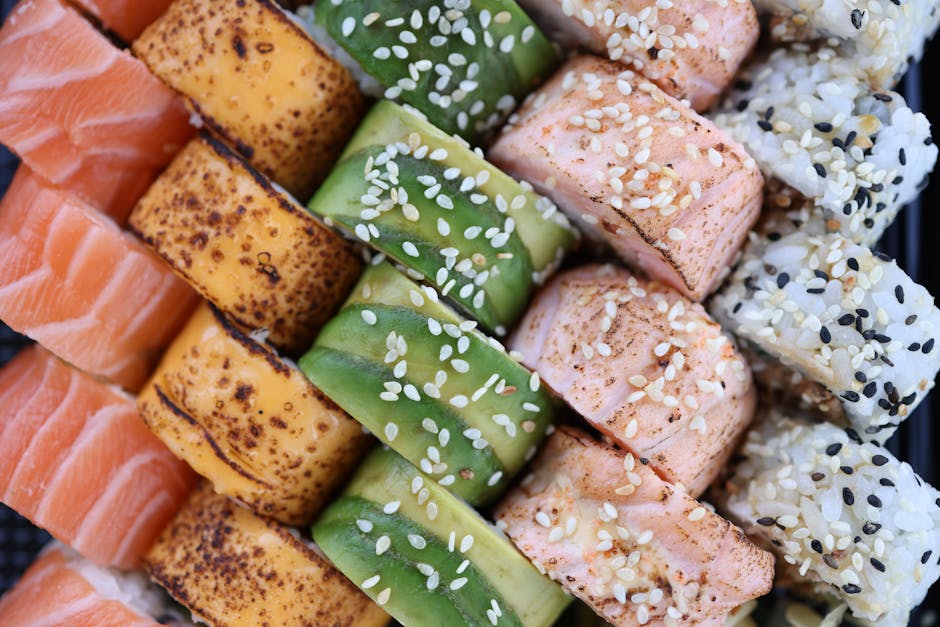
The range of sushi experiences in Tokyo is absurd. At one end, you’ve got conveyor belt chains where every plate costs ¥100 and the tuna is perfectly acceptable. At the other, there are omakase counters in Ginza where a single meal costs more than a night at a decent hotel and you need a reservation three months in advance. Both are legitimate ways to eat sushi in this city, and dismissing either one is a mistake.
Conveyor belt sushi (kaiten-zushi) is where most locals actually eat sushi on a regular basis. Sushiro and Kura Sushi are the two biggest chains, and they’re both genuinely good for the price. Plates start at ¥100 to ¥150 (some premium options go up to ¥500), and you’ll eat until you’re uncomfortable for under ¥2,000. The fish is fresh, the rice is properly seasoned, and the variety is massive — salmon, tuna, shrimp, eel, egg, and dozens of seasonal options cycling past on the belt. These chains use touch-screen ordering now too, so you can request specific plates that arrive on a separate express lane. Don’t sleep on the non-sushi items either: the miso soup, fried chicken, and desserts are all surprisingly solid.
Standing sushi bars (tachigui-zushi) are the middle ground that most visitors miss entirely. You stand at a counter, the chef makes pieces to order, and the quality is notably higher than conveyor belt while staying affordable. Expect ¥2,000 to ¥4,000 for a full meal. The Tsukiji and Toyosu areas have several excellent ones. The advantage of standing bars is speed and accessibility — no reservation needed, you eat at your own pace, and the turnover means there’s usually a spot within ten or fifteen minutes.
Omakase is the full experience. You sit at a counter, the chef selects and prepares each piece in front of you, and you eat it within seconds of it being made. The rice is body-temperature warm, the fish is cut to the chef’s specification, and the whole meal unfolds like a performance. At the top end — places with Michelin stars in Ginza — you’re looking at ¥20,000 to ¥30,000 or more per person, and reservations can require a Japanese phone number or a concierge at a high-end hotel to book on your behalf. But mid-range omakase exists too, in the ¥8,000 to ¥15,000 range, and the quality gap between mid-range and top-tier is smaller than the price gap suggests.
The Tsukiji Outer Market remains the default sushi destination for visitors, even after the inner wholesale market moved to Toyosu in 2018. The outer market survived the move and still has over 400 shops packed into narrow lanes, selling everything from fresh tuna to tamagoyaki (sweet egg omelette) to uni (sea urchin) bowls. It opens at 5am and most stalls close by 2pm, which means the best time to go is early morning. By 10am the popular sushi counters have lines that’ll eat an hour of your day. Come at 7am if you can manage it, eat standing at a counter, and you’ll be done before the tour groups arrive.
A note on wasabi: real wasabi — freshly grated from the root — tastes nothing like the green paste you get outside Japan. It’s floral, less harsh, and fades quickly instead of burning your sinuses. At any decent sushi counter in Tokyo, you’ll get the real thing. Don’t drown your fish in soy sauce either. The chef seasoned it already. A light touch is all you need, and at omakase counters, the chef will apply the soy sauce for you — just eat the piece as it’s served.
Izakayas — Japan’s Answer to the Pub
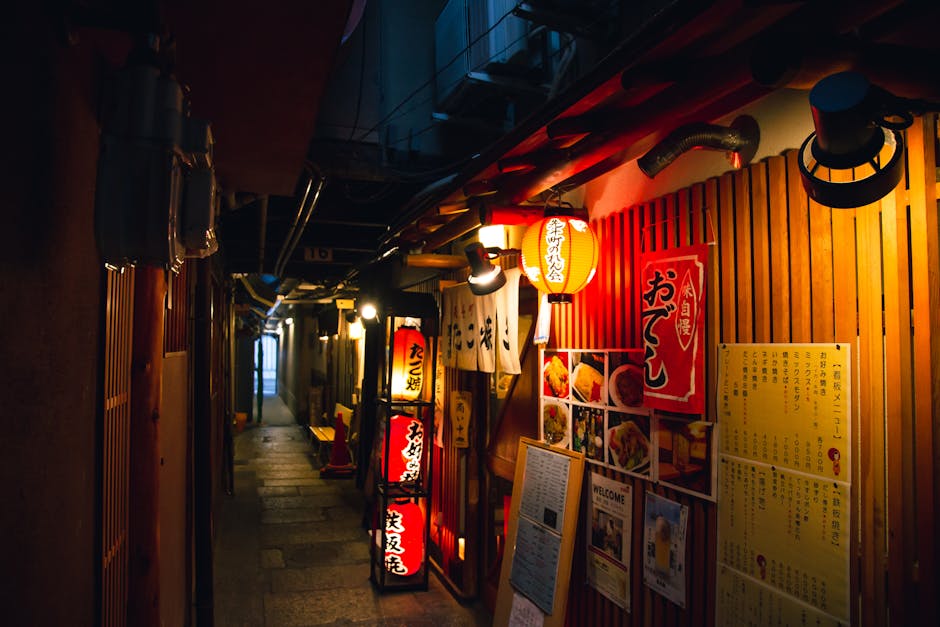
An izakaya is a Japanese drinking hotel that serves food, and it’s where a huge percentage of socializing happens in this country. Think of it as a pub crossed with a tapas bar: you order rounds of small dishes to share, you drink beer and highballs and sake, and you stay for a few hours. The food is designed to pair with alcohol — salty, fried, grilled, pickled — and the atmosphere ranges from rowdy salarymen blowing off steam to quiet neighborhood spots where the owner knows everyone by name.
Most izakayas charge a small table fee (otoshi) of ¥300 to ¥500 per person, which comes with a small appetizer you didn’t order. This isn’t a scam — it’s standard practice and it’s essentially a cover charge. Don’t argue about it. The appetizer is usually something simple: edamame, a small salad, pickled vegetables. Consider it the price of your seat.
Omoide Yokocho (Memory Lane) in Shinjuku is a cramped alley of tiny open-air stalls next to the train station, dating back to post-war black market days. Most seats are counter stools facing a grill, and the specialty is yakitori — chicken skewers cooked over charcoal. Every part of the chicken makes an appearance, including parts you’d rather not think about too carefully. Skewers run ¥100 to ¥200 each, beers are ¥400-500, and you can eat and drink yourself into a happy state for ¥2,000 to ¥2,500. You’ll smell like smoke and grilled chicken afterward, which is a badge of honor as far as I’m concerned. Go early — by 7pm the seats fill up and you’ll be hovering awkwardly waiting for someone to leave.
Yurakucho has a similar setup but with a different feel. Under the train tracks between Yurakucho and Shimbashi stations, there’s a stretch of izakayas that fill up with office workers from 5pm onward. It’s less tourist-oriented than Omoide Yokocho and cheaper, though the language barrier is higher. Point at what the person next to you is eating and hold up fingers for how many you want. It works every time. Budget ¥2,000-3,000 for food and a couple of drinks.
The all-you-can-drink deal (nomihoudai) is a fixture at chain izakayas. For ¥1,500 to ¥2,500 you get unlimited drinks for 90 minutes or two hours. The drink selection is usually beer, highballs, shochu, basic cocktails, and sometimes sake. The food is ordered separately, and many places offer an all-you-can-eat option too. It’s not fine dining, but it’s a solid deal if you’re trying to keep costs down while having a proper night out. Chains like Torikizoku (everything ¥350) are popular with younger crowds and budget-conscious locals.
If you’re after something more refined, look for izakayas with handwritten menus on wooden boards behind the counter. That’s usually a sign that the chef is buying fresh ingredients daily and cooking what’s good that day. These places are harder to find online and often don’t have English menus, but they’re where you’ll eat some of the most memorable food in Tokyo. Google Translate’s camera function pointed at a handwritten menu works better than you’d expect.
Street Food — Where to Go and When to Show Up
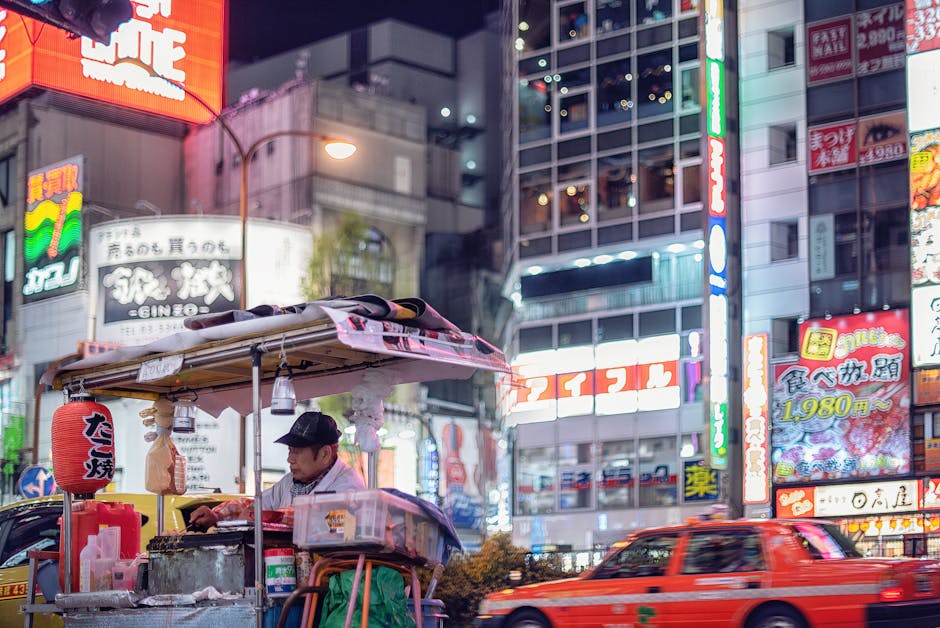
Tokyo isn’t a street food city the way Bangkok or Mexico City is. You won’t find vendors on every corner, and there’s actually a social norm against eating while walking (tabearuki) that most locals observe. Street food here concentrates in specific market areas and shopping streets, and knowing when to go matters almost as much as knowing where.
Tsukiji Outer Market is the most famous and the most rewarding if you time it right. Over 400 shops and stalls in a compact area, selling fresh seafood, grilled scallops, tamagoyaki, fresh fruit on sticks, and every form of processed fish product you can imagine. The key detail: it opens at 5am and the shutters start coming down around 2pm. The sushi counters develop serious lines by mid-morning, so arriving between 6am and 8am gives you the best ratio of food availability to crowd density. By noon on a weekend, it’s shoulder-to-shoulder and half the good stuff is sold out. Weekday mornings are substantially better.
Nakamise-dori in Asakusa is the 250-meter shopping street leading to Senso-ji temple, lined with around 90 stalls selling snacks and souvenirs. The signature items are Ningyo Yaki (small castella sponge cakes shaped like figures), Agemanju (deep-fried sweet buns that are better than they sound), Kibi Dango (chewy mochi dusted with kinako soybean powder), and freshly grilled Senbei (rice crackers brushed with soy sauce). I’ll be straight with you: it’s touristy and the prices reflect that. But the food itself is decent, the atmosphere is part of the Senso-ji experience, and Kibi Dango for ¥300 isn’t going to break anyone. Just don’t go expecting hidden local gems — this is a tourist street that’s been a tourist street for over a hundred years, and it leans into that role fully.
Near the temple, Asakusa Takomaru does takoyaki (octopus balls) with notably large octopus chunks — you actually taste the octopus instead of just batter. If you want the chain version, Gindaco is Japan’s most recognizable takoyaki brand, with an extra-crispy shell that sets it apart from the Osaka-style soft version. You’ll spot Gindaco in train station malls and shopping areas across the city.
Harajuku’s Takeshita Street is the youth culture epicenter, and the food matches the energy: colorful, photogenic, and slightly ridiculous. Marion Crepes has been the staple here for decades — thin crepes stuffed with cream, fruit, chocolate, and whatever else they can fold inside. Totti Candy Factory sells rainbow cotton candy the size of your torso, which is roughly 95% spectacle and 5% edible substance, but the Instagram tax is the point. CroquantChou ZakuZaku does custard cream puffs with a crunchy shell that are legitimately good and worth the ¥350 even if you have no intention of photographing them.
Ameyoko in Ueno is the sleeper pick. About 400 shops crammed under the Yamanote Line tracks between Ueno and Okachimachi stations, originally a post-war black market like Omoide Yokocho. During the day it’s a discount shopping street — cheap cosmetics, clothing, dried goods. But in the late evening, after the salarymen clock out and the shops transition, it becomes a proper street food destination. Grilled seafood, kebabs, cheap beer, and an atmosphere that’s more local than anywhere else on this list. If you’re in Ueno after 7pm and haven’t eaten, head to Ameyoko instead of a sit-down restaurant.
Depachika — Basement Food Halls That’ll Ruin You
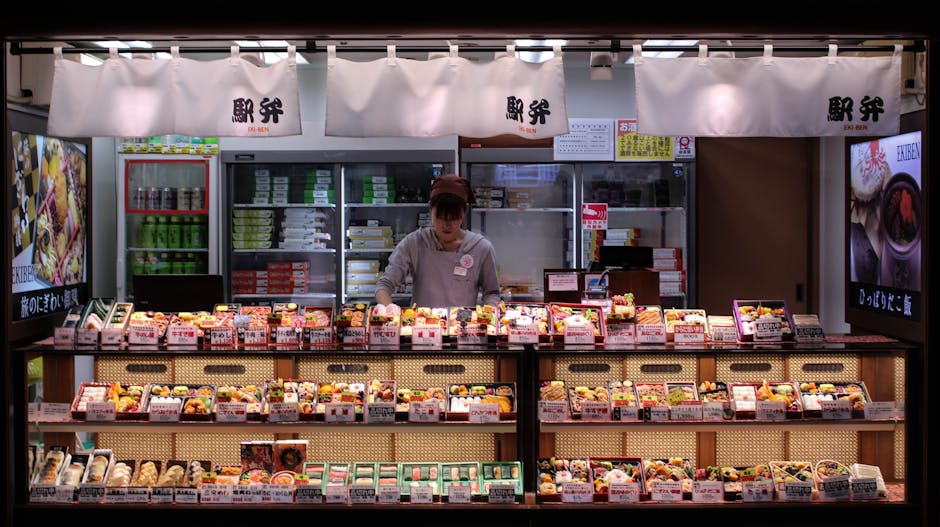
Every major department store in Tokyo has a basement floor (or two) dedicated entirely to food, and they’re staggering. Depachika — a mashup of “department” and “chika” (basement) — is where Tokyo’s obsession with food presentation reaches its logical extreme. Perfectly arranged bento boxes, wagashi (traditional sweets) that look like miniature sculptures, fresh-baked pastries, sliced fruit that costs more than a meal, and prepared foods from some of the city’s best restaurants packaged for takeaway.
Isetan Shinjuku is the gold standard. The basement food hall here is a destination in itself — I’ve watched people spend forty minutes just browsing before buying anything. The quality is absurd across the board, from the tonkatsu sandwiches to the matcha desserts to the fresh sushi counters. Prices are department-store prices, which means higher than a restaurant in some cases, but the convenience and variety make it worth at least one visit.
Daimaru Tokyo Station is the practical choice because you’re probably passing through the station anyway. The basement level has an enormous selection of bento boxes, pastries, and prepared foods designed for train journeys. Grab a bento and an Asahi here before boarding a shinkansen and you’ll eat better on the train than most people do in restaurants.
The discount hack: depachika stores mark down prepared foods 30-60 minutes before closing time. Stickers go on the bento boxes, the sushi trays, the salads — anything that won’t keep until tomorrow. Discounts of 20% to 50% are standard. Closing times vary by store but most department stores shut their food halls around 8pm to 8:30pm, which means 7pm to 7:30pm is the sweet spot for reduced prices. It’s not a secret — you’ll see locals hovering near the prepared food sections waiting for the stickers to appear — but it’s a strategy that genuinely works.
Convenience Stores — Seriously, Don’t Skip These
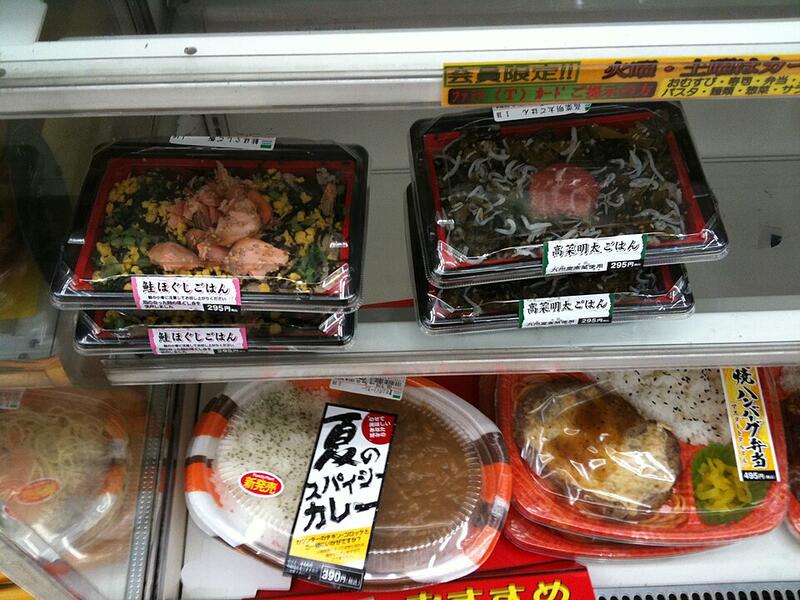
This is where I lose people who’ve never been to Japan. The idea that a convenience store — 7-Eleven, Lawson, FamilyMart — could serve food worth writing about sounds ridiculous if your reference point is gas station hot dogs and stale sandwiches. Japanese convenience stores are a different species entirely. The food is made fresh, restocked multiple times daily, and held to quality standards that would embarrass plenty of actual restaurants in other countries.
The egg salad sandwich at 7-Eleven is the gateway drug. Soft white bread with the crusts removed, filled with a creamy egg salad that somehow tastes better than it has any right to at ¥250. It’s become a cult item among visitors, and I get it — I’ve bought one at 11pm on a Tuesday standing in a fluorescent-lit shop near my hotel and wondered why nobody else in the world has figured this out. Lawson’s version is nearly as good, and FamilyMart has its own take with a slightly different egg texture.
Onigiri (rice balls) are the other staple. Triangles of rice wrapped in nori (seaweed) with fillings like salmon, tuna mayo, umeboshi (pickled plum), or mentaiko (spicy cod roe). They cost ¥120 to ¥200 each and they’re a perfectly acceptable breakfast, lunch, or late-night snack. The wrapping has a clever design that keeps the nori crisp until you open it — there’s a specific way to pull the tabs that you’ll mess up the first time and master by the third.
Fried chicken (karaage) at Lawson and FamilyMart is absurdly good for convenience store food. Lawson’s Karaage-Kun in the original and spicy varieties is a Japanese institution. Hot, crispy, juicy, and available at 3am when nothing else is open. FamilyMart’s Famichiki (a breaded chicken fillet) is the other contender, and arguing about which is better is a legitimate pastime.
Beyond the highlights: nikuman (steamed pork buns) in winter, cold soba noodles in summer, decent sushi trays, surprisingly good pasta, drinkable coffee from the in-store machines, and an ice cream selection that puts most supermarkets to shame. A convenience store meal for under ¥500 that leaves you satisfied is completely normal here, and nobody will judge you for eating three meals a day from 7-Eleven. Some of us have done exactly that and felt no shame at all.
Tonkatsu, Tempura, and Udon — The Holy Trinity of Fried and Boiled
These three dishes are pillars of Japanese cuisine and they each deserve dedicated restaurant visits rather than being afterthoughts on an izakaya menu. Before diving in, a quick vocabulary primer that’ll help you navigate menus everywhere: katsu means deep-fried cutlet, yaki means grilled, don means rice bowl, and men means noodle dish. So gyudon is beef rice bowl, tonkatsu is fried pork cutlet, and yakitori is grilled chicken. Once these click, half the menus in Tokyo start making sense.
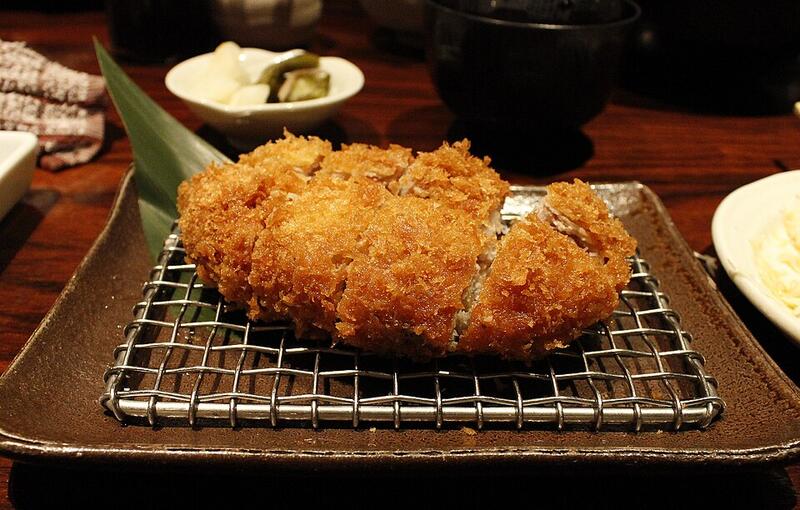
Tonkatsu is a thick pork cutlet, breaded in panko and deep fried until the outside is golden and shatteringly crisp while the inside stays juicy. It’s served with shredded cabbage (unlimited refills at most places), karashi mustard, and a sweet-savory tonkatsu sauce. The pork matters enormously — places that use kurobuta (heritage black pork from Kagoshima) or other premium breeds charge more but the difference in flavor and texture is immediate. A good tonkatsu set with rice, miso soup, and cabbage runs ¥1,500 to ¥2,500 at a dedicated restaurant. There’s a reason this dish has survived unchanged for over a century.
Tempura is vegetables and seafood coated in a light batter and deep fried, and the gap between mediocre tempura and excellent tempura is a canyon. Bad tempura is greasy and heavy. Good tempura is so light it barely registers as fried food — the batter is thin, crisp, and the ingredient inside tastes cleaner than if you’d eaten it raw. High-end tempura restaurants (tempura-ya) seat you at a counter where the chef fries each piece individually and places it on your plate seconds after it leaves the oil. Course-based tempura dinners run ¥5,000 to ¥15,000 at the better places, but lunch sets at solid mid-range shops come in around ¥1,500 to ¥3,000.
Udon is thick wheat noodles in broth, and it’s the comfort food that Tokyo does brilliantly without getting much international attention. The noodles should be chewy with a slight bounce, the broth should be clean-tasting, and the toppings are usually simple — tempura pieces, spring onion, a raw egg. Speaking of which: Udon Shin has developed a near-fanatical following for a dish that sounds like it shouldn’t work. Their signature udon comes with a raw egg, parmesan cheese, butter, pepper, and a strip of bacon tempura. It’s been called the cacio e pepe of Japan, and that comparison isn’t as absurd as it sounds — the egg and parmesan create a rich, creamy coating on the noodles that’s Italian in logic and Japanese in execution. Cash only, and they’ve moved to a ticketing system now because of demand. Go before peak lunch hours if you want to avoid a wait.
A note on Japanese rice, since it appears alongside all of these: it’s short-grain, stickier than what you’re probably used to, and has a slightly sweet taste that changes how every dish built around it works. It’s not a background carb — it’s an active ingredient. This is why gyudon from a chain like Yoshinoya for ¥500 can be a satisfying meal: the rice carries its weight.
Wagyu and Yakiniku — Worth the Splurge, With Caveats
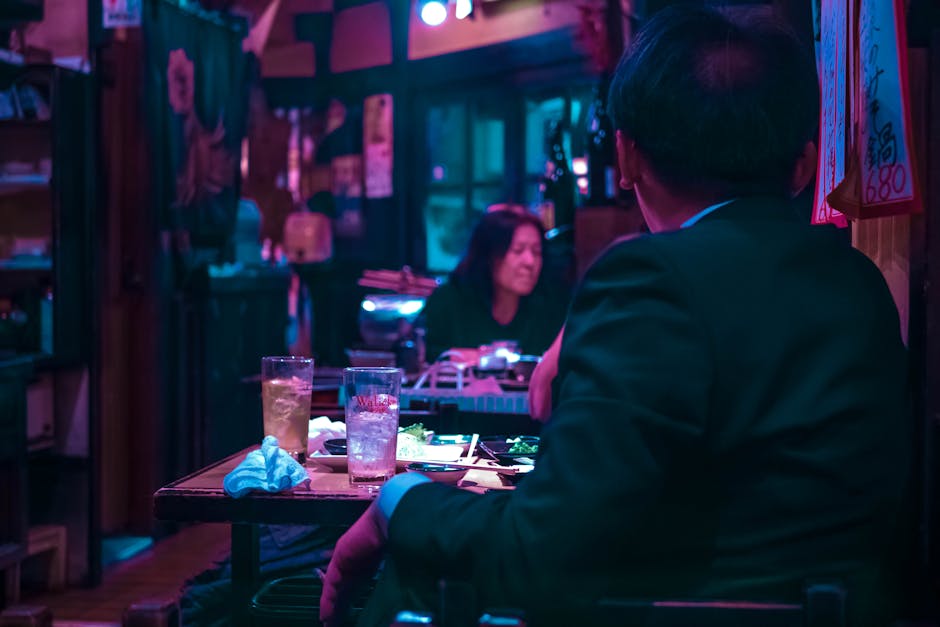
Wagyu in Tokyo ranges from genuinely transcendent to wildly overpriced tourist bait, and telling the difference from outside is hard. The word “wagyu” means Japanese beef, but within that category there are grades (A5 being the highest), regional varieties (Kobe, Matsusaka, Omi), and massive quality variation. Not every restaurant advertising wagyu is serving the real thing at the grade they claim, especially in tourist-heavy areas.
Yakiniku — Japanese BBQ where you grill thin slices of meat on a tabletop grill — is the most accessible way to eat wagyu without committing to a ¥30,000 tasting menu. Budget yakiniku places offer all-you-can-eat deals for ¥3,000 to ¥5,000 where the meat quality ranges from decent to forgettable. Mid-range yakiniku restaurants charge per plate, with premium cuts running ¥1,500 to ¥4,000 each, and this is where the value sweet spot is — you can order two or three standout cuts, some cheaper options, and eat incredibly well for ¥8,000 to ¥12,000 per person.
Then there’s the top end. Nakahara is a yakiniku restaurant run by a self-taught butcher who works exclusively with Omi beef — one of Japan’s three most prestigious wagyu breeds — and serves a tongue-to-tail tasting menu that uses every part of the animal. It finishes with a wagyu katsu sando (cutlet sandwich) that reportedly makes grown food critics go quiet. People who’ve eaten their way through dozens of Tokyo’s best restaurants call this the best steak experience they’ve had, full stop. Reservations are available online, which is unusually convenient for a restaurant at this level. Expect to pay accordingly — this is a special occasion meal, not a Tuesday dinner.
For context on pricing: a decent yakiniku dinner for two with drinks comes in around ¥15,000 to ¥25,000 at a good mid-range place. A premium tasting menu at a place like Nakahara can run ¥30,000 to ¥50,000 per person. At the absolute top (Michelin-starred wagyu kaiseki), you’re looking at ¥50,000 and above. Whether that’s worth it depends entirely on how much you care about beef and how much disposable income you’ve brought to Tokyo. I won’t pretend the expensive stuff doesn’t taste better — it does — but the mid-range yakiniku experience is where most people will find the best balance of quality to cost.
Coffee and Kissaten — Old-School Calm and New-Wave Beans
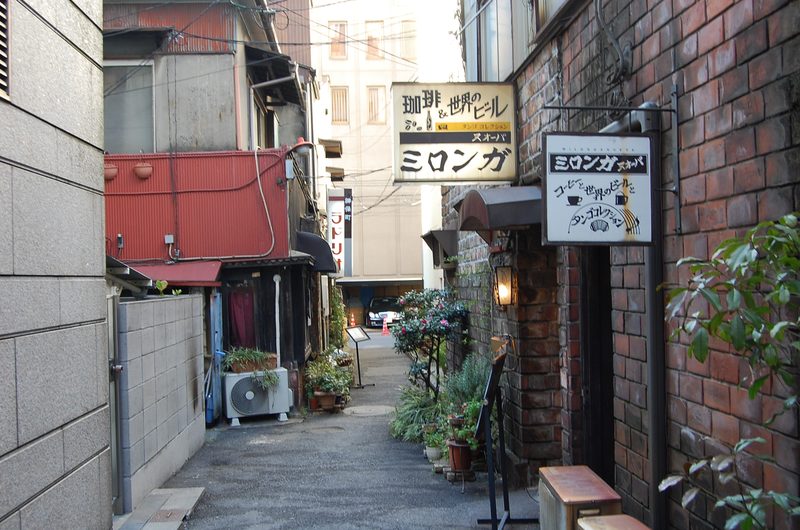
Tokyo’s coffee culture splits into two distinct worlds that coexist without much overlap. On one side, you’ve got kissaten — traditional Japanese coffee houses that have been around for decades, sometimes longer. Dark wood, velvet seats, an older clientele, hand-dripped coffee served in china cups, and an atmosphere that feels like time slowed down around 1975 and nobody bothered to speed it back up. Kissaten serve thick toast (ogura toast with sweet red bean paste is the classic pairing), sometimes sandwiches or light meals, and the coffee is usually a dark-roasted blend made with cloth-drip or siphon methods. It’s a different drink from modern specialty coffee — bolder, sometimes borderline bitter, and served with a reverence that makes you feel like you should put your phone away.
The other side is the third-wave specialty coffee scene, which has boomed in Tokyo over the past decade. Switch Coffee in Meguro is a standout — small, precise, obsessive about sourcing and roasting. The kind of place where the barista asks where you want your extraction dialed and you pretend to understand the question. It’s excellent, and it represents the Japanese approach to specialty coffee: technical perfection pursued with an intensity that borders on religious.
Fuglen is the Norwegian import that’s become a Tomigaya institution. During the day it’s a meticulous specialty coffee shop. At night it transitions into a cocktail bar, which is a combination that sounds forced but actually works because the same attention to detail that produces a good pour-over also produces a good Negroni. The space is small, the furniture is mid-century Scandinavian, and the whole thing feels like a very specific Venn diagram of Norwegian design and Japanese precision. Coffee during the day, cocktails after dark — it’s worth visiting in both modes.
While we’re on drinks: SG Club in Shibuya belongs on any serious drinking itinerary. It appears regularly on the World’s 50 Best Bars list, and it’s split across multiple floors with different personalities. Upstairs is Guzzle — casual, easy-drinking cocktails, standing room. Downstairs is Sip — darker, quieter, and the cocktails get more inventive and complex. It’s a clever setup that lets you choose your own intensity level.
Ahiru Store in Tomigaya is a natural wine bar that’s earned a devoted following. It’s small, doesn’t take reservations, and fills up fast — the standard advice is to arrive before it opens and join the queue. The wine list changes constantly and the food is excellent, simple French-Japanese plates designed to pair with whatever they’re pouring. If natural wine is your thing, this is one of Tokyo’s best.
And if you find yourself in Golden Gai (which you will, if you follow the things to do recommendations), Pitou is a natural wine bar on the second floor of one of those narrow buildings. It’s tiny, the pour is good, and drinking wine in Golden Gai feels like a small rebellion against the whisky-and-beer norm of the surrounding bars.
For something completely different: Azuki to Kori is a kakigori (shaved ice) shop run by a former pastry chef from Florilege, one of Tokyo’s most respected fine-dining restaurants. Seven seats. Seasonal flavors that change with whatever produce is at its peak. It sounds like dessert, and it is, but the technique and ingredient quality put it in a different category from the shaved ice you’ve had elsewhere. Worth a detour in summer.
Fine Dining — If You’re Going to Splurge
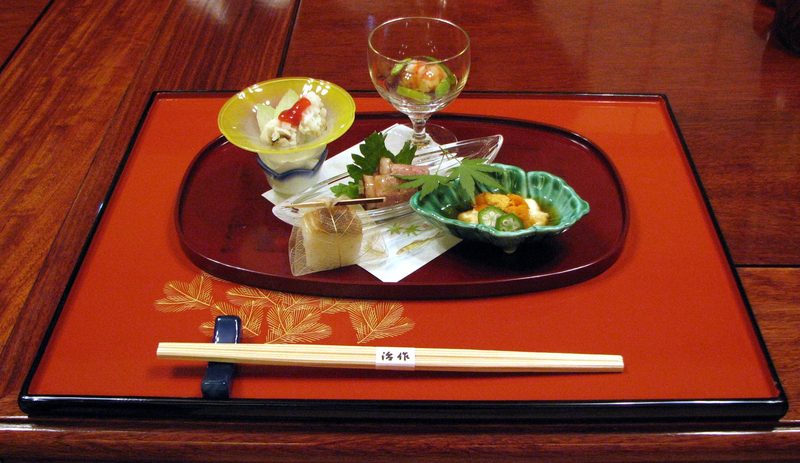
Tokyo has more Michelin-starred restaurants than any city in the world, and while chasing stars isn’t the best strategy for eating well here (more on that in the mistakes section), a few places deserve mention because they offer something you genuinely can’t get anywhere else.
Den holds two Michelin stars and a permanent spot on the World’s 50 Best Restaurants list, but what makes it memorable isn’t the accolades — it’s the personality. Chef Zaiyu Hasegawa injects humor into kaiseki (traditional multi-course) dining in ways that feel playful rather than gimmicky. The “Dentucky Fried Chicken” course is stuffed chicken wings served in a literal takeaway box. The Den salad arrives with a smiley face carved into a carrot slice. Every dish is technically flawless but also genuinely fun, which is rare at this level. Reservations are hard to get but possible if you plan ahead. Budget ¥20,000 to ¥30,000 per person.
The broader point: Tokyo’s fine dining scene rewards curiosity more than brand recognition. A counter seat at an unnamed eight-seat restaurant in a Shibuya backstreet where the chef’s been perfecting one style of cooking for twenty years will often be a better meal than a famous name charging double. Ask your hotel concierge, check Tabelog (more on that below), and don’t assume that the restaurants with the most English-language coverage are automatically the best.
Cooking Classes and Food Tours — Go Deeper
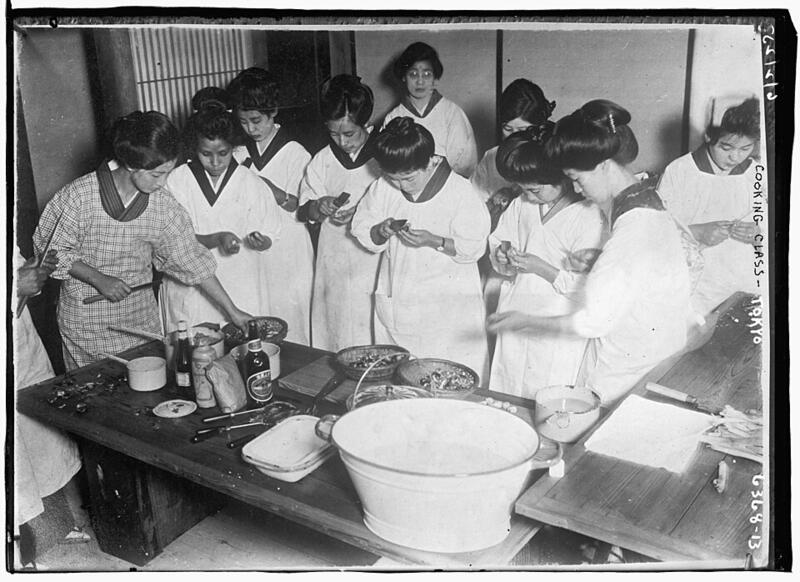
Eating your way through Tokyo is one thing. Understanding what you’re eating is another, and it genuinely makes every subsequent meal better. I’d recommend doing a food tour or cooking class early in your trip — ideally on day one or two — because the context you pick up transforms how you approach every restaurant, market, and convenience store for the rest of your stay.
Food tours run by locals will take you through neighborhoods you’d never navigate on your own, into restaurants you’d walk past without a second glance, and explain the history and technique behind what you’re tasting. The good ones are opinionated and specific rather than generic “this is sushi, this is ramen” overviews.
I’ve reviewed both extensively:
- Tokyo’s 15 best food tours — which to choose breaks down the options by neighborhood, budget, and focus (street food vs. high-end vs. specific cuisines).
- The top 15 Tokyo cooking classes covers everything from ramen-making workshops to sushi courses to home-style Japanese cooking.
If you only do one, do a food tour. If you have time for both, the cooking class is the one you’ll still be thinking about months later when you’re trying to replicate the dashi at home.
How to Order Food in Tokyo (Without Panicking)
The ordering systems in Tokyo restaurants are different from what you’re used to, but they’re consistent once you know the patterns. Most of your confusion will evaporate after the first day.
Ticket machines (kenbaiki) are everywhere — ramen shops, gyudon chains, curry houses, udon places. You’ll see a vending machine near the door with buttons, sometimes with photos, sometimes just Japanese text. Insert coins or bills (most accept ¥1,000 notes, some take cards now), press the button for what you want, and take the ticket that pops out. Hand it to the staff when you sit down. If you can’t read the menu, the top-left button is often the house specialty, and the one that costs ¥100-200 more than the cheapest option usually adds an egg or extra toppings. Or just use Google Translate’s camera mode — point your phone at the machine and it’ll give you a rough translation in real time.
Tabelog is Japan’s equivalent of Yelp, and understanding its rating system will save you from bad decisions and unexpected great ones. Here’s the crucial thing most visitors miss: the Japanese rate restaurants very strictly. A 3.0 out of 5 on Tabelog isn’t mediocre — it’s actually good. A 3.5 is excellent. A 4.0 means the place exceeds all reasonable expectations. And a 5.0 is essentially mythological — I’m not sure it exists outside of temporary promotional distortions. Don’t dismiss a restaurant because it has a 3.2 rating. In the Japanese scoring system, that means reliably good food at fair prices, which is exactly what you want for everyday meals.
Google Translate camera mode is your Swiss army knife for menus. Open the app, tap the camera icon, point it at a menu, and it’ll overlay translations in real time. The translations are rough — “fragrant burnt soy sauce noodle of passion” might mean shoyu ramen — but they’re good enough to figure out what protein you’re ordering and whether something contains ingredients you’re allergic to. Download the Japanese language pack before your trip so it works offline.
Useful food terms to recognize on menus:
- Katsu — deep-fried cutlet (tonkatsu = pork cutlet, chicken katsu = chicken cutlet)
- Yaki — grilled (yakitori = grilled chicken, yakiniku = grilled meat)
- Don — rice bowl (gyudon = beef bowl, katsudon = cutlet on rice, tendon = tempura on rice)
- Men — noodle dish (ramen, tsukemen, tanmen)
- Age — deep fried (karaage = fried chicken, agedashi = fried in dashi broth)
At sit-down restaurants, you’ll often see a button on the table to call a server (no need to wave or make eye contact). Press it, a chime sounds, someone comes over. When you’re done, say “okaikei” (the check) or make an X with your fingers — both universally understood. Most restaurants in Tokyo still prefer cash, though card acceptance has improved significantly. Always carry at least ¥5,000 in cash for smaller places.
Common Mistakes — What to Avoid and What to Rethink
Tipping. Don’t. In any context. Not at restaurants, not at bars, not for taxi drivers, not for hotel staff. Tipping in Japan isn’t just unnecessary — it can be confusing or mildly offensive. The price on the menu is the price you pay, and excellent service is considered a baseline expectation, not something that needs financial incentive. I’ve seen travelers leave money on a restaurant counter and have the server chase them down the street to return it. Save yourself the awkwardness.
Eating while walking. It’s not illegal, but it’s considered rude by most Japanese people, and you’ll notice that locals almost never do it. At street food markets like Tsukiji and Nakamise-dori, eating near the stall where you bought the food is fine. Walking down a random sidewalk with a crepe or an onigiri is where it gets iffy. The practical approach: buy your food, find a spot to stand or sit near where you bought it, eat it there, dispose of the wrapper (finding trash cans is its own adventure), and then move on.
Chasing Michelin stars instead of eating like a local. Tokyo has the most Michelin stars of any city, and plenty of those restaurants deserve every one. But the guide was designed for a French dining context and doesn’t always map well onto Japanese food culture. Some of the best meals in Tokyo happen at ¥1,000-a-bowl ramen shops, ¥300-a-skewer yakitori stalls, and ¥500 gyudon counters that Michelin would never look at twice. Use the guide as one input among many, not as your sole authority on where to eat.
Dismissing 3-star Tabelog ratings. I mentioned this in the ordering section but it’s worth repeating because it trips up so many visitors. If you filter Tabelog for 4-star-and-above only, you’ll miss 95% of the genuinely good restaurants in Tokyo. The cultural context matters: Japanese diners reserve high ratings for experiences that profoundly exceed expectations. A 3.2 means consistently good food and service. In any other country’s rating system, that would be a 4 out of 5.
Only eating in tourist areas. Shinjuku, Shibuya, Asakusa, and Ginza have plenty of great food, but they also have a higher concentration of tourist-trap restaurants with inflated prices and phoned-in cooking. The residential neighborhoods — Koenji, Shimokitazawa, Kagurazaka, Yanaka — often have better restaurants at lower prices because they’re feeding locals, not visitors. If you’ve got a free evening with no plans, pick a random station on the Chuo Line, walk around for fifteen minutes, and eat at whatever place has the most Japanese businesspeople inside. You’ll rarely be disappointed.
Skipping convenience stores out of snobbery. I’ve talked to travelers who spent two weeks in Tokyo and never bought food from a 7-Eleven because they assumed it would be low quality. They missed out. The egg salad sandwiches, the onigiri, the fried chicken, the seasonal limited-edition items — they’re all worth trying, and they’re available 24 hours a day at a fraction of restaurant prices. At minimum, grab breakfast from a convenience store on at least one morning. You’ll either confirm that it’s not for you or pick up a habit that’ll save you time and money for the rest of your trip.
Not carrying cash. Tokyo has moved toward card payments faster than the rest of Japan, but plenty of small restaurants, ramen shops, and market stalls still operate cash-only. The ticket machine at your favorite ramen spot might not take cards. The yakitori stall in Omoide Yokocho definitely won’t. Carry ¥10,000 to ¥20,000 and replenish at 7-Eleven ATMs (they accept foreign cards reliably) when you run low.
Planning every meal. Leave room for accidents. Some of the best food I’ve had in Tokyo came from walking into a random place because it smelled good, or because I saw a line of salarymen at lunch and figured they probably knew something I didn’t. Over-scheduling your meals means you’ll walk past incredible things you can’t stop for because you’ve got a reservation across town in forty-five minutes. Plan your top three or four must-visit spots, and let the rest happen on its own.
For the official tourism perspective on dining in Tokyo, the Go Tokyo site has up-to-date listings and seasonal food event information.