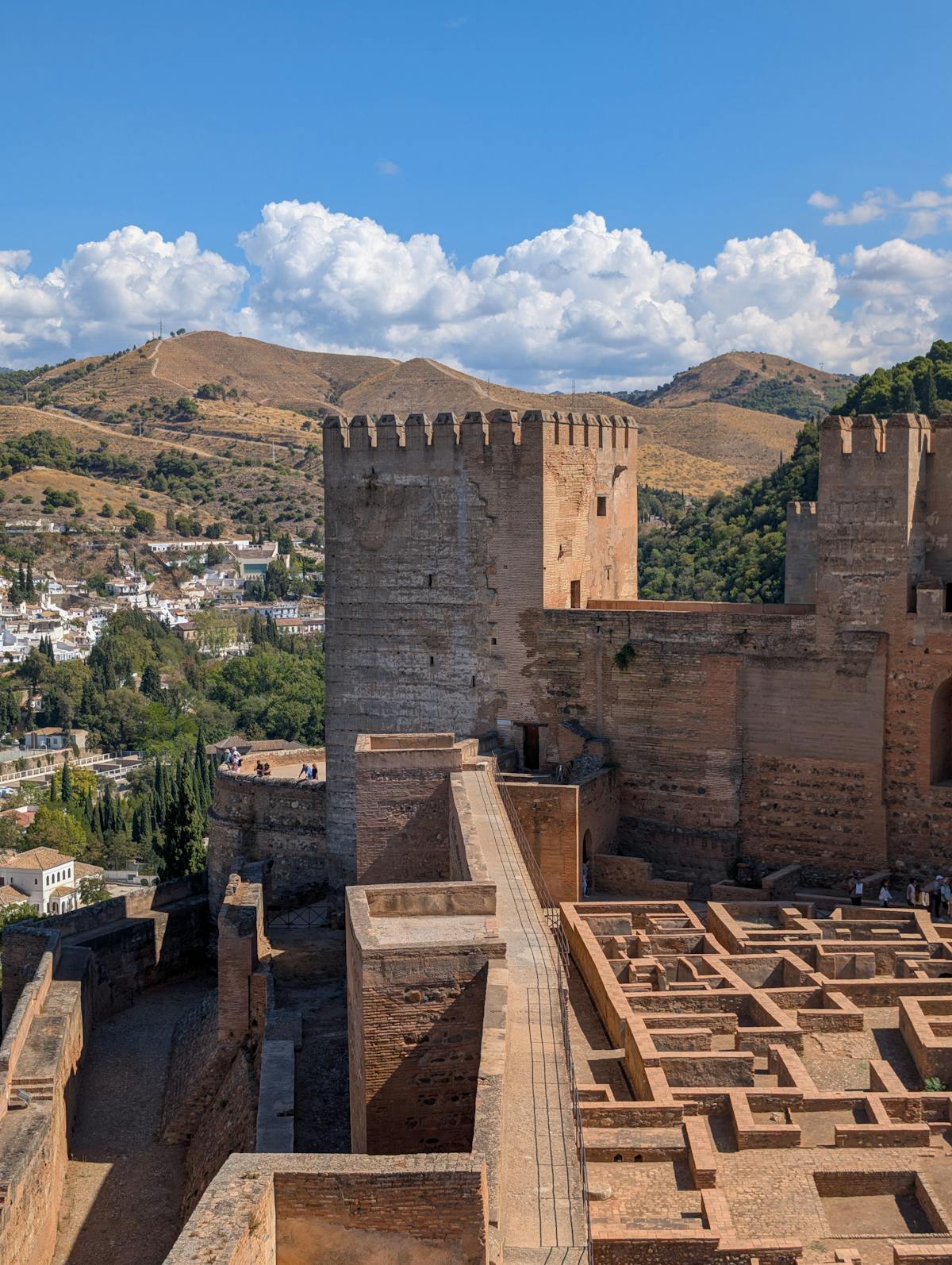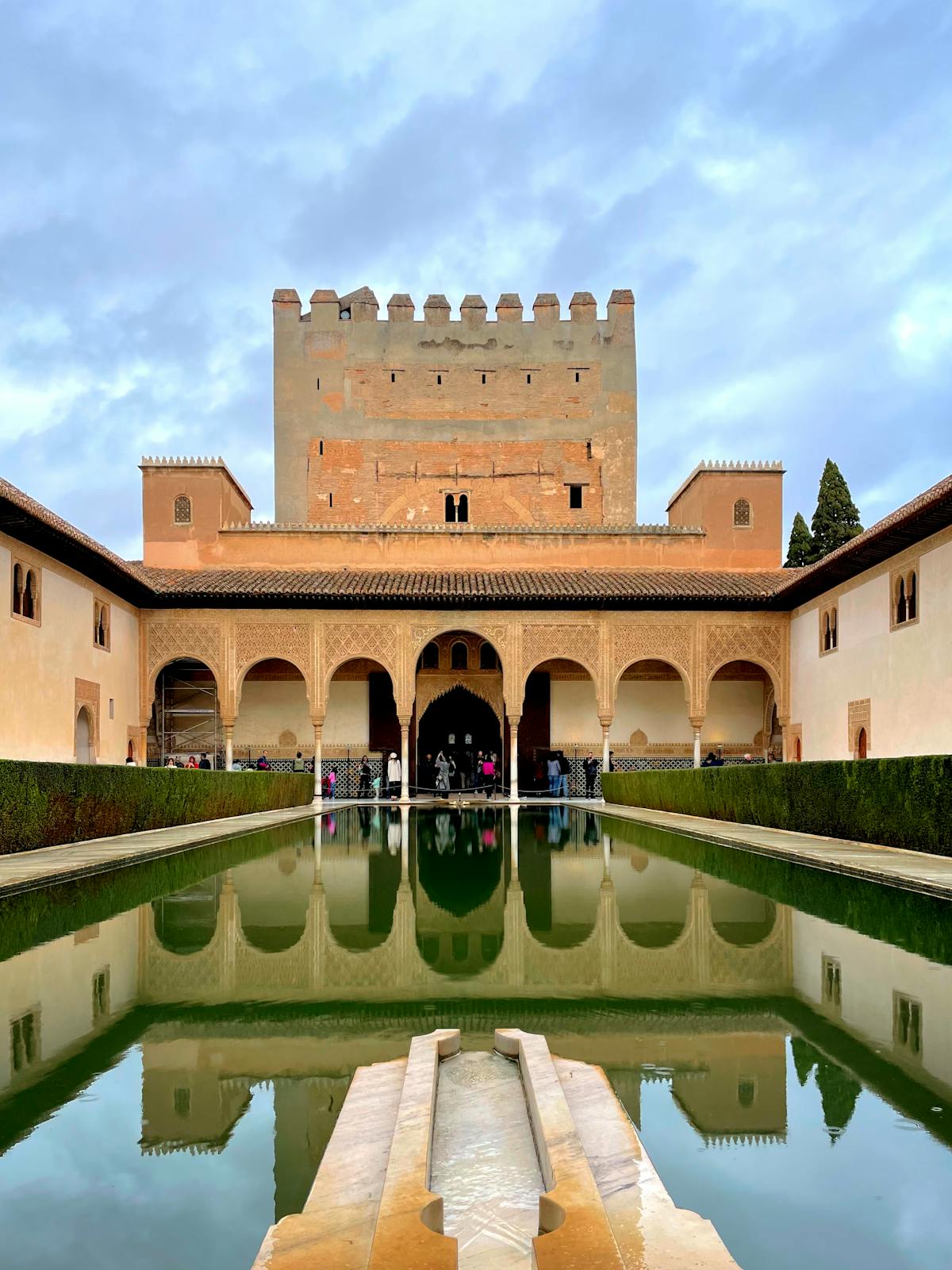
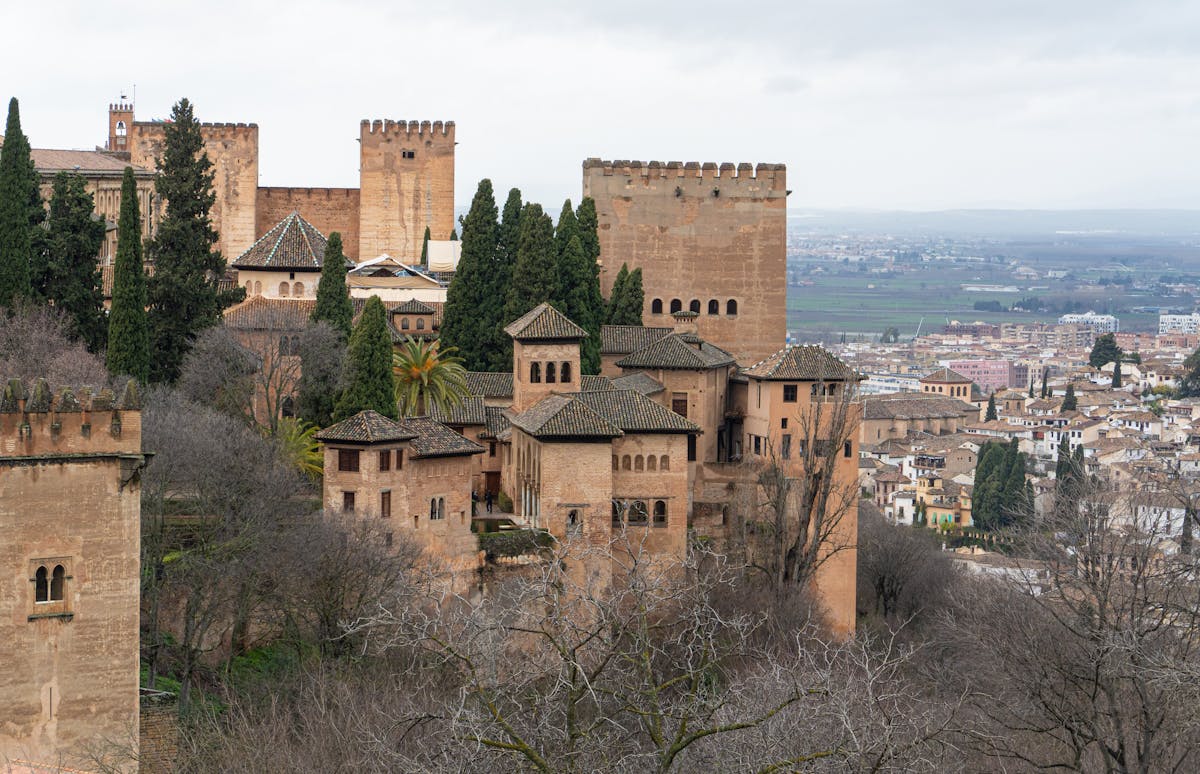
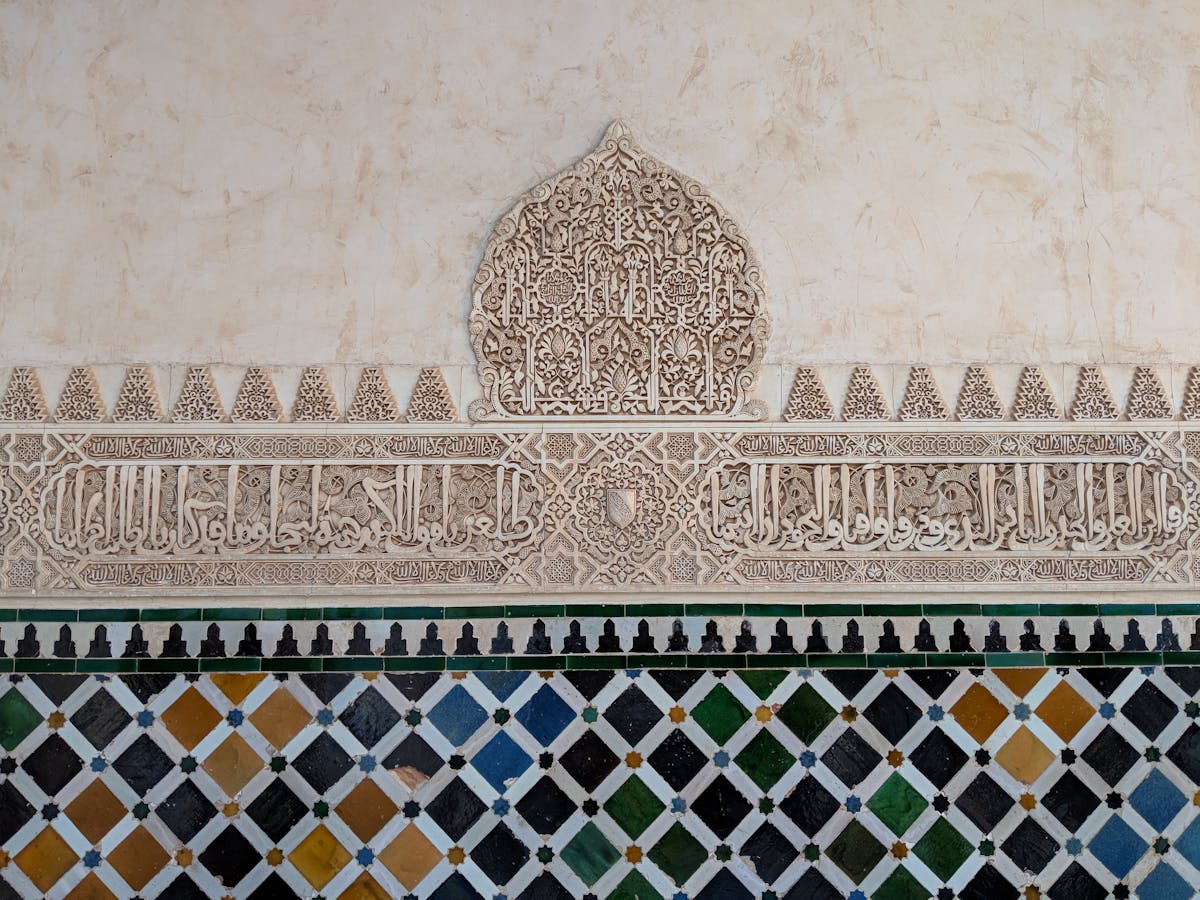
The Alhambra doesn’t look like a fortress. It looks like someone built a garden and then wrapped walls around it. Water runs through nearly every room. Carved plaster covers the ceilings so densely you’d swear it took centuries to complete — because it did. The whole place was built, rebuilt, expanded, and refined over 250 years by the Nasrid dynasty, and you can see the layers of obsession in every corridor.
But here’s the thing nobody tells you until it’s too late: the Nasrid Palaces — the part everyone comes to see — have timed-entry tickets that sell out weeks and sometimes months in advance. Show up without a reservation and you’ll be staring at the walls from the outside. I’ve seen people fly to Granada, walk up to the ticket office, and get turned away. That’s the kind of trip-ruiner this guide exists to prevent.
I’ve gone through every ticket option, guided tour, and booking method that exists for the Alhambra. Below is exactly how the system works, which tours are worth the money, and what to do if official tickets are already gone for your dates.
In a Hurry? My Top Picks
- Best guided tour (includes Nasrid Palaces): Alhambra & Nasrid Palaces Tour with Tickets — $64 per person. Three hours with skip-the-line entry and a guide who actually explains the Islamic geometry. Book this tour
- Best entry-only ticket: Alhambra and Nasrid Palaces Entry Ticket — $33 per person. General admission with Nasrid Palace access included. Explore at your own pace. Book this ticket
- Best premium guided experience: Alhambra & Generalife Fast-Track Guided Tour — $88 per person. Small group, fast-track entry, and a three-hour deep dive into everything. Book this tour
- Best budget option (no Nasrid Palaces): Alhambra Gardens and Generalife Ticket — $20 per person. Gets you into the gardens, Generalife, and Alcazaba. Skip the Nasrid Palaces if budget is tight. Book this ticket
- In a Hurry? My Top Picks
- How Alhambra Tickets Actually Work
- Official Tickets vs. Guided Tours vs. Night Visits
- Best Tours for Visiting the Alhambra
- 1. Alhambra & Nasrid Palaces Tour with Tickets —
- 2. Alhambra and Nasrid Palaces Entry Ticket —
- 3. Alhambra & Generalife Fast-Track Guided Tour —
- 4. Alhambra Gardens and Generalife Ticket —
- 5. Alhambra Guided Tour with Nasrid Palaces & Gardens —
- When to Visit the Alhambra
- Tips That Save You Time and Money
- What You’ll Actually See Inside
- More Granada Guides
How Alhambra Tickets Actually Work
The Alhambra complex has several distinct areas, but only one of them causes all the headaches: the Nasrid Palaces. Everything else — the Alcazaba fortress, the Generalife gardens, the Palace of Charles V — is relatively easy to access. But the Nasrid Palaces have a strict capacity limit of about 300 people per half-hour, and once a slot fills up, that’s it.
Here’s how the ticket system breaks down:
General Admission (Alhambra General): This is the full ticket. It gets you into everything — Nasrid Palaces, Alcazaba, Generalife gardens, Palace of Charles V. You choose a specific 30-minute window for the Nasrid Palaces when you book, and you absolutely must enter during that window. Show up 10 minutes late and they won’t let you in. No exceptions. The rest of the complex you can visit anytime during the day session (8:30 AM to 2:00 PM) or evening session (2:00 PM to closing).
Gardens and Alcazaba Only: A cheaper ticket that skips the Nasrid Palaces entirely. You get the Generalife gardens (which are genuinely beautiful on their own), the Alcazaba military fortress with its panoramic views, and the Palace of Charles V (a Renaissance building plopped into the middle of a Moorish complex — it’s jarring but interesting). No timed entry needed, no stress about slots.
Night Visit: The Nasrid Palaces open for evening visits on certain nights. Smaller crowds, dramatic lighting, and a completely different atmosphere. You don’t get access to the gardens or Alcazaba on this ticket — just the palaces themselves.
The sellout problem is real. During peak season (March through October), general admission tickets on the official Alhambra website sell out 60 to 90 days in advance. I’m not exaggerating. The Spanish government releases tickets roughly three months ahead, and they go fast. If you’re planning a summer trip and haven’t booked yet, the official tickets are probably gone.
That’s where guided tours come in. Tour operators buy allocations of tickets in bulk, so they often have availability when the official site shows sold out. It’s more expensive than the base ticket price, but it’s the most reliable way to guarantee entry — especially to the Nasrid Palaces.
Official Tickets vs. Guided Tours vs. Night Visits
Three ways to get in. Each has a clear use case.
Official tickets from the Alhambra website (alhambra-patronato.es): Cheapest option at around 14 euros for general admission. But you’re competing with every tourist planning a Spain trip, and the website itself can be frustrating — clunky interface, sells out fast, and the English version occasionally glitches. If you can snag one 90 days out, great. If your travel dates are less than a month away, don’t count on it.
Guided tours with included tickets: This is what most visitors end up doing, and honestly, for the Alhambra specifically, a guide adds real value. The Islamic geometry, the water engineering, the political history of the Nasrid dynasty — none of it is obvious just from looking. A good guide turns a pretty building into a story that makes sense. Tours run $33 to $88 depending on group size and whether you want the Nasrid Palaces included. They also solve the availability problem since operators hold reserved blocks.
Night visits: Only available on certain evenings (check the schedule — it changes seasonally). The Nasrid Palaces lit up at night, with no crowds, is a completely different experience from the daytime visit. The downside is you don’t get the gardens or fortress, so most people who do the night visit end up buying a gardens-only daytime ticket as well to see the full complex. Worth it if you’re spending more than one day in Granada.
Best Tours for Visiting the Alhambra
I’ve picked five tours from the database that cover different budgets and styles. A general entry ticket for the self-guided crowd, two guided options at different price points, a gardens-only budget pick, and a premium small-group experience.
1. Alhambra & Nasrid Palaces Tour with Tickets — $64
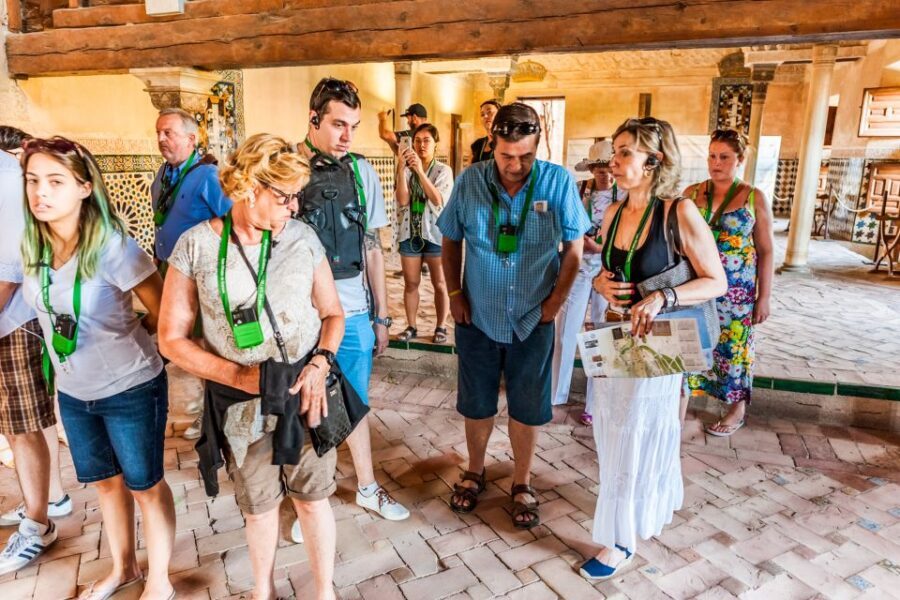
Duration: 3 hours | Price: $64 per person | Type: Guided tour with skip-the-line
This is the one I’d recommend to most first-time visitors. You get full access to everything — Nasrid Palaces, Generalife gardens, Alcazaba, Charles V Palace — with a guide who walks you through the complex in a logical order. The guide handles the timed Nasrid entry, so you don’t have to stress about showing up at the right slot.
The three-hour duration feels right. Long enough to cover all the major areas without the tour dragging through every corridor. The guides on this particular tour tend to focus on the Nasrid dynasty’s rise and fall, the meaning behind the geometric patterns, and the water engineering that keeps the gardens alive. The kind of context that turns “pretty tile work” into something you actually remember.
At $64, you’re paying about $50 more than the official ticket price. But you’re paying for guaranteed availability, skip-the-line entry, and three hours of expert commentary. If you’ve flown to Spain and the Alhambra is a highlight of your trip — which it should be — this is not the place to cut costs.
2. Alhambra and Nasrid Palaces Entry Ticket — $33
Duration: 3 hours (self-paced) | Price: $33 per person | Type: Entry ticket (no guide)
The DIY option. This gets you into everything including the Nasrid Palaces, but without a guide. You show up at your assigned Nasrid time slot, walk through at your own speed, and spend as long as you want in the gardens and Alcazaba.
This works well for two types of people: those who genuinely prefer exploring alone and reading plaques, and those who plan to pair it with a good audio guide or guidebook. Rick Steves has a solid free audio tour for the Alhambra, and the official Alhambra app provides decent context room by room. Between those and some pre-trip reading, you can piece together a meaningful visit on your own.
The trade-off is obvious. At $33, you’re saving $30 compared to the guided tour, but you miss the storytelling. The Alhambra rewards explanation. Understanding why the Nasrid sultans built the Court of the Lions, or what the Arabic inscriptions on the walls actually say, changes the visit from “impressive building” to one of those travel moments that stays with you. But if you’ve already read up on the history, the entry ticket alone does the job.
3. Alhambra & Generalife Fast-Track Guided Tour — $88
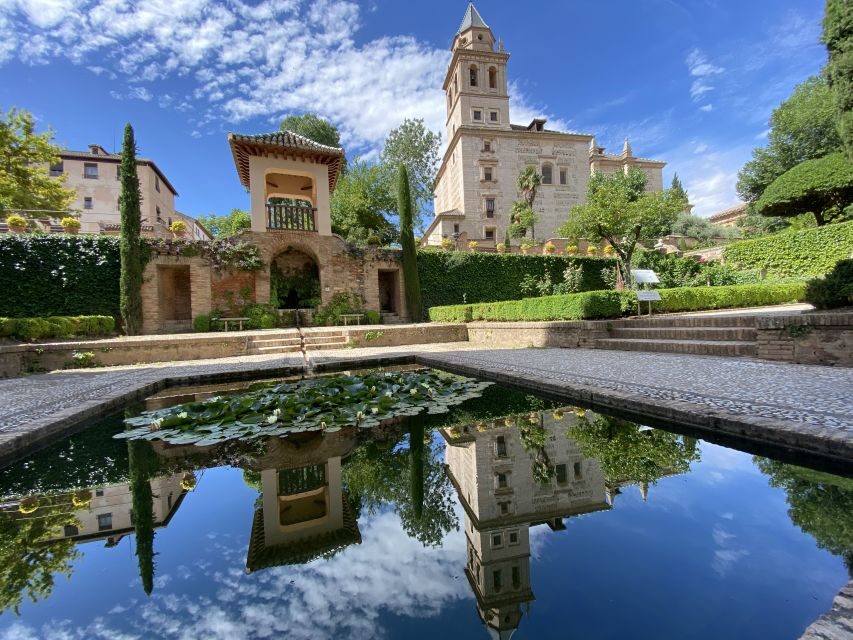
Duration: 3 hours | Price: $88 per person | Type: Small group guided tour, fast-track entry
This is the upgrade for people who want the best possible Alhambra experience and don’t mind paying for it. Smaller groups mean you actually hear the guide without straining, you spend less time waiting at bottleneck points, and the fast-track entry shaves off the queue time that eats into your visit.
The guide quality on the premium tours tends to be noticeably better. You’re more likely to get a local historian or art specialist rather than a generalist. The difference shows in the Nasrid Palaces especially — the cheap tours rush through the Hall of the Ambassadors and the Court of the Lions; the premium ones stop and let you absorb the ceiling, the light, the way sound echoes off the carved stucco.
At $88, it’s the most expensive option on this list. For couples or solo travelers who see the Alhambra as a once-in-a-lifetime visit rather than a checkbox, the premium is justified. For families with small children who won’t sit still for detailed explanations of 14th-century hydraulic engineering, save the money and go with the $64 tour instead.
4. Alhambra Gardens and Generalife Ticket — $20
Duration: Full day access | Price: $20 per person | Type: Entry ticket (gardens, Generalife, Alcazaba only)
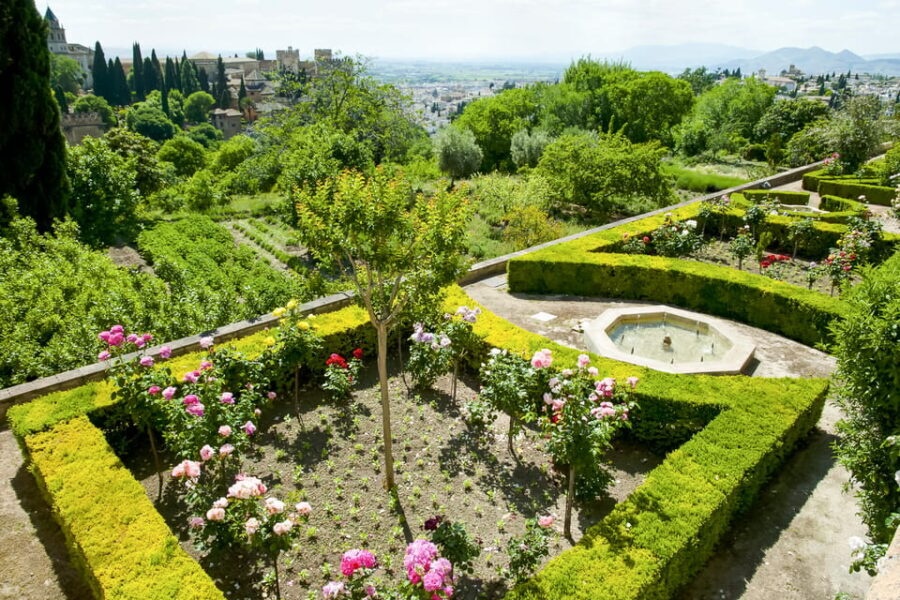
Don’t dismiss this as the consolation prize. The Generalife gardens are a genuine highlight on their own — terraced water gardens that the Nasrid sultans used as their summer retreat, with fountains that have been running for seven centuries. The Alcazaba fortress gives you the best panoramic views of Granada and the Sierra Nevada from anywhere in the complex. And the Palace of Charles V houses a fine arts museum that’s actually worth 30 minutes of your time.
You’re skipping the Nasrid Palaces, which are admittedly the crown jewel. But at $20 versus $33 to $88 for the full complex, this makes sense in a few situations: you’re on a tight budget; the Nasrid tickets are sold out and you’d rather see part of the Alhambra than none of it; or you’re visiting Granada for several days and plan to do a night visit to the Nasrid Palaces separately.
The gardens are at their best in spring (April to May) when everything blooms, but even in winter the evergreen hedges and running water keep it beautiful. Give yourself at least two hours here. The paths wind and branch in unexpected directions, and the best corners are the ones you find by wandering.
5. Alhambra Guided Tour with Nasrid Palaces & Gardens — $82
Duration: 3 hours | Price: $82 per person | Type: Guided tour with Nasrid Palaces and Gardens
This sits between the $64 standard tour and the $88 premium. The difference is emphasis: this tour gives roughly equal time to the Generalife gardens and the Nasrid Palaces, whereas the cheaper option focuses more heavily on the palaces and hurries through the gardens.
If you’re the kind of traveler who lights up at the idea of water channels engineered to produce specific sounds, or roses that descend from varieties planted in the 13th century, this balance will appeal to you. The guide covers the botanical history alongside the political history, which makes the Generalife section more than just “nice garden, take a photo.”
Priced at $82, it undercuts the premium tour by six dollars while offering a different focus rather than a downgrade. The group sizes are similar. The main question is whether you want more depth in the palaces ($88) or more depth in the gardens ($82). Both include skip-the-line entry and handle the Nasrid timed slot for you.
When to Visit the Alhambra
Timing matters more here than at almost any other monument in Europe. Get it wrong and you’re fighting crowds in 40-degree heat with a timed ticket you can’t change.
Best months: March, April, early May, October. Warm enough for the gardens, cool enough that three hours of walking doesn’t wipe you out. The Generalife flowers peak in April and early May, and the crowds are heavy but not unbearable. Book at least 60 days ahead for these months.
Summer (June to August): Granada sits in a valley surrounded by mountains, and it gets brutally hot. Temperatures above 38 degrees Celsius are normal in July and August. The morning sessions (8:30 AM entry) are manageable, but afternoon visits are genuinely miserable. On the plus side, evening sessions and night visits become available more frequently in summer, and seeing the palaces at night in cooler air is one of the best ways to experience the complex.
Winter (November to February): Fewer crowds, easier ticket availability, and the light is beautiful — low winter sun streaming through the Nasrid arches creates shadows you won’t see at any other time of year. The downside: shorter hours, the gardens are less impressive (though still green), and some areas occasionally close for maintenance. Granada gets surprisingly cold in winter — pack layers.
Time of day: First slot of the morning, every time. The palaces are emptiest in the first hour after opening. By 10:30 AM the tour groups converge and the narrow rooms of the Nasrid Palaces get packed. If your ticket lets you choose a time, choose the earliest one available.
Tips That Save You Time and Money
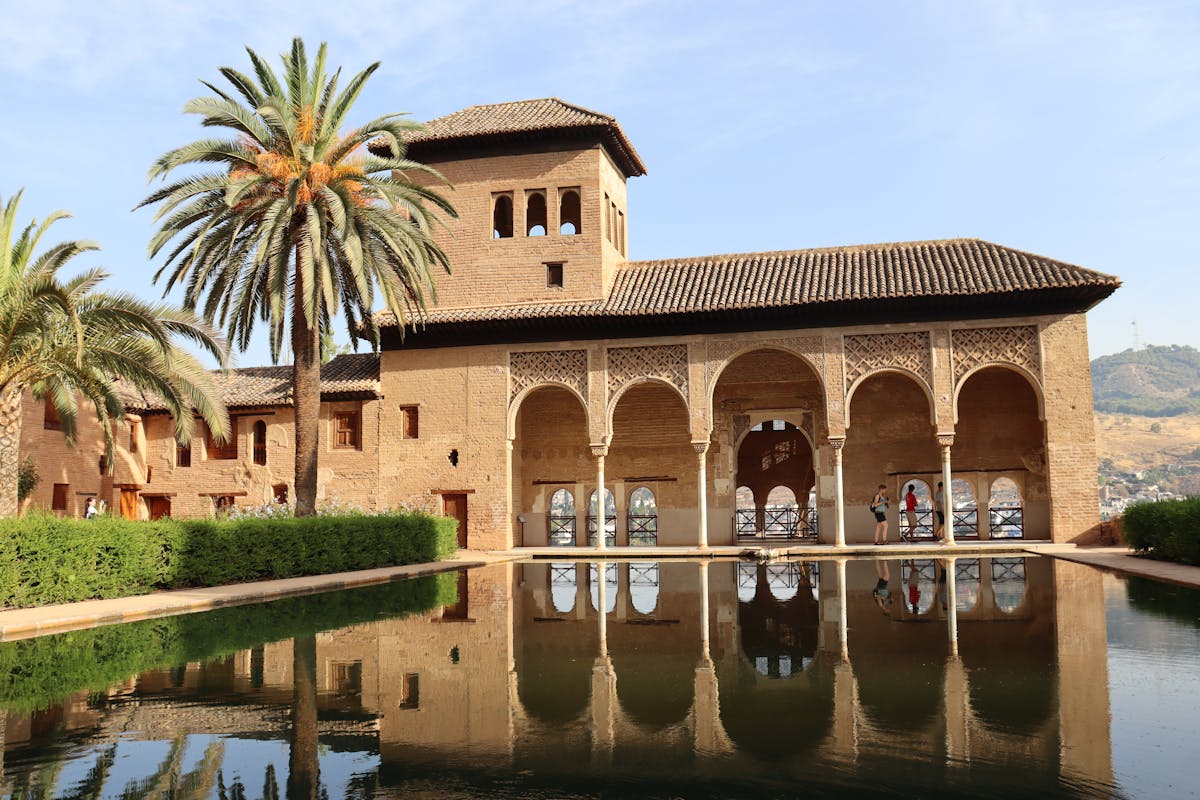
A few things I wish someone had told me before my first visit:
Walk up from the city, don’t take the bus. The Cuesta de Gomeres path from Plaza Nueva takes about 15 minutes uphill through a shaded forest. It’s the approach the Moors intended — the fortress reveals itself gradually through the trees. The C30/C32 bus gets you there faster, but you miss the buildup entirely. Save the bus for the trip back down when your legs are tired.
Bring water. Seriously. There are a few drinking fountains inside the complex, but sections between the Alcazaba and the Nasrid Palaces have nothing. In summer, you’ll drain a liter before you even reach the palaces.
Don’t try to rush the Nasrid Palaces. You technically have 30 minutes for your timed slot, but once you’re inside, nobody kicks you out. The timeslot controls entry, not how long you stay. Take your time in the Hall of the Ambassadors and the Court of the Lions.
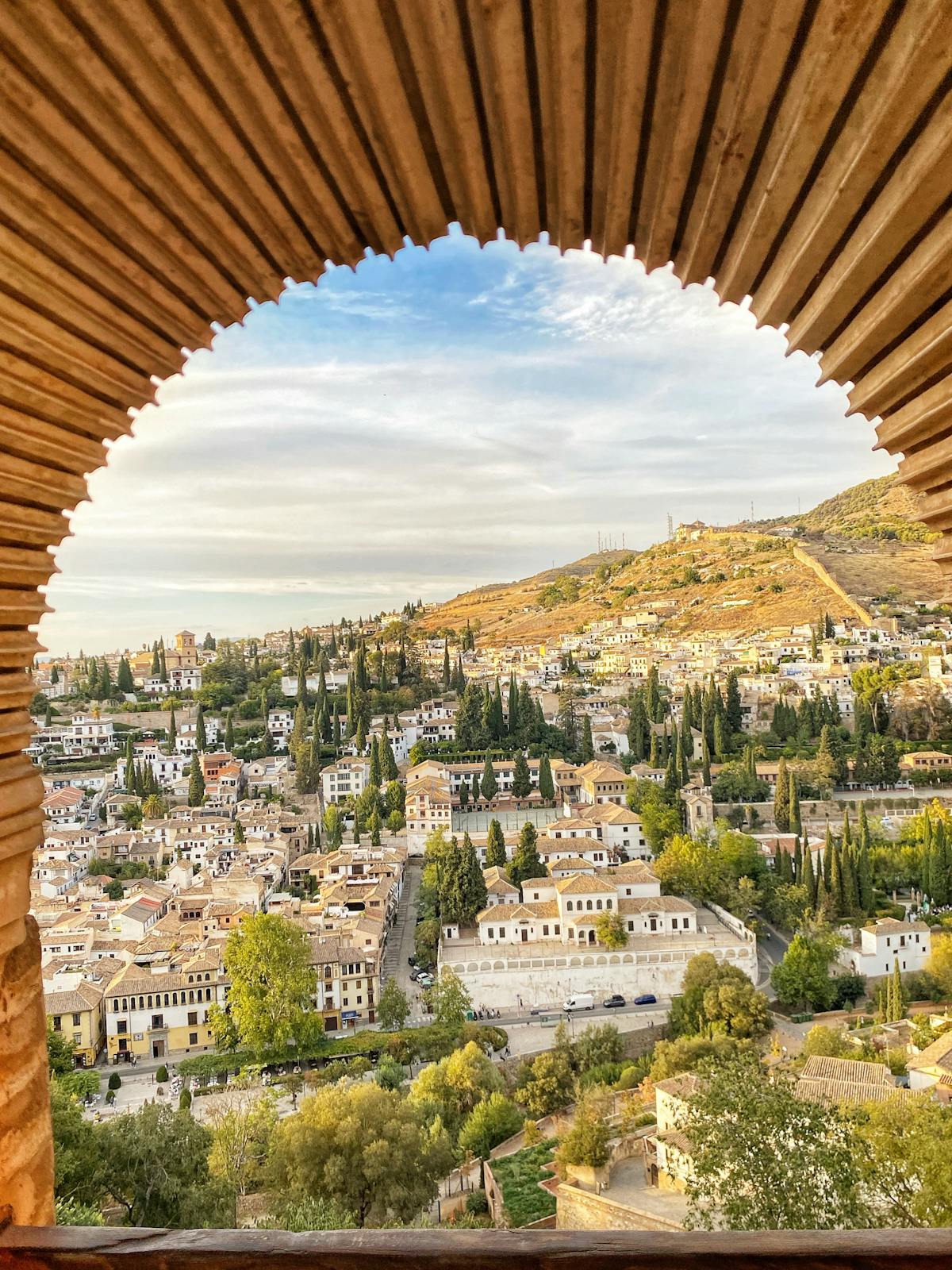
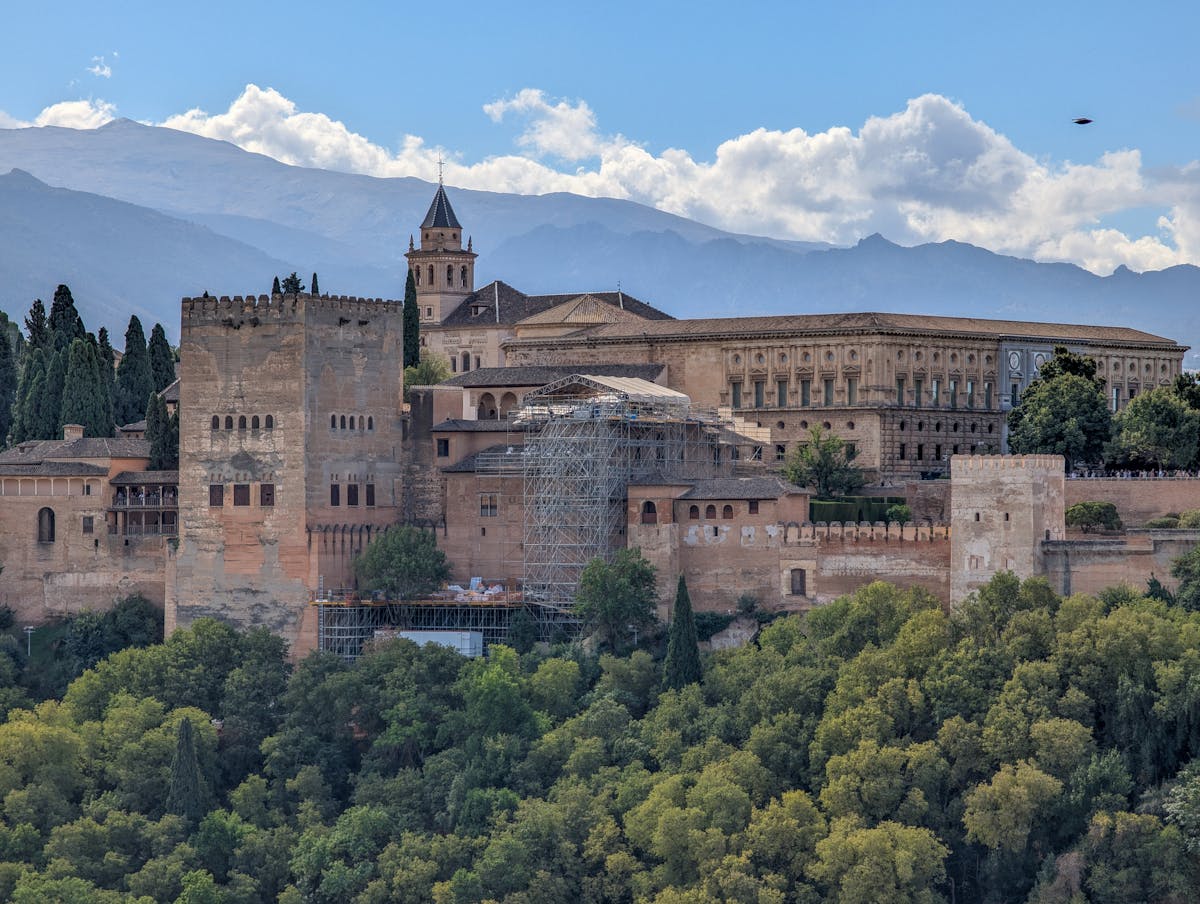
The Alcazaba is underrated. Most people rush through it because the Nasrid Palaces are the main event. But climbing the Torre de la Vela gives you a 360-degree view of Granada, the Albaicin, the cathedral, and the Sierra Nevada. On a clear day, you can supposedly see the Mediterranean coast. I haven’t managed that yet, but the view is worth the climb regardless.
Download the official app before you go. The “Alhambra de Granada” app has room-by-room explanations and a decent map. If you’re doing the self-guided entry ticket, this fills in a lot of the gaps that a guide would normally cover. It’s free.
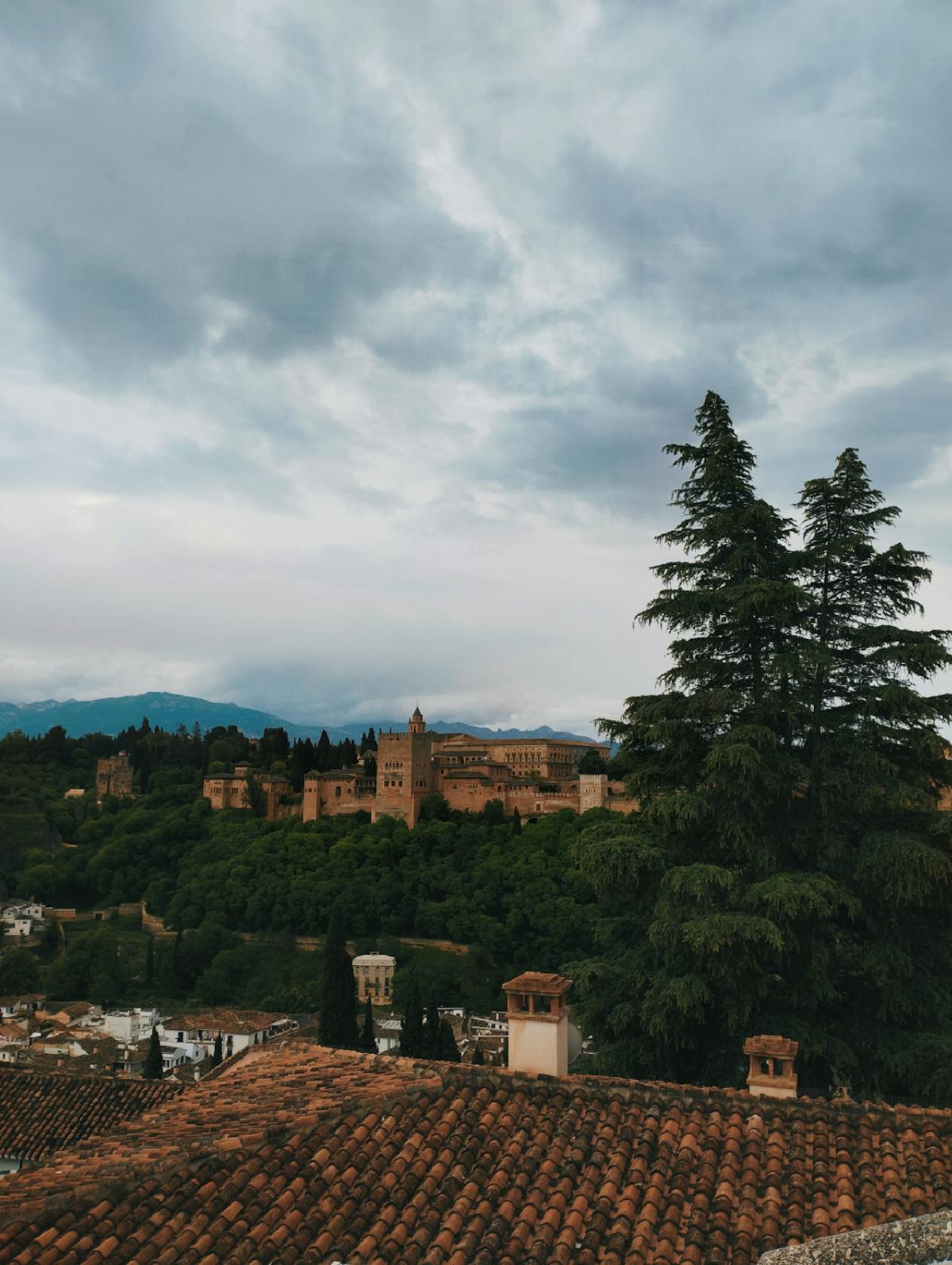
Combine with the Albaicin. After the Alhambra, walk down to the Albaicin neighborhood — the old Moorish quarter across the valley. The Mirador de San Nicolas gives you the iconic postcard view of the Alhambra with the Sierra Nevada behind it. Go in the late afternoon for the best light. Street performers play flamenco guitar at sunset, and the whole scene feels staged for a film except it happens every single evening.
What You’ll Actually See Inside
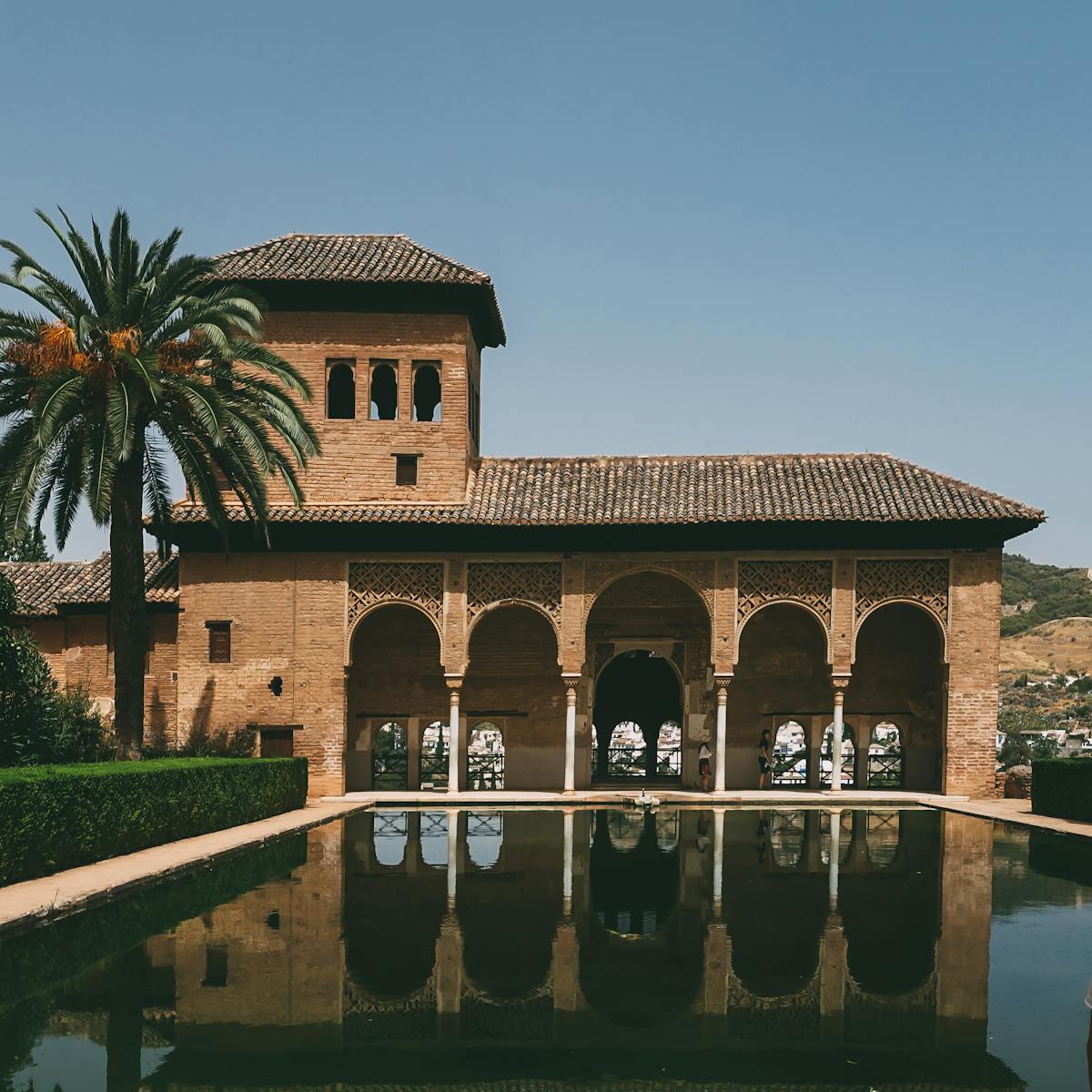
The Alhambra isn’t one building. It’s a small city on a hilltop, and different areas have very different characters.
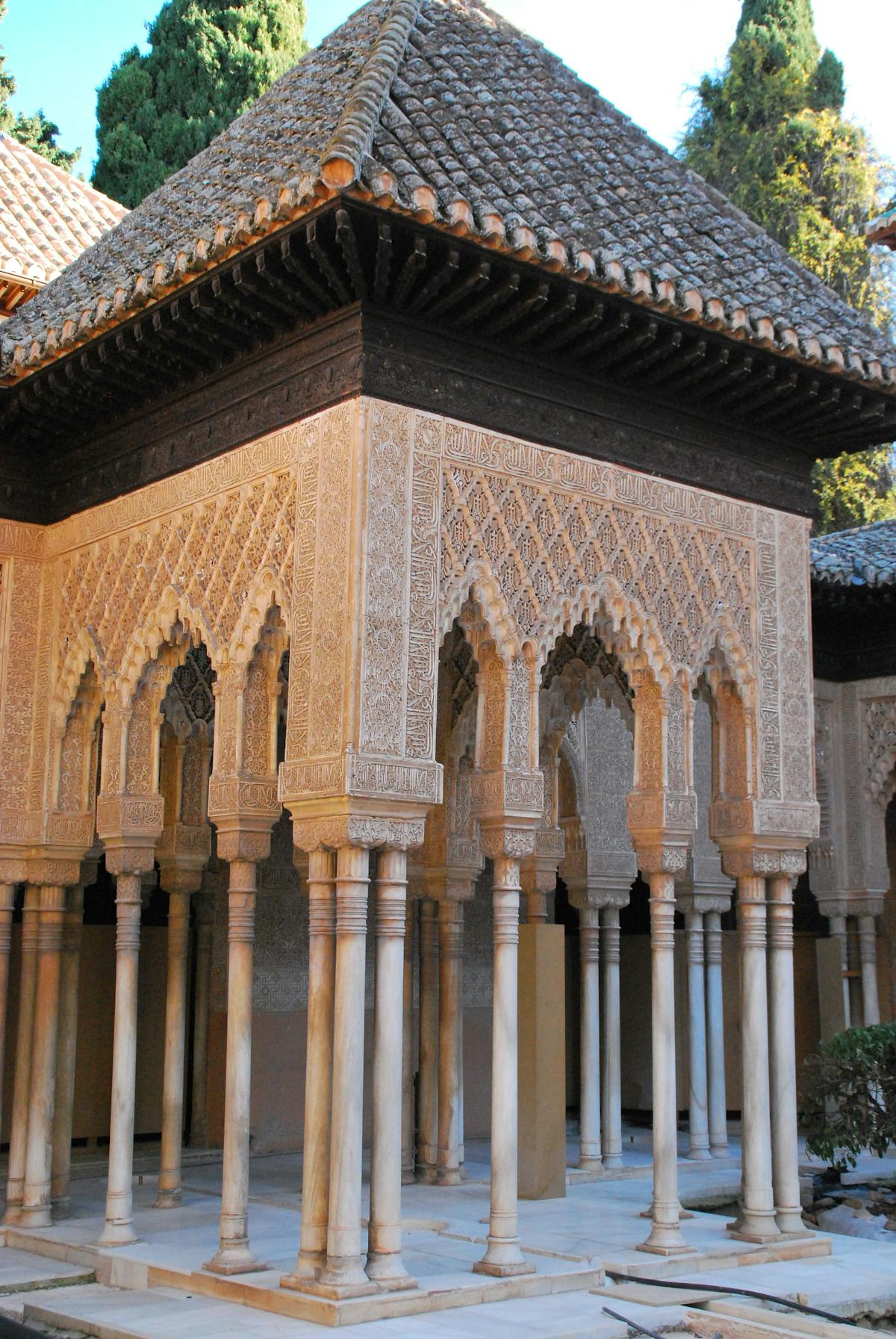
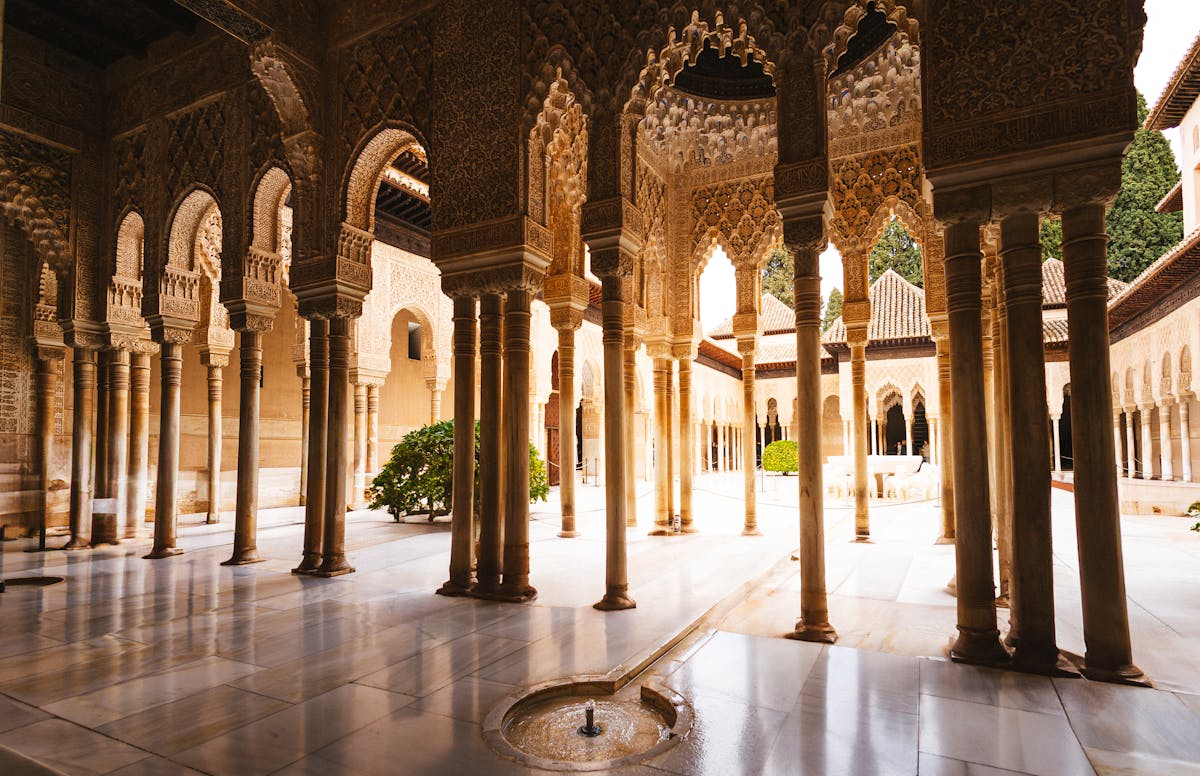
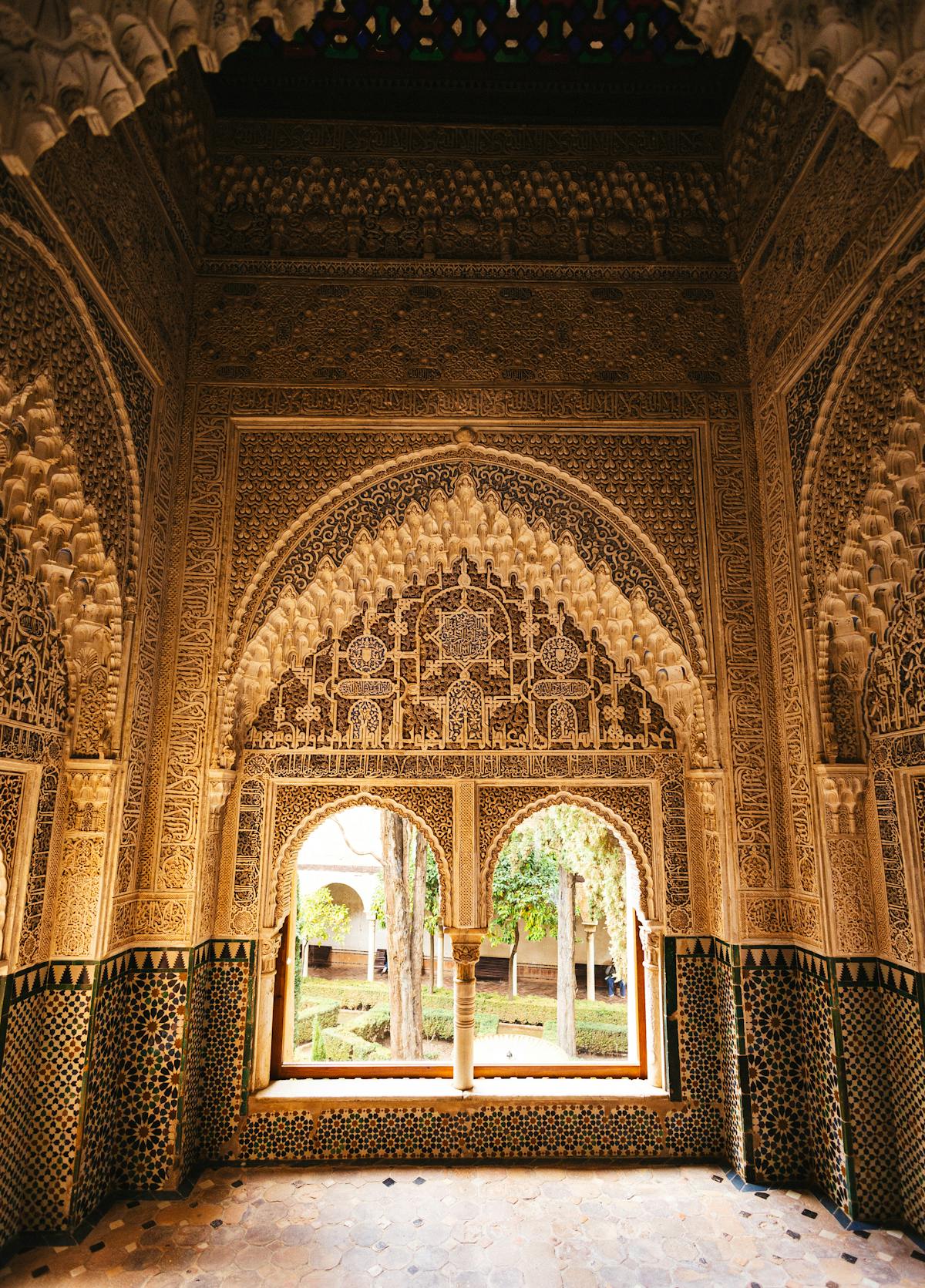
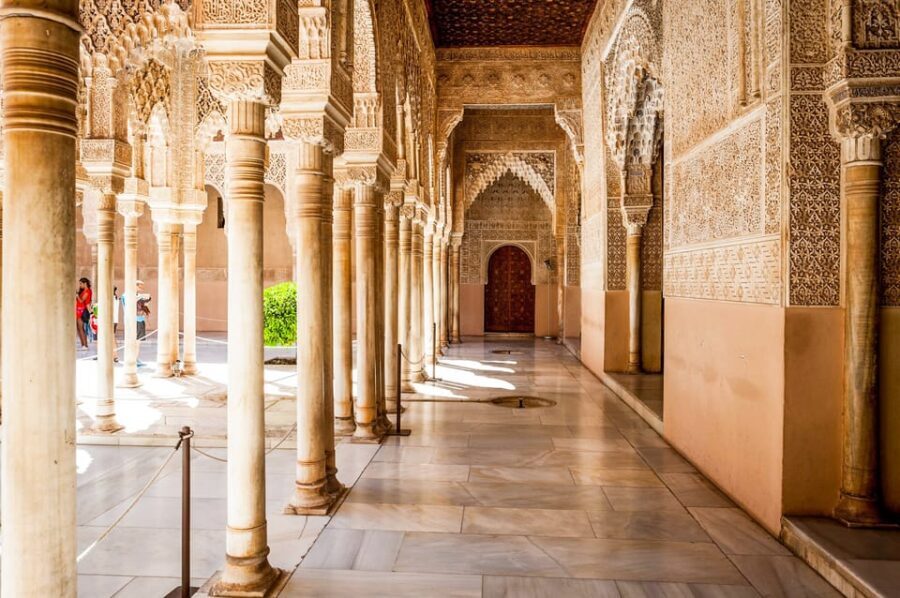
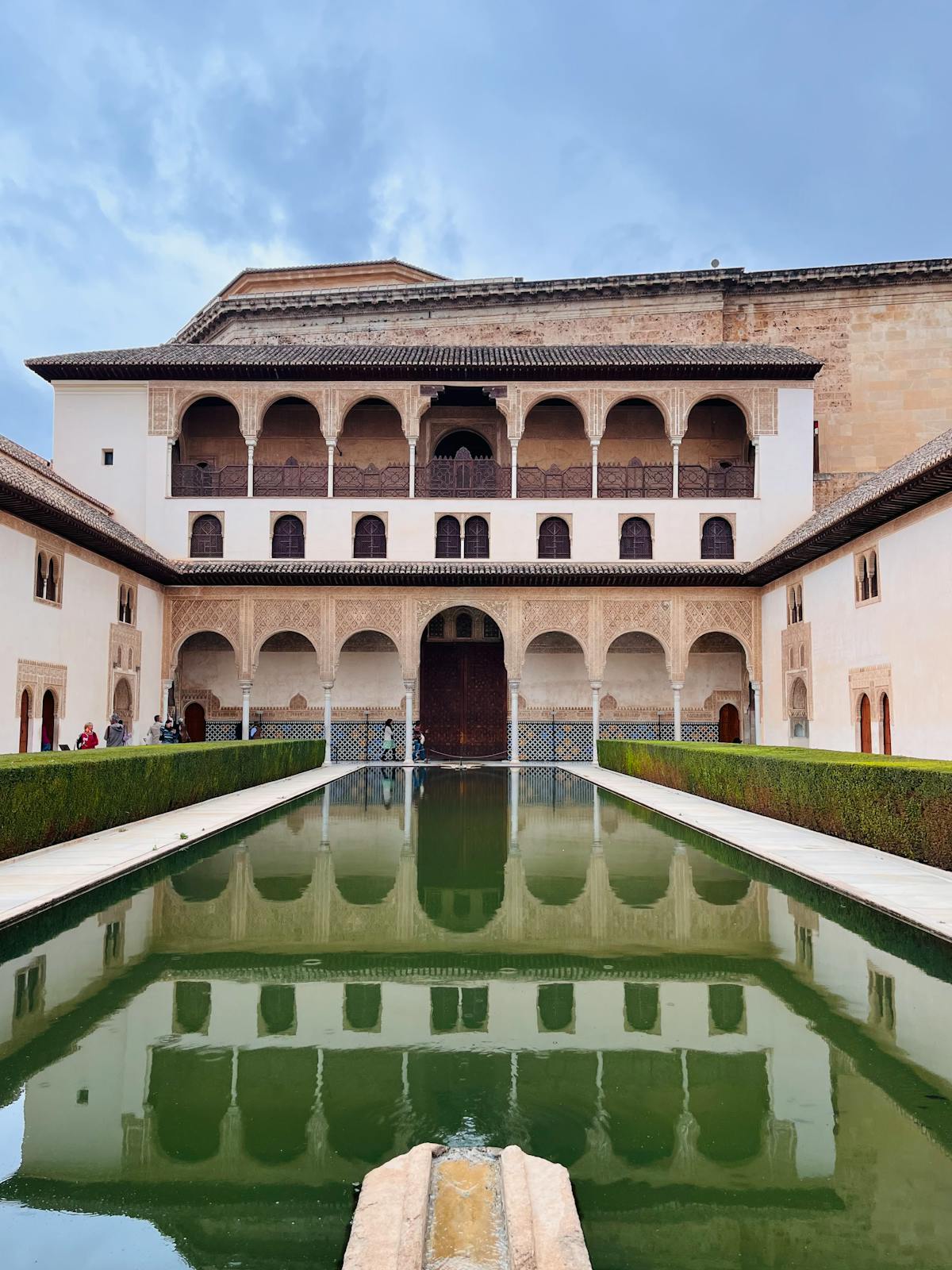
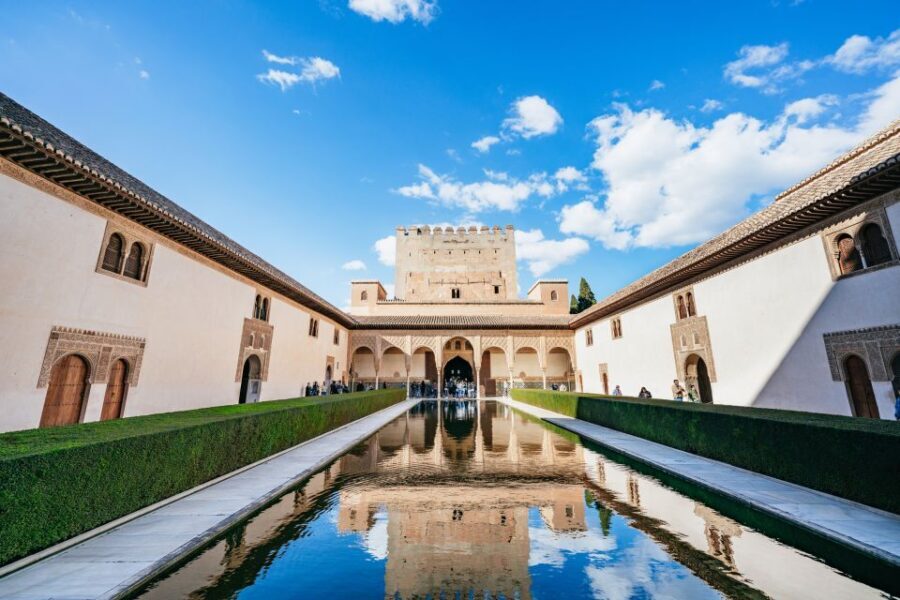
The Nasrid Palaces: Three connected palaces built over about 100 years. The Mexuar was the public administrative court. The Comares Palace was the political center — its throne room, the Hall of the Ambassadors, has a 23-meter cedar ceiling inlaid with 8,017 pieces representing the seven heavens of Islamic cosmology. The Palace of the Lions, the last and most famous, centers on the Court of the Lions with its twelve marble lions supporting a fountain basin. The carved stucco on the walls here is the finest surviving example of Nasrid art anywhere.
The Generalife: The sultan’s summer palace and gardens, set on a hillside next to the main fortress. Terraced gardens connected by water channels, with the famous Patio de la Acequia — a long, narrow garden with arching water jets crossing over a central pool. The roses, myrtles, orange trees, and cypresses create something that feels more like a living painting than a garden. The Generalife predates the Nasrid Palaces and was designed as an escape from the politics of the main palace.
The Alcazaba: The oldest part of the complex. A military fortress that predates the palaces by centuries. Most of the interior buildings are ruins now, but the watchtower (Torre de la Vela) is intact and climbable. This is where you get the panoramic views. On January 2nd every year, the bell in this tower rings to celebrate the anniversary of the Christian reconquest of Granada — a tradition that’s been going since 1492.
Palace of Charles V: The jarring Renaissance circle-in-a-square that the Spanish king built in the middle of the Moorish complex after the conquest. Love it or hate it, it houses the Museum of the Alhambra and the Fine Arts Museum of Granada, both of which are free and genuinely worth a visit. The courtyard’s circular design is unique in Spanish Renaissance architecture.