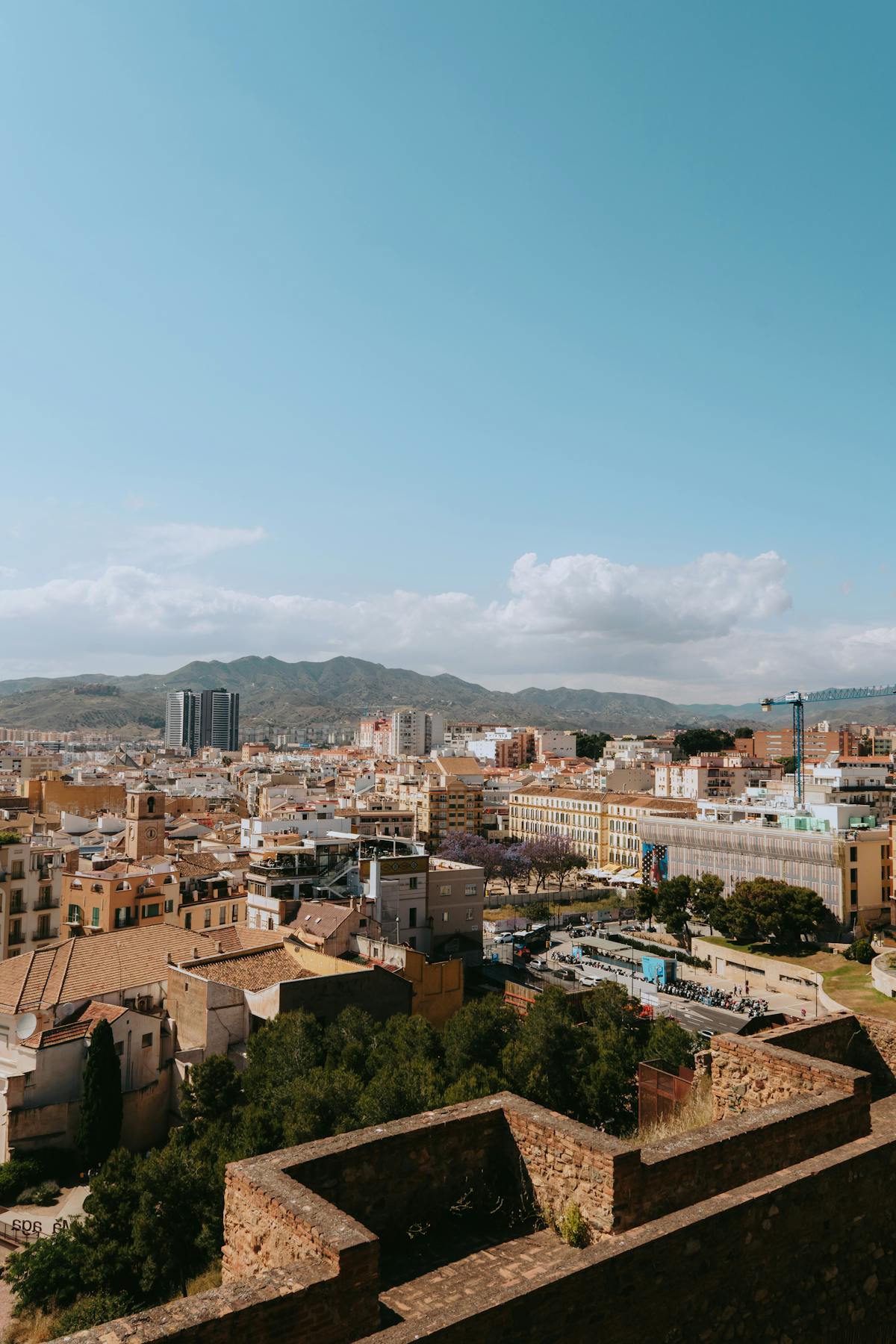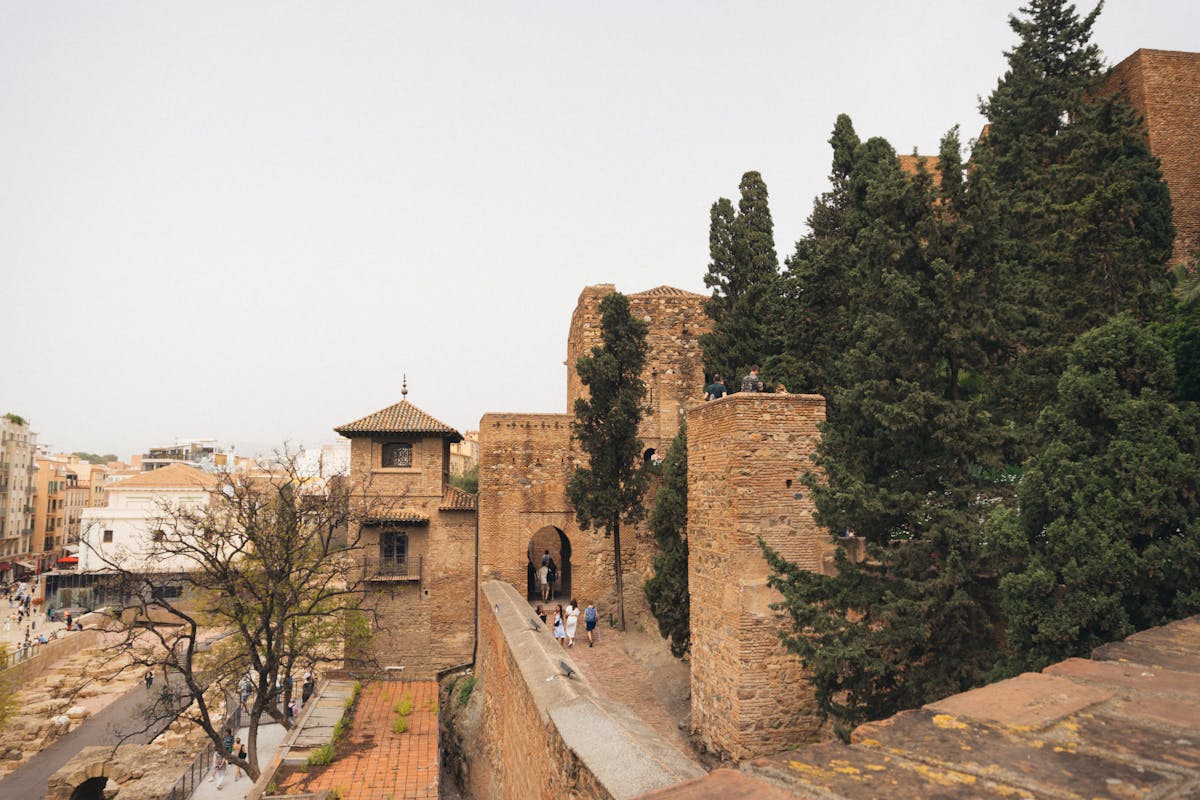
The Alcazaba of Malaga is a problem for travel writers because it does not fit neatly into one category. It is not just a fortress — it is a palace complex, a garden, a museum, and one of the best viewpoints in southern Spain, all wrapped inside 11th-century walls. The Hammudid dynasty built it on a hillside that the Phoenicians and Romans had already been using for centuries, recycling columns and capitals from the Roman theatre that sits at its feet. You can still spot the Roman marble mixed in with the Moorish brickwork if you know where to look.
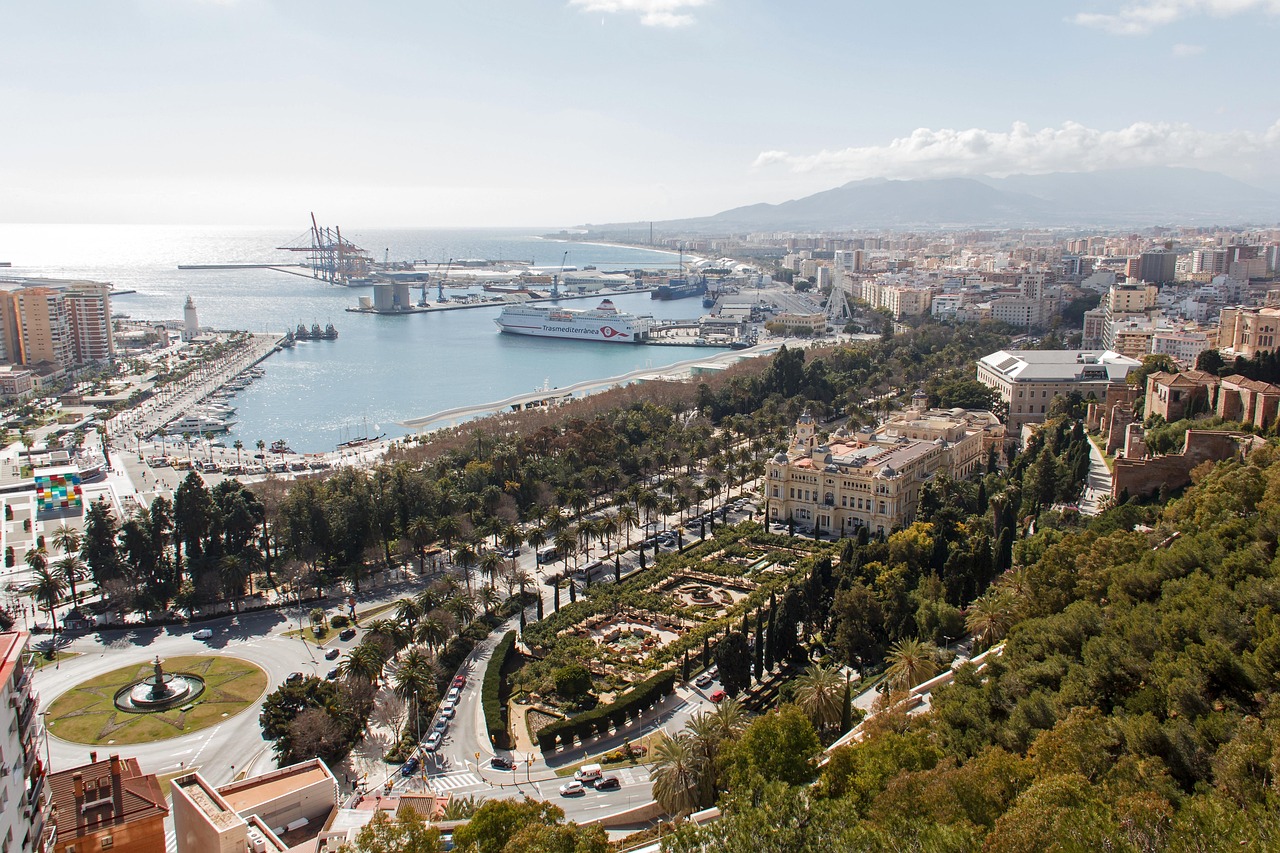
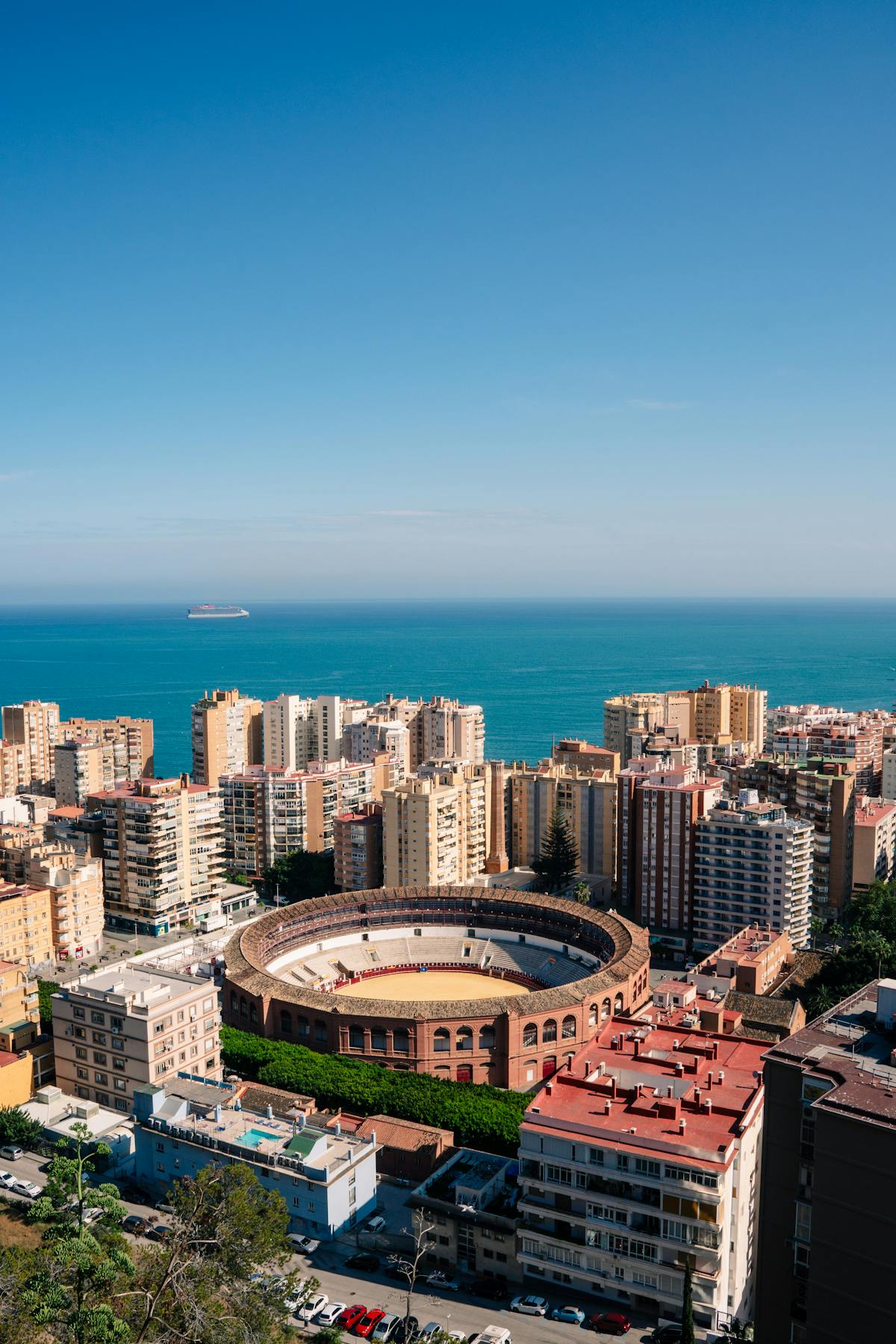
What makes the Alcazaba worth your time is the layering. This is not a single-period monument. Walking from the entrance to the upper palace, you pass through Phoenician foundations, Roman stonework recycled into medieval walls, Moorish arched gateways, and Renaissance-era modifications. The gardens tucked into the courtyards are planted with orange trees, jasmine, and bougainvillea that the original inhabitants would recognize. And from the ramparts at the top, you look down at the port, the bullring, the cathedral with its single tower, and the Mediterranean stretching south toward Africa.
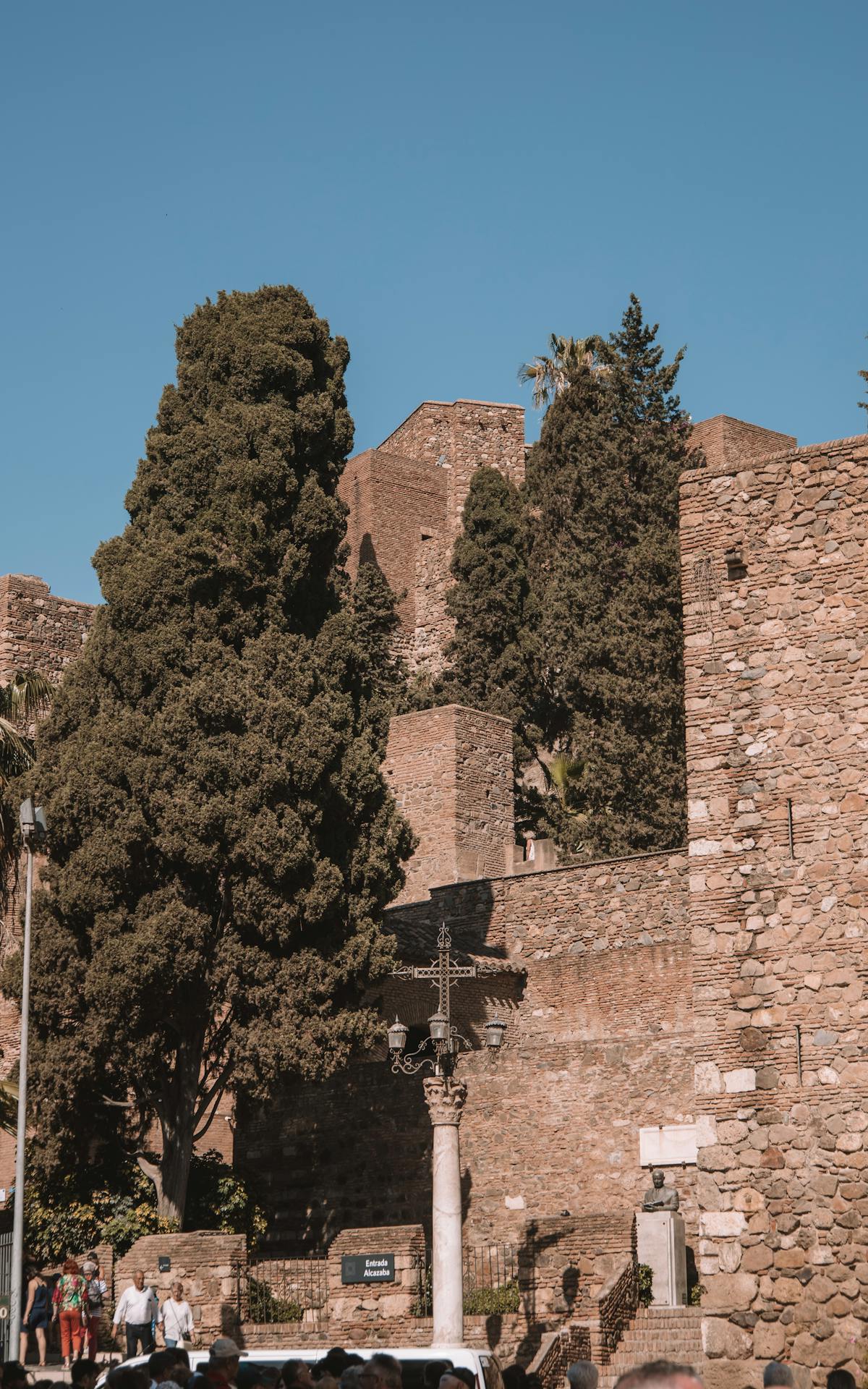
But getting in requires a bit of planning. The site has specific hours, the ticket situation is not as straightforward as you might expect, and the hill is steep enough that timing your visit matters. Below is everything you need to know about tickets, tours, timing, and what you will actually find inside.
In a Hurry? My Top Picks
- Best guided experience: Alcazaba and Roman Theatre Guided Tour — $14 per person. Ninety minutes covering both the Alcazaba and the Roman theatre below it, with skip-the-line entry included. The guide connects the dots between the Roman, Moorish, and Renaissance layers in a way that self-guided visitors miss entirely. Book this tour
- Best deep dive: Alcazaba Malaga Guided Tour — $22 per person. Eighty minutes focused entirely on the Alcazaba with a local historian guide. More time inside the fortress means you actually get into the upper palace rooms and the archaeological museum rather than rushing through. Book this tour
- Best budget pick: Roman Theatre and Alcazaba Guided Tour — $17 per person. Ninety minutes hitting both sites with entry included. Slightly smaller group sizes than the top pick and a good balance between depth and duration. Book this tour
Tickets and Entry
The Alcazaba has a straightforward pricing structure that occasionally confuses visitors because of the combined ticket option with Gibralfaro Castle up the hill.
Alcazaba only: 3.50 euros. This gets you into the entire fortress complex including the archaeological museum in the upper palace. The visit takes 45 minutes to an hour at a normal pace, longer if you stop to read every information panel and photograph every courtyard.
Combined Alcazaba + Gibralfaro: 5.50 euros. Gibralfaro is the castle that sits on the hilltop above the Alcazaba, connected by a walled pathway. The combined ticket saves you 1.50 euros over buying them separately, and the walk between the two takes about 15 minutes uphill through a walled corridor with views over the city.
Free entry: Sundays from 2:00 PM until closing. This is genuine free admission, not a reduced price. The catch is that everyone in Malaga knows about it, so Sunday afternoons can get crowded — especially in the courtyards and the narrow stairways of the upper palace.
Buying tickets: You can buy at the entrance or, for guided tours, through the tour platforms. There is rarely a long queue at the ticket window except on Sunday afternoons and during August peak season. If you are visiting during those times, a guided tour with skip-the-line entry eliminates the wait.
Best Tours of the Alcazaba
Three tours from the database, each taking a slightly different angle on the Alcazaba. A best-in-class guided tour with entry, a deeper specialist option, and a solid budget alternative.
1. Alcazaba and Roman Theatre Guided Tour With Entry — $14
Duration: 1.5 hours | Price: $14 per person | Type: Guided tour with skip-the-line entry
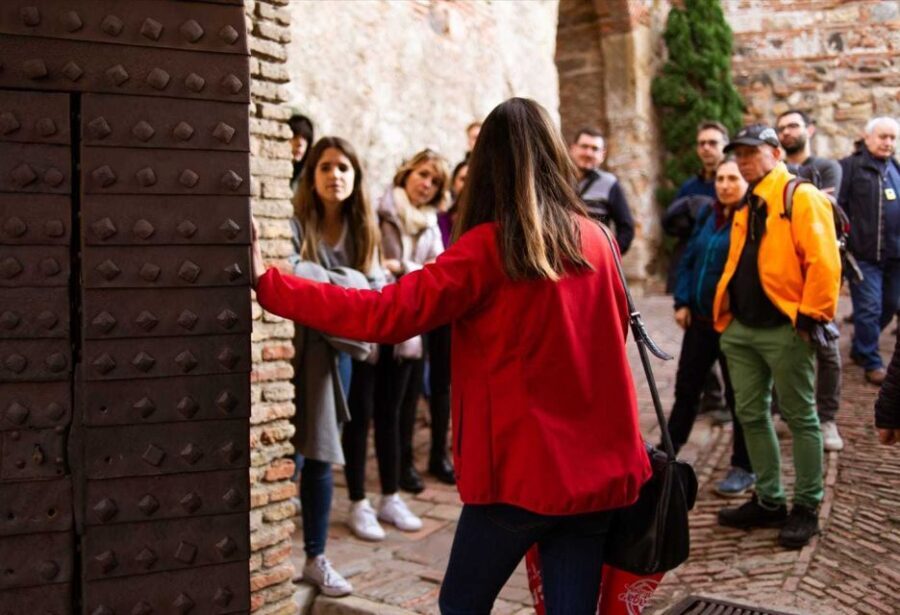
This is the tour I would recommend to anyone visiting the Alcazaba for the first time. Ninety minutes covering both the 1st-century BC Roman theatre at the base of the hill and the full Alcazaba complex above it, with a local guide who knows the layers of history in these walls.
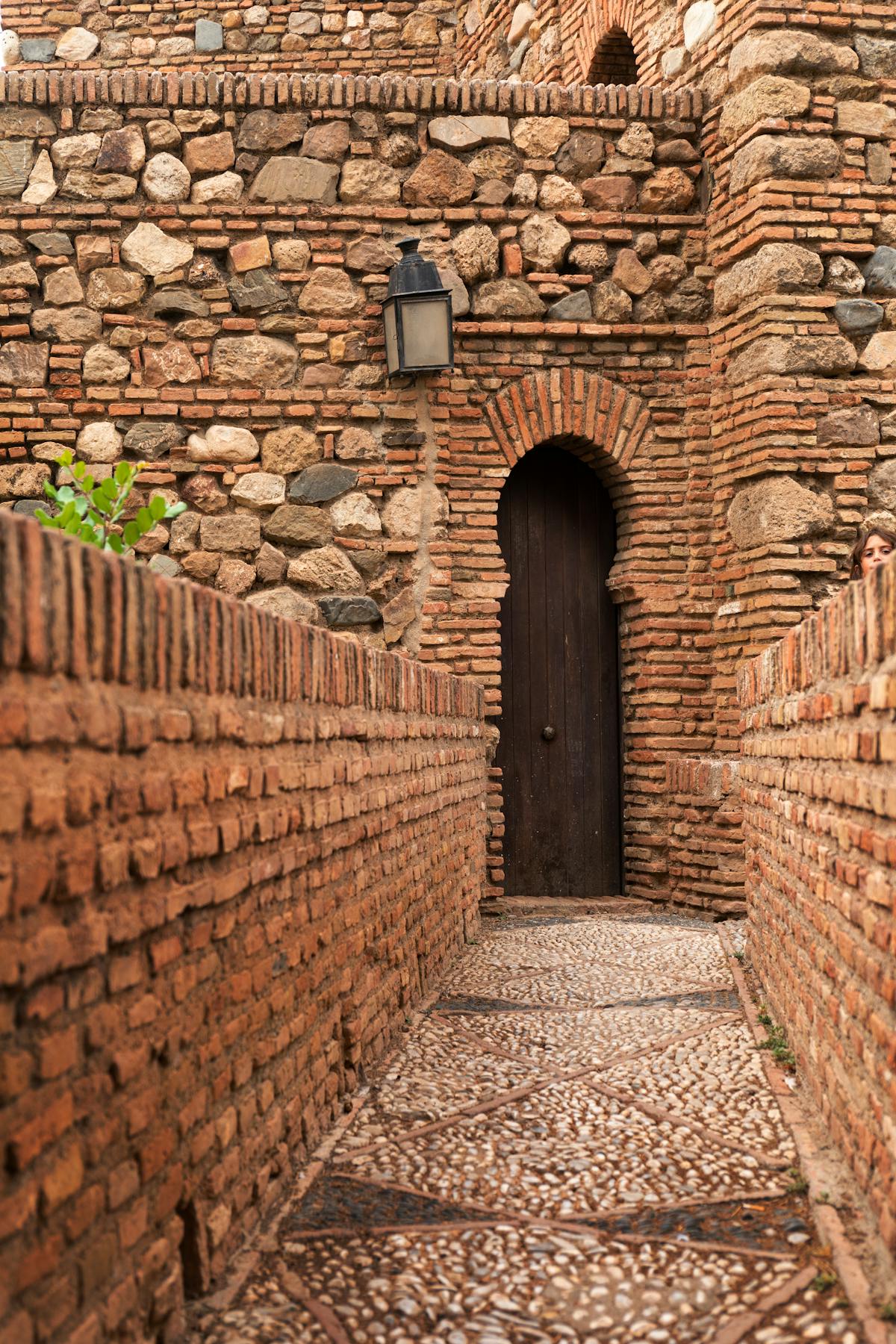
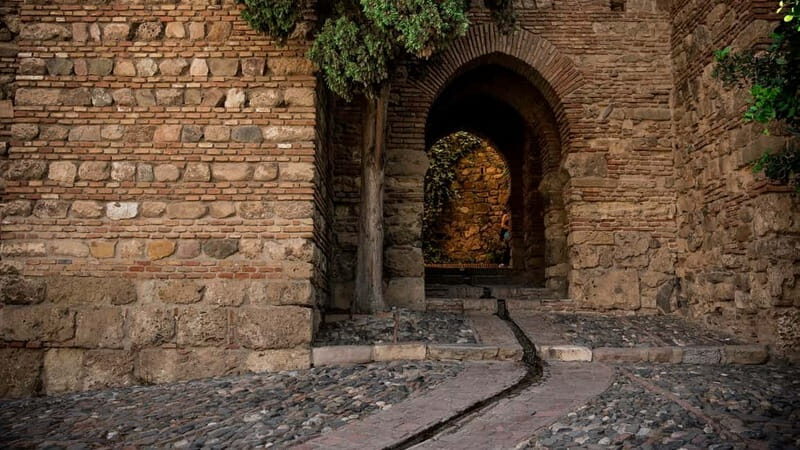
The guide starts at the Roman theatre, which most visitors walk past without realizing what they are looking at. It was buried under houses for centuries until demolition work in the 1950s uncovered the semicircular seating. From there you walk up through the fortress gates, and this is where the commentary earns its money. The guide points out the recycled Roman columns in the Moorish walls, explains why the gateways bend at right angles to slow attacking soldiers, and takes you through the upper palace rooms where the Muslim governors actually lived.
At $14, you are paying roughly $10 more than the self-guided entry ticket. For that difference, you get context that transforms a walk through old walls into a walk through eleven centuries of Mediterranean history. The skip-the-line entry also means you walk straight in rather than standing in the queue on busy days.
2. Alcazaba Malaga Guided Tour — $22
Duration: 1 hour 20 minutes | Price: $22 per person | Type: In-depth guided tour with entry
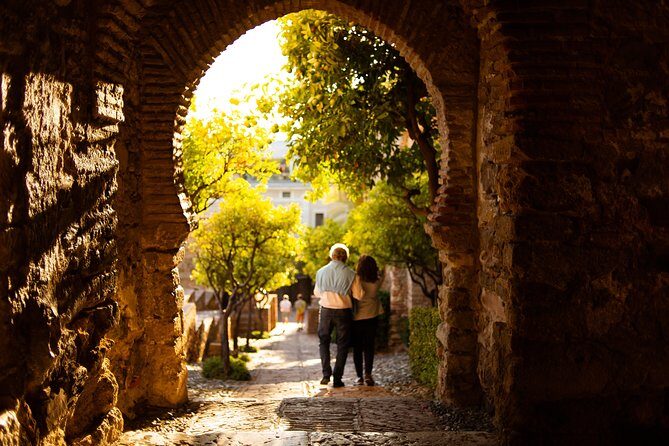
The specialist option. While the first tour splits its time between the Roman theatre and the Alcazaba, this one spends all eighty minutes inside the fortress itself. That extra focus pays off in the upper palace, where the guide has time to explain the water channels that fed the gardens, the stucco decoration that once covered the walls, and the strategic thinking behind the triple-wall defensive design.
This tour also spends more time in the archaeological museum housed in the upper palace rooms. The collection is small but pointed — ceramics, tools, coins, and household objects that ground the Alcazaba in daily life rather than just military history. You get a sense of people actually living here, not just defending it.
The trade-off is that you skip the Roman theatre, which you can visit on your own afterward since it is free to view from outside, and the price is higher. But if you have already seen the Roman theatre or if you care more about Islamic architecture and Andalusian history than Roman ruins, this is the better fit.
3. Roman Theatre and Alcazaba Guided Tour — $17
Duration: 90 minutes | Price: $17 per person | Type: Guided tour with entry
The middle ground. Same ninety-minute duration and same two-site coverage as the first tour, with entry included and a local guide. The price sits between the budget-friendly $14 option and the deep-dive $22 option, and the experience lands somewhere in the middle too.
What differentiates this from the first tour is the operator and the guiding style. Some groups are smaller, which means more opportunity to ask questions and linger at the viewpoints that interest you. The route through the Alcazaba is similar but not identical — some guides take a slightly different path through the upper palace, hitting rooms that other tours skip.
This is a solid alternative if the $14 tour is sold out on your preferred date, or if you want a slightly less crowded experience. The content is substantially the same — Roman theatre origins, Moorish military architecture, palace life, views from the ramparts. At $17 it remains exceptional value for ninety minutes of expert-guided history.
When to Visit the Alcazaba
The Alcazaba is open year-round, but the hours shift with the seasons and the experience changes dramatically depending on when you arrive.
Summer hours (April to October): 9:00 AM to 8:00 PM. The long days mean you can visit in the early evening when the worst of the heat has passed and the light on the walls turns warm and golden. June through August sees the highest visitor numbers, with midday crowds thick enough to make the narrow stairways uncomfortable. If you are visiting in peak summer, go first thing in the morning or after 5:00 PM.
Winter hours (November to March): 9:00 AM to 6:00 PM. Shorter days but dramatically fewer visitors. December and January mornings can feel like you have the place to yourself. Temperatures in Malaga rarely drop below 10 degrees Celsius even in winter, so the outdoor sections are pleasant year-round.
Best months: March, April, May, October. The same sweet spot that applies to most of Andalusia. Comfortable temperatures in the low to mid twenties, manageable crowds, and light that photographers love. The gardens are at their best in spring when the jasmine blooms and the orange trees are heavy with fruit.
Best time of day: First thing in the morning or late afternoon. The midday sun on the exposed upper terraces is punishing in summer, and the morning light hits the eastern walls beautifully. Late afternoon visits have the added bonus of watching the sunset from the ramparts — the view west over the port catches the last light perfectly.
Sunday afternoons: Free entry from 2:00 PM. Expect crowds, especially in the courtyards and the narrow passageways of the upper palace. If you are on a budget and can tolerate other people, this is genuine savings. If you prefer a peaceful visit, pay the 3.50 euros on a Tuesday morning and have the place largely to yourself.
Tips for Visiting
Wear proper shoes. The Alcazaba involves walking uphill on uneven stone surfaces, brick ramps, and occasionally worn marble steps. Flip-flops and dress shoes are technically allowed but practically foolish. Sneakers or sandals with ankle straps work fine. The walk from the entrance to the upper palace gains about 60 meters of elevation — not strenuous, but enough to notice.
Bring water. There are no fountains or shops inside the fortress. The walk is not long, but in summer the exposed terraces get hot and there is limited shade on the upper levels. Buy a bottle before you enter.
Start at the Alcazaba, then walk up to Gibralfaro. If you plan to visit both, the easier route is to enter the Alcazaba from the Calle Alcazabilla entrance near the Roman theatre, walk up through the fortress, and then continue on the walled path up to Gibralfaro Castle. Going the other direction means walking down to the Alcazaba from Gibralfaro and then retracing your steps, which is less satisfying. Budget about two hours for both sites.
The elevator exists but is unreliable. There is a public elevator on Calle Guillen Sotelo that takes you partway up the hill. When it works, it saves you the steepest part of the approach. When it does not work — which happens often enough to mention — you are back to walking. Do not plan your visit around the elevator working.
Combine with the Roman theatre. The theatre sits right at the Alcazaba entrance and is free to visit. Built in the 1st century BC under Emperor Augustus, it was used for performances for about three centuries before being abandoned and eventually buried under medieval buildings. Take ten minutes to walk through it before or after the Alcazaba — the interpretive center next to it explains what you are looking at and has some interesting artifacts.
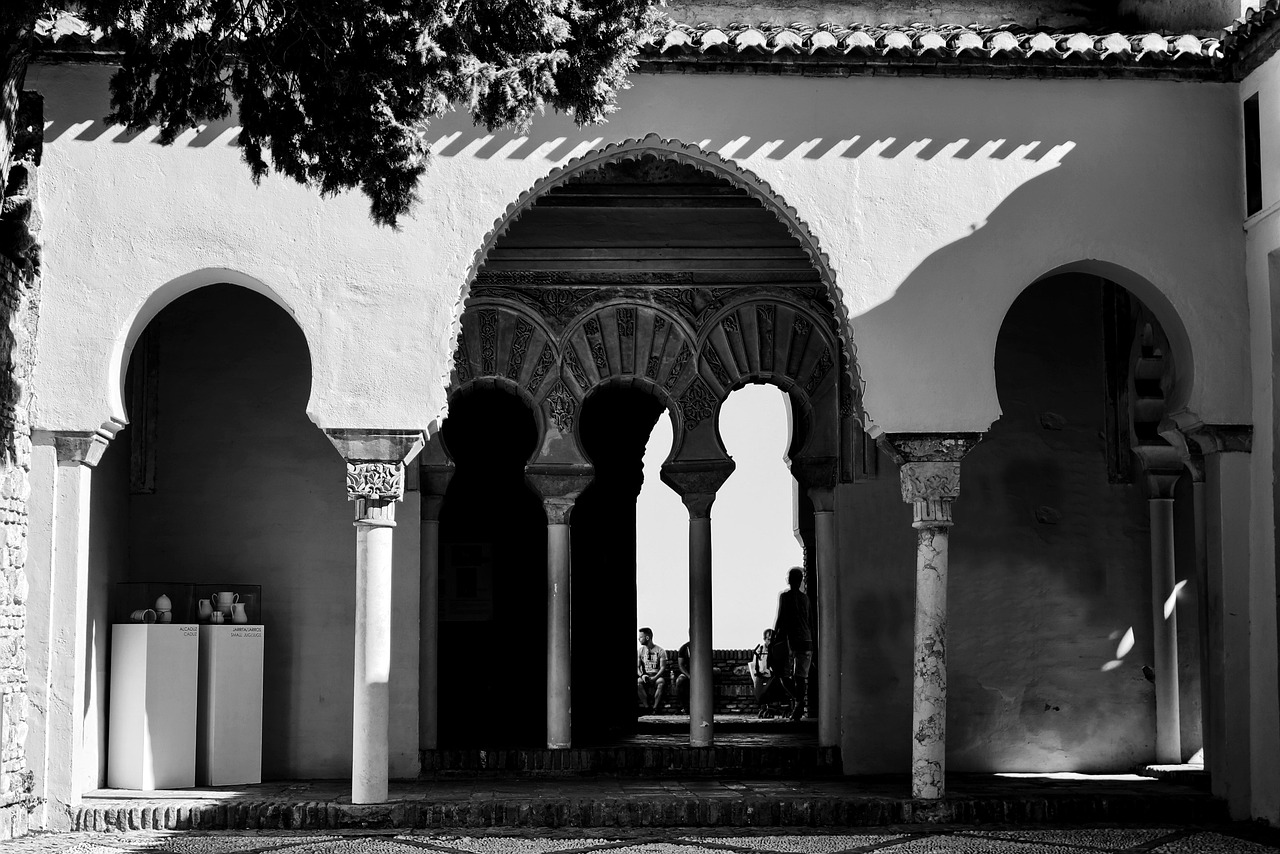
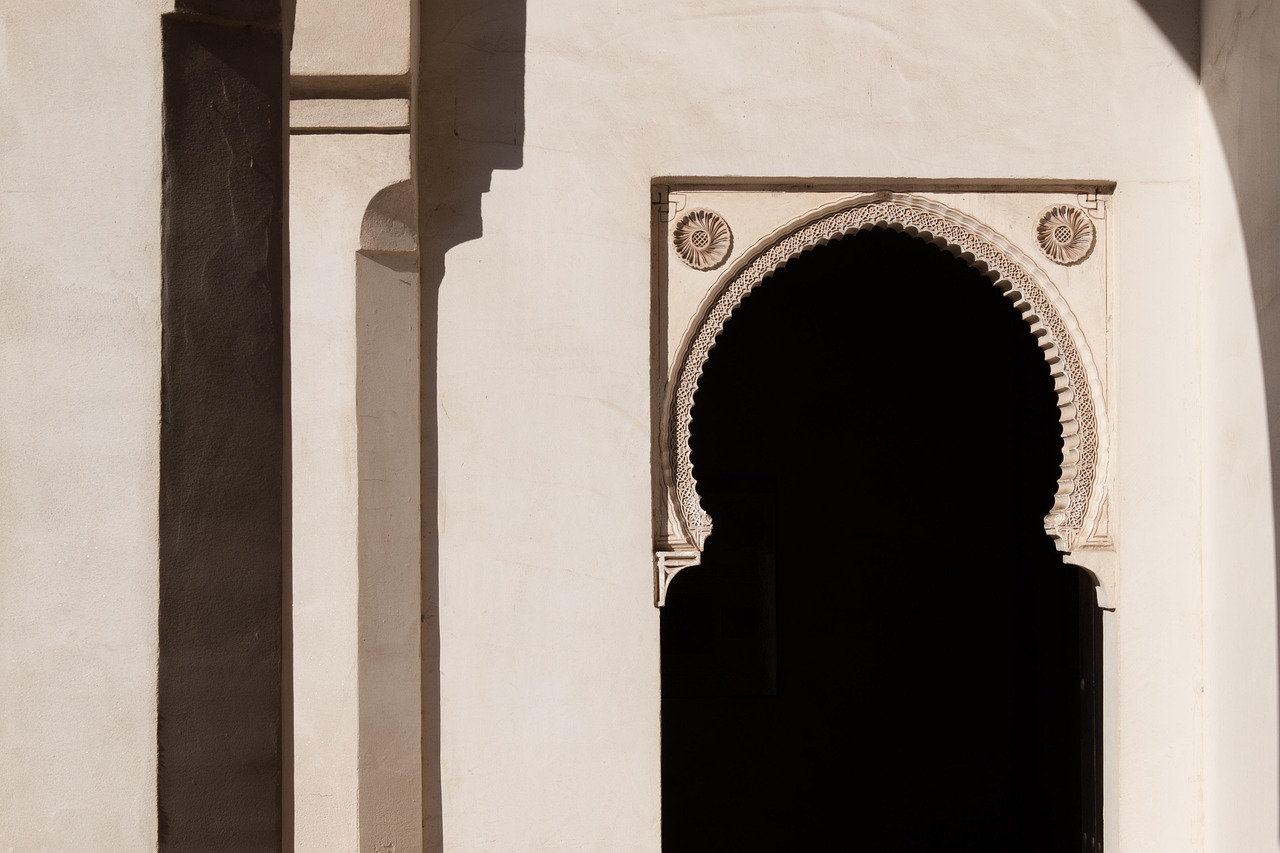
Photography tips. The best shots inside the Alcazaba come from three spots: the framed views through the horseshoe arches in the lower palace, the courtyard gardens with their reflecting pools, and the panoramic viewpoint at the highest terrace. For the city views, a wide-angle lens captures the sweep from the bullring to the port to the mountains. Morning light is best for the fortress itself; afternoon light is better for the city views below.
What You Will See Inside
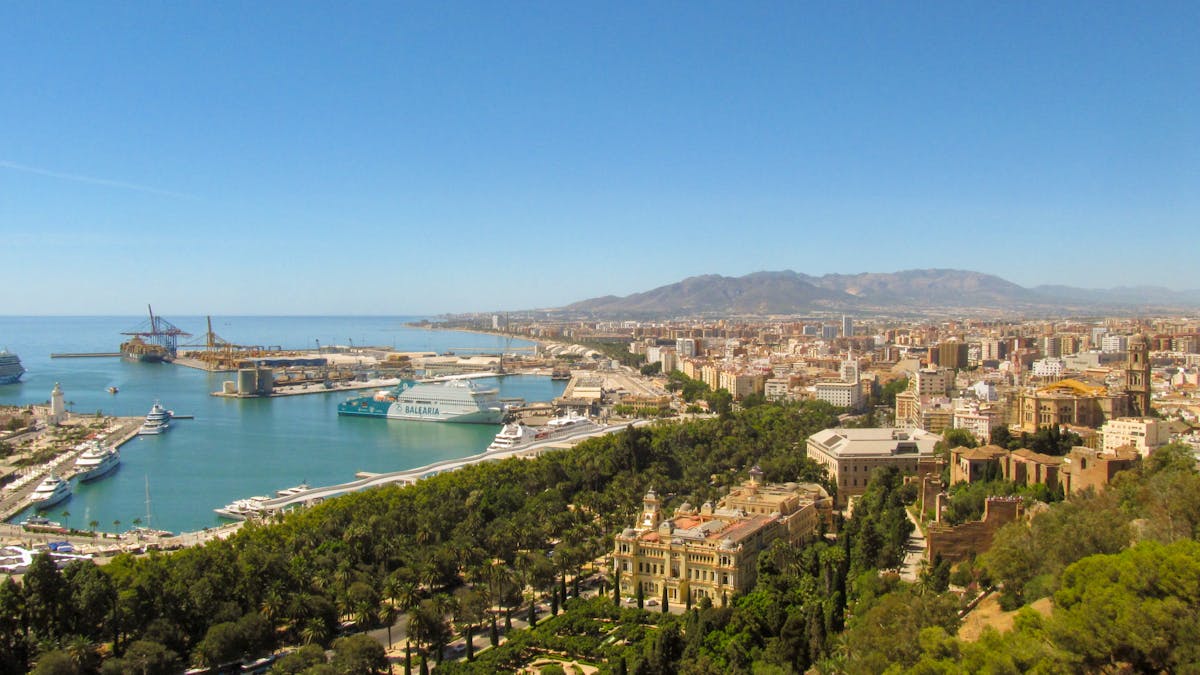
The Alcazaba unfolds in layers as you climb, and each section has a distinct character.
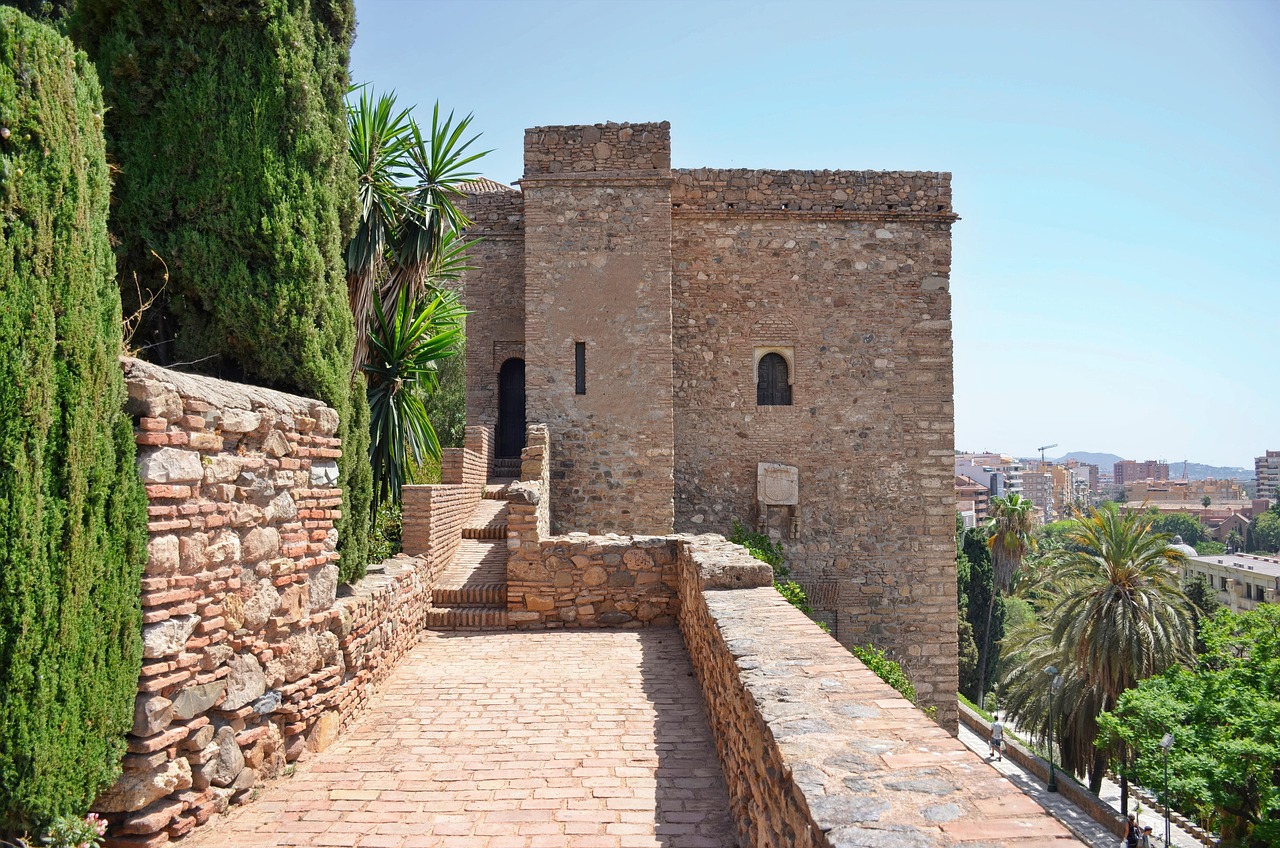
The entrance and lower walls: You enter from Calle Alcazabilla through the Puerta de la Boveda, one of several bent gateways designed to slow down attackers. The defensive engineering is immediately obvious — the passage turns sharply, with arrow slits and murder holes in the walls above. Even in peacetime, these gates controlled who entered and left the palace compound.
The lower palace (Cuartos de Granada): Through the gates you reach the first set of courtyards and gardens. Orange trees, water channels, and arched porticoes create the classic Andalusian palace atmosphere that you will recognize from the Alhambra in Granada. The gardens are small but immaculate, with the original irrigation channels still visible running alongside modern plantings.
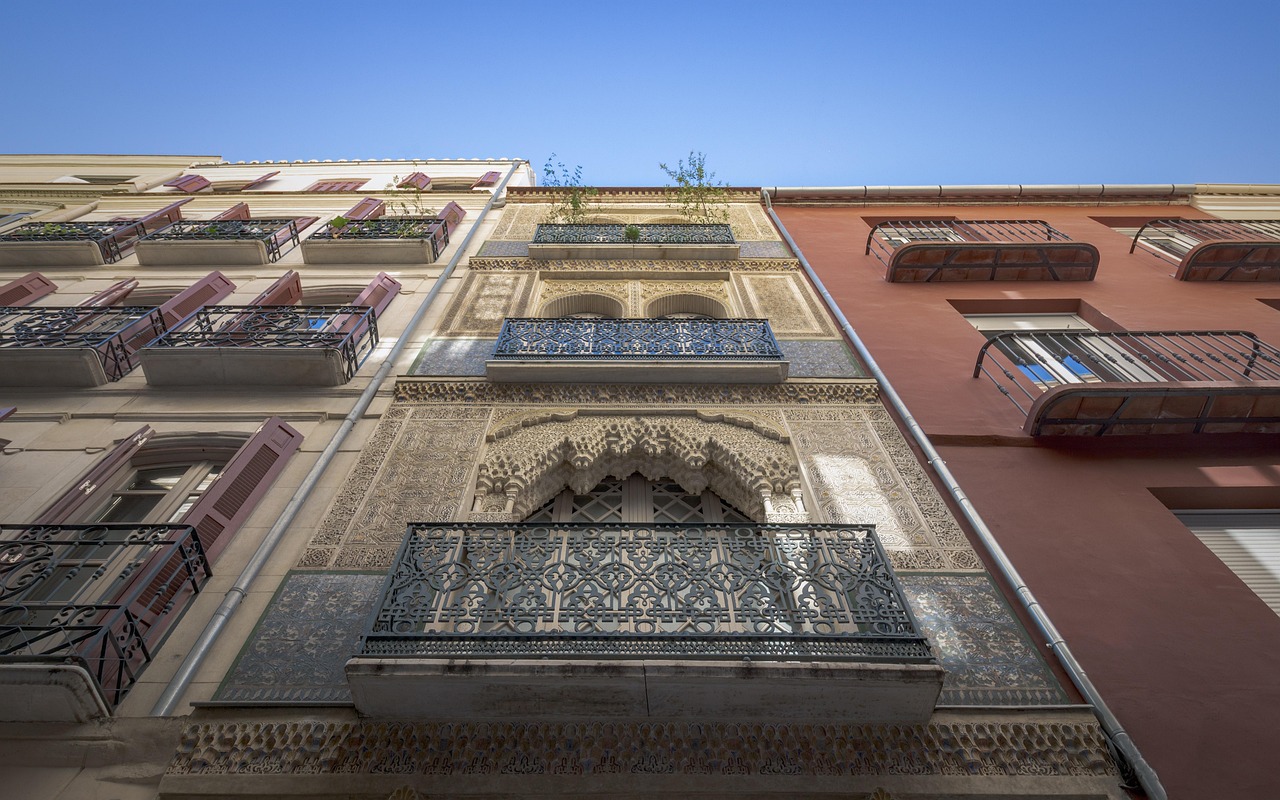
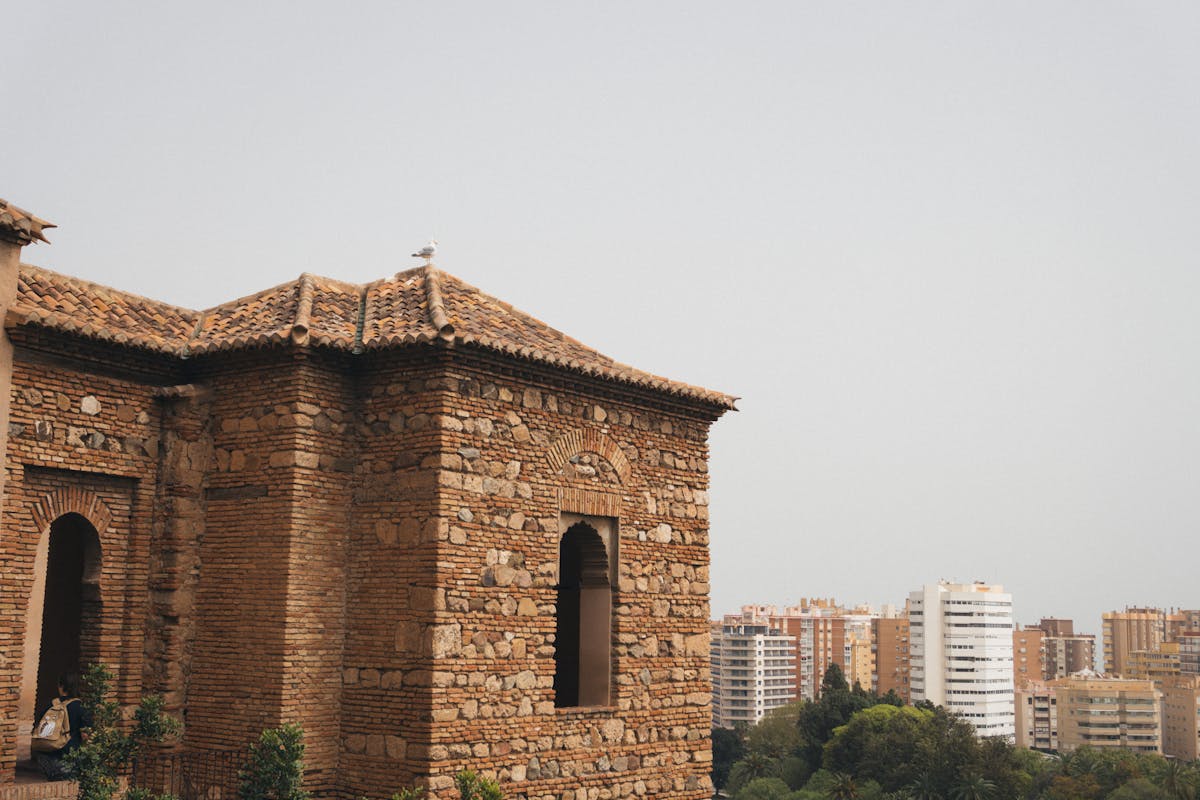
The upper palace (Palacio Nazari): The highest part of the Alcazaba, and the most impressive. This was the actual residence of the Muslim governors, and the rooms still have remnants of stucco decoration, carved arches, and geometric tilework. The archaeological museum here displays ceramics, lamps, coins, and household items found during excavations — everyday objects that bring the fortress to life beyond its military function.
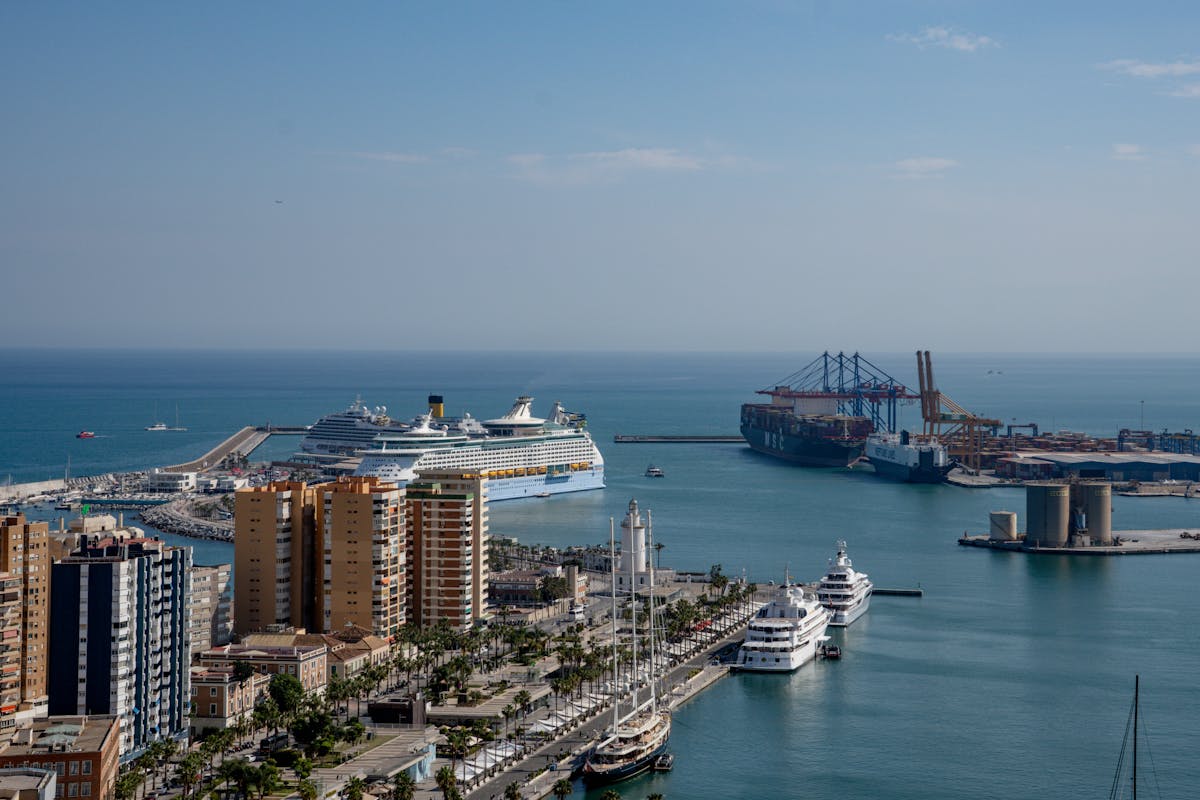
The ramparts and viewpoints: The walls of the upper palace provide the best views in Malaga. From the eastern wall, you look down at the Roman theatre and the old town. From the northern wall, the view extends to the mountains behind the city. And from the western ramparts, you get the full panorama of the port, the bullring, and the Mediterranean. On very clear days, the mountains of North Africa are visible on the southern horizon.
The connection to Gibralfaro: A walled pathway called the Coracha connects the Alcazaba to Gibralfaro Castle on the hilltop above. If you bought the combined ticket, this is how you reach the castle. The walk takes about 15 minutes uphill and offers views over the city from the connecting wall. Gibralfaro itself is more military than the Alcazaba — pure fortress with thick walls and watchtowers, built in the 14th century to protect the Alcazaba from above. The views from the Gibralfaro ramparts are even wider, taking in the entire bay of Malaga and the coastal mountains to the east.