
There is a lake underneath the Paris Opera. Not a metaphorical one. An actual underground reservoir, sitting in the dark below one of the most extravagant buildings ever constructed, filled with water that seeped in during construction and refused to leave. The architect, Charles Garnier, could not drain it. So he built a concrete cistern and turned the problem into a feature. That reservoir is still there today, maintained by the Paris fire brigade, who use it as a backup water supply.
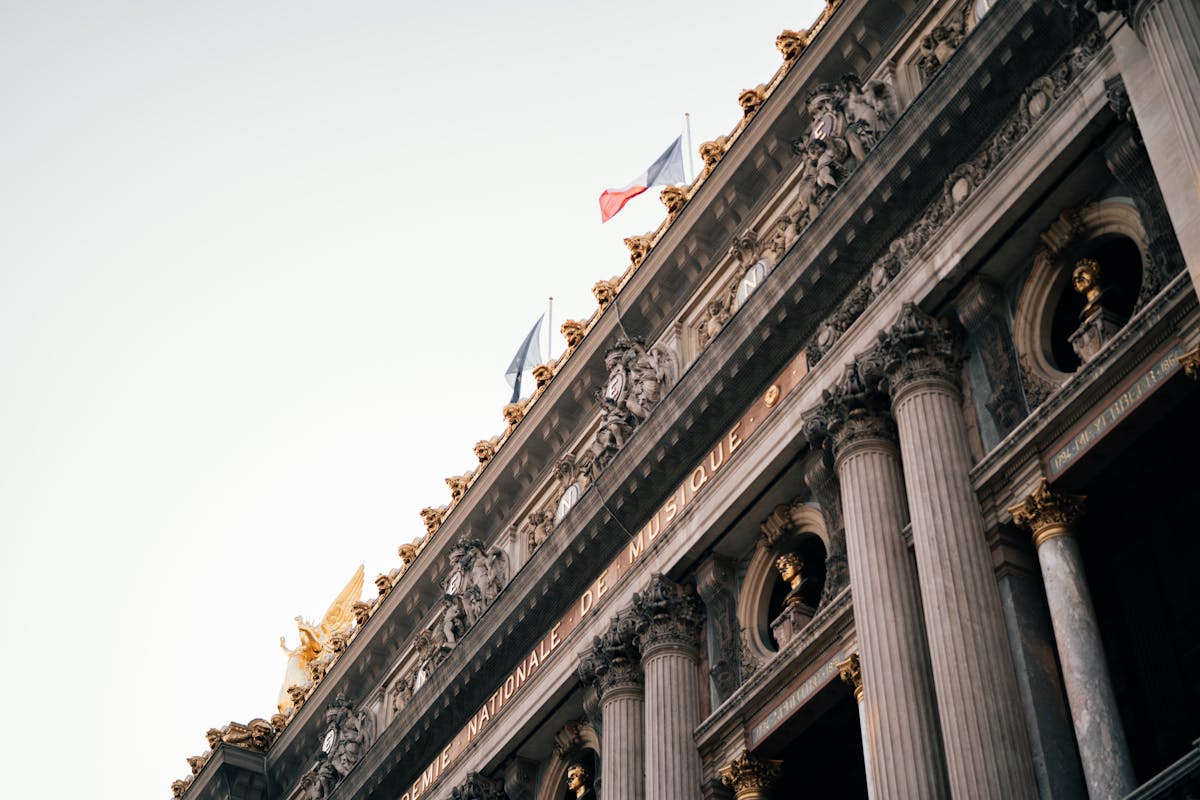
This is the building that inspired Gaston Leroux to write The Phantom of the Opera in 1910. The underground lake, the falling chandelier (a real incident from 1896 that killed a spectator), the labyrinthine backstage corridors — all of it is based on this place. And you can walk through most of it with nothing more than an entry ticket.
Getting tickets is straightforward once you know how the system works — but there are a few quirks worth understanding before you go. Self-guided or guided, morning or afternoon, standard entry or a combination with a Seine cruise — here is everything you need to know.

Best overall: Paris: Opera Garnier Entry Ticket — $18. Self-guided access to every public area. Simple, affordable, and you move at your own pace.
Best combo deal: Opera Garnier and Seine River Cruise Tickets — $42. Two of the best things to do in Paris bundled into one afternoon.
Best for depth: Opera Garnier Private Tour — $211. A private guide, backstage access, and stories you won’t find on any plaque.
- How the Palais Garnier Ticket System Works
- Self-Guided Visit vs. Guided Tour vs. Seeing a Show
- The Best Palais Garnier Tours to Book
- 1. Paris: Opera Garnier Entry Ticket —
- 2. Paris: Opera Garnier and Seine River Cruise Tickets —
- 3. Paris: Opera Garnier Private Tour — 1
- When to Visit the Palais Garnier
- How to Get There
- Tips That Will Save You Time
- What You’ll Actually See Inside
- More Paris Guides
- More France Guides
How the Palais Garnier Ticket System Works
The official ticketing runs through the Opera de Paris website. Prices depend on where you live, which catches some people off guard.
Self-guided visit prices (2025-2026):
- Adults from outside the EEA: EUR 25
- Adults from France/EEA: EUR 15
- Ages 13-25 from outside the EEA: EUR 20
- Ages 13-25 from France/EEA: EUR 10
- Under 12: Free
The self-guided visit gives you access to the Grand Staircase, the auditorium (when no rehearsals are happening), the Grand Foyer, the Salon du Glacier, and the library-museum. You can add a multimedia tablet for an extra EUR 6.50, which provides about an hour of guided content as you walk through.
Guided tours are also available in English, French, and Spanish, with groups capped at 30 people. The guides wear headset microphones and give you receivers, so you can hear clearly even in crowded rooms. Expect about 90 minutes and a deeper dive into the building’s history, from the Greek mythology scattered across the ceilings to the construction drama that nearly bankrupted the project.
One thing to know: the auditorium is occasionally closed for rehearsals. The opera house is still a working venue — ballet, opera, and concerts run regularly. If seeing the Marc Chagall ceiling painting is your priority, check the rehearsal schedule before booking. No refunds are given when rehearsals close the auditorium.
Self-Guided Visit vs. Guided Tour vs. Seeing a Show
Self-guided visit is the most popular option and works well for most visitors. You get full access to the public areas, you move at your own speed, and you can linger in the Grand Foyer as long as you want. The downside is that without context, a lot of the symbolism and history flies over your head. The building is covered in references to Greek mythology, and the construction story alone — involving water infiltration, a war, borrowed casino money, and 73 sculptors — is fascinating but invisible without someone telling you about it.
Guided tour is worth it if you care about the stories behind the architecture. The guides take you through rooms in a specific order and point out details you would absolutely miss on your own — like the fact that part of the ceiling was finished by students after the original painter fell ill, or that the marble Grand Staircase uses stone sourced from seven different countries. Allow 90 minutes.
Seeing a show is a different experience entirely. You will see the auditorium from a seat rather than a balcony railing, and the Chagall ceiling hits differently when the house lights dim and seven tons of chandelier are glowing above you. Ballet and opera tickets vary wildly in price — from around EUR 15 for restricted-view seats to several hundred euros for prime orchestra. If a performance aligns with your dates, it is worth considering. You can check the Opera de Paris website for the current season schedule.
The Best Palais Garnier Tours to Book
I pulled together the top options based on what actually delivers the best experience for the money. Here are three tours worth your attention, each serving a different kind of visit.
1. Paris: Opera Garnier Entry Ticket — $18
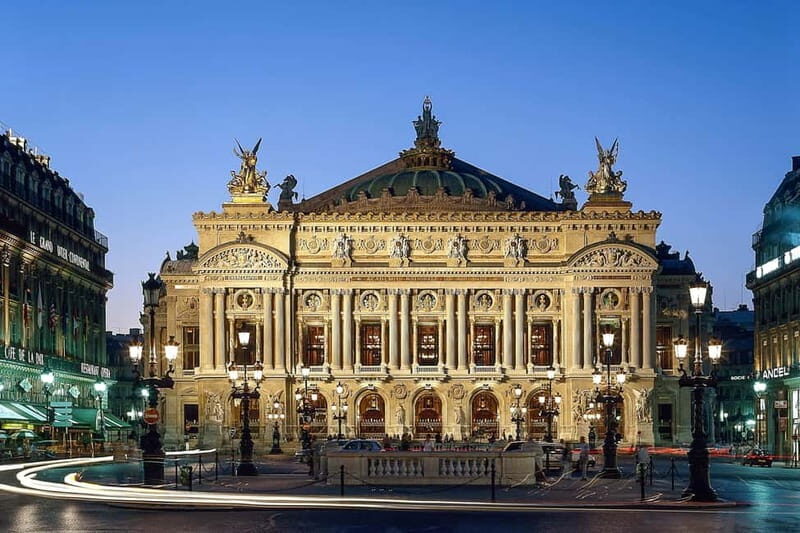
This is the one most people should start with. At $18, it is one of the best value tickets in Paris for what you actually see. You get self-guided access to every public area of the Palais Garnier — the Grand Staircase, the auditorium (schedule permitting), the Grand Foyer that rivals the Hall of Mirrors at Versailles, and the library-museum with centuries of opera documents.
The entry ticket is flexible on timing, so you do not need to rush through. Most people spend about an hour inside. If you want more structure, add the multimedia tablet for EUR 6.50 — it gives you about an hour of audio-visual content keyed to specific locations in the building.
2. Paris: Opera Garnier and Seine River Cruise Tickets — $42
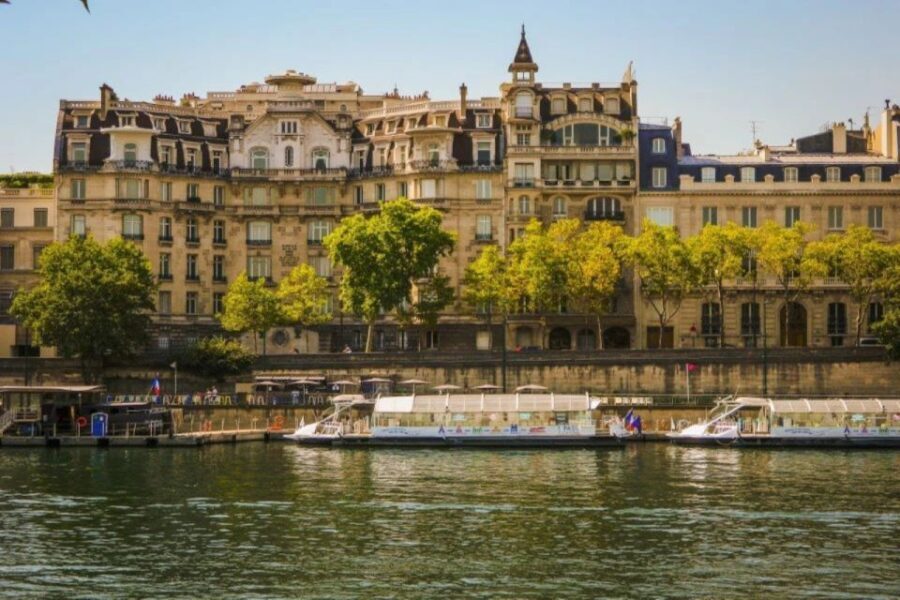
This combo bundles the Garnier self-guided visit with a Seine River cruise, and at $42 it is genuinely good value. The cruise alone usually runs $15-20, so you are essentially getting both for less than buying them separately. The cruise passes Notre-Dame, the Louvre, the Eiffel Tower, and the Musee d’Orsay from the water — which gives you a completely different angle on buildings you have probably already walked past.
Do the Garnier visit in the morning when crowds are lighter, then take the cruise in the afternoon. The tickets are flexible enough to split across the day, which makes for a well-paced itinerary rather than a rush.
3. Paris: Opera Garnier Private Tour — $211
If the Palais Garnier is your main event in Paris rather than a quick stop, the private tour is the way to go. At $211 per person it is a serious investment, but you get a dedicated guide, access to areas that self-guided visitors cannot enter, and a level of detail that turns the visit from “pretty building” to “I understand why this place matters.”
The guides are specialists — many of them art historians or architecture graduates — and they pace the tour around your interests. Traveling with someone who cares about Phantom of the Opera lore? They will take you through every connection. More interested in the construction engineering? They will explain how Garnier solved the flooding problem and why the building sits on a foundation that is essentially a boat hull. For groups of two or more, the per-person cost drops meaningfully.
When to Visit the Palais Garnier
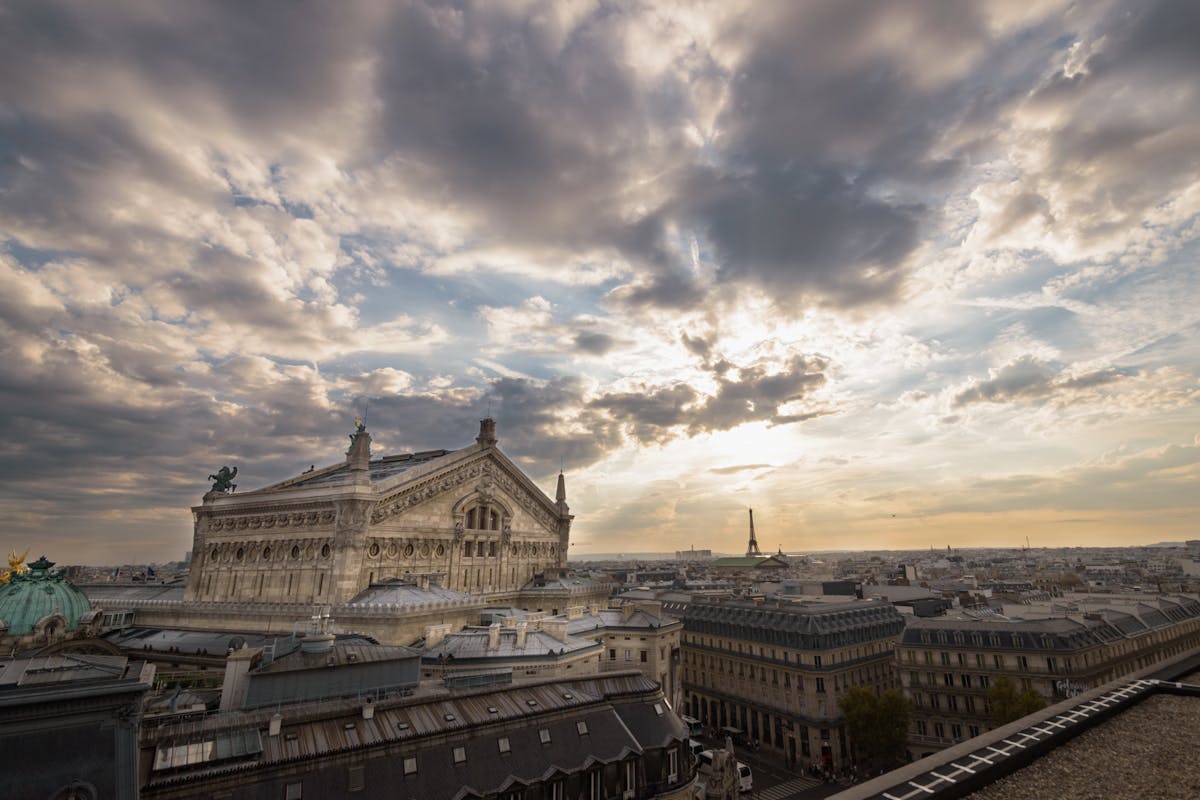
The Palais Garnier is open daily from 10:00 AM to 5:00 PM (last entry at 4:15 PM), with extended hours until 6:00 PM on some days during the summer season. It is closed on January 1, May 1, and during certain afternoon performances or special events.
Best time to visit: Early morning, right when the doors open at 10:00 AM. The Grand Staircase area clears out significantly if you arrive in the first 30 minutes. The afternoon crowds peak between 1:00 and 3:00 PM.
Worst time: Weekend afternoons in summer. The building gets warm, the crowds get dense, and the auditorium is more likely to be closed for rehearsals during performance season.
Off-season advantage: January through March is significantly quieter. You will have entire rooms to yourself for minutes at a time, which is exactly the kind of space this building was designed to be experienced in.
If you want to see a performance, the opera and ballet season runs from September through July. Check the schedule early — popular productions sell out weeks in advance, though last-minute restricted-view seats sometimes appear.
How to Get There
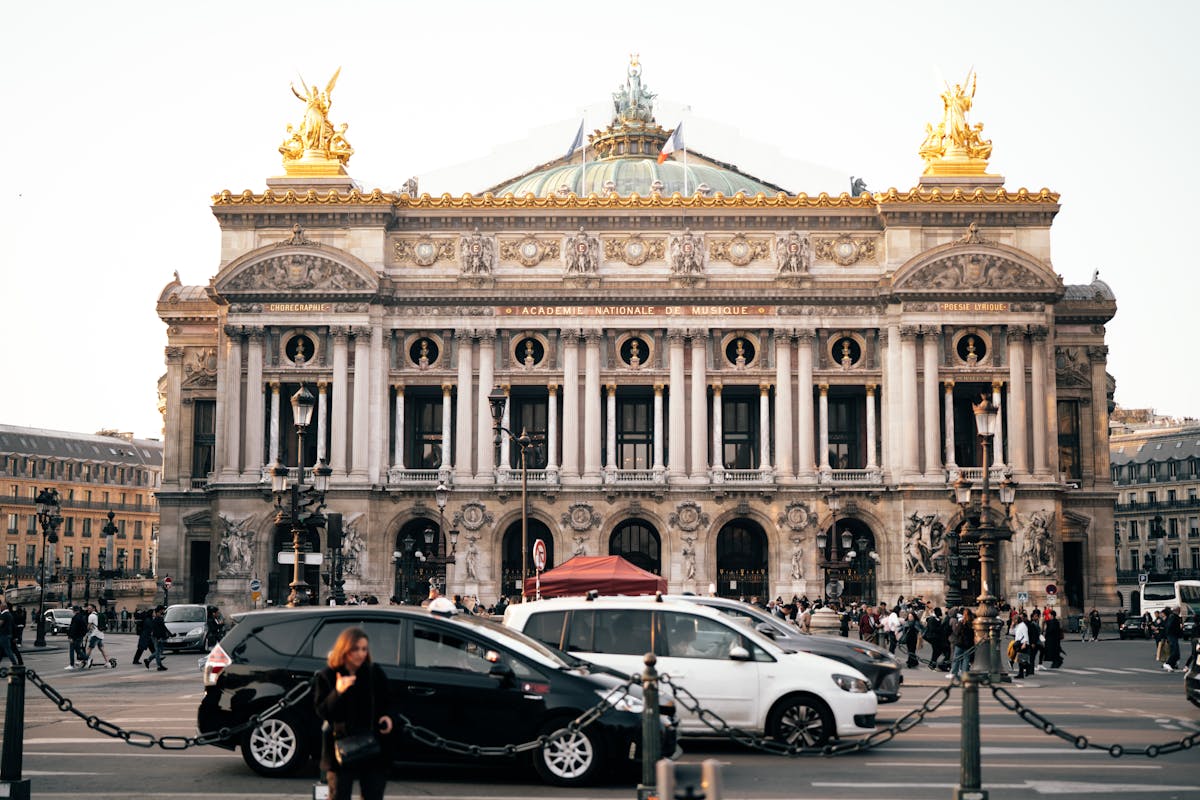
The Palais Garnier sits at Place de l’Opera in the 9th arrondissement, and getting there is about as easy as it gets in Paris.
Metro: Opera station (lines 3, 7, and 8) drops you directly in front of the building. This is the fastest option from almost anywhere in central Paris. From the Louvre, it is two stops on line 7. From the Eiffel Tower area, take line 8.
RER A: Auber station is a 2-minute walk from the opera. Useful if you are coming from La Defense, Disneyland Paris, or Charles de Gaulle airport via the RER B-to-A connection.
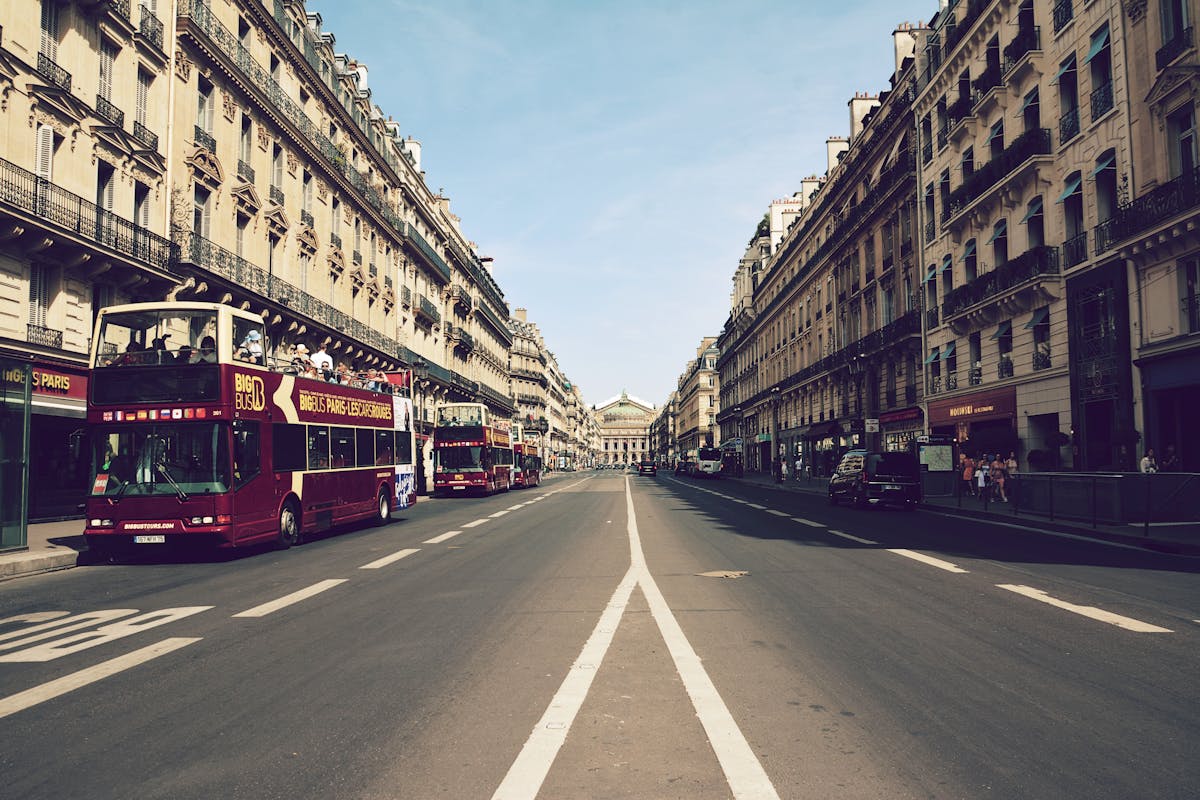
Walking: From the Louvre, it is a 15-minute walk straight up Avenue de l’Opera — one of the most pleasant walks in Paris, with the Garnier growing larger in your view the entire way. From Galeries Lafayette and Printemps (the big department stores), it is a 5-minute walk south on Boulevard Haussmann.
Tips That Will Save You Time
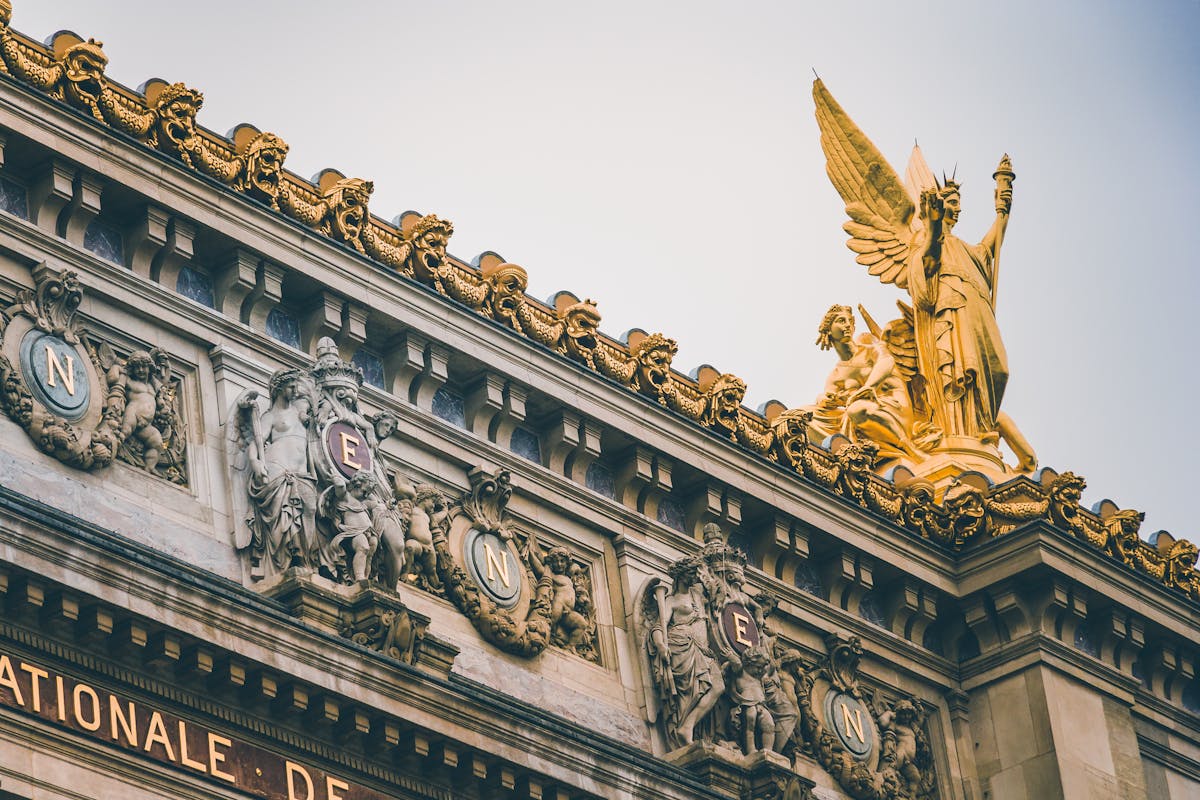
- Book online in advance. The ticket queue at the door is not terrible, but it exists. Online tickets let you skip it entirely. Book at least a day ahead during peak season.
- Arrive 15 minutes early if you have a guided tour. You need to exchange your voucher for a ticket, pass through security, and reach the waiting area (the Rotonde des Abonnes) before the group departs. Late arrivals get turned away.
- Bring ID for guided tours. The guide will hold onto an ID document in exchange for the audio headset receivers. A photocopy or phone photo will not work — bring the original.
- Check the auditorium schedule. The opera house is a working theater. Rehearsals close the auditorium regularly, and no refunds are issued. The official website posts closure dates in advance.
- Photography is allowed in most areas, but no flash and no tripods. The Grand Foyer and Grand Staircase photograph well even in low light if your phone has a decent night mode.
- No large bags. There is a coat check but bag storage is limited. Backpacks over a certain size may be refused at security.
- Combine with Galeries Lafayette. The department store is a 5-minute walk away, has a free rooftop terrace with panoramic views, and an Art Nouveau glass dome interior that echoes some of the Garnier’s own excess.
What You’ll Actually See Inside
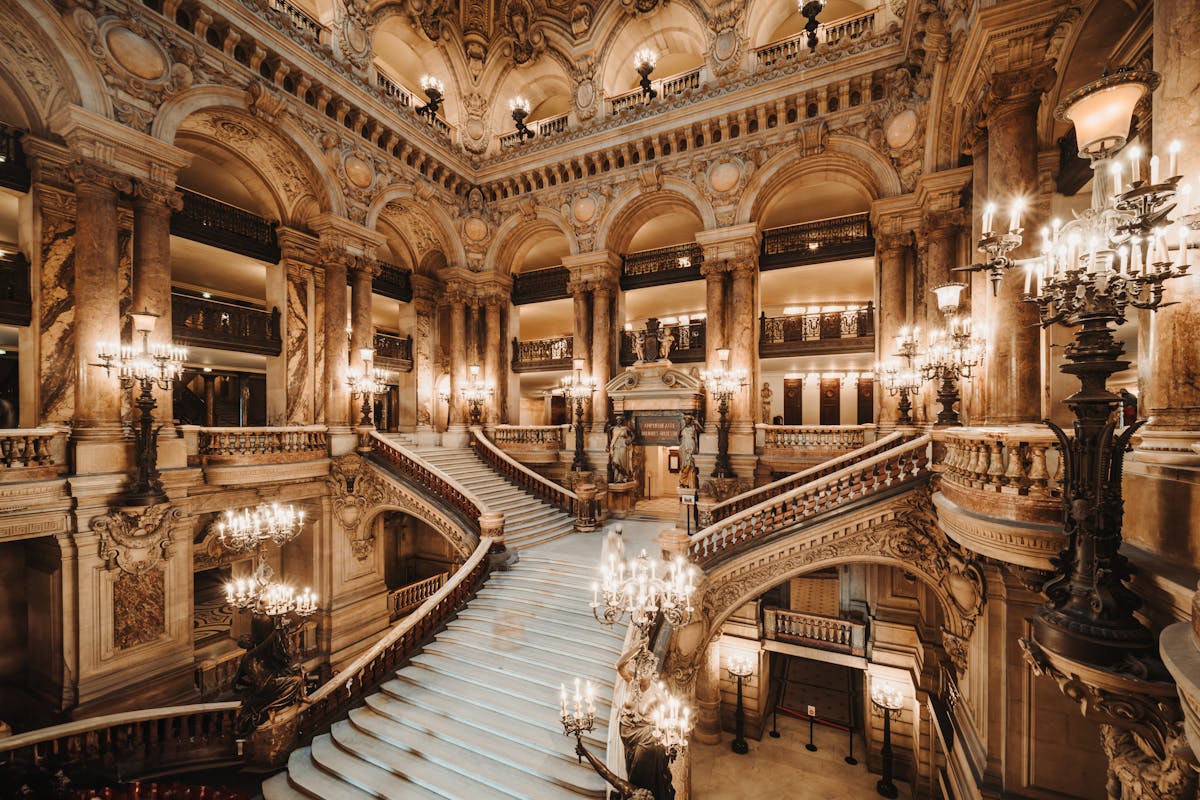
The Palais Garnier is not a museum in the traditional sense. It was designed as a social machine — a building where the experience of being seen was as important as the performance on stage. Understanding that changes how you look at everything inside.
The Grand Staircase (Le Grand Escalier) is the centerpiece. It rises through the building in sweeping curves of Italian marble, flanked by bronze candelabras and female torchbearers. The ceiling above was painted in four panels depicting scenes from Greek mythology by Isidore Pils — though Pils fell ill partway through and his students had to finish the work. The staircase was designed so that arriving audience members could display their finery while climbing to their seats. It is pure theater before the theater even starts.
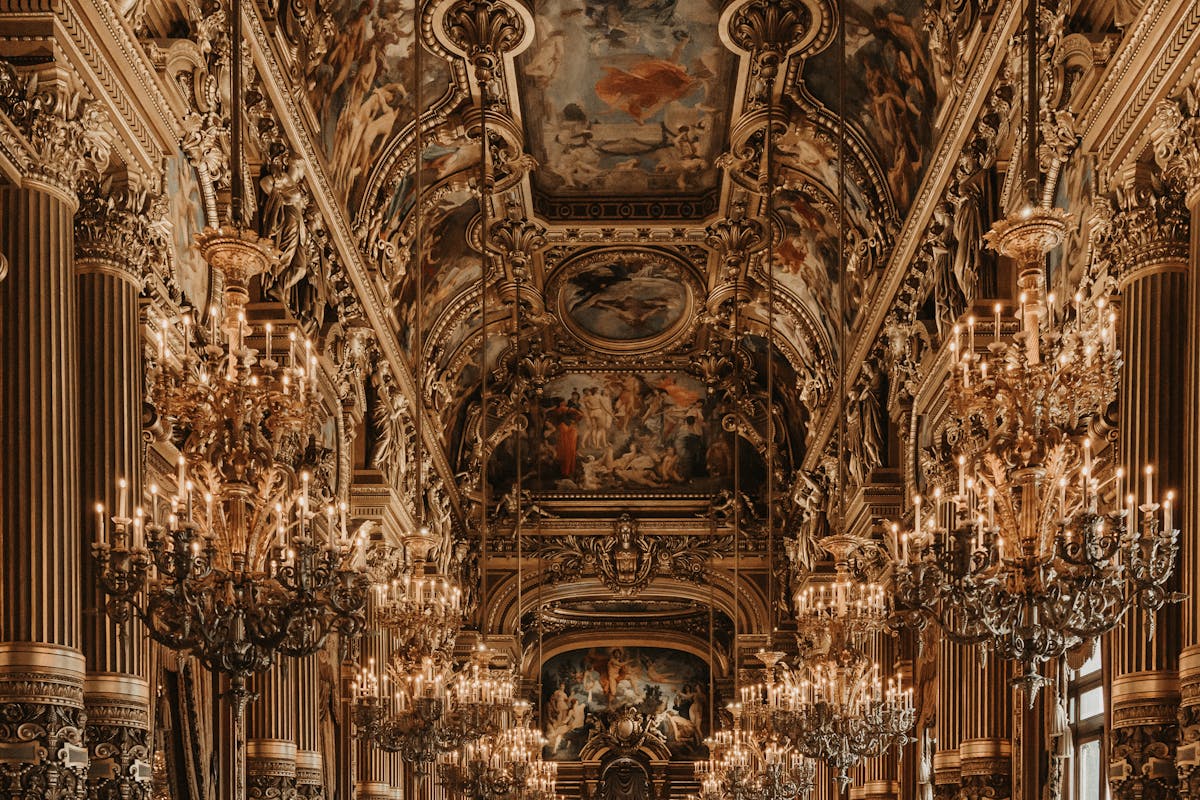
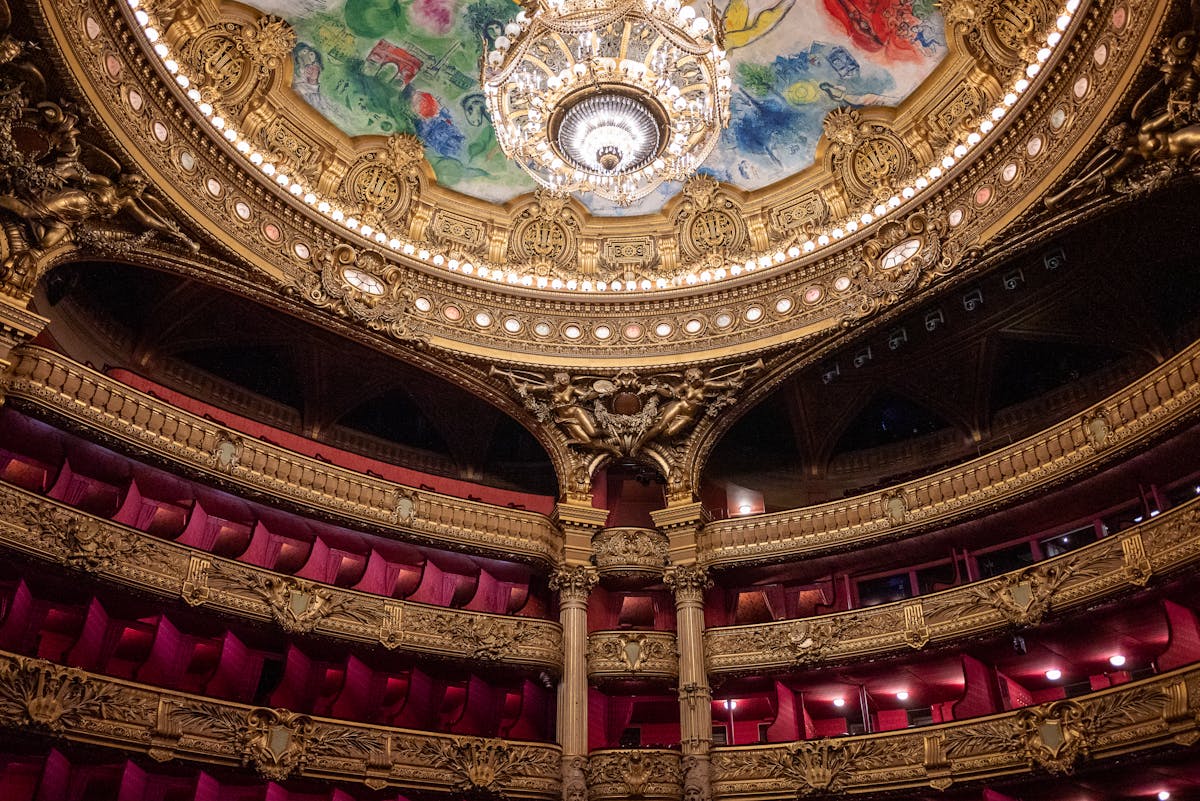
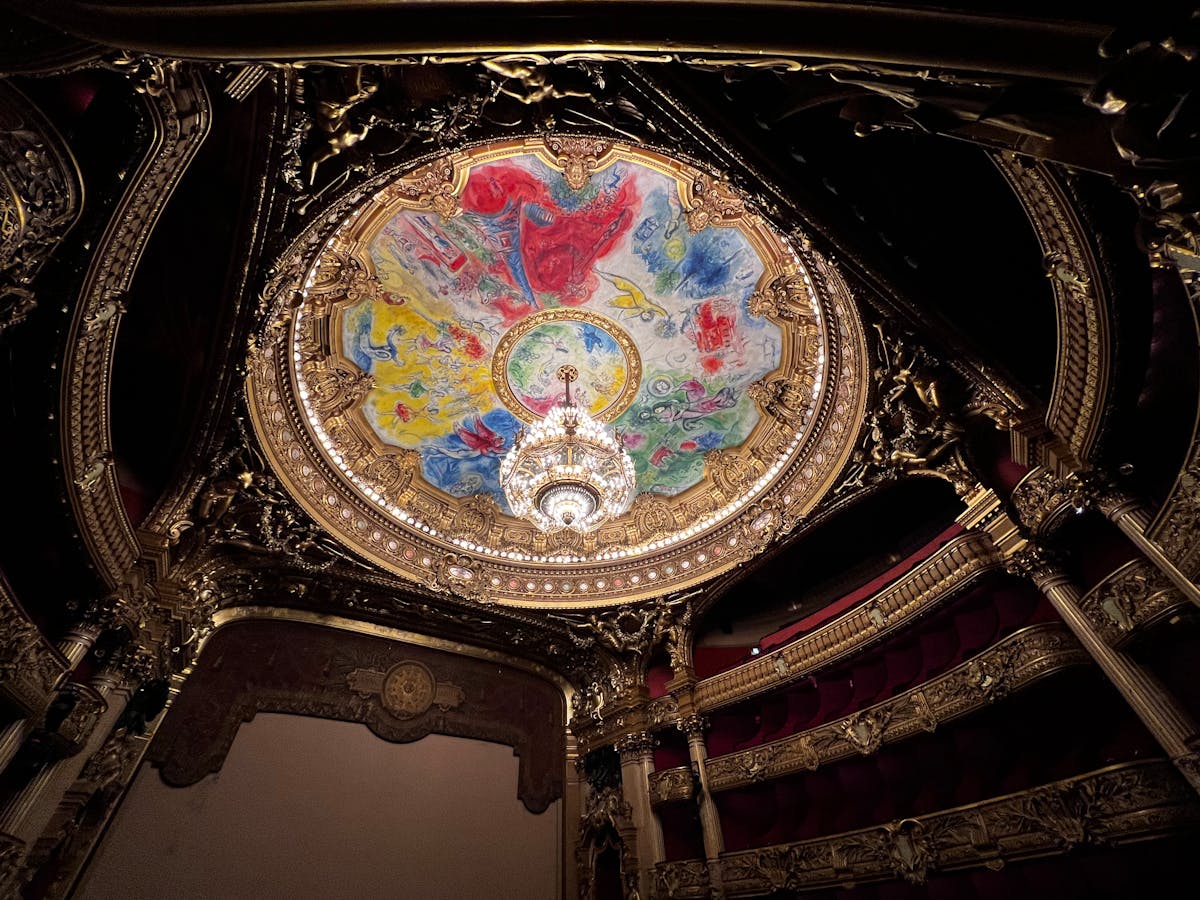
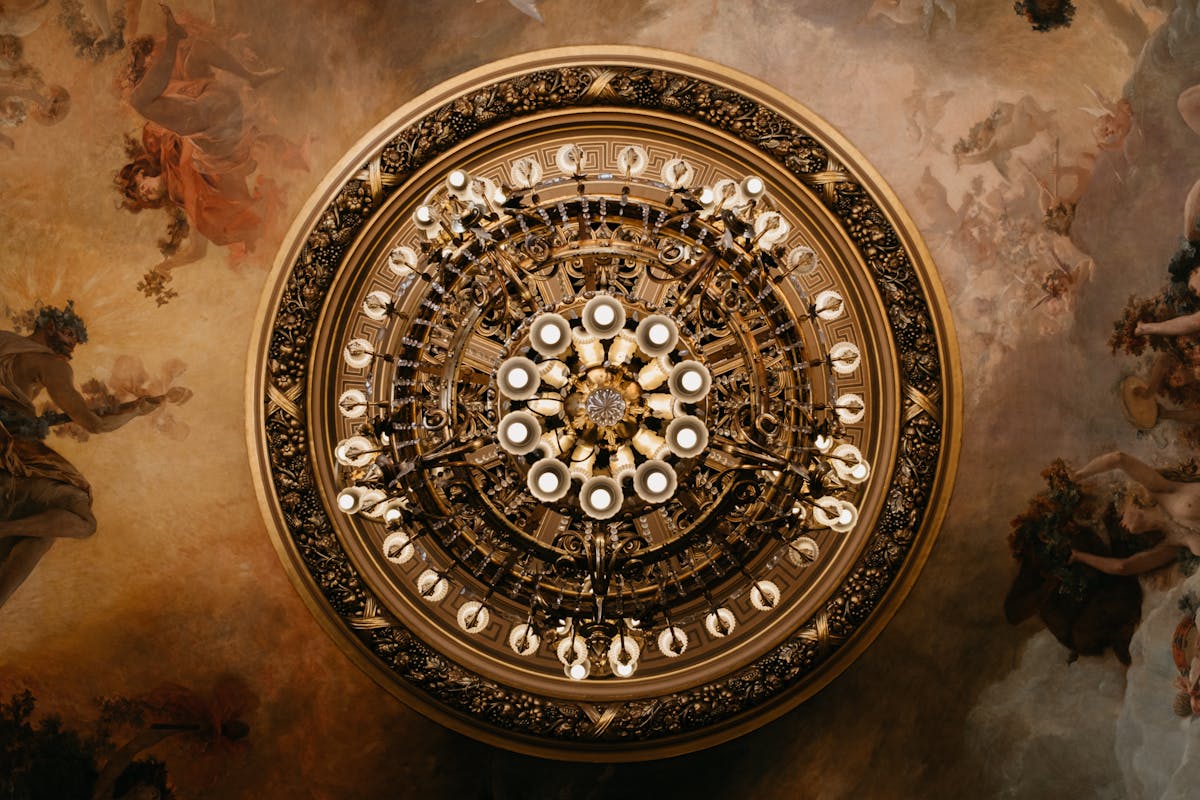
The Auditorium seats about 2,000 people across five levels of balconies, all wrapped in red velvet and gold. The seven-ton bronze and crystal chandelier hangs from the center of the ceiling — the same one whose counterweight fell in 1896. Above it is Marc Chagall’s controversial 1964 ceiling painting, commissioned by Culture Minister Andre Malraux. Chagall’s dreamy, colorful panels depicting scenes from famous operas and ballets sit in sharp contrast to the ornate 19th-century decoration surrounding them. Parisians were split on it then. Many still are.
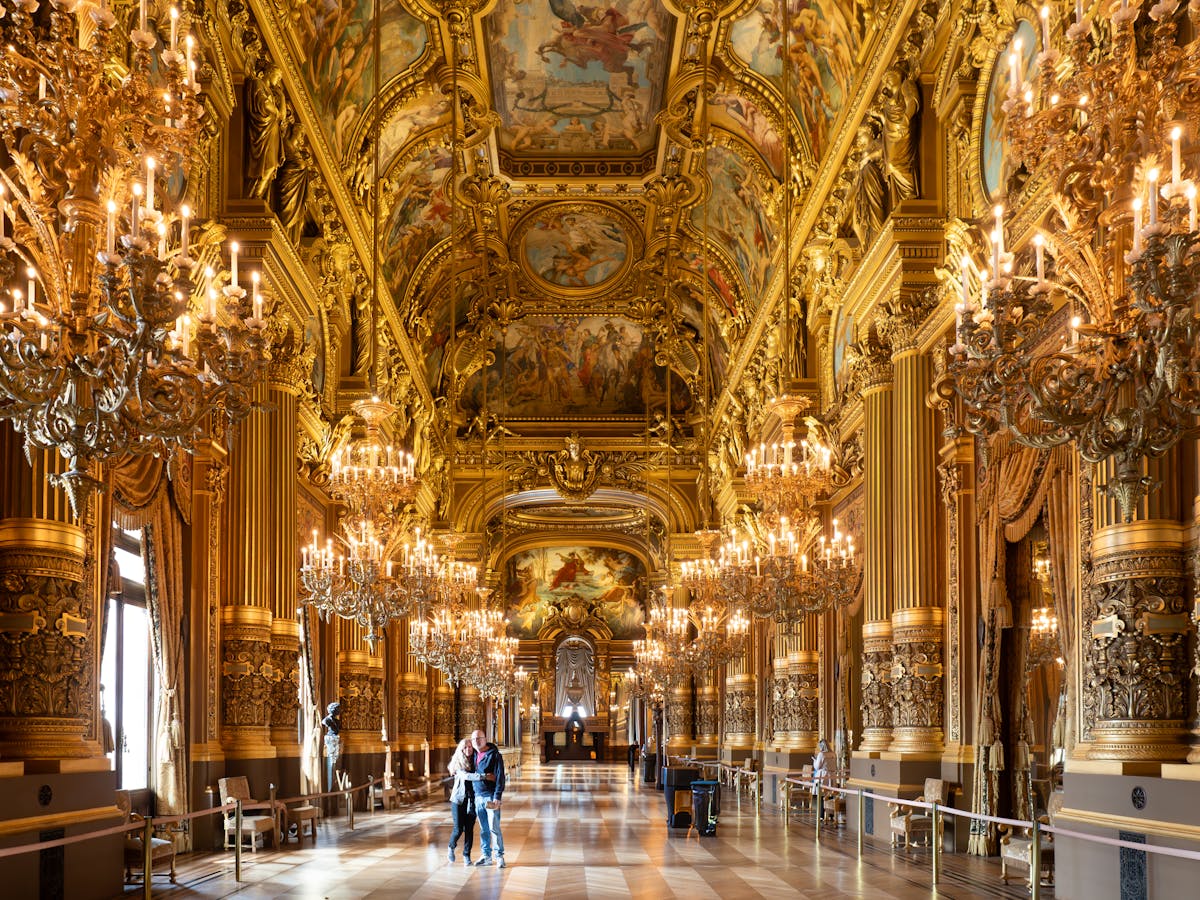
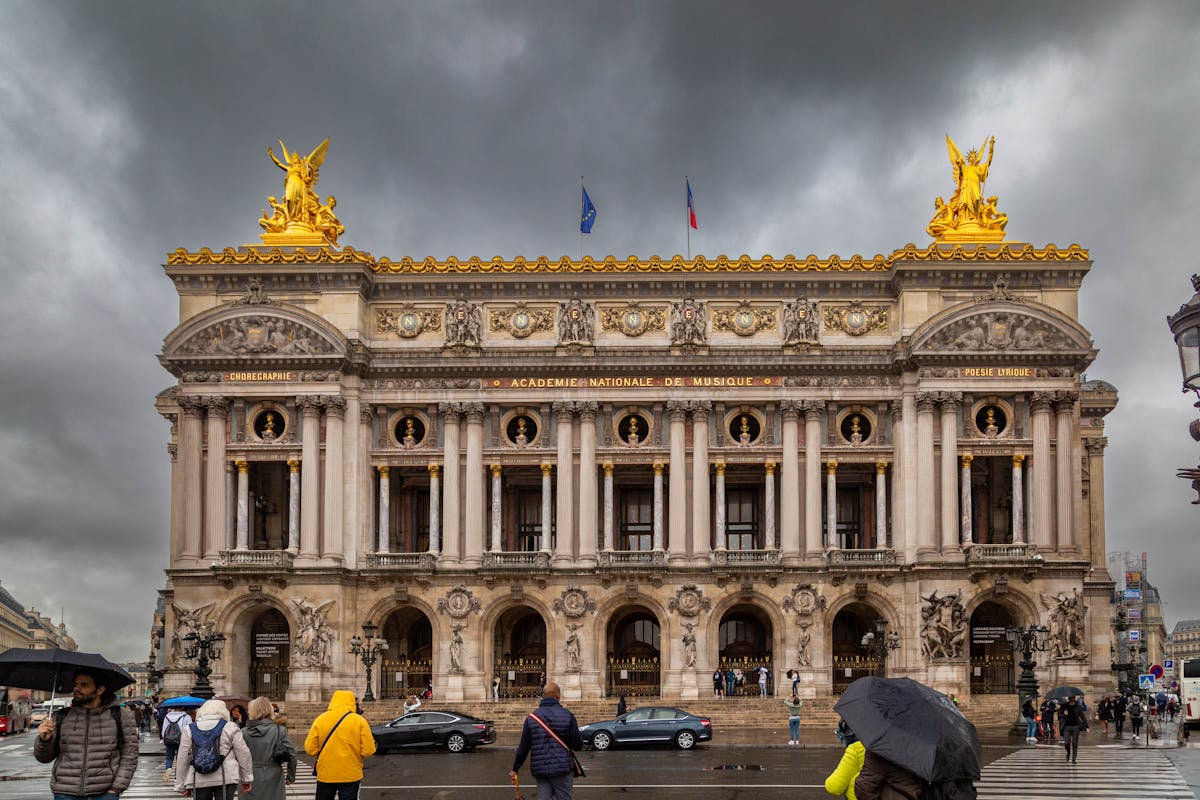
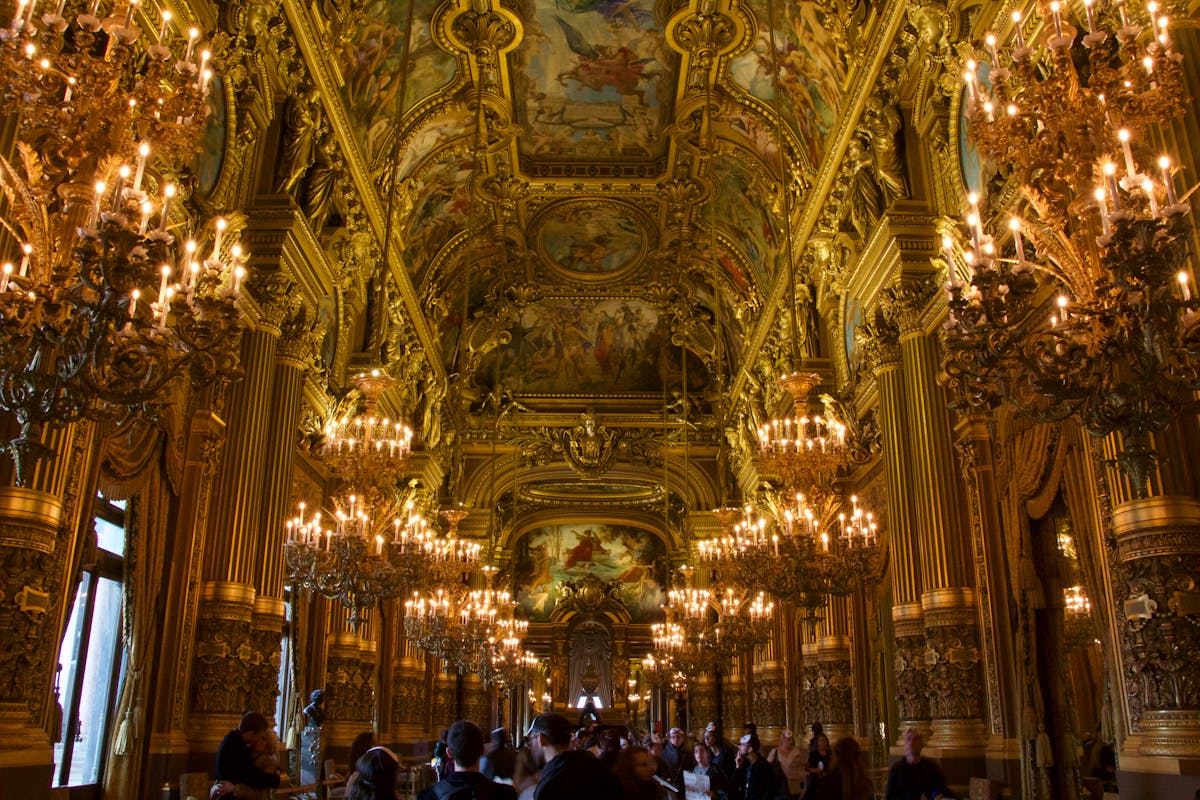
The Grand Foyer stretches the full width of the facade and mirrors the proportions of the Hall of Mirrors at Versailles — intentionally. Gilded columns, enormous mirrors, painted ceilings by Paul Baudry, and a row of chandeliers create a space that feels less like a room and more like a palace unto itself. During performances, this is where the audience gathers at intermission. During visits, it is often the room where people linger longest.
The Salon du Glacier sits at the far end, a circular room decorated in the Belle Epoque style with ceiling paintings by Georges Clairin and marble busts along the walls. It is quieter and smaller than the Foyer, and easy to miss if you are not looking for it.
The Library-Museum is a surprisingly rich addition that many visitors skip. It holds hundreds of thousands of documents, costumes, set models, and photographs dating back to the opera’s earliest days. There are original scores, hand-painted stage designs, and personal letters from composers. If you are interested in the performing arts, budget an extra 20-30 minutes here.
More Paris Guides
The Palais Garnier sits in the middle of a neighborhood packed with things worth your time, and some of the best attractions in Paris are within walking distance. If you are headed to the Louvre afterward — a 15-minute walk straight down Avenue de l’Opera — I wrote a full guide on how to get Louvre tickets that covers the confusing entry system and timed slots. From there, the Musee d’Orsay is just across the river, and the impressionist collection alone justifies the trip. For something completely different, Moulin Rouge tickets are worth sorting out if you want an evening show — Montmartre is a short Metro ride north. And if you are planning to cover more ground, the Eiffel Tower ticket system and Notre-Dame visit guide will save you time and queueing frustration.
More France Guides
The Palais Garnier is in the heart of Paris, and the surrounding neighborhood connects easily to several other worthwhile experiences. The Louvre is a fifteen-minute walk south through the elegant Palais Royal arcade, and the Musee d’Orsay is just beyond that across the river. For a different kind of evening show, the Moulin Rouge is a Metro ride north to Montmartre — two very different sides of Parisian performance in one trip. A Montmartre tour during the day pairs well with the opera house, since Montmartre and the Garnier represent two eras of Parisian culture that could not be more different. If you want to see the whole city in one sweep, a Seine river cruise is a good way to tie it all together.
This article contains affiliate links. If you book through our links, we earn a small commission at no extra cost to you. This helps us keep creating free travel guides.