
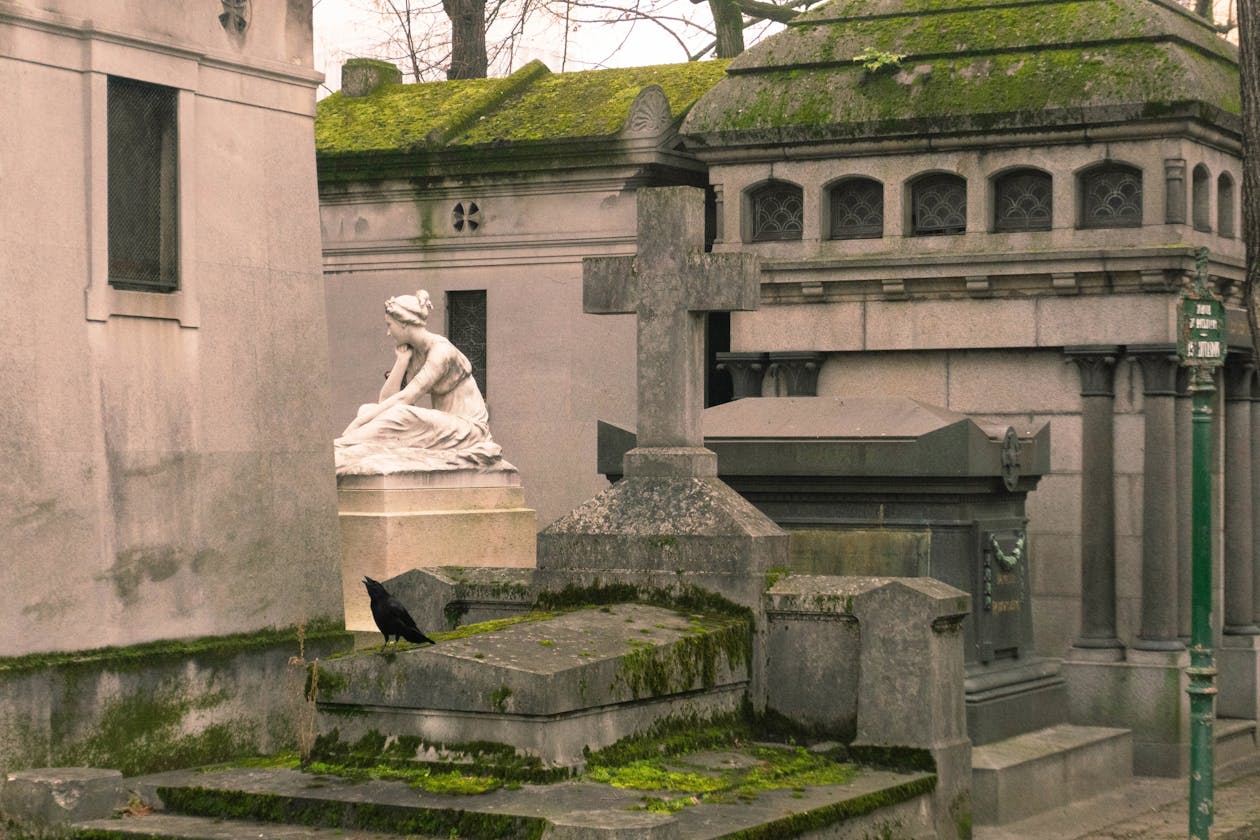
Chopin’s body is here, but his heart is in Warsaw. His sister smuggled it out of France in a jar of cognac, past Russian border guards, because he begged on his deathbed to have at least that much of himself returned to Poland.
That is the kind of story you get at Père Lachaise. Not polite little plaques and manicured hedgerows, but real human drama played out in stone and bronze across 44 hectares of hillside in eastern Paris.

I came expecting a graveyard. What I found was an outdoor museum, a sculpture gallery, a history lesson, and one of the best walks in Paris, all rolled into one. The trick is knowing what you are looking at — and that is where a good tour makes all the difference.


Best overall: Père Lachaise Cemetery Guided Tour — $23. Three full hours with a guide who actually knows the stories behind the stones. Best value on the market.
Best for atmosphere: Haunted Père Lachaise Cemetery Tour — $25. Takes the spooky angle seriously without being corny. Over 3,500 people have done this one.
Best budget: Famous Graves Tour — $15. Quick two-hour hit of the big names. No frills, no fat, just the highlights.
- How the Cemetery Works (And Why You Cannot Just Wing It)
- Self-Guided vs Guided Tour — The Honest Comparison
- The Best Père Lachaise Tours to Book
- 1. Père Lachaise Cemetery Guided Tour —
- 2. Haunted Père Lachaise Cemetery Tour —
- 3. Famous Graves of Père Lachaise Tour —
- 4. Small-Group Père Lachaise Cemetery Tour —
- When to Visit Père Lachaise
- How to Get to Père Lachaise
- Tips That Will Save You Time and Frustration
- What You Will Actually See Inside
- While You Are in Paris
How the Cemetery Works (And Why You Cannot Just Wing It)
Père Lachaise is free to enter. No ticket, no reservation, no queue. You walk in through one of several gates and you are on your own. That sounds great until you realise the place is the size of a small town, the map they hand out at the entrance is nearly useless, and the most interesting graves are not always the most obvious ones.

The cemetery is open every day of the year except when there are exceptional weather warnings. Hours shift with the seasons:
- March to October: Monday–Friday 8:00–18:00, Saturday 8:30–18:00, Sunday and holidays 9:00–18:00
- November to February: Monday–Friday 8:00–17:30, Saturday 8:30–17:30, Sunday and holidays 9:00–17:30
- Last entry is 15 minutes before closing — guards start sweeping people out early
There is no admission fee. Never has been. Napoleon established the cemetery in 1804 specifically as a public burial ground outside the city walls, because burying people inside Paris churches had become a genuine public health crisis. To make the new cemetery fashionable enough that wealthy families would actually buy plots, the authorities transferred the remains of Molière and La Fontaine from other parts of the city. It worked. Within years, everyone who was anyone wanted to be buried at Père Lachaise.

Self-Guided vs Guided Tour — The Honest Comparison
You can absolutely visit on your own. Grab the free map, follow the numbered path to Jim Morrison and Oscar Wilde, take some photos, leave. Plenty of people do exactly this and have a fine time.
But here is what you will miss: context. Père Lachaise is not a place where the graves speak for themselves. The tomb of Allan Kardec (the spiritist philosopher) looks like a modest stone slab unless someone tells you that visitors still leave letters asking for favours, convinced his spirit intercedes from beyond the grave. The Mur des Fédérés is just a wall unless someone explains that 147 supporters of the Paris Commune were lined up against it and shot by government troops on May 28, 1871. You can still see the bullet marks if you know where to look.

Go self-guided if: you genuinely just want to see Morrison and Wilde, you have less than an hour, or you prefer wandering without a schedule. Download a walking map from the cemetery’s official site beforehand — the one they give you at the gate is a single sheet that does not show half the interesting spots.
Go with a guide if: you want the stories. That is really what it comes down to. A good guide at Père Lachaise is basically a two-hour storytelling session about Paris history, French politics, art, music, and occasionally death. If you are visiting with friends who are into Montmartre’s artistic history or Notre-Dame Cathedral, you will get a similar depth of Paris history here, just with a darker backdrop.
The Best Père Lachaise Tours to Book
I went through every Père Lachaise tour available on GetYourGuide and Viator, cross-checked the reviews, compared what each one actually covers, and narrowed it down to these four. They range from $15 to $28, which is remarkably cheap by Paris standards. All of them are worth the money.
1. Père Lachaise Cemetery Guided Tour — $23
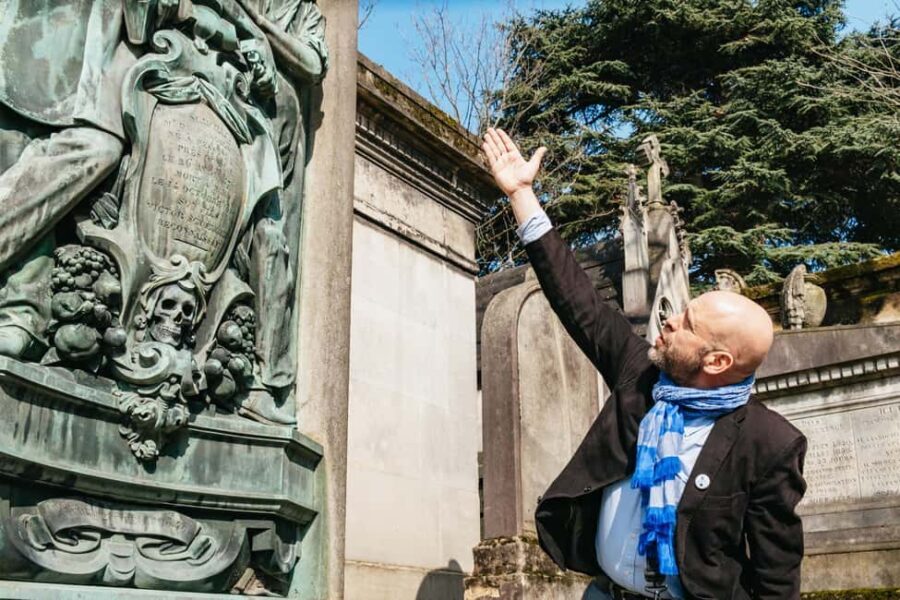
This is the one I would book if I could only pick one. Three hours gives the guide enough time to go beyond the greatest-hits route and into some of the cemetery’s quieter corners where the most interesting stories hide. At $23, it is hard to argue with the value — that is less than a single cocktail at most Paris bars.
The guides on this tour are consistently praised for making history feel personal rather than academic. They cover the major graves (Morrison, Wilde, Piaf, Chopin) but also dig into lesser-known plots that most visitors walk right past. Over 2,200 people have taken this exact tour, and the rating sits at 4.8 out of 5.
2. Haunted Père Lachaise Cemetery Tour — $25
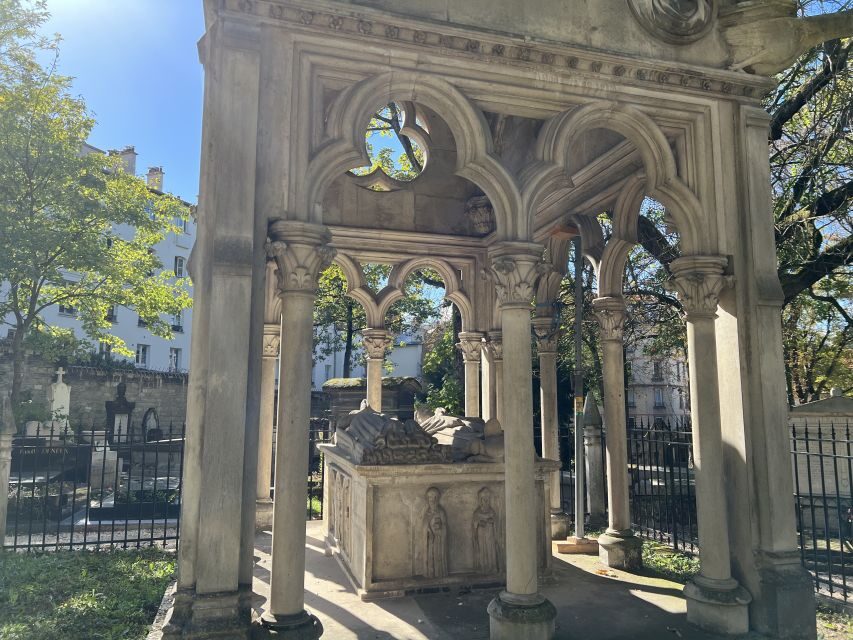
If the standard cemetery tour is a history lecture, this one is a ghost story told by someone who actually knows their subject. The “haunted” angle could easily be gimmicky, but the guides here treat it seriously — they focus on the genuinely dark episodes (executions, tragedies, unexplained deaths) rather than making things up for shock value.
At two hours, it moves faster than the three-hour option above, which makes it better for people who want the highlights without the deep dive. $25 is only two dollars more than the top pick, and the different angle means you will hear stories the other tours skip. This is the most-booked Père Lachaise tour on the market, with over 3,500 reviews.
3. Famous Graves of Père Lachaise Tour — $15
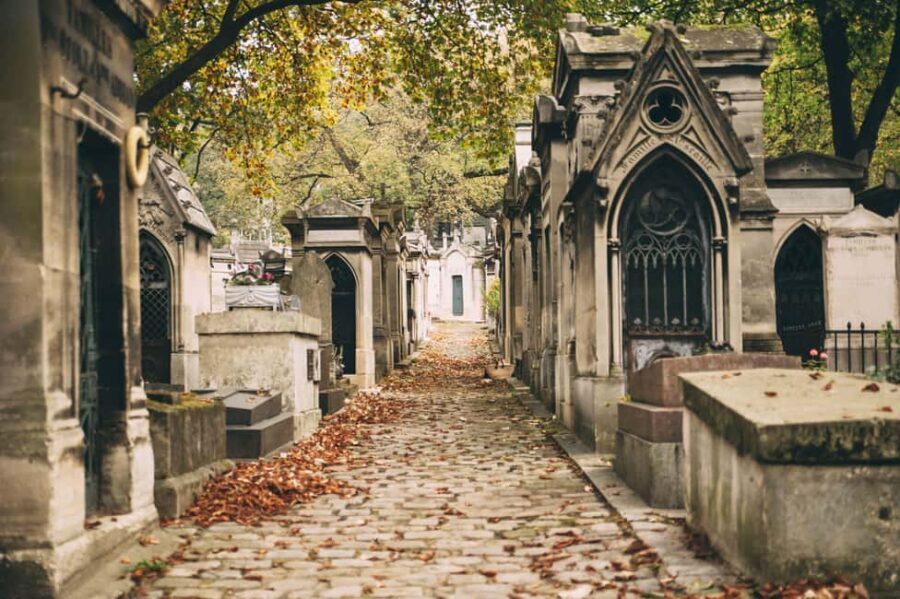
The no-nonsense option. Two hours, $15, and a straight line through the most famous graves in the cemetery. Morrison, Wilde, Piaf, Chopin, Balzac — the names you came for, without the detours. This is the cheapest guided tour at Père Lachaise and it does not cut corners on the storytelling.
It is the best choice if you are fitting Pere Lachaise into a packed Paris day and cannot spare three hours. The guides are knowledgeable and keep things moving at a good clip. Over a thousand reviews, rated 4.6. Do not let the low price fool you — it is the same quality of guiding, just compressed.
4. Small-Group Père Lachaise Cemetery Tour — $28
The premium option on this list, and at $28 it is still absurdly affordable by Paris standards. The difference is the group size — fewer people means more interaction with the guide, more chance to ask questions, and a more intimate feel in a place that rewards quieter moments.
This is the one I would pick for a second visit when you have already seen the greatest hits and want to go deeper. The guides on the small-group format tend to tailor the route to the group’s interests, which you never get on the larger tours. Rated 4.7 with over a thousand reviews. If you are the kind of person who reads every plaque in a museum, this is your tour.

When to Visit Père Lachaise
Best months: October and early November. The autumn leaves transform the cemetery into something that looks like a painting. The light is warm, the crowds are manageable, and the temperature is perfect for a two-to-three hour walk.
Worst months: July and August. Packed with travelers, boiling hot (the cemetery has very little shade in the central sections), and the cobblestone paths amplify the heat. Morrison’s grave becomes a bottleneck of tour groups stacked three-deep.

Best time of day: First thing in the morning, right when the gates open. By 10:00 the tour groups start arriving and the atmosphere shifts from contemplative to chaotic. Late afternoon also works well — the light is better for photos and most groups have moved on by then.
Special date: Toussaint (All Saints’ Day, November 1st) is when Parisians visit their family graves. The cemetery fills with flowers and candles, and the mood is entirely different from a normal tourist day. Beautiful, but very crowded.

How to Get to Père Lachaise
The cemetery has multiple entrances, and which one you use matters more than you might think.
Main entrance (Boulevard de Ménilmontant): This is where the free maps are, where most guided tours meet, and where most people enter. The nearest Metro is Père Lachaise (Lines 2 and 3), which puts you right at the main gate.
Side entrance (Rue des Rondeaux): If you want to start at the Communards’ Wall and the more atmospheric eastern sections, enter from the back. Gambetta Metro station (Line 3) drops you near this entrance. Far fewer people use this gate, so the first 20 minutes of your visit will feel like you have the place to yourself.
Bus options: Lines 61 and 69 both stop within walking distance of the main entrance. The 69 is particularly useful because it runs from the Champ de Mars (Eiffel Tower area) all the way across Paris.

Tips That Will Save You Time and Frustration
Download the map beforehand. The official cemetery website has a downloadable PDF that is significantly more detailed than the folded sheet they hand out at the entrance. Save it on your phone — cell service inside the cemetery is patchy in some sections.
Wear proper shoes. I cannot stress this enough. The paths are cobblestone and uneven, the hills are steeper than they look on the map, and after rain the stones become genuinely slippery. Trainers are fine. Sandals are not.

Bring water. There are no shops, cafés, or vending machines inside the cemetery. The nearest place to buy a drink is outside the main gate on Boulevard de Ménilmontant, but once you are deep inside the grounds you are a 15-minute walk from anywhere.
Respect the rules. This is still an active cemetery. Do not sit on the graves, do not leave alcohol on Morrison’s tomb (the guards remove it immediately anyway), and keep your voice down. The locals who visit their family graves here do not appreciate travelers treating the place like a theme park.
Allow more time than you think. Most people plan an hour and end up staying two. If you are doing a guided tour, add 30 minutes for wandering afterward — you will want to revisit spots and take photos without a group breathing down your neck.

What You Will Actually See Inside
Père Lachaise opened in 1804 and has been burying people ever since. It is the most visited cemetery in the world, and the stories inside are worth every one of the million-plus annual visitors it attracts.
Jim Morrison’s grave is the most visited plot in the cemetery — and the most vandalised. For decades, fans left whisky bottles, love letters, joints, and graffiti on the surrounding tombs. A guard was eventually posted permanently after the owner of a neighbouring grave complained about fans urinating on the surrounding plots. Morrison ended up buried in Paris because he died there in 1971 after moving to escape the LA rock scene and focus on poetry. A simple flat stone marks the spot now. No angels, no statues. Just his name and dates.

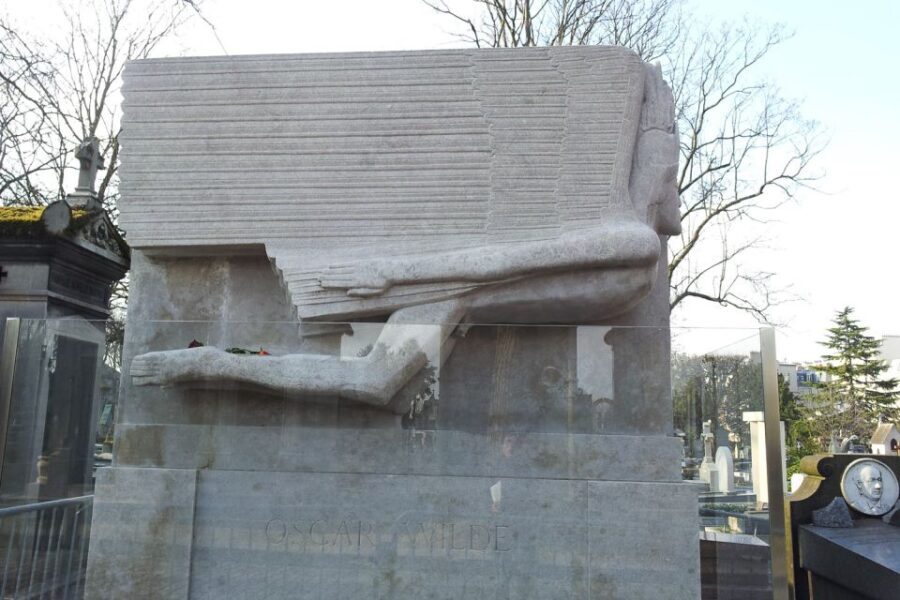
Oscar Wilde’s tomb is impossible to miss. The modernist sculpture by Jacob Epstein features a flying angel — massive, angular, unlike anything else in the cemetery. For years the stone was covered in lipstick kisses from admirers, but in 2011 a glass barrier was installed after conservators found that the lipstick grease was actually eroding the stone. Wilde died in Paris in 1900, broke and in exile after his imprisonment in England.
Chopin’s grave is one of the most visited, but the real story is what is not there. His body lies beneath the elegant monument with the weeping muse, but his heart is 1,400 kilometres away in Warsaw, sealed inside a pillar in the Holy Cross Church. He asked for it on his deathbed. His sister Ludwika smuggled the preserved heart out of France, past Russian border guards who controlled the Poland–France route, hidden beneath her cloak. It was preserved in cognac.

The Mur des Fédérés (Communards’ Wall) is in the far eastern corner, and most casual visitors never make it there. On May 28, 1871, 147 supporters of the Paris Commune — the radical socialist government that briefly controlled Paris — were lined up against this wall and shot by government troops. The bullet marks are still visible in the stone. It remains a site of political pilgrimage, especially on May Day.
Edith Piaf’s simple grave drew tens of thousands when she was buried here in 1963. Her funeral procession through the streets of Paris brought traffic to a standstill across the city. Today her plot is always piled with fresh flowers and notes from fans. If you are doing a food and wine tour through Montmartre, the neighbourhood where Piaf grew up, you might hear her songs played in the cafés nearby.

Beyond the famous names, the cemetery holds surprises in every section. There is a memorial to victims of the Nazi concentration camps, complete with haunting bronze sculptures. There are tombs covered in fresh letters and offerings to figures most non-French visitors have never heard of. And there are cats — the cemetery has a healthy population of semi-feral cats who live among the tombs and could not care less about the travelers.


While You Are in Paris
Père Lachaise sits in the 20th arrondissement, which is one of Paris’s less touristy neighbourhoods and all the better for it. If you are spending a few days in the city, the Louvre and Eiffel Tower are both on the opposite side of the city but easily reached by Metro. For something closer to the cemetery’s mood, the Paris Catacombs are the obvious pairing — the bones removed from Parisian cemeteries and ossuaries in the 18th century were stacked down there, and the underground atmosphere is as striking as Père Lachaise above ground. A Montmartre walking tour gives you the artistic side of Paris history that pairs well with the literary and musical legends buried here, and a Musée d’Orsay visit puts you in front of the Impressionist paintings that several Père Lachaise residents helped inspire.


This article contains affiliate links. If you book a tour through one of these links, we earn a small commission at no extra cost to you. It helps keep this site running.