
The name Cabo de Gata comes from “agate” — the semi-precious stone lodged in the volcanic rock that lines this coastline. I spent an embarrassing amount of time googling “Cabo de Gata meaning” before someone on a kayak tour just told me. That sums up the place pretty well: you go thinking it’s another Spanish beach day, and you come back knowing things about Miocene-era volcanic geology.
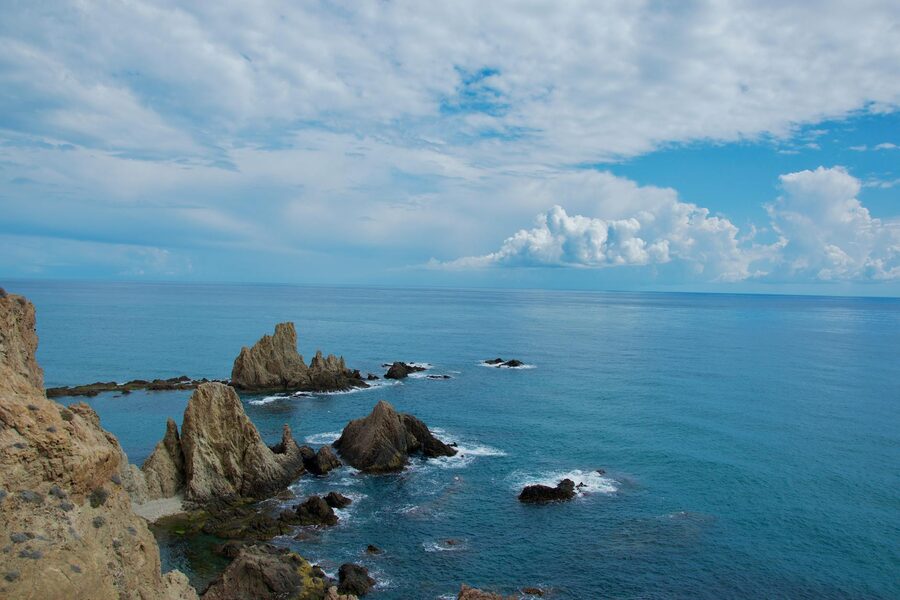
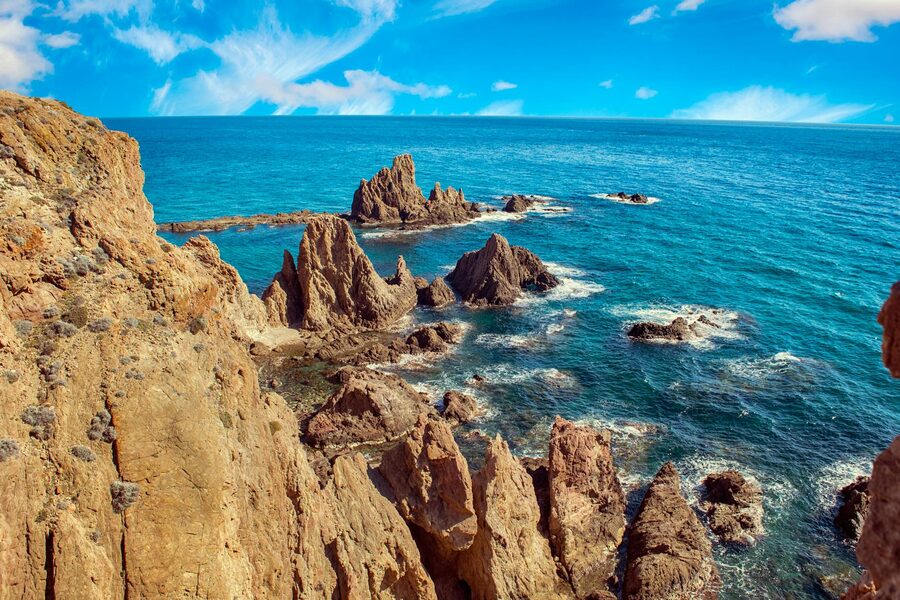
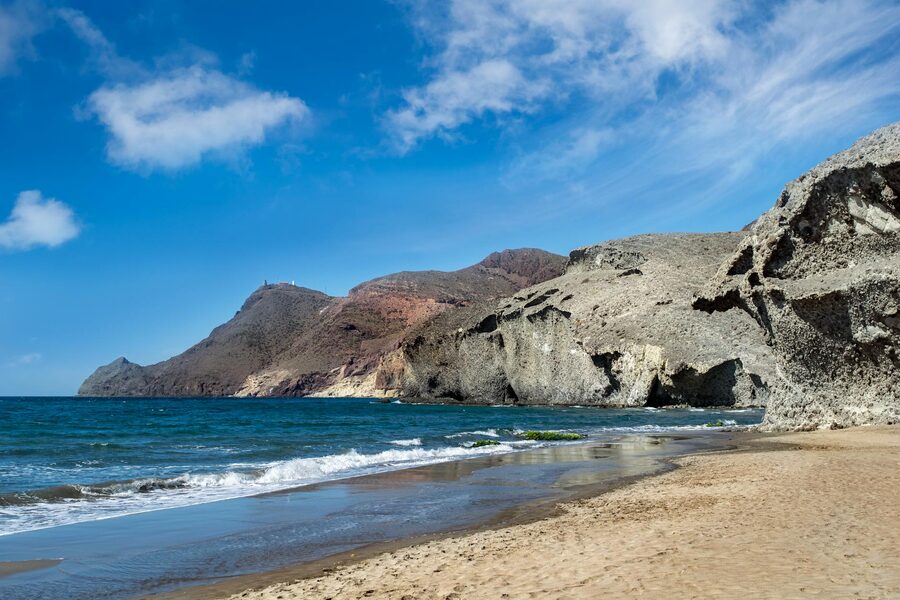
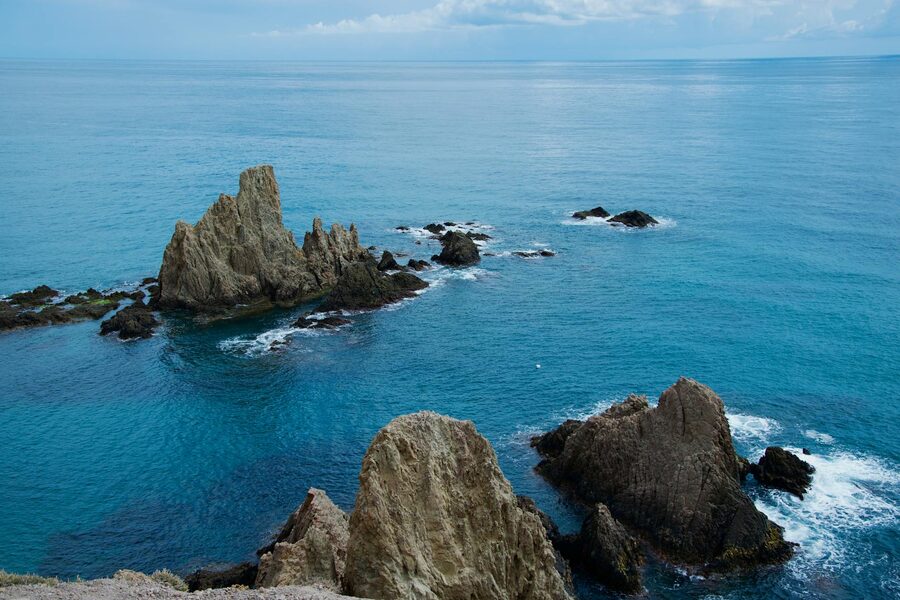
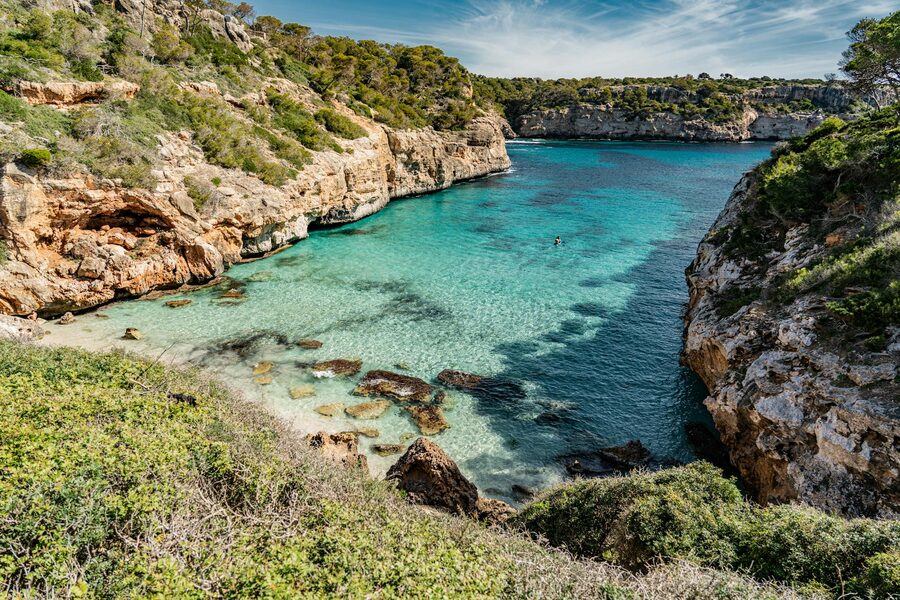
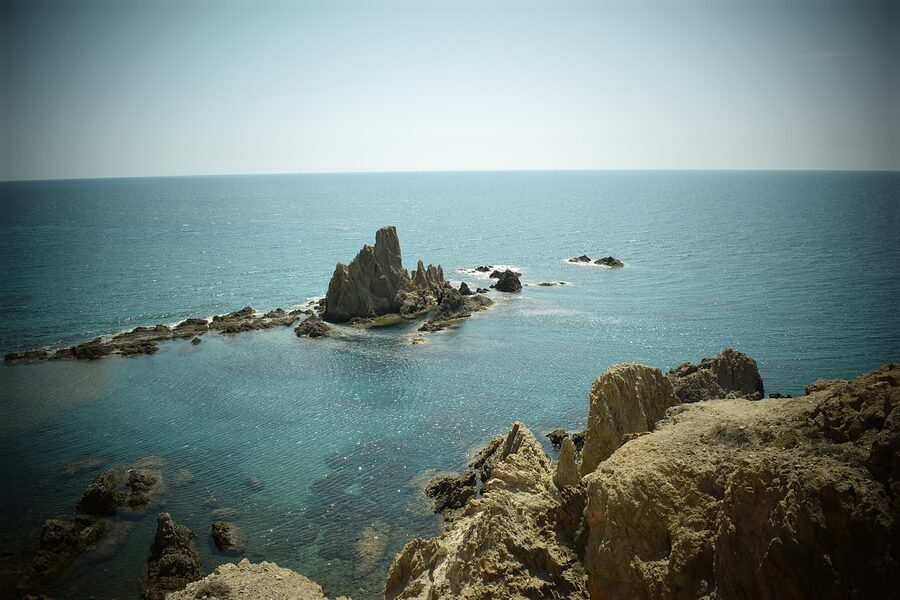
Cabo de Gata is the only truly arid natural park in Europe. Annual rainfall sits around 150mm — less than parts of the Sahara. The volcanic coastline creates underwater caves, sea arches, and coves with turquoise water that you can only reach by boat or kayak. No roads, no footpaths, no crowds. Just volcanic rock meeting the Mediterranean.
- In a Hurry? Top 3 Cabo de Gata Kayak Tours
- What Kayaking in Cabo de Gata Actually Involves
- The 3 Best Kayak Tours in Cabo de Gata
- 1. Cabo de Gata Active: Guided Kayak and Snorkel Route —
- 2. Cabo de Gata: Kayak and Snorkel Tour —
- 3. San Jose: Cabo de Gata Natural Park Kayak and Snorkel —
- What You’ll Actually See Underwater
- Comparing the Three Tours Side by Side
- When to Go (and When to Skip It)
- What You Need to Know Before Booking
- Spaghetti Westerns and Volcanic Rock: The Story of This Coastline
- Beyond the Kayak: Other Ways to See the Park
- Quick Tips from Someone Who’s Done It
- Where to Stay Inside the Park
- Exploring More of Andalusia’s Coast and Mountains
In a Hurry? Top 3 Cabo de Gata Kayak Tours
Best overall: Cabo de Gata Active: Guided Kayak and Snorkel Route — $54/person, 3 hours, includes snorkeling stops in volcanic coves. The most popular option by a wide margin. Check Availability
Best on GYG: Cabo de Gata: Kayak and Snorkel Tour in the Natural Park — $53/person, 3 hours, same route concept with excellent guides. Check Availability
Budget pick: San Jose: Cabo de Gata Natural Park Kayak and Snorkel Tour — $41/person, departs from San Jose with a slightly shorter route and smaller groups. Check Availability
What Kayaking in Cabo de Gata Actually Involves
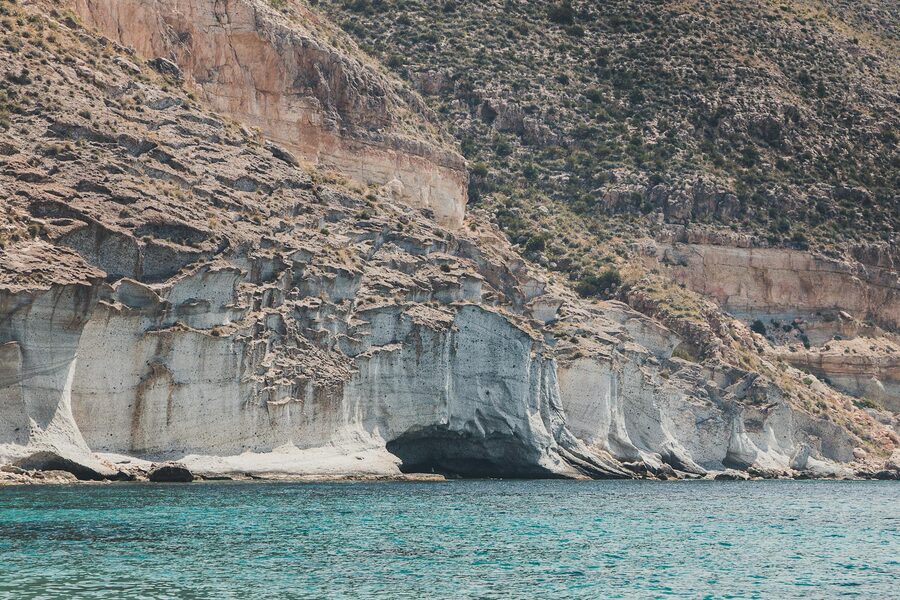
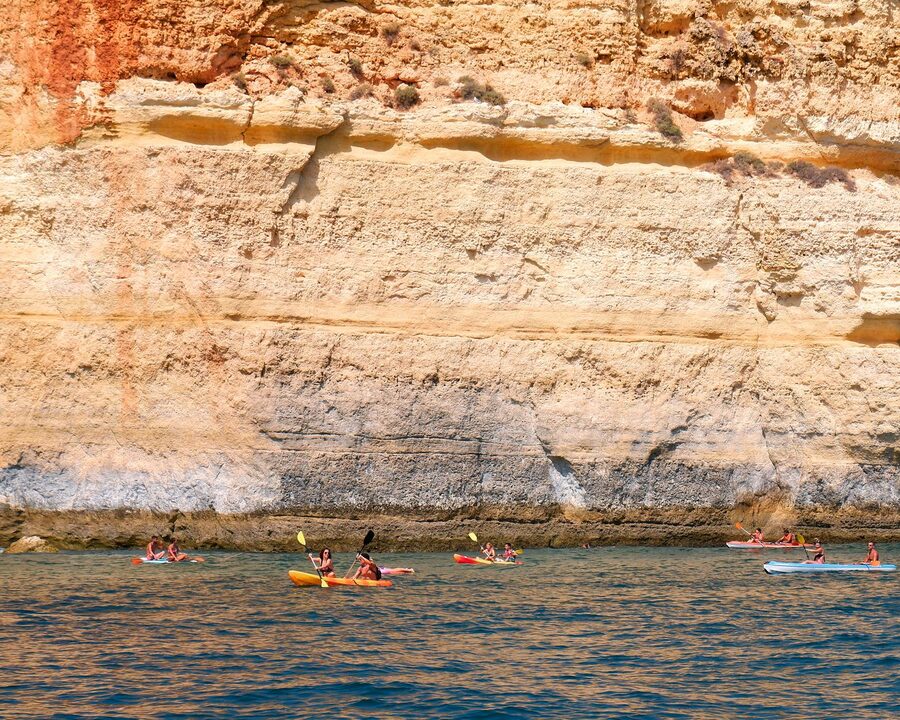
Every kayak tour here follows roughly the same format. You meet at a beach (usually near San Jose or Las Negras), get a quick safety briefing, and paddle out along the volcanic coastline in tandem kayaks. The guides know every cave entrance, every snorkeling spot, every beach where you can pull up and rest.
Expect to cover about 6-8 kilometres over three hours. That sounds like a lot, but the pace is relaxed. Half the time you’re stopped — floating over underwater rock formations, poking into sea caves, or beached on a cove that doesn’t appear on Google Maps.
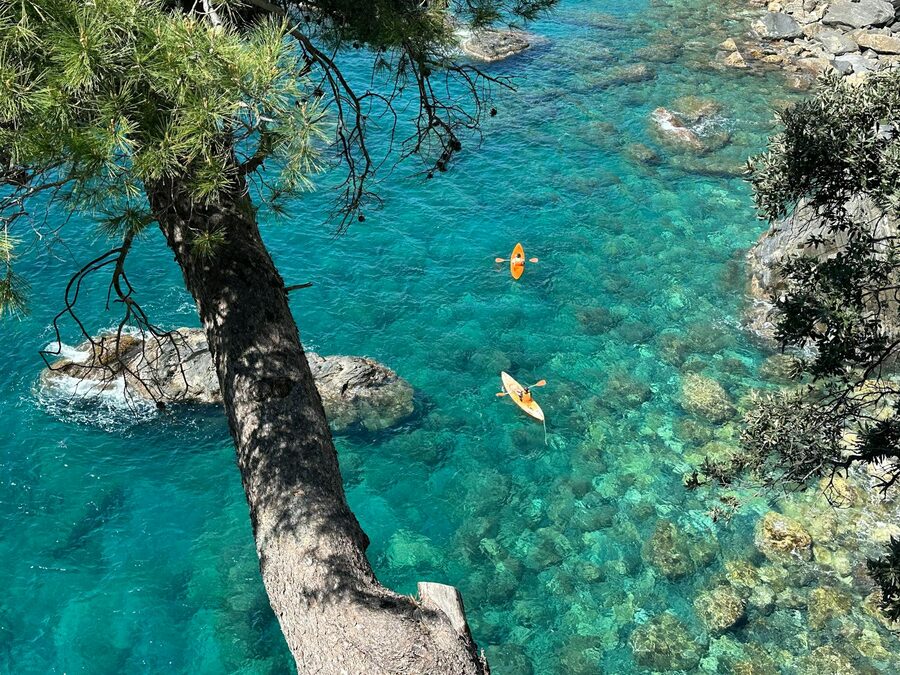
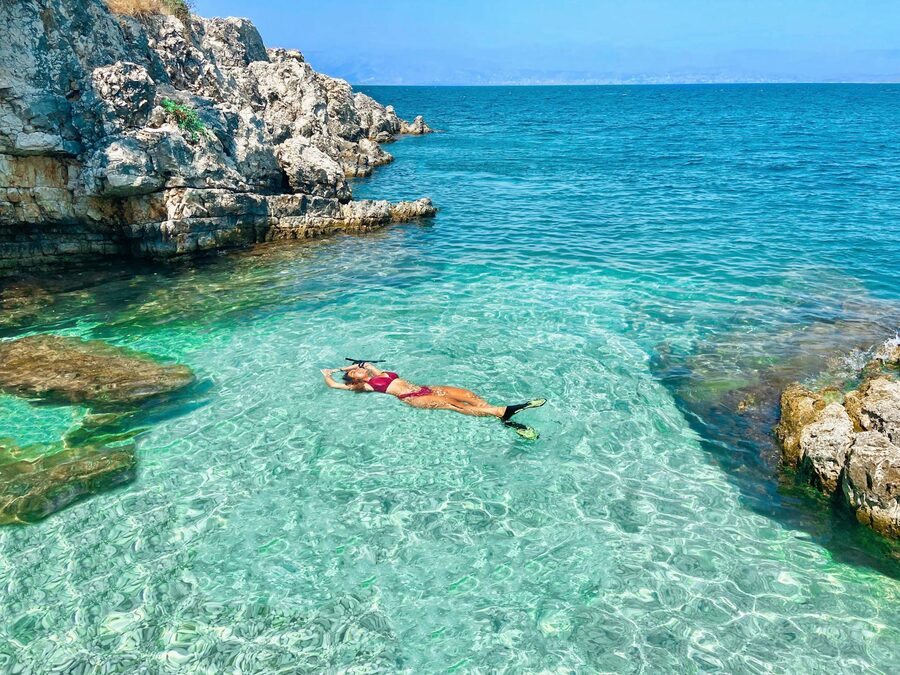
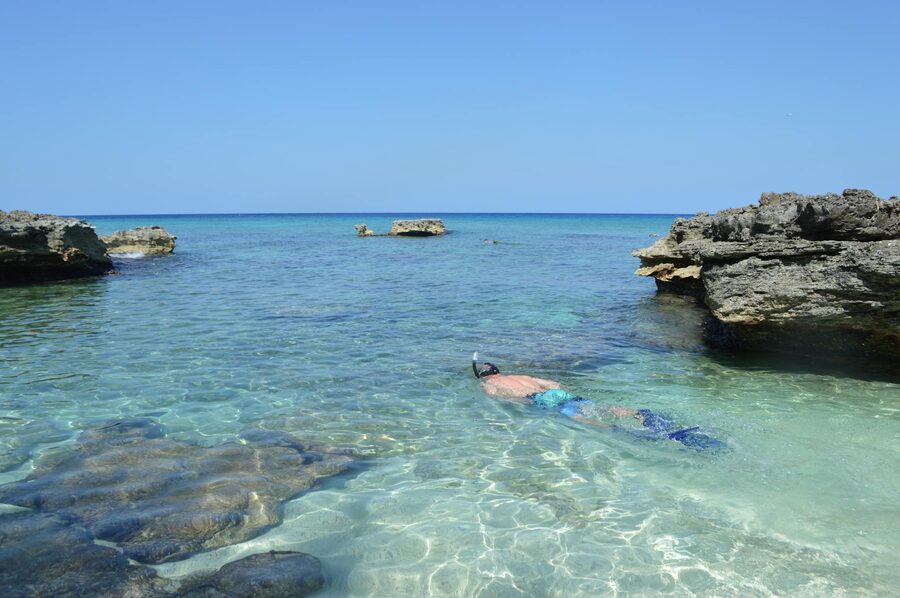
The snorkeling stops are the highlight for most people. The guides carry masks and snorkels, and at two or three points during the route, everyone hops in. The underwater visibility here is remarkable — 15 to 20 metres on a calm day. You’ll see damselfish, octopus if you’re lucky, and fields of Posidonia seagrass that look like underwater meadows.
No experience required. The tandem kayaks are stable and the guides keep the group together. I’ve seen families with kids as young as eight on these tours. The only real requirement is that you can swim — you’ll be in the water during snorkel stops.
The 3 Best Kayak Tours in Cabo de Gata
I went through every available kayak tour operating out of Cabo de Gata. Three stand out, each for different reasons.
1. Cabo de Gata Active: Guided Kayak and Snorkel Route — $54
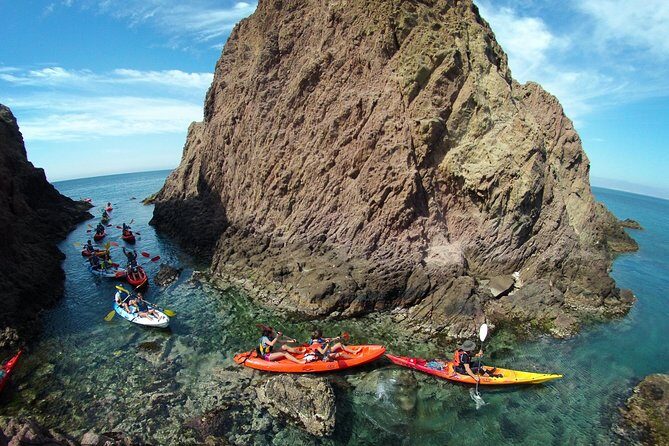
This is the one most people end up booking, and for good reason. The 3-hour route hits the best coves along the volcanic coast, with two dedicated snorkel stops where the underwater rock formations are genuinely impressive. Our full review covers what to expect at each stop. The guides are knowledgeable about the marine biology and geology — not just “paddle here, stop there” types.
2. Cabo de Gata: Kayak and Snorkel Tour — $53
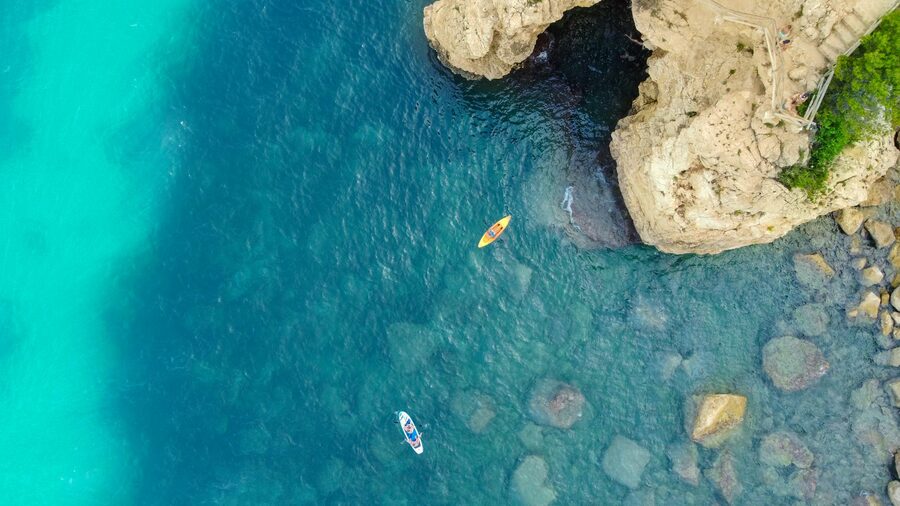
Almost identical price and duration to the first option, but booked through GetYourGuide which some people prefer for the cancellation flexibility. The route covers similar ground — volcanic coves, snorkel stops, beach breaks. Read our detailed review for the full breakdown. Several guides here speak solid English, which matters if your Spanish is limited.
3. San Jose: Cabo de Gata Natural Park Kayak and Snorkel — $41
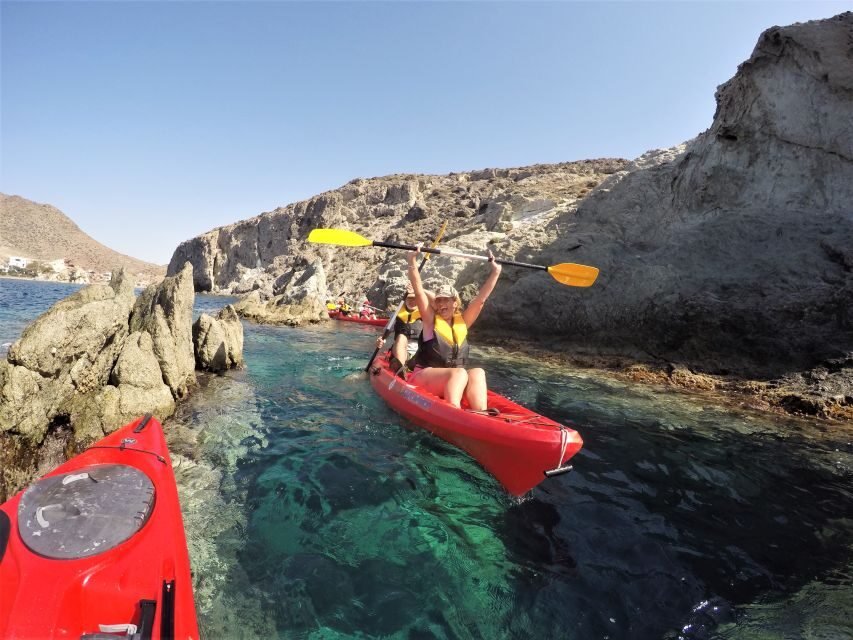
The cheapest option at $41, launching directly from San Jose. The route is a bit shorter but you still get the volcanic coastline and snorkeling stops. Good guides and smaller groups tend to be the norm here. Check our review for specifics on what’s included. If you’re already staying in San Jose, this is the most convenient departure point too.
What You’ll Actually See Underwater
The snorkeling component of these tours is worth talking about separately because it’s not an afterthought — it’s half the experience. Cabo de Gata’s marine reserve protects some of the most biodiverse waters in the western Mediterranean, and the volcanic substrate creates habitats that other sandy-bottom coasts simply can’t match.
The Posidonia seagrass meadows are the foundation of the ecosystem. These dense underwater prairies produce oxygen, filter the water, and shelter hundreds of species. You’ll drift over them during snorkel stops and they look like bright green fields swaying in a breeze. They’re also a protected species — touching or anchoring on them is illegal, which is why kayak tours are actually a better way to visit these areas than motorboats.
Common sightings: Mediterranean damselfish (the colourful ones darting around rocks), ornate wrasse, various species of sea bream, and moray eels hiding in volcanic crevices. Octopus are surprisingly common — look for them in the rocky gaps where the volcanic tuff has eroded into small caves. Sea stars cling to the darker rock faces. If the guide points at something and you can’t see it, ask them to point again. The camouflage on some of these species is incredible.
On rare occasions, you might spot a sea turtle. Loggerheads pass through these waters, especially in late summer. It’s not a guarantee — I’ve been told by guides that they see maybe one or two a season — but it happens.
Comparing the Three Tours Side by Side
All three tours are fundamentally the same activity — kayak along the volcanic coast, snorkel in coves — but there are real differences worth considering.
The Viator tour (#1) at $54 is the most established operation. They’ve been running the longest and the guides know the route cold. Downside: larger groups during peak season, sometimes 12-14 people. If you want a polished, reliable experience and don’t mind company, it’s the safe bet.
The GYG tour (#2) at $53 is nearly identical in route and price. The main difference is booking flexibility — GYG’s free cancellation policy is more generous, and their app makes rescheduling painless if weather forces a change. If your travel dates aren’t fixed, this flexibility is genuinely valuable.
The San Jose departure (#3) at $41 is the budget winner — $13 cheaper per person, which adds up for families. It launches from the village itself, so if you’re staying in San Jose you can walk to the departure point. The trade-off is a slightly shorter route, but you still hit the best coves. Groups tend to be smaller here (6-10 people), which I actually prefer.
My pick for most people: tour #1 if you want the longest, most comprehensive route, or tour #3 if you’re budget-conscious or staying in San Jose. Tour #2 is best if you need cancellation flexibility.
When to Go (and When to Skip It)
The kayak season runs from roughly April to October, but the sweet spot is June through September. Water temperature climbs above 22 degrees, the wind tends to be calmer in the mornings, and you’ll actually want to jump in during the snorkel stops rather than just peering over the side.
July and August are the busiest months. Tours fill up fast, and you might share a cove with other groups during snorkel stops. Not terrible, but if you prefer having a cove to yourself, aim for mid-June or late September.
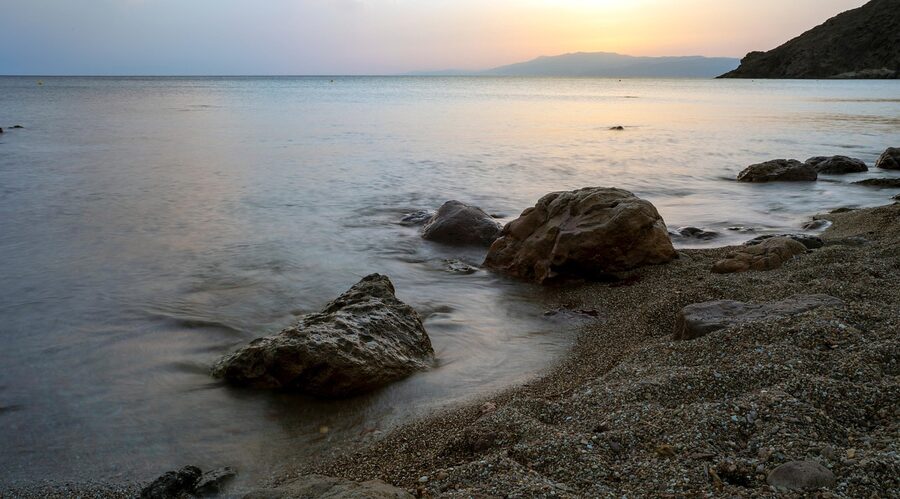
Morning tours (starting around 9-10am) are better than afternoon ones for two reasons. First, the sea is usually calmer before noon — wind picks up in the afternoon along this coast. Second, the light is better for seeing underwater during snorkel stops. The sun hits the water at the right angle and everything below lights up.
April and May are possible but expect cooler water (17-19 degrees). Some operators provide wetsuits during these months. October is hit-or-miss — calm days are magical, windy days get cancelled.
What You Need to Know Before Booking
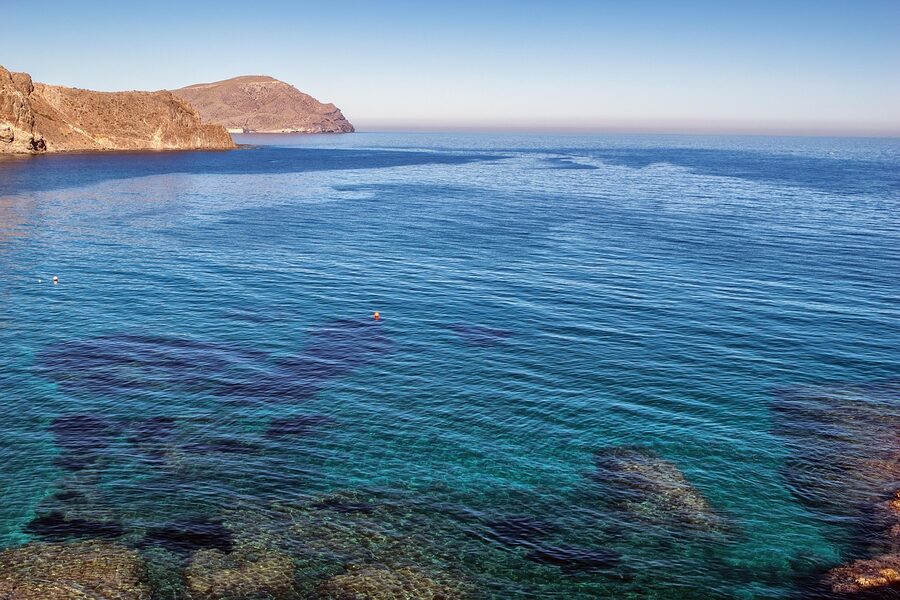
Getting there: Cabo de Gata sits about 30 minutes east of Almeria city by car. There’s no train or reliable bus service to the park itself. Most people rent a car in Almeria or take a taxi (around 30-40 euros one way). If you’re staying in San Jose — the main village inside the park — you can walk to most tour departure points.
What to bring: Swimsuit, towel, reef-safe sunscreen, and water. The tours provide kayaks, paddles, life jackets, and snorkel gear. Some operators also provide waterproof bags for phones, but don’t count on it — bring your own if you care about photos.
Physical difficulty: Easy to moderate. If you can sit upright and paddle for 20-minute stretches with breaks, you’ll be fine. Tandem kayaks do most of the work. The snorkeling is just floating and looking down — no diving required.
Cancellation: Most tours require calm seas to operate. If the wind is above 15-20 knots, they’ll cancel and offer a refund or reschedule. This happens maybe once or twice a month in peak summer, more often in shoulder season. Book through a platform with free cancellation (GYG offers this on most listings) so you’re covered.
Group sizes: Typically 8-14 people per tour. The San Jose departure tends to run smaller groups. If you want a private tour, some operators offer them at roughly double the price — ask when booking.
Spaghetti Westerns and Volcanic Rock: The Story of This Coastline
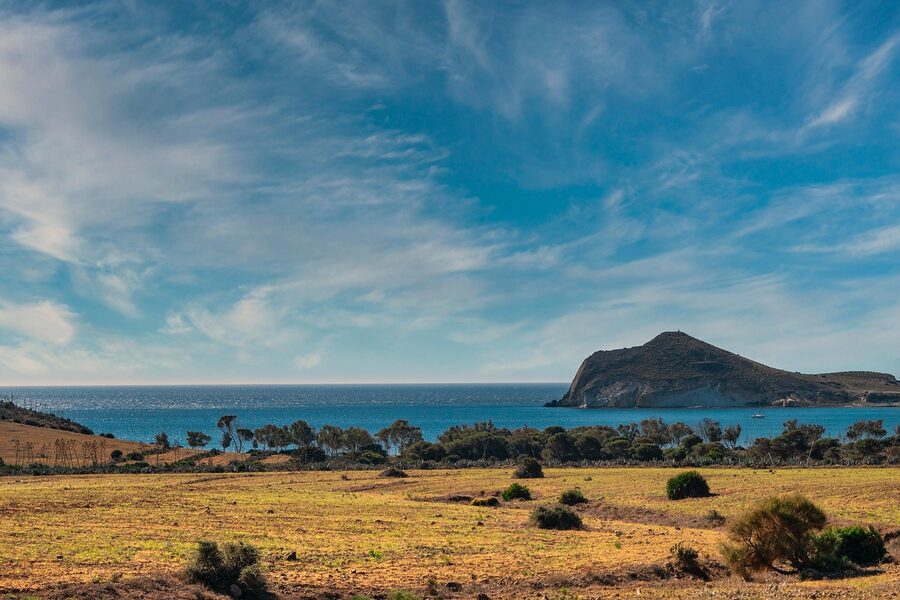
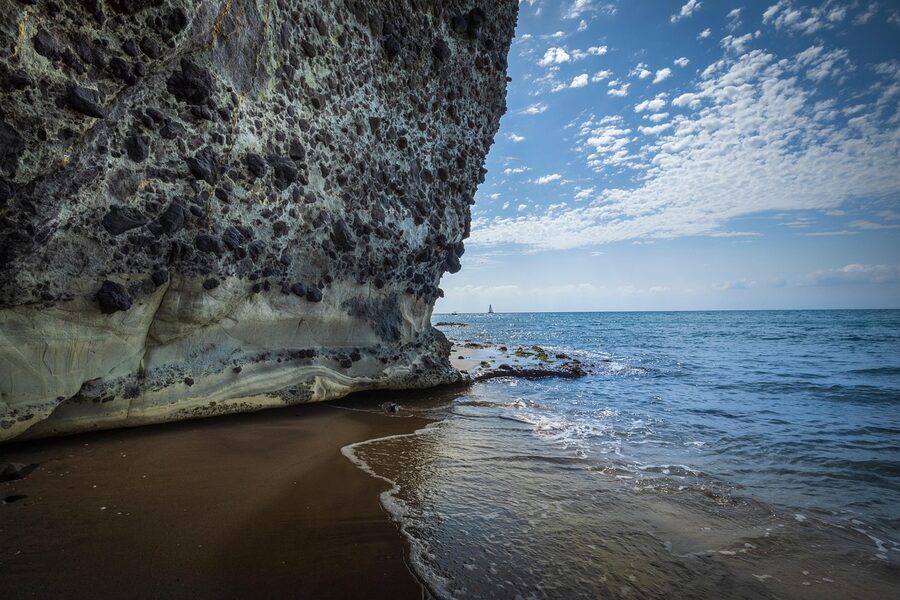
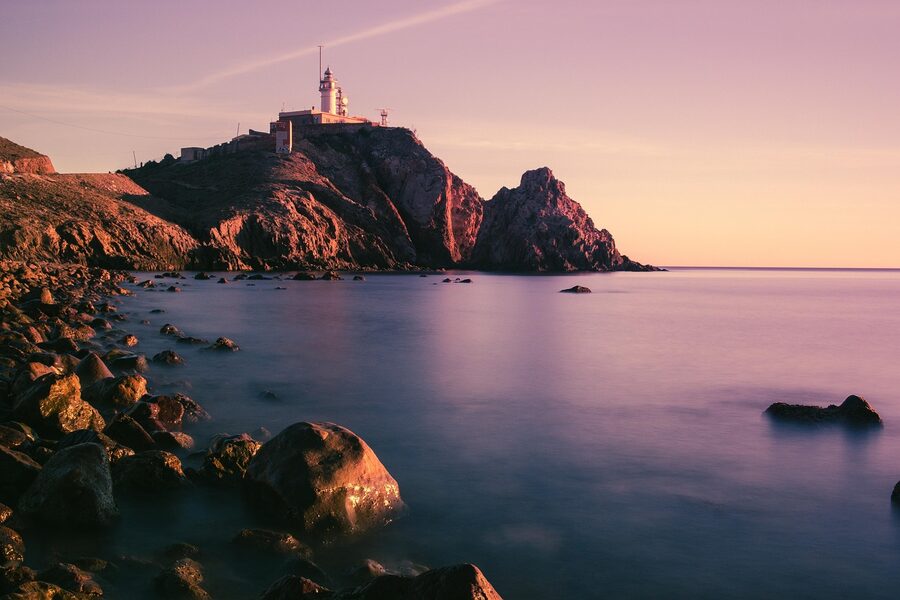
Cabo de Gata’s volcanic coastline formed during the Miocene epoch, roughly 11 million years ago. A chain of underwater volcanoes erupted along what is now the southeastern tip of Spain, leaving behind the strange, layered rock formations you see today. The volcanic origin explains everything about this place — the unusual cliff colours (ochre, black, deep red), the sea caves carved from softer volcanic tuff, and the agate stones that gave the cape its name.
The park itself covers about 460 square kilometres, making it the largest coastal protected area in the western Mediterranean. It became a Natural Park in 1987, which is why the coastline has zero development. Drive ten minutes inland and you hit the Tabernas Desert — the only true desert in continental Europe. Hollywood spotted the landscape early. Sergio Leone filmed his Spaghetti Westerns in the Tabernas Desert nearby. Clint Eastwood squinted through the dust here. Steven Spielberg used it for Indiana Jones.
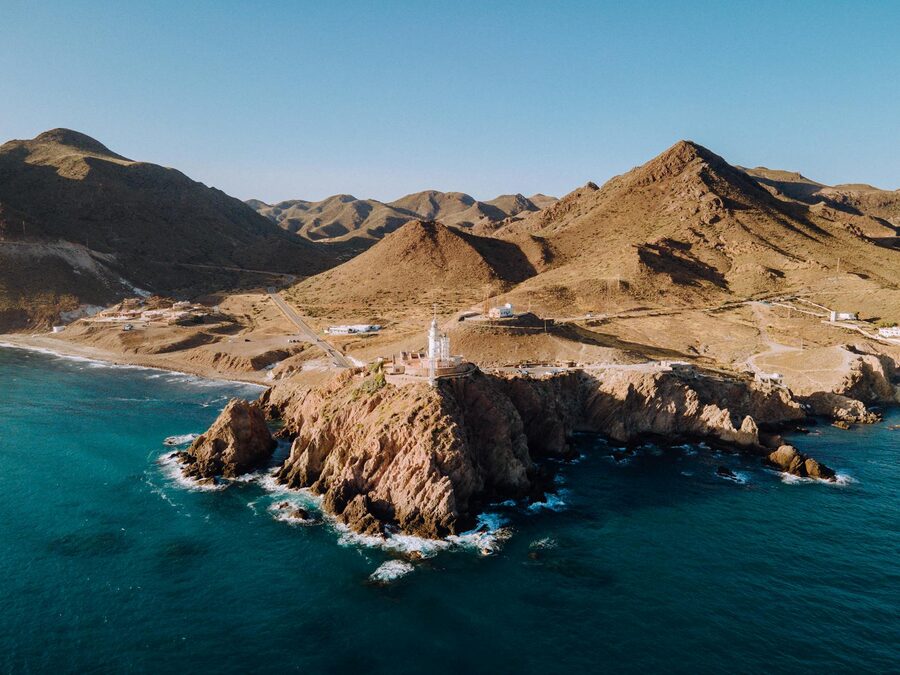
The human story is older than the westerns, obviously. Phoenician traders worked this coast. The Romans mined salt in the salt flats that still exist at the park’s northern edge. Moorish watchtowers dot the clifftops — you’ll paddle past several during any kayak tour. The tiny village of San Jose was a fishing hamlet until the 1960s and still has that feel despite the tourist infrastructure.
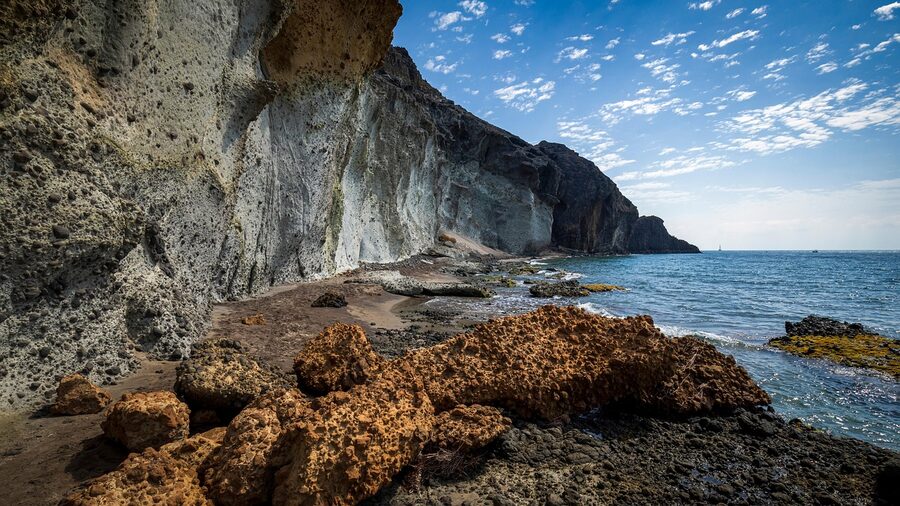
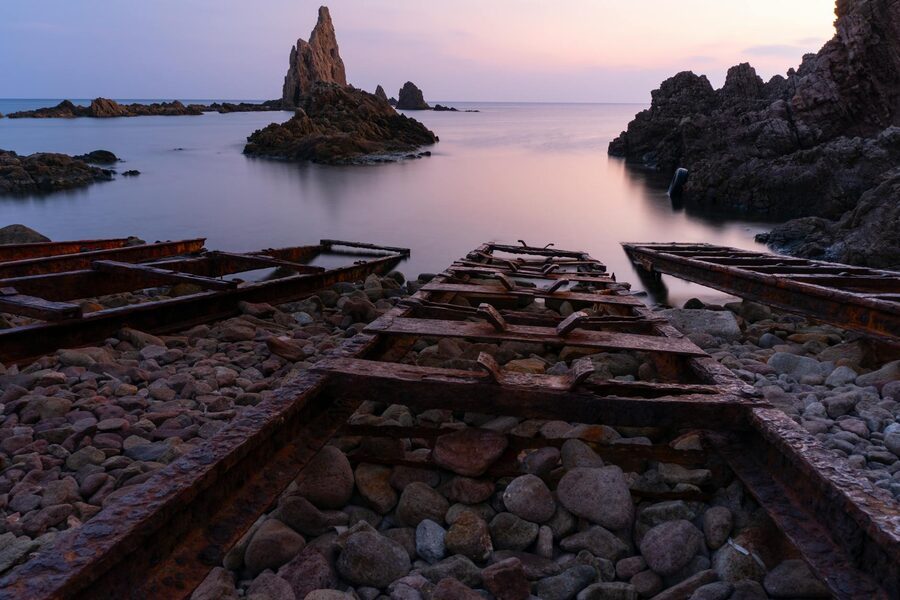
What strikes you from the water is how untouched everything looks. The natural park designation stopped the resort development that consumed the rest of southern Spain’s coast. No high-rises behind the cliffs. No beach clubs. Just volcanic rock, clear water, and the occasional fishing boat.
Beyond the Kayak: Other Ways to See the Park
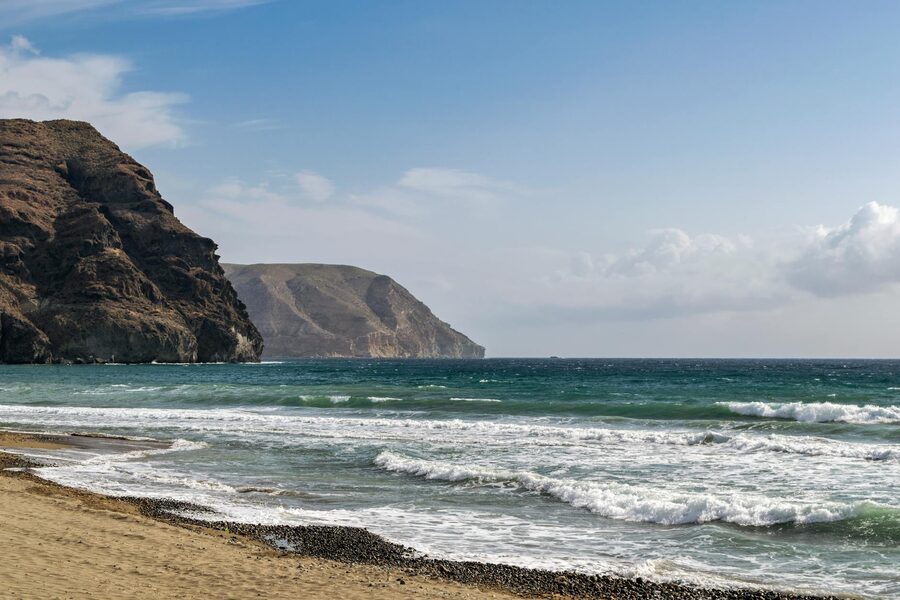
If kayaking isn’t your thing (or you’ve done it and want more), the park has solid hiking trails. The path from San Jose to Playa de los Muertos takes about two hours and passes through some of the most dramatic coastal scenery in Spain. Bring water — there’s no shade and the trail is exposed.
Boat tours are another option. A yacht tour to the park’s best beaches costs about $77 per person and covers more coastline than you could kayak in a day. The trade-off: you don’t get the cave access or the close-to-the-water perspective that makes kayaking here special.
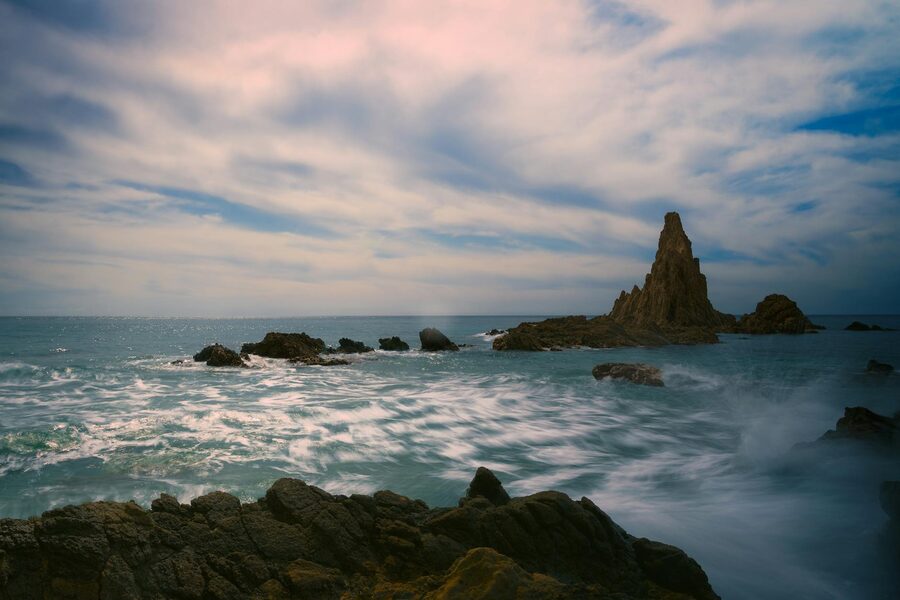
Snorkeling on your own is possible at several beaches — Playa de los Muertos and Cala de San Pedro are favourites. Bring your own gear though; rental options inside the park are limited.
Quick Tips from Someone Who’s Done It
Book the morning slot. I keep saying this because it matters more here than at other kayak spots. The Levante wind picks up most afternoons along this coast and can turn a relaxed paddle into a proper workout.
Wear a rash guard or light long-sleeve shirt. Three hours of paddling in the sun will burn your shoulders regardless of sunscreen. I learned this the hard way.
Eat before the tour, not after. There aren’t many restaurants near the departure points (San Jose has a few, Las Negras has a couple). If you’re driving from Almeria, stop for breakfast in the city first.
If you’re staying overnight, San Jose has the best selection of accommodation inside the park. It’s a small village — maybe 800 permanent residents — with a handful of apartment rentals and two or three small hotels. Book early in summer; the park’s popularity has grown steadily and availability gets tight.
Where to Stay Inside the Park
San Jose is the obvious base — it’s the largest village inside the park, with the most restaurant options and the closest departure point for kayak tours. Accommodation ranges from simple apartment rentals (40-70 euros/night) to small boutique guesthouses (90-140 euros/night). There’s nothing resembling a resort, which is the whole point.
Las Negras is the alternative for people who want something even quieter. It’s a former fishing village with dark volcanic sand (hence the name), a handful of restaurants, and a more off-grid feel. Some kayak operators launch from here as well. Accommodation is mostly apartments and vacation rentals.
Rodalquilar is worth mentioning because it’s the former gold mining village in the park’s interior. The old mine ruins are interesting to walk around, and it’s centrally located for exploring both the northern and southern sections of the coast. But it’s not on the water, so you’ll need to drive to kayak departure points.
If you want more amenities — proper supermarkets, ATMs that work reliably, restaurants beyond fish-and-chips variety — stay in Almeria city and drive in for the kayak tour. It’s about 35-40 minutes each way, which isn’t terrible for a morning tour.
Exploring More of Andalusia’s Coast and Mountains
Cabo de Gata is on the eastern edge of Andalusia, which puts it within striking distance of several other excellent day trips. If you’re based in the area for a few days, the kayak tours out of Nerja are worth comparing — Nerja has more dramatic cliff formations and the famous Maro-Cerro Gordo marine reserve, though Cabo de Gata wins on the untouched, wild feel.
Inland, the day trip from Malaga to Ronda is one of the best excursions in southern Spain — the drive through the mountains alone is worth it, and Ronda’s gorge bridge is genuinely jaw-dropping. For something completely different, getting Alhambra tickets in Granada should be on your list. The palace complex is about two and a half hours from Cabo de Gata and it’s one of those places that actually lives up to the hype. Just book tickets well in advance — they sell out weeks ahead in summer.
And if the desert landscape around Cabo de Gata fascinated you, consider a desert tour in Almeria through the Tabernas — the actual filming location of those Spaghetti Westerns. It’s a completely different experience from the coast but equally unforgettable.
This article contains affiliate links. If you book through our links, we may earn a small commission at no extra cost to you. This helps us keep producing detailed travel guides.