
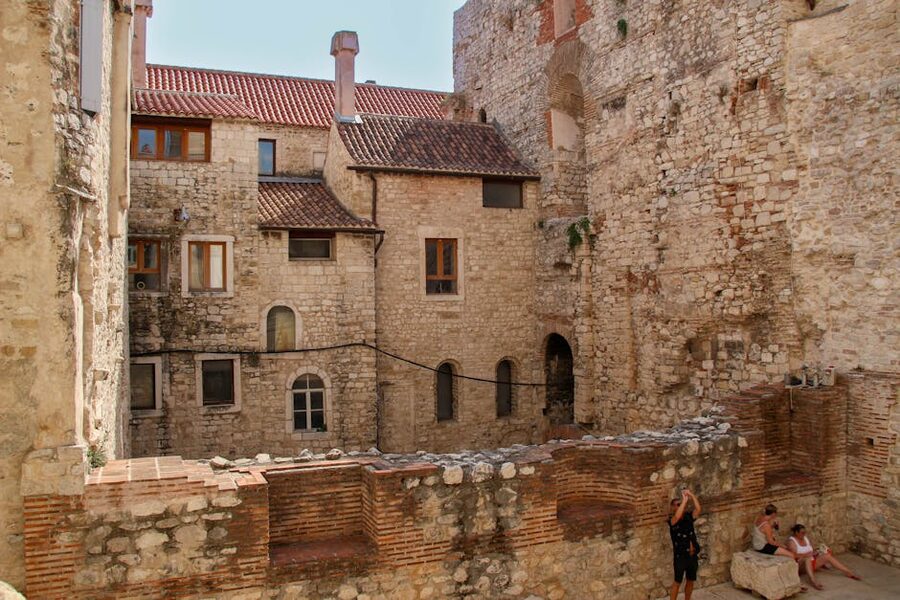
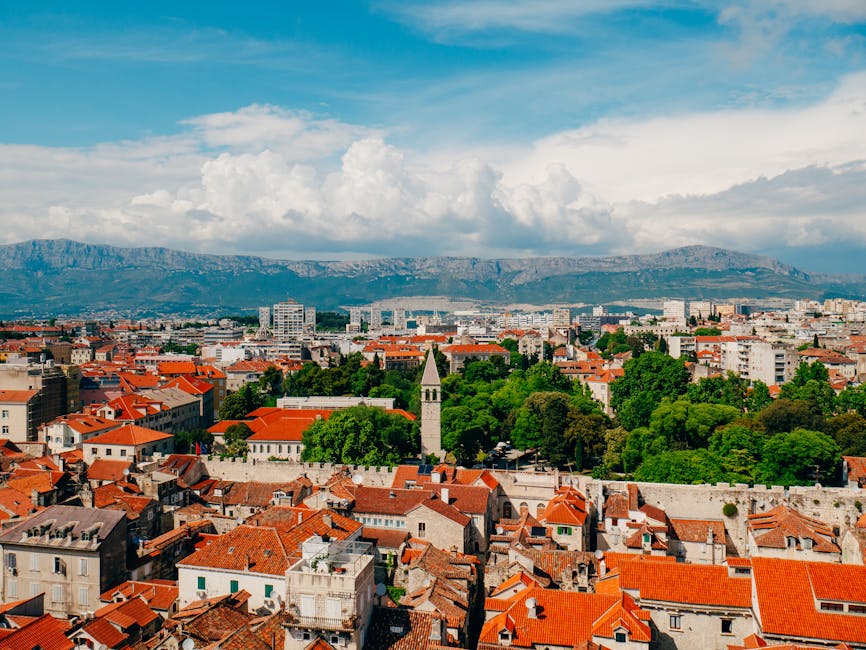
Diocletian’s Palace isn’t actually a palace — not the way you’re probably imagining one. It’s a small city. About 3,000 people live inside the 1,700-year-old Roman walls, running coffee shops and apartment rentals in rooms that were once imperial bedchambers. You can walk in for free. You will get lost within ten minutes. If this is your first stop in Dalmatia, our wider things-to-do-in-Split guide covers what else to squeeze into a few days.
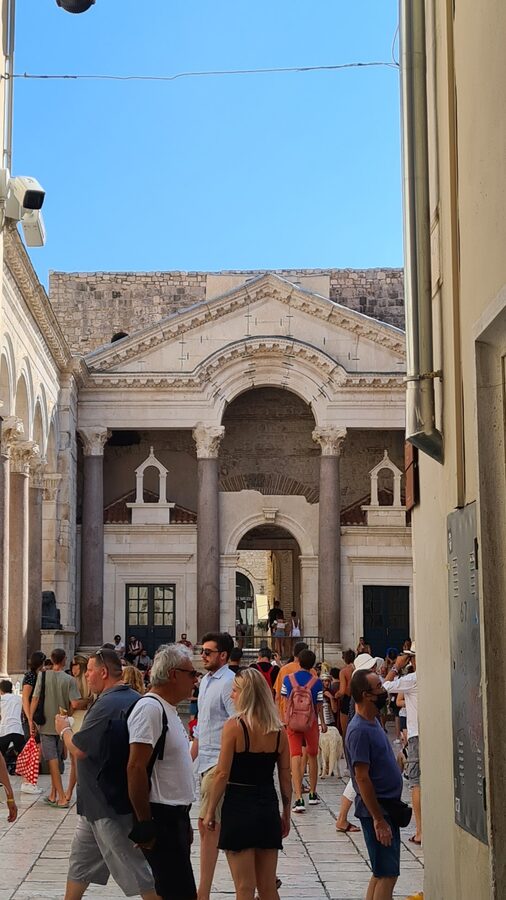

That’s why a guided tour is worth the money here. Split’s old town is the kind of place where every stone you’re leaning on has a story, but the stories aren’t signposted — you need someone to walk you through them.
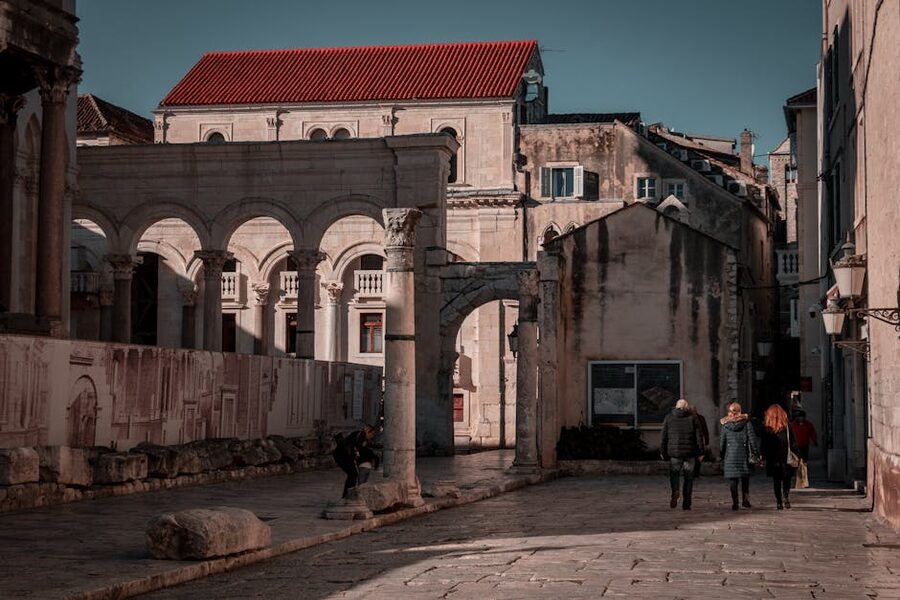
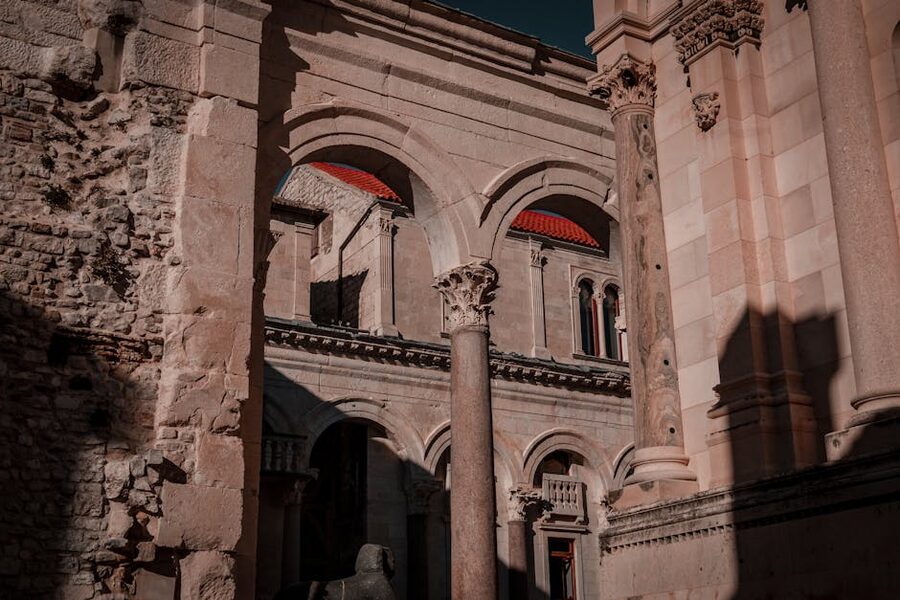
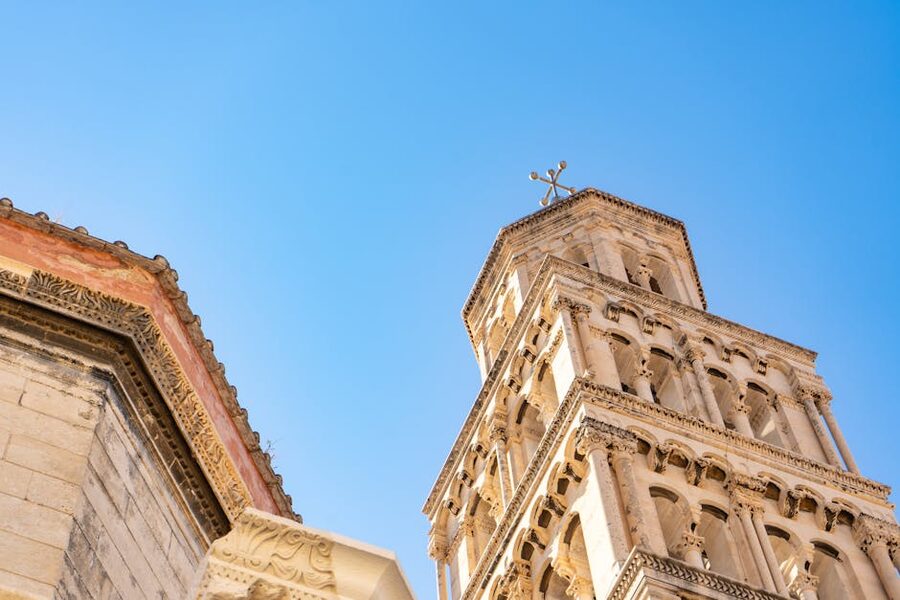
This guide covers the best walking tours on the market, what each one includes, and what to expect if you just want to walk around by yourself.
- In a Hurry? Here Are the Top Picks
- Why a Guided Tour Is Actually Worth It Here
- What a Typical Tour Covers
- The Golden Gate and the Statue of Gregory of Nin
- The Peristyle
- The Cathedral of St Domnius
- The Substructures (The Basement)
- The Riva and the Vestibule
- The Best Tours to Book
- 1. Split: Old Town and Diocletian Palace Walking Tour —
- 2. Walking Tour of Split with a ‘Magister’ of History — .83
- 3. Walking Tour of Split and Diocletian’s Palace — .37
- A Quick History of the Palace (Because You’ll Want It)
- Self-Guided vs Guided: What You Miss Going Alone
- When to Book and When to Go
- What to Wear and Bring
- Pairing This with Other Split Experiences
- Worth Knowing Before You Book
- More Split and Croatia Guides
In a Hurry? Here Are the Top Picks
Best value: Split: Old Town and Diocletian Palace Walking Tour — $17 per person. Ninety minutes, small groups, covers the essentials. The first tour most people should book.
Best for history buffs: Walking Tour of Split with a ‘Magister’ of History — $34.83 per person. Academic-level guide, deeper dive. Worth it if you’ve already read the Wikipedia page.
Best combined experience: Walking Tour of Split and Diocletian’s Palace — $48.37 per person. Covers the palace plus the wider old town — more ground, more stories.
Why a Guided Tour Is Actually Worth It Here
Normally I’m sceptical of walking tours for sites you could visit for free. Not here. The palace is a specific case where a guide adds real value, for three reasons.
First, there are almost no interpretive signs. Roman ruins in Rome have placards everywhere. Split has two, maybe three. Without a guide telling you “this arch is where the emperor’s guards stood,” you’re looking at a stone wall and not much else.
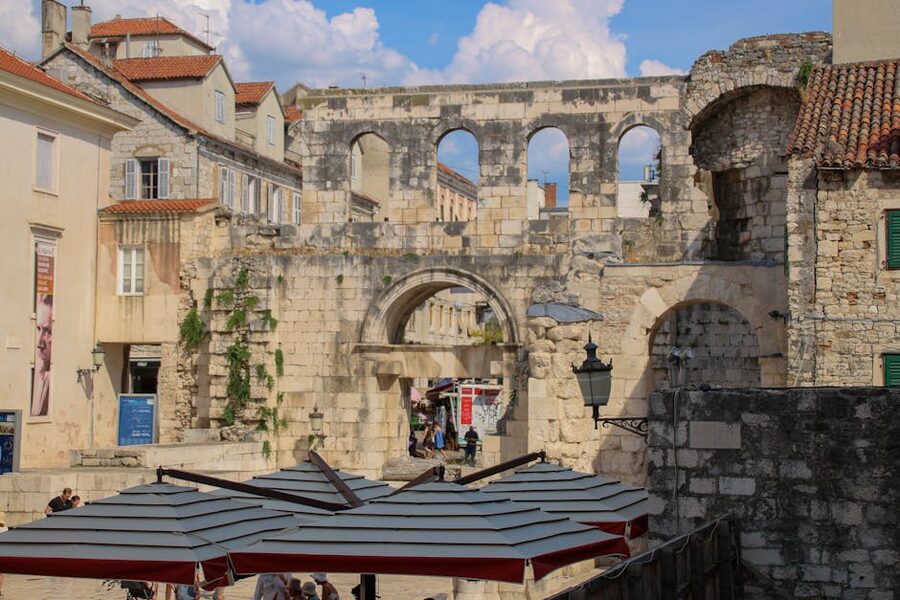
Second, the palace is lived in. People live in the walls. Businesses rent out the vaulted cellars. Without context, you can walk through the Peristyle and not realise you’re looking at the only standing Roman imperial palace in Europe — you’d think it was just a café square with columns.
Third, the history here is unusual. Diocletian was the emperor who retired, which Roman emperors basically didn’t do. He built this palace to grow cabbages in retirement (his actual words in a letter to Maximian, who tried to talk him into coming back to power). Understanding the man helps you understand why the palace has the weird layout it does — part fortress, part villa, part mausoleum for his future tomb.

Good guides cover all this in under two hours. Bad guides recite dates. A small-group tour with a knowledgeable local beats a self-guided walk by a wide margin.
What a Typical Tour Covers
Most walking tours in Split follow a similar route with small variations. Here’s what’s on every itinerary worth booking.
The Golden Gate and the Statue of Gregory of Nin
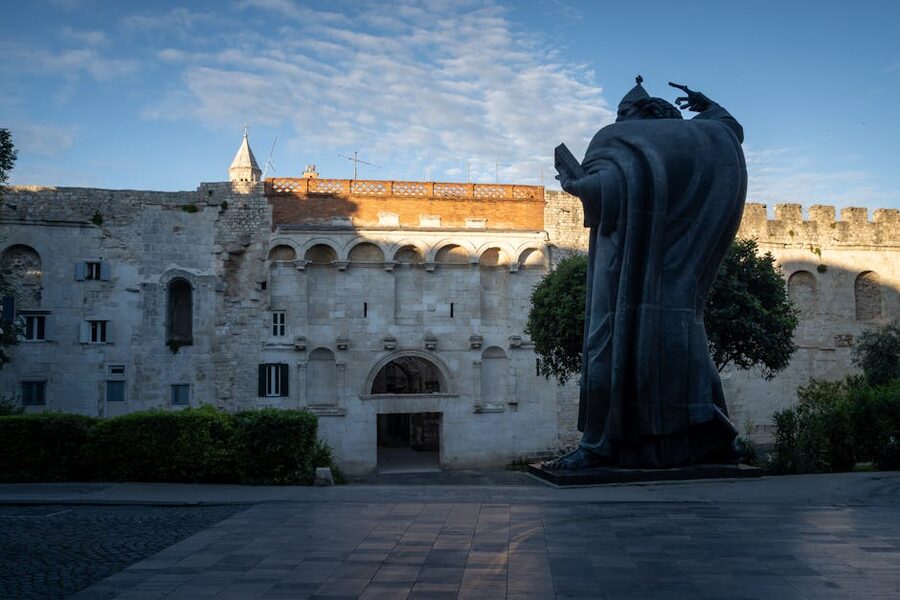
Tours start at the north entrance, the Golden Gate — the grandest of the palace’s four original gates. Directly outside stands a nine-metre bronze statue of Gregory of Nin, a 10th-century bishop who fought to have mass said in Croatian rather than Latin. Rubbing his big toe for luck is a Split tradition; the toe is noticeably polished and is the first thing most travelers do within thirty seconds of meeting their guide.
The Peristyle
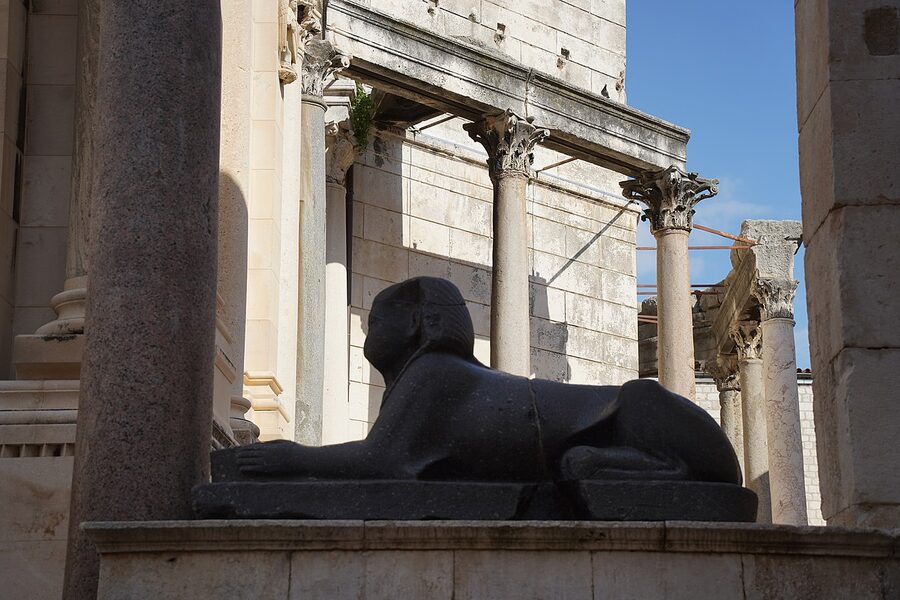
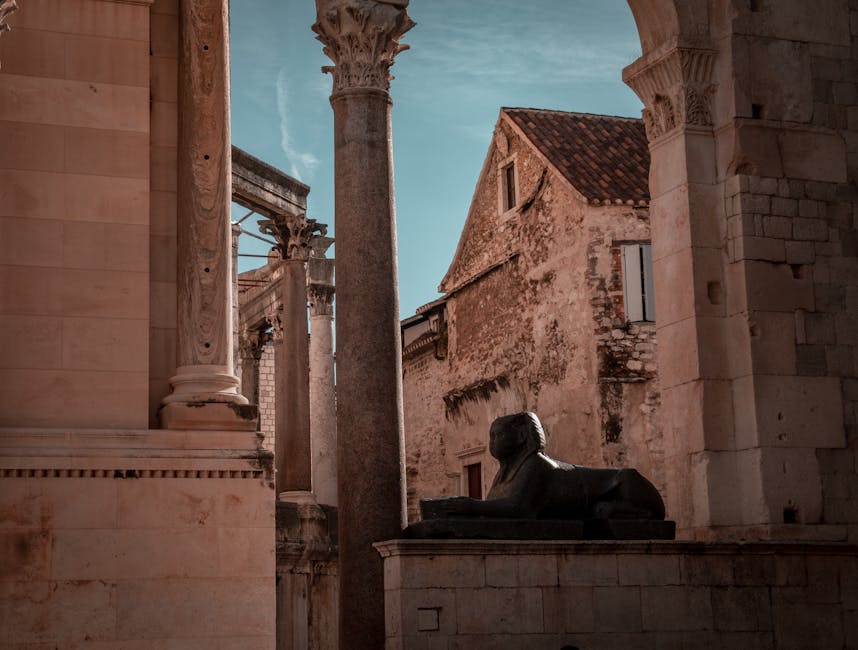
The heart of every tour. This was Diocletian’s ceremonial courtyard, where he appeared in public as a living god (Dominus et Deus — “Lord and God” — was his preferred form of address). Today it’s lined with cafés, a stage for summer opera, and a queue of travelers waiting to climb the cathedral bell tower. The red Egyptian granite columns are original.
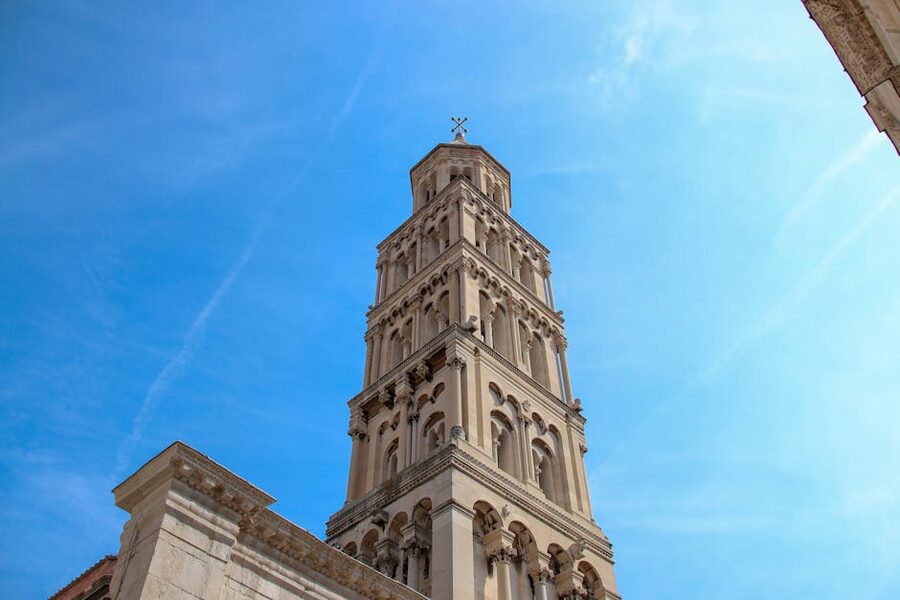
The Cathedral of St Domnius
The dark irony of Split is that the cathedral is built inside Diocletian’s mausoleum. Diocletian was the last Roman emperor to persecute Christians on a large scale — the Great Persecution of 303-311 killed thousands, including St Domnius, the bishop of Salona whom he had executed. Three hundred years later, Christians took over the mausoleum, threw out Diocletian’s sarcophagus, and turned it into a church named after the man he’d killed. His bones are gone. The man he murdered gets prayed to there every Sunday.
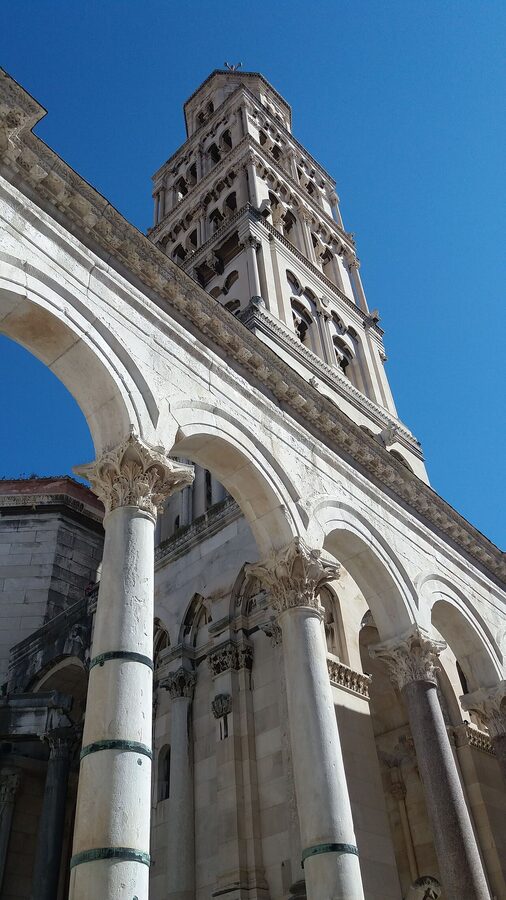

Entry to the cathedral and bell tower is extra on most tours. If it’s included in your ticket, do the bell tower climb — the view from the top is the best in Split, and it’s only 183 steps.
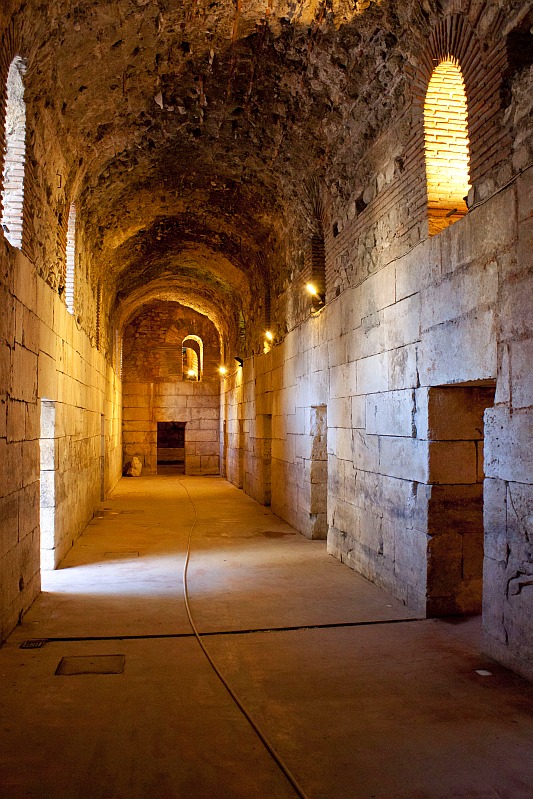
The Substructures (The Basement)
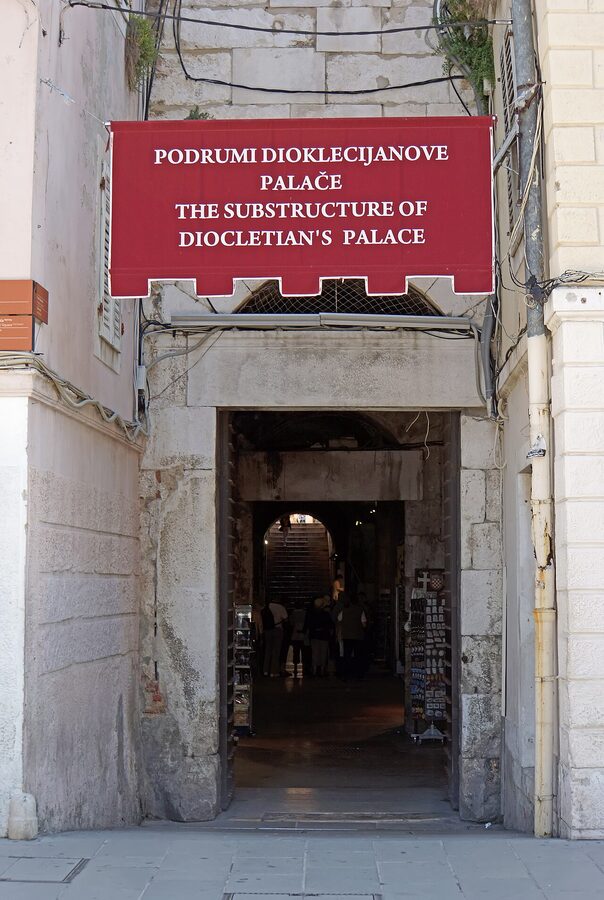
The palace substructures are the original cellars that held up the emperor’s living quarters above. Because they were filled with rubbish from the houses built on top for a thousand years, they preserved the exact floor plan of the rooms above — meaning today we can reconstruct what the imperial apartments looked like just by looking at the cellars beneath them. It’s one of archaeology’s stranger wins.
Entry to the basement is usually €7-10 and included in some tours but not others. Worth the upgrade if you can — it’s the most tangible Roman space in the complex.
.jpg)

The Riva and the Vestibule
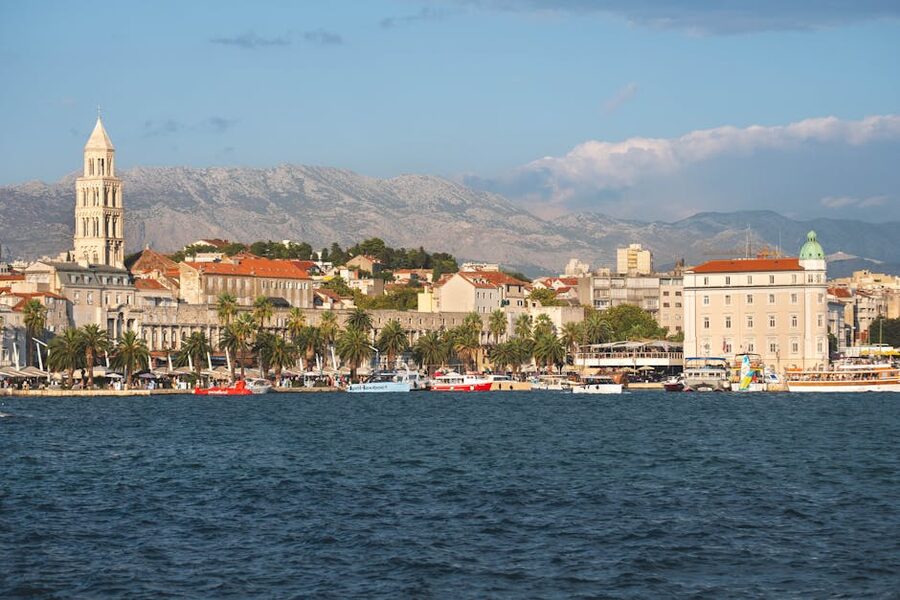
Most tours wrap up at the Riva (Split’s seafront promenade) — the natural place to grab lunch afterwards, though the Riva restaurants are tourist-priced; our Split restaurants guide points to the konobas locals use a couple of streets back. After passing through the Vestibule — a circular domed hall where visitors would wait before an audience with the emperor. The Vestibule has extraordinary acoustics; a Croatian a capella group called klapa usually sings there for tips during the day, and your guide will probably pause so you can hear them.
The Best Tours to Book
1. Split: Old Town and Diocletian Palace Walking Tour — $17
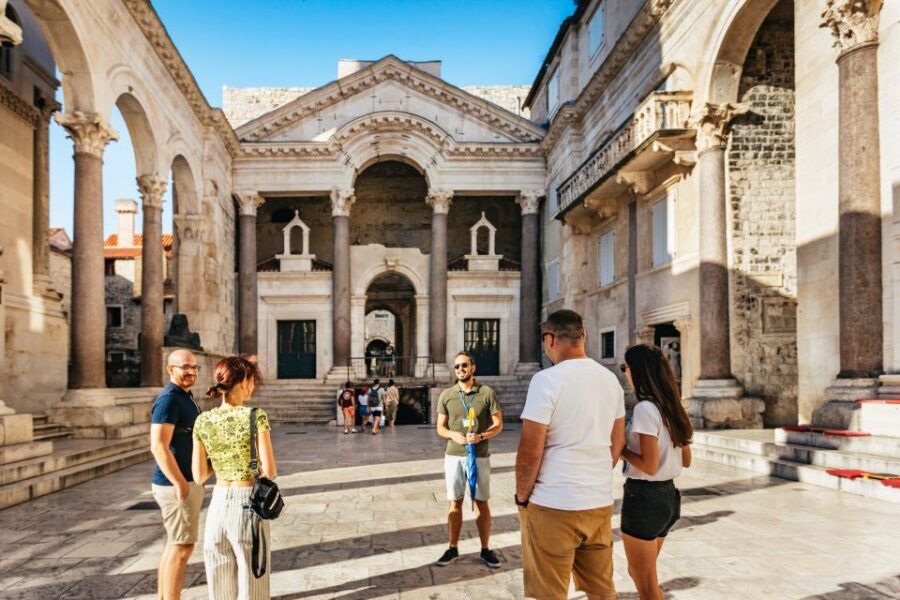
At $17 this is one of the best-value tours in Croatia. Ninety minutes with a licensed guide who covers the essentials — palace history, cathedral, substructures, the usual stops. Group size is capped, and the guides rotate from a local pool so the quality is consistent. Our review explains what’s included in the base price and what costs extra (cathedral entry, bell tower, substructures). If you’re in Split for the first time and only book one tour, book this one.
2. Walking Tour of Split with a ‘Magister’ of History — $34.83
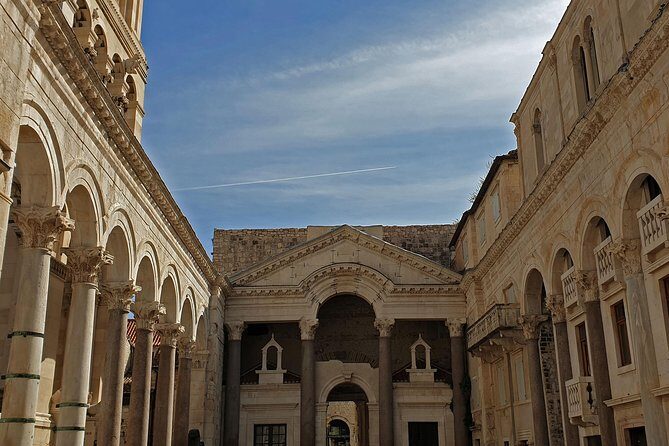
This one’s for people who found the Wikipedia article on Diocletian interesting and want to go deeper. The guides are all qualified historians and they’ll happily take questions that would stump a regular tour guide. The route is similar to the standard walking tour but the storytelling is denser — you get the primary-source material on Diocletian’s retirement, not the sanitised tourist version. Our review covers the difference in content between this and the cheaper walking tours. Worth the extra $18 if history’s your thing.
3. Walking Tour of Split and Diocletian’s Palace — $48.37
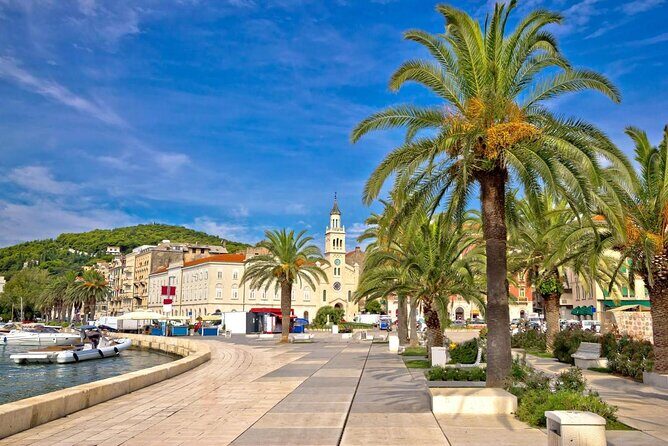
The more thorough option. Ninety minutes, similar ground to the budget tour, but a smaller group and a slightly fuller route that includes the Gregory of Nin statue area and a walk around the palace exterior. Some past visitors note the guide quality is high but audibility can be an issue in crowded areas — a fair warning if you have hearing difficulties. Our review walks through exactly what’s covered and when the quieter tour slots run.
A Quick History of the Palace (Because You’ll Want It)
Diocletian was born around 244 AD near Salona — a Roman city now a ruin a few kilometres outside Split. He rose through the army, became emperor in 284, and did two unusual things: he split the empire into four (two Augusti, two Caesars, a system called the Tetrarchy), and then he retired. In 305 he walked away from the throne to live out his days in the palace he’d built for himself on the Dalmatian coast.
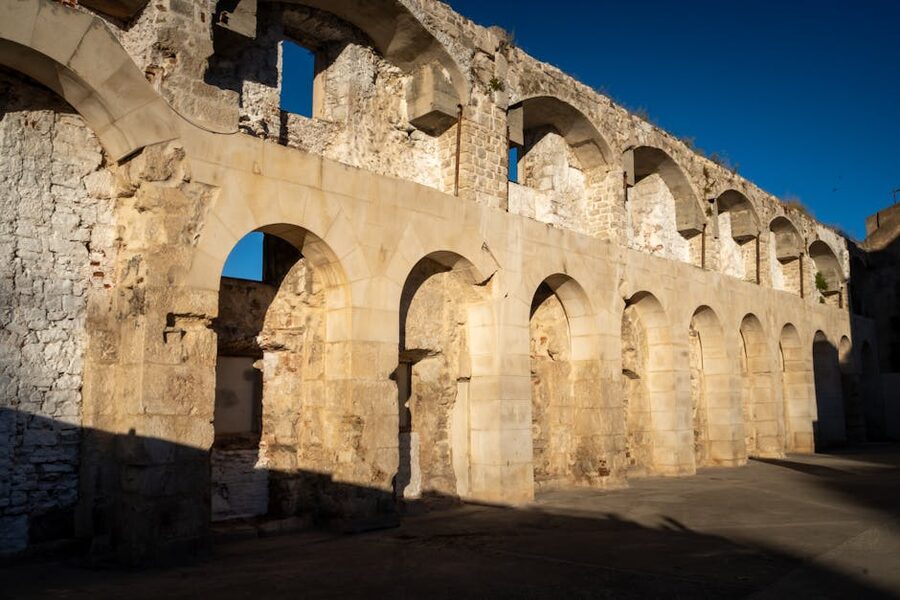
The palace was built to serve three functions simultaneously: fortified military base, imperial villa, and mausoleum. You can see all three in the layout. The outer walls are defensive (nearly two metres thick). The southern half, facing the sea, was the luxury residence. The northern half was barracks. And right in the centre, off the Peristyle, was his tomb — the building we now call the Cathedral of St Domnius.
He died in 311, possibly of suicide (sources disagree). His body was interred in the mausoleum. Within 70 years his bones were removed by Christians and the building became a church. The man who invaded this palace intending to kill Diocletian’s soul succeeded — but the building lives on, with people still drinking coffee in the Peristyle seventeen centuries later.
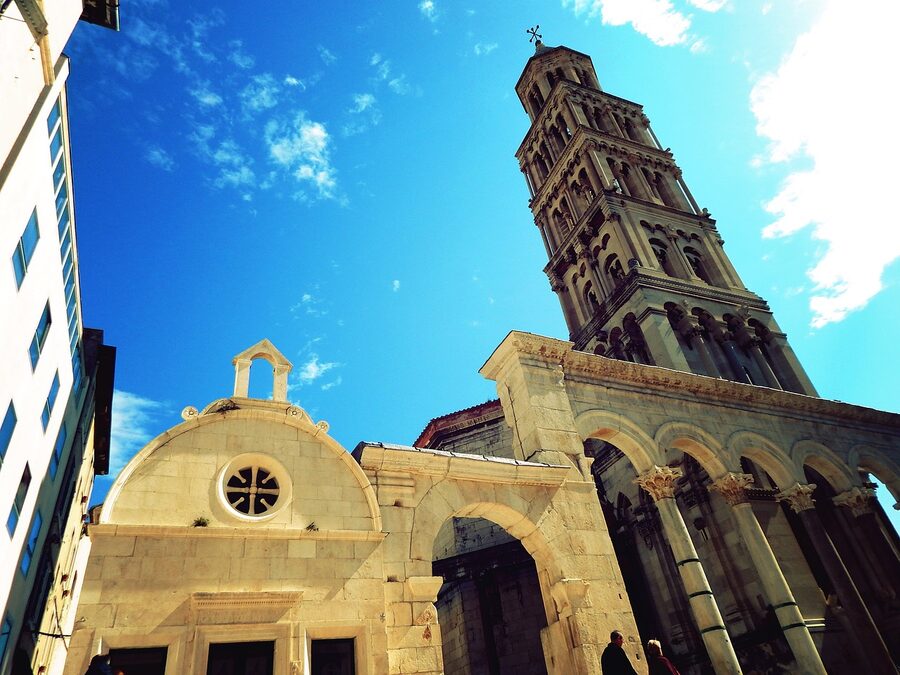
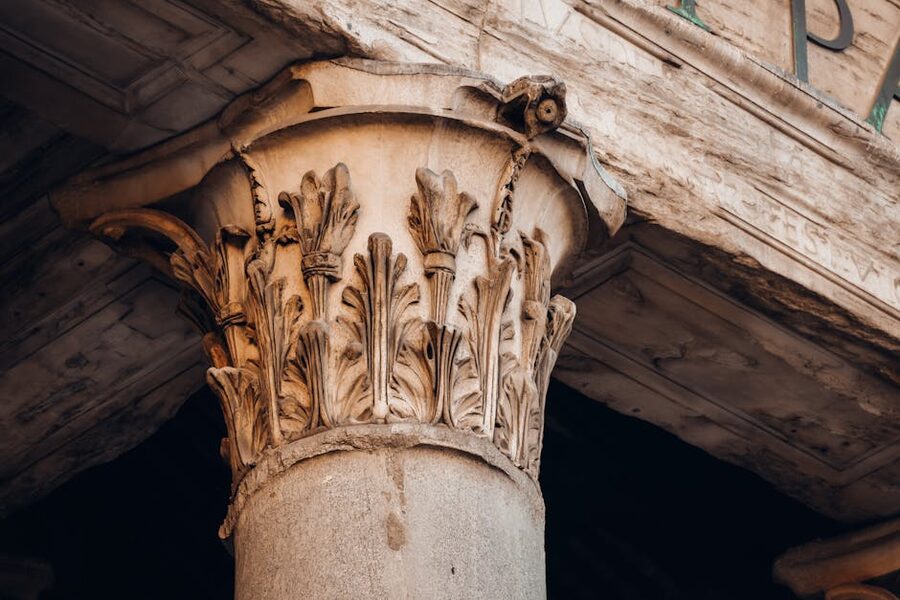
By the medieval period the palace had become a small walled city — Split — inhabited by Salonan refugees fleeing Slavic raids. The structure you see today is the Roman original, the medieval additions, the Venetian reinforcements, and the modern apartments, all layered into a single living building. There are not many places like it in Europe.
Self-Guided vs Guided: What You Miss Going Alone
You can absolutely walk around Diocletian’s Palace for free. It’s an open city. No entrance fee except for specific attractions (the cathedral, the bell tower, the substructures). For a wider overview of where this sits in a full Croatia trip, our Dalmatian coast guide runs through the logical route from here south to Dubrovnik.
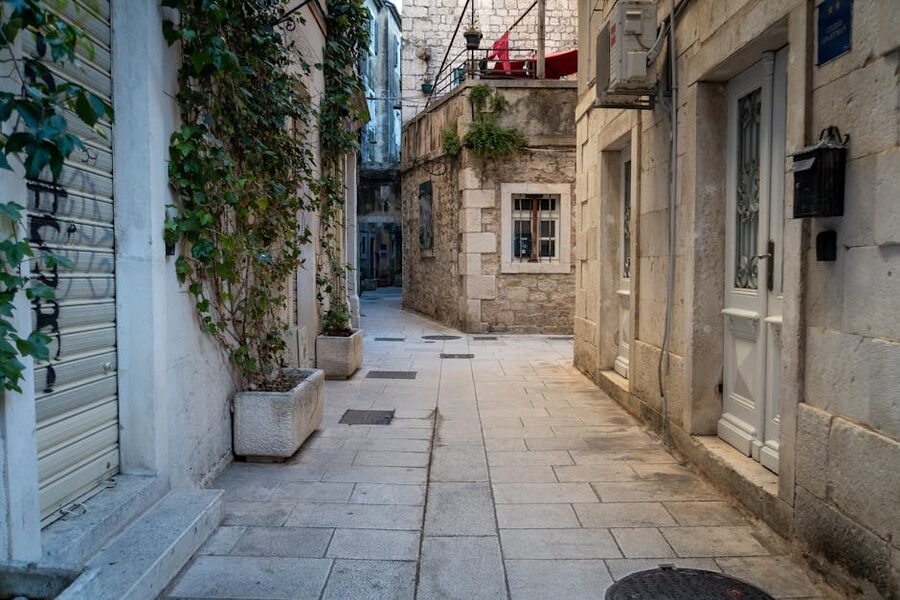
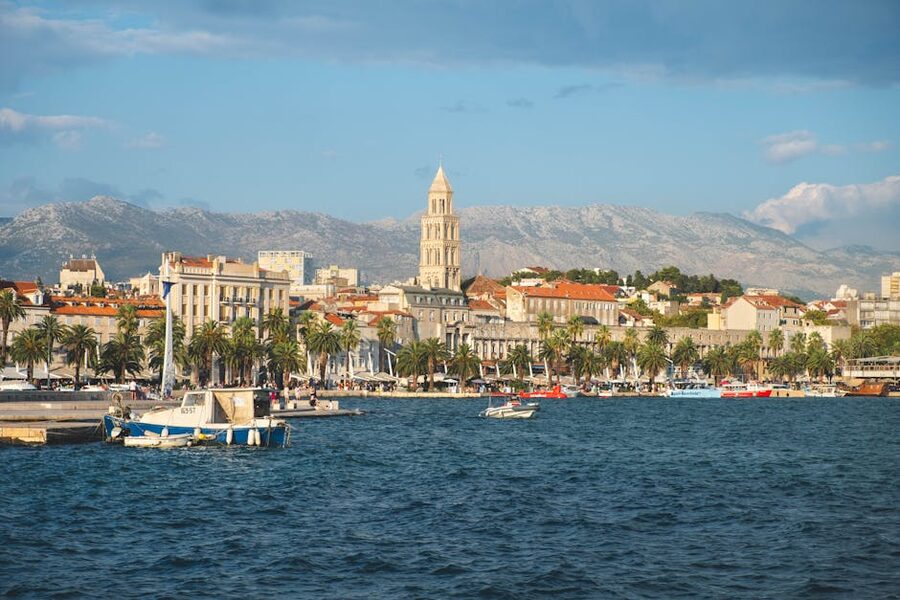
But here’s what you miss without a guide: the location of the small archaeological museum within the palace (most travelers walk past it without noticing). The story of the red granite columns and where they came from. The location of the original Temple of Jupiter (it’s now a baptistery). The exact spot where Diocletian’s throne sat. Which of the courtyard’s stone benches is Roman and which is medieval. The best gelato shop within the palace walls. Where klapa singers perform at 5pm daily.
A self-guided walk is fine. A guided walk is better. If the $17 tour is within budget, book it — you’ll get more out of your time in Split than you will winging it.
When to Book and When to Go
Morning tours (9-11am) are the best. The palace is cool, the light is good for photos, and the tour groups haven’t stacked up yet. If you’re still deciding when to do the whole Croatia trip, our best-time-to-visit guide breaks the seasons down with the trade-offs for each. By noon the courtyards fill with people and the narrow alleys become slow-moving queues.
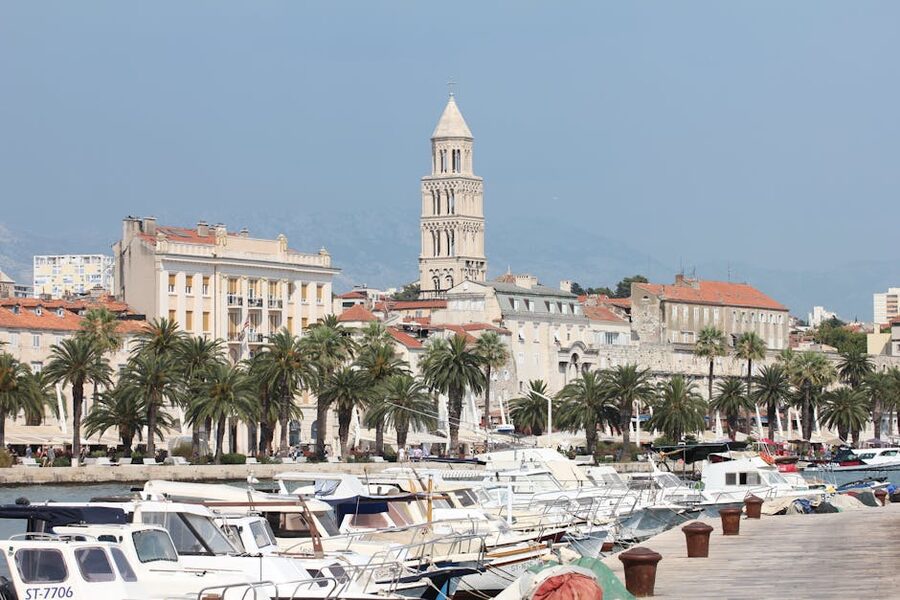
Evening tours (6-7pm) are a decent second choice. The crowds thin, the stones glow in golden light, and the restaurants start setting up outdoor tables in the Peristyle. Night tours exist but are less useful — the palace isn’t lit for historical viewing.
Avoid the middle of the day in July and August. Temperatures hit 35°C and the narrow alleys trap the heat. You won’t enjoy a tour when you’re overheating.
Book at least 24 hours ahead in high season. Small-group tours sell out during July and August; same-day booking sometimes works but doesn’t always.
What to Wear and Bring
Comfortable walking shoes. The palace floors are polished marble that’s been smooth for 1,700 years and is genuinely slippery, especially after rain or if you’ve had a drink. Flip-flops are a terrible idea.
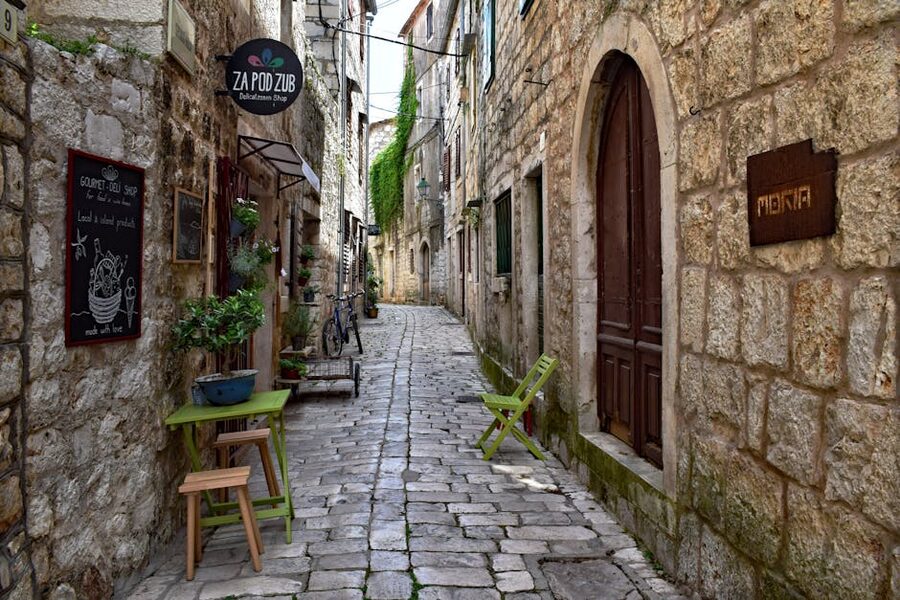
Water bottle. The palace has no drinking fountains but you can refill at any café for free. Croatians take hydration seriously in summer; no one minds filling your bottle.
Light scarf or shoulder cover for the cathedral. It’s technically a functioning Catholic church and the staff occasionally ask people with bare shoulders to cover up or leave.
Cash for the bell tower and substructures — both are usually card-accepting now but the card machines go down more often than you’d expect. €15 should cover any extras.
Pairing This with Other Split Experiences
The walking tour is the classic first thing to do in Split, but it pairs well with other bookings for a full 2-3 day stay.
The natural morning-afternoon combo is this tour in the cool hours, then an afternoon on the water. The Blue Lagoon and 3 Islands cruise starts at 8:30am from the Riva — book the walking tour for the afternoon to do it in reverse. The Blue Cave day trip is another full-day option; do the walking tour on a different day. For inland variety, the Krka Waterfalls tour takes a full day, and the Plitvice Lakes day trip is the most-booked Split excursion after the boat tours.
If you’re extending into the islands, the Hvar day trip guide is the place to start. Plan the walking tour for the day you arrive in Split — it’s a gentle way to get oriented before tackling longer excursions.
Worth Knowing Before You Book
Tour group sizes vary enormously. The budget tours sometimes run with 25+ people; the premium tours keep it under 12. If group size matters to you, check the listing — it’s usually stated clearly, and you can ask the operator.
Some tours include cathedral entry, some don’t. If you want to go inside the cathedral and climb the bell tower, either book a tour that includes both, or add 40-50 minutes after the tour to do them yourself (€7 for the cathedral, €5 for the tower).
Licensed guides versus unlicensed. Croatia licenses its tour guides, and licensed guides can take you into the cathedral and substructures to give their spiel inside. Unlicensed guides legally can’t — they have to stop at the doors. For a palace tour specifically, licensed guides are worth the extra money because they can talk you through the interiors.
Group dynamics matter more than people expect. If you end up on a tour with a group of drunk hen-party travellers (it happens in Split, especially from Tuesday to Saturday), the guide can’t do much to quiet them. Morning tours attract calmer groups; afternoon tours are a mixed bag.
Finally: the Diocletian’s Palace name is technically outdated. Locals call the whole area “the Grad” (the town) or just Split. If you tell a taxi driver to go to Diocletian’s Palace they’ll look at you blankly; ask for the Riva or the Peristyle and you’ll get there faster.
More Split and Croatia Guides
Your Split itinerary needs the Blue Lagoon and 3 Islands cruise guide — the classic half-day on the water that pairs perfectly with a morning walking tour. The Blue Cave day trip guide is the other big sea excursion and covers an entirely different set of islands. Inland, the Krka Waterfalls guide is the one most first-time visitors wish they’d booked earlier — freshwater swimming and a full day of green hills as a contrast to all the Roman stone. If you’re heading south to Dubrovnik after Split, the Dubrovnik Old Town walking tour guide is the obvious next read — the two cities couldn’t be more different, and the walking tours reflect that. And for Game of Thrones fans, the Game of Thrones tour guide will explain why so much of the show was filmed in Croatia — Split’s substructures are only part of the story.
Affiliate disclosure: We may earn a small commission from bookings made through the links on this page. It doesn’t change the price you pay and helps keep the site running.