
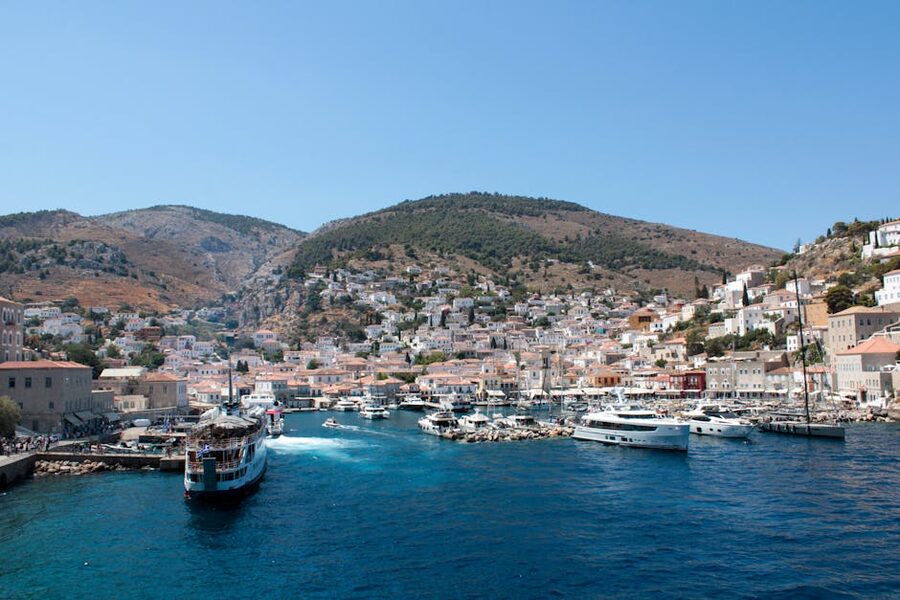
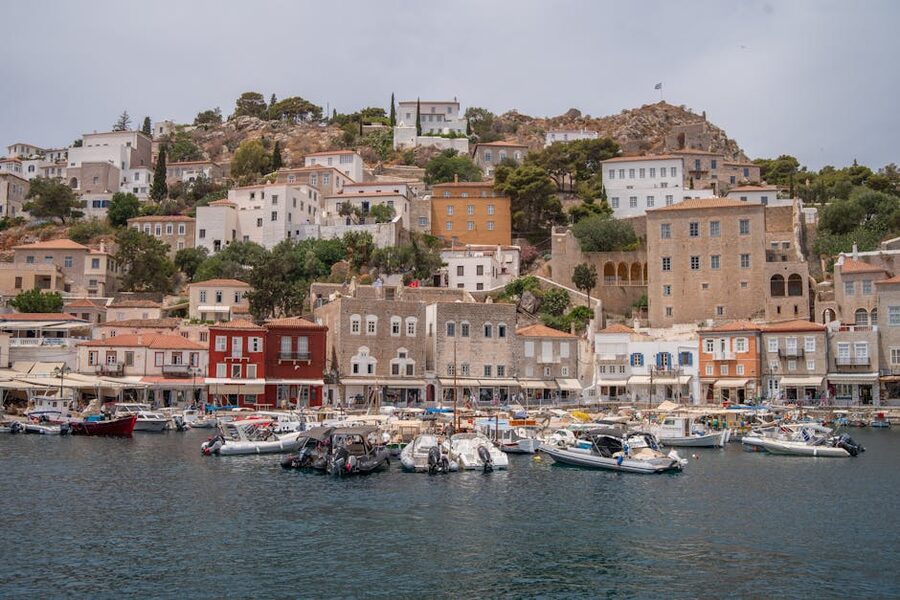
Cars are banned on Hydra. Not just restricted — actually banned. The only vehicles allowed on the island are municipal garbage trucks and mopeds registered to residents. Everything else moves by donkey, water taxi, or foot. A one-day cruise from Athens gets you 2-3 hours here plus a stop at Poros or Aegina, and the first thing most visitors notice is the silence.
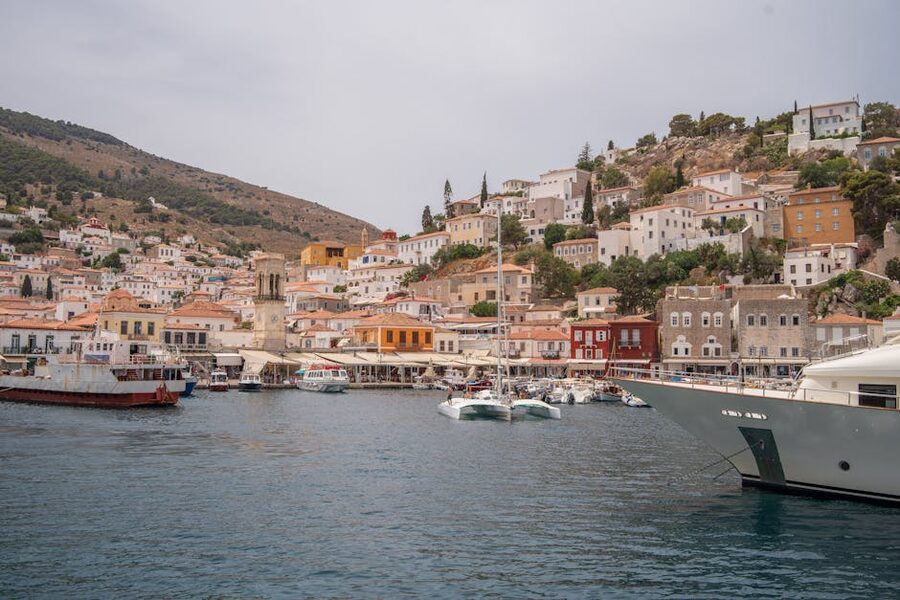
Hydra, Poros, and Aegina are the three “Saronic Islands” — the archipelago just south of Athens, close enough that day cruises run them together. Each is different: Aegina is the big fishing and farming island (lots of pistachios), Poros is the family-friendly one with pine forests and easy beaches, and Hydra is the aristocratic-feeling one where half of Europe’s 1960s film stars had holiday homes. This guide covers the two main day-cruise options — one hits all three islands, the other hits a slightly different cluster. Our broader Saronic Islands day cruise guide covers the general format.
- In a Hurry? Here Are the Top Picks
- The Three Islands: What Each Is Known For
- Aegina
- Poros
- Hydra
- The Best Tours to Book
- 1. From Athens: Hydra, Poros & Aegina Day Cruise with Lunch — 4
- 2. All Day Cruise: Agistri, Moni, Aegina with Lunch — 0.19
- 3. Alternative: Our Saronic Islands Day Cruise Guide
- The Day in Detail
- A Short History of the Saronic Islands
- When to Go
- What to Bring
- Worth Knowing Before You Book
- Pairing with Other Athens Activities
- Worth the Day or Skippable?
- Practical Notes on Hydra
- More Greece Guides
In a Hurry? Here Are the Top Picks
Most-booked: From Athens: Hydra, Poros & Aegina Day Cruise with Lunch — $154 per person. Classic 3-island cruise from Athens.
Premium sailing: All-Day Cruise to Agistri, Moni, Aegina with Lunch — $180.19 per person. A luxury sailing alternative via Agistri instead of Poros/Hydra.
Athens alternative: General Saronic Day Cruise — multiple options starting from $50. Our general guide covers the flexible lower-cost cruise format.
The Three Islands: What Each Is Known For
Each Saronic island has a distinct character. Most cruises hit all three but the time allocation tells you what the operator values.
Aegina
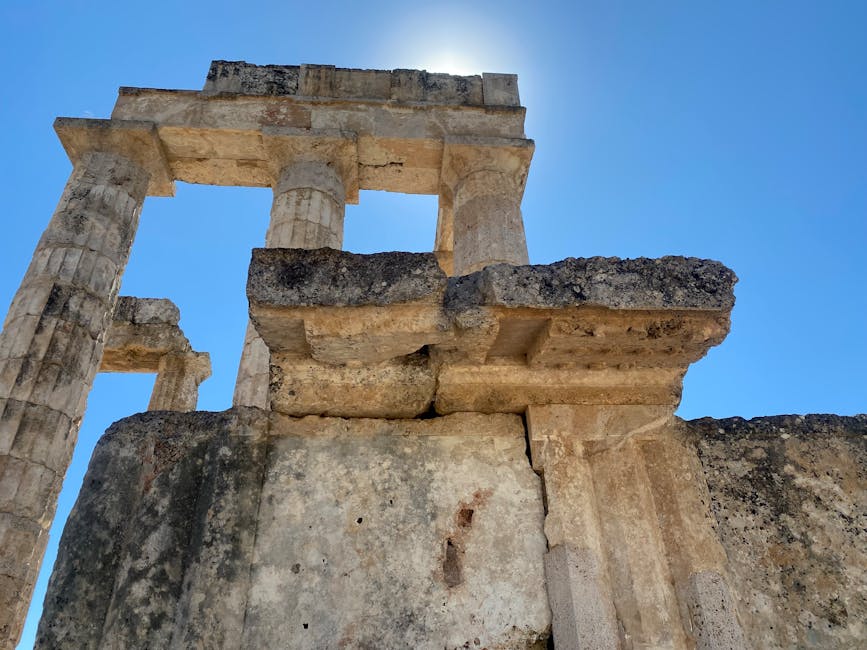
The biggest Saronic island. Known for pistachios — Aegina produces 2,700 tonnes per year, which is Greece’s most important agricultural product for export. The ancient Temple of Aphaia on the east coast is a proper 5th-century-BC Greek temple, comparable in preservation to the Temple of Hephaestus in Athens. Most cruises give you 60-90 minutes.
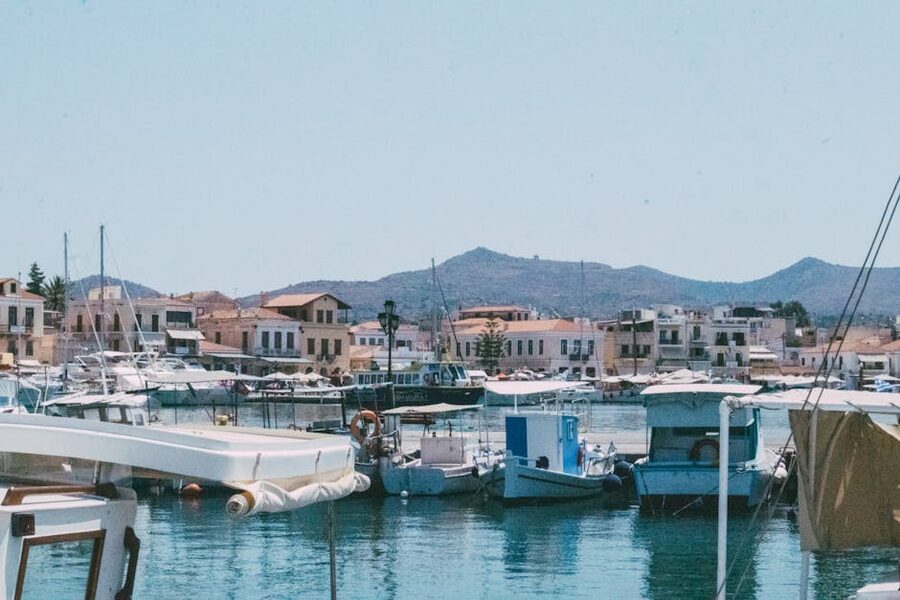
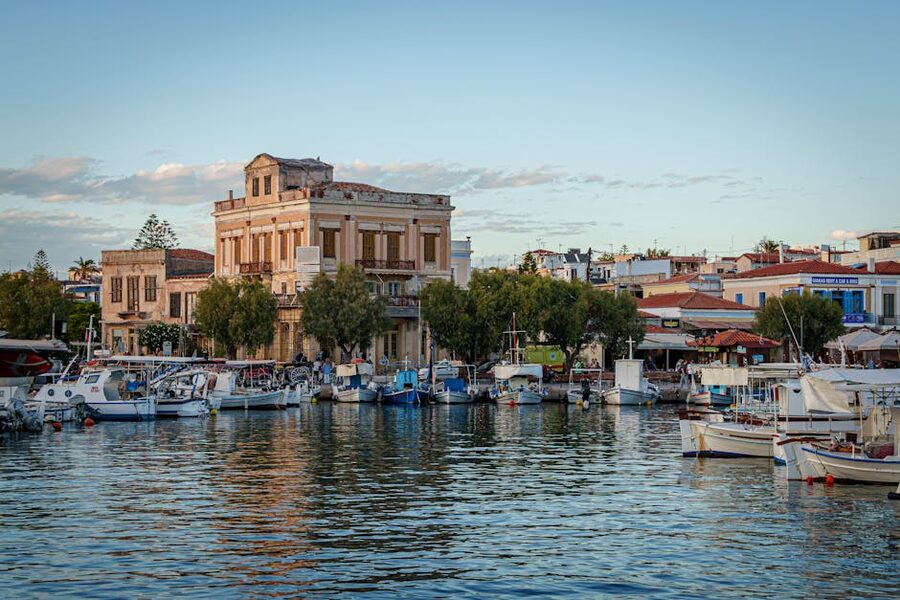
The town of Aegina Port itself is small but pleasant. Harbour walk, fishing boats, ice cream. You can buy fresh pistachios from the docks — €8-10 for 500g of a good batch.
Poros
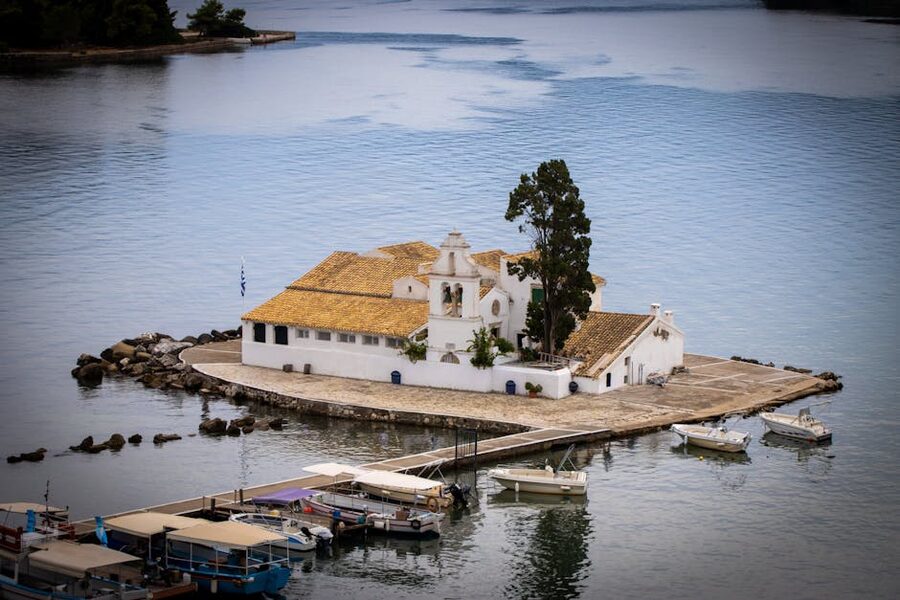
The middle stop. Poros is separated from the Peloponnese by a narrow 400-metre channel — so narrow that you can watch mainland cars drive past as your cruise boat drifts through. The town climbs a hill behind the harbour, topped by a distinctive clock tower. Pine forests cover the island’s interior.
Hydra
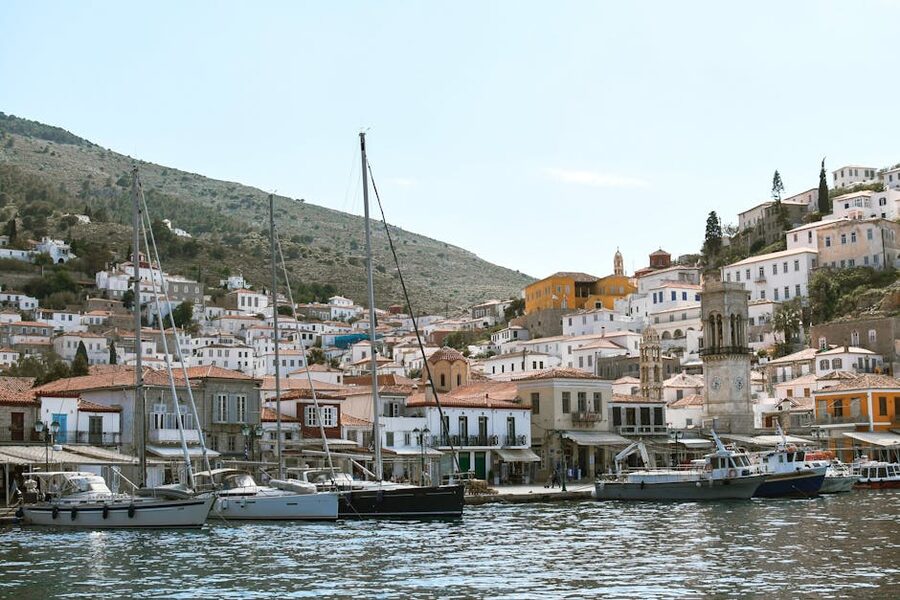
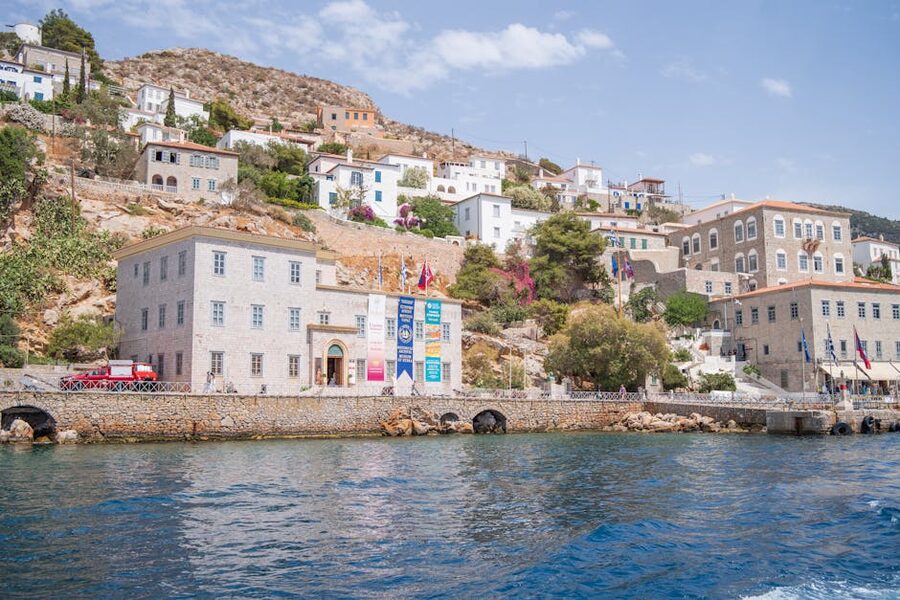
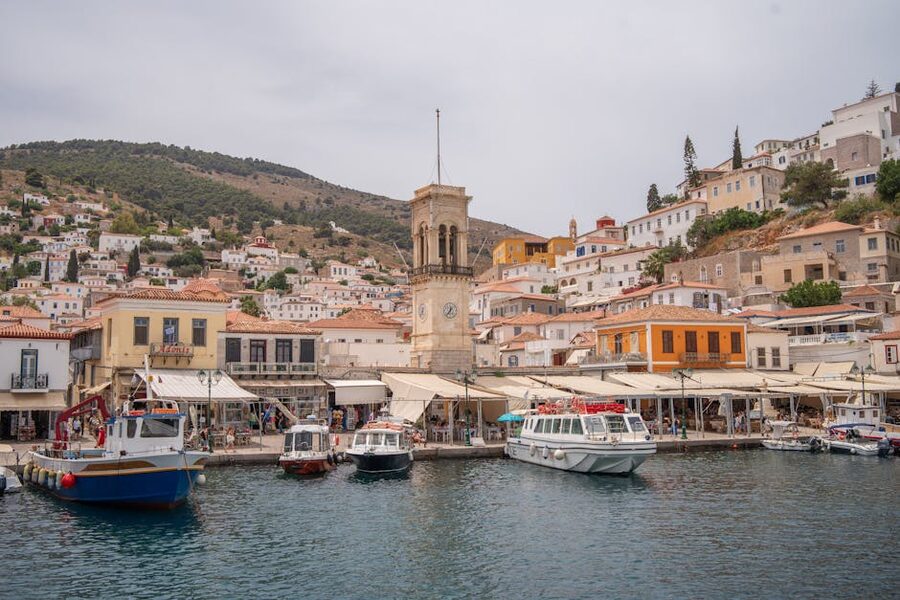
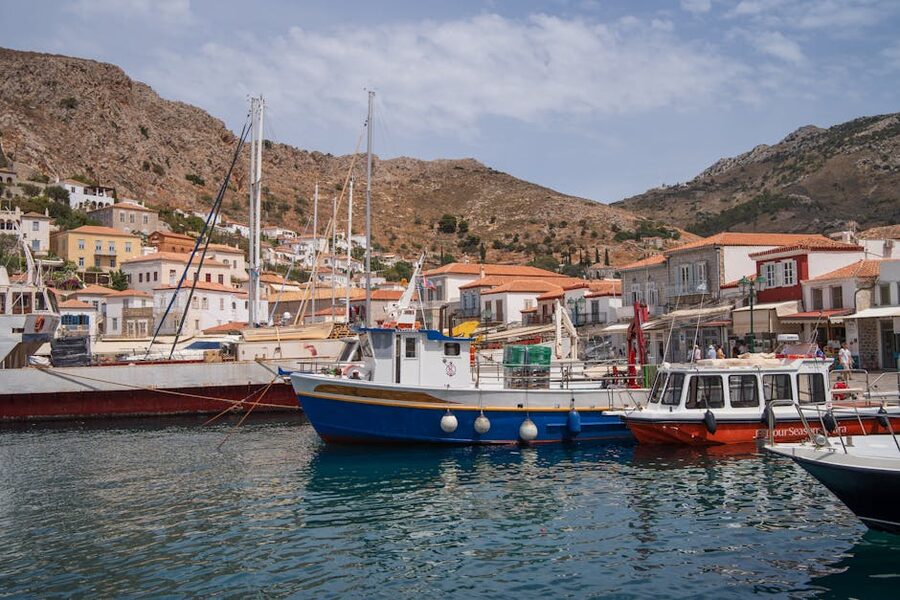
The headline island. 2-3 hours here is standard. What to do: walk the waterfront, climb to the upper town (steep, worth it), eat lunch at a harbour taverna. If you’re energetic, take a water taxi to Vlychos beach (15 min, €12 return per person).
The Best Tours to Book
1. From Athens: Hydra, Poros & Aegina Day Cruise with Lunch — $154
The essential 3-island cruise. $154 includes hotel pickup in Athens at 7:15-7:30am, return by 7:30pm. Lunch is Greek buffet (moussaka, salad, grilled meat, bread), open bar during lunch. Smaller tenders used to ferry you ashore on Hydra and Aegina — the main cruise ship is too big for the small harbours. Our review covers what’s included and which islands get the most time. Past travellers consistently rate the crew highly; operators use professional cruise staff rather than local ferry crews.
2. All Day Cruise: Agistri, Moni, Aegina with Lunch — $180.19
The premium sailing option. Instead of a large 400-passenger ship, this cruise uses a sailing yacht with 40-60 passengers max. The islands are slightly different — Agistri (smaller, less touristy) and Moni (completely uninhabited, just beaches), plus Aegina. No Hydra. Worth picking if you’ve already been to Hydra or prefer intimate sailing to mass cruise. Our review covers the differences. Lunch is better quality (proper plated meal rather than buffet), and the open bar runs all day not just at lunch.
3. Alternative: Our Saronic Islands Day Cruise Guide
Our general Saronic Islands guide covers the budget and mid-tier cruise options — variants starting at $50 with lighter food and fewer amenities but the same island stops. If you’re price-sensitive but want the Saronic experience, read that guide rather than this one.
The Day in Detail
Here’s what a 12-hour cruise day actually looks like.
07:00-07:30: Hotel pickup across central Athens. Minibus collects you and takes you to Piraeus port.
08:00-08:30: Boarding at Piraeus. Safety briefing, welcome coffee.
09:00: Depart Piraeus. Sail to Aegina (1 hour).
10:00-11:30: Aegina. 60-90 minutes to walk the port, shop for pistachios, have a coffee.
12:00-13:00: Sail to Poros. Lunch served on board during sail.
13:00-14:00: Poros. 60 minutes for a quick walk and maybe an ice cream.
14:30-17:00: Sail to Hydra and 2-3 hours on Hydra. The main stop. Lunch options available if you didn’t fill up on the cruise meal.
17:30: Depart Hydra. Sail back to Athens (2 hours), sometimes with dancing/entertainment on the cruise boat.
19:30: Arrive Piraeus.
20:00-20:30: Minibus drops at your hotel.
A Short History of the Saronic Islands
The Saronic Gulf was the naval route between Athens and the Peloponnese in the classical era. The Battle of Salamis — the 480 BC naval battle that ended the Persian invasion of Greece — was fought in these waters.
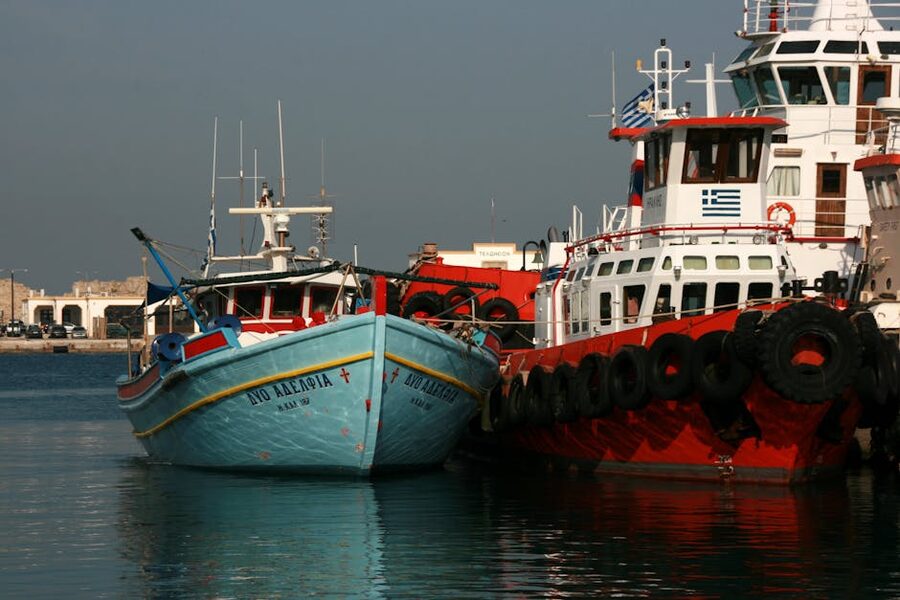
Hydra’s wealth came from maritime trade during Ottoman rule, specifically smuggling European goods past Ottoman naval blockades. Hydriot captains became some of the richest merchants in the Aegean; their houses were built in the 18th century when income was at its peak. The island played a major role in the 1821 Greek War of Independence — Hydriot captains converted their merchant fleet into warships and fought the Ottoman navy successfully.
Aegina was briefly the capital of newly-independent Greece in 1828-29 — Ioannis Kapodistrias, Greece’s first head of state, based himself here before moving the government to Nafplio then eventually to Athens.
Poros was a Russian naval base in the 19th century; Russia had historical protection-relationships with Greek islands and used Poros as an Aegean deep-water anchor.
When to Go
Cruises run April through October.
April-May: Mild temperatures, fewer crowds, everything’s green on Aegina.
June-September: Peak. Water warm enough for Hydra harbour swimming. Book ahead.
October: Quieter. Some cruise variants stop running mid-October.
Winter cruises stop entirely. Ferry service continues year-round but tourist-specific cruise formats don’t operate.
What to Bring
Swimsuit (harbour swimming on Hydra if you want, but limited swim time).
Sun protection — hat, sunglasses, sunscreen. 12 hours of sun.
Walking shoes. Hydra’s upper town is steep stone steps; comfortable shoes matter.
Light jacket for the return leg — evening sea breezes get cool after sunset.
Cash (€50-80). Pistachios, ice cream, harbour taverna lunch. Cards accepted most places but some street stalls are cash-only.
Water bottle. Refill on the cruise boat between stops.
Camera. Hydra is what every photo of “Greek island” is trying to be; bring a decent camera or a phone with good optical zoom.
Worth Knowing Before You Book
The 3-island itinerary is standard across operators. Some cruises rebrand the order or swap Poros for a smaller island; the core experience is similar.
Lunch quality varies. The $154 standard tour is buffet-quality (fine, not memorable). The $180 premium sailing tour is actually restaurant-quality. Factor in the food if you care.
Hydra is the headline stop. If any island gets shortened due to bad weather or timing, it’s usually Poros. Check the itinerary.
Water taxis on Hydra cost €10-15 per person round trip. If you want to do Vlychos beach, budget this separately.
Seasickness: the Saronic Gulf is calmer than the open Aegean but can still get choppy. Take tablets if you’re prone.
Accessibility: the smaller tenders used to get ashore on Hydra and Aegina have steps, not ramps. Wheelchair access is limited.
Pairing with Other Athens Activities
The Saronic cruise is a full day. Most visitors book it in the middle of their Athens stay.
Day before: Low-intensity activity. Acropolis combo pass works well because you control your own pace.
Day of: Cruise fills the whole day. You’re out from 7am to 8:30pm — plan to eat dinner in your hotel area rather than venturing out to a late reservation.
Day after: Rest. Or a food tour — something slower, indoors. A walking tour of the Plaka neighbourhood also works as a low-intensity recovery day.
Alternative: Instead of a cruise, consider a shorter Delphi day trip or the Meteora day trip — both are single-land-based destinations rather than island-hopping.
Worth the Day or Skippable?
Worth the day if: you want to see Hydra specifically, you like boat days, you’ve got 4+ nights in Athens and want to escape the city for a day, or you’re a fan of 1960s-1970s Greek film culture and want to see the Hydra that Leonard Cohen and Eleni Samaras inhabited.
Skippable if: you’re on a 2-3 night Athens trip, have already booked other day trips, and have limited budget. The cruise is long and relatively expensive; substitutions work well. The Delphi day trip costs about the same and gives you a completely different kind of experience (mountain landscape, ancient oracle site, vs coastal islands). The cruise is long and relatively expensive; substitutions work.
For most Athens visitors with 5+ days, the Saronic cruise is a reasonable addition. It gives you three different Greek-island experiences in one day without overnighting. For shorter trips, pick the budget Saronic cruise from our general guide rather than the $154 premium version.
One more consideration: the cruise quality shifts year to year as operators and boats rotate. The price hierarchy (budget €50 → standard €154 → premium €180) holds consistently but the specific operator experience within each tier can vary. Read recent reviews before booking; complaints from 2 years ago may not apply today, and vice versa. It gives you three different Greek-island experiences in one day without overnighting.
Practical Notes on Hydra
A few specifics that come up repeatedly for first-time Hydra visitors.
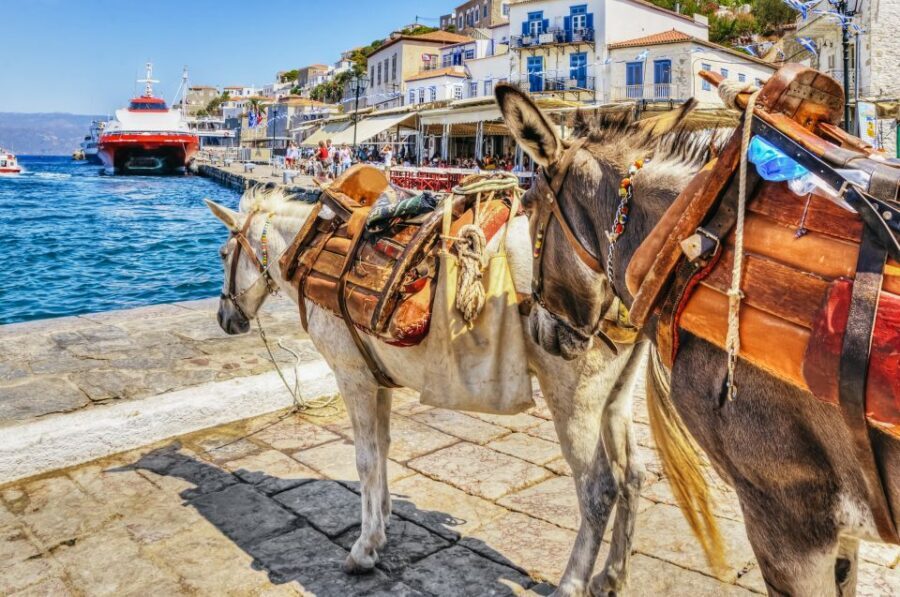
Getting around: The only transport on Hydra is water taxis (to beaches), donkeys (to luggage delivery), and walking. You cannot rent a scooter or car.
Beaches: Town beach is effectively the harbour steps (you can swim but it’s busy and urban). For real beaches, take a water taxi to Vlychos (15 min, €12 return) or Mandraki (10 min, €8 return). Kamini is walkable from town in 30 minutes.
Food specialities: Hydriot amygdalota (almond biscuits) and patsaria (beetroot salad with walnut sauce). Every harbour taverna serves both.
Best lunch spot: Omilos, on the harbour opposite the tender dock. Upscale. Book ahead if you’re on the cruise — most cruise passengers just walk into the first taverna they see, which is usually fine but rarely special.
Art scene: Hydra has attracted artists for 70 years. Small galleries are everywhere. The Hydra School Project (open summer only) shows work by international artists who’ve stayed on the island.
More Greece Guides
If the Saronic cruise is one of several Athens-based day trips, pair it with the Meteora, Delphi, and Cape Sounion guides. For Athens-city experiences, the Acropolis combo pass and food tour are the essentials. If you’re extending your Greece trip to the bigger islands, our Santorini catamaran, Corfu to Paxos, and Symi from Rhodes guides cover the biggest gap-filler cruises.
Affiliate disclosure: We may earn a small commission from bookings made through the links on this page. It doesn’t change the price you pay and helps keep the site running.