
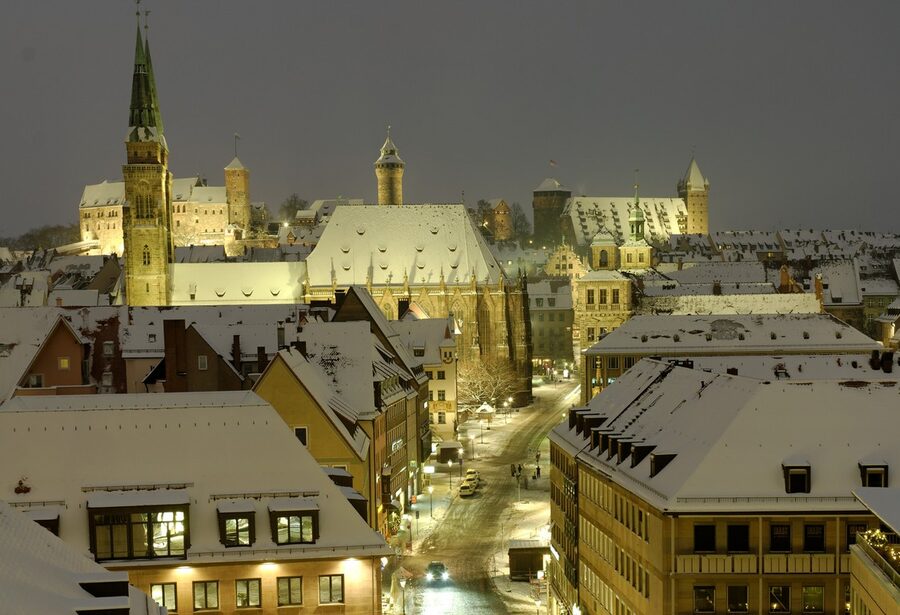
Nuremberg was 90% destroyed in WWII. The bombing on January 2, 1945, lasted 60 minutes. By morning, 1,800 people were dead and the medieval old city was rubble. What you see today is a meticulous postwar reconstruction — the same street plan, the same house silhouettes, mostly using salvaged stones from the bombed originals. Walking through it, guided by someone who knows the before-and-after story, is one of those experiences that makes every other city walk feel shallow.
Here’s how the 90-minute Old Town Guided Walking Tour works, the three tour options, and how to combine this with Nuremberg’s heavier WWII Rally Grounds site if you have a full day.


In a Hurry? The Three Nuremberg Tours
- Best overall: Nuremberg Old Town Guided Walking Tour — from €18. 90 minutes, covers the medieval core including Kaiserburg, Hauptmarkt, St. Lorenz church.
- Fastest: Bimmelbahn Sightseeing Train — from €12. 40 minutes on a tourist train. Good for families or anyone who can’t walk far.
- Most unusual: Tunnels & Secret Passages Tour — from €14. 60-minute tour inside the medieval city wall tunnels. Completely different angle on the city.
- In a Hurry? The Three Nuremberg Tours
- Why Nuremberg Matters
- The Reconstruction Story
- The Best Nuremberg Tours
- 1. Nuremberg Old Town Guided Walking Tour — from €18
- 2. Nuremberg Bimmelbahn Sightseeing Train — from €12
- 3. Tunnels & Secret Passages in the City Wall Tour — from €14
- What the Old Town Walking Tour Covers
- Hauptmarkt (Main Market Square)
- Frauenkirche (Church of Our Lady)
- St. Sebaldus Church
- Kaiserburg Castle
- Albrecht Dürer House
- Hangman’s Bridge (Henkersteg)
- St. Lorenz Church
- How Long You Need
- Christmas Markets
- The Rally Grounds Option
- When to Visit
- What to Wear
- Getting There
- Pairing With Other Bavaria Trips
- Combining With Munich Trips
- Food and Drink in Nuremberg
- Other Nuremberg Things Worth Doing
- Practical Questions
- How Nuremberg Compares to Other Medieval German Towns
- A Short Note on the Reconstruction Debate
- The Short Version
Why Nuremberg Matters
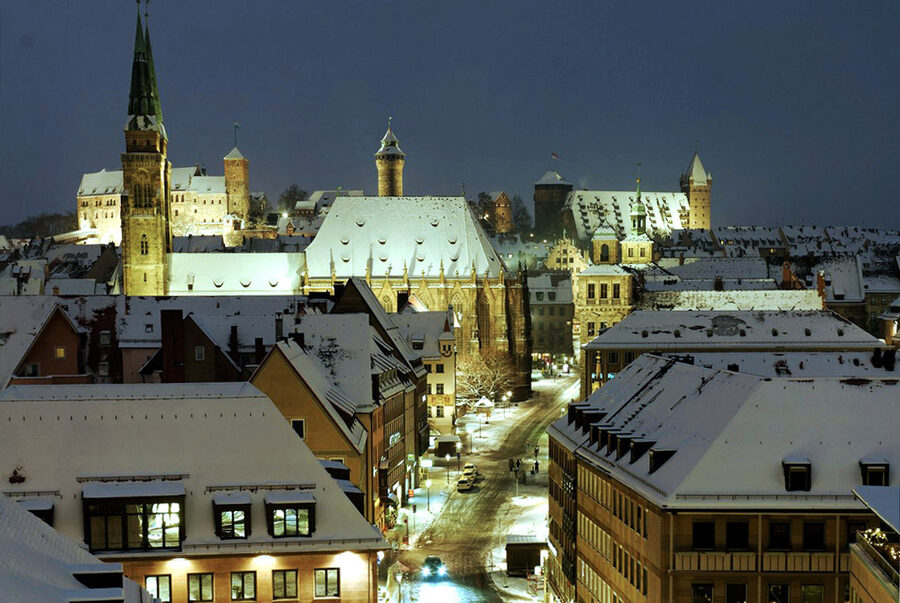
Nuremberg was the unofficial capital of the Holy Roman Empire for 500 years. Every Holy Roman Emperor crowned between 1356 and 1815 held his first diet here. The Imperial Regalia (crown, sceptre, orb) were stored in the Kaiserburg from 1424 to 1796. Albrecht Dürer lived and worked here. The city was so important that its 15th-century nickname was “the treasure chest of the German Empire.”
Then in the 20th century: Hitler made Nuremberg the Nazi Party’s ceremonial capital. The annual Party rallies were held just outside town. The antisemitic Nuremberg Laws of 1935 were named after the city. After the war, the Allied powers chose Nuremberg for the war crimes trials precisely because of this symbolism — a city that had been the cradle of Nazi spectacle should be the venue for its judgement.
Today’s Nuremberg carries both histories. The old town is cheerful medieval reconstruction. The Rally Grounds south of the city are a separate, much heavier site. Most visitors do the old town tour in the morning and the Rally Grounds in the afternoon.
The Reconstruction Story
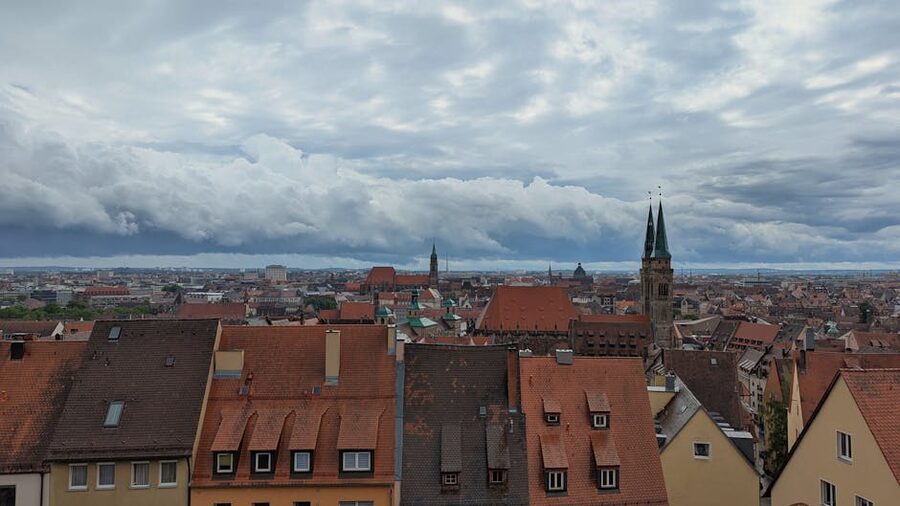
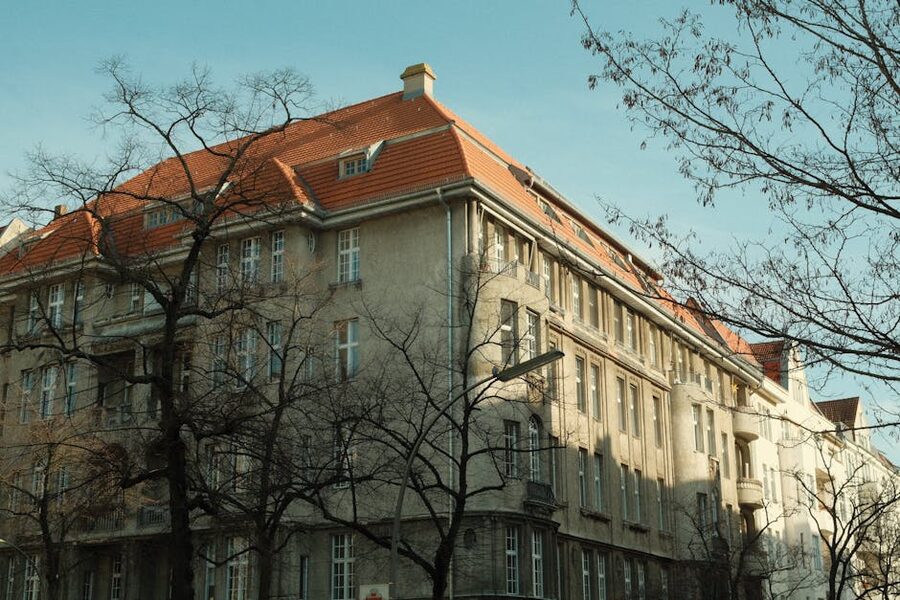
The postwar reconstruction was controversial. Other bombed German cities (Frankfurt, Hannover) built modern replacements. Dresden left some areas as ruins for decades. Nuremberg chose full reconstruction — houses rebuilt on original footprints, using salvaged stones, following old photographs and architectural drawings. Most of the work was done 1950-1970. Some buildings (St. Lorenz, the Albrecht Dürer house) are almost indistinguishable from originals; others are obviously modern behind a medieval facade.
The guided walking tours spend substantial time on this story. It’s one of the things that makes the Nuremberg walk different from other medieval-town walking tours — you’re constantly moving between “genuinely old” and “convincing replica.”
The Best Nuremberg Tours
1. Nuremberg Old Town Guided Walking Tour — from €18
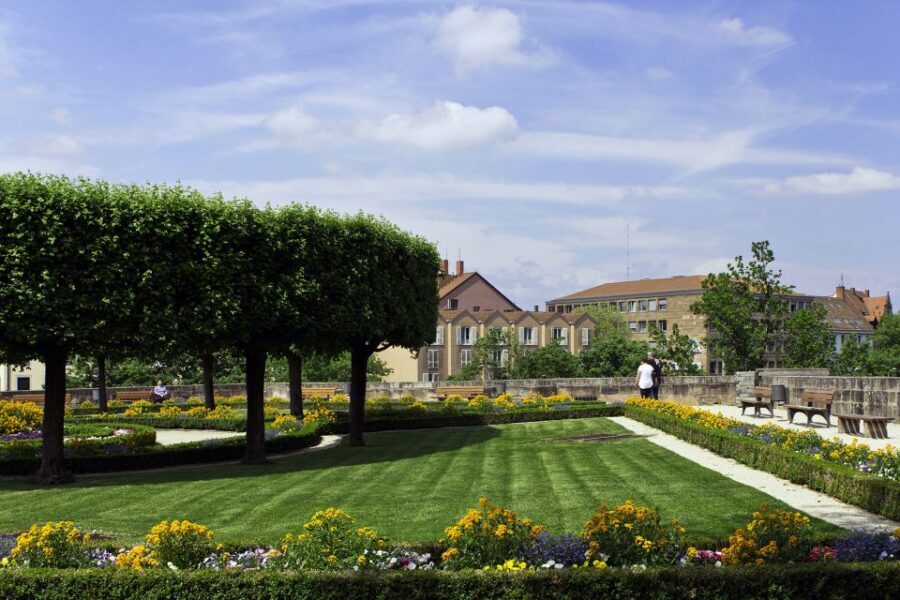
Standard market-leading tour. English and German options. Guides are typically Nuremberg residents with historical backgrounds — many have personal or family connections to the reconstruction era. Group size capped around 20. Our full review covers the meeting point and the exact route.
2. Nuremberg Bimmelbahn Sightseeing Train — from €12
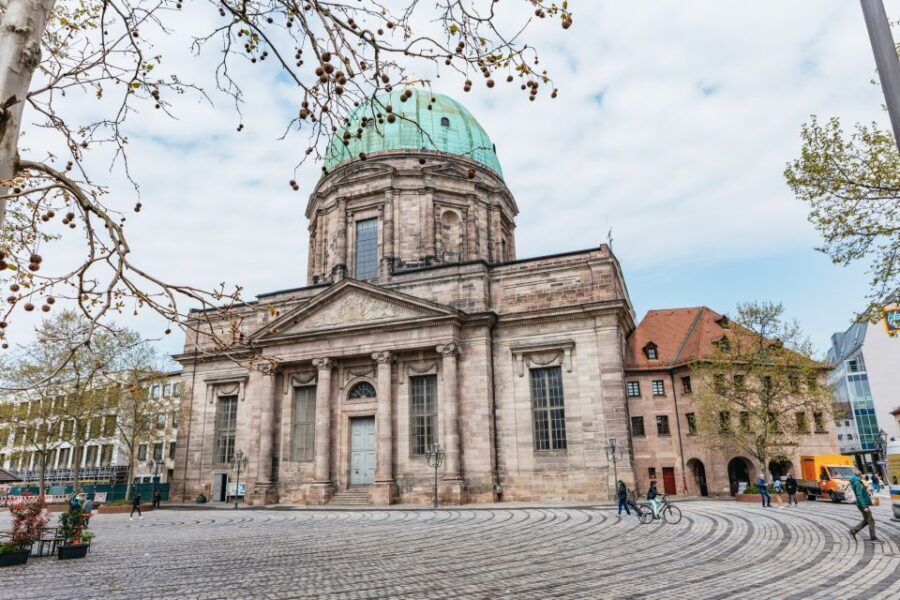
Less ambitious but covers more distance in less time. You sit in a trolley-style train, listen to audio commentary, hop off whenever you want. €12 is cheap for what it does. Not as engaging as a walking tour but practical if walking isn’t an option. Our review has the route and stop schedule.
3. Tunnels & Secret Passages in the City Wall Tour — from €14
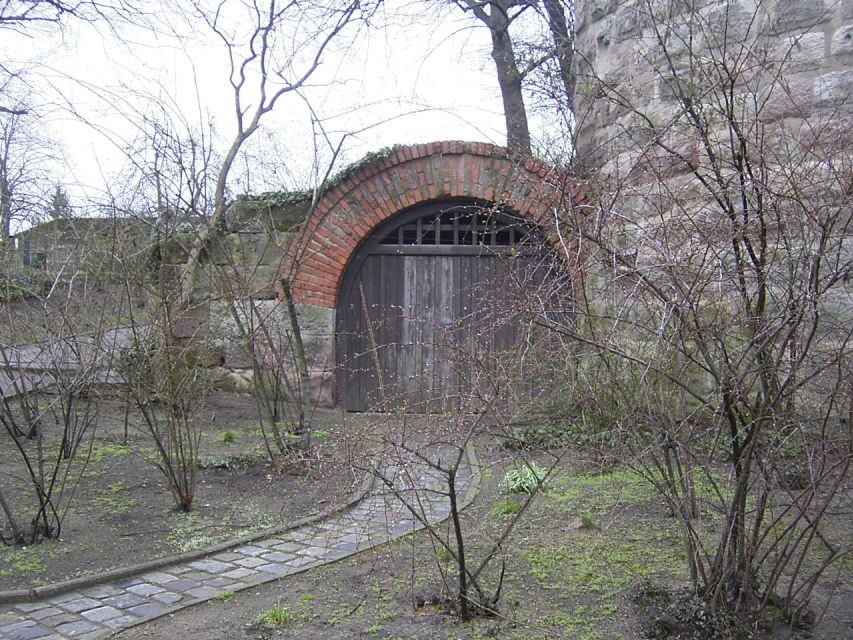
Nuremberg’s medieval city walls had a network of tunnels for defenders. Most are closed to the public; this tour opens them up for 60 minutes. Cool in summer, cold in winter (12°C year-round inside). A different and slightly eerie angle on the city. Our review has the meeting point and accessibility notes.
What the Old Town Walking Tour Covers
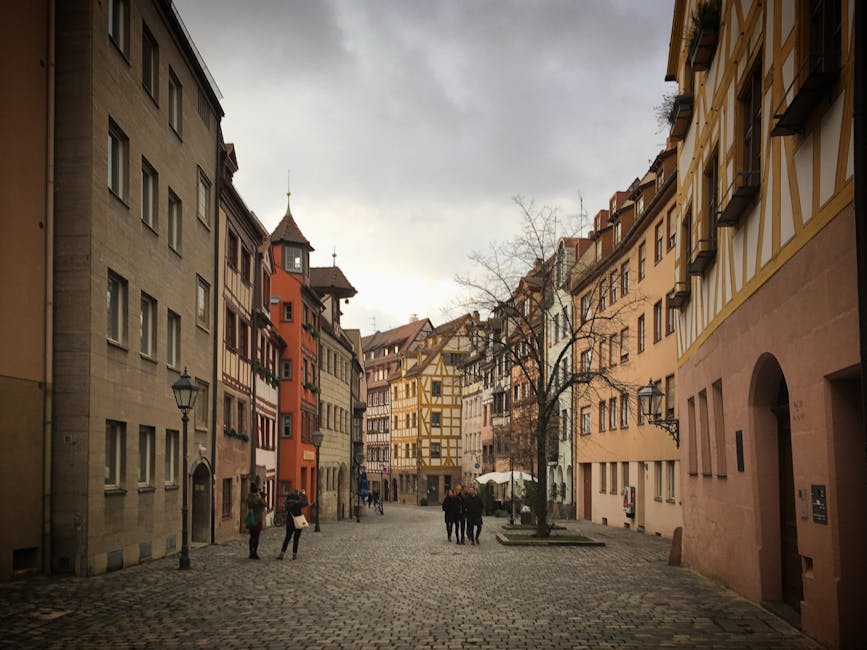
The standard 90-minute walking tour hits these stops:
Hauptmarkt (Main Market Square)
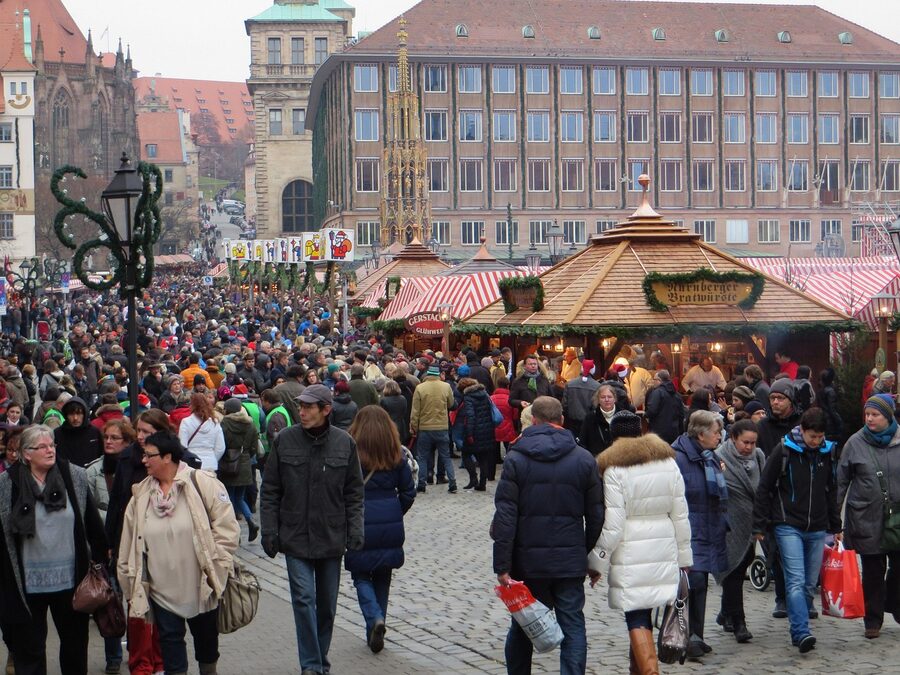
Starting point. Nuremberg’s central market square since the 14th century. Home of the Schöner Brunnen (beautiful fountain) — a 19-metre Gothic spire with a brass ring locals believe brings luck if you spin it three times. The market stalls are where the famous Nuremberg Christkindlesmarkt (Christmas market) takes place from late November through December.
Frauenkirche (Church of Our Lady)
The church that fronts the Hauptmarkt. Built 1352-1358. Has a mechanical clock called the Männleinlaufen — at noon each day, seven bronze figures (representing the seven electors of the Holy Roman Empire) parade around the figure of Emperor Charles IV. Good tourist photo moment.
St. Sebaldus Church
Older than the Frauenkirche (1240s foundation, 14th-century upgrade). Houses the tomb of Nuremberg’s patron saint. Survived WWII in better condition than St. Lorenz. Worth a 5-minute look inside.
Kaiserburg Castle
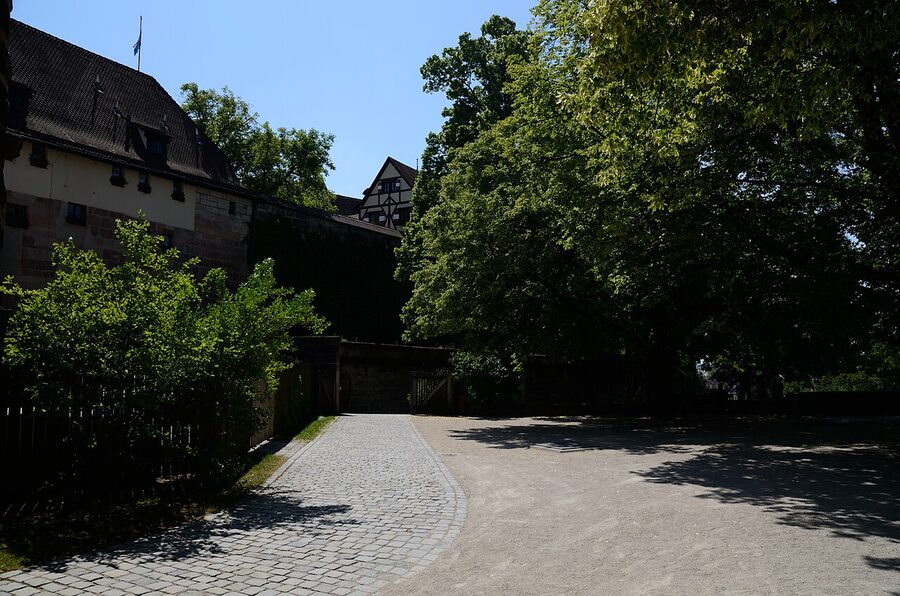

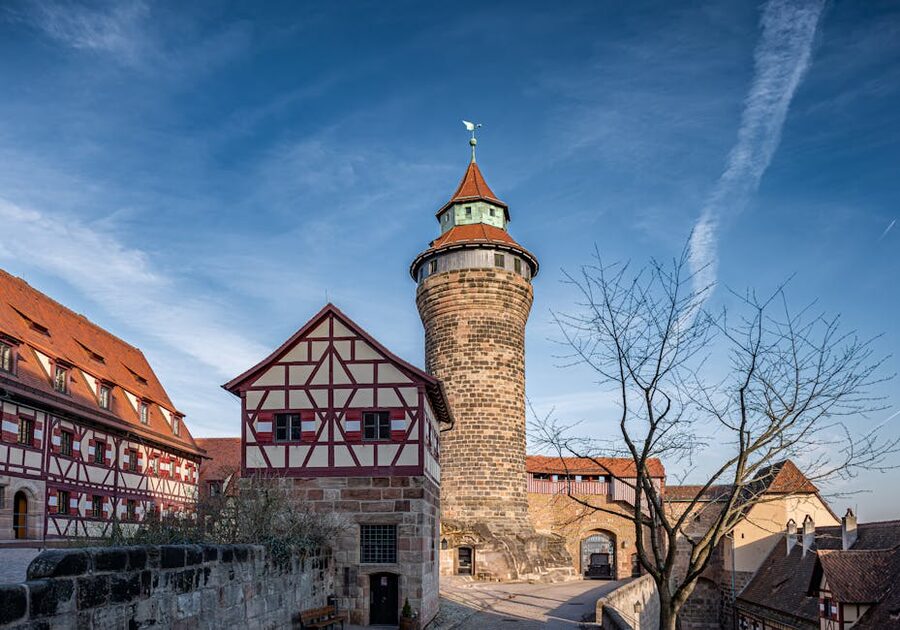
The hilltop castle. 1050 foundation, expanded over centuries. The walking tour usually stops outside; if you want to go in, buy a separate castle ticket (€7) after the walking tour ends. Highlights inside: the Romanesque palace, the 50-metre Sinwell Tower, the 50-metre-deep castle well.
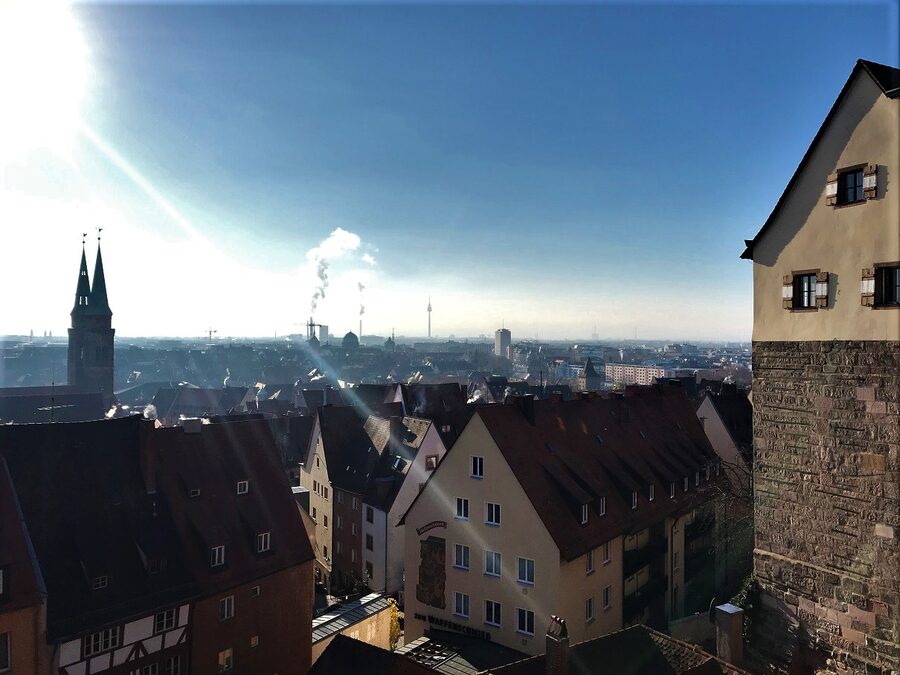
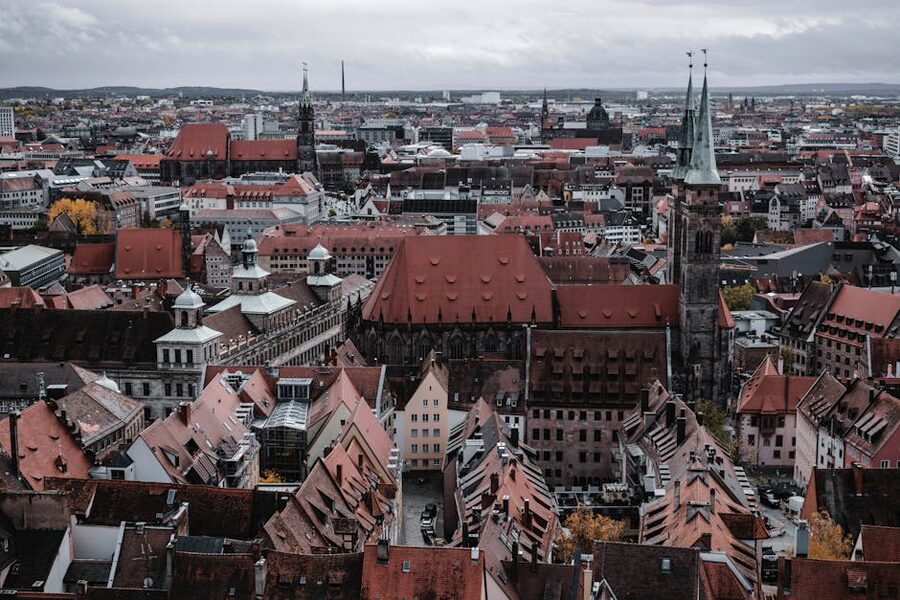
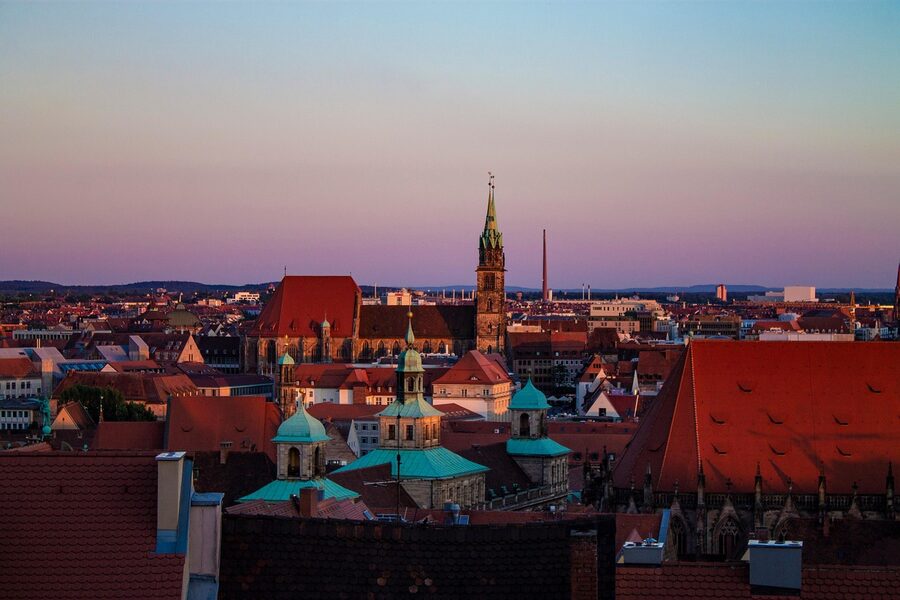
Views from the castle hill are the best in Nuremberg — old town roofs stretching south and east, church spires, the river snaking through.
Albrecht Dürer House
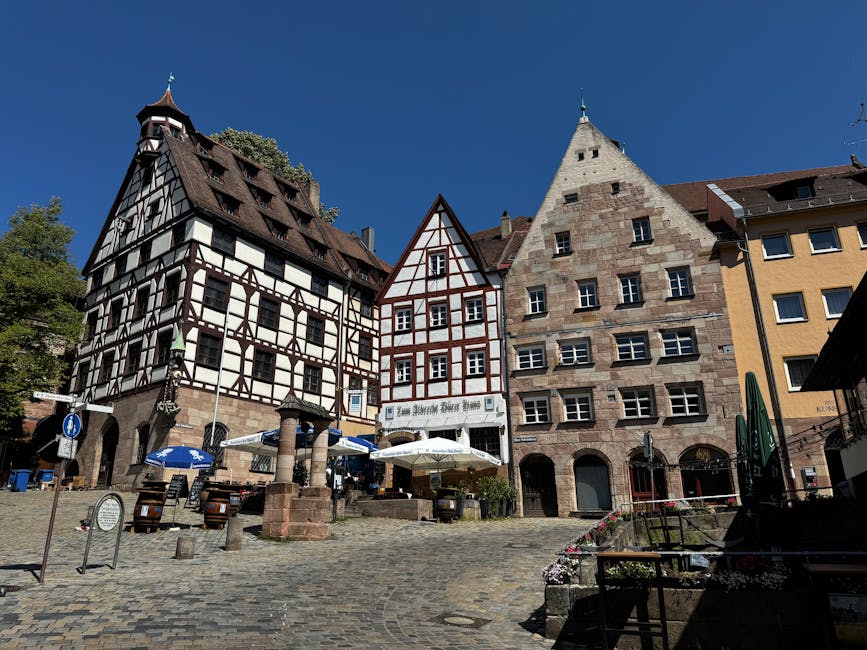
Albrecht Dürer — Renaissance artist, printmaker, proto-Romantic — lived here for the last 20 years of his life. The house is now a museum (€6 entry). The walking tour usually stops outside; entering is optional.
Hangman’s Bridge (Henkersteg)
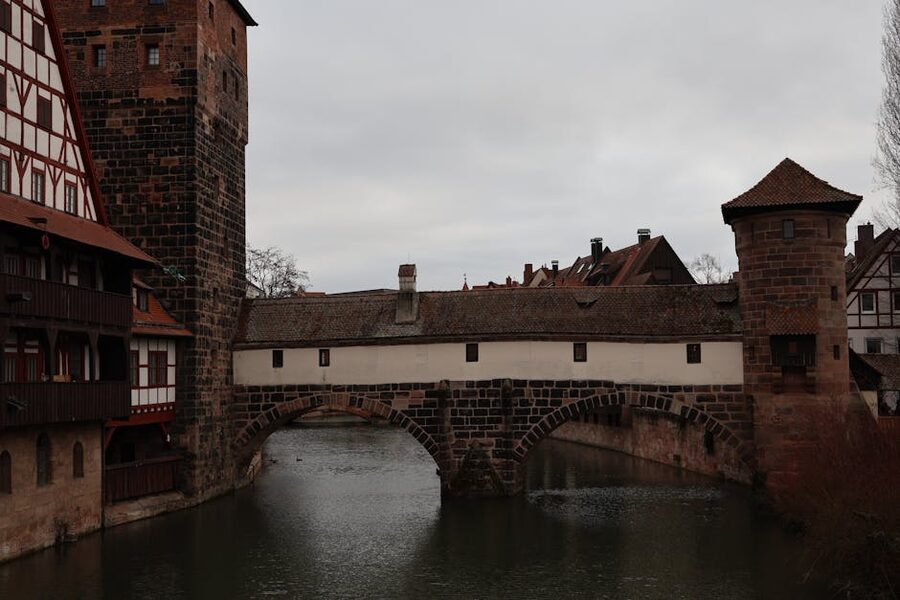
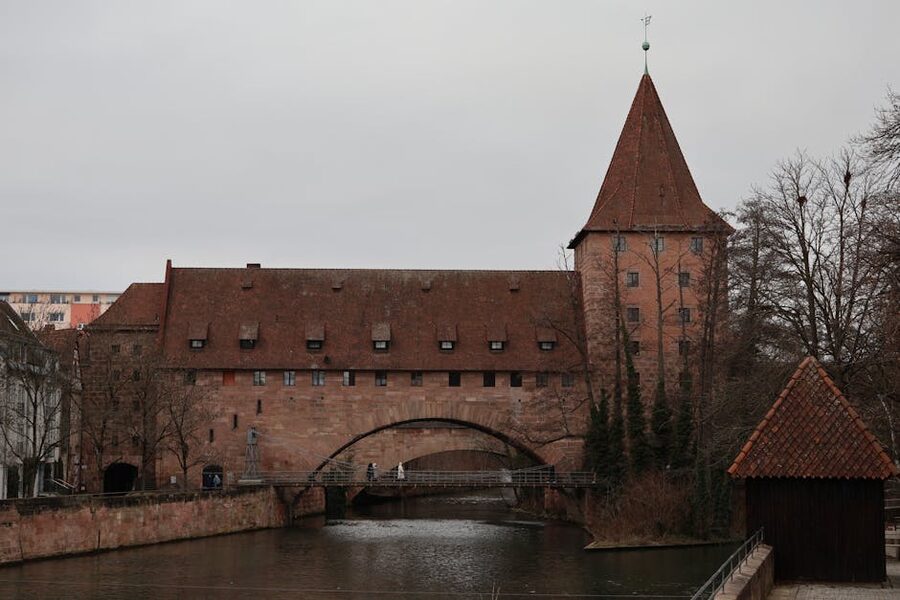
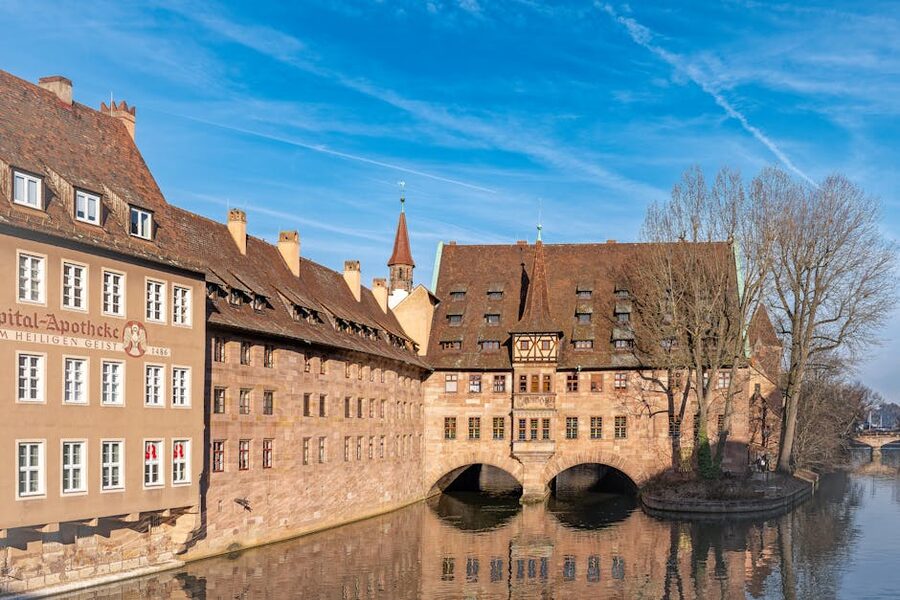
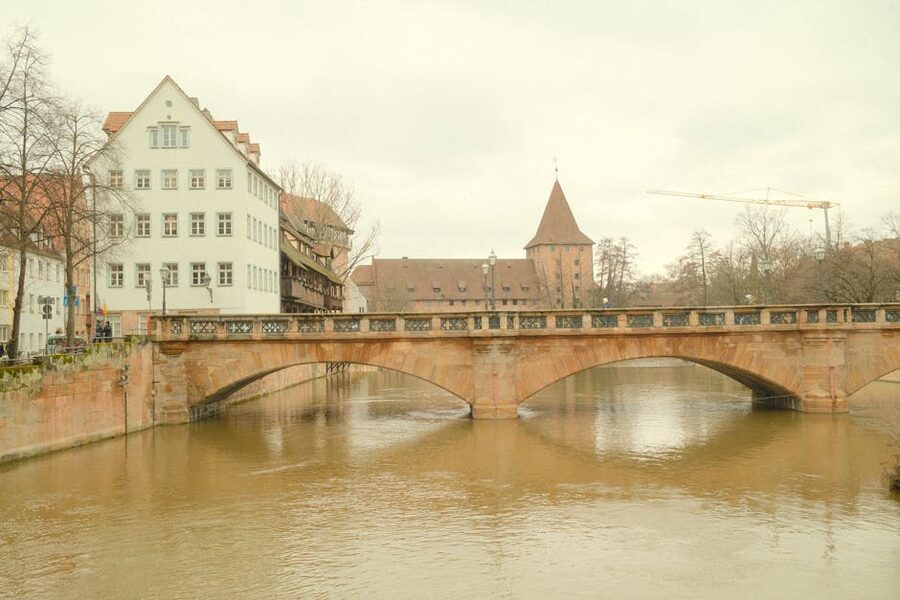
Medieval bridge crossing the Pegnitz. The attached tower housed the town executioner — medieval law required the hangman to live separately from other citizens. Now it’s just photogenic. Good river reflections at dusk.
St. Lorenz Church
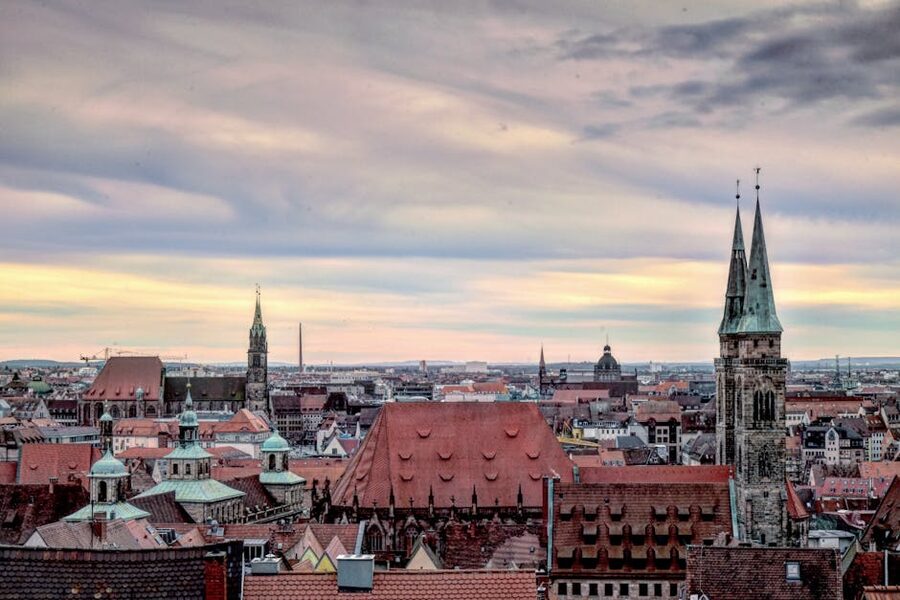
The main church on the south side of the Pegnitz. Late Gothic, finished in 1490. Houses Veit Stoss’s Annunciation sculpture — one of the finest Renaissance wooden carvings in Germany. Entry free.
How Long You Need
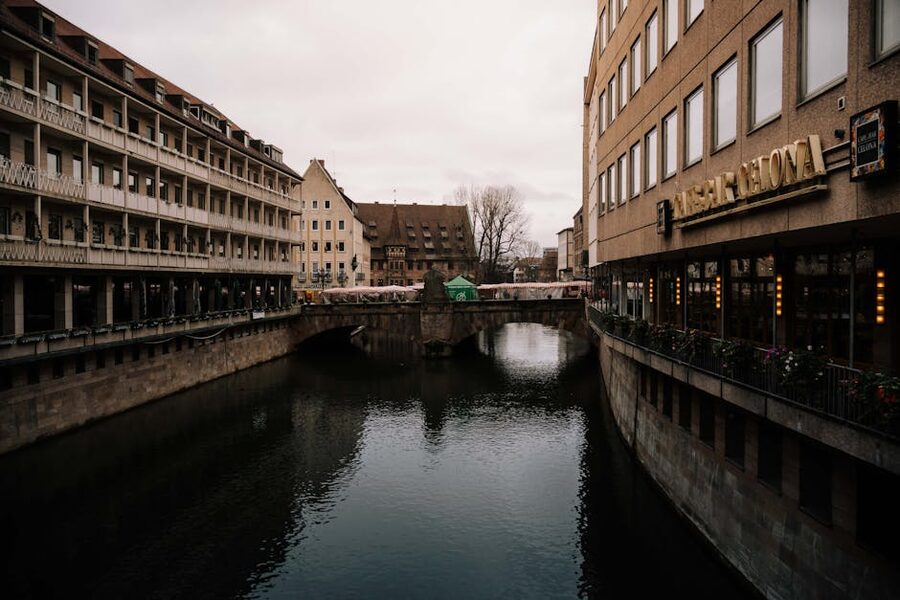
90 minutes for the walking tour itself. Plan 4-5 hours for a proper Nuremberg old town half-day: walking tour + coffee + castle visit + one church interior + lunch.
Full day Nuremberg: morning walking tour, lunch, afternoon at the Rally Grounds + Documentation Centre, evening dinner back in the old town. 10 hours. Heavy but possible.
Christmas Markets
Nuremberg hosts Germany’s most famous Christmas market — the Christkindlesmarkt — from late November through December 24th. 180 wooden stalls, 2 million visitors, traditional crafts and Glühwein. If you’re visiting during this period, book the walking tour around 11am (after the market setup is done but before the afternoon crowds).
The Rally Grounds Option
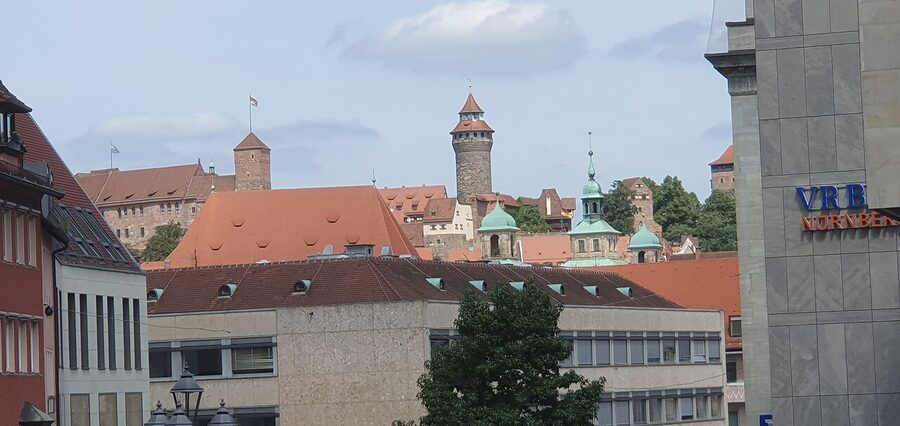
Separate from the old town, the Nazi Party Rally Grounds are a 20-minute tram ride south of the city. The Documentation Centre on the site (€6 entry) covers how Hitler used Nuremberg as the ceremonial capital of Nazism. The adjacent Zeppelin Field — where the most famous rallies happened — is free to walk through.
This is a heavy site. Give yourself 3 hours if you commit to it. Combine with the old town walk only if you have a full day and the emotional bandwidth.
When to Visit
Walking tours run year-round. Best months: May, June, September, October. Busiest: Christmas market season (late Nov to Christmas Eve). Avoid early January (half the city shuts down).
Book 1-2 days ahead in high season. English-language slots are limited — lock in ahead if it matters to you.
What to Wear
Comfortable shoes — 90 minutes on cobblestones. Light rain jacket always sensible in Germany. Layers in shoulder season.
Getting There
Nuremberg is Bavaria’s second-biggest city after Munich, 170 km northwest. ICE trains from Munich in 60 minutes, from Frankfurt in 2 hours, from Berlin in 3.5 hours. The Nuremberg Hauptbahnhof is 5 minutes’ walk from the old town.
If driving: paid parking lots around the old city walls, €3-4 per hour. Not worth driving if you’re only visiting Nuremberg for the day — the train is faster.
Meeting point for all three tours is usually at the Hauptmarkt or nearby — walking distance from the Hauptbahnhof.
Pairing With Other Bavaria Trips
Nuremberg is the logical start of a Franconian medieval-towns trip:
Bamberg — 45 minutes by train. UNESCO World Heritage old town. Similar medieval rebuild story, different scale. One of Bavaria’s finest.
Rothenburg ob der Tauber — 90 minutes by bus/train. The postcard-perfect medieval walled town. Touristy but worth it.
Würzburg — 1 hour. Baroque, with the stunning Residenz palace. Different aesthetic from Nuremberg.
For a Munich-based trip, Nuremberg is a natural day-trip — there and back in a single day, with enough time for the walking tour + Rally Grounds + dinner.
Combining With Munich Trips
Easy combo: Munich Third Reich Walking Tour (for the movement’s origins) + Nuremberg Old Town + Rally Grounds (for how the Nazis weaponised German history). Two separate trips, complementary material.
Food and Drink in Nuremberg
Nuremberg has two culinary specialties:
Nürnberger Rostbratwurst: small grilled sausages (about 8cm each), traditionally served 6-12 on a tin plate with horseradish and sauerkraut. Eat at Bratwurst Röslein (on Rathausplatz) or Bratwursthäusle (near St. Sebaldus). Don’t skip this — Nuremberg sausages are protected by EU Geographic Indication; they can’t legally be called “Nürnberger” unless made in Nuremberg.
Lebkuchen (Nuremberg gingerbread): soft, spiced, honey-sweetened gingerbread, traditionally made from October through December. Lebkuchen Schmidt and Lebküchnerei Wolfgang Jelinek are the top producers. Boxes €10-25, good for gifts.
For drinks: Franconian beer is a separate tradition from Bavarian (less hoppy, often darker). Klosterbräu and Hausbrauerei Altstadthof are both worth visiting.
Other Nuremberg Things Worth Doing
German National Museum (Germanisches Nationalmuseum): Germany’s biggest cultural history museum. 1.2 million objects. €10 entry. Plan 3+ hours.
Documentation Centre at Rally Grounds: see above. €6. Plan 2-3 hours.
Palace of Justice (Justizpalast): where the Nuremberg war crimes trials were held in 1945-46. Courtroom 600, where Göring and the others were tried, is open to the public. €6.
PLAYMOBIL FunPark: 20 minutes outside the city, a theme park for the PLAYMOBIL toy brand (which is made in nearby Zirndorf). Kids love it. Adults tolerate it.
Practical Questions
Is it wheelchair accessible? The old town has cobblestones throughout. The walking tour path is mostly level but the surface is rough. The Bimmelbahn train tour is a better option for wheelchairs.
Tour languages? German and English most often. Italian and Spanish occasional. Book English slots ahead.
Can kids come? 8+ for the walking tour (shorter kids get bored). Younger kids benefit from the Bimmelbahn.
What if it rains? Tours still run. Half the route is under cover or in passageways. Bring rain gear.
Is a tour necessary? You can do this self-guided with a map. But without the WWII reconstruction story, the old town is just another pretty medieval place — and Nuremberg’s story is the point.
How Nuremberg Compares to Other Medieval German Towns
Rothenburg ob der Tauber is more photogenic and smaller. Bamberg is less touristy. Regensburg is older (Roman). But Nuremberg has the combination of:
- Intact medieval street plan (like Rothenburg)
- Reconstruction authenticity debate (unique)
- Imperial history (Regensburg has this too)
- Nazi-era ceremonial role (unique; nowhere else has this layer)
If you have one day in Bavaria for medieval towns and want depth, Nuremberg. If you want the picture-postcard experience, Rothenburg. For a weekend, do Nuremberg + one other Franconian town.
A Short Note on the Reconstruction Debate
Not everyone thinks Nuremberg got the rebuild right. Critics have argued the meticulous replication created a Disneyland effect — an “authentic” medieval town that is actually all 1950s imitation. The counterargument: better a convincing copy than either a modern replacement or permanent ruins. Most German architectural historians today view Nuremberg’s reconstruction as one of the most successful postwar urban rebuilds in Europe.
Walking tour guides deliberately raise this tension. The best ones don’t resolve it — they let you form your own view after you’ve walked through the space.
The Short Version
Book the €18 Old Town Walking Tour for a 10am weekday, bring comfortable shoes, add the Kaiserburg ticket for €7 more, eat Nürnberger Rostbratwurst for lunch, buy a box of Lebkuchen for gifts. Add the Rally Grounds afternoon if you can handle the emotional shift. 6-hour Nuremberg visit = one of the best day trips in Germany.
Affiliate disclosure: Some links in this article are affiliate links. If you book through them we may earn a small commission at no cost to you. All recommendations are based on my own visit.