
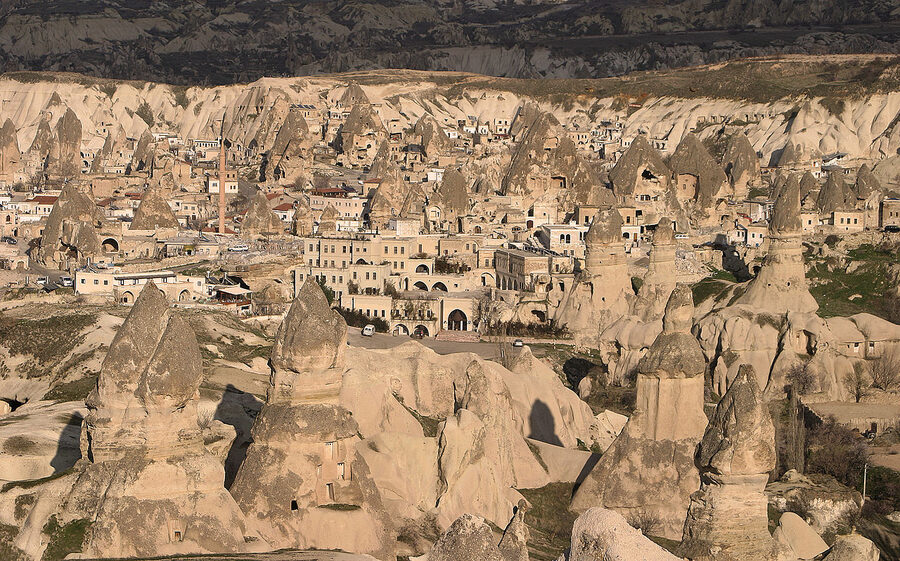
The Green Tour is what you book for your second Cappadocia day — after the balloon, after Göreme Open Air Museum, when you’ve done the obvious things and want to see the parts of the region that aren’t on the postcard. It runs roughly €45-70, takes 9 hours, and covers the south-west corner: Derinkuyu underground city (one of 36 known underground cities in the region), the 14km Ihlara Valley hike, Selime Monastery (a rock-cut Byzantine complex that looks like a Star Wars set), and Pigeon Valley’s panoramic overlook. Together these sites pre-date the ballooning industry by roughly 3,000 years.

The name comes from a colour-coded system that dates from the 1990s when Cappadocia tour operators standardised their offerings. Red Tour covers the north sites near Göreme (rock churches, viewpoints, Avanos pottery). Green Tour covers the south. Blue Tour (less common) covers the east. White, Yellow, and Purple are more specialised operator branding. Most visitors do Green Tour on the second full day in Cappadocia, saving the balloon for a morning with favourable weather.



In a Hurry?
- Best overall: Cappadocia Guided Green Tour — €50, 9 hours, lunch and entry tickets included. Standard format.
- Small-group version: Green (South) Tour Small Group with Lunch — max 12 people, slightly more flexibility on timing.
- Red + Green combo: Red + Green Combined Tour — ambitious 10-hour day covering both north and south sites. Only if you have one day and want maximum coverage.
- In a Hurry?
- What You See — Stop by Stop
- Three Tour Options
- 1. Cappadocia Guided Green Tour with Lunch — from €50
- 2. Green (South) Tour Small Group with Lunch — from €55
- 3. Red + Green Combined Tour — from €75
- Derinkuyu — The Underground City Worth the Trip
- The Ihlara Valley Walk — What to Expect
- Selime Monastery — The Star Wars Comparison
- A Short History of Underground Cappadocia
- Green Tour vs Red Tour — Which to Pick
- Physical Demands
- What to Bring
- When to Go
- Combining With Your Cappadocia Stay
- Food on the Tour
- Tipping and Other Expenses
- Accessibility
- Common Mistakes
- What Most Visitors Don’t Know
- The Short Version
What You See — Stop by Stop
The standard itinerary runs 9am-6pm with hotel pickup and drop-off. The exact order varies by operator and weather, but most tours cover the same stops in roughly this sequence:
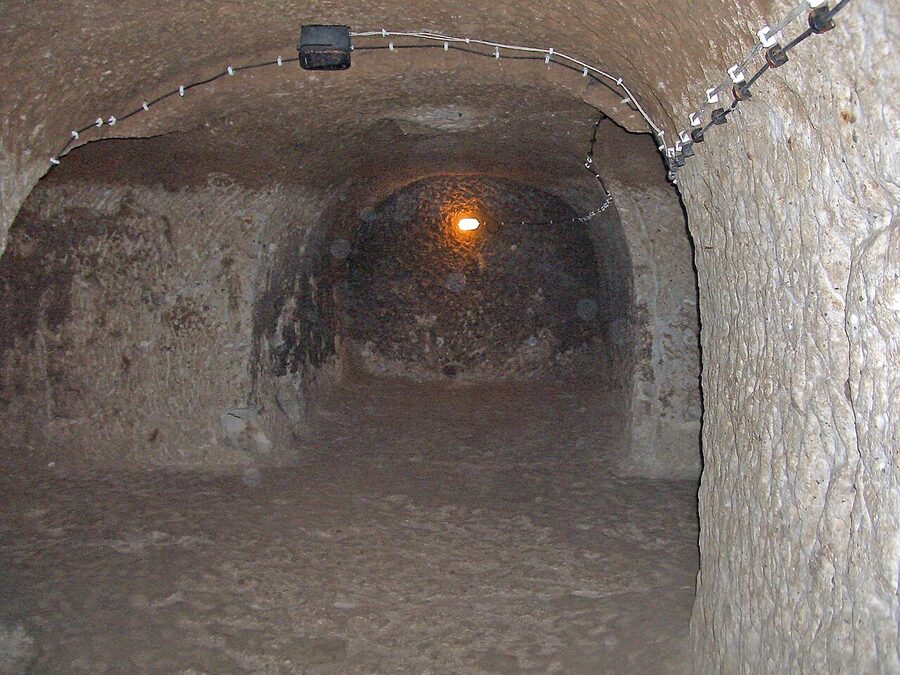

Stop 1 (9:30-10:30am) — Derinkuyu or Kaymaklı Underground City. Most Green Tours do Derinkuyu because it’s deeper (8 accessible levels; total estimated 18 levels before modern collapses) and more impressive. Some operators use Kaymaklı instead — which is 2 levels shallower but also genuinely large and less crowded. You spend 60-75 minutes going underground. Guide explains Byzantine Christian persecution periods, the ventilation-shaft engineering, the rolling-stone doors used to block tunnels during raids.
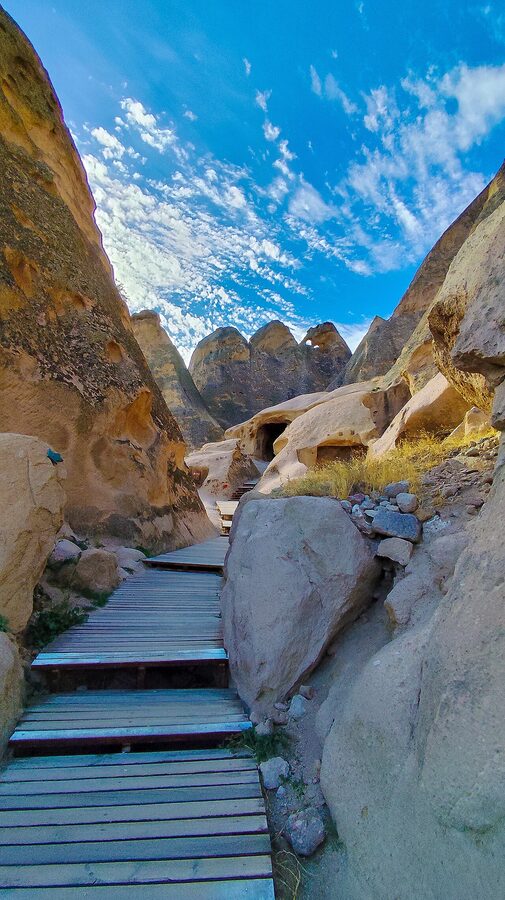
Stop 2 (11:00am-12:30pm) — Ihlara Valley hike. You’re dropped at the stairs leading down into the canyon. 400 steps to the valley floor. From there, a 3-4km walk along the Melendiz River. Along the way you visit 2-3 of the valley’s rock-cut churches — most have surviving Byzantine frescoes. The walk ends at Belisırma village where you’ll be collected.
Stop 3 (12:30-1:30pm) — Lunch at Belisırma. Trout-based Turkish lunch at a riverside restaurant. €12-18 value, usually included in the tour price. The trout comes from the Melendiz River itself.
Stop 4 (2:00-3:00pm) — Selime Monastery. 13th-century rock-cut Byzantine monastery, one of the largest in Cappadocia. 45-60 minutes exploring the carved chapels, refectories, and monks’ cells. The climb up is steep but manageable.
Stop 5 (3:30-4:30pm) — Derinkuyu Pigeon Valley overlook. Short panoramic stop at Uçhisar or Pigeon Valley viewpoint. 15-20 minutes for photos.
Stop 6 (4:30-5:30pm) — Sometimes a pottery or jewellery workshop stop. Operator discretion. Some tours add a 30-minute demonstration of traditional Cappadocia crafts (often in Avanos). This is usually a soft-sell; you’re not required to buy anything.
Back to hotel by 6pm.
Three Tour Options
1. Cappadocia Guided Green Tour with Lunch — from €50
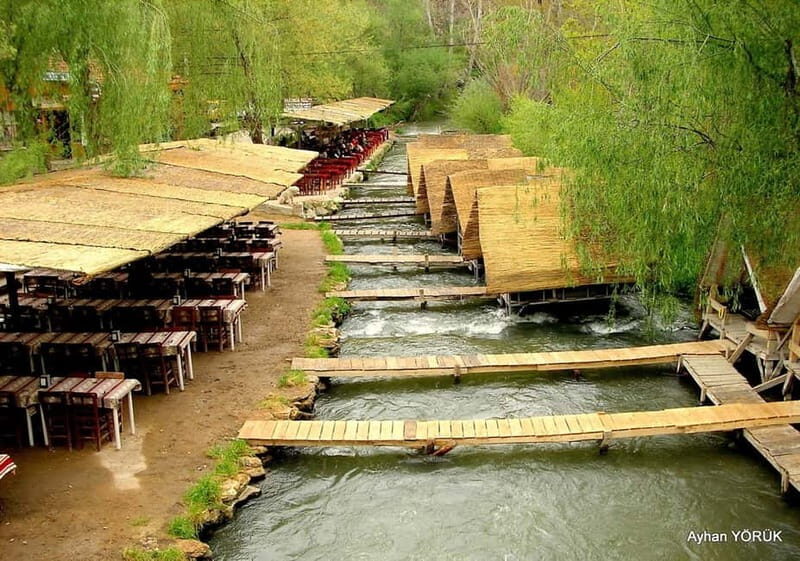
The mainstream option. Covers all five main stops, licensed English-speaking guide, hotel pickup and drop-off. Best for first-time Cappadocia visitors. Full review.
2. Green (South) Tour Small Group with Lunch — from €55
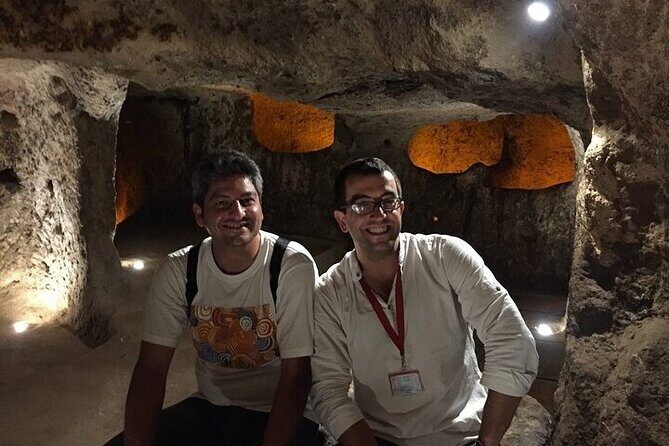
For travellers who prefer smaller groups. Max 12 passengers in the van, same itinerary as the standard tour but more flexibility at stops. Guide can adapt pace and slow down at Ihlara for hikers.
3. Red + Green Combined Tour — from €75
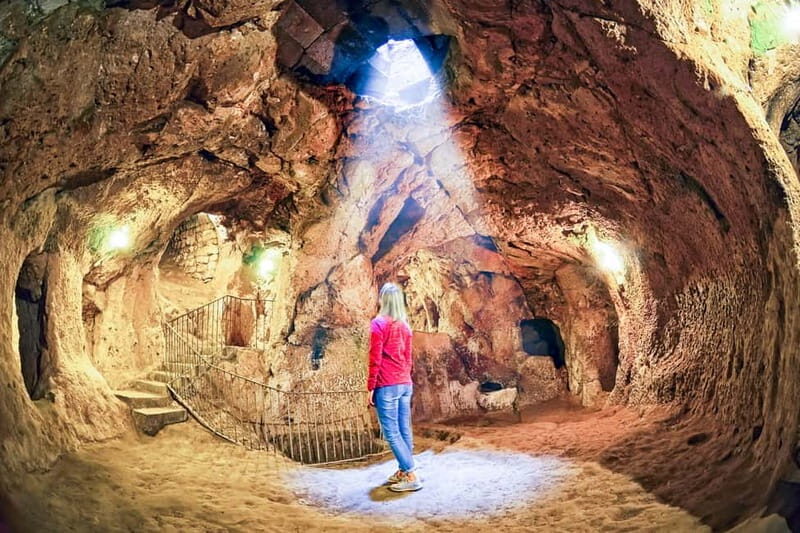
For visitors who have only one day in Cappadocia outside the balloon. Combines Red Tour’s Göreme Open Air Museum and Uçhisar viewpoints with Green Tour’s underground cities and Ihlara. 10 hours of constant movement. Not relaxing but comprehensive.
Derinkuyu — The Underground City Worth the Trip
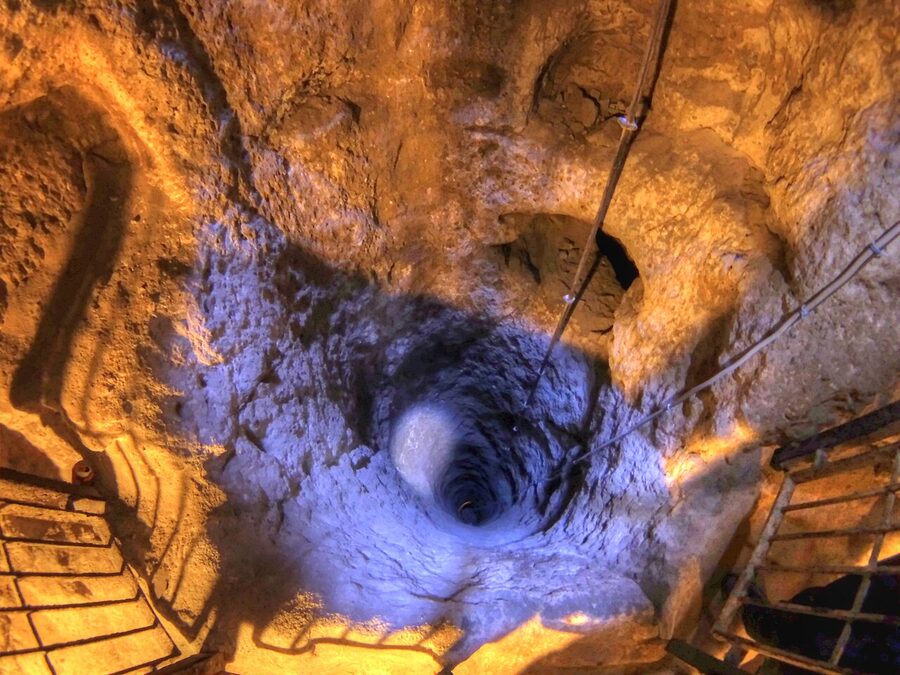
Derinkuyu is the deepest of 36 known underground cities in Cappadocia. Its 8 publicly accessible levels reach 85 metres below ground — roughly equivalent to a 20-storey building going down. An estimated 18 levels exist in total; the lower 10 haven’t been opened to visitors because of collapse risks and ongoing archaeological work.
Archaeological consensus places the first excavations around the 8th-7th century BCE, during the Phrygian period. The Byzantine expansions happened in the 6th-10th centuries CE, when early Christians used the city as a refuge during Arab raids on the Byzantine heartland. Estimates suggest Derinkuyu could shelter 20,000 people with their livestock for up to several months.
Key features of the underground city:
Rolling-stone doors. Massive millstone-shaped discs that could be rolled in front of tunnel entrances to block attackers. Several are still in place. They only open from inside.
Ventilation shafts. The engineering is remarkable. Over 50 shafts connect the deepest levels to the surface, providing fresh air throughout. The shafts also doubled as wells; some are still flowing.
Schools and churches. Dedicated spaces on the lower levels include a large cruciform church on level 3 and classroom-like rooms with benches carved from the rock.
Animal stables. Upper levels were animal quarters. Lower levels were human living spaces — reverse of what you’d expect, because heat rises and animals contributed warmth on cold winter days.
Wine and food storage. Dedicated chambers for grain, wine amphorae, and oil. Amphorae niches carved into the walls are still visible.
What you won’t see: the lower 10 levels. Those include the presumed treasury, the deepest wells, and possible graveyards. They’re behind barriers.

The Ihlara Valley Walk — What to Expect
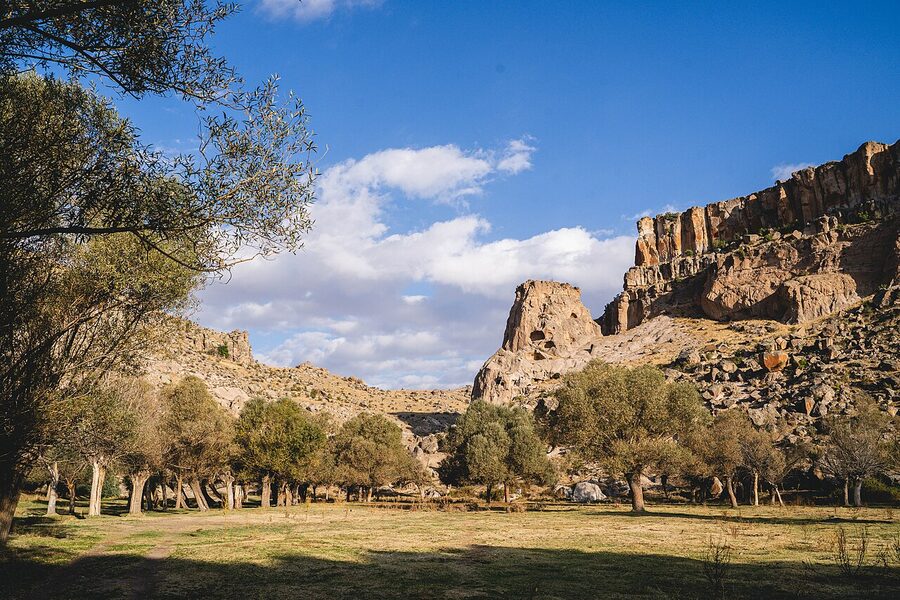
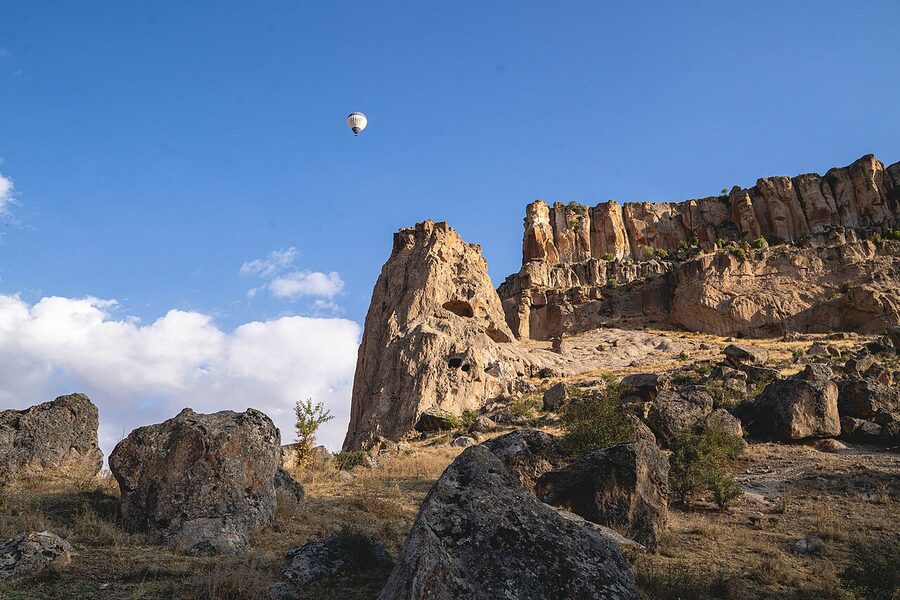
The Ihlara section is the physical highlight of the Green Tour. Four hundred stairs down into a 100-metre-deep canyon; then 3-4 km of riverside path through what feels like another country. Cappadocia’s famous fairy chimneys are nowhere; instead you have cliff walls, green canyon floor, clear water, and dozens of rock-cut churches tucked into the walls.
The churches date from the 6th to 11th centuries. Most are small (10-30 square metres) with surviving fresco work — Christ Pantocrator figures, angels, biblical scenes. The frescoes have been damaged over the centuries by graffiti, vandalism during the iconoclastic period, and natural degradation. Still, several are genuinely impressive.
Key churches along the Ihlara section the Green Tour walks:
Ağaçaltı Kilisesi (“Church Under the Tree”): the first church after you descend the stairs. Domed ceiling with surviving Christ Pantocrator and angel frescoes.
Pürenli Seki Kilisesi: 12th-century frescoes in remarkably good shape.
Yılanlı Kilisesi (“Snake Church”): features frescoes depicting serpents as symbols of sin. The interior is small but the fresco density is among the best.
Kokar Kilisesi (“Fragrant Church”): named for the wild herbs growing nearby.
Most tour guides visit 2-3 of these on the walk. If you’re moving fast, do Ağaçaltı first (you pass it right after the stairs) and then pick one of the others based on your guide’s recommendation.
Selime Monastery — The Star Wars Comparison
Selime is the largest rock-cut religious complex in Cappadocia — bigger than Göreme Open Air Museum, though less famous. The monastery was carved into a single massive cliff face over several centuries. At its peak (11th-12th century) it housed a full monastic community with chapel, refectory, kitchen, monk cells, and schools.
The Star Wars comparison is persistent enough that tour guides mention it routinely. Production notes from A New Hope credit “rock-cut Anatolian landscapes” as inspiration for Tatooine’s design. The scale and silhouette of Selime specifically match several shots in the film. Whether Lucas actually visited or just saw photographs is unclear.
What to look for:
- The chapel: Byzantine frescoes partially intact, 11th-century construction
- The refectory: long stone dining table carved directly from the rock, still in place
- The kitchen: ceiling blackened from a millennium of cooking fires
- The bell tower: external rock column with remains of a wooden bell platform at the top
The climb up is 15-20 minutes and involves some scrambling on uneven stone steps. Not wheelchair accessible. Mobility-limited visitors can view from the base.
A Short History of Underground Cappadocia
The underground cities of Cappadocia are among the most extensive subterranean complexes anywhere in the world. Thirty-six known, with total estimated population capacity of 100,000+ at peak. Most were expansions of much older rooms — pre-Hittite (4000 BCE) storage chambers that got dug deeper over centuries.
The pattern of use was specific. Inhabitants lived above ground most of the time. When raiders arrived — and Cappadocia sits on a main route between the Mediterranean coast and Central Anatolia, so raiders arrived regularly — entire villages would descend into the underground system. They’d seal the entrances with the rolling stones, wait out the attackers (sometimes weeks or months), and re-emerge when safe.
Byzantine Christians were the heaviest users. The underground cities expanded during the 7th-10th centuries as Arab and Sassanid forces pushed into Anatolia. Later, during the Ottoman conquest, some cities were still actively used as refuges. The last documented use was in the 19th century during ethnic violence between local Greek Christian and Turkish Muslim communities.
The cities were largely forgotten after the 1923 Greek-Turkish population exchange (when most of Cappadocia’s Greek Orthodox population left for Greece). They were “rediscovered” in 1963 when a resident of Derinkuyu knocked down a wall in his basement and found a tunnel. Systematic archaeological surveys have been ongoing since.
Today the major cities — Derinkuyu, Kaymaklı, Özkonak, Mazı — are open to visitors. Many smaller ones remain sealed.
Green Tour vs Red Tour — Which to Pick
If you’re choosing one, the right answer depends on what you’ve already seen:
Red Tour covers:
– Göreme Open Air Museum (rock churches with best-preserved frescoes in Cappadocia)
– Uçhisar Castle viewpoint
– Avanos pottery workshops
– Pasabag / Monks Valley
– Devrent Valley
Green Tour covers:
– Derinkuyu underground city
– Ihlara Valley hike
– Selime Monastery
– Pigeon Valley overlook
Rule: Red Tour is Cappadocia’s “greatest hits” — the classic photos you’d recognise. Green Tour is Cappadocia’s depth — the places tourists don’t reach on a day visit.
If you have 1 day and no balloon: Red Tour. The Göreme Open Air Museum alone justifies the day.
If you have 2 days and already did the balloon: Red Tour day 1, Green Tour day 2.
If you have 3+ days: do both separately, plus Göreme Open Air Museum in a third morning on your own.
The combined Red + Green option: only if you have one single day and want to hit everything. You’ll see a lot but rush each site.
See our Cappadocia from Istanbul guide for the logistics of getting there.
Physical Demands
The Green Tour is the more physical of the two standard Cappadocia tours:
Derinkuyu: 60-75 minutes underground. Narrow passages require bending double in places. Some climbing up and down stone steps. Not recommended for claustrophobic visitors.
Ihlara Valley: 400 steps down, 3-4km flat walk along the river, usually no climb back up (bus collects you at Belisırma). Overall moderate difficulty.
Selime: 15-20 minutes of scrambling up uneven stone steps to explore the chapels. Some hands-and-feet clambering.
Pigeon Valley: just a photo stop. Flat.
Total walking: roughly 6-8 km across the day, plus stairs. If you’re reasonably fit it’s fine. If you have mobility issues, consider sitting out Selime and doing just the Ihlara river-level section.
What to Bring
Comfortable walking shoes. Hiking shoes or sturdy sneakers. No sandals, no flip-flops.
Light layers. The underground city is 12-15°C year-round — cool in summer, not warm in winter. You’ll take layers off during the Ihlara walk in summer heat.
Water bottle. Some operators provide water; bring backup. You’ll drink a lot during the Ihlara section.
Cash. For snacks, optional workshop purchases, and tipping the guide. 200-400 Turkish Lira is plenty.
Headlamp or phone flashlight. Most of Derinkuyu is electrically lit but some tight connectors are dim. Phone flashlight is enough for 99% of visitors.
Small backpack. For water, camera, light jacket. Keep hands free for the underground section.
Sun hat and sunscreen. Ihlara Valley is sunny in summer.
When to Go
Best time of year: April-May and September-October. Mild weather, Ihlara Valley at its greenest (April-May) or its autumn-colour peak (October).
Summer: June-August works but the Ihlara hike is hot. Start early if possible.
Winter: December-March. Underground cities are unaffected by weather but Ihlara Valley can be snowy and icy. Some operators suspend Green Tours in heavy winter.
Avoid: heavy rain days — Ihlara riverside path becomes muddy. Check forecast the evening before.
Combining With Your Cappadocia Stay
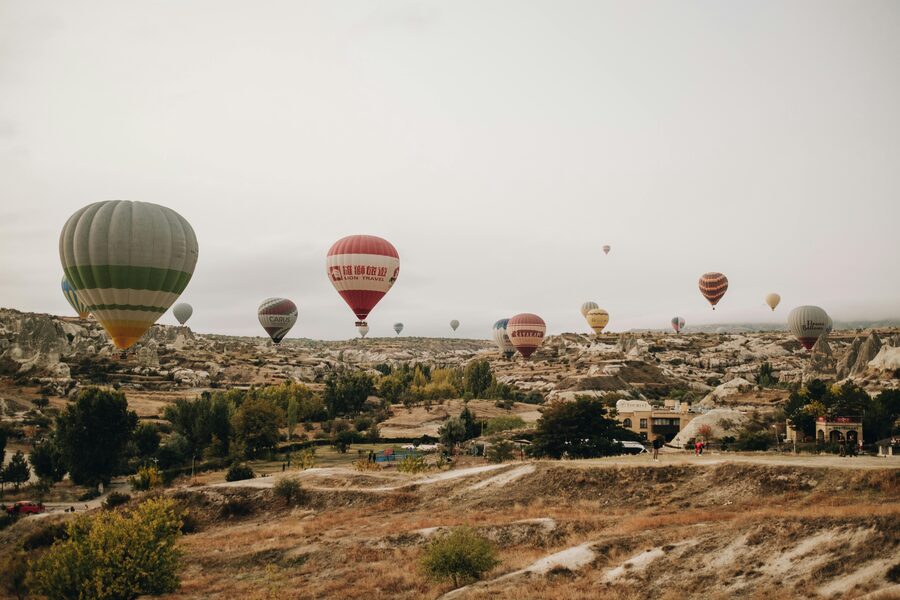
Suggested 3-day plan:
Day 1 (arrival day): arrive by flight from Istanbul or 10-hour bus. Check into cave hotel in Göreme, Uçhisar, or Ortahisar. Light evening walk, dinner. Book balloon for day 3 (giving weather buffer).
Day 2: Balloon at sunrise (if weather permits; otherwise shift to day 3). Afternoon: Göreme Open Air Museum on your own (€10, 2 hours). Evening: testi kebab dinner at Topdeck or Seten.
Day 3: Green Tour (9am-6pm) covered here. Evening: relax at hotel terrace watching sunset over the valleys.
Day 4 (departure): if weather cancelled your balloon on day 2, try again this morning. Otherwise: pottery workshop in Avanos, or Cappadocia ATV tour for afternoon.
For the full Turkey context, our Cappadocia from Istanbul guide covers flight and bus logistics.
Food on the Tour
Lunch is usually included. The standard restaurant stop is at Belisırma village, a riverside trout farm. Typical meal:
Starter: lentil soup (mercimek çorbası) — nearly every Turkish meal starts with this.
Main: grilled Melendiz River trout with rice and salad. Fresh, simple, Turkish-village format.
Drinks: soft drinks and water included; ayran (salty yogurt drink) usually available; beer €3-4 extra.
Dessert: fresh fruit or baklava.
For vegetarians: lentil soup is vegetarian; they’ll substitute a vegetable omelette or grilled aubergine main. Tell the tour operator when booking.
Most operators handle dietary restrictions well. Vegan is trickier — the trout place isn’t equipped. Ask specifically.
Tipping and Other Expenses
Guide tip: customary, roughly €5-10 per person for a 9-hour day. Some operators include the tip; check your booking.
Driver tip: €2-3 per person if tipping separately. Often the guide handles splitting.
Optional purchases: if the tour includes a pottery or jewellery stop, purchases are entirely optional. Don’t feel pressured.
Entry tickets: usually included in the tour price. Confirm before booking — some budget tours exclude Derinkuyu (€15) or Ihlara (€10) entry, which pushes the real cost above the headline price.
Accessibility
The Green Tour is physically demanding. Not suitable for wheelchair users or visitors with significant mobility limitations.
Specific barriers:
- Derinkuyu: narrow stairs, bending double required in some passages. Not accessible.
- Ihlara: 400 stairs down. Not accessible.
- Selime: uneven stone steps, scrambling. Not accessible.
For mobility-limited visitors, the Red Tour is more accessible (most sites can be viewed from the bus or short walks). A custom private tour could also work — some operators will design wheelchair-accessible Cappadocia days using alternative sites.
Common Mistakes
Booking on your first Cappadocia day. You’ll be tired from the flight and probably jet-lagged. Balloon first; Green Tour day 2 or 3.
Choosing the Red + Green combined option on a first visit. 10 hours of constant movement is too much for most visitors. Better to separate them across two days.
Underestimating Derinkuyu’s claustrophobia. Tell your guide upfront if you’re claustrophobic — they can suggest a shorter route or waiting above ground. Don’t force yourself into tight passages.
Skipping lunch to save time. The trout is good and the restaurant stop is the only proper meal break. Eat.
Wearing fashion shoes. Stairs, uneven stone, canyon paths. Sturdy shoes or nothing.
Not bringing small-denomination Turkish Lira. Some small pay-toilet stops need cash. Some villages don’t accept cards for small purchases.
What Most Visitors Don’t Know
The underground cities are still being surveyed. Archaeological work at Derinkuyu is ongoing. New chambers are occasionally discovered; the total size isn’t definitively known.
Selime was continuously inhabited. The complex wasn’t abandoned after the Byzantine period — Turkish Muslim families used it as seasonal shelter into the 19th century. That’s why some of the chapel frescoes are weathered rather than vandalised.
Ihlara churches have locked gates. Some of the smaller, better-preserved churches in Ihlara are behind metal gates. Guides have the keys for a few; for others you need to request access at the valley office.
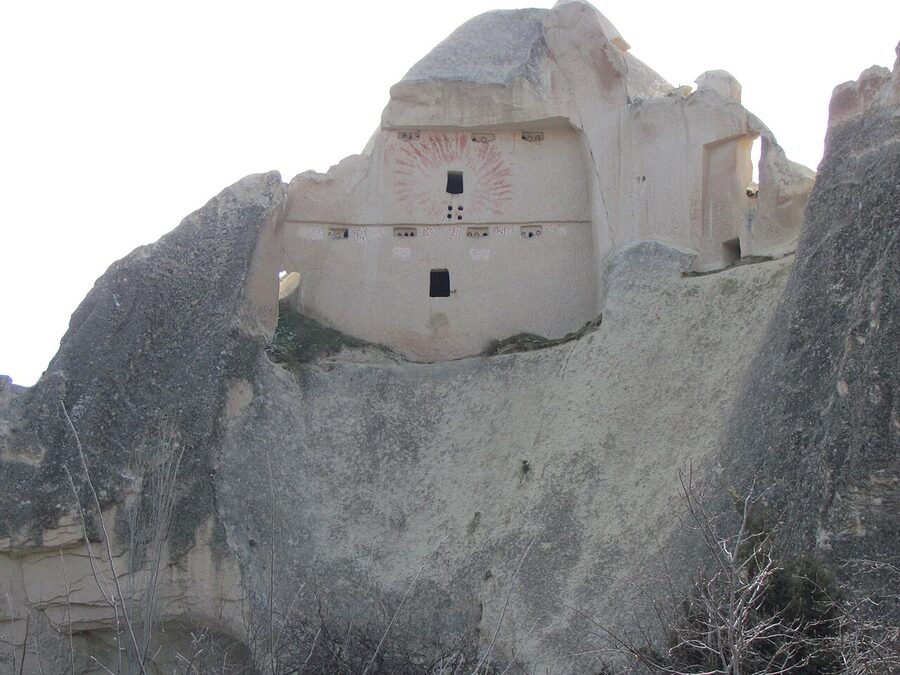
Pigeon Valley is named for the cotes. Residents carved pigeon cotes into the cliff walls over centuries to collect guano fertiliser. Some cotes are still in use today by local pigeon-keepers.
The Red and Green colour names are tour-operator standards. They don’t refer to any official naming — Cappadocia tour operators standardised them in the 1990s to help visitors choose itineraries.
The Short Version
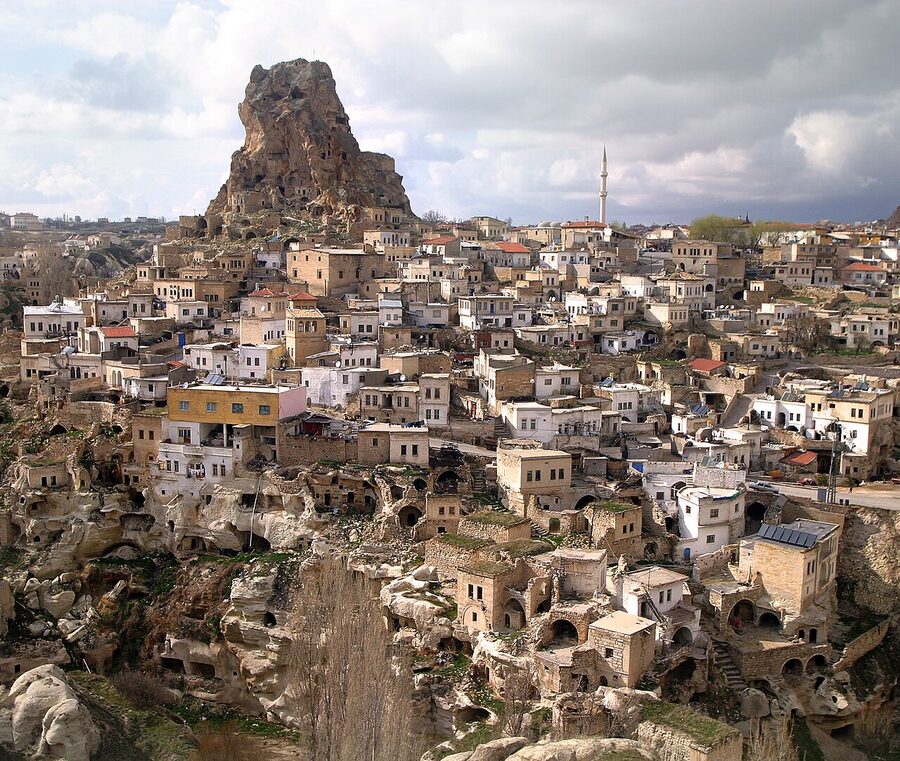

Book the €50 Green Tour (GetYourGuide version) for your second full day in Cappadocia. Pair with a balloon morning on day 1 or day 3, and Göreme Open Air Museum on your own on a half-day. Wear proper walking shoes. Drink water during the Ihlara hike. Take the guide’s notes on Derinkuyu seriously — the engineering is genuinely remarkable and hard to grasp without explanation.
If you have only one day in Cappadocia outside a balloon morning, skip the combined Red + Green option and pick one or the other. Red is the classic photo tour; Green is the deeper history. For a first visit, most guides suggest Red. For a second visit, Green.

Affiliate disclosure: Some links in this article are affiliate links. If you book through them we may earn a small commission at no cost to you. All recommendations are based on my own visit.