
Iceland’s south coast is for waterfalls. The west is for cliffs. The north is for whales. If you have ever been on a wildlife trip where you spent the whole day not seeing the thing you came for, the appeal of Húsavík and Akureyri is the sighting rate — both ports run at 95-99% in peak summer, which is roughly the highest reliable whale watching anywhere in Europe.
This guide covers how to book whale watching from either port: which tour to pick, the difference between a traditional oak schooner and a RIB speedboat, when to go, and how to actually get up there from Reykjavík (it is a long way — most people fly).
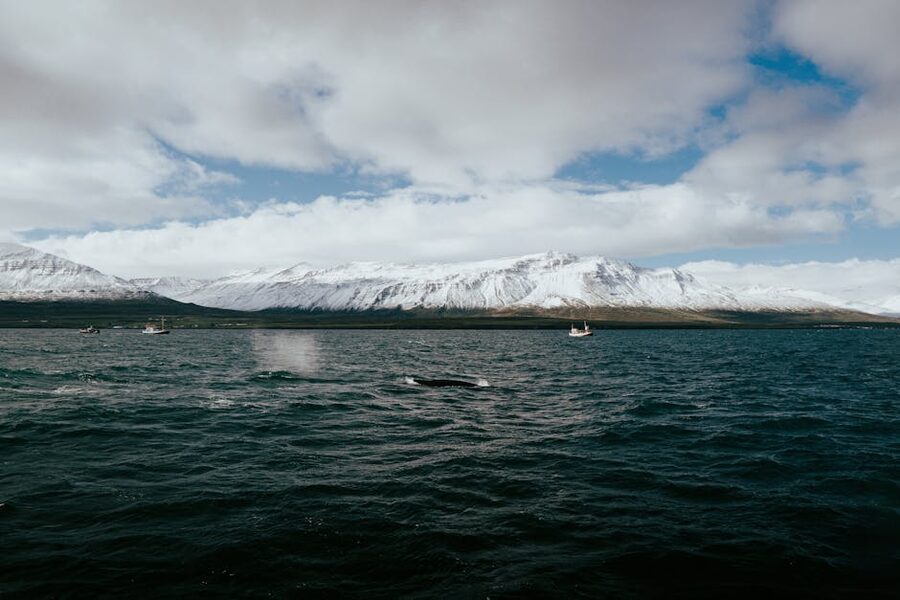
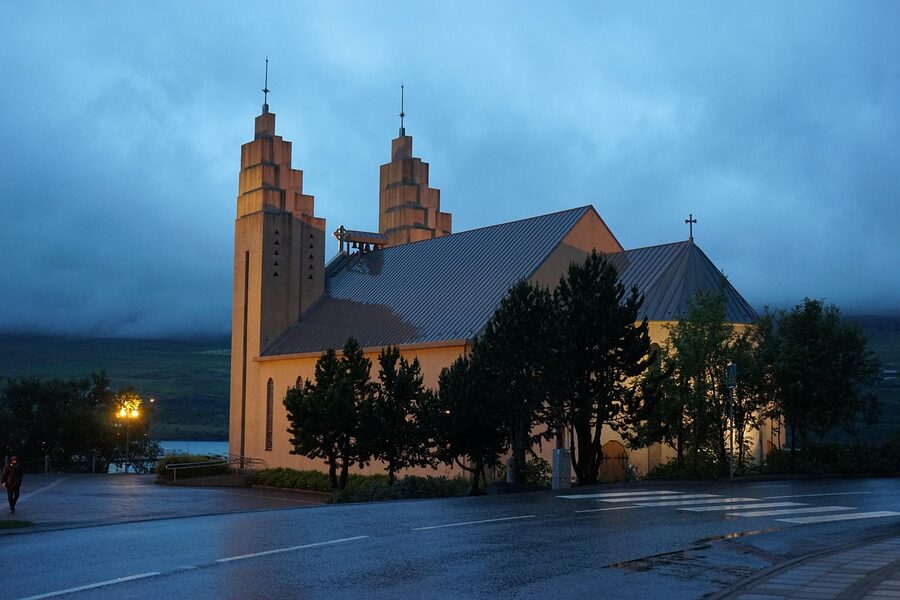
The two big northern ports are Húsavík and Akureyri, separated by about 90 km of road but feeding into different bays. Húsavík sits on Skjálfandi Bay and is the older, more famous whale watching town — every guidebook calls it “the whale watching capital of Europe” and the operators have been running boats since 1995. Akureyri sits on Eyjafjörður (the second-longest fjord in Iceland) and is the more practical option for most travellers because it has an airport, hotels, and other things to do besides whales.

In a Hurry? The Three Tours Worth Booking
- Most reviewed pick: Akureyri 3-Hour Classic Whale Watching Tour — around $108 per person, 3 hours, traditional ship from Akureyri.
- Best Húsavík classic: Húsavík Whale Watching Tour with Guide — around $115 per person, 3 hours, oak boat on Skjálfandi Bay.
- Best speedboat (with puffins): Húsavík Big Whale Safari and Puffins by RIB Speedboat — around $175 per person, 2 hours, faster boat plus a stop at Puffin Island.
- In a Hurry? The Three Tours Worth Booking
- Which Whale Tour to Book
- 1. Akureyri 3-Hour Classic Whale Watching Tour by Ship — from 8
- 2. Húsavík Whale Watching Tour with Guide — from 5
- 3. Húsavík Big Whale Safari and Puffins by RIB Speedboat — from 5
- Húsavík vs Akureyri: Which Port to Choose
- Oak Schooner vs RIB Speedboat: Which Boat
- What You Will Actually See
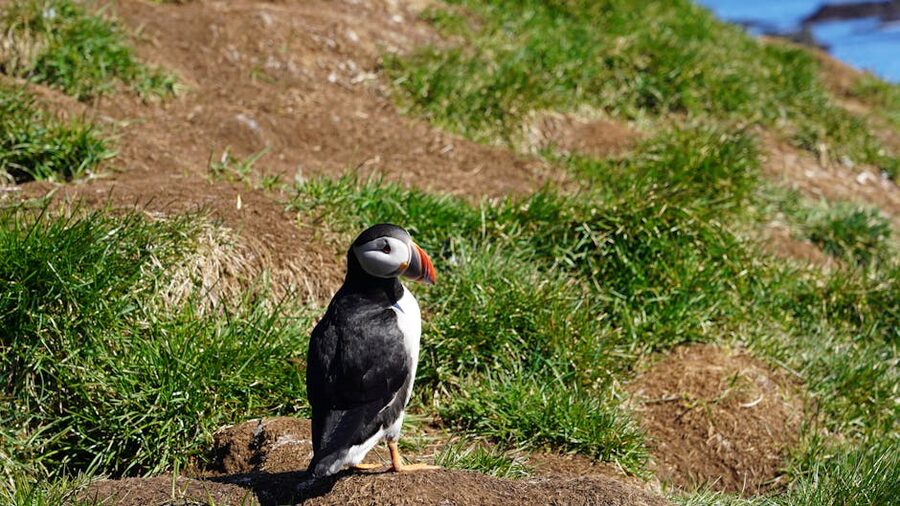
- The Puffin Add-On
- Getting There from Reykjavík
- When to Go
- What to Bring
- What to Do Around the Whales
- Whale Watching from Reykjavík: When It Makes Sense
- Pairing Whales with the Rest of Your Iceland Trip
Which Whale Tour to Book
The choice comes down to two things: which port you can reach (Akureyri is far easier), and whether you want a calm three-hour cruise or a faster two-hour ride that doubles up with puffins.
1. Akureyri 3-Hour Classic Whale Watching Tour by Ship — from $108
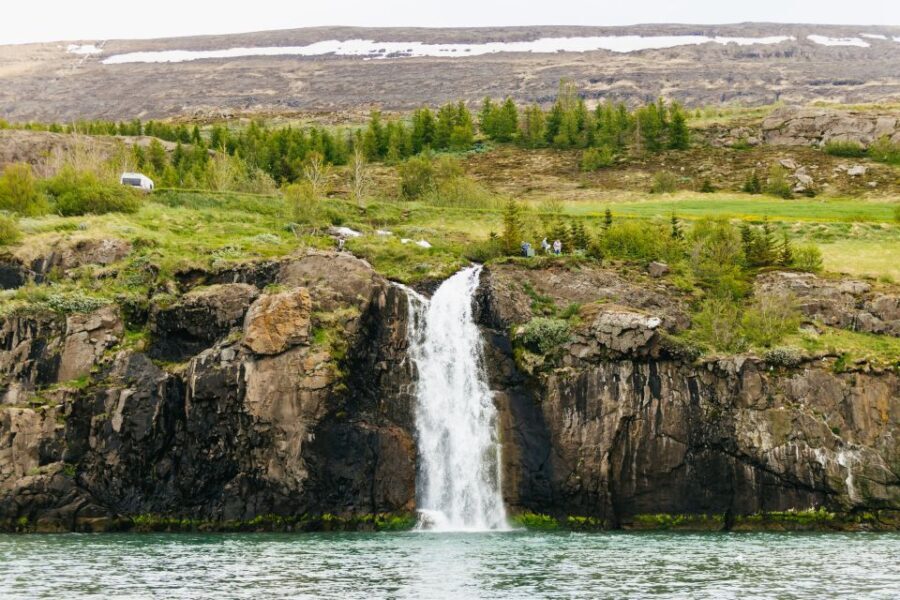
The most-booked whale tour in Iceland by review count, and the one I would default to for most travellers. Eyjafjörður is sheltered from the open sea by surrounding mountains, so the boats stay steadier than at Húsavík. Sailing time around 90 minutes out, 90 minutes back. Our full review covers the actual sighting rates and what whales tend to show up.
2. Húsavík Whale Watching Tour with Guide — from $115
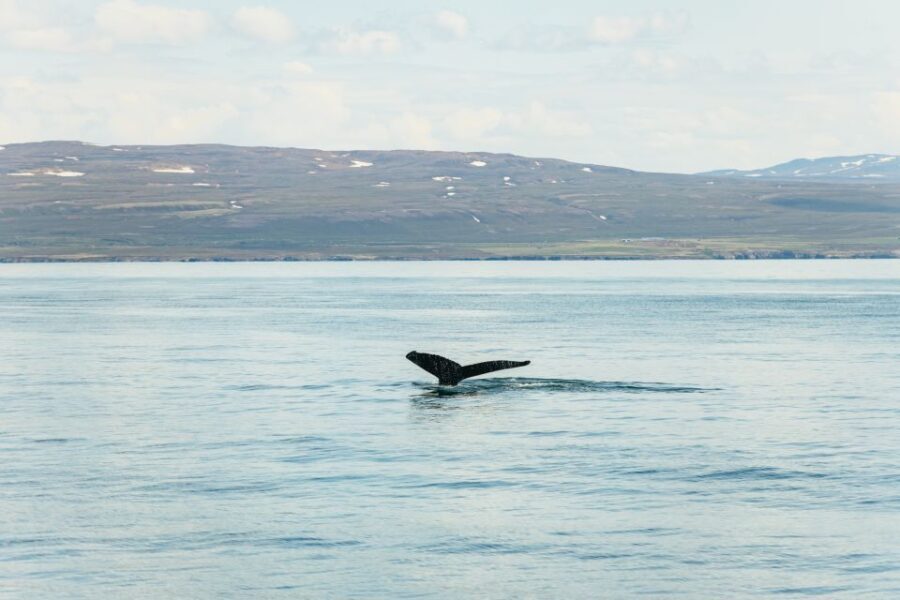
Húsavík’s headline tour. You sail out into Skjálfandi Bay aboard a traditional oak schooner, the kind that used to fish herring before the town pivoted to whale watching in the 1990s. 99% sighting rate in June-August. Our full review covers what to expect on the boat and how it differs from Akureyri’s offering.
3. Húsavík Big Whale Safari and Puffins by RIB Speedboat — from $175
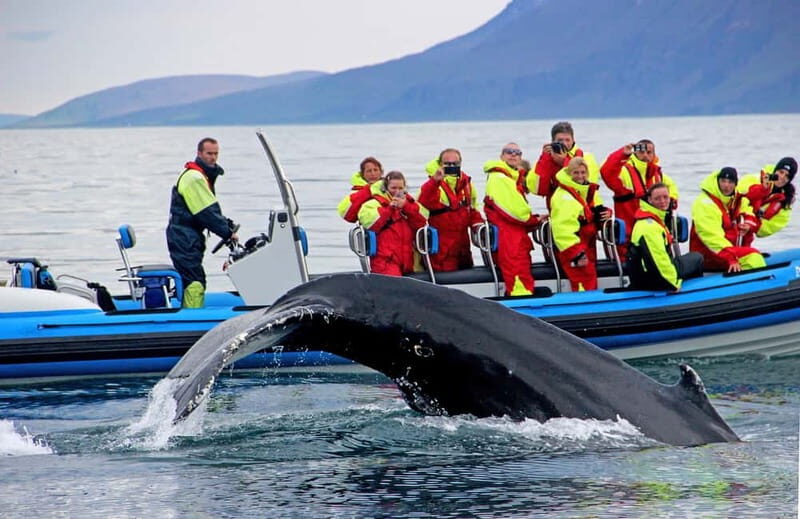
Pick this if you want both whales and puffins in one trip, or if you prefer a faster boat to the slow oak schooner. The RIB covers more ground in two hours than the schooner does in three, which means more chances to find a whale. Includes a stop at Lundey (Puffin Island), which is closed to people but where you can drift up close to the cliffs and watch puffins coming and going. Our full review covers the speedboat experience and the puffin add-on.
Húsavík vs Akureyri: Which Port to Choose
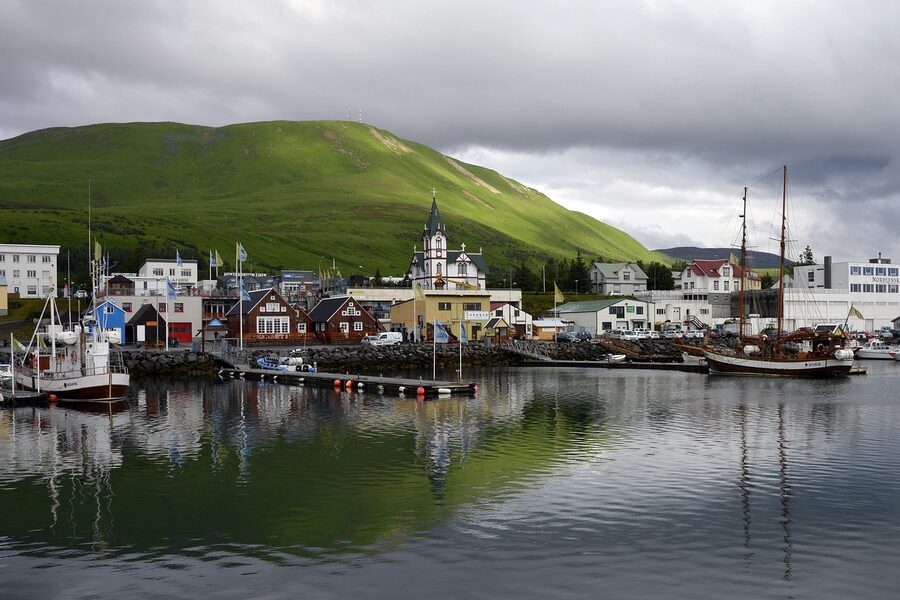
The marketing makes both ports sound interchangeable. They are not.
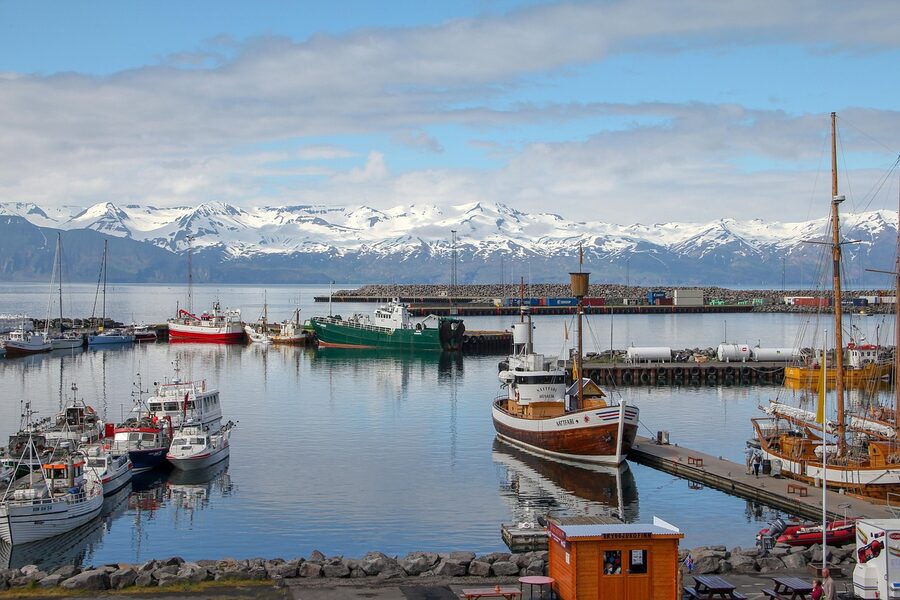
Húsavík is the famous one. The town has 2,200 residents, 40+ daily whale boats in summer, a small but excellent whale museum, and the slightly-faded glamour of being where the Will Ferrell film Eurovision Song Contest: The Story of Fire Saga was set. The boats sail out into Skjálfandi Bay, which opens onto the Greenland Sea — bigger water, more wave action on rough days, more variety of whale species (including occasional blue whales). The 99% sighting rate is real but the bay can shut down boats in bad weather.
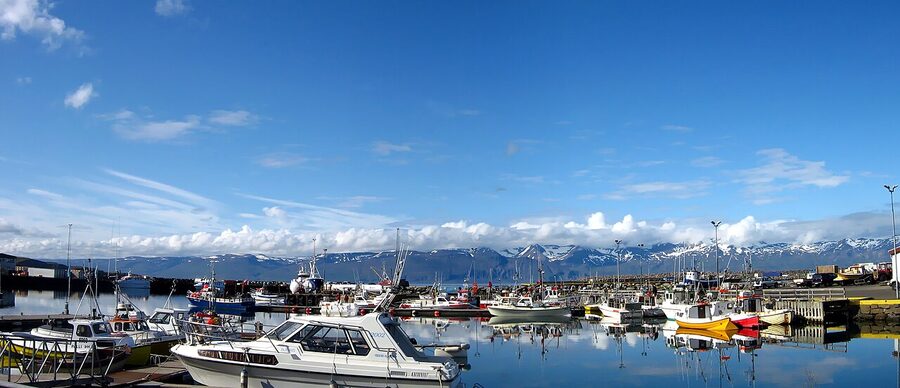

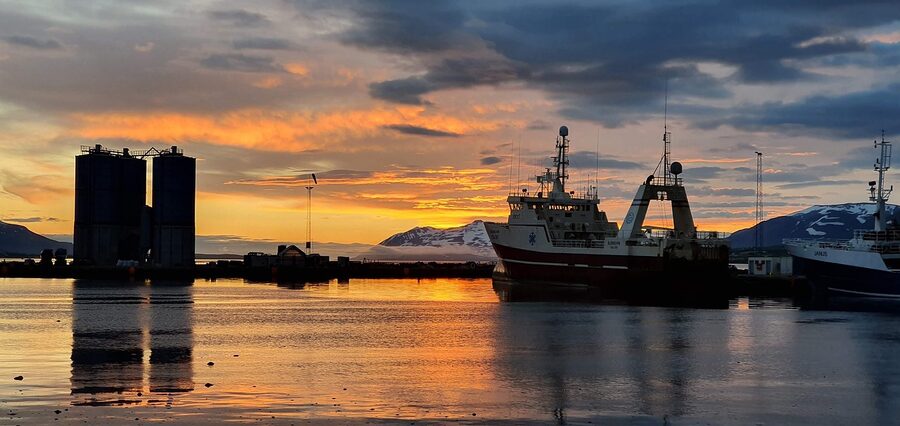
Akureyri is the practical choice. It is Iceland’s “Capital of the North,” population 19,000, with a regional airport that flies twice a day from Reykjavík (45 minutes). The whale boats sail out into Eyjafjörður, the second-longest fjord in Iceland, which is sheltered from the open sea by a long peninsula. That means much calmer water, which is what you want if you are prone to seasickness or travelling with kids. The species mix is slightly less varied (humpback and minke dominate) but the comfort is significantly higher.


The honest call: book Akureyri unless you specifically want the Húsavík experience for its own sake (the town, the museum, the Eurovision pilgrimage). Most international visitors who fly into Reykjavík and have one shot at whale watching should fly up to Akureyri for the night, do the morning boat, and fly back. It works as an overnight or even a long day. Húsavík requires either a 6+ hour drive each way from Reykjavík or an overnight in Akureyri followed by a 90-minute transfer drive — so it is essentially a multi-day plan.
Oak Schooner vs RIB Speedboat: Which Boat
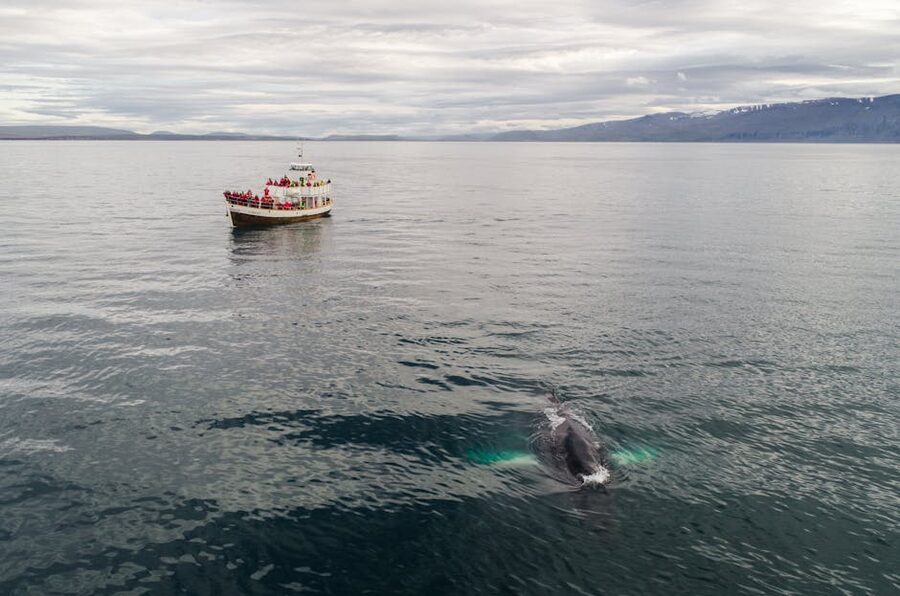
Both ports run two boat types. They are very different days out.
Oak schooner (3-hour tour, $99-130). Wooden hull, cabin you can go inside to warm up, slow steady ride, room to walk around the deck. Some of the original Húsavík boats are 60+ years old, refitted for whale watching from former herring fishing duty. Comfortable for kids and people who get seasick. The trade-off is speed — if the whales are 20 km from port, the schooner takes longer to reach them, which means less time at the sighting and more time in transit.
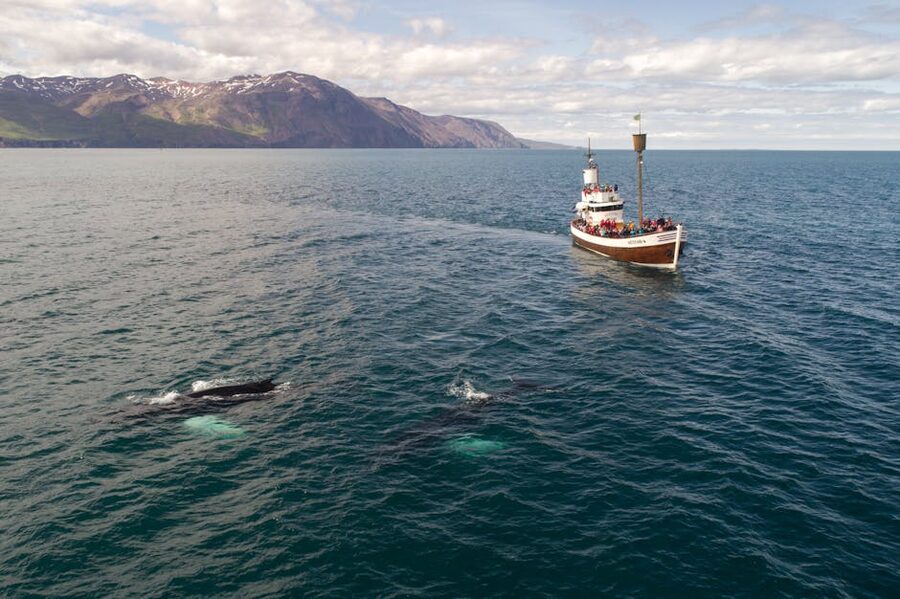
RIB speedboat (2-hour tour, $150-200). Inflatable rigid hull, no cabin, riders sit straddling cushioned bench seats. Fast — 30+ knots if the captain pushes it. Reaches whale sightings in 15-20 minutes, sticks around longer. Wetter, bumpier, but the chase aspect is genuinely exciting. Operators provide full survival suits and gloves. Not suitable for under-10s, pregnant travellers, or anyone with back issues.
If you can only do one and you have no preference, take the schooner. It is the iconic Iceland whale watching experience and most of the famous photographs were taken from one. Take the RIB if you specifically want speed, want puffins on the same trip, or have done a schooner whale tour somewhere else and want a different angle.
What You Will Actually See
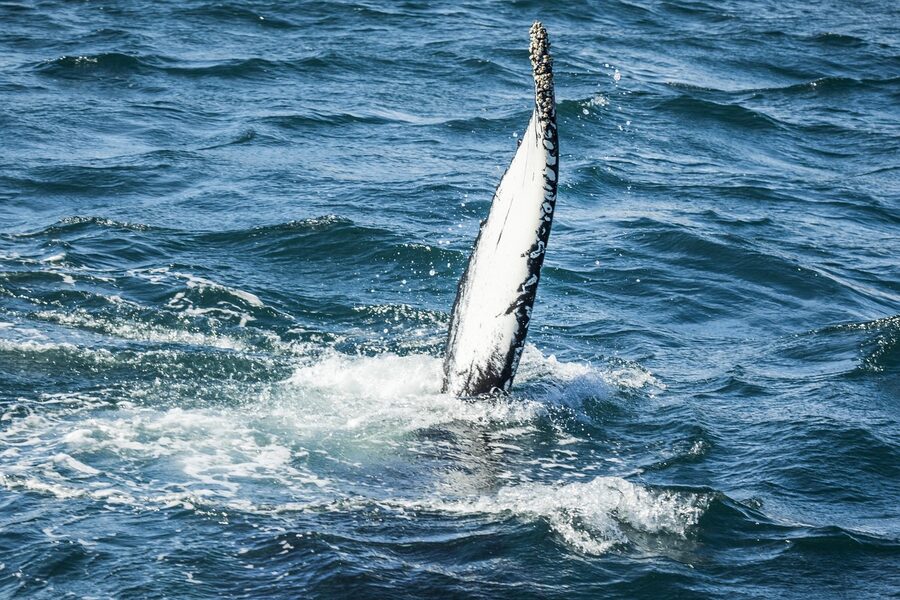
The species mix in Iceland’s northern waters is consistent enough that you can predict the day with reasonable accuracy.
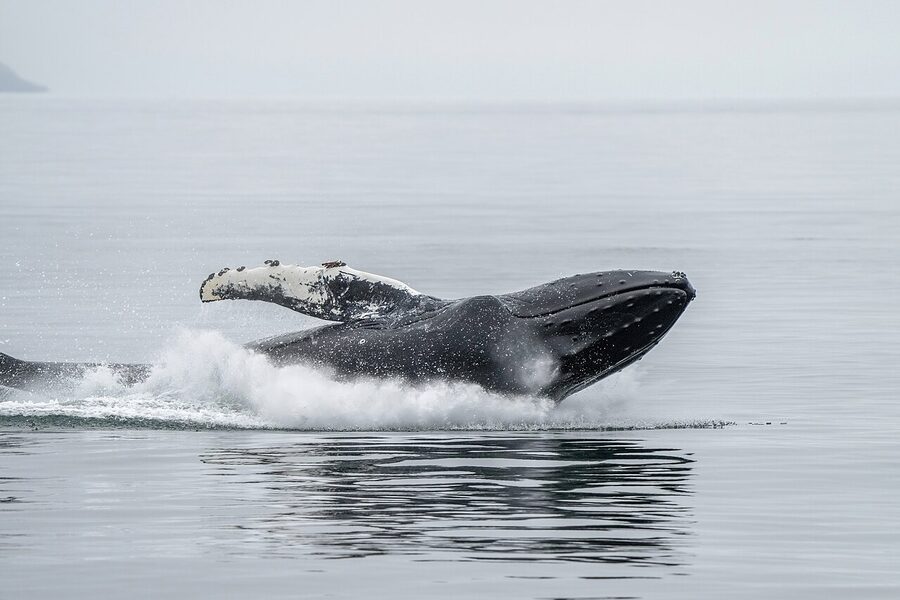
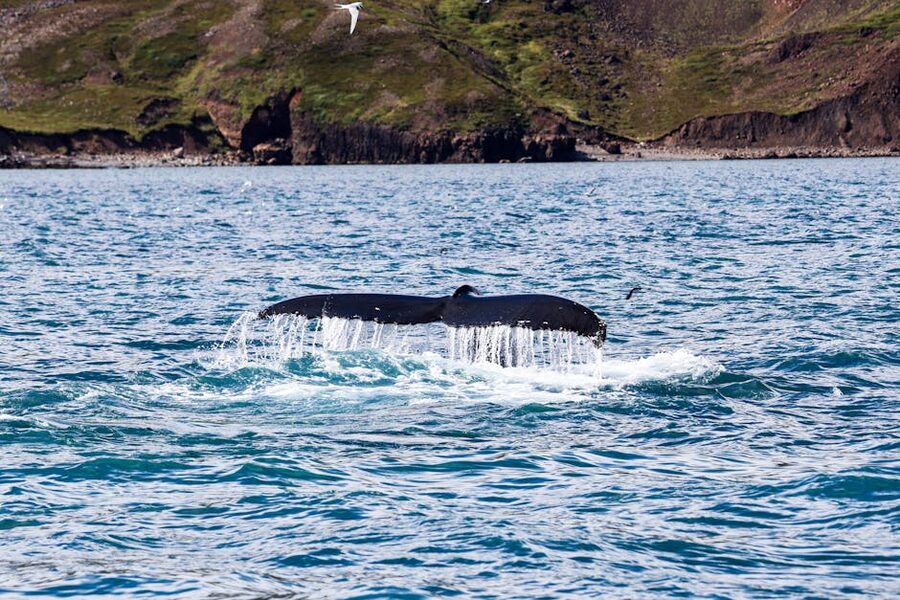
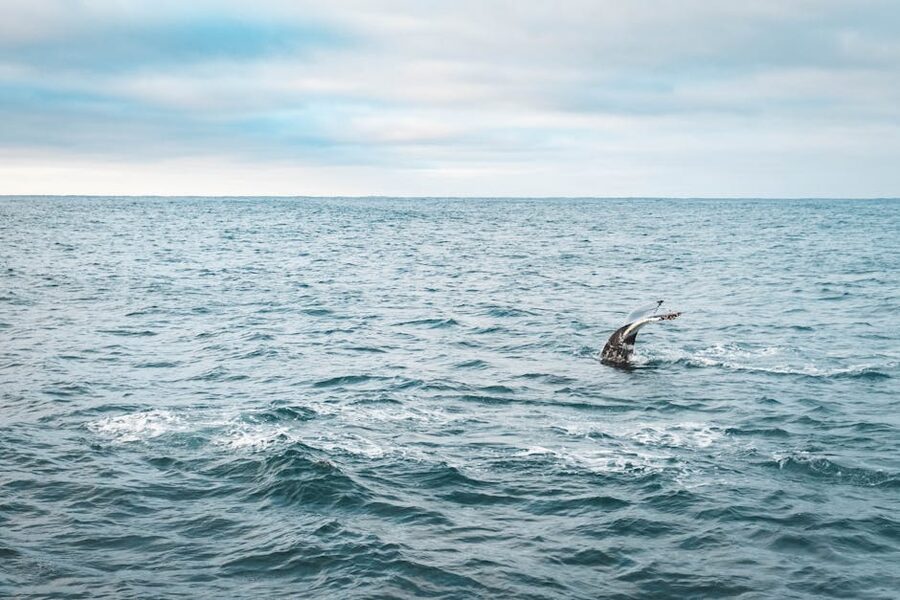
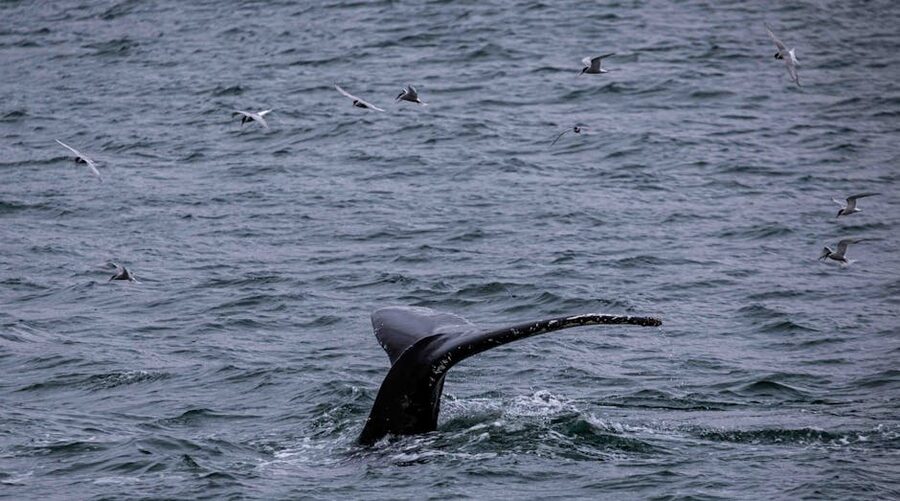
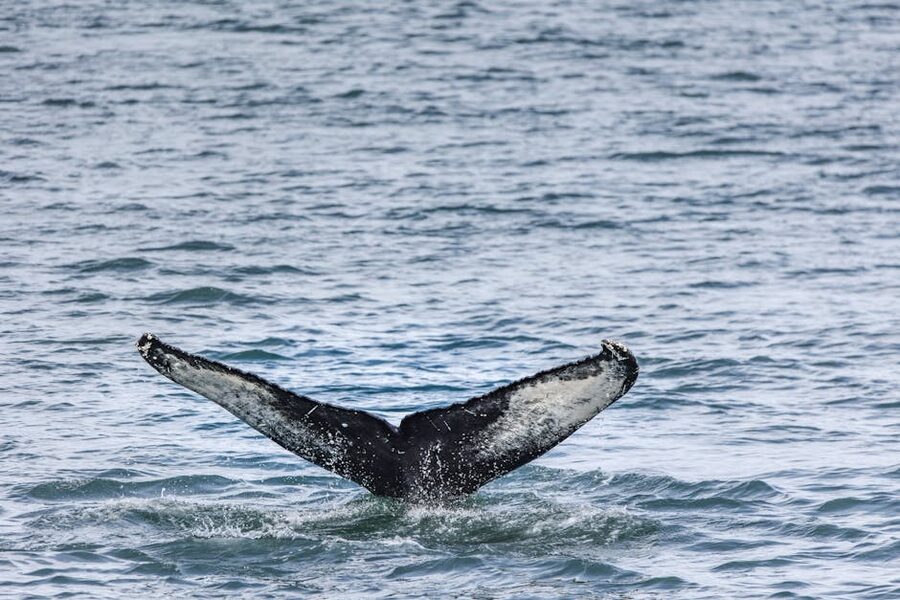
Humpback whales are the headline. They visit June through September to feed on small fish and krill in the shallow north Atlantic shelf. Adults are 12-16 metres long. They breach (jump fully out of the water), they fluke (raise their tail vertically before diving), they slap fins. Roughly 80% of trips see at least one humpback. The fluke shot you have seen on every Iceland Instagram account is from these waters.
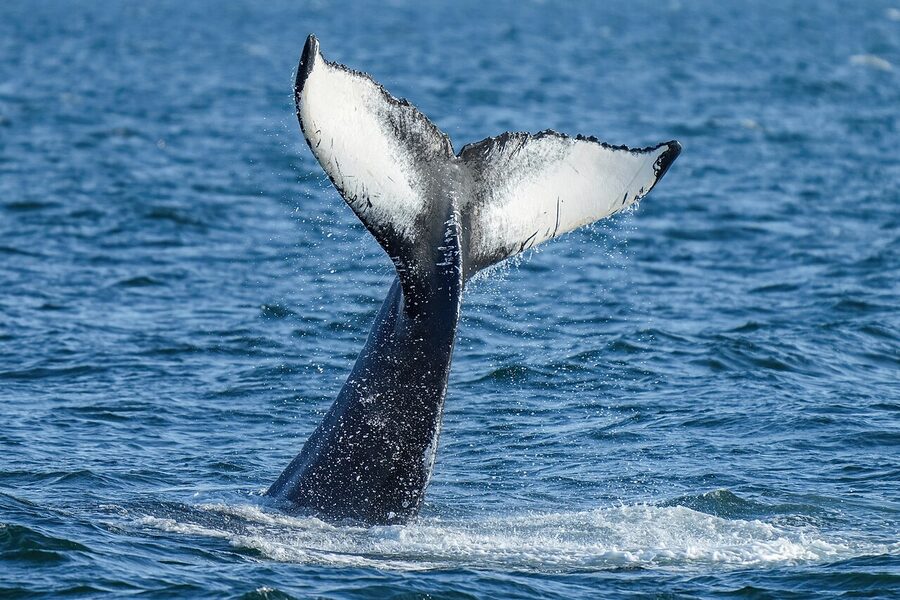

Minke whales are smaller (8-9 metres) and stealthier — they surface, blow once, and dive again, often without showing much of themselves. Sightings are common but less photogenic than humpbacks.
White-beaked dolphins often travel in pods of 20-50. They will sometimes ride the bow wave of the boat, which is one of the highlights of any tour. Spring and autumn sightings are most common.
Harbour porpoises are the smallest cetaceans you will see — 1.5 metres, shy, usually visible only as quick fins. Common but easy to miss.
Blue whales are the rare and incredible sighting. Húsavík sees roughly 2-5 confirmed blue whale tours per year, mostly in June. Akureyri sees them less often. There is no way to predict or book for a blue whale — if you get one, you got lucky.
Orca, sperm whales, fin whales, and pilot whales all show up occasionally. Your guide will mark species in real time.
The Puffin Add-On
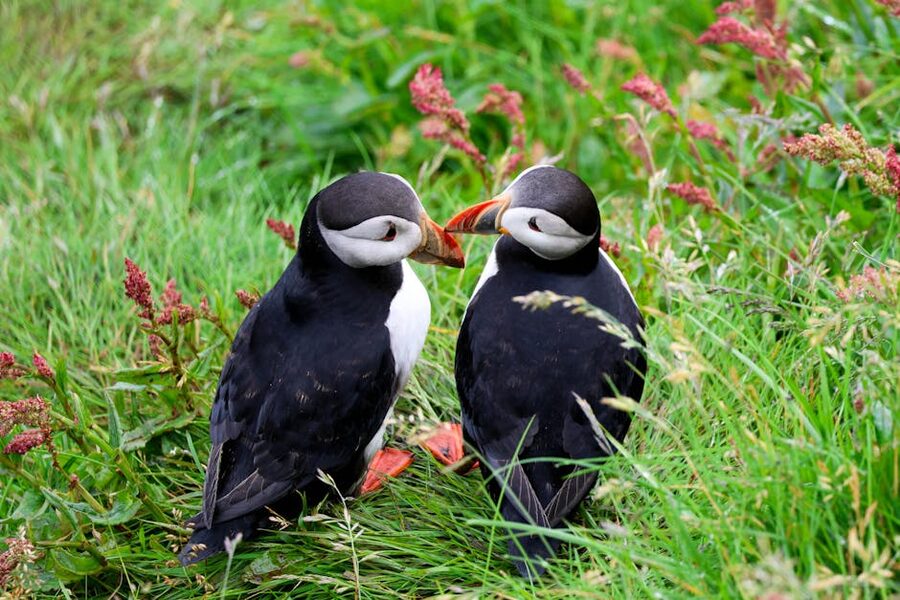
If you book the RIB speedboat tour from Húsavík, the boat detours past Lundey (Puffin Island) on the way back to harbour. You cannot land — the island is a protected breeding ground — but you drift up close to the cliffs and watch puffins flying in and out of their burrows. Best months: late May through early August, when the chicks are still in the nest.
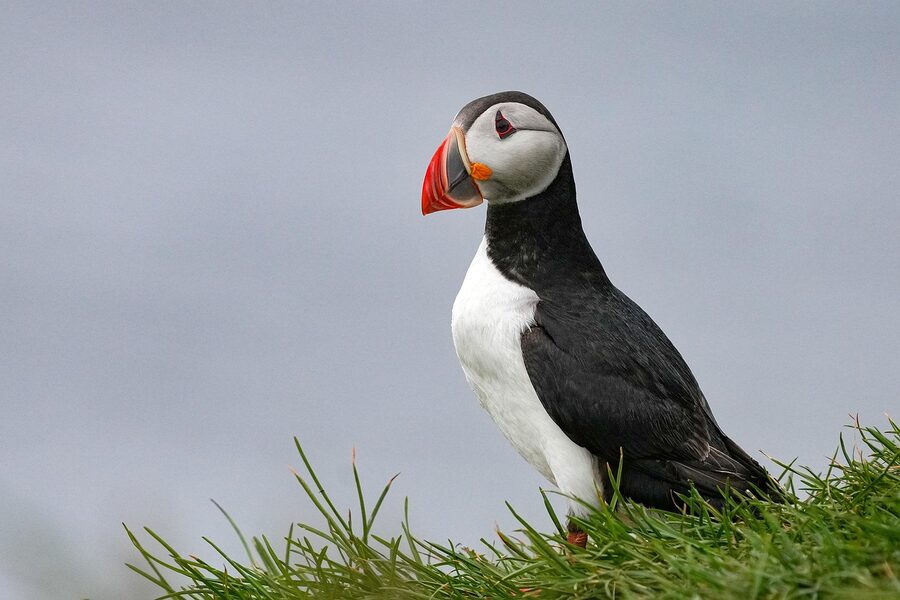
One thing to know: puffins do not stay in Iceland year-round. They arrive in late April and leave by mid-August (chicks fledge a few weeks later, then everyone heads back to open ocean). If your trip is outside that window, the puffin add-on is not relevant — book the regular schooner instead.
Getting There from Reykjavík
The big logistical question for whale watching is how to actually reach the north. There are three options.
Fly to Akureyri ($80-150 each way, 45 minutes). Icelandair operates two flights a day from Reykjavík (RKV — the city airport, not Keflavík). This is what most international visitors do. You can fly up in the morning, do an afternoon boat, fly back the same evening. Or stay the night for evening cruises and add other Akureyri activities.
Drive (5.5-6 hours each way to Akureyri, 6.5-7 hours to Húsavík). The drive is fine in summer but you lose a day in each direction. Worth it if you are doing a longer ring road trip; not worth it for a single whale watching trip.
Domestic flight Reykjavík to Akureyri, then transfer to Húsavík (90 min drive). The right option if you specifically want Húsavík and not Akureyri. Combine the flight with a rental car at Akureyri airport.
For most travellers, the answer is fly to Akureyri, do a morning whale tour, spend the afternoon in town, fly back the next day. Two-day plan, one airport return ticket, manageable.
When to Go
June to August (peak): Best sighting rates (95-99%), longest daylight, most boat departures, all species active. Puffins on the cliffs. Boats run from 7am to midnight. The downside is crowds and price — book at least 2-3 weeks ahead in July.
April, May, September, October (shoulder): Sighting rates drop to around 80-90%, but the boats are quieter and there is more focus on the whales when you do find them. Northern lights become possible from late September. Boats run on a reduced schedule.
November to March (winter): Limited tours run, focused mostly on Akureyri. The fjord stays whale-friendly through winter and you have the chance of seeing northern lights from the boat. Cold and uncomfortable — bring serious layers. Sightings drop to 70-80% and species are mostly humpbacks plus the occasional orca.
What to Bring
Iceland weather changes hourly. Even in summer, expect to be cold on the boat.
- Warm layers — fleece or wool mid-layer, long-sleeve shirt underneath. The boats provide thick overalls but they go on top of your own clothes.
- Waterproof outer shell — sea spray will reach you on any boat, more so on the RIB.
- Hat and gloves — yes, even in July.
- Sturdy closed shoes — boat decks get slippery.
- Seasickness pills — take 30-60 minutes before sailing, even if you do not normally get motion sick. The fjord is calm but Skjálfandi Bay can chop up.
- Camera with zoom — phones work for the deck shots but a 200mm+ lens is what gets the breach photos.
- Sunglasses — surface glare is intense even on cloudy days.
What to Do Around the Whales
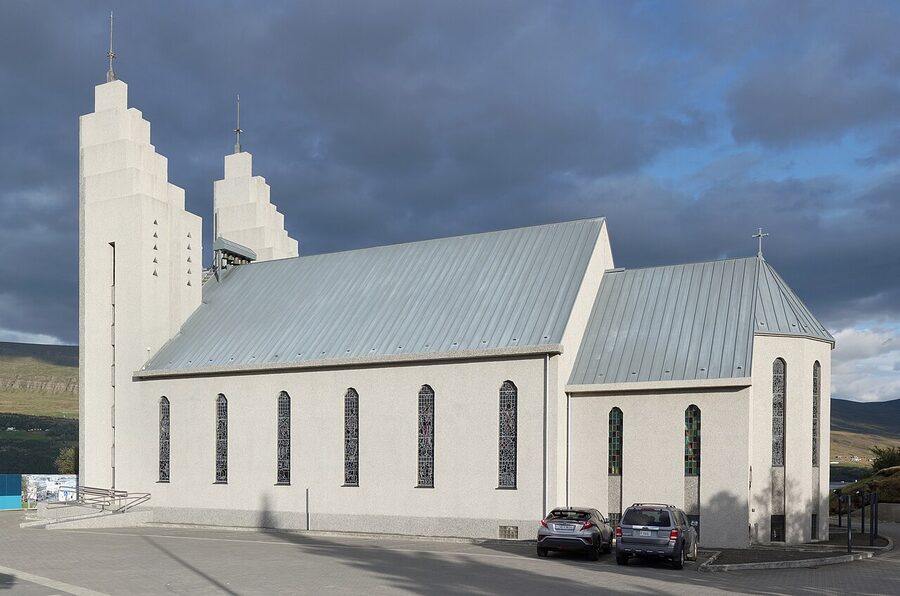
Akureyri easily fills a day off the boat. The town has the northernmost botanical garden in the world, a respectable art museum, several decent restaurants, and Iceland’s best public swimming pool (Sundlaug Akureyrar — geothermally heated, three slides, hot pots). If you have a car, the Goðafoss waterfall is 45 minutes east on the way to Húsavík and worth a stop.

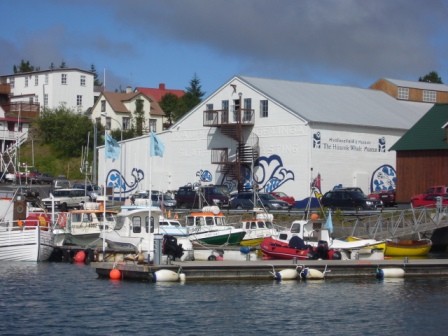
Húsavík is smaller and the must-do is the Húsavík Whale Museum. It sits in a former slaughterhouse on the harbour and houses 13 full-size whale skeletons hanging from the ceiling, including a 25-metre blue whale that washed up dead on a nearby beach in the 1980s. Entry is around $20 and the visit takes 90 minutes. After the boat, the GeoSea geothermal sea baths sit on the cliff above the harbour with infinity-edge pools looking out at Skjálfandi Bay — possibly the best post-whale-tour soak in Iceland.

Whale Watching from Reykjavík: When It Makes Sense
If you cannot get to the north, whale watching from Reykjavík is a real alternative. Boats sail from the Old Harbour into Faxaflói Bay, where minkes and white-beaked dolphins are common but humpbacks are rarer than up north. Sighting rates run around 80-90% in summer (lower in winter). Trips are 3 hours and cost roughly the same as the northern boats.
The honest comparison: Reykjavík whale watching is good. Northern Iceland whale watching is great. If you have the option to fly up to Akureyri, do that. If you are stuck in Reykjavík with one free morning, the Reykjavík boat is worth doing.
Pairing Whales with the Rest of Your Iceland Trip
If you have allocated a Húsavík/Akureyri overnight to your trip, you have natural pairings around it.
From Reykjavík side, balance the long northern day with shorter southern excursions: the Golden Circle (7-hour easy day), a walking tour of Reykjavík, and the Lava Show in town. Add an evening at Sky Lagoon after the flight back from Akureyri — your back will thank you.
If you have a longer trip and are doing the south coast as well, the natural sequence is whale watching first (north, 1-2 days), then south coast or Jokulsarlon (1-2 days), then Snaefellsnes Peninsula as the lighter day before flying out. Winter visitors should pair the whale tour with a northern lights tour — Akureyri is one of the best places in Iceland to see them because it sits under a clearer sky than Reykjavík most nights.
One last note. Húsavík and Akureyri both have multiple operators. Sighting rates are essentially the same across all of them — they share the same waters and most have a buddy system that calls in whale locations to other boats. The differences are boat type (oak vs RIB), group size, and small things like whether tea is served on the return leg. The big differentiator is the port itself, not the operator.
This article contains affiliate links. If you book through our links, we may earn a small commission at no extra cost to you. This helps us keep producing detailed travel guides.