
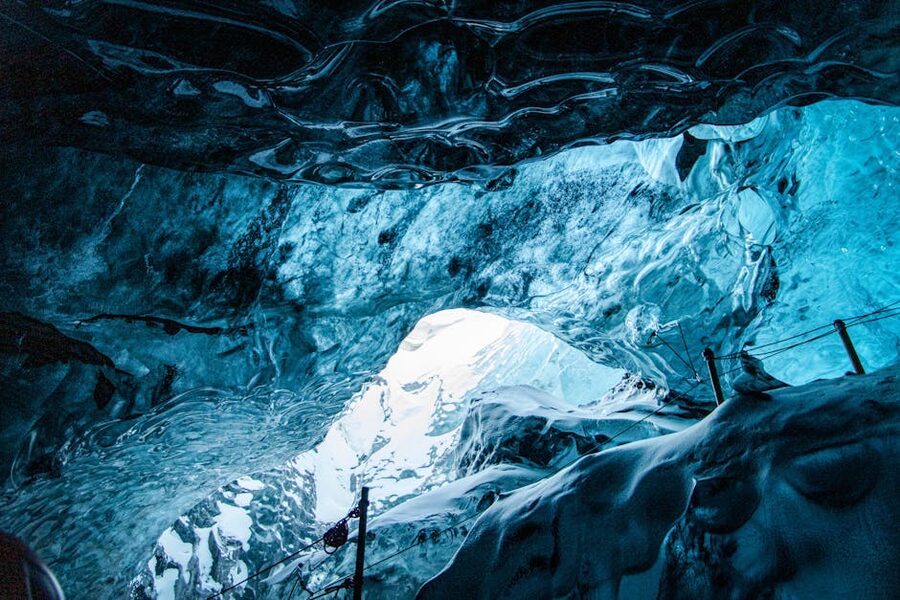
The Katla ice cave is not, technically speaking, a cave. Every September a small Icelandic crew drives a Land Cruiser fitted with 38-inch tires up onto Mýrdalsjökull glacier, sets up a generator, and starts cutting a new tunnel into the ice with chainsaws. The glacier moves about 30 metres a year, so last year’s cave is gone — flowed downhill, broken apart, melted out. The cave you walk into in October is two weeks old. By next April it will be sagging at the entrance and they will be planning the next one.
That detail does not appear on most tour pages. The marketing leans heavily on words like “natural” and “ancient.” The cave is genuinely beautiful — black volcanic ash threaded through translucent blue ice, walls that change colour as the sun moves above — but knowing it is hand-cut changes the experience. You are walking through a piece of seasonal architecture. That is what makes it interesting.

In a Hurry? The Three Worth Booking
- From Vik (best value): Katla Ice Cave and Super Jeep Tour from Vik — around $194, 3 hours, the standard experience.
- From Reykjavik (one long day): Katla Ice Cave and South Coast Waterfalls — around $275, 12 hours, includes the drive plus all the south coast headline stops.
- Small group: Katla Ice Cave Small Group from Vik — around $181, 3 hours, fewer people, more time at the photo spots.
- In a Hurry? The Three Worth Booking
- Which Tour to Book — and the Honest Pick
- 1. From Vik: Katla Ice Cave and Super Jeep Tour — from 4
- 2. Reykjavik: Katla Ice Cave & South Coast Waterfalls — from 5
- 3. From Vik: Katla Ice Cave Small Group Guided Tour — from 1
- What Three Hours Actually Looks Like
- The Cave Itself
- The Year-by-Year Variability
- The Drive Up — Why the Super Jeeps Matter
- Vík — Where You Sleep Before and After
- Katla Cave vs the Other Iceland Ice Caves
- Things People Get Wrong
- When to Go and What the Season Looks Like
- What to Bring (Short Version)
- What Else to Do With Your Vík Trip
Which Tour to Book — and the Honest Pick
If you have a choice, drive yourself to Vík and book one of the from-Vík tours. The Reykjavík day trip is technically the same cave but you spend nine of your twelve hours on a coach. People do it because they have one Iceland day available, but if you are not in that specific bind, do not.
1. From Vik: Katla Ice Cave and Super Jeep Tour — from $194
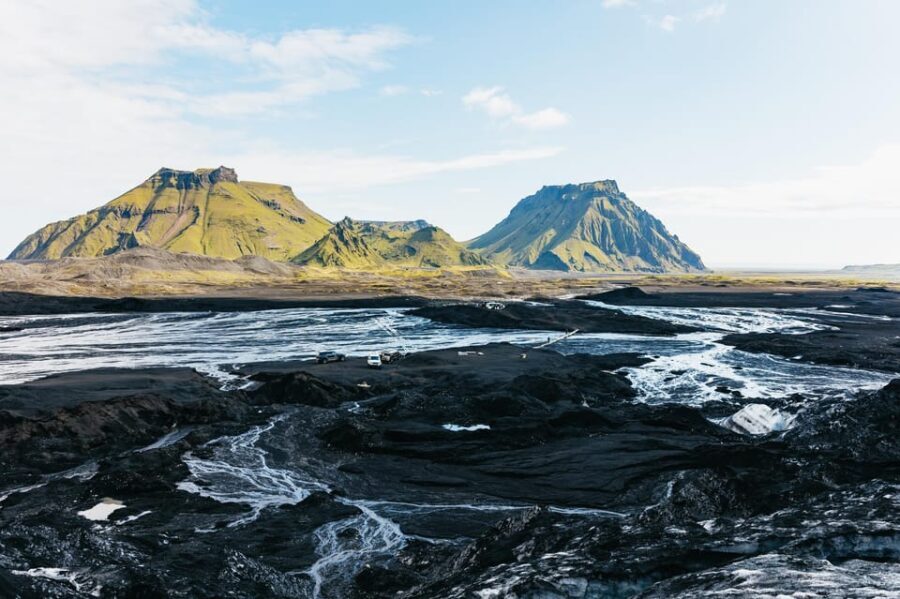
The most-booked Katla cave tour and the one I would default to. Pickup is at the N1 in Vík at 0900, 1200, or 1500 depending on the season. The group size is usually 12-16 people split across two or three jeeps. Our full review has the breakdown of what the actual three hours look like and how much is driving versus walking.
2. Reykjavik: Katla Ice Cave & South Coast Waterfalls — from $275
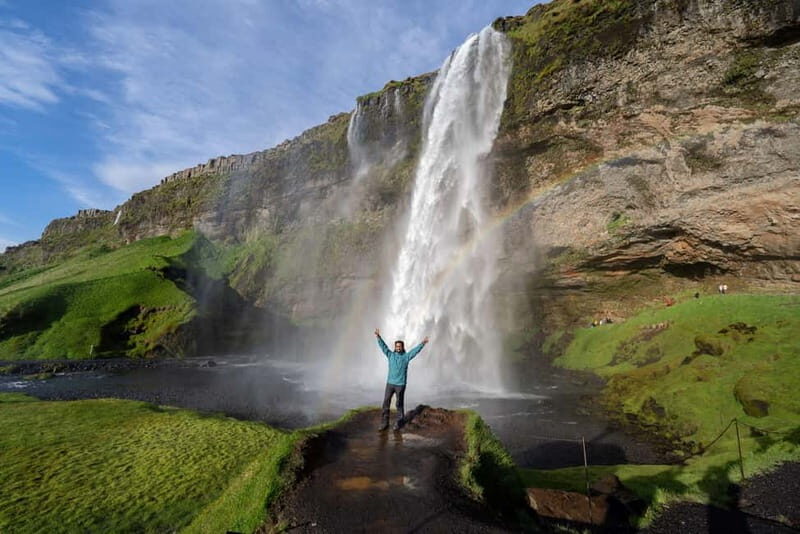
The day starts at 0700 from Reykjavík, ends around 2000. You stop at Seljalandsfoss, Skogafoss, Reynisfjara, then transfer to the super jeep at Vík for the cave, then drive five hours back to Reykjavík. It is the only way to see the cave on a day trip from the capital. The trade-off is severe — about 25 minutes at each waterfall and 90 minutes at the cave including the drive up. Our full review covers whether the time pressure ruins the experience.
3. From Vik: Katla Ice Cave Small Group Guided Tour — from $181
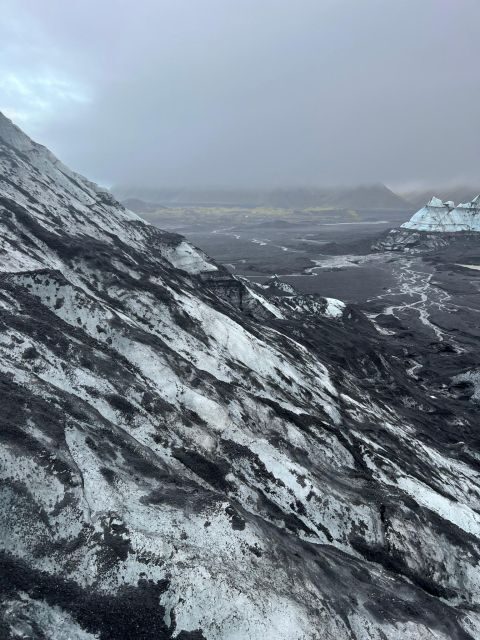
The small-group version. Maximum 8 in a single jeep, which means you get more guide attention and the photo stops do not feel like a queue. About $13 cheaper than the standard tour, which makes no sense to me — the operator probably loses on each booking. Our full review compares the small group dynamic to the standard tour.
What Three Hours Actually Looks Like
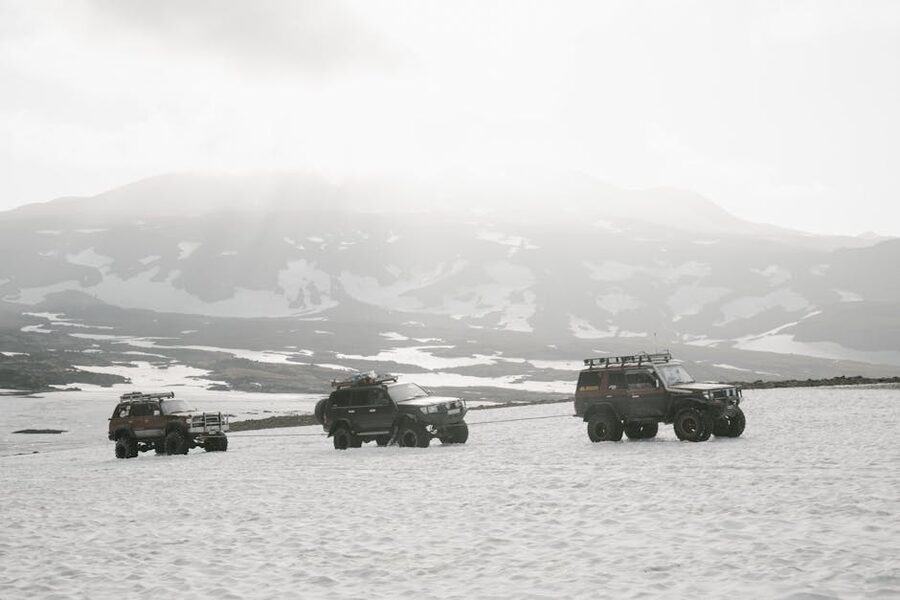
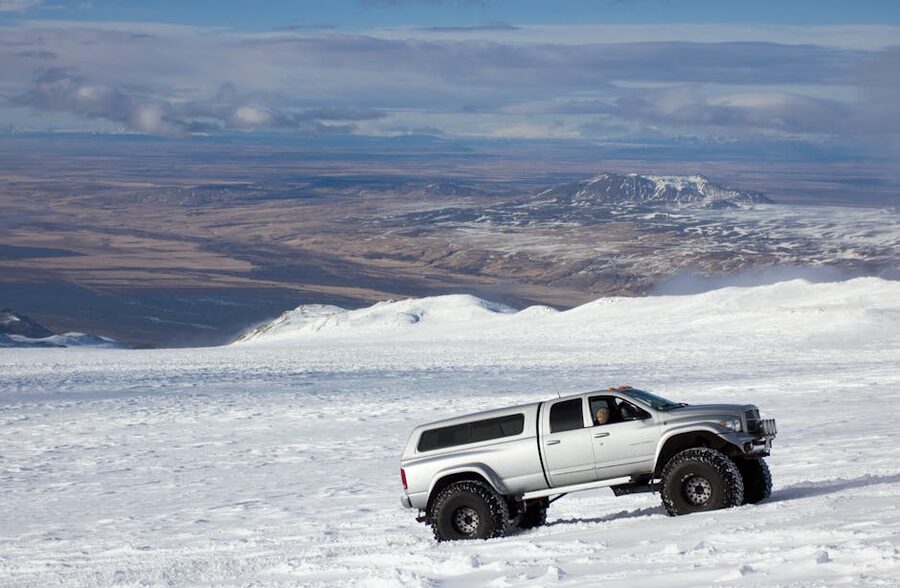
You meet at Vík and get into a vehicle that looks ridiculous from a distance — a SUV that has been jacked so high you need a step to get in, with tires the size of small wheelie bins. The first time I climbed into one I asked the driver if they were necessary. He said the tires let them air down to about 6 PSI on the glacier, which is what makes them work on snow. They do not feel like normal jeeps from inside; the suspension travel makes you sway over every bump like a small boat.
The drive up to the cave is about 45 minutes from Vík. You leave the ring road, climb a packed gravel track for ten minutes, then turn onto a snow road that the operators groom themselves. Halfway up the snow there is a stop where everyone gets out, takes a photo of the bus track behind you, and then climbs back in for the steeper section.
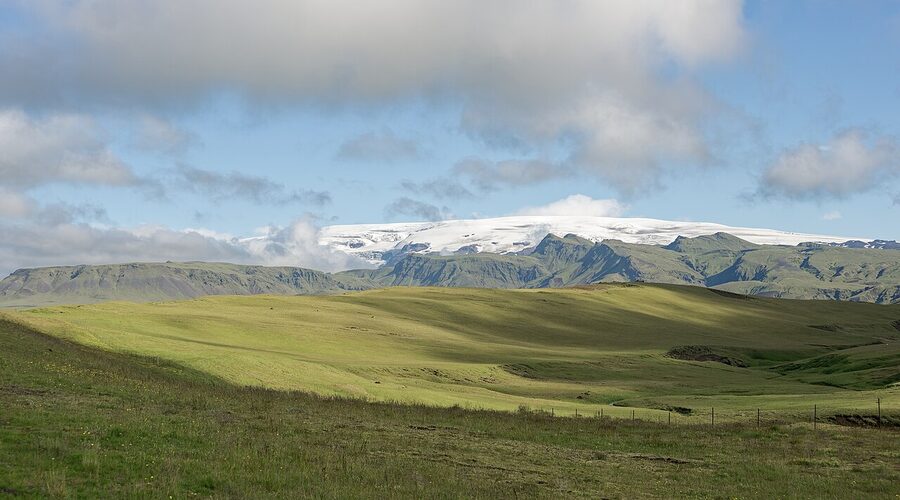

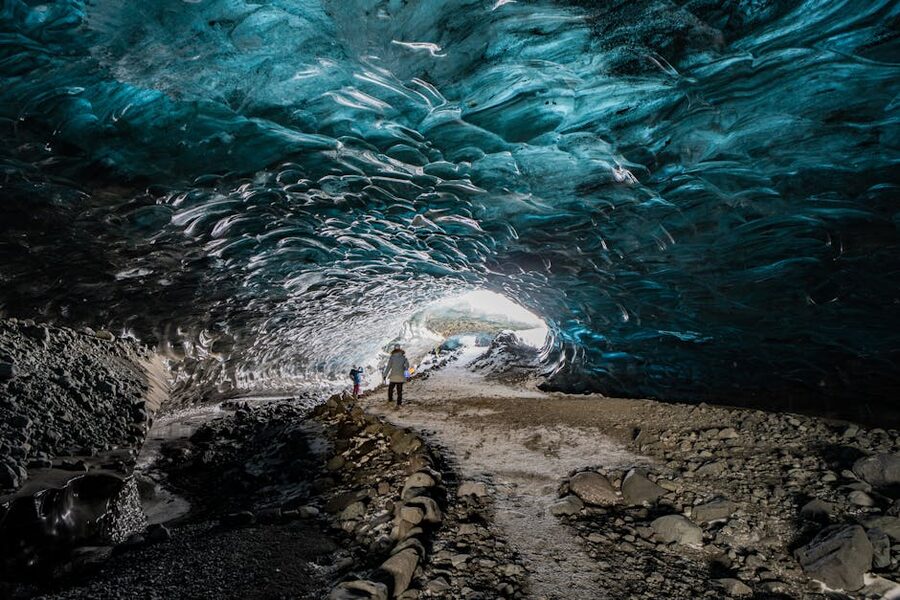
You arrive at a flat parking area on the glacier. The cave entrance is a five-minute walk from the jeeps over packed snow — flat enough that you do not need crampons in most conditions, but the operator hands them out if it is icy. Hard hats too, mandatory, because the cave is technically active ice.
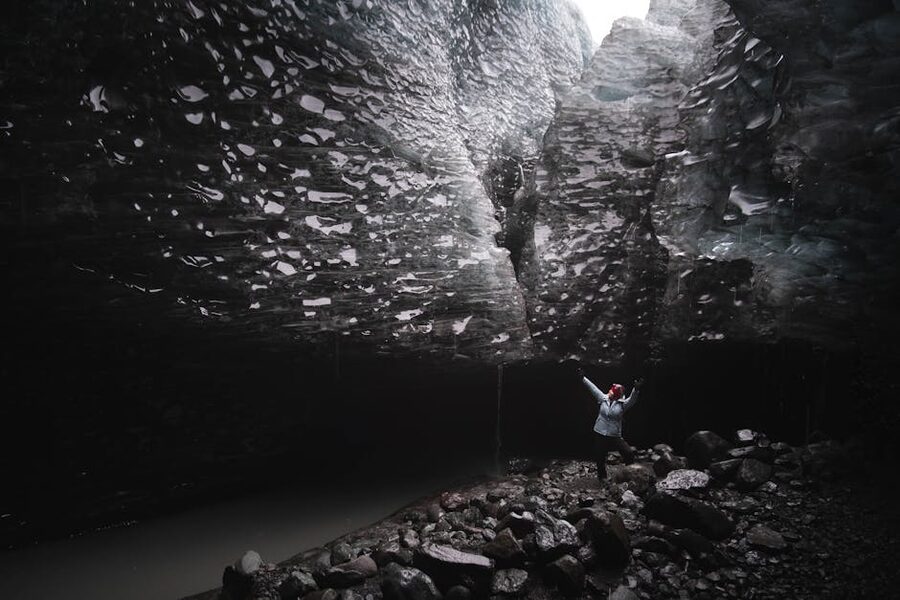
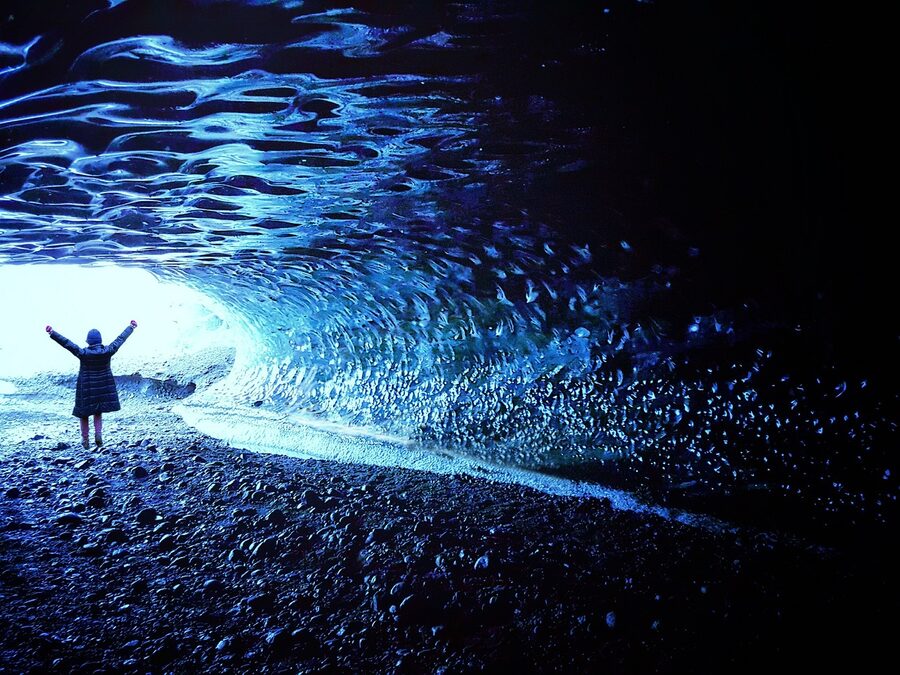
You spend about 30 minutes inside the cave. The walking is flat, the ceiling is six to eight feet high in most spots, and there are usually two or three side chambers the guide will take you into. The famous photograph — the one you have probably seen on Instagram — is from a particular spot near the back where the ice is thinnest and the light filtering through is most intense. The guide will point it out and let everyone in turn take their turn at the spot.
The Cave Itself
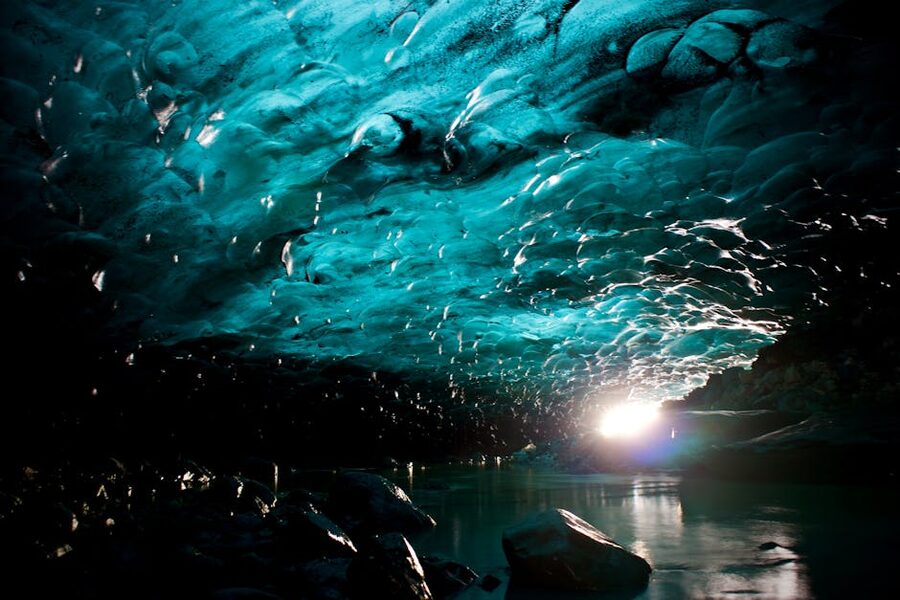
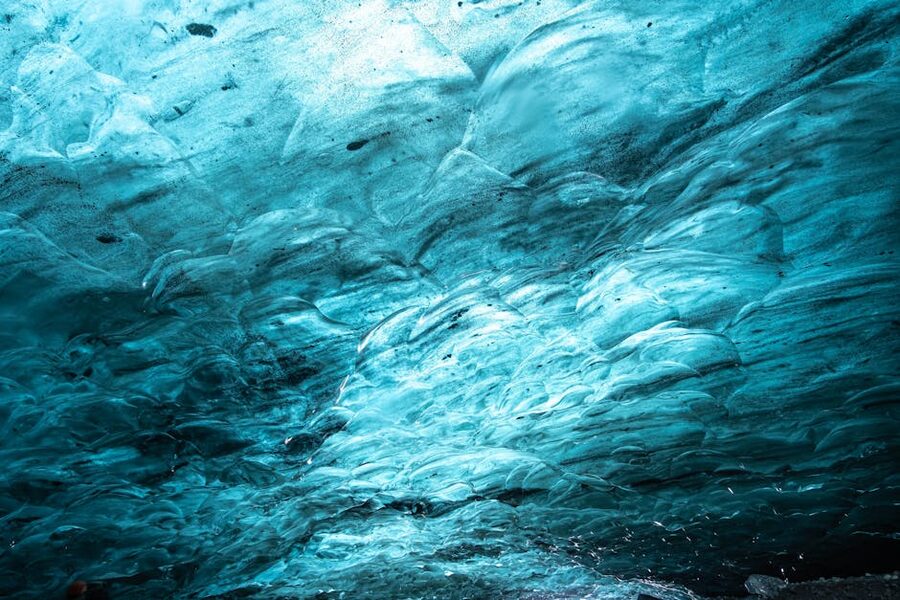
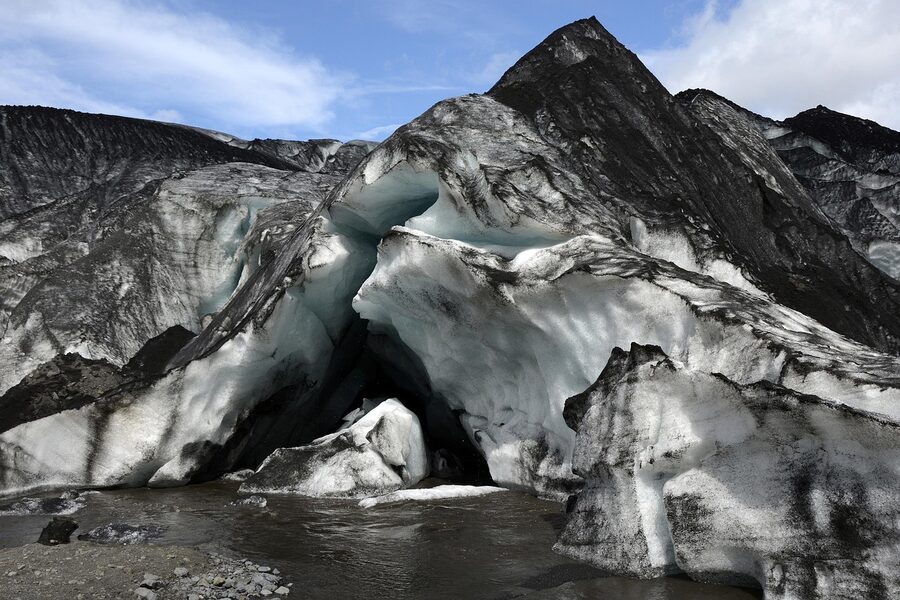
What makes the Katla cave different from the other Iceland ice caves is the ash. Mýrdalsjökull sits on top of the Katla volcano, which has erupted under the glacier 21 times in the last thousand years (most recently 1918, but everyone agrees it is overdue). Each eruption deposits a layer of black ash on the ice. As the glacier flows downhill it folds those layers in on themselves, so the cave walls have these horizontal black stripes running through translucent blue ice. It looks like layered chocolate cake. I have not seen this in any of the Vatnajökull caves over near Jokulsarlon — those are pure clear blue ice without the ash bands.
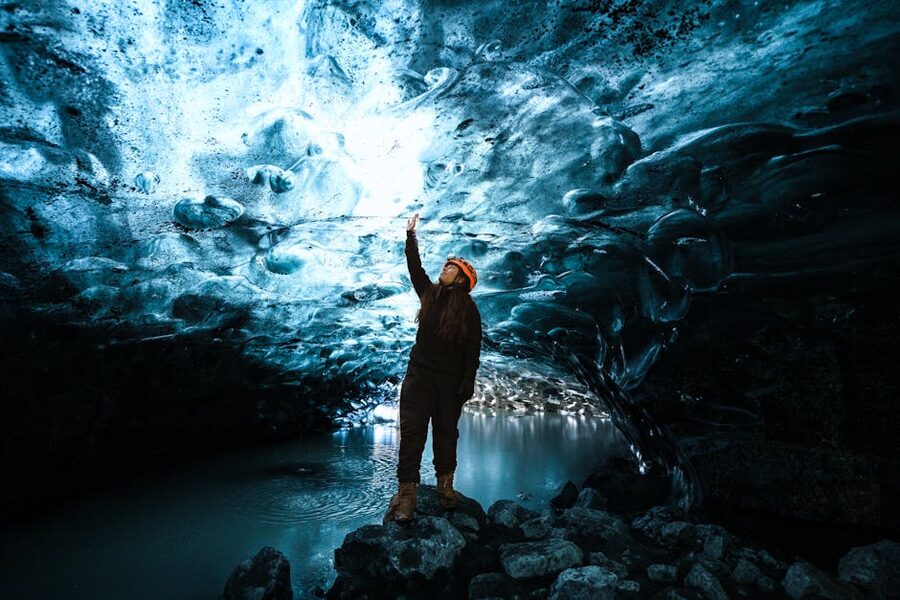
The temperature inside is around -2°C. Cold, but not punishing — you are out of the wind. The cave acoustics are strange: the ice absorbs high frequencies, so voices sound oddly muffled, like talking through a thick wool scarf. People go quiet without being asked.
The Year-by-Year Variability
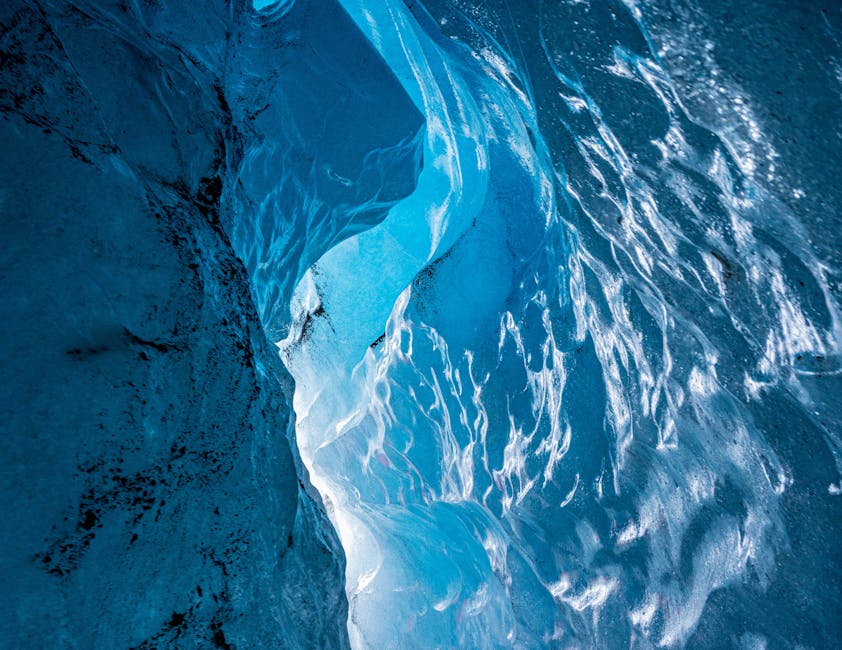
Each year’s cave is different. I have seen photos from 2019 where the cave was almost pure black ice; 2022 was the famously blue year; the 2024 cave had a side chamber with a perfectly clear ice pool you could see your reflection in. Operators take photos of opening day and post them on Instagram, so if you want to know what this season’s cave looks like before you book, search for the operator’s name plus “ice cave” on Instagram and look at the most recent posts.
Two things to know about the season. First: the cave only operates from October through May. In summer the meltwater swells the rivers under the glacier and the cave is unsafe to enter. Second: opening dates slide. A late, warm autumn can push opening to mid-November. If you have a fixed travel date in October, build in flexibility.
The Drive Up — Why the Super Jeeps Matter
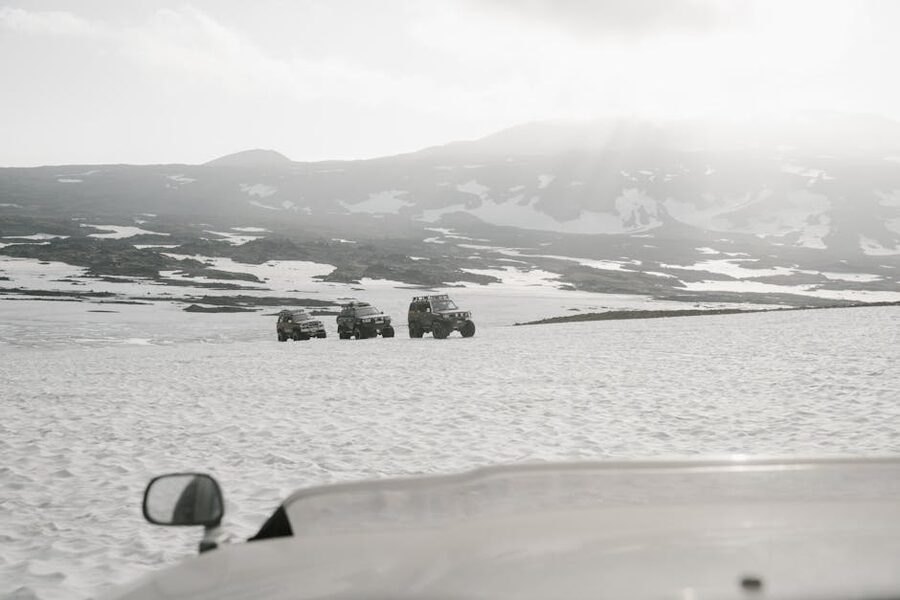
The “super jeep” naming is part marketing and part literal. They are real off-road vehicles modified for glacier work — usually a 4.5 litre Land Cruiser or a longer-wheelbase Defender, with the suspension lifted maybe 3 inches and a set of 38-inch winter tires. The tires are the actual technology. They air down to single-digit pressure on the glacier so the contact patch spreads wide and floats on snow rather than punching through it.
This matters because there is a real reason a regular SUV cannot do this drive. The snow road up to the cave area has sections of soft drift where a normal vehicle would bury its tires to the axle. The drivers know exactly which sections are soft and feather the throttle through them. I asked one driver how often they get stuck. He said maybe twice a season for him, more for newer drivers. They carry recovery gear in every jeep.
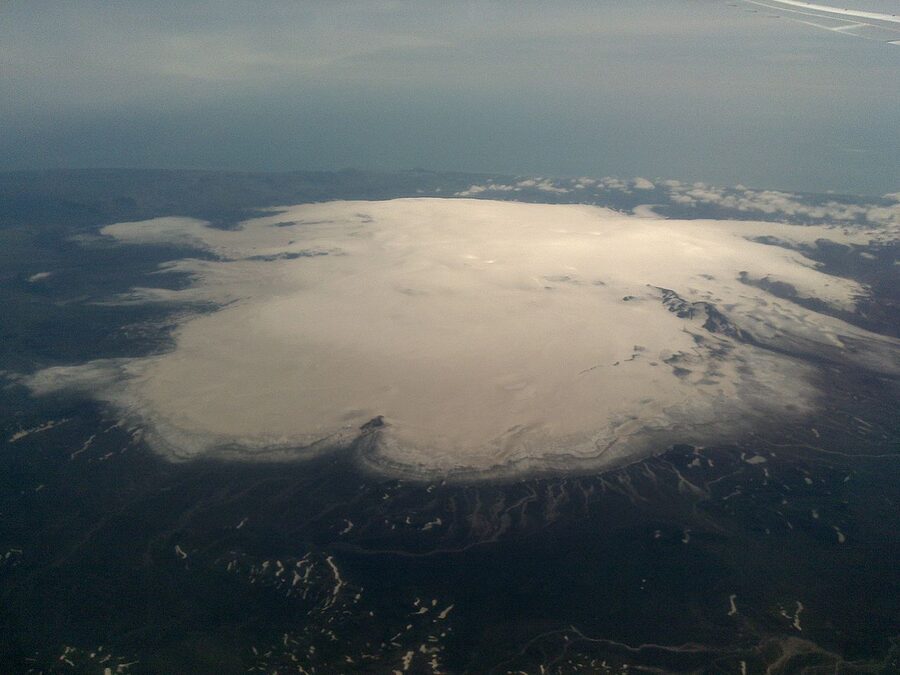

Vík — Where You Sleep Before and After
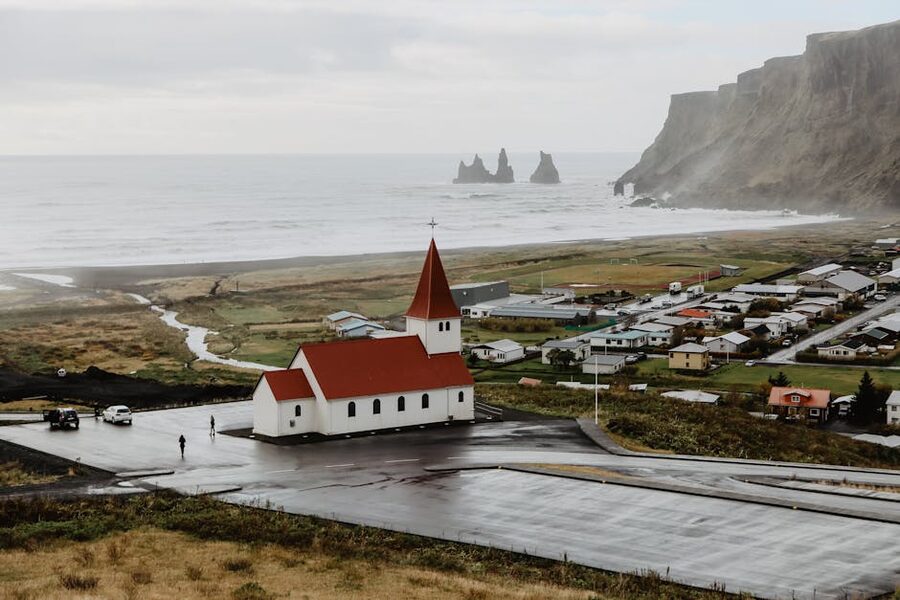
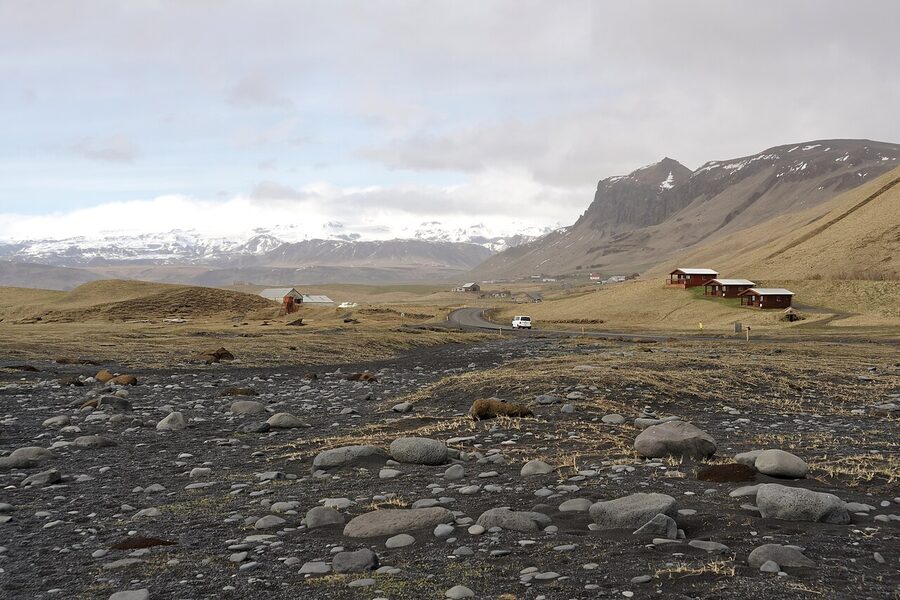
If you book the from-Vík tour, you need to be in Vík the night before. The town has roughly 750 residents, three hotels, two guesthouses, and a population of stranded tourists at any given time. My favourite is the Black Beach Hotel — the rooms are small but the view is straight onto Reynisdrangar — but Hotel Kría is newer and has the best breakfast.
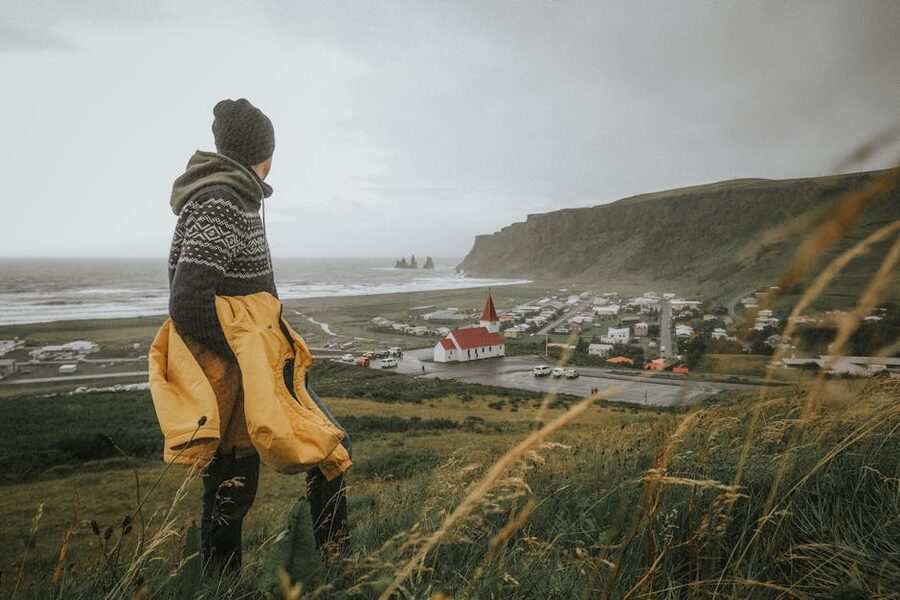
The town itself is essentially one street with a supermarket (Krónan), a wool shop (the famous Icewear factory outlet), a church on the hill, and three places to eat. Sudur Vík does fish soup and lamb. The fish-and-chips truck is open in summer only. Skool Beans is a converted American school bus that serves coffee — it is also the de facto town meeting point.
One actual practical tip from being in Vík: book dinner before you go on the cave tour. There are not enough seats in the town for everyone who arrives at 1700 hungry, and Sudur Vík fills up by 1830 most nights.
Katla Cave vs the Other Iceland Ice Caves
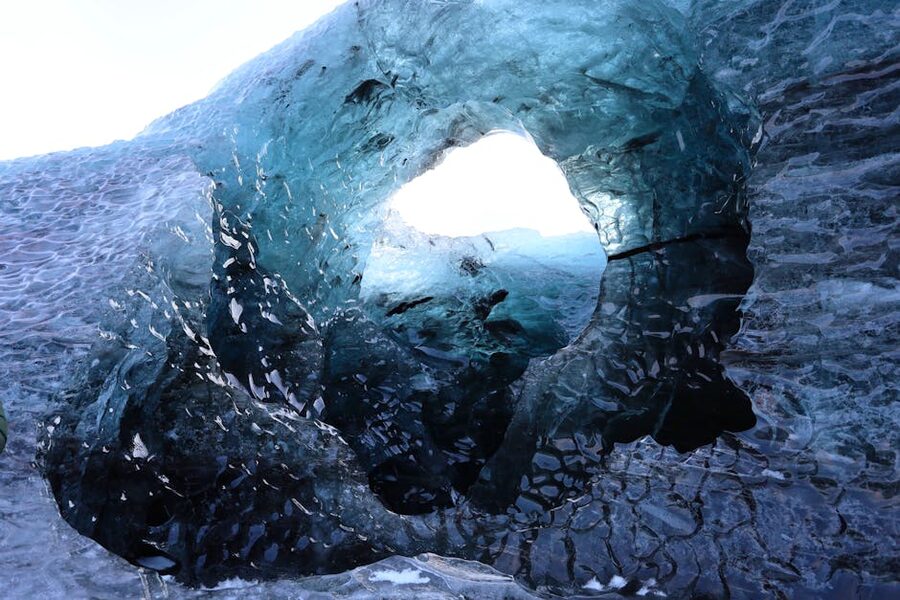
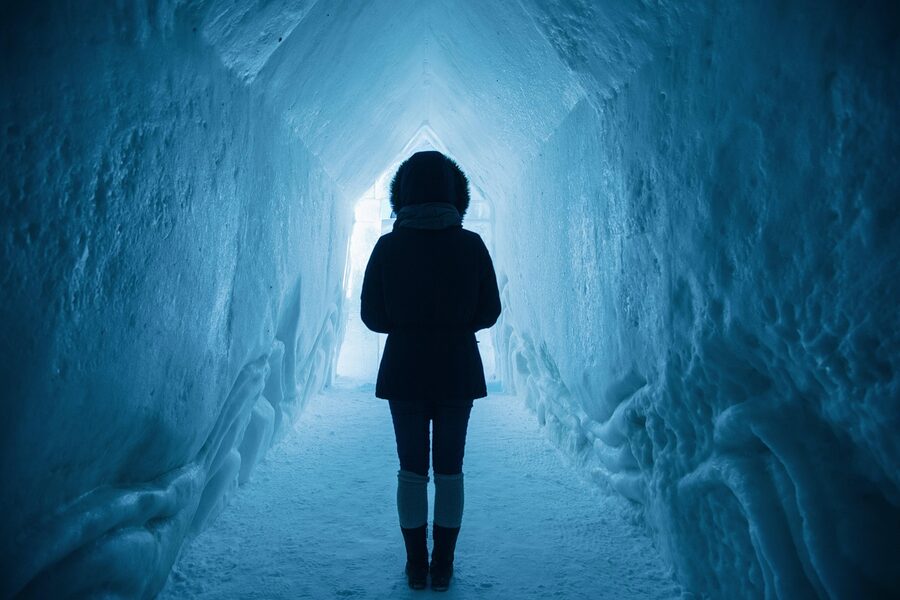
Iceland has three main ice cave regions. Katla (under Mýrdalsjökull, accessed from Vík) is what this article covers. Vatnajökull caves (accessed from Jökulsárlón or Skaftafell) are the other major option — these are the famously crystal-blue caves that get the most Instagram attention. Langjökull has a man-made tunnel called “Into the Glacier” — entirely different experience, more like an underground museum.
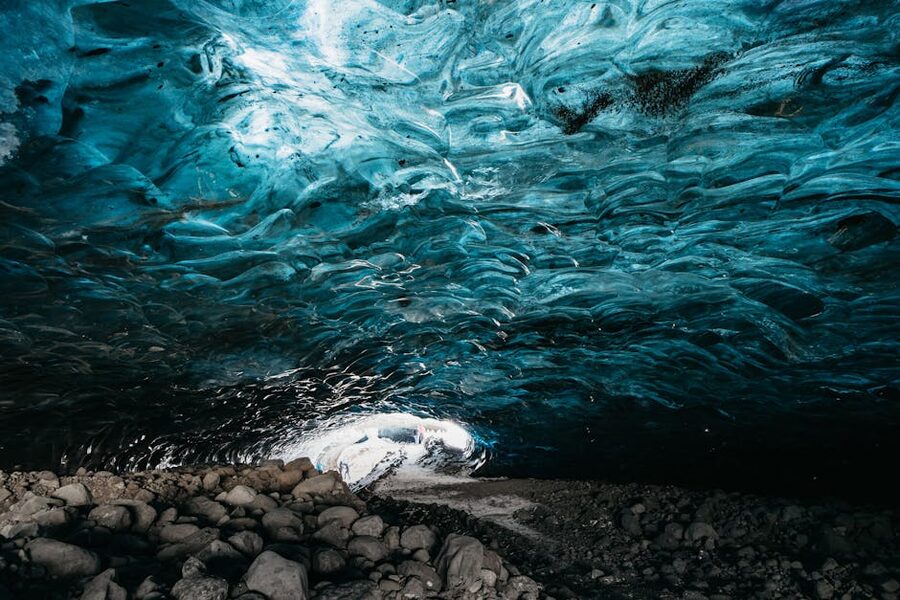
The honest tradeoff: Katla has the visual variety (ash bands plus blue ice) and is shorter (3 hours total), but the cave is hand-cut and you know it. Vatnajökull caves are naturally formed and bigger, but require either an overnight near Jökulsárlón or a much longer day. Langjökull is the easiest to reach from Reykjavík (3 hours each way) but the tunnel is industrial and lacks the natural wildness of the others.
If you only have one ice cave in your trip, the choice depends on where else you are going. Doing the south coast and Vík? Katla. Doing Jökulsárlón? Vatnajökull. Doing only Reykjavík and Golden Circle? Langjökull or skip the cave entirely and add it to a future trip.
Things People Get Wrong
A few things first-timers consistently mess up.
Flash photography ruins the cave. The blue you see in the famous Instagram shots is ambient light filtering through ice. If anyone uses a flash inside the cave, your eyes adjust and the blue disappears for the next ten minutes. The guides ask people not to use flash but somebody always does.
People over-pack for the cave and underdress for the wind. The cave is -2°C and you are out of the wind. The walk between the jeep and the cave is exposed to wind that can reach 60 km/h on the glacier and is significantly colder than what you get at sea level in Vík. Layer for the wind, not for the cave.
The “blue ice” in summer photos is misleading. Most of the dramatic blue images you see online are taken in winter, after fresh snowfall has covered last year’s exposed ash. If you visit at the start of the season (October) or after a snow-poor winter, the cave can look greyer than the photos suggest. Check Instagram a week before your trip for current condition photos.
The Reykjavík day trip is exhausting in a way that does not show up in the brochure. Twelve hours sounds manageable until you actually do nine of those hours sitting in a coach. People do this trip and then need a half day to recover. If you have any flexibility, drive yourself to Vík the day before.
When to Go and What the Season Looks Like
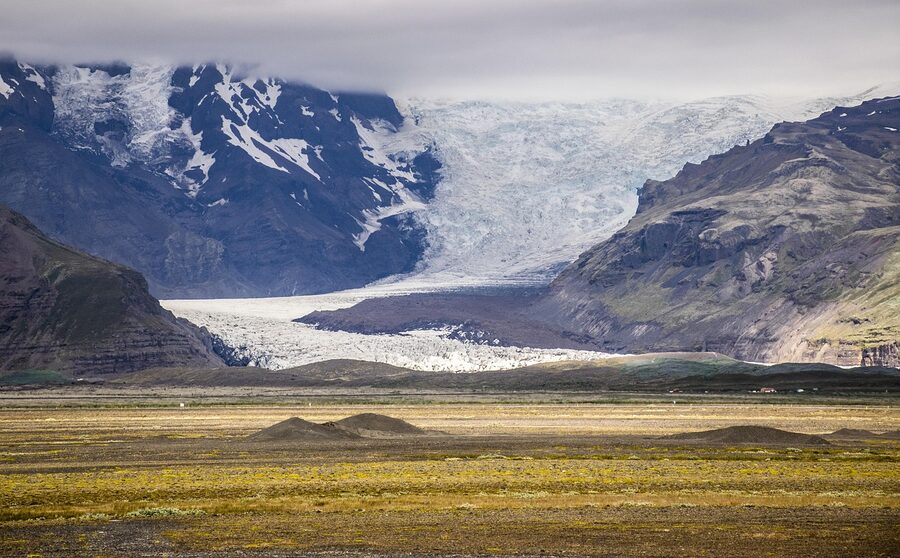
The season runs October to May. October and early November are the soft opening — the cave is fresh, the ash bands are crisp, and the days still have decent light. The downside is that conditions are unstable and tours sometimes get rerouted to a backup location if the access road is bad.
December through February is peak. The cave is at its best, snow gives the surrounding glacier the postcard look, and you have a real chance of northern lights from Vík at night. The trade-off is brutal weather days where the tour might be cancelled — operators decide morning of, sometimes refunding, sometimes rescheduling.
March and April are the value sweet spot. Conditions are stabilising, daylight is back, prices ease slightly, and the cave is still in good shape. May is the last gasp before they close it for the summer melt.
What to Bring (Short Version)
Layer up: warm baselayer, fleece, waterproof shell. The cave is cold but bearable. The glacier walk to the cave is the actual cold part. Wear waterproof shoes. The operator provides a hard hat and crampons if needed; do not bring your own crampons unless you want to complicate the loading process. Bring a phone with charge and the flash off. If you have a real camera with a wide lens, that is what gets the cave shots properly. Skip everything else.
What Else to Do With Your Vík Trip
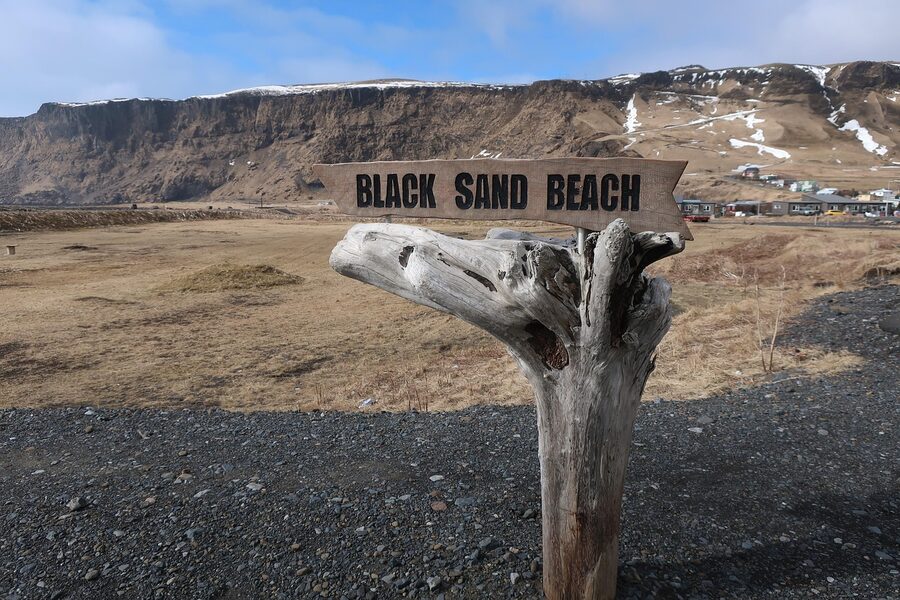
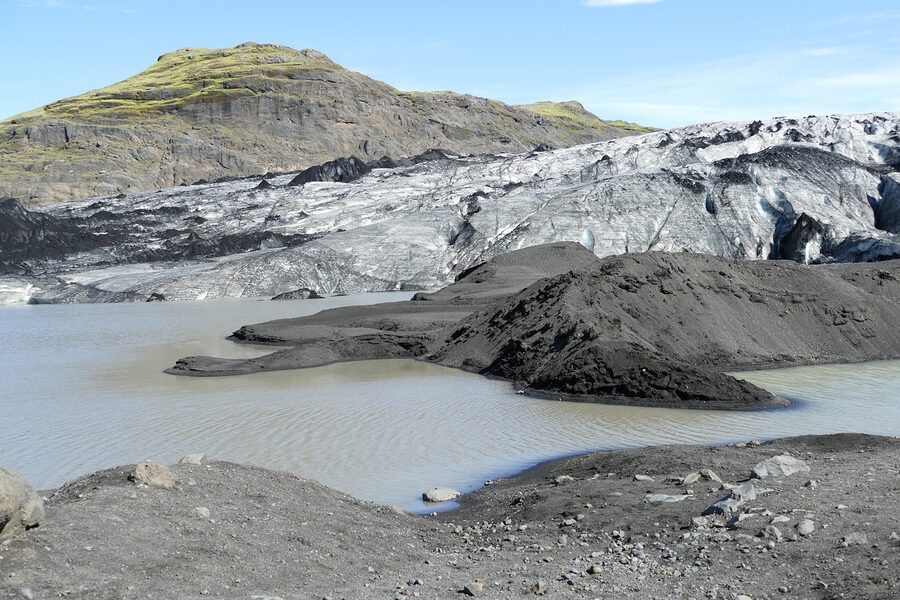
Vík is roughly the midway point of the south coast. If the cave tour is the headline of your day, build the rest around it. The Mýrdalsjökull glacier hike on Sólheimajökull is a different angle on the same glacier — do this in the morning before the cave, or the day after. Reynisfjara black sand beach is 5 minutes from town and worth a sunrise visit before the day-trip coaches arrive at 1100. The puffins on Dyrhólaey cliffs (May to August only) are 15 minutes the other direction.
If you have an extra day, push east. Jökulsárlón is two hours from Vík and is the natural pairing with a Katla cave trip — you could do both in two days from Vík without needing to drive back to Reykjavík.
Returning to Reykjavík? The drive is 2.5 hours and you will pass Skogafoss and Seljalandsfoss on the way. Do not stop at both — pick one and give it a real visit. After arriving back, the natural recovery is Sky Lagoon (north side of the city, less touristed than Blue Lagoon) or Blue Lagoon if you have not been. Both undo a day of cold driving.
If your Iceland trip is longer, the cave pairs naturally with the Golden Circle on a different day, an evening of northern lights chasing in winter, or — if you have not done one — the Snæfellsnes Peninsula day trip for the geographic contrast.
One last thing. Do not book the cave tour for your last day in Iceland. The operators cancel for weather more than any other day tour, and a cancellation on your last day means you fly home without seeing the cave. Build it in early so you have a buffer day to rebook.
This article contains affiliate links. If you book through our links, we may earn a small commission at no extra cost to you. This helps us keep producing detailed travel guides.