
Do not book FlyOver Iceland on a sunny day. Save it for the next time the weather collapses on you, the south coast tour gets cancelled, or your friend’s flight is delayed by six hours and you need a 35-minute distraction with their kids. FlyOver Iceland is a flight simulator that shows helicopter footage of Iceland’s most photogenic landscapes. It is genuinely good — better than my expectations going in — but it is a cinema. Knowing this before you go matters more than knowing anything else about it.
This guide covers how to get FlyOver Iceland tickets, what the 35 minutes actually consists of, when it makes sense to book, and the few situations where I would tell you to skip it entirely.
In a Hurry? The Three Tickets Worth Booking
- Most reviewed pick: FlyOver Iceland Entry Ticket — around $45, 35 minutes total, the standard ticket for one person.
- Same ticket on Viator: FlyOver Iceland Admission Ticket — around $47, sometimes cheaper depending on currency, choose whichever has a better timing for your day.
- Combo with Silfra snorkel: Silfra Snorkel + FlyOver Combo — around $179, the best of the indoor/outdoor pairing if you want one of each.
- In a Hurry? The Three Tickets Worth Booking
- Which Ticket to Buy
- 1. FlyOver Iceland Entry Ticket — from
- 2. FlyOver Iceland Admission Ticket (Viator) — from
- 3. Silfra Snorkel + FlyOver Combo — from 9
- What the 35 Minutes Actually Looks Like
- The Main Ride
- How Good is It, Honestly
- Who FlyOver Is Genuinely Good For
- What FlyOver Cannot Do
- Pairing FlyOver with the Rest of Your Reykjavík Day
- Getting There and Practical Stuff
- The Grandi Neighbourhood — Worth Knowing
- One Last Thing
Which Ticket to Buy
For a single FlyOver visit it does not really matter which seller you use — the ticket is identical and you walk into the same building. Pick whichever has the time slot you want. The combo with Silfra makes sense only if you were going to do the snorkel anyway; the combo discount versus separate booking is small.
1. FlyOver Iceland Entry Ticket — from $45

The most-booked option, sold via GetYourGuide. Includes the two pre-shows and the main 8.5-minute simulator ride. Total time inside is about 35 minutes. Our full review walks through what each part of the experience contains and the technical setup of the dome theatre.
2. FlyOver Iceland Admission Ticket (Viator) — from $47
Identical experience to the GetYourGuide version. Same building, same showings, same staff. The only difference is the booking platform — useful if your other day plans are already on Viator and you want one consolidated booking. Our full review covers the booking mechanics and what arrival looks like.
3. Silfra Snorkel + FlyOver Combo — from $179
Pair the most expensive Reykjavík activity with the cheapest. The Silfra snorkel is genuinely extraordinary — you float between two continental plates in 2°C glacial meltwater so clear you can see 100 metres — and FlyOver is the perfect dry warm-up after a freezing morning. Our full review covers the combo logistics and self-drive arrangements.
What the 35 Minutes Actually Looks Like
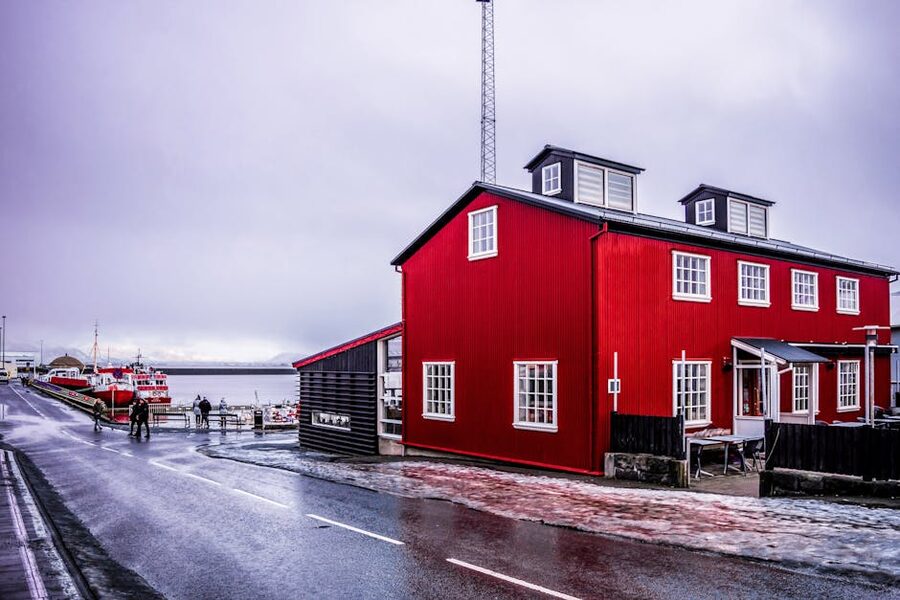
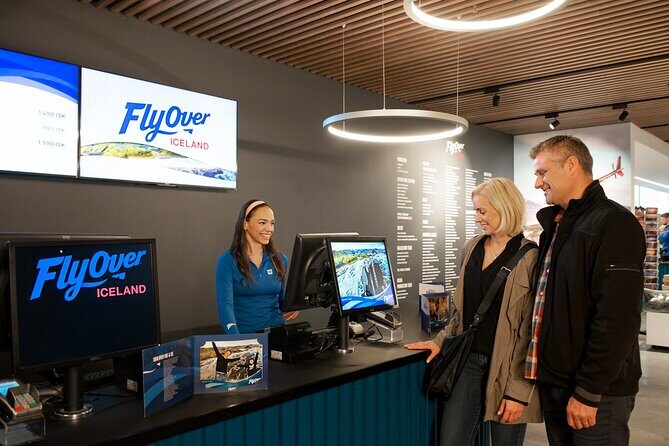
You arrive at the Grandi harbour, give your ticket at reception, and queue with about 60 other people in a bright lobby with a small café. Showings start every 15 minutes during peak hours. They herd you in groups, so even if you arrive at the same time as a coach load you will not wait long.
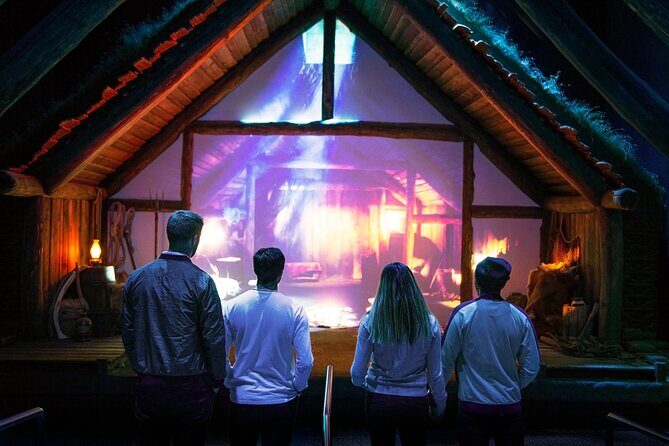
The first part is a small theatre called The Land of Fire. You stand in a semicircle facing a screen while an actor (live, not pre-recorded) tells you about Iceland’s geology over a moody 5-minute show with smoke and projection. It feels small after the buildup. I have heard others love it. I find it skippable but unavoidable — they walk you through it as a group.
The second part is a darker, more theatrical room called The Saga of the Northern Lights. Standing again, watching projections of clouds rolling across the room while a narrator tells you a Viking creation myth about the aurora. Better than the first room. Still standing room only.
Then comes the main ride. You go through a side door into the dome theatre. Staff direct you to a seat — they are arranged in three rows of about a dozen seats each, all facing a 20-metre concave spherical screen. A bar drops down across your lap. The seats lift and your feet leave the ground. The lights drop. The film starts.
The Main Ride
The main ride is 8.5 minutes long. The screen wraps so completely that your peripheral vision sees only the film — you cannot see the room, the floor, or other people. Combined with the seat motion (it tilts and rolls in sync with the camera), the effect of flight is convincing. Not Disneyland-thrilling. More like the calmest possible helicopter tour, which is the appeal.
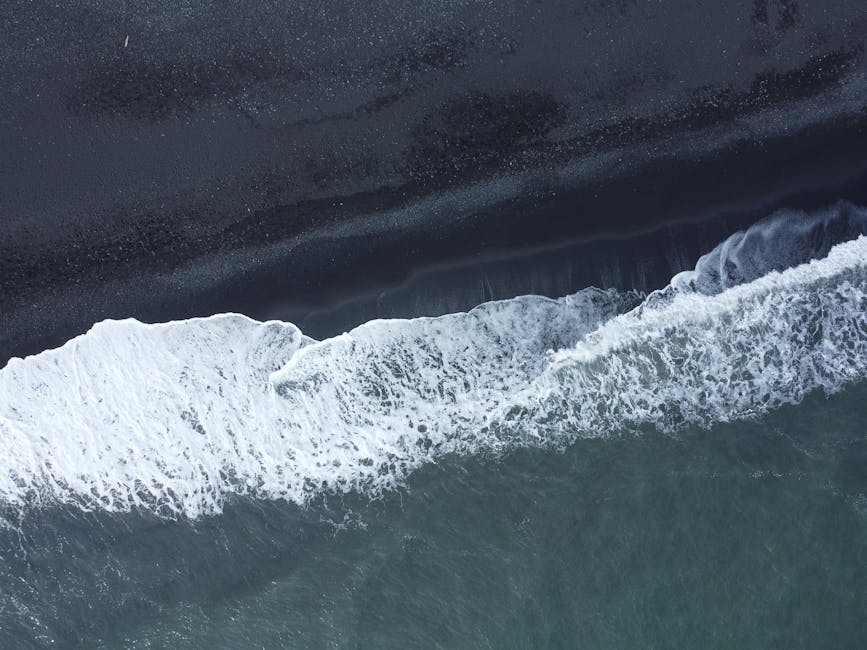
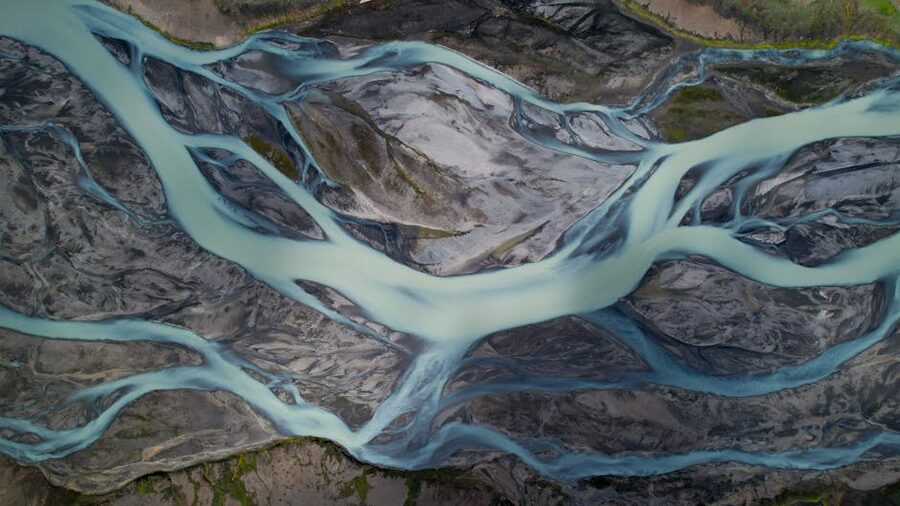
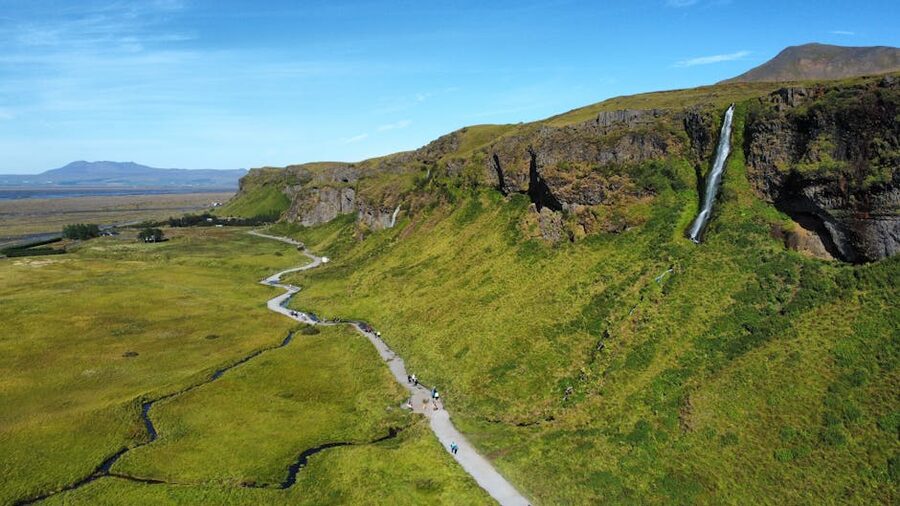
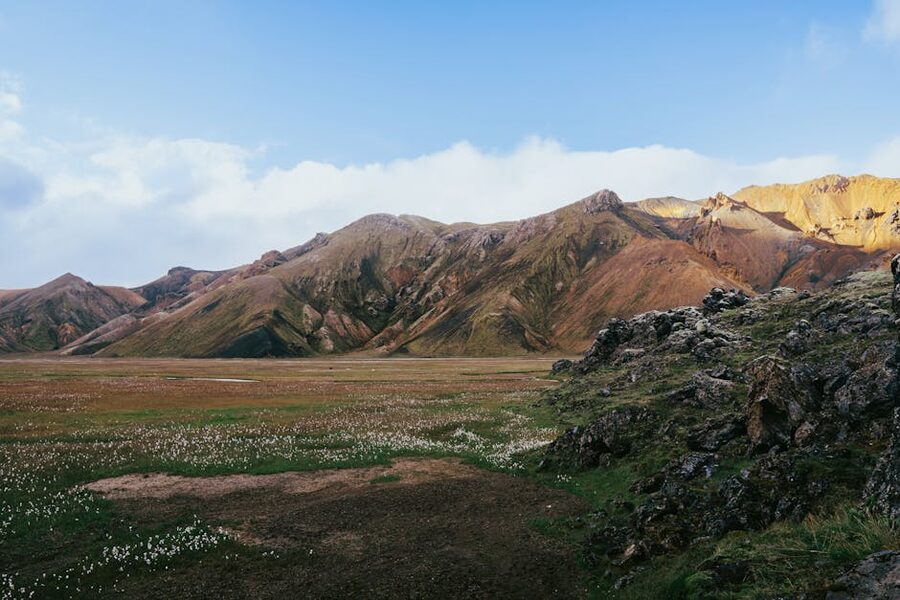
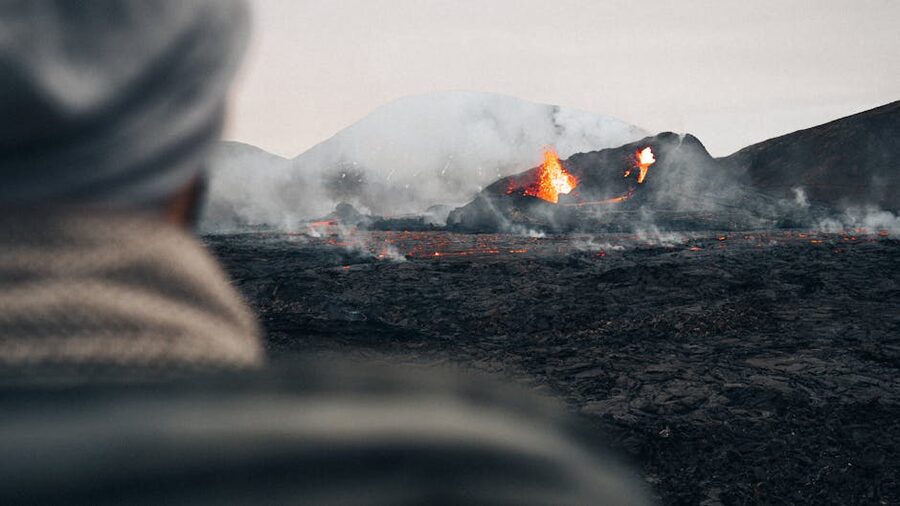
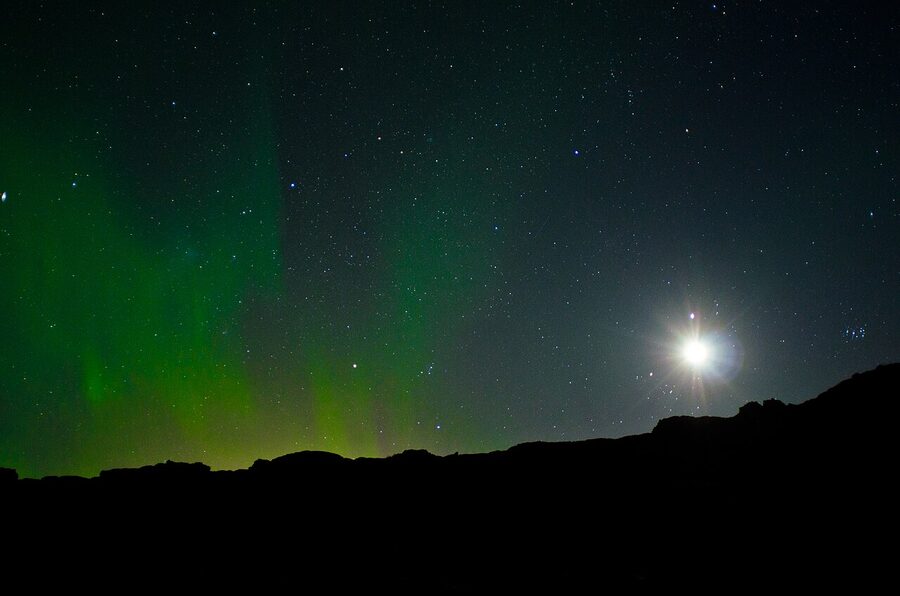
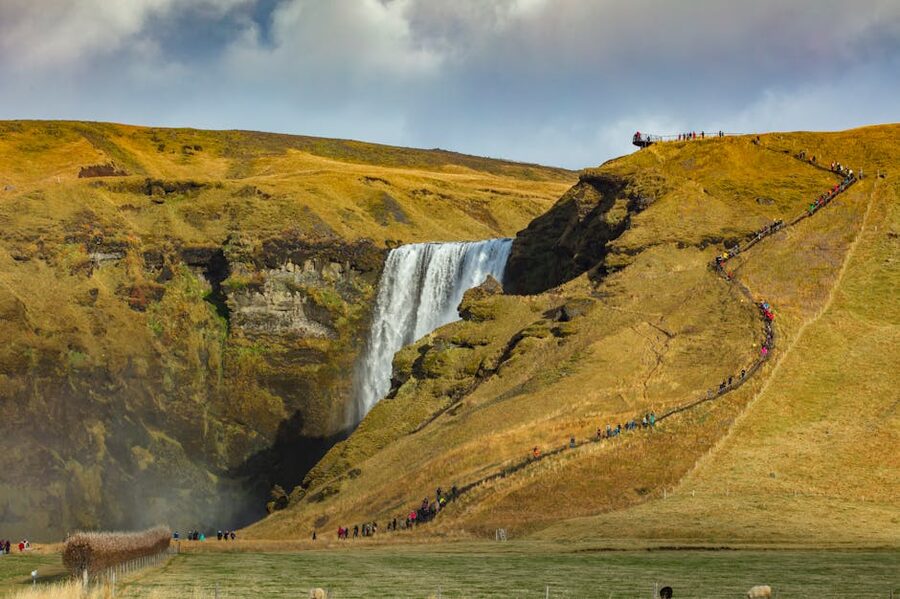
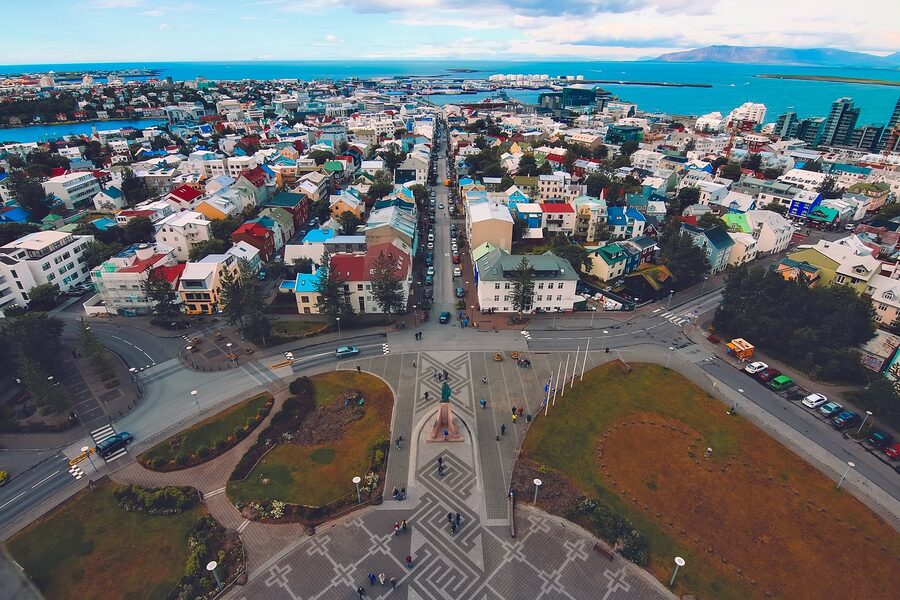
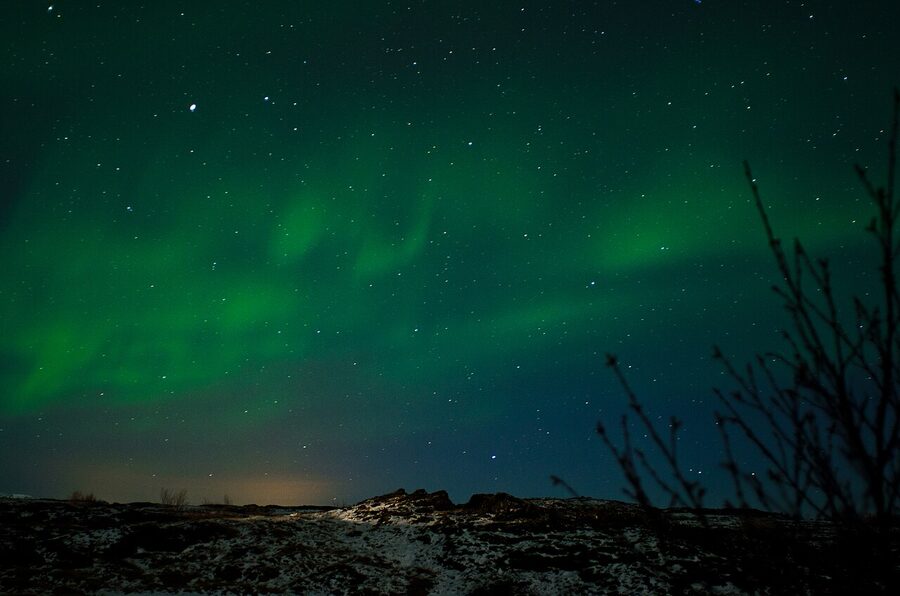
The footage takes you across most of Iceland in 8.5 minutes. The opening is Reykjavík from above — recognisable if you have done the city — followed by the south coast (Seljalandsfoss, Skogafoss, Reynisfjara), the highlands (Landmannalaugar’s coloured mountains, the Thorsmork valley), the glaciers (Vatnajökull from above), the volcanoes, and finally up to the Westfjords. There is one underwater sequence where you “dive” into Silfra. There is an aurora sequence at the end that is genuinely beautiful.
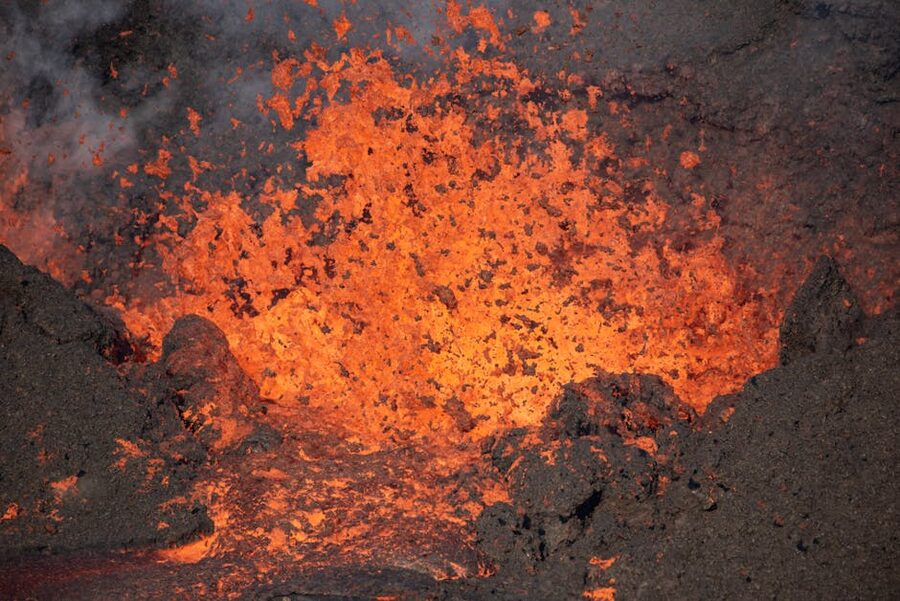
Effects you actually notice: wind from fans built into the seat backs, mist sprayed from above during the waterfall sections, scent (cold stone for the highlands, sulphur for the volcanoes — the sulphur is faint but real), and the seat motion itself. Effects you might not notice unless you are looking for them: small vertical drops during cliff sequences, leg vibration during the volcano section, gentle sideways sway during the tilt-banks.
How Good is It, Honestly


The honest answer: better than I expected, and worth $45 if you have used up your good-weather days on real activities and need an indoor option. The dome screen and the seat motion are well-engineered enough that I forgot I was in Reykjavík for the duration. The aurora finale is the highlight.
The honest counter: it is a film. If your Iceland trip has only been the Golden Circle and a bus tour, FlyOver is going to be the most spectacular thing you have done so far — it shows you parts of Iceland that take serious driving to reach in real life. If your Iceland trip has included a Snaefellsnes day, an ice cave, and a south coast drive, the film does not match the real thing. You will recognise the footage but not feel transported by it.

Who FlyOver Is Genuinely Good For
I have seen this attraction work brilliantly for specific kinds of travellers and feel like a waste for others. Here is the breakdown.
Rainy days. If your weather collapsed and you were going to do something outdoors, FlyOver is a one-hour fix that gets you the aerial footage you would have flown over yourself. This is the use case the operator clearly designed for.
Mobility-limited travellers. The simulator does not require walking, climbing, or balance. The seats accommodate most needs (the staff will adjust the lap bar). For someone who cannot do glacier walks or boat tours, FlyOver gives you a version of Iceland’s headline scenery without the exertion.
Kids over 8. They love it. The motion is gentle enough not to scare them but exciting enough to register. Under 8s might be alarmed by the dark room and the safety bar — operator’s age recommendation is 8+.
People with very short trips (12-18 hours). If you have a long Keflavík layover with the time to pop into Reykjavík, FlyOver gives you the most-Iceland-per-minute of any attraction in the city.
Everyone on a clear-weather day. Skip it. Go outside. Drive somewhere. The view is real out there.
What FlyOver Cannot Do
Worth being honest about the limits. The dome is impressively immersive but it cannot reproduce a few specific things that make Iceland Iceland. The cold is the obvious one — there is no temperature drop in the cinema, just air conditioning. The wind that defines an outdoor day in Iceland is replicated as a steady fan; it does not have the bite of the real thing. The smell of sulphur near a real geothermal vent is a faint puff in the simulator versus the dense rotten-egg fog at Geysir.

The other thing the simulator cannot give you is the silence. Real Iceland has long stretches where you stand somewhere outdoors and hear absolutely nothing — no traffic, no human voices, no birds. The ride is good but it always has a soundtrack and 30 other people breathing around you. If silence is part of why you are travelling to Iceland, FlyOver will not scratch that.
Pairing FlyOver with the Rest of Your Reykjavík Day

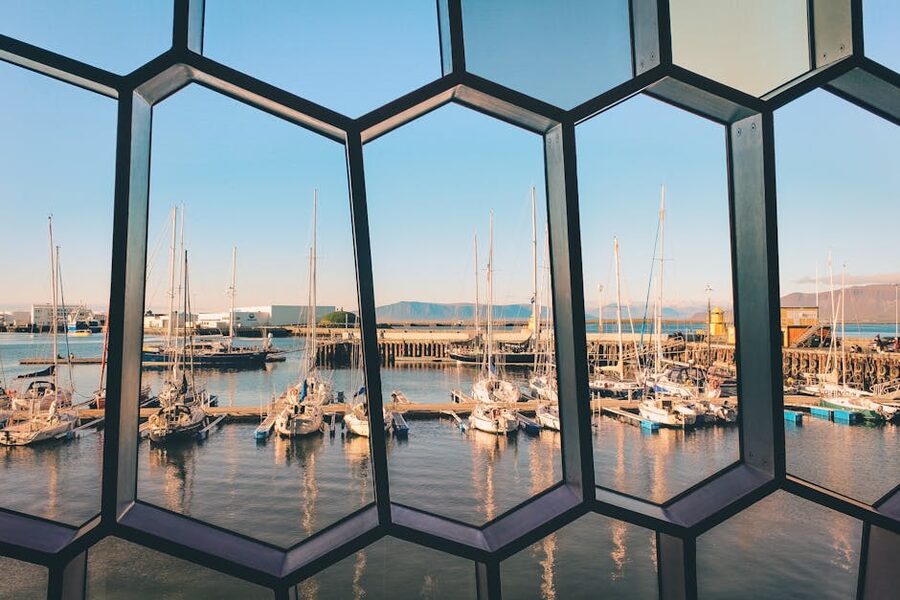
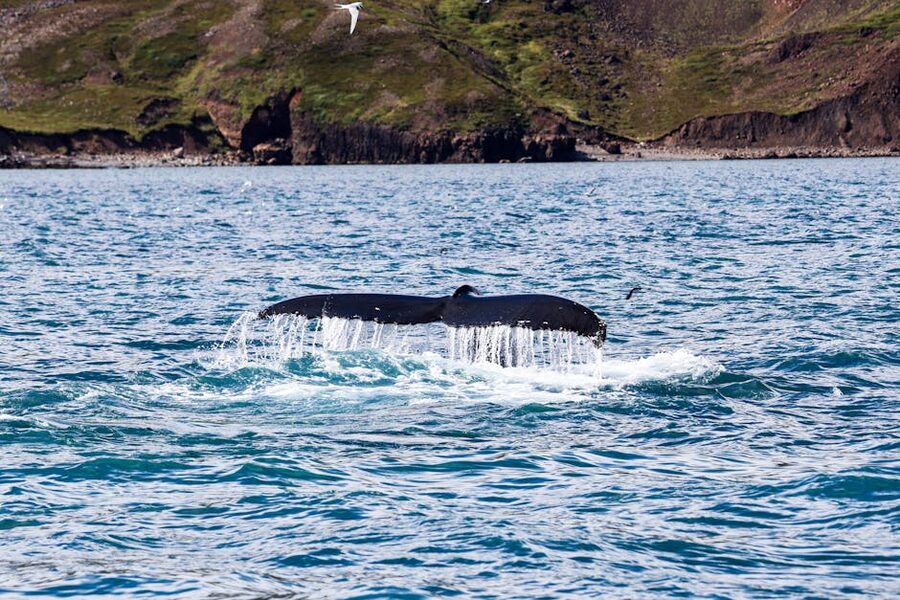
FlyOver is in the Old Harbour district, which is also where every Reykjavík whale watching boat sails from, and where the Saga Museum, the Maritime Museum, and the Harpa concert hall sit. A natural half-day combination is FlyOver in the morning (45 minutes including queues) plus a whale watch in the afternoon — same neighbourhood, complementary activities, both end in time for dinner.
If you have the rest of the day open, the natural pairings depend on what kind of day you are having. On a rainy half-day: FlyOver, then the Lava Show, then the Perlan Museum. Three indoor experiences that complement each other (Lava Show is real molten rock, FlyOver is filmed Iceland, Perlan is the museum overview) and easily fill 6-8 hours.
On a clear day with the FlyOver as a quick stop: do FlyOver in the morning, then a walking tour of central Reykjavík, then the Sky Lagoon in the evening. The lagoon is on the same side of town as FlyOver — easy taxi or bus.
If you came to FlyOver because of a cancelled day trip, here is the genuine consolation: the things you missed are still there. The Jökulsárlón day trip reschedules well, the Snaefellsnes Peninsula tour generally runs even in poor weather, and a real northern lights chase can be the next clear evening. FlyOver is the holding pattern, not the destination.
Getting There and Practical Stuff
The address is Fiskislóð 43 in the Grandi neighbourhood. From central Reykjavík (Hallgrímskirkja or Tjörnin pond) it is a 10-minute walk along the waterfront. The walk itself is interesting — Grandi was an industrial fishing district that has been gradually converted into cafés, restaurants, and small museums. The street art on the warehouse walls is the best in Reykjavík.
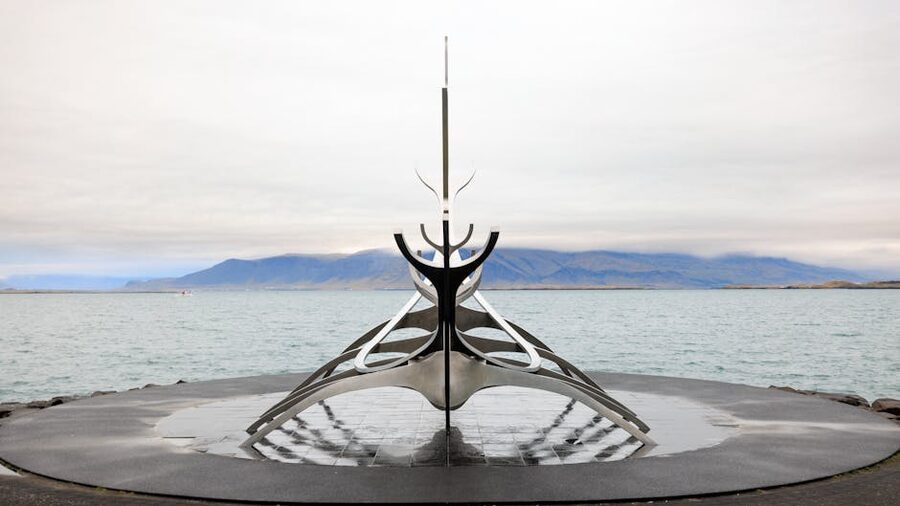
If you are not walking, the city’s hop-on hop-off bus stops nearby. There is a small free car park behind the building if you have a rental, but spaces are limited and fill up by mid-morning in summer. The Saga Museum is in the same complex if you want to make a longer harbour visit out of it.
Hours: 9am to 9pm in summer, 10am to 6pm in winter. Showings every 15 minutes during peak periods. The early-morning slots (before 11am) are noticeably quieter than the afternoon when day-tour groups arrive.
The Grandi Neighbourhood — Worth Knowing
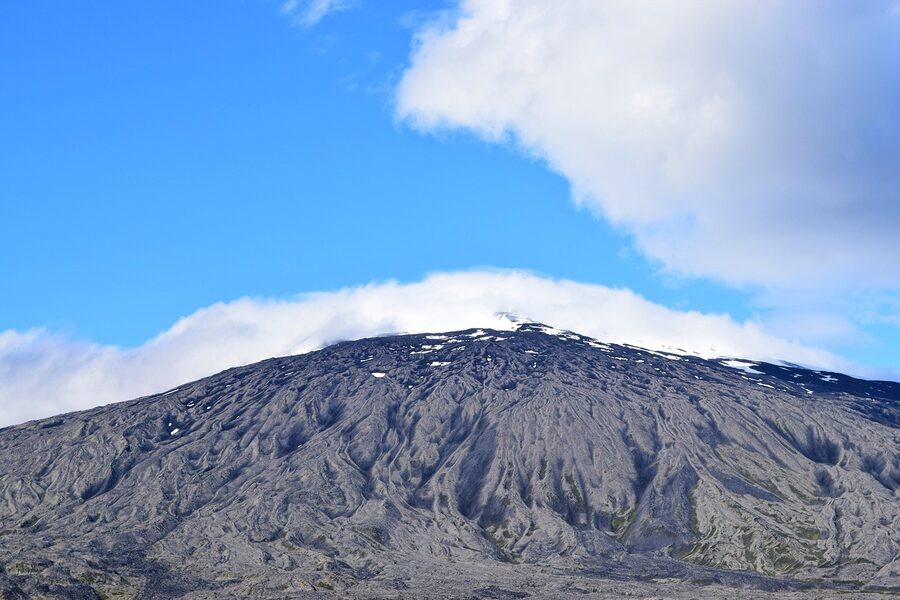
The neighbourhood around FlyOver — Grandi — is worth a wander whether or not you book the ride. It used to be Reykjavík’s main industrial fishing district. Through the 2010s the warehouses got converted into things: a chocolate factory with a tasting bar, a brewery taproom (Bryggjan), the Reykjavík Maritime Museum, an ice cream institution called Valdís, and a string of low-key restaurants where the locals eat instead of the tourists. The street art on the warehouse walls is the best in Iceland.
If your FlyOver slot is in the afternoon, eat lunch at Grandi Mathöll first — it is a converted warehouse food hall with eight or nine small kitchens (Vietnamese, Argentinian asado, fish-and-chips, sushi). Cheaper and better than the airport cafés in the building behind FlyOver. After the ride, walk five minutes east along the harbour to Valdís for the best ice cream in Iceland — they make fresh batches every morning and run out of the popular flavours by 4pm.
One Last Thing

If you book FlyOver and end up loving it more than you expected, do not let that be the last time you book a simulator on a rainy day. The same operator (Pursuit) runs versions in Vancouver and Las Vegas with different films, and a smaller competitor called Soaring Iceland exists in central Reykjavík with a $30 ticket and a shorter, cheaper version of the same idea. If you ever travel through Vancouver, the original FlyOver Canada is the better film — but the Iceland version is the one to start with if you have already been here.
This article contains affiliate links. If you book through our links, we may earn a small commission at no extra cost to you. This helps us keep producing detailed travel guides.