
There are two ways to get a high mountain view from Interlaken: the Jungfraujoch — Europe’s highest train station, with eye-watering ticket prices and a half-day commitment — or the Harder Kulm funicular, which costs less than a tenth as much and takes ten minutes from town to summit. The Jungfraujoch puts you on the ice at the top of the Alps. The Harder Kulm puts you on a viewing platform looking AT the Jungfraujoch from across the valley. The choice between them is not as obvious as the price suggests.
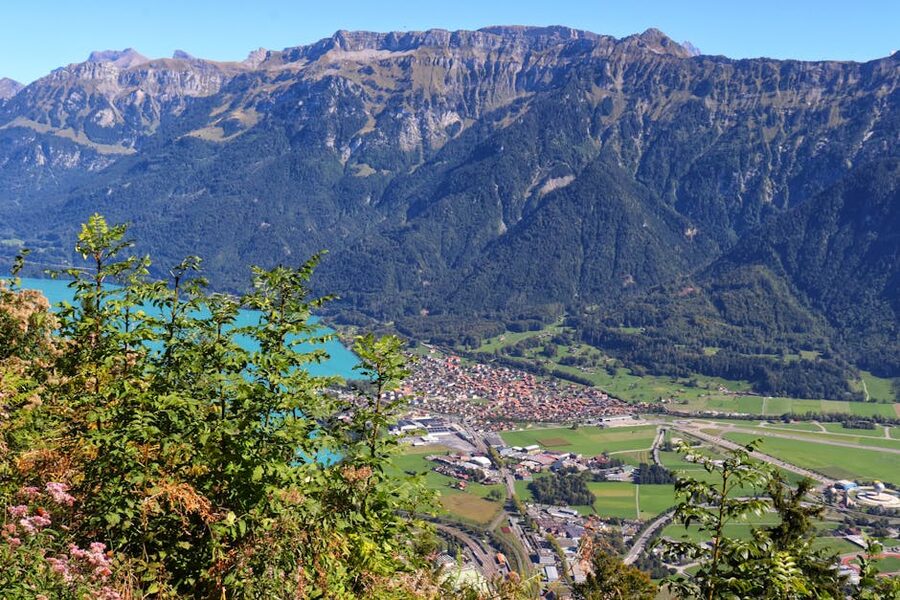
This guide covers how to book the Harder Kulm funicular: what the experience actually delivers for the price, when the cheaper option is the smarter pick over Jungfraujoch, and what to do at the summit beyond the obvious viewing platform.
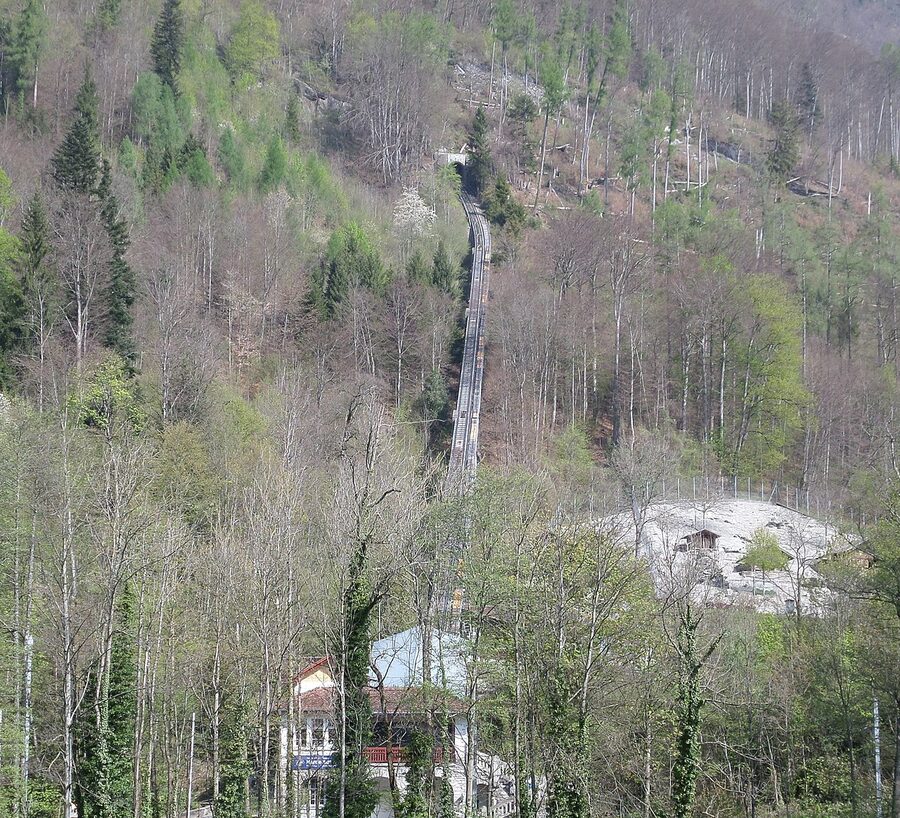

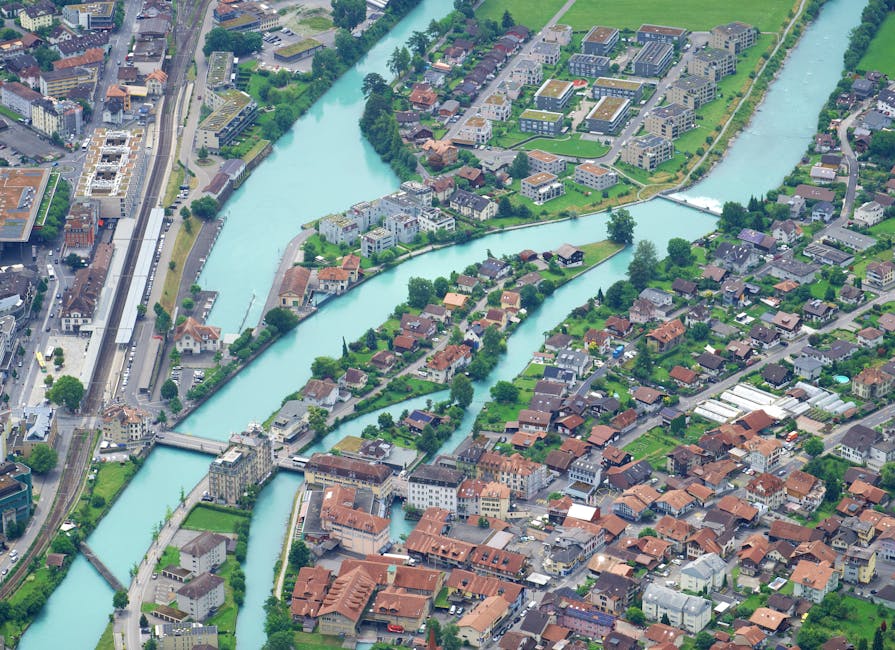
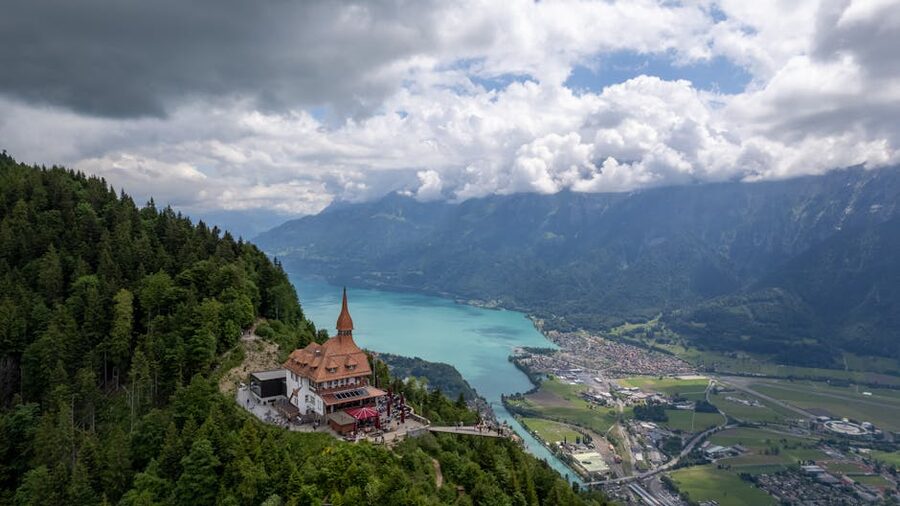
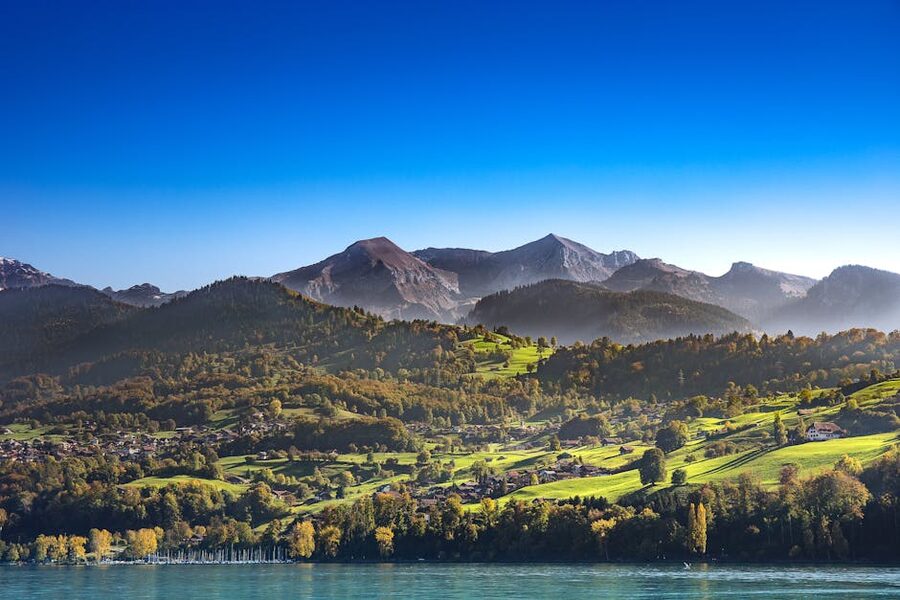
The Harder Kulm sits directly above central Interlaken — the funicular base station is a five-minute walk from the Interlaken Ost train station. The ride to the top takes about ten minutes through dense forest. The summit has a restaurant, a viewing pavilion, and a famous “Two Lakes Bridge” cantilevered out from the cliff to maximise the panorama. From peak to base of the funicular line is a 750-metre vertical climb, all on a steep cable-driven track that gradients above 60% in places.
In a Hurry? The Three Tickets Worth Knowing
- The actual Harder Kulm ticket: Interlaken Funicular Ticket to Harder Kulm — around $49, valid all day, the only thing you need for the Harder.
- The bigger Interlaken excursion: Day Trip to Jungfraujoch from Interlaken — around $342, the much more expensive but more spectacular alpine option.
- The adrenaline alternative: Interlaken Tandem Paragliding Flight — around $233, the way to see the Jungfrau region from above without taking a train at all.
- In a Hurry? The Three Tickets Worth Knowing
- Which Ticket to Book
- 1. Interlaken Funicular Ticket to Harder Kulm — from
- 2. From Interlaken: Day Trip to Jungfraujoch — from 2
- 3. Interlaken: Tandem Paragliding Flight — from 3
- What the Funicular Ride Is Like
- The Two Lakes Bridge — The Actual Reason to Go
- What Else Is at the Summit
- Harder Kulm vs Jungfraujoch — The Honest Comparison
- When to Go — Light, Weather, Crowds
- What to Combine With the Funicular
- Walking Down Instead of Riding
- Practical Stuff Worth Knowing
- Pairing With the Rest of Your Switzerland Trip
Which Ticket to Book
The Harder Kulm ticket is the no-brainer if you have a free morning or afternoon in Interlaken. It is cheap, fast, and gives you the postcard view of the town. The Jungfraujoch is a much bigger commitment — a full day, seven times the price — but if it is your only Switzerland trip and you want the Top of Europe experience, do that instead. The paragliding is a different kind of day entirely.
1. Interlaken Funicular Ticket to Harder Kulm — from $49
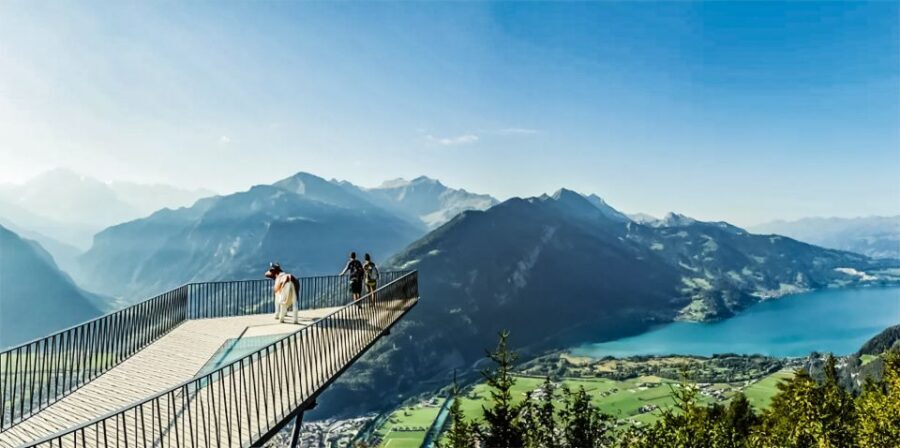
The actual Harder Kulm ticket and the only thing you need to book for this specific attraction. Includes the round-trip funicular ride from the Interlaken base station to the summit and back. Stay as long as you want at the top. The summit pavilion, restaurant, and Two Lakes Bridge are all included with the ticket. Operates from late April to late October. Our full review covers the actual experience and how to time the visit for the best light.
2. From Interlaken: Day Trip to Jungfraujoch — from $342
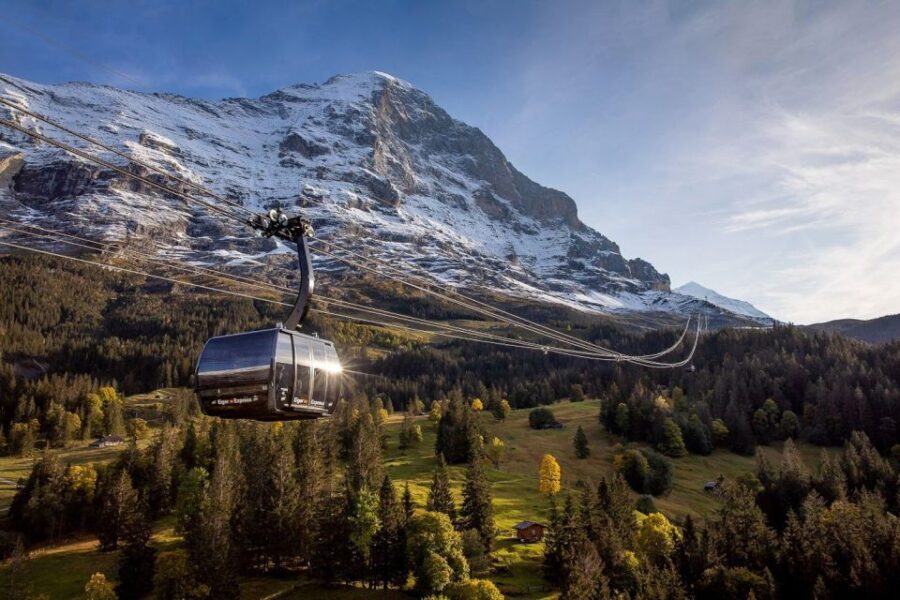
The headline Bernese Oberland excursion. You take a series of trains from Interlaken up to the Jungfraujoch summit at 3,454 metres, with stops along the way at Wengen, Kleine Scheidegg, and the Eiger Glacier. Total time is about 7 hours. The Harder Kulm is the cheap consolation prize if this is too expensive; this is the actual high-altitude alpine experience. Our full review covers the Jungfraujoch trip in detail and whether the price is justified.
3. Interlaken: Tandem Paragliding Flight — from $233
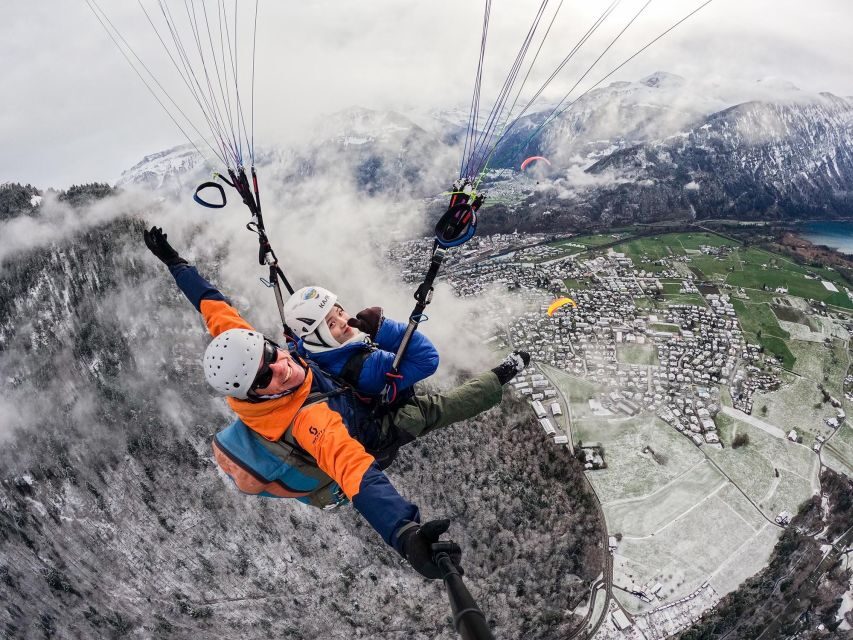
If the funicular feels too tame and the Jungfraujoch feels too expensive, paragliding is the third option for high-up Interlaken views. You meet the pilot in town, drive together to a launch hill above town, run off the slope strapped into a tandem harness, and float down to a landing field 15-20 minutes later. The view from a paraglider is unmatched. Our full review covers what the actual flight feels like and what kind of weather it requires.
What the Funicular Ride Is Like
._(AnkKumar)_08.jpg)
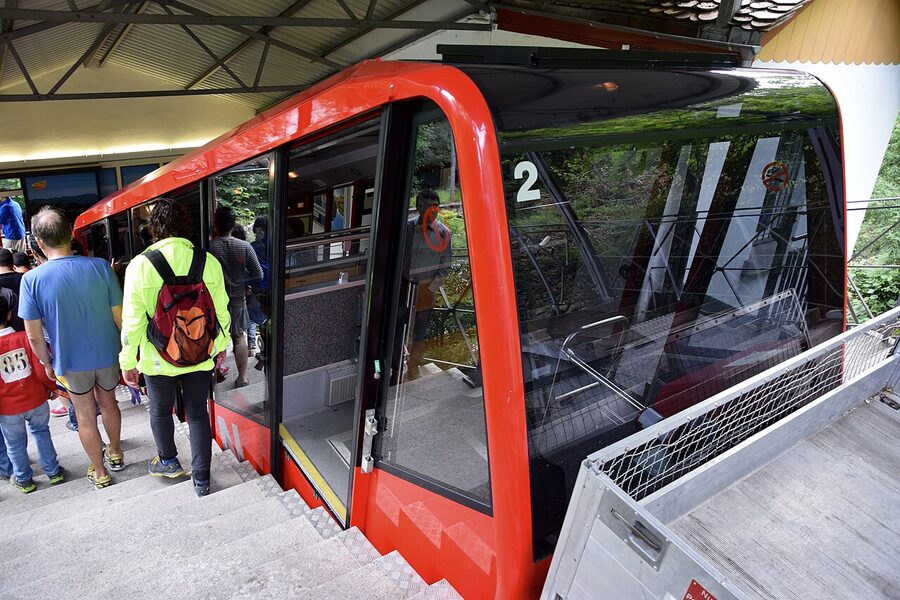
The funicular base station sits across the river from Interlaken Ost, a five-minute walk via the small footbridge. You buy your ticket at a kiosk or scan your pre-purchased QR code at the gate. Boarding is open seating in the funicular cars; arrive a few minutes before departure for a window seat on the right side, which gives the better view of the lake on the way up.
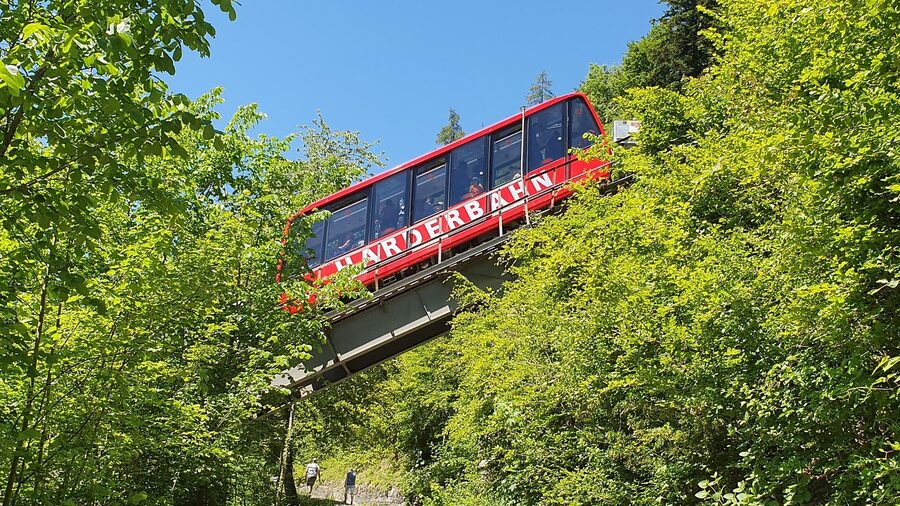
The ride takes about ten minutes, climbing through dense Swiss forest with brief openings where you glimpse Interlaken below. Funiculars are quiet — no engine, just the cable system pulling you up — so the ride is the kind of slow, civilised mountain transport that Switzerland does better than anywhere else. The cars run every 30 minutes during peak hours, every hour during shoulder times.
The Two Lakes Bridge — The Actual Reason to Go
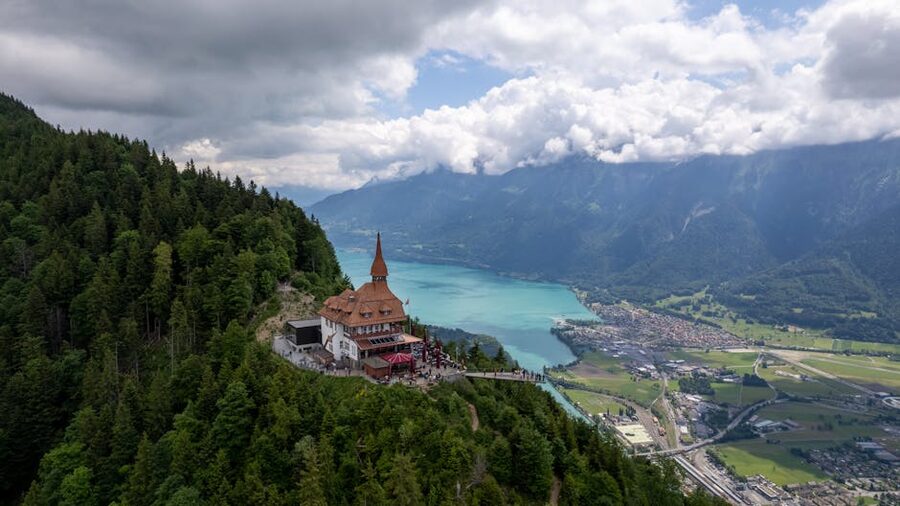
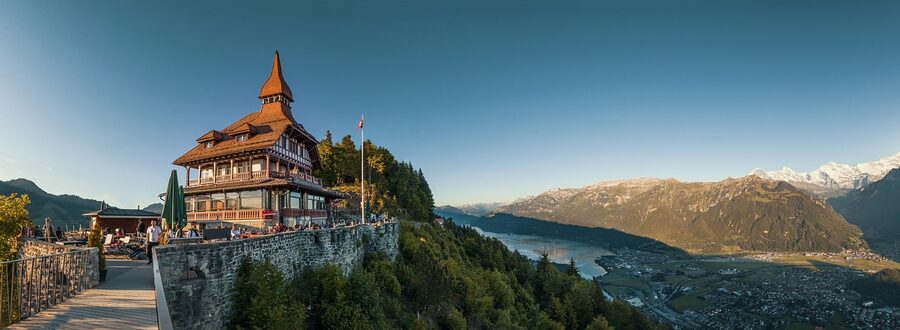
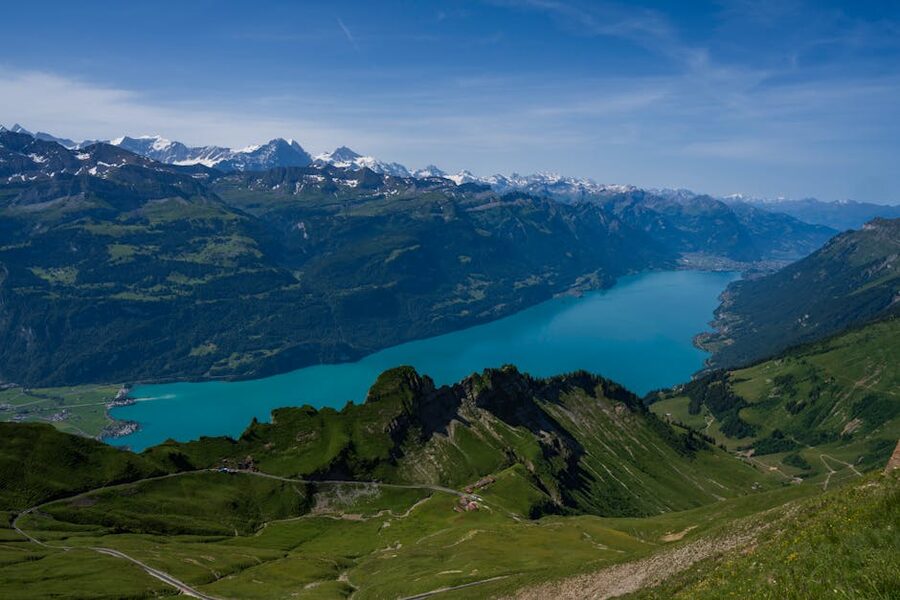
The summit’s headline feature is a cantilevered viewing bridge that extends out from the cliff edge, putting you directly above the void with one foot pointed at Lake Thun and one at Lake Brienz. The bridge is solid steel-and-wood, fully enclosed with railings, and rated for crowds — feels less scary than it looks in photographs. The real value is the unobstructed view of both lakes from a single spot, which is geographically unusual; the two lakes are separated by Interlaken itself, and the Harder Kulm sits at exactly the right angle to see both at once.
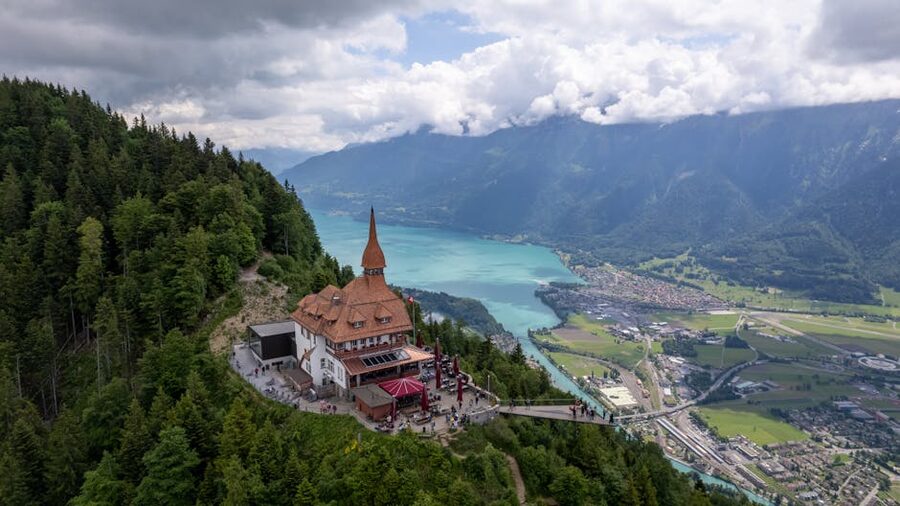
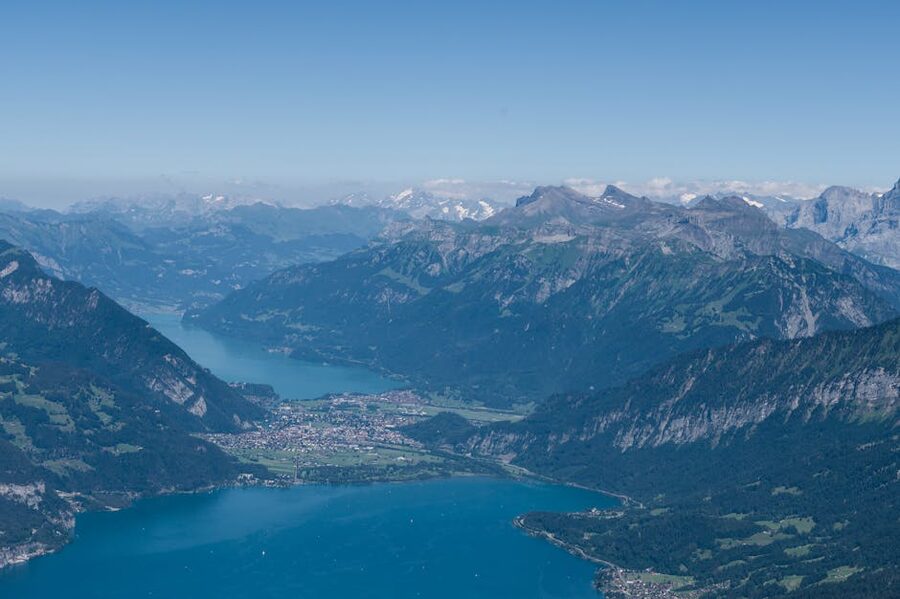
The standard photograph from the Harder Kulm shows you standing on the bridge with both lakes visible behind you, the town of Interlaken in the middle distance, and the Eiger-Mönch-Jungfrau wall in the far background. This is the photograph that sells the funicular ticket. It is also achievable in about 5 seconds at the bridge, after which you can spend the rest of your time at the summit doing other things.
What Else Is at the Summit
Beyond the bridge, the summit complex has a restaurant with outdoor terrace seating, an indoor viewing room (useful in bad weather), and a series of paved walking paths through the surrounding meadow. The walking paths are not extensive — the longest loop is about 30 minutes — but they get you away from the bridge crowds and give you the views without queuing.
The restaurant menu is reasonable for a Swiss mountain restaurant — fondue, sausage with rösti, salads, the usual. Prices are about 20% higher than in town. The terrace is the seat to want; book ahead in summer for the prime sunset slot if you are coming for dinner. Most travellers do not eat here, just stop for a coffee and the bridge photo, then descend.
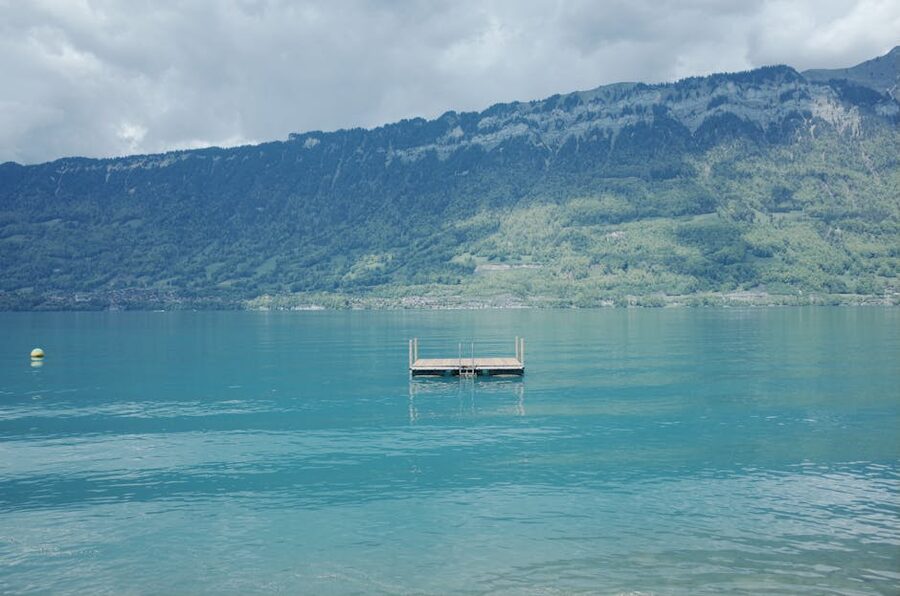
Harder Kulm vs Jungfraujoch — The Honest Comparison
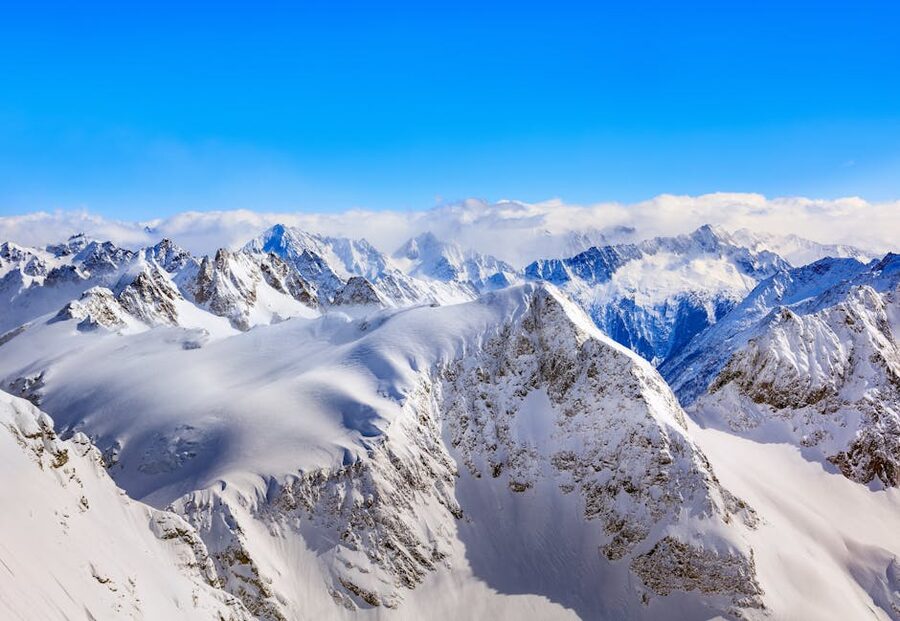
The honest comparison most travellers want. Harder Kulm: $49, 90 minutes round-trip, 1,322m summit, viewing platform with the postcard photograph, restaurant with views, easy in any weather. Jungfraujoch: $342, full day (7 hours round-trip), 3,454m summit (highest train station in Europe), glacier walk, ice palace, snow even in summer, restricted by weather closures. Different categories of experience.
If you have already done one major Swiss mountain elsewhere on your trip — Mount Titlis, Mount Pilatus — skip the Jungfraujoch and do the Harder Kulm instead. You get the postcard photograph, save the budget for something else, and the Jungfraujoch becomes a thing you do on your next Switzerland trip rather than this one.
If the Jungfraujoch is the one big alpine thing you want from Switzerland, do that instead and skip the Harder Kulm. Adding the Harder Kulm to a Jungfraujoch day adds the Harder photograph but adds friction to a day that is already pretty full.
When to Go — Light, Weather, Crowds
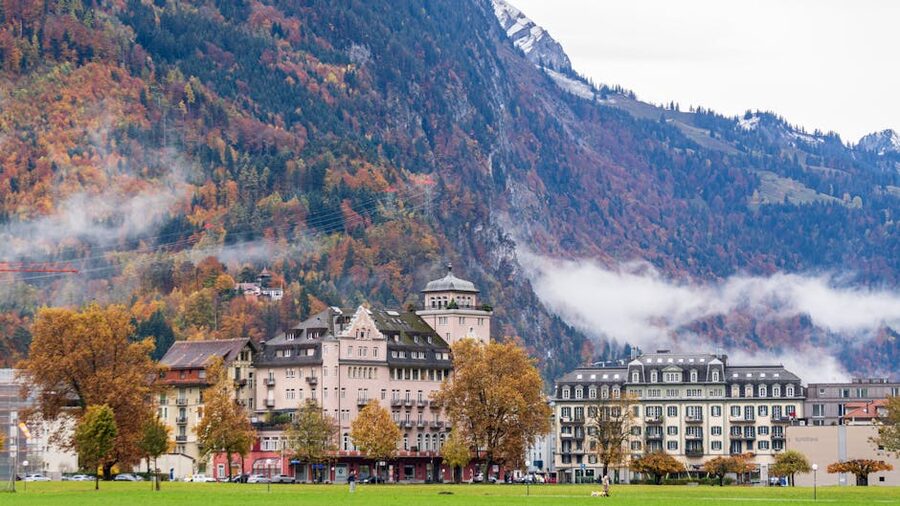
The Harder Kulm runs late April to late October. Outside that window the funicular is closed for snow operations and the summit is reached only by skiers using cross-country routes. Within the season, the trip works in any weather — the bridge view is striking even on cloudy days, just less spectacular.
For light: the standard photograph works best in the late afternoon, when the sun is behind you and the lakes catch the slanted light. Sunrise visits are possible (the funicular sometimes runs an early service in summer) and give you the alps in pink-gold morning light. Midday visits are the harshest light — overhead sun, washed-out colours, hot terrace.
For crowds: aim for the first morning slot or the last evening slot. The middle of the day in July-August is when the day-tour buses unload and the bridge gets queued. Off-season (April or October) is essentially empty even at lunchtime.
What to Combine With the Funicular
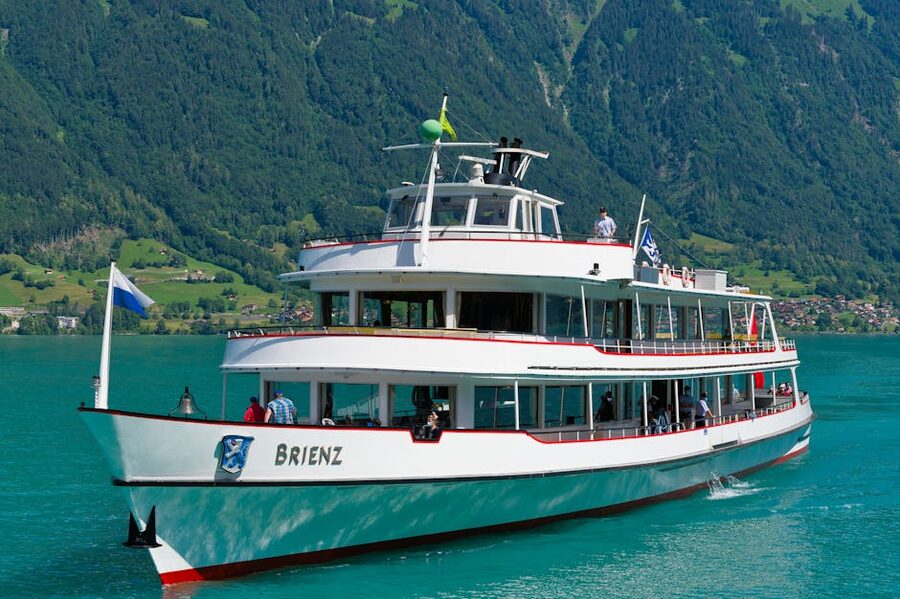
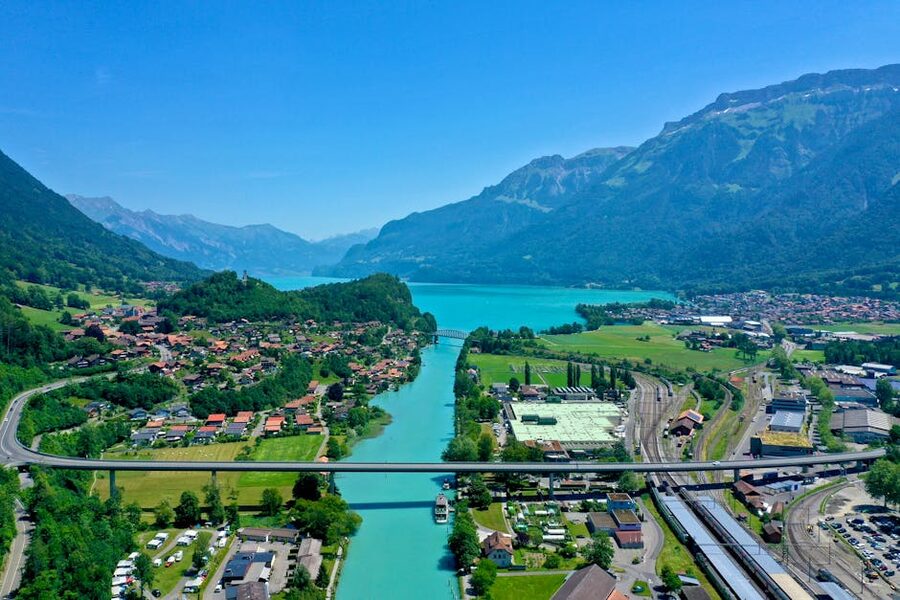
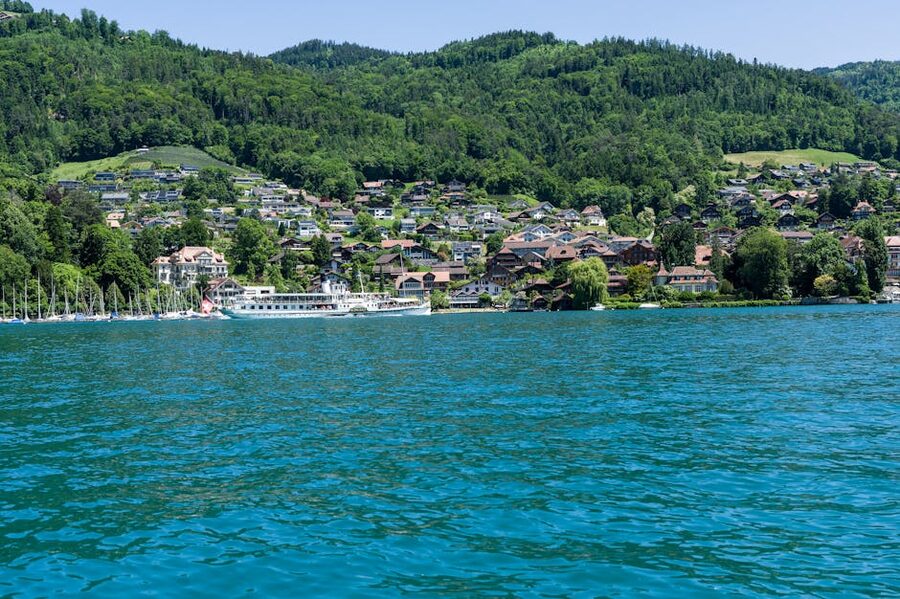
The Harder Kulm takes about 90 minutes round-trip including the funicular both ways and 30-45 minutes at the summit. That leaves most of the day open. The natural pairings: a Lake Brienz boat trip (covered by the Interlaken boat day pass), a walk through Interlaken’s main shopping street, or a half-day to Lauterbrunnen valley to see the famous waterfalls.
If the Harder Kulm is part of a longer Interlaken stay, the natural sequence is: Day 1 — arrive, walk the town, do the Harder Kulm in the late afternoon for sunset light. Day 2 — Jungfraujoch full day. Day 3 — lake cruise on Lake Brienz, or a paragliding flight if the weather cooperates. This 3-day plan covers most of what makes Interlaken worth visiting.
If you are doing the bigger Switzerland tour and Interlaken is one stop on a longer loop, the Harder Kulm fits any half-day where the weather is too poor for Jungfraujoch but too good to stay indoors. It is a reliable rainy-or-cloudy-day fallback that the bigger excursions are not.
Walking Down Instead of Riding
Worth knowing for hikers: there is a walking trail from the summit down to Interlaken that takes about 90 minutes through the forest. The trail is well-marked, mostly downhill (knee-friendly), and gives you a quieter perspective on the mountain that the funicular skips. The standard Harder Kulm ticket includes one-way funicular access, so you can ride up and walk down, or do the reverse if you have legs and time. Most travellers do not — they ride both ways for speed and convenience.
The walking option matters most for travellers who want a hike but do not have time for the bigger Bernese Oberland routes (Eiger Trail, Schynige Platte, etc.). It is the easiest “real” Swiss mountain hike you can do from central Interlaken, and the route is sheltered enough that it works in any weather short of heavy rain.
Practical Stuff Worth Knowing
Tickets work as digital QR codes that you save on your phone or print out. The funicular base station has a kiosk if you want to buy on the day, but in summer the kiosk queue can be 15-20 minutes; pre-buying online is the right move during peak months.
Operating hours: typically 9.10am first ascent, 9.40pm last descent in peak summer. Off-season the last descent moves earlier, sometimes 6.40pm in shoulder weeks. Check the official Harderbahn website for the actual schedule on your travel date — the operator publishes the daily timetable a week ahead.
Family considerations: the funicular is fully wheelchair-accessible at both ends, and the summit pavilion has step-free access to the bridge. Strollers are easy. The summit playground is small but functional for kids who need to burn energy after the funicular ride.
Pairing With the Rest of Your Switzerland Trip
The Harder Kulm fits best into an Interlaken-based Bernese Oberland trip. Pair it with the Jungfraujoch, Grindelwald, and the paragliding flight for a complete week of high-altitude Bernese Oberland activities. For the budget-conscious traveller, the Harder Kulm is the only one of these that does not require a serious budget commitment.
If you are doing a wider Switzerland loop, the Harder Kulm is the easy single-attraction add-on for an Interlaken transit day. Travelling from Lucerne to Geneva via Interlaken? Stop for half a day, do the funicular, get the photograph, eat in town, continue west. The funicular makes Interlaken worth a stop even if you do not have time for the bigger excursions.
One last note. The Harder Kulm runs limited evening sailings in midsummer — the last funicular up is sometimes 8.40pm with last descent at 9.10pm. These late slots are the best for photography because the light is at its softest and the bridge is essentially empty. Worth checking the schedule on the morning of your visit and shifting your booking if a late slot is available.
This article contains affiliate links. If you book through our links, we may earn a small commission at no extra cost to you. This helps us keep producing detailed travel guides.