
How do you fit a glacier, a rotating cable car, a 3,000-metre suspension bridge, and a stop in Switzerland’s most photographed town into one day from Zurich? You book the Mount Titlis day trip, you accept that you will be on a coach for about three hours total, and you trade some of the slow time you would have had in Lucerne for a 30-second walk across the Titlis Cliff Walk with 500 metres of nothing under your feet.
This guide covers how to book a Mount Titlis day trip from Zurich: which tour to pick, what the actual nine-and-a-half hours feel like, how Titlis compares to its rival Mount Pilatus, and how to make the Lucerne stop count when you only have an hour there.
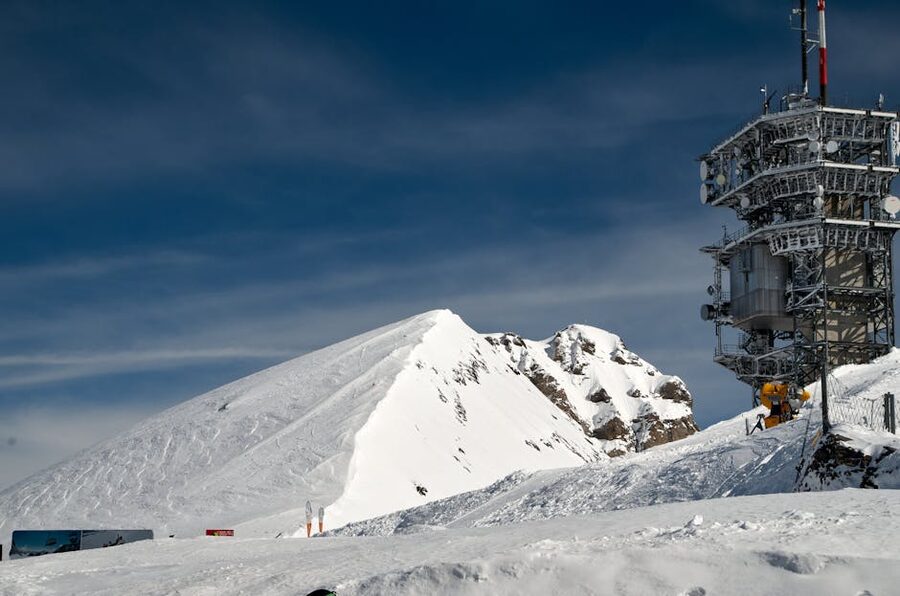
Mount Titlis is the highest mountain you can reach by cable car in central Switzerland — 3,238 metres at the actual peak, with a summit station at 3,028 metres reachable by three-stage cable car from the village of Engelberg. The whole thing was engineered specifically as a tourist mountain in the 1960s and rebuilt repeatedly since. The Rotair (world’s first rotating cable car), the Cliff Walk (Europe’s highest pedestrian suspension bridge), and the Ice Flyer chairlift over the glacier are all later additions. There is nothing accidental about Titlis. It is engineered to deliver the maximum Alps experience in the shortest possible time.
In a Hurry? The Three Tours Worth Booking
- Most reviewed pick: Mount Titlis with Ice Flyer + Lucerne from Zurich — around $204, 9.5 hours, includes all three cable car stages and the chairlift over the glacier.
- Same trip, alternative reseller: Mount Titlis and Lucerne Day Trip from Zurich — around $216, 9.5 hours, basically identical itinerary.
- If you are based in Lucerne: Titlis Half-Day Tour from Lucerne — around $173, 5.5 hours, skips the long Zurich coach legs.
- In a Hurry? The Three Tours Worth Booking
- Which Tour to Book
- 1. From Zurich: Mount Titlis with Ice Flyer & Lucerne — from 4
- 2. Mount Titlis and Lucerne Day Trip from Zurich — from 6
- 3. From Lucerne: Titlis Half-Day Tour — from 3
- What the Day Actually Looks Like
- The Three-Stage Cable Car Ride
- What You Do at the Summit
- The Lucerne Stop
- Titlis vs Pilatus vs Jungfrau
- When to Go and What to Wear
- Pairing the Trip With Your Wider Switzerland Plan
- One Last Thing
Which Tour to Book
If you are spending the night in Zurich, take one of the day trips that includes Lucerne — the drive forces a 60-90 minute Lucerne stop on the way back, which you would otherwise have to plan separately. If you are already in Lucerne, skip the Zurich tour entirely and take the half-day version that meets you there. The half-day saves you four hours of bus time without losing anything important on the mountain.
1. From Zurich: Mount Titlis with Ice Flyer & Lucerne — from $204
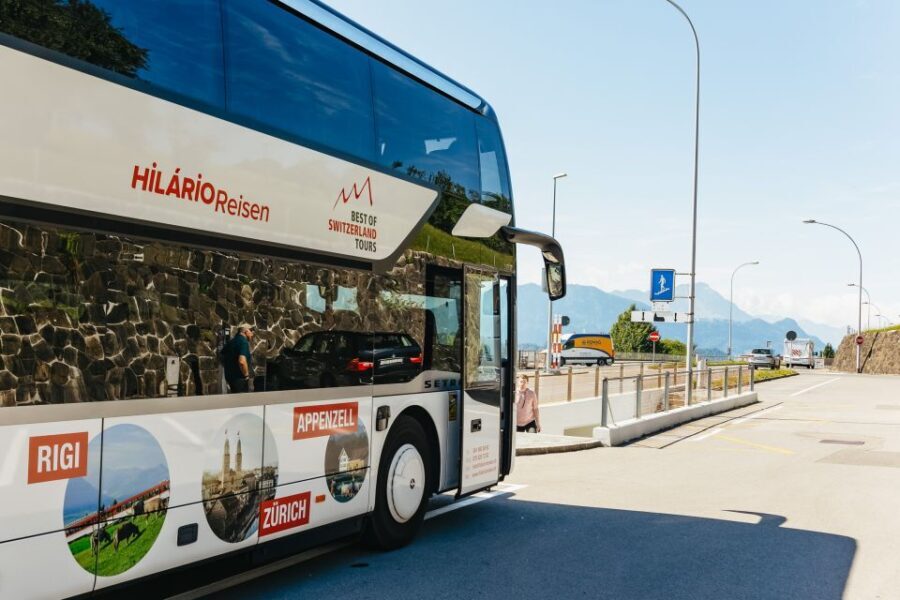
The headline tour and the one I would default to. Coach from Zurich at 8.30am, drive to Engelberg, ride all three cable car stages to the summit, free time at the top including the Ice Flyer chairlift over the glacier, descend, drive to Lucerne for a guided 60-90 minute walk, return to Zurich by 6pm. Our full review walks through the actual day timing and how much time you get at each stop.
2. Mount Titlis and Lucerne Day Trip from Zurich — from $216
The Viator version of essentially the same tour. Same coaches, same cable car tickets, same Lucerne stop. The $12 price difference covers Viator’s slightly different inclusions and the resellers’ margins. Our full review covers the booking mechanics and exactly what is included.
3. From Lucerne: Titlis Half-Day Tour — from $173
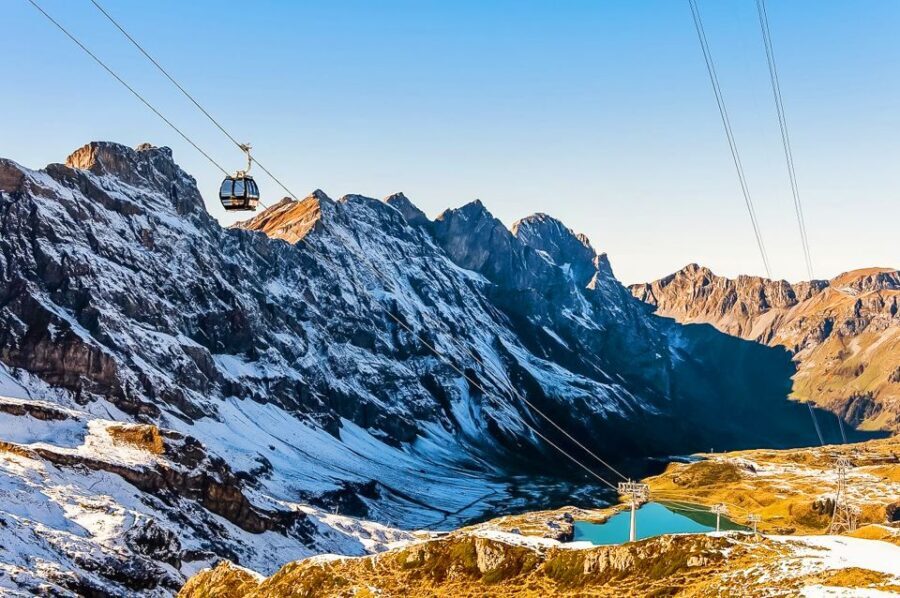
If you are already in Lucerne (which you probably should be at some point on your Switzerland trip), this is the better booking. Pickup in Lucerne at 8.30am, drive 45 minutes to Engelberg, do the same Titlis summit experience as the Zurich tour, back in Lucerne by 2pm with the rest of the day free. Our full review covers the timing differences and how it compares to the Zurich version.
What the Day Actually Looks Like
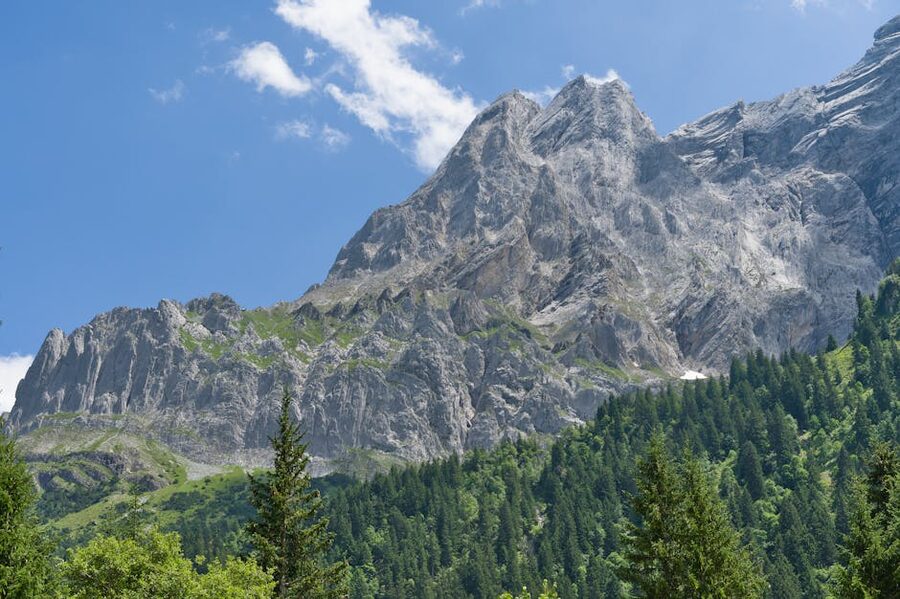
The coach leaves Zurich around 8.30am from the central pickup point. The first 90 minutes is the drive to Engelberg — flat motorway, then progressively narrower mountain roads, with the last 15 minutes climbing into the Alps proper. Most coaches stop briefly at a viewpoint on the way for the first photograph of the day.
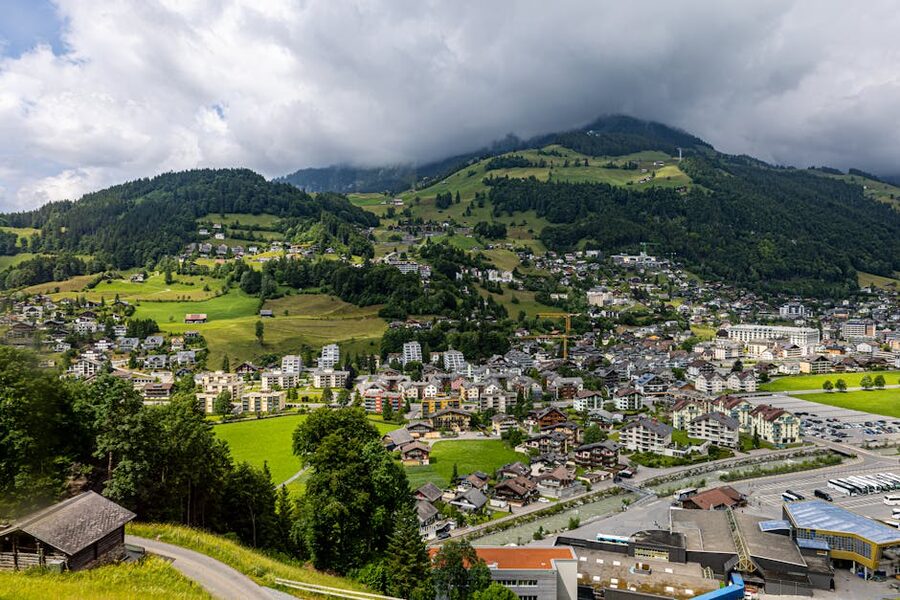
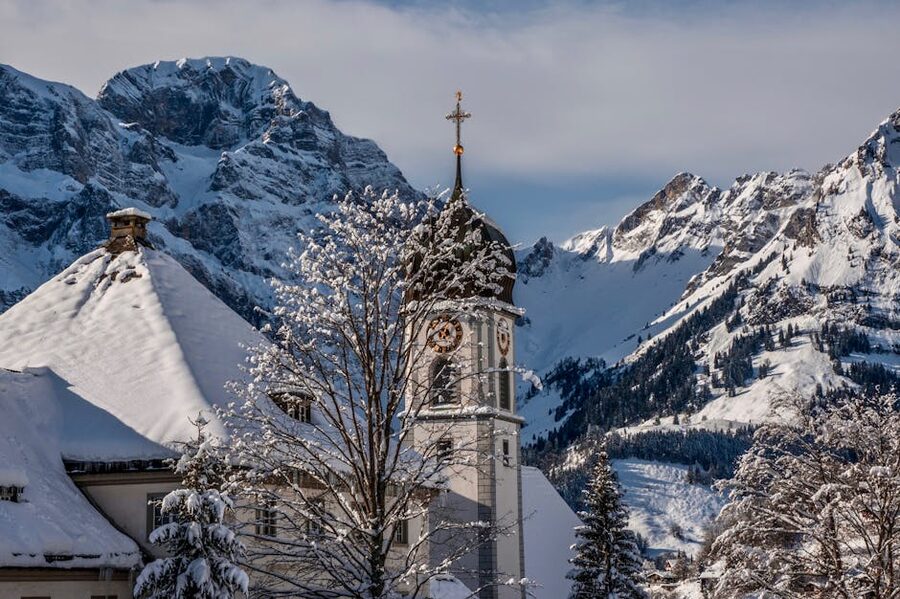
Engelberg itself is a working ski resort village with a population of about 4,500 — bigger than you expect, smaller than a Verbier or St. Moritz. The cable car base station is a 5-minute walk from where the coach drops you. Your guide hands you the cable car tickets and gives you the meeting time for the return — usually 1.30pm at the base. From here you are on your own on the mountain.
The Three-Stage Cable Car Ride
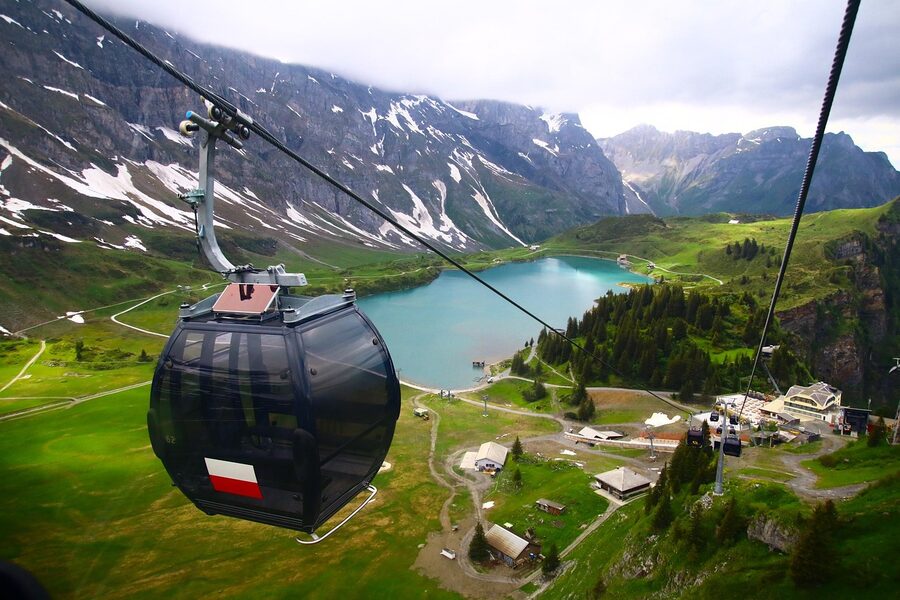
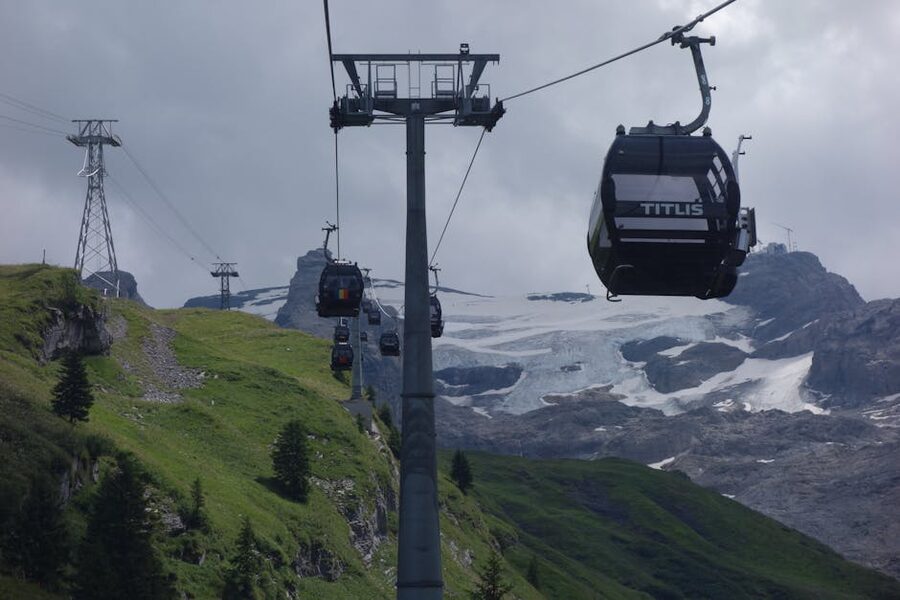
You ride three different cable car stages to reach the summit. From Engelberg (1,000 metres), a small gondola called the Titlis Xpress climbs to the Trübsee station (1,800 metres). At Trübsee you transfer to a larger cable car for the next stage to Stand (2,450 metres). At Stand you transfer one more time to the Titlis Rotair — the rotating cabin that takes you from 2,450 to 3,028 metres in five minutes, doing one full 360° rotation as it climbs. The rotation is automatic; you stand on a turntable that spins you slowly while the cabin glides up the cable.
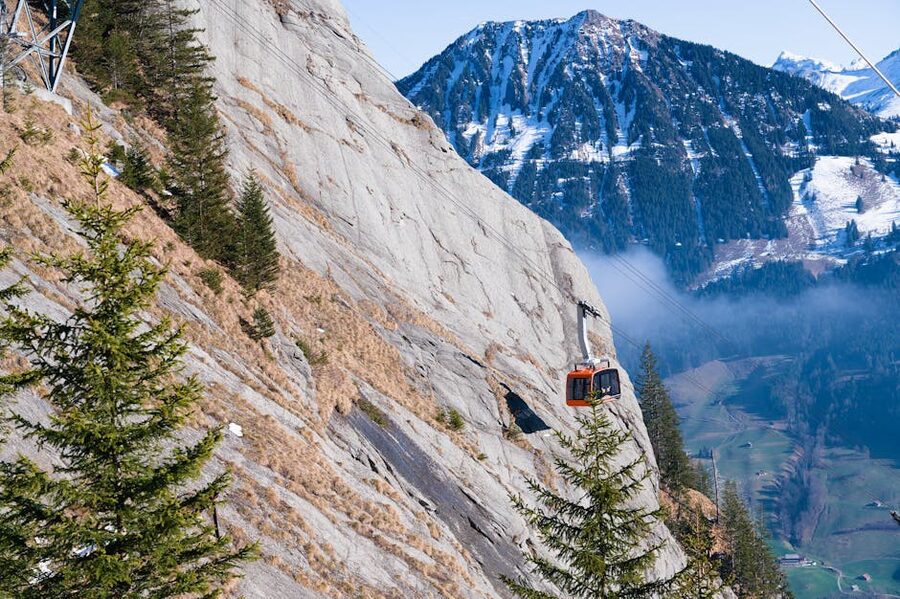
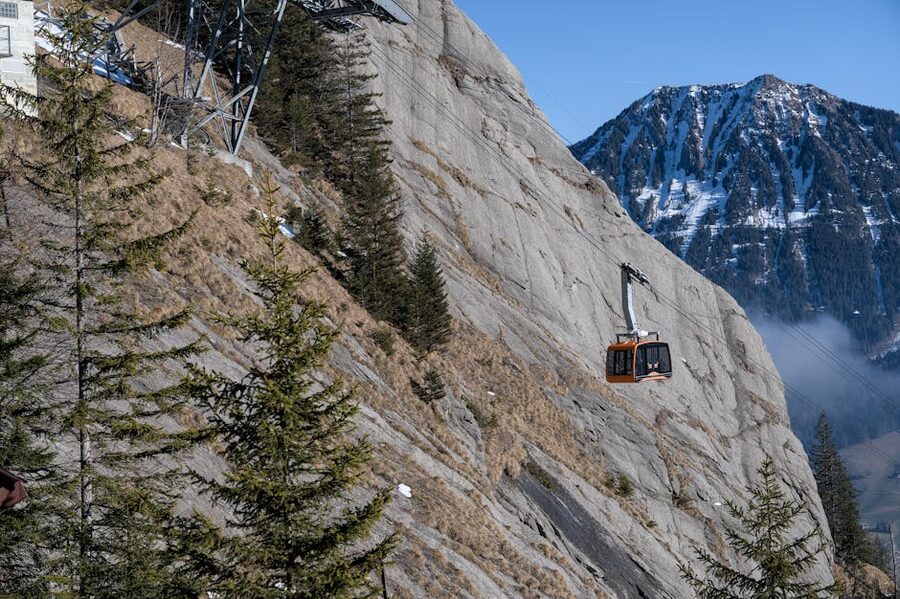
The Rotair is the engineering showpiece and the part everyone talks about. It opened in 1992 as the world’s first rotating cable car. The mechanism is genuinely clever — the cabin moves linearly up the cable while the floor inside rotates, so everyone gets the full panoramic view by standing still and not moving. By the end of the ride you have seen Engelberg behind you, the glacier below, the surrounding peaks ahead, and the climb to the summit itself.
What You Do at the Summit
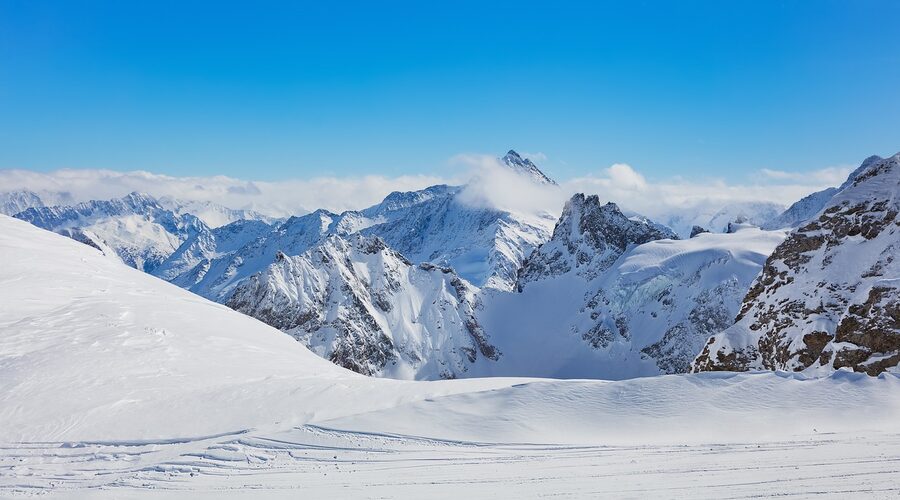
You arrive at the summit station with about 90-110 minutes before the return cable car timing. The summit complex is a large multi-level building containing a restaurant, two cafés, a souvenir shop, and the entrances to the four main attractions: the Glacier Cave, the Titlis Cliff Walk, the Ice Flyer chairlift, and the outdoor viewing terraces.
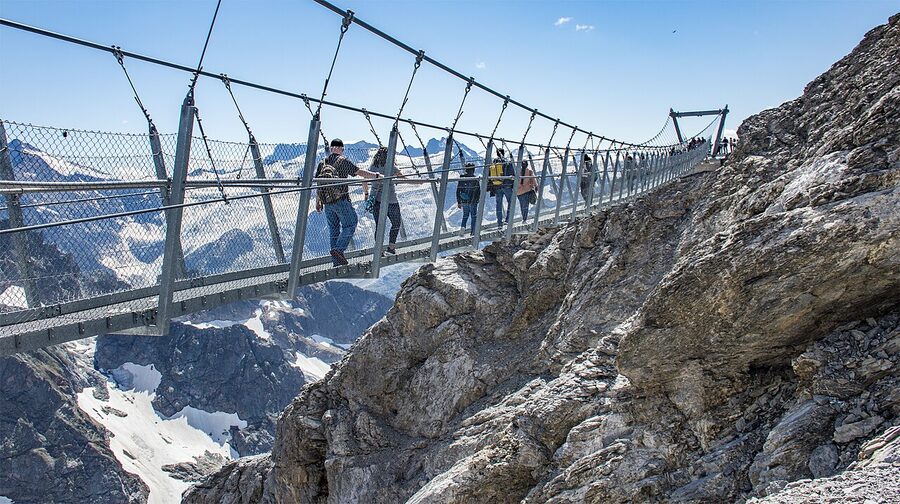

The Cliff Walk is the headline attraction. It is a 100-metre-long pedestrian suspension bridge slung between two rocky outcrops at 3,041 metres, with 500 metres of nothing directly below you. It opened in 2012 and is the highest suspension bridge in Europe. Walking across takes about a minute if you do not stop. Most people stop. The bridge is rated for 500 people simultaneously — the operator caps it at 70-80 at any given moment to keep the sway manageable. It is significantly less scary than the photographs suggest until the wind picks up.
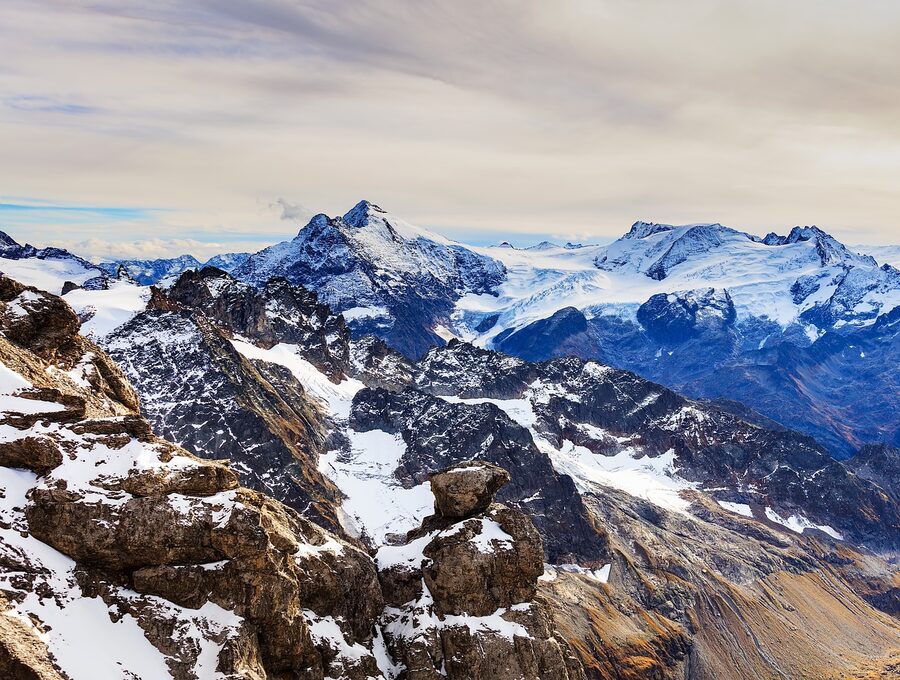
The Ice Flyer is a 4-person open chairlift that runs out across the glacier, drops you at a turnaround station with views down the mountain, and returns you to the summit. The ride is about 5 minutes each way and is included in the standard tour ticket. The chairs are exposed — you sit with your feet dangling over the ice — which is more dramatic than the cable cars but less intense than the Cliff Walk. Worth doing for the angle alone.
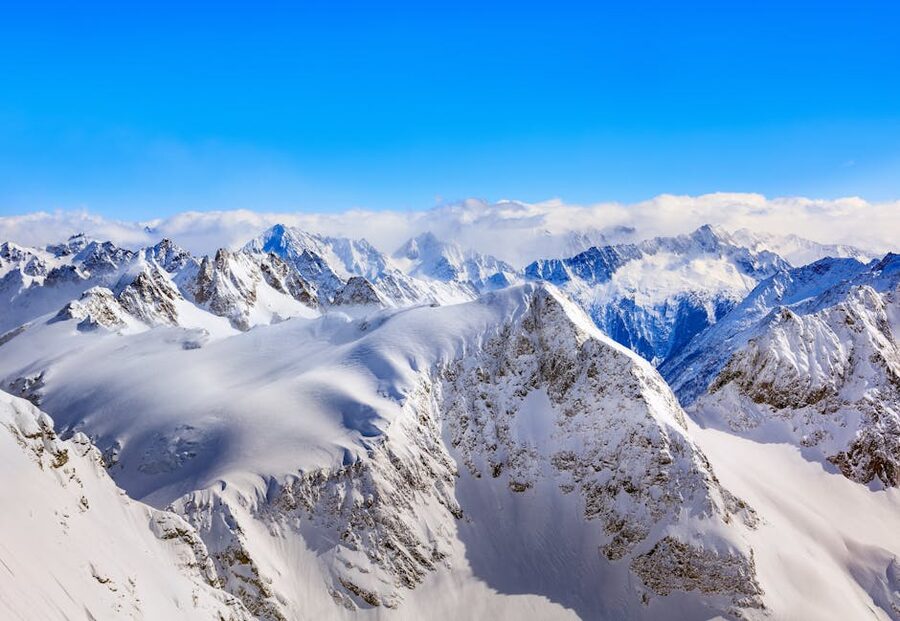
The Glacier Cave is a man-made tunnel cut 150 metres into the glacier. Walking through takes about 5-10 minutes and you see internal ice formations from the inside. It is fine but less impressive than naturally formed ice caves elsewhere — if you have done the Katla cave in Iceland or any of the Vatnajökull caves, the Titlis version will feel small. Skip it if you are short on time at the summit.
The Lucerne Stop
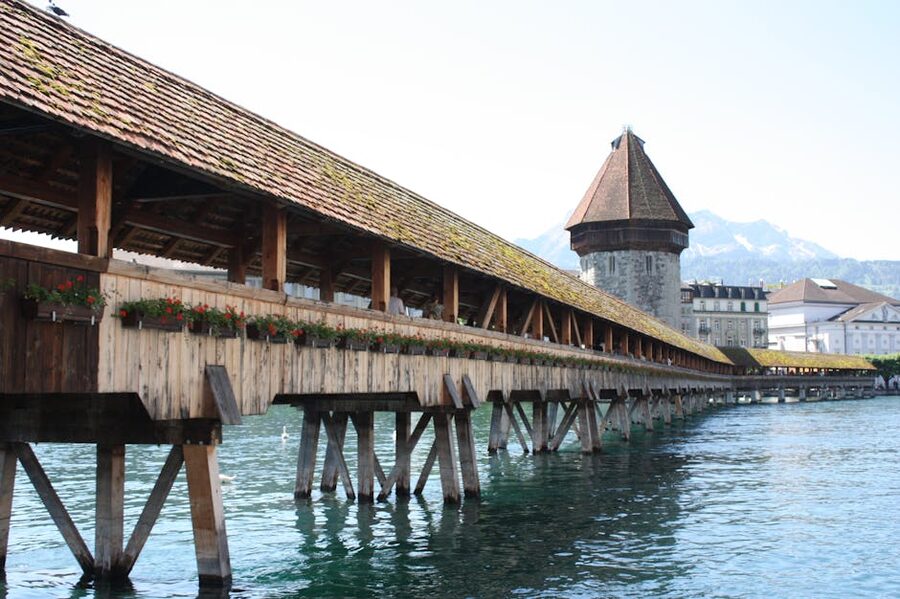
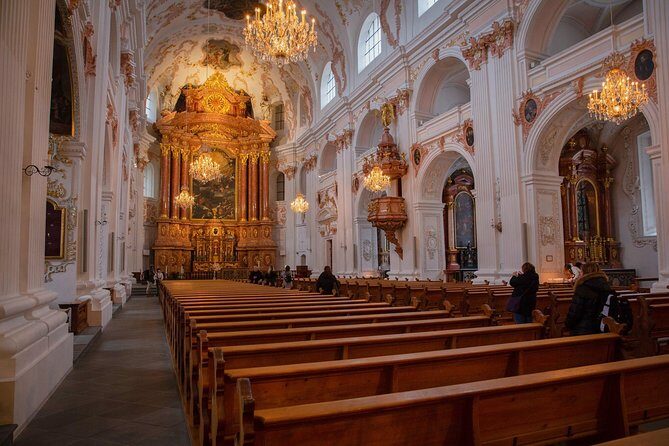
On the return from Engelberg, the coach drops you in Lucerne for 60-90 minutes. The guide will run a short walk past the headline sights — Chapel Bridge, the Water Tower, the Lion Monument, the lakefront — and then leave you to your own devices for 30-45 minutes before the meeting point. Use the free time well. Lucerne packs more onto its small medieval centre than you would expect.
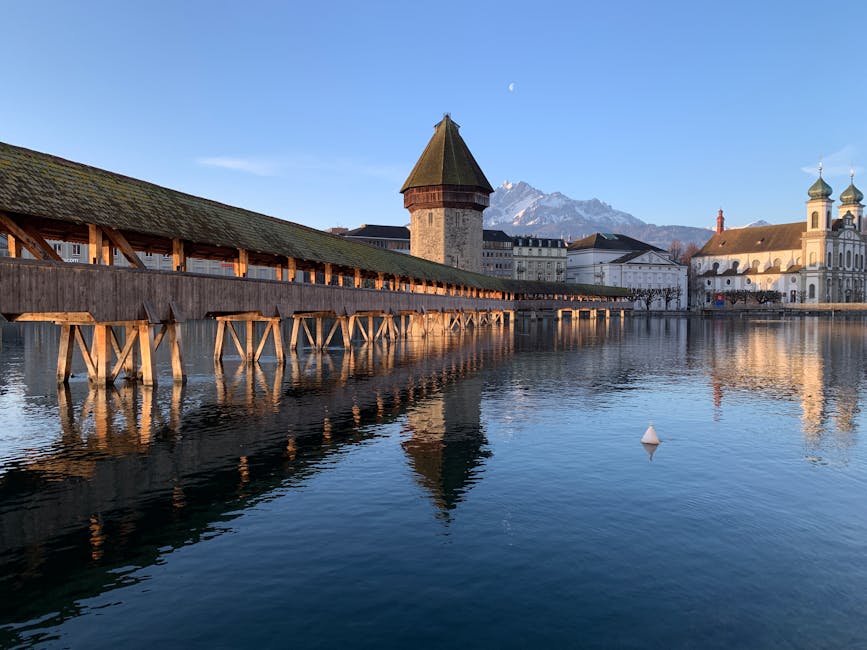
Priorities for a 60-90 minute Lucerne stop: walk across the Chapel Bridge once (it is the iconic photograph), then visit the Lion Monument (5 minutes uphill from the bridge — Mark Twain called it “the most mournful and moving piece of stone in the world” and he was not wrong), then either grab a quick coffee at one of the lakefront cafés or have a 20-minute look at the Old Town side streets. Skip the Lion Monument if you are short on time; it adds 15 minutes of walking each way.
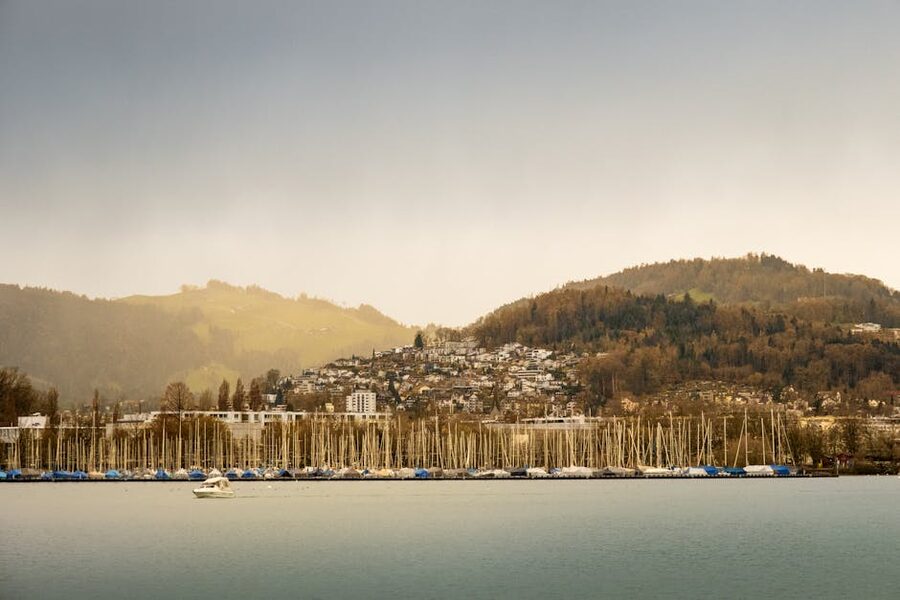
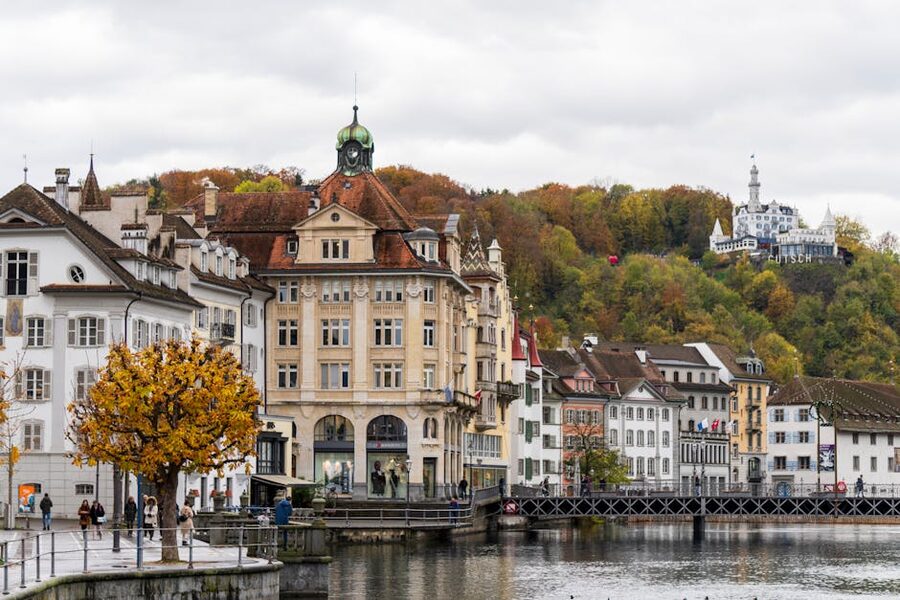
Titlis vs Pilatus vs Jungfrau
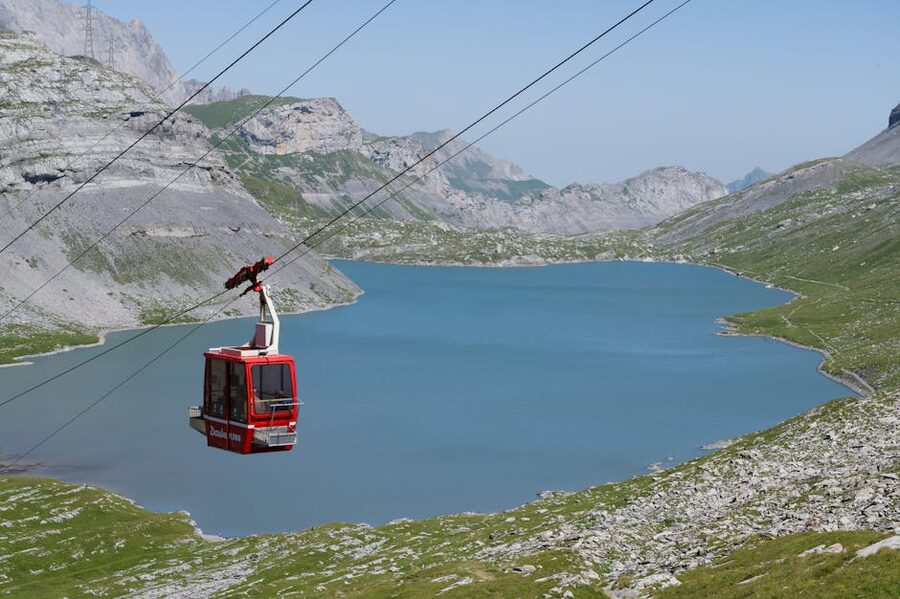
Three big “high mountain by cable car” experiences are available from Zurich or Lucerne, and travellers conflate them all the time. Mount Titlis (3,028m, this article) is the highest, has the rotating cable car, and the Cliff Walk. Mount Pilatus (2,128m, accessible from Lucerne by gondola or steepest cogwheel railway in the world) is shorter and the views are different but the journey is more varied. Jungfraujoch “Top of Europe” (3,454m) is technically the highest but requires a long train journey from Interlaken — not the same kind of day trip from Zurich.
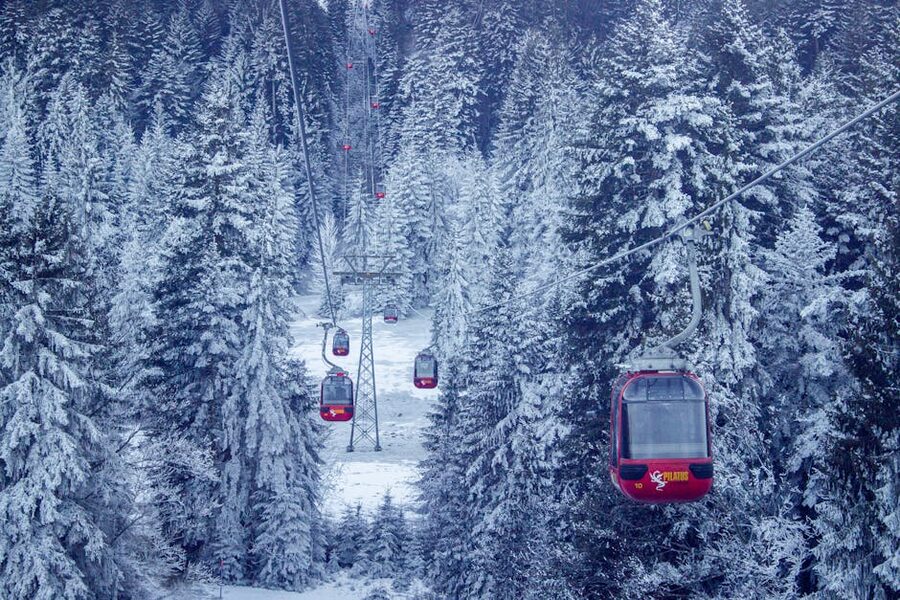
Honest call: Titlis if you want the gimmicks (rotating cable car, suspension bridge), the highest accessible peak, and the most polished tourist infrastructure. Pilatus if you want a more varied journey, a quieter summit, and the option to do the cogwheel railway. Jungfraujoch if you are based in Interlaken — covered separately in our Jungfraujoch guide.
When to Go and What to Wear
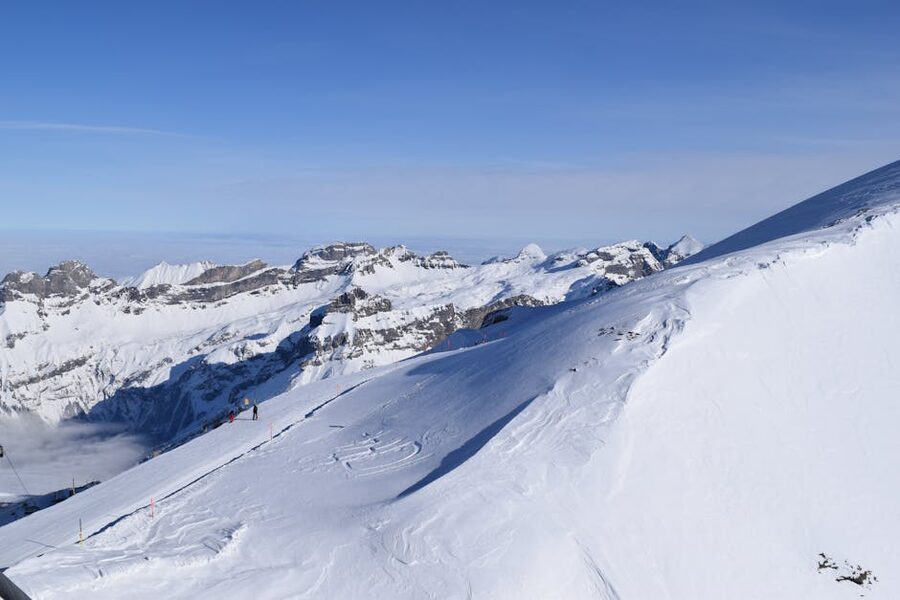
Mount Titlis runs all four seasons but feels different by season. Summer (June-September) is the busiest, with the longest days and clearest weather. The summit holds snow year-round (it is on a glacier) but the village of Engelberg below is green and warm. Winter (December-March) shifts the experience toward skiers and snowboarders — the cable cars share with the ski lifts, the village is busier, the views from the summit are more uniformly white. Shoulder seasons are the quietest and arguably the best value if you can pick.
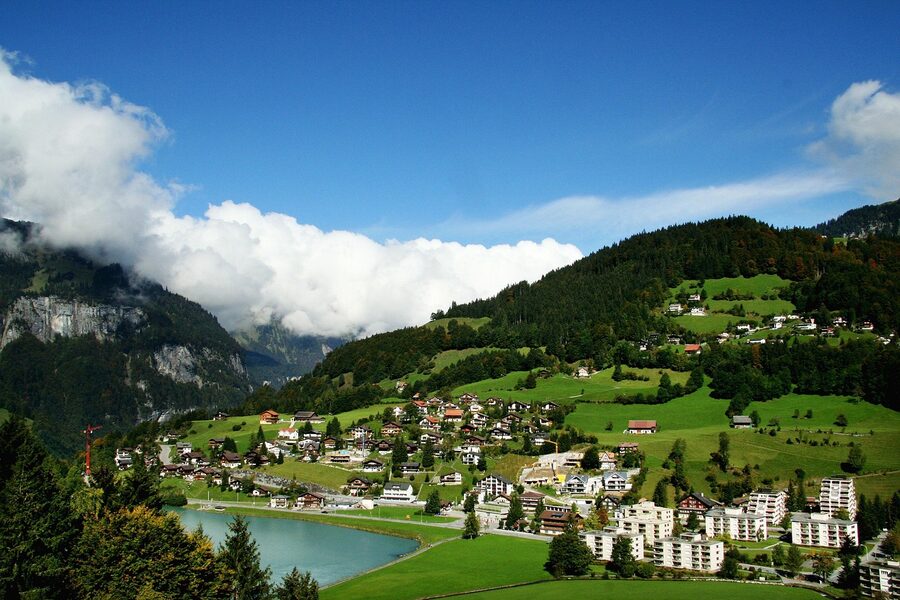
What to wear regardless of season: layers. The temperature difference between Engelberg (often 25°C in summer) and the summit (often -5°C even in July) is 30 degrees. Pack a windproof jacket. Closed shoes with grip — there are paved walkways at the summit but you may step out onto bare ice or snow. Sunglasses are non-optional in any season; the snow glare at altitude is intense even on overcast days. Sunscreen for the same reason.
Pairing the Trip With Your Wider Switzerland Plan
Mount Titlis is one of three big “high mountain” days available from Zurich. The natural full Switzerland week pattern is: Zurich for one or two days, Lucerne for two days (Titlis + Lindt Chocolate Museum or Pilatus), Interlaken for two days (Jungfraujoch + Grindelwald), and Geneva or Zurich again to fly out. That gives you the three biggest mountains, the major lake, and the headline city without anything feeling rushed.
If you only have a single day from Zurich and have to pick between Titlis, Pilatus, and a Jungfraujoch attempt, do Titlis. The Jungfraujoch from Zurich is genuinely brutal at 13+ hours, Pilatus is closer to a half-day from Lucerne (so requires you to be there), and Titlis is the version that fits cleanly into a day from Zurich and includes a stop in Switzerland’s most-photographed old town. It is the best single-day Alpine day trip from the city.
One Last Thing
The single most-asked question about Mount Titlis is whether the price is worth it. $204 for one day is a lot. The honest answer: for a single Alps experience packaged into a no-stress coach day with cable cars, glacier walk, suspension bridge, and a major Swiss city stop, yes. The same components would cost you more if you booked them separately, and the coach takes the planning out of it. If you have multiple Switzerland days and can build your own plan, you can do all of this cheaper using the Swiss Travel Pass. If you have one shot at the Alps from Zurich, book the day tour and stop overthinking it.
This article contains affiliate links. If you book through our links, we may earn a small commission at no extra cost to you. This helps us keep producing detailed travel guides.