
The Book of Kells was illuminated by Irish monks around 800 AD. Trinity College was founded 788 years later, in 1592. How Ireland’s oldest surviving book ended up inside a university that wasn’t built for eight centuries after it was written is the story every Dublin walking tour starts with.
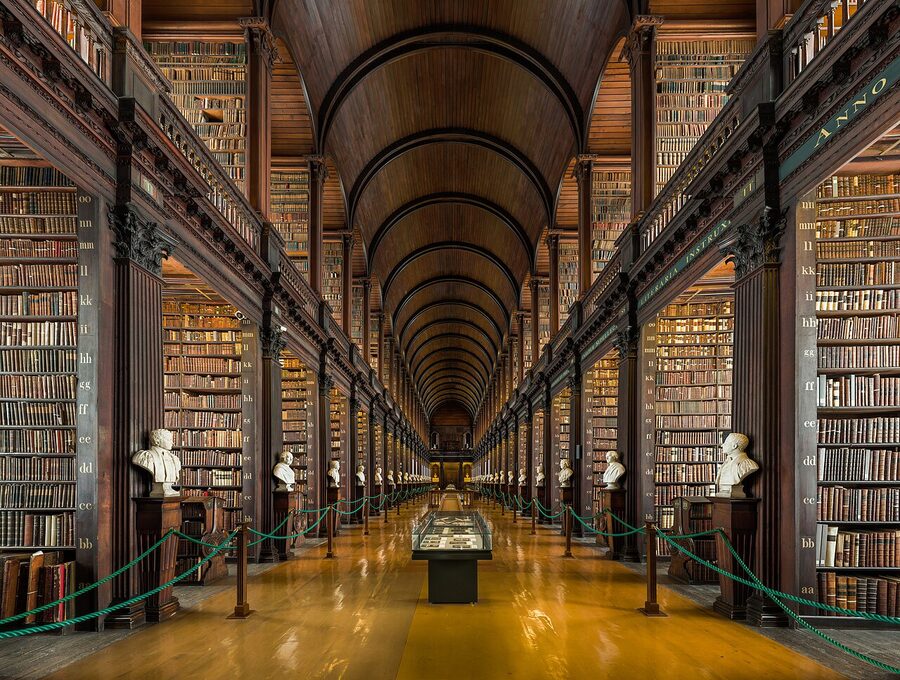

This guide covers the three Dublin walking tours that pair the Book of Kells with Trinity College, Dublin Castle, and the Molly Malone statue: the classic 2.5-hour version at $96, the extended St Patrick’s Cathedral add-on at $144, and the “Dublin in a Day” full-package at $173 that adds Guinness and Jameson too.

In a Hurry? The Three Walking Tour Options
- Most-reviewed classic: Book of Kells + Dublin Castle + Molly Malone Statue — around $96, 2.5 hours, early-access Book of Kells plus a walking loop of the Medieval Quarter.
- Adds St Patrick’s Cathedral: St Patrick’s Cathedral + Book of Kells + Dublin Castle — around $144, 3.5 hours, includes cathedral entry.
- Dublin in a day: Dublin in a Day — Castle, Book of Kells, Guinness, Jameson — around $173, full day, all the big-ticket Dublin sights.

- In a Hurry? The Three Walking Tour Options
- What’s on the Classic Walking Tour
- The Three Tours Compared
- 1. Book of Kells + Dublin Castle + Molly Malone —
- 2. St Patrick’s Cathedral + Book of Kells + Dublin Castle — 4
- 3. Dublin in a Day — Book of Kells, Guinness, Jameson — 3
- The Book of Kells — What You Actually See
- Trinity College — Campus Tour Component
- Dublin Castle — What You See from Outside
- The Molly Malone Statue
- Why “Early Access” Matters
- St Patrick’s Cathedral Upgrade (Option 2)
- When to Book
- What to Bring
- Practical Details
- Other Dublin Guides Worth Reading
What’s on the Classic Walking Tour
The 2.5-hour version (option 1 above) is the one most visitors pick. It’s a guided walking loop that starts on Dame Street outside Dublin Castle, covers the Medieval Quarter, enters Trinity College through the front gate, and finishes at the Book of Kells exhibition.

Route:
- Dublin Castle exterior and Great Courtyard. 15-20 minutes. Tour doesn’t include interior State Apartments (separate ticket).
- Christ Church Cathedral exterior. Brief stop, usually 5 minutes, exterior only.
- Temple Bar — walk through the cobbled quarter.
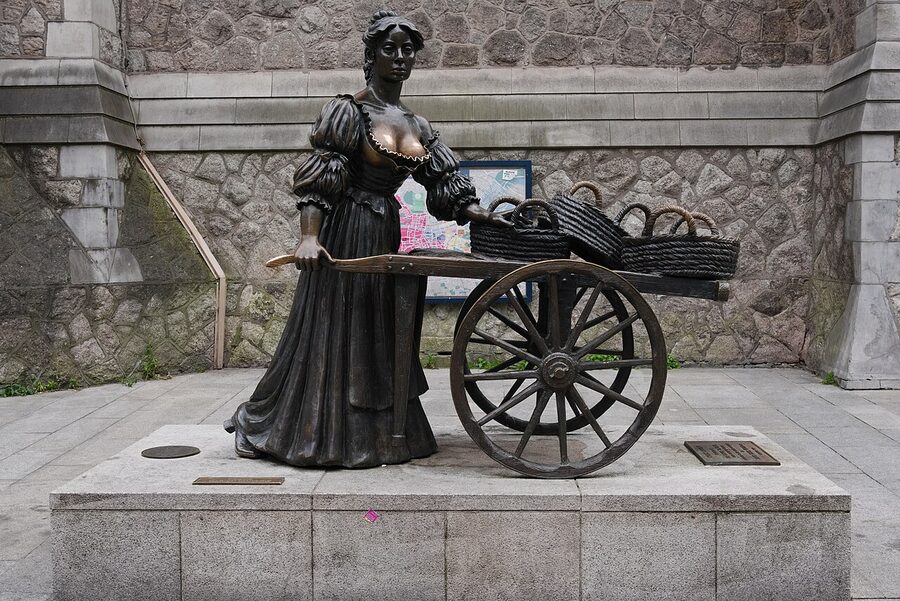
- Molly Malone statue on Suffolk Street. 10 minutes. The statue is Dublin’s most photographed object.
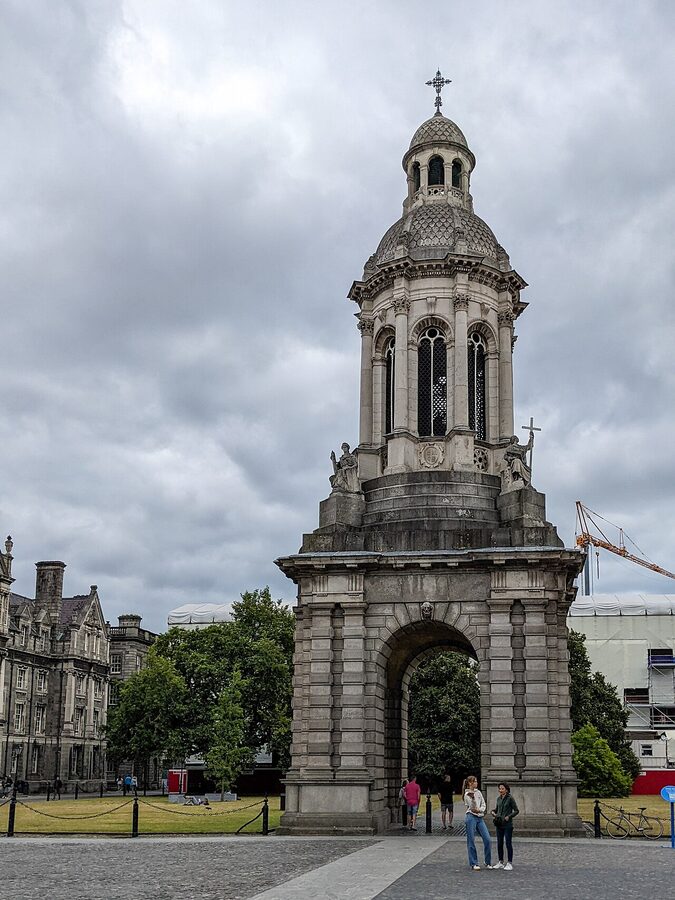
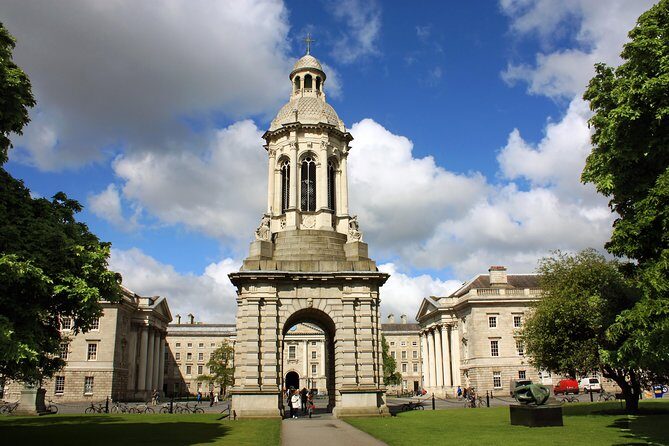
- Trinity College. Walk through the front gate, tour of Parliament Square and Library Square.
- Book of Kells Experience. The highlight — 45 minutes to see the manuscript and the Long Room.

The Three Tours Compared
1. Book of Kells + Dublin Castle + Molly Malone — $96
The default pick. $96 is the mid-range of Dublin walking-tour pricing, 2.5 hours is manageable before lunch, and the early-access Book of Kells slot means you see the manuscript without the 45-minute summer queue. Group size is capped around 20, which keeps the guided sections coherent. Our full review covers which guides are the best-rated and how the early-access slot works.
2. St Patrick’s Cathedral + Book of Kells + Dublin Castle — $144
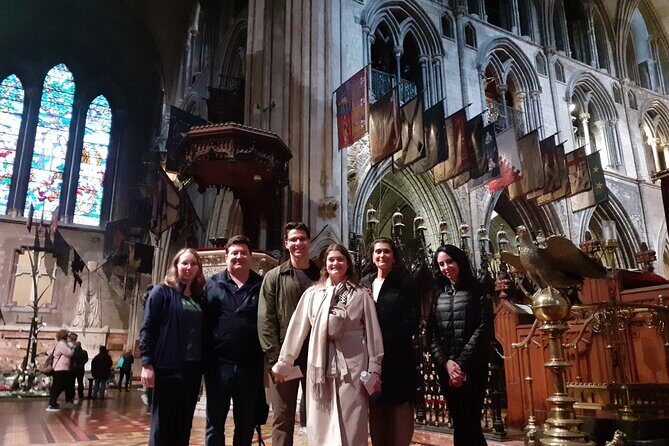
Worth the $48 upgrade if you specifically want St Patrick’s. The cathedral is Ireland’s largest church, dates to 1191, and is where Jonathan Swift (author of Gulliver’s Travels) served as Dean for 32 years — his tomb is in the nave. The tour also adds more Medieval Quarter walking and a longer Dublin Castle section. Our review covers which elements the upgrade adds and whether it’s worth the extra cost.
3. Dublin in a Day — Book of Kells, Guinness, Jameson — $173

The pick if you have one day in Dublin and want to see everything. $173 is steep but you get skip-the-line at both Guinness and Jameson (which save 30-45 minutes of queuing each), a guide to walk you between them, and the Book of Kells early-access in the morning. Cheaper to do each separately ($96 tour + $30 Guinness + $37 Jameson = $163) but you skip the guided walking and the queue-saving. Our review breaks down the time savings.
The Book of Kells — What You Actually See
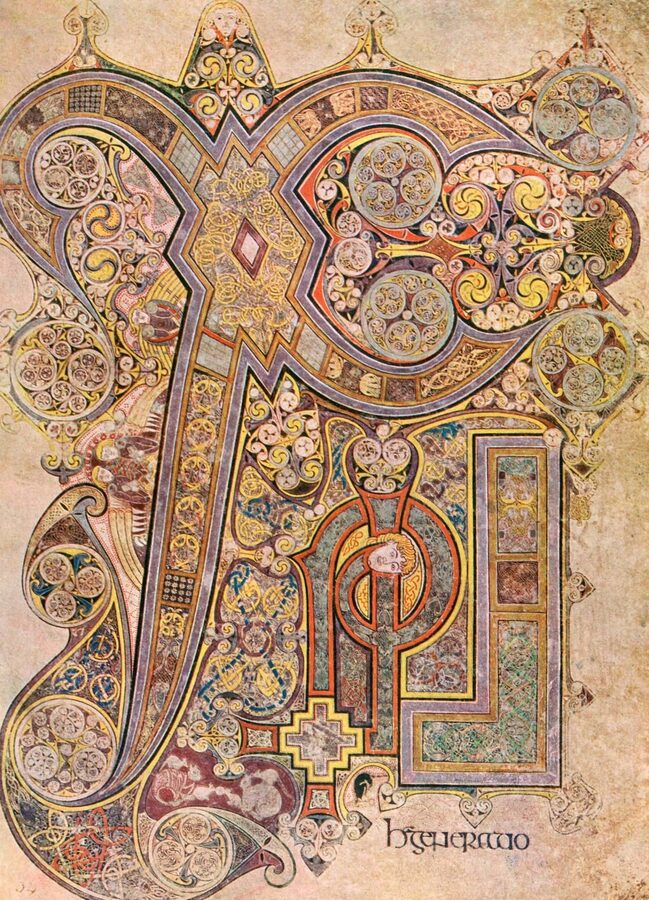
The Book of Kells is a 9th-century illuminated manuscript of the four Gospels, in Latin, written and illustrated by monks around 800 AD. The working theory is that it was started at the monastery on the Scottish island of Iona and completed at Kells, Ireland, after Viking raids forced the monks to relocate. It’s been at Trinity College since the 17th century.
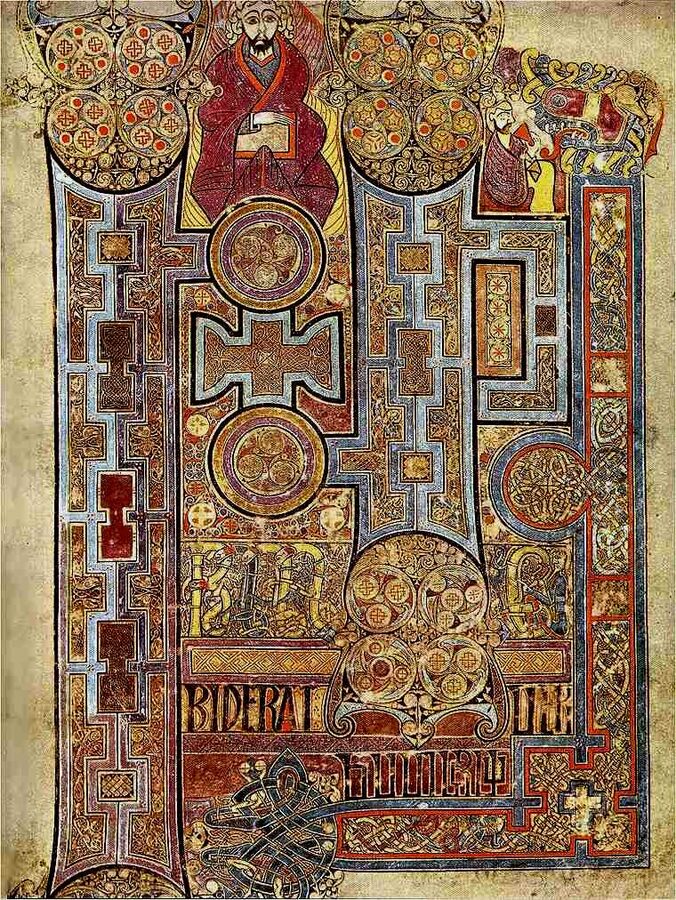

The physical book is 340 folios (680 pages) on vellum (calfskin), produced from about 185 calves. It has been bound in four volumes since 1953 for preservation. Two of the four are on display at any time in the Book of Kells Experience display case, opened to two specific pages that rotate on a 24-hour schedule.
What you see on the visit:
- A short exhibition walking through the book’s history and illumination techniques (10-15 minutes)
- The manuscript itself in a low-light display case (2-3 minutes — there’s always a slow-moving queue)
- The Long Room of the Old Library (15-20 minutes)
Note: in 2023-2024 the Trinity Library began a major conservation project on the Long Room, and the Book of Kells was temporarily relocated during the work. Always check the current exhibition status on your booking — the tour operators know the current setup.
Trinity College — Campus Tour Component
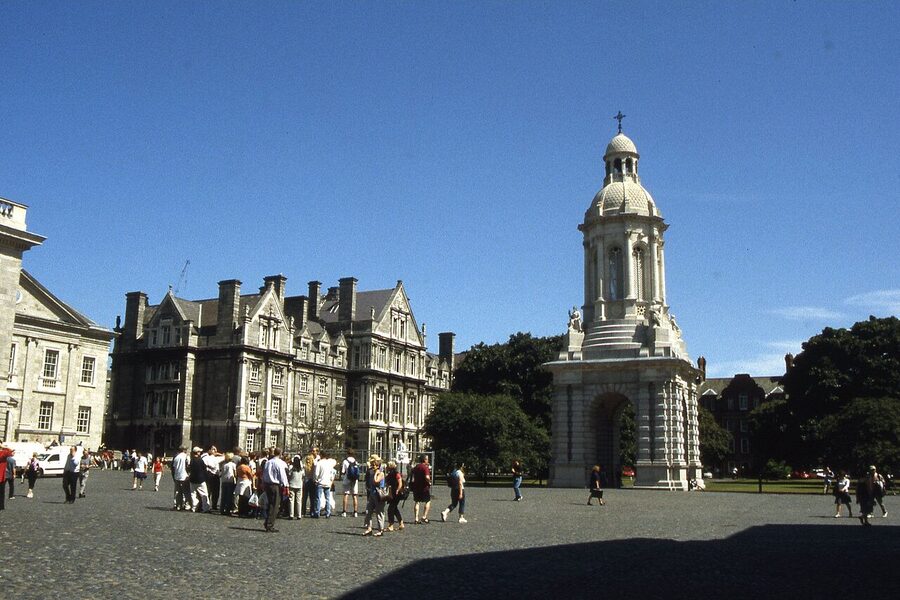
Trinity is Ireland’s oldest university, founded in 1592 by Queen Elizabeth I. Famous alumni include Oscar Wilde, Samuel Beckett, Bram Stoker, and — more recently — Mary Robinson (first female President of Ireland). The campus is inside a walled quadrant in central Dublin; it feels more like Oxford than a typical university.
The guided walking portion covers Parliament Square, the Campanile, the Rubrics (oldest surviving buildings on campus, 1700), and Library Square. You don’t enter the student accommodation or the dining hall. The whole Trinity portion runs about 30 minutes before the Book of Kells.
Dublin Castle — What You See from Outside
Dublin Castle was the seat of British rule in Ireland for 700 years (1204-1922). It’s not really a medieval castle — most of what’s visible was built in the 18th century as a Georgian government complex — but the Record Tower is original 13th-century Norman work. The Great Courtyard is where you see the State Apartments, the Bedford Tower, and the Chapel Royal.
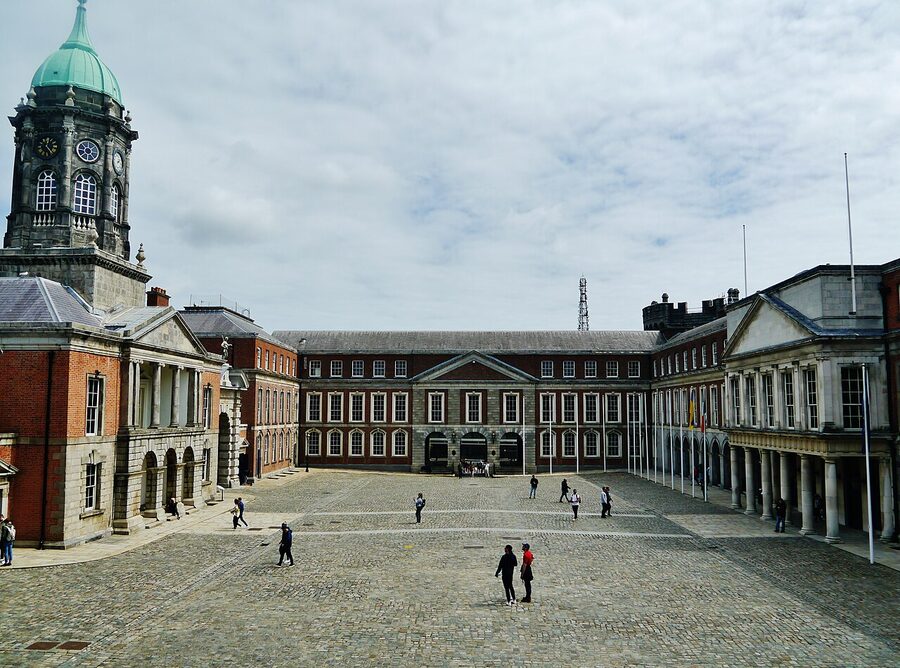

The walking tour covers the exterior — 15-20 minutes in the Great Courtyard with commentary on the castle’s role in British-Irish history and the 1922 handover ceremony. You don’t enter the State Apartments on the standard tour. If you want those (excellent, worth €8), you need a separate ticket and about an hour more time.
The Molly Malone Statue
Bronze statue of a 17th-century fishmonger from the traditional Irish ballad “Cockles and Mussels” (“In Dublin’s fair city, where the girls are so pretty…”). Installed in 1988 for Dublin’s 1000th anniversary celebration. Designed by Jeanne Rynhart.
The stop is 10 minutes. Everyone takes a photo, the guide tells the “Cockles and Mussels” story, and you move on. It’s the most Instagrammable single spot in central Dublin and deliberately timed as the walking-tour stop just before Trinity.
Why “Early Access” Matters
The Book of Kells Experience is Trinity’s most-visited attraction. During peak summer, the entry queue runs 30-60 minutes. General entry opens at 9:30am; the tour’s “early access” is typically an 8:45am slot that lets you inside 45 minutes before the general public.
Translation: you see the Book of Kells and the Long Room with almost no crowd, and you don’t waste an hour of your walking tour standing in a queue. This is the single most valuable time-saver in the $96 ticket price. If you’re in Dublin during peak season (June-August) and want to see the Book of Kells, the early-access tour is objectively the best-value way to do it.
St Patrick’s Cathedral Upgrade (Option 2)
The tour that adds St Patrick’s is the middle-priced option. St Patrick’s is Ireland’s largest church — built 1191, stands where St Patrick is said to have baptised converts in the 5th century. Notable for its Gothic nave, the memorial to Jonathan Swift (Dean here 1713-1745), and the choir stalls bearing the coats of arms of the Knights of St Patrick.

Worth the $48 upgrade if cathedrals and ecclesiastical history interest you specifically. If they don’t, the standard tour covers Christ Church Cathedral exterior anyway and the upgrade is mainly an extended guided cathedral visit inside St Patrick’s (45 minutes) with full entry.
When to Book
Early-access Book of Kells slots sell out 3-4 days ahead in summer — these are the 8:45-9:15am times that let you avoid the queue. Later slots (10:30am onwards) have same-day availability even in peak season but you lose the queue-skipping advantage.
Winter (November-February) all three tours have same-day availability. St Patrick’s Day weekend (mid-March) sells out 2-3 weeks in advance.
What to Bring
- Comfortable walking shoes. 2.5-3.5 hours on foot with cobblestone sections.
- Waterproof jacket. Dublin weather is unreliable year-round.
- ID. Trinity requires photo ID for the early-access entry at the Book of Kells Experience.
- Cash (euros). For coffee/snacks; most stops are tourist-centric with card payment but a few Dublin cafés still charge 50¢ extra for card transactions under €10.
Practical Details
Duration. 2.5 hours (option 1), 3.5 hours (option 2), full day (option 3).
Group size. 15-20 on the standard tours; option 3 runs smaller (8-12).
Language. All three in English. Some operators offer Spanish or German slots on request.
Accessibility. Trinity and the Book of Kells Experience are step-free via lifts. Dublin Castle has limited wheelchair access to the State Apartments interior (not relevant on the standard walking tour since you don’t go inside).
Cancellation. 24-hour free cancellation on all three.
Other Dublin Guides Worth Reading
The natural pairings with this walking tour are a general Dublin walking tour (which covers more Georgian and contemporary Dublin than the Book of Kells focus), the Guinness Storehouse on the afternoon of the same day, and a Jameson or Teeling whiskey tour to round out the Dublin signature-experience set.
For day trips from Dublin that pair well with an academic-heritage morning, the Wicklow/Glendalough/Kilkenny trip the next day makes sense — the 6th-century monastic ruins at Glendalough are the pre-Book-of-Kells Irish Christian context. Or if the manuscript itself is your draw, the Giant’s Causeway trip is a complete contrast but covers the Antrim coast that connects Irish and Scottish monastic history.
Disclosure: This site earns a commission on bookings made through the links above, at no extra cost to you. We only recommend tours we’ve researched and would book ourselves.