
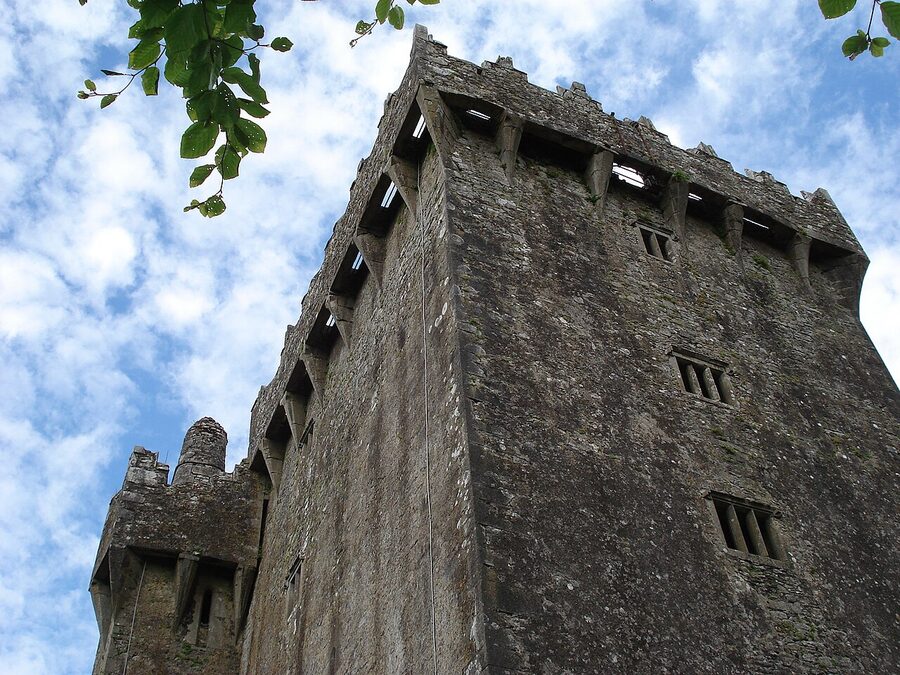
A friend told me the best moment of her Ireland trip was watching three busloads of American tourists queue to kiss the Blarney Stone — tipped upside down over a wall by a local attendant. She took the photo, skipped the kiss. She was right; the line takes longer than the castle itself deserves.
.jpg)
This guide covers the three most-reviewed day trips from Dublin south to Blarney Castle, the Rock of Cashel, and Cork: the 12-hour coach with three castle stops ($96), the 13.5-hour extended version adding Cahir Castle ($109), and the premium rail-and-coach combo via Cobh ($195). All three hit the Blarney Stone; they differ in how much of southern Ireland they pack around it.

In a Hurry? The Three Southern Ireland Day Trips
- Most-reviewed, three castles: Dublin → Rock of Cashel + Cork + Blarney Castle — around $96, 12 hours, coach.
- Four castles, longest day: Blarney + Rock of Cashel + Cahir + Cork — around $109, 13.5 hours, adds Cahir Castle.
- Rail-and-coach with Cobh: Dublin → Cork by train + Blarney + Cobh Cathedral — around $195, 12 hours, rail instead of coach.

- In a Hurry? The Three Southern Ireland Day Trips
- The Day Hour by Hour (Coach Version)
- The Three Tours Compared
- 1. Rock of Cashel + Cork + Blarney —
- 2. Blarney + Rock of Cashel + Cahir + Cork — 9
- 3. Dublin → Cork Rail + Blarney + Cobh — 5
- The Blarney Stone — Honest Assessment
- Rock of Cashel — the Highlight
- Cork City — the Stop in the Middle
- What to Wear / Bring
- When to Book
- Alternative — Cork as a Base
- Practical Details
- Other Ireland Day Trip Guides
The Day Hour by Hour (Coach Version)
7:00am. Depart Dublin. Southbound on the M7 motorway, then M8 toward Cork.
9:30am. Arrive Rock of Cashel, Tipperary. 75-90 minutes at the site — enough for the guided walk-through of the cathedral, Cormac’s Chapel, and the round tower, plus a brief look at the surrounding churchyard and Hore Abbey ruins below the rock.
11:15am. Back on the bus. On the 4-castle version (option 2), next stop is Cahir Castle at 11:45am. On the standard version, continue south to Cork.

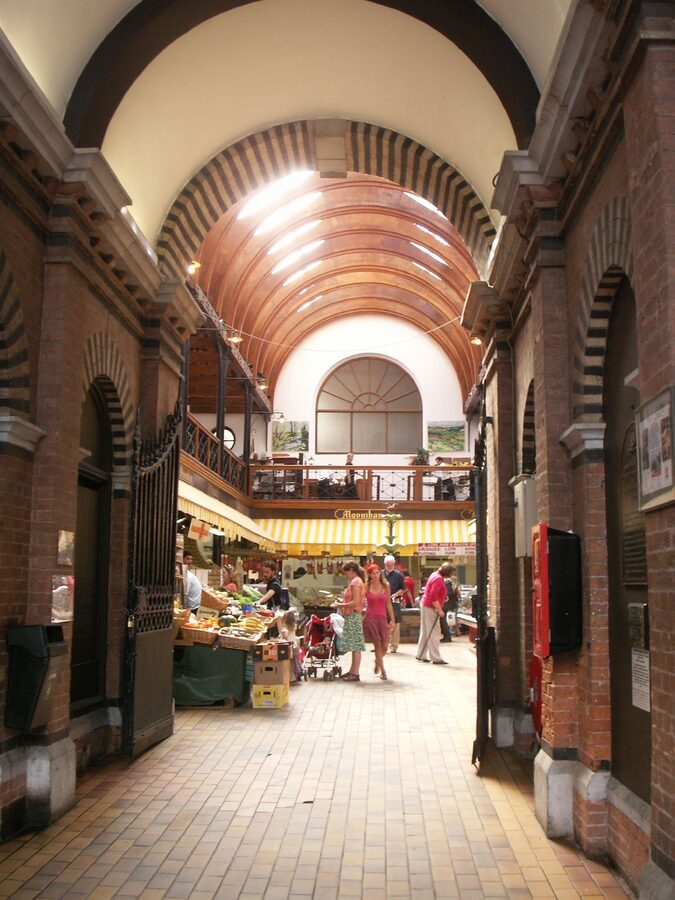
1:30pm. Arrive in Cork. Lunch stop (not included) — usually at the English Market or nearby pubs. 60-75 minutes.

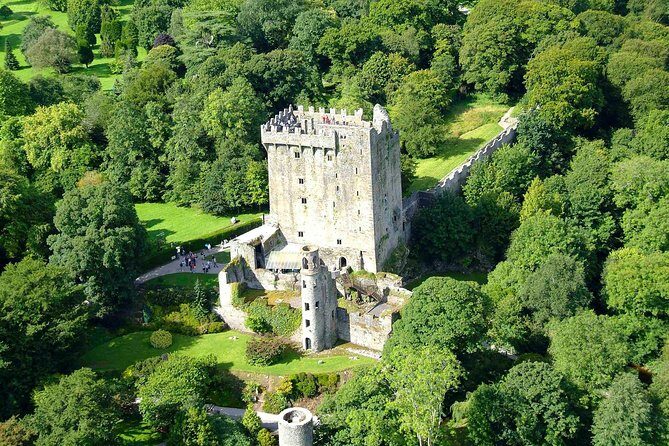
3:00pm. Blarney Castle, 8km northwest of Cork. 90 minutes at the castle and gardens. If you’re queueing for the Blarney Stone kiss, budget 45 minutes of that in line.
4:30pm. Back on the bus northbound.
7:30-8:00pm. Arrive back in Dublin. Drop-off at central pickup location.
The Three Tours Compared
1. Rock of Cashel + Cork + Blarney — $96
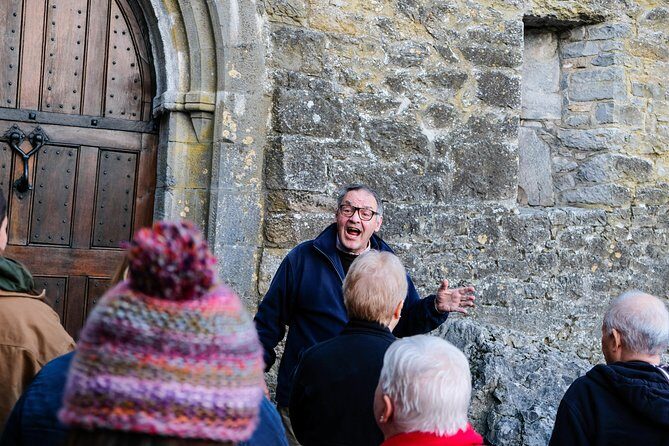
The one most people book. 12 hours, $96, hits the three headline sites without being exhausting. Group sizes 30-45 on the coach. The Rock of Cashel guided walk-through is the most interesting part — the cathedral and Cormac’s Chapel are genuinely world-class medieval architecture, and most visitors don’t realise that going in. Our full review covers which guides are the best-rated and what to prioritise at each stop.
2. Blarney + Rock of Cashel + Cahir + Cork — $109
$13 more for a fourth castle and an extra 90 minutes on the day. Worth it if you specifically care about medieval military architecture — Cahir is the most intact of the four castles and actually interesting as a functional fortress rather than just a photo stop. The longer day is taxing though; you get back to Dublin around 8:30pm. Our review covers when Cahir is worth the extended day.
3. Dublin → Cork Rail + Blarney + Cobh — $195
Twice the price, substantially different product. You travel down and back by Irish Rail rather than coach (more comfortable, has a café car, faster), which means you skip the Rock of Cashel entirely in favour of Cobh Cathedral and the Cobh waterfront (last port of call for the Titanic; emigration departure point for 2.5 million Irish Americans). Our review explains the trade-offs and when the upgrade makes sense.
The Blarney Stone — Honest Assessment
The Blarney Stone is a block of Carboniferous limestone embedded in the parapet wall of Blarney Castle’s top storey. Local tradition says kissing it confers the “gift of the gab” — eloquence and persuasive speech. To do it, you lie on your back, grip an iron railing behind your head, and lean backwards over a 30-metre drop to press your lips against the stone. An attendant holds your legs. The railings have been there since the 19th century; the stone has been kissed by millions, including Winston Churchill.
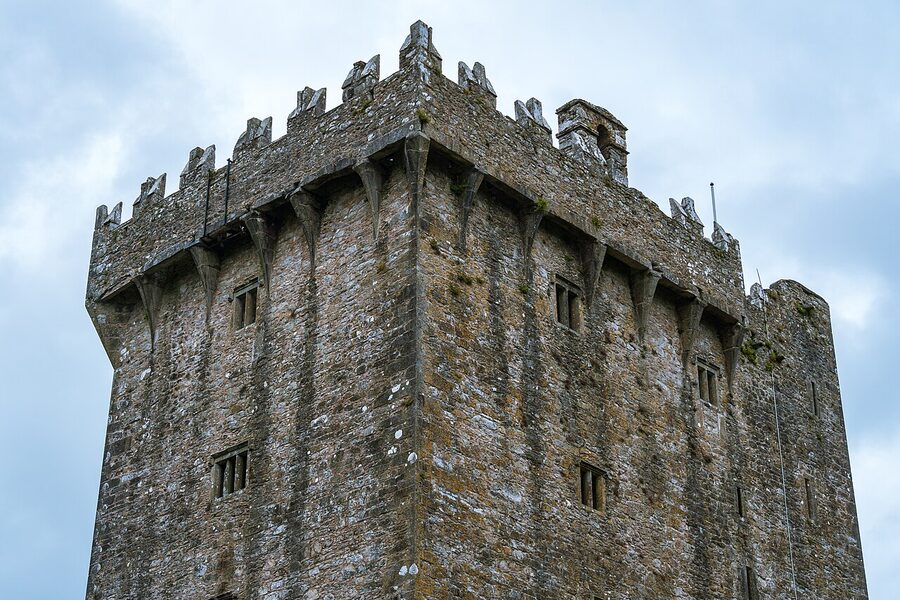

Honest view: the kiss itself is fine — slightly uncomfortable, over in three seconds, and the attendants are professional and safety-aware. The queue is what kills it. In July and August you can lose 45 minutes of your Blarney time to the line, which leaves less time for the gardens (the real attraction — Blarney Castle has 24 hectares of gardens including a Poison Garden with legally-restricted plants).
Strong recommendation: arrive at Blarney Castle, skip the stone queue, and spend your 90 minutes on the gardens, the Druid circle, the Rock Close, and the Lake Walk. The stone kiss is famous; the gardens are good.
Rock of Cashel — the Highlight
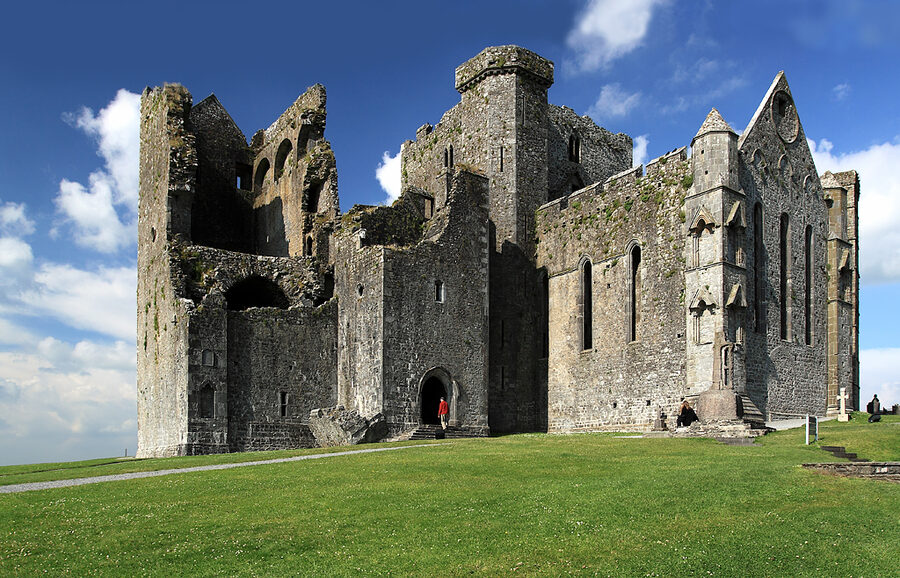
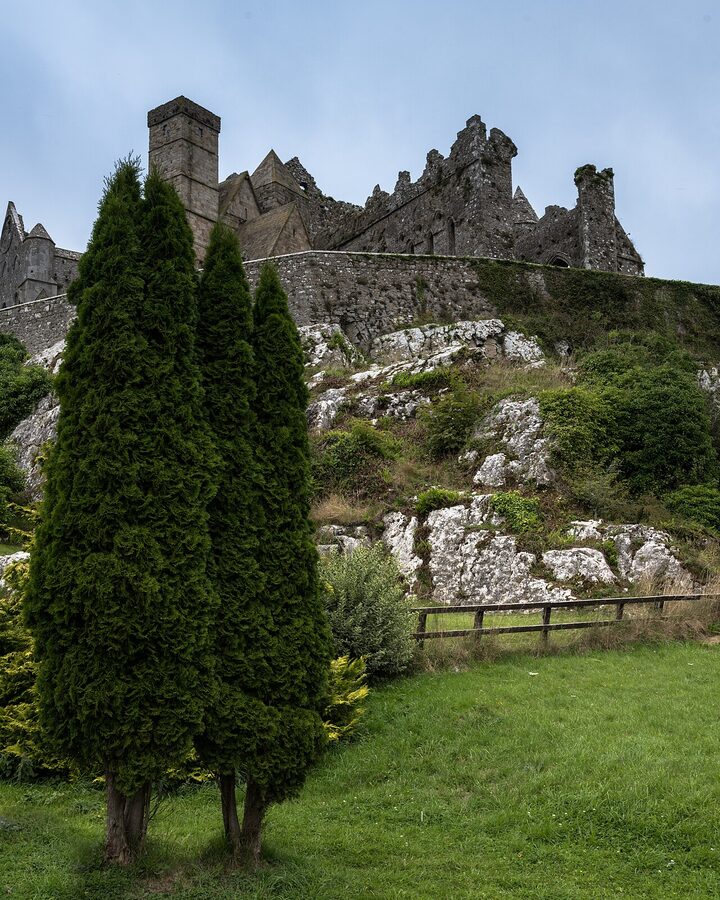
The Rock of Cashel is the reason these tours are worth booking. It’s a 90-metre limestone outcrop with a dense cluster of medieval religious buildings on top — cathedral (13th century), round tower (11th-12th century), and the Chapel of Cormac MacCarthy (1127, rare surviving Hiberno-Romanesque architecture with fragments of original wall paintings).
The Rock dominates the Tipperary plain. From 20km away on the motorway you see it on the horizon — an irregular pile of stone silhouettes, unmistakably medieval, visually striking against flat agricultural land.
Historical context: the Rock was the seat of the Kings of Munster (one of Ireland’s four ancient provinces) from the 4th to 12th centuries. In 1101 the King of Munster donated the site to the Church, which built the cathedral complex. The cathedral was severely damaged in a 1647 siege by Lord Inchiquin and mostly unroofed in 1749 by the local Archbishop (who wanted to use the lead for a different church — a famously unpopular decision).
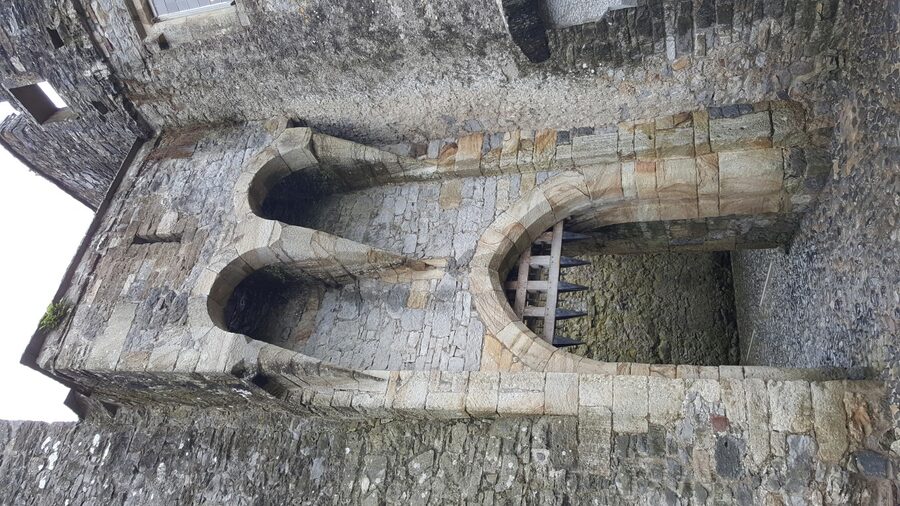
Cormac’s Chapel is the highlight for architectural visitors. It’s the earliest surviving Hiberno-Romanesque structure in Ireland, with intricate carved arches, a unique tympanum, and fragments of 12th-century wall paintings that are only rarely visible to the public (they’re light-sensitive and the chapel is opened for small guided groups only). Ask your tour guide if the chapel is open — it’s not always.
Cork City — the Stop in the Middle
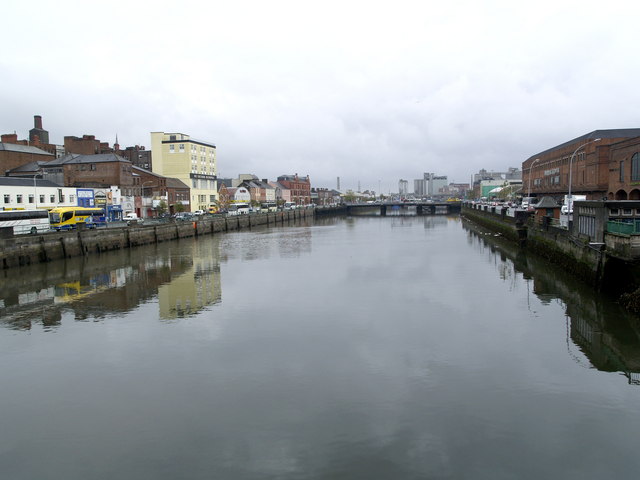
Cork gets 60-75 minutes on the coach tours. That’s enough for lunch and a quick walk through the central quays, but not enough to see the city properly. The standard tourist pass-through covers:
_from_Cork_City_Centre_-_geograph.org.uk_-_596534.jpg)
- The English Market — covered food market since 1788; lunch stop.
- St Patrick’s Street / Oliver Plunkett Street — main shopping streets for a 10-minute walk.
- The quays along the River Lee — colourful Georgian buildings if you have time.
If Cork is your primary interest rather than a passing stop, these day trips aren’t the right format. A Cork-based overnight stay would give you time for St Fin Barre’s Cathedral, the Shandon Bells, the Butter Museum, and an evening pub run. The day trip gives you a sense of Cork as a city without any depth.
What to Wear / Bring
- Walking shoes. Rock of Cashel terrain is uneven; Blarney Castle spiral stairs require grip.
- Waterproof jacket. South-west Ireland is wet; Cork is wetter than Dublin.
- Cash (euros). Lunch in Cork is easier with cash for market stalls.
- No backpacks at Blarney Stone. You can’t take bags up to the top of the tower; there’s a cloakroom at the base.
- Motion sickness medication. The M8 motorway is bendy in places and the long day on a coach is rough for sensitive passengers.
When to Book
Summer (May-September) tours book out 2-3 days ahead, especially the 12-hour standard. Winter tours have same-day availability and shorter Blarney Stone queues (sometimes as little as 10 minutes vs 45 in July).
Weekends fill before weekdays. If you have flexibility, Monday-Thursday tours have smaller groups and the Rock of Cashel is much quieter.
Alternative — Cork as a Base
If southern Ireland is the part of the country you most want to see, the better version of this trip is to stay in Cork rather than day-tripping from Dublin. Cork by Irish Rail from Dublin is 2.5 hours; two nights in Cork gets you Blarney, Cobh, the Ring of Kerry (another day trip from Cork), and the city itself properly. Total cost comparable to two of these day trips, vastly better experience.
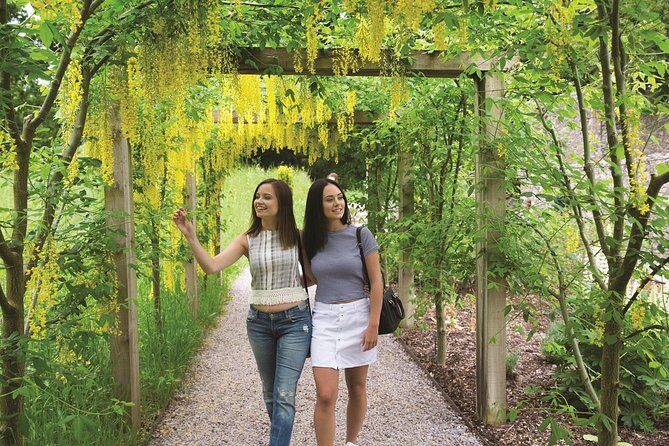
Beyond the stone, Blarney’s real attractions are the gardens: the Rock Close (landscaped 18th-century wild garden), the Poison Garden (fenced and warning-signed; includes mandrake and aconite), and the 7-acre arboretum.
Practical Details
Duration. 12-13.5 hours door to door.
Price. $96-195 depending on tour.
Group size. 30-45 on the coach tours; 15-20 on the rail-and-coach option.
Inclusions. Transport, guide, Rock of Cashel entry. NOT included: lunch, Blarney Castle entry (€20 adult, pay at gate).
Cancellation. 24-hour free cancellation on all three.
Other Ireland Day Trip Guides
The three Dublin day trips south-west cover different territory: this one (Rock of Cashel + Blarney + Cork), Giant’s Causeway north, and the shorter Wicklow and Glendalough. Each is a full day’s commitment; pick based on whether your draw is medieval history (this one), geology (Causeway), or scenery (Wicklow).
For the western coast, the Cliffs of Moher from Galway is a better version than doing that trip from Dublin; consider pairing a Cork overnight (for Blarney) with a Galway overnight (for the Cliffs) as a three-day Ireland loop. Back in Dublin, the Book of Kells walking tour is the obvious morning activity on an arrival or departure day.
Disclosure: This site earns a commission on bookings made through the links above, at no extra cost to you. We only recommend tours we’ve researched and would book ourselves.