
I don’t love Dublin food tours. The tastings are smaller than the pictures suggest, the food is formatted for tourists rather than how locals actually eat, and you could walk a similar route yourself with a good restaurant guide. But they do find you a handful of specific vendors you wouldn’t discover alone, which is the honest reason to book one.
.jpg)
This guide covers Dublin’s three most-booked food tours: the 3-hour Secret Food Tours small-group walking tour ($126), the Delicious Dublin Food Tour ($109), and the cheaper Food on Foot street food tour ($33). The three differ in price, formality, and whether you’re sitting down to eat or walking and snacking.

In a Hurry? The Three Dublin Food Tour Options
- Most-reviewed, full sit-down tastings: Dublin Walking Food Tour with Secret Food Tours — around $126, 3 hours, 6-7 tastings with sit-down pub food at the midpoint.
- Shorter history-focused version: Delicious Dublin Food Tour — around $109, 3 hours, 8 tastings across 5 venues, heavy on Dublin history.
- Cheapest — street food focus: Food on Foot Dublin Street Food Tour — around $33, 3 hours, 5-6 street-food tastings, no sit-down meal.

- In a Hurry? The Three Dublin Food Tour Options
- What the Tours Actually Cover
- The Three Tours Compared
- 1. Dublin Walking Food Tour with Secret Food Tours — 6
- 2. Delicious Dublin Food Tour — 9
- 3. Food on Foot Dublin Street Food Tour —
- What Irish Food Actually Is
- The Tasting Menu — What to Expect
- When to Book
- Timing Within Your Day
- Who Should Book
- What to Do Alternatively
- Practical Details
- Other Ireland Guides
What the Tours Actually Cover
All three tours cover Dublin food from roughly the same narrow angle — what has been cooked locally in Ireland for 200+ years, with modern pub refinements. Expect repeating themes: soda bread, smoked salmon, Irish stew or coddle, artisan butter, farmhouse cheese, maybe a small tasting of Irish whiskey. What differs is the sit-down vs walking balance and how much history the guide weaves in.

A typical route looks like:
- Stop 1 — artisan bakery or coffee shop. Soda bread with butter; sometimes barmbrack (Irish fruit loaf).
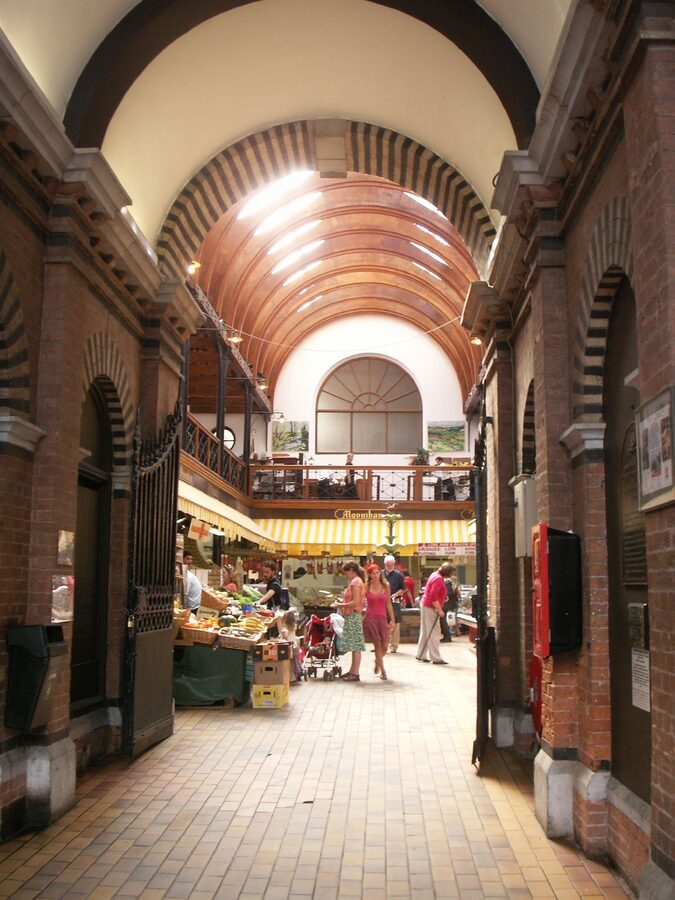
- Stop 2 — deli or market stall. Smoked salmon from Connemara or Burren.
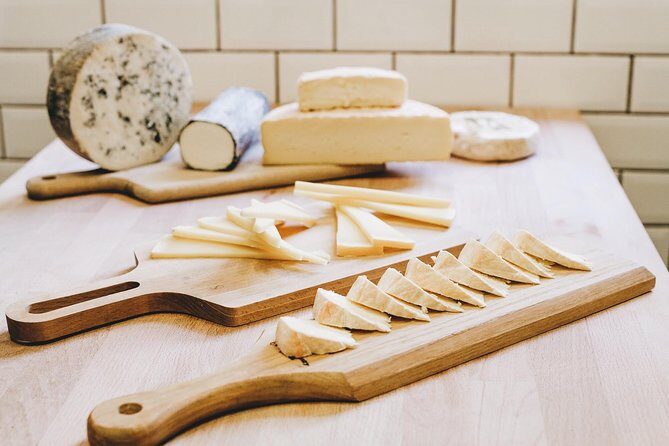
- Stop 3 — cheese shop. Three Irish farmhouse cheeses (Cashel Blue, Coolea, Gubbeen are the classic trio).
- Stop 4 — sit-down pub. Irish stew, coddle, or bacon-and-cabbage as a small plate, usually paired with a small pour of Guinness.
- Stop 5 — chocolatier or dessert shop. Chocolate made with Irish cream or dark chocolate with a local accent.
- Stop 6 — optional whiskey or coffee stop to finish.

The Three Tours Compared
1. Dublin Walking Food Tour with Secret Food Tours — $126
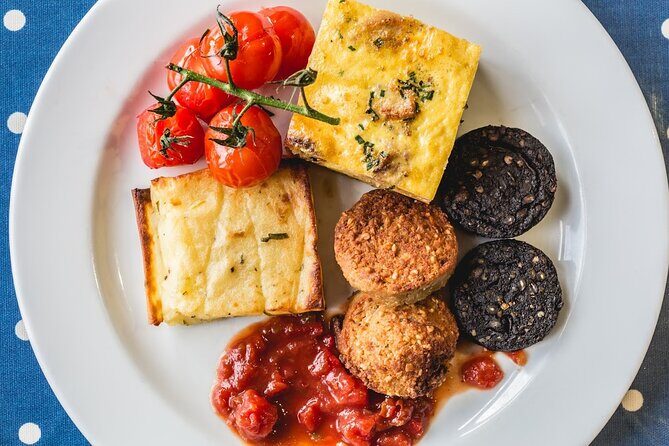
The default choice and the most expensive. $126 is steep but you get 6-7 substantial tastings, a real sit-down pub lunch (not a bite), and a 3-hour guided walk covering Dublin food history. Group sizes are capped at 12, which keeps the pace manageable and means the guide can give real individual attention. Our review covers which specific vendors Secret Food Tours works with and why the $50 premium over option 2 may or may not be worth it for you.
2. Delicious Dublin Food Tour — $109
Lower-priced full-format tour with more tastings but smaller portion sizes per tasting. The guide leans history-of-Dublin rather than technique-of-cooking; you learn more about the city and slightly less about the food. If you want a food + city-orientation combination, this is the pick. Our review covers the tastings in detail.
3. Food on Foot Dublin Street Food Tour — $33
The cheapest tour by a wide margin ($33 vs $126) and a genuinely different product. Rather than sit-down pub stops, this is a standing-and-walking tour through street food vendors and market stalls. You get smaller portions but more variety, and the 3 hours goes at a faster pace. Pick this if you’re not that hungry, or you’ve already done one of the longer tours, or you just want a lower-cost orientation. Our review explains the format difference.
What Irish Food Actually Is
Irish food is not — and wasn’t historically — elaborate. It’s a cuisine built on what a cold, wet, 19th-century smallholding could reliably produce: potatoes, dairy, salted or smoked pork, root vegetables, seasonal greens, and sea fish on the coasts. The Great Famine (1845-1852) reduced the population by 20-25% through starvation and emigration and scarred the food culture for two generations afterwards — for much of the 20th century, Irish home cooking deliberately avoided imagination because imagination felt like rejecting the simple foods that had survived.
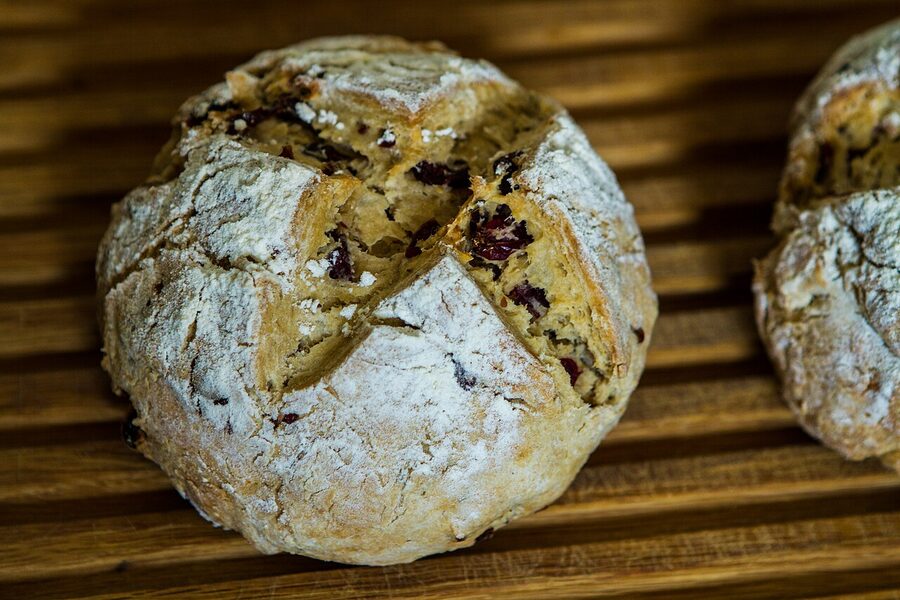
Soda bread is the closest Irish food has to a universal dish. Every family has a version; every tour stops at a bakery serving a version. The four ingredients (flour, buttermilk, baking soda, salt) haven’t changed since the 1840s.
Since roughly 2000, Ireland has developed a serious modern food scene — Dublin has three Michelin-star restaurants, a thriving artisan-producer network, and a wave of returning-diaspora chefs doing interesting things. The food tours don’t really cover that modern side; they cover the traditional foundation. If you want the cutting-edge Dublin restaurant scene you need a separate restaurant guide, not a food tour.
The Tasting Menu — What to Expect
Soda bread. White or brown, served with salted butter. The test of a good soda bread is that the crust has a distinct texture separate from the soft interior. Dublin bakeries compete on the crust.
Smoked salmon. Ireland produces some of the best cold-smoked salmon in Europe — the traditional method uses oak or beech smoke and takes 24-48 hours. Served on soda bread with a squeeze of lemon and maybe a dill garnish. Don’t add capers; an Irish tour guide will wince.
Farmhouse cheese. A 45-year revival since the 1970s has produced 50+ distinctive Irish farmhouse cheeses. Cashel Blue is the one most visitors recognise; Gubbeen is a washed-rind soft cheese; Coolea is a hard Gouda-style. A three-cheese tasting is standard on the longer tours.
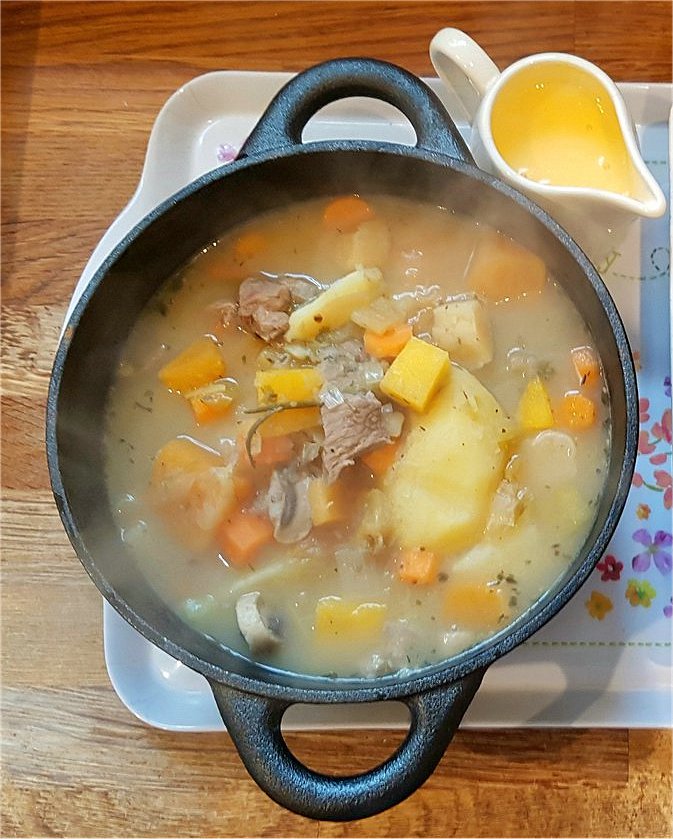
Irish stew. Real Irish stew is white — lamb or mutton, potatoes, carrots, onions, and stock, with no browning. The brown version you see in most pubs is the Anglo-adaptation. A good food tour will serve the traditional white version.
Traditional white Irish stew is pale — no tomato paste, no wine, no caramelisation. The flavour comes from slow cooking rather than Maillard browning. This is what you should be tasting if you want the authentic version.
Coddle. Dublin-specific. Sausage and rashers (bacon) cooked with potatoes and onions in stock. Pale, rustic, working-class food from the 18th century. You either love it or find it bland — the tour stops serving coddle tend to be the ones that convert sceptics.
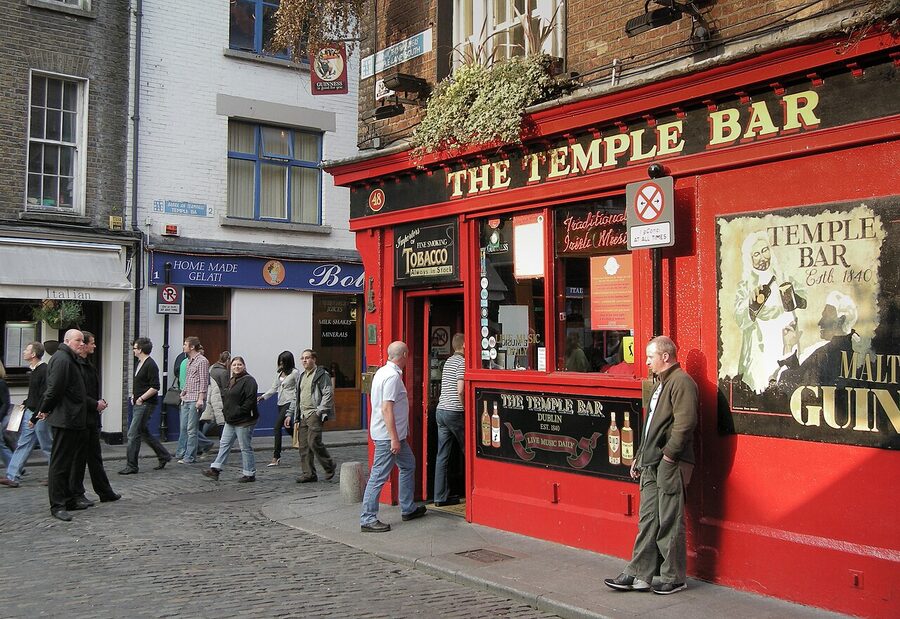
Boxty. A potato pancake, often served as a wrap around something else (Gallaghers Boxty House in Temple Bar is famous for it). Appears on some tours; not all.
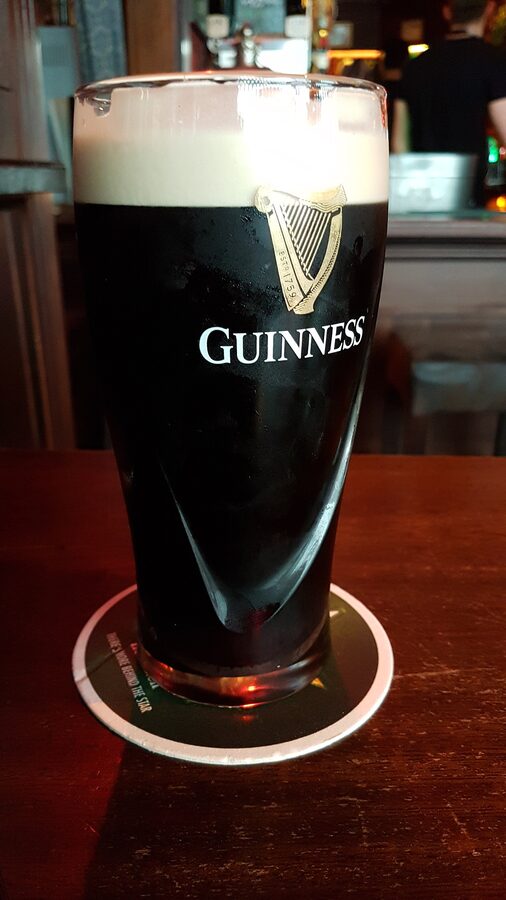
Guinness. The one-pour mystery. Real Guinness is poured in two stages (the pub pour is pulled to 3/4, allowed to settle for exactly 119.5 seconds, then topped off). A good food tour will include this demonstration at the lunch pub.
The finished two-stage pour has a tight head (3/4 inch), clear distinction between head and beer, no bubbles rising to disturb the surface. If your pint doesn’t look like that, the bartender didn’t pour it properly.
Irish whiskey. The longer tours include one small whiskey pour — usually Jameson standard or a local distillery. If whiskey matters to you, do the Jameson Bow Street or Teeling distillery tour separately — you’ll learn more there than on a food tour.
When to Book
Summer (May-September) tours run daily; the Secret Food Tours 12-person groups sell out 3-4 days ahead for peak weekends. Winter (November-February) tours run 4-5 days a week with same-day availability.
Friday and Saturday lunchtime slots sell first. Monday and Tuesday are quieter; the guides are often more attentive on low-volume days.
Timing Within Your Day
These are lunch-oriented tours — typically starting at 11:30am-12:00pm and running until 2:30-3pm. Plan it as your lunch. Don’t eat a big breakfast or you’ll be defeated by tasting 4 before the end.
If you have dinner reservations, book them at 8pm or later — you’ll still be full at 6pm on a good food tour. If you don’t want a formal dinner, a pub with a bowl of soup at 7-8pm is the natural next move.

Who Should Book
Book a food tour if:
- You don’t have time for a proper Irish food education and want the primer version
- You’re visiting Dublin for the first time and want an orientation that doubles as lunch
- You enjoy food-themed walking tours as a format (London, Paris, Rome — you’ve done similar)
- You’re with a partner/friend who doesn’t eat adventurously and you want the “easy version” of Irish food
Skip it if:
- You’re confident researching pubs yourself and walking between them
- You’re a serious food person looking for fine-dining-level Irish
- You only have one evening in Dublin and want that evening to be your own choice of restaurant
What to Do Alternatively
Dublin’s best-reviewed food vendors that don’t need a tour to find:
- Sheridans Cheesemongers (South Anne Street) — the best cheese shop in the country, runs informal tastings most weekends
- Fallon & Byrne (Exchequer Street) — upscale food hall with a good deli counter
- The Woollen Mills (Ormond Quay) — pub-style casual with a good modern take on soda bread and cured salmon
- Klaw (Temple Bar) — serious seafood shack, oysters and Connemara smoked salmon
- Chapter One (Parnell Square) — for the Michelin-star option, €90 tasting menu
A self-guided food afternoon: 11:30am cheese at Sheridans, 12:30pm oysters and Connemara smoked salmon at Klaw, 2pm a pint and coddle at The Brazen Head (Dublin’s oldest pub, 1198). Total cost: €50-60 per person. Cheaper than a Secret Food Tour and arguably better food.
Practical Details
Duration. 3 hours on all three.
Price. $33 (street food), $109 (Delicious Dublin), $126 (Secret Food Tours).
Group size. 12 (Secret Food), 20-25 (Delicious), 15-20 (Food on Foot).
Inclusions. All tastings, water, tea/coffee. NOT included on the two longer tours: alcohol beyond the Guinness pour (additional drinks are your tab); tips (suggested €5-10 per person).
Dietary. Vegetarian options available on all three; flag 48 hours ahead. Vegan and gluten-free harder — ask when booking.
Cancellation. 24-hour free cancellation on all three.
Other Ireland Guides
A Dublin food tour pairs naturally with a morning Book of Kells walking tour (which is itself about 2.5 hours and finishes around 11am, so you can walk straight to the food tour start). Skip the same evening’s heavy pub crawl — you’ll be too full. Save the music pub crawl for the next evening.
For the whiskey and Guinness focus a food tour only glances at, the Jameson or Teeling distillery and Guinness Storehouse give the proper depth. For day trips from Dublin after a food-oriented opening day: Giant’s Causeway, Wicklow and Glendalough, or Rock of Cashel and Blarney all pair well.
Disclosure: This site earns a commission on bookings made through the links above, at no extra cost to you. We only recommend tours we’ve researched and would book ourselves.