
I made the rookie move on my first day in Funchal. I tried to wing it — opened a free city map at the cathedral, decided to wander, and inside an hour I was looking at the harbour from completely the wrong angle, with no idea why the pavements suddenly had black-and-white mosaic patterns or what those painted doors over in the old quarter actually meant. The city looks small enough on the map. Don’t trust the map.
A two-hour guided walking tour fixes all of that, costs less than lunch, and is genuinely the smartest first morning you can have on Madeira. I’ll show you what to book, what each option actually covers, and a few practical things the booking pages won’t tell you.
- Best value: Funchal Old Town Walking Tour — $19, two hours, hits the cathedral, market, painted doors, and a quick wine taste. Book this if you only do one walking tour on Madeira.
- For food lovers: Madeira Food and Wine Walking Tour — $111, 3.5 hours, eleven food stops and six drinks, including a five-year Sercial. This is lunch and a tour rolled into one.
- Cheaper Viator alternative: Old Funchal Walking Tour — $19.83, two hours, small group capped at ten. Same beats as the GYG version, different operator.
- Why bother with a guide at all?
- What a typical Funchal walking tour covers
- The three tours I’d actually book
- 1. Funchal: Old Town Walking Tour —
- 2. Madeira: Food and Wine Walking Tour in Funchal — 1
- 3. Old Funchal Walking Tour (Viator) — .83
- How booking actually works
- What to bring (and what not to)
- The history bit (without the headache)
- The painted doors, properly explained
- Inside the Mercado dos Lavradores
- Free walking tours — worth it?
- Where the walking tour ends — and what to do next
- When to book — by month
- Combining a walking tour with the rest of Madeira
- Practical tips I wish I’d known first time
- If a walking tour isn’t your speed
- One more thing: don’t combine with too much
- Funchal walking tours and what to do with the rest of your week
Why bother with a guide at all?
You can absolutely walk Funchal solo. The old town is compact, the streets are safe, and a tourist-board pamphlet will get you from the cathedral to the market in fifteen minutes. So what’s the case for paying $19?
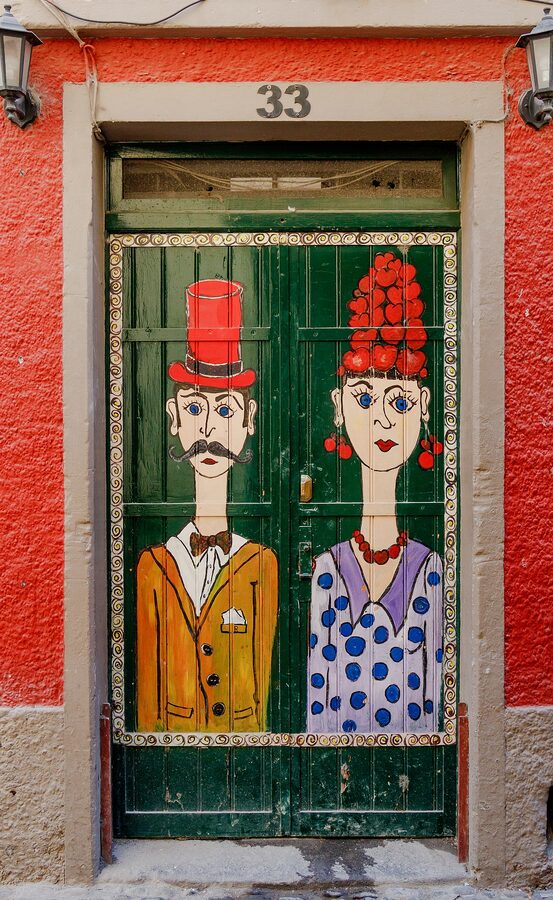
Three things, really. The first is the painted doors. The famous painted doors of Rua de Santa Maria aren’t just decoration — they came out of a 2010 community art project called ArT of opEN doors that turned a then-rundown street into one of the most photographed alleys in Portugal. Without a guide, you see pretty doors. With a guide, you hear which artists painted what, why some doors were repainted after vandalism, and which café was the unofficial canteen for the painters. That’s the difference.

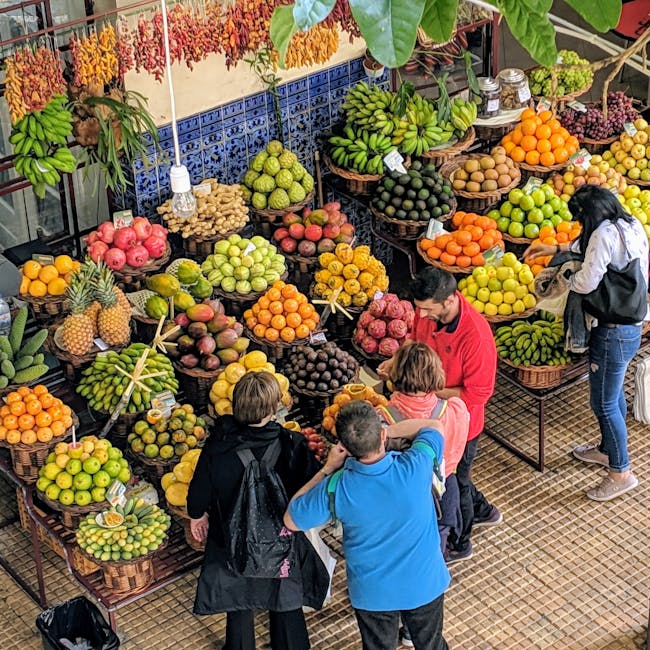
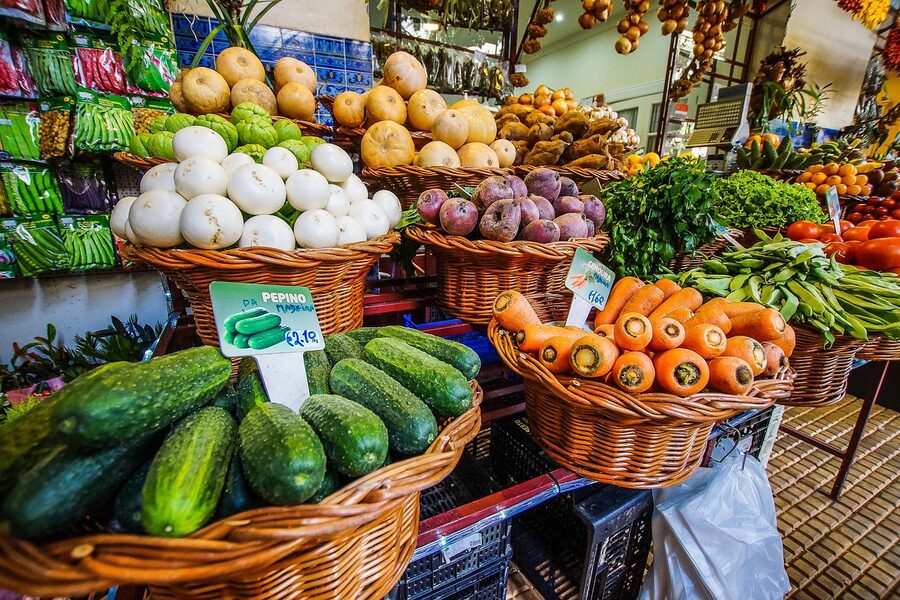
The second is the market. Mercado dos Lavradores is glorious if you understand what you’re looking at, and confusing if you don’t. The fruit stalls upstairs aggressively price-tag tourists — a tagged custard apple can be six times the price of the same fruit in a corner shop. A guide knows which stallholders to talk to and what’s in season that morning, which turns a wallet-bleeding moment into a fun one.
And the third is pace. Solo, you’ll either rush or get lost. With a guide you walk for two hours, sit twice, and leave with a mental map you can build the rest of your trip on. If you’re staying three or more days I’d put a walking tour in the first 24 hours every time.
,_Mercado_dos_Lavradores_--_2025_--_0999.jpg)
What a typical Funchal walking tour covers
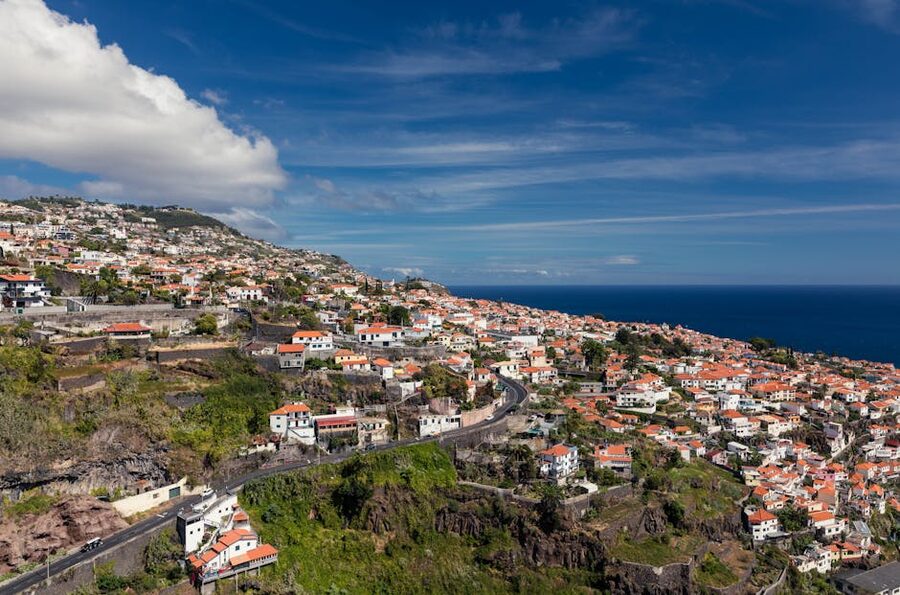
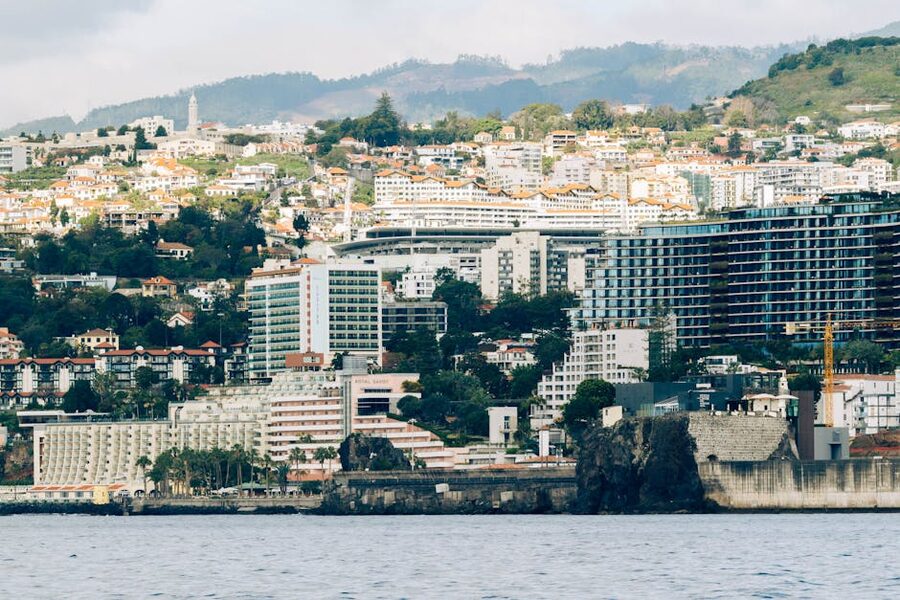
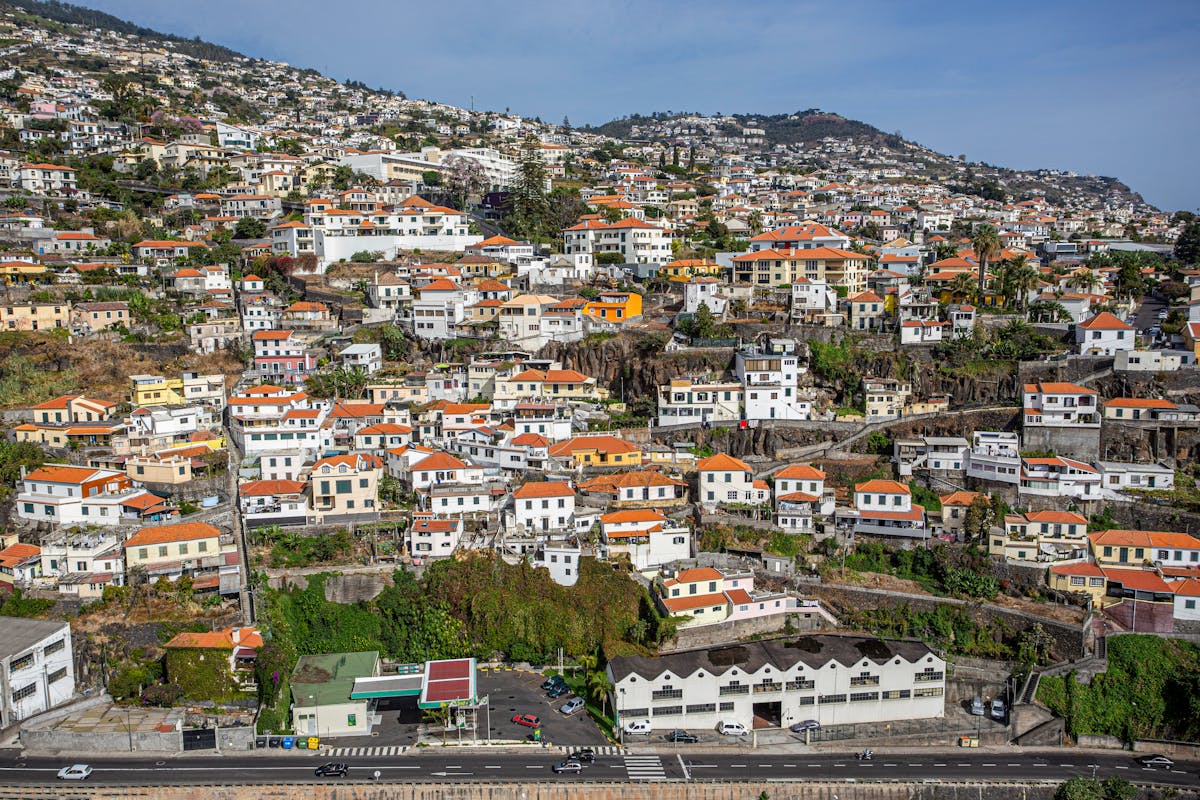
The geography helps explain why most tours follow nearly identical routes. The old town is essentially a long, narrow strip running east from Avenida Arriaga to the Forte de São Tiago, hemmed in by the Atlantic on one side and a steep slope on the other. There’s only so many ways to walk it. Expect:
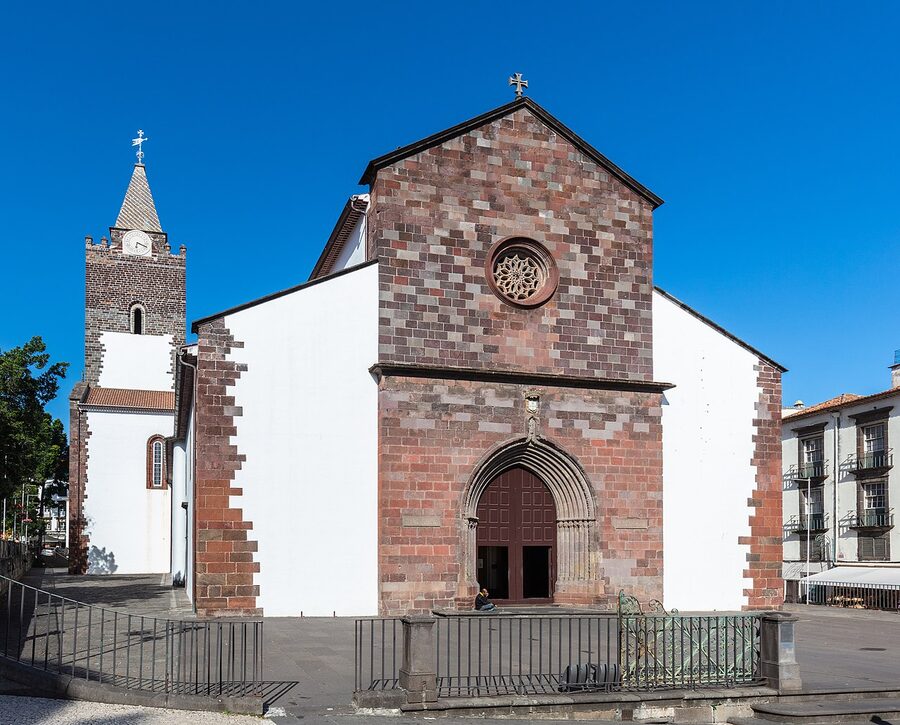
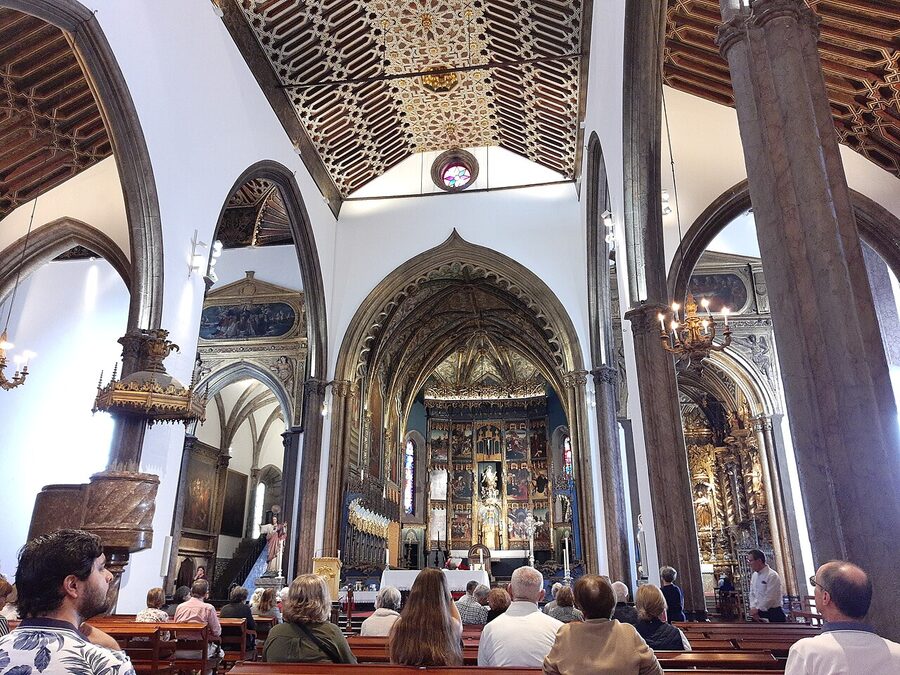
- The Sé Cathedral. Most tours start here or use it as the meeting point. The cathedral is small by European standards but the cedar-wood ceiling is one of the best in Portugal — locals call it Mudéjar-influenced, you might just call it stunning. Five minutes inside is enough.
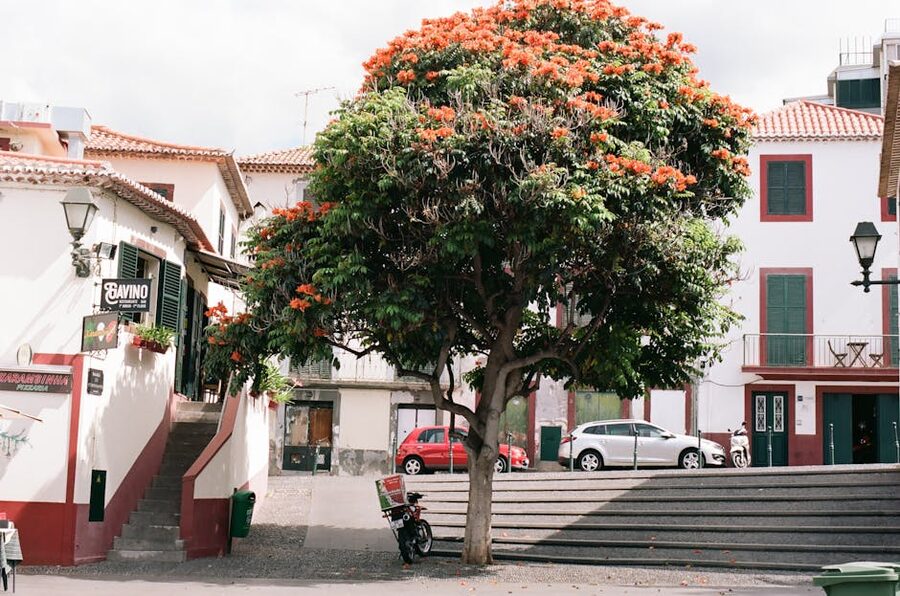
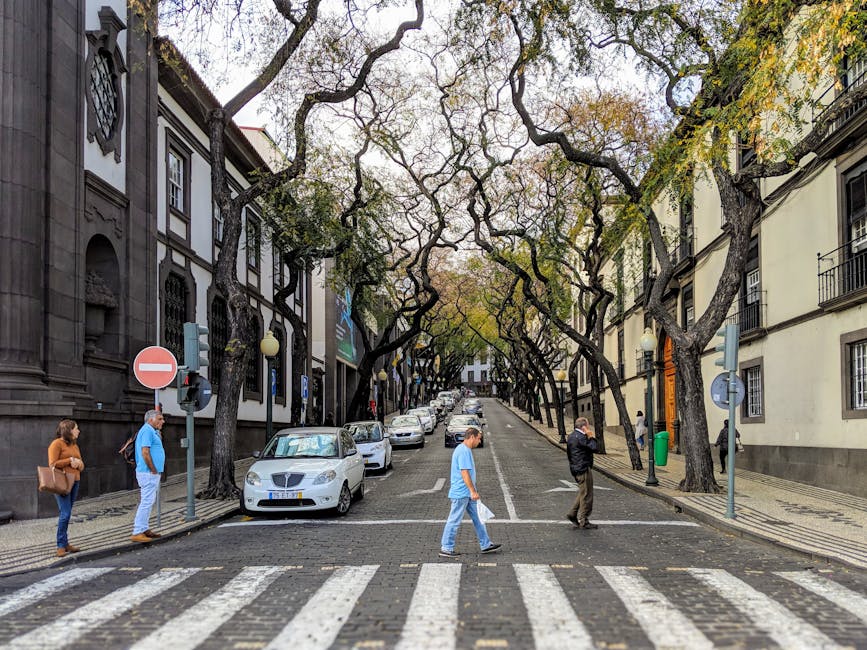
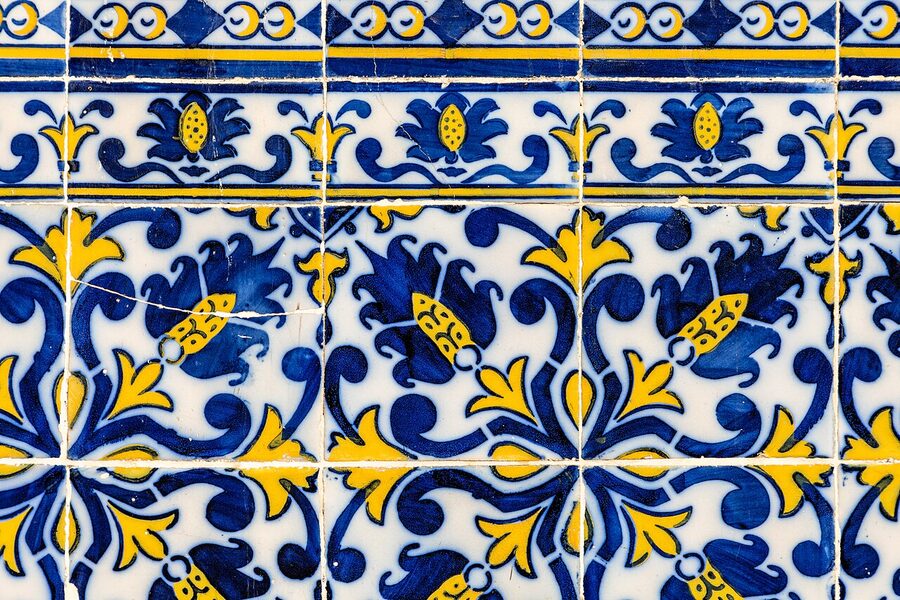
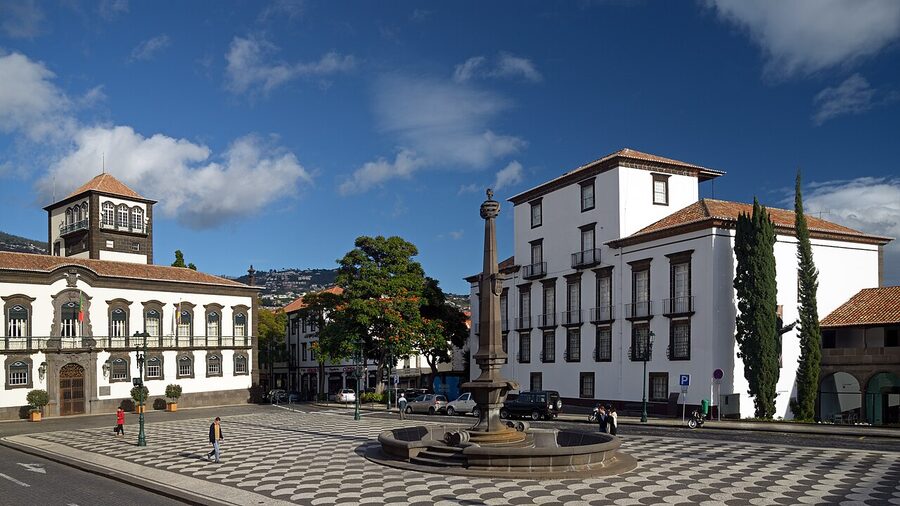
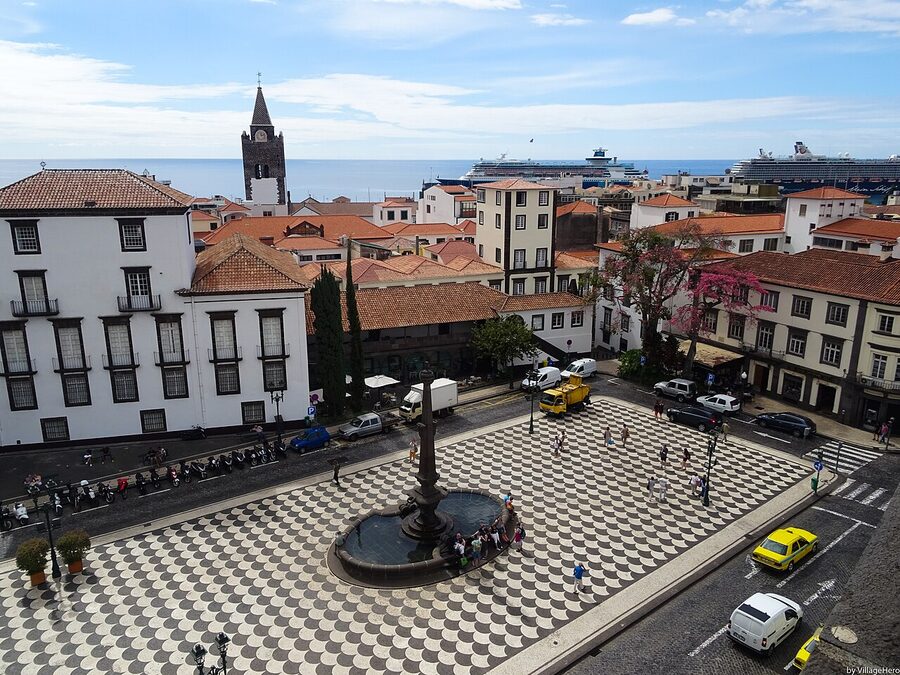
- Avenida Arriaga and Praça do Município. The civic-and-shopping spine of central Funchal. The square has a chequerboard pavement made of black basalt and white limestone — keep walking on it and you’ll spot the same pattern across most of central Funchal.
- Mercado dos Lavradores. The 1940s farmers’ market, with fruit stalls upstairs, fish counters in the basement, and a small flower-sellers’ courtyard. Tour groups usually get 15-20 minutes inside.
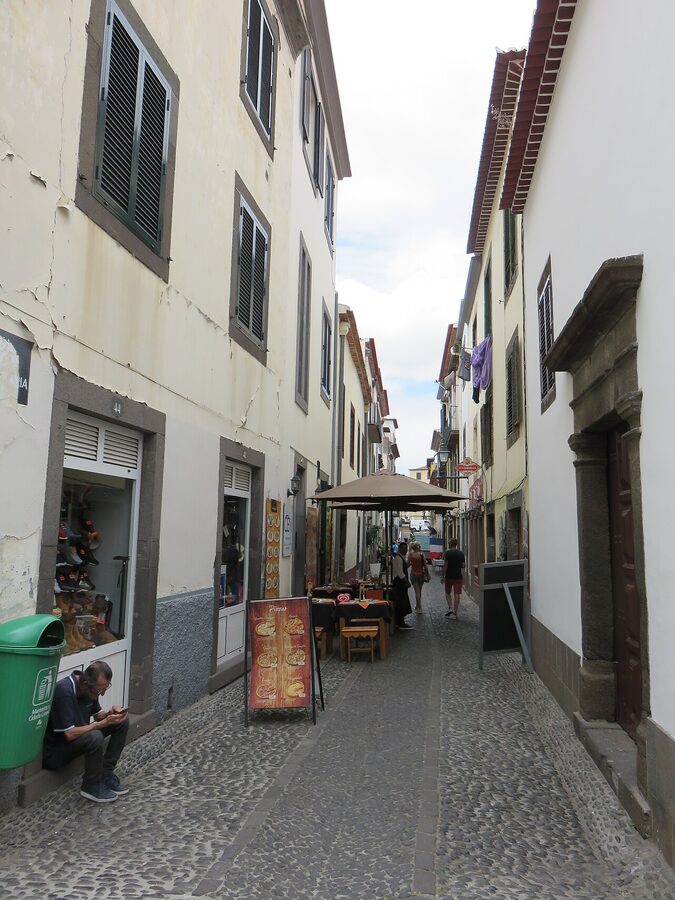
- Rua de Santa Maria and the painted doors. The 600-metre lane that runs through the old fishermen’s quarter (Zona Velha). The painted doors are along here.
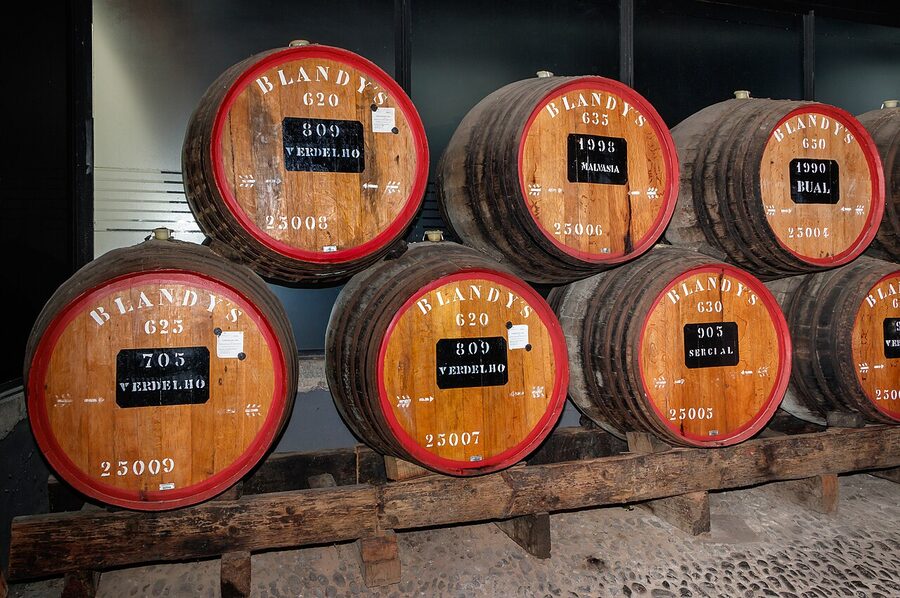
- A wine taste, usually at Blandy’s. Most tours stop at a Madeira wine lodge near the market for a small pour. It’s a sample, not a full tasting — set expectations.



The three tours I’d actually book
I looked at every walking tour currently running in Funchal and these are the three that come up consistently with happy customers, sensible prices, and routes that actually cover the old town rather than wandering off into souvenir-shop territory. Sorted with my favourite first.
1. Funchal: Old Town Walking Tour — $19
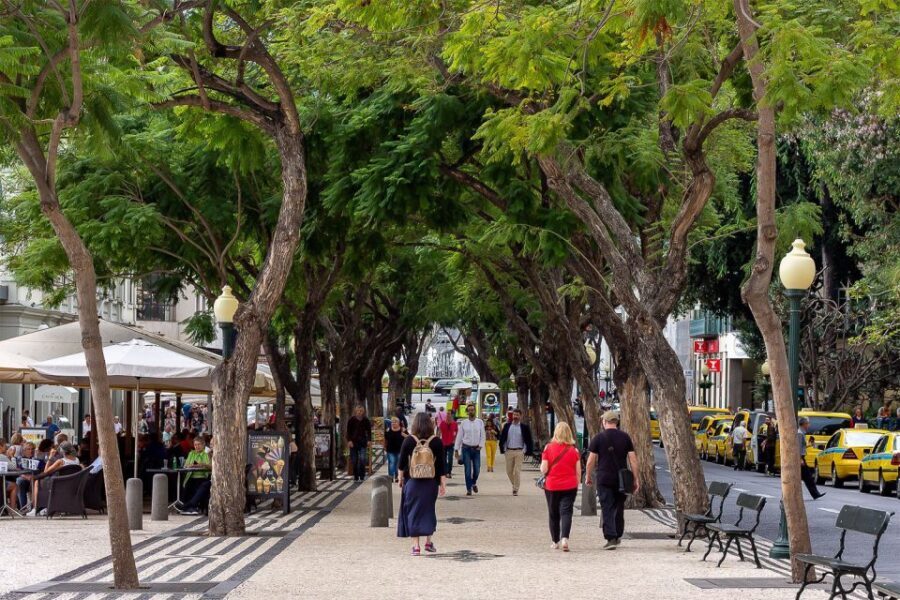
This is the one I send people to first. Two hours, max ten people, starts at the Jesuits’ College of Funchal next to the University of Madeira and ends with a quick wine pour at a lodge near the market. Our full review goes into the route in more detail, but the short version: it’s the cleanest, best-priced introduction to the old town you can buy. The guides know the city personally — one of mine grew up on Rua de Santa Maria — and the small-group format means you can actually ask questions instead of straining to hear over a microphone.
2. Madeira: Food and Wine Walking Tour in Funchal — $111
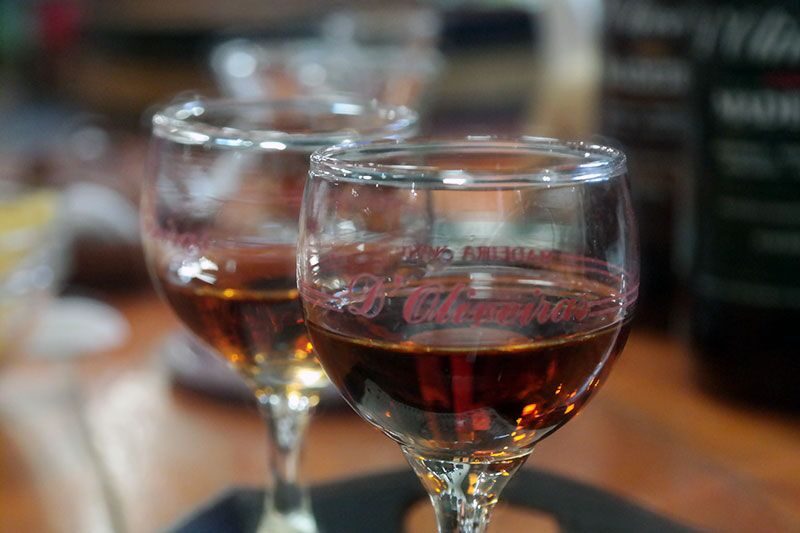
The bigger commitment, but if you care about food at all this is where to spend your money in Funchal. Eleven tastings ranging from bolo do caco (Madeira’s flat garlic bread, eaten everywhere) to espetada beef skewers, plus six drinks including a five-year Sercial Madeira and a closing poncha. Groups capped at ten. Our review covers the full menu rotation. If you’ve already done the equivalent Lisbon food tour on the mainland, this is the Madeiran answer — different ingredients, same generous tasting format. One thing the booking page underplays: it’s three and a half hours of slow walking and steady eating, so wear actual walking shoes and skip a big breakfast.
3. Old Funchal Walking Tour (Viator) — $19.83
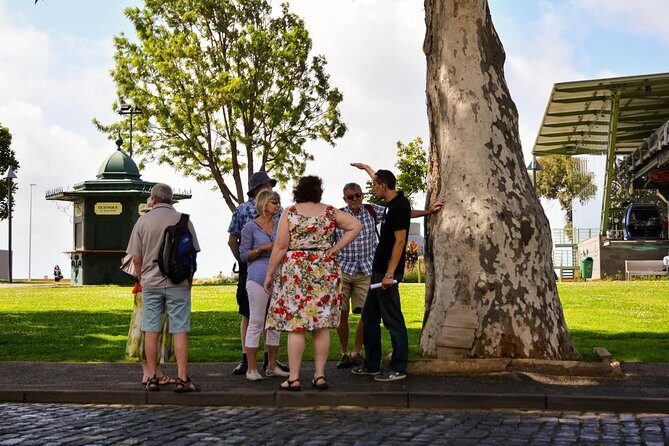
Run by a small Funchal-based outfit called History Tellers and sold via Viator. Same two-hour format, same ten-person cap, same general route — Municipal Gardens, the cathedral, Mercado dos Lavradores, painted doors. Our full write-up compares it side by side with the GYG version. You can pick either, really; my only tip is to check both pages for the date you want, because availability differs and one will often have a slot when the other is sold out.
How booking actually works
Funchal walking tours run almost daily year-round, but the morning slots fill up first because most travellers want to dodge the heat (and, in summer, the cruise crowds). Book on GetYourGuide or Viator, pay by card, and you’ll get a PDF voucher with the meeting point and a phone number for the operator. Both platforms allow free cancellation up to 24 hours before the tour starts on the standard products — which means you can book speculatively while planning and adjust later.
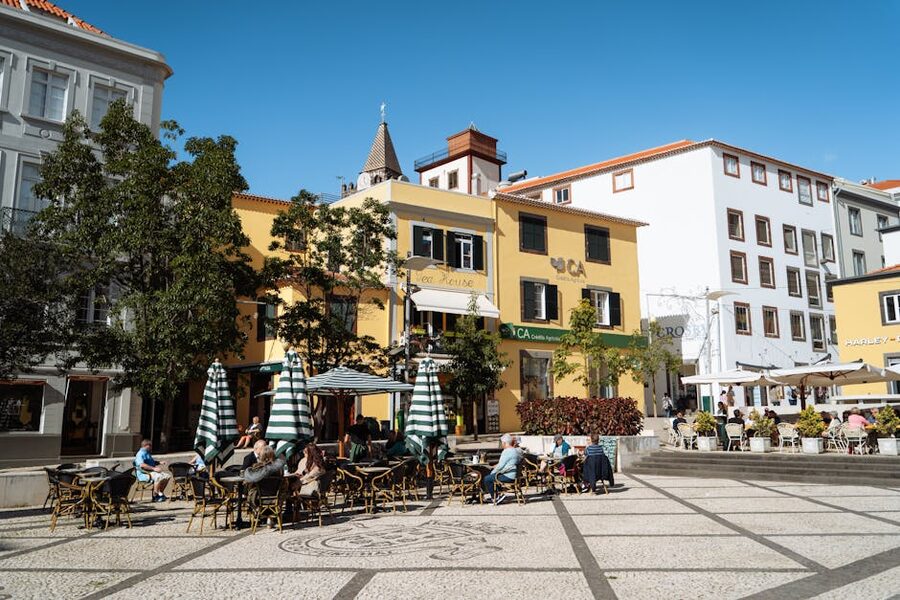
The meeting point for most tours is either the front of the Sé Cathedral or the small square outside the Jesuits’ College on Rua dos Ferreiros. Both are central and walkable from any old-town hotel. If you’re staying further out (Funchal extends west towards Lido and east towards Garajau), allow 20 minutes by taxi or use one of the city buses — the 53 and 49 hit most central stops.
_(37389255444).jpg)
What to bring (and what not to)
Walking shoes with grip are non-negotiable. Funchal’s pavements are mostly that calçada portuguesa I mentioned earlier — small basalt and limestone cubes, beautifully laid, and slick as glass when wet. There’s no in-between with these stones: dry, they’re charming. Wet, they will put you on the floor. Two friends of mine fell on the same morning of one trip; one of them on a flat patch of pavement. So: trainers or proper walking shoes, not flip-flops, not new sandals.
Pack light. A small bottle of water (or just buy one at the market — they’re a euro), sun cream in summer, a light rain jacket from October to March. You won’t need a backpack. The food and wine tour will give you tasting bags, so leave room.
The history bit (without the headache)
You don’t need a degree in Portuguese history to enjoy Funchal, but a few minutes of context turns the walking tour from “pretty old streets” into “ah, that’s why this is here”. Madeira was uninhabited until 1419, when the explorer João Gonçalves Zarco was sailing under Henry the Navigator and landed on what’s now Porto Santo. He came back the following year and named the larger island Madeira — Portuguese for wood — after the dense laurel forests that covered it.
Funchal was founded in 1424 and got its name from the wild fennel (funcho) growing in the bay. By the late 1400s it was already an Atlantic crossroads — the last European port before the Americas, and a sugarcane economy that briefly made the island richer per capita than the mainland. That’s why the Sé Cathedral, finished in 1517, is grander than the size of the city would suggest. Sugar built it. Madeira wine, which became the export of choice after sugar collapsed, paid to keep it standing.

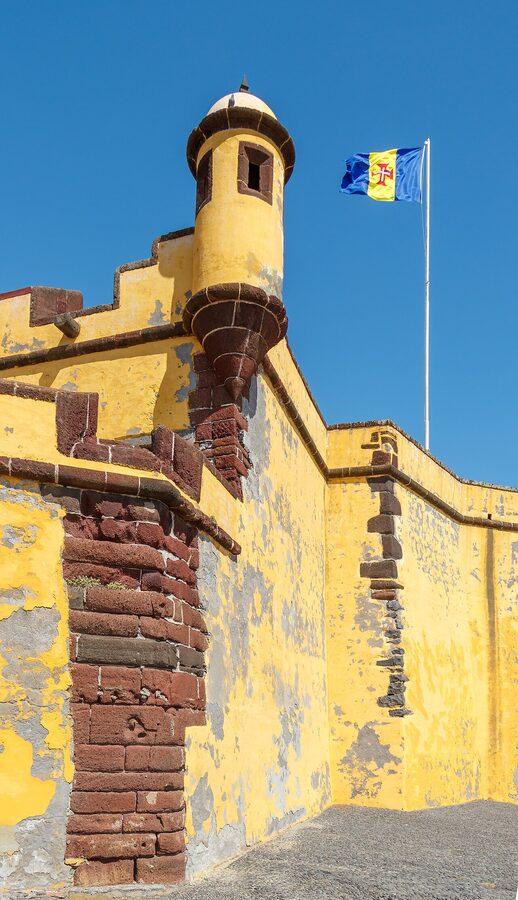
The Forte de São Tiago, the yellow fort at the eastern edge of the old town, went up in 1614 to defend against pirate raids. Most walking tours don’t go inside — there’s no time — but you’ll pass it on the loop. Worth a half-hour return trip later in the day if you have it; the views from the ramparts are some of the best free shots of the city you’ll get.

The painted doors, properly explained
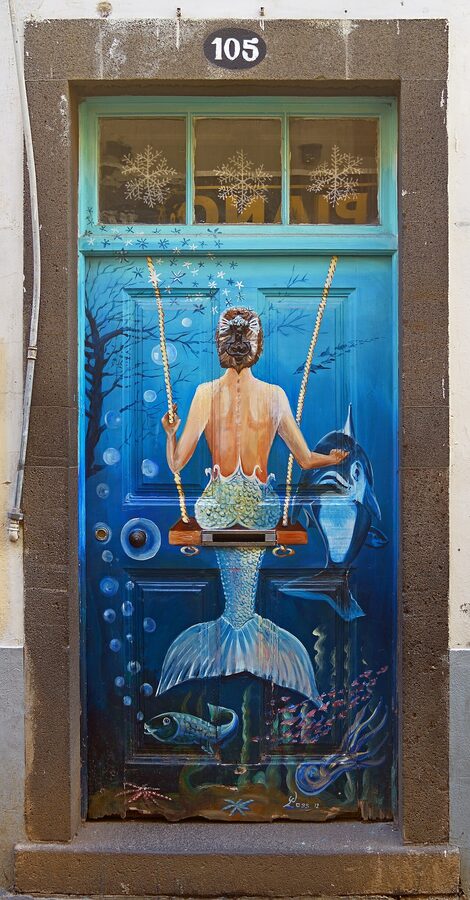
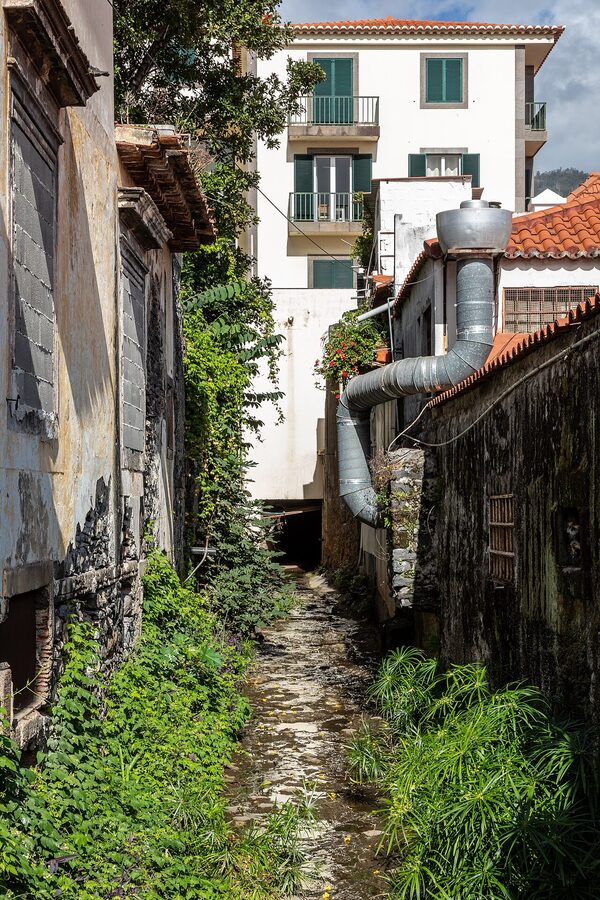
Almost every walking tour spends 20-30 minutes on Rua de Santa Maria, which means it deserves more than a sentence. Until 2010, this 600-metre lane was a slightly grim stretch of the old fishermen’s quarter — businesses closing, doors boarded up, locals avoiding it after dark. A photographer called José Maria Zyberchema started a project he called ArT of opEN doors, recruiting local artists to paint each closed-up door as a statement piece. The idea was simple: give the street back to art and the public will follow.
It worked, fast. By 2014 there were over 200 painted doors, the street had filled with cafés and small bars, and Rua de Santa Maria became one of Funchal’s main night-time strips. Some doors have been repainted multiple times — owners change, paint peels, new artists take over. A few have been deliberately preserved as originals. A guide will know which is which; without one, every door looks the same.
._Funchal,_Madeira.jpg)
,_Rua_de_Santa_Maria_--_2025_--_1168.jpg)
Inside the Mercado dos Lavradores
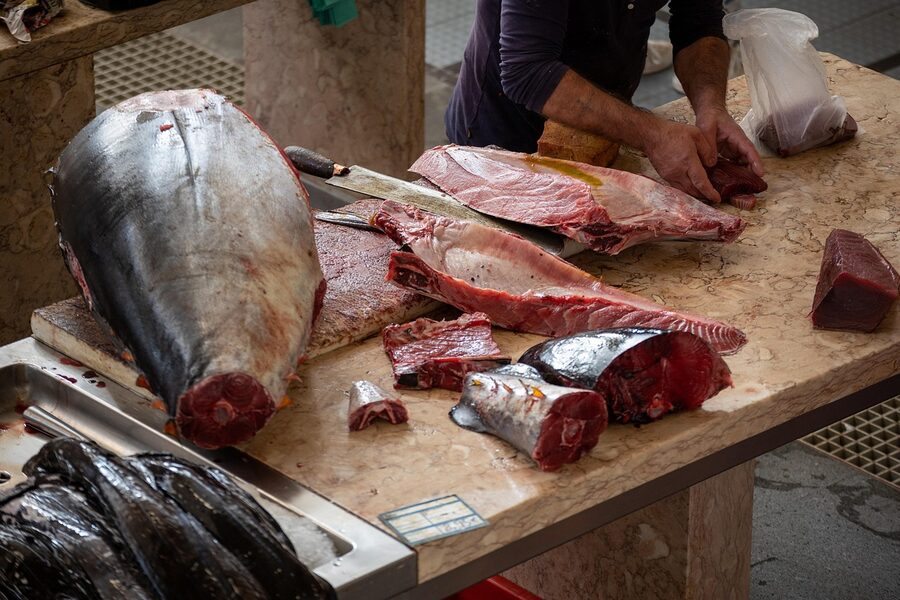
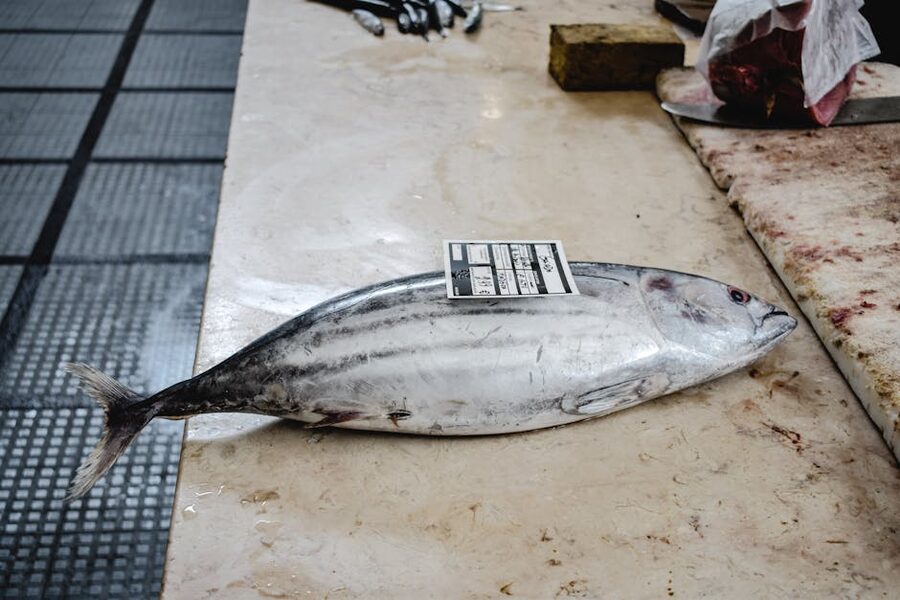
The market opened in 1940, designed by Edmundo Tavares in the Portuguese Estado Novo style — concrete frame, art-deco lines, two big azulejo panels at the entrance painted by João Rodrigues. The fruit and flower stalls fill the upper floor; the fish market is in the basement and starts smelling around midday. Tour groups usually do the upper floor only.
The pricing thing is real. I’m not exaggerating. Custard apples at the airport’s corner-shop fruit display cost €1.50 each. The same custard apple, tagged at a tourist-aimed Mercado stall, can be €4 to €9 depending on size. The fix is simple: ask the price before you let anyone slice anything for you. If the answer makes you flinch, walk away — there’s no obligation, and the next stall over will probably price it normally.
Free walking tours — worth it?
Free Walking Tours Funchal runs at 9.30am and 2.30pm Tuesday/Thursday plus 2.30pm Saturday, with a 2.5-hour route that overlaps roughly 70% with the paid tours. They work on a tip basis — most people pay €10 to €15 per person at the end. Are they worth it? Yes, if your dates align. The guides are local, the route is good, and you’re not locked into a fixed price.
The catch is reliability. Free tours occasionally cancel at short notice if guide numbers are short, the cap is high (sometimes 25+ people in summer), and you can’t pre-book a specific guide. The paid tours run every day, cap groups at ten, and confirm 48 hours ahead. If your trip is short, pay the $19. If you’ve got a flexible week and the times work, give a free one a try.

Where the walking tour ends — and what to do next
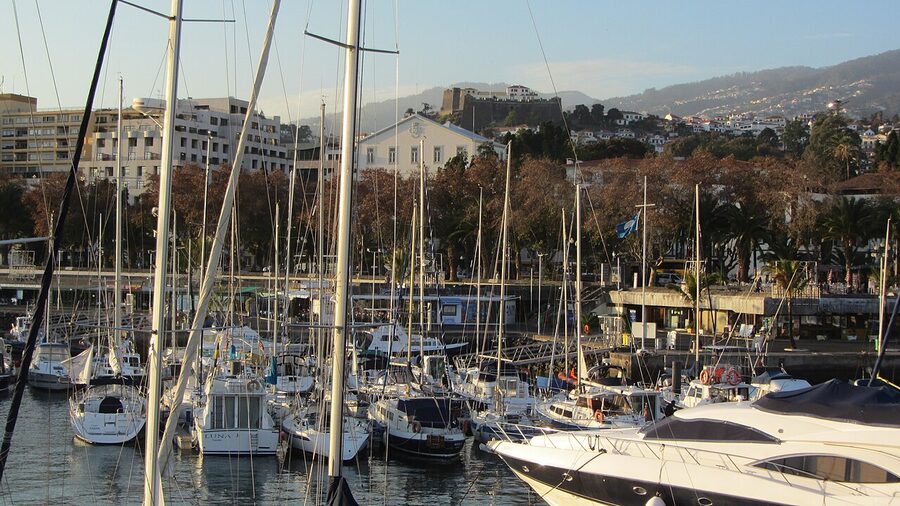
Most morning tours wrap up around 11.30am, leaving you near the Mercado dos Lavradores or the eastern end of Rua de Santa Maria. That’s a useful drop point: lunch options are immediate (try Taberna Madeira on Rua dos Ferreiros for a sit-down espetada, or grab a bolo do caco sandwich from a window-service spot), and you’re a five-minute walk from the marina if you want a coffee with a sea view.
If you’ve got the energy, this is also when most travellers head up to Monte for the toboggan ride. The cable car runs from the seafront just east of the marina (a 10-minute walk from the market), takes 15 minutes one way, and the wicker toboggans run downhill back to Livramento — it’s tacky and brilliant in equal measure. Or you can stay in the centre, do the painted doors a second time at your own pace, and finish at the Forte de São Tiago for the harbour view.

When to book — by month
Funchal doesn’t have a real low season. Madeira sits at 32°N in the Atlantic and the climate is so steady that monthly average highs go from 19°C in January to 26°C in August. That said, walking-tour demand isn’t even.
- April to June is my favourite window. Spring flowers everywhere, comfortable temperatures, and crowds nowhere near the summer peak. Book a week ahead in April, two to three weeks ahead in May/June.
- July and August are the busy months. Cruise ships dock most days, the market gets uncomfortably crowded by 11am, and morning slots can sell out three to four days in advance. Book at least a week out, more if you’re tied to specific dates.
- September to November is quietly the best. Atlantic swells make for dramatic sunset viewings, the Madeira Wine Festival runs in early September (a great week to combine with the food tour), and you can usually book the day before.
- December and January bring the New Year’s fireworks crowd and post-Christmas family travel. December is busy; January is dead. Walking tours run regardless and you can often walk up at the meeting point in January.
- February and March are off-peak. Some afternoon tours don’t run on quieter weekdays. Confirm the day before.
Combining a walking tour with the rest of Madeira
This is where I’d think strategically. You’re on Madeira; the walking tour is two hours; what about the other six and a half days? Three pairings I’d genuinely recommend:
If you’ve got an early-morning flight in, do the walking tour on the afternoon you arrive — it’s a low-energy, jet-lag-friendly way to learn the city, and you’ll sleep well that night. The next morning, drive or book a 4WD island tour from Funchal — the contrast between Funchal’s tight old town and the dramatic central peaks is what makes Madeira Madeira.
For dolphin-watching, the morning walking tour pairs well with an afternoon dolphin and whale watching boat from Funchal marina. They both leave from the harbour, both finish before sunset, and you get the city-and-sea bookend in a single day.
Serious walkers should book a Pico do Arieiro sunrise hike for an early second day after a relaxed first-day walking tour. The walking tour gives you context for everything you’ll see from the peak two days later — the harbour, the central peaks, the laurel forests.
Practical tips I wish I’d known first time
- Carry €5-10 in small notes. Some tours stop at small bakeries or producers who don’t take cards. The wine taste is included; an extra coffee or pastry is on you.
- Don’t accept fruit “tastings” you didn’t ask for at the market. Several stalls hand you a slice of custard apple or pitanga and then expect to be paid €5 for it. Polite refusal works.
- If it’s raining, the morning slot is better. Funchal weather flips in the afternoon — clouds roll in over the mountains. Morning is more reliably dry, especially November to March.
- Check the cruise schedule. The Funchal port authority publishes daily ship arrivals on visitmadeira.com. If three ships are in, the market and Rua de Santa Maria will be 3x more crowded by 10.30am.
- Bring sunglasses even in winter. The white limestone in the calçada portuguesa pavement reflects light brutally on a sunny day.
- Tip 10-15% if the guide impressed you. Madeira tour guides aren’t on big salaries — five euros a head for a great two-hour tour is generous and noticed.
If a walking tour isn’t your speed
A few alternatives. If you can’t walk for two hours straight, the guided tuk tuk tours cover similar ground in 90 minutes with no pavement involved — though you obviously lose the inside-the-market experience. If you’d rather not be in a group at all, buy a paper map at the tourist office on Avenida Arriaga (€2), download the audio file from the Madeira Island Map self-guided tour, and walk the route solo. It won’t be the same, but it’ll get you to the right places.
If you’re more interested in the food than the history, skip the standard walking tour and book the Madeira Food and Wine tour directly — you’ll cover the cathedral and market areas anyway, just with eleven food stops layered in.
One more thing: don’t combine with too much
The temptation is to book a walking tour for the morning, lunch, then a long afternoon excursion. Don’t. Two hours of walking on cobbled streets is more tiring than it sounds, especially in summer. Save the big island day trips for the second day. You’ll enjoy both more.
Funchal walking tours and what to do with the rest of your week
Funchal earns the title of “old-town pilot light” for the rest of Madeira — once you’ve done it, the island makes more sense. Pair the walking tour with a day on the central peaks (the Pico do Arieiro sunrise hike is the headline option, and worth the early start), an island circuit by 4WD if you don’t fancy renting a car (the 4WD Funchal island tour covers the eastern coast and Porto Moniz in a long day), and an afternoon on the water for whales and dolphins (dolphin watching from Funchal harbour). Three full days, three different sides of Madeira, and Funchal as the through-line.
If Madeira is part of a longer Portugal trip, the walking-tour habit is worth carrying over. Lisbon’s old city walking tour and especially the more focused Alfama walking tour use the same small-group, two-hour, local-guide format. Porto is the same story — the Porto old town walking tour works the same magic on a city that rewards local context. Same money, same time, same payoff.
Affiliate disclosure: some of the booking links in this article are affiliate links. If you book through them, we earn a small commission at no extra cost to you. The recommendations are based on the tour data and our own visits — we don’t get paid more to push specific operators.