
Ine’s boat houses sit right on the water, Amanohashidate’s pine-covered sandbar is one of Japan’s celebrated scenic views, and Miyama’s thatched village glows with lanterns after dark. This is a full northern Kyoto day, not a quick outing, with three quite different stops and a winter festival at the end.
I like the contrast between the places: Ine feels tied to the sea, Amanohashidate opens onto a wide natural view, and Miyama gives you a close look at a traditional mountain village. I also like that transport from Osaka and a bilingual guide are included, so you can visit all three without organizing a long series of connections yourself.
The trade-off is time. You spend about four hours on the return drive alone, and each stop has a fixed window. If you want long meals, unhurried walks, or time to explore every viewpoint, this schedule may feel tight. Snow can make the outing especially striking, but it is never guaranteed.
- What to know before you book
- From Osaka to Ine’s working waterfront
- Amanohashidate: a sandbar best seen from above
- Miyama after dark and the mochi experience
- The ride, group size, and guide
- What the price covers, and what it does not
- Practical details for a smooth day
- Should you book this Miyama and Amanohashidate day trip?
- FAQ
- Where does the tour depart from?
- When does the Miyama lantern event take place?
- Is the Ine sightseeing boat included?
- Is the Amanohashidate cable car included?
- What is included in the standard package?
- Does the tour include mochi pounding and red bean soup?
- When does the tour return to Osaka?
- Can I bring luggage?
- Do children need to pay?
- What happens if I arrive late?
- More Tours in Nantan
- More Tour Reviews in Nantan
What to know before you book
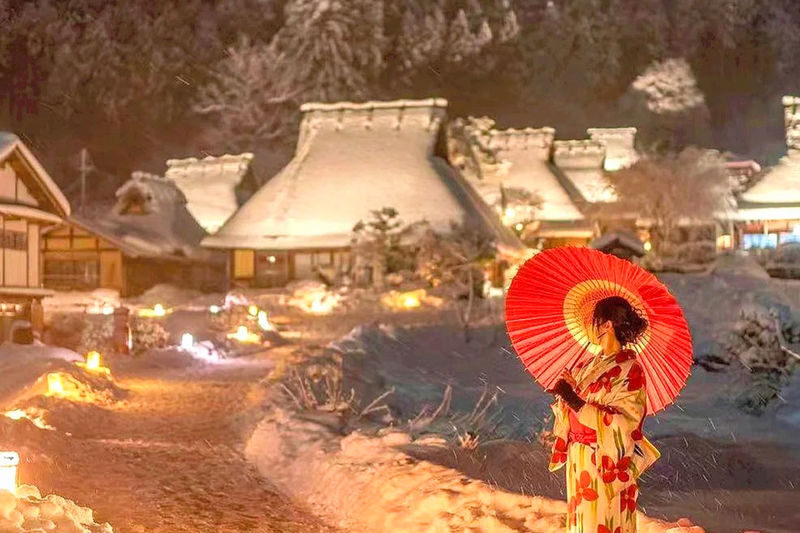
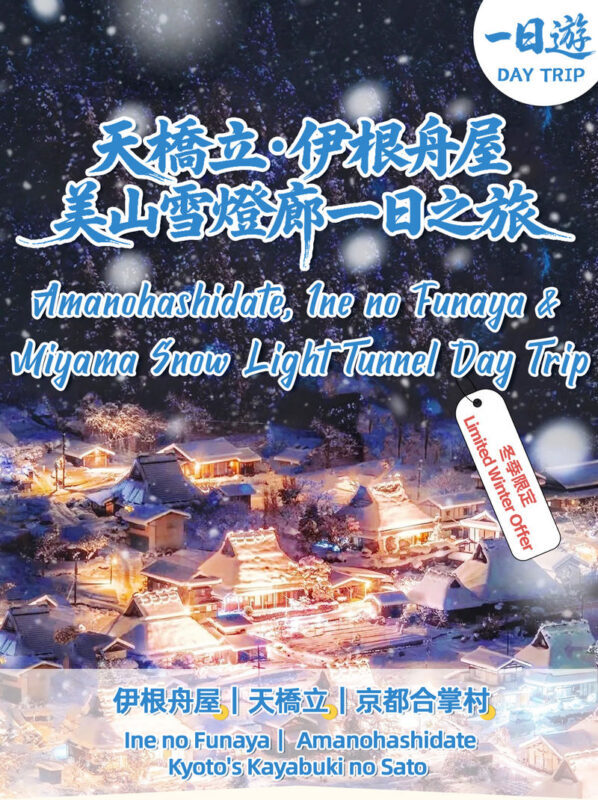
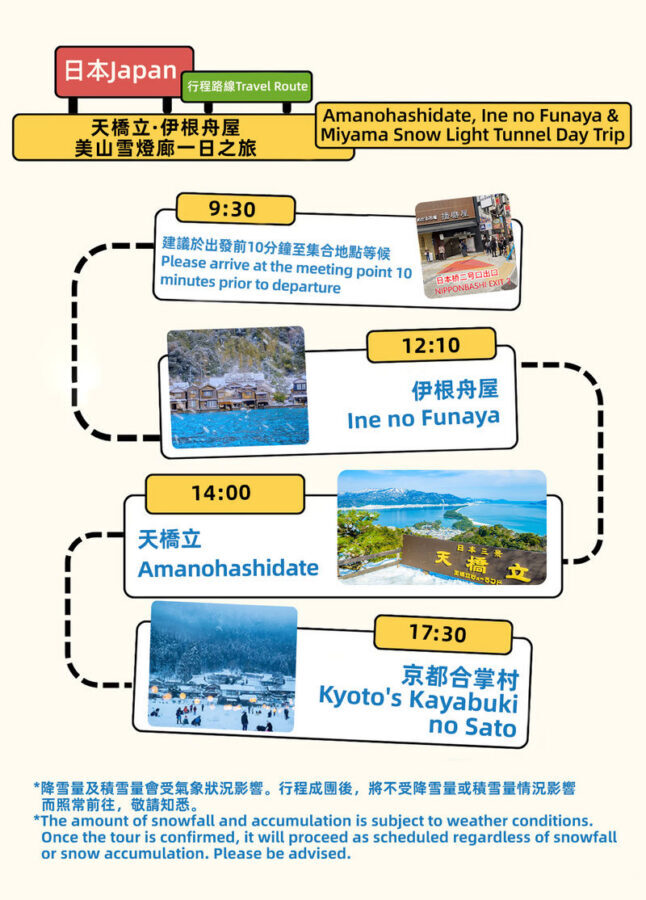
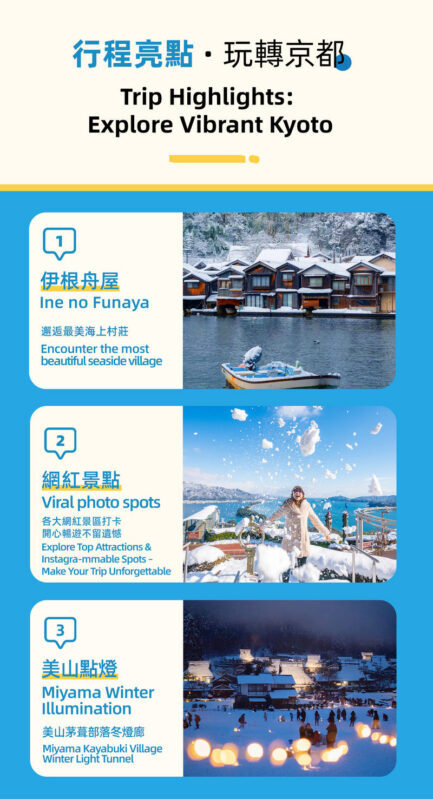
- Miyama’s lantern corridor is the evening highlight: During the event period, January 30 to February 6, lanterns illuminate the thatched village, including about 78 snow and flower lanterns, around 200 LED lanterns, and about 50 handheld lanterns.
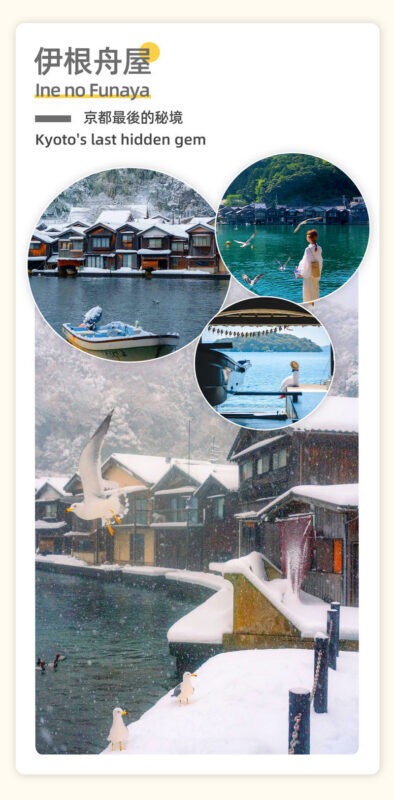
- Ine’s boathouses meet the water: The distinctive buildings line the coast, giving you a view quite unlike a standard inland village.
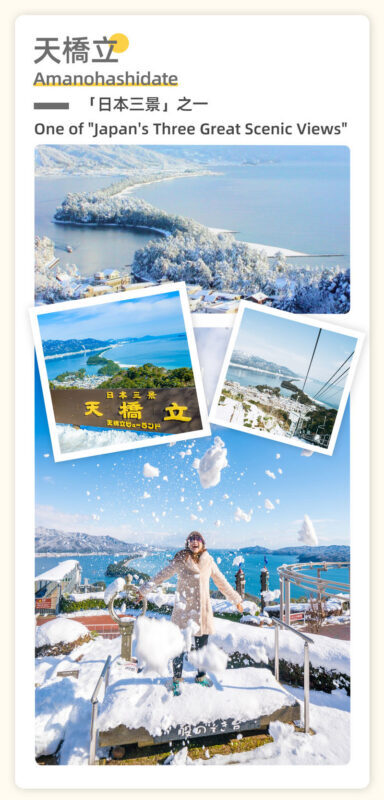
- Amanohashidate is a three-part stop: You can see the famous pine-covered sandbar and, if you buy the optional ticket, take a cable car or lift to the viewpoint.
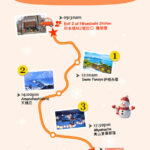
- The schedule is long and brisk: Expect to leave Osaka at 9:30 a.m. and return around 9 to 9:30 p.m., with roughly an hour in Ine, 90 minutes at Amanohashidate, and 90 minutes in Miyama.
- Your ticket choice changes the cost: Boat and cable car tickets are not included in the standard package. Packages with both are available at a higher price.
- The food activity is part of the appeal: The tour is described as including a mochi-pounding and red bean soup experience, a seasonal Japanese sweet treat that adds a hands-on note to a day of sightseeing.
From Osaka to Ine’s working waterfront
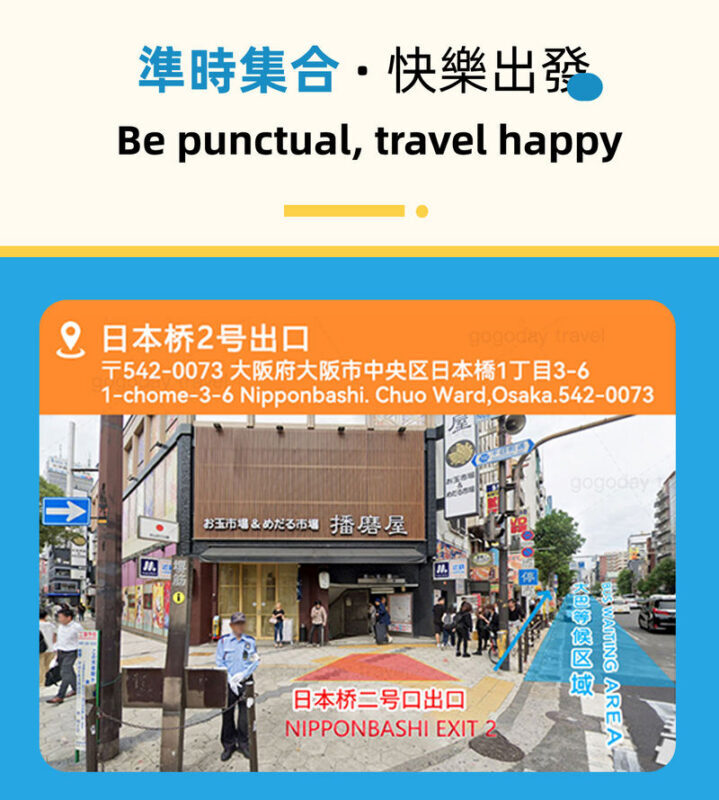
The bus leaves Osaka at 9:30 a.m. The meeting point is Osaka Kintetsu Nipponbashi, and you should arrive at least 10 minutes early. This is a shared trip, so the bus will not wait for late arrivals, and missing departure does not qualify for a refund.
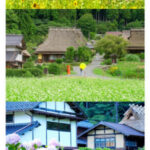
The first stop is Ine, in northern Kyoto Prefecture, scheduled for about 12:10 p.m. You have roughly an hour there, including a guided visit. The town is often called the Venice of Japan, but its character is distinctly Japanese: its funaya, or boathouses, are built along the shoreline, with boat access at the water level and living space above.
That architecture is the reason to come. Rather than seeing a row of conventional houses set back from the sea, you get a close look at buildings shaped around daily life on the coast. The setting is described as one of Japan’s beautiful villages, and its quieter feel offers a useful contrast with the larger sights later in the day.
Some package options include an Ine Bay sightseeing boat ticket. From the water, you may get a different angle on the boathouses, and recent departures have offered the fun of feeding seabirds near the boats. But the boat ticket is not part of the standard package, so check what you are buying before you set off. If you prefer to remain on land, the included stop still gives you time to see the waterfront and take photographs.
An hour is enough for an introduction, not a leisurely visit. You will need to keep an eye on the meeting time, especially if you plan to board a boat or stop for a snack. One small local detail worth knowing: visitors have singled out the village’s pressed toast as a tasty treat, though availability is not guaranteed.
You can also read our reviews of more tours and experiences in Nantan.
Amanohashidate: a sandbar best seen from above
The bus reaches Amanohashidate around 2 p.m. The stop lasts about 90 minutes, and the area is celebrated as one of Japan’s Three Views, alongside Matsushima and Miyajima. Its name means Bridge to Heaven, a fitting description for the long sandbar that appears to stretch diagonally across the bay.
The natural feature is a narrow strip of white sand and roughly 8,000 pine trees, with beaches on its east and west sides. From ground level, you can walk near the shore and see the pines up close. From the viewpoint, the shape of the sandbar becomes easier to grasp. That change of perspective is what makes the optional cable car or lift worthwhile for many people.
The standard package does not include the Amanohashidate viewpoint cable car ticket. A higher-priced option includes it, along with the Ine boat tour. If you want the elevated view but do not want the boat ride, a guide may be able to help arrange a separate lift ticket, but you should not count on that without checking in advance. A visitor who could not take a boat was able to get help with the lift, but this is not the same as a guaranteed package feature.
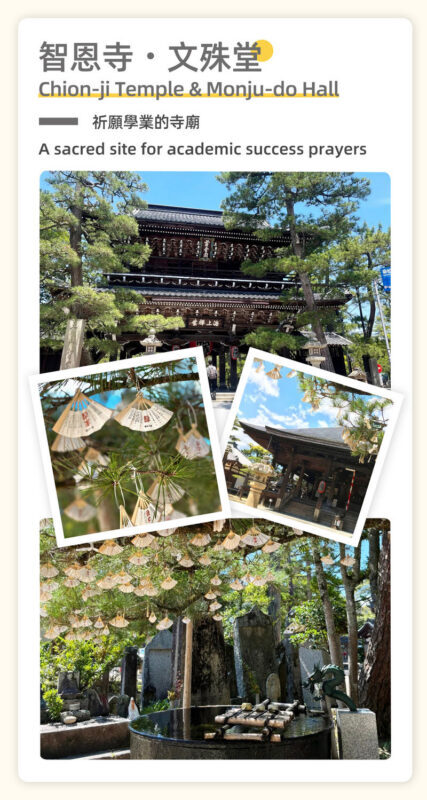
Ninety minutes is a tight window if you want the viewpoint, a temple visit, and time to wander. Snow can make the pine-and-sea views particularly memorable, but winter conditions also affect timing and access. Keep your plans simple: decide in advance whether the viewpoint is your priority, and follow the guide’s timing instructions.
The scenery is not the only reason this stop works. It breaks up the drive and gives you a broad, open view after the enclosed coastal lanes of Ine. On the other hand, if you hope to explore the entire area at a slow pace, a day tour is not the right format. This is a sampler, with the bus schedule setting the limits.
Miyama after dark and the mochi experience
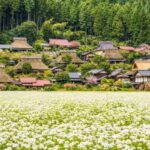
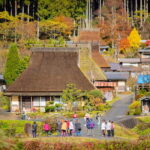
The final stop is Kayabuki No Sato, Miyama’s thatched-roof village, scheduled for about 5:30 p.m. You have around 90 minutes before boarding the bus at 7 p.m. The winter lantern event runs from January 30 through February 6, with the village’s traditional roofs and lanes lit for the evening.
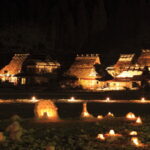
The display is substantial for a small village: about 78 snow and flower lanterns, around 200 LED lanterns, and roughly 50 handheld lanterns, along with other lights. The effect is less like a modern light show and more like a village dressed for a winter festival. The illumination ticket is included, and the evening setting is the main reason to choose this particular tour over a visit to Ine and Amanohashidate alone.
The festival is seasonal, so check that your chosen date falls within the stated event period. Snow may fall, but it is not promised. When it does, the thatched roofs and lantern-lit lanes take on a different look, and the ground may be slippery or cold. Dress for winter weather, wear shoes you can walk in, and leave room in your schedule for changing conditions.
The tour also describes a mochi-pounding and red bean soup experience. Mochi is pounded rice shaped into a chewy sweet, and the warm red bean soup makes a fitting winter pairing. It offers a more hands-on connection to seasonal Japanese food than simply buying a snack. The precise timing and format are not detailed, so treat it as an included experience rather than planning your entire Miyama visit around a specific workshop length.
The 90-minute stop must cover the lantern event and any food activity, so you will not have unlimited time to linger. If photography is important to you, arrive ready: winter dusk passes quickly, and the group has a set departure. There is also a local pressed-toast snack worth looking for if it is available, but do not let a food stop make you miss the bus.
The ride, group size, and guide
After Miyama, the bus heads back to Osaka, with arrival listed around 9 p.m. to 9:30 p.m. The return drive is about two hours, though traffic and weather can change the schedule. Keep your evening free. A dinner reservation or onward connection with a tight deadline is a poor fit for a trip returning this late.
Group size depends on bookings. Small parties of four to 13 may travel with a driver-guide, while larger groups of 14 to 45 may have a separate driver and guide. Vehicle types vary accordingly, from a Toyota Alphard or similar van to a minibus or larger bus. This matters because the atmosphere and amount of direct attention can differ between a small van and a full coach.
Guides on departures have included Hu, Liu, Vivian, Willow, and Chen Wenqing, also known as Black. Names and staffing vary by date, so you should not expect a particular guide. The tour promises Chinese- and English-speaking service, and some guides have helped with communication in Korean as well. The guide’s job is especially useful on a day with tight handoff times: clear directions and reminders help keep the group moving.
What the price covers, and what it does not
The experience is advertised from $85.19, but package prices vary. The listed option without the boat and cable car tickets starts at $106.45, while the option including both starts at $124.55. Confirm the total for your date and selected option before booking, since the lowest advertised starting figure does not necessarily match the package you want.
The base package includes round-trip transport from the meeting point, tolls, parking, fuel, a bilingual guide, and admission to the Miyama winter lantern event. Those inclusions make the price easier to assess: you are paying for a long-distance day trip with three stops, rather than just a ticket to one attraction.
The add-on package makes sense if you want both the Ine boat outing and the Amanohashidate cable car or lift, and you prefer to settle those admissions in advance. The lower-priced package suits you if you are content to explore from ground level or decide on optional tickets later. Meals, drinks, personal purchases, and any other expenses are not included.
For a roughly 12-hour day, the tour can represent good value if your priority is seeing several northern Kyoto sights without arranging transport yourself. It is less compelling if you want to spend hours at one place or prefer to travel on your own timetable. The convenience is real, but the fixed schedule is the price of covering this much ground in one day.

Practical details for a smooth day
The supplier sends meeting time, guide, and vehicle plate information by email before 9 p.m. Japan time on the day before departure. Check your junk folder if the message is missing, and use the latest email if more than one arrives. Confirm the meeting point before you leave; changing it at the last minute could mean missing the bus.
Each person may bring one piece of luggage at no charge. Additional pieces cost 2,000 yen each, paid to the driver or guide, and must be noted when booking. If you need extra luggage space, do not assume the bus can take it without advance notice.
Children aged zero to two may ride free if they do not need a separate seat. Children aged three and older pay the adult rate, and anyone under 18 must be accompanied by a paying adult. The activity is not recommended for people with impaired mobility, pregnancy, serious medical conditions, high blood pressure, or epilepsy. Dress for the weather, and remember that the village visit involves walking outdoors.
Weather, traffic, holidays, and crowds can affect the schedule. The guide may adjust or shorten stops when necessary, and delays are possible. The standard cancellation terms allow a full refund if you cancel at least 24 hours before the activity date; late arrivals and no-shows are not refundable. In extreme weather, the operator may cancel and offer a reschedule or full refund.
Should you book this Miyama and Amanohashidate day trip?
Book it if you want a broad introduction to northern Kyoto, especially the winter lantern festival, and you value having transport and a guide organized from Osaka. The three stops have distinct appeal: Ine’s waterfront homes, Amanohashidate’s pine sandbar, and Miyama’s illuminated thatched roofs. The mochi and red bean soup experience adds a seasonal food note.
Skip it if you want a slow, independent day or have difficulty with a long coach outing and outdoor walking. If you do book, choose the package based on whether the boat and cable car matter to you, dress for cold conditions, and keep your return evening open. For the best chance of enjoying the day, treat each stop as a carefully timed introduction, not a full exploration.
Miyama village illumination & Amanohashidate bus tour (with Japanese dessert making experience)
“Hu is a really great guide! He uses his experience to analyze how long to spend at each spot! His advice is very sincere, and his explanations of t…”
FAQ
Where does the tour depart from?
It departs from Osaka Kintetsu Nipponbashi at 9:30 a.m. Arrive at least 10 minutes early.
When does the Miyama lantern event take place?
The stated event period is January 30 to February 6. Check that your selected tour date falls within this period.
Is the Ine sightseeing boat included?
It is included only in the package that adds both the Ine boat tour and Amanohashidate cable car ticket. It is not included in the standard option.
Is the Amanohashidate cable car included?
It is included in the higher-priced package with the Ine boat tour. The standard package excludes it.
What is included in the standard package?
It includes round-trip transfers from the meeting point, a Chinese- and English-speaking guide, tolls, parking, fuel, and admission to the Miyama winter lantern event.
Does the tour include mochi pounding and red bean soup?
The tour is described as including a mochi-pounding and red bean soup experience. The precise timing and format are not specified.
When does the tour return to Osaka?
The listed return time is around 9 p.m. to 9:30 p.m. Traffic and weather can affect arrival, so avoid making tight evening plans.
Can I bring luggage?
Each person may bring one piece free of charge. Extra pieces cost 2,000 yen each and should be noted when booking.
Do children need to pay?
Children aged zero to two may join free if they do not occupy a separate seat. Children aged three and older pay the adult rate, and children under 18 must be accompanied by a paying adult.
What happens if I arrive late?
The bus will not wait for late arrivals, and late arrivals or no-shows are not eligible for a refund.