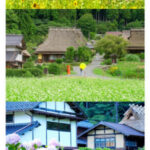
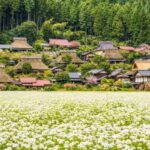
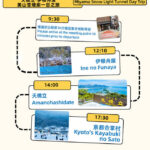
At Kayabuki no Sato, winter evening brings a rare village scene: more than 900 lanterns glow around traditional thatched houses, with 18 homes illuminated against the night sky. You can also shape a snow lantern of your own and leave it on display, turning the festival from something you simply watch into something you help make.
I like two things in particular: the hands-on lantern-making, which is free and comes with tools, and the simple logistics of a round-trip bus from Osaka or Kyoto. The stop at Miyama Megumi Milk Studio adds a taste of local dairy products before the main event.
The main caveat is winter weather. The village may not have snow, and the evening can be very cold even when the photos suggest a perfect white scene. If snow-covered rooftops are essential to your plans, treat them as a possibility, not a promise.
- Key points before you book
- The glow of Kayabuki no Sato after dark
- Making a snow lantern, not just admiring one
- A stop for Miyama milk and a short rest
- The bus journey from Osaka or Kyoto
- What the price includes, and what it does not
- Cold, timing, and photo advice
- Should you book Miyama’s Winter Lantern Festival?
- FAQ
- Where does the tour depart from?
- What time does the Namba tour leave and return?
- How long do you spend at Kayabuki no Sato?
- Is snow guaranteed at the village?
- Does the tour include snow lantern-making?
- What is included in the price?
- What should I bring for the translation service?
- What is the cancellation policy?
- More Winter Activities in Nantan
- More Tours in Nantan
- More Tour Reviews in Nantan
Key points before you book
 1 / 7
 2 / 7
 3 / 7
 4 / 7
 5 / 7
 6 / 7
 7 / 7
- More than 900 lanterns light Kayabuki no Sato during the Snow Lantern Festival, with 18 thatched houses illuminated.
- Snow lantern-making is free, but places are first-come, first-served, so join early.
- The village visit lasts about three hours, from around 4 p.m., including the winter illumination.
- A roadside stop includes Miyama dairy products, with about 30 minutes at Miyama Megumi Milk Studio.
- The listed price starts at $75.69, including round-trip bus transfers, but not personal expenses or tips.
- Snowfall is not assured. Dress for a cold night and enjoy the lantern display for what it is, with or without snow.
The glow of Kayabuki no Sato after dark
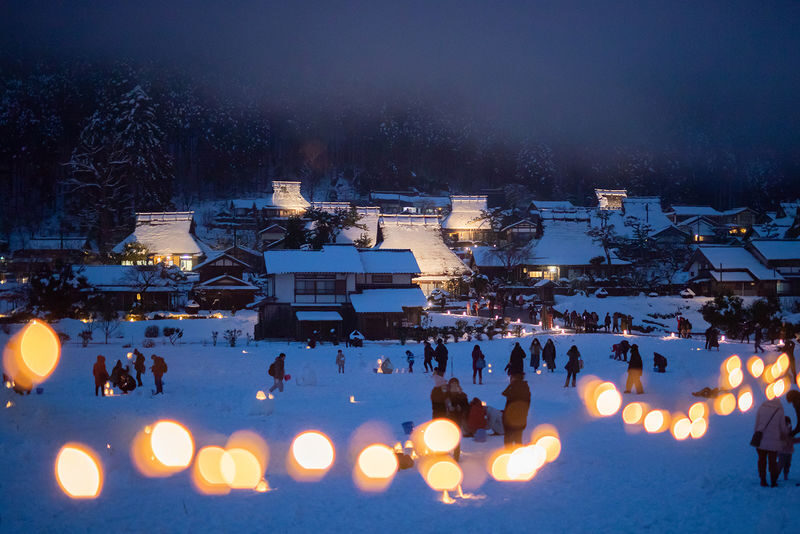
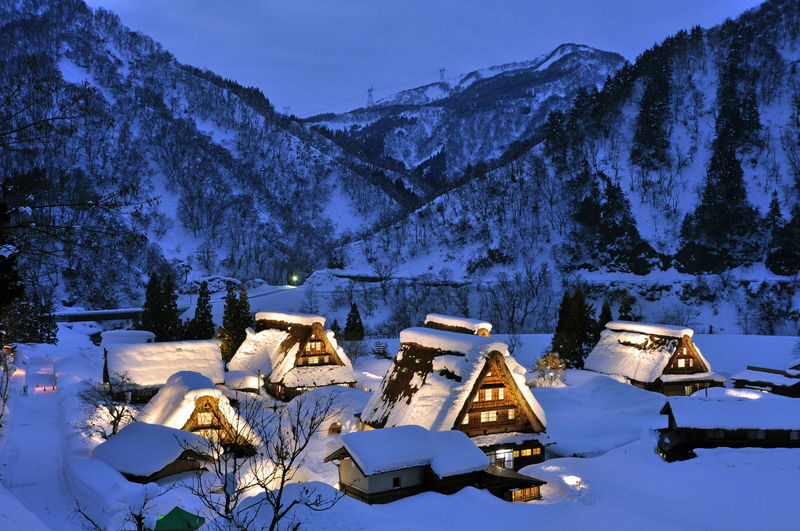
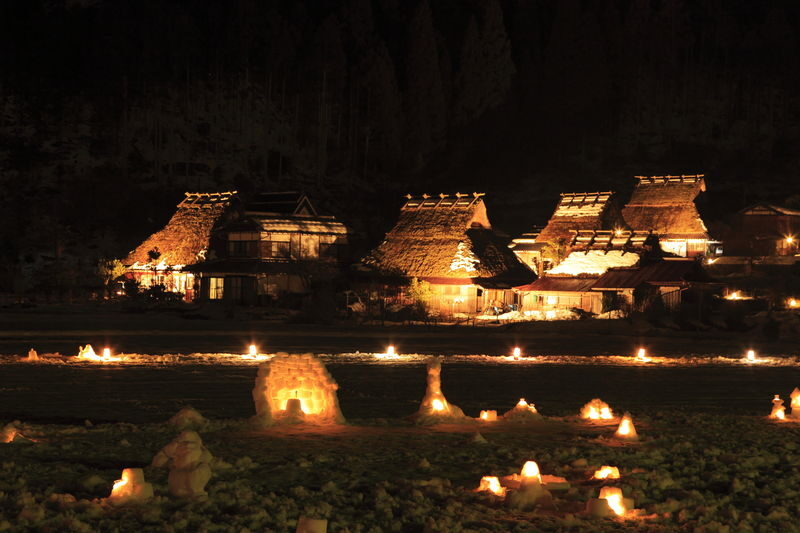
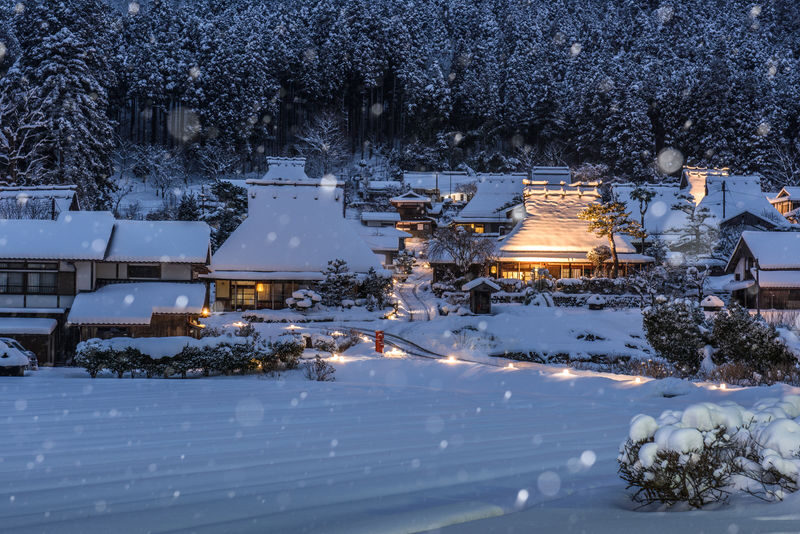
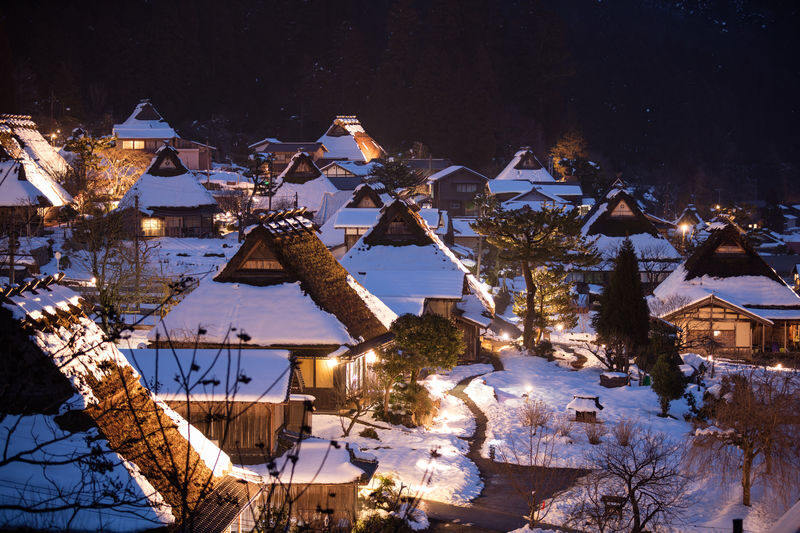
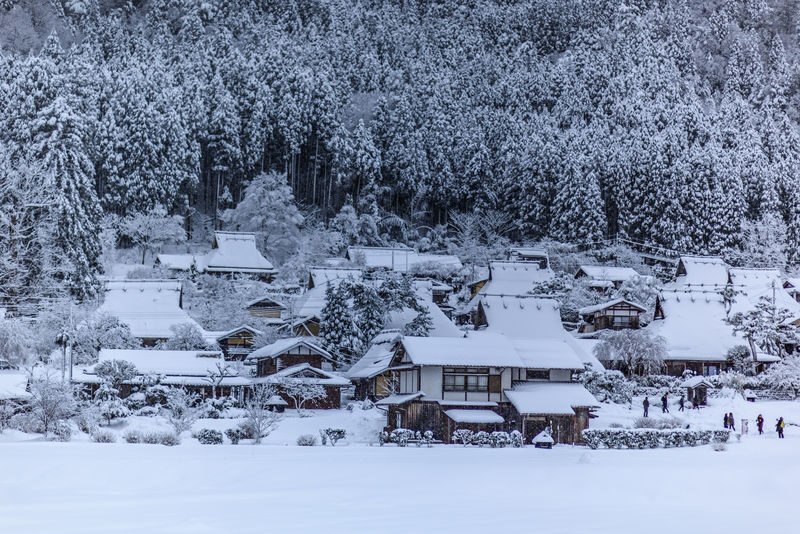
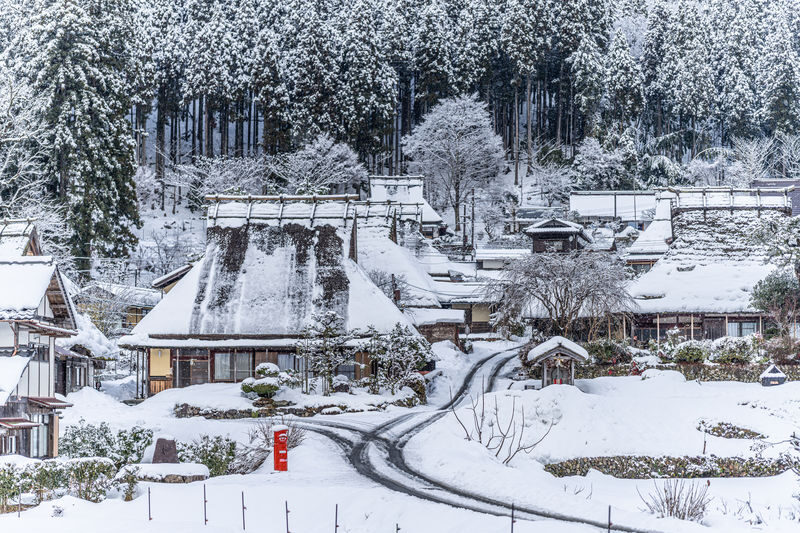
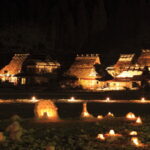
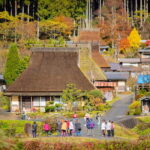
Kayabuki no Sato is the center of the outing. Its thatched-roof houses are the sort of buildings that look especially striking under winter lights: low, broad roofs set against a dark sky, with lanterns giving the village a softer glow than floodlit displays. The festival is known as Yukitouro, or the Snow Lantern Festival.
The headline figures are substantial: over 900 lanterns and 18 illuminated thatched houses. Those numbers give you a sense of the scale, but the appeal is not only in counting lights. It is the contrast between a historic rural village and the quiet, close-up warmth of lanterns after dusk.
There is time to walk around and take photos during the three-hour village stop. A guide accompanies the visit, and tour feedback has highlighted attentive explanations and help with photos. Still, expect the evening to be outdoors and on your feet for much of the main stop, so warm shoes matter as much as a camera.
The event’s snowy setting needs a little care in how you picture it. The tour is promoted around winter and snow, but actual snowfall depends on conditions. One January visit had no snow at the village, which disappointed someone who had expected the white scenery shown in promotional images. Lanterns and illuminated homes remain the central attraction, but the exact look of the night can change.
You can also read our reviews of more tours and experiences in Nantan
Making a snow lantern, not just admiring one
The snow lantern activity is a small but memorable reason to choose this tour over a simple scenic drive. It is free, tools are provided, and your creation can be displayed in the village. That makes it an easy activity for families and anyone who likes a hands-on moment rather than a series of photo stops.
The catch is availability. Places are first-come, first-served, so go to the activity early in your village visit rather than saving it for the end. The tour information does not give a fixed start time or number of places, so I would not count on being able to join if you arrive late.
Children must be at least three to take part. Children aged 3 to 12 need to be with a paying adult. The activity is an appealing bonus, but it should not be confused with a guaranteed, lengthy workshop. You are making a snow lantern as part of a larger festival visit.
And, of course, this activity depends on snow being available. If conditions are too mild, the snowy village scene and lantern-making may not match the winter pictures you had in mind. Keep your expectations flexible and let the illuminated village carry the evening if the snow is thin or absent.
A stop for Miyama milk and a short rest
The bus stops at Miyama Megumi Milk Studio, at the Miyama roadside station, for about 30 minutes. It is a brief pause rather than a full meal stop, but it gives you time to rest and sample local dairy products. Dairy sweets are a popular choice, and the roadside station is also a useful place to look for local specialties.
This stop helps break up the drive and gives the outing a local-food element without requiring you to plan a separate restaurant visit. But half an hour passes quickly. If you want to buy something, eat, and browse, choose what matters most rather than expecting a leisurely stop.
Personal purchases are not included in the tour price. Bring some spending money if you want milk products, snacks, or other items. The stop is a pleasant extra, not the main reason to book.
The bus journey from Osaka or Kyoto
This tour is designed to take the stress out of reaching rural Miyama in winter. Round-trip transfers are included, and departures are offered from Namba, Umeda, and Kyoto. The listed Namba option leaves at 12:30 from the first floor of the Namba OCAT Building, with a return to Osaka Namba scheduled for 21:50.
That makes for a long afternoon and evening away from the city, but it avoids the need to arrange your own winter transport or manage connections. The timing also explains why the tour is a practical choice if you want to see the festival after dark without driving back at night.
The schedule shown for the Namba departure includes a 30-minute stop at the milk studio at 15:15, followed by the village visit at 16:00 for about three hours. The bus is due back at 21:50. Traffic and weather can change the timetable, so keep plans for later that evening loose.
There is real-time voice and text translation in English and Chinese during the journey. Bring your own earphones to use the audio translation service. This is useful if you want more context while moving between stops, though you should not expect an English-speaking guide to provide every detail in person.
What the price includes, and what it does not
At $75.69 per person, the main value is transport to and from a rural winter event, with the milk studio stop and guided time in the village included. If you are staying in Osaka or Kyoto and do not want to sort out the journey yourself, that convenience is a significant part of the price.
The price does not cover personal expenses or tips. Purchases at the milk studio are extra, and the snow lantern activity is free. So the tour can remain close to its starting price if you skip shopping, but budget more if you plan to sample or buy local products.
There are three departure choices: Namba, Umeda, and Kyoto. The detailed departure and return times provided here apply to the Namba option, so check the selected package details before booking another starting point. The date-specific voucher is shown on your phone.
Cancellation at least 48 hours before the activity date brings a full refund. In extreme weather or other unforeseen conditions, the operator can cancel, with the option to reschedule or request a full refund. Travel or accident insurance is recommended, though not required.

Cold, timing, and photo advice
Pack for a proper winter night. Gloves, a scarf, and warm shoes are specifically useful because the village can feel very cold after dark, especially in snowy weather. A warm coat is a sensible addition; the tour includes outdoor time, not just views from the bus.
Bring a camera if night photography is part of the appeal. A tripod can help with low-light shots of the lanterns and illuminated thatched houses, though it is worth keeping your gear manageable while walking around the village. Snow and clear conditions can make the photos look quite different from one date to another.
If the snow lantern activity is important to you, make it an early priority once you reach the village. If it is full or unavailable, there is still the illumination and time to explore the village. That flexibility makes the visit less dependent on a single activity.
The tour suits couples, families with children aged three or older, and anyone who wants a winter countryside outing without driving. It is less suited to people who need guaranteed snow, dislike cold outdoor evenings, or want a relaxed, open-ended visit. The set schedule trades flexibility for an easier journey.
Should you book Miyama’s Winter Lantern Festival?
Book this if you want a guided, bus-based way to see Kayabuki no Sato after dark and like the idea of making a snow lantern yourself. The lantern display, illuminated thatched houses, and local dairy stop make a satisfying winter outing, especially if you are comfortable with a long day and changing weather.
Think twice if the snow itself is the whole point. There is no guarantee the village will be covered, and the cold is part of the deal. For most people, the soundest reason to go is the winter festival atmosphere and the convenience of transport, with snow as a welcome extra rather than a condition of success.
Miyama’s Thatched Village Winter Lantern Festival
“The tour guide was very attentive, introduced the sights diligently, and helped everyone take photos. The snow scenery was beautiful, and it was a…”
FAQ
Where does the tour depart from?
Departure options are Namba, Umeda, and Kyoto. For the Namba package, the meeting point is the first floor of the Namba OCAT Building in Osaka.
What time does the Namba tour leave and return?
The Namba departure is scheduled for 12:30, with return to Osaka Namba at 21:50. Traffic and weather may affect the schedule.
How long do you spend at Kayabuki no Sato?
The village stop is about three hours, beginning at around 16:00 on the schedule provided.
Is snow guaranteed at the village?
No. Snow depends on weather conditions, and the village may not be snow-covered on the tour date.
Does the tour include snow lantern-making?
The activity is free, with tools provided, and your snow lantern can be displayed in the village. Places are first-come, first-served.
What is included in the price?
Round-trip transfers are included. Personal expenses and tips are not included.
What should I bring for the translation service?
Bring your own earphones to access the real-time audio translation service, which offers English and Chinese voice and text translation.
What is the cancellation policy?
You can receive a full refund if you cancel at least 48 hours before the activity date, using the destination’s local time. If the operator cancels because of extreme weather or another unforeseen event, you can reschedule or request a full refund.