Shuri’s story is bigger than its red castle. This guided walk takes you from the palace grounds into the old town, where sacred places, a royal tomb, and a stone-paved lane show how Ryukyu life was rooted in more than royal ceremony.
I like two things especially: the guide connects the main sights with the beliefs and daily life of Shuri, and lunch at Sui-Dunchi gives the morning a genuine local-food finish. Guides Maria and Sarah have been praised for warm storytelling, but your guide may be someone else.
One consideration: this is a walking tour over old stone paths, which can be slippery in rain. Shurijo Castle has also been undergoing restoration after fire damage, so the areas open to view may differ from what you expect.
- At a glance
- Shuri makes more sense on foot
- Shureimon Gate sets the scene
- Kinjo’s stone road brings the old town close
- Tamaudun tells a royal story
- The Great Akagi Tree marks a sacred place
- Lunch at Sui-Dunchi is part of the experience
- A small textile museum completes the route
- What the price includes, and what it buys you
- Who should book this Shuri walk
- Should you book?
- FAQ
- How long does the tour take?
- Where does the tour meet?
- How do I find the guide?
- Is admission included?
- Is lunch included?
- What language is the tour in?
- Is the walk suitable in rainy weather?
- Are children under four charged?
- The Best Of Naha!
- More Walking Tours in Naha
- More Tours in Naha
- More Tour Reviews in Naha
At a glance
 1 / 9
 2 / 9
 3 / 9
 4 / 9
 5 / 9
 6 / 9
 7 / 9
 8 / 9
 9 / 9
- The walk goes beyond the palace: You visit Shurijo Castle, Tamaudun, Kinjo’s old stone-paved road, and local sacred sites.
- A WWII-surviving tree is part of the route: The Great Akagi Tree stands at a sacred site in the Kinjo area.
- The guide supplies the context: English-language explanations link Ryukyu history with local beliefs and daily life.
- Lunch is included: Sui-Dunchi serves Okinawan food in a setting inspired by Ryukyu-period architecture and gardens.
- Plan for about four hours: The tour is scheduled around a 10:00 a.m. departure and a 2:00 p.m. finish.
- The castle is being restored: Access and what you can see may change as work progresses.

👉 See our pick of the 3 Best Workshops & Classes In Naha (With Prices)
Shuri makes more sense on foot
Shuri sits on a hill above Naha, and the route makes clear that this was not simply a palace set apart from everyday life. The castle, royal mausoleum, sacred places, old homes, and stone paths are all part of a historic district whose character grew from the Ryukyu Kingdom’s blend of cultures.
A guide helps you read those connections. You are not only walking between landmarks; you are hearing how Shuri’s history shaped local customs and beliefs. That is useful in a place where a small shrine or a worn lane can be easy to pass without understanding its importance.
The walk is described as gentle-paced, but it still involves cobblestones and uneven ground. If it rains, the rocky path can become slick. One guide, Maria, offered a cab to skip some walking during wet weather, though that option should not be treated as guaranteed for every tour.
You can also read our reviews of more walking tours in Naha

Shureimon Gate sets the scene
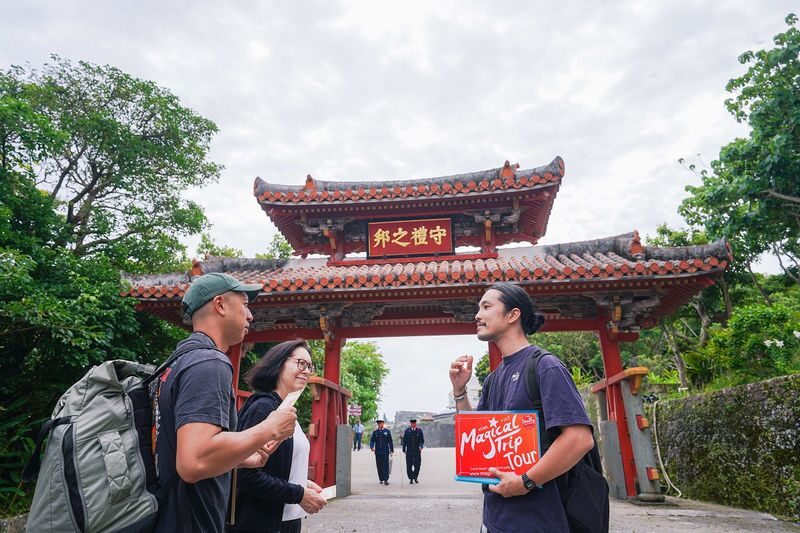
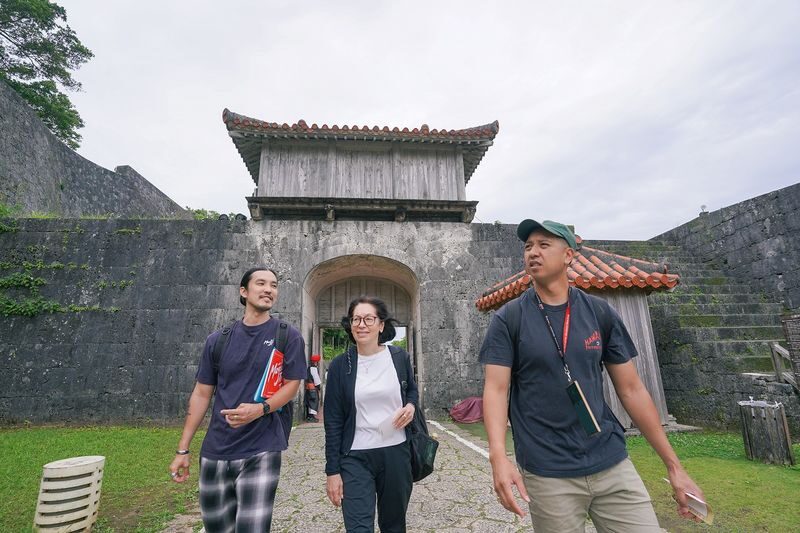
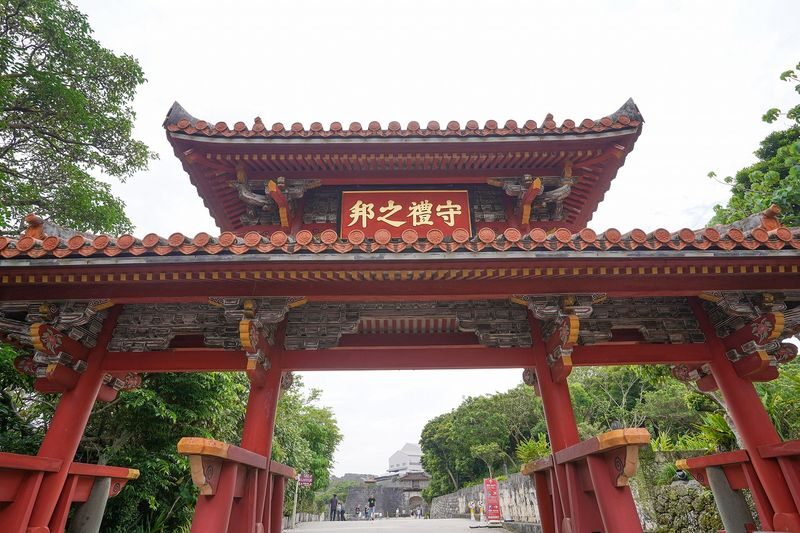
The tour starts at Shureimon, the recognizable gate at the entrance to Shurijo Castle. Its role as a threshold makes it a fitting first stop: from here, the walk begins to trace the old royal center and its relationship to the surrounding town.
You have about 30 minutes of guided time around the gate and castle area. The guide can place the palace within the story of the Ryukyu Kingdom, whose diplomacy and artistry shaped Shuri. For a first visit, this opening context helps the later stops feel connected rather than like separate photo opportunities.
The castle’s condition deserves a little flexibility. A fire damaged Shurijo, and restoration work has been underway. You may not see every part of the complex as it once appeared, but the route includes the areas open to the public, and the guide can explain the restoration process. If seeing a fully restored palace is your main reason to book, check the latest access conditions before choosing a date.
Kinjo’s stone road brings the old town close
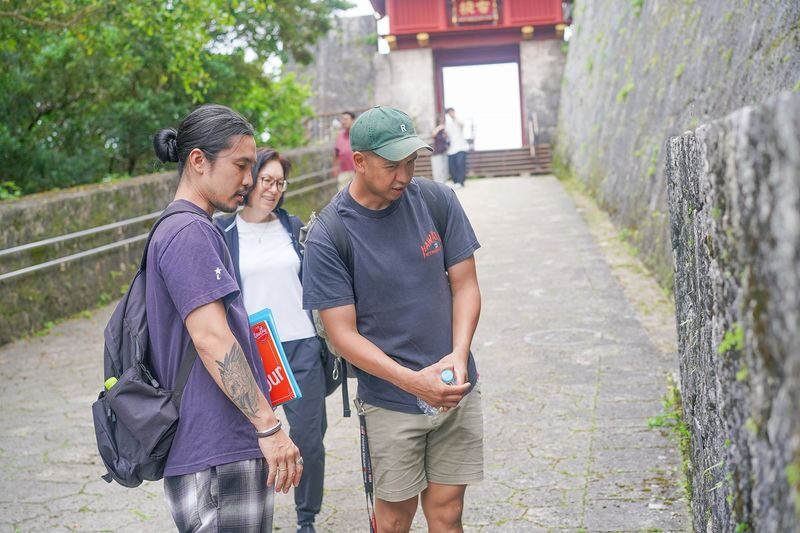
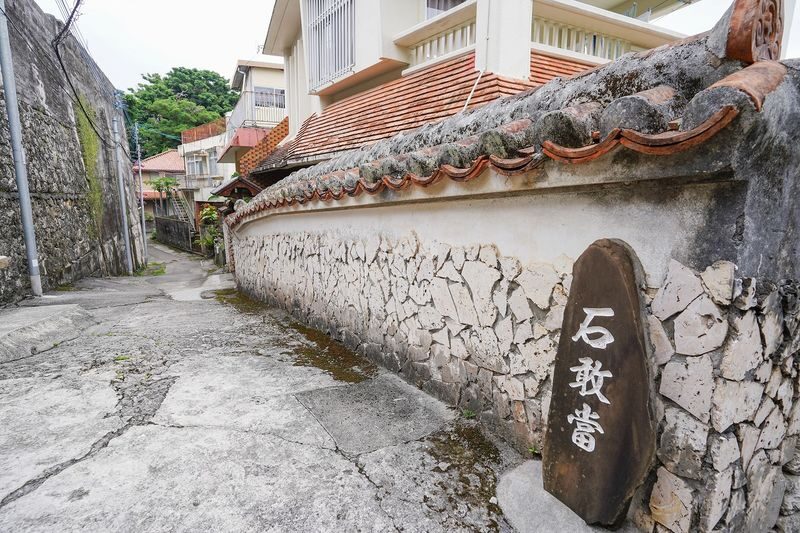
From the castle area, the walk continues along the Kinjo Stone-Paved Road, with about 45 minutes set aside for this part of the tour. The old cobblestones and traditional homes offer a different scale from the palace: here, Shuri’s past feels close to daily life.
This is where the guided format earns its keep. A stone lane can look like a pleasant old street, but explanations about how local people lived and what they believed give the setting more weight. The walk also passes sacred places known as Utaki, which are important to Okinawan spiritual life.
Take care with your footing, particularly if the stones are wet. In rainy weather, Maria took care to help her group avoid spider webs and slippery patches. That practical attention matters more here than a brisk pace or a long list of dates.
Tamaudun tells a royal story
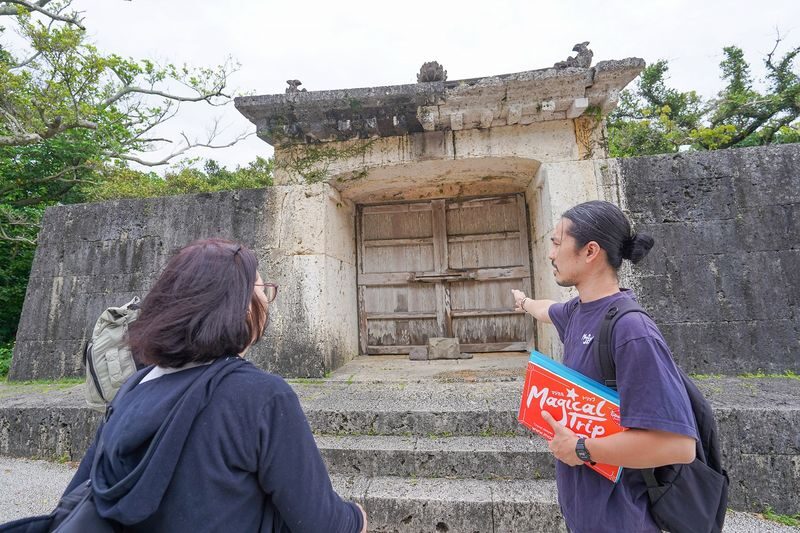
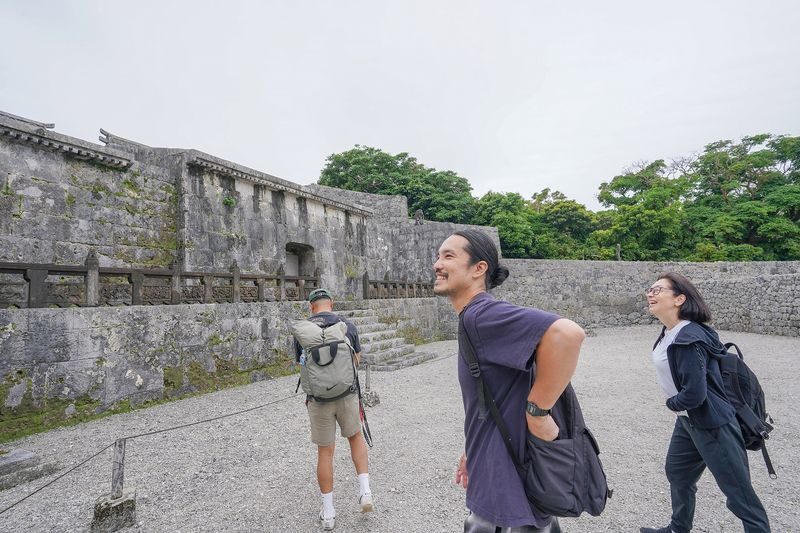
Tamaudun, the royal mausoleum, is a major stop, with roughly 45 minutes for a guided visit. As the burial place of the Ryukyu royal family, it adds a solemn counterpoint to the castle’s public spaces. It also helps explain how royal status and remembrance were expressed beyond the palace walls.
Admission to Tamaudun is included, as is admission to Shurijo Castle. You do not need to arrange separate tickets for these two central sites, which makes the tour’s cost easier to assess.
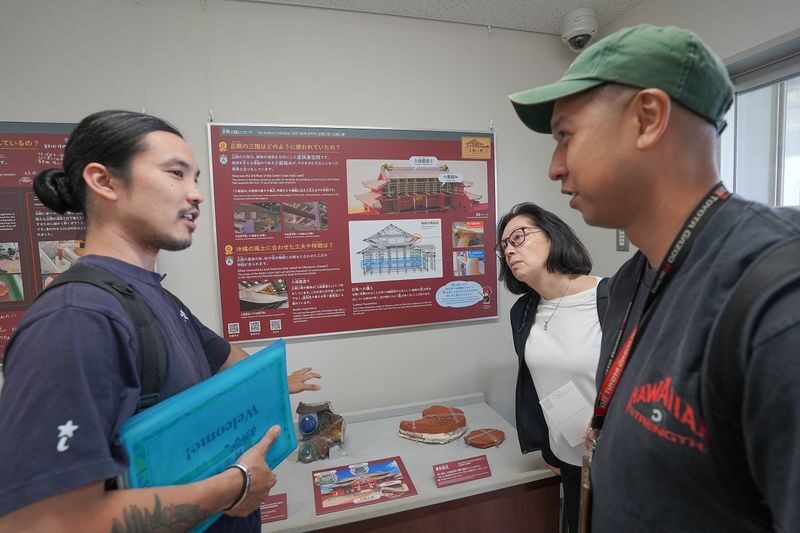
The value here is not just entry. A guide can explain why the tomb matters and how it fits into the wider story of the kingdom. If you prefer to move through historical sites at your own pace, a guided visit may feel structured. If you want help understanding what you are seeing, this stop is a strong reason to go with a guide.
The Great Akagi Tree marks a sacred place
The route then leads to the Great Akagi Tree and an Utaki shrine in the Kinjo area, with about 30 minutes for this stop. The tree survived World War II, making it a striking link between the old town’s spiritual life and the damage the area endured.
This part of the walk offers a quieter kind of history. Rather than focusing on kings and buildings, it turns your attention to the places where local beliefs took shape. The tour describes hidden spiritual spots and sacred sites alongside the more familiar landmarks, so you get a broader sense of what Shuri means to Okinawans.
The setting may be less dramatic than the castle, but it can be more revealing. A guide helps you understand why a tree or a modest shrine can hold deep meaning. Treat the area with care and follow your guide’s directions at sacred sites.



Lunch at Sui-Dunchi is part of the experience
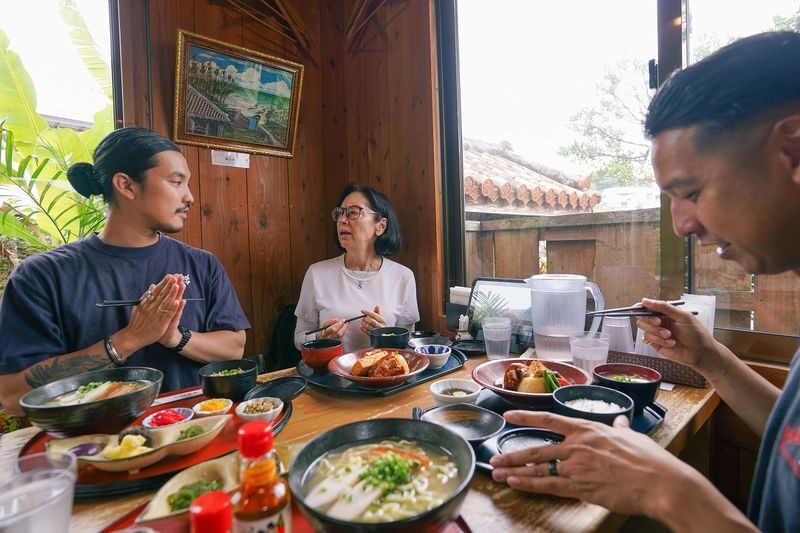
After the walking stops, the group sits down for a one-hour lunch at Sui-Dunchi. The restaurant serves Okinawan dishes, including Okinawa soba, in a setting inspired by architecture and gardens from the Ryukyu Kingdom period.
Lunch is included in the tour price, and it is more than a convenient break. A meal gives you time to pause after the walk and try local food in a place you might not otherwise find on your own. One guide, Maria, was credited with introducing the group to the restaurant, while other tours have also ended with a much-praised Okinawan lunch.
The exact dishes may vary, so do not book expecting a specific menu beyond the stated Okinawan cuisine. If food is a major part of your reason for going, the included meal adds real value, but you may want to ask the operator about dietary needs before booking. No dietary arrangements are specified here.
A small textile museum completes the route
The final scheduled stop is Shuri Textile Museum suikara, next to the restaurant, with about 30 minutes for a guided visit. It offers another angle on Okinawan culture and history after the castle, streets, and sacred places.
The museum is small, so think of it as a focused closing visit rather than a large museum session. Its location beside the restaurant also makes the route practical: you do not need to set aside a separate trip to see it.
The meeting point is in front of the museum, at 2 Chome-16 Shuritonokuracho, Naha. It is about a 10-minute walk from Shuri Station on the Yui Rail. The guide carries a red or orange Magical Trip sign. The tour ends at the museum, with the scheduled tour window generally running from 10:00 a.m. to 2:00 p.m.; confirm the exact times on your booking.
What the price includes, and what it buys you
The tour starts at US$69.39 per person. That price includes an English-speaking guide, admission to Shurijo Castle and Tamaudun, and lunch. For a four-hour outing with several historic stops and a meal, the package offers good value if you want the context and convenience of a guide.
The biggest benefit is interpretation. You could visit the main sites on your own, but the walk also joins them to old lanes, sacred places, and local life. That makes the tour more useful for someone who wants to understand Shuri, rather than simply collect a few landmark photos.
There are limits. Personal expenses beyond the included items are not covered, and the experience is not a full-day survey of Okinawa. The listed price is a starting rate, so check the amount shown for your date and party before paying.
Who should book this Shuri walk
I would choose this tour if you have a morning in Naha and want a thoughtful introduction to the Ryukyu Kingdom and Shuri’s local culture. It suits history-minded visitors, first-time visitors to the area, and anyone who prefers a guide to connect landmarks with the stories behind them.
It is also a good fit if you like a balanced day: some walking, time at major historic sites, a quieter stop at a sacred place, and a proper lunch. The English-language guide is a practical plus, and the tour’s past guides, including Maria and Sarah, have been praised for clear, engaging storytelling.
Think twice if you want a castle visit without walking, need a guaranteed view of every part of the palace, or prefer to set your own pace at each stop. The path can be slippery in rain, and restoration may affect access. Children aged 0 to 3 can join free, but the tour is still built around a walking route.
Should you book?
Book it if you want Shuri to make sense as a living historic district, not just a castle stop. The combination of the royal mausoleum, old stone road, sacred tree, local guide, and included Okinawan lunch makes this a well-rounded half-day for the price.
Skip it if your main goal is an unrestricted palace visit or you would rather explore independently. Before booking, check the castle’s current restoration access and confirm your departure time. If you go, wear shoes that can handle uneven stone and allow a little flexibility for weather.
Okinawa Shuri Castle Peace Walking Tour
“Our Guide Maria was really great. She's fluent in English and taught us a lot about the local history and culture. She was funny and easy going. Ev…”
FAQ
How long does the tour take?
The tour is scheduled for about four hours, with a 10:00 a.m. departure and a 2:00 p.m. finish. Confirm the times attached to your booking.
Where does the tour meet?
Meet in front of Shuri Textile Museum suikara at 2 Chome-16 Shuritonokuracho, Naha. The meeting point is about a 10-minute walk from Shuri Station on the Yui Rail.
How do I find the guide?
The guide will be holding a red or orange sign marked Magical Trip.
Is admission included?
Yes. Admission to Shurijo Castle and Tamaudun Mausoleum is included.
Is lunch included?
Yes. The tour includes lunch at Sui-Dunchi, a restaurant serving traditional Okinawan cuisine. Okinawa soba is among the dishes associated with the meal, but a specific menu is not guaranteed.
What language is the tour in?
An English-speaking guide is included. Other language options are not specified.
Is the walk suitable in rainy weather?
The route includes old rocky and cobbled paths that can be slippery when wet. A guide has offered a cab to skip some walking during rain, but you should not assume that option is guaranteed.
Are children under four charged?
Children aged 0 to 3 can join free.