
Tateyama Kurobe is the star here: you cross the Japanese Alps using a chain of mountain transport, then pair that high-altitude day with old streets and traditional villages. I like that the schedule gives Gujo Hachiman and Shirakawa-go two hours apiece, rather than reducing both to quick photo stops. I also like that Alpine Route transport, two hotel nights and several meals are included, which makes a multi-stop trip easier to organize from Nagoya.
The main caveat is the itinerary’s flexibility. Weather, traffic and seasonal closures can change stops and timing, and Kamikochi may be replaced by Hida Takayama. Also, Daio Wasabi Farm appears in the tour title but not in the detailed three-day schedule, so confirm directly with the operator if visiting it matters to you.
- Six hours on the Tateyama Kurobe Alpine Route: The signature day includes a one-way pass from Tateyama to Ogizawa and a professional guide for transfers between the route’s transport modes.
- Two hours each in Gujo Hachiman and Shirakawa-go: The first day includes time to walk both a waterways town and a World Heritage village.
- Kamikochi is a four-hour stop, when open: Winter closure, weather or official controls can lead to a change of plan, often to Hida Takayama.
- Two nights, but only one hot spring stay is secured: Room type and accommodation can vary, so don’t assume both nights include an onsen.
- From US$504.05 per person in a shared room: A single room starts at US$624.55, with transport, meals and Alpine Route transport included.
- A three-day sampler of Japan’s mountain towns
- Day one: waterways in Gujo Hachiman, then Shirakawa-go
- Day two: the Alpine Route’s high mountain crossings
- Day three: Kamikochi, with Takayama as the fallback
- What the price includes, and what it doesn’t
- Staff, pace and the fine print that matters
- Should you book this Nagoya tour?
- FAQ
- Does the tour visit Daio Wasabi Farm?
- How long do you spend at the Tateyama Kurobe Alpine Route?
- Is Kamikochi guaranteed?
- Are both hotel nights at hot spring inns?
- Which meals are included?
- Where does the tour depart from and return to?
- Can I choose my bus seat or room type?
- More Tours in Nakaniikawa
- More Tour Reviews in Nakaniikawa
A three-day sampler of Japan’s mountain towns
 1 / 7
 2 / 7
 3 / 7
 4 / 7
 5 / 7
 6 / 7
 7 / 7
This tour is a practical way to connect places that are spread across central Japan. You leave Nagoya early, visit historic towns and a mountain village, spend a full day on the Alpine Route, then finish among Kamikochi’s mountain scenery or the old streets of Takayama. It suits you if you want a guided transport framework but prefer to explore each stop at your own pace.
That balance is useful. You are not tied to a guide’s commentary for every street and viewpoint, but you also don’t have to arrange the bus connections, hotels and Alpine Route passage on your own. The trade-off is that independent time is not the same as a custom trip: you follow the group’s schedule, and local conditions can change it.
The published outline also names Daio Wasabi Farm in the tour title, while the day-by-day schedule does not include it. Since a stop is not specified, treat it as unconfirmed rather than a guaranteed part of the trip.
Day one: waterways in Gujo Hachiman, then Shirakawa-go
The tour departs from JR Nagoya Station’s Taiko-dori Exit 13 between 7:50 and 8:00 in the morning. Arrive ten minutes early and look for the LION TRAVEL flag or vest. If you miss the departure, the stated policy treats that as forfeiting your place without a refund, so this is not a morning to cut it fine.
Gujo Hachiman gets about two hours of self-guided time. The town is known for clear waterways, Edo-style streets and traditional culture. That makes it a good first stop for a relaxed walk and a look at a small castle town, though two hours is a sampler, not enough to see every corner at leisure.
Next comes Shirakawa-go, also for about two hours. Its gassho-zukuri houses, with steep thatched roofs, are the draw. This is a World Heritage village, and the short visit gives you time to walk through its traditional setting and take in the mountain-village character. Keep an eye on the clock: a compact stop works best if you decide in advance whether you want a general stroll, photos or a specific point of interest.
The first night is at a hot spring inn, with dinner included. The meal may be a buffet or Japanese kaiseki-style dinner, depending on the accommodation. Room arrangements depend on the party size and what is available, and can be Japanese-style, Western-style or a mix. You cannot request a particular room type.
A useful distinction: the package guarantees a one-night stay at a hot spring hotel, but not two nights at one. The second night’s accommodation can be in several prefectures and may even be a cabin. If onsen time is a priority, check the exact accommodation arrangements rather than assuming both evenings include hot springs.
You can also read our reviews of more tours and experiences in Nakaniikawa.
Day two: the Alpine Route’s high mountain crossings
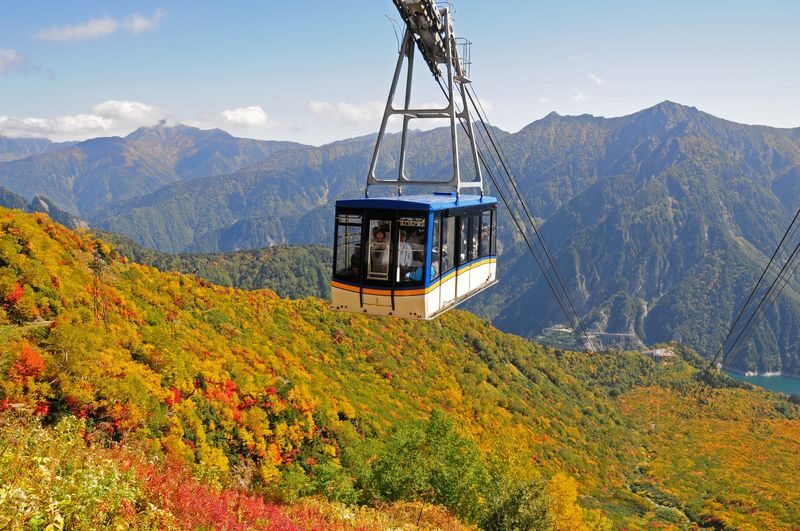
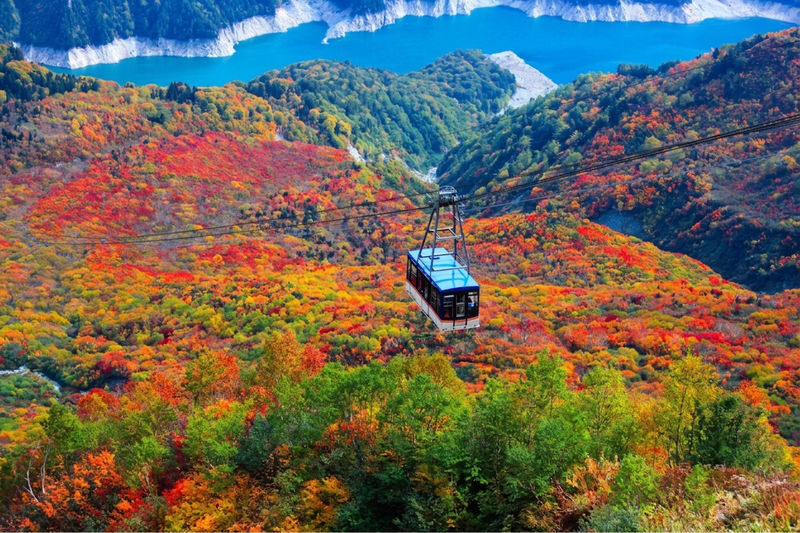
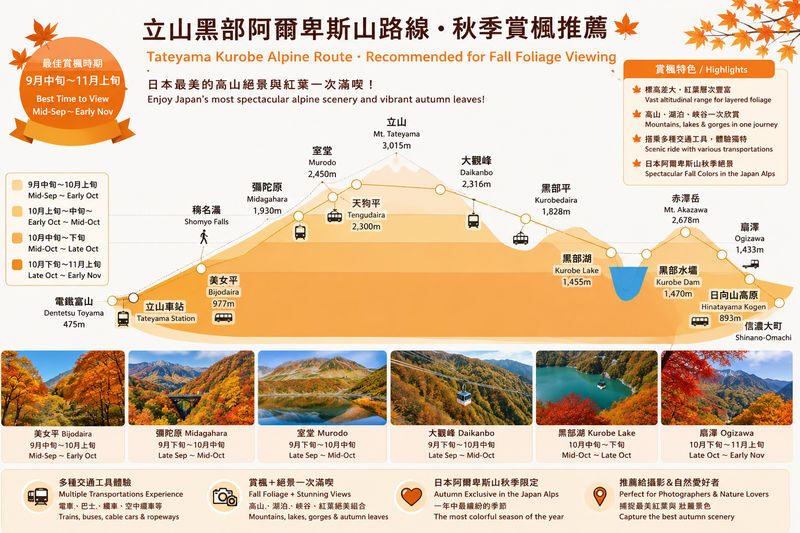
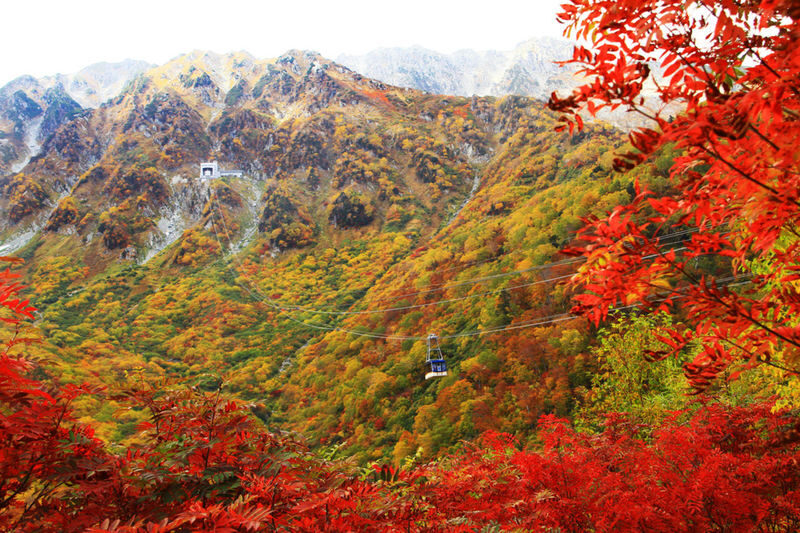
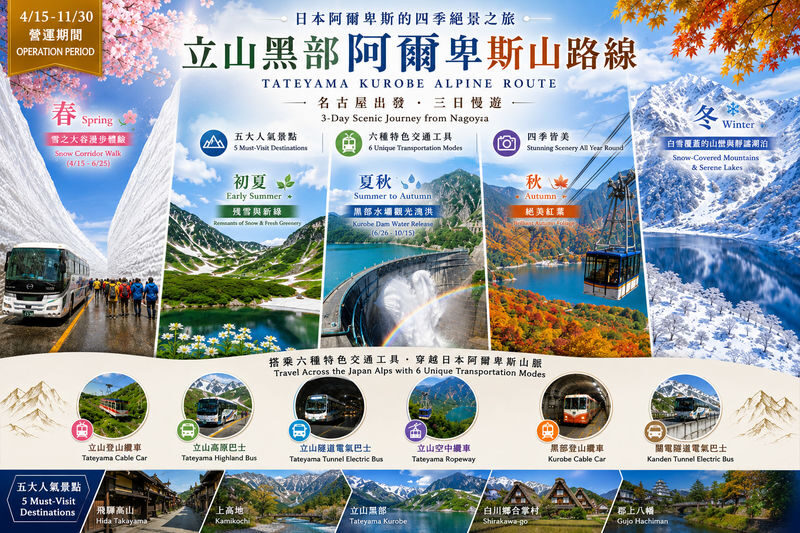
The main event is the six-hour Tateyama Kurobe Alpine Route, a crossing of the Japanese Alps using several forms of mountain transport. The package includes a one-way pass from Tateyama to Ogizawa. A professional guide is assigned to lead the route and help with transfers between its transport modes, a practical support on a day when the journey itself is part of the attraction.
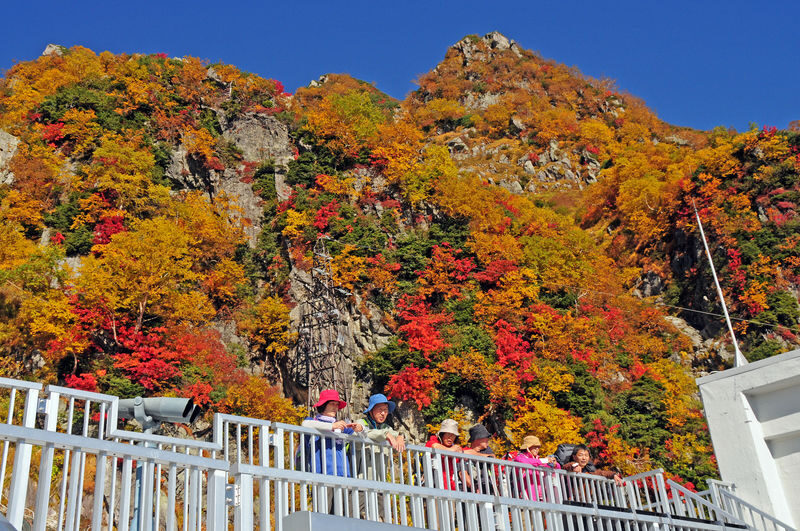
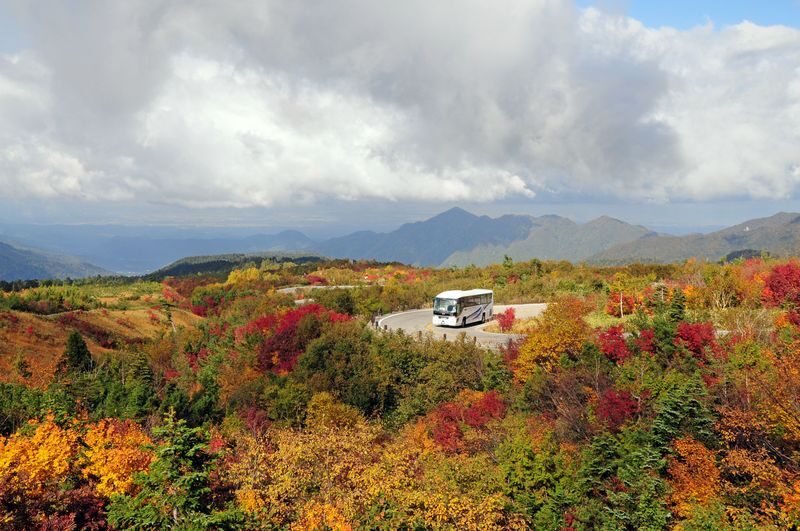
The scenery changes sharply with the season. From mid-April to late June, the Snow Corridor may rise roughly 10 to 20 metres, though its height depends on snowfall and cannot be promised. In early summer, patches of snow may remain at higher elevations. From June 26 to October 15, Kurobe Dam’s water discharge is scheduled to be visible, while autumn brings foliage across the mountains.
These dates describe seasonal possibilities, not guarantees. Weather, snow, safety decisions and crowd controls can affect which parts of the route are open and how the day runs. During the busy opening season, the order and length of stops may shift. Dress for mountain conditions and bring non-slip shoes; the route includes walking and some areas have stairs, with incomplete barrier-free access.
Breakfast is included on the second day. If an early Alpine Route entry means the accommodation cannot serve breakfast, the operator says it will arrange a bento or refund JPY 2,000 per person. Dinner is also included, either at the hotel or, if the hotel cannot provide it, at a local specialty restaurant. The menu can change with ingredients and availability.
Day three: Kamikochi, with Takayama as the fallback
Kamikochi is scheduled for four hours of self-guided time. It is the day’s main natural stop, giving you a chance to walk and take in the high mountain setting at your own pace. The schedule does not specify a particular walking route, so plan for a flexible visit rather than expecting a guided hike or a set circuit.
Kamikochi is subject to seasonal opening dates and official access decisions. If it is closed for winter, weather, traffic control or another force majeure reason, the tour may switch to Hida Takayama. That alternative offers a different kind of day: preserved Edo-period streets, traditional wooden buildings, sake breweries, shops and local food such as Hida beef.
The itinerary lists both Kamikochi and Takayama’s Sanmachi Historical Houses Preserved Area, but describes Takayama as the alternative if Kamikochi cannot be visited. Don’t assume you will get four hours at both. The return to Nagoya is listed around 18:00, but actual arrival depends on road conditions and traffic.
What the price includes, and what it doesn’t
The shared-room package starts at US$504.05 per person; the single-room option starts at US$624.55. For that price, the package includes two nights of accommodation, transport, tolls, parking, fuel, insurance provided by the operator, the Alpine Route one-way pass, and the listed meals: the first day’s dinner, the second day’s breakfast and dinner, and the third day’s breakfast.
That is solid value if you want to see several distant places without piecing together regional transport and lodging yourself. The Alpine Route pass is particularly useful because it covers a key part of the trip, rather than leaving you to arrange those transfers separately. The value is less clear if you prefer a slower pace, want to choose your own hotels or expect a specific room or onsen experience.
Other personal expenses are not included. Bus seats are assigned on the day and cannot be selected in advance. Each adult may bring one standard-sized piece of luggage; tell the operator in advance about special luggage needs, as the vehicle is assigned according to group size.
Staff, pace and the fine print that matters
The tour is offered in English, Chinese or Japanese, but staffing can vary. If numbers are small, a full-time tour guide may not accompany the whole trip. A Chinese-speaking driver may also act as the attendant, and English communication may rely on translation software. The Alpine Route itself has a professional guide for the transfers.
One departure had a tour leader named Kevin, who was described as attentive and helpful with photos. That is a useful indication of the kind of personal support you might get, but you should not count on Kevin being assigned to your date. The group’s exact size and vehicle depend on final registrations.
This is a long trip with extended bus travel and substantial walking. If you have mobility needs, a chronic condition or a medical concern, assess the route carefully; some sections have stairs and limited barrier-free facilities. Those with relevant health conditions are advised to consult a doctor before booking. Participants under 18 or over 80 must travel with family or friends, and those over 70 are advised to have a companion.
The tour requires a minimum of 15 participants. Confirmation is due 48 hours before departure; if the minimum is not met, the tour may be rescheduled or refunded. Cancellation at least 48 hours before the activity date qualifies for a full refund. A closure of just some activities due to extreme weather does not guarantee a refund, so understand that seasonal conditions can change what you see without cancelling the whole trip.
Should you book this Nagoya tour?
Book it if you want one organized trip that links the Alpine Route with Shirakawa-go, Gujo Hachiman and either Kamikochi or Takayama. The included pass, hotels, transport and meals take much of the planning burden off your shoulders, while the self-guided stops leave room to explore at your own pace. The reported smooth flow and ample time at the main stops are encouraging, and a helpful tour leader can make a busy route feel easier.
Think twice if Daio Wasabi Farm is a must-see, if you need guaranteed English-speaking guidance throughout, or if you expect two nights at a hot spring inn. Ask the operator to clarify the wasabi farm, accommodation locations and guide language for your date before paying. If those points are flexible for you, this is a convenient way to cover a broad slice of central Japan in three days.
Classic 3-Day Tateyama Kurobe Tour: Tateyama Kurobe & Kamikochi & Shirakawa-go Gassho-zukuri Village & Magome-juku and Tsumago-juku & Daio Wasabi Farm (Departure from Nagoya, Includes Admission Tickets & Accommodation & Tour Leader)
“The overall itinerary was smooth, and there was ample time to explore each tourist spot. Our tour leader, Kevin, provided excellent care and arrang…”
FAQ
Does the tour visit Daio Wasabi Farm?
Daio Wasabi Farm is named in the tour title, but it is not included in the detailed day-by-day schedule. Confirm with the operator before booking if you want to make sure it is part of your departure.
How long do you spend at the Tateyama Kurobe Alpine Route?
The schedule allows about six hours at the Alpine Route. The package includes a one-way transport pass from Tateyama to Ogizawa.
Is Kamikochi guaranteed?
No. If it is closed because of winter conditions, weather, traffic control or another official restriction, the itinerary may switch to Hida Takayama.
Are both hotel nights at hot spring inns?
No. One night at a hot spring hotel is secured. The second night’s accommodation depends on availability and may be in a different prefecture or a cabin.
Which meals are included?
The package includes dinner on day one, breakfast and dinner on day two, and breakfast on day three. Meal arrangements can change depending on the accommodation and ingredient supply.
Where does the tour depart from and return to?
It departs from JR Nagoya Station’s Taiko-dori Exit 13 between 7:50 and 8:00, and returns to Nagoya Station at about 18:00 on day three. Traffic can affect the arrival time.
Can I choose my bus seat or room type?
No. Bus seats are assigned on the day, and room types are determined by the accommodation based on availability and group arrangements.