
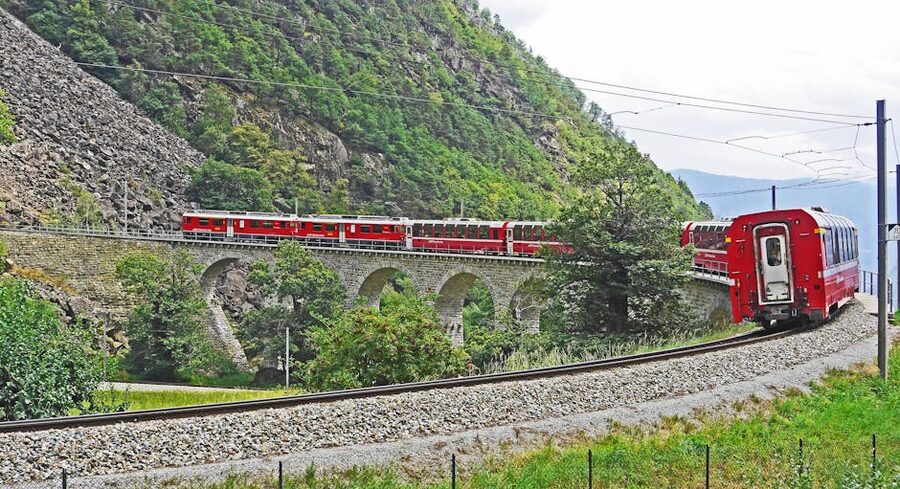
Coming around a bend in the lower valley below Brusio, the Bernina Express does something that should not be possible — it loops back under the same track it just travelled. The train circles a 360-degree open spiral viaduct, descends through its own loop, and emerges on the other side moving in the same direction it was already going. You can see the carriages curving away ahead of you while the rear of the train is still on the upper section of the bridge. People in the panoramic carriages stop talking when this happens. It is the moment the trip earns its UNESCO World Heritage status.
This guide covers how to book a Bernina Express day trip from Milan: which tour to choose, what the actual day on the train looks like (it is a long one, with a stop in St. Moritz), and the small but important difference between the panoramic carriages and the regular ones.
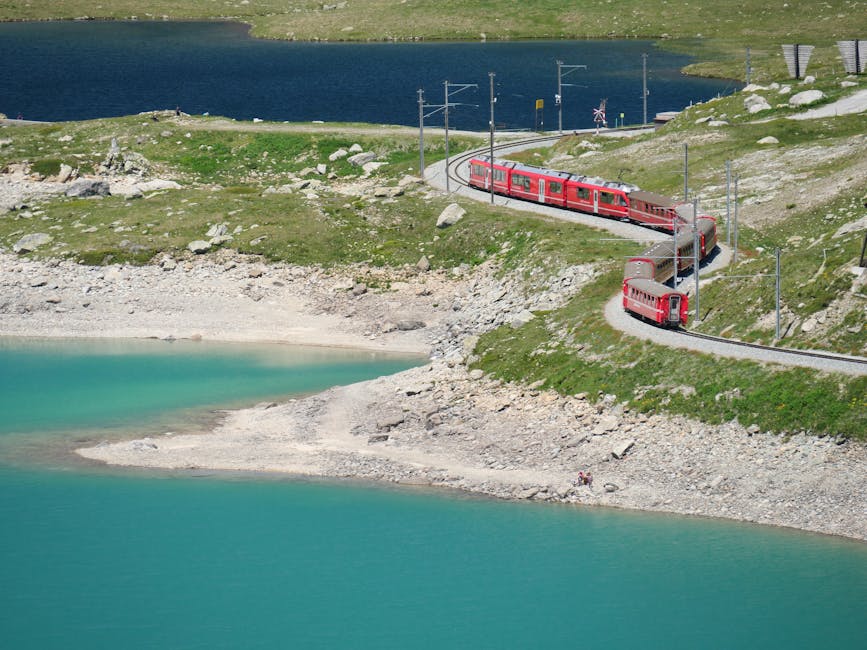
The Bernina Express is the highest scenic train route across the Alps that does not use a rack-and-pinion system. It runs from Tirano in Italy to Chur in Switzerland — about four hours one way through the Bernina Pass, crossing 196 bridges and 55 tunnels along the route. Most travellers do it as a Milan-based day trip: train from Milan to Tirano, the Bernina Express up through the pass to St. Moritz, free time in St. Moritz, then a coach back to Milan via the Italian valley. Total day is around 12 hours.
In a Hurry? The Three Tours Worth Booking
- Most reviewed pick: Bernina and St. Moritz Day Tour from Milan — around $123, 12.5 hours, the standard Milan-Tirano-St.Moritz day trip.
- With panoramic carriage: St. Moritz and Panoramic Bernina Express Tour — around $188, premium upgrade with the curved-window panoramic carriage.
- Alternative cheap option: Bernina Train Swiss Alps and St. Moritz Day Trip — around $120, similar itinerary at a marginally lower price.
- In a Hurry? The Three Tours Worth Booking
- Which Tour to Book
- 1. From Milan: Bernina and St. Moritz Day Tour by Scenic Train — from 3
- 2. From Milan: St. Moritz and Panoramic Bernina Express Tour — from 8
- 3. From Milan: Bernina Train, Swiss Alps & St. Moritz Day Trip — from 0
- What the Day Actually Feels Like
- The Spiral Viaduct — Why It Exists
- Standard vs Panoramic Carriages
- St. Moritz — What the 90 Minutes Shows You
- When to Go
- What to Bring on the Train
- Self-Guided as an Alternative
- Pairing With the Rest of Your Italy or Switzerland Trip
Which Tour to Book
The base $120-123 tours all run the same route on the same train with regular carriages. The premium $188 option adds the panoramic carriage — curved windows that wrap up over the side and into the roof — which is what most people actually picture when they imagine the Bernina Express. If you can absorb the price difference, the panoramic carriage is worth it. The route is the same; the windows are the difference.
1. From Milan: Bernina and St. Moritz Day Tour by Scenic Train — from $123
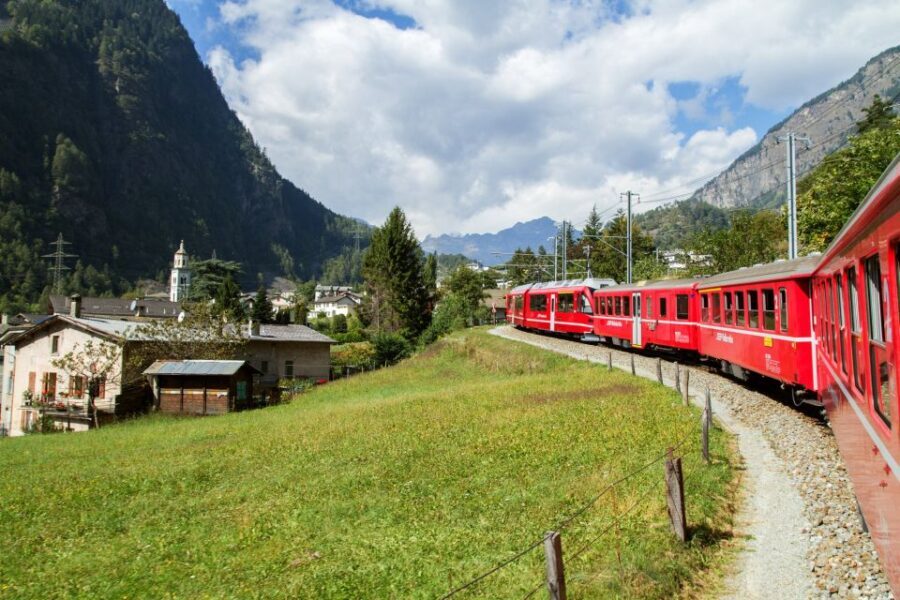
The most-booked of the Bernina options. You meet the coach in central Milan around 7am, drive 2.5 hours to Tirano on the Italian side of the border, board the Bernina Express train for the 2.5-hour climb up through the Bernina Pass to St. Moritz, get about 90 minutes of free time in St. Moritz, then take the coach back to Milan via Italy. Our full review walks through the actual day timing and what each leg is like.
2. From Milan: St. Moritz and Panoramic Bernina Express Tour — from $188
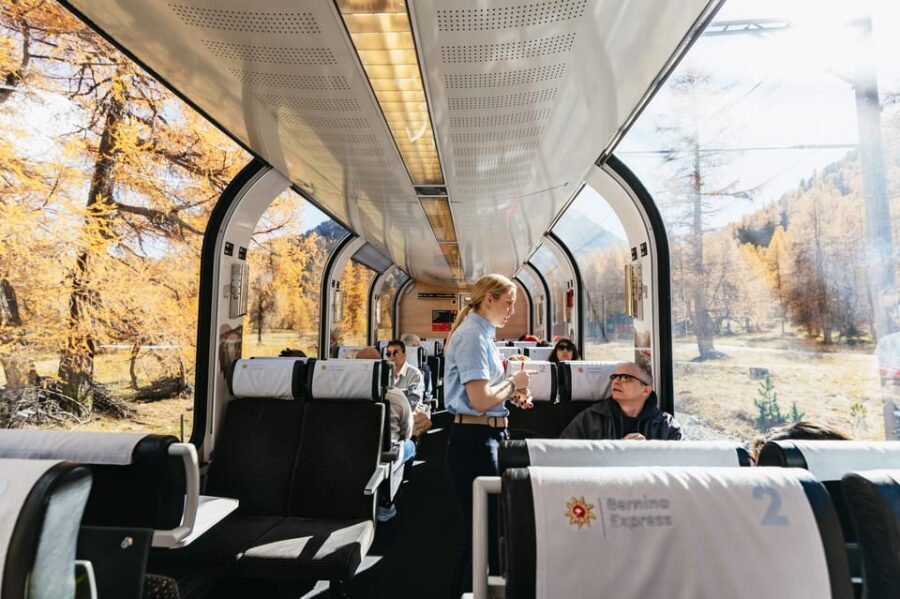
The premium option, with the actual Bernina Express panoramic carriages instead of the standard regional train. The carriages have curved windows that wrap from waist height up over the side and into the ceiling — much better for photographing the mountains as you climb. Costs a noticeable premium but if the train is the point of the trip, this is the version to book. Our full review covers what the panoramic carriages are actually like and whether they earn the upcharge.
3. From Milan: Bernina Train, Swiss Alps & St. Moritz Day Trip — from $120
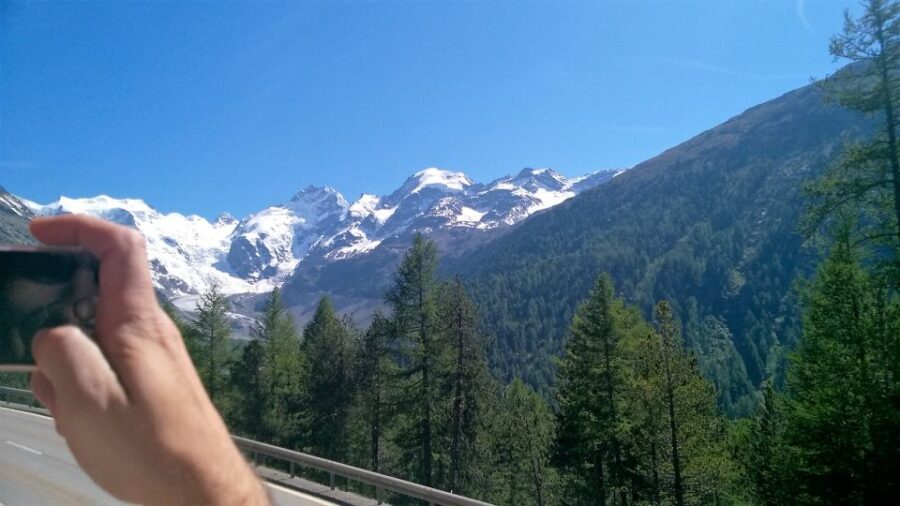
The third option is an alternative budget version of essentially the same trip — same route, same train. The marginal saving comes from the operator’s slightly leaner pickup and drop-off arrangements. Worth choosing if the timing fits your day better than the headline option, or if you have other Milan tours already booked through the same platform. Our full review covers the booking mechanics and any small differences from option 1.
What the Day Actually Feels Like
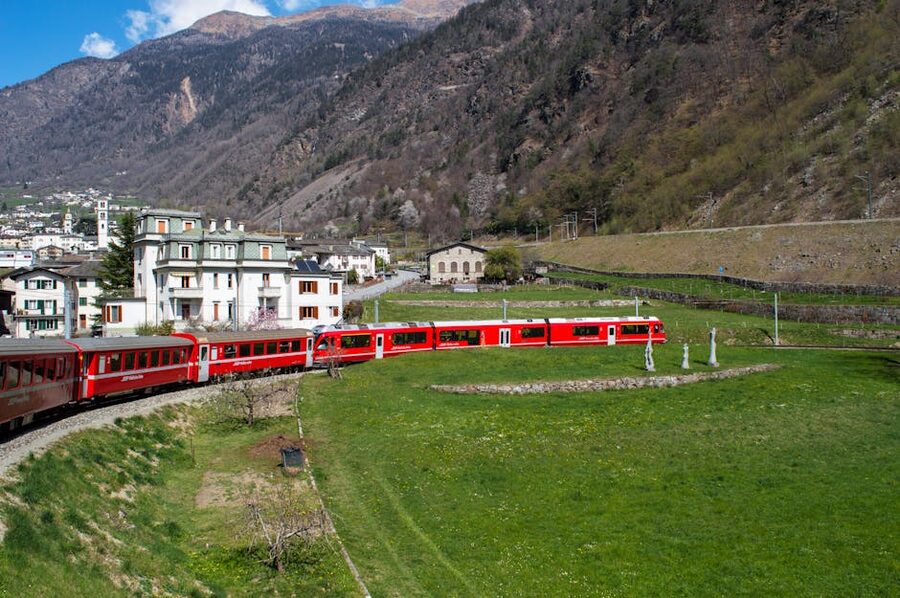
The coach picks you up in central Milan at around 7am — early but not brutal. The first leg is the drive north to Tirano on the Italian side of the border. This takes about 2.5 hours on a mix of motorway and provincial roads, ending in the small Italian town that serves as the southern terminus of the Bernina line. Tirano itself is unremarkable; you do not get free time there, just enough to walk from the coach park to the train platform.
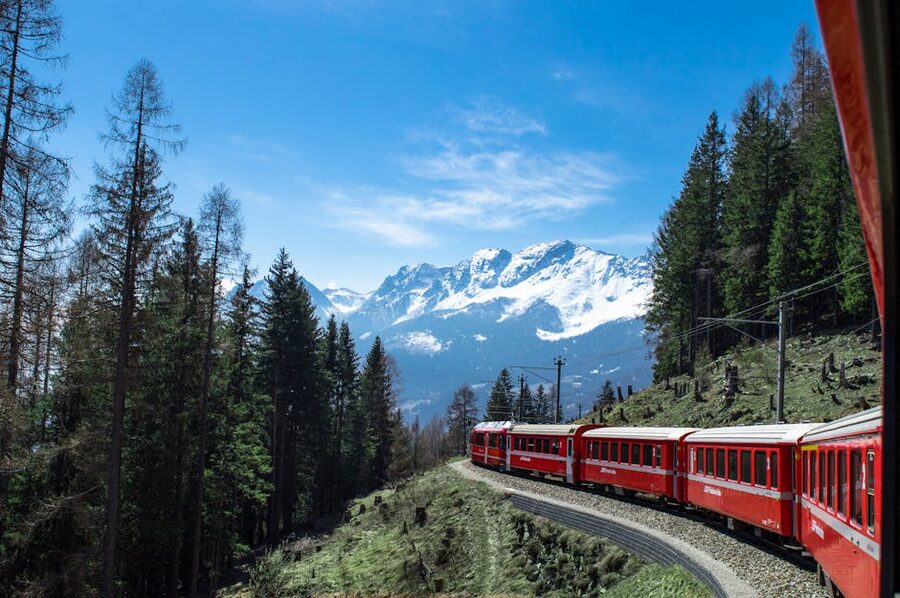
The train itself is what most travellers are here for. Boarding is at the Tirano station around 10.30am. Standard regional carriages have normal train windows; the panoramic carriages (premium ticket) have the curved roof-line windows. Either way you get assigned seating with seat-back tables and a snack trolley that comes through about an hour into the ride. The journey to St. Moritz is 2.5 hours of continuous climbing, with the train pausing briefly at Brusio for the spiral viaduct moment and at Alp Grüm for a five-minute photo stop at the open-air platform.
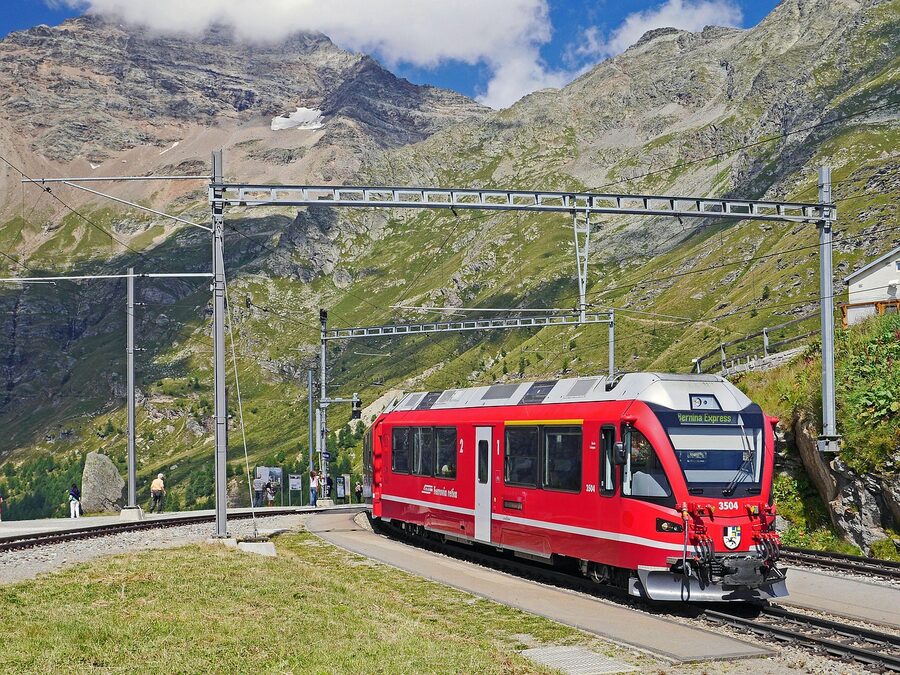
You arrive in St. Moritz around 1.30pm with about 90 minutes of free time before the coach back. This is enough to walk into central St. Moritz from the train station (10 minutes), buy a sandwich, sit by the lake for half an hour, and walk back. It is not enough to do anything resembling a “visit” to St. Moritz — the town is essentially a backdrop, not a destination on this particular day trip.
The Spiral Viaduct — Why It Exists
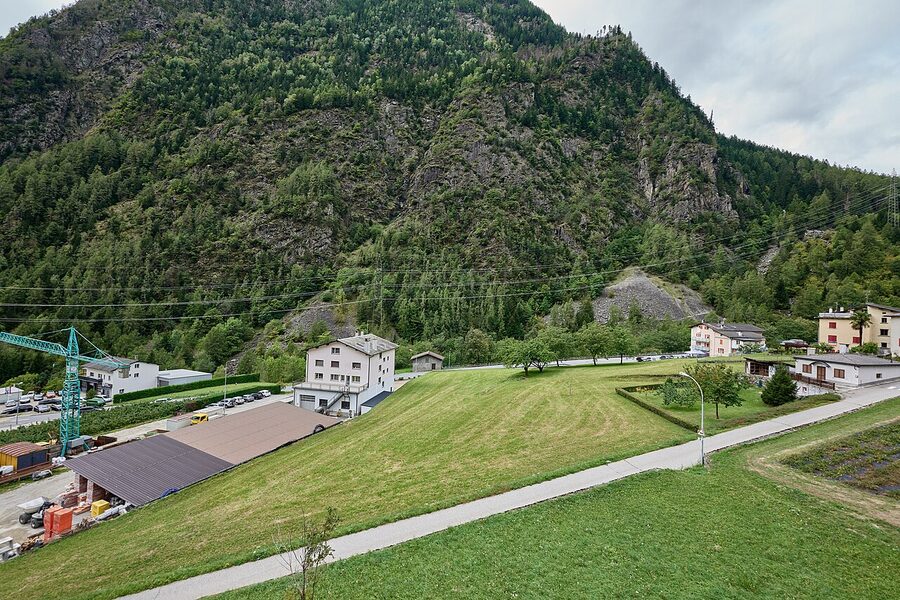
The Brusio Spiral Viaduct is the most photographed structure on the Bernina line and the most engineered solution to the route’s biggest problem: the descent into Italy is too steep for a normal railway. The southern end of the line drops from Cavaglia (around 1,700m) down to Tirano (430m) over a relatively short distance. To make this descent gentle enough for a regular adhesion railway (no rack-and-pinion), the engineers needed to add length without adding distance — and a spiral viaduct does exactly that.
The geometry: the train enters the spiral on the upper level, curves through 360 degrees, and exits on the lower level travelling in the same direction. The whole structure is open-air masonry, built between 1906 and 1908, and has been operating continuously since 1908. Most photographs of the Bernina Express show the train mid-loop, with one set of carriages on the upper section and the rest visible on the lower section.
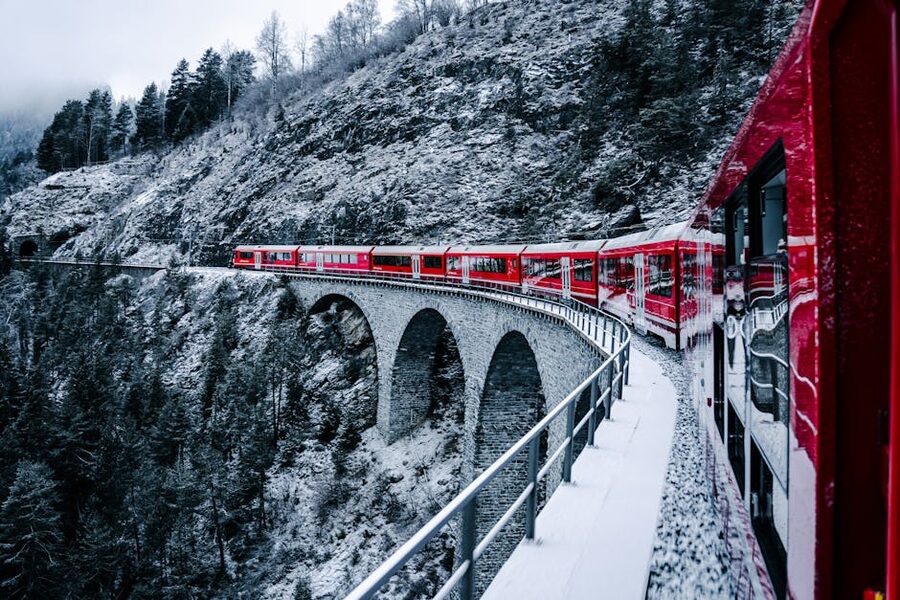
Standard vs Panoramic Carriages
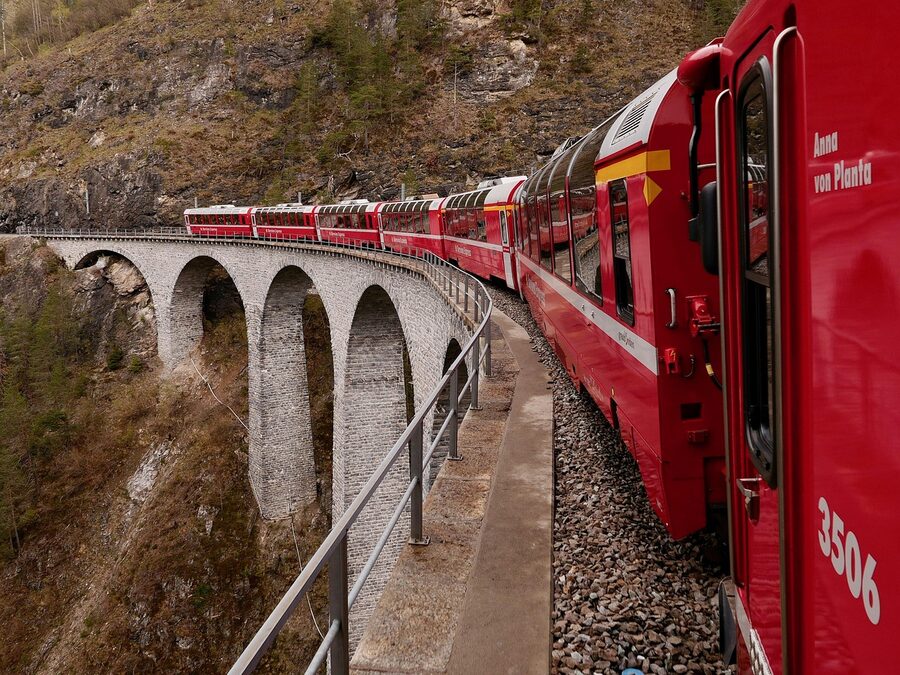
The standard tour ($120-123) uses regular Rhätische Bahn regional train carriages — perfectly comfortable, normal-sized windows, side-facing seating. You see the scenery clearly but you have to crane your neck for the upper-mountain shots. The seats are not reserved, so if the train is full you might get pushed around for the better window seats.
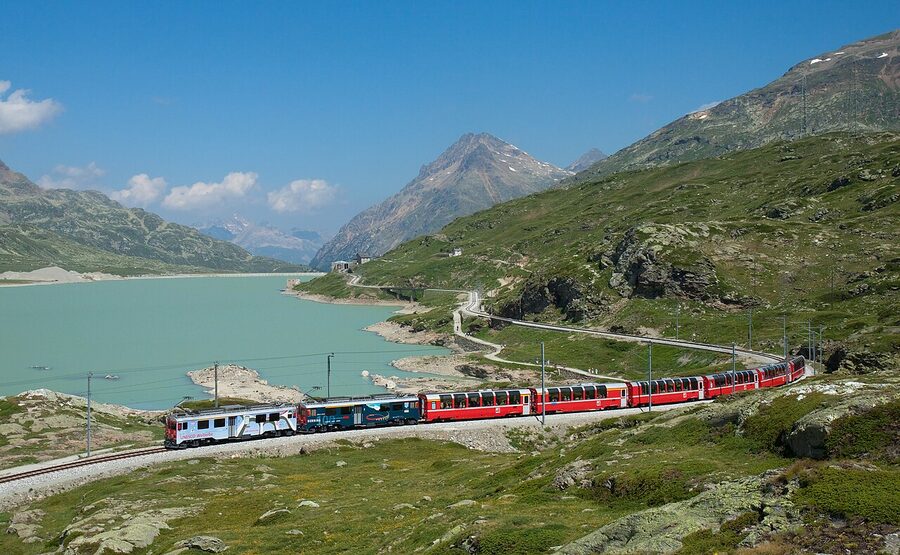
The panoramic tour ($188) puts you in the actual Bernina Express panoramic carriages — they look like greenhouse trains from outside, with curved windows that arc from below seat-back up over the side and into the ceiling. From inside, you can see the mountains directly above the train as well as alongside. The seats are reserved and rotated so everyone faces forward. The windows are also tinted to reduce glare for photography.
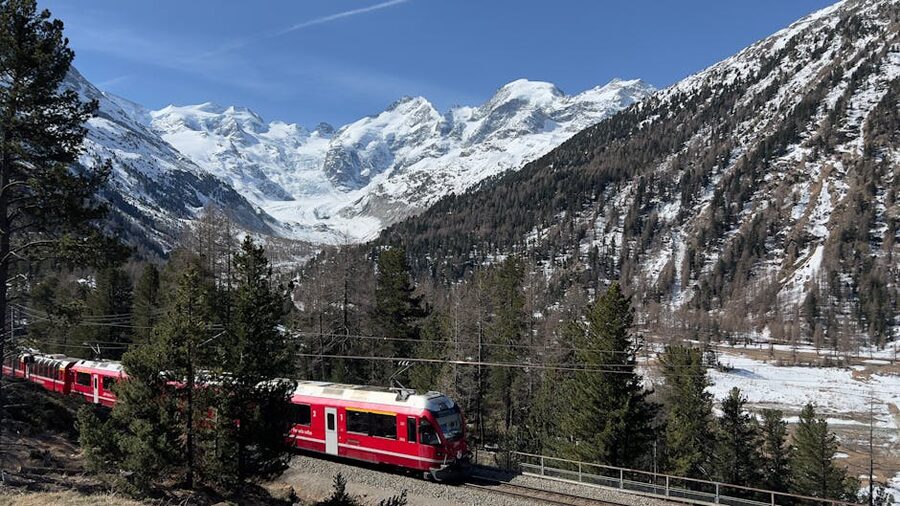
Honest assessment: if you are going to do this trip, do it in the panoramic carriage. The premium is real but the difference in experience is too. People who pay extra never regret it; people who go cheap sometimes wish they had upgraded. If you cannot absorb the panoramic price, the standard carriage is still good — but go in knowing the windows are the trade-off.
St. Moritz — What the 90 Minutes Shows You
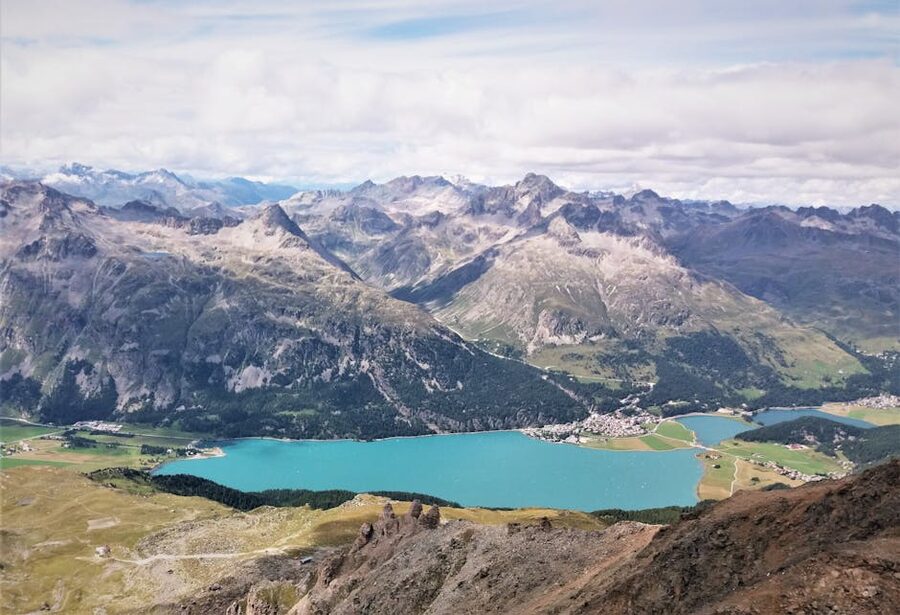
St. Moritz is one of the wealthiest small towns in Switzerland, a winter sports resort that has been on the global map since 1864 when it hosted what is widely considered the first organised winter tourism. The town itself is small — a tight cluster of luxury hotels, watch shops, and restaurants centred on a single shopping street. Most of the famous skiing happens on the surrounding peaks, not in the town itself.
What you can actually do in 90 minutes: walk from the station to the lakefront (10 minutes downhill), do a quick loop along the south shore (20-25 minutes), grab a coffee and pastry at one of the lakefront cafés (15 minutes), and walk back to the station (15 minutes uphill — easy to underestimate). That uses the time honestly. Anything more ambitious — the upper village, the Segantini Museum, the Olympic Bobsleigh Run — needs a full half-day.
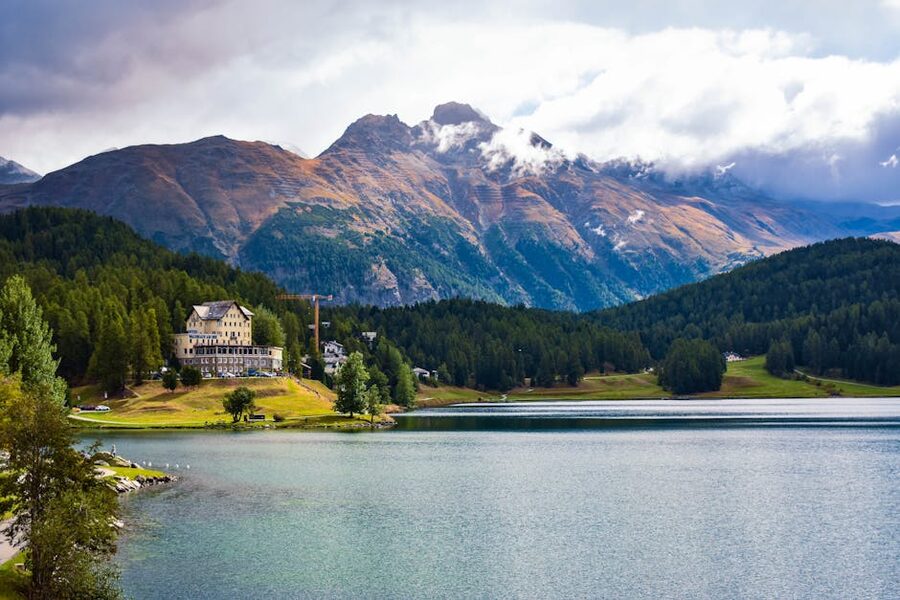
If St. Moritz interests you for its own sake, do not do the Bernina Express as a day trip — book a night here separately. The day trip uses St. Moritz as a turnaround point, not a destination. Real St. Moritz visits need at least an overnight to get any sense of the place.
When to Go
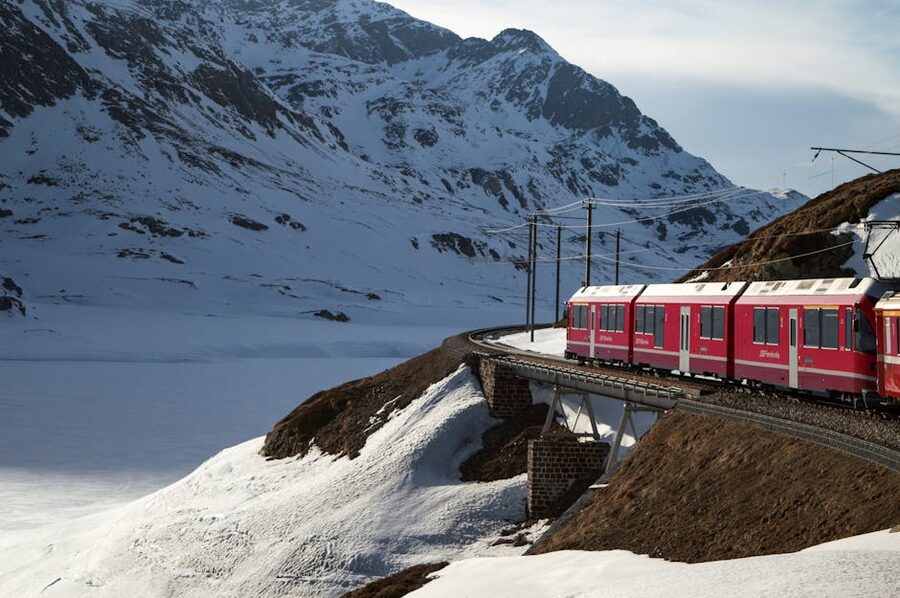
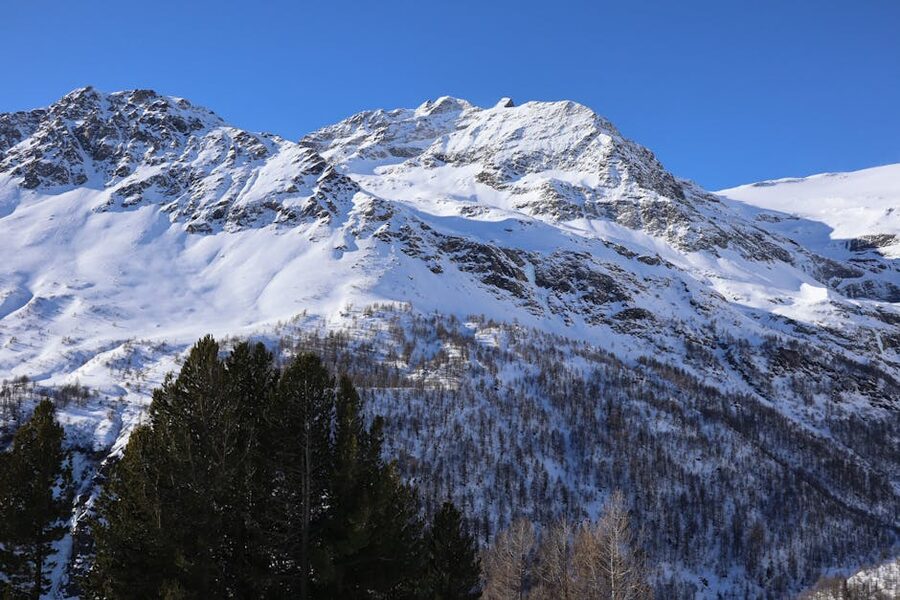
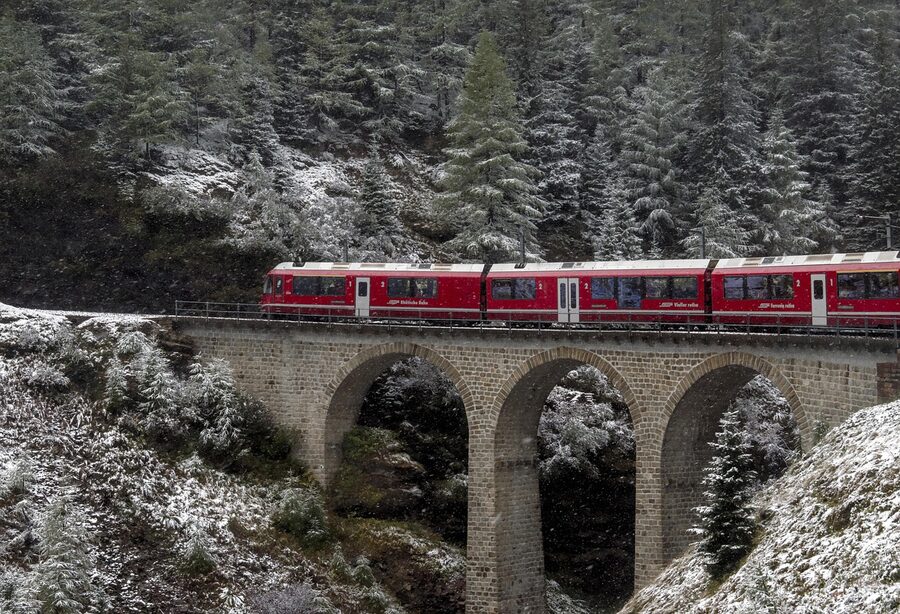
The Bernina line runs year-round and the experience changes by season. Winter (December-March) gives you the iconic red-train-against-snow photographs. The route is reliable in winter because it has been running through these gradients for over a century — only extreme weather causes cancellations. The trade-off is shorter daylight, so the second half of the climb may happen in low light.
Summer (June-September) gives the longest daylight, the greenest valleys, and the least chance of weather drama. The trade-off is crowds — the train can be near-capacity in July-August and the panoramic carriages sell out weeks ahead. If you want a summer panoramic ticket, book at least 3-4 weeks in advance.
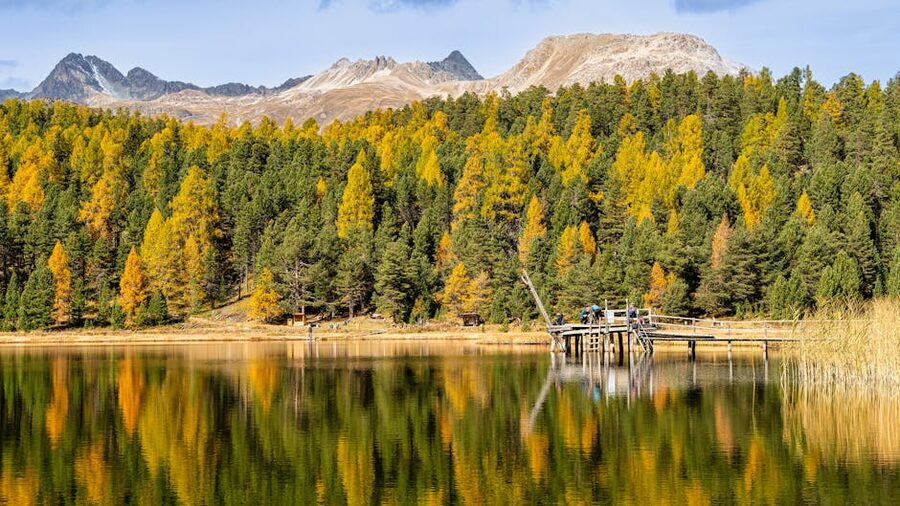
Autumn (late September-October) is the photographer’s pick. The larch trees in the Bernina Pass turn gold for two-three weeks, the crowds drop sharply after the school summer break ends, and the light is softer than midsummer. Spring (April-May) is shoulder season with reliable scenery but unpredictable weather — possible snow at the pass even in May.
What to Bring on the Train
The train ride is 2.5 hours one way, the bus legs are 2.5 hours each, and the day total is around 12 hours. Pack accordingly. A water bottle is essential — the snack trolley sells drinks but at trolley prices ($5+ per bottle). A real camera with a polarising filter outperforms phones at the higher elevation; the snow glare washes out phone shots more than people expect.
Layered clothing matters because the train heating runs warm and the brief Alp Grüm photo stop puts you outside in alpine cold for five minutes. The St. Moritz lakefront in summer is around 18°C; in winter it can be -10°C. The pickup in Milan and the arrival in St. Moritz can be 25°C apart on the same day. A fleece you can put on and remove easily handles most situations.
Power: phone batteries drain fast at the elevation and from continuous photography. Bring a power bank. The standard carriages have no charging ports; the panoramic carriages have USB ports at most seats but they are slow.
Self-Guided as an Alternative
If you have time and a Swiss Travel Pass, you can do the Bernina Express more cheaply by booking the train ticket directly with Rhätische Bahn. Take the train from Zurich or Lucerne to Chur (about 90 minutes), then board the Bernina Express northbound from Chur to Tirano (4 hours), or southbound. The day is longer but you control your own schedule and you can stop in St. Moritz for a real visit if you want.
The trade-off with self-guided versus the Milan day tour: you do the full 4-hour Chur-to-Tirano route rather than the abbreviated 2.5-hour Tirano-to-St.Moritz section, which means more train time and more scenery. The downside is you have to figure out your own onward transport and accommodation. For experienced rail travellers, this is the better Bernina experience. For first-time visitors, the Milan day tour is the easier introduction.
Pairing With the Rest of Your Italy or Switzerland Trip

The Bernina Express is unusual among Switzerland day trips because it is most logically based in Milan rather than a Swiss city. Most travellers do this as a single day during a Milan or Lake Como trip rather than as part of a wider Switzerland itinerary. The day pairs well with one or two days in Milan exploring the Duomo, the Galleria, and the Last Supper.
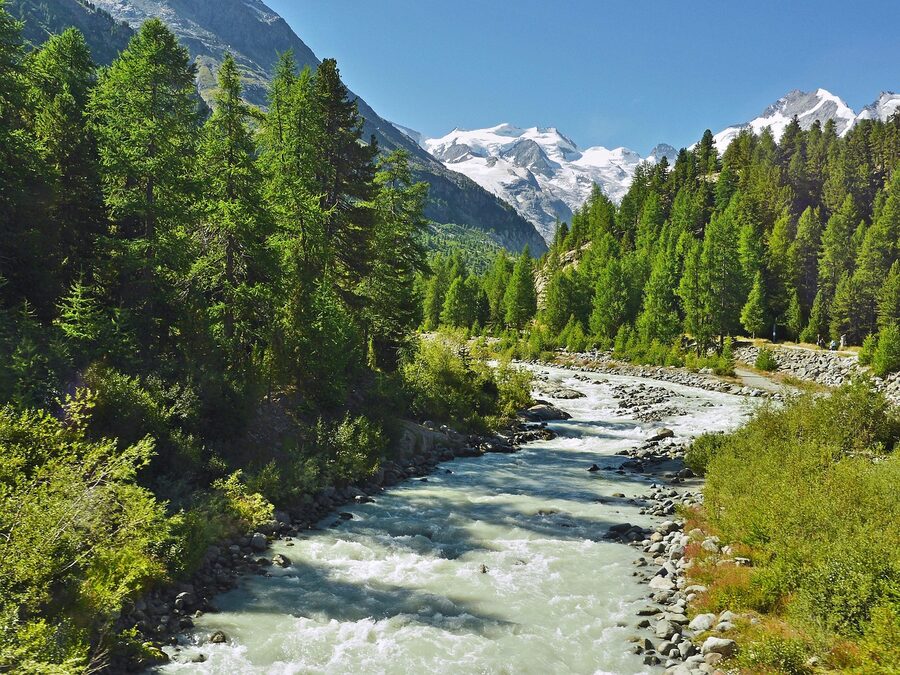
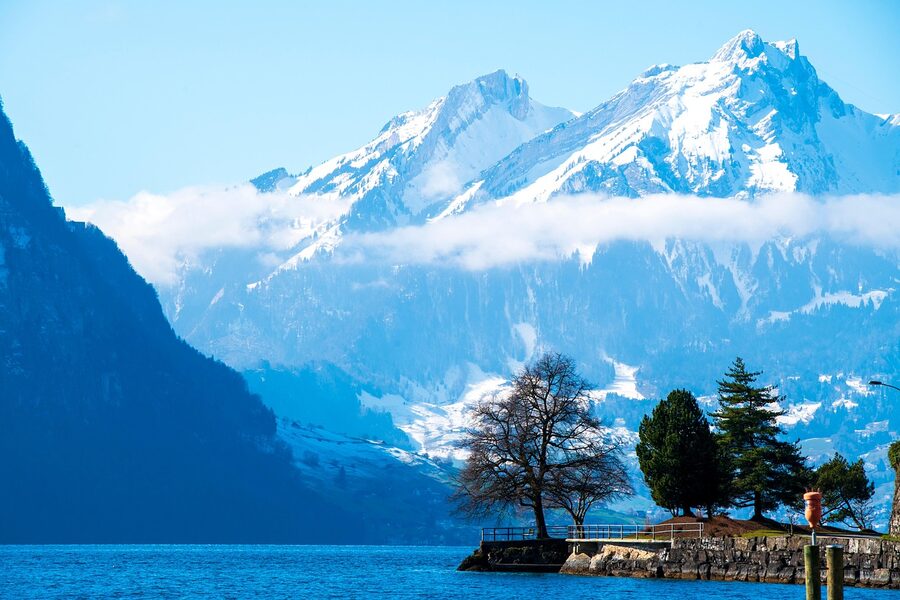
If you are doing the Bernina from a Switzerland base instead, the obvious pairing is a longer Graubünden trip with St. Moritz as a real overnight, plus the Mount Titlis and Mount Pilatus mountain days from a Lucerne base. Switzerland’s eastern canton of Graubünden has its own tourist infrastructure separate from the more famous central regions — the Bernina Express is the headline excursion that ties them together.
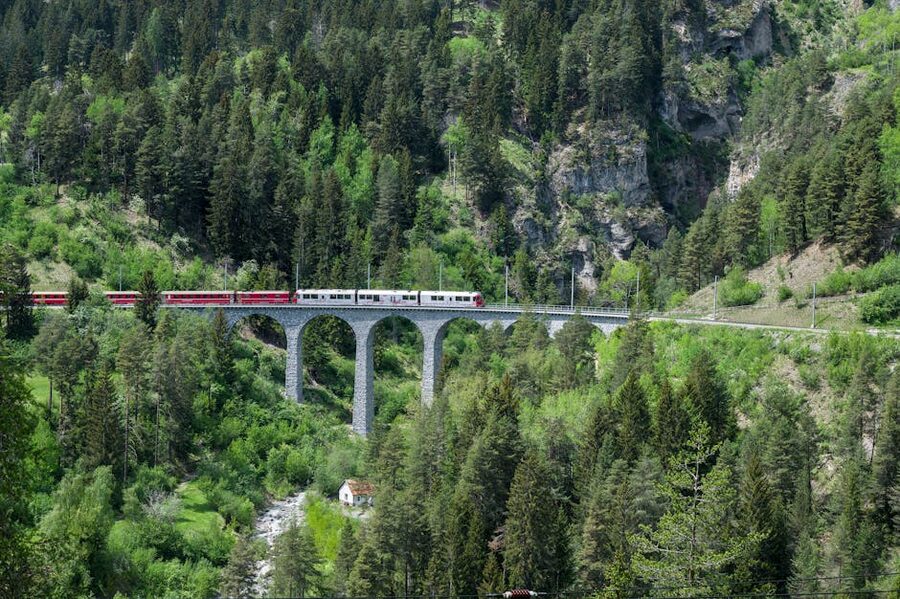
For travellers obsessed with Swiss trains, the Bernina Express connects to the equally famous Glacier Express at Chur — together the two routes form an 8-hour cross-Alpine train day that runs from St. Moritz all the way to Zermatt. This is a separate booking and a much longer commitment than the Milan day trip, but for railway enthusiasts it is the holy grail of Swiss scenic train travel.
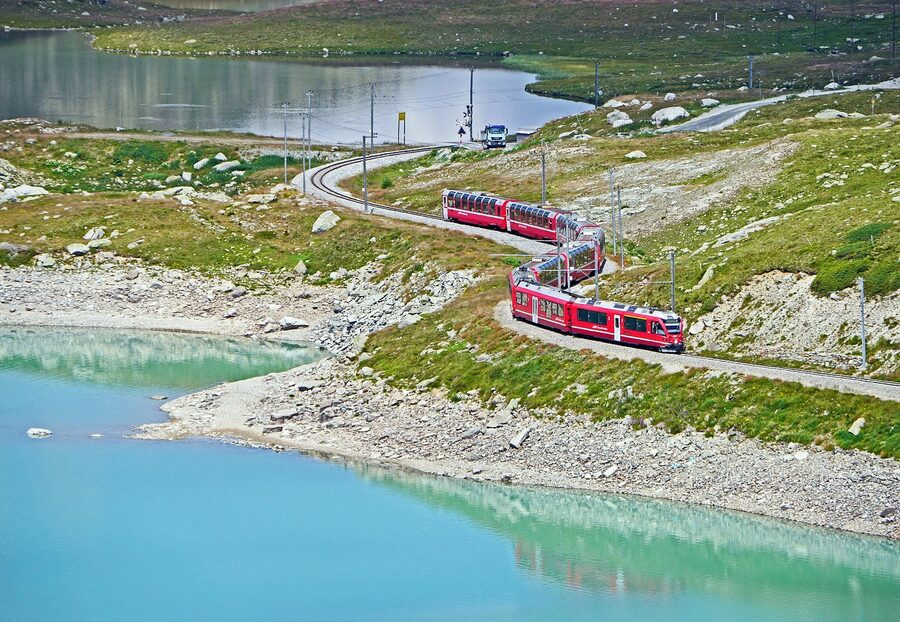
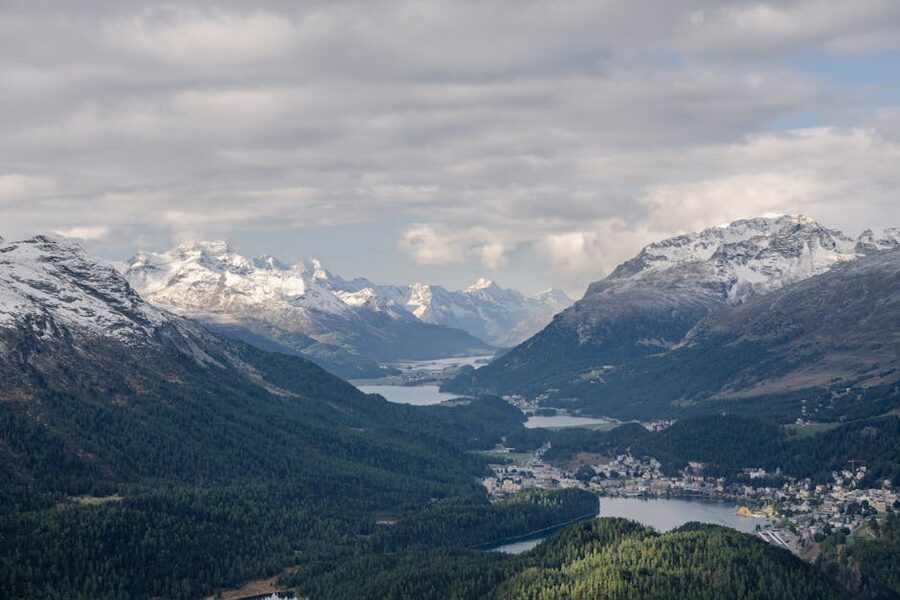
If you do this trip and decide you want more, consider returning later for a multi-day Engadin trip — base in St. Moritz or nearby Pontresina for 3-4 nights, do the surrounding mountain hikes and lake walks, and use the Bernina railway as a local commuter train rather than a tourist excursion. It is a completely different experience from the Milan day trip and arguably better. Combine with a Mount Pilatus visit or a Mount Titlis day on the way back to make a complete eastern-Swiss week.
One last note. The day trip is long — count on 12 hours of total elapsed time including the Milan-Tirano coach legs. Most travellers underestimate the wear-and-tear of the bookend coach drives. If you have any flexibility, eat a real breakfast before the 7am pickup and a real dinner after you get back. The on-board snacks and the brief St. Moritz lunch will not sustain you through a full day on coaches and trains.
This article contains affiliate links. If you book through our links, we may earn a small commission at no extra cost to you. This helps us keep producing detailed travel guides.