
The first time I tried cycling along the Garonne in Bordeaux, I got lost within fifteen minutes. Took a wrong turn near the Chartrons district, ended up on a side street lined with antique shops, and honestly? That detour turned out better than the route I’d planned.
That’s kind of the whole story with Bordeaux and bikes. The city rebuilt itself in the 2000s — ripped out car lanes, laid down over 200 km of dedicated bike paths, and turned the entire waterfront into a cycling corridor that runs the full length of the river. You don’t need to be in great shape. You don’t even need to know where you’re going. The flat terrain and well-marked lanes make it almost impossible to have a bad ride.
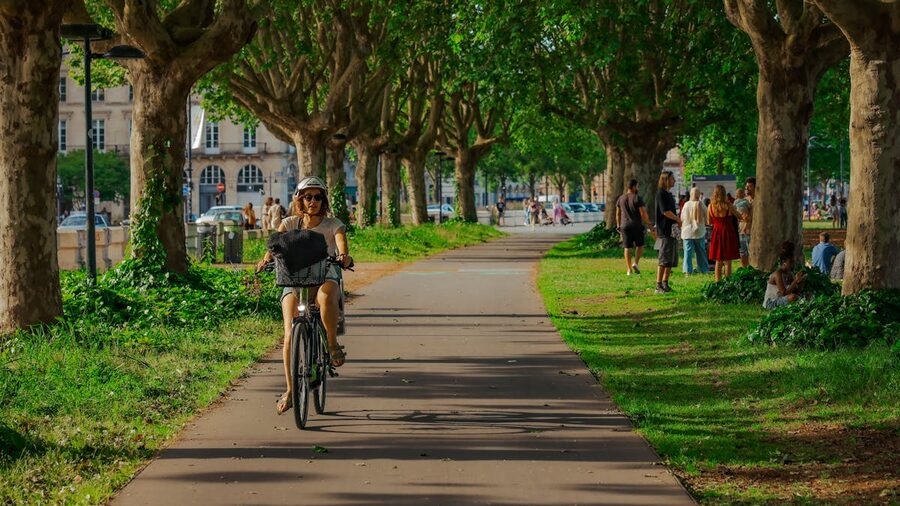
But here’s the thing about booking a bike tour versus just renting one yourself: the guides know things Google Maps won’t tell you. Which courtyard gates are open, which wine bars do tastings for two euros, which shortcut avoids the tram tracks that eat skinny tires. And if you want to ride out to the vineyards — Saint-Emilion, the Medoc, any of the big appellations — the logistics of getting there with a bike and back with a belly full of wine are genuinely tricky on your own.
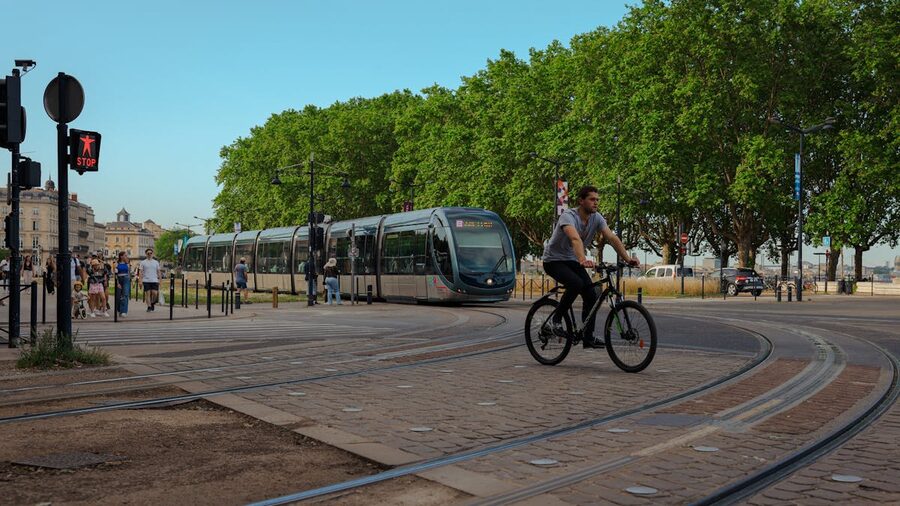
Best overall: Bordeaux: Historic Center & Chartrons District Bike Tour — $42. Three hours covering the historic core, the Chartrons quarter, and a canele tasting. Run by Monsieur Bacchus — the most experienced bike tour operator in the city.
Best budget: Bordeaux: Essentials 3-Hour Bike Ride — $41. Covers the key sights with flat, easy cycling. Great guides who know the city inside out.
Best premium: Saint-Emilion E-Bike Wine Tour with Tastings & Lunch — $229. Full-day e-bike ride through vineyard country with chateau visits, guided tastings, and a sit-down lunch. The best way to do wine country without a car.
- Why Bordeaux Is One of the Best Cycling Cities in France
- Renting a Bike vs Booking a Guided Tour
- The Best Bordeaux Bike Tours to Book
- 1. Bordeaux: Historic Center & Chartrons District Bike Tour —
- 2. Bordeaux: Essentials 3-Hour Bike Ride —
- 3. Saint-Emilion E-Bike Wine Tour with Tastings & Lunch — 9
- When to Ride
- How to Get to the Start Point
- What to Bring
- What You’ll See on a City Bike Tour
- What You’ll See on a Vineyard E-Bike Tour
- Tips That’ll Save You Time and Money
- More Bordeaux Guides
Why Bordeaux Is One of the Best Cycling Cities in France
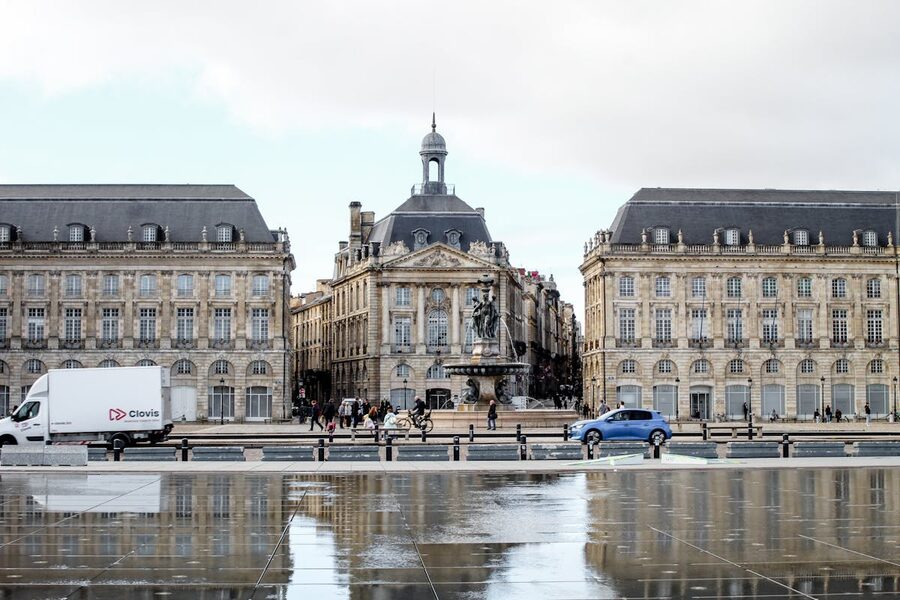
Two decades ago, Bordeaux was a car-dominated city with pollution-stained limestone facades and traffic jams through the historic centre. The urban renewal that kicked off around 2000 changed everything. The city pedestrianised huge sections of the old town, added a modern tram system, and built cycling infrastructure that now covers over 200 km of dedicated lanes.
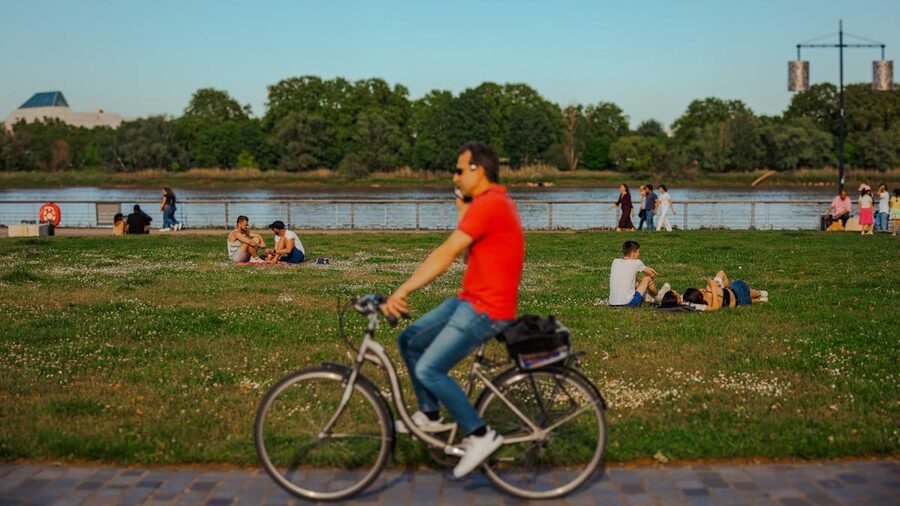
The result? Bordeaux consistently ranks among France’s most bike-friendly cities, right up there with Strasbourg and Nantes. The Garonne riverfront cycle path runs the entire waterfront — roughly 4 km from the Pont de Pierre to the Cite du Vin, completely car-free. And the terrain is flat. Not “mostly flat with a couple of hills.” Actually flat. The surrounding wine country is the same story: gentle rolling vineyards that e-bikes handle without breaking a sweat.
The public bike-share system, TBM VCub, has stations scattered across the city if you just want to grab a bike for a quick ride. But for a proper half-day or full-day tour — especially one that takes you out to the vineyards — a guided tour is the way to go. The guides handle the bikes, the routes, the winery reservations, and the small matter of getting you safely home after four wine tastings.
Renting a Bike vs Booking a Guided Tour
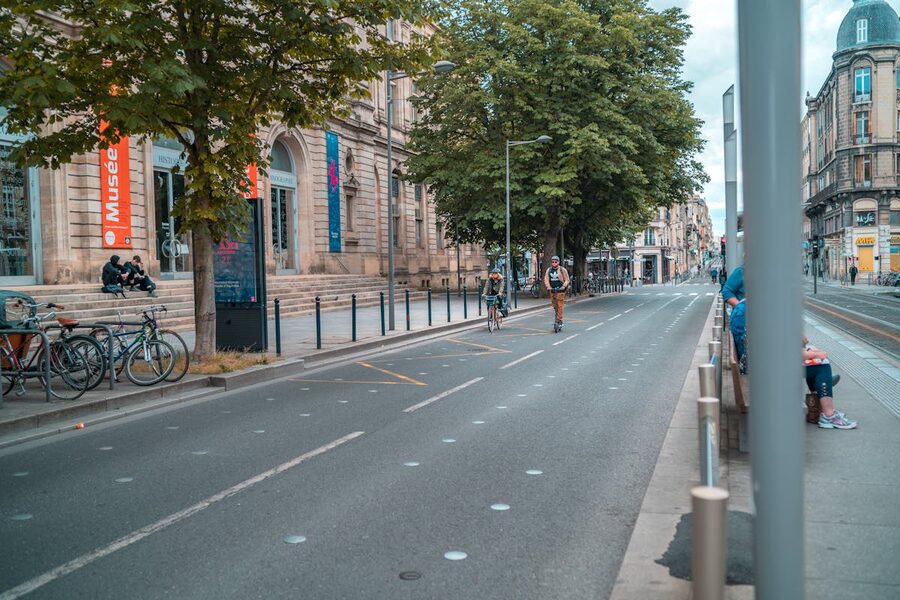
If you just want to ride around the waterfront and take photos at the Miroir d’Eau, renting a VCub or picking up a bike from a rental shop is fine. The city paths are well-marked, the route along the Garonne is impossible to get lost on, and there’s no traffic to worry about.
But a guided tour makes sense if:
- You want to ride out to the vineyards (Saint-Emilion, Medoc, or the smaller appellations) — the logistics of getting bikes there, navigating between chateaux, and coordinating tastings is genuinely complicated on your own
- You’re interested in Bordeaux’s history beyond the major landmarks — guides know the Chartrons wine-trading district, the hidden courtyards, and the stories behind the facades that you’d walk right past alone
- You want someone else to deal with the route planning, especially if you’ve only got one day
- Wine is involved. Cycling back from tastings is safer with a guide who knows the route (and e-bikes with vineyard tours mean you won’t be struggling uphill after four glasses of Merlot)
The price difference is smaller than you’d think. A decent rental bike costs around EUR 15-20 for a half day. A guided tour starts at roughly EUR 38-42 and includes the bike, a helmet, usually some food or wine along the way, and three hours of someone who actually knows what they’re talking about. For vineyard tours, you’re looking at EUR 150-230, but that includes e-bikes, chateau visits, wine tastings, and often a full lunch — things that would cost as much or more to do independently.
The Best Bordeaux Bike Tours to Book
I’ve gone through the available bike tours departing from Bordeaux and picked three that cover different budgets and styles. Each one runs regularly and has been booked by hundreds of riders, so you’re not gambling on something untested.
1. Bordeaux: Historic Center & Chartrons District Bike Tour — $42
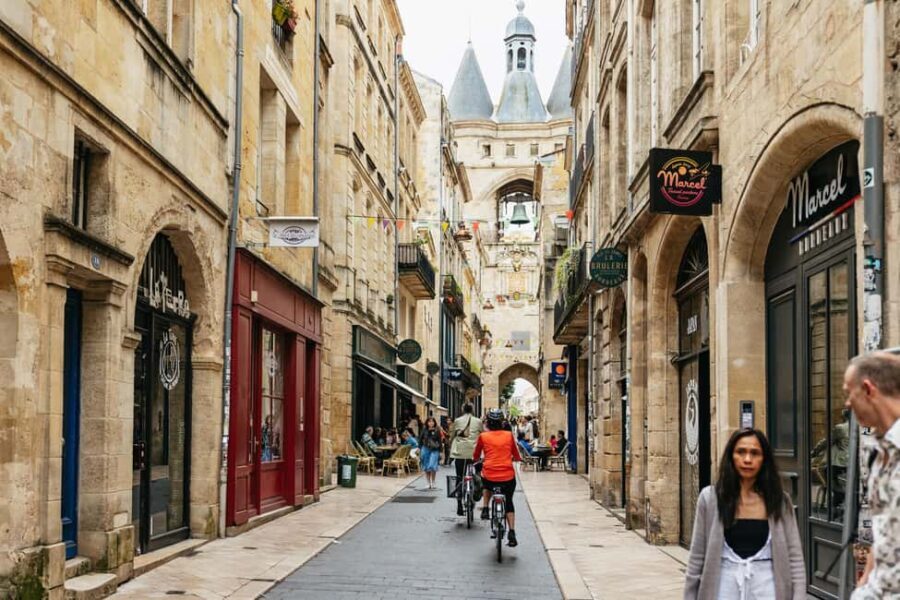
This is the one I’d book first. Run by Monsieur Bacchus Bike Tours, it covers the historic centre and then heads into the Chartrons district — the old wine-trading neighbourhood that most travelers skip entirely. The route takes you past the major landmarks (Place de la Bourse, the cathedral, the Grand Theatre) but also through the backstreets and courtyards where Bordeaux’s wine merchants have operated for centuries.
The tour includes a canele tasting, which sounds like a small thing but these crispy rum-and-vanilla pastries are Bordeaux’s signature food and finding the right bakery matters more than you’d expect. At $42 for three hours, this is hard to beat for a city overview. The guides from Monsieur Bacchus have a reputation for being genuinely knowledgeable rather than just reading from a script — they know Bordeaux’s history at a level that makes the ride feel more like an education than a tour.
If you’re only booking one bike experience in Bordeaux, this is it. You can always add a walking tour on another day to go deeper into the old town’s narrow streets where bikes don’t fit.
2. Bordeaux: Essentials 3-Hour Bike Ride — $41
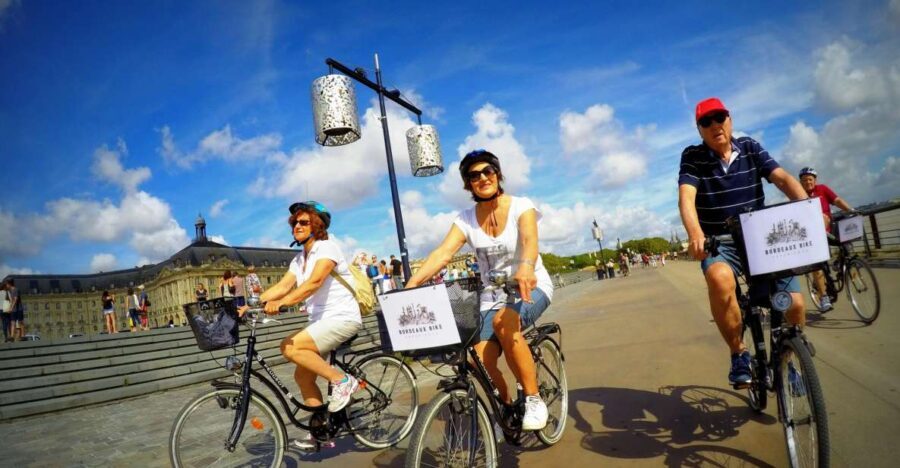
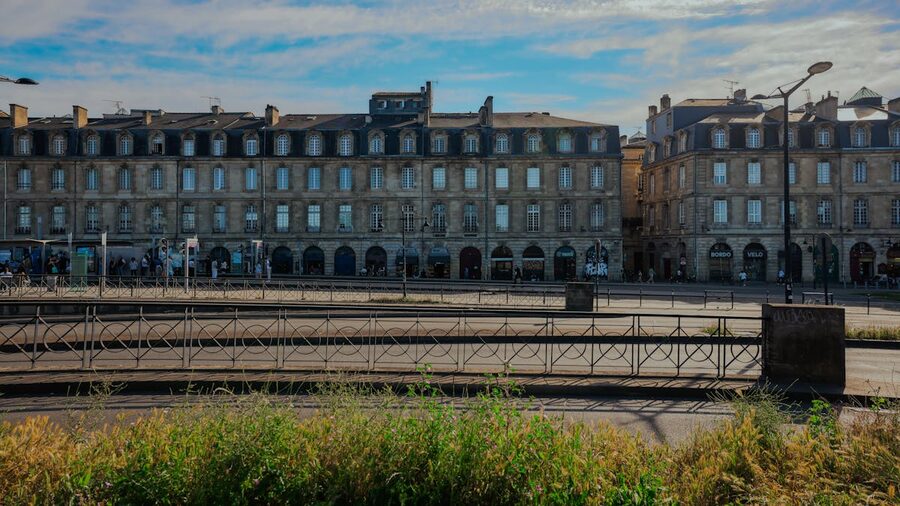
Run by Bordeaux Bike Experience, this is the most straightforward city bike tour available. You cover roughly 10 km on flat bike paths — no hills, no tricky navigation, no sections where you’re dodging traffic. The pace is relaxed enough that families with older kids can keep up, but fast enough that you don’t feel like you’re crawling.
The route hits the essential landmarks: the waterfront quays, the medieval district, the public gardens, and the modern development around the Cite du Vin area. At $41, it’s a dollar cheaper than the Chartrons tour and covers slightly different ground. The guides are local and genuinely enthusiastic — the kind of people who point out a specific bakery window or a doorway carving that you’d pedal right past on your own. If you’re considering the Bordeaux CityPass, check whether it includes bike tour discounts before booking separately.
The difference between this and the Chartrons tour above is mostly about emphasis. This one covers more modern Bordeaux and the public gardens; the Chartrons tour goes deeper into the wine-trading history. Both are solid. If you can’t decide, flip a coin — you won’t be disappointed either way.
3. Saint-Emilion E-Bike Wine Tour with Tastings & Lunch — $229
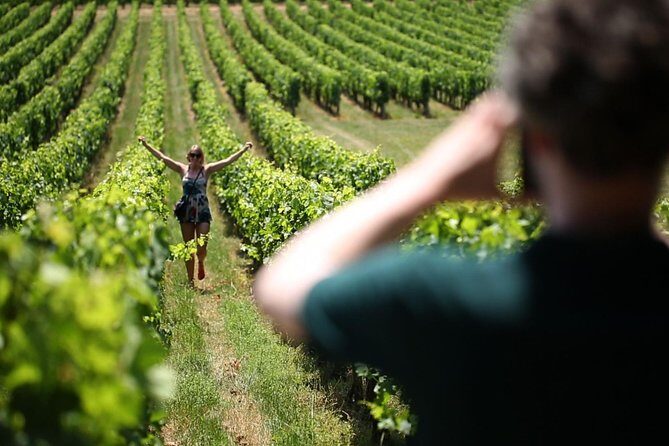
This is the splurge option, and it’s worth every cent if wine country is on your list. Run by a la francaise, it’s a small-group e-bike tour (usually 8 people max) that takes you out of Bordeaux and into the Saint-Emilion vineyards for a full day. The e-bikes handle all the distance — you’re riding through flat vineyard roads with the motor doing the hard work, so even non-cyclists manage fine.
The itinerary includes visits to multiple chateaux, guided tastings at each, and a proper sit-down lunch inside one of the properties. Not a picnic in a field. An actual meal with multiple courses, paired with the estate’s wines, eaten in a room that’s been hosting wine lunches for longer than most countries have existed. At $229, yes, it’s the most expensive option here. But try pricing a rental car, fuel, parking at chateaux, individual tasting fees, and a restaurant lunch in Saint-Emilion separately — you’d spend more and have none of the insider access.
The guides from a la francaise are wine professionals, not just tour operators. They’ll explain the difference between Right Bank and Left Bank Bordeaux in terms that actually make sense, and they’ll steer you toward bottles worth buying at the cellar door. If you’ve already spent time in the city and want one memorable day outside it, this is the one. Pair it with a visit to the Cite du Vin for wine context before you go.
When to Ride

The best months for cycling in Bordeaux are May through October. Summer (July-August) is warm — temperatures regularly hit 30-35 degrees Celsius — so early morning or late afternoon rides are more comfortable. June and September are the sweet spot: warm enough for short sleeves, cool enough that three hours on a bike doesn’t leave you wrecked.
Spring (April-May) can be gorgeous but unpredictable. Rain is possible, though Bordeaux gets less of it than you’d expect. Pack a light waterproof layer.
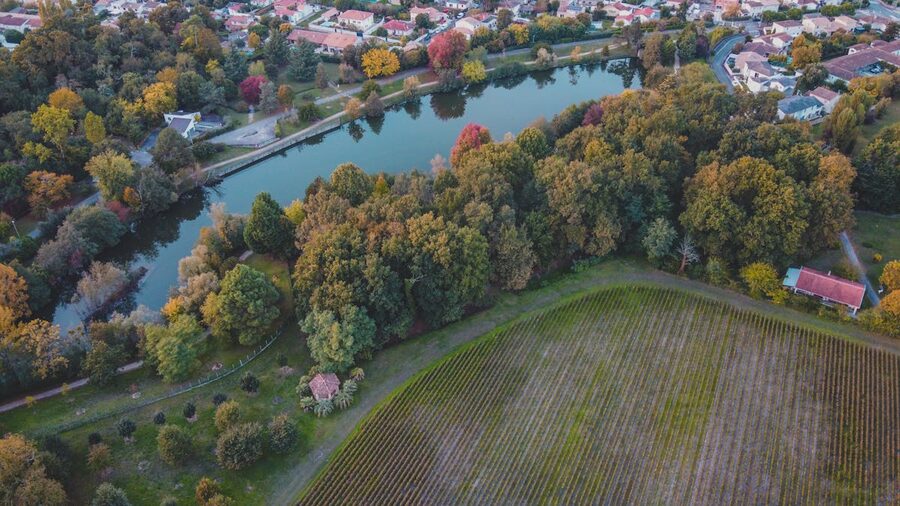
For vineyard tours specifically, September and October are harvest season, which adds another layer to the experience. You’ll see the actual picking happening in the fields. The light at that time of year is also the best for photos — low, golden, and warm.
Winter cycling is doable but less popular. The city tours run year-round, but vineyard tours typically shut down November through March. If you’re visiting in winter, a walking tour might be the better call.
How to Get to the Start Point
Most Bordeaux bike tours meet in the city centre, within walking distance of the tram stops. The usual meeting points are near Place de la Bourse, the Quinconces tram stop, or somewhere in the Chartrons district.
If you’re coming from the train station (Gare Saint-Jean), tram Line C takes you to the Quinconces area in about 15 minutes. A single TBM ticket costs EUR 1.70.
For the Saint-Emilion e-bike tour, the meeting point is in central Bordeaux — the operator handles transport out to the vineyards. You don’t need to figure out how to get a bike to Saint-Emilion yourself.
Bordeaux’s centre is compact. If your hotel is anywhere in the old town, you can probably walk to the meeting point in 10-15 minutes.
What to Bring
The tour operators provide bikes and helmets. Beyond that:
- Sunscreen — the waterfront has almost no shade, and three hours of riding in summer sun will burn you faster than you think
- Water bottle — most tours provide one or have a refill stop, but bringing your own is smart in summer
- Comfortable shoes — closed-toe, flat-soled. Sandals technically work on city tours but you’ll regret them on the vineyard routes
- A light layer — mornings can be cool even in summer, and the wind along the Garonne picks up in the afternoon
- Cash for tips and tastings — some smaller wineries on the vineyard route are cash-only for purchases
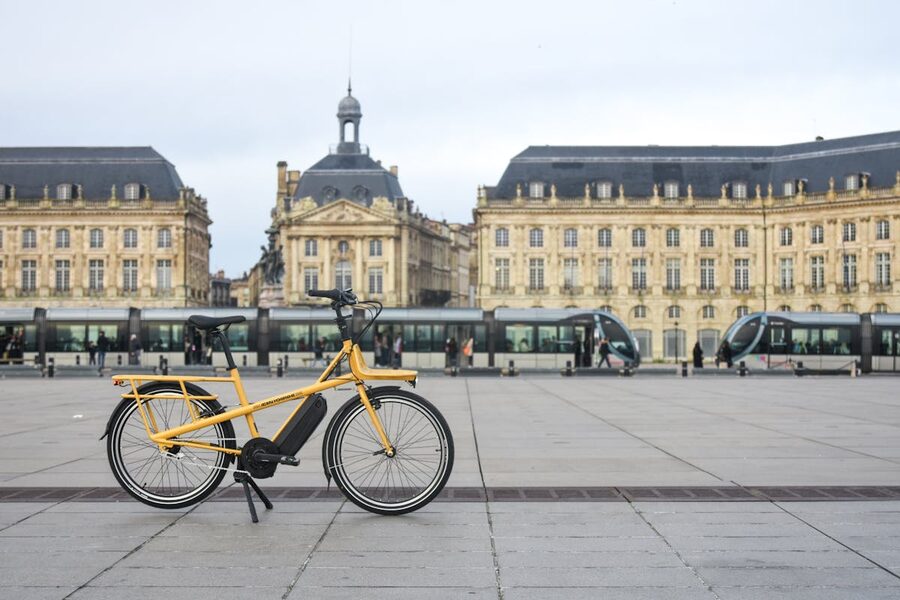
Skip the fancy cycling gear. These aren’t performance rides. Casual clothes, trainers, and a crossbody bag for your phone and wallet is the right vibe.
What You’ll See on a City Bike Tour
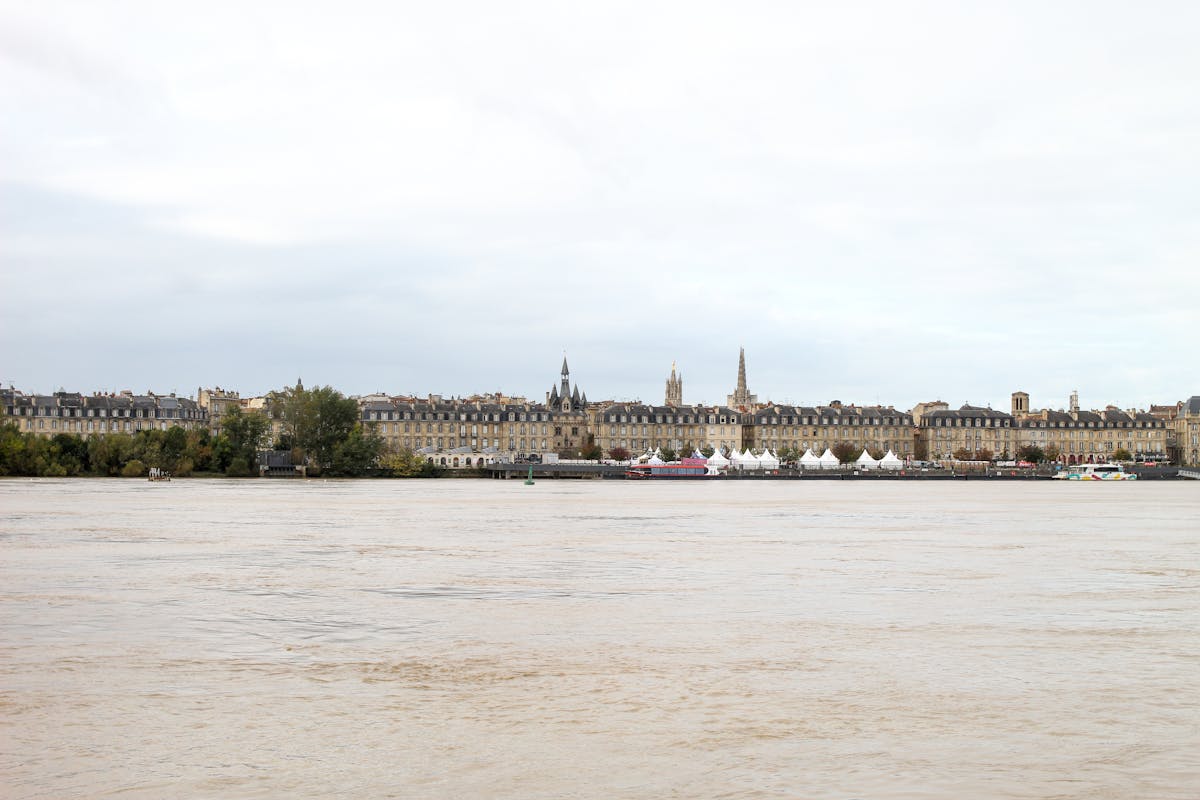
Most city tours follow a similar loop, though each operator varies the order and the detours. The standard route takes in:
The Place de la Bourse and Miroir d’Eau — the 18th-century square with its famous water mirror. Better from a bike because you can ride the full length of the quays without the crowds that pile up when you’re on foot. The Chartrons district — the former wine-trading quarter where British and Irish merchants ran the Bordeaux wine business for centuries. Still full of antique shops, independent wine bars, and some of the best food in the city.
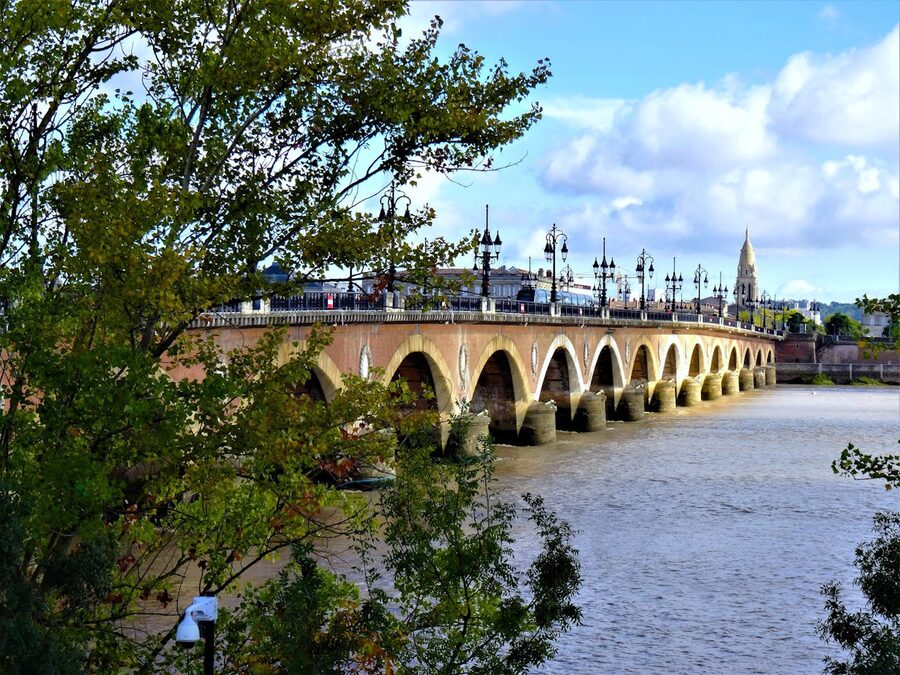
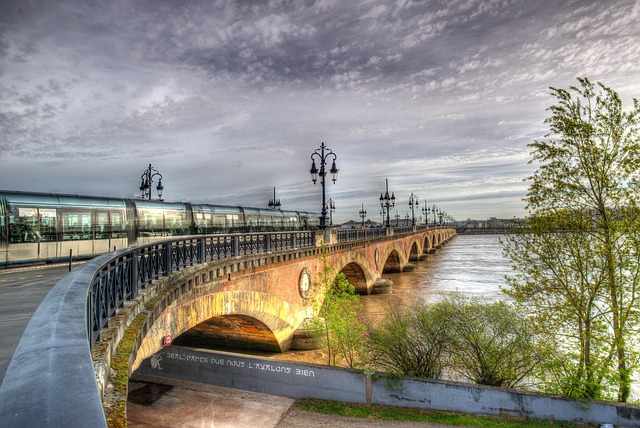
Pont de Pierre — Napoleon’s bridge across the Garonne, with a dedicated bike lane and views both directions up and down the river. Saint-Michel — the working-class neighbourhood with the tallest freestanding bell tower in southern France and one of the city’s best markets. And the Public Gardens — a wide, shaded park that offers a break from the limestone-and-tarmac of the old town.
The Chartrons-focused tour goes further north, into the less touristy warehouse streets where the actual wine trade happened. This is where you’ll taste caneles, hear about the English influence on Bordeaux wine, and ride past buildings that haven’t changed much since the 18th century.
What You’ll See on a Vineyard E-Bike Tour
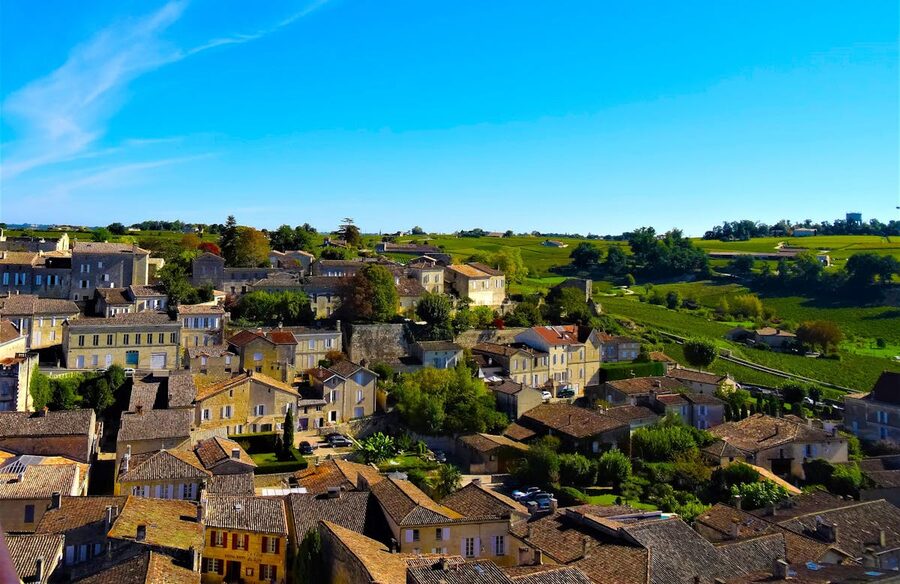
The Saint-Emilion tours are a different animal entirely. You leave Bordeaux in the morning, ride through the vine-covered countryside on e-bikes, and spend the day visiting chateaux, tasting wines, and eating extremely well. The terrain around Saint-Emilion is gently rolling — nothing steep — and the e-bike motor handles whatever inclines exist without you having to push hard.
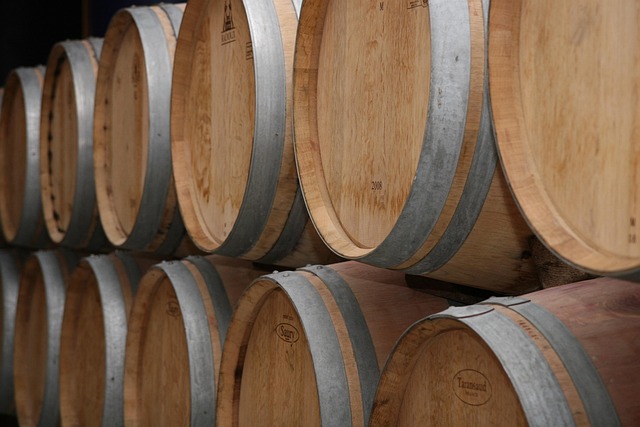
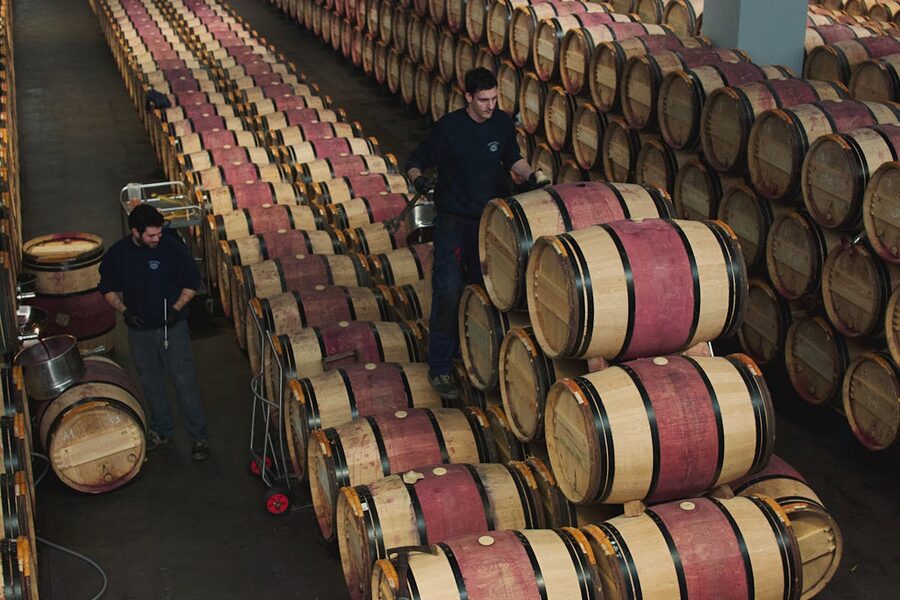
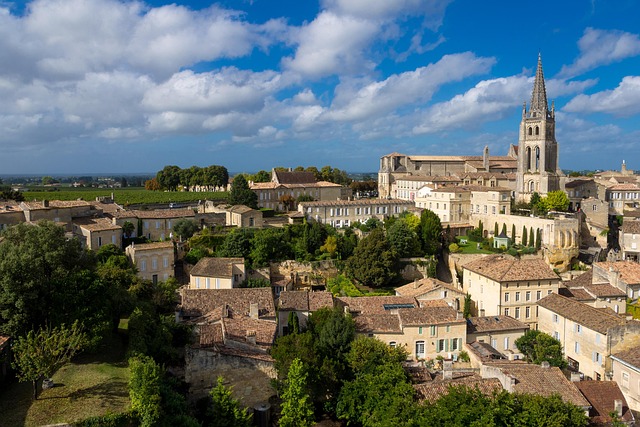
A typical day includes two or three chateau visits with tastings at each, a guided walk through the medieval village of Saint-Emilion itself, and a multi-course lunch at one of the properties. The guides explain how Bordeaux’s classification system works (which is genuinely complicated — Grand Cru, Premier Grand Cru Classe, the whole hierarchy), what distinguishes Right Bank from Left Bank wines, and which bottles are actually worth buying versus which ones carry a prestige markup.
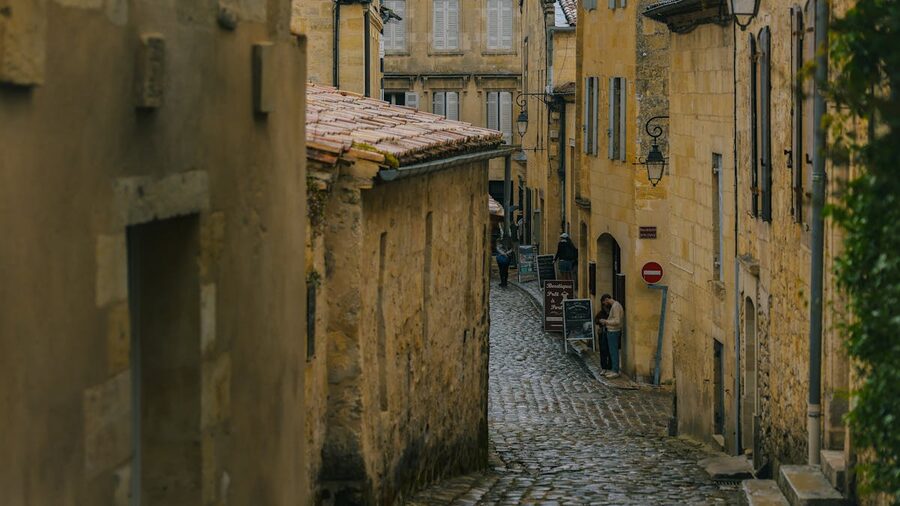
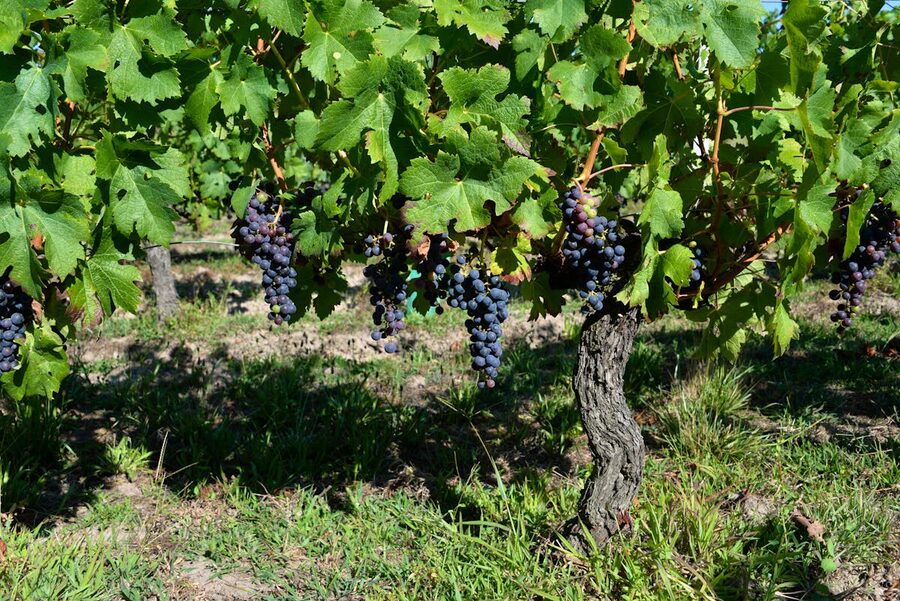
The riding itself is easy and scenic — vineyard roads with almost no traffic, gentle curves between stone walls and vine rows. Most of the day is spent off the bike: tasting, eating, walking through cellars. The cycling is the transport, not the workout. If you’re a wine person at all, this is far better than a bus tour or driving yourself (for obvious reasons).
Tips That’ll Save You Time and Money
Book vineyard tours at least a week ahead in summer. The Saint-Emilion e-bike tours run with small groups (usually 8 max) and sell out fast from June through September. City tours are easier to get — you can often book the day before.
Don’t skip the city tour just because you can rent a bike. The VCub system is great for transportation, but a guided ride gives you context that changes how you see the city. The Chartrons wine history alone is worth the EUR 42.
Pair city and vineyard tours on different days. Doing a 3-hour city ride in the morning and then trying to do a full-day vineyard tour the next day is fine. Doing both in one day is miserable. Space them out.
If you’re choosing between the two city tours, pick the Chartrons one (#1 above) unless you’re specifically interested in the modern development areas near the Cite du Vin.
Bring a bag for wine. On the vineyard tours, you’ll have the chance to buy bottles at cellar-door prices. The e-bikes have baskets or panniers, but a sturdy bag makes carrying bottles easier.
Check your hotel’s bike storage. If you’re also renting a VCub for getting around the city, knowing where to lock up matters. Most hotels in the centre have bike parking, but ask first.
More Bordeaux Guides
If you’re spending a few days in Bordeaux, cycling is just one piece of it. Our Bordeaux wine tour guide covers the non-cycling wine experiences — van tours to the Medoc, chateau visits, and multi-appellation itineraries. For the city itself, the Bordeaux walking tour guide goes deeper into the medieval quarter and food scene. The Cite du Vin is worth a half day if you want wine education before heading to the vineyards — it’s right along the waterfront cycling route. And if you’re doing a longer trip in the region, Saint-Emilion deserves more than a day trip. A river cruise on the Garonne is also a good way to see the waterfront from a different angle, and the Bordeaux CityPass bundles public transport and museum entries if you’re staying more than two days.
This article contains affiliate links. If you book a tour through our links, we earn a small commission at no extra cost to you. This helps us keep producing detailed guides like this one.