
Brunelleschi had no idea how to build the dome when he won the competition. Nobody did. The previous architect had left a 42-metre hole in the cathedral roof and walked away because the engineering didn’t exist yet. That was in 1296. The hole stayed open for over a century.
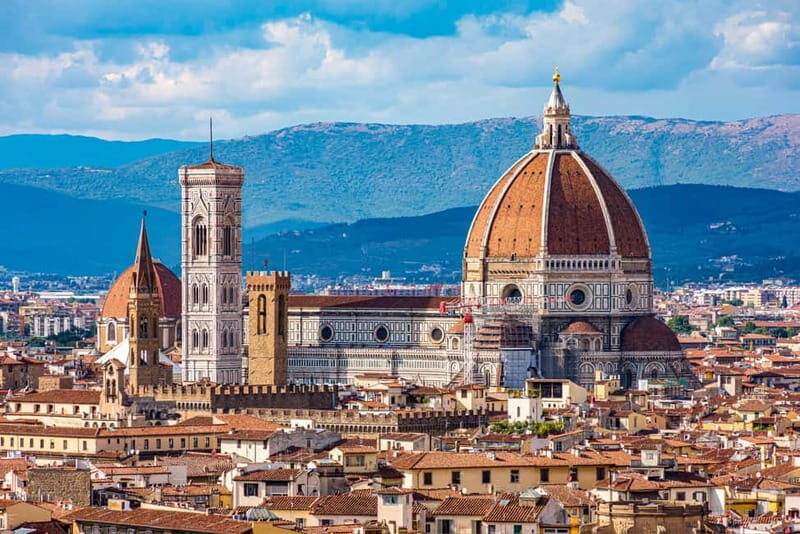
Standing inside Florence Cathedral today, looking up at that impossible dome, you get why a guided tour changes everything here. Without someone explaining what you’re actually seeing, it’s just a big church with nice paintings. With a guide, it becomes the story of one stubborn genius who invented an entirely new construction method, kept the plans secret, and built something that still makes structural engineers scratch their heads.
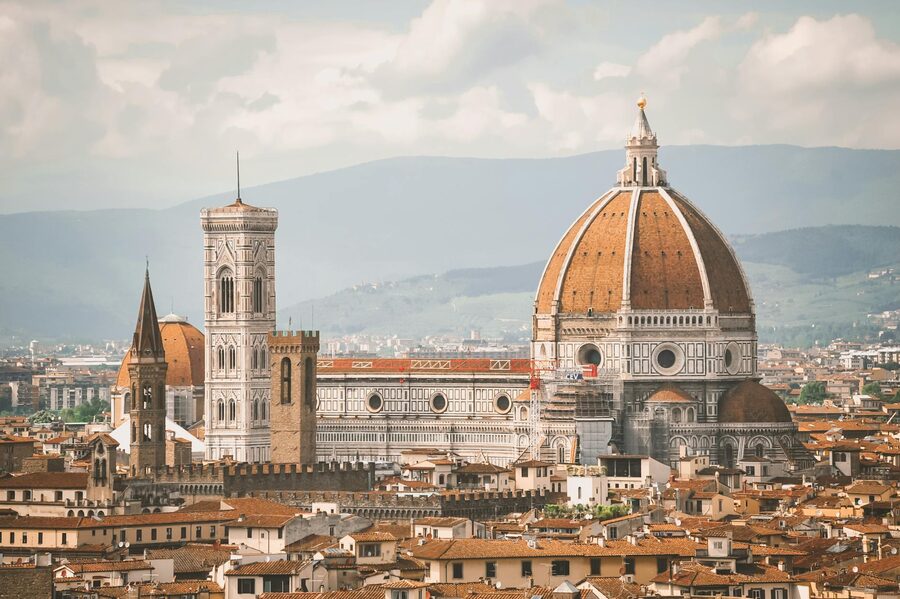
I’ve done the cathedral both ways — once with the free self-guided audio, once with a proper guide — and the difference was night and day. The guide turned a 20-minute walk-through into a 90-minute education. She pointed out the crack in the dome (yes, there’s a crack), explained why the marble floor has a zodiac sundial, and told us about the bitter rivalry between Brunelleschi and Ghiberti that shaped Florentine art for fifty years.
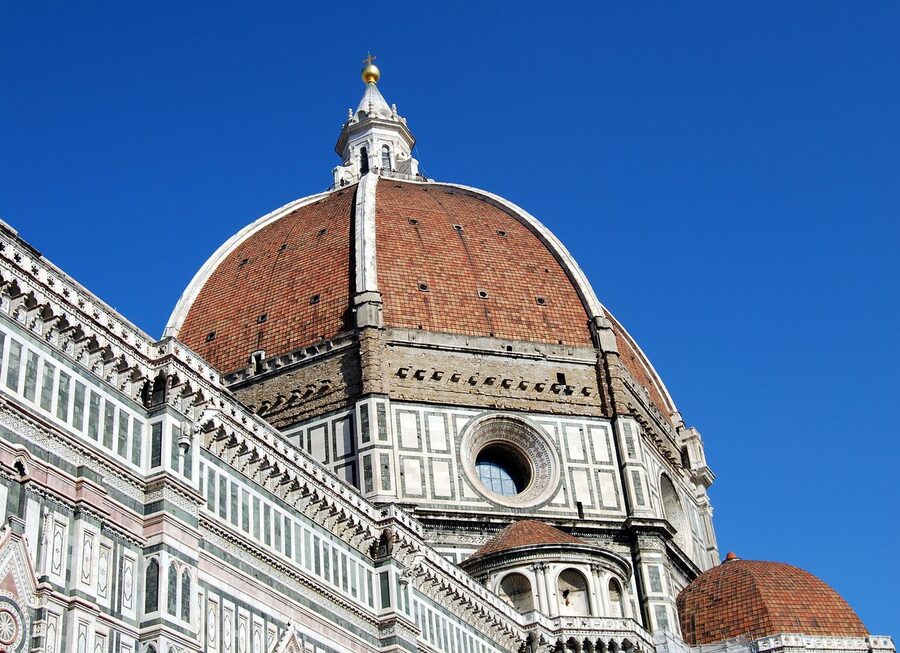
Best overall: Duomo Guided Tour with Optional Dome Climb Upgrade — $25. Get the cathedral walkthrough and the option to climb 463 steps between the dome’s two shells. The dome climb alone makes this worthwhile.
Best budget: Cathedral Duomo Tour with Local Guide — $12. A local Florentine guide at a price that’s hard to argue with. Focused entirely on the cathedral interior.
Most popular: Duomo Cathedral Guided Tour — $15. The one most visitors book. Thousands of reviews and a solid walkthrough of the cathedral’s major features.
- What You Actually Get on a Duomo Guided Tour
- Official Tickets vs. Guided Tours — Which Should You Book?
- The Best Florence Duomo Guided Tours to Book
- 1. Florence: Duomo Guided Tour with Optional Dome Climb Upgrade —
- 2. Florence: Duomo Cathedral Guided Tour —
- 3. Florence: Cathedral Duomo Tour with Local Guide —
- When to Visit the Duomo (and When to Avoid It)
- Getting to the Duomo
- The Brunelleschi Story (and Why It Matters for Your Visit)
- Tips That’ll Save You Time and Money
- What You’ll See Inside the Cathedral
- While You’re in Florence
What You Actually Get on a Duomo Guided Tour
A guided tour of Florence’s Duomo isn’t just walking around inside a church listening to someone read from a script. The good guides bring the building to life — they explain the political rivalries, the construction disasters, the century-long arguments about whether to build the dome at all.
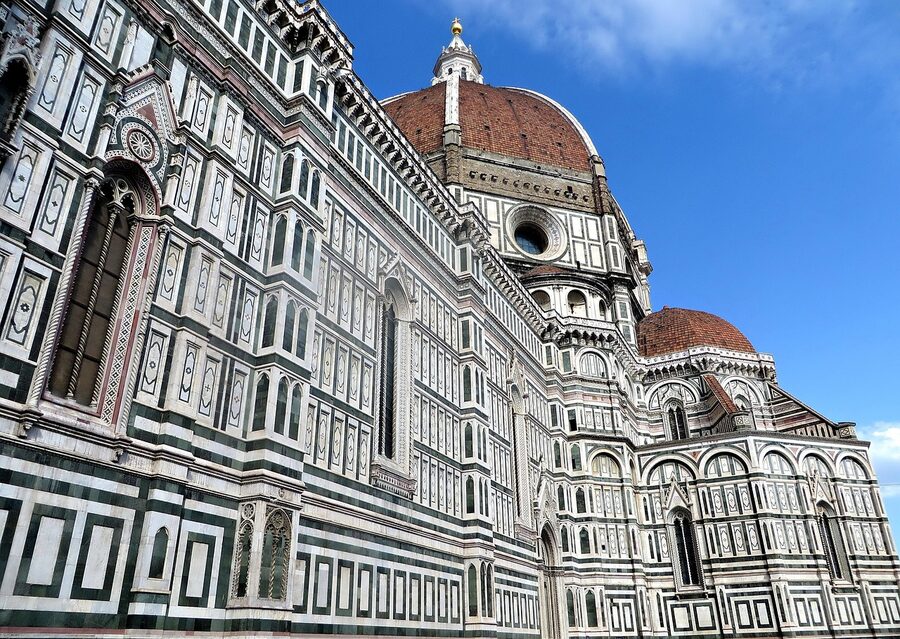
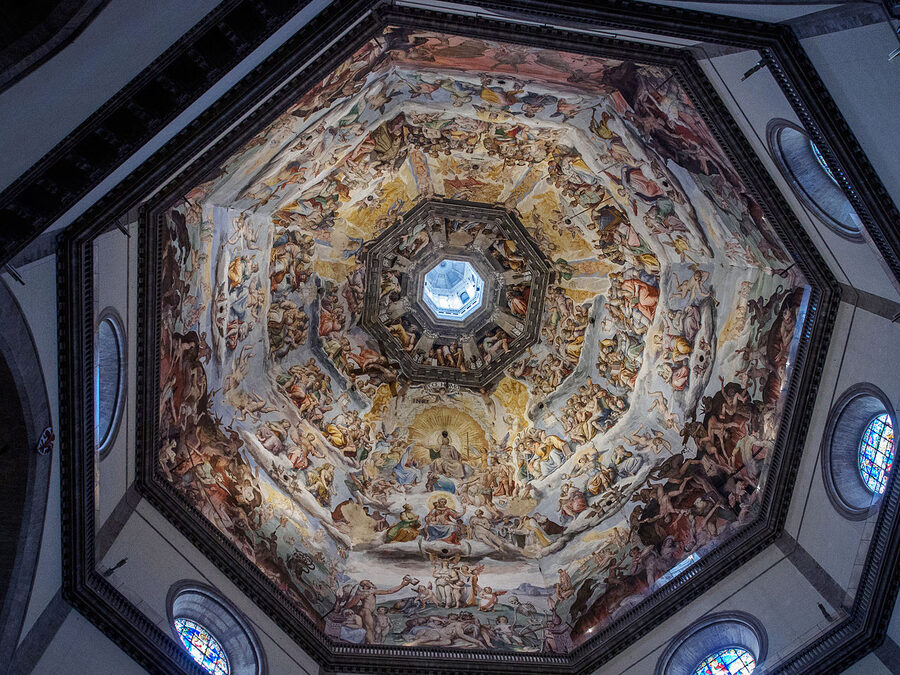
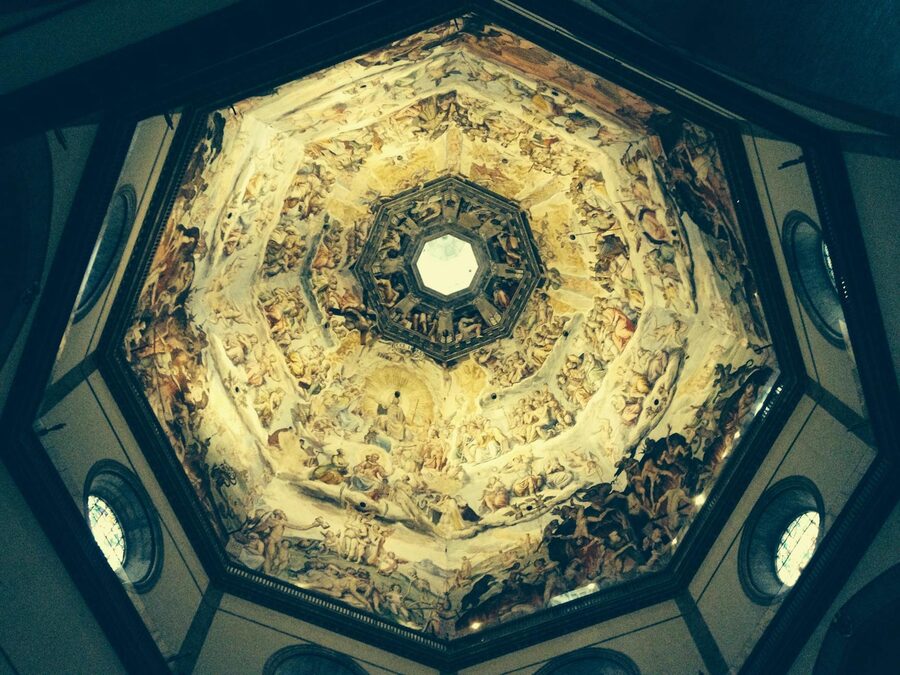
Most guided tours cover the cathedral interior for about 30-45 minutes. You’ll hear about Vasari and Zuccari’s Last Judgment fresco painted on the inner surface of the dome (painted 130 years after the dome was completed), the Ghiberti competition that launched the Renaissance, and why the floor is made of polychrome marble in geometric patterns that took decades to lay.
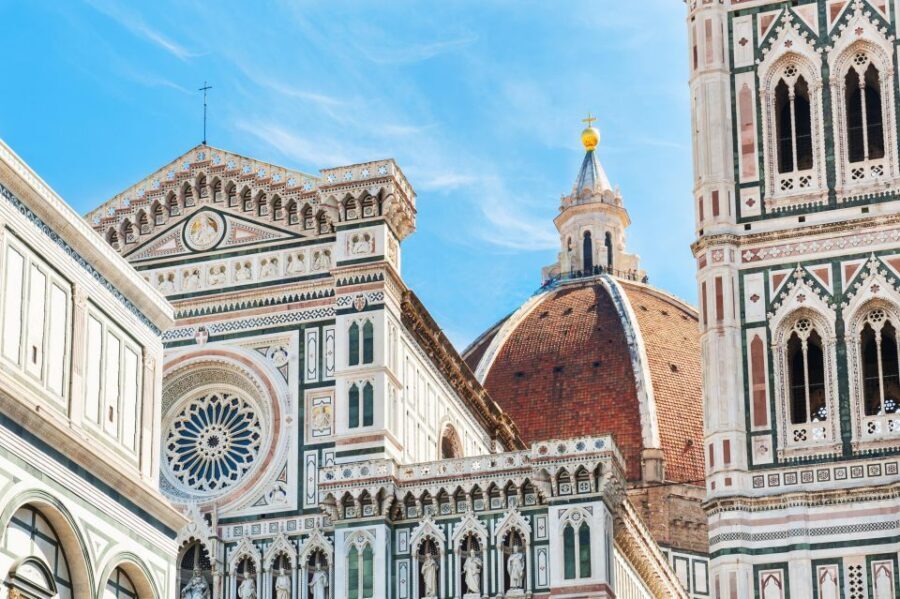
The better tours also cover the Piazza del Duomo complex as a whole — the Baptistery with Ghiberti’s famous bronze doors (the ones Michelangelo reportedly called the “Gates of Paradise”), Giotto’s Campanile bell tower, and the cathedral museum. Some tours bundle in the dome climb, which is the part that makes most visitors gasp.
Official Tickets vs. Guided Tours — Which Should You Book?
Here’s the thing most people don’t realize: entering Florence Cathedral itself is free. You don’t need a ticket to walk in and look around. The cathedral has been free since it opened in 1436.
What costs money is everything else in the complex. The Brunelleschi Pass (currently around EUR 30) gets you into the dome climb, Baptistery, bell tower, crypt, and cathedral museum. You can buy it from the Opera di Santa Maria del Fiore website.
So why book a guided tour when you can just walk in for free?
Because the cathedral without context is like reading a foreign-language book without a dictionary. You’ll see beautiful things and understand about 10% of them. A guide turns that 10% into 80%. They point out details you’d walk right past — the Brunelleschi death mask near the entrance, the unfinished fresco by Paolo Uccello, the astronomical clock that runs backwards.
If you just want to see the dome climb and tick it off a list, the Brunelleschi Pass is your move — our Florence Cathedral tickets guide walks through exactly how to get it. But if you want to actually understand what you’re seeing, a guided tour at $12-25 is some of the best money you’ll spend in Florence.
The Best Florence Duomo Guided Tours to Book
1. Florence: Duomo Guided Tour with Optional Dome Climb Upgrade — $25
This is the one I’d book if I could only do one thing at the Duomo. You get the full guided cathedral tour — history, architecture, the rivalry between Brunelleschi and Ghiberti, the Vasari frescoes — and then the option to climb up between the dome’s two shells to the lantern at the top.
The climb itself takes about 25 minutes at a comfortable pace. You pass Vasari’s Last Judgment at eye level (most people only see it from 60 metres below), squeeze through the narrow passages between the inner and outer shells, and emerge at the top with a panoramic view that covers Florence, the Tuscan hills, and on clear days, the distant Apennines. At $25 per person, this is genuinely good value considering the dome climb pass alone costs around EUR 30.
Run by City Wonders, who know their stuff in Italian cathedrals. The skip-the-line access is a real time-saver — even in December the queue wraps around the building, according to recent visitors.
2. Florence: Duomo Cathedral Guided Tour — $15
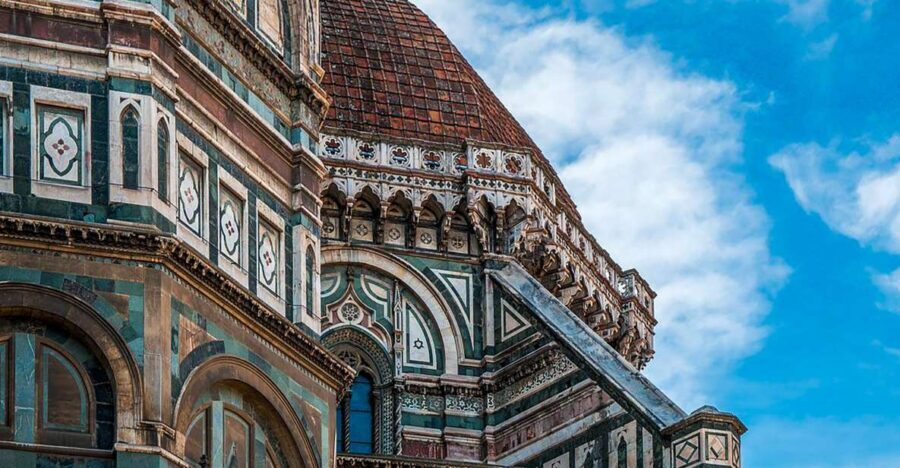
The most-booked Duomo guided tour, and for good reason. At $15 per person, it’s cheap enough that there’s no reason NOT to do a guided visit instead of wandering in on your own for free. You lose nothing and gain everything.
This is a focused cathedral-only tour. No dome climb, no bell tower, no museum — just a deep dive into the building itself. The guides from italypasstours focus on the architecture, the Renaissance art, the construction history, and all those details that make the Duomo more than just a pretty building. They cover the nave, the Vasari fresco on the dome interior, the stained glass windows designed by Donatello and Ghiberti, and the crypt where Brunelleschi is buried.
If you’re pairing this with a separate dome climb ticket, this combo actually works out cheaper than the all-in-one tours and gives you more flexibility on timing.
3. Florence: Cathedral Duomo Tour with Local Guide — $12
The budget pick, but not because it cuts corners. $12 per person gets you a local Florentine guide — born and raised in the city, not a transplant reading from cue cards. EU Tours runs this one, and the reviews consistently mention how personal the experience feels.
What sets this apart is the storytelling. Where other guides give you facts and dates, the local guides here weave in personal connections to the building. The Duomo isn’t just a tourist attraction to Florentines — it’s where they were baptised, where their families have gone for centuries. That personal thread comes through in the tour, and it’s something a textbook guide can’t replicate.
At this price point, it’s almost unreasonable not to book a guided visit. You’d spend more on a mediocre gelato nearby. Pair it with a Florence walking tour in the afternoon and you’ve covered the city’s highlights for under $30 total.
When to Visit the Duomo (and When to Avoid It)
The cathedral opens at 10:15 am most days (Monday through Saturday) and closes at 4:30 pm. Sunday hours are shorter — typically 1:30 pm to 4:30 pm because of morning services. These hours shift seasonally, so double check the Opera di Santa Maria del Fiore website before your visit.
Best time: First thing when doors open at 10:15 am, or in the final hour before closing. The midday crush between noon and 2 pm is genuinely miserable — the Piazza del Duomo becomes a human traffic jam and the queue to enter the cathedral snakes around the Baptistery.
Worst time: Summer weekends between 11 am and 3 pm. Just don’t. The heat, the crowds, and the general chaos make it impossible to appreciate anything. You’ll spend more time in line than inside.
Shoulder season tip: October through March is significantly calmer. You’ll still get crowds (this is Florence), but nothing like summer. And the guided tours run smaller groups in low season, which means more time to ask questions.
The dome climb has its own schedule and requires a timed reservation. Slots start at 8:30 am and run every 15 minutes. Book the earliest slot you can manage — the stairway is narrow (one person wide in places) and it gets warm and claustrophobic when it’s packed.
Getting to the Duomo
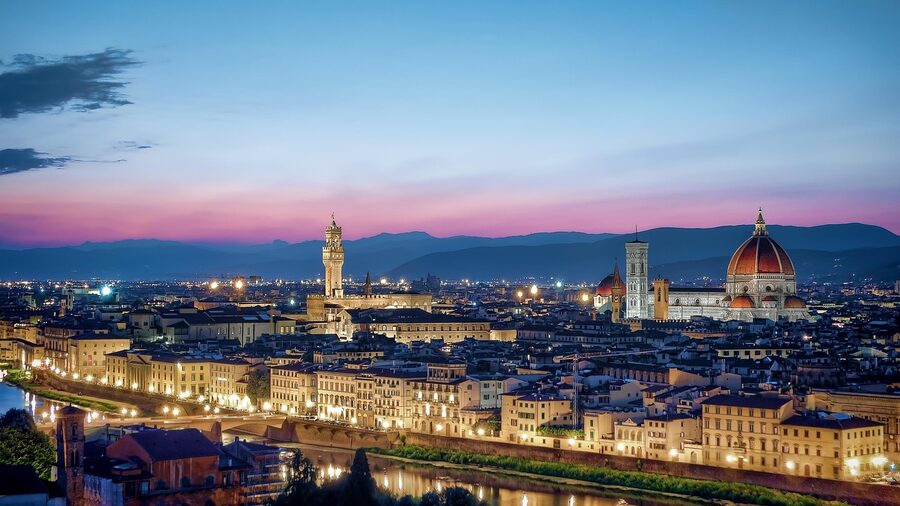
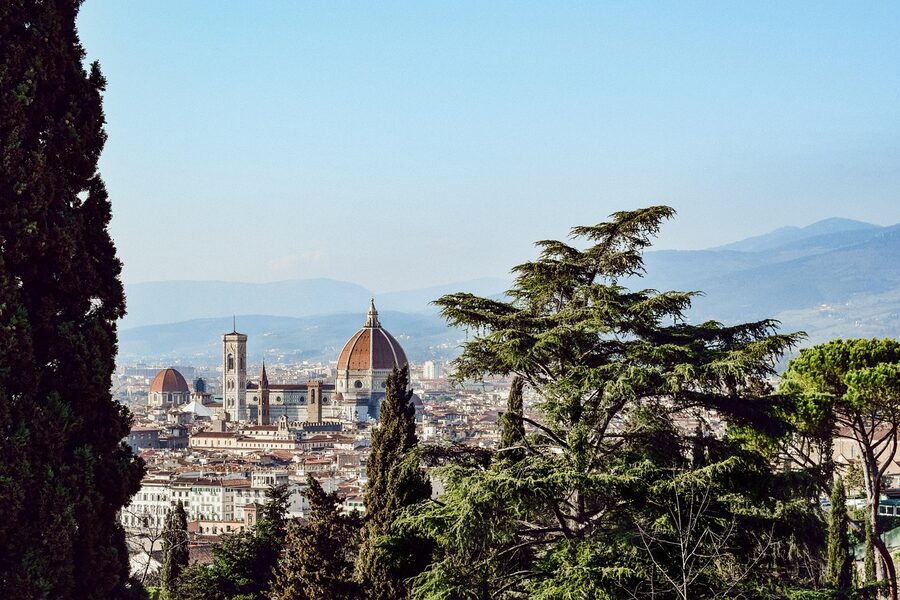
The Duomo sits dead center in Florence’s historic core. If you’re staying anywhere in the centro storico, you’re walking distance. From Santa Maria Novella train station, it’s about 10 minutes on foot heading east along Via dei Panzani and Via dei Cerretani.
There’s no metro in Florence (the tramway doesn’t go to the center), so it’s either walking, a taxi, or the ATAF bus system. Most visitors walk. From the Ponte Vecchio area, it’s about 8 minutes north. From the Accademia Gallery (where Michelangelo’s David lives), it’s 5 minutes south.
If you’re coming from outside the center, buses C1 and C2 run circular routes through the historic district and stop near the Piazza del Duomo. But honestly, Florence is small enough that walking is almost always faster than waiting for a bus.
The Brunelleschi Story (and Why It Matters for Your Visit)
You can appreciate the Duomo without knowing the backstory. But knowing it makes the whole experience ten times better, so here’s the short version.
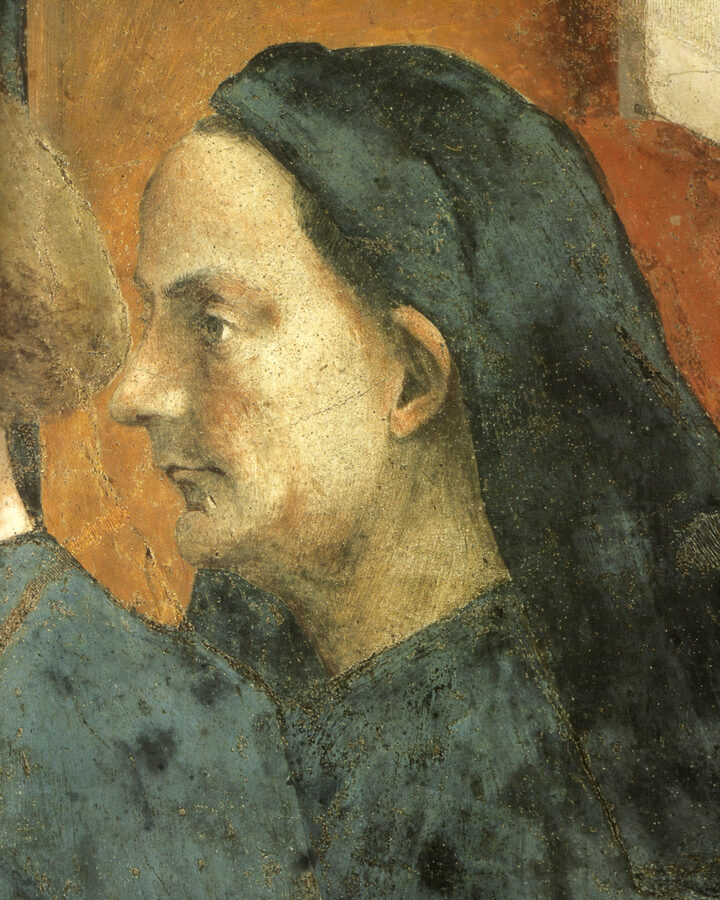
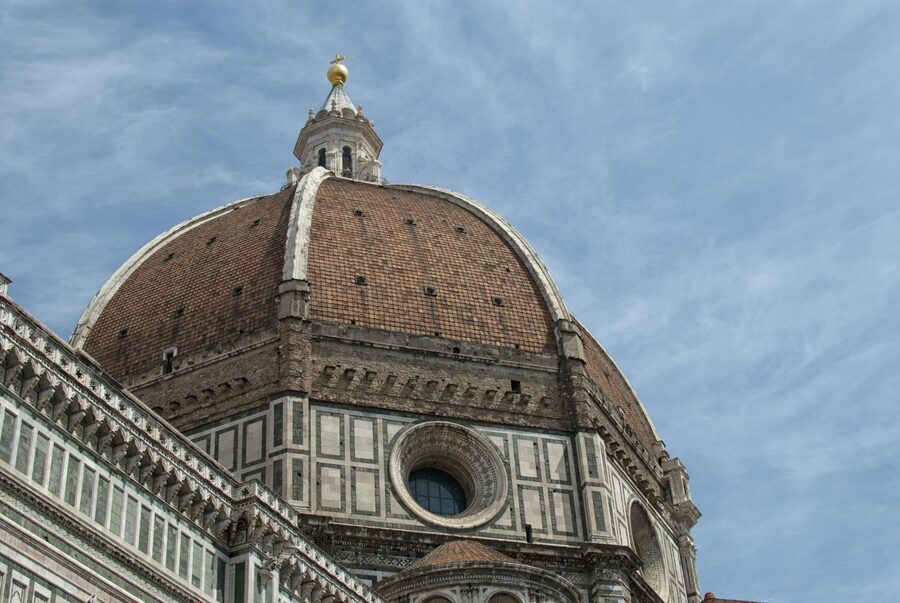
In 1296, Arnolfo di Cambio started building the cathedral with ambitious plans for an enormous dome. Problem: nobody knew how to build it. The technology didn’t exist. He left a gaping octagonal hole in the roof and essentially said “someone will figure it out later.” That hole stayed open for over 100 years.
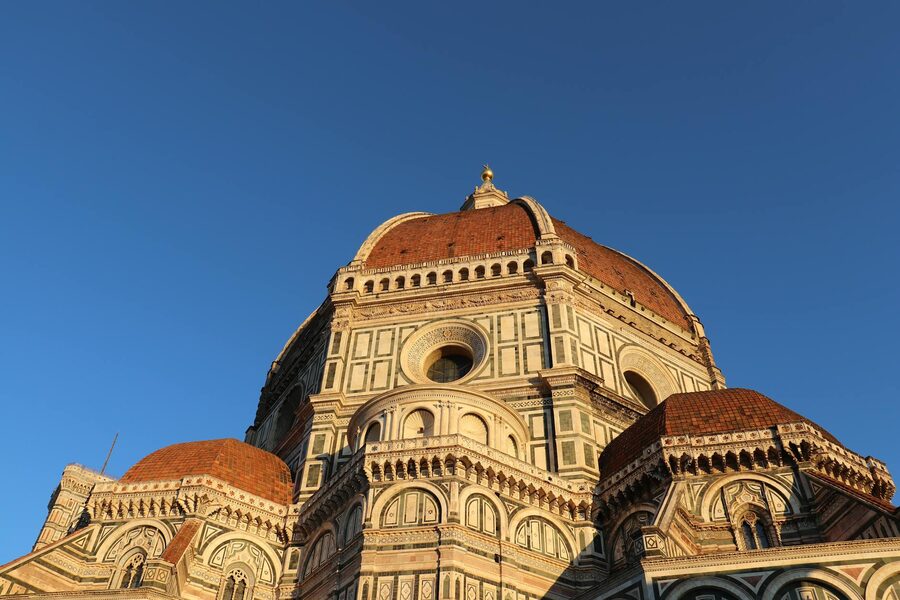
In 1418, the city held a competition to find someone who could close it. Filippo Brunelleschi — a goldsmith and clockmaker with zero formal architectural training — proposed a double-shell dome that would support itself during construction. No wooden centering framework. No scaffolding from the ground up. The judges thought he was insane.
He won the commission anyway, alongside his rival Lorenzo Ghiberti (who later created the Baptistery’s famous bronze doors). Brunelleschi tolerated the partnership for exactly as long as he had to, then faked an illness so convincingly that Ghiberti had to manage alone, proved he couldn’t, and got sidelined. Florentine office politics at its finest.
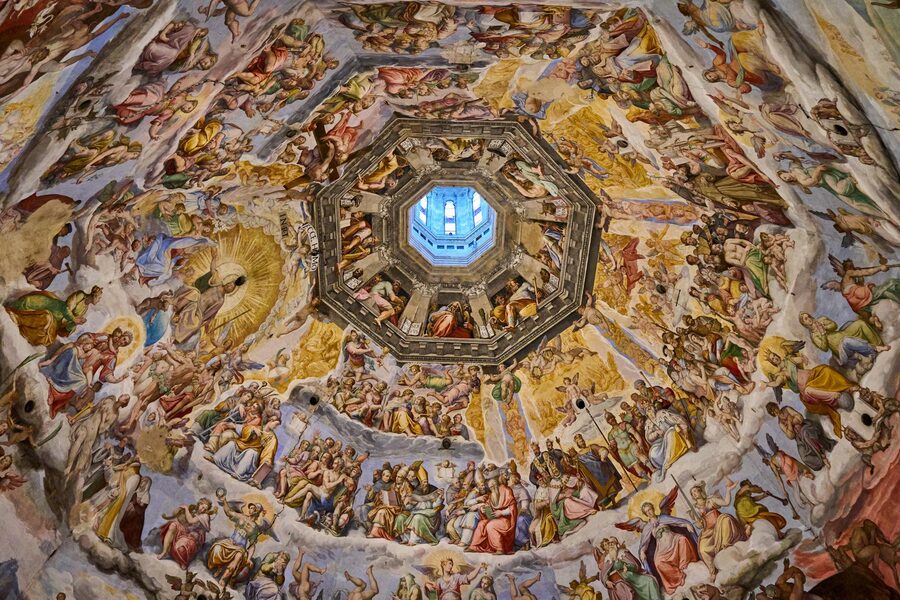
The secret sauce was a herringbone brick pattern. Each ring of bricks locks the previous one in place, like a 3D jigsaw puzzle that becomes more stable as it gets bigger. Brunelleschi carried the plans with him everywhere and refused to share the technique with anyone. When the dome was completed in 1436, it was the largest dome built since the Roman Pantheon — and arguably a more impressive engineering achievement because it doesn’t have a hole at the top.
A good guide will point out where you can actually see the herringbone brickwork during the dome climb. It’s between the inner and outer shells, in the narrow stairway passage. Most people walk right past it because they’re too focused on not tripping on the steps.
Tips That’ll Save You Time and Money
Dress code is enforced. Knees and shoulders must be covered. This applies to everyone, not just women. They will turn you away at the door — no exceptions, no wrappers for sale nearby. Bring a scarf or light jacket if you’re wearing summer clothes.
The cathedral is free; the complex is not. Don’t pay for “cathedral entry” on a tour if all you want is to walk inside the main church. That’s free. You only need a ticket (or a guided tour) for the dome climb, Baptistery, bell tower, crypt, and museum.
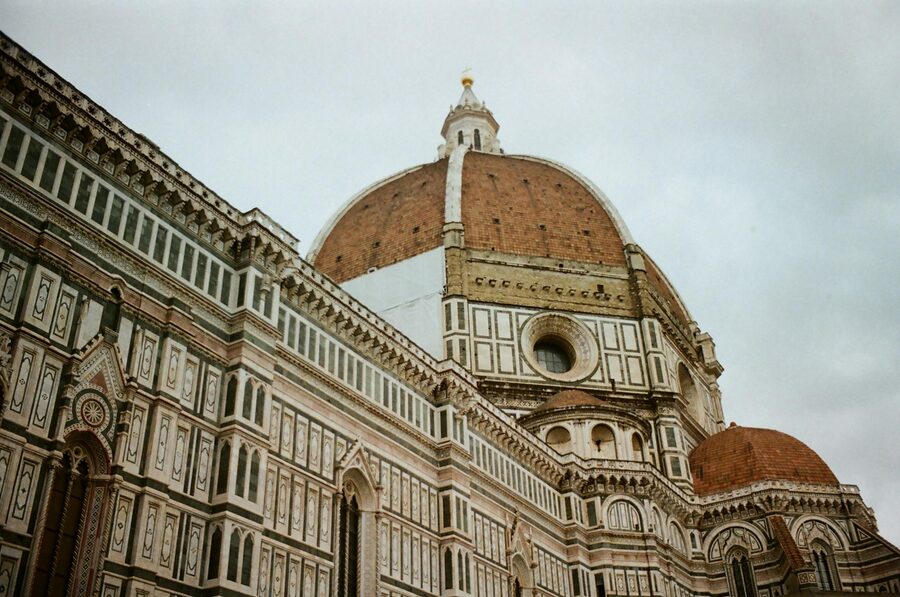
Book the dome climb separately from the guided tour if you’re on a budget. Get the $12 guided cathedral tour, then buy a Brunelleschi Pass (around EUR 30) for the dome climb at a different time. Total cost: about EUR 42 and you get both experiences spread across the day instead of rushed back-to-back.
Giotto’s Campanile has better views, shorter queues. If you want a high-up view of Florence but don’t care about walking between the dome shells, the bell tower climb is 414 steps with almost no wait. Plus, you get the dome IN your photos rather than being on top of it. Our cathedral tickets guide covers both options.
Combine with the Uffizi or Accademia. The Duomo tour takes 30-90 minutes depending on which one you book. That leaves plenty of time to hit the Uffizi Gallery (15-minute walk) or the Accademia for Michelangelo’s David (5-minute walk) on the same day. Just don’t try to squeeze all three into one morning — you’ll rush through everything and enjoy nothing.
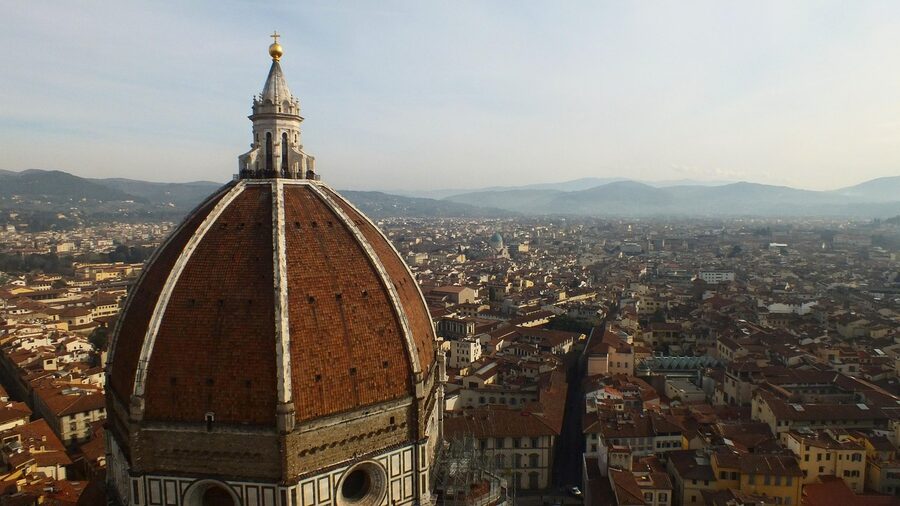
What You’ll See Inside the Cathedral
The interior of Florence Cathedral surprises most people because it’s so… bare. After the explosion of marble on the outside, the inside is stark, spacious, and almost austere. That’s deliberate. The Florentines wanted the architecture itself to be the statement, not the decoration.
But look up. The dome fresco — Vasari and Zuccari’s Last Judgment — covers over 3,600 square metres of surface area. It’s one of the largest frescoes ever painted, and it wasn’t finished until the 1570s, more than 130 years after Brunelleschi completed the dome’s structure. The irony is that Brunelleschi probably would have hated it. He designed the dome to be a pure engineering achievement. Painting over it was the next generation’s idea.
At floor level, look for the 44 stained glass windows — some designed by Donatello, Ghiberti, and Paolo Uccello. The astronomical clock by Uccello on the inner west wall runs counter-clockwise (which confused Europeans for centuries, but actually follows an older Italian timekeeping system). And in the left aisle, there’s a painting of the English mercenary John Hawkwood on horseback — it looks like a statue but it’s actually a flat painting using trompe l’oeil perspective. Andrea del Castagno painted it in 1456 as a cheaper alternative to the marble monument the city had promised but couldn’t afford.
Don’t skip the crypt, if your ticket includes it. Down below the current cathedral floor, you’ll find the remains of the earlier church — Santa Reparata — and Brunelleschi’s own tomb. He was buried here in 1446, directly beneath his greatest achievement. It’s a simple grave for a man who changed architecture forever.
While You’re in Florence
The Duomo sits in the middle of pretty much everything worth seeing. From the Piazza, you’re a short walk to the Uffizi Gallery — our guide covers how to skip the worst of those notoriously long queues. In the other direction, the Accademia Gallery has Michelangelo’s David and is genuinely worth the visit, not just a one-statue show. If you want to cover more ground without exhausting yourself, a Florence walking tour is one of the best ways to connect the dots between the major sites. And for something completely different, a Tuscany day trip from Florence takes you into the wine country and hill towns that feel like a different planet from the city center. The Tuscan wine tours are especially good if you’ve had your fill of churches and museums.
This article contains affiliate links. If you book through our links, we may earn a small commission at no extra cost to you. This helps us keep producing free travel guides.