
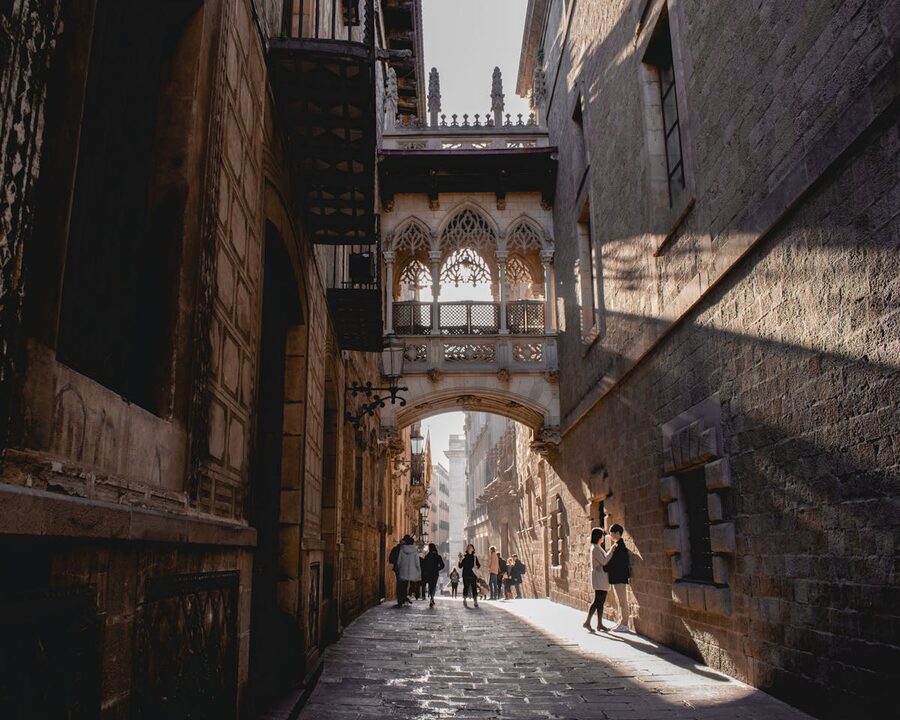
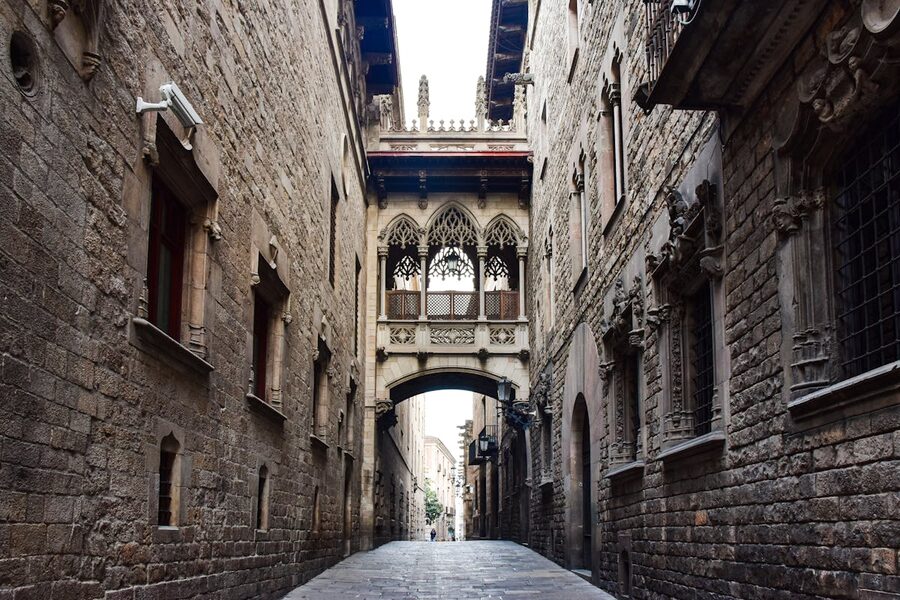
There is a skull embedded in the underside of a bridge in Barcelona’s Gothic Quarter. It sits there in the stonework of the Pont del Bisbe, staring down at thousands of travelers who walk beneath it every day without looking up. According to local legend, removing it would trigger the destruction of the city. The skull is real. The legend is probably not. But standing under that bridge at 9 PM with a guide who knows every shadow and side street in the Barri Gotic, you start to wonder.
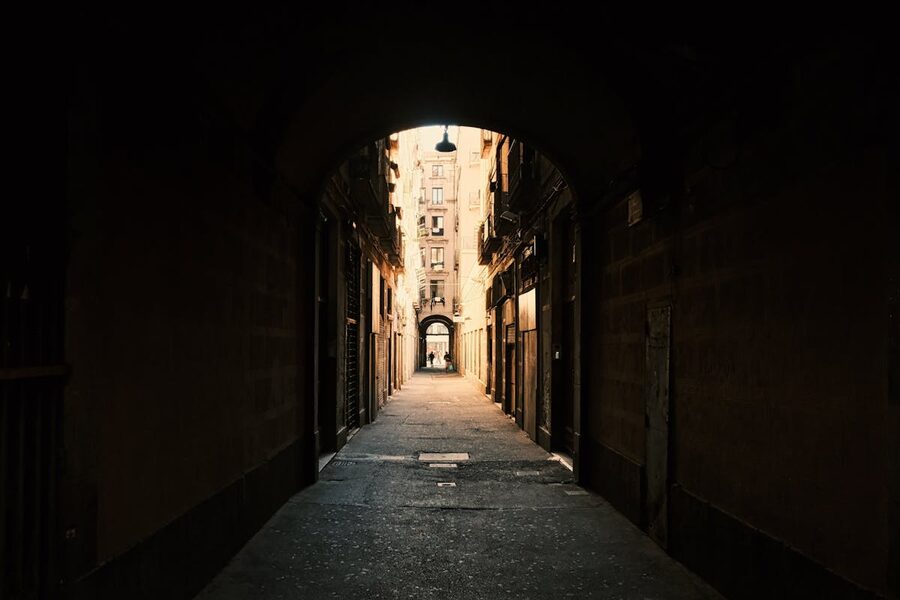
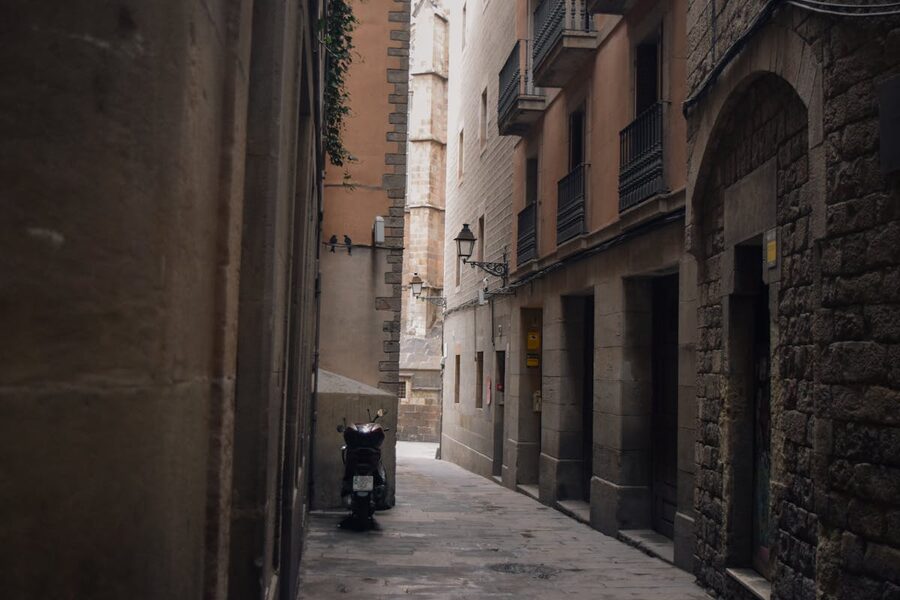
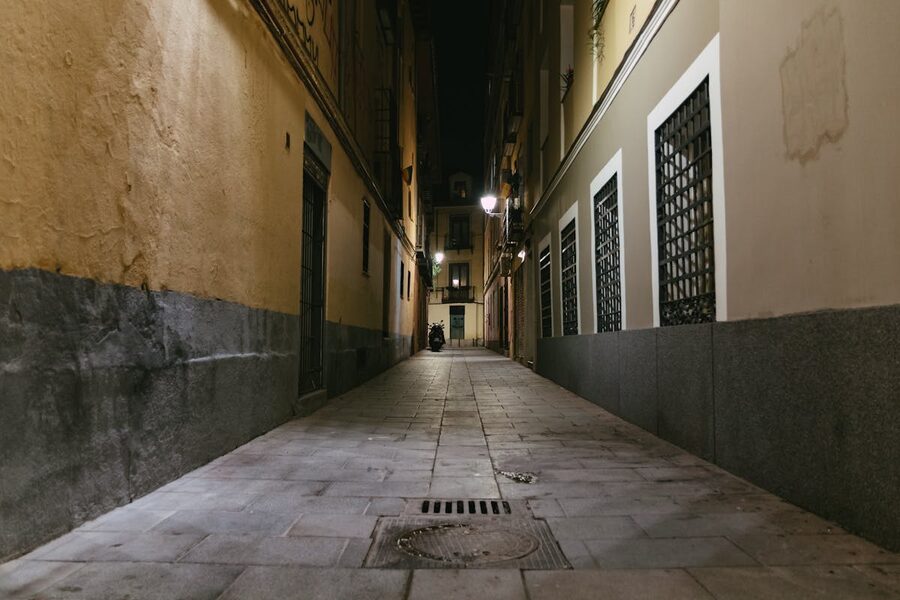
The Gothic Quarter is the oldest part of Barcelona. Roman walls, medieval alleys, the remains of a Jewish community wiped out in a single night of violence in 1391. It is also one of the best places in Spain for a ghost tour, because the history here is genuinely dark, not manufactured.
- In a Hurry? Here Are the Best Ghost Tours
- What a Gothic Quarter Ghost Tour Actually Covers
- How to Book a Ghost Tour in Barcelona
- The 3 Best Gothic Quarter Ghost Tours
- 1. Gothic Quarter Ghosts and Legends Walking Tour —
- 2. Barcelona Ghosts & Legends Tour —
- 3. Barcelona Dark History Night Walking Tour —
- The Dark History Behind the Ghost Stories
- El Call: The Lost Jewish Quarter
- The Barcelona Inquisition
- The Civil War Bombings
- The Hidden Roman Temple
- Practical Tips for Your Ghost Tour
- Where to Go Before and After
- Ghost Tour vs. Regular Walking Tour
- What Else to Do in Barcelona
In a Hurry? Here Are the Best Ghost Tours
Top pick: Gothic Quarter Ghosts and Legends Walking Tour — $19. The most popular ghost tour in Barcelona. Covers the key spots in 1.5 hours with a local guide who knows the history cold.
Runner-up: Barcelona Ghosts & Legends Tour — $21. Viator’s version of the classic route. Same Gothic Quarter territory, different storytelling style.
Deep dive: Dark History Night Walking Tour — $24. Two full hours covering the Inquisition, the Civil War bombings, and the medieval Jewish Quarter. For people who want the real history, not just ghost stories.
What a Gothic Quarter Ghost Tour Actually Covers
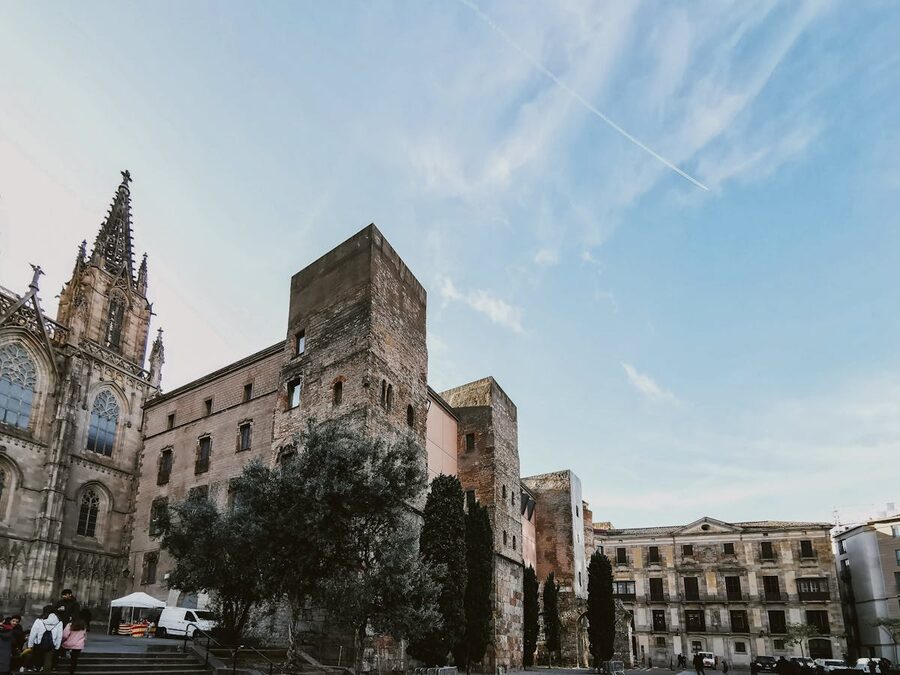
Most ghost tours in Barcelona follow a similar route through the Barri Gotic, but the best ones go far beyond spooky stories. You are walking through layers of history that span two thousand years. The Roman colony of Barcino was founded here around 15 BC. The medieval city grew on top of it. And the dark chapters — the destruction of El Call, the Inquisition, the Civil War — all happened within these few square blocks.
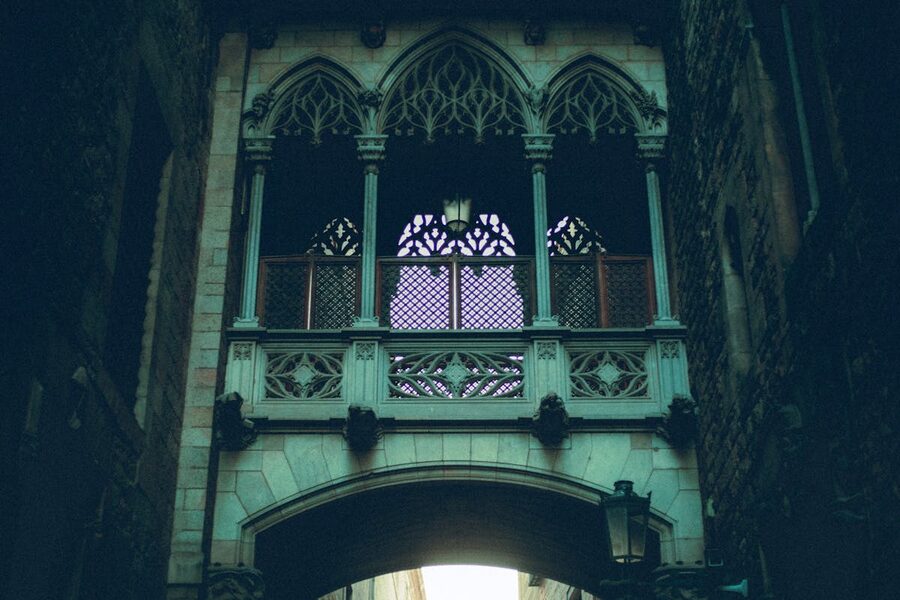
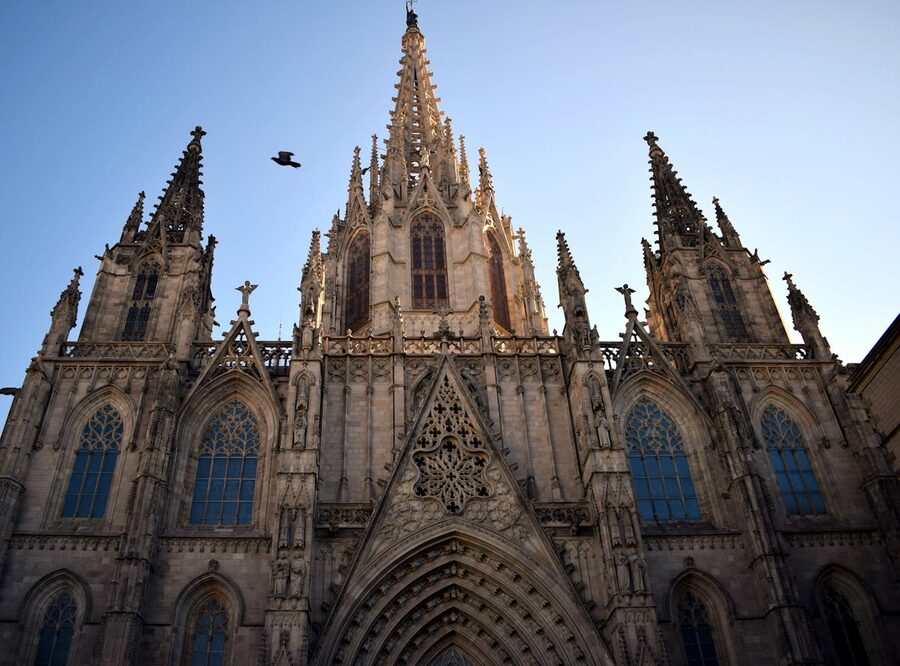
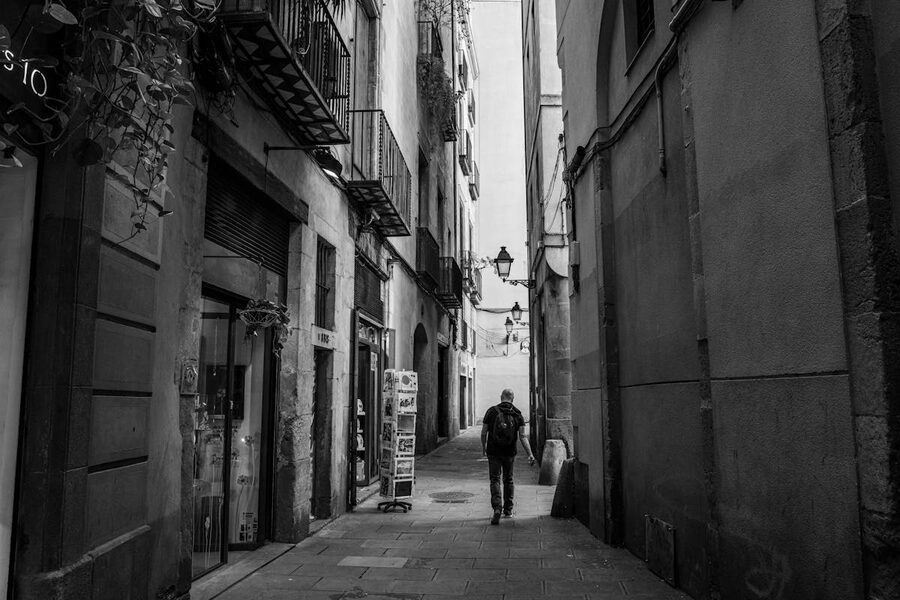
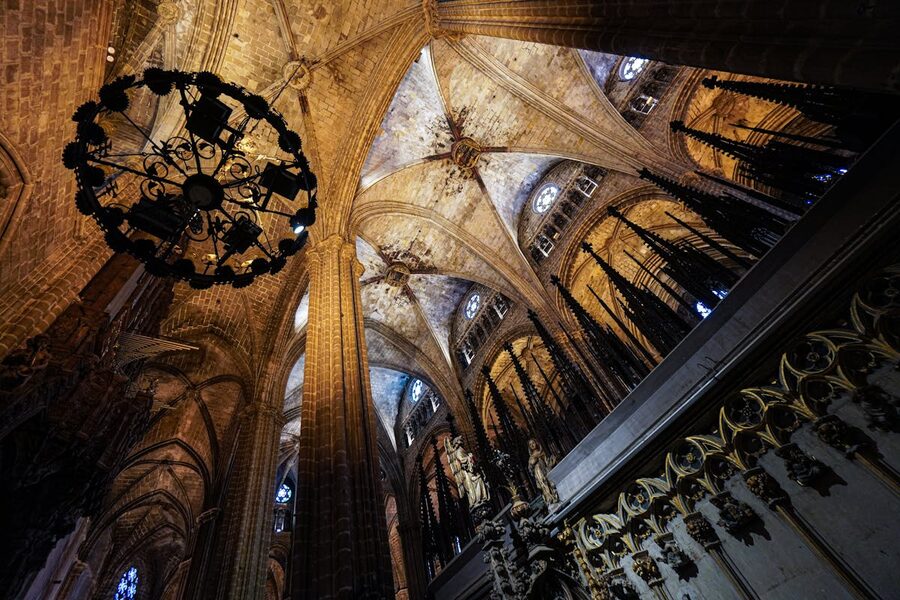
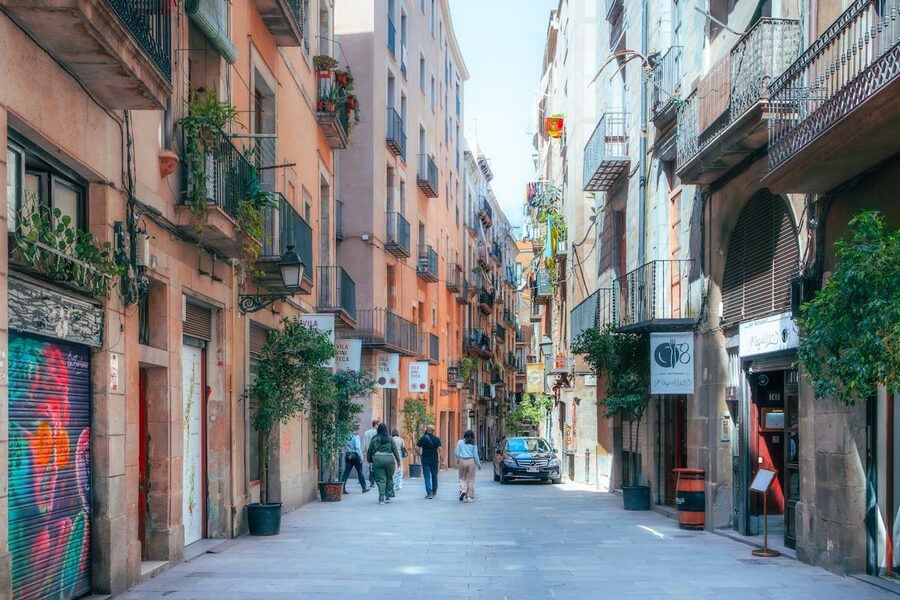
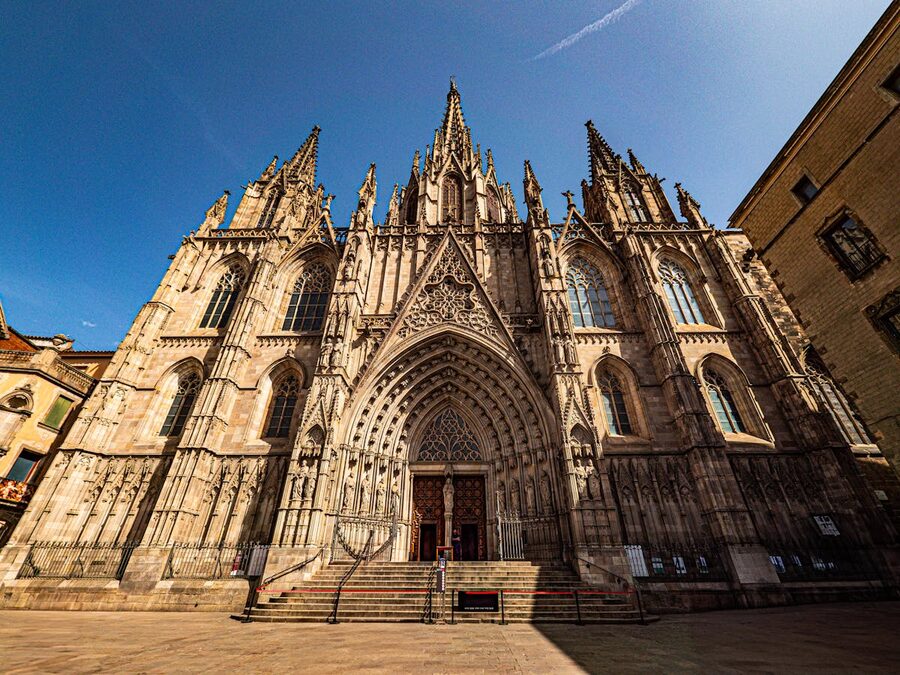
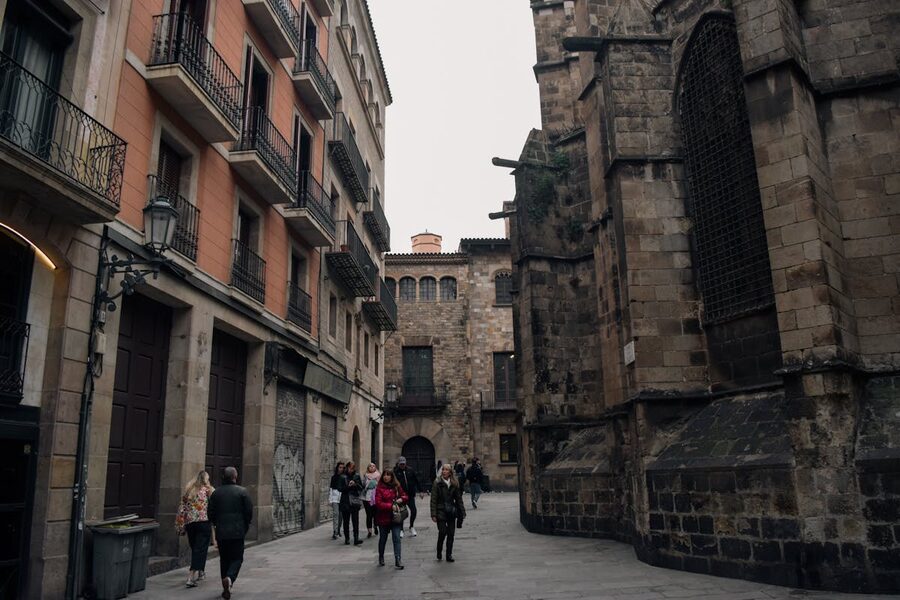
A typical tour starts near the cathedral and moves through the narrow streets toward Placa del Rei, the medieval palace where Ferdinand and Isabella received Columbus after his first voyage. Along the way, you will stop at the Pont del Bisbe, the remains of the Roman temple of Augustus (hidden inside a courtyard that most travelers never find), and the streets of El Call, the former Jewish Quarter.
The guides on these tours tend to be local historians or storytellers who mix legend with documented fact. You will hear about the pogrom of 1391, when a mob destroyed one of the largest Jewish communities in medieval Europe. You will stand in the square where the Inquisition held its public trials. And yes, you will hear ghost stories too — but the real history is darker than any of the legends.
How to Book a Ghost Tour in Barcelona
Booking is straightforward. All three tours I recommend below are available on GetYourGuide or Viator with free cancellation up to 24 hours before the tour. You pick a date, choose an evening time slot (most ghost tours run between 8 PM and 10 PM), and pay online.
A few things to know before you book:
Book at least 2-3 days ahead in peak season. Barcelona’s ghost tours are popular from April through October. The best-reviewed guides fill up fast, especially on Friday and Saturday nights. If you are visiting in July or August, book a week out to be safe.
Evening tours are the only option. Ghost tours do not run during the day. Most departures are between 8 PM and 9:30 PM, which means you finish around 10 or 11 PM — perfect timing for dinner in the Gothic Quarter, since Barcelona eats late anyway.
Wear comfortable shoes. You will be walking on cobblestones for 1.5 to 2 hours. The streets in the Barri Gotic are uneven and some are slippery after rain.
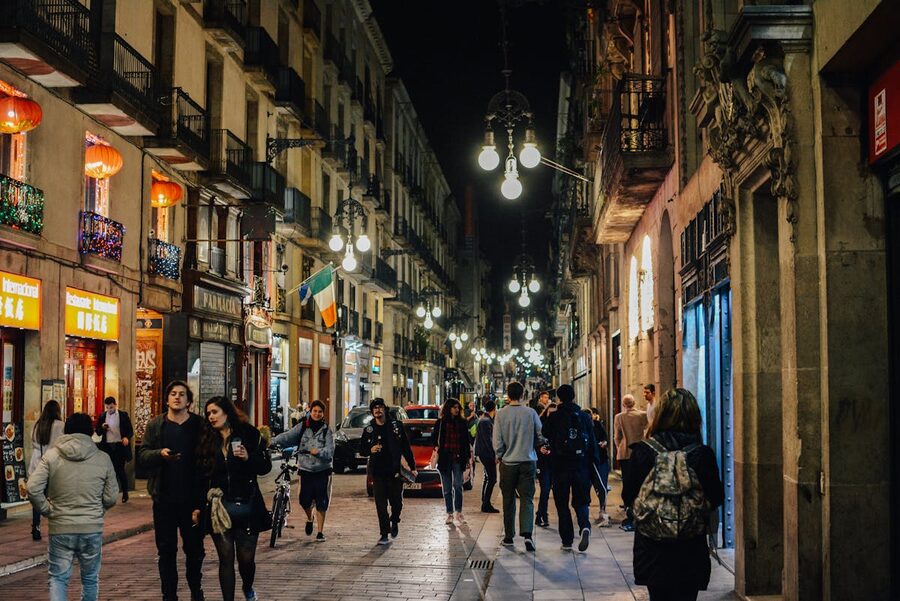
Group size matters. The smaller tours (under 20 people) tend to get better reviews. Larger groups struggle to hear the guide in the narrow alleys, and the pace is slower because it takes longer to move everyone between stops. Both the top-rated tours below cap their groups.
Free cancellation is standard. All three recommended tours offer free cancellation up to 24 hours before. So if your plans change or the weather turns ugly, you are not stuck.
The 3 Best Gothic Quarter Ghost Tours
I looked at every ghost tour and dark history walk available in Barcelona. These three stood out for different reasons — one is the classic crowd favorite, one is a solid Viator alternative, and one goes deeper into the real history for people who want substance over scares.
1. Gothic Quarter Ghosts and Legends Walking Tour — $19
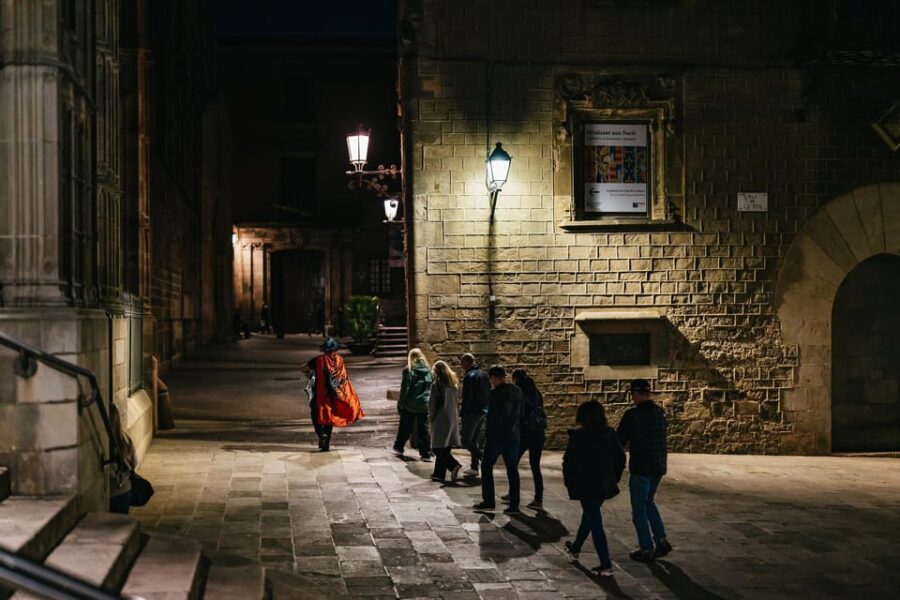
This is the one most people end up booking, and for good reason. At $19 for a 1.5-hour guided walk, it covers all the essential Gothic Quarter stops — the Pont del Bisbe, the cathedral square, the old Inquisition sites — with a guide who balances legend and real history. Our full review breaks down what each stop covers and whether the spooky factor lives up to the hype.
2. Barcelona Ghosts & Legends Tour — $21
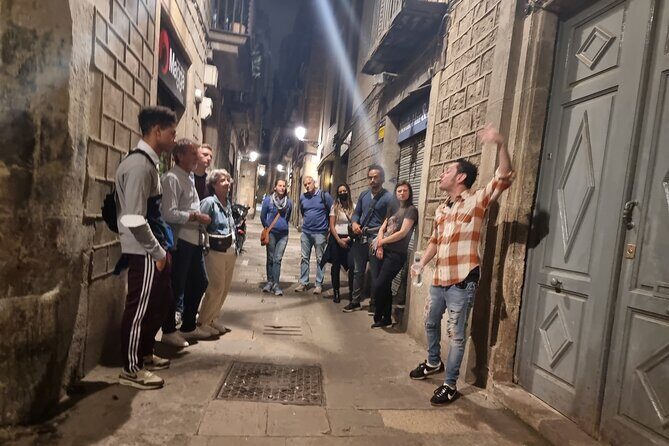
Available on Viator, this tour covers similar ground but takes a different route through the Gothic Quarter’s side streets. The guides lean more into theatrical storytelling, which some people prefer — it depends whether you want a history lesson or an experience. At $21 it is only a couple of dollars more than the top pick. Check our review for the detailed route breakdown.
3. Barcelona Dark History Night Walking Tour — $24
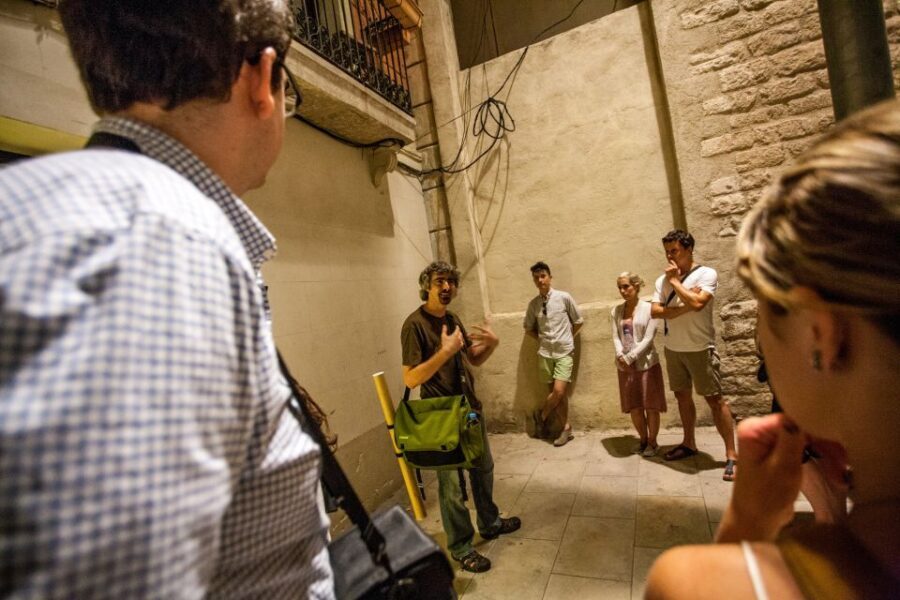
This is the one I would pick if I wanted the full story. Two hours gives the guide enough time to properly explain the Inquisition, the destruction of El Call, and the Civil War bombings without rushing. It costs a bit more at $24 but covers more ground and goes deeper into each topic. Our detailed review covers what makes this one different from the shorter options.
The Dark History Behind the Ghost Stories
The reason Barcelona’s ghost tours work so well is that the history is genuinely terrible. This is not a city where guides have to invent spooky stories. The real events are worse than anything they could make up.
El Call: The Lost Jewish Quarter
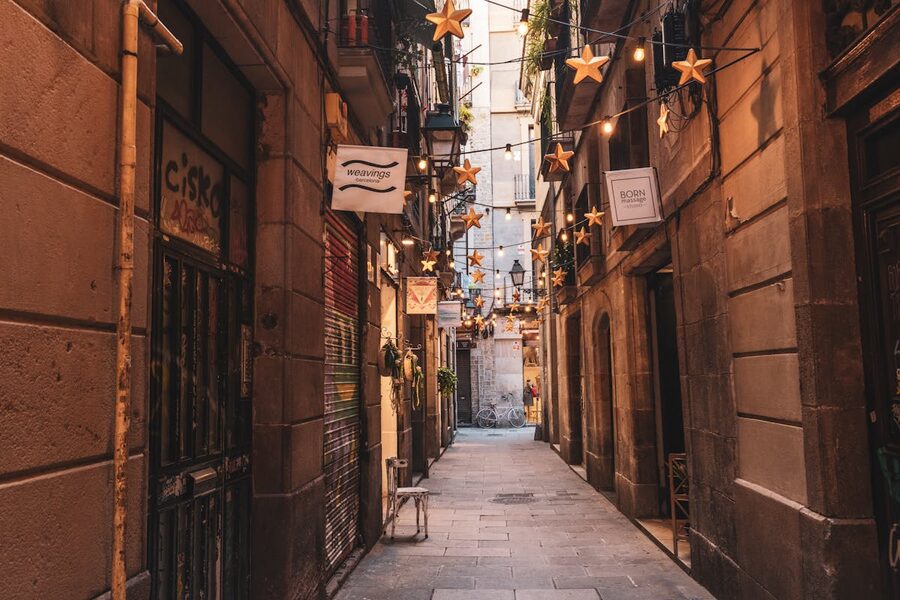
El Call was one of the largest Jewish communities in medieval Europe. For centuries, Jewish families lived and worked in these narrow streets, which still exist between the cathedral and Carrer de Ferran. Hebrew inscriptions have been found carved into some of the building stones — you can still see one on Carrer de Marlet if your guide knows where to look.
In August 1391, a wave of anti-Jewish violence swept across the Iberian Peninsula. In Barcelona, a mob attacked El Call, killing hundreds of residents and forcing mass conversions. The community never recovered. Today the streets are lined with bars and vintage shops, and most visitors have no idea what happened there. The ghost tours make sure you do.
The Barcelona Inquisition
The Spanish Inquisition operated in Barcelona from a palace on Placa del Rei. Accused heretics — many of them former Jewish residents who had been forcibly converted — were interrogated, tortured, and in some cases executed in public ceremonies called autos-da-fe held in the cathedral square. The palace still stands. Your ghost tour guide will take you to the exact spot.
The Civil War Bombings
During the Spanish Civil War, Italian aircraft operating from bases in Mallorca carried out sustained aerial bombing raids on Barcelona. This was the first major aerial bombardment of a European city — years before the London Blitz. Over 2,500 civilians were killed. The Gothic Quarter took direct hits, and some of the bomb damage is still visible if you know where to look.
Most ghost tours mention this in passing, but the Dark History Night Walking Tour (#3 above) spends more time on the Civil War context. It is a part of Barcelona’s story that many visitors know nothing about.
The Hidden Roman Temple
Four columns from the Roman Temple of Augustus, dating to roughly 1 BC, stand inside a building at Carrer del Paradis. You can walk past the entrance a dozen times without noticing it. The columns are from the temple that once stood at the highest point of the Roman city of Barcino, and most ghost tours stop here because the juxtaposition is so striking — two-thousand-year-old Roman ruins hidden inside a medieval building in the middle of a modern city.
Practical Tips for Your Ghost Tour
Best time of year: October and November are ideal. The evenings are cool, the summer crowds have thinned, and the shorter days mean it gets dark earlier — better atmosphere for a ghost tour. Spring (March-May) is also excellent. July and August work fine, but expect larger groups and warmer temperatures.
What to bring: A phone for photos (some stops are genuinely photogenic), a light jacket for cooler evenings, and water. That is it. You do not need to print anything — all tours use mobile tickets.
Meeting points: Most tours meet near the Barcelona Cathedral or Placa de Catalunya. The exact meeting point is confirmed when you book. Arrive 10 minutes early because the groups leave on time and will not wait.
Accessibility: The Gothic Quarter has cobblestone streets and some uneven surfaces. There are no stairs on most routes, but the terrain is not wheelchair-friendly. If you have mobility concerns, message the tour operator before booking to ask about the specific route.
Tipping: Not expected on paid tours in Spain, but if your guide was exceptional, a few euros is appreciated. Do not feel pressured.
Kids: Most ghost tours accept children, but the content covers violence, religious persecution, and death. Use your judgment. Teenagers usually love it. Under-10s might get bored or scared depending on the guide’s style.
Where to Go Before and After
Ghost tours in Barcelona start between 8 and 9:30 PM, which gives you plenty of time to explore the area beforehand. The Sagrada Familia is a short metro ride away and most visitors book a morning or afternoon slot there anyway. Park Guell works well as an afternoon visit before heading to the Gothic Quarter for the evening.
If you arrive early, grab a drink in one of the plazas near the cathedral. Placa Reial, just south of the Gothic Quarter, is lined with restaurants and has a completely different energy — open, bright, and social — compared to the dark alleys you will be exploring on the tour.
After the tour ends, you are already in the best area for late-night food. Barcelona does not eat dinner until 9 or 10 PM, so finishing a ghost tour at 10:30 puts you right on schedule. The Born neighborhood, a 5-minute walk east of the Gothic Quarter, has excellent tapas bars that stay open late.
Ghost Tour vs. Regular Walking Tour
If you are deciding between a ghost tour and a standard Barcelona walking tour, the honest answer is that they cover a lot of the same ground. Both will take you through the Gothic Quarter, past the cathedral, and along the medieval streets. The difference is in the lens.
A daytime walking tour covers broader history — Roman foundations, medieval architecture, Catalan identity, modernist influences. A ghost tour narrows the focus to the dark chapters: the Inquisition, the pogroms, the bombings, the legends. You lose the architectural context but gain the stories that daytime tours tend to gloss over.
My recommendation: do both if you have two evenings. If you only have one, and you already know the basics of Barcelona’s history, take the ghost tour. If this is your first visit and you want a general introduction, start with the daytime walking tour and save the ghost tour for a return trip.
What Else to Do in Barcelona
Barcelona is a city you could spend a week in and still miss things. If the ghost tour sparks your interest in the city’s darker history, the hop-on hop-off bus is a useful way to connect the dots between neighborhoods the next day. For something completely different, a catamaran cruise along the waterfront gives you Barcelona from the sea — a good contrast after spending the previous night in the medieval alleys. If you want to stay active, a bike tour through the city covers more ground than walking, and kayaking off the Barcelona coastline is surprisingly good for a major city. And if you worked up an appetite on the tour, consider a paella cooking class — it is one of the most booked activities in the city for a reason.
This article contains affiliate links. If you book through our links, we earn a small commission at no extra cost to you. This helps us keep producing free travel guides.