
The oldest tourist boat in Barcelona doesn’t look like much. It’s no luxury yacht, no slick catamaran with a DJ booth. It’s a squat double-decker that’s been chugging out of Port Vell since 1888 — the same year the city hosted the Universal Exhibition. They called them Las Golondrinas, “The Swallows,” because of how they dart back and forth across the harbour. And somehow, 138 years later, they’re still going.
I almost skipped them. The ticket price seemed too cheap to be real, and I figured it’d be one of those tourist traps you regret within five minutes. I was wrong. Forty minutes on the water gave me a completely different perspective on Barcelona — one you simply cannot get from the Rambla or the beach.
- In a Hurry? Our Top 3 Picks
- What Are Las Golondrinas, Exactly?
- How to Book
- Which Route Should You Pick?
- Best Tours to Book
- 1. Las Golondrinas Boat Tour —
- 2. Coastline Boat Trip with Snacks and Cava —
- 3. Barcelona Hop-On Hop-Off with Boat —
- Ticket Prices and What’s Included
- What to Expect on Board
- Harbour Tour vs Coastal Tour: Side by Side
- When to Go
- Getting to the Departure Point
- What You’ll See from the Boat
- A Brief History of Las Golondrinas
- Tips I Wish I’d Known
- Combining Golondrinas with Other Barcelona Activities
- Is It Worth It?
- What Else to Do Nearby
In a Hurry? Our Top 3 Picks
Best budget pick: Las Golondrinas Boat Tour — $9 per person for a 40-minute harbour cruise. Unbeatable value for waterfront views.
Best upgrade: Coastline Boat Trip with Cava — $32 for a 2-hour sail with drinks and snacks. The cava alone nearly justifies the price.
Best combo: Hop-On Hop-Off with Boat Add-On — $40 for the full bus tour plus a bonus harbour cruise. Two experiences, one ticket.
What Are Las Golondrinas, Exactly?
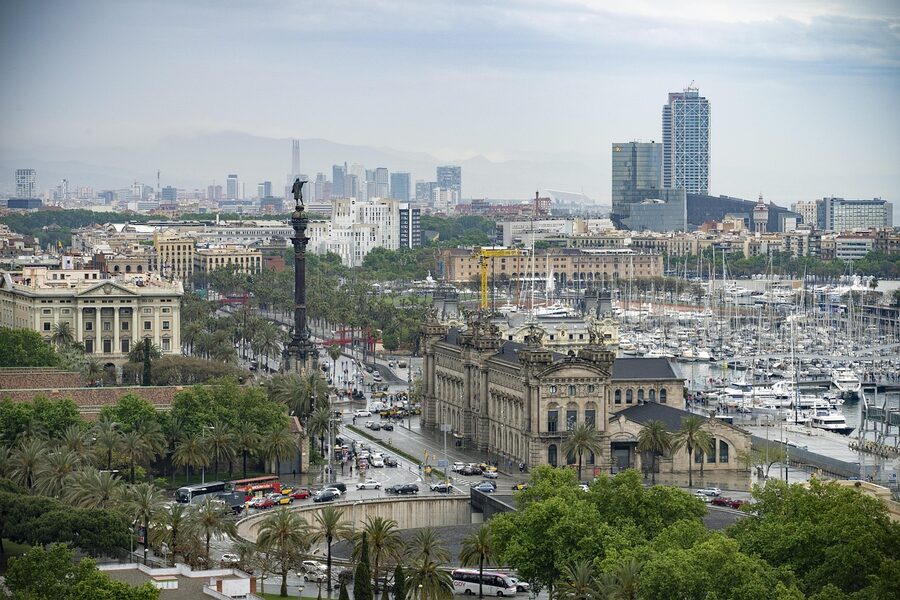
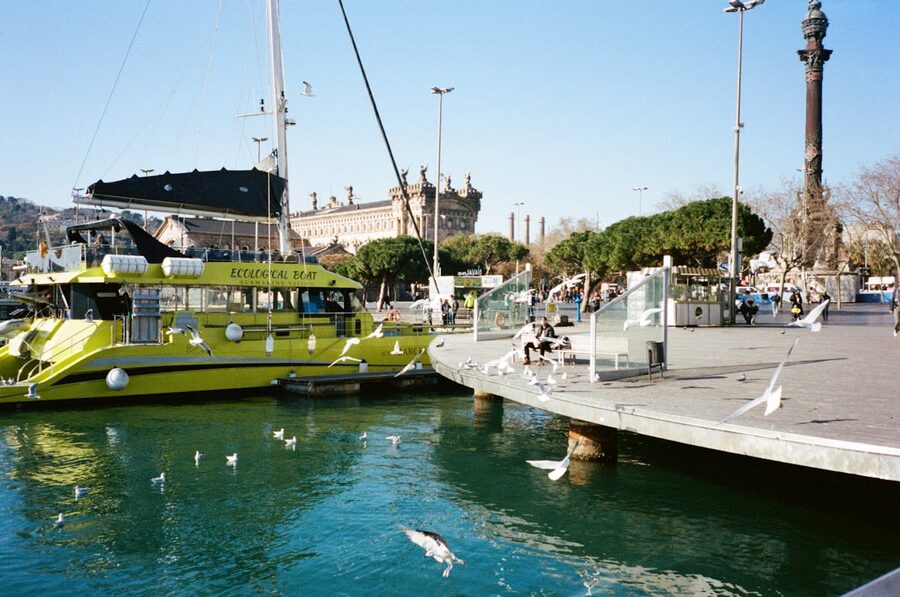
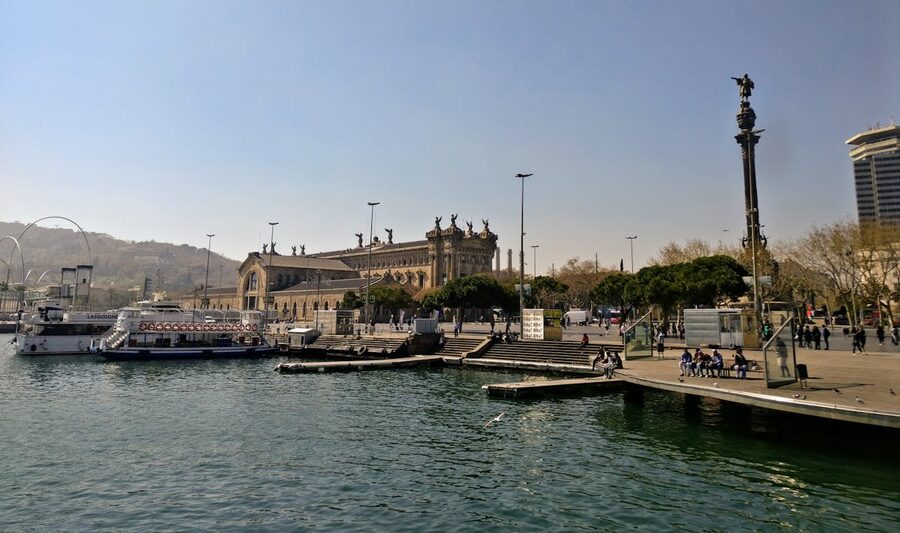
Las Golondrinas are Barcelona’s historic pleasure boats. They’ve been running harbour cruises from the base of the Columbus Monument — the tall column at the bottom of La Rambla — since the 1888 Universal Exhibition. That makes them the longest-running tourist attraction in Barcelona. Not the Sagrada Familia, not Park Guell, not the Gothic Quarter. A boat.
They offer two routes. The harbour tour lasts about 40 minutes, stays within Port Vell, and costs around $9. The coastal tour runs about 90 minutes, heads out past the beaches toward the Forum, and costs a bit more. Both run multiple times a day, weather permitting. If it’s windy or rough, the longer route sometimes gets cancelled — so the harbour tour is the safer bet if your schedule is tight.
The boats themselves are functional, not fancy. Upper deck is open-air with bench seating. Lower deck is covered. There’s no bar, no food service, no commentary on the shorter route (though the longer one sometimes has audio guides). You’re paying for the view, the breeze, and 40 minutes away from the crowds.
How to Book
You’ve got three options, and the right one depends on how much planning you want to do.
Option 1: Book online in advance. This is what I’d recommend, especially in summer. Pre-booking through GetYourGuide or the official Golondrinas website guarantees your spot and lets you skip the ticket queue at the dock. The queue isn’t usually terrible — maybe 10-15 minutes — but on August weekends it can stretch to 30+. If you’re on a walking tour in Barcelona that ends near Port Vell, pre-booking means you can time it perfectly.
Option 2: Buy at the booth. The ticket office is right at the harbour, impossible to miss. Cash or card. Perfectly fine on quiet days. Risky on weekends from June through September.
Option 3: Bundle with other attractions. Some city passes include a Golondrinas voucher, and the hop-on hop-off bus tour offers a combo ticket with a harbour cruise included. If you’re already planning to do the bus, the add-on boat ride is essentially free.
Which Route Should You Pick?
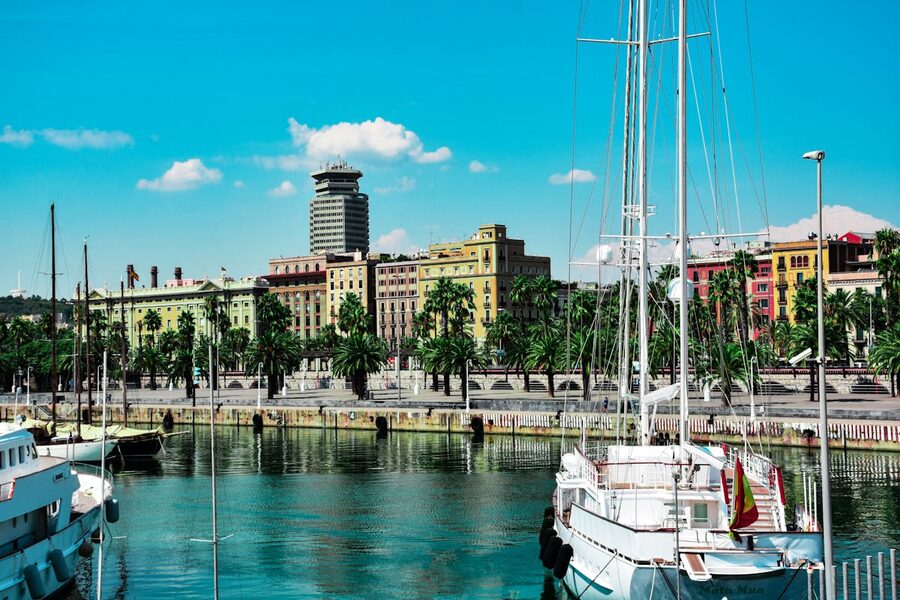
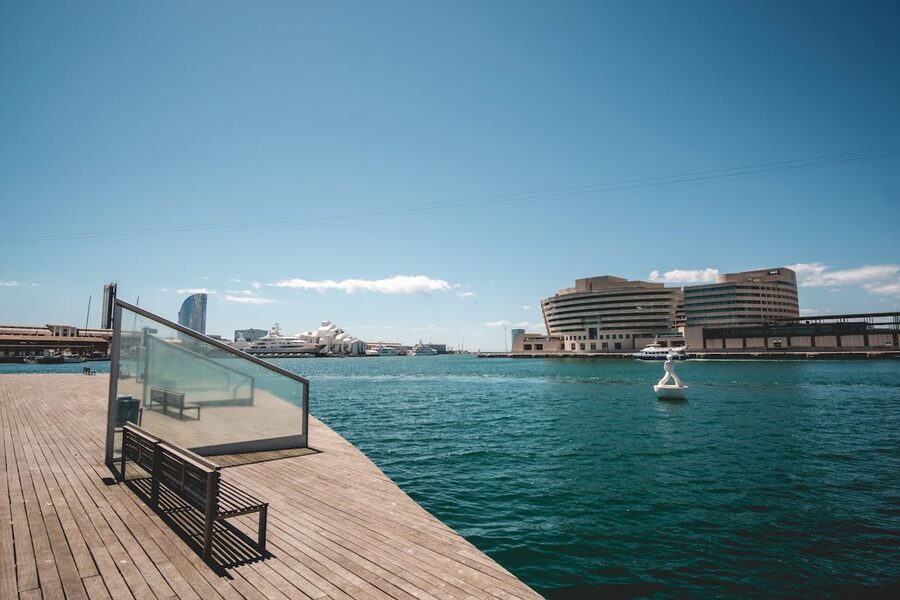
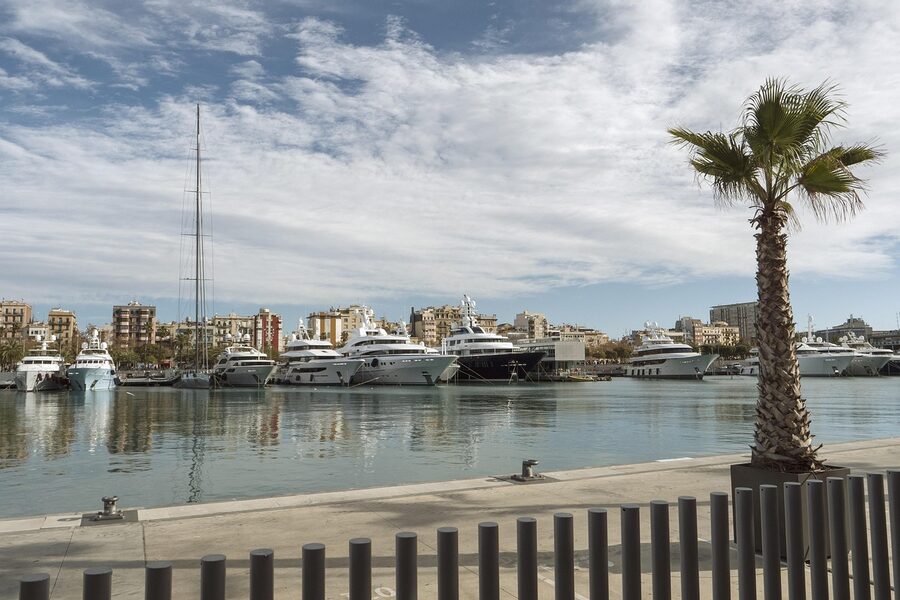
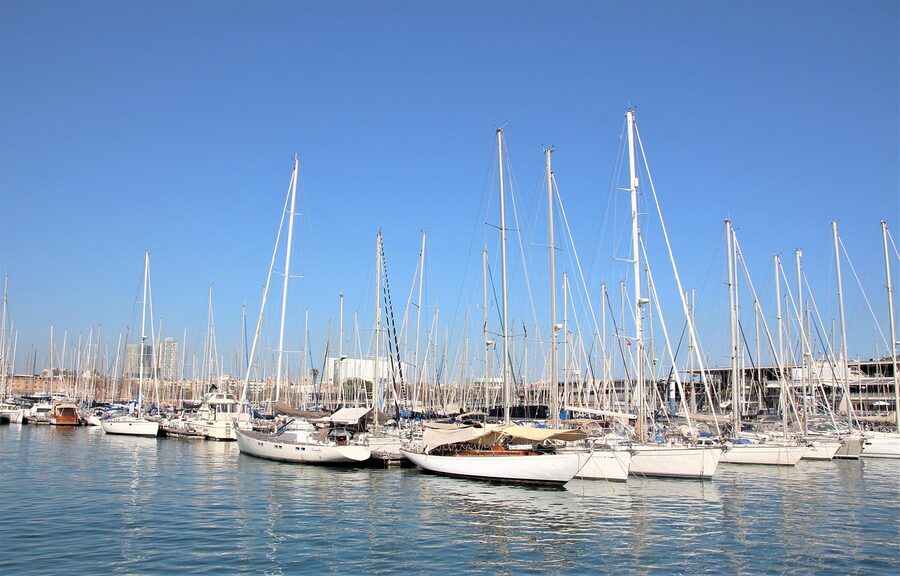
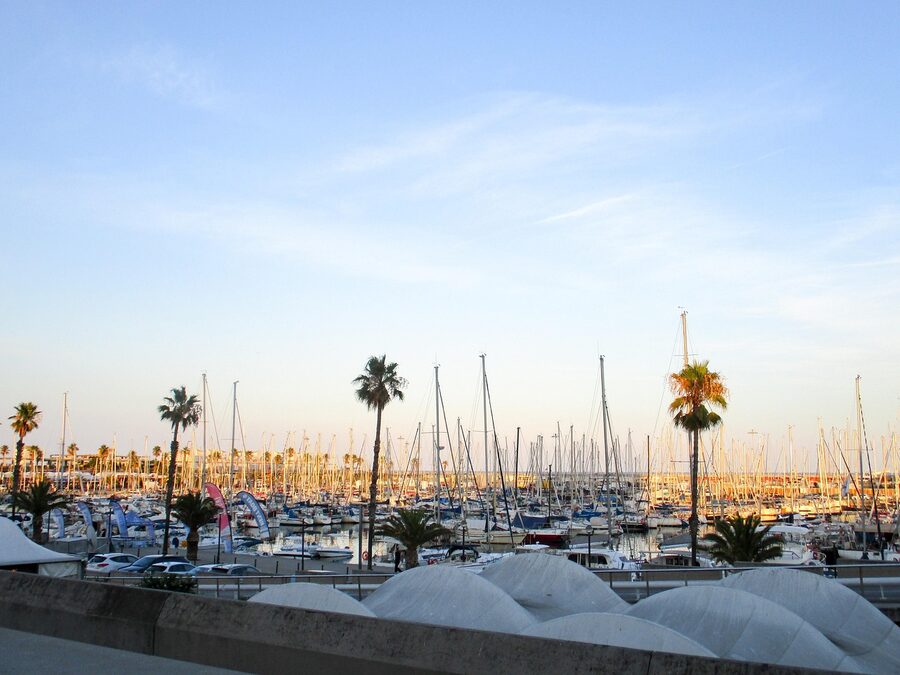
The 40-minute harbour tour is the classic. You loop around Port Vell, past the marina full of expensive yachts, along the commercial port where the cruise ships dock, and back. It’s compact, affordable, and gives you the key views without eating your whole afternoon.
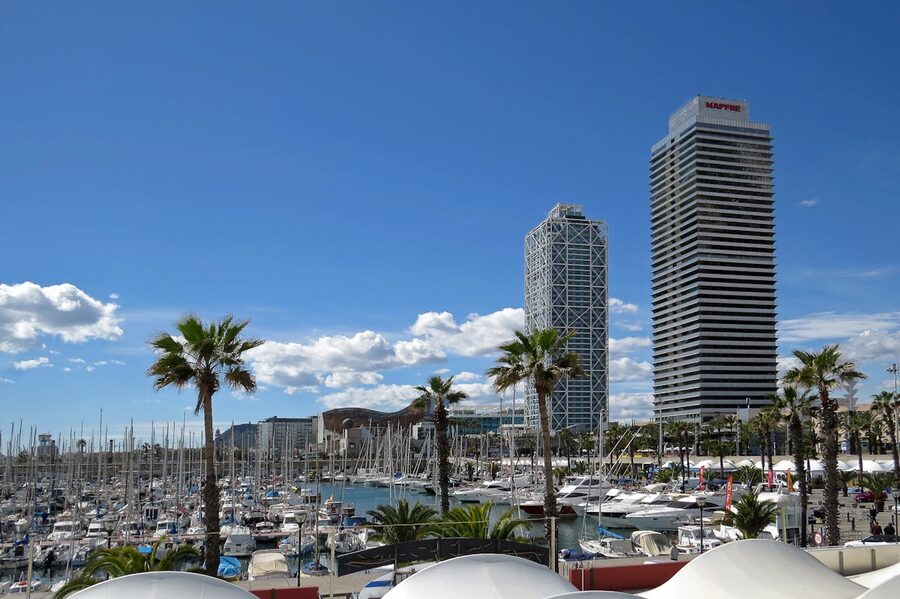
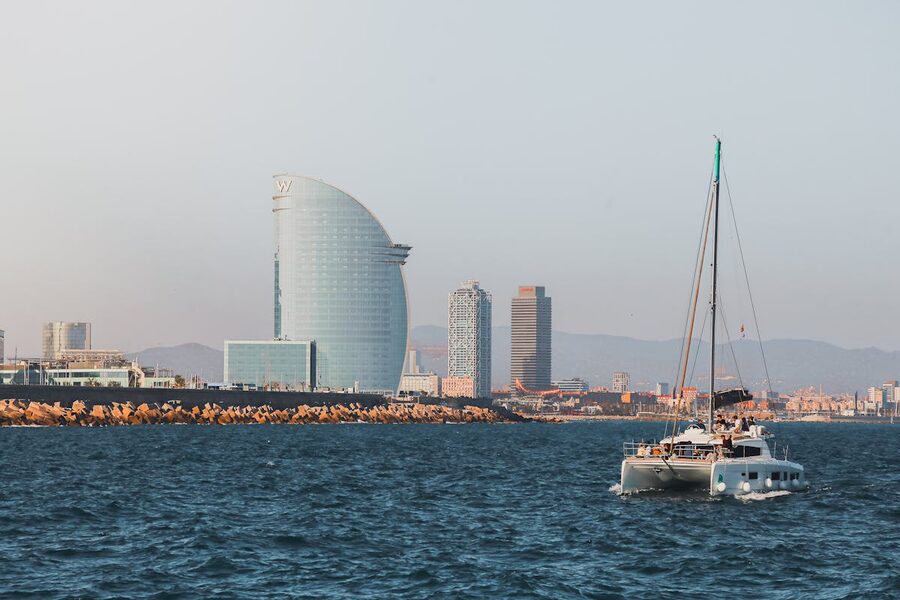
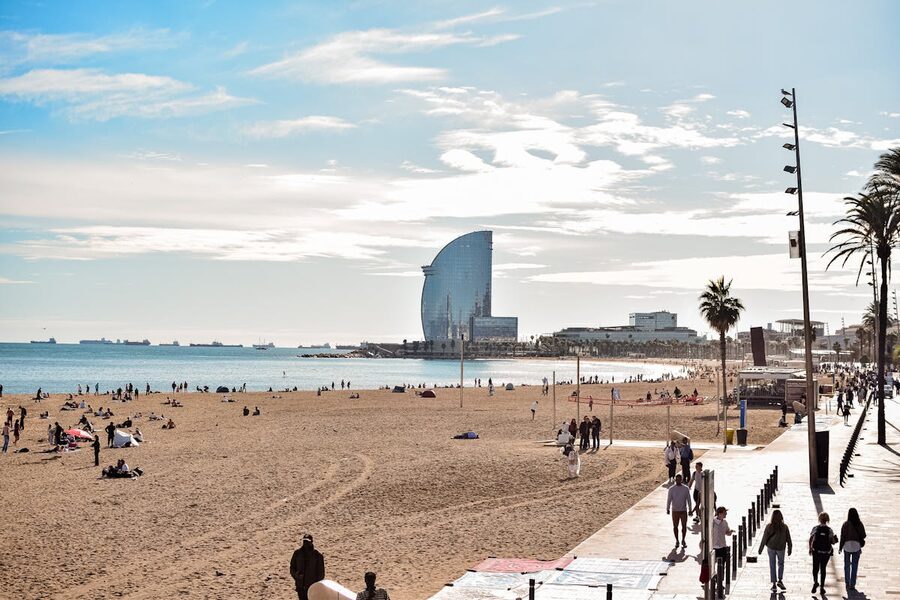
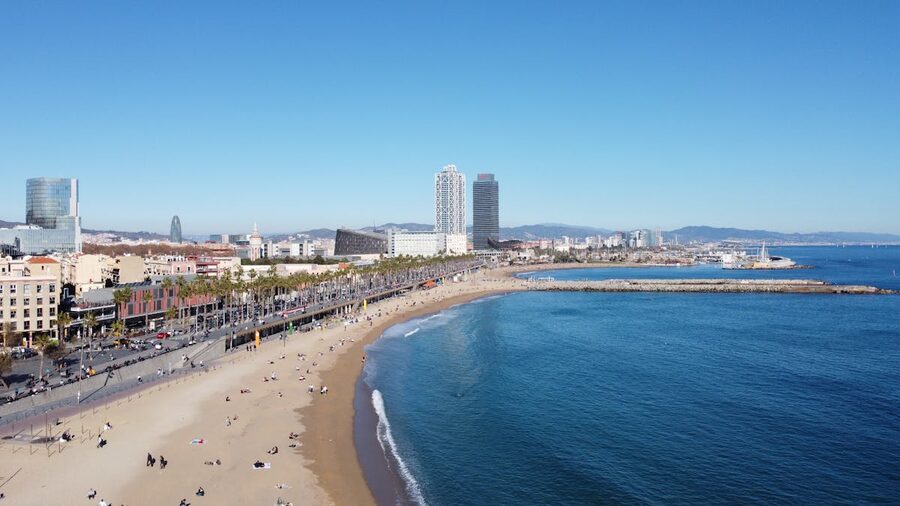
The 90-minute coastal route goes further — out past Barceloneta beach, past the W Hotel (the sail-shaped building), along the beaches toward the Forum district. It’s worth it if you want a proper boat ride rather than just a quick loop. But if your time in Barcelona is limited and you’re choosing between this and, say, spending those 90 minutes at Park Guell, I’d pick Park Guell.
Best Tours to Book
I’ve gone through the main Barcelona boat tour options. Here are the three worth your money, depending on what you’re after.
1. Las Golondrinas Boat Tour — $9
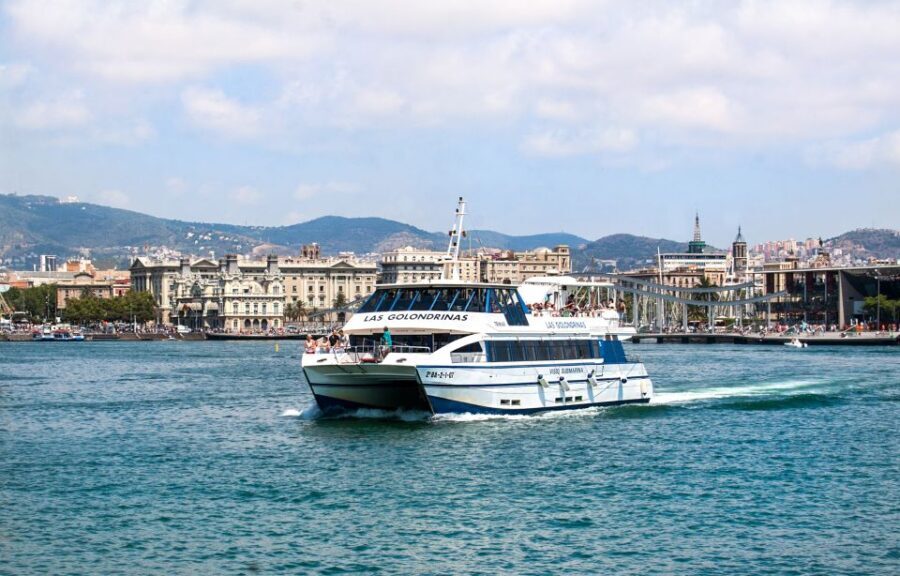
This is the one. The original Golondrinas harbour loop from Port Vell, 40 minutes to an hour on the water, for less than the price of two coffees. It’s not trying to be a luxury experience, and that’s exactly why it works. Our full review of the Las Golondrinas tour covers what to expect on board. At $9, there’s genuinely nothing to lose.
2. Coastline Boat Trip with Snacks and Cava — $32
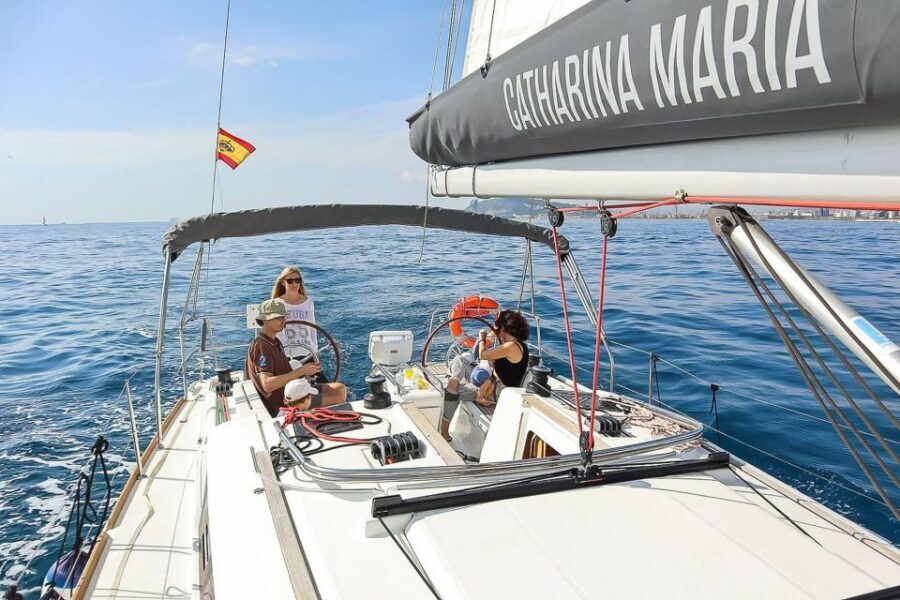
If the Golondrinas harbour loop feels too quick and you want something more relaxed, this 2-hour sailboat trip is the natural step up. You get complimentary cava, snacks, and a crew that actually cares about the experience — the guides here are passionate and entertaining. Our review of this coastline boat trip breaks down what’s included. At $32, it’s hard to argue against two hours on a private sailboat.
3. Barcelona Hop-On Hop-Off with Boat — $40
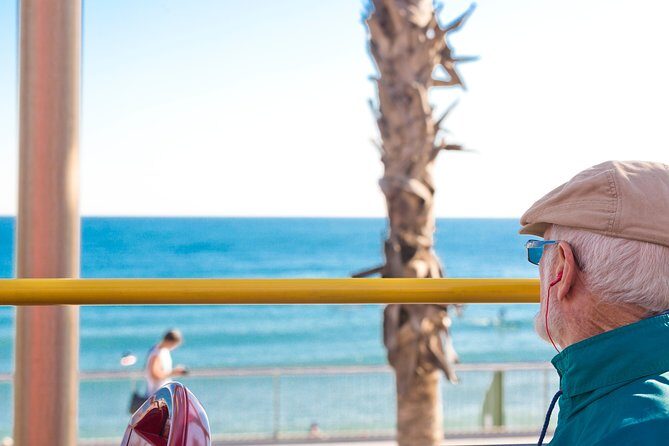
Not purely a boat tour, but the combo is worth mentioning. You get the full hop-on hop-off bus covering both routes — Gaudi landmarks, Montjuic, the beaches — plus a bonus harbour boat ride. Our review of the hop-on hop-off tour explains the route coverage. If you’re doing the bus anyway, adding the boat is a no-brainer. But if you only want the boat, go with option 1 or 2 above.
Ticket Prices and What’s Included
The Golondrinas have some of the most straightforward pricing in Barcelona. No tiered systems, no “premium” add-ons, no confusing bundle structures. Here’s what you’re looking at:
Harbour Tour (Port): Around $9 for adults, $4 for children aged 4-10. Under 4 go free. This is the 40-minute loop that stays inside Port Vell. Your ticket gets you on the boat, a seat (first come, first served), and that’s it. No drinks, no food, no audio guide.
Coastal Tour (Mar): Around $16 for adults, $7 for children. This is the 90-minute route that heads out along the beaches. Same no-frills setup — you’re paying for the ride and the views, nothing else.
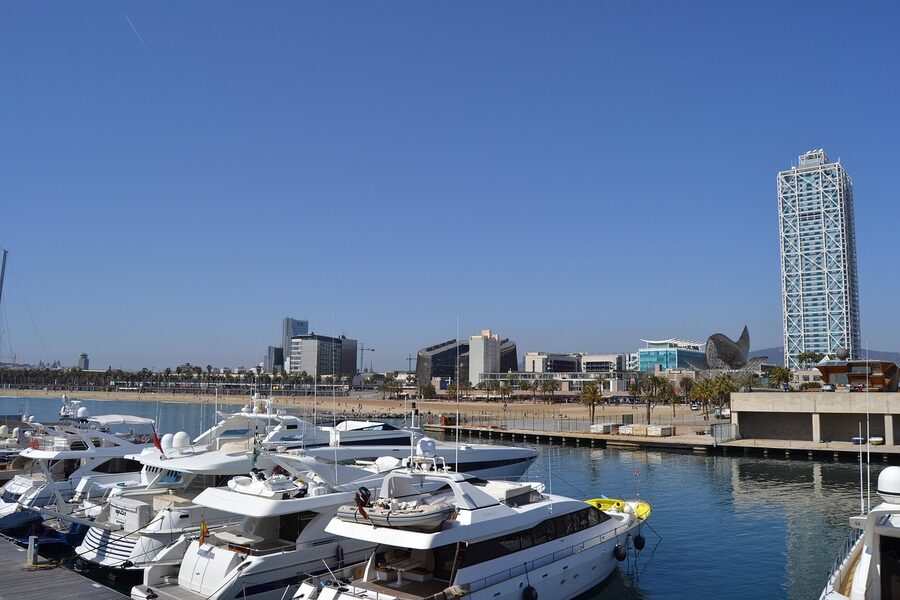
Compare that to the private sailboat options (starting around $32) or the catamaran cruises ($25-45) and the value is obvious. You’re not getting champagne or a captain’s hat, but you’re getting on the water for less than a sandwich at a tourist restaurant on La Rambla.
One thing to know: prices at the dock and online are usually the same. You’re not getting a discount by booking ahead — you’re getting a guaranteed spot, which matters more during peak season.
What to Expect on Board
Let me set expectations properly so you’re not disappointed. The Golondrinas are working tourist boats, not luxury cruises. The seats are plastic bench-style. There’s no shade on the upper deck. The toilets are basic. The boat smells faintly of diesel. None of this is a problem if you know it going in.
The upper deck is where you want to be. It’s open air, 360-degree views, and feels completely different from the enclosed lower level. Most people make a beeline for it. If the boat is full, the back-left corner of the upper deck tends to be the last spot to fill up — locals seem to prefer the right side (facing the city) so the port side stays emptier.
There’s no running commentary on the harbour tour. You just watch the scenery pass. The coastal tour sometimes has audio guides in multiple languages, but coverage is spotty. Honestly, the silence is part of what makes it good. You’re not being lectured — you’re just on the water.
Kids do well on the shorter route. Forty minutes is the right length for most children. Longer than that and the novelty of being on a boat wears off. There are no life jacket requirements for children over a certain age, but the boats are stable and the harbour water is calm. I’ve seen families with toddlers who were perfectly fine.
Harbour Tour vs Coastal Tour: Side by Side
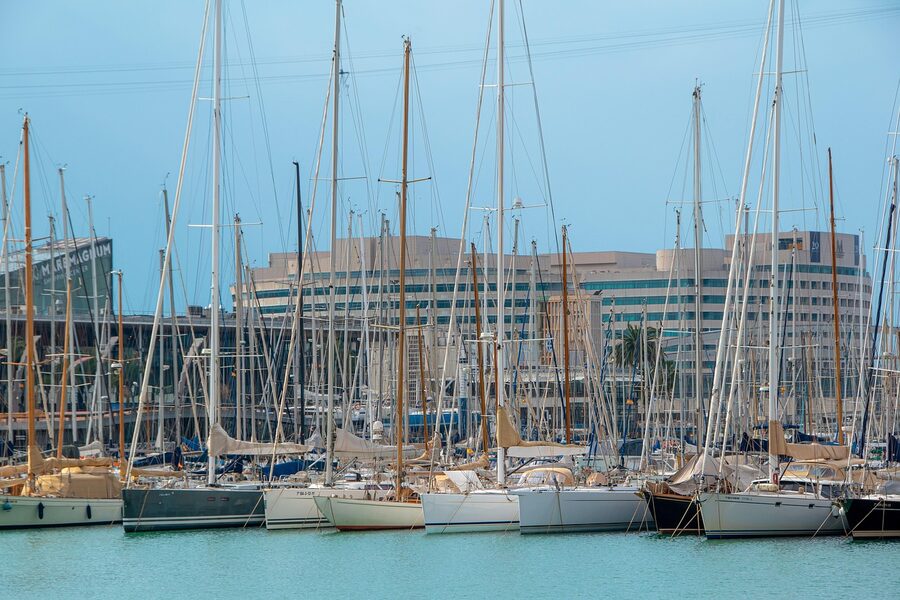
The harbour tour is Port Vell only — the enclosed, calm-water harbour that sits between the city centre and the breakwater. You pass the marina, the commercial port, the Maremagnum shopping complex, and loop back. Total distance is maybe 3 kilometres. The water is flat, the ride is smooth, and you never feel like you’re properly at sea.
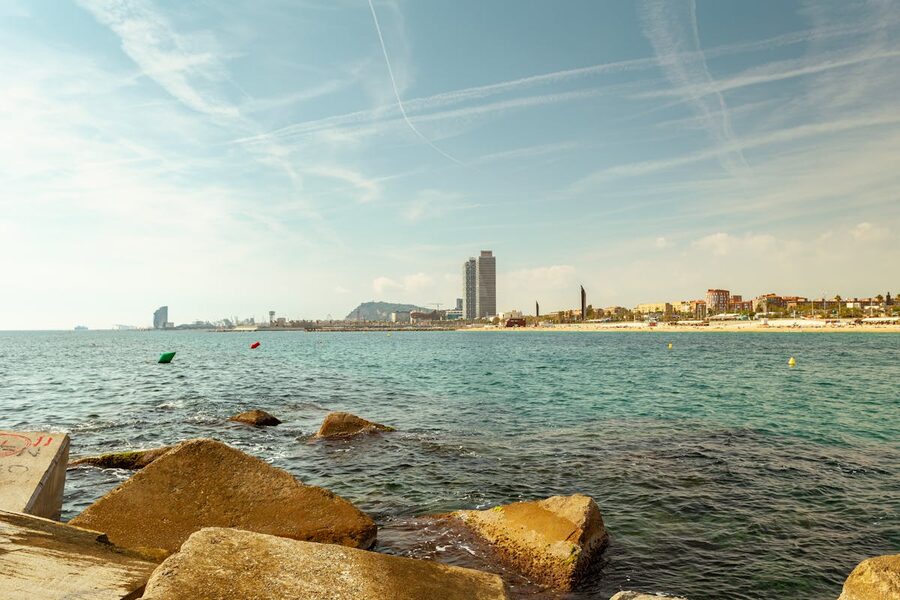
The coastal tour exits the harbour through the breakwater and turns right (northeast) along Barcelona’s beaches. You’ll see Barceloneta, the Olympic Port, Nova Icaria beach, Bogatell, and potentially all the way to the Forum. The water here is more open — not rough, but you’ll feel the Mediterranean swell. On windy days, the bow bounces a bit. Nothing scary, but noticeably different from the glassy harbour.
My recommendation: do the harbour tour first, especially if it’s your first time. It’s cheap, it’s quick, and it gives you the essential Port Vell experience. If you love it and want more, the coastal tour (or the sailboat with cava) is an easy add-on for another day. Don’t try to do both in one day — it’s too much time on the water and the novelty fades.
When to Go
The Golondrinas run year-round, but the schedule changes with the seasons. Summer (June through September) has the most departures — boats leave roughly every 30-45 minutes from mid-morning until evening. In winter, you might get just three or four departures a day, usually bunched around midday.

My advice: go in the late afternoon. The morning light is nice but harsh. The midday sun is brutal on the upper deck — there’s no shade up there. But around 5-6pm in summer, the light turns gold, the temperature drops, and the whole harbour feels different. That’s the sailing you want.
Avoid holidays if you can. The first Golondrinas tour of the day is usually the emptiest. Early birds get the upper deck to themselves.
Getting to the Departure Point
The Golondrinas dock at Portal de la Pau, which is just a fancy way of saying “the bottom of La Rambla, at the Columbus Monument.” If you’re coming from the Gothic Quarter, it’s a 10-minute walk south. From Barceloneta metro, it’s about 8 minutes west.
Metro station Drassanes (Line 3, green) is the closest, literally a 2-minute walk. If you’re on the Hola Barcelona transport card, that covers your metro ride there and back.
There’s limited parking nearby. If you’re driving, the Moll de la Fusta underground car park is the closest option, but it fills up fast. Public transport is easier.
What You’ll See from the Boat
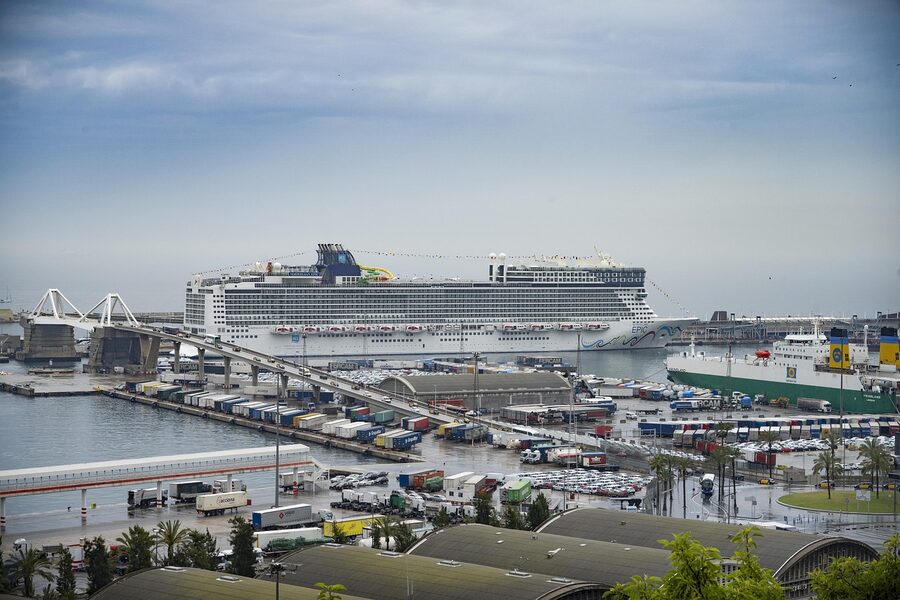
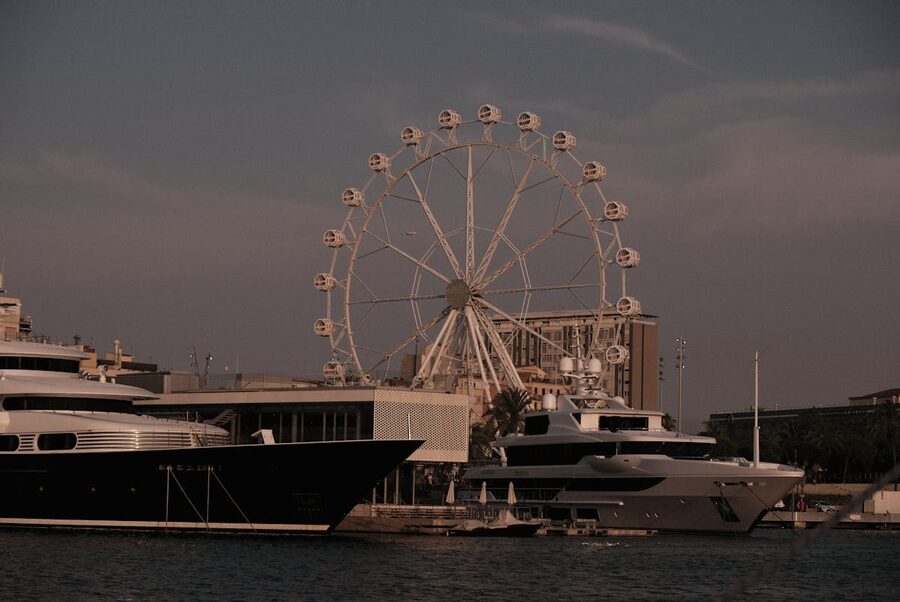
The harbour tour loops through Port Vell, and you pass quite a lot in 40 minutes. The mega-yachts in the Marina Port Vell are obscene — we’re talking boats with helicopters on them. Then you swing past the commercial port where cruise liners dock, which gives you a real sense of the scale of Barcelona’s working harbour. It’s not all polished waterfront — there are cranes, containers, and working ships mixed in with the pleasure boats.
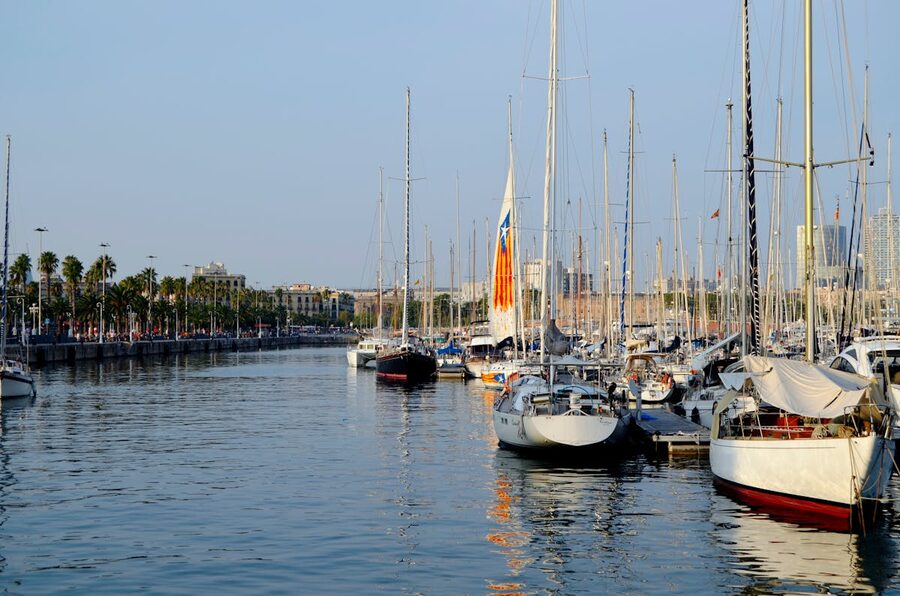
On a clear day, you can spot Montjuic hill with the castle on top, the spires of the Sagrada Familia poking up above the city, and the Tibidabo mountain with its church. It’s the only place in Barcelona where you can see all three at once, which is a genuinely cool thing.
A Brief History of Las Golondrinas
Barcelona hosted the 1888 Universal Exhibition, and the city transformed its waterfront from a rough working harbour into something presentable for international visitors. Part of that transformation included pleasure cruises — and that’s how Las Golondrinas were born. The original boats ferried exhibition visitors around the harbour, offering a novelty that most of them had never experienced.
The name stuck. “Golondrinas” means swallows in Spanish — named for the way the small boats swooped back and forth across the water. They survived the Spanish Civil War, the Franco years, the 1992 Olympics transformation of the harbour, and the tourism boom of the 2000s. The fleet has been modernized — today’s boats are diesel-powered with proper seating — but the route and the concept haven’t changed much in over a century.
The Columbus Monument at the departure point is worth a moment of your time, too. Built for the same 1888 Exhibition, the 60-metre column has a small elevator inside that takes you to a viewing platform at the top. The views from up there and from the boat complement each other nicely — one from above, one from the water.
Tips I Wish I’d Known
Bring sunscreen. The upper deck has zero shade. I got sunburned on a 40-minute ride in April. In July or August, it would be serious.
The upper deck fills first. Board early and go straight up the stairs. The lower deck is fine if you don’t get a spot, but the open-air experience is the whole point.
Wind matters. Even on warm days, the sea breeze on the open water is strong. A light layer is worth throwing in your bag, especially for the coastal route.
Cameras, not phones. If you have a proper camera, this is the time to use it. The combination of water, skyline, and light makes for genuinely good photos — the kind you’d actually print. Phone cameras struggle with the glare off the water.
Don’t combine with Montjuic on the same half-day. Both are at the south end of the city, which seems convenient, but Montjuic eats 3-4 hours minimum and you’ll be exhausted. Spread them across two days.
Combining Golondrinas with Other Barcelona Activities
The Golondrinas work best as a mid-day break between heavier sightseeing. Here are some combinations that make sense geographically:
Morning at the Gothic Quarter + Afternoon Golondrinas: Walk the medieval streets in the morning when they’re still cool, grab lunch near the harbour, then catch a 2pm or 3pm sailing. The Gothic Quarter is a 10-minute walk from the dock. This is probably the most natural half-day combo in Barcelona.
Golondrinas + Bike Tour: Several bike tour routes pass through the port area. If your tour ends near Barceloneta, the dock is a short ride away. The boat ride is a perfect cool-down after cycling in the heat.
Golondrinas + Maremagnum: The Maremagnum shopping and dining centre sits right on the harbour. It’s not the most authentic Barcelona experience, but it’s convenient if you want to grab dinner right after the boat. The upper-floor restaurants have harbour views that are surprisingly decent.
What doesn’t work: Don’t try to combine the Golondrinas with Park Guell or Casa Batllo on the same half-day. They’re all in different parts of the city and the transit time eats into your schedule. Spread them across different days.
Is It Worth It?
At $9, yes. Without question. The Golondrinas harbour tour is the single cheapest activity in Barcelona that actually delivers. It’s not going to change your life, but it’ll change how you see the city — literally. Forty minutes on the water, a completely different angle on a city most people only experience from street level.
The coastal tour at 90 minutes is good but not essential. And the sailboat with cava at $32 is the better option if you want a longer boat experience — it’s more personal, more fun, and the drinks are included.
What Else to Do Nearby
Port Vell sits right where several of Barcelona’s best areas meet, so you’ve got options after the boat. The Gothic Quarter is a 10-minute walk north — head up through the narrow medieval streets and you’ll end up at the cathedral. If you’re into modern architecture, Casa Batllo is a 20-minute walk up the Passeig de Gracia. Or stay waterside and walk east along Barceloneta to the beaches.
For more Barcelona boat experiences, the catamaran cruise is a bigger and flashier alternative, or the sunset catamaran if you want the golden hour on the water. And if you’re planning day trips from the coast, check our guide to kayaking in Barcelona for something more active on the water.
Affiliate disclosure: Some links in this article are affiliate links, meaning we may earn a small commission if you book through them. This doesn’t affect your price — it helps us keep writing these guides.