
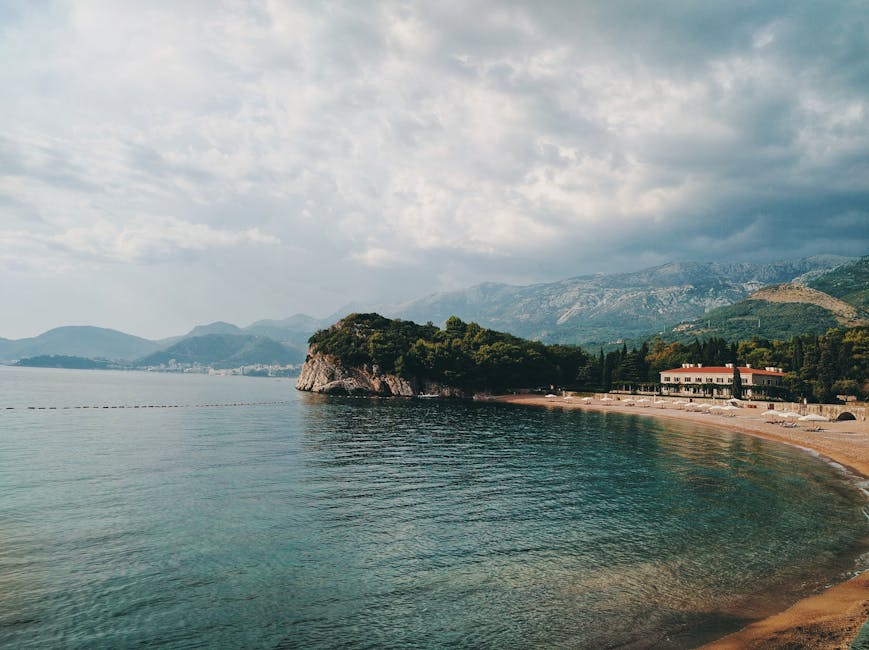
Kotor Bay is the only fjord in the Mediterranean. Not quite a fjord, technically — geologists call it a submerged river canyon — but when you stand on the shore and look up at 1,700-metre cliffs rising straight out of the water, the distinction stops mattering.
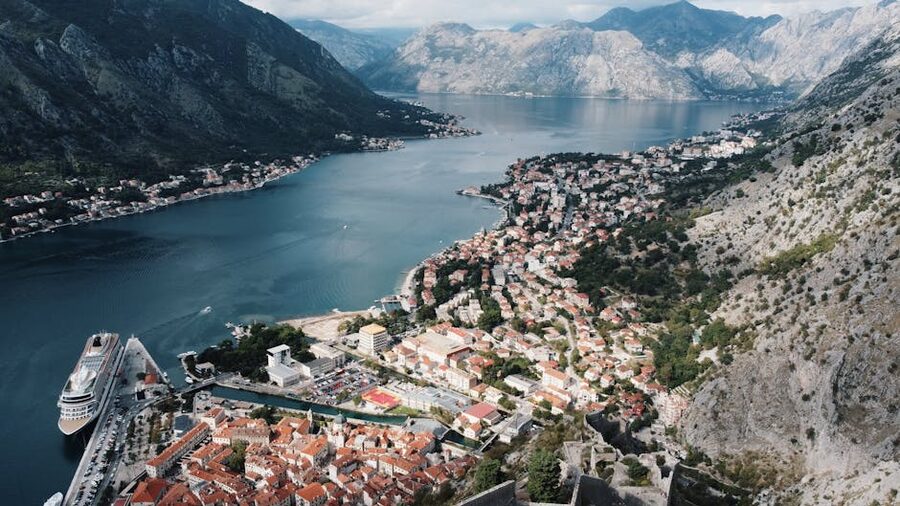
This is the reason most Dubrovnik travellers spend one of their days getting their passports stamped and driving 90 minutes south into Montenegro. For everything to do back in Dubrovnik itself, our Dubrovnik things-to-do guide covers the non-cruise-ship version of the city. Kotor Bay is stunning in a way that postcards do not prepare you for — small medieval towns scattered along its edges, a road that clings to cliffs above turquoise water, and a sense that you’ve stepped out of Croatia into somewhere entirely wilder.
This guide covers which Montenegro day trip to book, what the 11-hour day actually contains, and how to decide between the bus tour and the boat-and-bus version.
- In a Hurry? Here Are the Top Picks
- What the Day Looks Like
- Stop 1: Perast
- Stop 2: Kotor Old Town
- Stop 3: Budva (Sometimes)
- The Best Tours to Book
- 1. From Dubrovnik: Montenegro Day Trip —
- 2. From Dubrovnik: Montenegro Boat Tour from Perast to Kotor —
- 3. Montenegro Full-Day Trip with Optional Boat — .41
- The Border Crossing: What to Expect
- What You Pay For and What’s Included
- When to Go
- What to Bring
- Is One Day Enough?
- Pairing This with Your Dubrovnik Itinerary
- Worth Knowing Before You Book
- More Croatia and Montenegro Guides
In a Hurry? Here Are the Top Picks
Best all-rounder: From Dubrovnik: Montenegro Day Trip — $70 per person. Eleven hours covering Perast, Kotor, and Budva. The most-booked tour.
Best boat version: From Dubrovnik: Montenegro Boat Tour from Perast to Kotor — $68 per person. Includes the boat ride across Kotor Bay. Worth the swap from the bus-only tour.
Best flexible option: Montenegro Full-Day Trip with Optional Boat — $72.41 per person. Similar itinerary with a boat-trip add-on you can choose on the day.
What the Day Looks Like
Pickup is usually 7-7:30am from a central Dubrovnik meeting point (the old town harbour, Pile Gate, or your hotel for premium tours). You drive south along the coastal highway, past Cavtat, and hit the Montenegro border within 30 minutes.
The border crossing is the wildcard. On a quiet Tuesday in May, it takes 10 minutes. On a Saturday in August, it can take 90. Tours factor in a buffer but if you’re on a late group and the border queue is bad, the whole day compresses.
Once across, the road runs along the coast to Herceg Novi (which you’ll drive past rather than stop at), then takes a ferry across the narrow mouth of the bay at Kamenari-Lepetane. This ferry saves 40 minutes compared to driving around. It costs the tour €5-10 per vehicle and your guide will wave that off as included — which is probably why this route exists.
After the ferry, you’re on the inner bay road driving along a shelf between the water and the cliffs. Stops at Perast, Kotor, and (sometimes) Budva follow, each 90-120 minutes with a long lunch break built in somewhere.
Stop 1: Perast
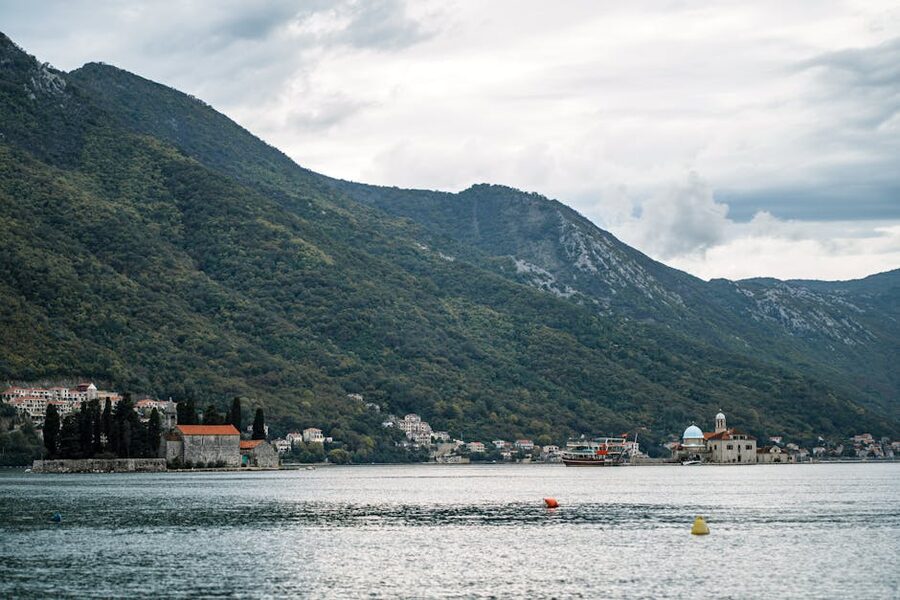
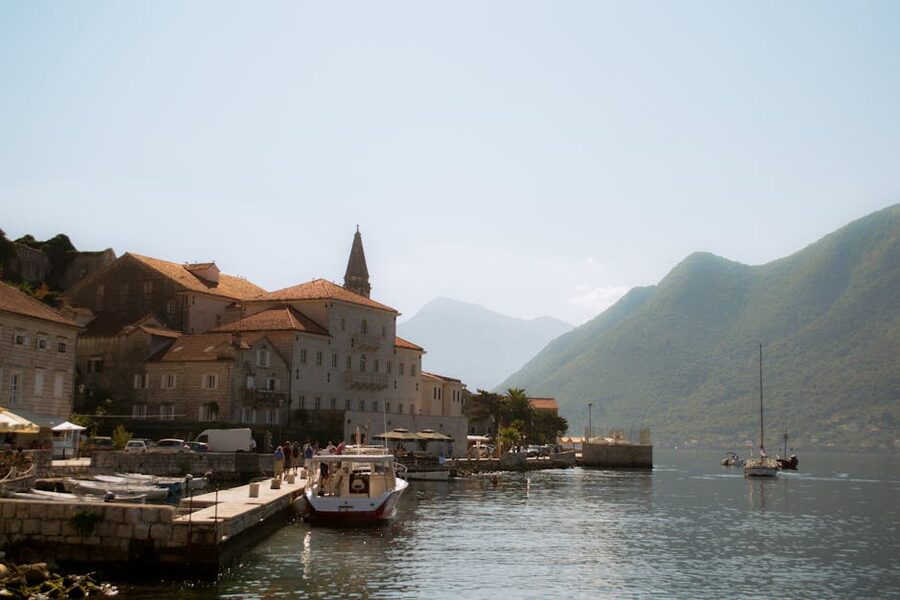
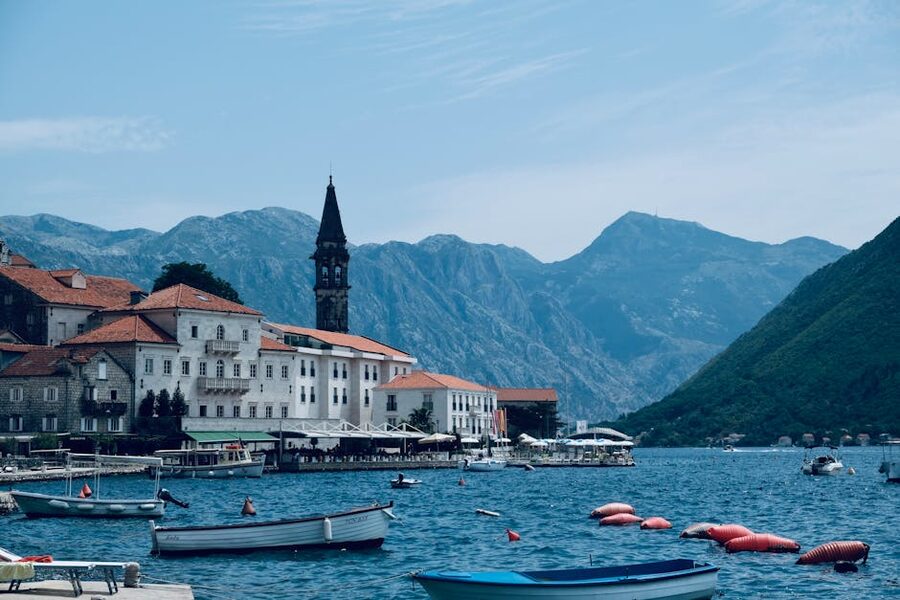
Perast is a tiny Venetian-era town on the north shore of Kotor Bay, famous for two things: the view, and the two small islands just offshore.
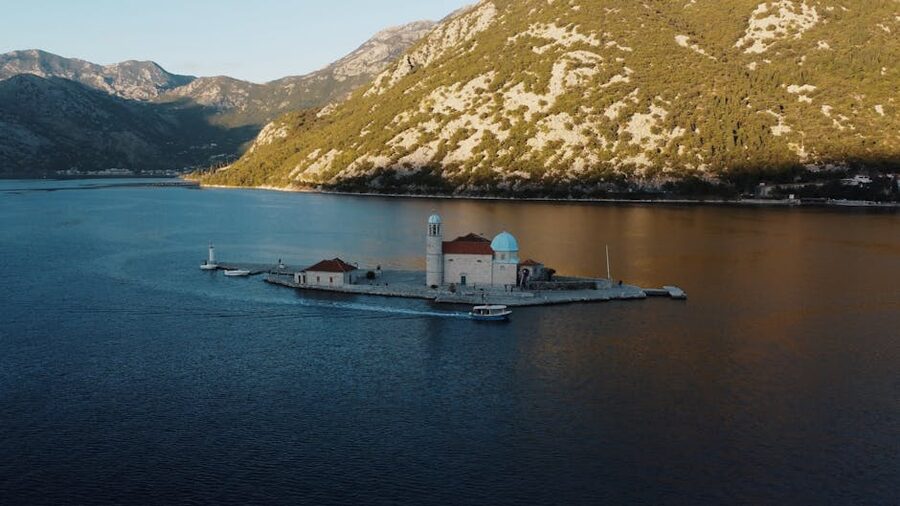
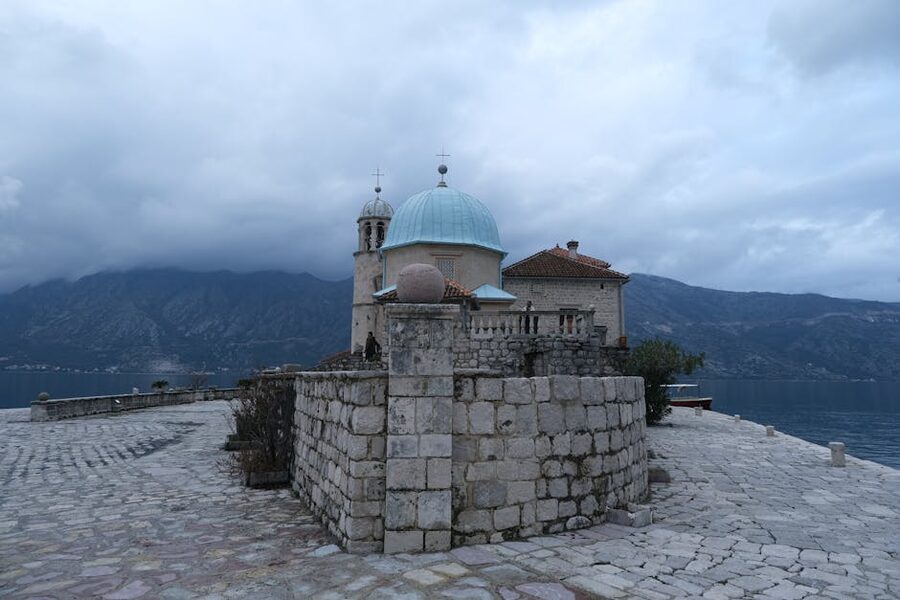
The main thing you do in Perast is take a small boat to Our Lady of the Rocks. This is one of only two artificial islands on the eastern Adriatic, created over 450 years of sailors adding stones and sinking captured ships around a single rock where — according to legend — two local fishermen found an icon of the Virgin Mary in 1452. The boats run every 20-30 minutes from the Perast waterfront, take 5 minutes to cross, cost €6-8 return, and you get 25-30 minutes on the island.
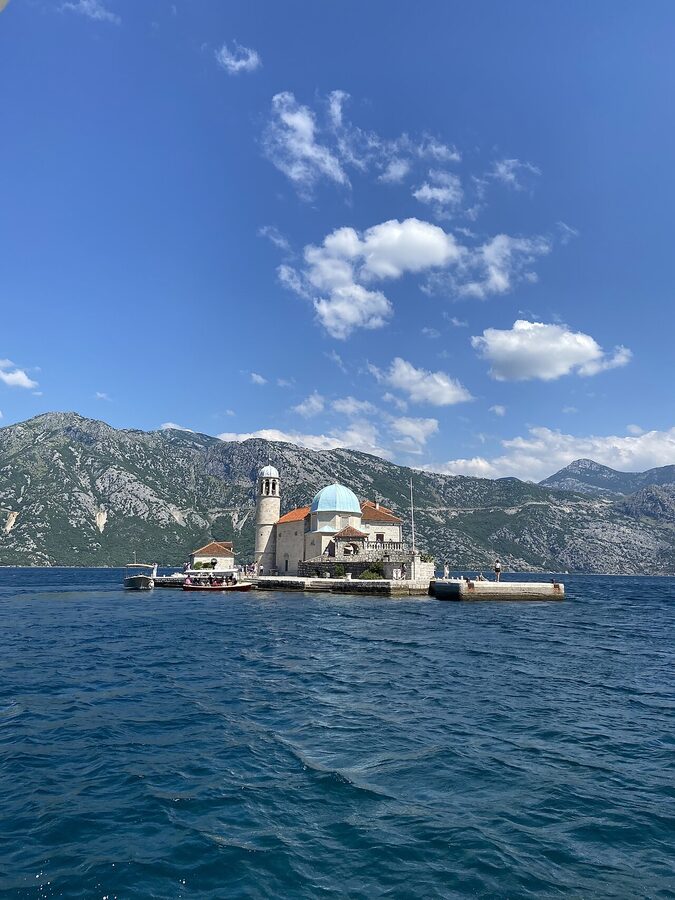

The second island — St George — is next to it but you can’t land. It’s a Benedictine monastery, still in private hands, and famously photogenic from the water.
If your tour includes the boat trip, great. If it doesn’t, do the boat trip yourself during your stop in Perast. €8 and half an hour is worth it.
Stop 2: Kotor Old Town
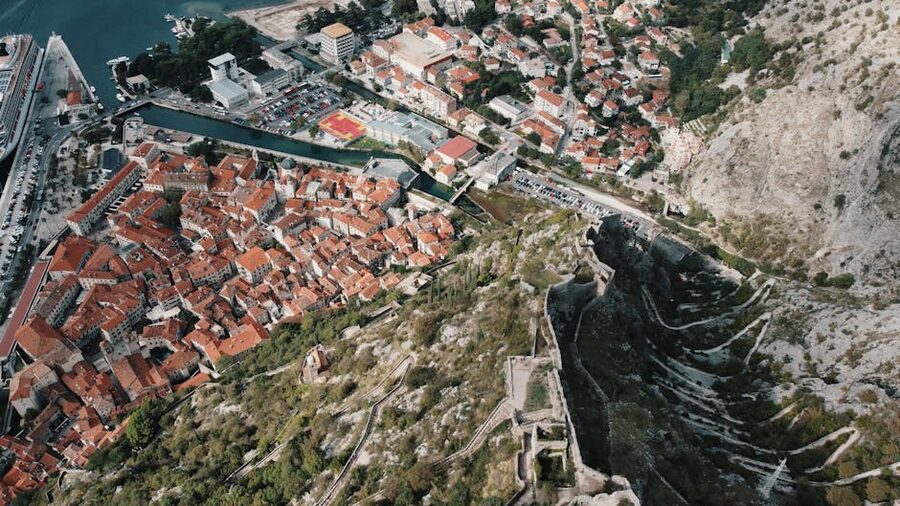
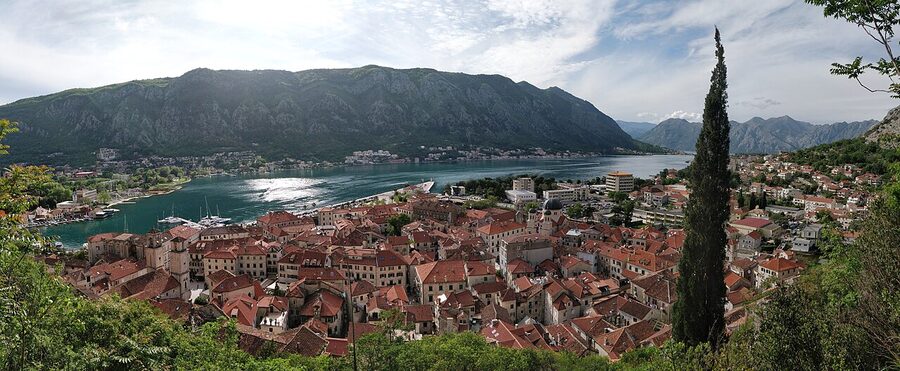
This is the main event. Kotor is a walled medieval city on the inner edge of the bay, UNESCO-listed, well-preserved, and built in layers on top of Roman, Byzantine, Venetian, and Austro-Hungarian foundations. You typically get 2-3 hours here.
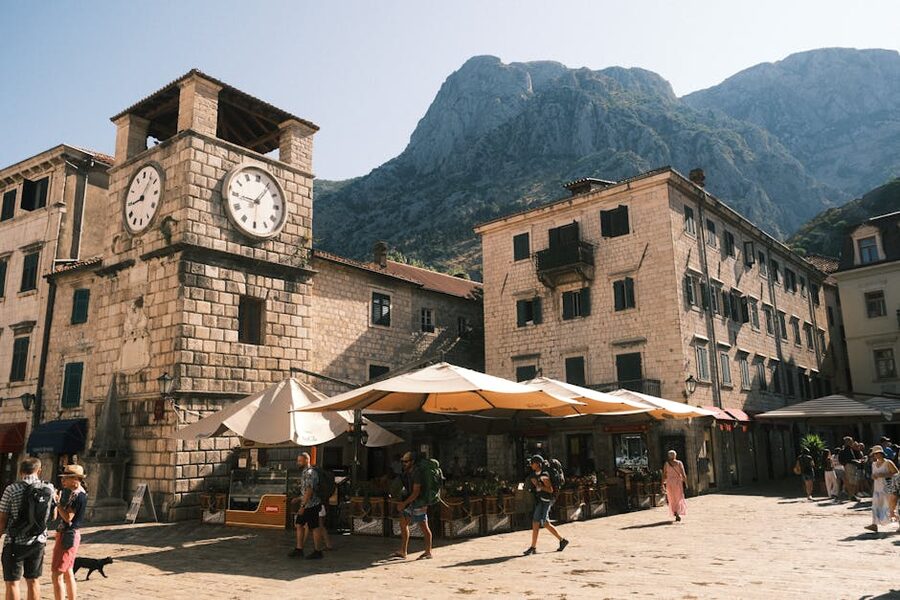

The must-see inside the walls is St Tryphon’s Cathedral — a Romanesque church from 1166 with two mismatched bell towers (one collapsed in an earthquake in 1667 and was rebuilt shorter). Entry is €3.50 and includes a small museum with some genuinely old reliquaries. Worth 20 minutes.
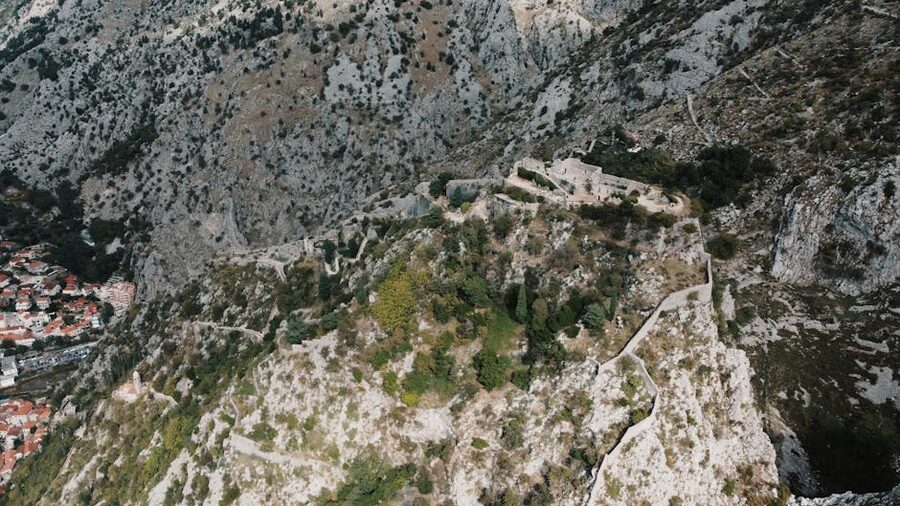
The other thing you should do if you have time and legs: climb the fortress walls. The zig-zag stone path runs up the mountain behind the old town to St John’s fortress at 280 metres above the bay. It’s 1,350 steps one way, takes 45-60 minutes up and 30 down, and costs €8 for entry. The view from the top is the best in Montenegro — the whole bay spread out below you.
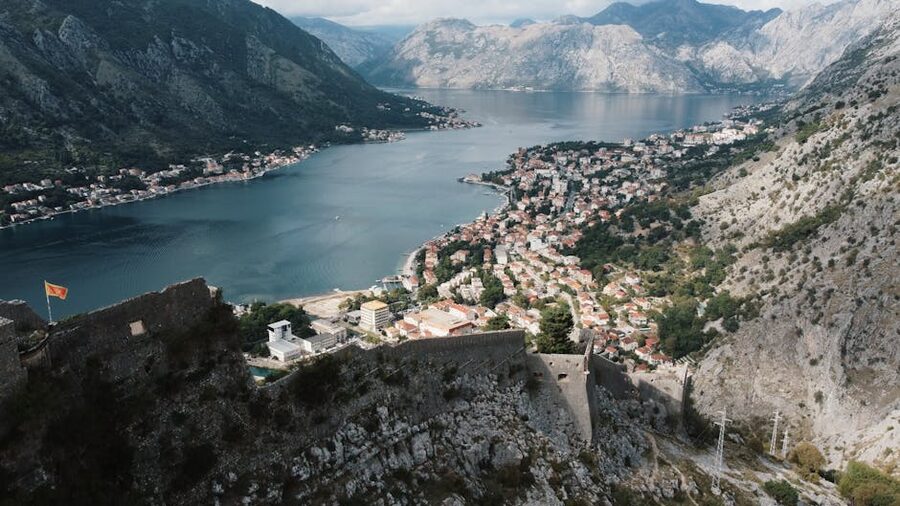
Bring water, comfortable shoes, and do the climb early in the day (morning tours give you time; afternoon tours usually don’t). If it’s over 30°C, skip it — the steps are exposed rock and people have been genuinely hurt from heat exhaustion on the climb.
Stop 3: Budva (Sometimes)
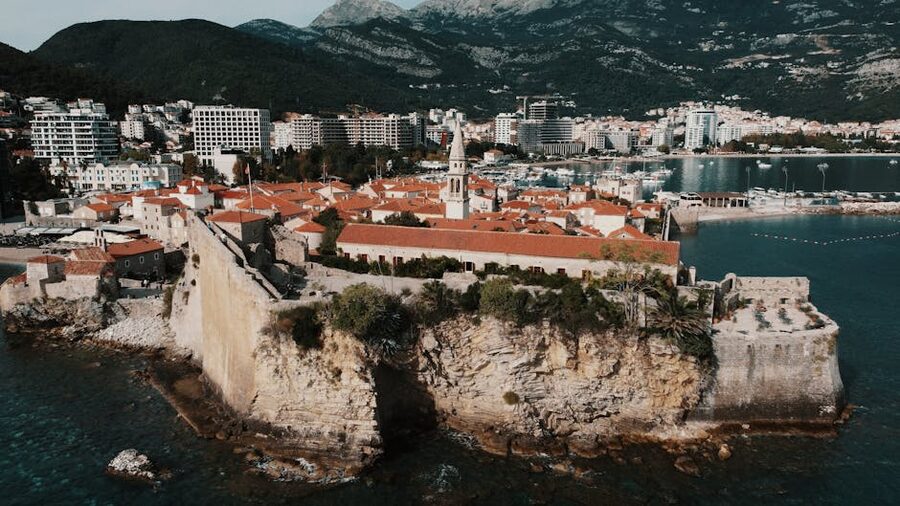
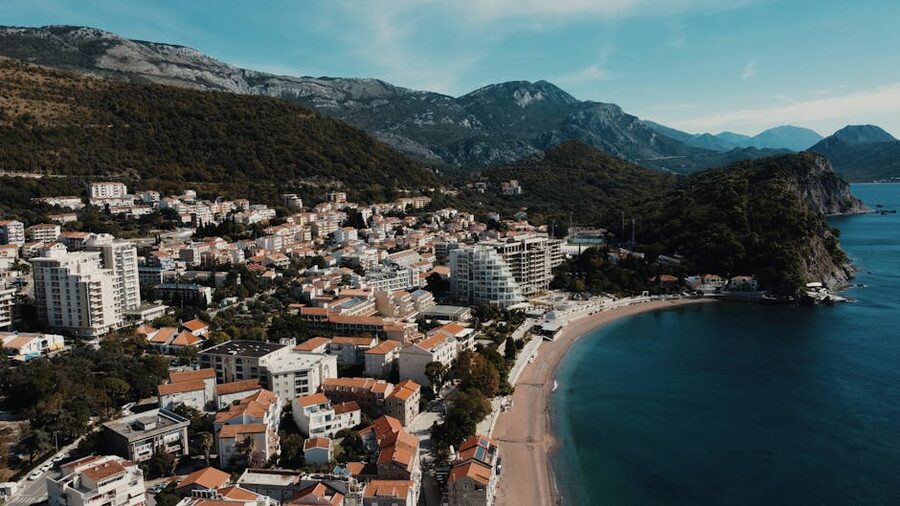
Budva is the third stop on most Montenegro day trips, though some tours skip it or only drive past. It’s a resort town on the open Adriatic, south of Kotor, with a small walled old town that’s a miniature version of Kotor itself.
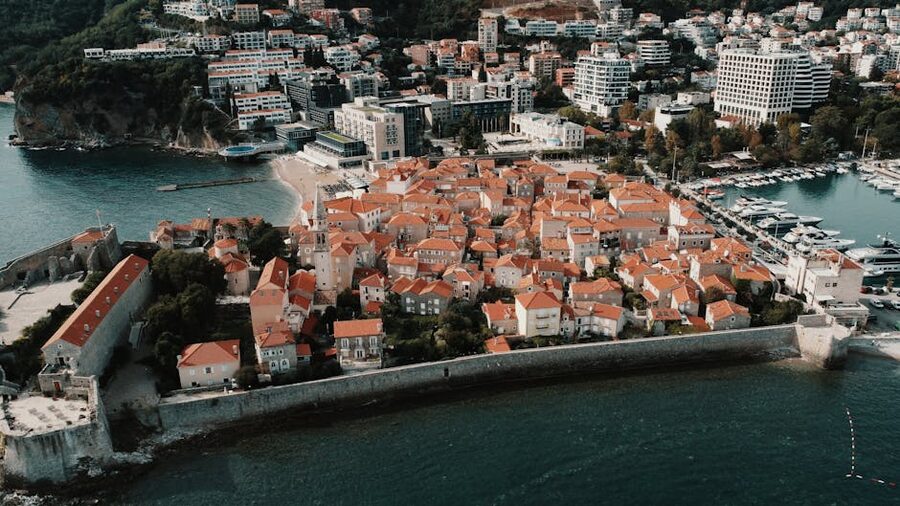
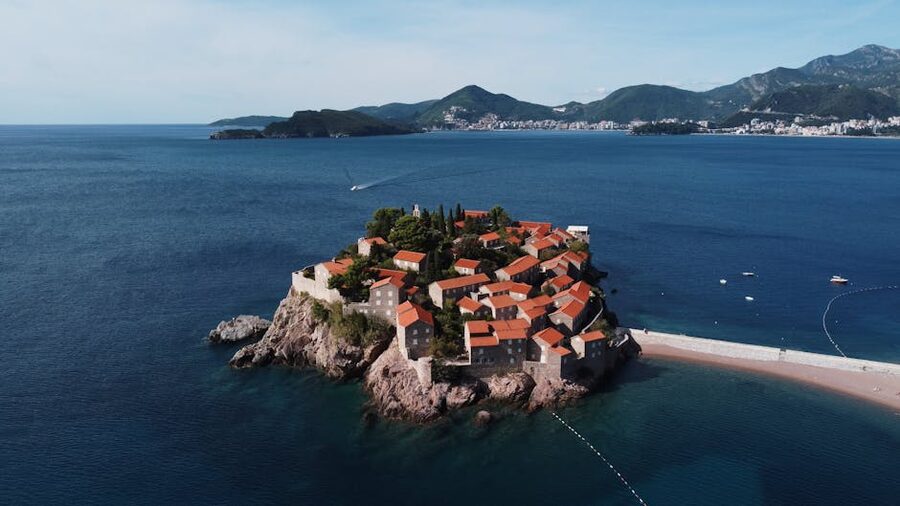
Be honest about what Budva is. It’s a beach resort with a historic core, not a preserved medieval town. The surrounding city is wall-to-wall casinos, cruise ship souvenir shops, and nightclubs. The old town itself is charming but takes 30 minutes to walk end to end. Most tours give you 90 minutes here, which is about right.
Watch out for booking confusion: some Montenegro tours list Budva in the itinerary but don’t actually stop there. Past visitors have flagged this specifically — “booking said Perast, Kotor, and Budva but we only visited Perast and Kotor.” Read the tour’s recent reviews before booking if Budva matters to you.
The Best Tours to Book
1. From Dubrovnik: Montenegro Day Trip — $70
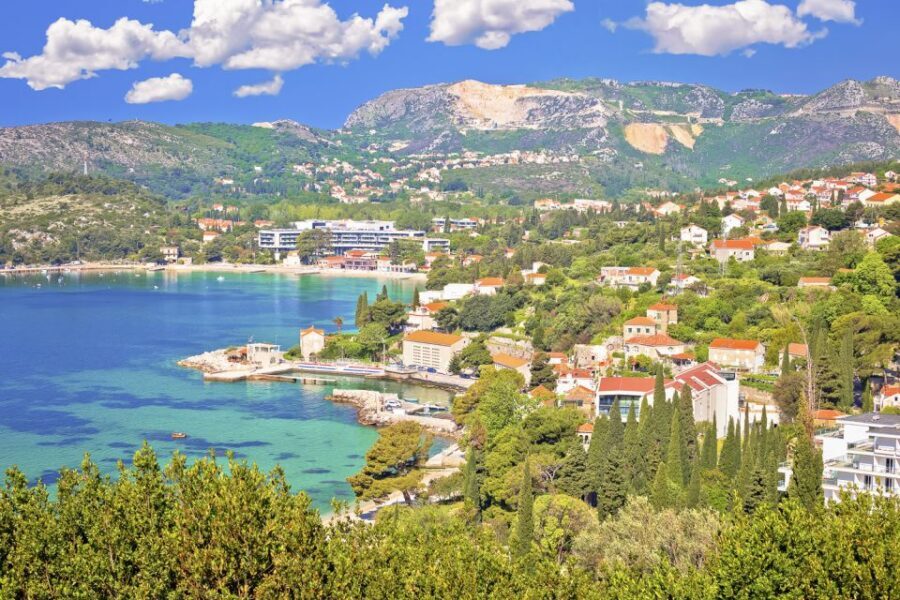
The standard bus day trip. Pickup from Dubrovnik, border crossing, Perast stop (with free time to take the boat yourself), Kotor for 2-3 hours, Budva for 90 minutes, and back. Guides are consistently good — most are native Montenegrins or Croatians who’ve made the crossing thousands of times and can handle the border bureaucracy without stress. Our full review covers exactly what’s included and what you pay extra for. At $70 it’s the best-priced full-day option from Dubrovnik.
2. From Dubrovnik: Montenegro Boat Tour from Perast to Kotor — $68
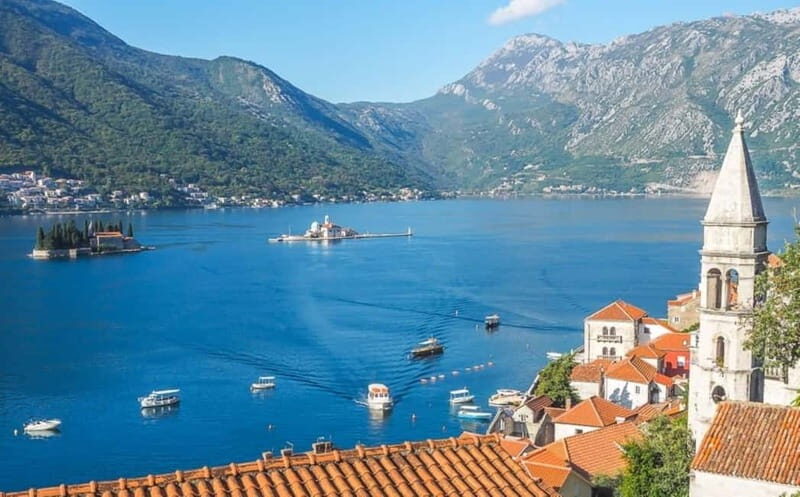
This is the one I’d book first. Same day structure as the bus tour, except instead of driving the road around the inner bay, you board a small boat in Perast and cross to Kotor by water. Seeing the bay from the middle of it — cliffs on both sides, Our Lady of the Rocks passing on your starboard side — is the single best experience of the day. Our review describes the boat section in detail, including how long you spend on the water. At $68 it’s cheaper than the bus-only tour because of a pricing quirk; it’s also better. Easy decision.
3. Montenegro Full-Day Trip with Optional Boat — $72.41
Similar itinerary to the standard bus tour but with a flexible Our Lady of the Rocks boat add-on and (supposedly) a Budva stop. The flexibility is the selling point — if the weather looks bad in the morning, you can skip the boat and pocket the €8. Our review covers what changes when you add the boat and how to tell your guide at pickup. Fair warning: some past groups on this tour have had the Budva stop dropped from the itinerary due to time constraints. If Budva matters, ask the guide at pickup.
The Border Crossing: What to Expect
Montenegro is not in the EU or Schengen. You are crossing an actual international border and your passport gets stamped both directions. The process is straightforward but slow:
The bus stops at Croatian exit control. Passport collected, stamped, returned. Usually 10-20 minutes.
The bus drives 100 metres to Montenegrin entry control. Passport collected again, stamped again, returned. Another 10-20 minutes.
That’s each direction, so the full day includes four border processes. On a quiet day it adds 40 minutes total. On a Saturday in August it can add three hours.
Which passport you hold matters slightly:
– US, UK, EU, Canada, Australia, NZ passports — no visa needed, 90 days free visit.
– Most other passports need a visa or e-visa. Confirm before booking; if you need a visa, apply well in advance.
Dual citizens — use whichever passport you entered Croatia with. Don’t try to switch passports mid-trip; it confuses border agents and slows everyone down.
What You Pay For and What’s Included
Tour price: $68-72 depending on operator.
Typically included: Transport from Dubrovnik and back, English-speaking guide, the ferry across the bay at Kamenari, sometimes the Our Lady of the Rocks boat.
Typically NOT included: Entry fees to St Tryphon’s Cathedral (€3.50), the city wall climb in Kotor (€8), the boat to Our Lady of the Rocks if your tour doesn’t have it (€8), lunch (€15-25 at most restaurants in Kotor or Budva), and tips for the guide (€5-10 per person standard).
Expect to spend $100-130 per person for the full day after extras.
Currency tip: Montenegro uses the euro, despite not being in the EU. If you took out Croatian kunas, well, Croatia also uses the euro now (since 2023) — so you’ll be fine either way. (Our Croatia money guide covers card vs cash, ATM fees, and the kuna-to-euro transition in more detail.) Card is accepted everywhere; cash is only really needed for the Our Lady of the Rocks boat and occasional market stalls.
When to Go
Montenegro day trips run year-round. The optimal season is late April through early October.
May and early June: Warm but not hot, light tourist traffic, manageable borders. The best time if you can swing it.
July and August: Peak season. Borders can be hellish. The bay is stunning, the crowds are intense, and temperatures regularly hit 35°C+.
September: Maybe the single best month. Warm, calm seas, thinning crowds, restaurants still open, and the light is gorgeous for photos.
October: Still warm enough for comfort, the bay is mostly deserted, some tours run less frequently.
November through March: Tours still run but infrequently. Weather can be cold and rainy. Some restaurants and museums close for winter.
Pick a Tuesday or Wednesday if you can. Weekend tours get the worst border queues; weekday tours often sail through in minutes.
What to Bring
Passport. Seriously. Check it’s valid for at least 6 months past your return date — Montenegro is strict about this and has turned people back at the border.
Cash in euros, €50 minimum. Card acceptance is decent but not universal, and the boat to Our Lady of the Rocks only takes cash.
Comfortable walking shoes if you’re thinking of the fortress climb. The steps are uneven stone, sometimes slippery, always steep. Trainers are fine; heels are a disaster.
Hat and sunscreen for the bay — there’s minimal shade on boats or on the fortress walls.
Light jacket for the bus return. Dalmatian evenings cool down fast, and most of the drive back is after sunset.
Small day bag only — the bus isn’t huge and big suitcases don’t fit. Leave bulky stuff at your Dubrovnik hotel.
Is One Day Enough?
It’s what most people have. You’ll see the highlights, cover roughly 250 km of driving, and get a genuine feel for Montenegro. It’s not enough to scratch beneath the surface.
If you have 2-3 days, consider basing in Kotor or Perast for a night. Past that, the bay-of-Kotor day is just one of many coastal stops you might weigh up — our best-places-to-visit-Croatia piece puts the Adriatic coast in context with the rest of the country. The bay at dusk, with the tour buses gone and the fortress lit up, is a completely different experience. One night in Kotor plus a day trip from Dubrovnik is the ideal compromise.
Pairing This with Your Dubrovnik Itinerary
The Montenegro day trip is usually slotted as a full day between Dubrovnik-focused days. Dinner the night before back in the old town is non-negotiable — our Dubrovnik restaurants guide covers where to eat without paying tourist prices. Book the tour for Day 2 or 3 of your stay — not Day 1 (you’ll be jet-lagged) and not the last day (no buffer if something goes wrong).
For contrast, do this one day and the Dubrovnik city walls another. A day of foreign medieval town walls followed by a day of Dubrovnik walls is surprisingly not repetitive — the two places feel completely different. The Elaphiti Islands cruise is the water-based counterpoint, and the Mostar day trip is the third classic Dubrovnik excursion — picking between Mostar and Montenegro is a question of whether you prefer Ottoman history or a Venetian sea bay.
And if you’re into Game of Thrones, the Game of Thrones walking tour is the half-day option to pair with a Montenegro day.
Worth Knowing Before You Book
A few things that come up repeatedly.
Bus quality varies. Most tours use air-conditioned minivans for 12-16 passengers. Some budget tours use coach buses for 50, which are fine on the highway but awkward on Perast’s narrow road. Look at the group size listed; under 20 is better.
Lunch stops are often “recommended” restaurants where the guide has an arrangement. Food is usually fine, prices sometimes marked up. If you care, bring a sandwich or eat where the guide doesn’t recommend.
Some tours advertise “3 countries” — Croatia, Bosnia & Herzegovina, Montenegro — because the Dubrovnik coastal road briefly crosses through Bosnia at the Neum corridor. You don’t stop there, but you’ll pass a Bosnian border control twice en route (both directions). This is normal and adds 20 minutes.
Private tours can be booked on all three platforms (GYG, Viator, locally). They cost 3-5x the group price but give you a flexible itinerary — worth it for a family of 4+ who can split the cost, not worth it for solo travellers.
The Perast boat operators sometimes quote €10-12 to travelers for the island trip; the fair price is €6-8. If you’re doing it yourself, walk along the waterfront and compare prices — there are 5-6 boat operators competing.
The tour photos showing empty old towns are from April or October. In July, Kotor has 4-5 cruise ships docking daily and the old town is shoulder-to-shoulder from 10am to 3pm. If you’re in high season, ask your guide if they can reverse the itinerary (Kotor in late afternoon, Perast in the morning) — it’s possible on some tours and makes a real difference.
More Croatia and Montenegro Guides
If Montenegro is one slot of a Dubrovnik trip, the other slots usually are the Dubrovnik city walls, the Dubrovnik old town walking tour, and a day on the water with the Elaphiti Islands cruise — those three plus the Montenegro trip is a perfect four-day Dubrovnik base. If you’re deciding between Montenegro and Bosnia for your “one big day trip,” the Mostar day trip guide walks through the Bosnian option. Game of Thrones fans will want to pair this with the Game of Thrones tour — Dubrovnik and Kotor were both used as filming locations, just for different scenes. And if your trip is actually Split-based and you’re making a point of going to Dubrovnik, the Blue Lagoon cruise from Split is the northern equivalent of what you’d do from Dubrovnik — different water, same kind of day.
Affiliate disclosure: We may earn a small commission from bookings made through the links on this page. It doesn’t change the price you pay and helps keep the site running.