
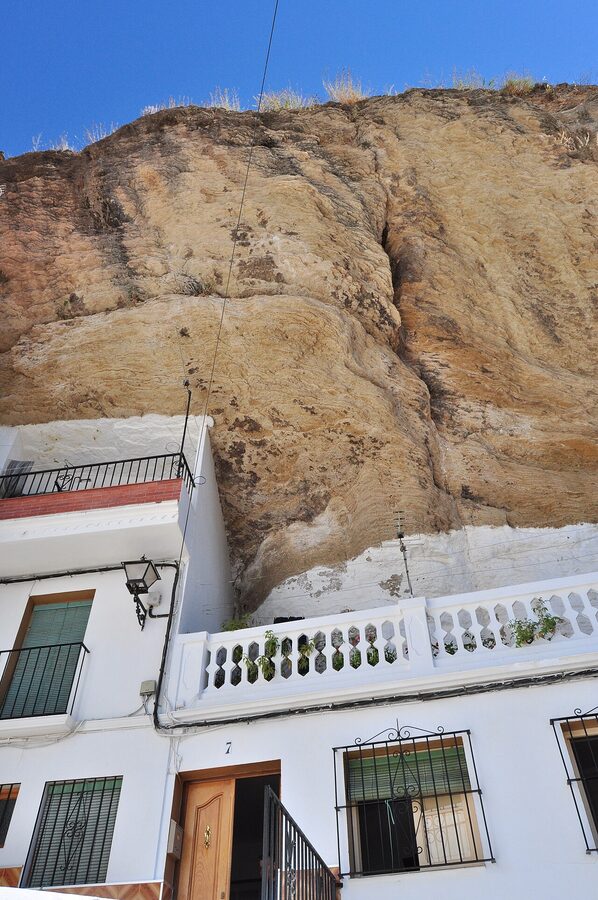
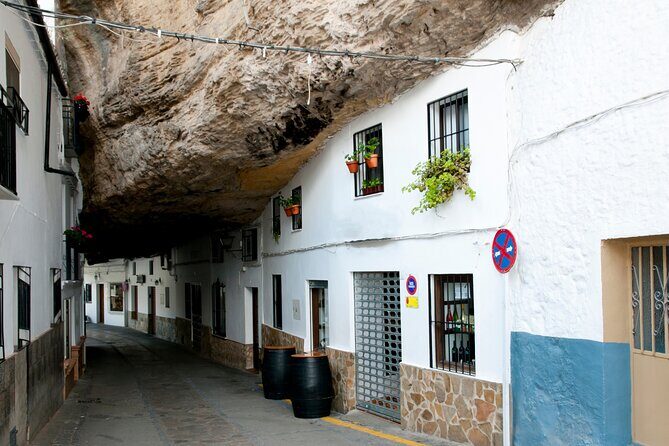
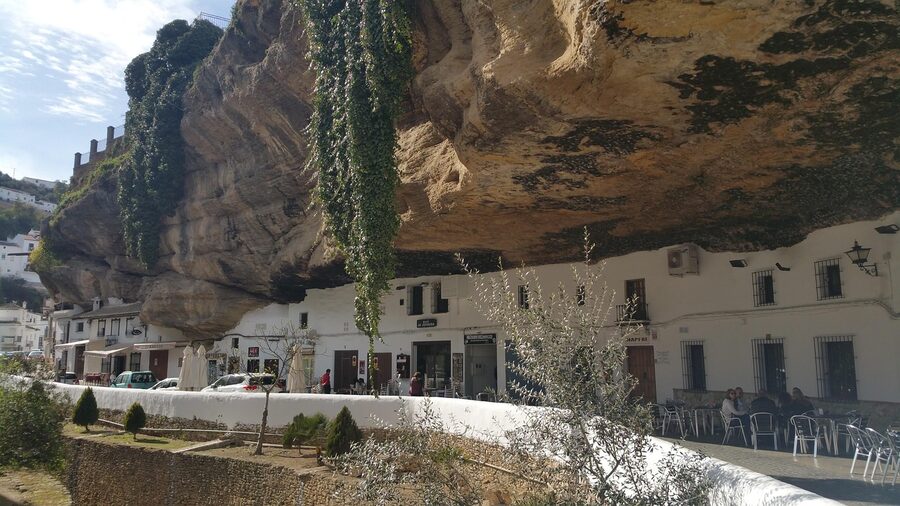
You stop walking because the light just changed. Two seconds ago you were on a normal whitewashed alley in Setenil de las Bodegas, sun on the back of your neck, the smell of someone’s lunch drifting out of a window. Then the alley narrowed, you looked up, and a slab of beige rock the size of a tour bus is now the ceiling above you. The temperature drops about five degrees in the shade of the overhang. Sound goes flat, the way it does in a tunnel. The whitewashed front of the house you’re standing next to is bracketed against the dark stone above, like someone shoved a doll’s house under a table. That moment is the entire reason this day trip exists.
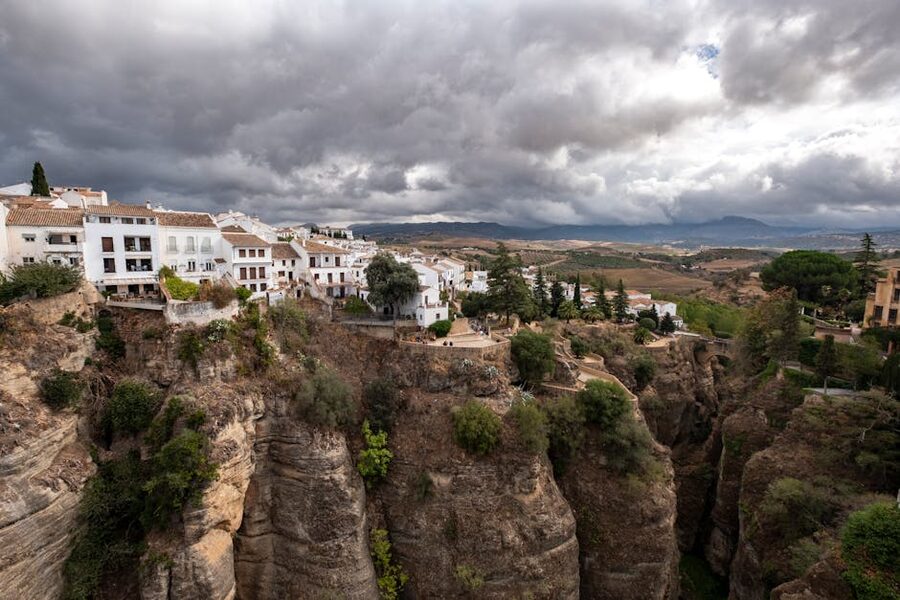
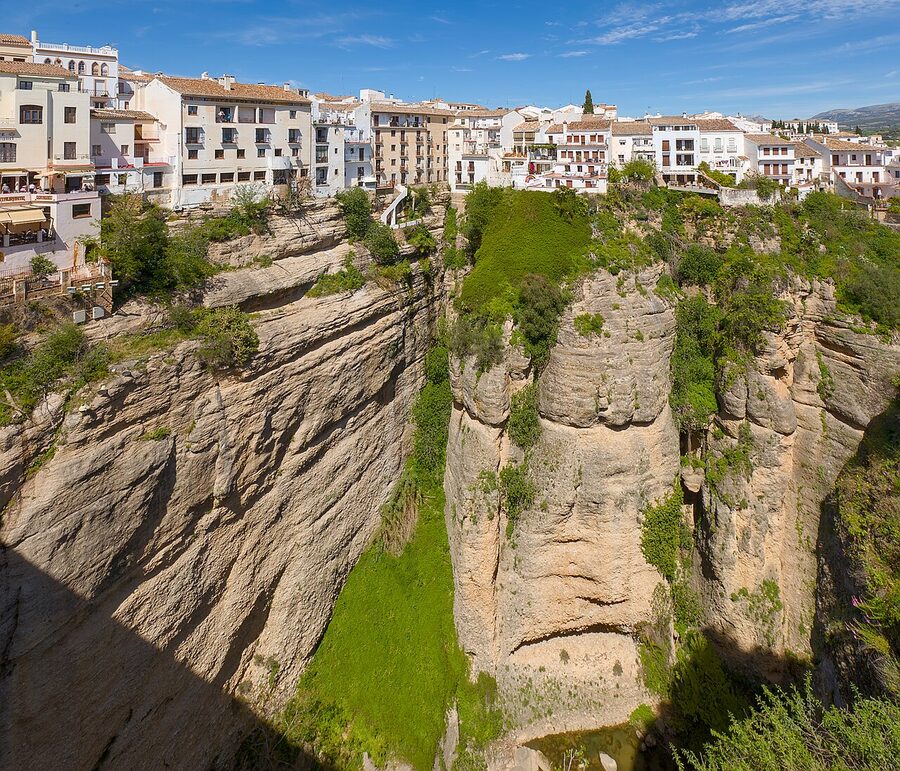
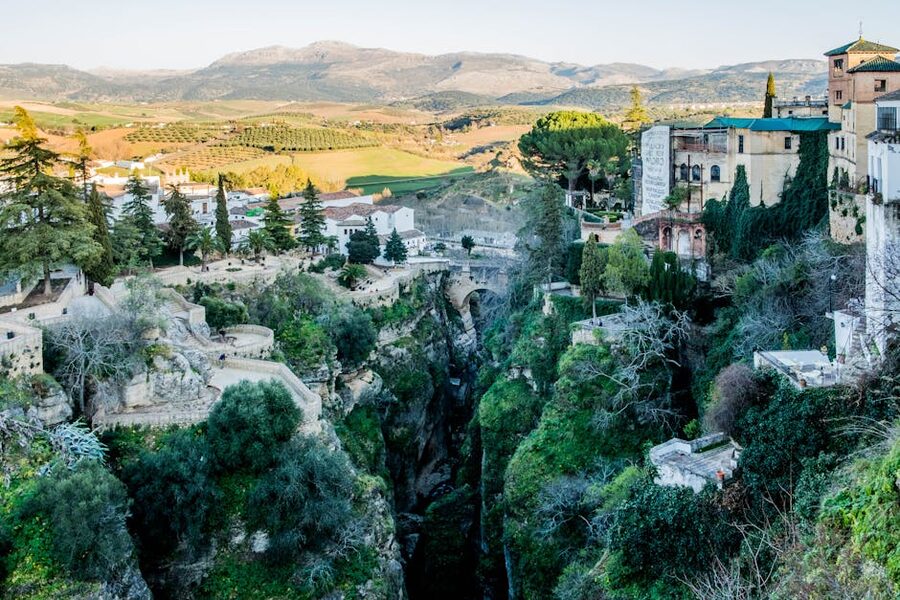
Once you’ve felt it you understand why Setenil pairs so well with Ronda, which sits about 50 kilometres south and has the opposite trick: instead of rock pressing down on the houses, the houses sit on top of a cliff that drops 100 metres into a gorge. Same geology, different choice. A guided day trip from Seville stitches both together in around ten hours, which is the only reason most travellers ever see Setenil at all (it’s a 90-minute drive from the city with no direct train).
Small group with extra village: Day Trip to Zahara, Setenil and Ronda, $103. Three towns instead of two, max 25 people, free time at every stop.
Private and flexible: Private White Villages and Ronda Day Tour, $331. Your itinerary, your pace; ask the guide to swap in Setenil for Grazalema if you want the rock-overhang shot.
- What you’re actually booking
- Setenil de las Bodegas: the rock-overhang town
- Ronda: the cliff town with the bridge
- Three day trips worth booking
- 1. From Seville: Ronda and Setenil de las Bodegas Day Trip:
- 2. Day Trip to Zahara, Setenil and Ronda: 3
- 3. Private White Villages and Ronda Day Tour: 1
- Ronda’s Plaza de Toros: skip or visit?
- The history that explains why these towns look like this
- When to go and what to pack
- How this compares to other day trips from Seville
- Practical bits worth knowing
- Other Seville day trips and tickets to think about next
What you’re actually booking
Almost every Setenil-and-Ronda day trip from Seville follows the same skeleton. Pickup is between 8 and 8:30am from a meeting point near Plaza de Armas (the bus station) or Avenida del Cid. Most operators don’t do hotel pickup from Seville, so you walk to the meeting point. The drive south crosses the Sierra de Grazalema foothills in just under two hours, with one comfort stop. Setenil first, because the village is small and the alleys jam up after lunchtime. Then a 30-minute drive to Ronda, three or four hours there including lunch, and back to Seville around 7pm.
What’s included almost always: round-trip transport, a multilingual guide on the bus, a short walking tour at one or both towns. What’s almost never included: lunch (you pay yourself in Ronda, around €15-20 for a menú del día), the Plaza de Toros entry in Ronda (€9), and any drink stops in Setenil. Don’t book a tour that lists “lunch included” without checking what they mean; some tours include a token tapa, not a full meal.
The order of stops matters more than people think. Setenil-first tours give you the rock-overhang street before the day-trip rush. Ronda-first tours catch the Puente Nuevo at midday light, which is when the gorge is least photogenic. If your operator does Ronda first, that’s a small red flag, not a deal-breaker, but it means they’re optimising lunch logistics over photography.
Setenil de las Bodegas: the rock-overhang town
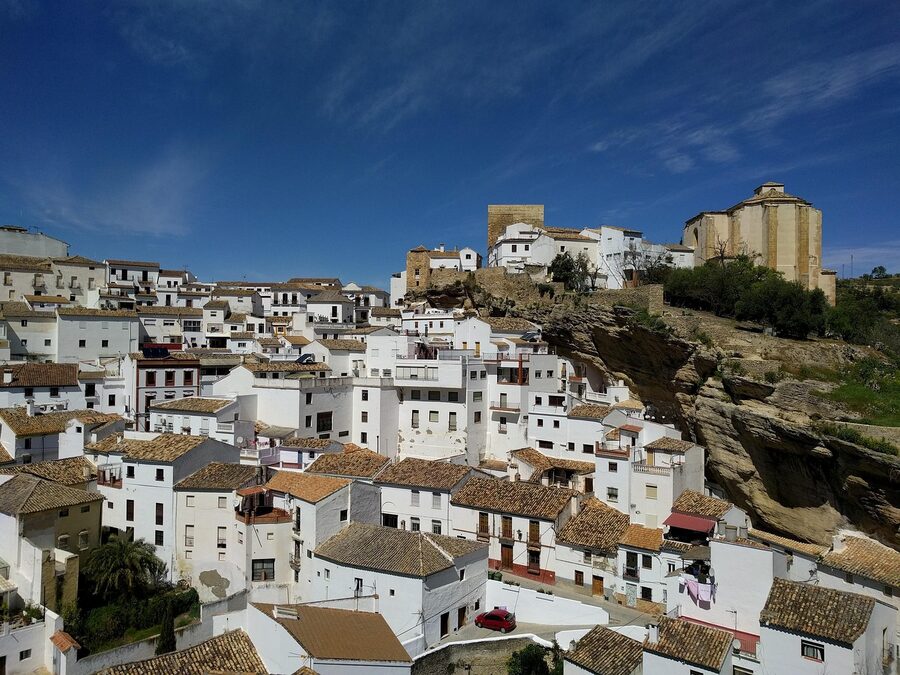
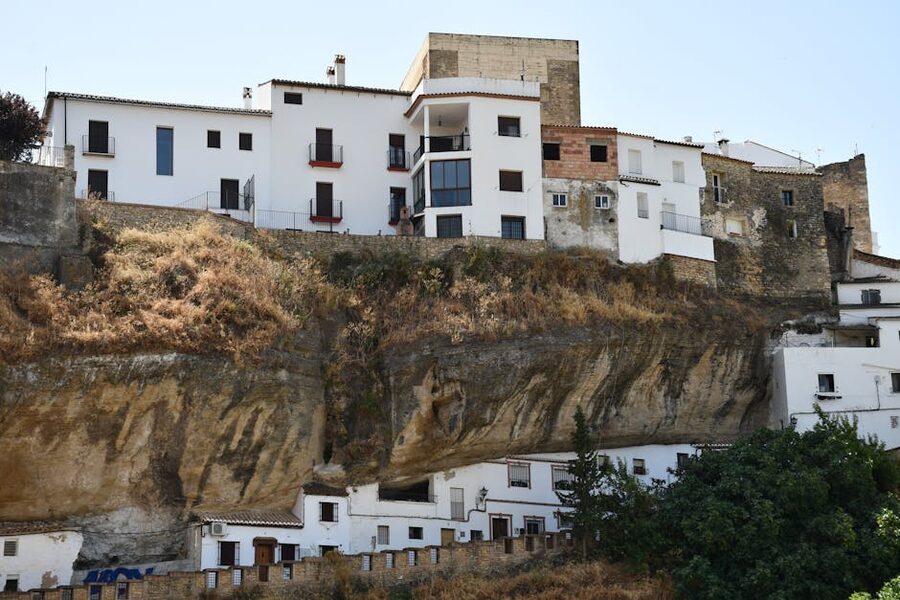
Setenil’s gimmick is real and it’s geological. The Trejo river cut a narrow canyon through the limestone here, and over the centuries people built houses inside the canyon walls, using the overhanging rock as the roof. Calle Cuevas del Sol (sun cave street) gets sun in the morning. Calle Cuevas de la Sombra (shade cave street), on the opposite bank, never does. Between them are bars where the back wall of the bar is just rock. You can lean your hand on it. It’s cold even in August.
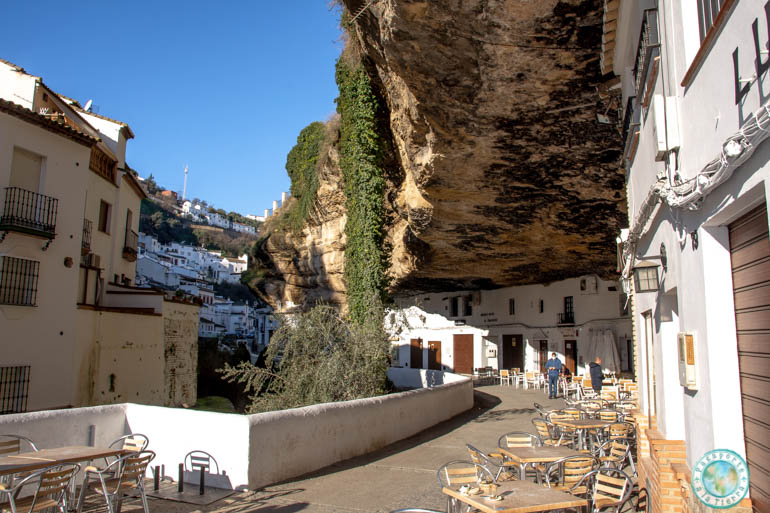
The town’s full name (de las Bodegas, “of the wine cellars”) tells you what those cool rock-roofed spaces were originally for. Wine, olive oil, jamón. Storage you couldn’t refrigerate. Some of the bars on Cuevas del Sol still cure their own meat in the back, where the rock keeps the temperature steady year-round. If you can’t be bothered with chorizo at 11am, try one of the local pastries instead. The bakery on Calle del Cale does almond-and-honey buns that are about €1.50.
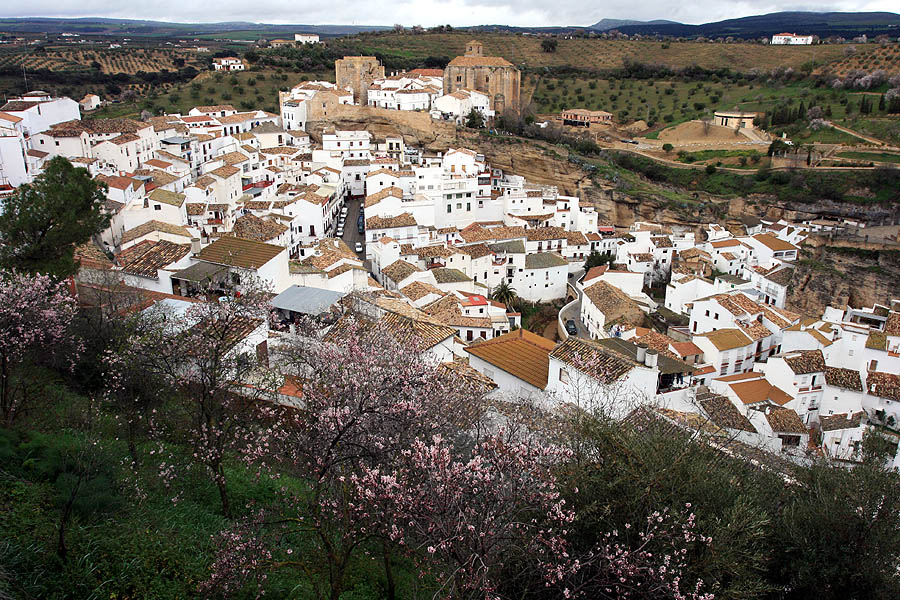

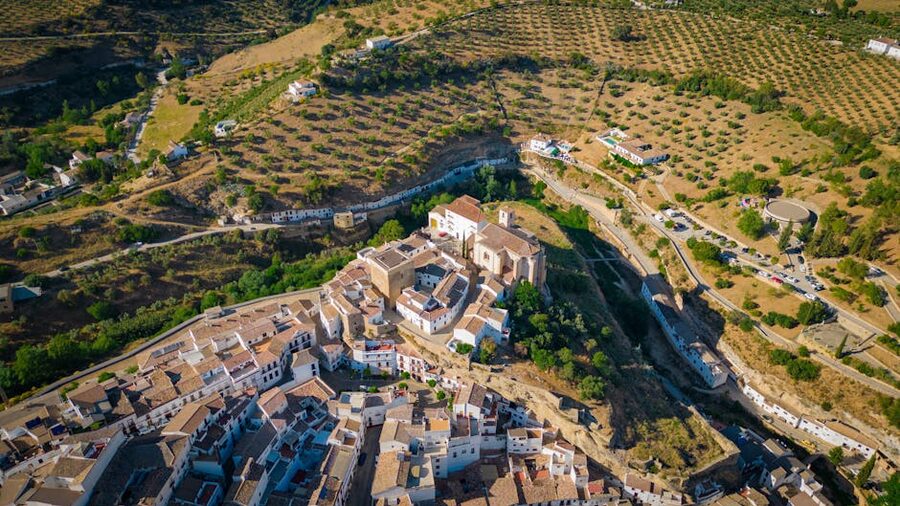
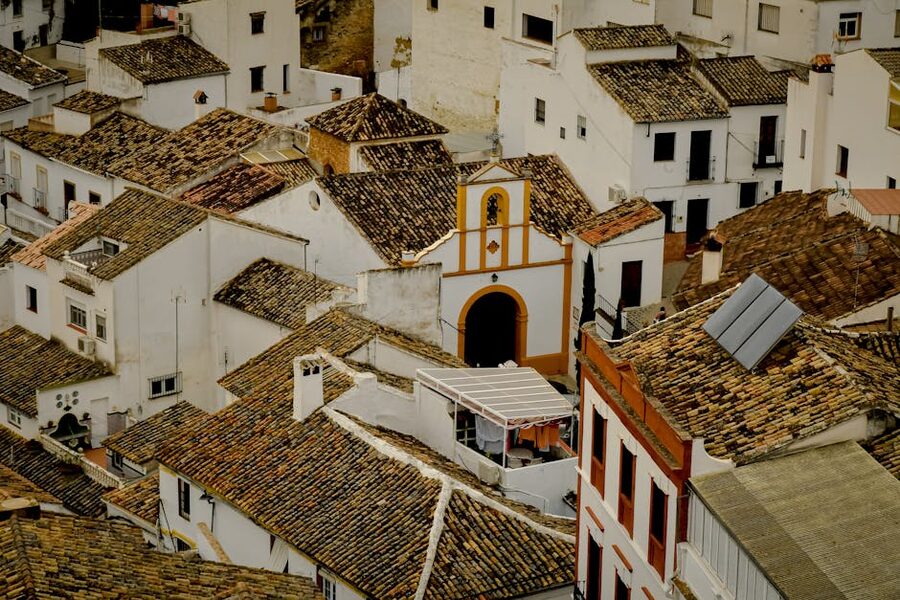
The other thing nobody tells you about Setenil: the best view isn’t on the famous streets. It’s from the upper village, near the ruined Almohad-era castle keep. Five minutes uphill on foot from the church (Iglesia de la Encarnación) and you’re standing above the canyon looking down at the rock-roofed houses. That’s where the aerial-style photos come from, just without a drone. Most coach tours skip this because the climb takes 15 minutes round trip and they need everyone back at the bus.
.jpg)
Ronda: the cliff town with the bridge
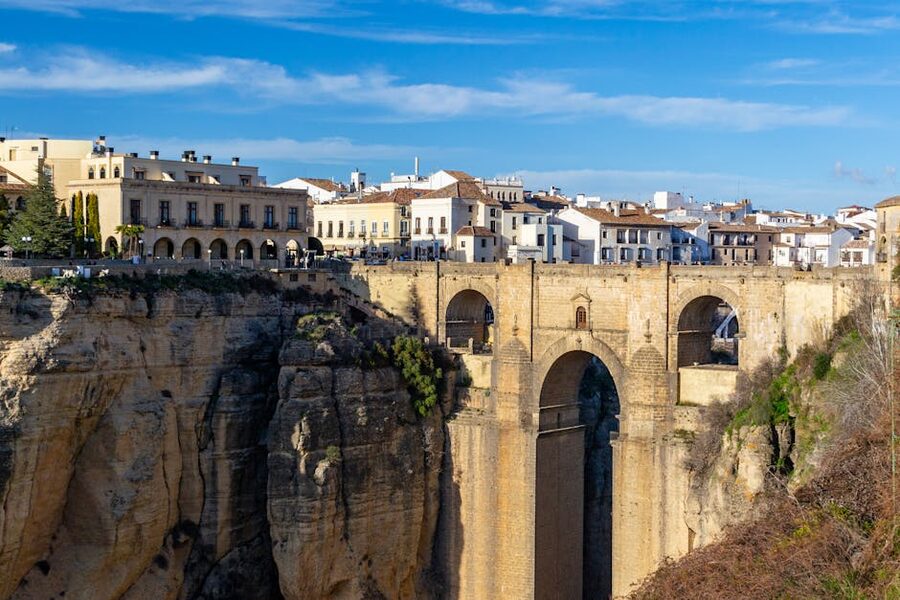
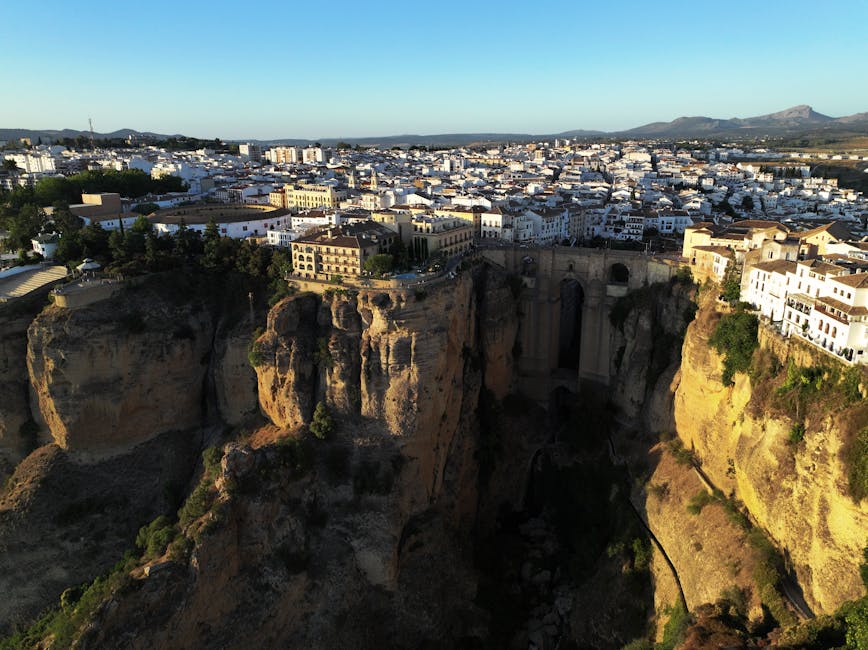
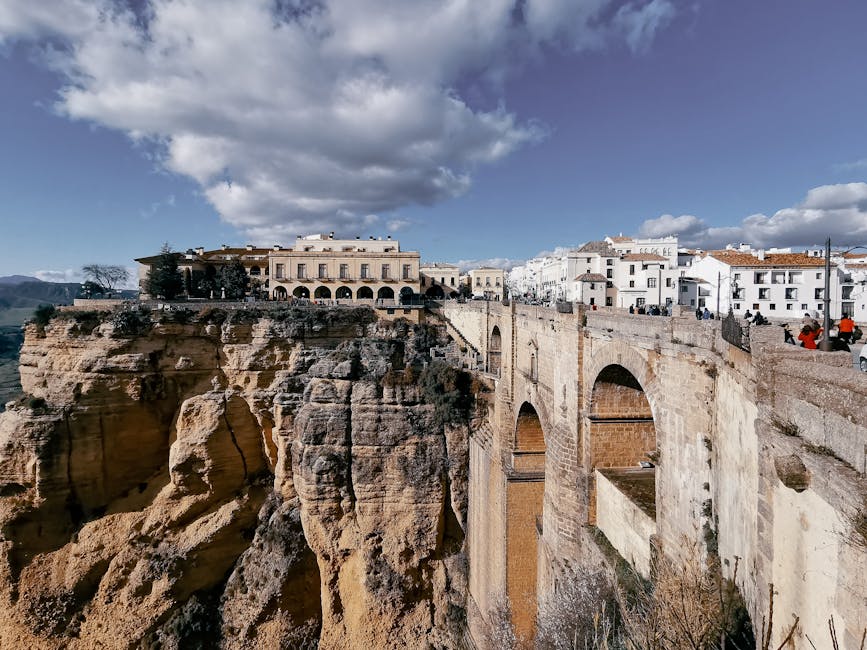
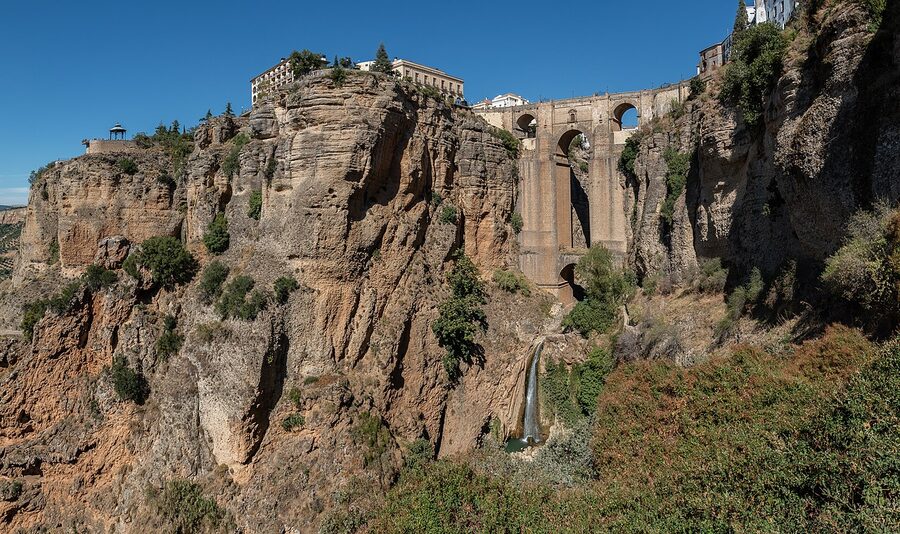
Setenil’s twin act in Ronda is the Puente Nuevo, an 18th-century stone bridge that spans El Tajo gorge a hundred metres above the river Guadalevín. Built between 1759 and 1793 (so “new” only in the sense that it replaced a 16th-century one that collapsed). The view most photographers chase is from below, on the Camino de los Molinos trail that drops into the gorge from a path next to the Plaza de María Auxiliadora. Twenty-minute walk down, thirty minutes back up because you’ll keep stopping. Wear shoes, not sandals; the path is loose gravel.
If your tour gives you four hours in Ronda, the realistic plan is: bridge viewpoint and walk-across, lunch, then either the Plaza de Toros (€9, audioguide included, 45 minutes is plenty) or a wander through the old Moorish quarter on the south side of the bridge. You won’t fit all three properly. The bullring is the more famous tick (the oldest still-active one in Spain, 1785, the cradle of modern bullfighting), but the south-side old town with the Casa del Rey Moro and the Arab baths is what most people remember after the bridge itself.
One thing nobody warns you about Ronda in summer: the wind. The town sits at 723m and the Puente Nuevo channels air across the gorge like a wind tunnel on hot afternoons. Hold onto hats. If you’re carrying a phone for the bridge shot, have a wrist strap. I have personally watched two phones go over.
Three day trips worth booking
I’ve ranked these by what most travellers will actually want. The cheapest option is the right answer for the majority because it does the job. The other two earn their price tags if you have a specific reason to pay for them.
1. From Seville: Ronda and Setenil de las Bodegas Day Trip: $53
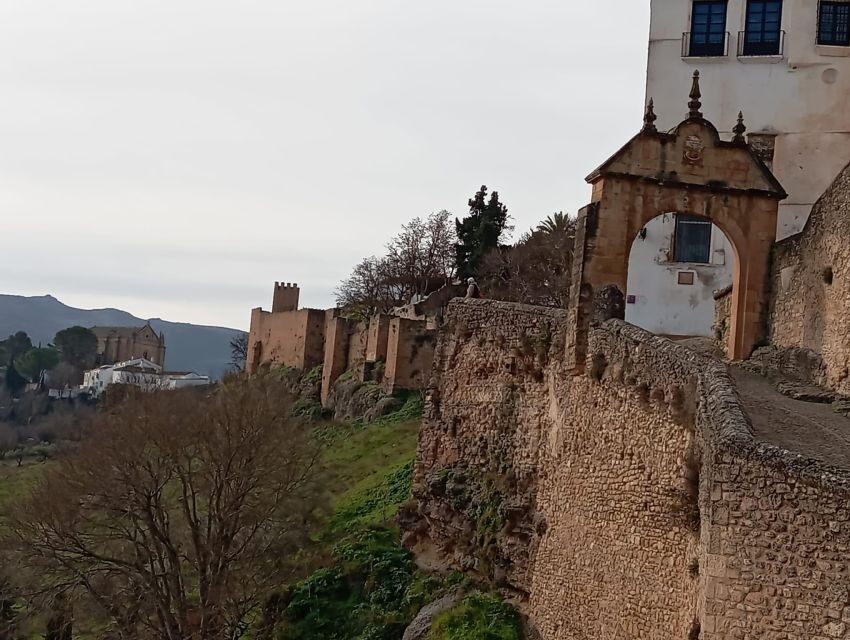
This is the volume tour and it’s the one I’d book first. Ten hours, both towns, a guide who runs through the geology and a bit of Reconquista history on the bus. Our full review goes into the meeting-point logistics and what the included walking tour actually covers (it’s about 30 minutes per town, then free time). Caveat: it’s a coach, not a minivan, so 50ish people, and you’ll be sharing the rock-overhang street with two other coaches that timed their arrival the same way.
Check Availability
Read our full review
2. Day Trip to Zahara, Setenil and Ronda: $103
Pay double the cheap option, get a third town and a much smaller group. Zahara de la Sierra is a 15th-century hilltop village above a green reservoir, on the way out from Seville before Setenil. Our review covers the trade-off in detail: less time at each individual stop, more variety, and the guide actually navigates the narrow approach roads themselves rather than using a coach driver. Worth it if you’re a photographer or you’ve already been to obvious Andalusian stops; skip it if you just want the Setenil overhang shot.
Check Availability
Read our full review
3. Private White Villages and Ronda Day Tour: $331
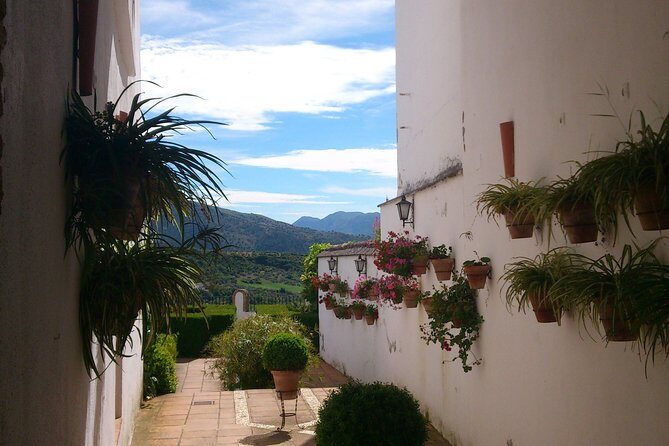
The most flexible option, and easily the priciest. One catch: the default itinerary on this private tour is Zahara, Grazalema and Ronda, not Setenil, so when you book, message the operator to swap Grazalema for Setenil de las Bodegas if the rock-overhang shot is the whole reason you’re going. Our review covers what private actually buys you, which is mainly speed: you skip the 8am bus muster and the comfort stops, so you’re at Setenil ahead of every coach. Worth it for groups of three or four splitting the cost; overpriced for two.
Check Availability
Read our full review
Ronda’s Plaza de Toros: skip or visit?
If you have any interest at all in architecture, visit. If you find bullfighting morally objectionable, the museum still works as a building tour, but you’ll hit a few rooms of memorabilia (capes, paintings of famous matadors) that are uncomfortable. The €9 ticket covers both. Allow 45 minutes.
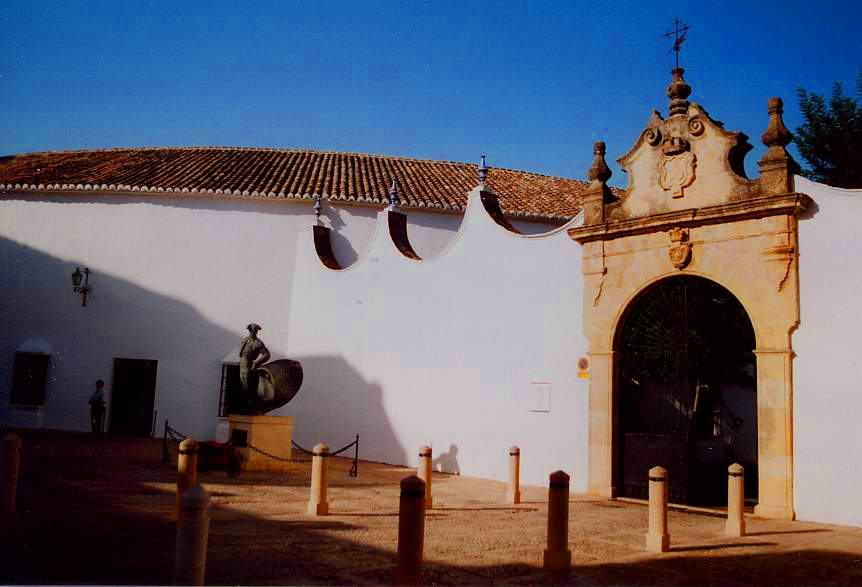

The architectural detail worth knowing: the ring’s two-tier arcade was modelled on the Plaza Mayor of Madrid, but at Ronda’s smaller scale the geometry is more readable. You can see how the supporting columns line up on both levels in a way that’s hidden in larger plazas. The ring itself is 66m across, which is wider than most modern ones.
The history that explains why these towns look like this
Both Setenil and Ronda were Moorish strongholds before the Catholic Monarchs took them in the late 15th century. Ronda fell in 1485, Setenil in 1484 after a famously hard siege (the name “Setenil” comes from the Latin septem nihil, “seven times no”, because the town had refused seven previous Christian assaults). The combination of cliff-edge defensible terrain plus a long Moorish era is why the street plan in both towns is medina-tight rather than the wide Renaissance plazas you get in cities the Christians founded fresh.

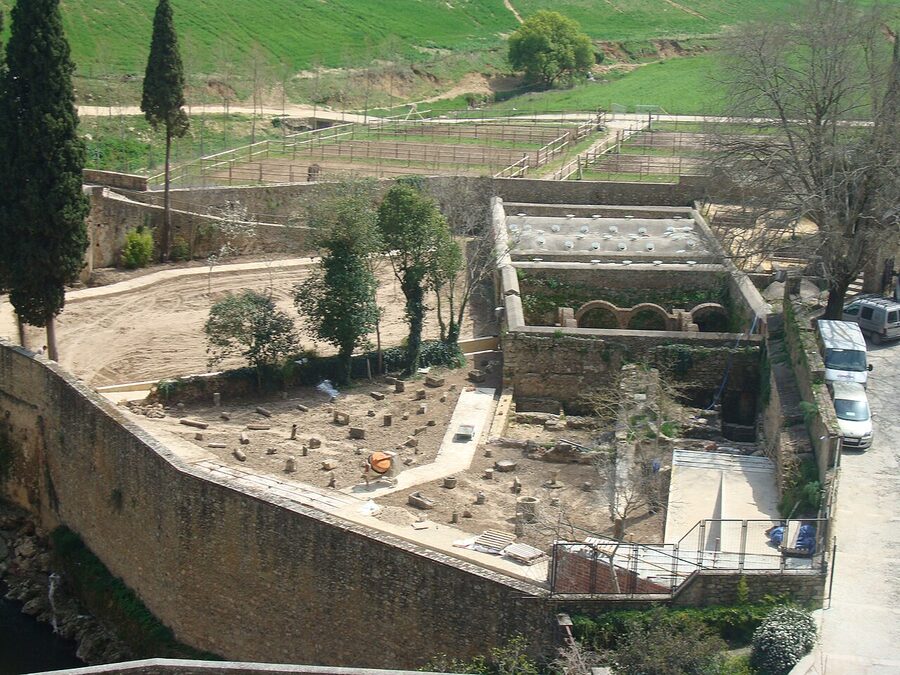
The Moorish-era hammam (Arab baths) on the south side of Ronda’s gorge is one of the best-preserved in Spain. Ten minutes from the Puente Nuevo if you want to see what a working bathhouse looked like in 1300. Entry is €4 and your tour probably won’t include it. The structure of three rooms (cold, warm, hot) and the star-shaped vents in the brick ceiling are the architectural payoff.

When to go and what to pack
April to early June is the sweet spot. Wildflowers in the Sierra de Grazalema, daytime temperatures around 20-25°C, and Setenil’s overhang streets aren’t yet shoulder-to-shoulder with summer coach traffic. July and August are doable but the inland heat hits 35-38°C, the bus is air-conditioned but the walking isn’t, and you’ll lose appetite for lunch. October is also excellent and quieter.
What to pack: layers (the mountain stretch can be 10°C cooler than Seville at 8am), proper shoes for Setenil’s cobbles and Ronda’s gorge path, a hat, and a refillable water bottle (both towns have public fountains in their main squares). A debit card with no foreign transaction fee for the lunch stop. Setenil bars are mostly cash-friendly but a fair number of Ronda restaurants are card-only since 2024.
How this compares to other day trips from Seville
Seville has three obvious day trips and they trade off cleanly. Setenil and Ronda are the geological/dramatic-landscape pick: best for first-timers in Andalusia who want the photogenic stuff. The wider white villages day trip from Seville is the same idea but with two or three additional villages (Grazalema, Zahara, Olvera) instead of Setenil specifically; book that one if you’ve already done Setenil and want more pueblos blancos. Cordoba is the historical-architecture pick, mostly indoor, anchored by the Mezquita-Cathedral, and far more about Moorish art than landscape. The new Cordoba and Carmona combo day trip stitches the Mezquita with the Roman necropolis at Carmona, which is a different shape of day again, more layered-history than scenic-village.
The other two articles in this batch worth knowing about: the Cathedral, Giralda and Alcázar combo tour if you haven’t ticked Seville’s headline trio yet, and Casa de Pilatos for the second-tier Andalusian palace that most day-trippers miss. If your itinerary has only one full free day in Seville, do the cathedral combo on that day and use the Setenil-Ronda trip on a different day; doing both back to back kills you.
Practical bits worth knowing
Cancellation: the cheap GYG option lets you cancel free up to 24 hours before. The Viator small-group is the same. The private tour locks in 7 days out, which makes sense given the dedicated guide. Book at least a week ahead in spring and autumn; the cheap tour sells out 2-3 days in summer.
Combining with Seville’s centre: a Setenil-Ronda day eats your full day. Don’t try to fit a Cathedral or Alcázar visit afterwards; you’ll be back at 7pm exhausted and the museums close at 6. Use it as your second or third full day in Seville, after you’ve already done the headline city sights covered in the cathedral combo guide.
If you’re driving instead of taking a tour: the route is Seville to Setenil via the A-376 and CA-9123, about 1h45 in light traffic. Park outside the village (the lot at the cemetery) and walk in; the streets are not built for cars, full stop. From Setenil to Ronda is the A-374, 35 minutes. Parking in Ronda is easiest at the Aparcamiento Plaza del Socorro near the bullring. The driving option saves about €30 on petrol versus the cheap group tour, which is barely worth it once you factor in the no-guide and the parking hassle.
Other Seville day trips and tickets to think about next
If Setenil and Ronda confirm that you like Andalusia’s villages-and-landscape angle more than the city-sights angle, the natural follow-ups are the wider white villages day trip from Seville and the Cordoba and Carmona combo for layered-history depth. Inside Seville itself the headline pair is the Cathedral, Giralda and Alcázar combo and Royal Alcázar tickets for the Game of Thrones courtyards; Casa de Pilatos is the second-tier palace most travellers skip and shouldn’t. For something completely different on a half-day, a walking tour of Seville or the hop-on hop-off bus covers the Plaza de España and Triana that the cathedral-anchored tours don’t reach. Travelling further? The Madrid-side equivalents to a Setenil-Ronda landscape day are the Toledo day trip and the Segovia, Ávila and Toledo combo; in Barcelona the closest analogue is the Barcelona in one day tour, which is the multi-stop combo style applied to a city instead of a region.
Affiliate disclosure: some links here are affiliate links. If you book through them we may earn a small commission at no extra cost to you. We only recommend tours we’d book ourselves.