
The Casa de Pilatos has nothing to do with Pontius Pilate. The first Marquis of Tarifa came back from a 1519 pilgrimage to Jerusalem convinced he had paced out the exact dimensions of Pilate’s house in the Old City, and he ordered his Seville palace remodelled to match. The name stuck. Five hundred years later you can still walk that floor plan, on a $14 ticket, in what might be the most underrated palace in Spain.
Best with a guide: Guided Visit to the Casa de Pilatos, $29. 90 minutes with a live guide who explains the Mudéjar tilework and the Roman busts.
Best as a wider walk: Salvador Church, Casa Pilatos and Metropol, $46. 2.5 hours adding two more buildings with one guide.



- What you actually pay for
- Booking the standard ticket online
- The three tours worth booking
- 1. Casa de Pilatos Ground Floor Entry Ticket:
- 2. Guided Visit to the Casa de Pilatos with Tickets:
- 3. Salvador Church, Casa Pilatos and Metropol Tour:
- Casa de Pilatos vs the Alcázar
- The Pontius Pilate story
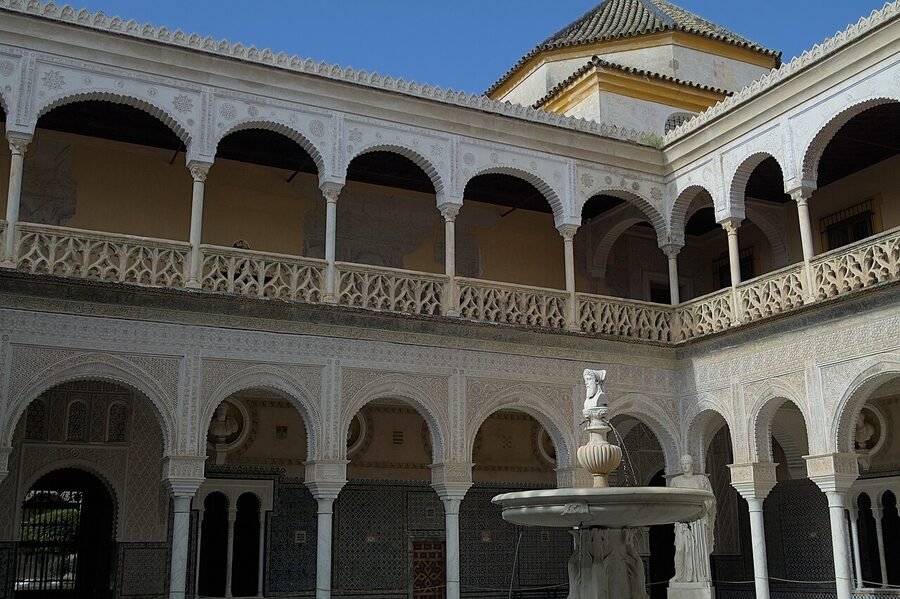
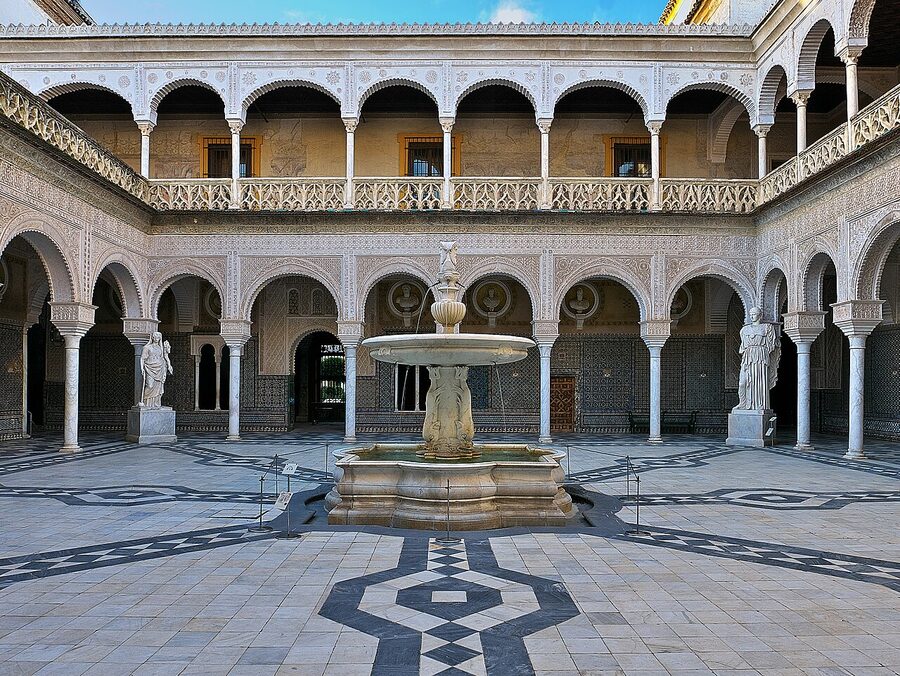
- Three styles in one building
- The two gardens
- The film cameo (yes, really)
- Getting there
- When to go
- Practical bits people email about
- Should you do the upstairs floor too?
- Other Seville guides on this site
What you actually pay for
The standard ticket gets you the ground floor and both gardens. You climb the staircase but you don’t go through the rooms upstairs. That sounds like a downgrade until you realise the upstairs is still occupied. The Dukes of Medinaceli, descended from the original 16th-century owners, still live in part of the upper floor. The family kept the palace for almost 500 years; in the late 1990s they handed the public-tour management to a foundation but kept their private quarters.
So the standard ticket is a deliberate split, not a cheap version. You see the staircase, the chapel, the Salón del Pretorio, all the Mudéjar courtyards, both gardens, and the Roman sculpture collection. You don’t see the Dukes’ kitchen. Fair enough.
If you want the upstairs rooms with the painted ceilings and the family library, that’s the guided floor visit, sold separately on site (currently around 8 euros extra) and only available at fixed times. It’s worth doing if you’ve already loved the ground floor and want to go deeper. It’s not worth doing if you only have an hour in Seville.

Booking the standard ticket online
For 95% of people, the GetYourGuide entry ticket is the right answer. It’s the same price as the on-site ticket (sometimes a euro cheaper depending on the exchange rate), it includes a QR-code audio guide on your own phone, and it lets you skip the small queue that builds at the door on cruise-ship days. You pick the day of your visit at booking; the ticket is then valid any time within opening hours that day. There’s no fixed entry slot, which is rare for a Spanish monument.
The audio guide is the bit most people underrate. You scan a QR code at the entrance, plug your earbuds in, and walk at your own pace, with sensible 90-second commentary at each marked spot. You don’t need a guide to enjoy the building, but you do need context to understand what you’re looking at, and the audio gives you that without locking you to a tour group’s pace.
Cancellation is free up to 24 hours before. If your Seville plans shift around, this is the easiest ticket in town to move.

The three tours worth booking
I’ve tried various Casa de Pilatos products over the years. Three are worth the page space. Here they are in order of how often I’d recommend each one.
1. Casa de Pilatos Ground Floor Entry Ticket: $14
This is what most people should book. Same price as on-site, free cancellation, valid all day, and the QR audio guide does the heavy lifting on context. Our full review covers what’s covered and what isn’t, and where the audio guide quietly skips a few things you’ll want to look at.
Check Availability
Read our full review
2. Guided Visit to the Casa de Pilatos with Tickets: $29
Ninety minutes, small group, live guide who can answer the question the audio guide doesn’t anticipate. The guides at this product are art historians, not generalist Seville guides, which shows when you start asking about specific tiles. Our review compares it directly to the audio-guide self-tour.
Check Availability
Read our full review
3. Salvador Church, Casa Pilatos and Metropol Tour: $46
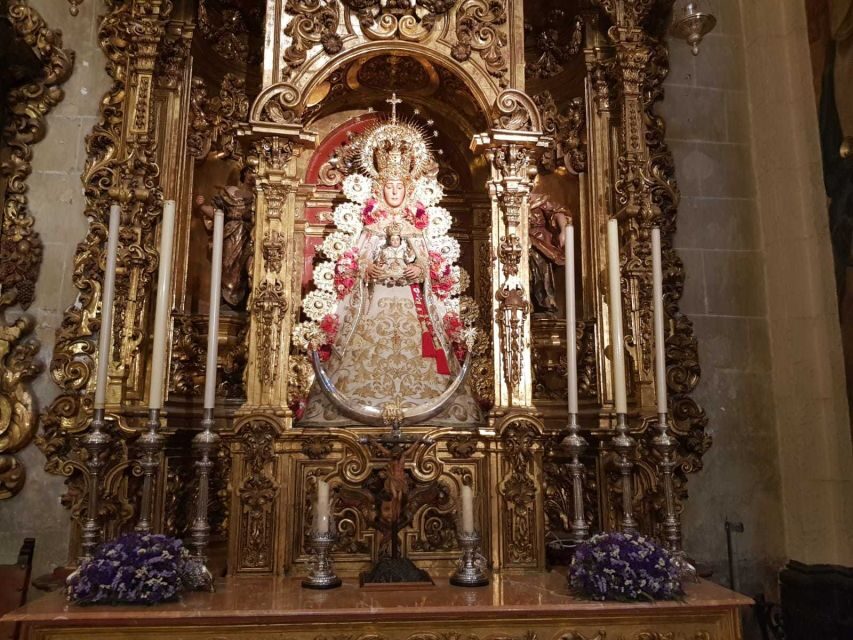
This is the one to book if Casa de Pilatos is part of a wider half-day plan. You get the palace, the gilded Salvador Church (the second-most-important church in Seville after the Cathedral, often skipped), and the Metropol Parasol viewpoint with one guide and one ticket. The full review goes into how the guide stitches the centuries together as you walk.
Check Availability
Read our full review
Casa de Pilatos vs the Alcázar
If you’re picking only one Andalusian palace in Seville, you should pick the Royal Alcázar. It’s bigger, it’s older, it’s a UNESCO site, the gardens are extraordinary, and there’s a reason it’s the city’s headline attraction. Casa de Pilatos isn’t competing with that.
But if you have a second day, or you’ve already done the Alcázar and want more of the same architectural language with a tenth of the crowd, this is where you go. Same Mudéjar plasterwork, same azulejos, same arched courtyards, same kind of citrus-tree gardens. About a fifteenth of the visitors. You can stand in the main courtyard for ten minutes without anyone walking through your photo. At the Alcázar at noon in July, you cannot.
The other practical difference: Casa de Pilatos has flexible same-day timing, the Alcázar wants you to pick a 30-minute slot weeks in advance. If you arrived in Seville without booking the Alcázar and the slots are gone, Casa de Pilatos is the closest substitute.

.jpg)
The Pontius Pilate story
Here’s the surprising fact in full, because it changes how you walk through the building.
Don Fadrique Enríquez de Ribera, first Marquis of Tarifa, inherited the half-built palace in 1505. In 1519 he went on a long pilgrimage to Jerusalem, partly to atone for an old family feud, partly because going to Jerusalem was what serious Spanish nobles did. While he was there, he counted the steps from the supposed location of Pontius Pilate’s praetorium to the supposed site of Calvary, and decided the distance matched, almost exactly, the distance from his Seville palace to a small chapel on the edge of the city called the Cruz del Campo.
So when he came back, he finished the palace to that proportion, and he started a Holy Week procession that walked from his front door to the Cruz del Campo with the same number of stations of the cross as he had counted in Jerusalem. The procession is the origin of all of Seville’s modern Holy Week processions, which are now the most famous in Spain.
The “Pilate’s House” name attached itself within a generation. By the 1560s, when the next Duke filled the courtyard with Roman emperor busts, locals already called the building Casa de Pilatos. The historical Pontius Pilate, of course, was a Roman governor in 1st-century Judea who never set foot in Spain. The marquis was building a 16th-century Spanish-Renaissance interpretation of a Holy Land memory. None of it is meant to be literal.
Once you know this, the building reads differently. You start noticing the Christian iconography woven into the Roman pieces, the chapel that anchors the route, the way the staircase is positioned to mirror what the marquis thought Pilate’s praetorium had looked like. It is one of the strangest expressions of Spanish religious devotion that survives, and it’s hiding behind a $14 entry ticket.

Three styles in one building
The architectural mix at Casa de Pilatos is the single most-asked-about part of the visit. Here’s how to read it without an art history degree.
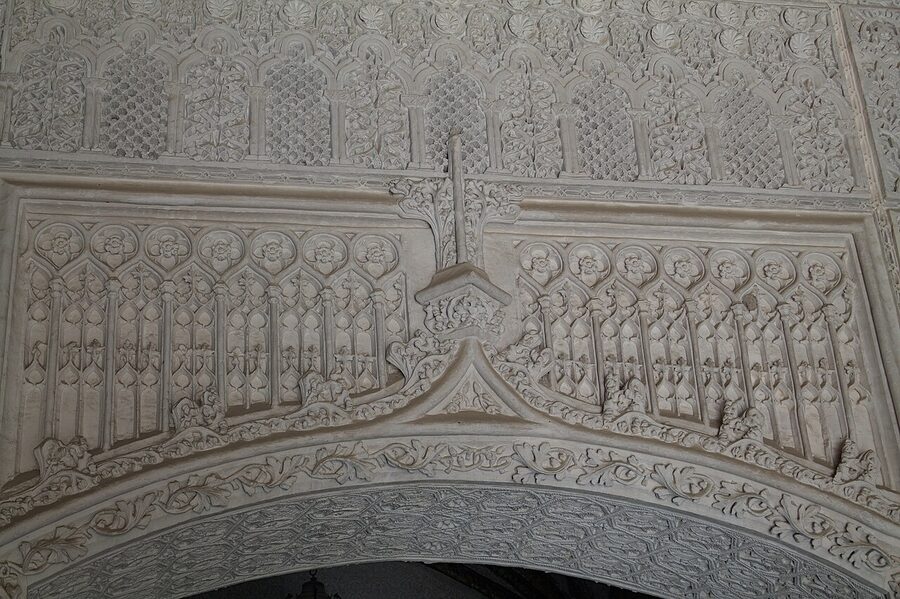
Late Gothic is the bones. The pointed arches in the upper level of the courtyard, the rib vaults in the chapel, the doorway shapes. This is what was already going up when the palace started in the 1480s. By the time the marquis took over, late Gothic was already going out of style.
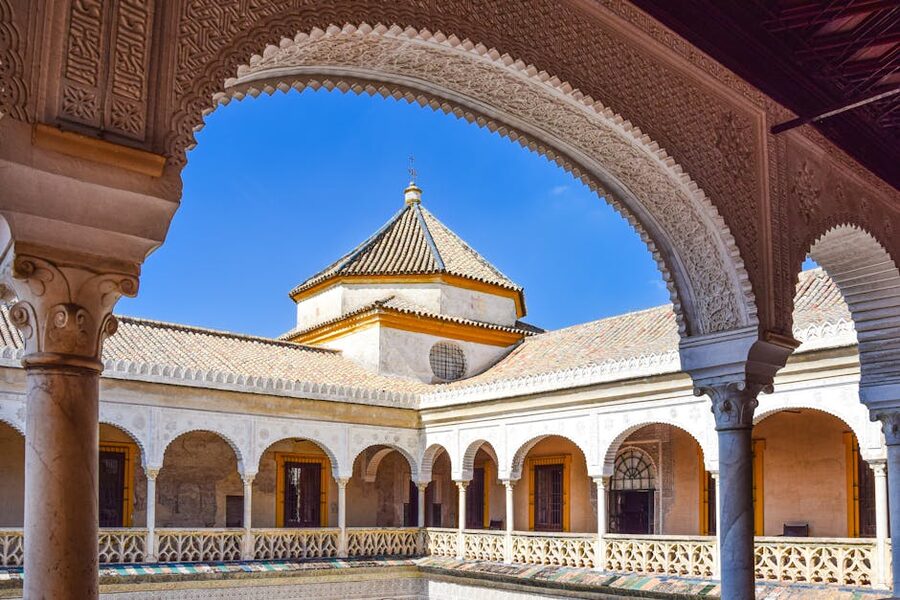
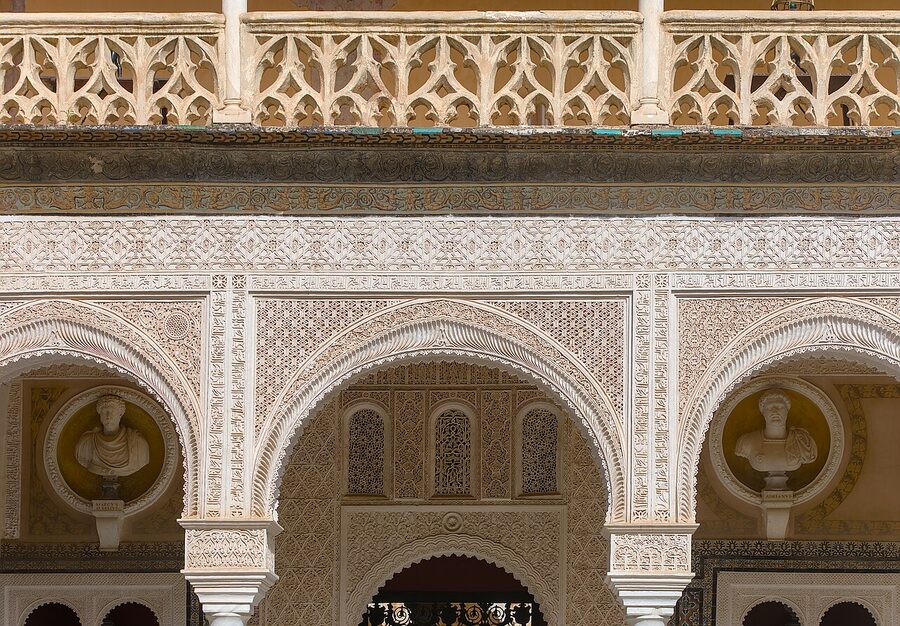
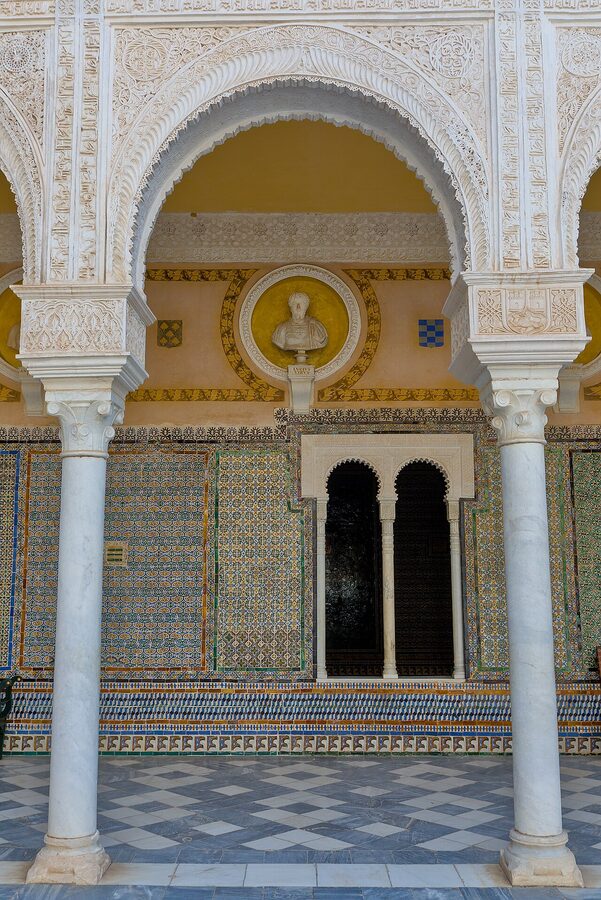
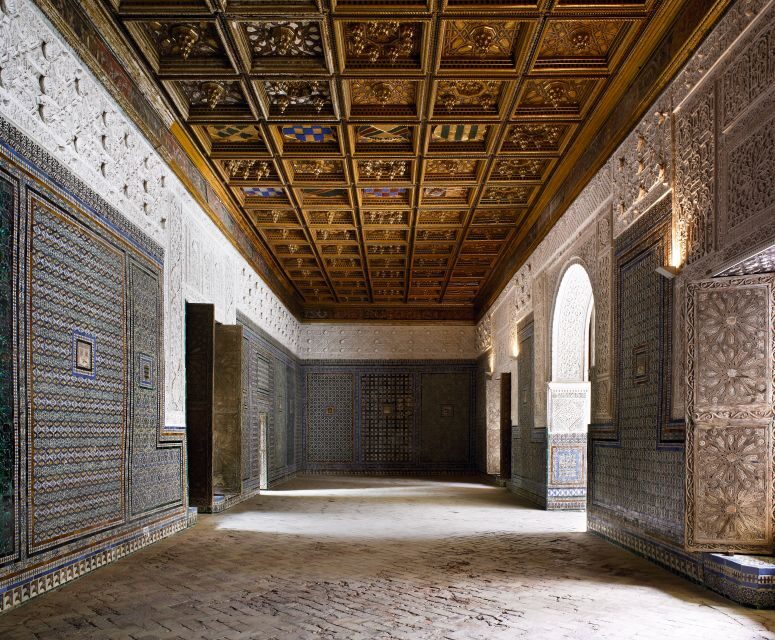
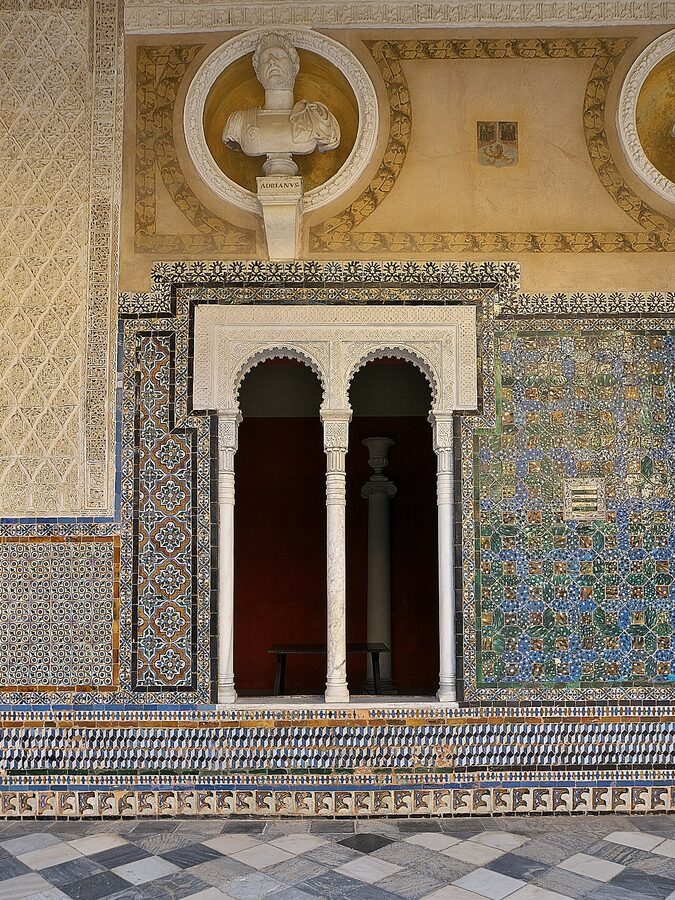
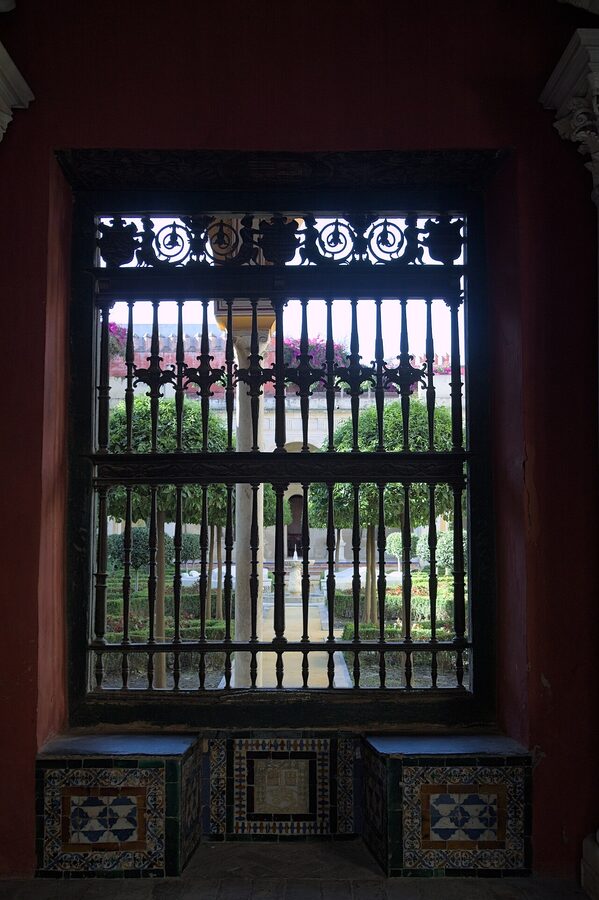
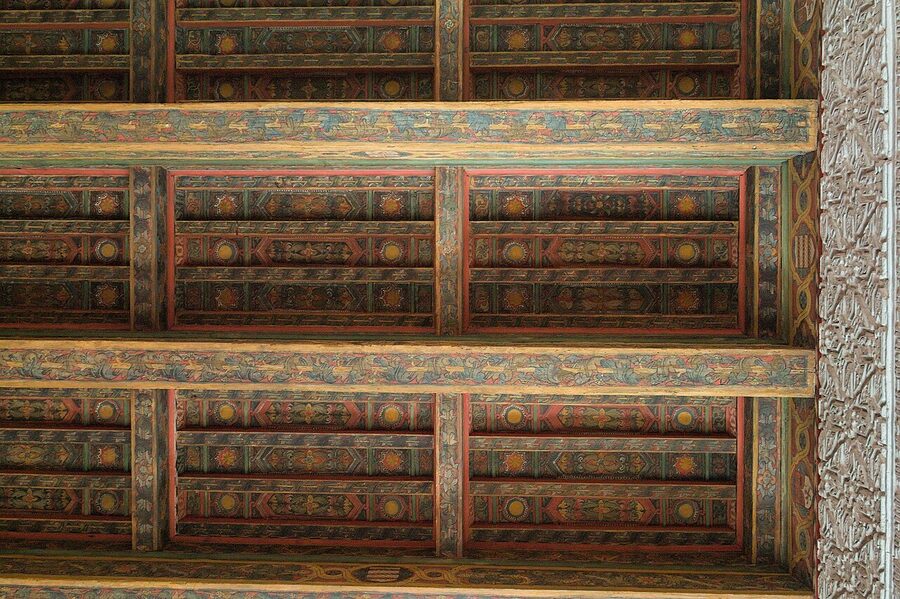
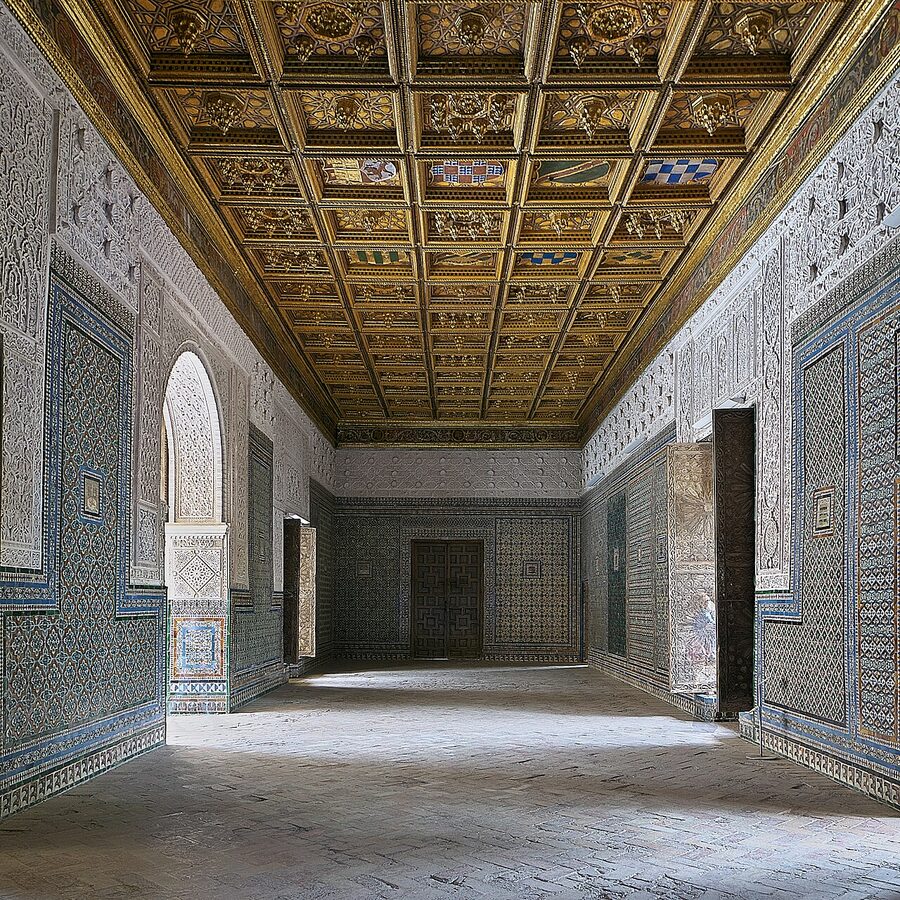
Mudéjar is the surface. Mudéjar is what you call the work of Muslim and Moorish-trained Christian craftsmen working in post-Reconquista Spain, using the techniques their grandfathers had used for the Almohad caliphs. Almost every flat wall in the lower level is covered in geometric tile work, carved plaster, or coffered wooden ceilings made with Mudéjar joinery. The craftsmen were locals; they kept working for whoever was paying.
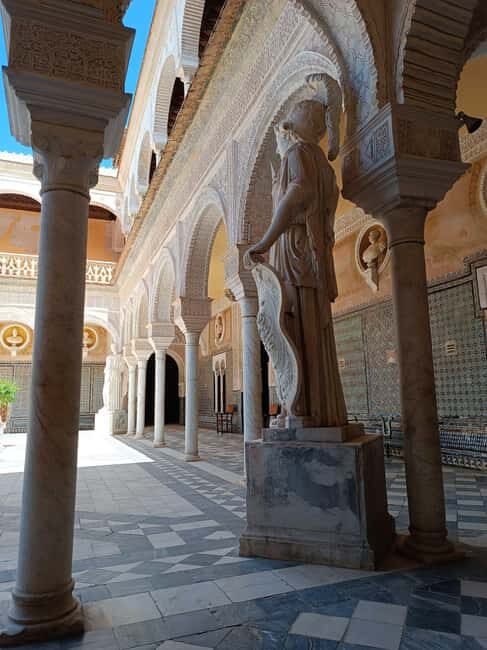
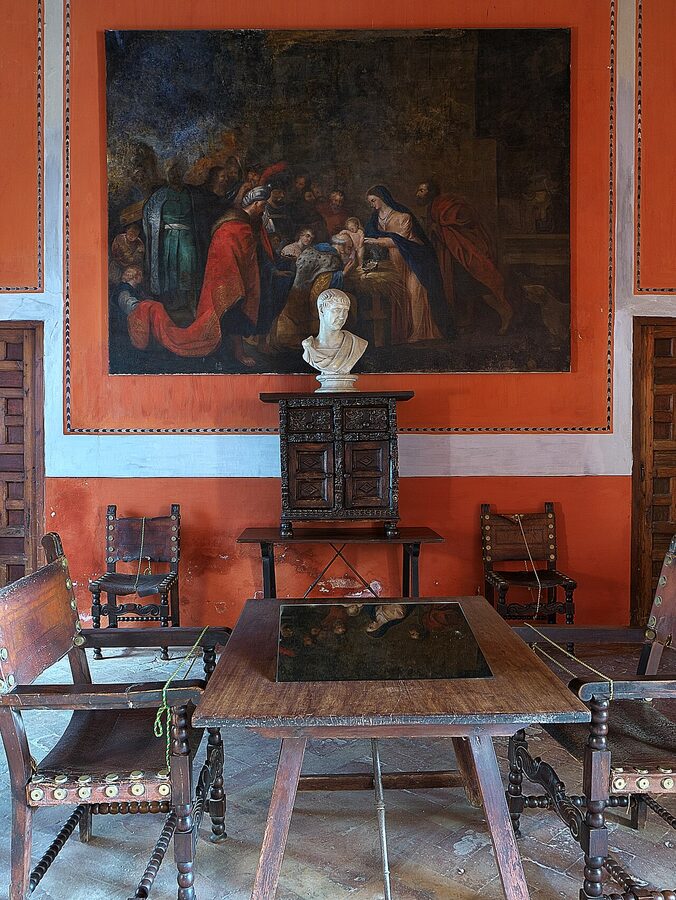
Renaissance is the ambition. After the marquis came back from Italy in the 1520s, he ordered Italian marble columns, Italian-style classical proportions in the staircase, and the courtyard’s Roman-emperor program, which is straight out of the Renaissance fashion for collecting antiquities. The marquis went to Italy on his way back from Jerusalem and apparently never recovered.
The building’s not a tasteful synthesis of these three. It’s a layer cake. The marquis kept the Gothic stuff he liked, paid Mudéjar craftsmen to fill in everything else, and bolted Italian Renaissance trophies on top. The result has been an architectural touchstone for 500 years; UNESCO calls it the prototype of the Andalusian noble house.


The two gardens
Most people rush through the gardens because they’re at the back. They shouldn’t.
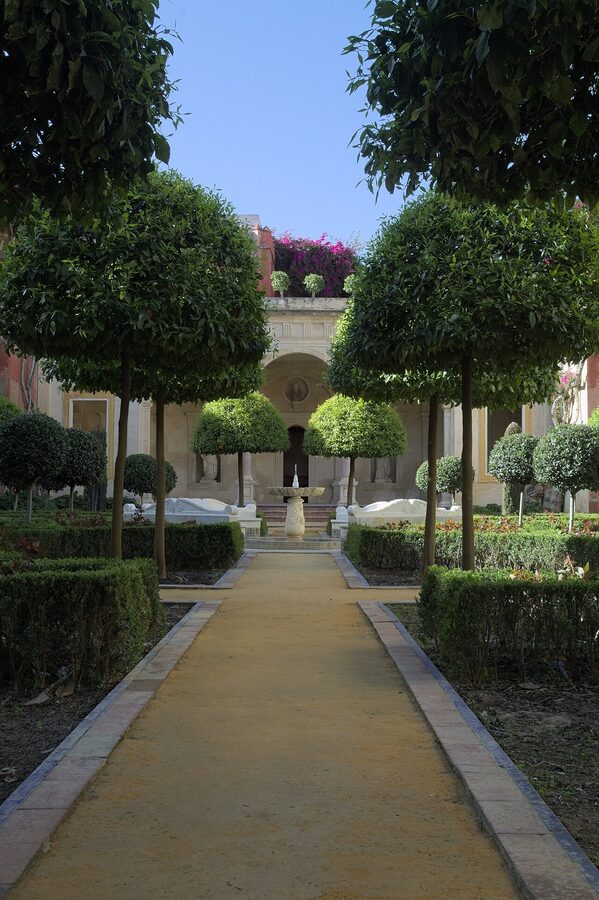
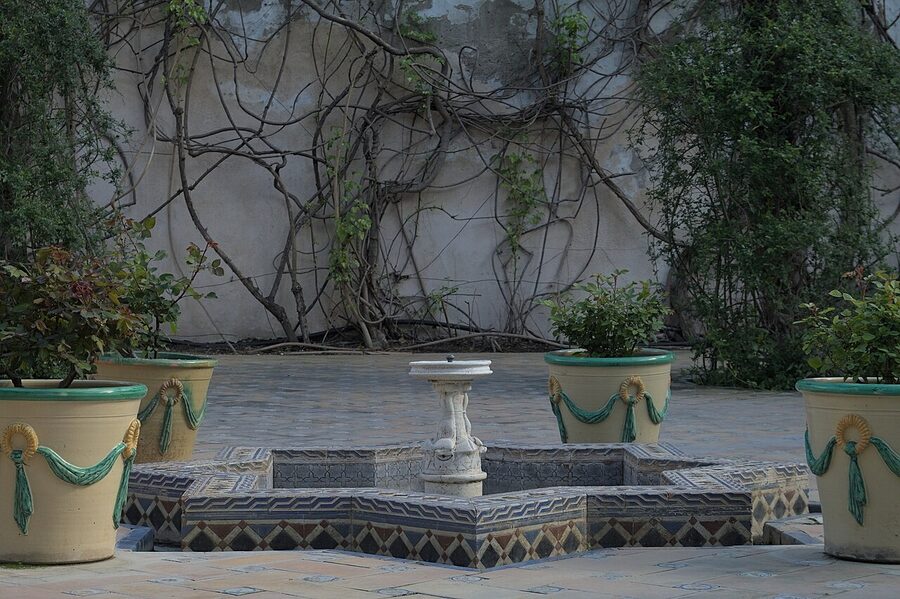
The Jardín Grande (large garden) is to the south, behind the main courtyard. It’s the one with the palm trees, the orange trees, and the loggia of stone arches that the marquis added after Italy. There are stone benches along the perimeter wall that are good for sitting on a hot day. The garden was redesigned in the 19th century to its current Italian-Renaissance look, but the bones go back to the 1530s.
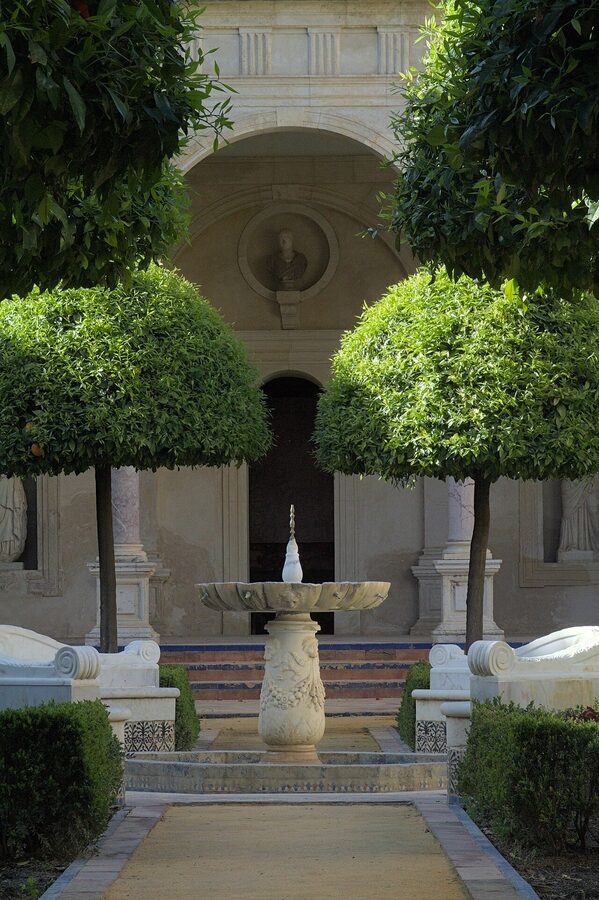
The Jardín Chico (small garden) is on the other side. It’s tighter, more enclosed, with a fountain and the dense citrus trees Seville is famous for. This is where you sit if it’s loud at the entrance.
Both gardens are open the whole time the palace is open; there are no separate slots. If your audio guide finishes and you still have time on your ticket (you do; it’s all day), come back for the gardens. The afternoon light in the Jardín Grande is the photo every Seville guidebook tries to capture.


The film cameo (yes, really)
Casa de Pilatos has been used as a filming location for at least four major productions. The two most often asked about: the 1962 David Lean film Lawrence of Arabia used the smaller courtyards as the Damascus and Cairo scenes (the Almohad architecture passing for genuine Levantine), and Game of Thrones used the building for House Martell’s Dorne scenes. The Royal Alcázar across town got most of the Dorne attention because it played the Water Gardens, but Casa de Pilatos played the interiors. Look closely at the corridor scenes from the early Dorne episodes; you’ve seen these arches.
Other credits include 1492: Conquest of Paradise (Ridley Scott, 1992) and Knight and Day (2010, the Tom Cruise and Cameron Diaz one). The film commission keeps a polite signage program on this; you won’t see Game of Thrones banners as you walk in.
If you’ve already booked the Alcázar’s GoT-leaning tour and want the second half of the same itinerary, Casa de Pilatos is the natural follow-up. The two buildings are about 700 metres apart through the old town.
Getting there
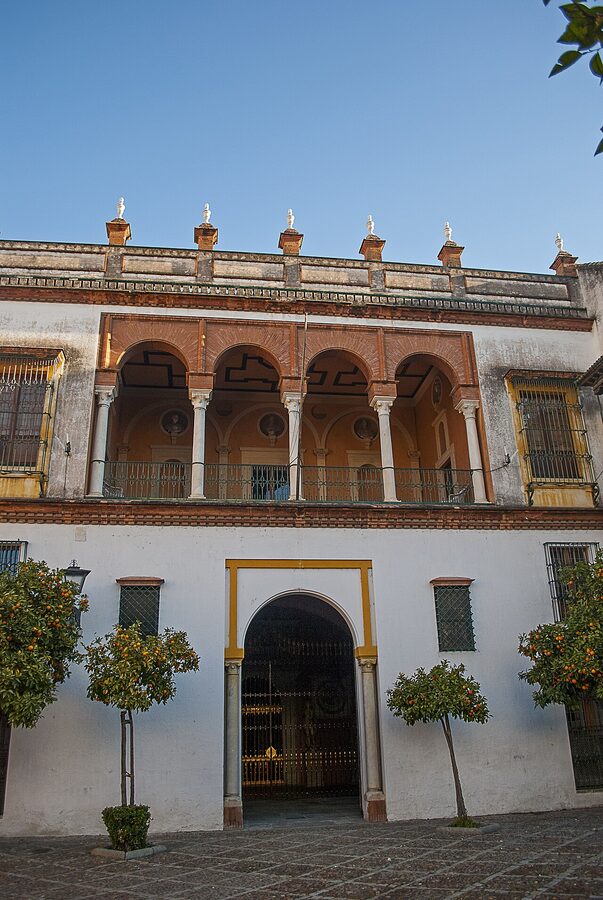
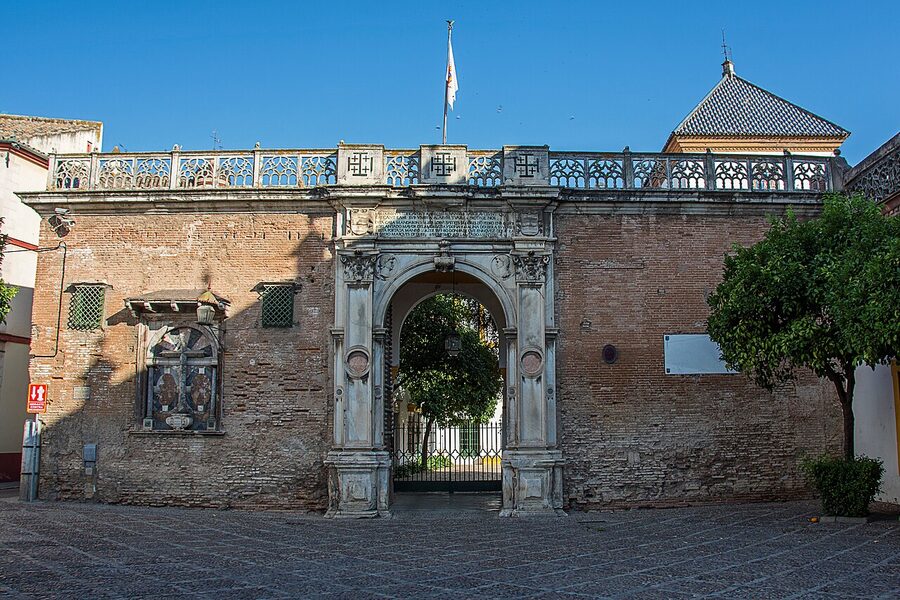
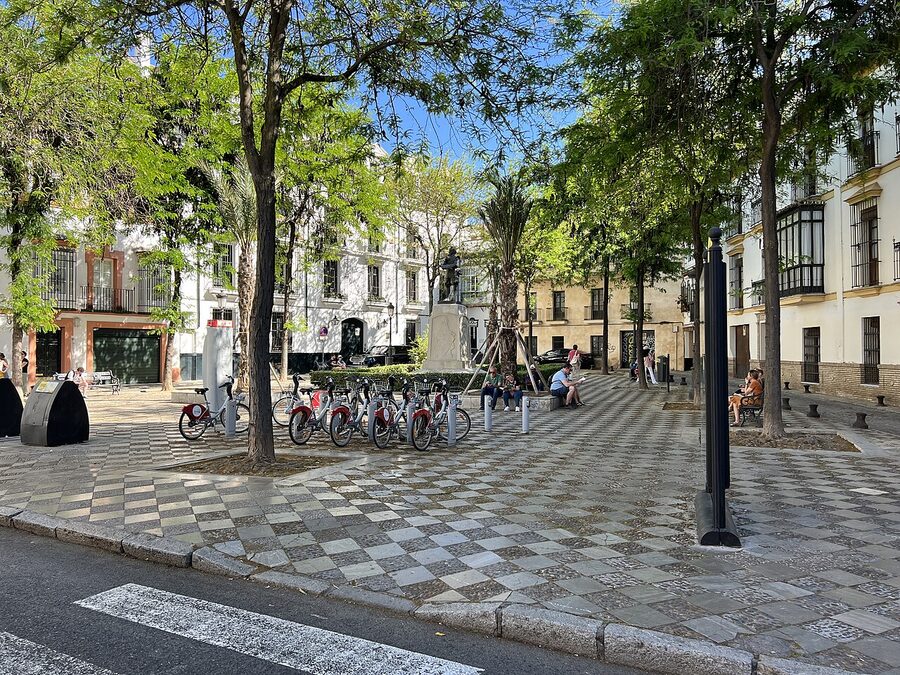
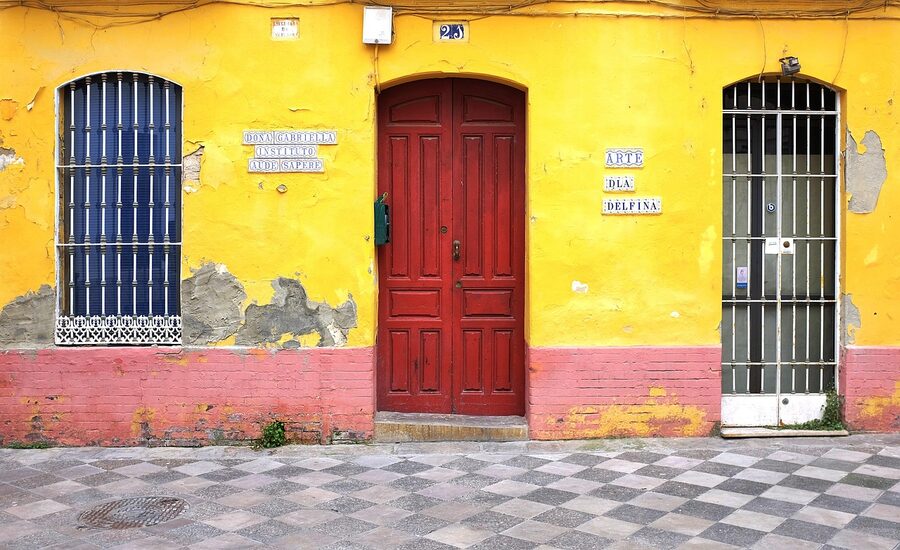
The Casa de Pilatos is in the Plaza de Pilatos, in the eastern half of the Santa Cruz / San Bartolomé old town. From the Cathedral, walk east on Calle Águilas; ten minutes if you don’t get distracted by tapas bars, fifteen if you do. From Plaza Nueva, walk down Calle Boteros; about twelve minutes. The building is on a residential plaza that doesn’t read as a tourist site from the outside; the door is a flush stone arch on the south wall and people walk past it.
By bus: line 32 (Plaza Pilatos stop) drops you at the front. By taxi or Uber, name the plaza, not the palace; some drivers don’t recognise “Casa de Pilatos” by sound but they all know Plaza de Pilatos.
_-_2023-04-24_-_1.jpg)
The closest metro station is Puerta de Jerez (line 1), about twelve minutes’ walk through the old town. The MetroCentro tram stops at Plaza Nueva; same walk from there as from the Cathedral.
If you’re booking a Seville walking tour the same day, most tours pass within 200 metres of the palace door. You can do the walking tour in the morning, peel off, and come back on your audio-guide ticket in the afternoon.
When to go
Open every day, 9am to 6pm in winter (November to March), 9am to 7pm in summer (April to October). Last entry is one hour before close, but nobody enforces it strictly; if you’re scanning your ticket at 5:50pm in March, you’ll get in.
The quietest times are 9am-10am and the last hour before close. The busiest is 11am-1pm when cruise-ship groups peak. If you’re choosing between morning and late afternoon, late afternoon wins for two reasons: the light in the courtyard is significantly better after about 4pm, and the cruise groups are gone by then.
Closed Christmas Day, New Year’s Day, and Good Friday. Reduced hours on January 6 (Three Kings) and on Holy Thursday during the famous Seville Holy Week processions. If you’re visiting during Holy Week, check the daily times the week of; they shift.
July and August: go first thing. The courtyard is shaded but the gardens are not. If you arrive at 2pm in August, you’ll spend half your visit looking for shade.

Practical bits people email about
Photography: allowed everywhere, no flash, no tripod. Phone shots are fine. The courtyard handles iPhone HDR remarkably well; the gardens want a slightly wider lens than the standard one.
Accessibility: the ground floor is broadly accessible (a couple of small stone thresholds you’ll need to step over). The gardens are level. The upstairs is not accessible at all; that’s the limit.
Visit length: 60-75 minutes for the standard ticket and audio guide. 90 minutes if you do the gardens slowly. Two hours if you also do the upstairs guided floor.
Bag policy: small bags are fine. Larger backpacks must go in the cloakroom by the entrance, which is free, takes 30 seconds, and is the closest thing to friction you’ll encounter.
Children: kids over about seven get something out of the courtyard and the busts (they like the busts; everyone likes the busts). Below that, the ground floor is about an hour long and there’s not much to touch. Strollers are fine on the ground floor.
Combine with: Casa de Pilatos pairs well with the Seville Cathedral in the morning and Casa de Pilatos after lunch (most museums close 2-4pm, Pilatos doesn’t). Or stack it with a tapas tour in the early evening; the palace is in the right neighbourhood for the tour to start nearby.
.jpg)
Should you do the upstairs floor too?
Maybe. The upstairs is a guided 30-minute add-on, only available at fixed times (typically every 30 minutes from 10am, last tour around 5pm). You buy the ticket on arrival; it can’t be pre-booked online. It costs about 8 euros on top of the ground floor ticket.
What you get: the ducal apartments still in use, the family library, three painted ceilings that the standard ticket doesn’t show you, and a stretch of balcony over the main courtyard that you can’t otherwise reach. The guided pace is brisk; you don’t linger.
Worth it if you’re a serious palace nerd, you’ve already done the Alcázar, and you’re not in a rush. Skip if you’ve got an afternoon flight, you’ve already filmed enough azulejos in Seville, or the day is hot and you want to use that time for the gardens. About 40% of Casa de Pilatos visitors do the upstairs; the other 60% do the ground floor and leave happy.
.jpg)
Other Seville guides on this site
If Casa de Pilatos is on your list, these probably are too. The natural pair is the Royal Alcázar, the bigger and more famous Andalusian palace; do that one first if you can only do one. The Seville Cathedral and Giralda guide covers the city’s headline religious site and the bell tower you can climb on a ramp. If you want all three of these in a single half-day with a guide, our Cathedral, Giralda and Alcázar combo guide is the package to read; it’s the most-booked Seville product. For getting your bearings on day one, the Seville walking tour guide walks you past Casa de Pilatos and the Alcázar in one loop, and the hop-on hop-off bus drops you within walking distance of all the major monuments. Day-trip thinking starts with the Córdoba day trip for the Mezquita-Cathedral, the Córdoba and Carmona combo if you want a Roman necropolis on the same trip, the white villages and Ronda for the gorge town, or the Setenil and Ronda day trip for the village built into the rock. If you’ve already done Seville and you’re parallel-shopping in other cities, Madrid’s Royal Palace and Barcelona’s Park Güell are the closest equivalents we’ve covered.
This article contains affiliate links. We may earn a commission if you book through them, at no extra cost to you.