
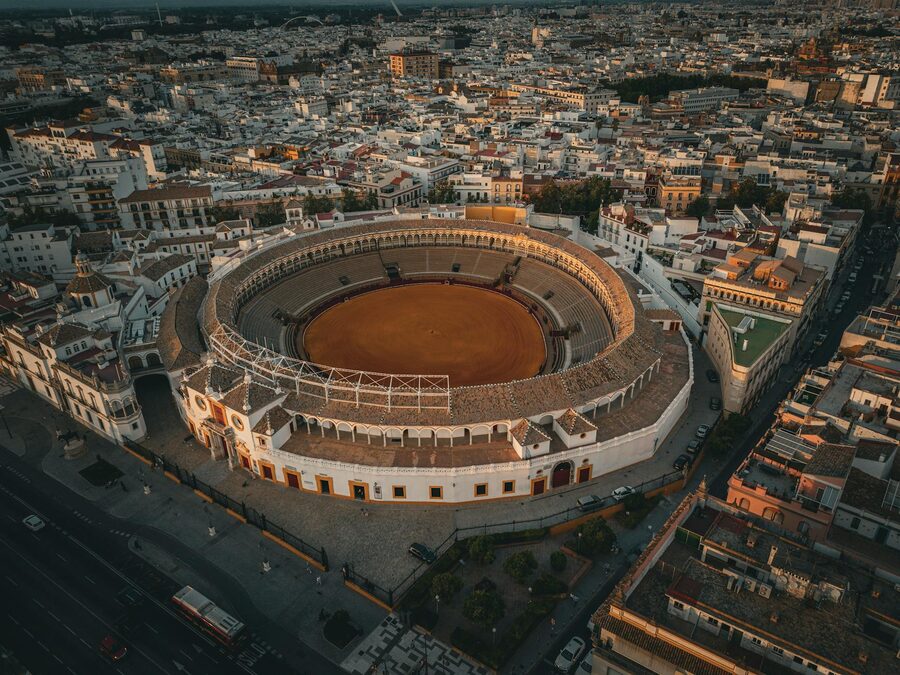
It took 120 years to build the Plaza de Toros de la Maestranza. Construction started in 1749 and they didn’t finish until 1881. That’s five generations of Sevillanos watching their bullring slowly take shape, year after year, stone by stone. And somehow, the end result looks like it was designed in a single afternoon — every arch and column in perfect harmony.
I expected a dusty old arena. What I got was one of the most beautiful buildings in Seville.
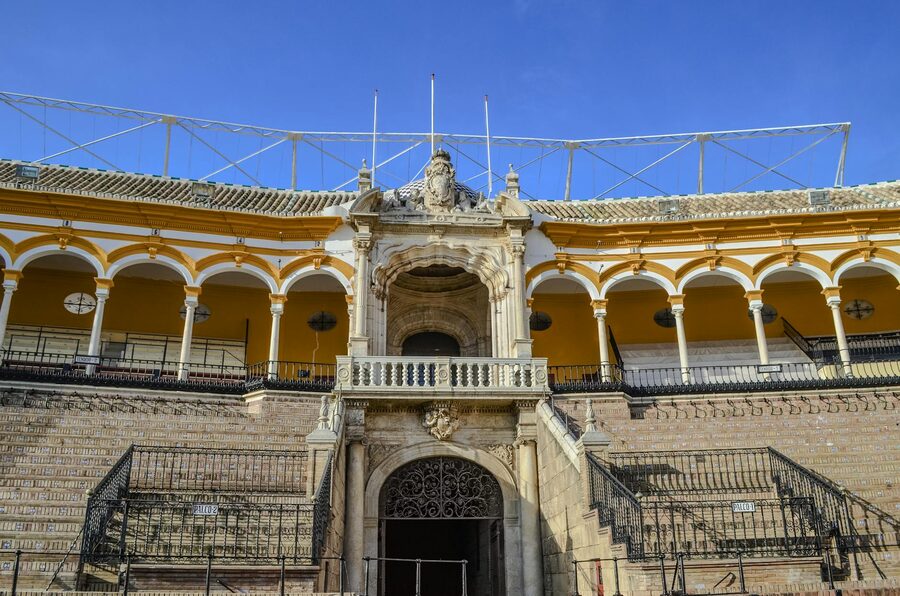
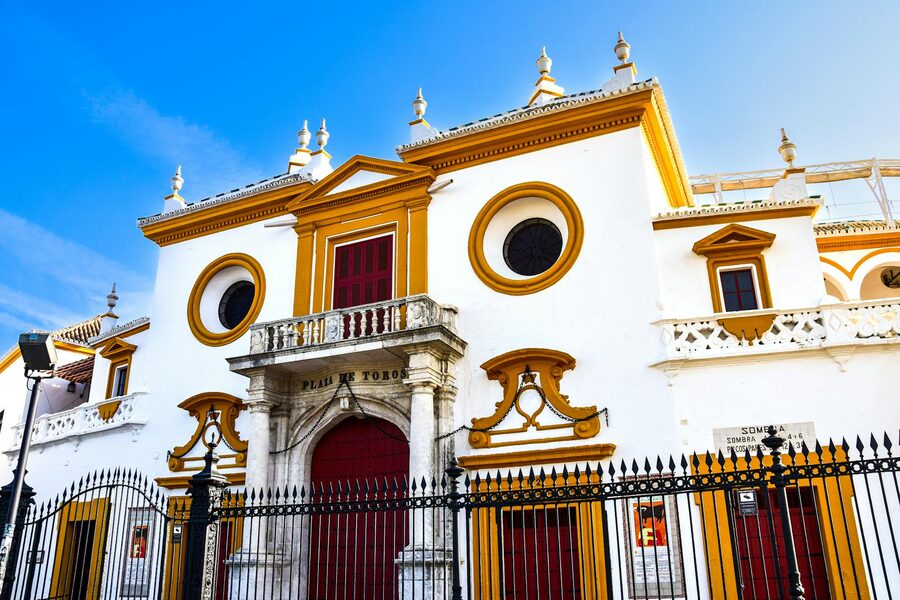
Whether you’re fascinated by the history or firmly opposed to bullfighting, the building itself is a genuine architectural landmark, and the museum inside tells one of Spain’s most complicated cultural stories without shying away from the difficult parts.
- In a Hurry? Here Are the Top Bullring Tours
- What Makes the Maestranza Worth Visiting
- How Booking Works
- The 3 Best Bullring Tours to Book
- 1. Seville: Bullring Guided Tour with Skip-the-Line Ticket —
- 2. Plaza de Toros and Museum Guided Tour in Spanish —
- 3. Seville Bullring: Guided Tour with Direct Entry —
- A Building That Took Five Generations to Complete
- What the Tour Actually Covers
- When to Visit and What to Expect Each Season
- Practical Tips for Your Visit
- The Bullfighting Question
- Where to Go Next in Seville
In a Hurry? Here Are the Top Bullring Tours
Most popular: Seville: Bullring Guided Tour with Skip-the-Line Ticket — $32, the one everyone books, skip-the-line included
In Spanish: Plaza de Toros and Museum Guided Tour in Spanish — $33, for Spanish speakers who want the local experience
Budget option: Seville Bullring: Guided Tour with Direct Entry — $35, similar coverage at a comparable price
What Makes the Maestranza Worth Visiting
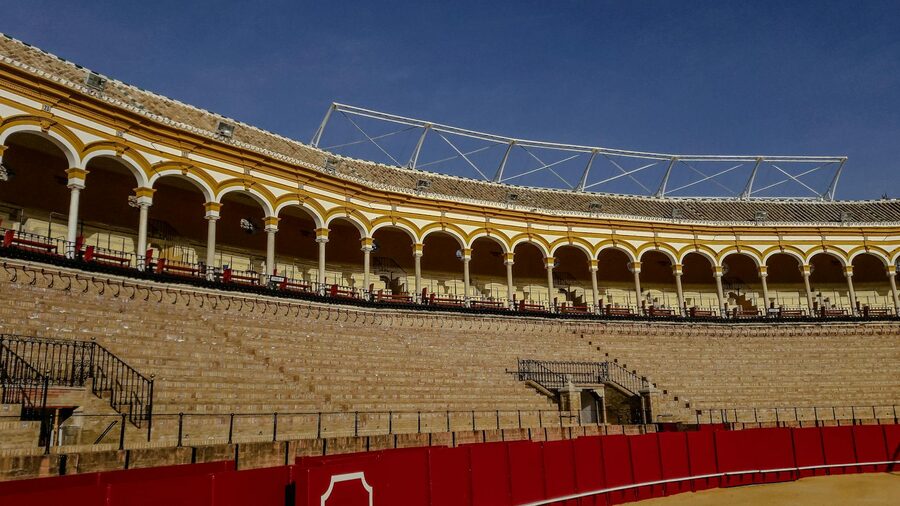
Forget whatever opinions you have about bullfighting for a minute. The Maestranza is, architecturally, one of the finest arenas on the planet. It predates the Eiffel Tower by over a century. It predates the United States.
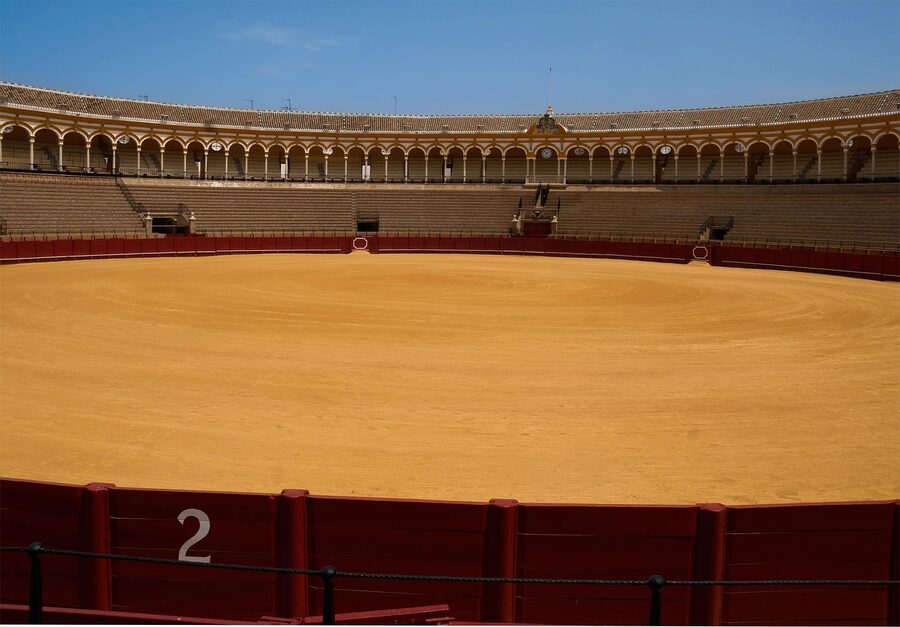
The arena seats around 12,000 people and it’s still an active venue. Bullfighting season runs from Easter through October, with the biggest events during the April Fair (Feria de Abril). But even outside of season, the arena and museum are open daily for tours.
The museum is the real surprise. It covers centuries of bullfighting history through paintings, costumes, old posters, and matador capes that feel heavy with gold embroidery. There’s a painting collection that includes works by Goya and Picasso, both of whom were obsessed with the corrida. You’ll see how this tradition wove itself into Spanish art, music, and literature — for better or worse.
The matador capes on display deserve more than a quick glance. The traje de luces (suit of lights) is hand-embroidered with gold and silver thread, and a single cape can take months to create. Some of the capes in the museum belonged to legendary matadors — Juan Belmonte, Joselito, Curro Romero — and they’re displayed with the kind of reverence you’d expect in a fine art gallery.
There’s also a collection of carteles (bullfight posters) dating back to the 18th century. The evolution in graphic design tells its own story — from simple text announcements to elaborate illustrated works that became collector’s items. Some of the earliest ones advertise events at the wooden bullring that stood here before the stone Maestranza was built.
How Booking Works
The bullring is open for visits almost every day of the year, but booking ahead matters more than you’d think. Tour groups are capped in size, and the English-language tours fill up first — especially from March through October.
You can book online through GetYourGuide for skip-the-line access, which genuinely saves time. The ticket office at the bullring sells same-day tickets too, but during peak season the wait can be 30-45 minutes, and the most popular time slots sell out.
Tours run every 20-30 minutes starting from 9:30 AM, with the last tour usually at 7 PM (earlier in winter). The whole visit takes about 60-75 minutes, including the museum.
On bullfight days (mostly Sundays and holidays during season), tours end early to prepare the arena. Check the schedule before going if you’re visiting on a weekend between April and October.
A note on pricing: The ticket office charges about 10 euros for a self-guided visit (without a guide). The guided tours through GetYourGuide run $32-35 and include skip-the-line or direct entry. The difference in price is worth it — you’ll learn ten times more with a guide, and the skip-the-line access saves you from standing in the sun. That said, if you’re on a tight budget, the self-guided option still lets you see the arena and museum at your own pace.
Accessibility: The ground floor is wheelchair accessible, including the arena and most of the museum. The upper levels of the museum have stairs but the most important exhibits are on the ground floor. The arena floor itself is sand, which can be difficult for wheelchairs, but you can view it from the lower tier seating areas.
The 3 Best Bullring Tours to Book
1. Seville: Bullring Guided Tour with Skip-the-Line Ticket — $32
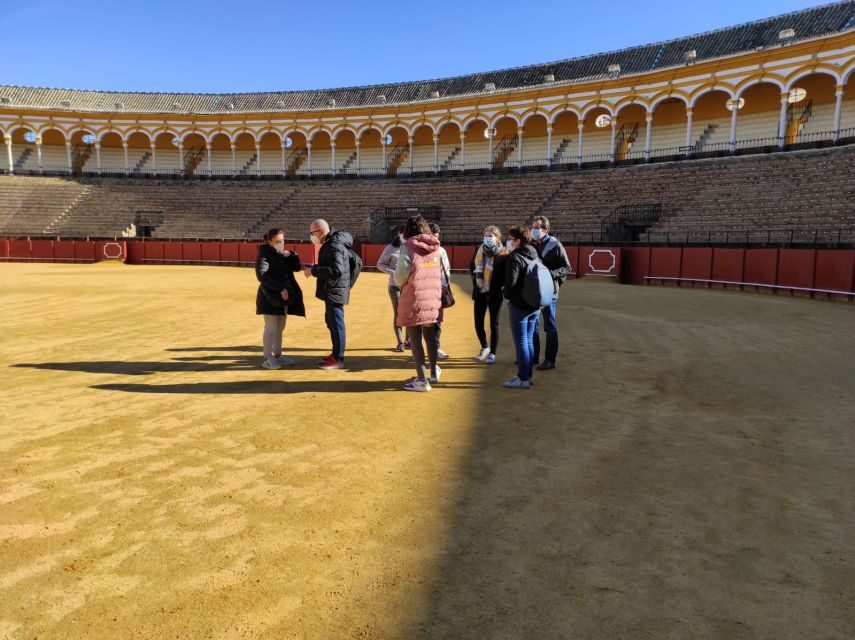
This is the one that practically everyone books, and with good reason. Sevilla Unica runs it, the guides are local and passionate, and the skip-the-line access means you walk straight past the ticket queue. A 60-75 minute tour covers the arena floor, the chapel where matadors pray before fights, the museum with Goya paintings, and the stables. Our full review covers what to expect in detail. At $32, it’s genuinely the best value option for this attraction.
2. Plaza de Toros and Museum Guided Tour in Spanish — $33
If you speak Spanish — even intermediate level — this is the one to pick. The Spanish-language guides tend to be more animated and emotionally engaged with the subject, and certain cultural references simply land better in the original language. Run by Around Sevilla Tours, it covers the same ground but with extra commentary on the corrida’s role in Andalusian identity. Check our review for the full breakdown.
3. Seville Bullring: Guided Tour with Direct Entry — $35
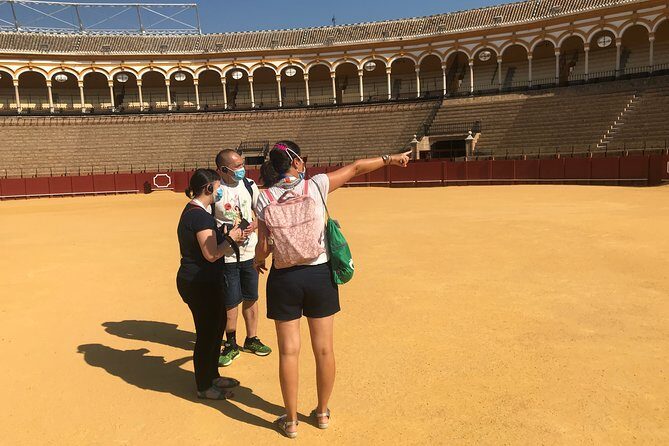
A solid alternative if the first option is sold out on your dates. Sevilla Unica also runs this one, with direct entry access and a similar route through the arena, chapel, museum, and stables. The price is a couple dollars more, but you’re getting the same quality guides and the same access. See our review for visitor impressions.
A Building That Took Five Generations to Complete
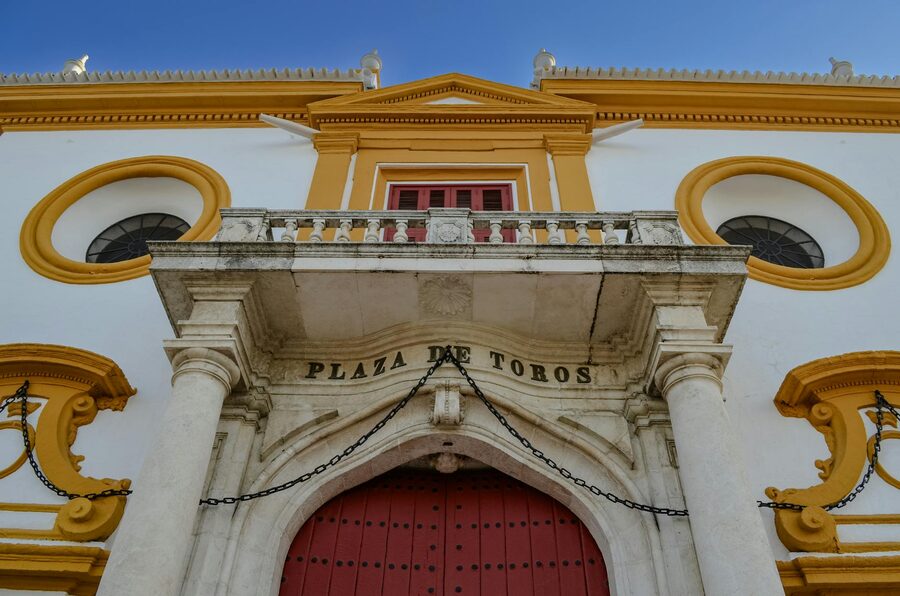
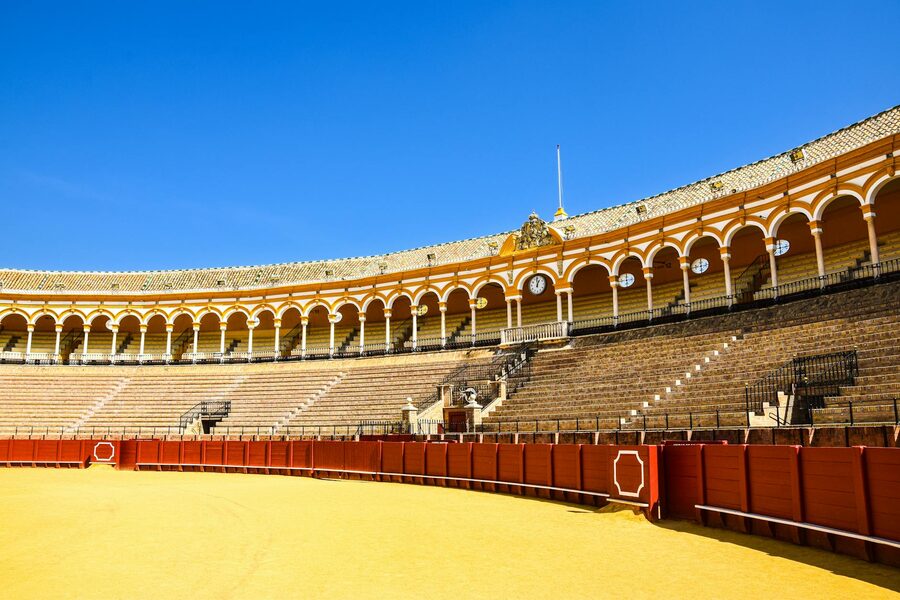
The Royal Maestranza de Caballeria — a noble equestrian order dating back to 1670 — decided Seville needed a permanent stone bullring to replace the wooden ones they’d been throwing up in the Plaza de San Francisco. They broke ground in 1749. The original architect, Francisco Sanchez de Aragon, designed the distinctive Baroque facade.
Then the money ran out. And came back. And ran out again. Different architects picked up where the last one left off, which is why the building feels so remarkably cohesive for something that took 132 years. Each generation respected the original vision while adding their own touches.
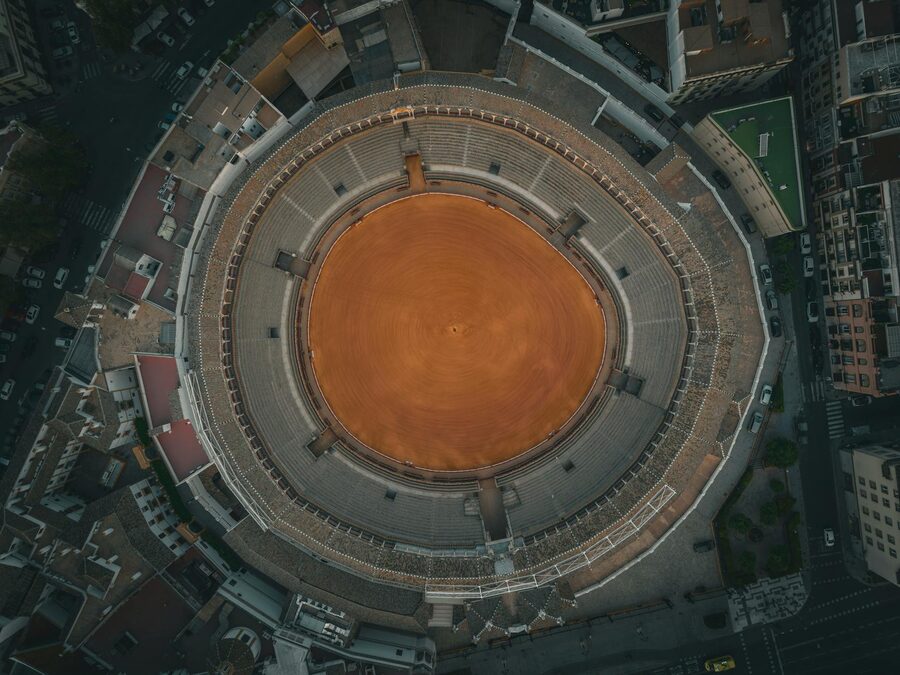
Before the stone Maestranza existed, bullfights in Seville took place in the Plaza de San Francisco using temporary wooden structures. These were elaborate affairs — the seating was arranged by social class, with nobles in covered boxes and commoners standing in the sun. The whole affair was as much about being seen as about watching the fight. When the Maestranza order decided to build a permanent venue, they wanted something that would reflect their prestige, which is why the building has more in common architecturally with an opera house than with a typical sports arena.
The construction saga involved at least four different architects across the 132 years. Vicente San Martin took over in the 1760s and completed much of the seating. Juan Talavera de la Vega added the upper gallery in the 1840s. Each architect left their fingerprint, but they all worked within the Baroque framework established by Sanchez de Aragon. The result is a building that looks unified despite being essentially a relay race across generations.
Bizet never actually visited Seville. He set his opera Carmen here based purely on Prosper Merimee’s novella, imagining the Maestranza from descriptions and drawings. The final act, where Carmen meets her fate outside the bullring gates, made this arena famous across all of Europe. Every opera season, productions of Carmen reference this building, and many visitors come to the Maestranza specifically because of the Bizet connection.
During the Spanish Civil War, the bullring was used as a prison camp. That’s a chapter the museum doesn’t linger on, but guides sometimes mention it if you ask. The arena returned to bullfighting after the war and has hosted some of the most famous matadors in history, including Manolete, who performed here shortly before his death in the ring at Linares in 1947.
Curro Romero, a Seville native, became the most beloved matador in the Maestranza’s modern history. He performed here for over 40 years, from the 1950s until his retirement in 1999. Sevillanos called him “El Faraon” (The Pharaoh), and on the rare occasions when his performance reached its peak, the arena erupted in a way that older visitors still talk about today. His bronze statue stands outside the bullring entrance.
What the Tour Actually Covers
Every guided tour follows roughly the same route, regardless of which company you book with:
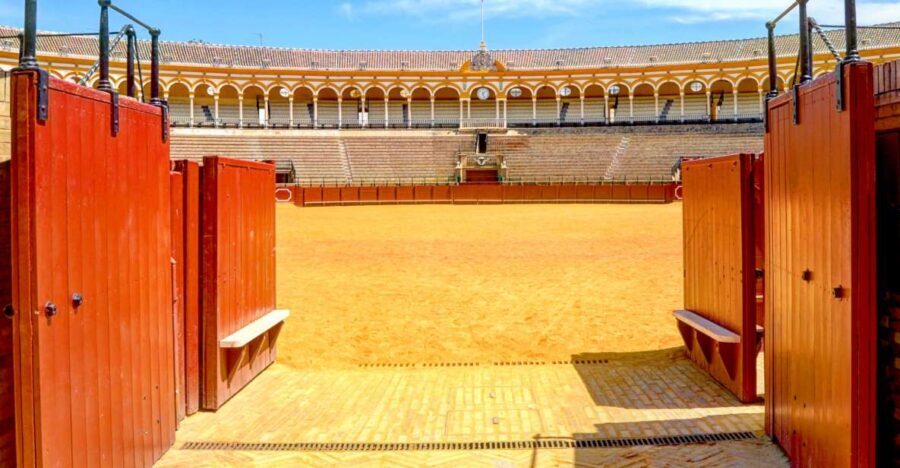
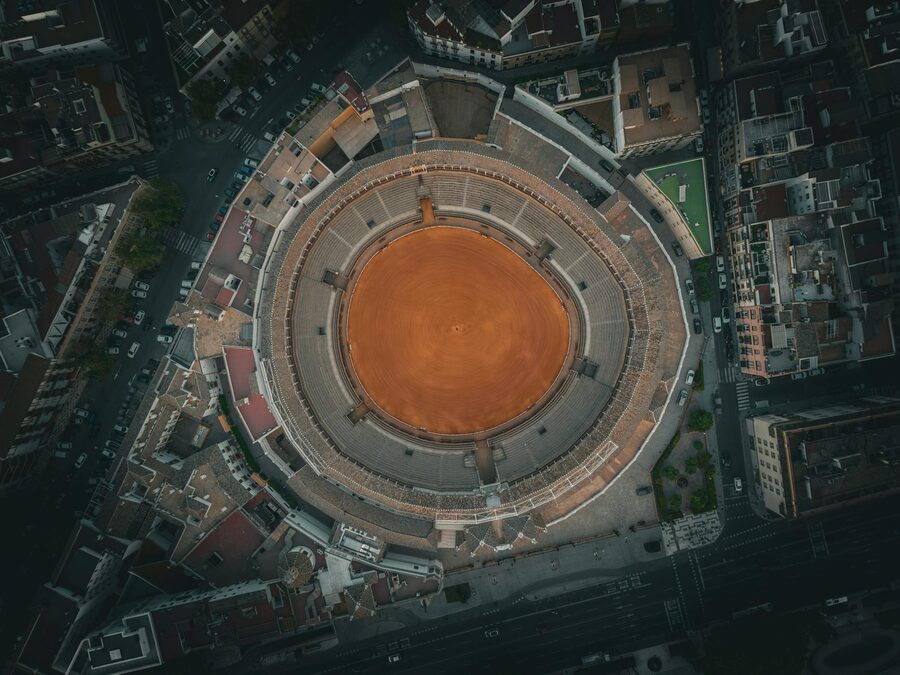
The arena floor. You walk out onto the sand and stand where the matadors stand. It’s bigger than it looks on TV, and the acoustics are surprisingly good — your guide’s voice carries even without a microphone. Look up at the Royal Box (Palco del Principe), where the president of the bullfight gives the orders. The seating tiers rise steeply around you, and you get a genuine sense of the atmosphere that builds when 12,000 people fill these seats. The guide will explain the different seating sections — sol (sun), sombra (shade), and sol y sombra (sun and shade) — and why tickets in the shade historically cost double.
The chapel. A tiny, intensely decorated space where matadors pray before entering the arena. It’s stacked with religious icons and ex-votos (offerings left by matadors who survived dangerous fights). This is probably the most emotional stop on the tour. The chapel dates to the 18th century and hasn’t changed much since then. Matadors still use it on fight days. The collection of ex-votos includes small paintings depicting close calls in the ring, alongside notes of gratitude from matadors who walked away from injuries that should have killed them.
The museum. Two floors of bullfighting art, costumes, and history. The painting gallery features works by Goya, Picasso, and other Spanish masters who used the corrida as their subject. The matador capes (capotes and muletas) are surprisingly heavy — the embroidered ones can weigh several kilos. Don’t rush through the poster collection on the second floor. The earliest carteles use woodblock printing and simple text, while the later ones evolved into full-color lithographs that are genuine works of graphic art. Some feature illustrations by well-known Spanish artists commissioned specifically for bullfight announcements.
The stables. Where the bulls and horses are kept before events. During the off-season this area is quiet, but the guides explain the preparation rituals that happen here on fight days. The pens where the bulls wait before entering the ring give you a sense of the scale of these animals — they can weigh over 500 kilos. The horses used by the picadores (mounted lancers) have their own section, and the guides explain the evolution of their protective padding, which wasn’t required until 1928.
When to Visit and What to Expect Each Season
The Maestranza experience changes depending on when you go. During bullfighting season (Easter to October), the arena has a different energy. Staff are preparing for upcoming events, and you might see sand being smoothed or seats being cleaned. Outside of season, the building is quieter, and tours tend to run with smaller groups.
Spring (March-May): The best time. The April Fair (Feria de Abril) brings Seville’s biggest bullfighting events, and the arena is at its most atmospheric. Tour availability can be limited on fight days, so book early. Temperatures are comfortable — mid-20s Celsius — and you won’t bake in the open arena. The walking tours of Seville are also at their best this time of year, so plan a full day exploring on foot.
Summer (June-August): Hot. Really hot. The open-air arena offers no shade during midday tours, and temperatures regularly hit 40C. If you go in summer, pick the first morning tour (9:30 AM) or a late afternoon slot. The museum is indoors but only partially air-conditioned, so don’t expect cool relief.
Autumn (September-November): The tail end of the season, with a few remaining fights. Temperatures drop to comfortable levels, and the crowds thin out. October and November are great months for a visit — shorter queues, pleasant weather, and the golden light that photographers love.
Winter (December-February): No fights, no crowds. Tours run daily but with reduced hours. The arena is peaceful, and you’ll likely have the place nearly to yourself. January and February can be surprisingly cold in Seville — bring a jacket for the open arena.
Practical Tips for Your Visit
Best time to go: Early morning (9:30-10:30 AM) or late afternoon (after 5 PM). Midday tours during summer can be brutally hot inside the open arena, and the museum offers minimal air conditioning.
How long to allow: Budget 90 minutes total — 60-75 for the tour plus time to browse the museum gift shop and take photos. The gift shop has some genuinely interesting books on bullfighting history and Andalusian culture that you won’t find elsewhere in Seville.
Dress code: None. It’s a tourist attraction, not an event. Comfortable shoes help since you’ll be standing on sand and walking on stone floors. In summer, a hat and sunscreen are essential for the arena portion.
Photography: Allowed everywhere except in certain museum rooms that are marked. The arena floor is the best photo spot — stand in the center and look up at the tiers of seating. The Puerta del Principe also photographs beautifully. Go early for the best light.
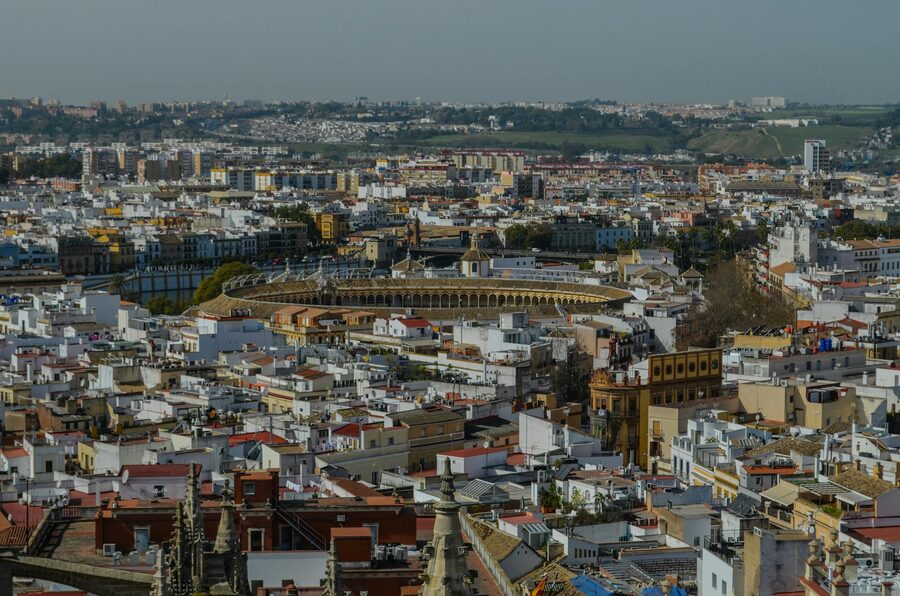
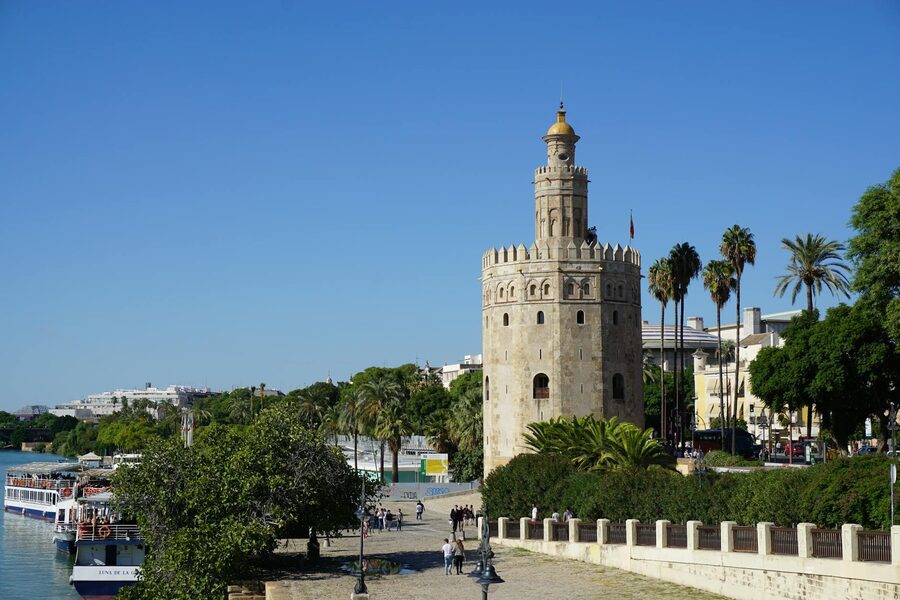
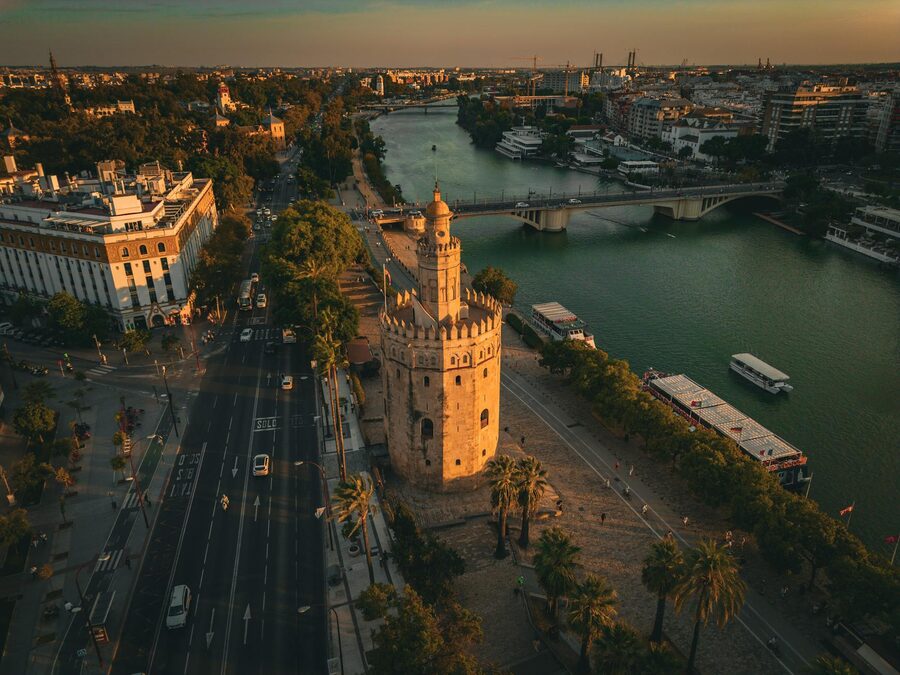
Getting there: The bullring is on Paseo de Cristobal Colon, right on the riverfront. From the Cathedral, it’s a 10-minute walk west. The nearest tram stop is Archivo de Indias. If you’re staying in Triana, cross the Isabel II bridge and it’s right in front of you. From the Plaza de Espana, it’s about a 20-minute walk through the Maria Luisa Park — a pleasant route that avoids the busy streets.
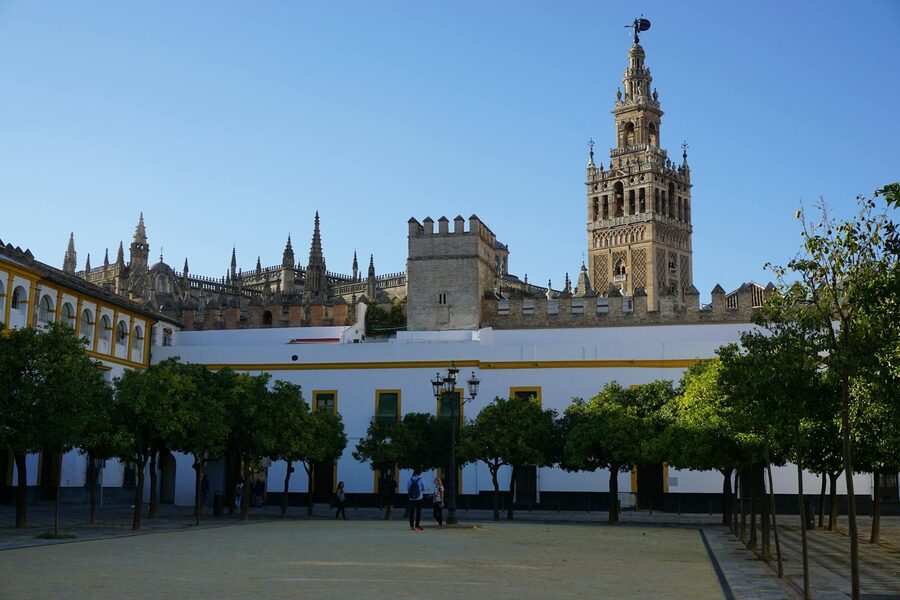
Combined visits: The Maestranza pairs well with the Cathedral and Giralda in the morning, or with the Royal Alcazar if you prefer an afternoon start. Both are within walking distance. A strong one-day itinerary: bullring at 9:30 AM, Cathedral at 11:30, lunch in Santa Cruz, Alcazar at 3 PM, tapas tour at 7 PM.
Where to eat nearby: The Arenal neighborhood between the bullring and the Cathedral is packed with restaurants. Skip the ones with picture menus targeting travelers. Instead, walk one block inland and look for places where locals are eating. Bar El Comercio on Calle Lineros has been serving tapas since the 1900s. Bodeguita Casablanca on Calle Adolfo Rodriguez Jurado is another reliable pick — their croquetas are among the best in the neighborhood.
The Bullfighting Question
I’ll address this directly because it comes up constantly: you don’t need to support bullfighting to find the tour worthwhile. Many visitors who are opposed to the practice still rate the experience highly because the guides handle the cultural context thoughtfully. They explain the tradition without glorifying it, they acknowledge the controversy, and they let you form your own opinion.
The museum takes a historical approach rather than a promotional one. You’ll see how bullfighting shaped Spanish art and literature, how it evolved from horseback combat in the Middle Ages to its modern form, and why it remains so divisive within Spain itself. Several Spanish regions have banned it — Catalonia passed a ban in 2010, though it was later overturned by the Constitutional Court on technical grounds. The Canary Islands banned it in 1991. The Balearic Islands imposed severe restrictions. Andalusia, however, has not, and Seville remains one of the last great strongholds of the tradition.
The guides won’t push an agenda on you. The good ones — and the ones on the tours I recommend are consistently good — present the facts, share the history, explain the rituals, and let you decide how you feel. I’ve heard guides acknowledge that attitudes are shifting, that attendance has declined over the past two decades, and that the future of bullfighting in Spain is genuinely uncertain.
If you’re traveling with children, the tour is fine for kids over about 8. There’s no graphic content — no blood, no live events. The museum does have paintings depicting bullfights, but nothing worse than what you’d see in a history textbook. Younger children might get bored during the more detailed museum sections, but the arena floor and stables usually hold their attention.
Where to Go Next in Seville
The bullring sits in the middle of Seville’s best walking territory, so you’re set up for a full day. If you haven’t already been, the Royal Alcazar is the other can’t-miss attraction in the city — a Moorish palace complex that will genuinely take your breath away. The layers of Islamic and Christian architecture echo what you’ve just learned about at the Maestranza, but applied to a royal palace instead of an arena.
For something completely different, a flamenco show in the evening rounds out a perfect Seville day. Flamenco and bullfighting share deep cultural roots in Andalusia, and after learning about one, the other takes on new meaning. The walking tours of the historic centre cover ground you’ll want context for — the Santa Cruz quarter, the riverfront, and the back streets where Seville’s real character lives.
A tapas tour through Triana or Santa Cruz means someone else handles the restaurant decisions, which is useful in a city with this many options. If you’re spending more than one day, a day trip to Cordoba to see the Mezquita is absolutely worth the 42-minute train ride. The Mosque-Cathedral there is every bit as architecturally stunning as the Maestranza, but for entirely different reasons.
This article contains affiliate links. When you book through these links, we may earn a small commission at no extra cost to you. This helps us keep creating detailed travel guides.