
Is a Madrid tuk-tuk worth it for adults, or is it the kind of thing you’d only do for the kids? That was my honest first reaction when I started looking at them. Three-wheeled buggies tend to read as souvenir transport, the sort of ride that ends in a tourist photograph and a sticker. So I’ll come back to that question. First the practical stuff, because the answer has more to do with what these tours actually cover than with how the tuk-tuk looks from the outside.
Best for short visits: Madrid Private City Tour by Eco Tuk Tuk, $61 per group. Flexible 1-to-4-hour run, group price, good if you’re four people.
Best for evening: the same operators run after-dark routes. Book the 2-hour version with a Templo de Debod sunset stop and ride home through Gran Via under the neon.
.jpg)
- What a Madrid tuk-tuk tour actually is
- The two tours we’d actually book
- 1. Welcome Tour to Madrid in Private Eco Tuk Tuk:
- 2. Madrid: Private City Tour by Eco Tuk Tuk: per group
- So, is it actually worth it for adults?
- The route, stop by stop
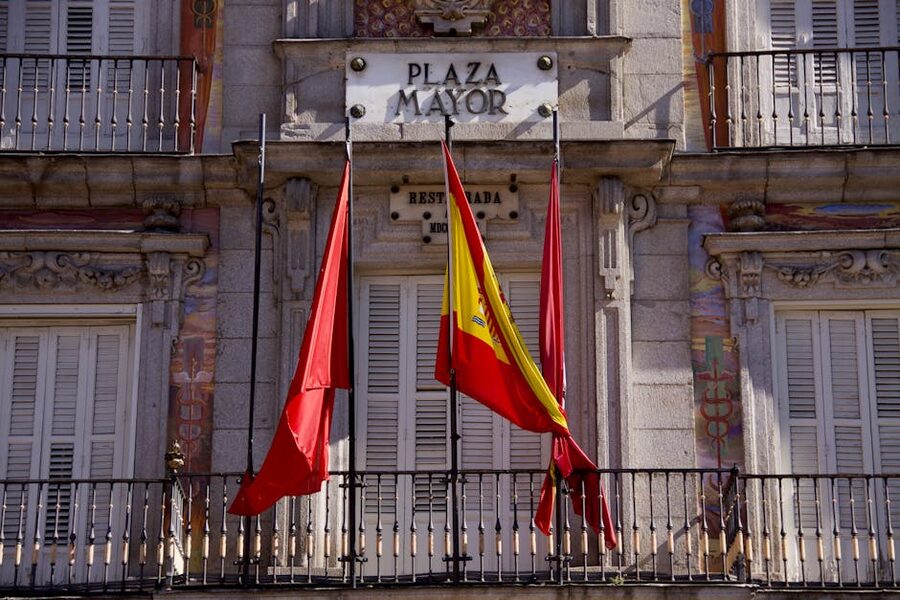
- Plaza Mayor and the Habsburg core
- Plaza de la Villa
- Royal Palace exterior and Plaza de Oriente
- Almudena Cathedral
- Templo de Debod
- Gran Via and the early-20th-century city
- Cibeles and Puerta de Alcala
- The edge of Retiro Park
- Practical questions, answered
- How do I actually book?
- What about same-day booking?
- Can I customise the route?
- Is it safe?
- Will I get rained on?
- What about kids?
- Tipping?
- How a tuk-tuk compares to the alternatives
- A short history of why Madrid has tuk-tuks at all
- When to ride
- Other Madrid guides worth a look
What a Madrid tuk-tuk tour actually is
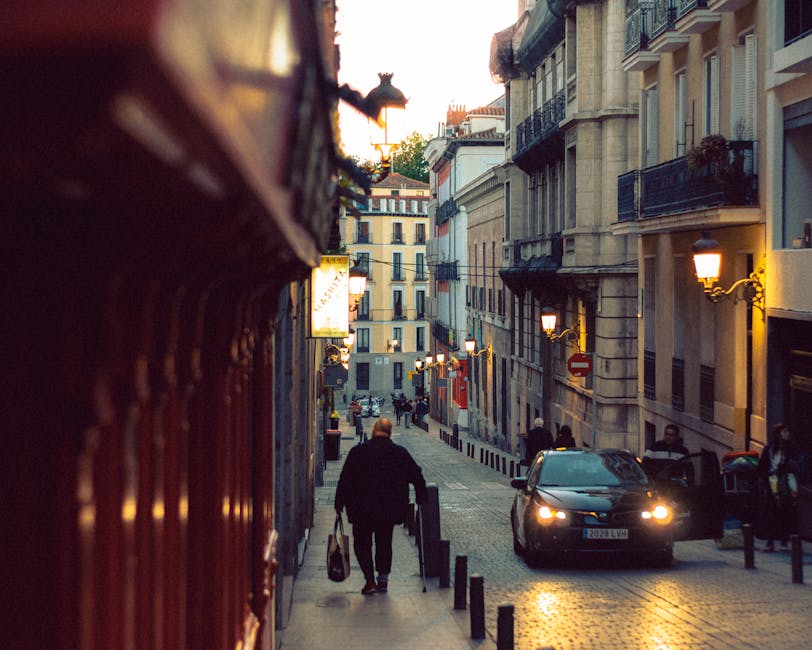
Mechanically: a small electric three-wheeler with a driver up front and a covered passenger bench behind for up to four people. Quiet, no exhaust, surprisingly stable. You sit at street level rather than perched on a bus deck, which changes what you see. Cobblestones rumble. The driver is also your guide, talking back over their shoulder or through a tiny speaker as you go.
Tour-wise: you’re getting a fully private vehicle, which is a different product from any of the larger group tours. No strangers, no waiting for the slowest member of a 30-person group to finish their photo. The driver-guide is yours for the whole booking, and the route is loosely fixed but flexible. Want to skip a stop because you’ve already seen Plaza Mayor? They’ll skip it. Want an extra five minutes at the Royal Palace railing? They’ll wait.
The standard durations from the operators in this article and the wider local market are roughly:
- 60 minutes, around €85 total for the vehicle. Highlights only, often described as the orientation lap.
- 90 minutes, around €115. Adds a longer Habsburg-era loop and time at one or two photo stops.
- 120 minutes, around €149. The popular middle option. Typically the only length that includes Templo de Debod and a proper Gran Via pass.
- 3 hours, around €229. Same map as 120 but with more time at every stop.
- 4 hours, around €310, sometimes with a tapas-and-wine pause built in.
Prices are per vehicle, not per person. Four people sharing a 2-hour tuk-tuk works out somewhere near €37 each, which is competitive with a half-day group walking tour and a lot more flexible. Solo travellers pay the full vehicle rate, which is the part where these tours stop being a bargain.
The two tours we’d actually book
Two operators effectively share the Madrid tuk-tuk market in the booking platforms. Both run electric tuks, both offer private rides for up to four, both cover the same geographic loop. They differ mainly in pricing structure and which platform sells them. Below is how we’d think about choosing.
1. Welcome Tour to Madrid in Private Eco Tuk Tuk: $29
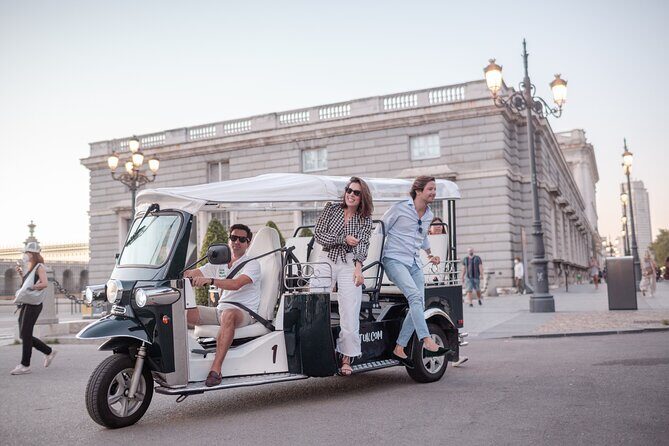
The pick if you’re a couple or family of three to four and want the broadest headline route. It’s a 2-hour private tour that hits the Royal Palace, Almudena, Plaza Mayor, Cibeles, Puerta de Alcala and the Templo de Debod, with a bilingual guide who tailors the stops on the fly. Our full review of the Welcome Tour covers exactly which photo stops are built in and the operator’s flexibility on departure times.
Check Availability
Read our full review
2. Madrid: Private City Tour by Eco Tuk Tuk: $61 per group
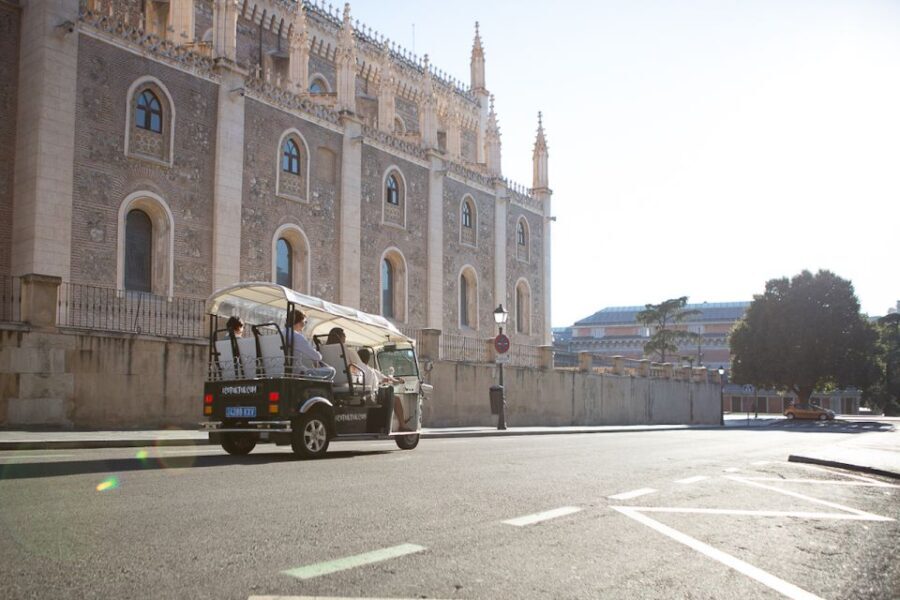
This is the same broad concept on GetYourGuide, sold as a flat €55-65 per group for one to four hours. If you’re four people the maths comes out cheaper than the Viator listing, and the operator is upfront about adjusting the route to your interests. The duration is a slider rather than a fixed length. Our review of the GYG eco tuk tour goes into how flexible the route really is when you ask.
Check Availability
Read our full review
If your decision is borderline, the deciding factor is usually group size. Four people on the GetYourGuide listing splits the bill. Two people on the Viator listing pays a smaller absolute number. Either way the experience itself is the same.
So, is it actually worth it for adults?
Yes, with conditions. I’ll explain.
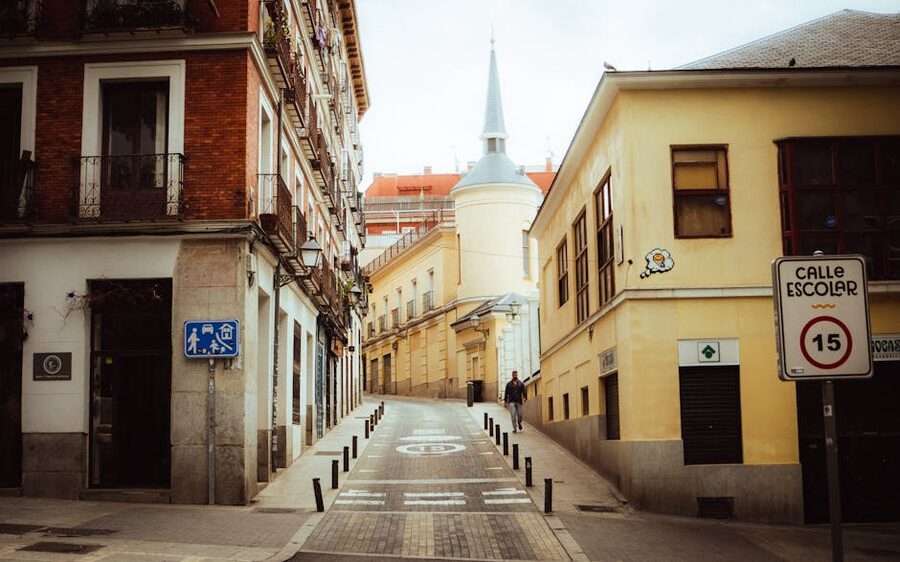
The honest case for the tuk-tuk over a walking tour is the access. The Madrid de los Austrias district, the Habsburg core where Plaza Mayor and Plaza de la Villa sit, is laid out for 16th-century carriages, not modern buses. The official Madrid hop-on-hop-off bus loops the perimeter and waves at the centre. A walking tour will give you the centre but not the periphery in the same two hours. The tuk-tuk is the only vehicle that can reach the Templo de Debod from Plaza Mayor and slip back into the alleys around La Latina without you having to swap vehicles, walk, or write off half a morning.
The honest case against is that the tuk-tuk is not a substitute for a museum visit or a proper on-foot wander. You’re not stopping for ten minutes at every stop, you’re stopping for two or three. If your travel style is “spend an hour at one church reading every plaque”, the tuk-tuk will frustrate you. If it’s “get the lay of the land, photograph it, decide what to come back to tomorrow on foot”, this is the most efficient possible way to do that.
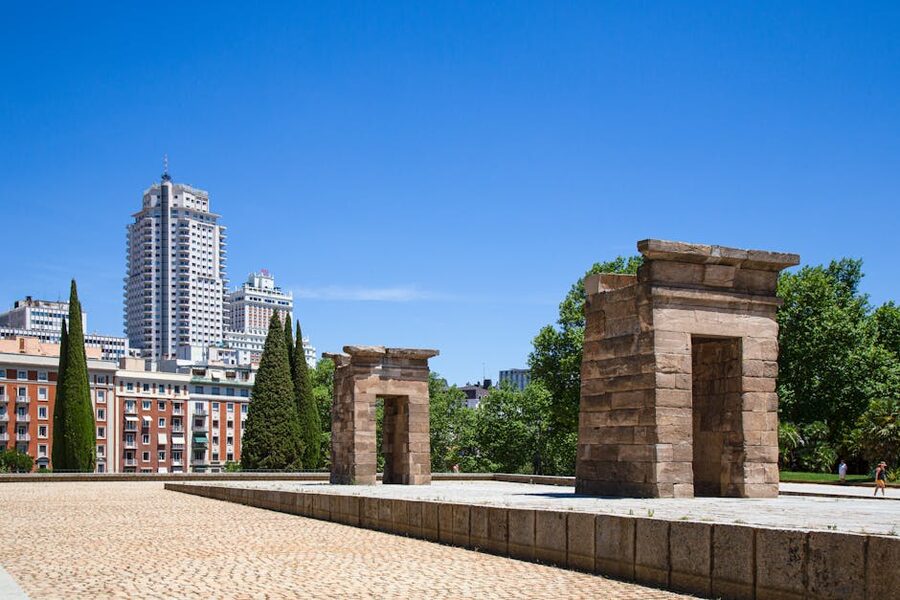
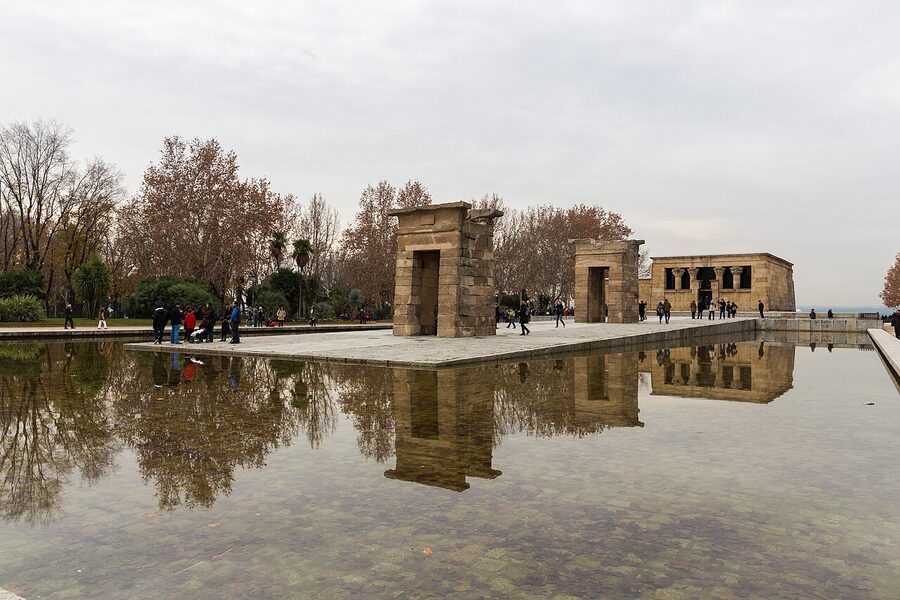
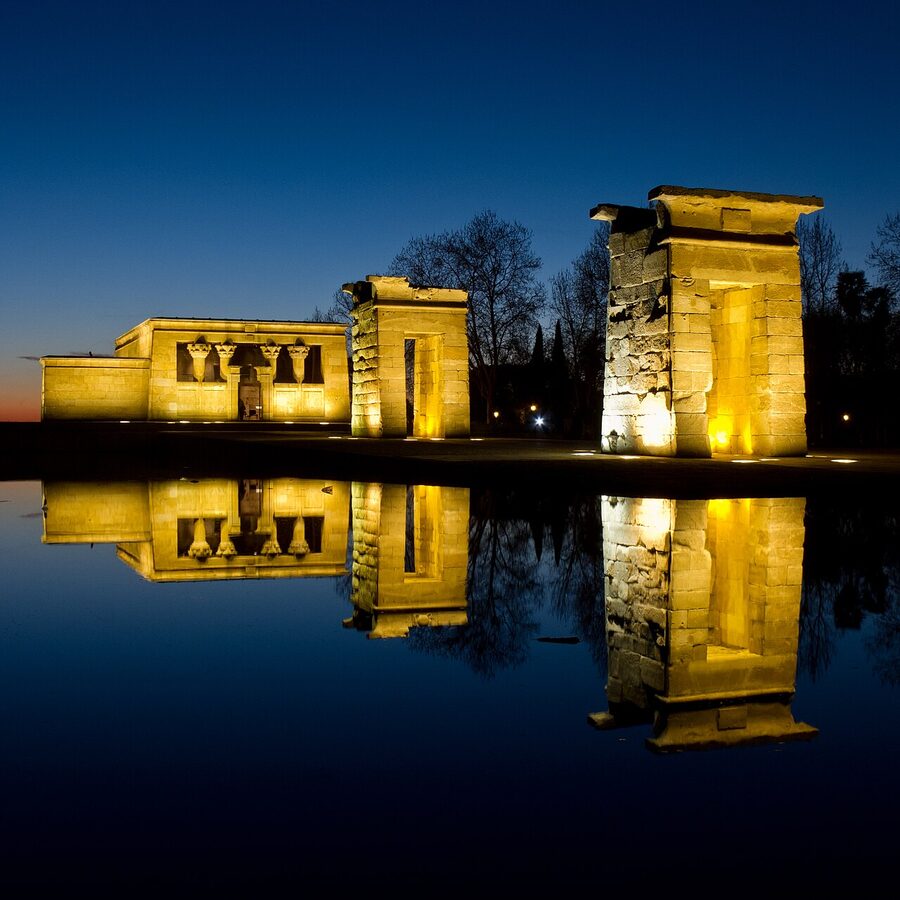
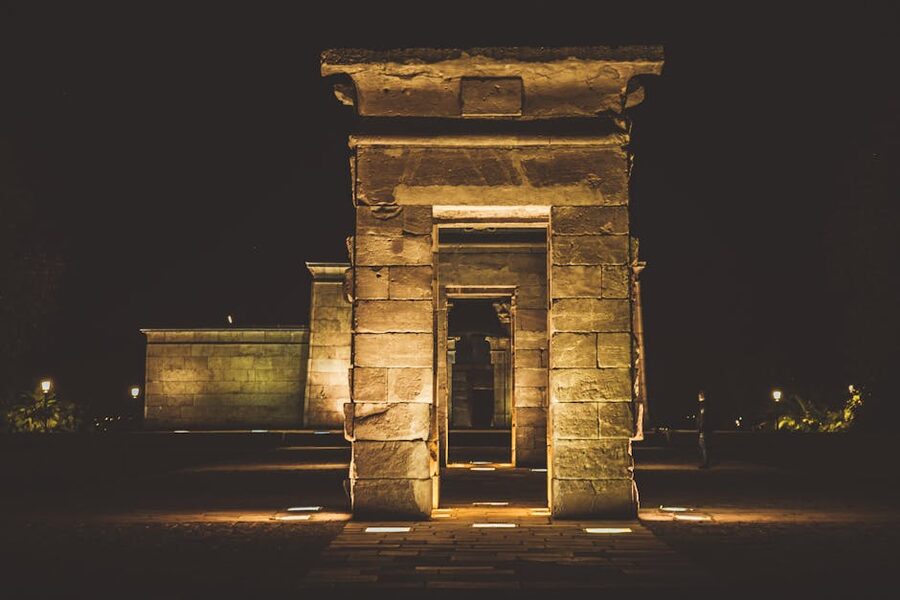
The Templo de Debod stop is the single point that converts most adult skeptics. It’s an actual 2nd-century BC Egyptian temple, dismantled and shipped block by block when the Aswan High Dam threatened it, gifted to Spain for the country’s help in saving Abu Simbel, and reassembled in a Madrid park with the city skyline behind. Most first-time Madrid visitors don’t know it exists. A tuk-tuk gets you there in twelve minutes from Plaza Mayor and gives you long enough at the railing to take it in.


The route, stop by stop
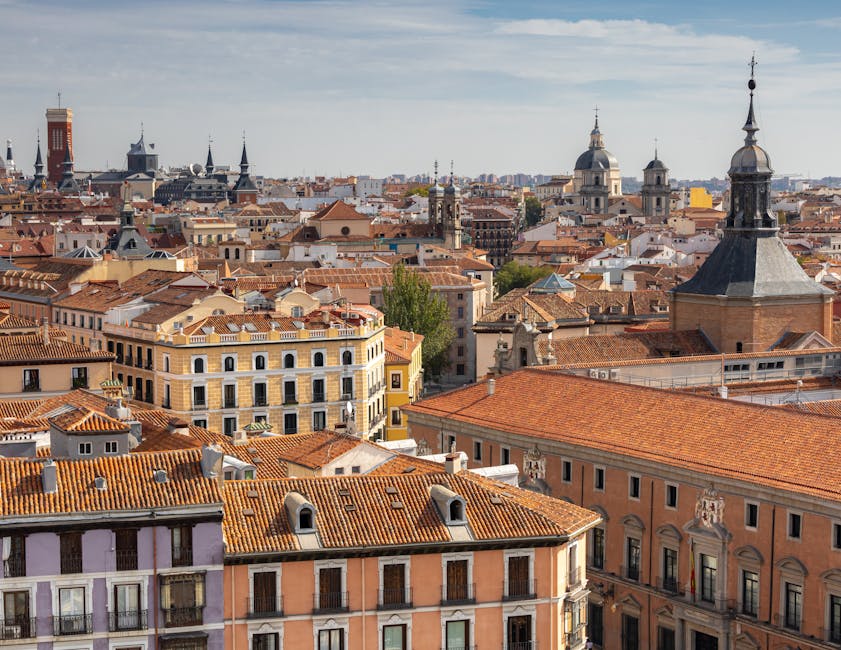
Different operators rearrange the order, but the standard 2-hour Madrid tuk-tuk route hits roughly the same fifteen stops. Knowing the order helps you decide whether to add or remove anything when the driver asks at pickup. Here’s how a typical 2-hour run goes.
Plaza Mayor and the Habsburg core
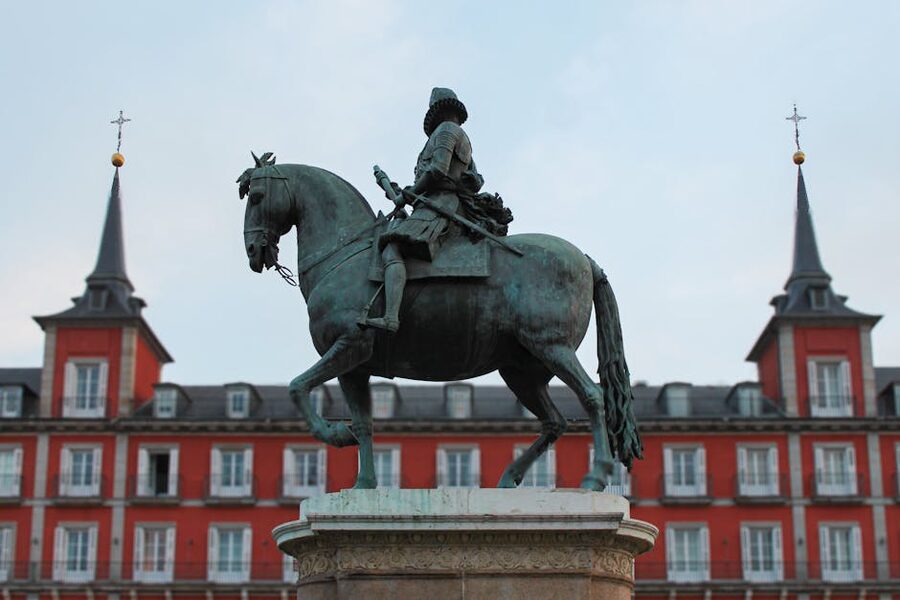
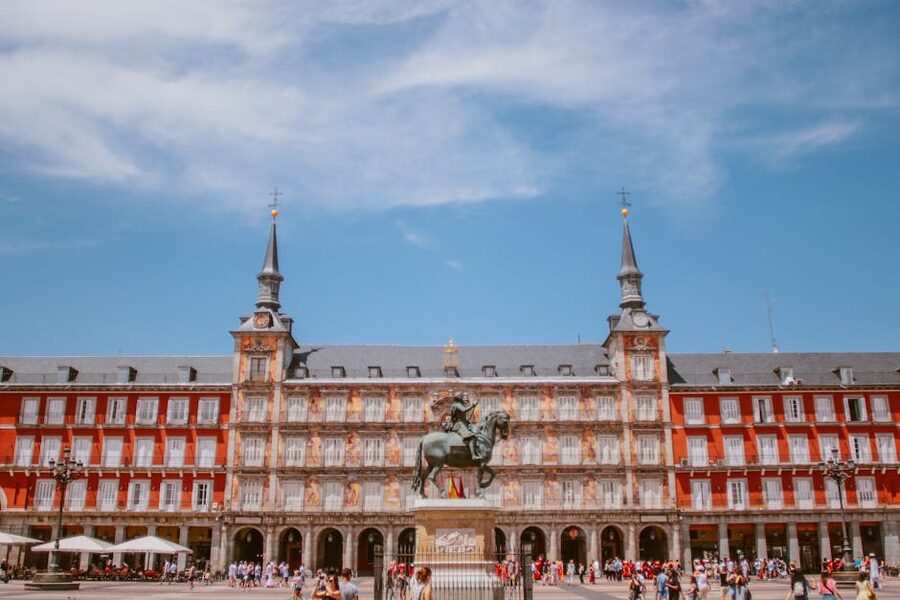
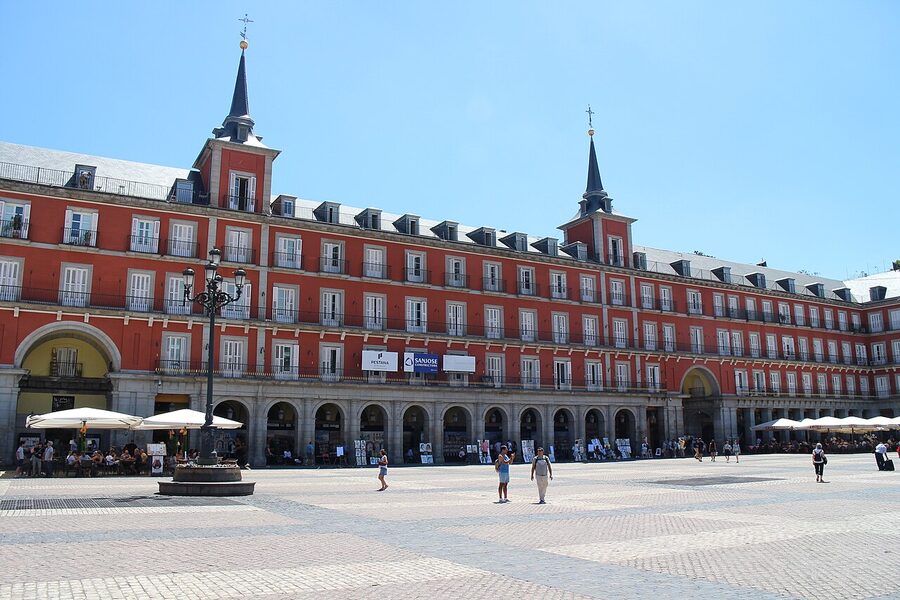
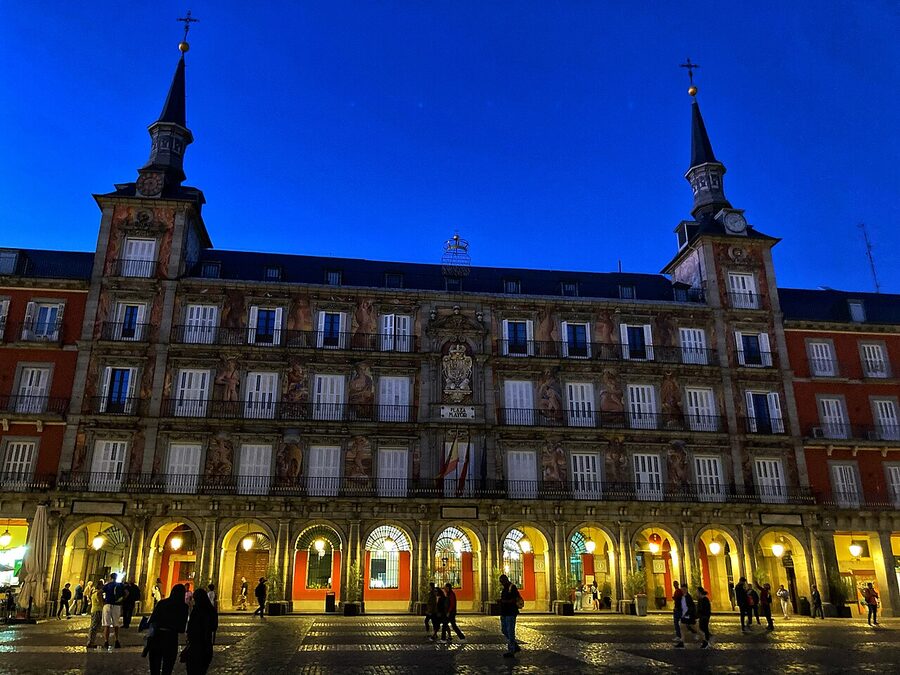
Most tours start either here or at Puerta del Sol two blocks east. The square dates from 1619 (Felipe III, the king on the horse). It’s been a market, a public execution ground, a bullring, and now a giant tourist sun-trap with disappointing cafes on the perimeter. Don’t eat here. The food is at La Latina, ten minutes away.


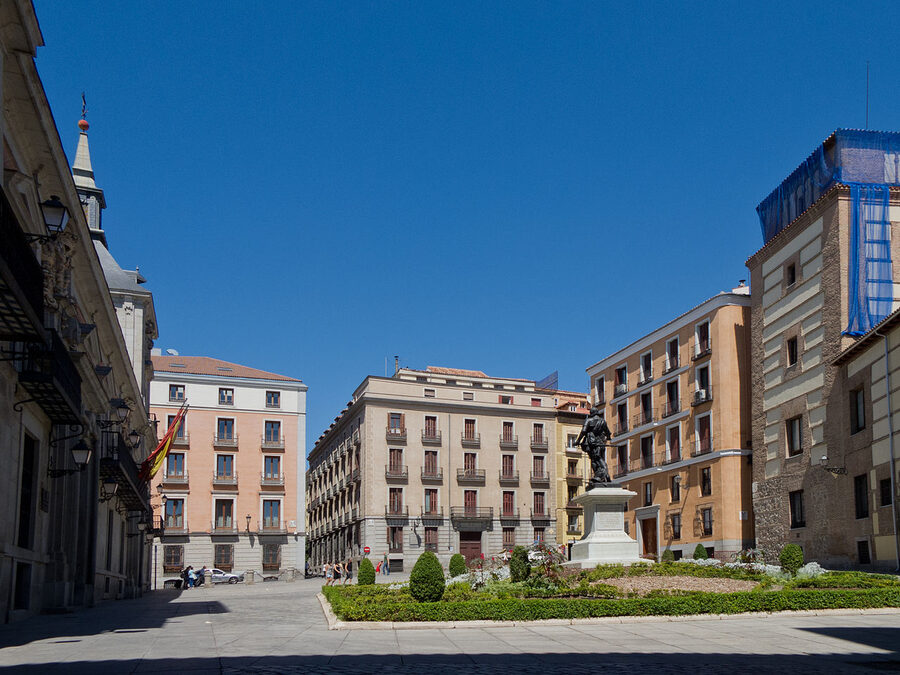
Plaza de la Villa
This is the part most visitors miss entirely. Plaza de la Villa is two streets west of Plaza Mayor, smaller, quieter, and houses the medieval town hall plus the 15th-century Casa de los Lujanes (where French king Francis I was reportedly held prisoner after Pavia in 1525). It’s where Madrid’s local government sat for four centuries. A tuk-tuk slows down here and points; a walking tour usually skips it because there isn’t much “there” there until someone explains it.

Royal Palace exterior and Plaza de Oriente
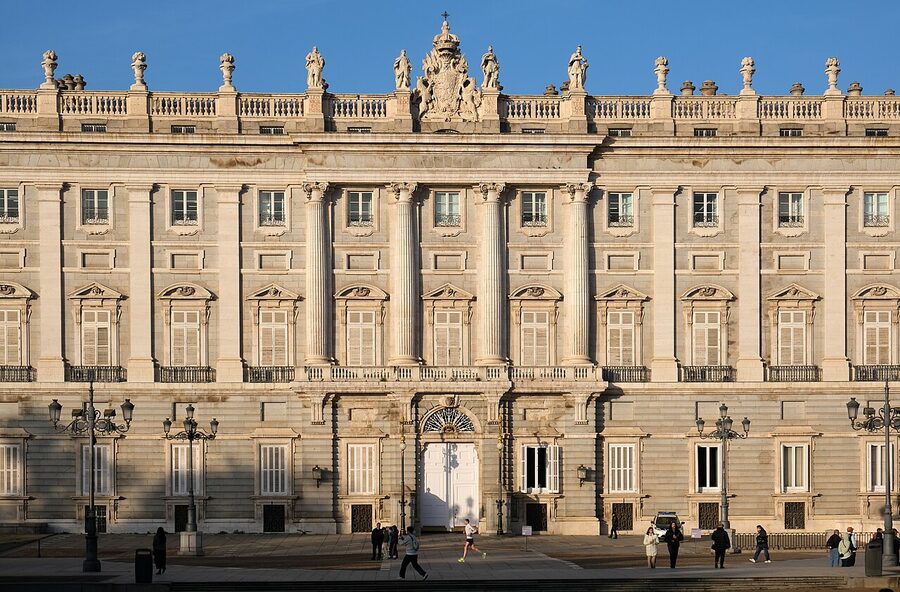
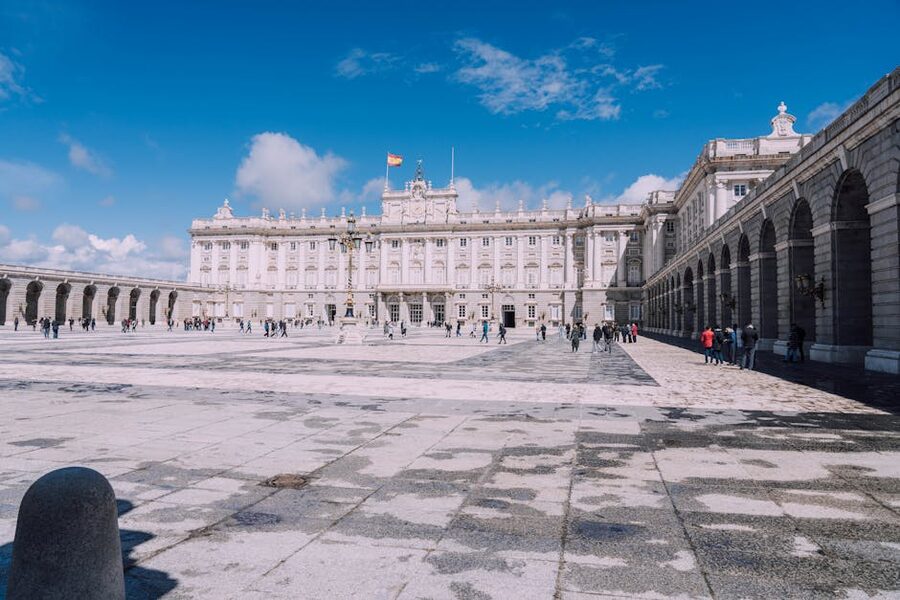
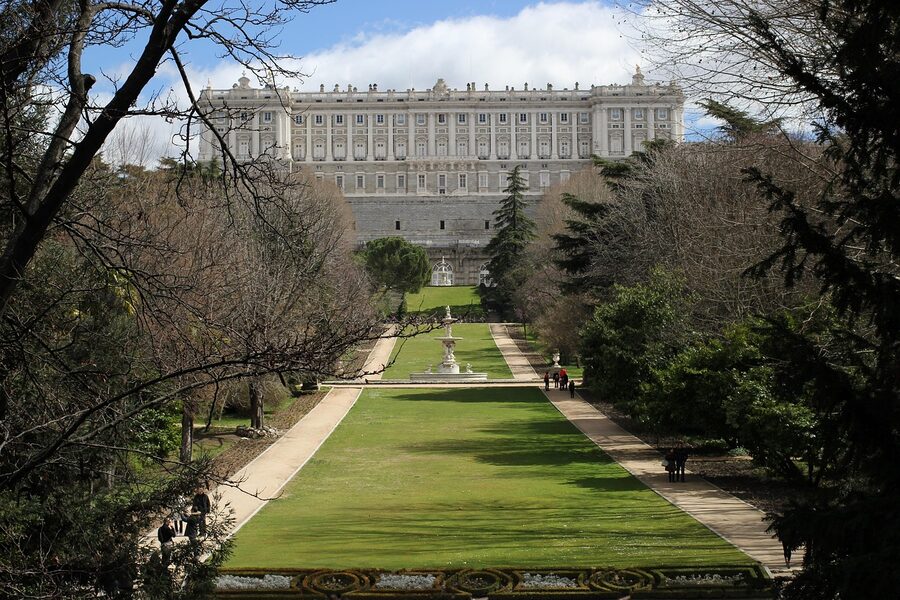
The tuk-tuk pulls up at the Plaza de Oriente side, which faces the east facade. You don’t go inside, this is a photo stop. If you want the interior, you need a separate ticket and at least 90 minutes; we cover that in our guide to Royal Palace of Madrid tickets. From the railing you see the whole length of the building, and behind you the Teatro Real opera house and a row of statues of every Spanish monarch.

Almudena Cathedral
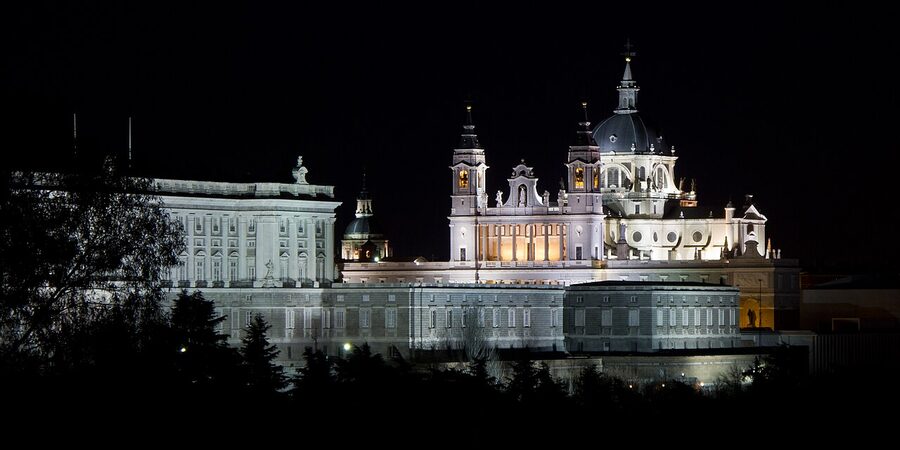
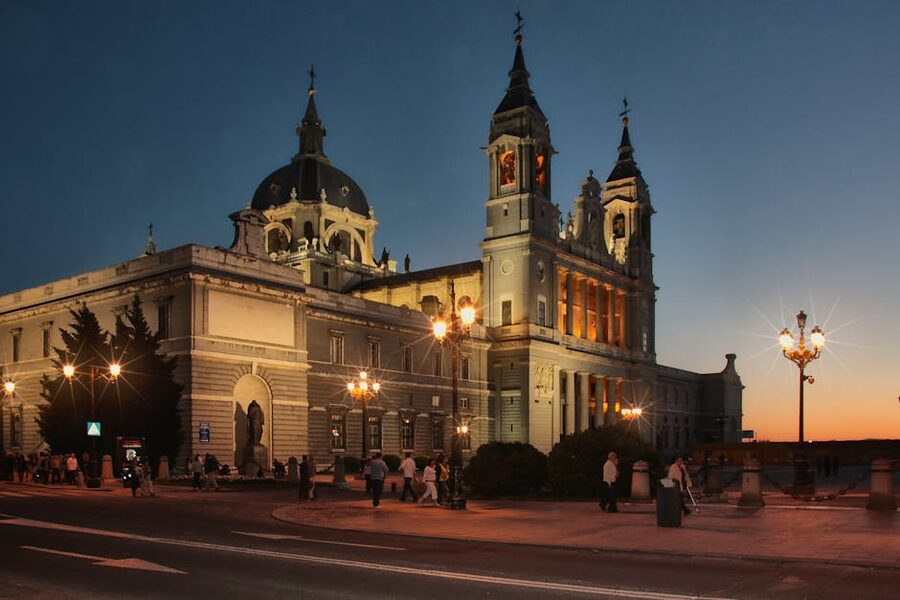
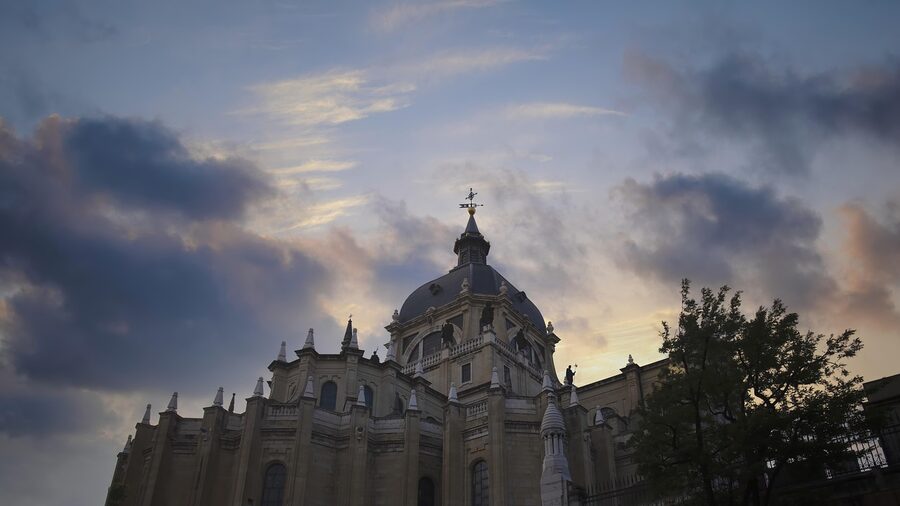
Across the square from the Royal Palace, on the south side. The Almudena is unusual because Madrid only got a designated cathedral in 1993, when Pope John Paul II consecrated it. Construction started in 1879. It took 110 years, three architects, and a swerve from neo-Gothic exterior to neo-Romanesque crypt to neoclassical to whatever the painted ceilings are doing now. Honestly, the inside is divisive. The exterior is the photo, and you get that from the tuk-tuk window.

Templo de Debod
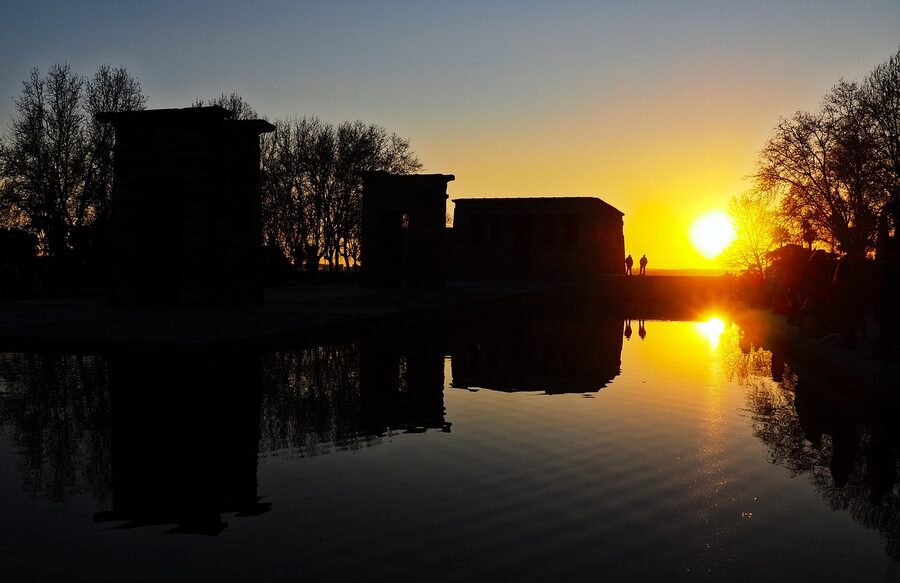
Already covered above, but worth repeating that this is the stop most adults wouldn’t have built into their own self-guided walk. The temple sits at the western edge of Parque del Oeste, about a fifteen-minute walk uphill from the Royal Palace. The tuk-tuk drives there in five. Sunset over the western edge of the city behind it, especially in summer, is one of the best photo moments Madrid offers.
Gran Via and the early-20th-century city
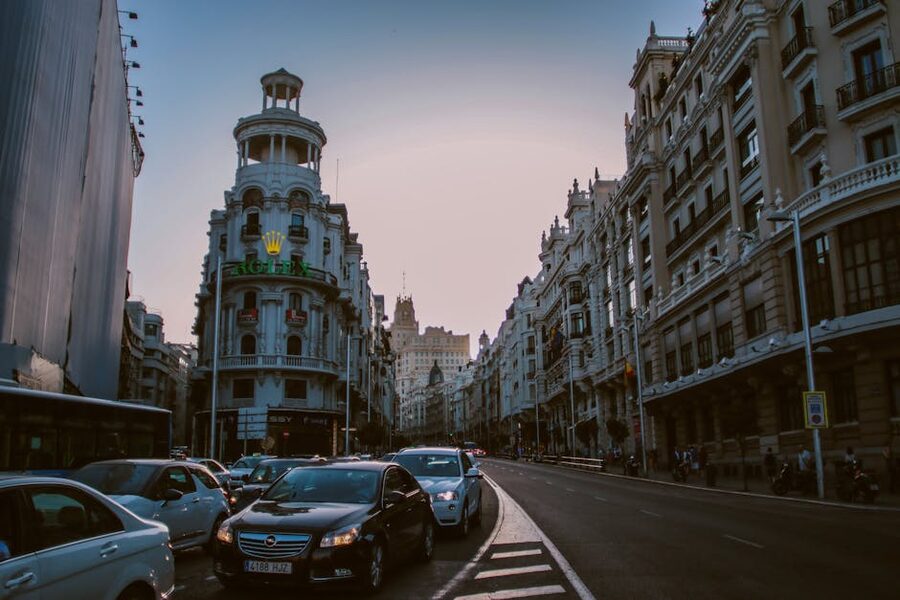
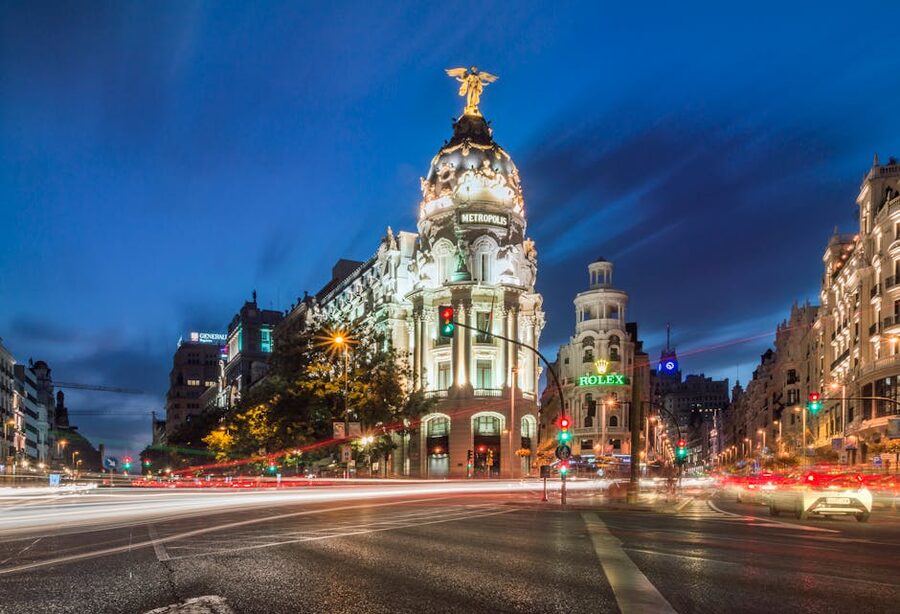
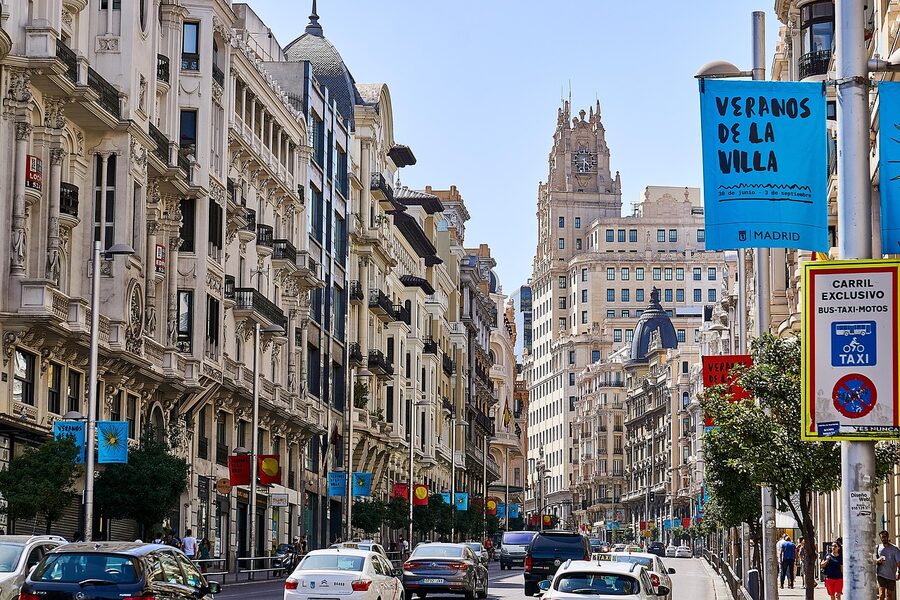
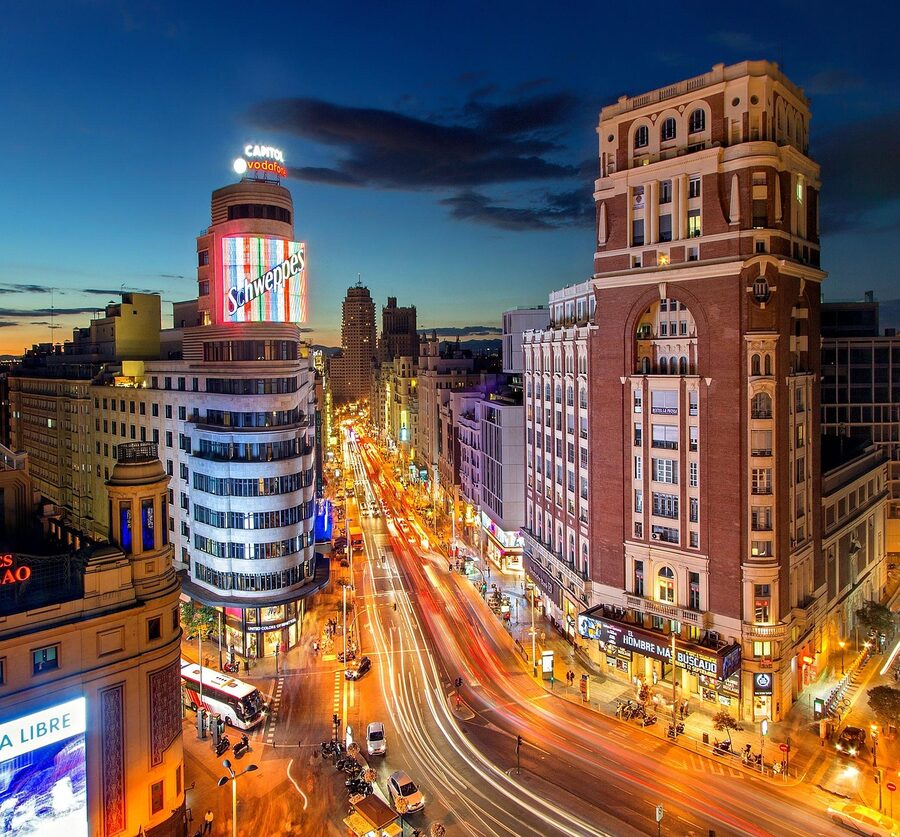
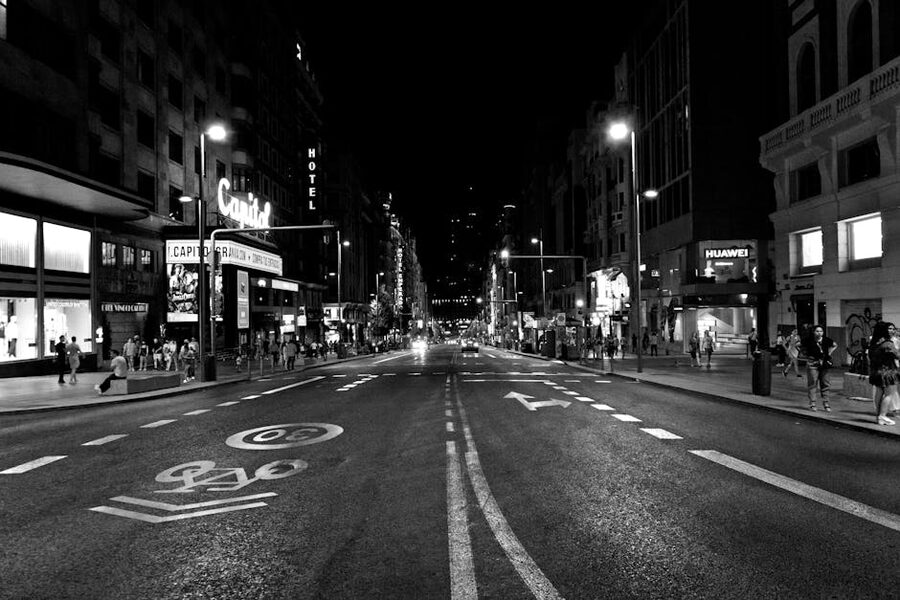
From Debod the route loops east through Plaza de Espana and onto Gran Via, the broad early-1900s avenue that locals call Madrid’s Broadway. You don’t stop here as such, you drive its length slowly, with the driver pointing out the Metropolis Building, the Edificio Telefonica (Madrid’s first skyscraper, 1929), the Schweppes neon, the Capitol building. This is the stretch where being in a small open-sided vehicle pays off. You can crane your neck and read the cornices.
Cibeles and Puerta de Alcala
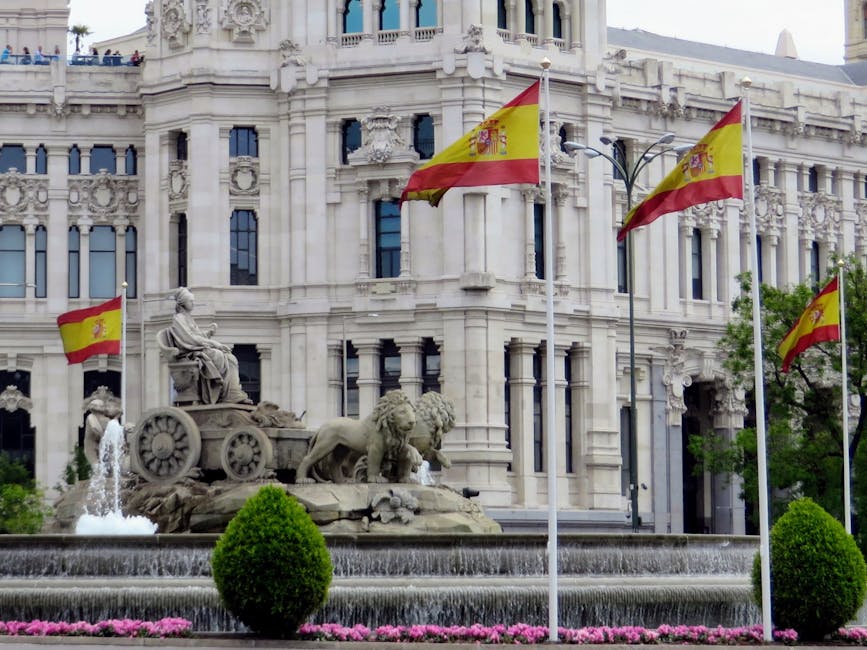
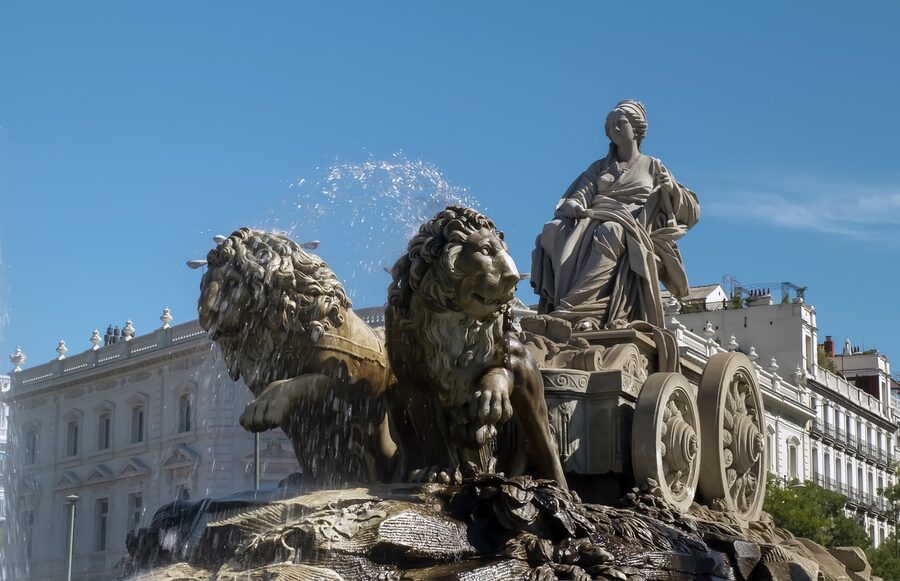
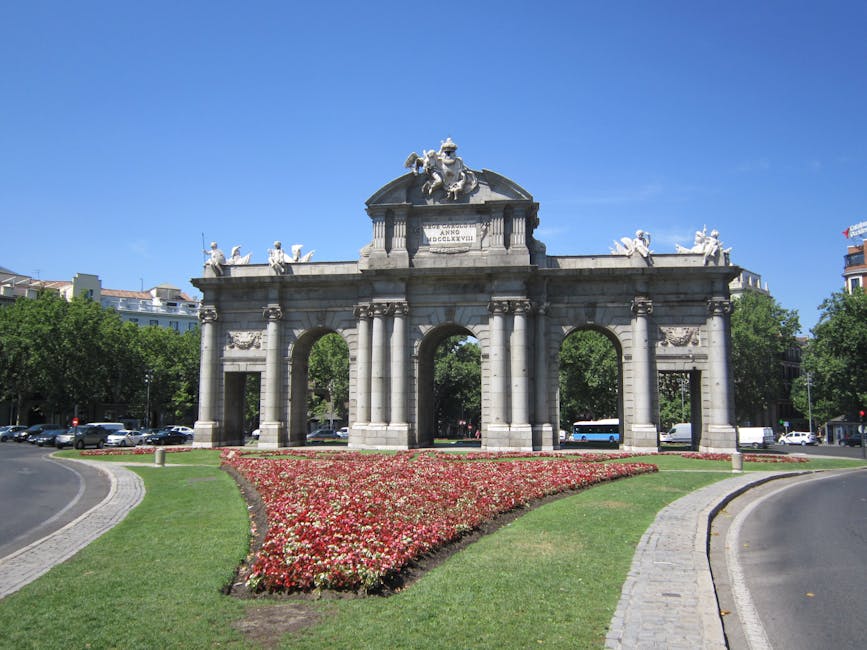
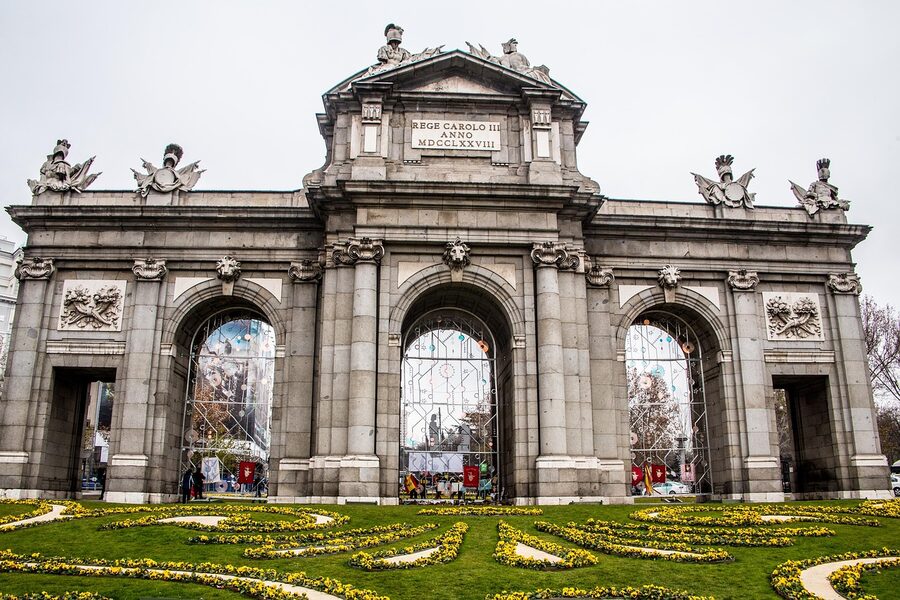
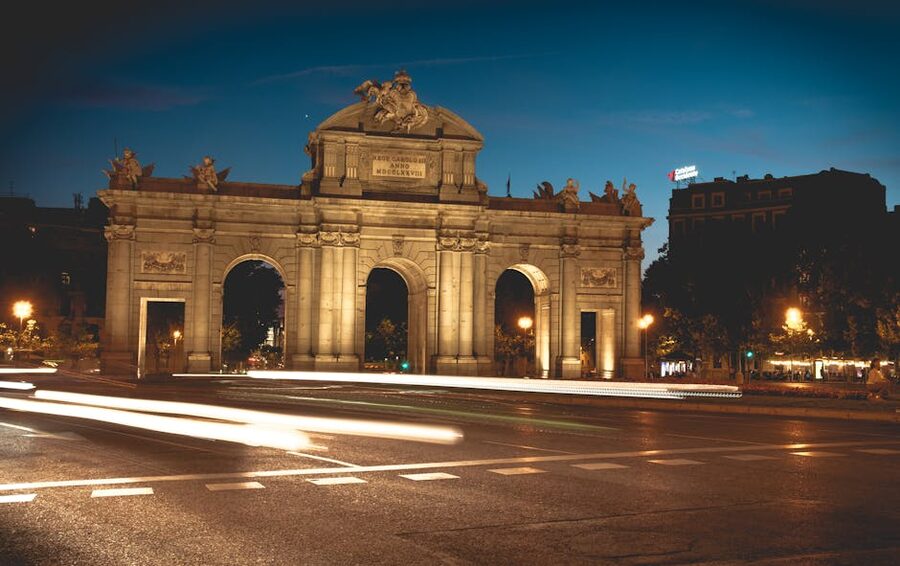
Past Gran Via you swing south onto Calle de Alcala and pass the Cibeles fountain, then a block further the Puerta de Alcala monumental gate. Cibeles is where the Real Madrid football team celebrates its trophies; the building behind it (Palacio de Cibeles) used to be the central post office and is now the city hall. Puerta de Alcala is older than it looks: 1778, Carlos III, neoclassical, predates the Brandenburg Gate by a decade.
The edge of Retiro Park
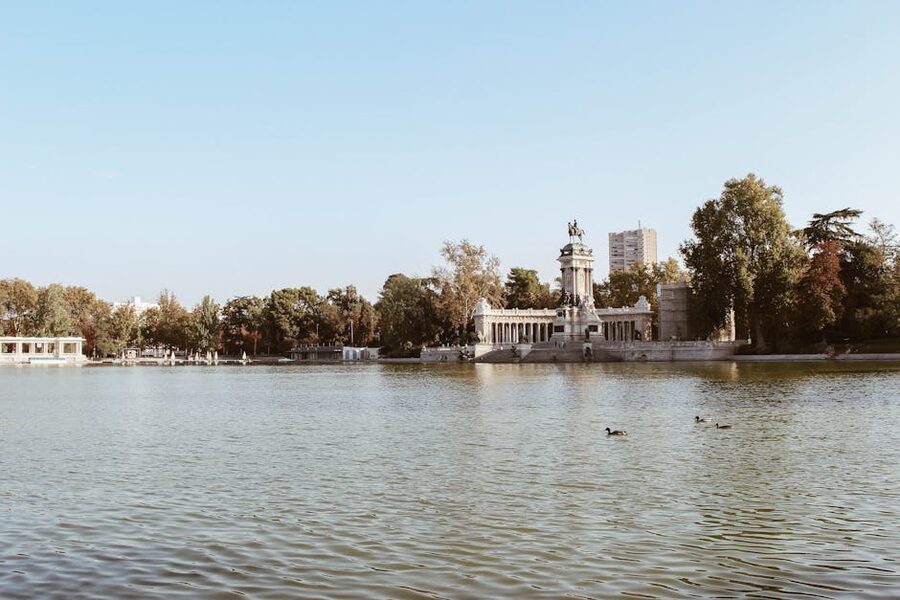
Most 2-hour routes don’t enter Retiro (vehicles aren’t allowed inside the park anyway) but they pause at the western entrance, the Puerta de la Independencia. From the gate you see the start of the main avenue and, further in, the Estanque pond and the colonnaded Alfonso XII monument. If your tour runs three hours, the driver may take you to the southern Atocha entrance instead, which is closer to the Reina Sofia art museum.
Practical questions, answered
How do I actually book?
Both featured operators take advance bookings online with no deposit until 24 hours before. Pick the date and time slot, enter the meeting point (most operators offer central-Madrid hotel pickup, no extra cost within the central ring), confirm. They’ll send a Whatsapp message with the driver’s name and license plate. Cash isn’t expected at the end; it’s all card-on-booking.
What about same-day booking?
Possible but not recommended for the 4-6pm and 6-8pm sunset slots, which sell out 24-48 hours in advance in summer (May to October). Off-peak (November to March) you can usually walk up. The pickup desks are clustered near Plaza de Oriente and the Royal Palace, so if you’re in the area without a booking, asking is reasonable.
Can I customise the route?
Yes, and you should. The default route described above is the conservative version. If you’ve already done Plaza Mayor, ask the driver to swap it for the Lavapies barrio or the Mercado de San Miguel. If you don’t care about football, skip the Bernabeu detour (some 3-hour tours include it) and ask for more time at Templo de Debod. The driver-guides are paid the same whatever the route, so they’re not motivated to push the standard list.
Is it safe?
Yes. The vehicles run at 30-35 km/h on side streets, slower in pedestrianised zones, and they have two-point lap belts. The drivers are licensed by the Ayuntamiento de Madrid (city hall) under the same scheme that covers cabs and tour vehicles. There’s also a mandatory liability insurance certificate that operators are obliged to display in the vehicle. Ask if you don’t see it.
Will I get rained on?
Probably not, because Madrid almost never rains, but the cabins do have plastic side panels that drop down in bad weather. The vehicle is open at the front so you can still feel a cold wind in winter; bring a layer if you’re booking November to March.
What about kids?
This is honestly where tuk-tuks shine and where I’d most easily justify the cost. Kids who would whine through a museum tour love the ride. Operators will also fit a booster seat or child seat with 24 hours’ notice. The main constraint is the four-passenger limit, which means a family of five needs to either drop one parent or book two vehicles in a small convoy.
Tipping?
Not expected, but appreciated. Five euros for a 60-minute tour or ten for a longer one is plenty. The drivers are paid hourly by the operator; tips are bonus.
How a tuk-tuk compares to the alternatives
Madrid has more sightseeing tour formats than most European capitals. Quick comparison, since most readers are deciding between two or three of these.
Versus the panoramic bus. The Madrid hop-on-hop-off bus is cheaper per person and runs on a fixed loop with audio guide. Better for a full day of moving between major museums. Worse for the central Habsburg streets, which it can’t enter, and weaker on the Templo de Debod side. Pick this if you want to do Prado plus Reina Sofia plus Royal Palace in a single day with rest between.
Versus a walking tour. A central Madrid walking tour goes deeper at every stop. You hear ten minutes of stories at Plaza Mayor instead of three. But you cover roughly a third of the geography and you’re done in two hours having seen the central core only. Pick this if you have one Madrid day and you want history depth over breadth.
Versus a bike tour. A Madrid bike tour is the closest format alternative: small mobility, similar geography, similar two-hour duration. Bikes can be more fun for active travellers and they cover more park. Tuk-tuks are easier on hot days and on small kids. The price difference between the two is small.
Versus a sightseeing van or minibus. A small-group sightseeing tour in Madrid usually splits the day into a half-day or full-day with multiple sites and proper indoor stops (Royal Palace tickets included, for example). That’s a different product. Pick this if you want one tour to handle a full day with interior visits.
Versus tuk-tuks in other cities. If you’ve done Lisbon’s tuk-tuks, Madrid’s are similar in vehicle and pricing, but the Madrid map gives you bigger buildings. Lisbon plays to the hills and the views; Madrid plays to monumental architecture and broad avenues. We’ve covered both: Lisbon tuk-tuk booking guide, Porto tuk-tuk tour, and Budapest tuk-tuk tour are the closest international comparisons in our guides.
A short history of why Madrid has tuk-tuks at all
This part isn’t strictly necessary for booking, but it is interesting and most articles skip it. Tuk-tuks (the Asian three-wheelers) arrived in European cities in the early 2000s, mostly in Lisbon and Berlin, as taxi alternatives. Madrid was late to adopt them. The first electric eco tuk-tuk operators in central Madrid started around 2016-2017, after the Ayuntamiento opened a regulatory category for “small-vehicle tourist transport” that didn’t fit into the existing taxi or bus rules. The current operators are mostly third-generation, post-pandemic outfits that consolidated after the 2020 collapse of independent guides.
The vehicles themselves are mostly Italian-built electric Piaggio Ape variants and Chinese-built equivalents. They charge from a standard 220V wall socket overnight. Range is about 80 km, which is more than enough for a 4-hour tour day with one mid-day top-up at the operator’s depot.
When to ride
The single best slot is the late-afternoon-into-sunset run (4pm to 7pm in winter, 6pm to 9pm in summer). You catch the Royal Palace in the soft light and the Templo de Debod at golden hour. Second best is early morning, 9am to 11am, when traffic is light and Plaza Mayor is empty.
The worst slot is mid-morning in July or August, 11am to 1pm, when the heat hits 35 degrees C and the open-sided cabin offers no shade. The Templo de Debod stop in particular has zero shade trees on the western approach. If summer is your only window, take the 7pm slot.
Sundays in winter are busy because of the Rastro flea market in La Latina, which adds pedestrian traffic and can make routes detour. Tuesdays are quietest in the central core because some big museums are closed and the area thins out.
Other Madrid guides worth a look
If a tuk-tuk isn’t your speed, the closest alternatives in our Madrid coverage are the bike tour guide and the panoramic bus tour; both cover similar geography on different vehicles. For depth on the Habsburg core that the tuk-tuk only skims, the central walking tour is the next step.
Most tuk-tuk passengers we know end up booking the Royal Palace interior visit separately for the day after, because the tuk-tuk only stops at the railing. Same logic applies to the Prado and the modern art at Reina Sofia: a tuk-tuk drops you at the door, but the time inside is yours to plan. The Reina Sofia is the new modern-art ticket guide we just shipped; pair it with the Prado and Thyssen for the full Madrid Art Triangle.
If you’re trying to fit Madrid into a wider Spain trip, the day-trip combos are where you get the most ground per day. Our Segovia, Avila and Toledo day trip guide covers the punishing-but-popular three-cities-in-one-day combo. If you’d rather stay in the city and pack the central highlights with a guide, the Essential Madrid tour bundles Plaza Mayor, the historic core, and the Royal Palace into one half-day with the skip-the-line ticket sorted. Either pairs well with a tuk-tuk on the same trip; the tuk-tuk gives you the lay of the land, those tours give you the depth.
Affiliate disclosure: some links in this article go to GetYourGuide and Viator. If you book through them, we may earn a small commission at no extra cost to you. We only recommend tours we’d book ourselves.