
You walk into Sala 205.10 on the second floor of the Sabatini building, and the room shifts. The chatter from the corridor stops at the doorway. A guard stands so still you wonder if she actually breathed since you walked in. And on the long wall, taking up the whole thing, is Picasso’s Guernica. Twenty-five and a half feet across. Eleven and a half feet tall. A horse with a spear through its side, a woman holding a dead child, a bull’s head you can’t read as either bystander or witness. Half the people in front of it are silent. The other half are whispering. That’s the room you came for. This is how to get in.

If you want a guide: Reina Sofia Guided Tour with Entry Ticket, $59. Small group, 90 minutes, ticket included. Best if Guernica is the only Picasso you can name.
Cultural fast lane: Reina Sofia Museum Guided Tour, $38. 75 minutes, no ticket bundled (you sort that yourself), guide does the heavy lifting.


- What you actually pay
- Free entry, and why I’d think twice about it
- Three ways to book
- 1. Reina Sofia Museum Entrance Ticket:
- 2. Reina Sofia Guided Tour with Entry Ticket:
- 3. Reina Sofia Museum Guided Tour:
- Guernica, and what to actually look at
- Hours, the day that’s closed, and timing
- Getting there
- The Madrid Art Triangle
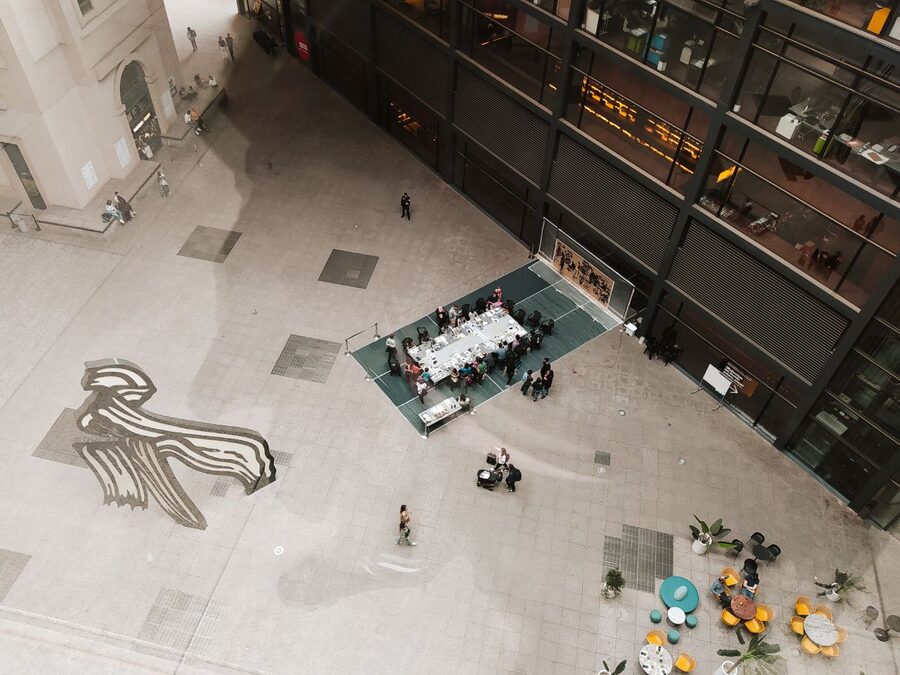
- The Sabatini and the Nouvel: two buildings, one museum
- Some history, briefly
- What people get wrong on their first visit
- Photos and what’s actually allowed
- Combining Reina Sofia with the rest of Madrid
- Day-trip add-ons from the Atocha base
- Smaller details that matter
- The Sabatini’s hospital ghost
- Other Madrid you should book before leaving
What you actually pay
General admission is around EUR 12, bought online or at the on-site ticket office. There’s a combined ticket (around EUR 18) that adds the audio guide and access to whichever temporary exhibitions are running. If you’re going to spend three hours inside, the combined ticket is fine. If you’re going for ninety minutes and Guernica, get the basic EUR 12 entry and skip the audio.
The $14 GetYourGuide voucher above is the same general entry, plus a flexible cancellation window and the ability to swap between dates without queueing at the box office to fix it. That’s most of why people use it. The actual museum doesn’t care which channel you booked through, you just need a valid timed entry.
Children under 18 enter free. So do over-65s. Students under 25 with valid ID get a discount, sometimes free depending on the day. Bring the actual ID card, a photo on your phone won’t always pass.

.jpg)
Free entry, and why I’d think twice about it
The museum is free Monday and Wednesday through Saturday from 7pm to 9pm, and Sundays from 12:30pm to 2:30pm. It’s also free on a handful of national days each year (18 April, 18 and 22 May, 12 October, 6 December).
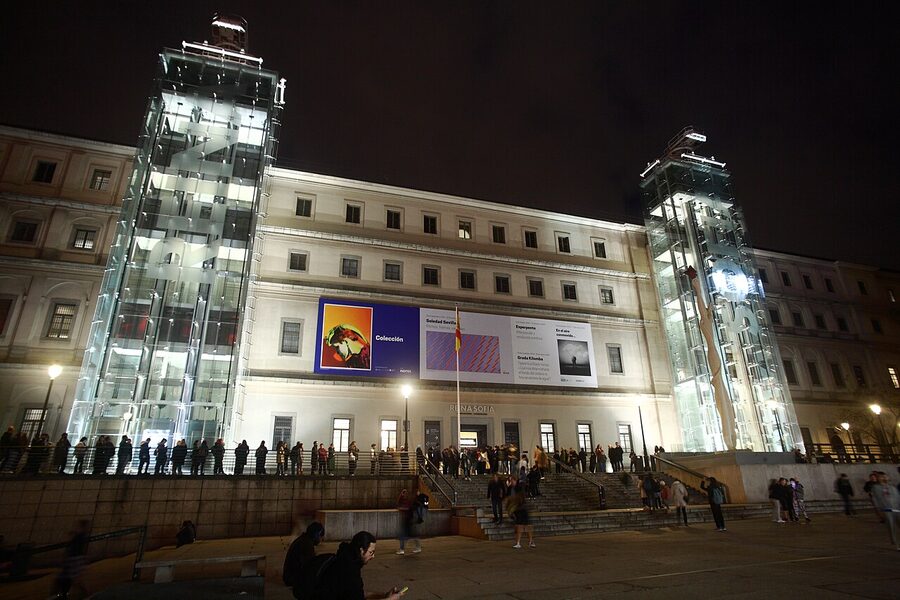
It sounds great. It’s also when the queue is at its worst. The line for the 7pm free slot starts forming around 6:15pm, wraps the building, and you typically lose 30 to 45 minutes outside before you reach the entry scanner. By the time you’re in, you have an hour and change before closing. That’s enough for Guernica and one wing of the second floor. It’s not enough to see the whole museum.
If your trip includes a paid morning slot or you’re already coming with a guide, skip the free hours. If you’re a budget traveller and free admission is the only way the museum fits the trip, do it but go on a Sunday lunch slot rather than a weekday evening, the queue moves faster. And go straight to Sala 205.10 first, Guernica is what you want to see most, the rest is gravy.
Three ways to book
You broadly have three options, picked from what people actually buy. I’ve listed them in the order most people end up choosing. Notice none of them are walking up to the box office without booking, the queue at the door is unpleasant and unnecessary.
1. Reina Sofia Museum Entrance Ticket: $14
The default. It’s the most-booked Reina Sofia product on the market, and that’s because it does one job well: it gets you in fast for a price almost identical to the box office. Our full review covers the cancellation window and what the timed slot actually means in practice (you have a 30-minute entry window, not a fixed start time).
Check Availability
Read our full review
2. Reina Sofia Guided Tour with Entry Ticket: $59
This is the one I’d book if it’s your first serious art museum in Spain. It’s small group (capped at six), 90 minutes, ticket bundled in. The guide does Guernica properly, sets up the historical context (Spanish Civil War, the bombing of the Basque town of Gernika in April 1937, the Paris World’s Fair commission), and walks you through the preparatory sketches in the same room before delivering you to the painting itself. Our full review goes into how the small-group format compares to the standard guided tour.
Check Availability
Read our full review
3. Reina Sofia Museum Guided Tour: $38
The mid-range pick. You bring your own ticket (or buy the museum entry voucher above), the guide handles the storytelling for 75 minutes. Our full review notes that this is the better option if you want to spend more time in the museum after the tour ends, since you can stay as long as you want on the same ticket.
Check Availability
Read our full review
Guernica, and what to actually look at
The painting is in Sala 205.10, second floor of the Sabatini wing. Some maps still call it Sala 206. Same room. It’s one of the largest paintings you can stand in front of in Europe, just over 7.7 metres wide and 3.5 metres tall, painted in oil on canvas in two months in 1937 in Picasso’s Paris studio.
The room is quiet because of the painting and because of the rules. No photography. No video. The guards enforce it, gently if you’re confused, less gently if you’re stubborn. There are benches along the opposite wall, and the right move is to sit on one for ten minutes and let your eyes adjust to the scale. Most people stand in front of it for two minutes and move on. They miss most of what’s there.
The figures: the gored horse with its tongue out at the centre, the woman holding the dead child on the left, the screaming woman with her arms raised on the right, the bull standing impassive at the upper left, the soldier on the ground with a broken sword and a flower. The lightbulb that looks like an eye at the top. The lamp held out by the figure leaning in from the right window. The whole thing is grey and black and white because the news of the bombing reached Picasso through black-and-white newspaper photographs.
The sketches in the same room are the warm-up. Picasso made over forty preparatory drawings. Walk those before you face the main canvas. You’ll see the bull get larger, the horse get smaller, the dead child appear, the lightbulb arrive late.
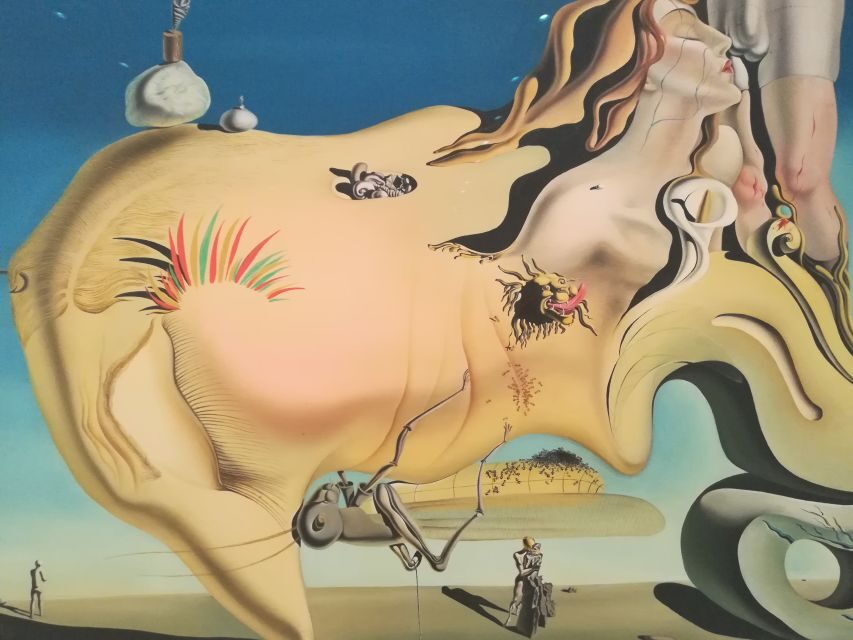
After Guernica, the rooms either side of 205.10 hold more Picasso. Then the Dali galleries are nearby on the same floor, including The Great Masturbator and The Enigma of Hitler. Joan Miro has his own room a couple over. Juan Gris and the Spanish Cubists are tucked along the way. If you only have ninety minutes and Guernica is the only painting you came for, you’ve still got time to do the Dali room properly afterward.

Hours, the day that’s closed, and timing
Open Monday and Wednesday through Saturday, 10am to 9pm. Sundays, 10am to 2:30pm. Closed Tuesdays. Yes, every Tuesday. This is the most common ticket-day mistake foreign visitors make in Madrid: the Prado is open Tuesdays, the Reina Sofia isn’t, and people assume the city’s three major museums share a closure day. They don’t.
Best slots based on what I’ve seen and what the museum publishes about visitor flow:
- 10am-12pm: most crowded, especially in summer. Tour groups arrive at opening and stay an hour.
- 2pm-6pm: the genuinely quietest window. Spaniards eat lunch late and the post-lunch lull is real.
- 7pm-9pm: free entry rush. Crowded but a mood. Some people love it, others find it stressful.
I’d aim for a 2:30pm or 3pm timed slot in summer, 11am in winter (winter afternoons get gloomy and the natural-light galleries lose impact). A standard visit covering Guernica, Dali, Miro, and a swing through one temporary exhibition runs 2 to 2.5 hours. If you want to do the whole permanent collection across all four floors, give it 3.5 to 4 hours.
Getting there
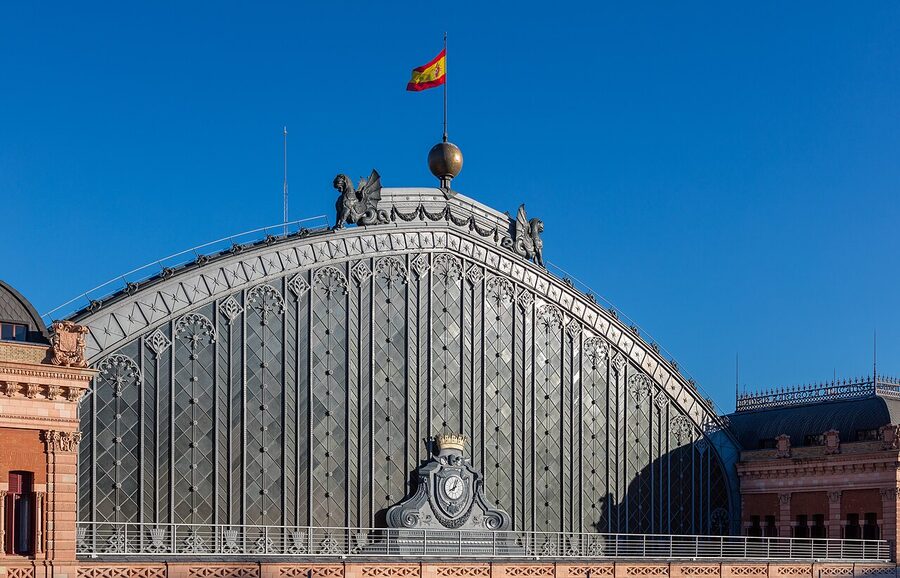
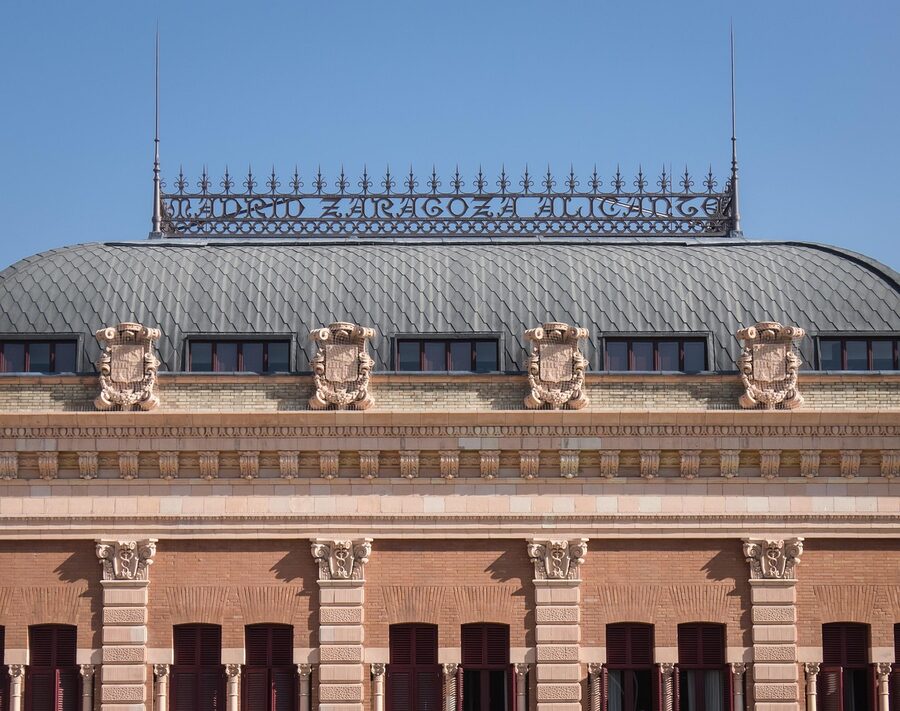
Atocha station is the closest mainline transit hub. The museum is a 4-minute walk from the Atocha Renfe metro stop on Line 1, or 6 minutes from Atocha Cercanias commuter rail. Either way you cross Plaza del Emperador Carlos V (the busy roundabout out front) and walk one block down Calle de Santa Isabel. The museum’s main entrance is on the right.

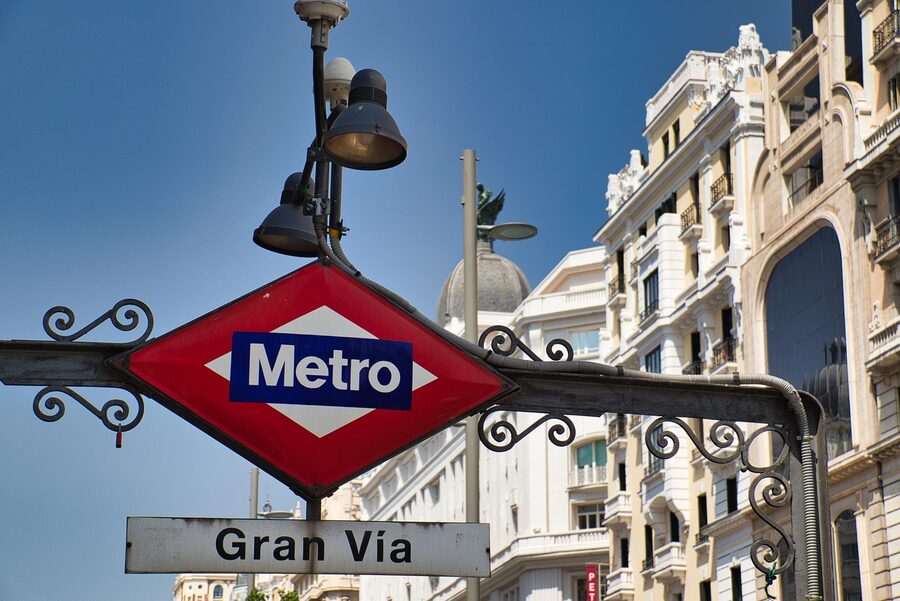
From Sol or Gran Via, walk it. It’s 15 minutes downhill via Calle de Atocha and you pass enough Madrid character to make the walk worthwhile. From the Prado, it’s 8 minutes south along the Paseo del Prado, no metro needed.
If you’re staying in the Salamanca district or further north, take Metro Line 1 to Atocha, it’s the most direct route. Line 1 is the dark blue one. Avoid driving, the museum doesn’t have its own parking and the public garages around the station are expensive.
The Madrid Art Triangle
Reina Sofia is the third leg of what locals call the Triangulo del Arte. Together with the Prado (12th to 19th-century European masters: Velazquez, Goya, El Greco, Bosch, Titian) and the Thyssen-Bornemisza (almost everything else, with a strong Impressionist and 20th-century modern collection), they form a walking-distance trio along the Paseo del Prado.
If you’ve got two days in Madrid for art, do the Prado on day one and the Reina Sofia on day two, with the Thyssen split between them as time allows. If you’ve got one day, you have to choose. Most first-timers do the Prado for the Spanish masters; second-timers do the Reina Sofia for Guernica, Dali, and Miro. There’s no objectively right call. They’re different museums showing different centuries.
There’s a combined three-museum pass called the Paseo del Arte for around EUR 32, valid for one year, single entry to each. Worth it if you definitely intend to see all three within twelve months. Skip if you only want one or two.
The Sabatini and the Nouvel: two buildings, one museum
The museum runs across two connected buildings, and the geography matters because the permanent collection (the bit you came for) lives in one of them.
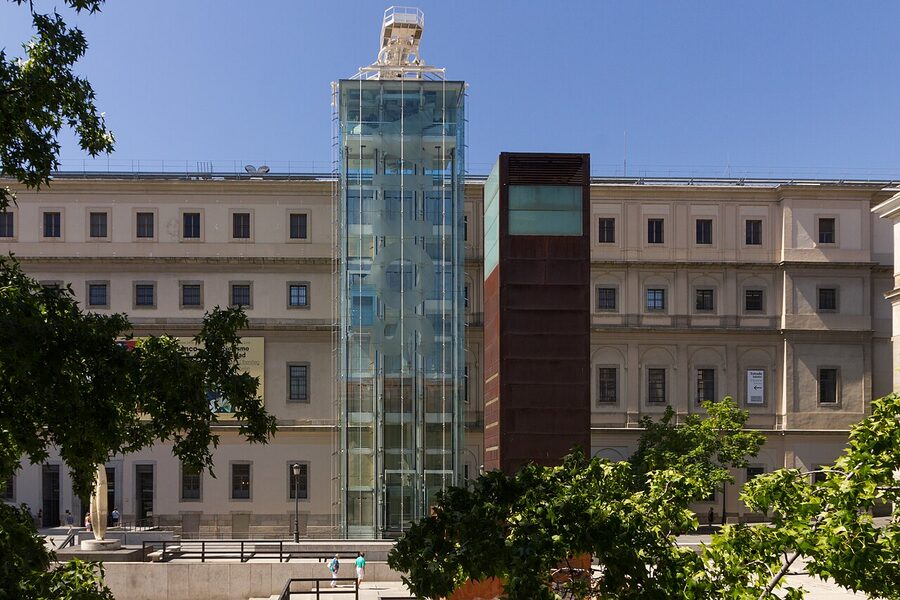
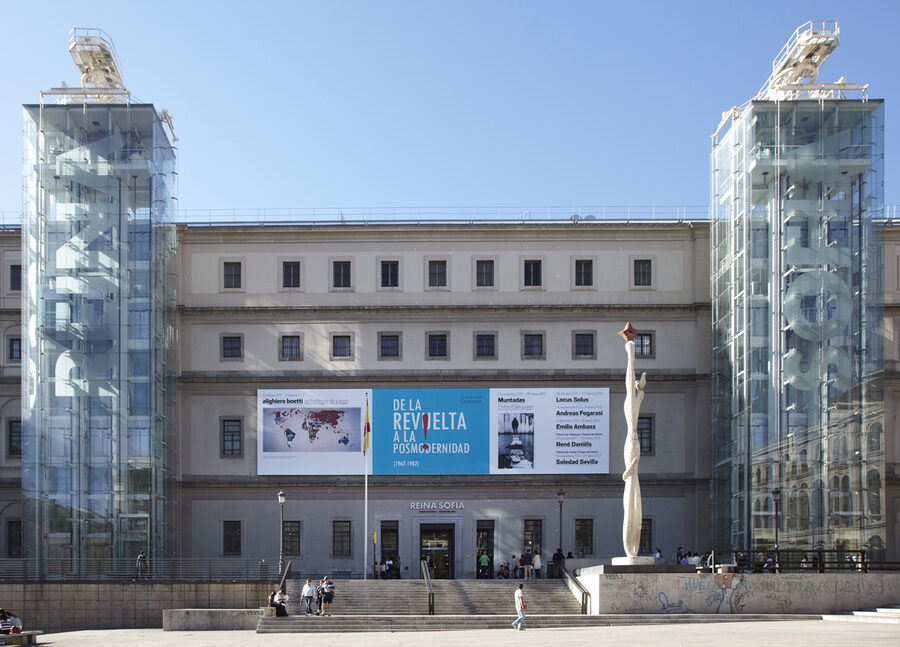
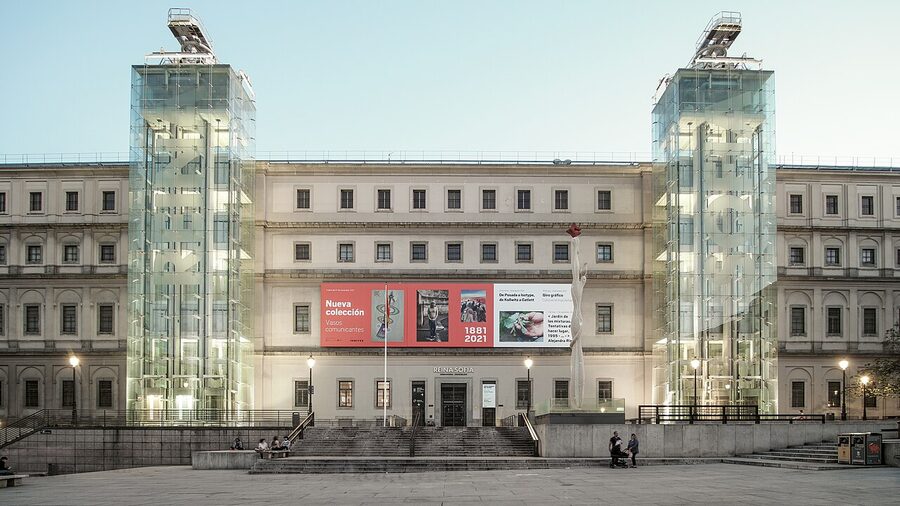
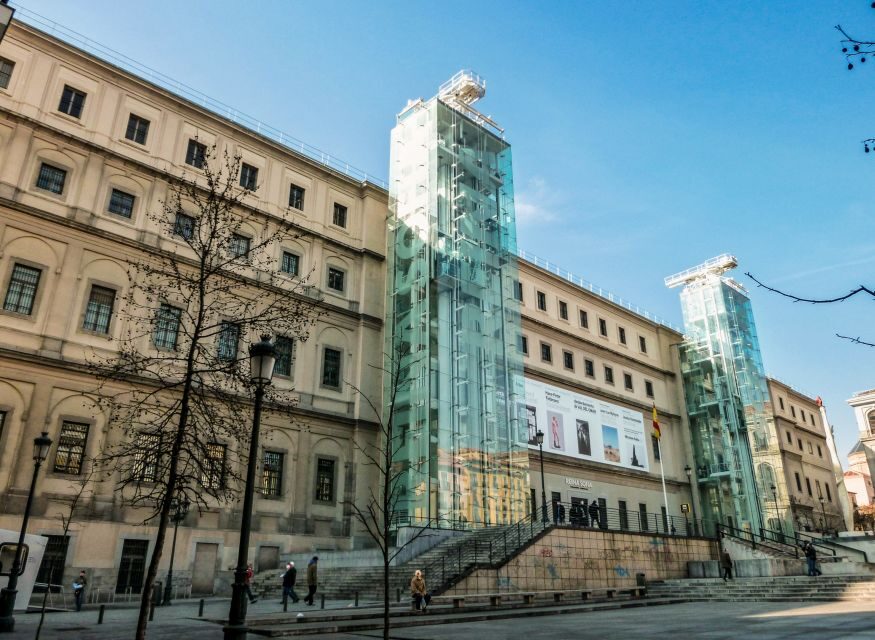
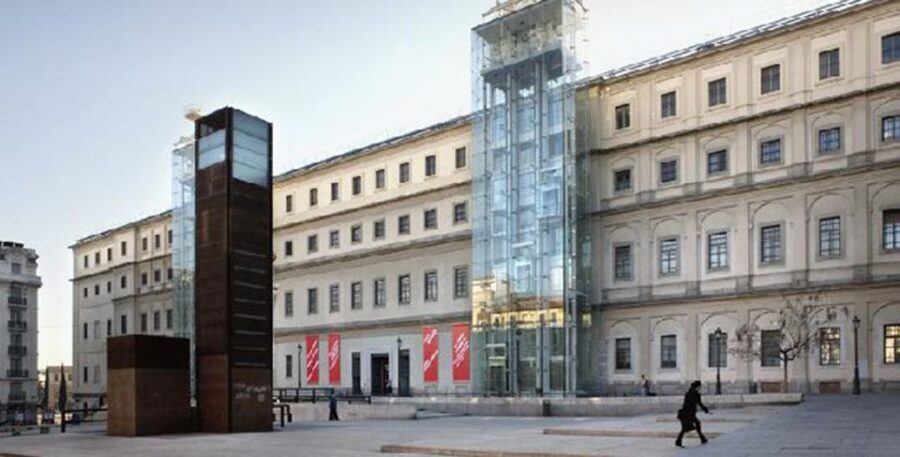
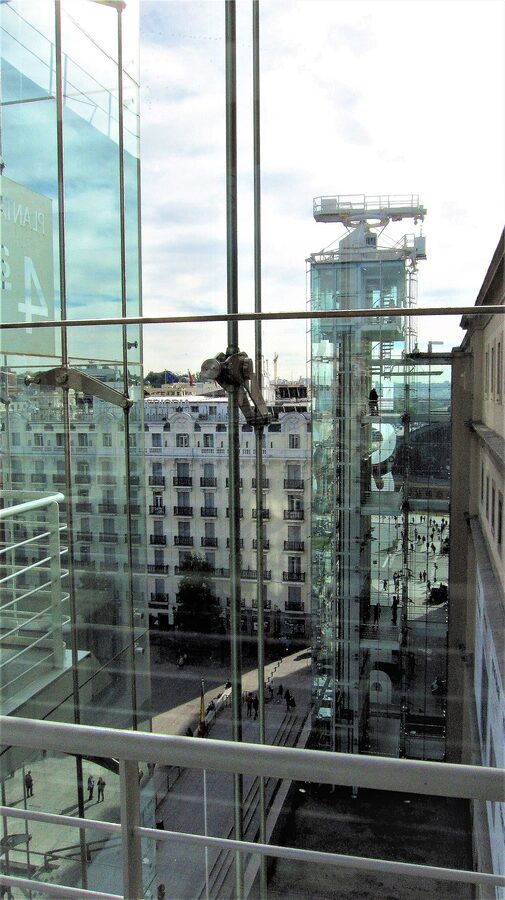
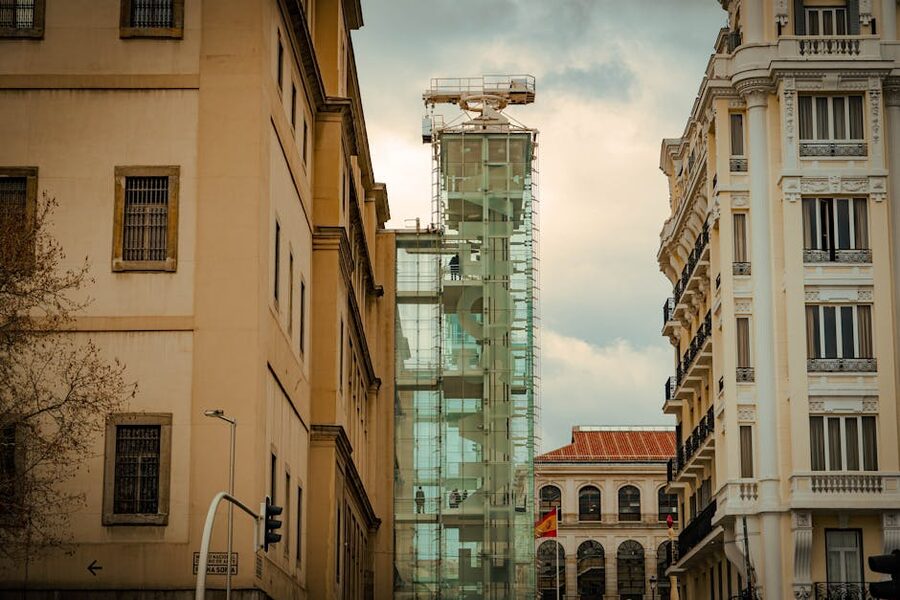
The Sabatini Building is the original. It was Madrid’s General Hospital from the 1780s until the 1960s, designed by the Italian architect Francesco Sabatini under Carlos III. The building has four floors plus a ground level and houses the entire permanent collection. Guernica, the Picassos, the Dalis, the Miros, the Spanish Civil War galleries, all in here. The two glass-and-steel external lift towers added in the 1990s are how you spot it from outside.
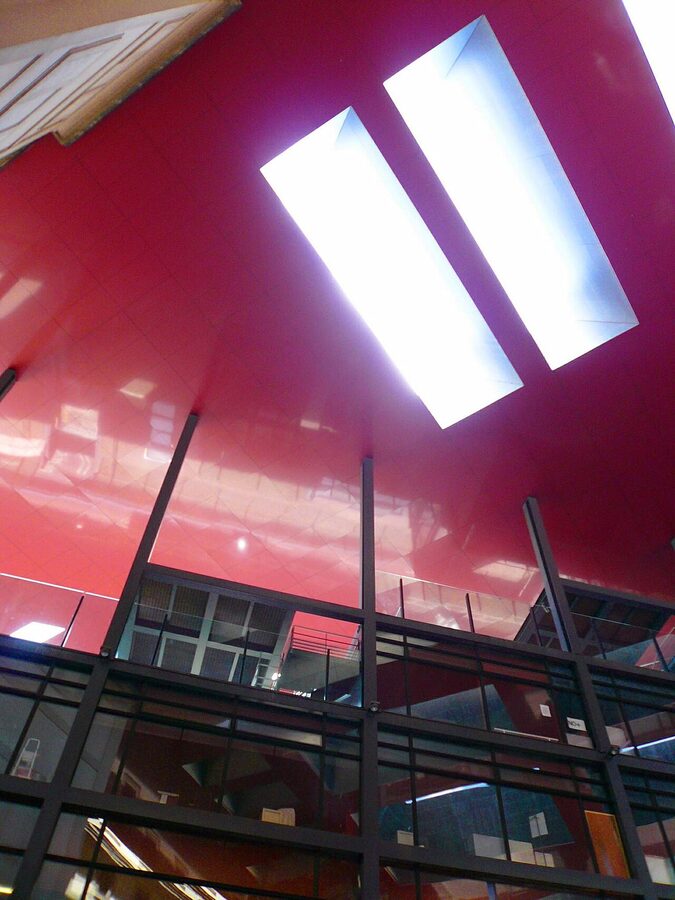
The Nouvel Building is the 2005 extension by French architect Jean Nouvel, the one with the red metal canopy. It holds the temporary exhibition halls, a 500-seat auditorium, the library, the bookshop, the cafeteria, and a restaurant. It’s where you’ll do the temporary shows if you bought the combined ticket. The two buildings connect through the Nouvel Patio in between.
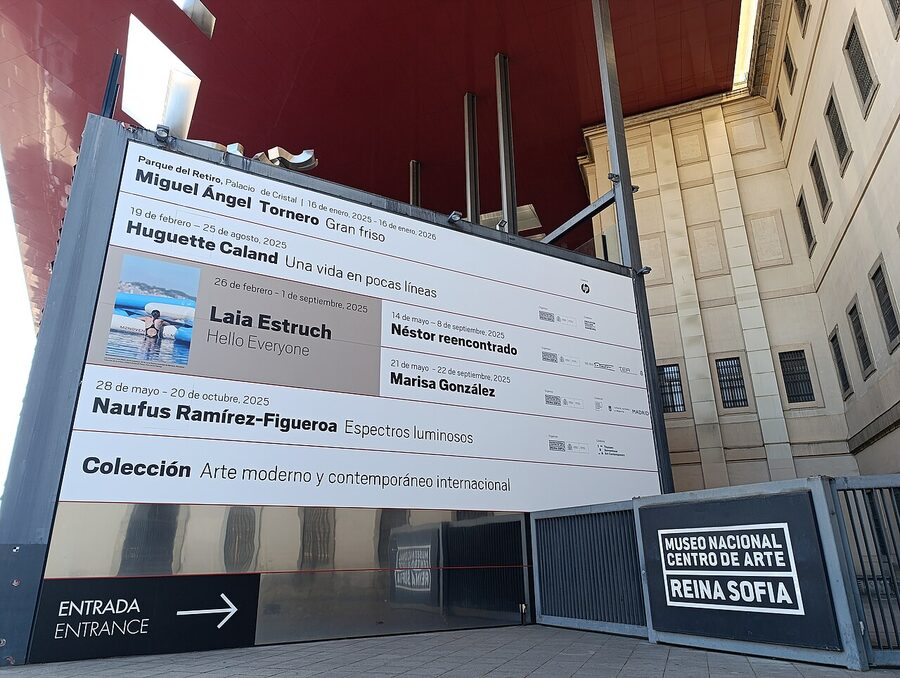
Practical: the entry queue and security checks all happen at the joint Nouvel-Sabatini entrance. Once you’re past the scanner, you turn left for the permanent collection (Sabatini) and right for the temporary shows (Nouvel). I’d do the Sabatini first while my legs are fresh, the permanent collection has the heavy emotional content.
Some history, briefly
The building has only been a museum since 1992, but the institution traces back to 1986 when it opened as a national art centre in the same complex. Before that, the structure was the Hospital General de Madrid, dating to the late 1700s. The hospital closed in the 1960s and the building sat partially derelict for two decades while Madrid figured out what to do with it.
The institutional turning point was the arrival of Guernica in 1992. Picasso had stipulated the painting could only return to Spain after democracy was restored. It hung in MoMA in New York from 1939 onwards, came back to Spain in 1981 (after Franco’s death), spent a decade in the Prado’s annexe at the Cason del Buen Retiro, and finally moved to Reina Sofia when the new museum’s bullet-proof gallery was ready. The painting hasn’t moved since 1992. It probably won’t.
What people get wrong on their first visit
A few things I see repeated. None of them are catastrophic, but they’re all easy to avoid.
Going on a Tuesday. Closed. Every Tuesday. The museum’s website says so in big type. Tourists still show up. The free Sunday afternoon slot won’t save you if your only Madrid day is a Tuesday.
Booking a tour without checking the meeting point. Some Reina Sofia guided tours meet at the museum entrance. Others meet at a separate office a few blocks away and walk you there. Read the meeting-point line on your voucher. If you skim past it because the address has the word “Madrid” in it and assume you’re sorted, you’ll show up at the wrong place.
Arriving 45 minutes before closing. Last entry is 90 minutes before closing on weekdays, and the security check at 8pm on a Friday isn’t going to wave you in for a 35-minute Guernica blitz. If you’re cutting it close, aim to be inside by 7pm.
Not eating beforehand. The museum cafeteria is fine but small, and the queue at lunchtime can hit 25 minutes. Either eat in advance, or buy a coffee and a sandwich at one of the cafes on Calle de Atocha five minutes before you go in.
Skipping the temporary exhibitions. The Reina Sofia’s temporary shows are usually genuinely good and almost never crowded. If you’ve got 30 spare minutes after Guernica and the Dali galleries, walk over to the Nouvel side and see whatever is on. Some of the best art experiences I’ve had at this museum were in temporary halls.
Photos and what’s actually allowed
Most of the museum lets you take photos without flash. The big exception is Guernica’s room, and adjacent rooms holding Picasso preparatory sketches. No photography, no video, no exceptions. Guards will ask you to delete shots they see you take.
Other restrictions show up on a per-exhibition basis. Some temporary shows ban photography on rights grounds. Look for the camera-with-a-cross icon on the room placard, that’s your no-photo signal.
Tripods, selfie sticks, and large bags are also restricted. There’s a free cloakroom on the ground floor near the entrance for anything bigger than a daypack.

Combining Reina Sofia with the rest of Madrid
Half a day inside the museum is enough. What do you do with the other half?
The Prado is 8 minutes north along the Paseo del Prado. The Royal Botanical Garden sits between the two and makes a calm midpoint, especially in spring. The Thyssen-Bornemisza is 4 minutes further again on the same street. You can chain all three museums in one extremely demanding day, but I wouldn’t recommend it, your eyes glaze over by museum three.
Better Madrid combos: do the museum in the morning and a walking tour of the historic centre in the afternoon. Or pair Reina Sofia with the Royal Palace, which sits at the other end of central Madrid (use Metro Line 5 or walk it in 30 minutes through Plaza Mayor). The hop-on hop-off bus stops at Reina Sofia too, the museum is one of the route’s headline stops.
For something completely different, grab a late lunch at one of the bars on Calle de las Huertas, ten minutes from the museum, then walk the Barrio de las Letras (the literary quarter where Cervantes and Lope de Vega lived) on the way back to your hotel. Reina Sofia in the morning, art-history-meets-tapas in the afternoon is one of my favourite Madrid combinations.
Day-trip add-ons from the Atocha base
Atocha is the launch pad for most Madrid day trips, which means staying within walking distance of the museum gives you a strong base for an art-plus-day-trip itinerary.
The classic pairings: Reina Sofia in the morning, then catch an afternoon AVE high-speed train to Toledo (33 minutes) and explore the old city. Or do a one-day combo trip via a coach, the Segovia, Avila and Toledo three-cities tour is the most-booked version, though it’s a brutal pace. The Toledo single-city option is gentler if you only have one day to spare. The Avila and Segovia two-city day trip is a happy middle ground.
Smaller details that matter
A few things that aren’t worth a full section but matter when you’re inside:
- The lifts on the front facade are external glass elevators. Riding them is a small Madrid pleasure, the view across the plaza on the way up is great. Use the Sabatini staircase coming back down for a different experience.
- The bookshop in the Nouvel building has a strong Spanish art catalogue you won’t find easily abroad. If you want a book with the full Guernica preparatory drawings, this is the place to buy it.
- The terrace cafe on the Nouvel side opens in summer and has views over the Plaza de Atocha. Good coffee, indifferent food, fine for a 25-minute decompression after Guernica.
- Wheelchair access is good through the main entrance and lift system, but parts of the Sabatini’s older staircases aren’t accessible. The museum’s accessibility guide on its website is detailed.
- Restrooms are on every floor, but the cleanest ones are in the Nouvel building. Use those before tackling the upper Sabatini floors.
- If you’re sensitive to crowds, the third floor is almost always emptier than the second. Half my best Reina Sofia moments have been on the third floor with five people in a gallery.
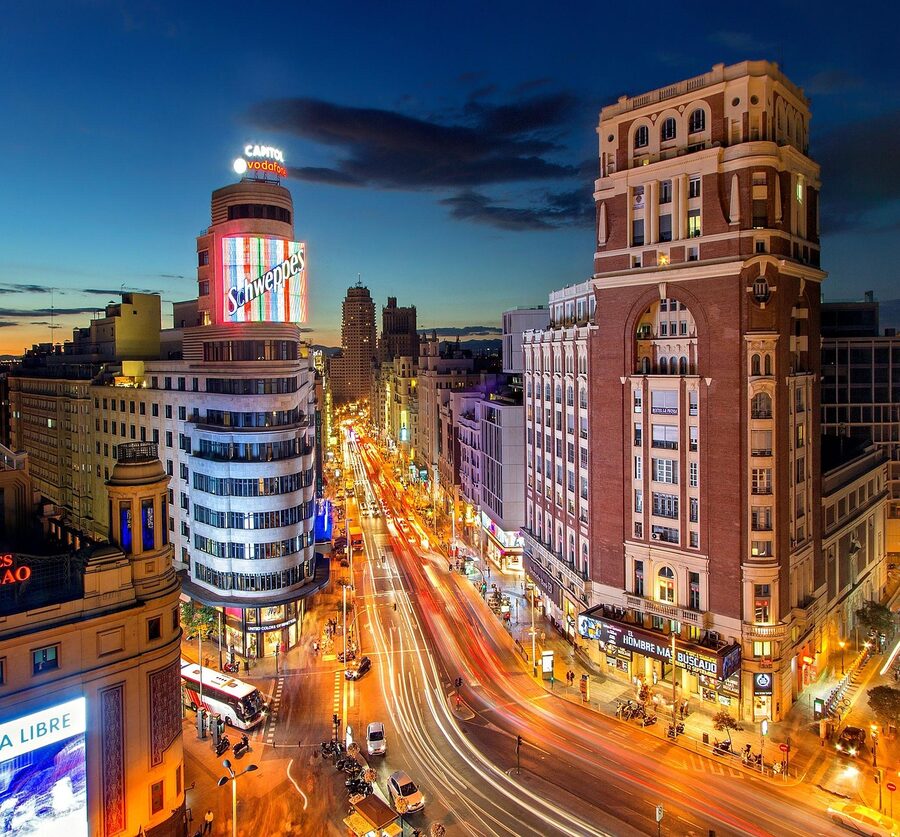
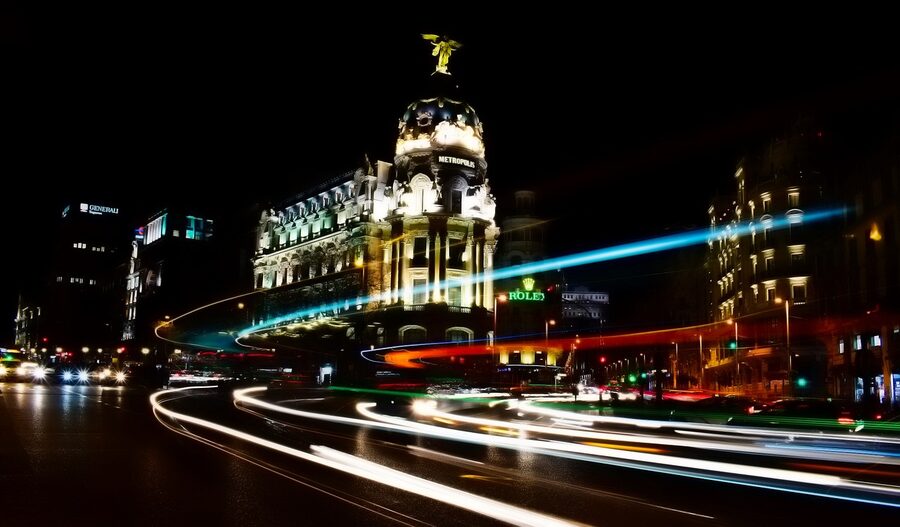
The Sabatini’s hospital ghost
One last thing, mostly for fun. The Sabatini wing housed Madrid’s general hospital for nearly two centuries. Surgical theatres, infectious-disease wards, the lot. Some of the rooms you walk through to see the Picassos were operating rooms. The fourth-floor galleries used to be wards. The architectural bones of the building are why it has those weirdly tall ceilings and those long enfilade galleries: nineteenth-century hospital design wanted air circulation and natural light.
You can occasionally still see the original hospital tile work in the corner stairwells if you look closely. There’s a small permanent display on the building’s history on the ground floor near the cloakroom, ten minutes if you’re interested, skippable if not.
Other Madrid you should book before leaving
Once Reina Sofia is sorted, the rest of central Madrid stacks up easily. Book the Prado for the morning of a different day so you don’t burn out on art. The Royal Palace is the obvious second-day landmark on the other side of central Madrid. If you’ve got an afternoon free, a tuk-tuk tour around Habsburg Madrid is a different way to do the historic centre, more relaxed than walking and faster than the bus. For something at a slower pace, a guided Essential Madrid combo tour ties Plaza Mayor, the Royal Palace and the historic centre into a single half-day with one guide doing the historical context. Three days in Madrid sketched out: Prado plus Royal Palace day one, Reina Sofia plus tuk-tuk or walking tour day two, day-trip out of Atocha day three.
This article contains affiliate links. If you book through them, we may earn a small commission at no extra cost to you. It helps keep the site running.