
Antonio Canova — arguably the greatest sculptor who ever lived — once said he’d trade ten years of his life to have created a single work. Not the Apollo Belvedere. Not the Venus de Milo. A marble statue in a small chapel on a back street in Naples.
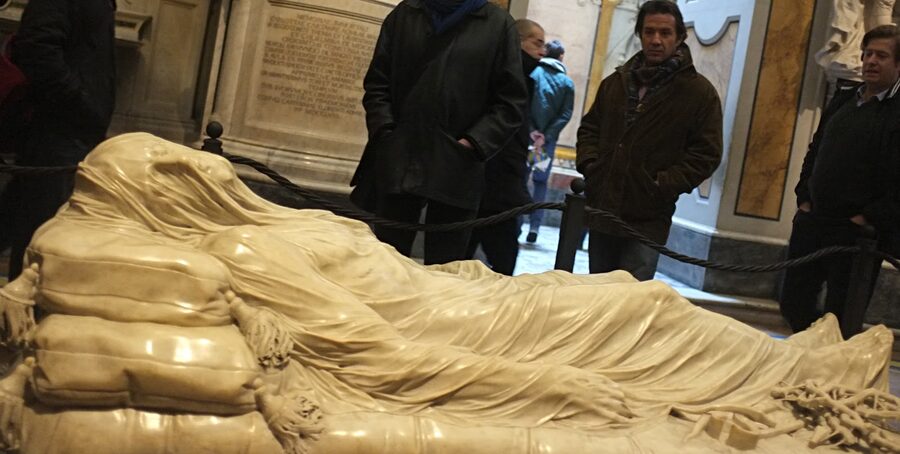
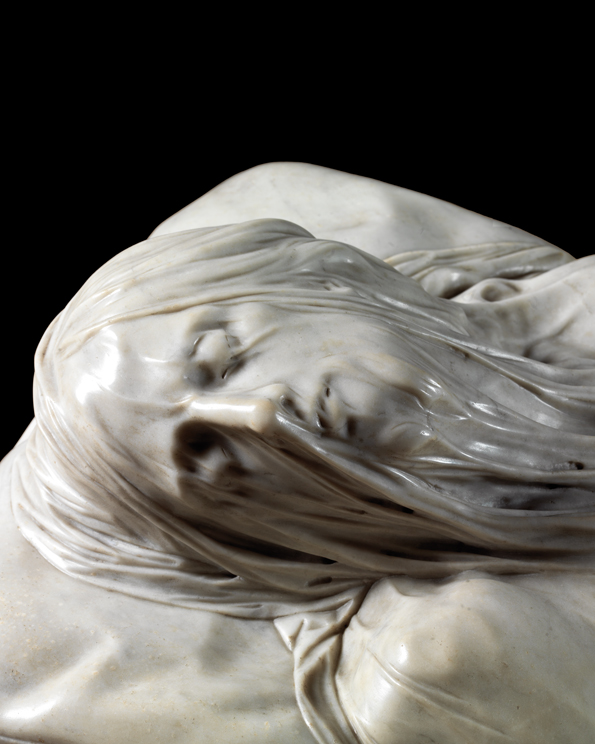
The Veiled Christ sits in the Cappella Sansevero, and when you see it in person, you understand Canova’s envy immediately. Giuseppe Sanmartino carved a marble veil so thin, so impossibly realistic, that your brain refuses to accept it’s stone. People reach out to touch it. They can’t help it.
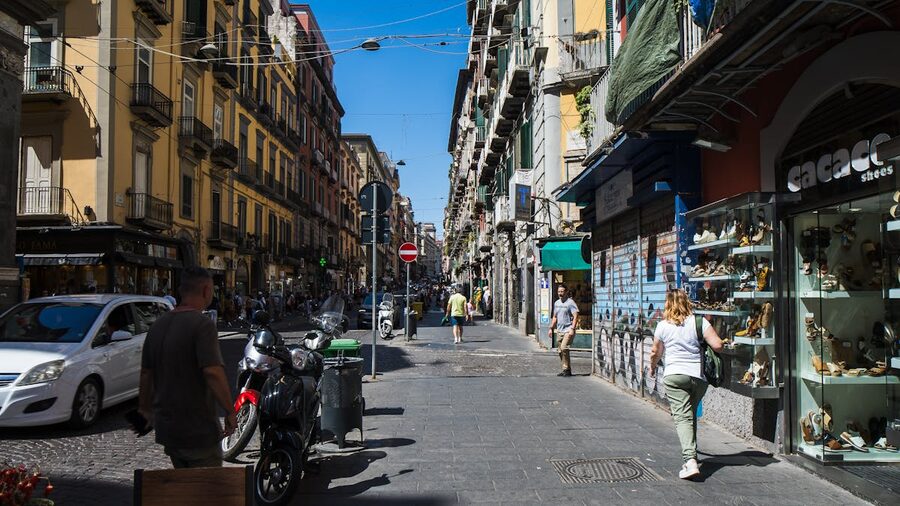
That chapel is just one stop on a walking tour through Naples’ historic centre — a UNESCO World Heritage Site that packs 2,500 years of Greek, Roman, Norman, Spanish, and Bourbon history into streets so old they still follow the original Greek grid from 470 BC.

Best overall: Naples Downtown Tour with Veiled Christ & St Clare Tickets — $57. The full package: Spaccanapoli, Cappella Sansevero, Santa Chiara, and the narrow alleys of the old town with a local guide who actually makes the history stick.
Best for depth: Naples Old Town and Veiled Christ Tour — $56. Three hours instead of 2.5, so you get more time at each stop and the guide doesn’t rush through the Sansevero’s stranger details.
Best budget: Veiled Christ Guided Tour and Ticket — $29. Just the chapel in 35 focused minutes. Skip-the-line entry and a guide who explains why the anatomical machines in the basement are genuinely unsettling.
- What Makes the Naples Old Town Walking Tour Different
- Visiting the Cappella Sansevero on Your Own vs. With a Guide
- The Best Naples Old Town Walking Tours to Book
- 1. Naples Downtown Tour with Veiled Christ & St Clare Tickets —
- 2. Naples Old Town and Veiled Christ Tour —
- 3. Veiled Christ Guided Tour and Ticket —
- What You’ll Actually See on the Tour
- When to Go
- How to Get to the Historic Centre
- Tips That’ll Save You Time and Money
- The History That Makes This Tour Worth It
- While You’re in Naples
What Makes the Naples Old Town Walking Tour Different

Naples has dozens of walking tours. General walking tours cover the waterfront, the Castel dell’Ovo, the lungomare, maybe the Spanish Quarters. They’re broad. They give you the overview.
The old town walking tours are a different thing entirely. They go deep into the centro storico — the UNESCO-listed historic centre that’s actually the largest in Europe by area. Instead of ticking off famous landmarks from the outside, you go inside the Cappella Sansevero, through the cloisters of Santa Chiara, and down the ancient decumani streets that still follow the Greek road grid.
The centrepiece is the Veiled Christ, but there’s a lot more to it. The Cappella Sansevero is filled with alchemical symbolism — Prince Raimondo di Sangro, who commissioned the Veiled Christ in 1753, was a Freemason, inventor, and amateur alchemist. In the basement, two human skeletons with their entire circulatory systems preserved in some unknown substance stand behind glass. How di Sangro achieved this in 1763 is still debated. Nobody has replicated the process.
Visiting the Cappella Sansevero on Your Own vs. With a Guide
You can visit the Cappella Sansevero independently. Tickets cost about EUR 10, and you book them on the chapel’s official website. But there are a few reasons why the guided tour is worth the extra money.
First, the queue. The chapel is tiny — about 40 people fit inside at once — and during peak season (April through October), the wait can stretch past an hour. Guided tours come with skip-the-line entry, which alone saves you significant time on a busy day.
Second, context. You can stare at the Veiled Christ and appreciate the craftsmanship without knowing anything about it. But knowing that Sanmartino was only 33 when he carved it, that the original commission went to Antonio Corradini who died before finishing, that the whole chapel is designed as a Masonic allegory by a man the Church suspected of sorcery — all of that changes the experience. A good guide makes the chapel feel genuinely strange, not just beautiful.
Third, the anatomical machines. Without context, they’re just creepy skeletons behind glass. With a guide, they become one of the most genuinely mysterious objects in any museum in Europe. Di Sangro’s method for preserving the circulatory systems has never been fully explained.

The Best Naples Old Town Walking Tours to Book
I’ve narrowed it down to three. All of them cover the Cappella Sansevero and the Veiled Christ, but they differ in scope, duration, and price. If you’re only visiting one attraction in Naples’ historic centre, any of these will do the job. If you want the full picture — Spaccanapoli, the old Greek street grid, Santa Chiara, the underground layers — go with option one or two.
1. Naples Downtown Tour with Veiled Christ & St Clare Tickets — $57
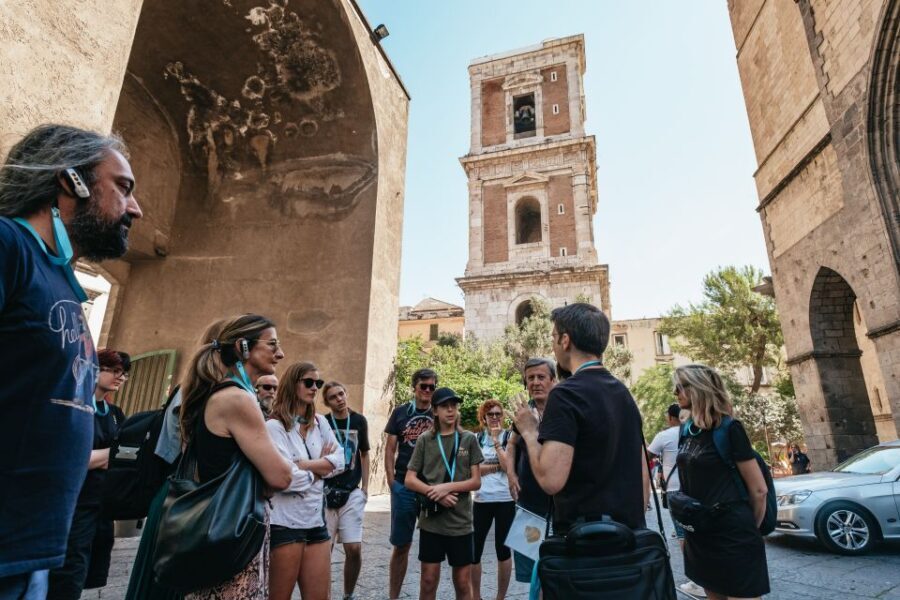
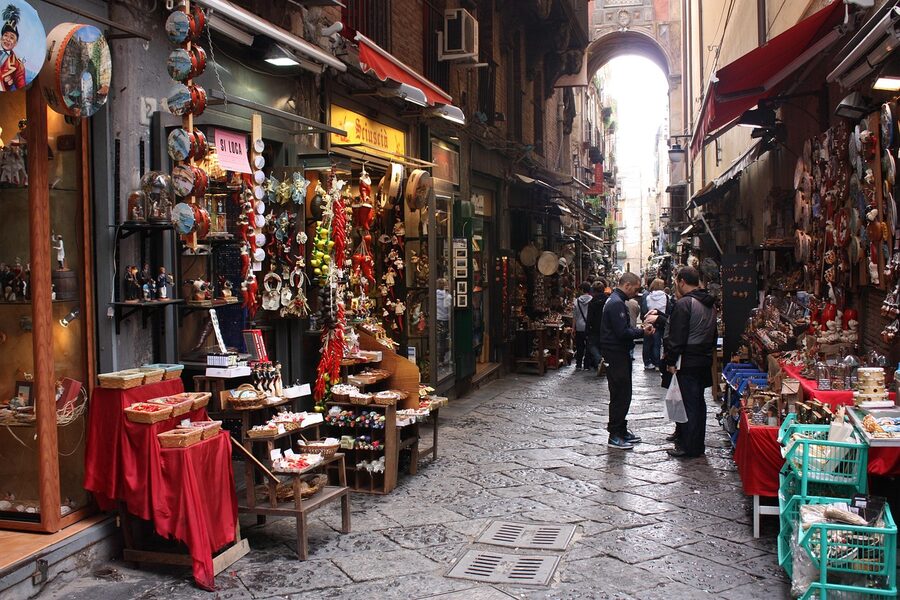
This is the one I’d recommend for most people. Two and a half hours, a local guide, and the full route through the old town: Spaccanapoli, the major churches, the craft workshops along Via San Gregorio Armeno, and then the Cappella Sansevero with pre-booked tickets so you skip the queue. It also includes entry to Santa Chiara’s famous cloisters, which most walking tours skip because the ticket is separate.
At $57 you’re getting two paid admissions (Sansevero + Santa Chiara) bundled with a guide for 2.5 hours, which is genuinely good value. Buying both tickets independently and hiring a private guide would cost three times that. This is the most popular downtown Naples tour on the market, and the consistently high feedback from thousands of visitors confirms it delivers.
One thing to know: the tour doesn’t include Naples Underground, which is nearby but separate. If you want to see the ancient tunnels too, you’ll need to book that on your own for after the tour.
2. Naples Old Town and Veiled Christ Tour — $56
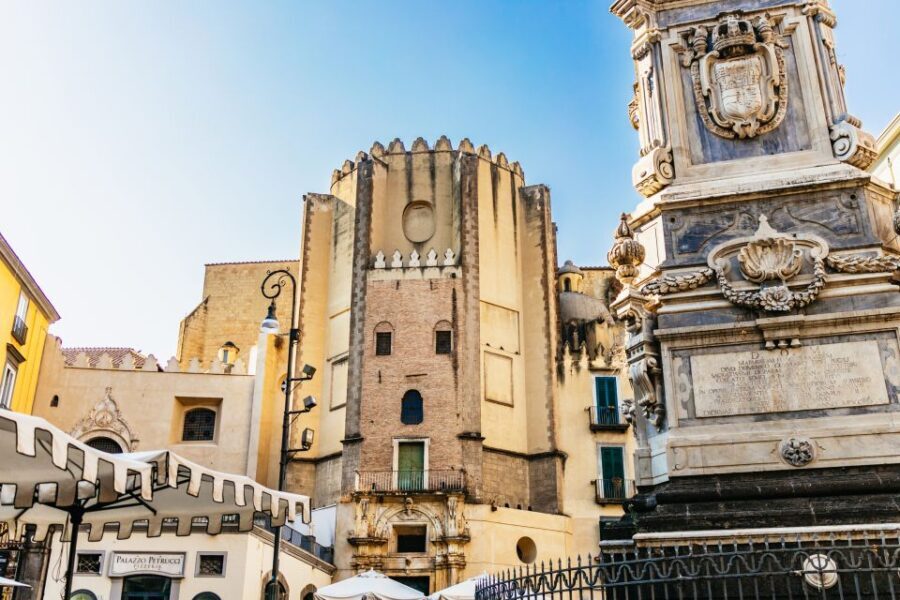
Nearly the same price as option one, but half an hour longer. That extra time makes a genuine difference. The guide can linger at the Cappella Sansevero and properly explain the alchemical symbolism, the anatomical machines, and the stranger corners of di Sangro’s legacy without feeling rushed.
This one is run by Grand Tour Experience, a Naples-based operator that specialises in small-group tours of the historic centre. The focus is heavier on the stories — the cults, the legends, the underground history that makes Naples unlike any other city in Italy. If you’re the kind of traveller who wants more than just “here’s a church, here’s a statue,” this is the better pick.
The trade-off: it doesn’t always include Santa Chiara entry (depends on the day and group size), so confirm when booking if the cloisters matter to you. The Veiled Christ is always included.
3. Veiled Christ Guided Tour and Ticket — $29

This is for people who want the Veiled Christ and nothing else. Thirty-five minutes, skip-the-line entry, a guide who focuses entirely on the Cappella Sansevero. At $29 it’s roughly double the cost of a self-guided ticket, but you get the queue-skip and — more importantly — someone who can actually explain what you’re looking at.
It’s a focused experience. You won’t see Santa Chiara, you won’t walk Spaccanapoli, you won’t get the broader old town context. But if you’ve already explored the historic centre on a general walking tour and just want to add the Veiled Christ, this is the most efficient way to do it.
Also works well paired with Naples Underground, which is a 5-minute walk from the chapel. Do the Veiled Christ tour in the morning, grab lunch on Spaccanapoli, then head underground in the afternoon. That’s a solid half-day in the historic centre for under EUR 60 total.
What You’ll Actually See on the Tour
Every downtown Naples walking tour covers slightly different ground, but these are the consistent stops.
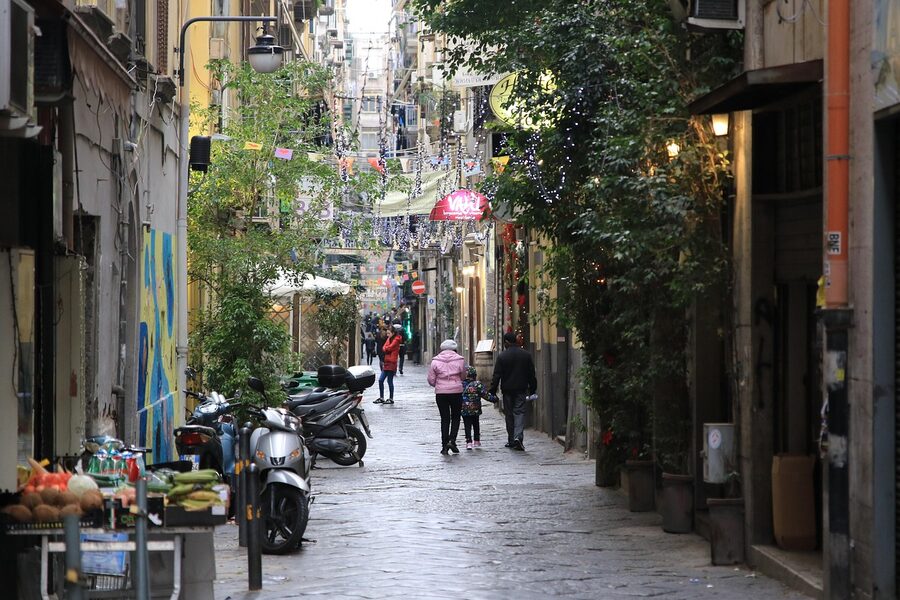
Spaccanapoli — This dead-straight street literally splits Naples in half (that’s what the name means). It runs along the same line as the original Greek decumanus from 470 BC, making it one of the oldest continuously used roads in the Western world. Walking it today, you pass baroque churches, presepe (nativity scene) workshops, pizzerias, and the kind of organised chaos that makes Naples feel like nowhere else.

Cappella Sansevero and the Veiled Christ — The main event. Sanmartino’s sculpture from 1753 is worth the entire trip, but the chapel has much more: the Disinganno (a figure struggling free from a marble net — the carving is just as impossible as the veil), ceiling frescoes, and those disturbing anatomical machines in the crypt. The chapel is small and gets crowded fast, which is why skip-the-line tickets matter.

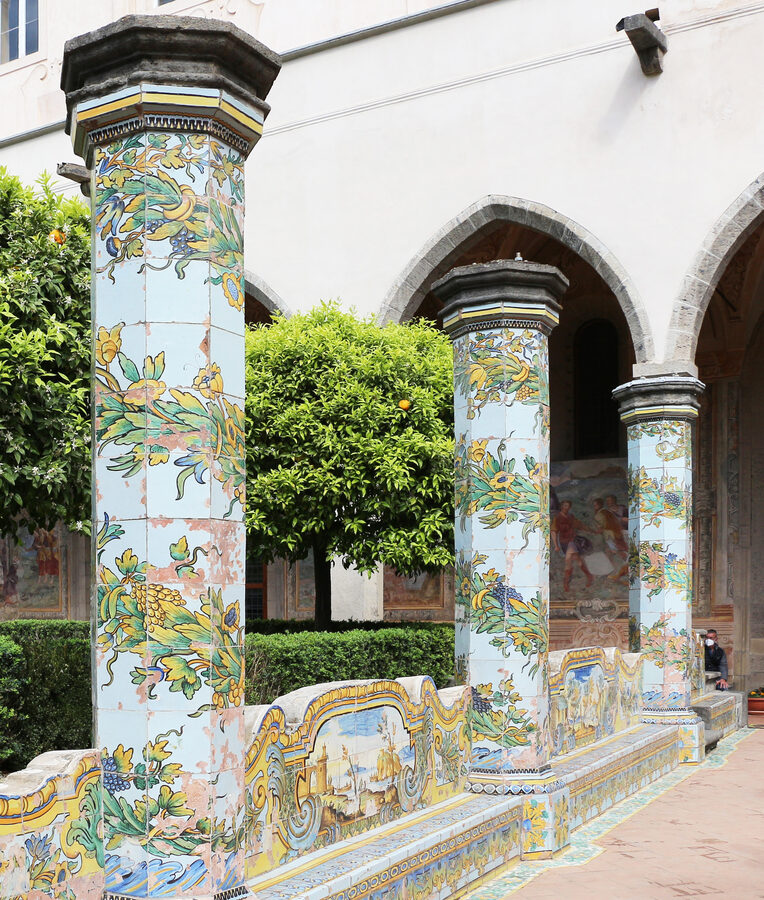
Santa Chiara and the Majolica Cloisters — A 14th-century Gothic church rebuilt after World War II bombing, but the real draw is the cloister garden. The 72 octagonal columns covered in hand-painted majolica tiles depicting rural scenes, vines, and mythological figures are one of the most photographed spots in Naples. It’s peaceful inside — a genuine contrast to the chaos of the streets outside.
Via San Gregorio Armeno — The street of the nativity scene makers. Year-round (not just at Christmas), these workshops produce elaborate presepe figures, including modern satirical versions of politicians, footballers, and celebrities mixed in with the traditional Biblical figures. The craftsmanship is extraordinary — some families have been making presepe on this street for generations.
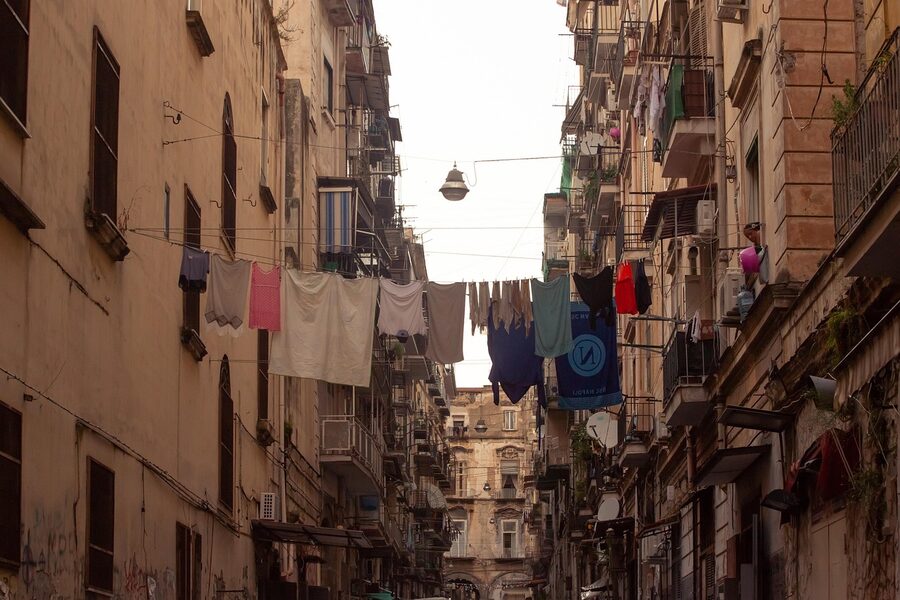
The Underground Layer — Naples’ historic centre sits on top of a labyrinth of Greek-era cisterns, Roman aqueducts, and WWII bomb shelters. Some tours touch on this; others don’t include underground access. If the underground interests you, check our dedicated guide to Naples Underground.
When to Go

The Cappella Sansevero is open daily except Tuesdays. Hours are generally 9:00 to 19:00, with last entry at 18:30. The old town itself is accessible anytime, but shop and church hours vary.
Best time of day: Morning tours (9:00-10:00 start) beat the worst crowds at the Sansevero. Late afternoon (15:00-16:00) works too — the light is better for photos, and the streets are more atmospheric as the evening passeggiata begins.
Worst time: Midday in summer. The narrow streets trap heat, there’s limited shade, and the queue at the Cappella Sansevero is at its longest between 11:00 and 14:00. If you’re visiting July or August, go early or late — not in between.
Best season: April through June and September through October. Warm enough for comfortable walking, cool enough that you won’t be miserable. Winter is fine too — Naples doesn’t get cold the way northern Italian cities do, and the old town has fewer travelers from November through February.
How to Get to the Historic Centre

Most downtown walking tours start at or near Piazza del Gesu Nuovo, which sits at the western end of Spaccanapoli. Getting there is straightforward.
By metro: Take Line 1 to Dante station (5-minute walk to Piazza del Gesu) or Universita station (3-minute walk to the eastern end of Spaccanapoli). Line 2 stops at Piazza Cavour, which is about a 10-minute walk south into the centro storico.
From Naples Centrale station: It’s roughly a 15-minute walk through Corso Umberto I to the edge of the old town. Or take Line 1 one stop to Universita.
From the port / cruise terminal: About 20 minutes on foot through Piazza Municipio and up through the commercial centre. A taxi costs EUR 8-12.
By car: Don’t. The old town streets are either pedestrianised or so narrow that driving is genuinely dangerous. Park at one of the garages near Piazza Municipio or the waterfront and walk in.

Tips That’ll Save You Time and Money
Book Cappella Sansevero tickets in advance. Whether you go guided or independent, don’t turn up without a booking. The chapel sells out on busy days, and the walk-up queue can be brutal. Tuesday is the only day it’s closed — don’t make that mistake.
Wear comfortable shoes with grip. The old town streets are uneven stone, often slippery, and some sections are cobbled with volcanic basalt that gets slick when wet. Trainers with decent tread. Not sandals.
Photography is banned inside the Cappella Sansevero. No exceptions, and they enforce it. You can buy postcards and prints at the gift shop. The Veiled Christ is one of those things that genuinely needs to be seen in person anyway — photos don’t capture the translucency effect.
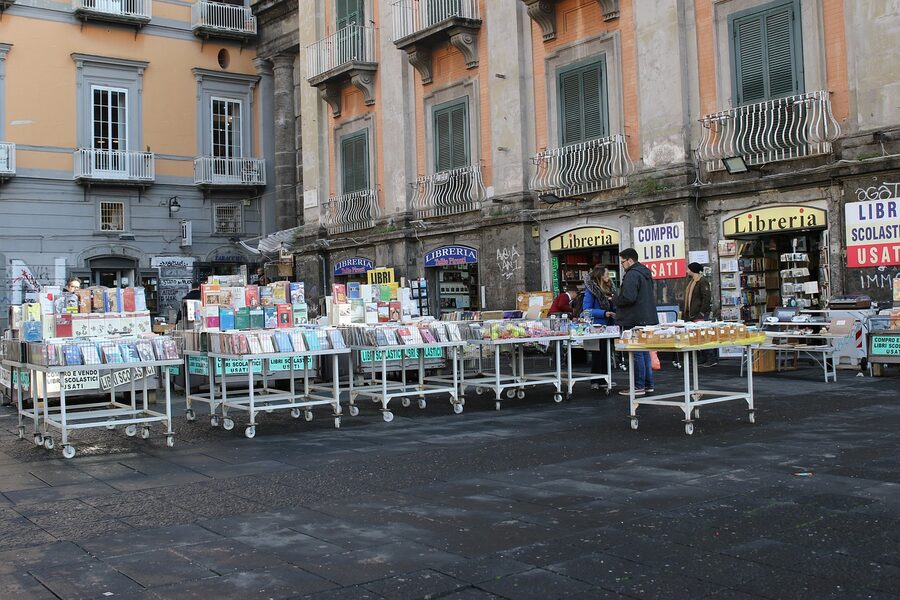
Bring cash for street food. The old town has some of the best street food in Italy — pizza a portafoglio (folded pizza, EUR 1-2), frittatine (fried pasta pockets), and sfogliatella. Many of the smaller stands are cash-only. If you want to go deeper, check out our guide to pizza-making classes in Naples.
Don’t combine with too much else. The old town is dense enough to fill a full morning or afternoon on its own. Trying to cram in the Catacombs of San Gennaro and Naples Underground on the same half-day will leave you rushed and exhausted. Pick two, max.
Keep valuables out of sight. I’ll be straight with you: pickpocketing happens in the old town, especially on crowded stretches of Spaccanapoli and at street food stalls. Phone in your front pocket, bag across your body. It’s not dangerous — just be aware.

The History That Makes This Tour Worth It

Naples was founded as Neapolis (“New City”) by Greek colonists around 470 BC. The street grid they laid out — a series of parallel decumani (east-west streets) crossed by narrower cardines (north-south lanes) — is still the layout of the centro storico today. You’re literally walking on a 2,500-year-old city plan.
After the Greeks came the Romans, who built the aqueducts and cisterns that now form Naples Underground. Then the Normans, then the Angevins (who built Santa Chiara in 1310), then the Spanish Aragonese, then the Bourbons. Each layer built on top of the last. Dig down in almost any building in the old town and you’ll hit Roman masonry. Dig further and you’ll find Greek foundations.
The Cappella Sansevero is relatively recent — 1590 for the chapel itself, 1753 for the Veiled Christ. But Raimondo di Sangro’s story is the stuff of a Netflix series. He was a prince, a soldier, a Grand Master of the Neapolitan Freemasons (which got him excommunicated), an inventor who created a waterproof cape and a printing press, and an alchemist who allegedly experimented on live prisoners. The anatomical machines in his chapel’s crypt — those perfectly preserved circulatory systems — are either a breakthrough in medical science or evidence of something darker. Nobody knows.

Santa Chiara’s story is sadder. The original 14th-century church was one of the finest Gothic buildings in southern Italy — until Allied bombers destroyed it in August 1943. The church was rebuilt in a simplified style, but the famous Chiostro delle Clarisse (Cloister of the Clarisses), with its 18th-century majolica tiles, survived the bombing and remains intact.
While You’re in Naples

The old town walking tour pairs naturally with Naples Underground — the entrance to Napoli Sotterranea is right on Piazza San Gaetano, which most tours pass. If you haven’t already, a pizza-making class is the best food experience in the city, and it’s right in the old town. For something completely different, the Catacombs of San Gennaro are 15 minutes north by bus and genuinely impressive. Beyond Naples itself, Pompeii is a 40-minute train ride, Herculaneum is even closer, and the Amalfi Coast is doable as a long day trip if you start early.
This article contains affiliate links. We earn a small commission when you book through our links, at no extra cost to you. This helps us keep producing free travel guides.