
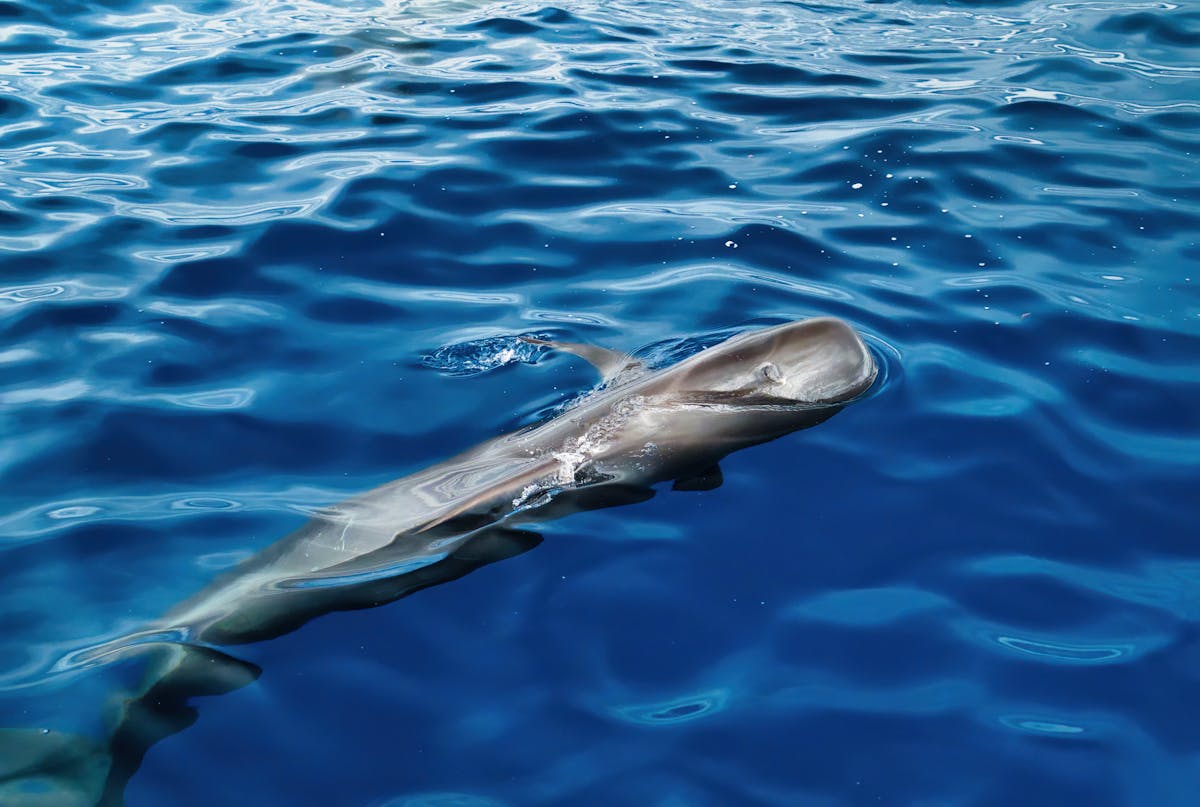
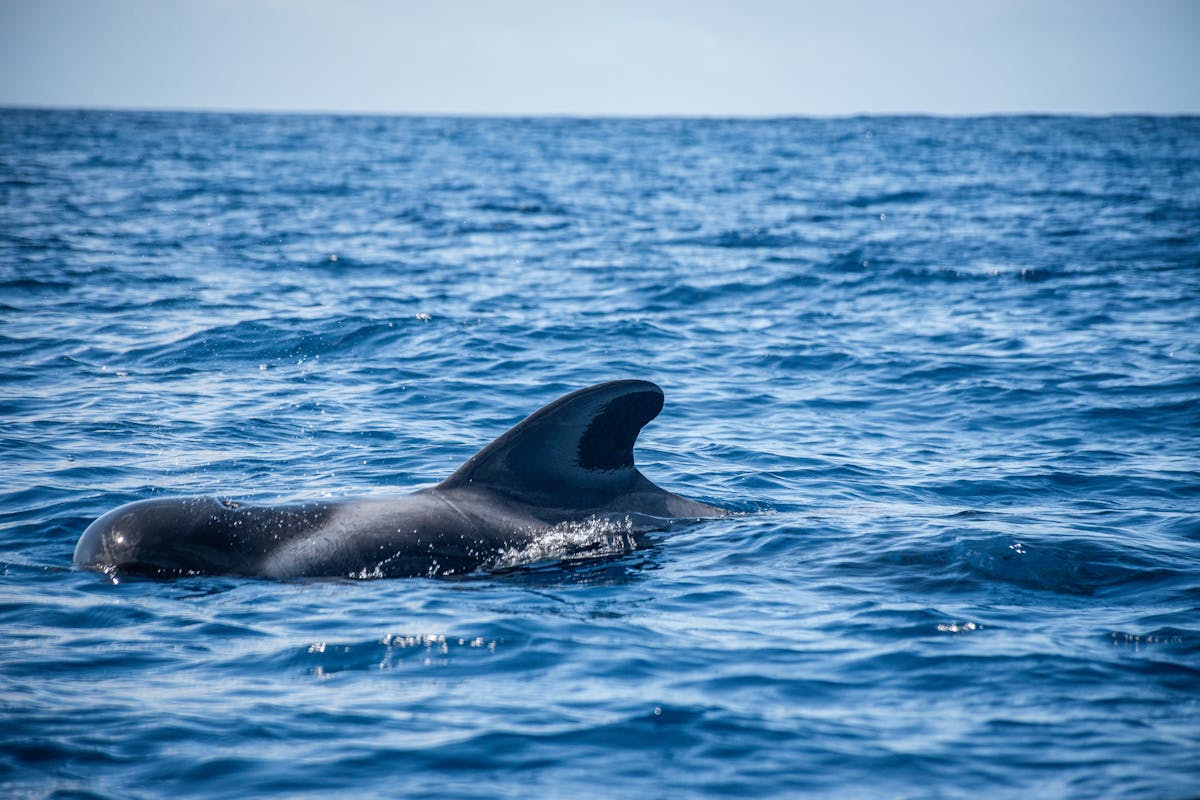
Most whale watching trips are a gamble. You pay, you sail, you hope something shows up. Tenerife is different. The deep underwater canyon between Tenerife and La Gomera drops to over 2,000 metres just a few kilometres offshore, and that depth creates a permanent feeding ground for short-finned pilot whales. They don’t migrate. They live here, year-round, in a resident pod of roughly 500 animals. Sighting rates on most boats run above 90 percent.
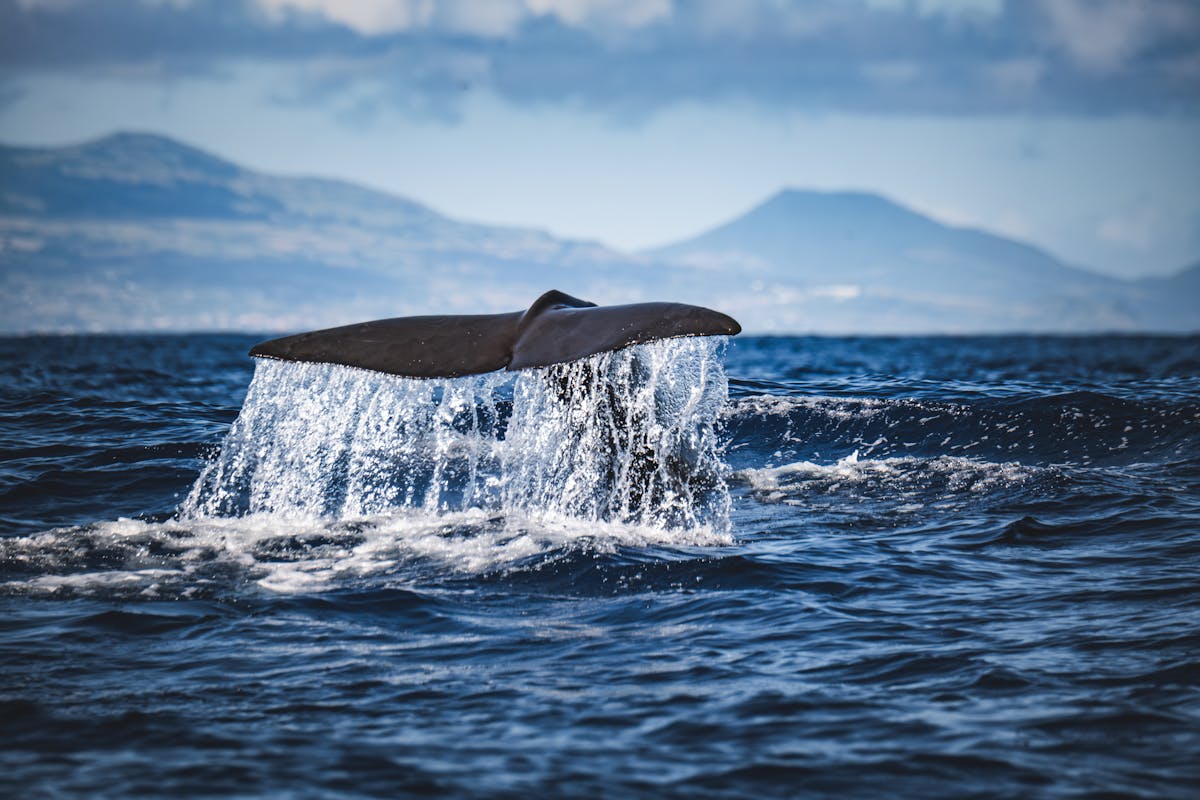
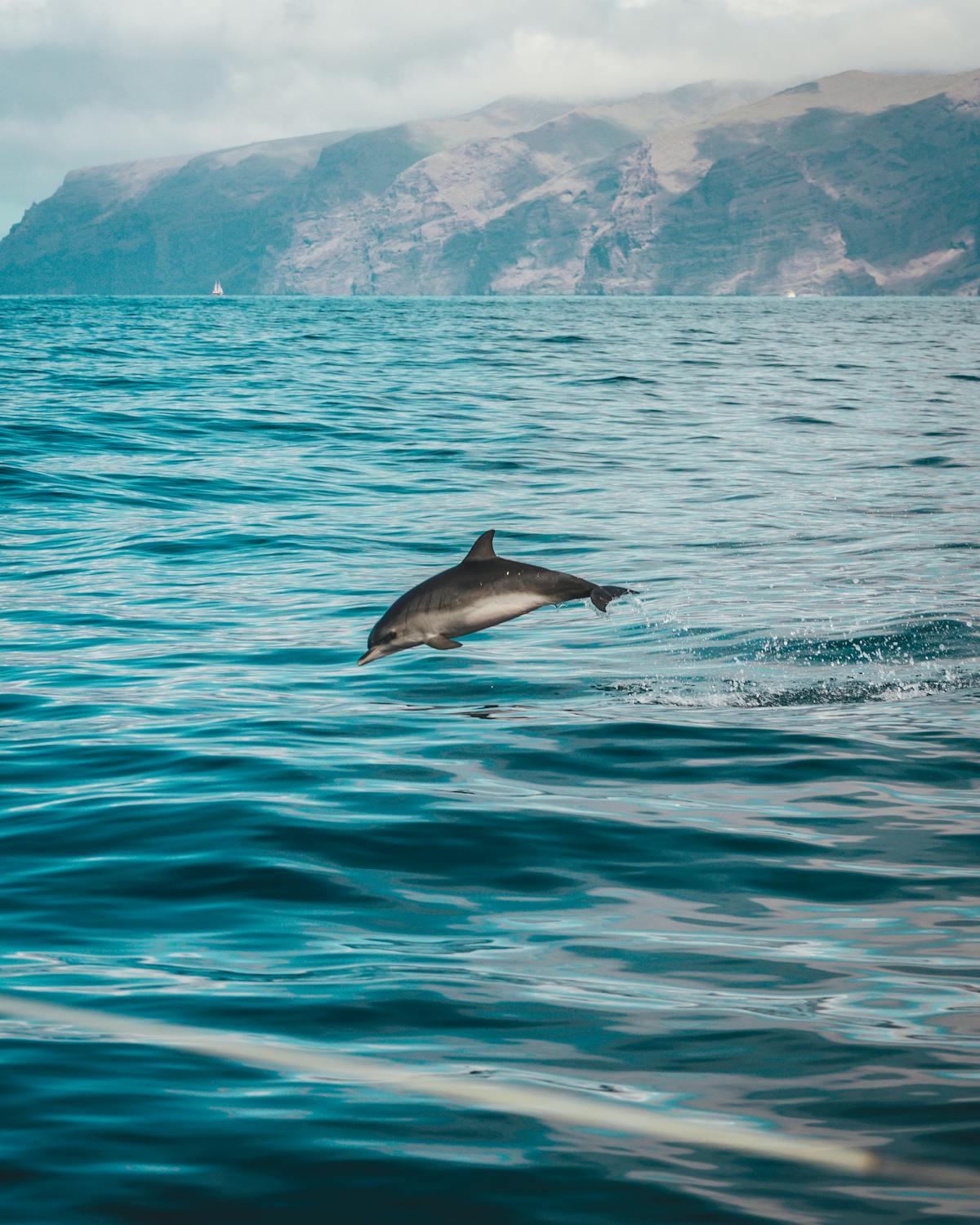
That’s not the whole story, either. Bottlenose dolphins patrol the same waters in groups of 20 to 40. Atlantic spotted dolphins show up regularly. And between February and May, larger species pass through on migration — humpbacks, fin whales, even the occasional blue whale. But the pilot whales are the main event, and the reason Tenerife is considered one of the best whale watching destinations in Europe.
I’ve sorted through the whale watching tours available from Tenerife’s southwest coast — catamarans, speedboats, eco-focused expeditions, luxury yachts — and picked five that cover different budgets and styles. Below is how the trips actually work, which type of boat suits you best, and the tours worth booking.
In a Hurry? My Top Picks
- Best value (from $13): Eco-Yacht Whale Watching Cruise with Swim — departs Los Cristianos, 1.5 hours, includes a swim stop. Hard to beat at this price. Book this tour
- Best scenery: Los Gigantes Dolphin & Whale Watching Cruise — $33, departs from below the famous cliffs. Two hours with a swim stop in open water. Book this tour
- Best catamaran: Costa Adeje Whale Watching Catamaran Tour — $41, 2-3 hours with drinks included. Stable ride, good deck space for photos. Book this tour
- Best small-group eco tour: Atlantic Eco Experience — $71, 2.5 hours with a marine biologist on board. Smaller boat, fewer passengers, more focused on the wildlife. Book this tour
- Best luxury option: Whale & Dolphin Watching with Drinks and Snacks — $77, 3 hours on a yacht with food and drinks. The longest and most comfortable trip on this list. Book this tour
- In a Hurry? My Top Picks
- What to Expect on a Whale Watching Trip
- Catamaran vs. Speedboat vs. Eco Tour vs. Yacht
- The 5 Best Whale Watching Tours in Tenerife
- 1. Eco-Yacht Whale Watching Cruise with Swim —
- 2. Los Gigantes: Dolphin & Whale Watching Cruise with Swim Stop —
- 3. Costa Adeje: Whale Watching Catamaran Tour with Drinks —
- 4. Atlantic Eco Experience —
- 5. Whale & Dolphin Watching with Drinks and Snacks —
- When to Go Whale Watching in Tenerife
- Tips for Your Whale Watching Trip
- More Tenerife Guides
What to Expect on a Whale Watching Trip
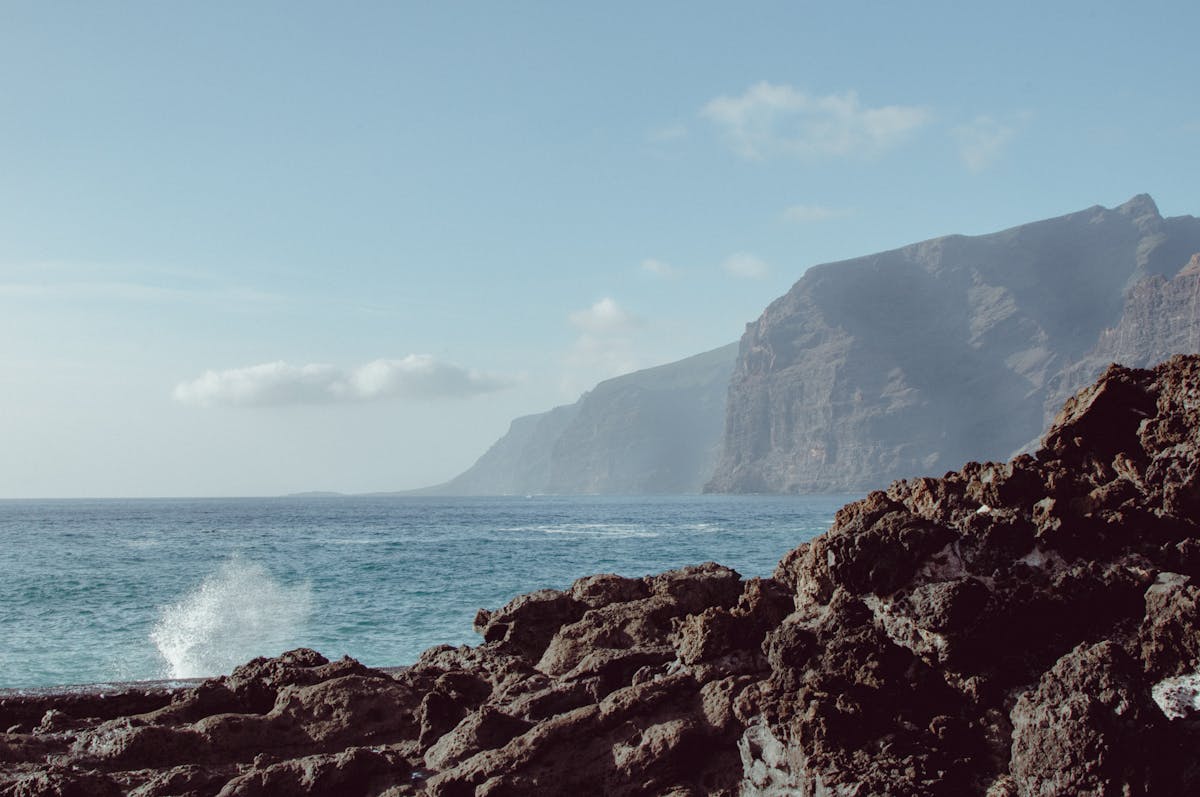
Every whale watching trip in Tenerife follows roughly the same pattern. You board at one of the marinas along the southwest coast — Puerto Colon in Costa Adeje is the most common, but some depart from Los Cristianos or Los Gigantes. The boat heads south or southwest into the channel between Tenerife and La Gomera. Within 15 to 20 minutes, the captain starts scanning for dorsal fins.
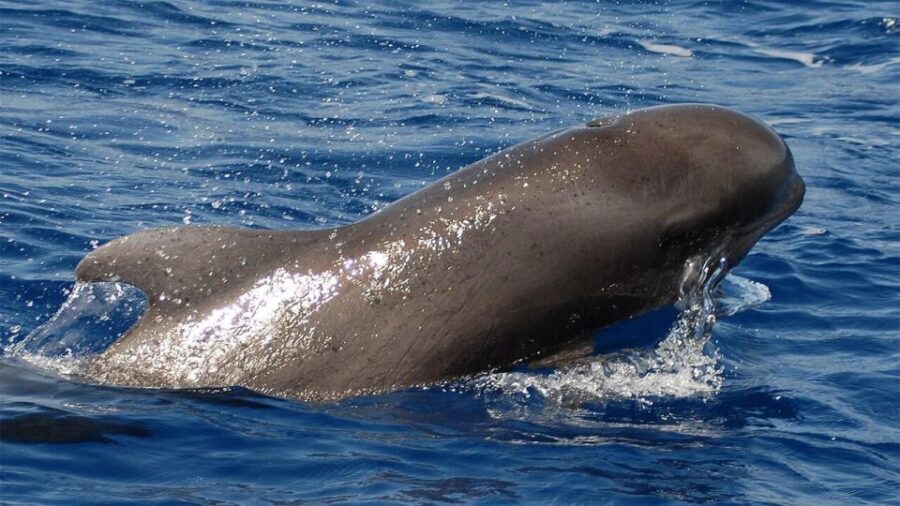
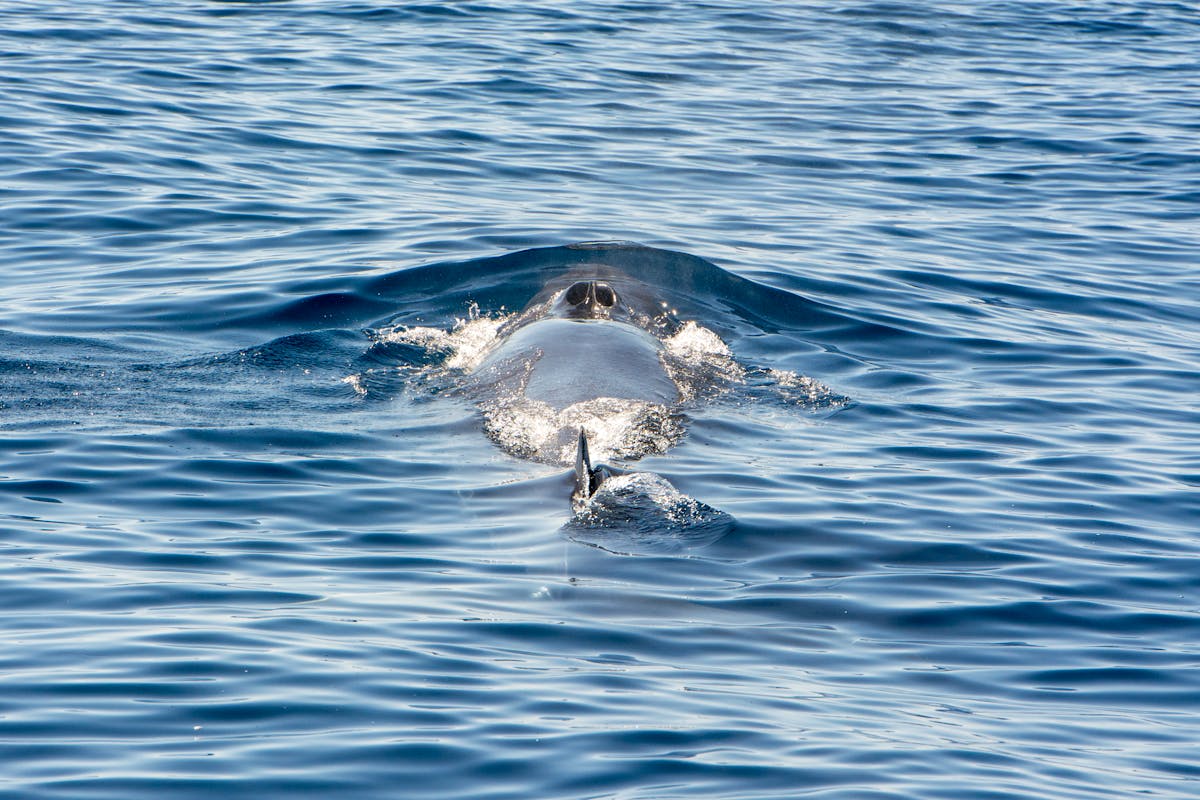
Short-finned pilot whales are the species you’ll almost certainly see. They travel in family groups of 10 to 30, surfacing to breathe every few minutes, sometimes logging (floating motionless at the surface) in a way that makes them easy to spot and watch. They’re not acrobatic like humpbacks — they don’t breach or tail-slap much. But they’re curious, and they’ll often approach a stationary boat on their own.
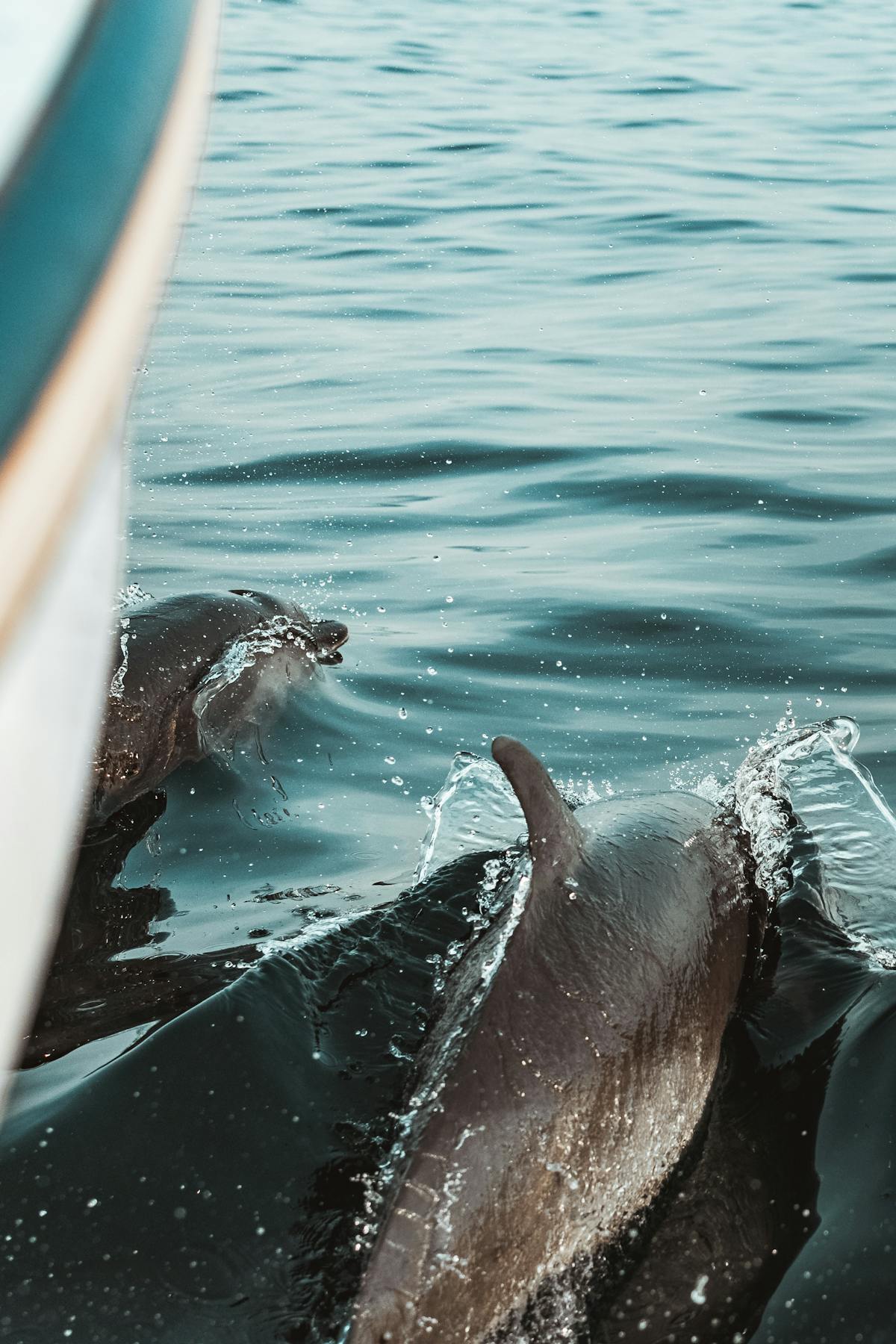
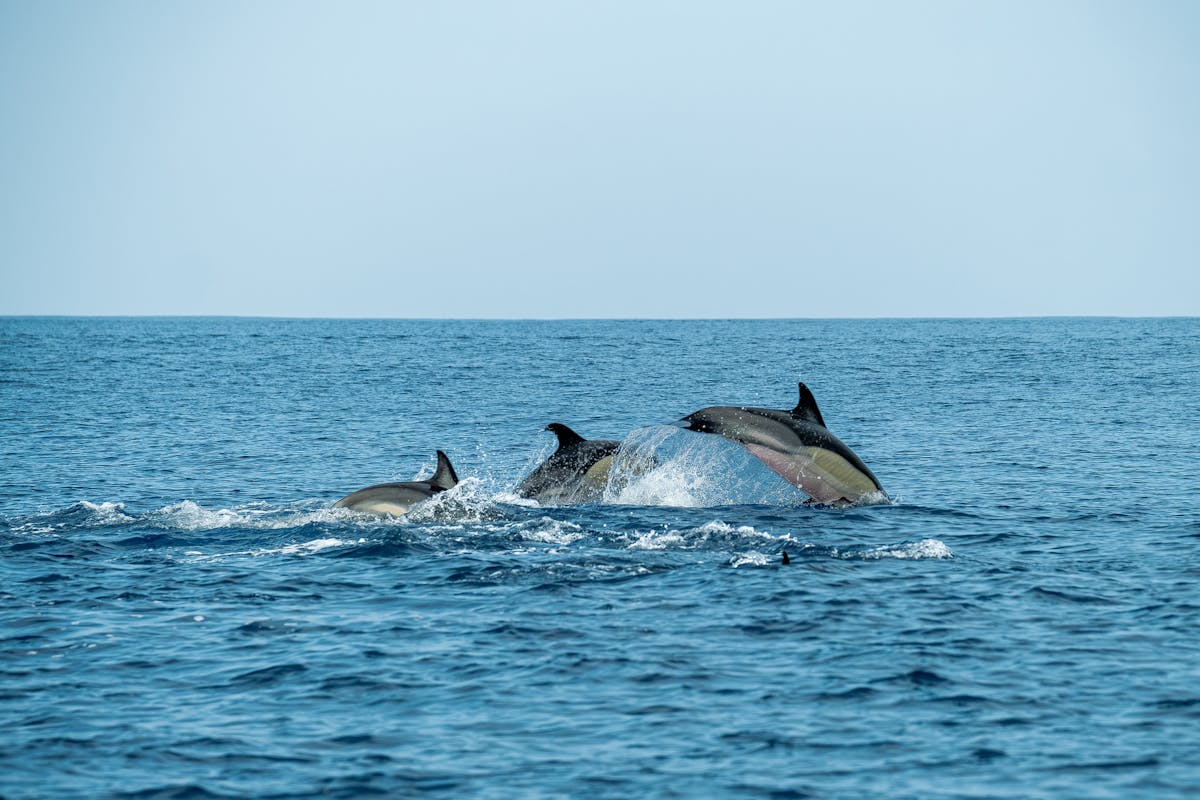
Bottlenose dolphins are the second most common sighting. They’re faster, flashier, and love riding the pressure wave at the bow of the boat. On maybe one trip in three, you’ll also see Atlantic spotted dolphins or common dolphins in larger groups.
The bigger migratory whales — humpbacks, Bryde’s whales, fin whales — are less predictable. They pass through from late winter into spring, and seeing one is a bonus rather than a guarantee. But when they do appear, the size difference is staggering. A pilot whale is 4 to 6 metres long. A fin whale is 20.
Most tours last between 1.5 and 3 hours. The shorter ones go straight to the whale zone, spend time with the animals, and come back. The longer ones add swim stops, drinks, snacks, or extended sailing time. None of them feel rushed — even the 90-minute trips give you a solid 30 to 45 minutes with the whales.
Catamaran vs. Speedboat vs. Eco Tour vs. Yacht
The boat type matters more than people think, and it depends on what you’re after.
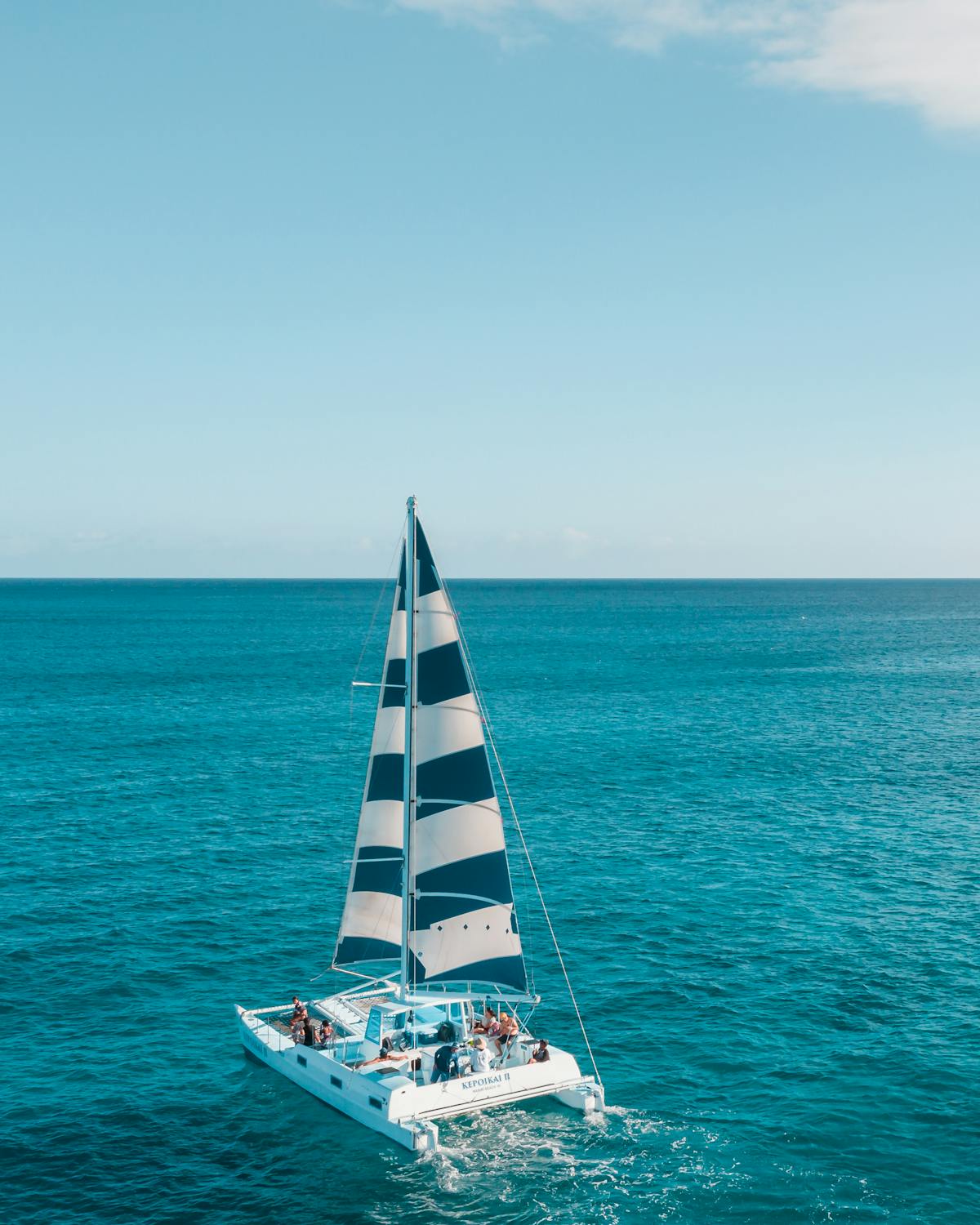
Catamarans are the most popular choice, and for good reason. Twin hulls mean less rocking, which matters in open Atlantic water. They have wide decks where you can move around freely, nets at the front where you can sit over the water, and enough space that 40 passengers don’t feel crowded. The trade-off is speed — catamarans are slower, so you spend more time in transit and less time with the whales relative to the total trip length. They’re ideal for families, anyone worried about seasickness, and people who want a relaxed sailing experience alongside the wildlife.
Speedboats and RIBs (rigid inflatable boats) get to the whale zone faster and can reposition quickly when animals surface in a new spot. They’re more exciting — you feel the ocean more directly. But they’re bumpier, wetter, and offer less shade. Not the best pick for young children or anyone with back problems. Choose a speedboat if you want to maximise your time with the whales and don’t mind a rougher ride.
Eco tours typically use smaller boats with fewer passengers — 10 to 20 instead of 40 to 60. They often have a marine biologist or naturalist on board who explains the animals’ behaviour in real time, not from a script. The boats follow stricter approach protocols, keeping more distance and cutting engines earlier. You pay more per person, but the experience is more intimate and educational. If whale watching is the highlight of your trip rather than just an afternoon activity, go eco.
Yachts are the premium option. Smaller groups, better food and drinks, more comfortable seating, and a sense that you’re on a private outing rather than a tourist excursion. The whale watching itself is the same — the whales don’t care about the boat’s price tag — but the overall experience feels different. Good for couples, special occasions, or anyone who just prefers a quieter atmosphere.
The 5 Best Whale Watching Tours in Tenerife
I’ve gone through the tours available from Tenerife’s southwest coast and picked five that each offer something different — from a $13 budget option to a $77 yacht experience. All of them operate in the same whale-rich channel between Tenerife and La Gomera.
1. Eco-Yacht Whale Watching Cruise with Swim — $13
Departs: Los Cristianos | Duration: 1.5 hours | Price: From $13 per person | Type: Eco yacht with swim stop
Thirteen dollars for a whale watching trip sounds like it can’t be real, but it is. This tour departs from Los Cristianos harbour on a yacht that holds a small group, heads straight for the pilot whale zone, and includes a swim stop on the way back. The eco label means they follow responsible approach protocols — engines off within a set distance, no chasing, limited time per sighting.
At 90 minutes, it’s the shortest tour on this list, but that’s enough. Los Cristianos sits right at the southern tip of Tenerife, so the boat reaches the deep channel quickly. You get 30 to 40 minutes with the whales and dolphins, a 15-minute swim stop in the open Atlantic, and you’re back at the harbour before lunchtime.
The obvious question is what you’re giving up at this price. The boat is basic — don’t expect a bar or sun loungers. The commentary is minimal compared to the eco tours with marine biologists. And there’s no food or drinks included. But for pure whale watching at a price that won’t dent your holiday budget, this is hard to argue with. It’s also a solid option if you’re not sure whether whale watching is your thing — low commitment, high reward.
2. Los Gigantes: Dolphin & Whale Watching Cruise with Swim Stop — $33
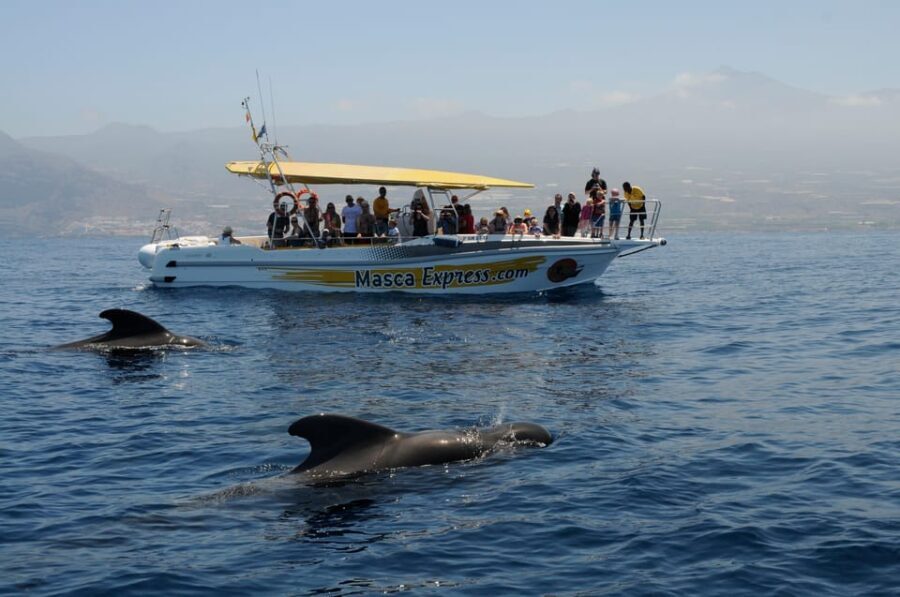
Departs: Los Gigantes | Duration: 2 hours | Price: $33 per person | Type: Boat cruise with swim stop
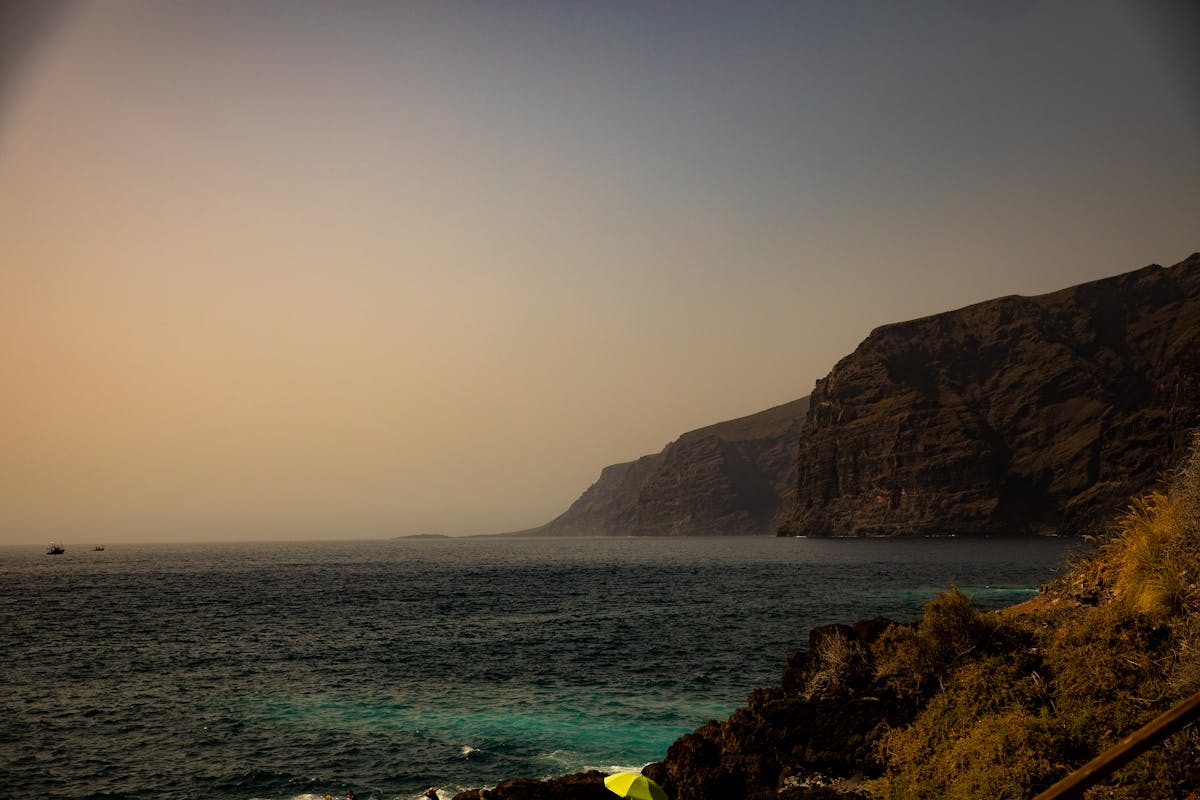
What sets this tour apart isn’t the whales — every Tenerife tour finds those. It’s the departure point. Los Gigantes sits beneath some of the most dramatic sea cliffs in the Atlantic, walls of volcanic rock that rise 600 metres straight out of the ocean. You sail out from beneath them and into the open channel, and the cliffs stay in view for most of the trip.
Two hours gives you a comfortable amount of time without the trip dragging. The route heads south along the coast, looking for pilot whales and bottlenose dolphins in the deep water off Los Gigantes. There’s a swim stop included — usually in a sheltered area near the cliffs where the water is calm and clear. Bring a mask if you have one; the visibility is often excellent.
At $33 this sits in a sweet spot between the ultra-budget options and the premium tours. You get a genuine wildlife encounter plus scenery that most other tours don’t offer. The downside: Los Gigantes is on the western coast, which means if you’re staying in Costa Adeje or Playa de las Americas, you’ll need to drive or bus about 30 minutes to reach the marina. Worth it for the cliffs alone.
3. Costa Adeje: Whale Watching Catamaran Tour with Drinks — $41
Departs: Puerto Colon, Costa Adeje | Duration: 2-3 hours | Price: $41 per person | Type: Catamaran with drinks included
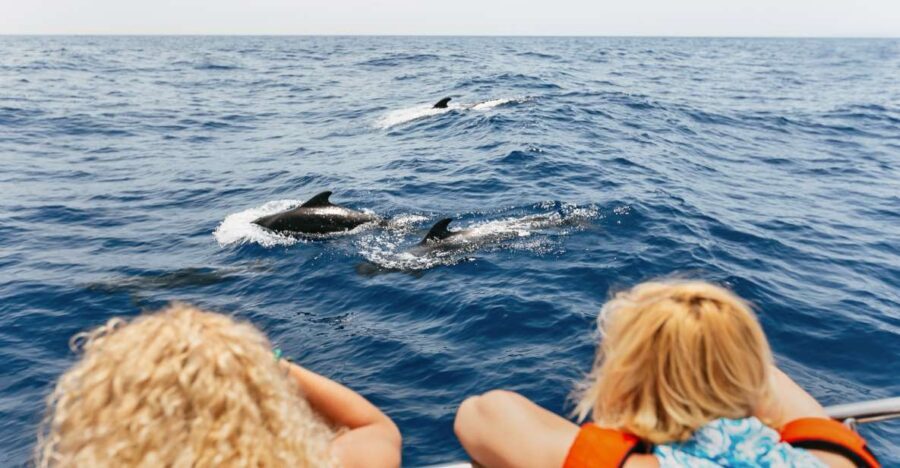
This is the classic Tenerife whale watching experience. A large catamaran departing from Puerto Colon — the most central and accessible marina on the southwest coast — with drinks included in the price. The twin-hull design keeps the boat stable even when the Atlantic is choppy, and there’s enough deck space that you never feel crammed in with 40 other travelers.
The 2 to 3 hour duration hits a nice balance. You get a proper amount of time on the water without the trip turning into an endurance test, and the included drinks (soft drinks, beer, wine) mean you can relax on the return leg. Most departures offer two time slots: a morning run and an afternoon run. Take the morning one. The sea is calmer, the light is better for photos, and the whales tend to be more active.
This is the tour I’d recommend to most visitors who want a comfortable, complete whale watching experience without going premium. The catamaran is big enough that seasickness is rarely an issue, drinks take the edge off the price, and Puerto Colon is a 5-minute taxi from most hotels in Costa Adeje or Playa de las Americas. Families, couples, groups of friends — it works for basically everyone.
4. Atlantic Eco Experience — $71
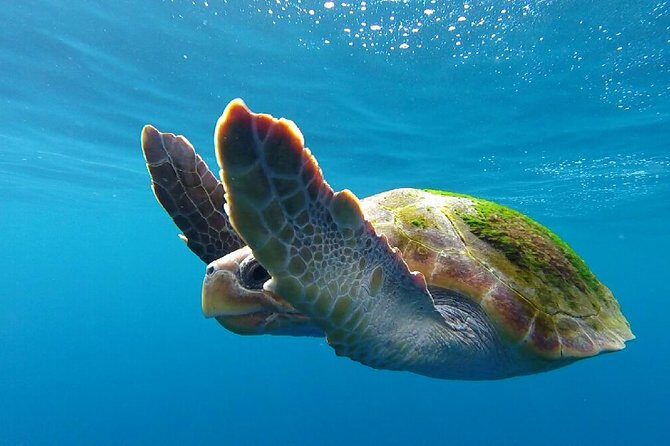
Departs: Southwest Tenerife | Duration: 2.5 hours | Price: $71 per person | Type: Small group eco tour with marine biologist
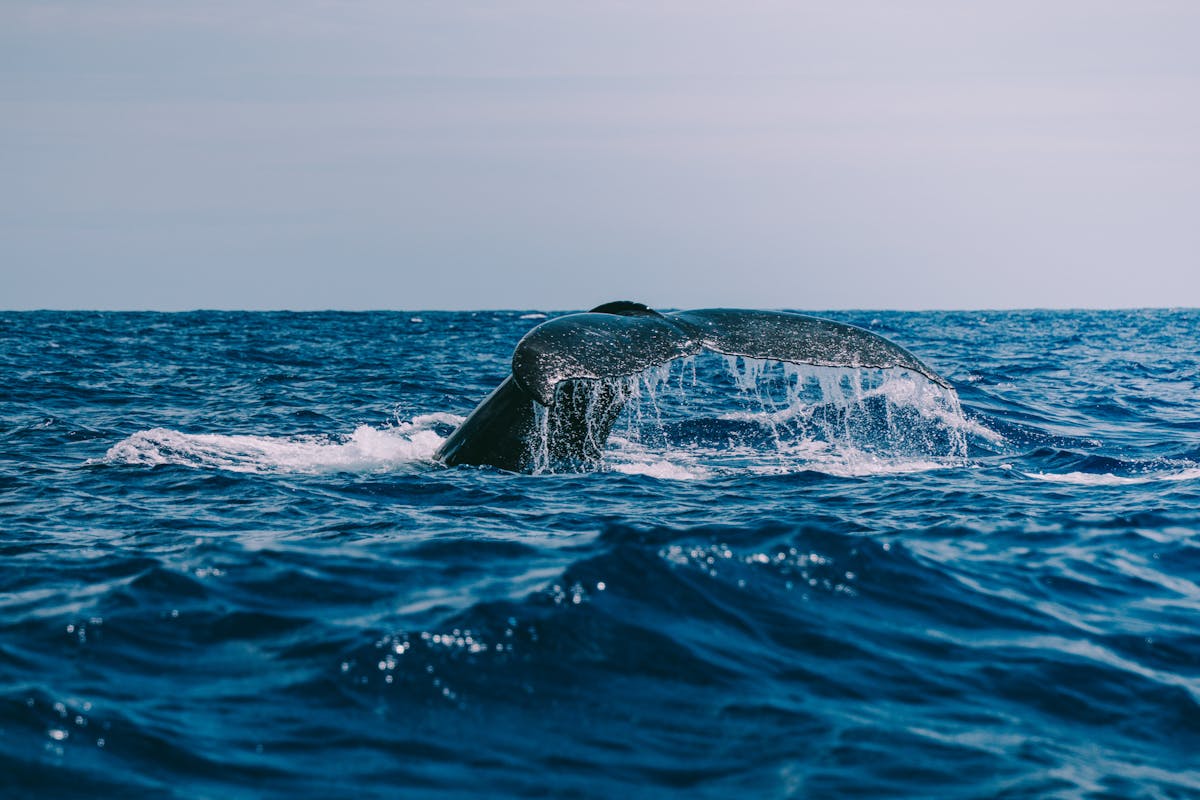
This is the tour for people who actually care about the whales rather than just ticking off a holiday activity. The Atlantic Eco Experience runs on a smaller boat with limited passengers, and the key difference is the marine biologist on board who provides running commentary about what the animals are doing and why.
On most whale watching trips, the captain says something like “pilot whales on the left” and everyone rushes to take photos. On this one, the biologist explains the social structure of the pod you’re watching, why certain individuals are hanging back, what the clicking sounds mean if they drop a hydrophone in the water, and how to tell a resting pod from a feeding pod. It turns the experience from sightseeing into something you actually learn from.
The eco protocols are stricter too. The boat keeps a wider distance from the animals and never pursues a pod that moves away. Engines are cut earlier and for longer. This sounds like you’d see less, but in practice the whales are more relaxed around a quiet, non-aggressive boat, and they often come closer on their own. The 2.5 hours feels generous — there’s no rush to get back, and the biologist uses the transit time to talk about the underwater canyon, the food chain, and why this particular stretch of ocean supports a permanent whale population.
At $71, it’s not cheap. But it’s the most educational and respectful tour on this list, and the smaller group size means better photo opportunities and a more personal feel.
5. Whale & Dolphin Watching with Drinks and Snacks — $77
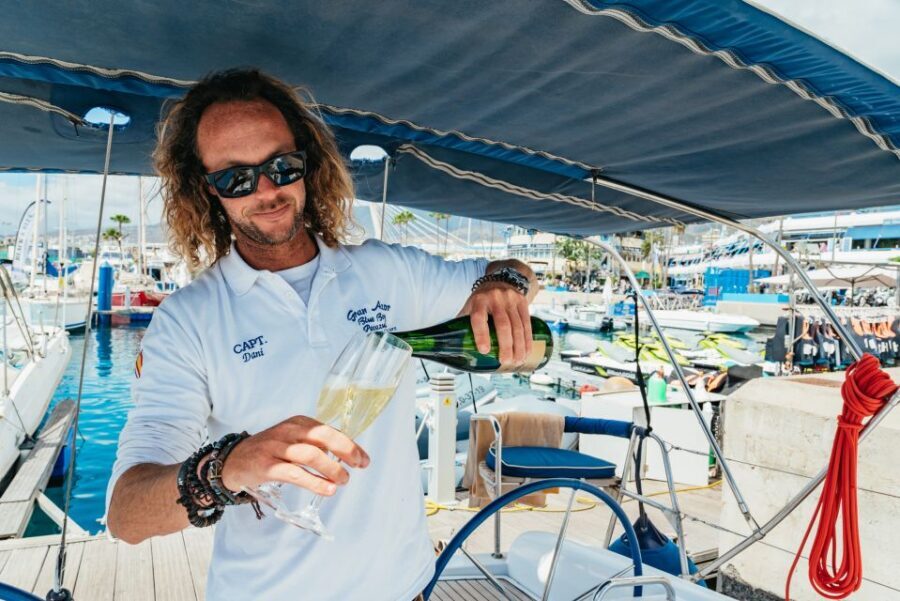
Departs: Southwest Tenerife | Duration: 3 hours | Price: $77 per person | Type: Yacht with drinks and snacks included
The longest and most comfortable tour on this list. Three hours on a yacht with drinks and snacks included, covering the same whale-rich waters but with a lot more polish. The boat is smaller than a catamaran but better appointed — proper seating, shade, and a bar that stays open the entire trip.
Three hours means you’re not rushing. The crew takes their time finding the best whale and dolphin activity, and if the first group of pilot whales goes quiet, they have time to motor to a second pod. The food won’t replace lunch — think sandwiches and light bites — but it’s a nice touch that keeps the energy up during a longer excursion. Drinks include beer, wine, soft drinks, and water.
This is the pick for couples celebrating something, for people who’ve done a budget whale watching trip elsewhere and want the upgraded version, or for anyone who simply prefers a quieter, more refined experience over a party-catamaran atmosphere. The per-person price is nearly six times the cheapest option on this list, so there’s no point pretending it’s good value. But if comfort and atmosphere matter to you alongside the wildlife, it delivers.
When to Go Whale Watching in Tenerife
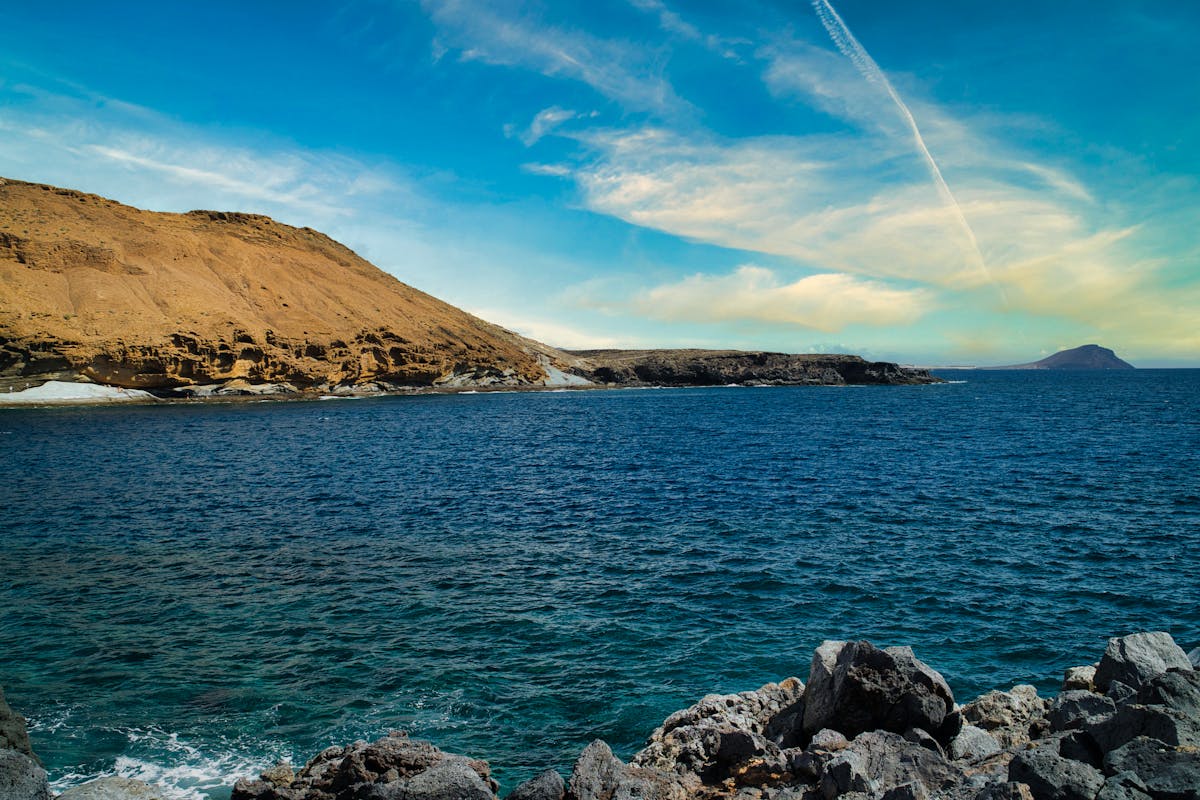
Short answer: any time. The pilot whales live here permanently, so there’s no “season” in the traditional sense. You can go in January or August and your chances of spotting them are roughly equal — above 90 percent on most boats.
That said, conditions vary throughout the year, and some months offer extras.
December to March: Cooler air temperatures (18-22 degrees Celsius) but the water is still warm compared to mainland Europe. The sea can be choppier, especially in January and February, which means more cancellations due to weather. On the upside, this is when larger migratory whales — Bryde’s whales and occasionally humpbacks — pass through the channel. If seeing a big whale is important to you, late winter gives you the best shot.
April to June: The sweet spot. Calmer seas, warm weather without the brutal summer heat, and the tail end of the migration season overlapping with the resident pilot whale population. May is probably the single best month overall — the ocean is typically flat, the light is golden, and there’s a good chance of spotting something beyond the usual pilot whales and dolphins.
July and August: Peak tourist season. The weather is hot and dry, the sea is calm, and you’ll have no trouble finding available tours. The downside is crowds — boats fill up faster, and you may need to book a few days in advance during August. The migratory species are gone, so you’re looking at pilot whales and dolphins exclusively. Still excellent, just fewer surprises.
September to November: My preferred window if I had to pick. Tourist crowds thin out after October, the sea stays calm well into November, and prices drop slightly on some tours. The pilot whales are as active as ever. The one risk is that autumn storms can roll in from the Atlantic, causing occasional cancellations in late November.
Time of day: Morning trips almost always beat afternoon ones. The sea is calmer before midday, the light is better for photos (less glare), and the whales seem more active in the morning. If you have a choice, book the earliest departure available.
Tips for Your Whale Watching Trip
Seasickness is real. The Atlantic between Tenerife and La Gomera isn’t sheltered. Even on calm days there’s a swell, and on choppy days it’s rough. If you’re prone to motion sickness, take medication 30 minutes before boarding (any pharmacy in the resort areas sells Biodramina, the local equivalent of Dramamine). Sit toward the back of the boat where there’s less movement, keep your eyes on the horizon, and avoid looking at your phone screen. Catamarans are the most stable option. Speedboats are the worst for seasickness.
Sun protection isn’t optional. You’re on the ocean with no shade for one to three hours. The UV at Tenerife’s latitude (28 degrees north, roughly the same as Florida or Cairo) is intense, and the reflection off the water amplifies it. Factor 50 sunscreen, a hat, and sunglasses are non-negotiable. I’ve seen people come back from a two-hour trip looking like they spent a full day at the beach.
Camera gear that works. A zoom lens (200mm or longer) makes a huge difference. Pilot whales surface 20 to 50 metres from the boat, and a phone camera gives you a tiny dark shape in a lot of blue water. If you have a DSLR or mirrorless camera with a telephoto lens, bring it. If you’re shooting on a phone, use the optical zoom (not digital) and accept that the photos will be more about the memory than the pixel quality. Burst mode is your friend — whales surface for only a few seconds, and timing the perfect frame is largely luck.
Bring layers. Even in summer, the wind on the open Atlantic can be cool, especially on the return trip when you’re wet from a swim stop or spray. A light windbreaker takes up almost no space and saves you from shivering for the last 20 minutes.
Booking timing. In summer (July and August), popular tours sell out two to three days ahead, especially the morning slots. Book at least two days in advance if you have a strong preference for departure time or boat type. In the off-season, booking the day before is usually fine. Most tours offer free cancellation up to 24 hours ahead, so there’s no penalty for booking early.
What about children? Kids under about 4 won’t get much from the experience, and they’re a liability if they’re not comfortable on a boat. Ages 5 and up tend to love it, especially the dolphin sightings — the speed and playfulness of dolphins holds a child’s attention better than a slowly surfacing pilot whale. Pick a catamaran for families (more stable, more space to move around, usually has a shaded area) and take the shorter trip options. Two hours on a boat is plenty for a 6-year-old.