
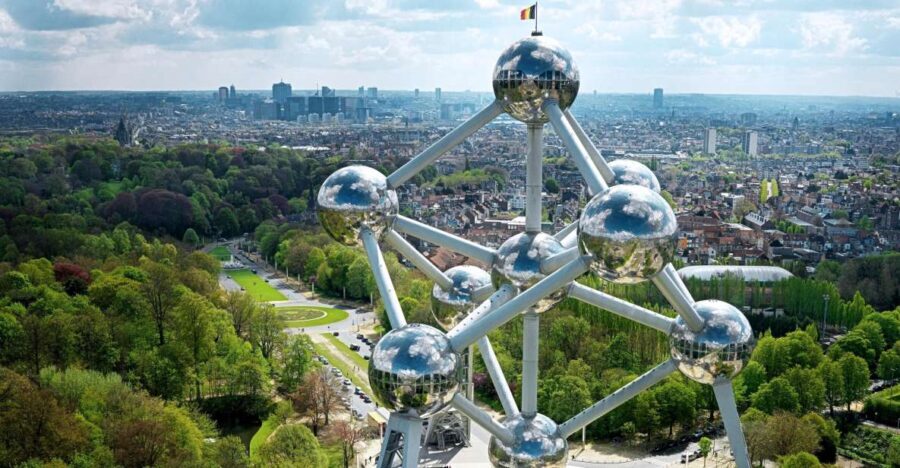
The lift doors slide open at the top sphere and Brussels just falls away below you, 102 metres of stainless steel and engineering swagger turning a slightly soggy Belgian afternoon into one of the best city panoramas in northern Europe. On a clear day you can see the spire of the Town Hall, the green smear of Laeken Park, planes lining up over Brussels Airport, and Mini-Europe’s pocket-sized Eiffel Tower right at your feet. That single moment is why people buy Atomium tickets, and it’s why this guide exists. The trick is getting to that view without queueing for an hour or paying full price for a ticket that didn’t include the museum across the plaza.
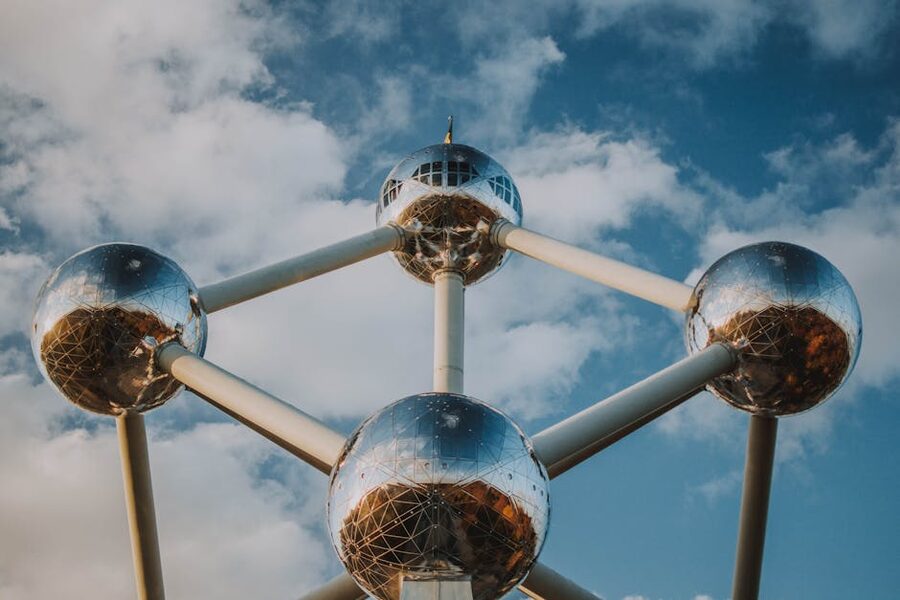
Honestly, plenty of people skip the Atomium because it looks like a one-photo attraction from the outside. They take a selfie at the base, walk back to Heysel station, tick it off the list. That’s a mistake. The real reason to go inside is the panorama from the top sphere and the immersive light show in the middle one, neither of which is visible from ground level. The combo ticket with the ADAM Brussels Design Museum across the plaza is the version most people end up booking, and for good reason, the museum sits about a 90-second walk from the Atomium entrance and adds maybe 45 minutes to the visit if you don’t linger.
- In a Hurry? Top 3 Atomium Picks
- How Atomium Tickets Actually Work
- Should you book ahead?
- The 3 Best Atomium Tickets to Book in 2026
- 1. Brussels Atomium + ADAM Design Museum Combo:
- 2. Mini-Europe Entry Ticket:
- 3. Brussels Card: 48 Museums, Atomium, and Discounts:
- What’s Actually Inside the Atomium
- The first sphere: Expo 58 history
- The middle sphere: light and sound show
- The top sphere: the panorama
- Getting to the Atomium from Central Brussels
- By metro (the easy option)
- By bus or tram
- By taxi or rideshare
- When to Visit (and When to Skip It)
- Best time of day
- Best season
- What to skip on
- Why the Atomium Looks the Way It Does
- The ADAM Brussels Design Museum
- Practical Tips Most Guides Skip
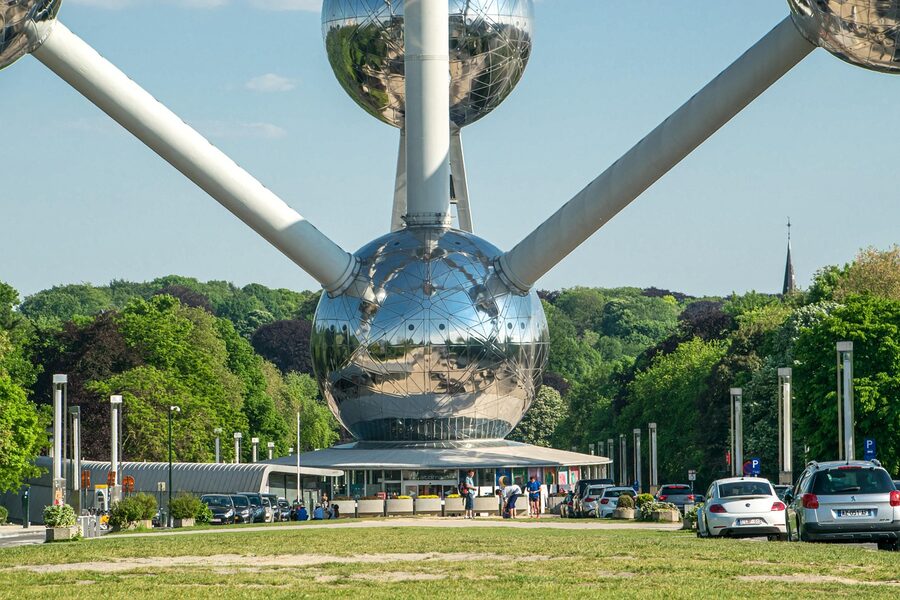
- Photography spots that actually work
- Where to Stay if You Want to Walk to the Atomium
- Combining the Atomium With the Rest of Brussels
- Final Verdict on Atomium Tickets
- What Else to Plan in Brussels
In a Hurry? Top 3 Atomium Picks
Best overall: Atomium + ADAM Design Museum Combo Ticket, covers both attractions on one entry, around $19, and the museum is across the plaza so you can do them back-to-back.
Best for families: Mini-Europe Entry Ticket, pair this with the Atomium for a full day on the Heysel plateau, around $23, and kids spend hours spotting tiny Big Ben and the Eiffel Tower.
Best for multi-day visitors: Brussels Card with 48 Museums and Atomium, around $60 for the card, but unlocks unlimited public transport and Atomium entry plus 48 other museums, so it pays for itself fast if you’re staying 2-3 days.
How Atomium Tickets Actually Work
Standard adult entry to the Atomium is around €16 if you walk up to the on-site ticket counter. Children under 6 are free. Seniors, students, and teenagers get a small discount, but you have to bring ID. The thing nobody tells you on the official site: most online combo tickets are actually cheaper than the standalone walk-up adult price once you factor in the included extras.
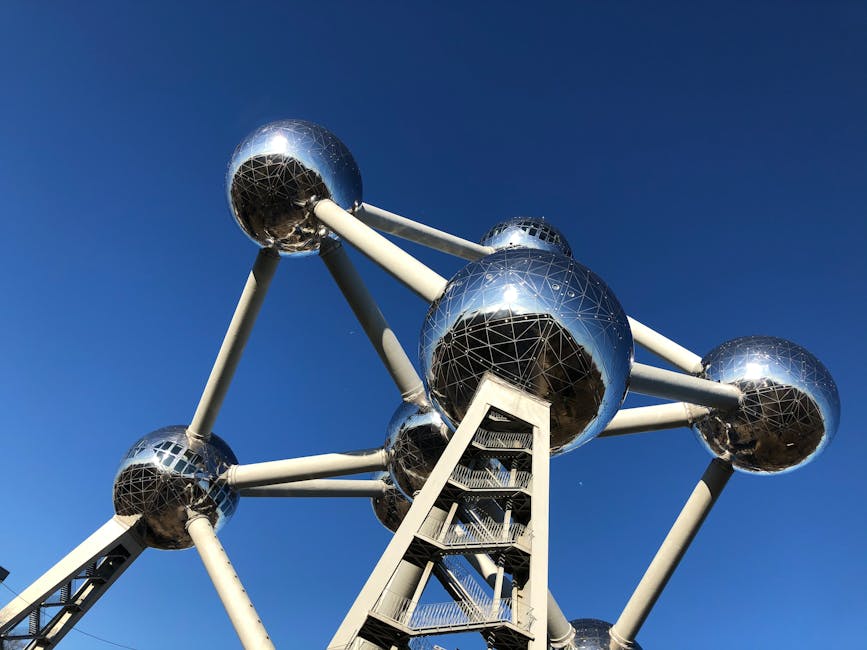
The most popular ticket is the Atomium plus ADAM Design Museum combo. It’s around €21 on the door and a hair cheaper online when GetYourGuide runs a promo, which they do most weeks. ADAM (Art and Design Atomium Museum, badly named acronym intentional) is right across the open plaza from the Atomium. It’s a small but well-presented museum focused on plastic-era furniture, lighting, and product design, nothing earth-shattering but a nice 30-45 minute counterpoint to the Atomium itself. If you’re already paying €16 for one ticket, the extra €5 for both is the obvious move.
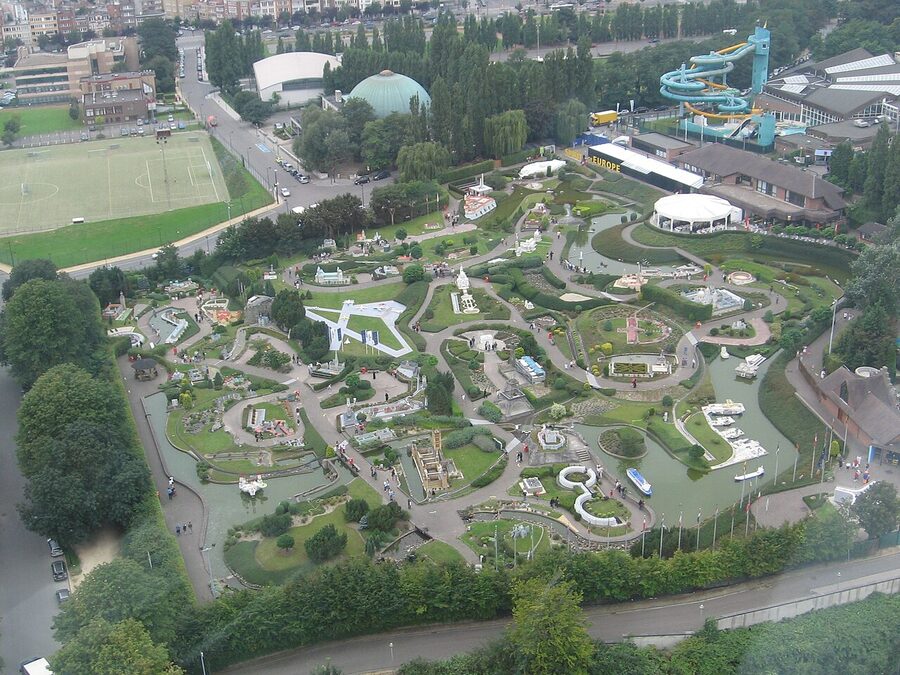
If you’re travelling with kids, the third combo is the Atomium plus Mini-Europe ticket, around €29-30. Mini-Europe sits about a 4-minute walk from the Atomium entrance, on the same Heysel plateau. It’s a small park with 350-odd scale models of European landmarks (Big Ben, the Eiffel Tower, the Acropolis, the Brandenburg Gate, and so on). Adults find it cute for an hour, kids find it genuinely entertaining for two or three.

Should you book ahead?
Yes, especially in summer and on weekends. Saturday and Sunday afternoons in July and August can put 30-45 minute queues on the Atomium ticket counter. Online tickets bypass that queue entirely. If you’re visiting on a weekday in shoulder season (April-May, September-October), you can usually walk up and buy on the spot without much wait.
One small thing the Atomium website buries: the ticket counters close 30 minutes before last entry. Last entry is 5:30pm, so the counters shut at 5:00pm. If you’re trying to squeeze in a late visit after another attraction, plan around that or book online to avoid the cutoff.
The 3 Best Atomium Tickets to Book in 2026
I’ve ranked these by what actually delivers value, not by what looks nicest in marketing copy. The combo with ADAM is the one I recommend to most people, it’s the cheapest way to do two attractions in one trip out to Heysel.
1. Brussels Atomium + ADAM Design Museum Combo: $19
This is the ticket I book for myself and the one I send most readers to. It covers entry to all the Atomium spheres plus the ADAM Brussels Design Museum across the plaza, and at around $19 it’s barely more than the standalone Atomium ticket. Our full review of this ticket covers what’s actually inside both venues and how long to budget for each. The ADAM museum is small and quick, which is exactly what you want as a paired visit, not another 90-minute slog after the Atomium itself.
2. Mini-Europe Entry Ticket: $23
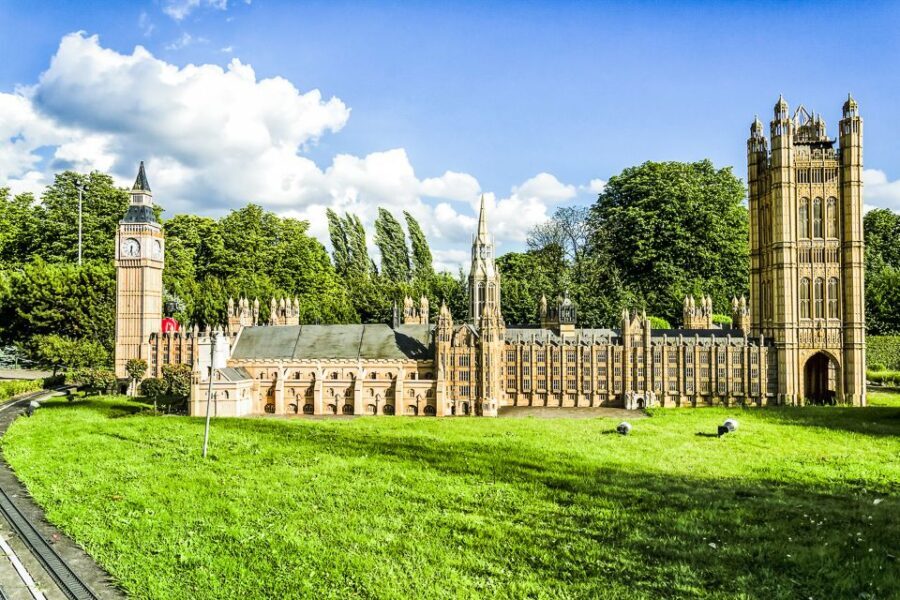
Not technically an Atomium ticket, but you should know about it because Mini-Europe is the natural pair if you’ve got kids or you’ve travelled out to Heysel anyway. Around 350 1:25 scale models of European landmarks set across a manicured park, with audio guides and small interactive elements at each. Our Mini-Europe review covers the layout, the route order that works best with kids, and whether the audio guide is worth picking up. Pair this with the Atomium for a half-day the whole family actually enjoys.
3. Brussels Card: 48 Museums, Atomium, and Discounts: $60
Pick this one if you’re staying in Brussels for two or three days and want to hit the Atomium plus a few proper museums (Royal Museums of Fine Arts, the Magritte Museum, BELvue, and 45 others). Our Brussels Card review walks through which museums are worth visiting, which can be skipped, and the maths on whether the card actually saves you money. Short version: yes if you do three or more paid sites in two days, no if you’re only here for one busy afternoon.
What’s Actually Inside the Atomium
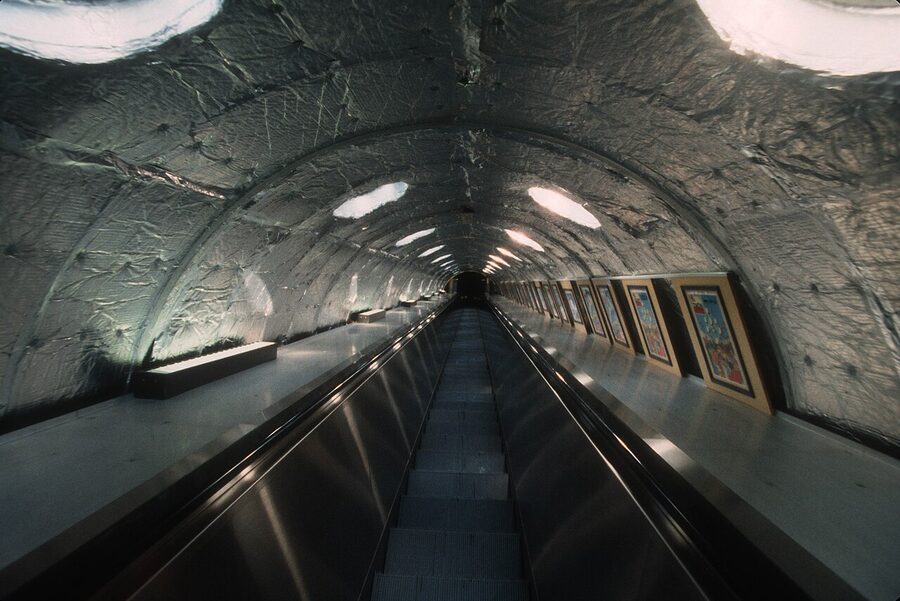
The Atomium has nine spheres but you only access six on a standard ticket, three are structural and used for utilities, lifts, and stairwells. The other six are spread across three permanent experiences plus a viewing platform, and the order you do them is dictated by the route, not by you.

The first sphere: Expo 58 history
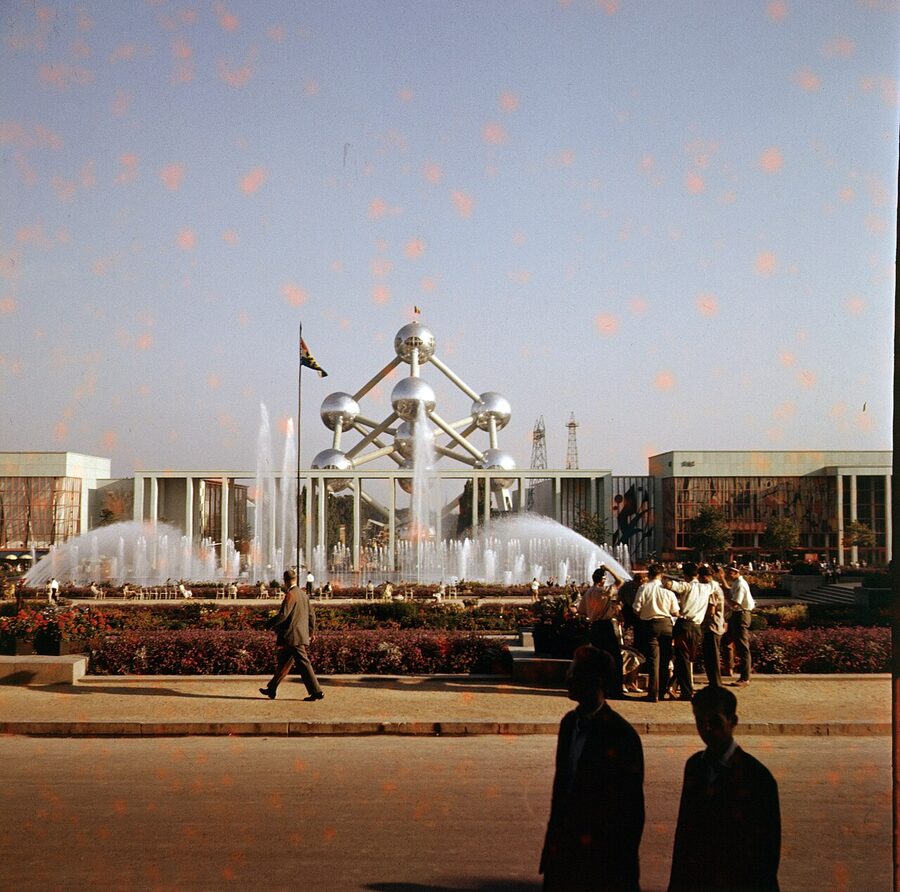
The first sphere is the permanent exhibition on Expo 58, the 1958 Brussels World’s Fair the Atomium was built for. It’s a small, well-presented mix of original posters, press passes, scale models of the fair site, and grainy newsreel footage of opening day. The whole post-war optimism vibe comes through clearly, Belgium had just emerged from the war, the country was rebuilding, and the world was supposed to look like this in 50 years’ time. It didn’t, but the exhibit makes you wish it had.

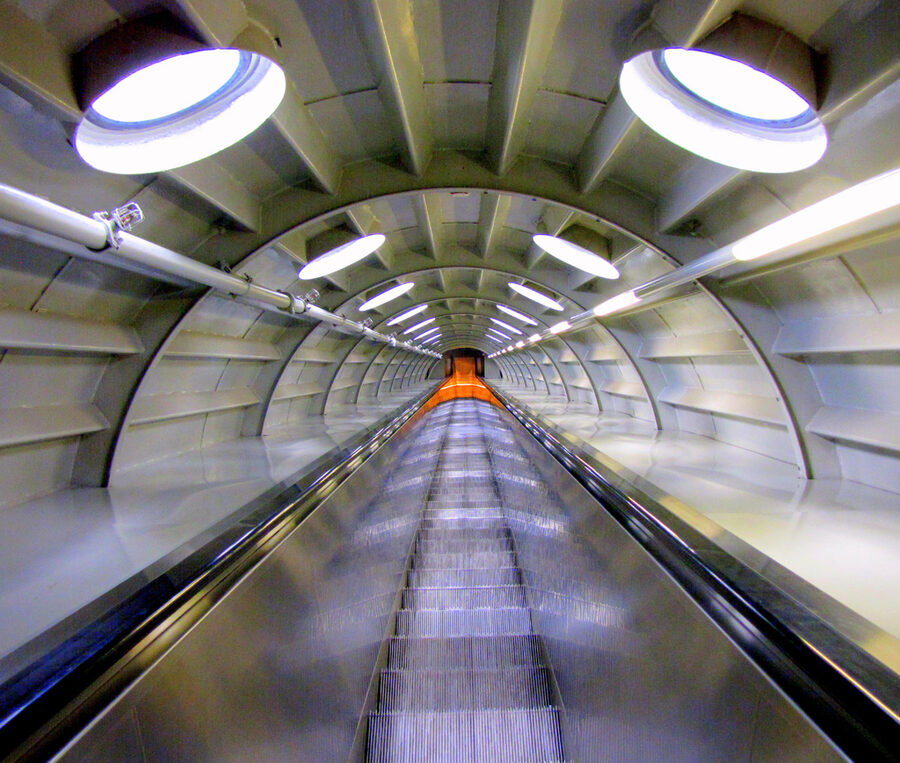

Plan on 20-25 minutes here if you’re someone who reads display panels, 10 if you’re not. The exhibit changes occasionally, temporary photo or design exhibitions sometimes occupy the lower spheres for a few months at a time, but the Expo 58 core display is always running.
The middle sphere: light and sound show
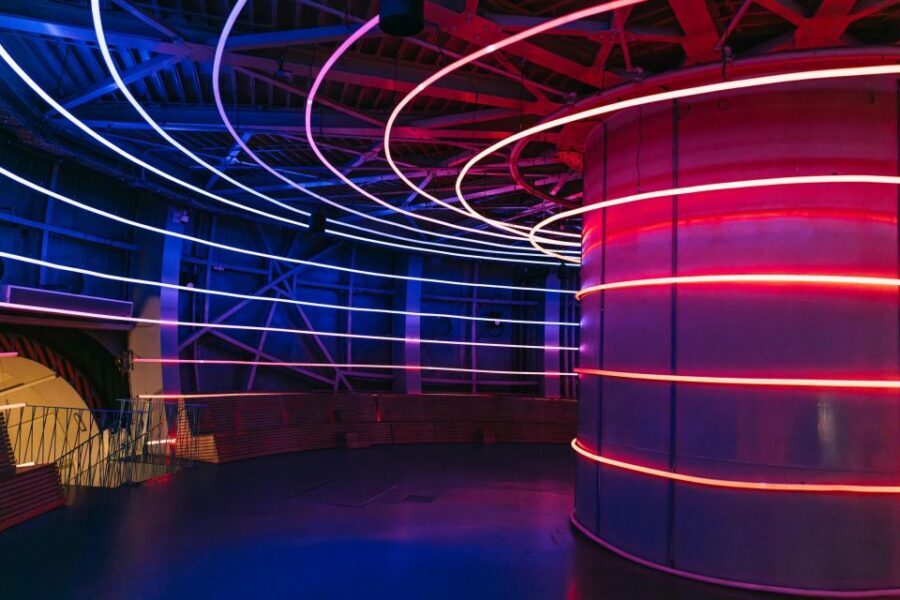
This is the part nobody mentions in reviews and the part that most surprised me on my first visit. After the historical exhibits you walk into a near-empty sphere lit only by neon rings and pulsing geometric light patterns synced to ambient electronic music. The whole thing runs on a 5-minute loop, so you can step in at any point and still catch a full cycle. The atmosphere is somewhere between an art installation and the inside of a 1970s sci-fi spaceship, and it works.
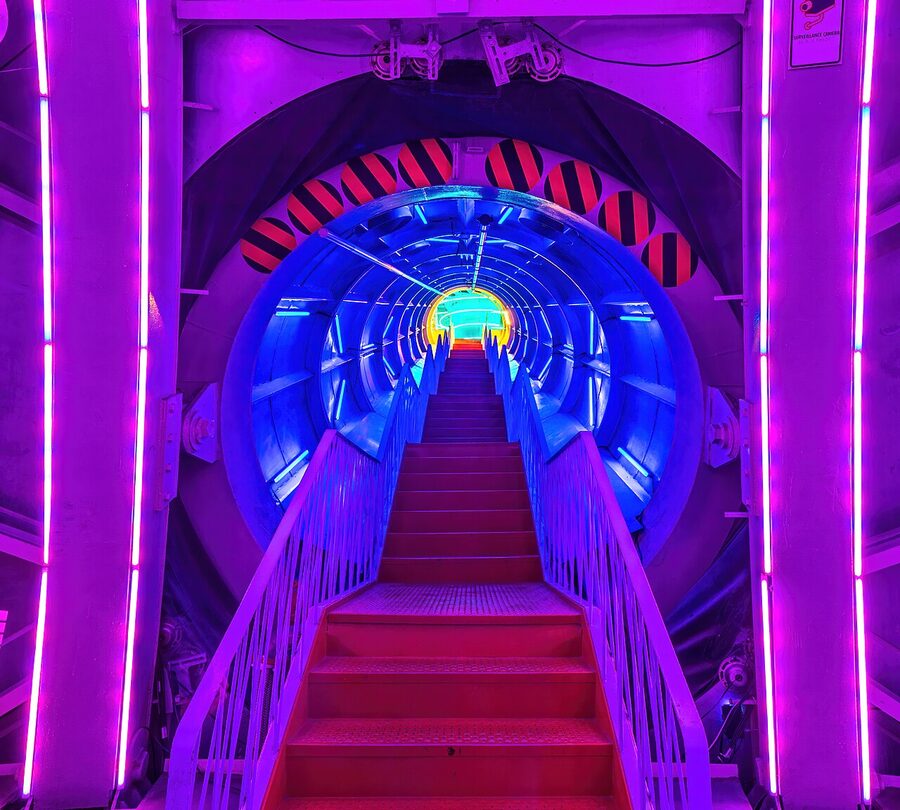

Phone cameras struggle here, by the way. The contrast between the neon and the dark sphere walls fools most auto-exposures into either crushing the blacks or blowing out the lights. Manual mode helps if you’re shooting on a real camera. If you’re just on a phone, drop the exposure compensation by a stop or two.
The top sphere: the panorama
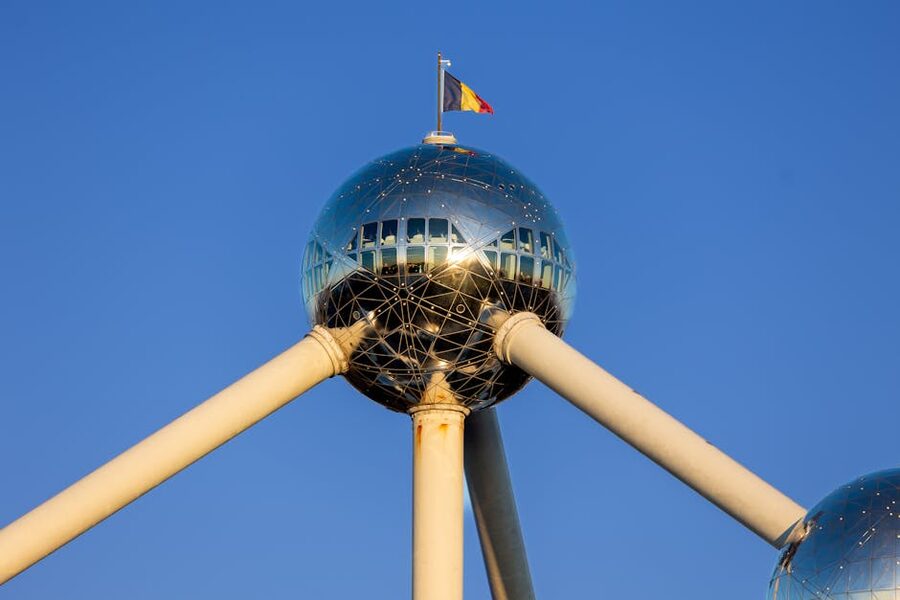
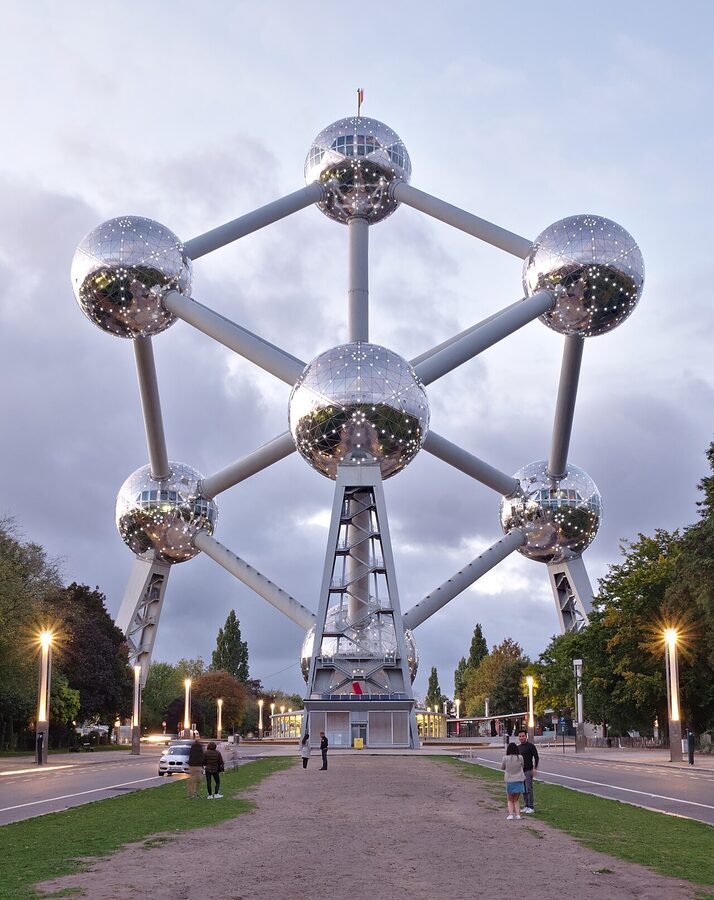
This is the sphere people pay €16 to reach. The high-speed lift takes 20 seconds, it was once the fastest in Europe, and then the doors open to a 360-degree view of Brussels, Laeken, the Royal Domain, and on a clear day, the Antwerp skyline 50km north.
.jpg)
The windows are tinted, which gives photos a strange filter-like cast in warm reds and cool blues depending on which panel you’re shooting through. Most people see this as a bug and try to angle around it. I think it’s the best feature, your photos look unmistakably like they were taken at the Atomium, not from any old observation tower.
There’s a small café at the very top serving coffee, soft drinks, and a few snacks. Not a full restaurant, despite what some older guidebooks claim. The cafe-restaurant Le Belgique was up here years ago, but it’s been a self-service snack bar for the better part of a decade now. If you want a sit-down meal with a view, walk back across to the ground-floor restaurant or eat in central Brussels.
Getting to the Atomium from Central Brussels
The Atomium is in Heysel/Heizel, the northern edge of the city. By Brussels standards it’s properly out, about 6km from Grand Place, but the metro link is direct and quick.

By metro (the easy option)
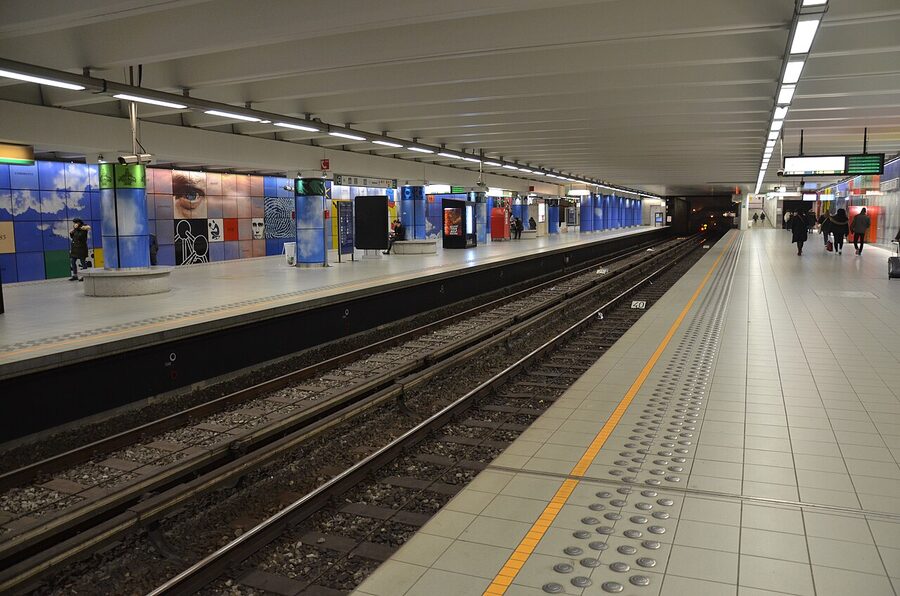
Take Metro Line 6 (the blue line) heading toward Roi Baudouin / Koning Boudewijn. Get off at Heizel/Heysel station. From the central city the journey takes 20-25 minutes and the line runs every 5-10 minutes. From the platform the Atomium is signposted clearly, about a 5-minute walk through a covered passageway and then a tree-lined plaza.
A single metro ticket is €2.10 if you buy from a machine. A 24-hour pass is €7.50, which is the better buy if you’re using the metro at least three times that day. You can also tap a contactless card at the gates without buying a ticket, the system will calculate the right fare and never charge you more than the day cap. That’s how I always travel in Brussels now, and it’s easily the simplest option for short stays.
By bus or tram
Bus 84 and Bus 88 both stop near the Atomium. Tram 7 also runs to Heysel. They’re slower than the metro (30-40 minutes from the centre) but useful if you’re staying in a part of the city where the metro isn’t direct. Same fare structure, same tickets, anything that works on the metro works on the buses and trams.
By taxi or rideshare
About €20-30 from Grand Place by Uber or Bolt, depending on traffic and time of day. Worth it on the way back if you’re tired and don’t want to wait on a metro platform after a long day, but I wouldn’t bother on the way out unless you’re in a real hurry. The metro is genuinely faster than a car at most times of day.
When to Visit (and When to Skip It)
The Atomium is open 10am to 6pm every day, with last entry at 5:30pm. There’s no closing day, even Christmas, New Year’s Eve, and Belgian public holidays operate normal hours.
Best time of day
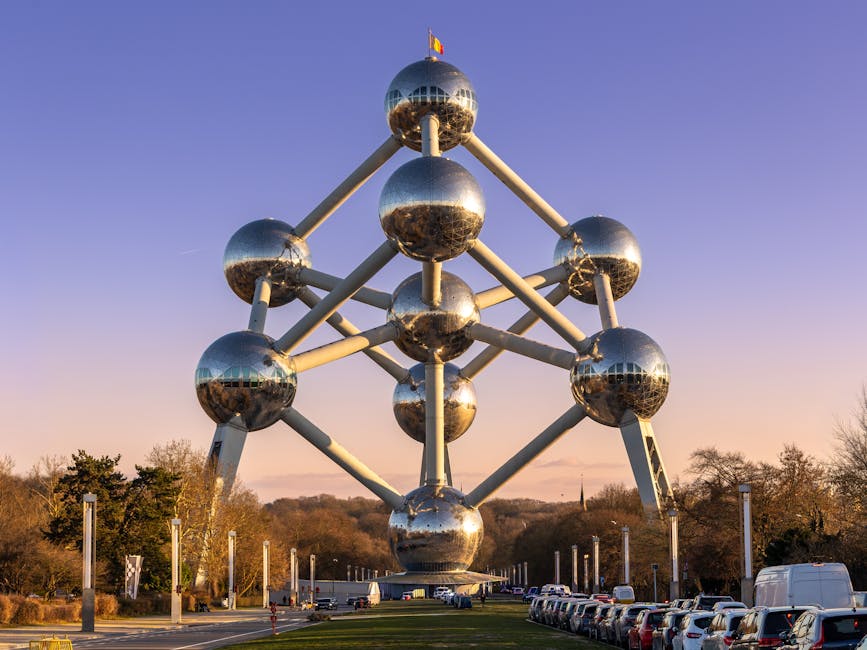
Two windows work well. Either get there at 10am sharp for short queues and crisp morning light on the spheres, or arrive around 4pm so you’re at the top during late-afternoon glow. The middle of the day is fine but the views are flatter and the queues are longer. Avoid the 1-3pm slot in summer if you can.
Best season
April to early June and September to mid-October are the sweet spots. Mild weather, fewer crowds than peak summer, and the days are long enough that a late-afternoon visit still has good light. Summer (July-August) is the busiest period, and Belgian summer is unpredictable, clear days are excellent, but rain can roll in fast and ruin the panorama. Winter visits work surprisingly well because the Atomium is genuinely uncrowded, but fog is common and on a properly grey day the panorama is just grey on grey.
What to skip on
If you’ve only got a single half-day in Brussels, the Atomium is harder to justify. The trip out to Heysel and back eats nearly two hours of your day before you’ve even bought a ticket, and the Grand Place, Manneken Pis, and Galeries Saint-Hubert are all walkable from the centre. If you’re a one-day visitor, consider a Brussels walking tour or a hop-on hop-off bus that includes an Atomium photo stop instead, you get the iconic shot without the time cost.
Why the Atomium Looks the Way It Does
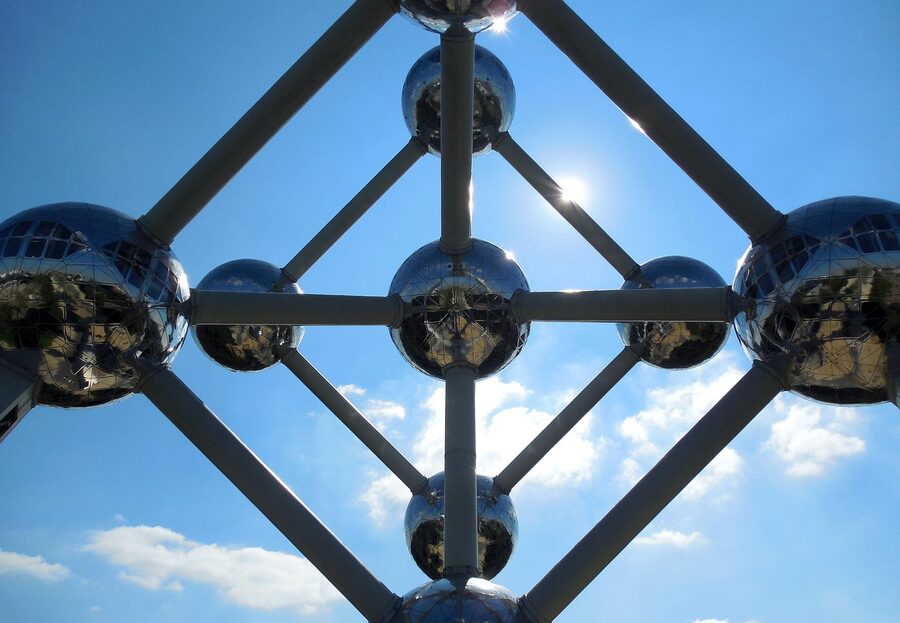
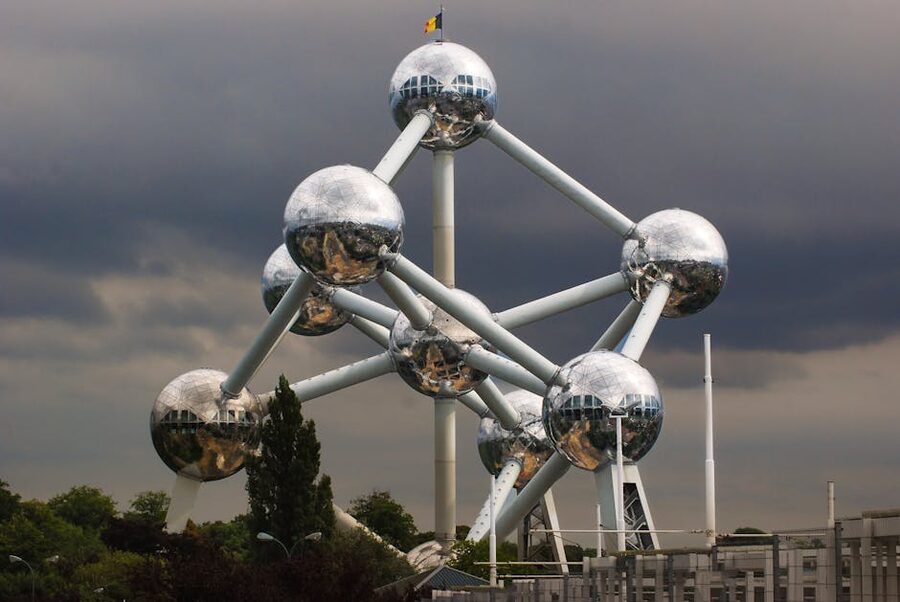
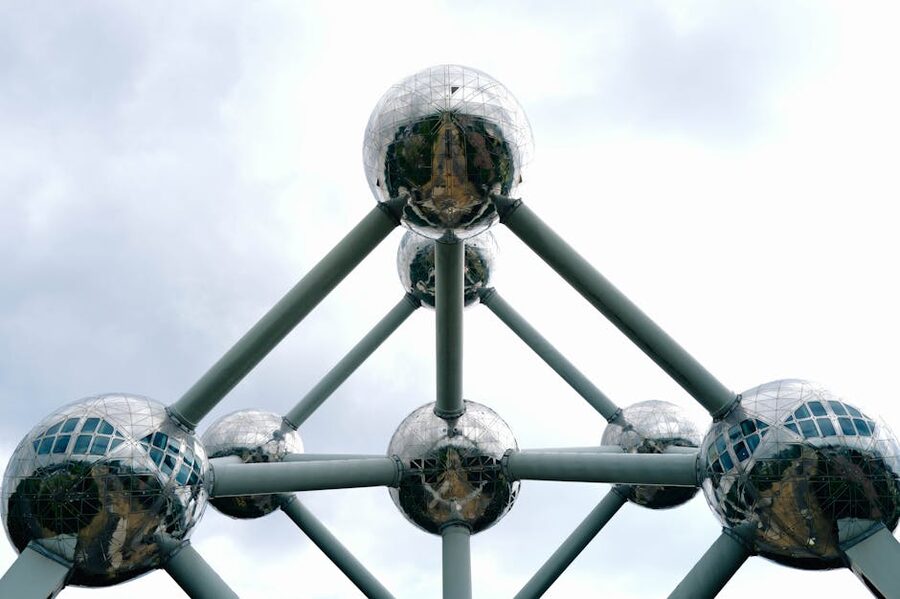
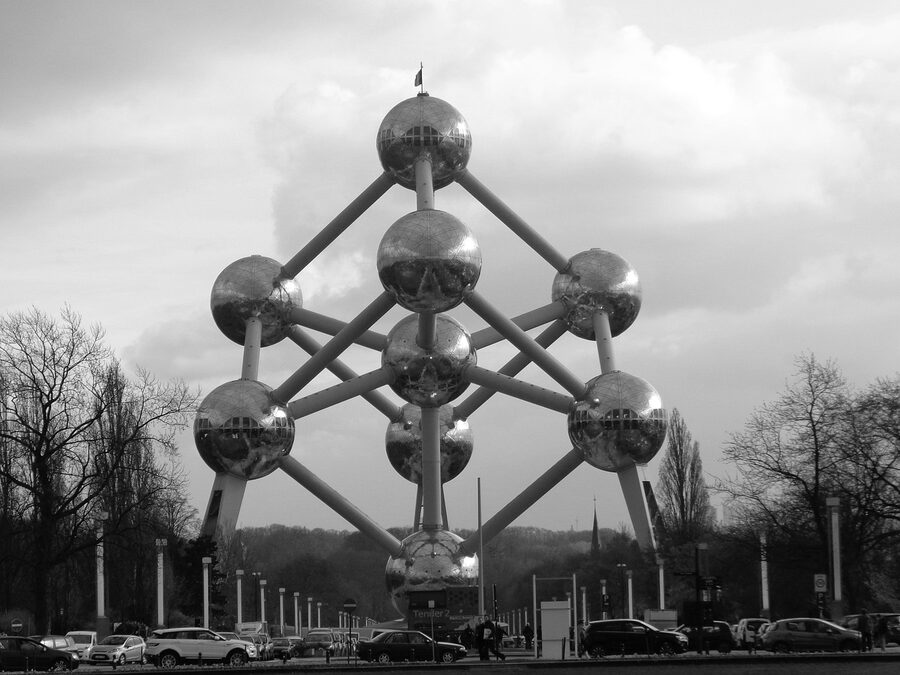
Belgian engineer André Waterkeyn designed the Atomium in 1955, originally as a temporary structure for Expo 58. It represents an iron crystal magnified 165 billion times, nine atoms arranged in a body-centred cubic lattice, the structure of an actual iron molecule, blown up to the size of a building. At the time, Belgium’s iron and steel industry was a national pride point, and the Atomium was meant as a sculpture about post-war scientific progress.
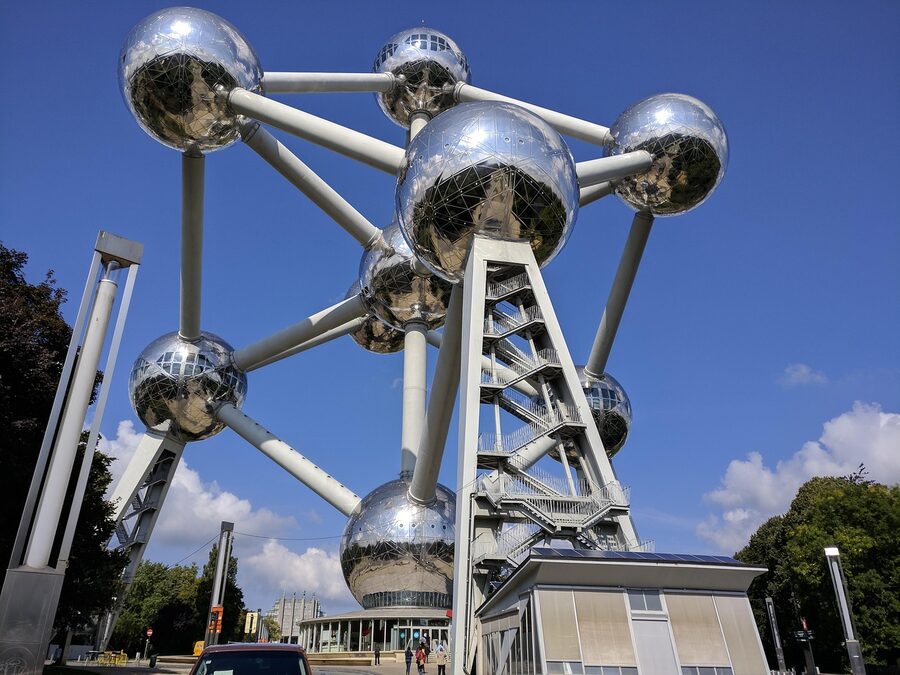
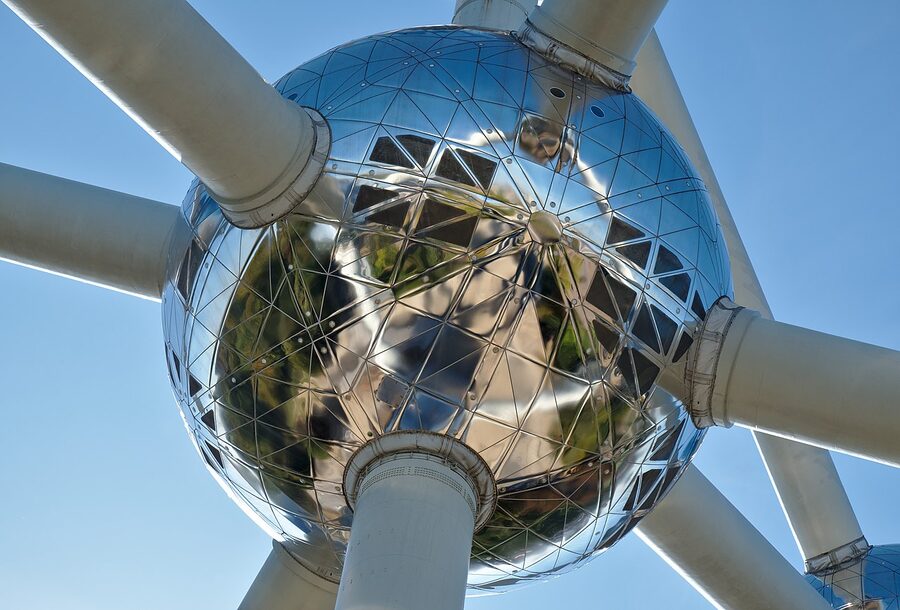
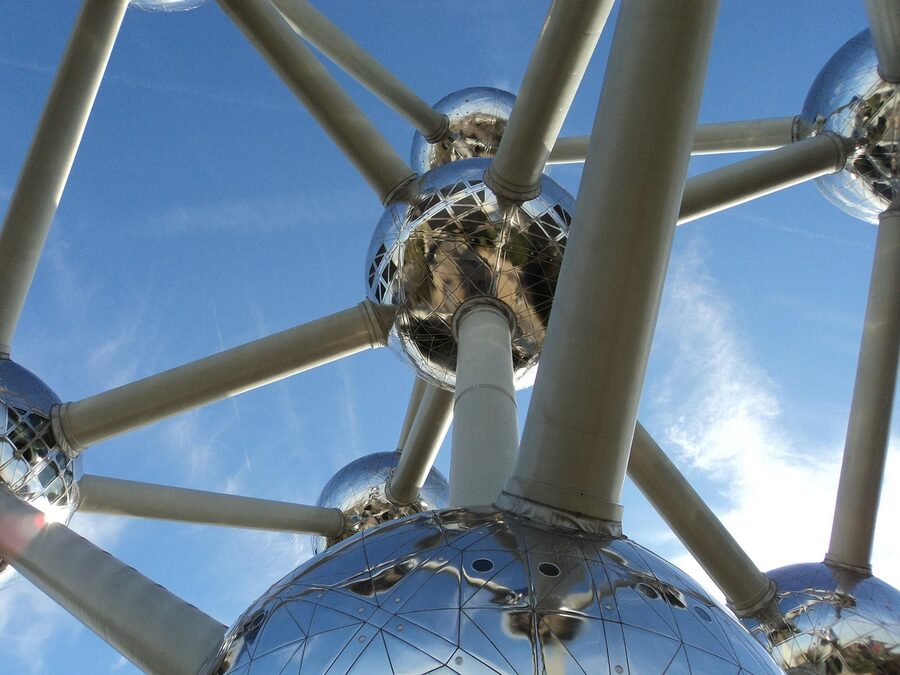
It was supposed to come down after six months. Belgium kept it. The original aluminium cladding stayed up until 2004-2006, when the entire structure was renovated and re-skinned in stainless steel, which is why it now looks brand new despite being 67 years old. The internal layouts were redesigned at the same time, the lift you ride to the top is from the renovation, not the original.
.jpg)
The Atomium has been declared the most “bizarre” landmark in Europe by enough guidebooks that the Atomium itself owns the descriptor in its marketing. CNN once put it on a list of “weirdest buildings on Earth.” Locals don’t really argue. It’s the kind of structure that only made sense in a brief mid-century window when futurism was still optimistic, and that’s part of why it endures, it’s a time capsule of an idea that didn’t quite happen.
The ADAM Brussels Design Museum
If you book the combo, you’ll cross the plaza to ADAM after your Atomium visit. The museum was opened in 2015 and houses the Plasticarium collection, a large permanent exhibition of plastic-era furniture and product design from roughly 1950 to 2000. It’s small, around 90 minutes if you’re a design nerd, 30-45 if you’re not, and it makes a logical pairing with the Atomium because both venues are essentially monuments to mid-century design optimism.
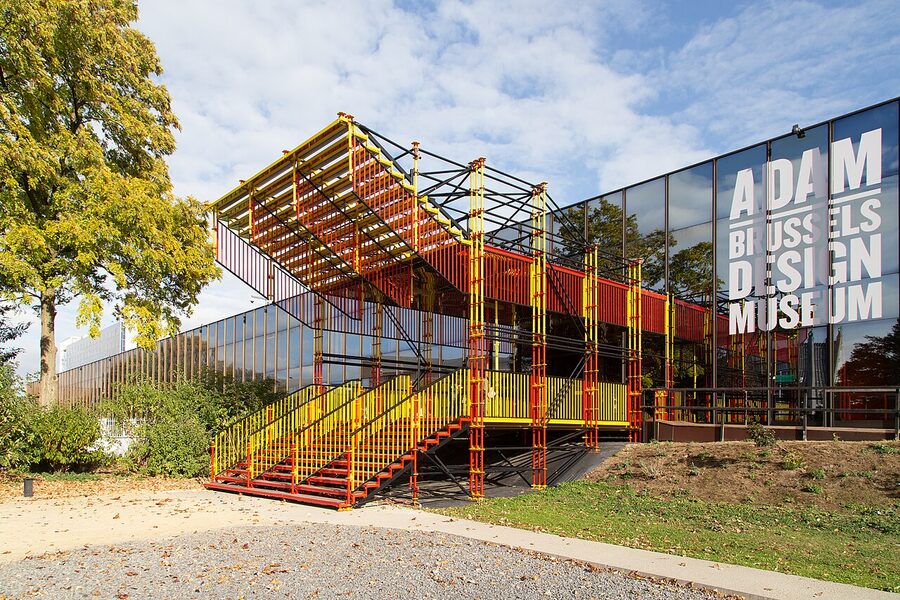

The collection includes pieces by Verner Panton, Joe Colombo, and other big names in 20th-century industrial design. There’s also a rotating temporary exhibition space, recent shows have covered skateboard graphics, neon signs, and 1960s Italian lighting. If those topics don’t grab you, ADAM is honestly skippable. But the combo ticket essentially gives it to you for €5 extra, so it’s worth a look even if you’re not a design person.
Practical Tips Most Guides Skip
A few things I’ve learned the hard way over multiple visits.
The lift queue is separate from the entry queue. Once you’re inside the Atomium, the lift up to the top sphere has its own line on busy days, and on summer weekends it can add another 15-20 minutes. There’s also a stairwell option if you want to skip the queue and have working knees, the climb is steep but cooler, and you’ll pass through the connecting tubes which most lift visitors miss.
The on-site gift shop is overpriced. Mini Atomium models that cost €15-20 in the gift shop go for €5-8 in souvenir shops near Grand Place. If you want a generic Belgian souvenir (chocolate, beer glass, Tintin merch), don’t buy at the Atomium. If you want something specifically Atomium-branded, the shop is the only place that has it, but pay full attention to prices because they’re high.
Food at the Atomium is fine, not great. The top-sphere café is a snack bar with so-so coffee. The ground-floor restaurant inside the Atomium base is sit-down but pricey for what it is. If you’ve got time, walk 10 minutes south to the small Heysel residential streets where you’ll find cheaper Belgian food trucks and a couple of family-run cafes. Or just plan to eat back in central Brussels.
The lift is fine for most people but mention it if you’re claustrophobic. Staff will let you ride with fewer passengers if you ask. The lift is windowless and the 20-second ascent feels longer than it sounds. Telling them at the boarding point gets a calmer ride.
Restrooms are at the base, not at the top. The top sphere doesn’t have toilets. Use the ones near the entrance before you go up if you’ve been drinking water on the way over.
Photography spots that actually work
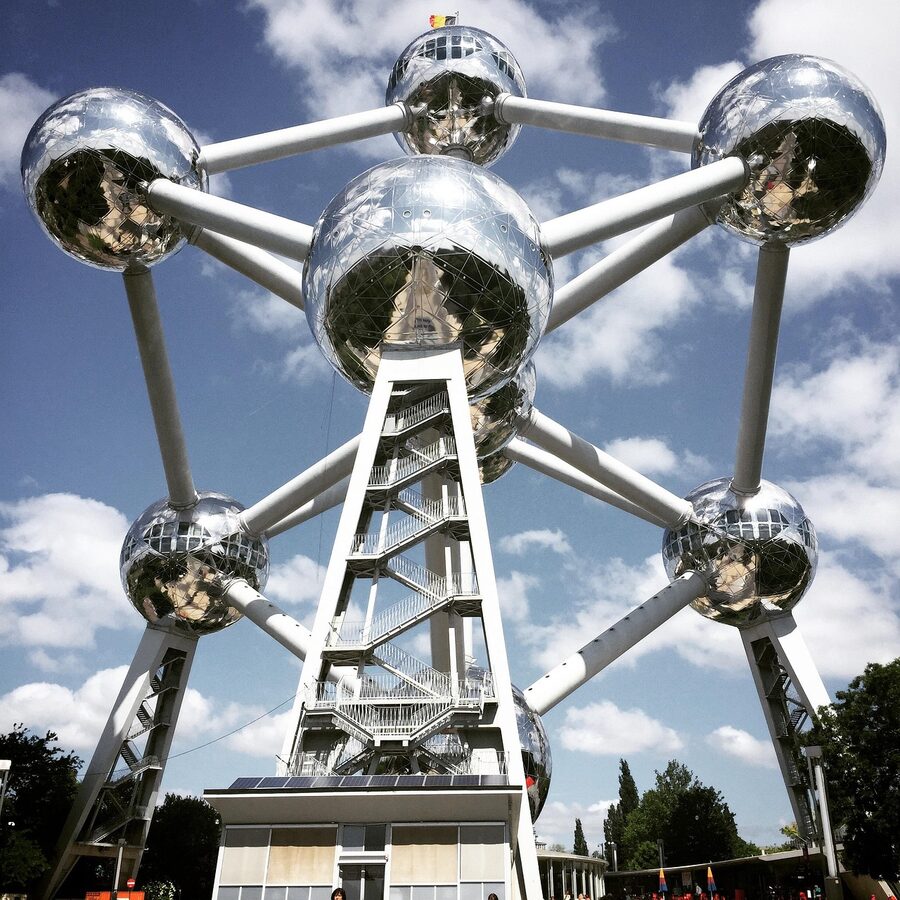
Most visitors take their photo from directly under the structure, which is fine but generic. Better angles:
- The southwest corner of the plaza, about 50m from the entrance, where the Belgian flag in the foreground frames the spheres without the trees blocking the lower atoms.
- The walking path from the metro exit, where you first catch sight of the Atomium between the trees as you approach. Best light around 11am.
- The Mini-Europe boundary fence (you don’t need a Mini-Europe ticket for this, the fence is on a public path), which gives you a cleaner long shot from across the small lake.
- From inside the top sphere shooting through the tinted windows, for the unmistakable Atomium colour cast on the city below.
Where to Stay if You Want to Walk to the Atomium
You don’t need to. Heysel is a residential and exhibition district, and the hotel options nearby are mostly business-traveller chain hotels for the Brussels Expo conference centre. Most visitors stay in central Brussels (around Grand Place or Sainte-Catherine) and metro out for the day, which I’d recommend.
If you specifically want to be near the Atomium for a quick early visit, look at hotels around Laeken or near the Heysel exhibition centre. They’re cheaper than central Brussels and give you a 10-15 minute walk to the Atomium. The trade-off is that everything else in Brussels is now a 25-minute metro ride away.
Combining the Atomium With the Rest of Brussels
The Atomium works best as a half-day on its own or paired with Mini-Europe for a full day at Heysel. Don’t try to combine it with central Brussels in a single afternoon, the metro time alone defeats the purpose.
If you’ve got a longer trip and you’re sorting out a sensible Brussels itinerary, the Atomium fits naturally on day two or three after you’ve ticked off Grand Place, Manneken Pis, and the chocolate-and-waffle obligatories. A common rhythm: day one in the historic core (often with a guided walking tour to get oriented), day two for chocolate (the Choco-Story museum is a great rainy-day option) and the EU quarter, day three out to Heysel for the Atomium and Mini-Europe. If you’ve got more time, slot in a day trip to Bruges or Ghent on day four, both are 30-40 minutes by direct train.
Final Verdict on Atomium Tickets
Worth the visit if you’re spending more than a day in Brussels and you have any interest in mid-century architecture, panoramic city views, or just unusual landmarks. Skip it if you’re only here for an afternoon, the trip out eats too much time.
Book the combo with the ADAM Design Museum unless you specifically don’t want to do a museum. It’s barely more expensive than the standalone ticket and adds a worthwhile second venue. Mini-Europe is the upgrade if you’ve got kids or a longer day. The Brussels Card only makes sense if you’re going to hit at least three paid attractions.
Buy online if you’re visiting on a weekend or in summer, the queue savings alone are worth the small inconvenience of pre-booking. Walk-up is fine on a winter weekday or in shoulder season midweek.
What Else to Plan in Brussels
If you’re only in Brussels long enough for the Atomium, you’re missing the point a little, the city’s strength is the variety of small experiences within walking distance of the centre. Pair the Atomium with a proper Brussels walking tour on day one to get your bearings, and a hop-on hop-off bus if you want to see the EU quarter and Cinquantenaire without working out tram routes. The Choco-Story chocolate museum is a brilliant rainy-afternoon backup, and a guided chocolate tasting walk is the better option if you want to actually eat your way through the city’s specialties rather than read display cases. For longer trips, the day trips to Bruges and Ghent are both genuine highlights and easy direct train rides.
One more piece of advice that nobody told me on my first visit: take a moment in the plaza after you exit the Atomium. Don’t rush back to the metro. Sit on one of the benches, get a frites from the food van that parks there on weekends, and look up at this thing one more time. It’s been there since 1958 and it’ll outlast almost everything else you see on this trip. That’s the bit you remember.
Some links above are affiliate links. If you book through them, we may earn a small commission at no extra cost to you, which helps keep this guide free.