
My first day in Brussels I tried to walk it. I had a list of “the highlights” pulled off some travel blog and decided I’d knock them off in a single loop on foot. Grand Place, Manneken Pis, the Royal Palace, the EU quarter, the Atomium. By 4 PM I was sitting on a bench near the Berlaymont with one shoe off, a blister the size of a coin, and the entire northern third of the city still to cover. The Atomium alone is seven kilometres from Grand Place. Brussels doesn’t look big on a map, and it isn’t large by European-capital standards. But it’s spread out, the streets aren’t a grid, and the gradient between the lower city and the upper city ambushes you the second time you have to climb back up.
.jpg)
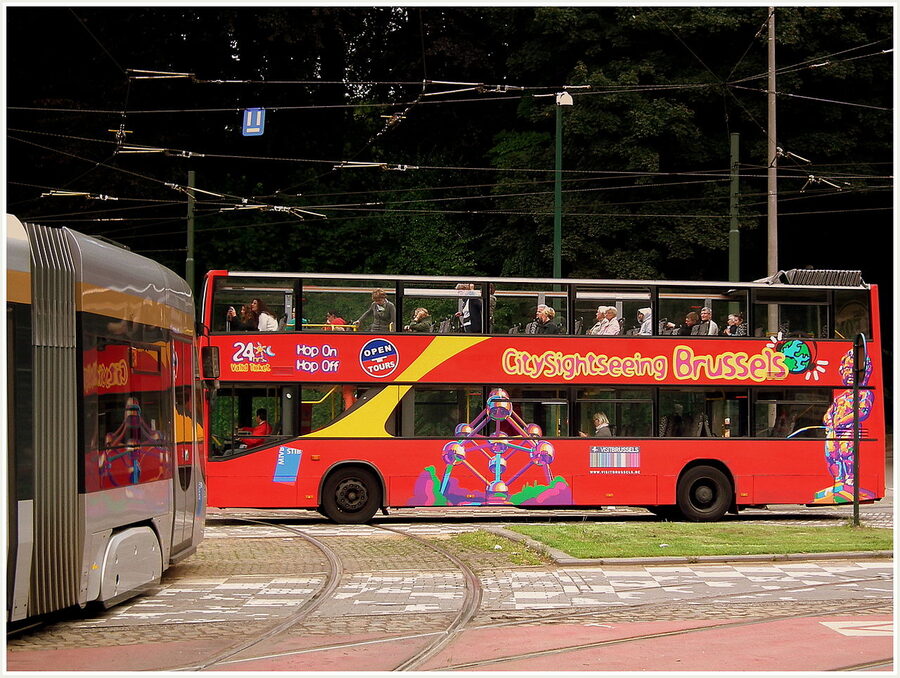
The hop-on hop-off bus isn’t a sophisticated travel choice. It’s a tourist tool, and Brussels is one of the cities where you actually need it. The big sights sit in three or four separate clusters with awkward distances between them, the metro doesn’t reach the Atomium directly, and the upper-city/lower-city split means even short walks involve stairs or a funicular. A 24- or 48-hour bus ticket cuts through all of that.
Two operators run buses in Brussels: Tootbus (the bigger, eco-electric fleet, dominant on the routes most tourists actually want) and City Sightseeing Brussels (smaller, sometimes cheaper, similar coverage). Their routes overlap on roughly 80% of stops. The real choice is whether you want a basic bus ticket or a combo that bundles the Atomium, the Beer World museum, or the city card.
Best overall: Brussels Hop-On Hop-Off Bus Tour (Tootbus) for $29. 24- or 48-hour ticket, audio guide in 11 languages, electric double-deckers. The default pick for almost everyone.
Best combo: Hop-On Bus + Belgian Beer World Museum at $53. 48-hour bus pass plus entry to the new Beer World museum at the old Bourse. The museum ticket alone is around $20, so the bus is essentially $33.
Best with city card: Brussels Card with Hop-On Hop-Off for $75. Bus plus 49 museums plus discounts. Worth it if you’ll do three or more museums; otherwise overkill.
- Why Walking Brussels Is the Rookie Mistake
- How the Brussels Hop-On Hop-Off System Works
- The Best Hop-On Hop-Off Tickets to Book
- 1. Brussels Hop-On Hop-Off Bus Tour (Tootbus):
- 2. Hop-On Hop-Off Bus + Belgian Beer World Museum:
- 3. Brussels City Card with Hop-On Hop-Off Bus:
- What You’ll See on the Central Loop
- What You’ll See on the Atomium Loop
- When to Ride and When to Skip
- Tips That Actually Matter
- Cards, Passes, and Other Ways to Get Around
- Other Brussels and Belgium Guides
Why Walking Brussels Is the Rookie Mistake
I want to be specific about the scale problem because it’s the single biggest reason a hop-on hop-off ticket pays for itself in Brussels in a way it doesn’t in Bruges or Ghent.
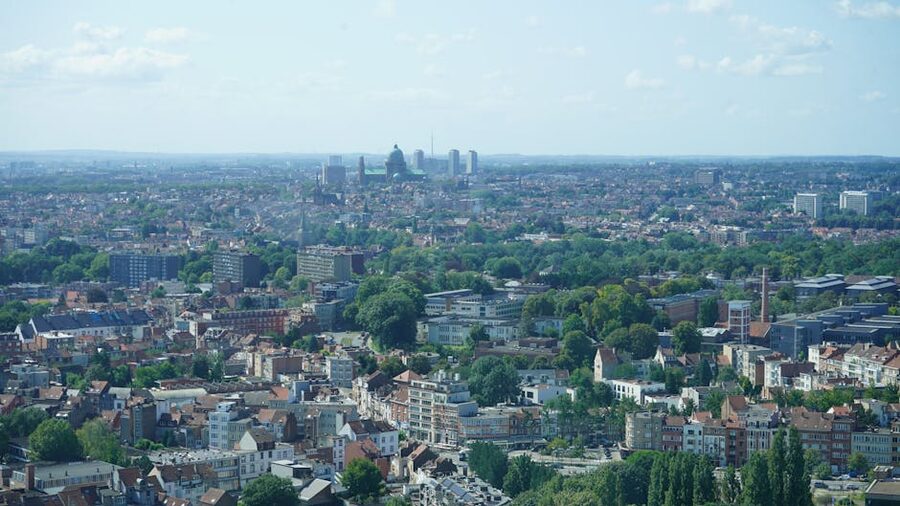
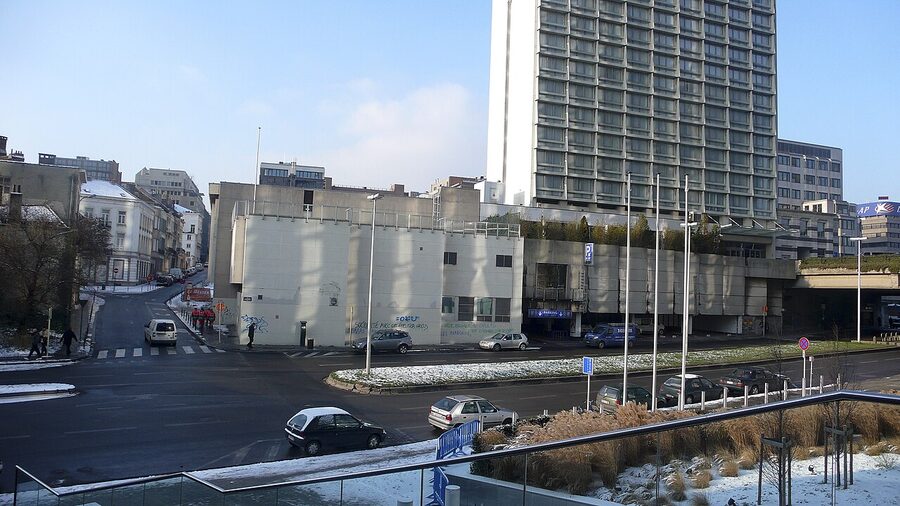
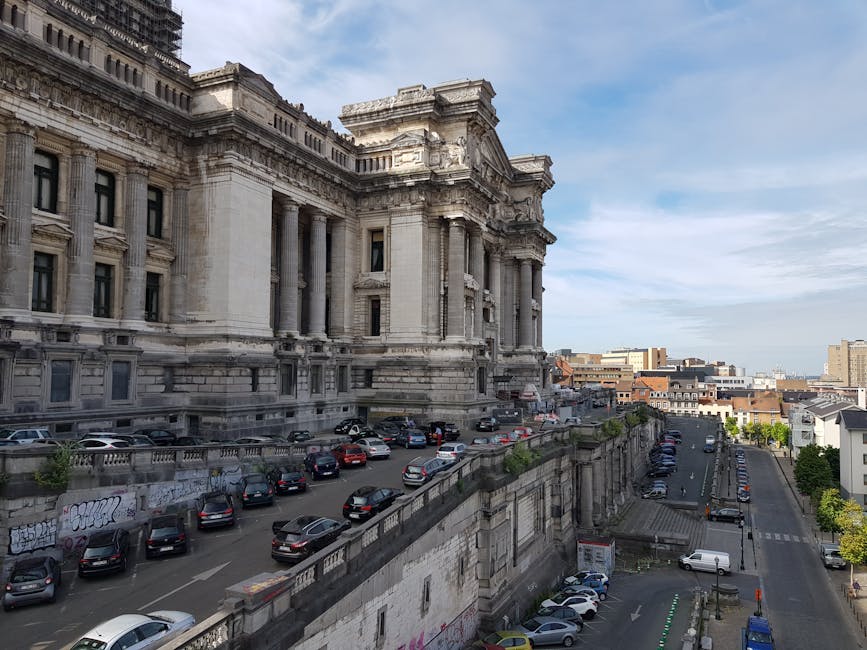
The Grand Place sits in the lower town. The Royal Palace and the Mont des Arts museums sit in the upper town, 600 metres as the crow flies but closer to a kilometre on foot because the streets switch back. The EU quarter (Berlaymont, European Parliament, Schuman) is two kilometres east of Grand Place with little between to break up the walk. Cinquantenaire is another kilometre past Schuman. The Atomium is seven kilometres north, in a different neighbourhood. Mini-Europe sits next to the Atomium.
A perimeter hitting Grand Place, the EU quarter, Cinquantenaire, the Atomium, Mini-Europe, and back is roughly 22 kilometres on streets with serious uphill stretches. That’s a marathon distance over two days, plus the time at each stop. Most first-timers I’ve spoken to who tried it either gave up halfway through day one or skipped the Atomium because they’d run out of legs.
.jpg)
.jpg)
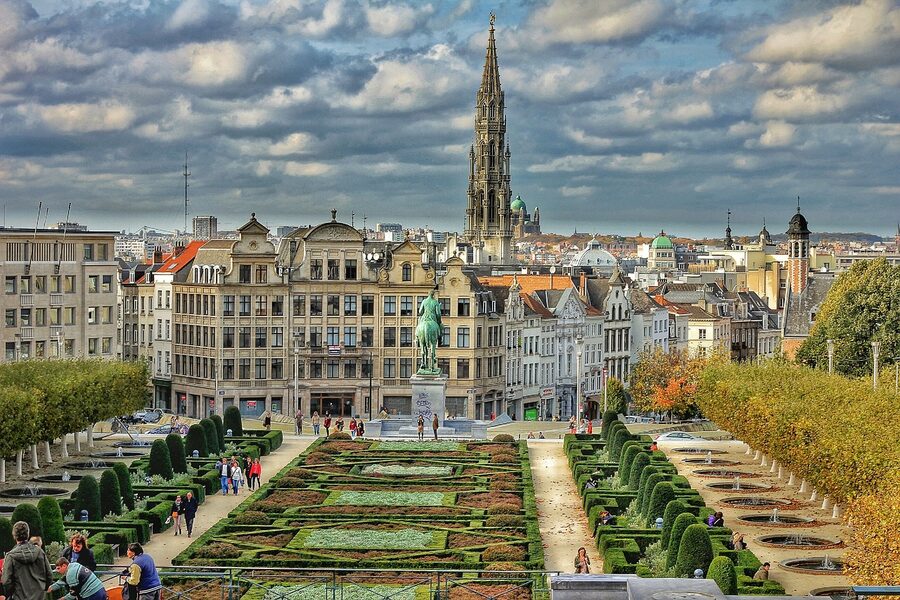
The other thing maps don’t show: the upper-town/lower-town split. Mont des Arts is the official boundary, and the kunstberg gardens climb the slope between them in a series of terraces. It’s pretty. It’s also genuinely tiring, especially at the end of a long sightseeing day with luggage or kids. The bus loops up Rue Royale and skips the climb entirely.

How the Brussels Hop-On Hop-Off System Works
Tootbus runs two main routes on a single ticket:
The Atomium Discovery line, north-loop, takes you out to the Atomium, Mini-Europe, and the Heysel/expo grounds. This is the route the metro doesn’t directly serve, and the reason most people buy the ticket in the first place.
The Brussels Discovery line, central loop covering Grand Place, Place Royale and Royal Palace, the EU quarter, Cinquantenaire, the Antoine Dansaert and downtown stretches. About 11 stops, full loop in roughly 75 minutes.
City Sightseeing Brussels runs a similar two-loop system with slightly different branding (their north loop also covers the Atomium). For a 24-hour ticket the price difference is usually within a couple of euros, and the on-the-ground experience is close to identical.
Frequency in high season: roughly every 20-30 minutes on the central loop, every 30-45 minutes on the Atomium loop. In winter the Atomium loop drops to about every 60 minutes, which can stretch a hop-off into a long wait if you don’t time it right. Both operators run from about 9:30 AM to 6:30 PM in summer, with last buses leaving from the Atomium back to the centre around 5:30-5:45 PM.
The audio commentary runs in 11 languages on Tootbus and 8 on City Sightseeing. You get disposable earbuds when you board. Bring your own pair if you have them; the disposable ones are loose and proper earbuds make the track easier to follow.
Boarding works like this: buy online ahead (10-15% cheaper than the kiosk), get a QR code, show it to the driver. Your ticket runs 24 or 48 consecutive hours from first scan, not from time of purchase, so don’t activate it until you actually start your day.
The Best Hop-On Hop-Off Tickets to Book
I’ve put real time into figuring out which Brussels hop-on hop-off product is worth your money. The buses themselves are nearly identical across operators, the differentiator is what’s bundled in. Here are the three that actually deserve attention.
1. Brussels Hop-On Hop-Off Bus Tour (Tootbus): $29
This is the straightforward pick. Tootbus covers both the central loop and the Atomium loop on the same ticket, with electric double-deckers running every 20-30 minutes through the centre and every 30-45 minutes out to the Atomium. The 24-hour ticket is $29, the 48-hour about $39. The audio guide is one of the better ones I’ve used, with kids’ commentary tracks too if you’re travelling with younger kids.
The reason I default to it: frequency and route coverage. Their central loop hits all the must-see stops at sensible intervals, and the Atomium loop is reliable enough that you can plan two hours up there without stranding worry. Our full review of the Tootbus ticket covers stop-by-stop details and the free walking tours bundled at certain stops.
2. Hop-On Hop-Off Bus + Belgian Beer World Museum: $53
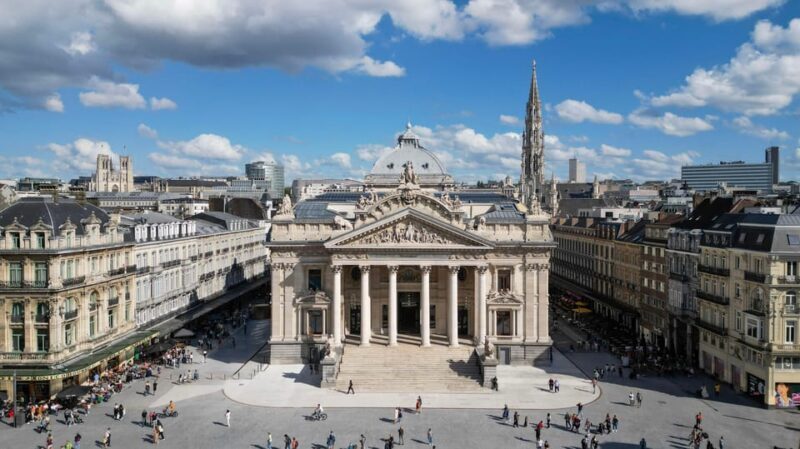
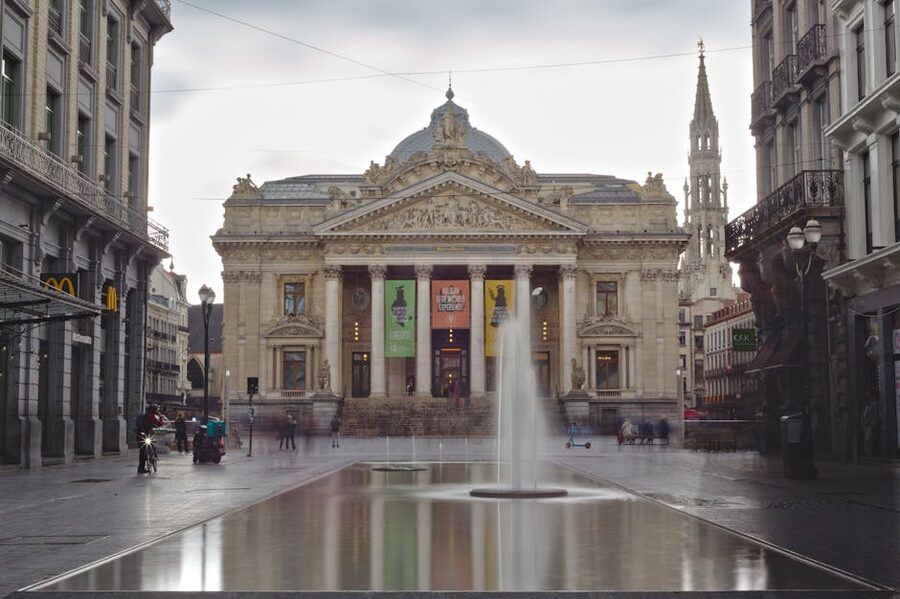
This bundles the same 48-hour Tootbus pass with entry to Belgian Beer World, the museum that opened in the old Bourse (Brussels Stock Exchange) in 2023. The museum ticket alone runs around $20, so the bus portion of this combo works out to about $33, only a few dollars more than the standalone bus. If you were going to do the museum anyway, this is the rational pick.
Belgian Beer World is interactive rather than a traditional museum, with tasting stations, a rooftop bar over Grand Place, and a real education on UNESCO-listed Belgian beer culture. Our combo ticket review covers the pacing. Short version: do the museum on day two of your pass in late afternoon, and you’ll roll out into Grand Place exactly at dinner hour.
3. Brussels City Card with Hop-On Hop-Off Bus: $75
The Brussels Card bundles the hop-on hop-off bus with entry to 49 museums, including the Royal Museums of Fine Arts, the Magritte Museum, the Musical Instruments Museum, and the BELvue. It also throws in unlimited public transit (metro, tram, bus) for the validity period and discounts at various restaurants and attractions. The 24-hour version is around $75, the 48-hour around $90.
The math works out if you’ll hit at least three museums. Each Brussels museum entry averages $14-18, so three plus bus plus transit lands around break-even on a 24-hour card and clearly ahead on a 48-hour. The catch: most casual visitors don’t actually do three museums in two days. If you’re a museum person (Magritte, Art Nouveau, the Musical Instruments collection), this is the right pick. If you’re mostly here for the food, beer, and architecture, buy the bus on its own and skip the card. Our full Brussels City Card review breaks down which museums are actually worth your time.
What You’ll See on the Central Loop
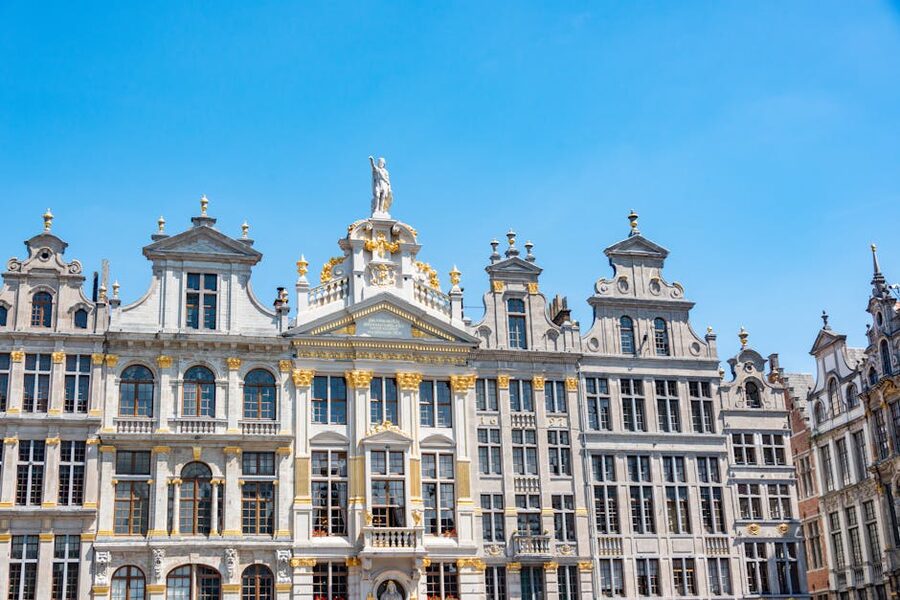
The Brussels Discovery loop is what most first-time visitors should prioritise: a 75-minute circuit covering about 11 stops, threading the lower town, climbing to the upper town, swinging through the EU quarter, and returning via the boulevards.
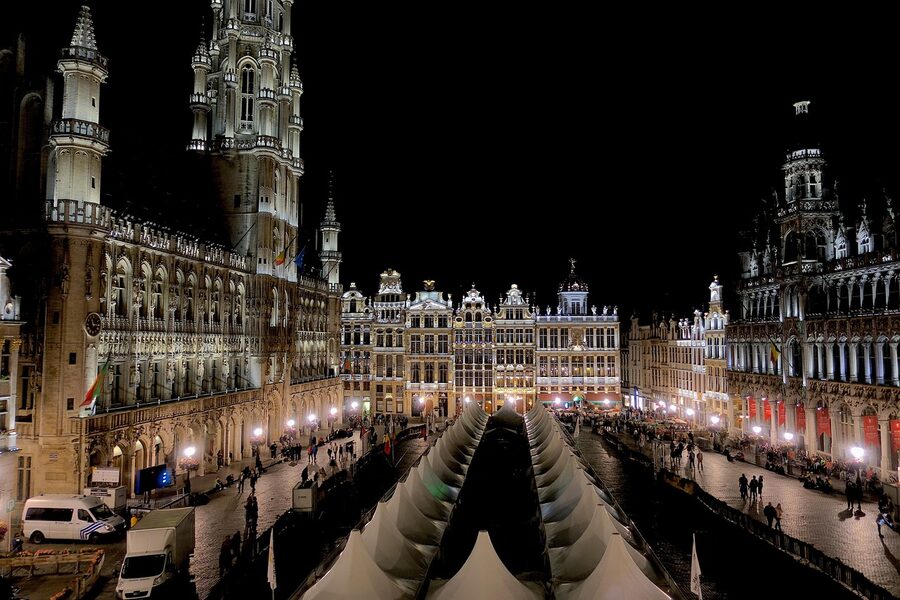
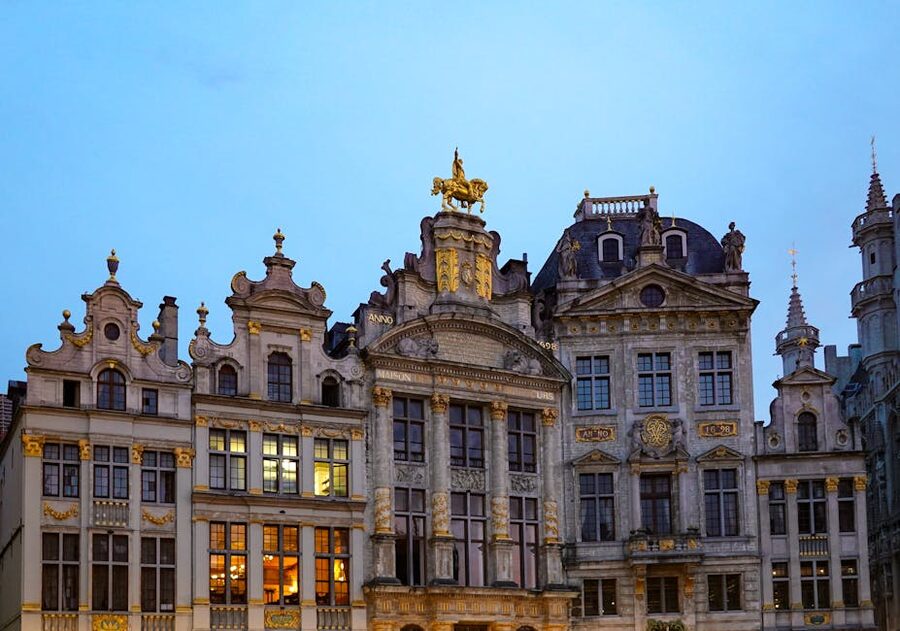
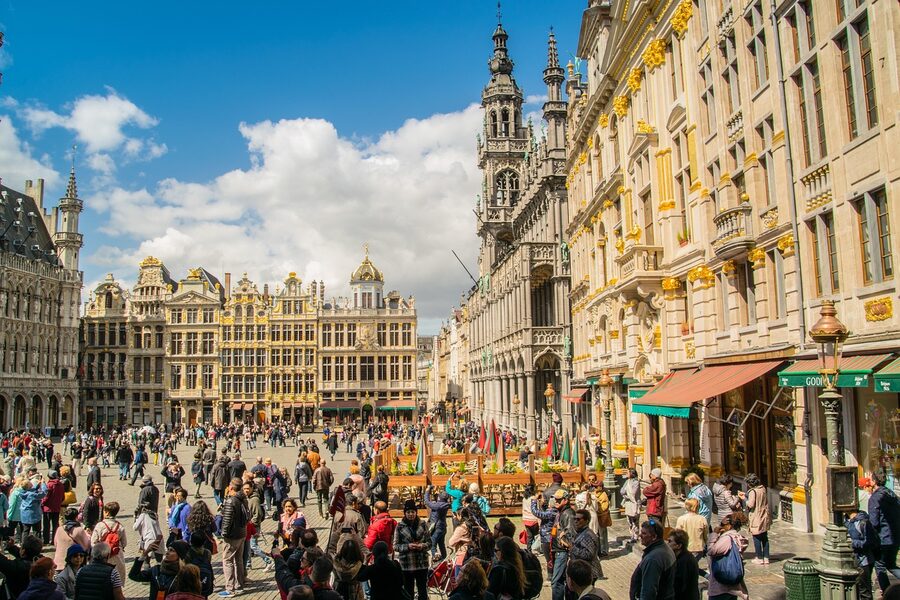
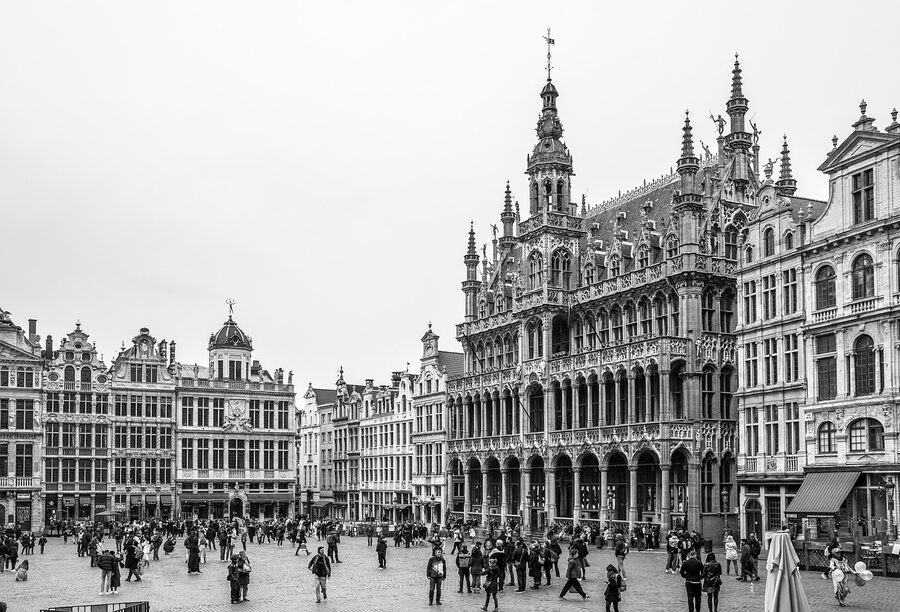
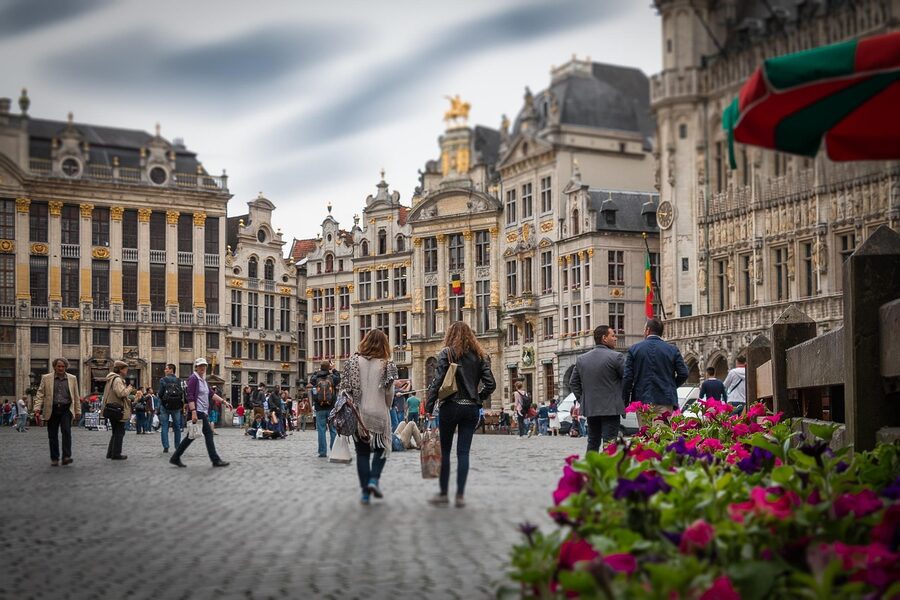
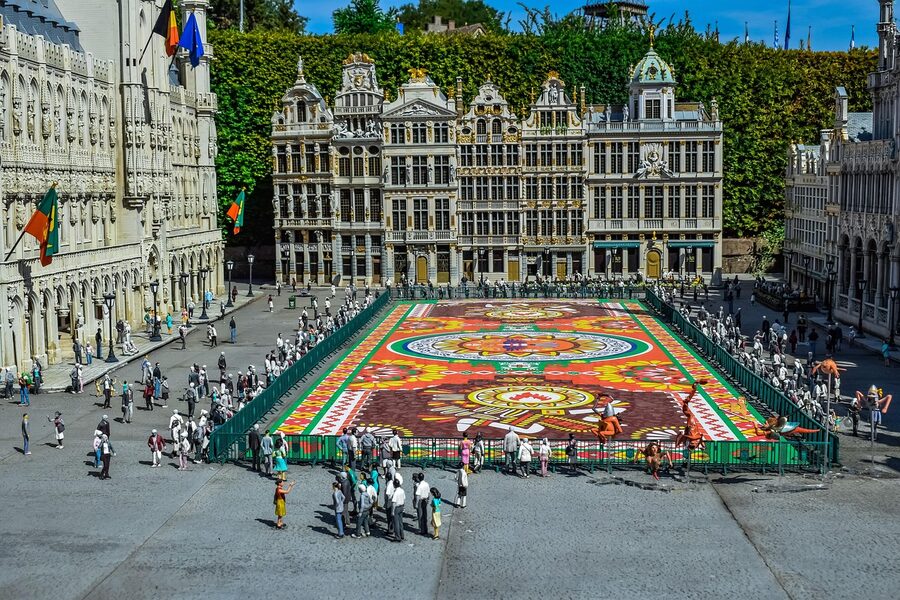
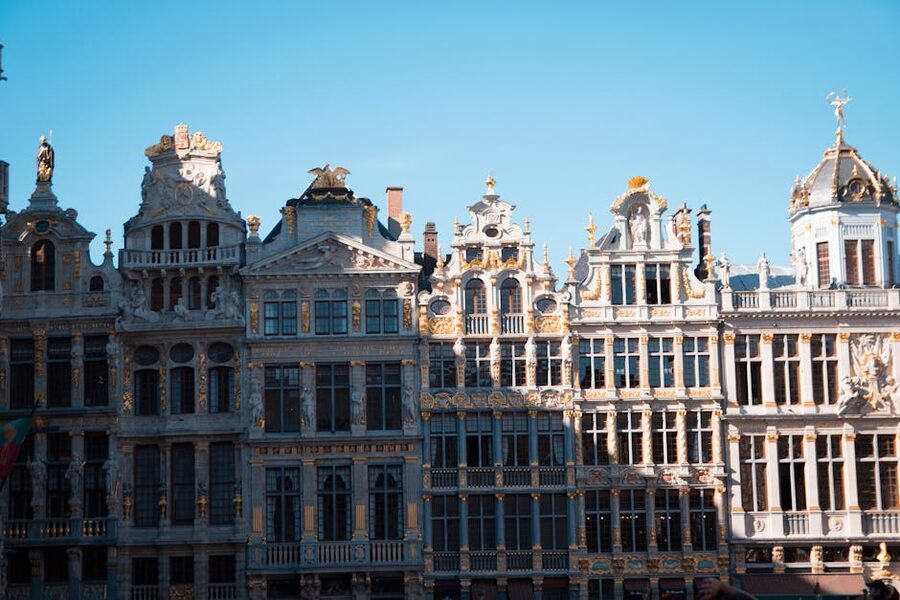
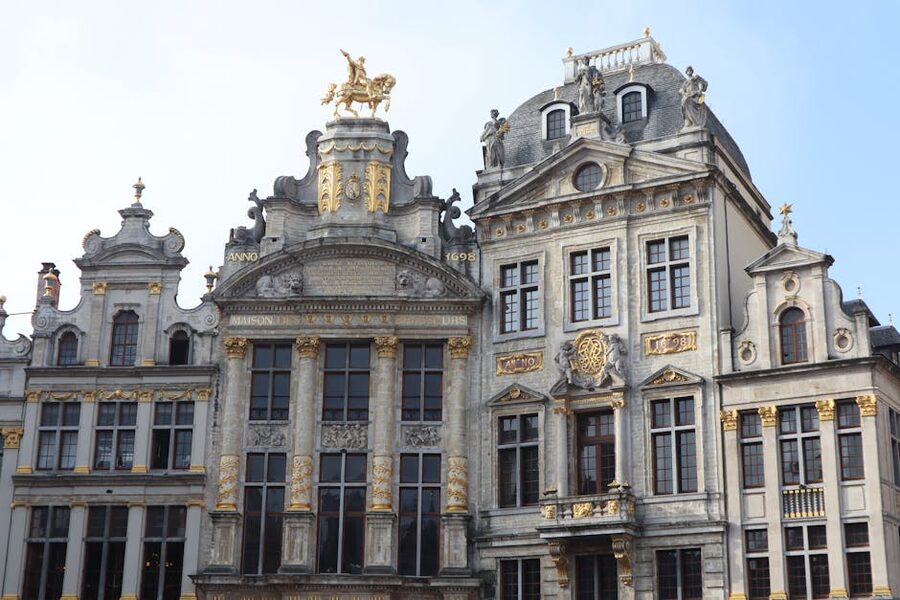
Grand Place: the medieval main square. UNESCO-listed, surrounded by gilded guildhouses, the most visited tourist spot in Belgium. Hop off, walk the perimeter, look up at the town hall tower, find one of the gold-leafed cartouches identifying each guildhouse by trade.
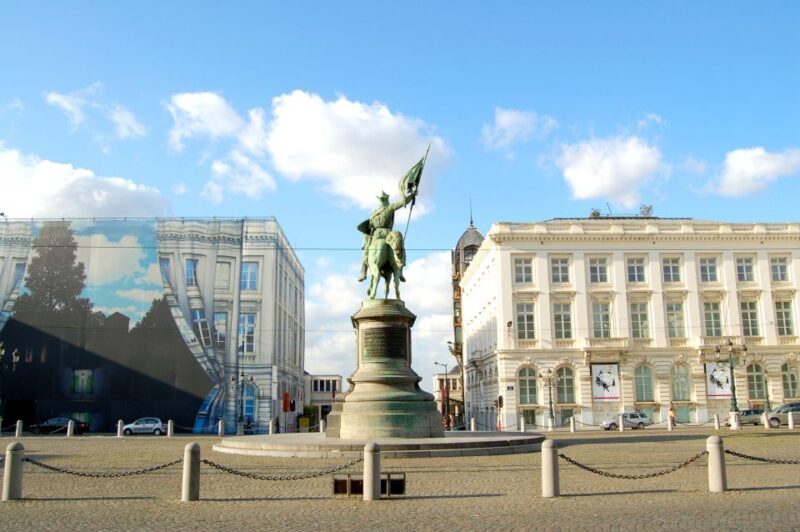
Mont des Arts and Place Royale: the boundary between lower and upper Brussels. Stop here for the Royal Museums of Fine Arts, the Magritte Museum, the Musical Instruments Museum, and the panoramic view back over the lower city.
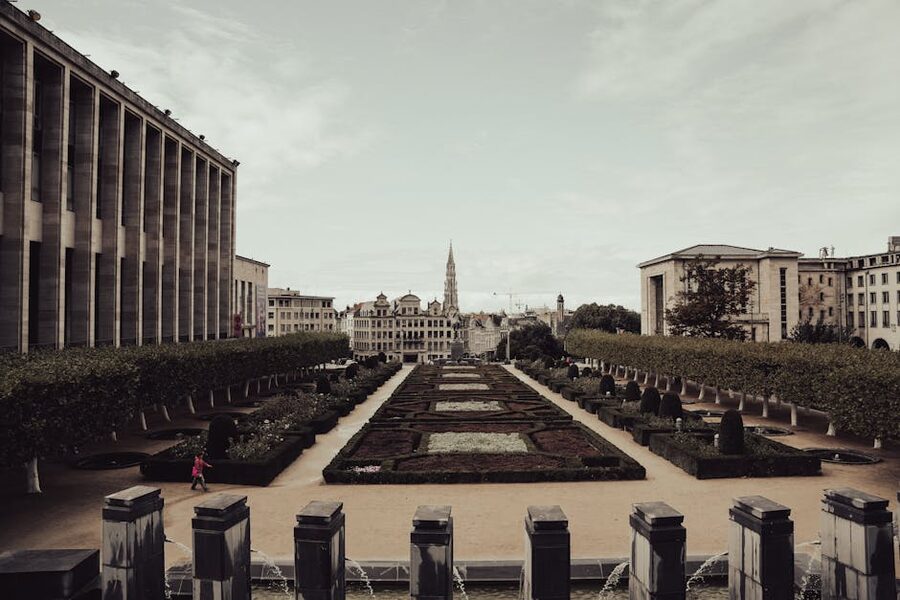
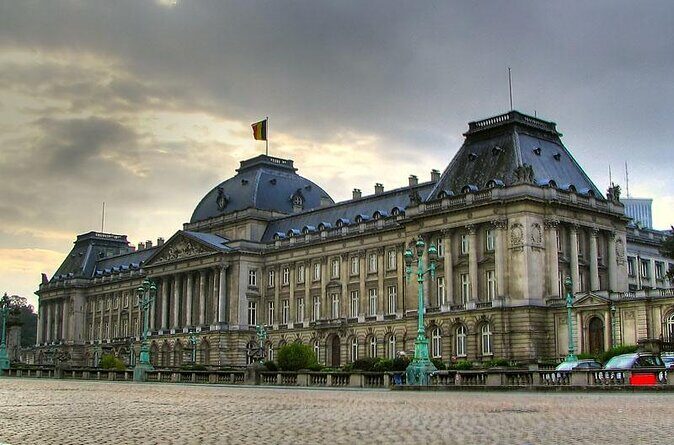
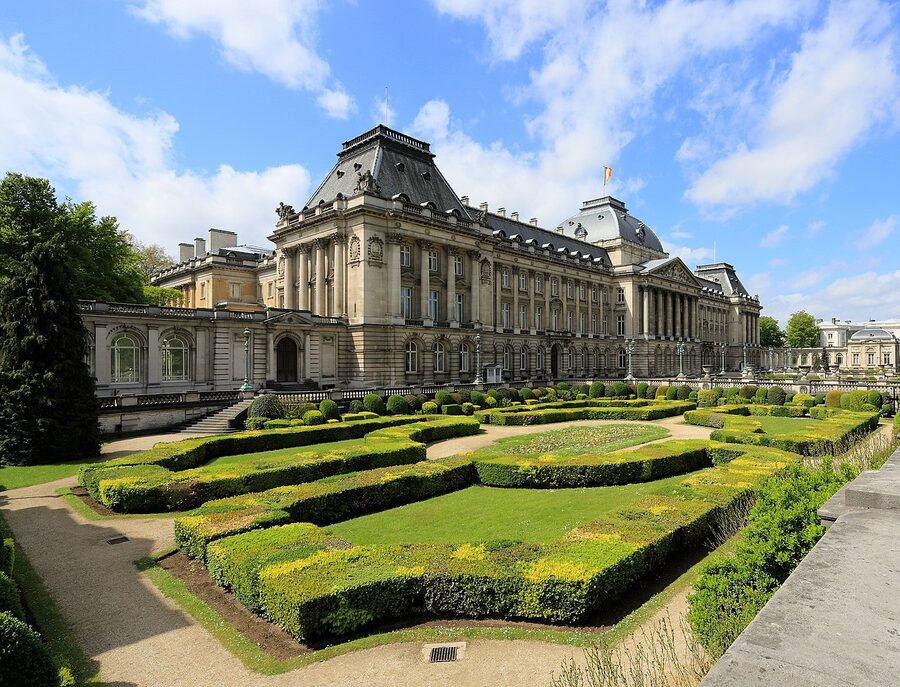
Royal Palace: open to the public for free in summer (late July to early September only). The rest of the year it’s exterior-only, but the facade is properly grand and worth a stop for photos.

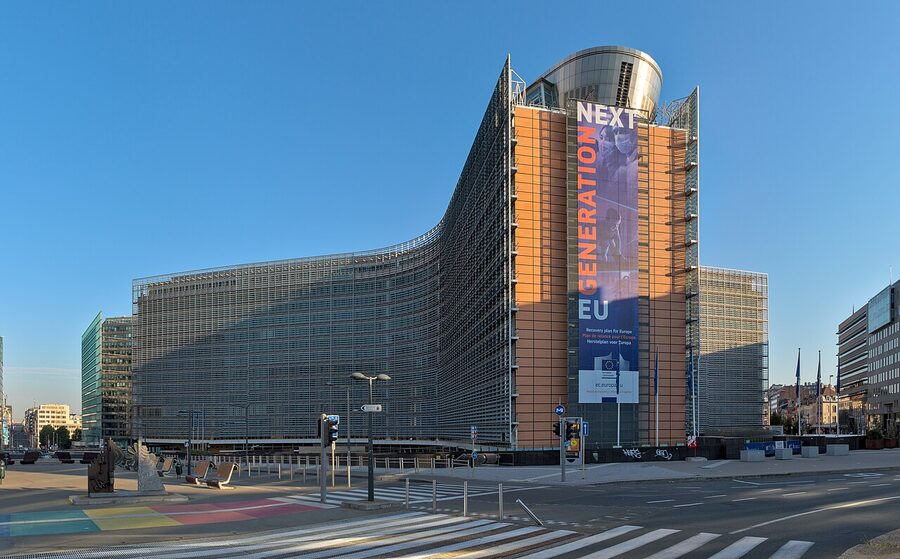
Schuman and EU Quarter: Berlaymont (European Commission), the Council building, and the European Parliament are all clustered around the Schuman roundabout. Worth a hop-off if EU politics interest you, or just for the architectural contrast with the medieval centre.
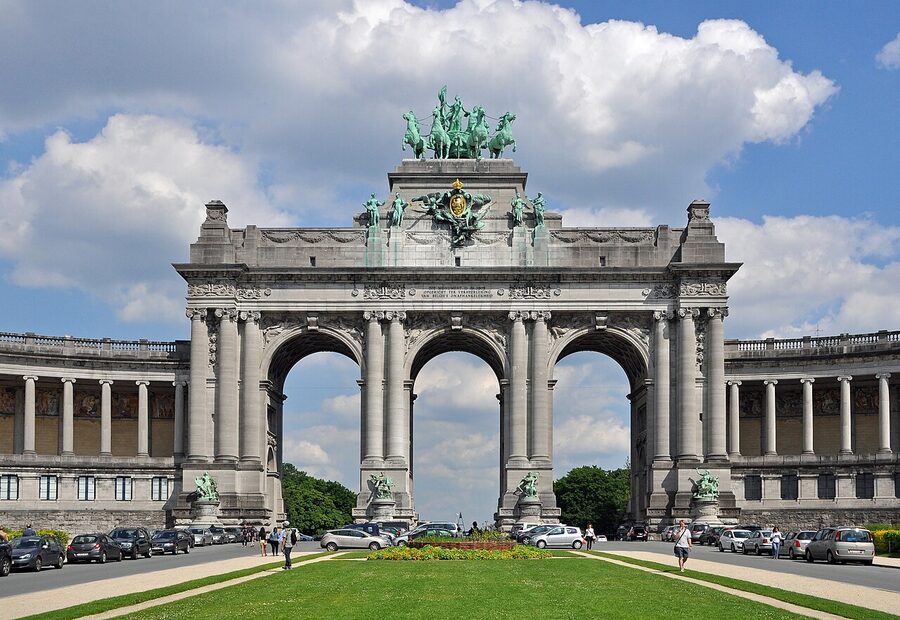
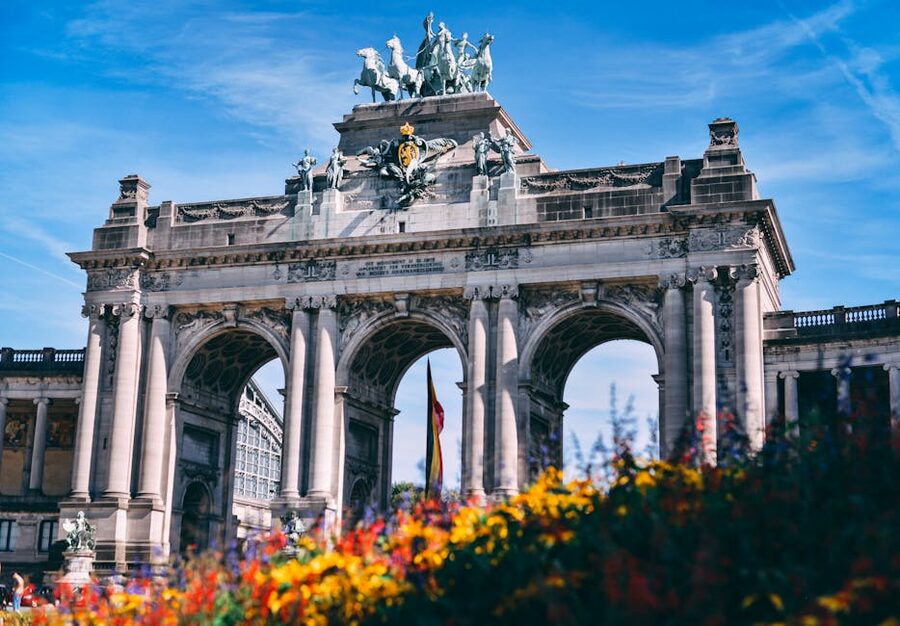
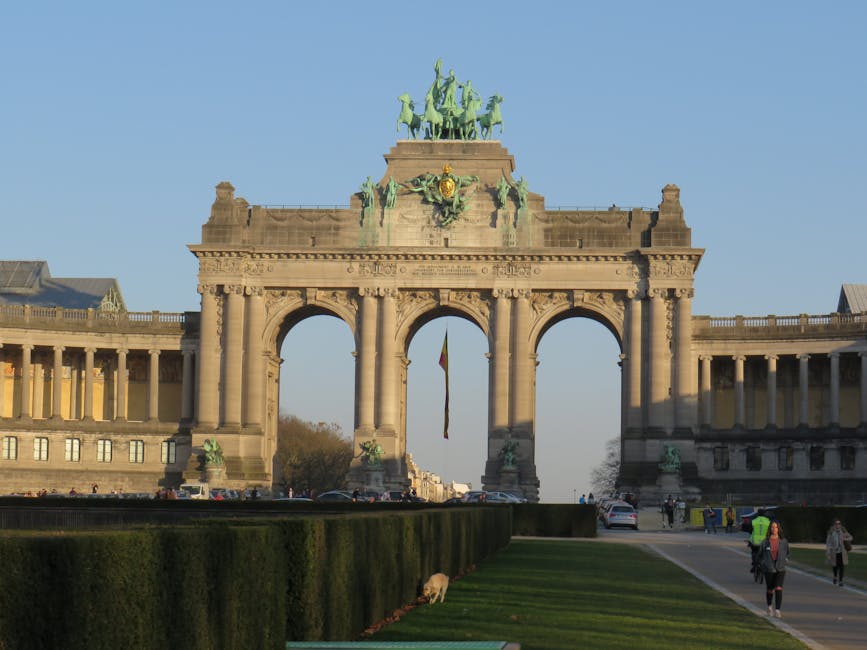
Cinquantenaire: a vast park with a triple-arched triumphal arcade at one end, plus three museums (Art and History, Royal Military, Autoworld). The arcade is photogenic and the park itself is a great picnic spot in summer.

Antoine Dansaert and downtown: closes the loop with a sweep through the boulevards. Antoine Dansaert is the design and indie-fashion district. Worth hopping off if you want to peek at independent boutiques and the Sainte-Catherine quarter rather than just the medieval core.
What You’ll See on the Atomium Loop
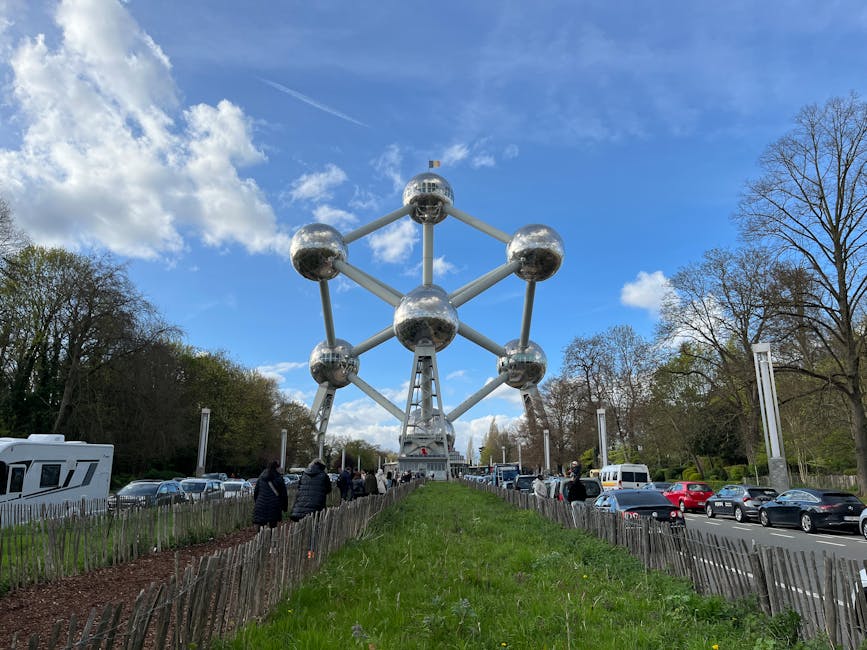
This is where the bus earns its money. The Atomium sits seven kilometres north of Grand Place in Heysel/Laeken. The metro covers most of the distance (line 6 to Heysel station) but leaves a 600-metre walk and the area feels disconnected from the centre. The bus drops you a few hundred metres from the base and runs you back, no map required.
Key stops on this loop:
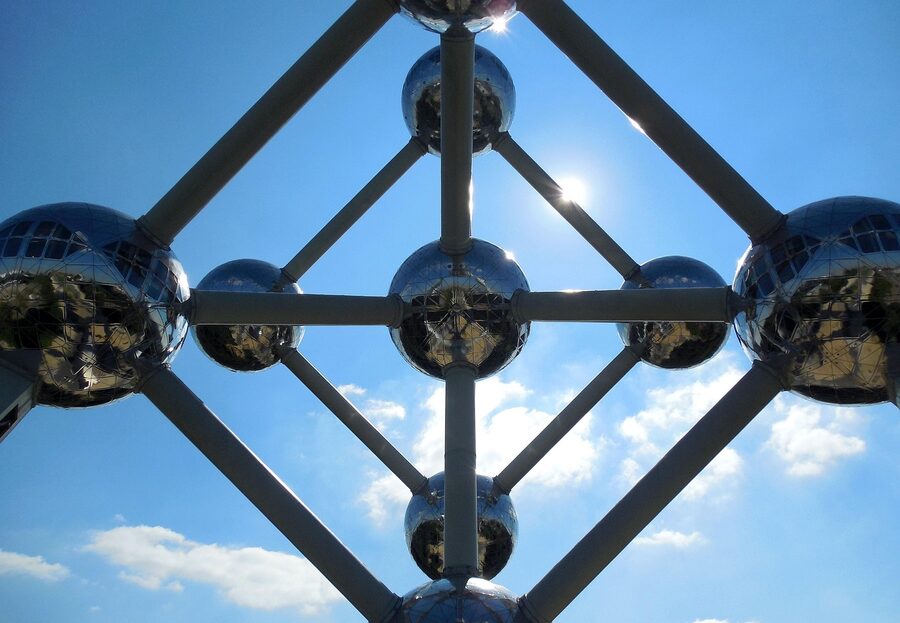
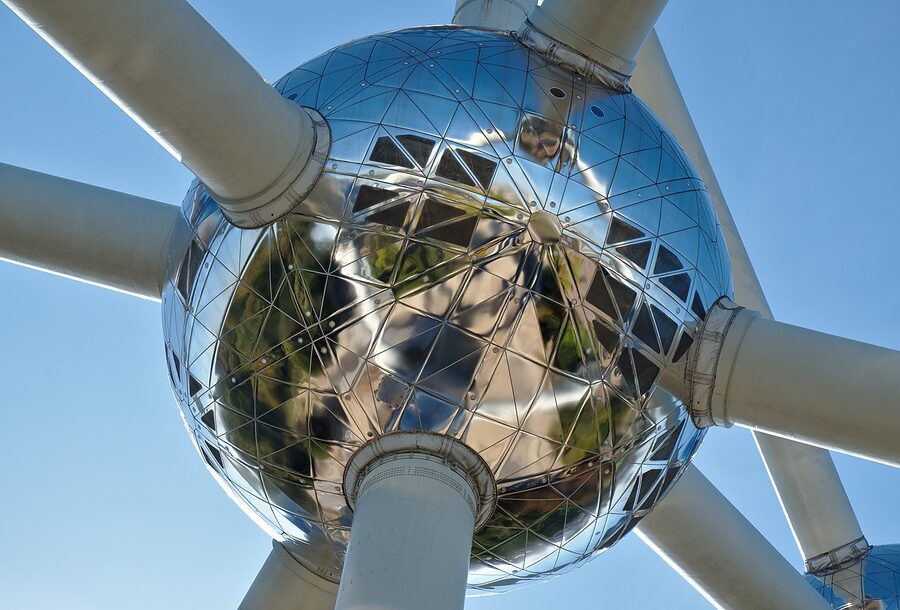
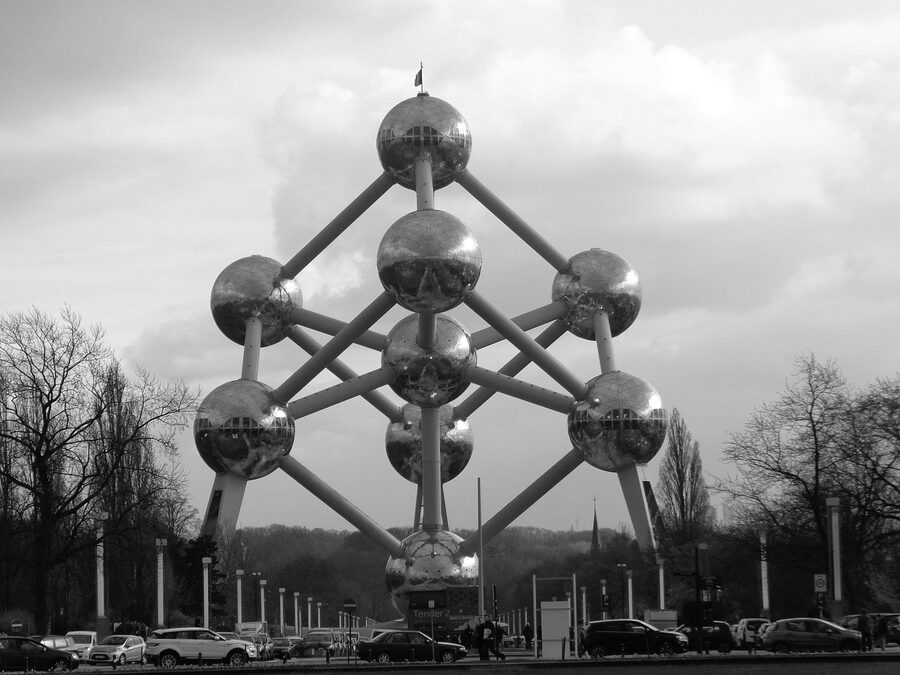
The Atomium: the 102-metre steel sculpture from the 1958 World’s Fair. Nine spheres connected by escalators and tubes. The top sphere is a panoramic restaurant and the lower spheres house exhibits on the Expo, design history, and modern architecture. Our Atomium ticket guide covers when to time your visit and which combo ticket gives you Atomium plus the design museum across the plaza.
.jpg)
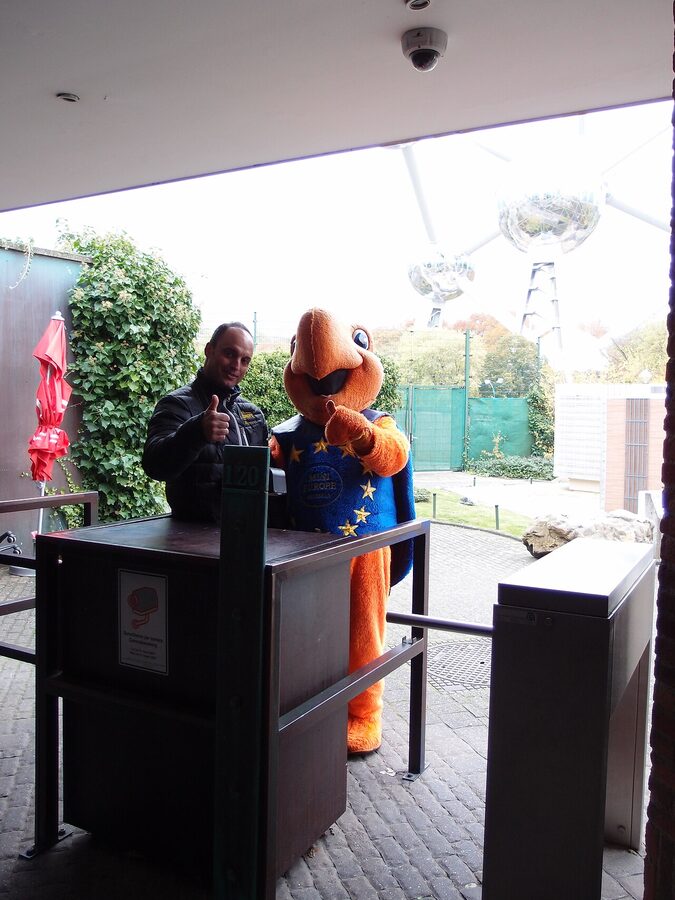
Mini-Europe: the miniature park next door, with 1:25 scale models of 350 European landmarks. Sounds gimmicky and partly is, but the detail on the Athens Acropolis, the canals of Venice, the Brandenburg Gate is real, and the loop takes about 90 minutes to walk. If you’re travelling with kids it’s near-essential. If you’re not, it’s still a quietly charming hour.
.jpg)
Heysel and stadium area: the 1930 King Baudouin Stadium and surrounding expo grounds. Mostly worth a stop if you’re a football fan or there’s an event on; otherwise the area is pleasant but not a must-see.
If you only have time for one of the two loops, do the central one. The Atomium loop pays off only if you’re actually planning to enter the Atomium or Mini-Europe. Driving past them on the bus and not getting off is mostly pointless. Conversely, driving past Grand Place, the Royal Palace, and the EU quarter still gives you something even without hopping off.
When to Ride and When to Skip
Best months: April, May, September, early October. Mild weather, top-deck comfort, full frequency. You can almost always get a top-deck seat without racing for it.
Summer (June to August): the bus still works, but afternoon heat on the top deck is rough on a sunny day. Bring sunscreen and water; kiosks at major stops mark bottled water up about 60% over supermarket prices. Take the first run at 9:30 AM if you can. The 1-3 PM runs in July are crowded, slow, and uncomfortable.
Winter (November to March): Brussels weather is unreliable, and the top deck is exposed. Some buses run with the top closed on rainy days. Check the forecast and ride on the cleanest weather window. On a dry winter day the buses are practically empty and become a relaxed way to see the city without crowds. Christmas markets at Grand Place and Sainte-Catherine give the central loop a different character in mid-December.
When to skip the bus entirely: one-night stops where dinner in the centre and a walking tour the next morning are your priorities. The historical core is walkable. The bus pays off when you want to add Atomium, Mini-Europe, the EU quarter, or Cinquantenaire. With young kids, mobility issues, or anyone over 65, the bus shifts from optional to essential.
Tips That Actually Matter

Do the full central loop first without getting off. The route does a real geographic sweep, and you’ll only know which stops feel worth a hop-off after you’ve seen them once. Ride the full 75 minutes through, mark which stops drew your eye, then plan the rest of your day around those.
Activate the ticket on a full day, not a travel day. Your 24- or 48-hour pass starts when you scan it the first time, not when you buy it. If you arrive at 6 PM on a Friday, don’t activate until Saturday morning. Otherwise half the validity is gone before you start.
Don’t waste the bus the same day you walk the EU quarter. If you’re walking the institutions anyway, the central loop becomes redundant for a 24-hour ticket. Either get the 48-hour and split the days, or skip the bus and use the metro for the rest.
Bring your own earbuds. The disposable headsets work but fall out the second the bus turns a corner. A regular pair plugs into the audio guide socket built into each seat.
Sit on the right side going clockwise. Both Tootbus and City Sightseeing run their central loop clockwise. The Royal Palace, the Mont des Arts views, and the Cinquantenaire arcade open up on the right. Left side gets you the lower town and the boulevards, also nice, but if you only have one ride to plan, prioritise the right.
Don’t ride in heavy rain without covered seating. Belgian rain is wet. The Tootbus top deck is exposed. If the sky is threatening, grab a lower-deck window seat. Partially covered top-deck seating exists on some buses but fills first; board at the start of a loop if you want one.
Pair the bus with a walking tour. The audio commentary on the bus is decent but rushed, you cover a lot of ground quickly. A guided walking tour of the historic centre fills in the layered backstory the bus glosses over, and it walks you into the streets the bus literally cannot drive into. Do the bus on day one, the walking tour on day two.
Cards, Passes, and Other Ways to Get Around
Quick comparison if you’re weighing options.
The Brussels Card bundles museums and public transit and beats a bus-plus-museum-plus-transit basket if you’re doing three or more museums. For pure sightseeing, the bus wins on panorama and audio. For old-city depth, a guided walking tour through the medieval core outperforms the bus on storytelling and walks you into streets the bus can’t fit down.
The Brussels metro is fast and cheap (single trip around $2.50, day pass around $7.50) but gives you nothing visual. It works for late-night trips and airport transfers, not sightseeing. STIB also runs above-ground buses and trams, but they’re commuter-oriented and don’t loop the major sights.

Day trips out of Brussels: both Bruges and Ghent are within an hour by direct train and don’t require any sightseeing-bus equivalent. Both are walkable cities. Our guide to Bruges from Brussels covers the day-trip logistics, and our Ghent guide does the same for the Ghent day. Use the bus to do Brussels on day one, then take the train out to Bruges or Ghent on day two if you have it.
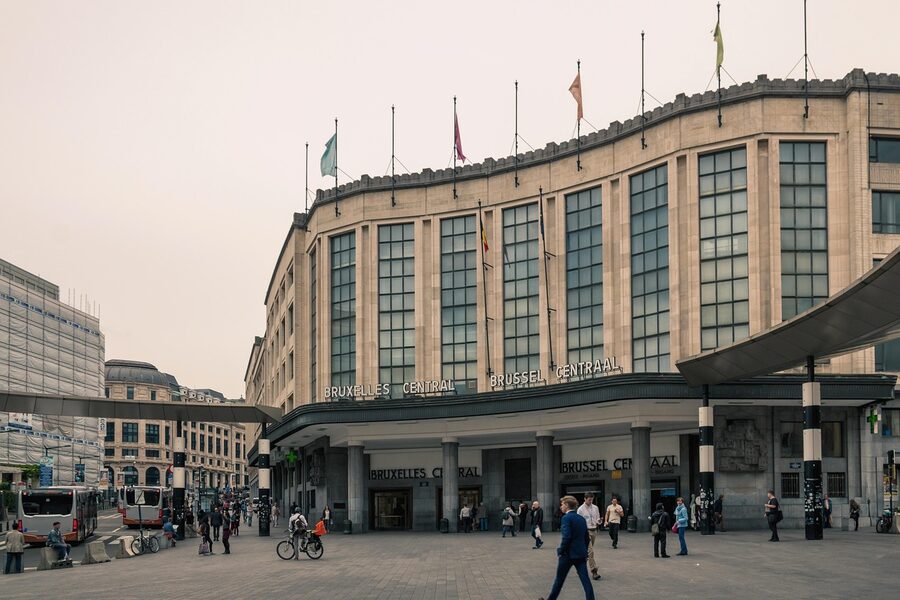
Uber works in Brussels but is significantly more expensive than other European capitals, a cross-town ride averages 12-18 euros. For airport transfers, the train from Brussels Airport (Zaventem) to Brussels Central is faster and cheaper than any taxi or rideshare.
Other Brussels and Belgium Guides
The bus gives you the outline of Brussels. The detail is in the experiences it can’t cover, and most are within a five-minute walk of a bus stop. An Atomium ticket is the single thing I’d pair with the 48-hour bus, since the Atomium loop drops you outside and the structure rewards a proper visit (top sphere panorama, exhibits, design museum across the plaza). For the chocolate side of the trip, Choco-Story Brussels is five minutes from Grand Place and pairs with a hop-off there. If you’d rather taste chocolate than read about it, our Brussels chocolate walking tour guide covers the multi-chocolatier option. And to fold storytelling into your day, a Brussels walking tour with a local guide is the natural complement to the bus.
If you have more than two days in Belgium, Bruges from Brussels and Ghent from Brussels both run an hour each way by train and make easy day trips. And if Brussels is one stop on a wider European hop-on hop-off itinerary, the parallel guides for Lisbon, Porto, Budapest, Warsaw, and Oslo use the same format. Brussels falls between Warsaw (very spread out) and Lisbon (compact but hilly) on the difficulty curve. The bus is more useful here than in Lisbon and slightly less so than in Warsaw.
This article contains affiliate links to tour operators. If you book through these links, we may earn a small commission at no extra cost to you. This helps support the site and lets us keep writing detailed guides like this one.